Article

Development and Trial of a Prototype Device for Sensorimotor Therapy in Patients with Distal Radius Fractures

by
Daichi Narita
1,2,
Toyohiro Hamaguchi
1,* and
Hiromi Nakamura-Thomas
1,*
1
Department of Rehabilitation, Graduate School of Health Sciences, Saitama Prefectural University, Koshigaya City 343-8540, Saitama, Japan
2
Tokyo Takanawa Hospital, Minato Ward, Tokyo 108-8606, Japan
*
Authors to whom correspondence should be addressed.
Appl. Sci. 2022, 12(4), 1967; https://doi.org/10.3390/app12041967
Submission received: 31 December 2021 / Revised: 27 January 2022 / Accepted: 10 February 2022 / Published: 14 February 2022

Abstract

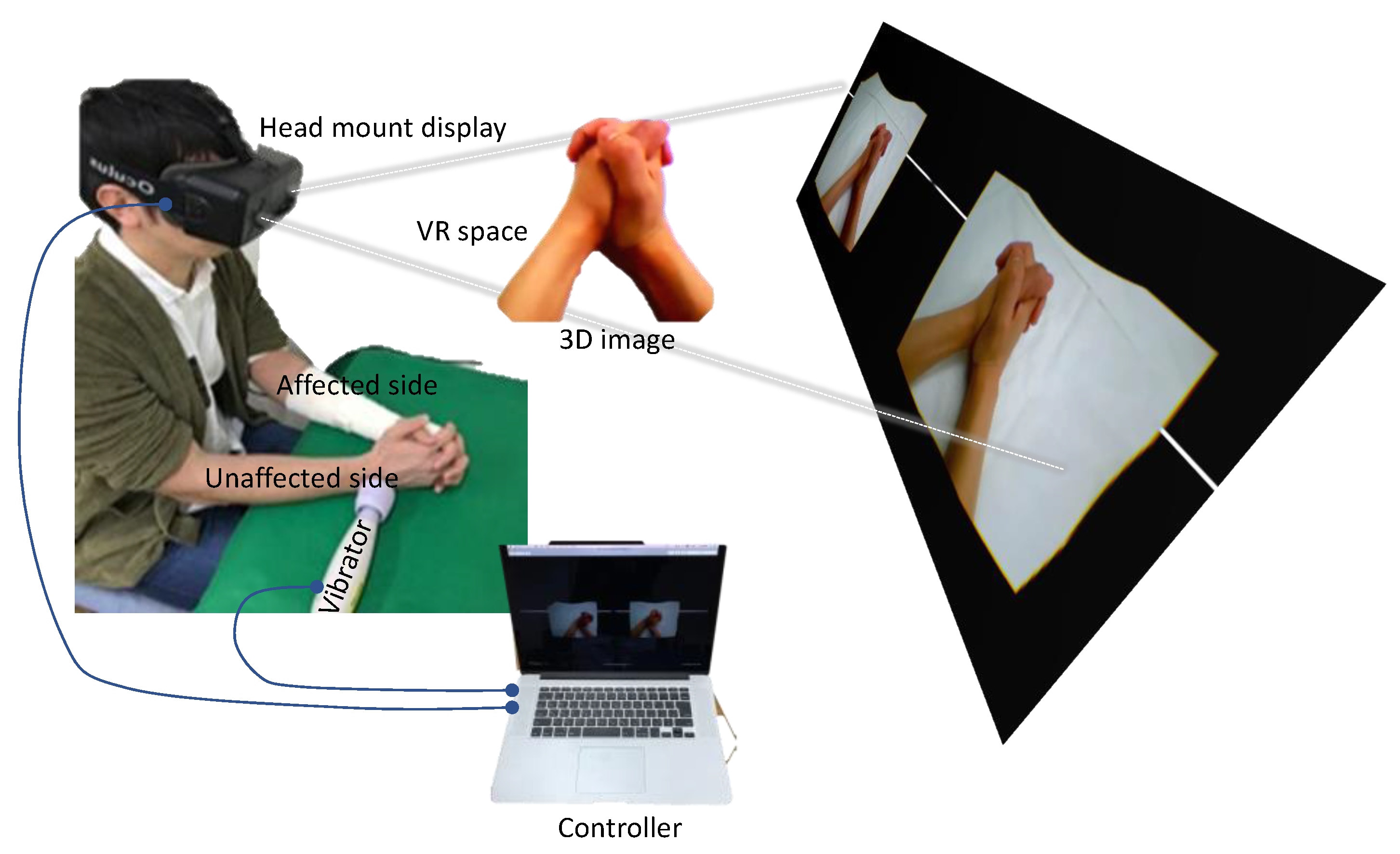
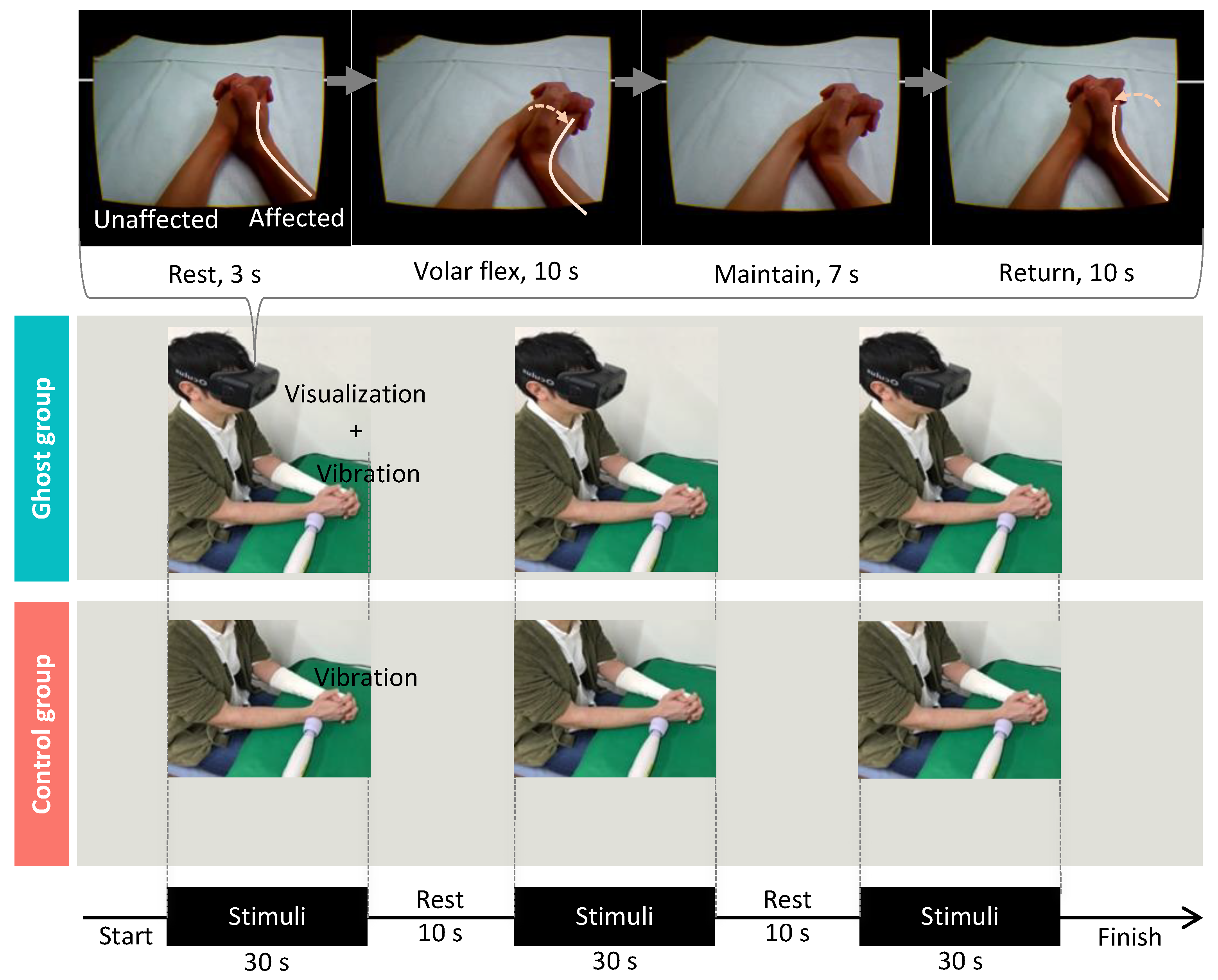
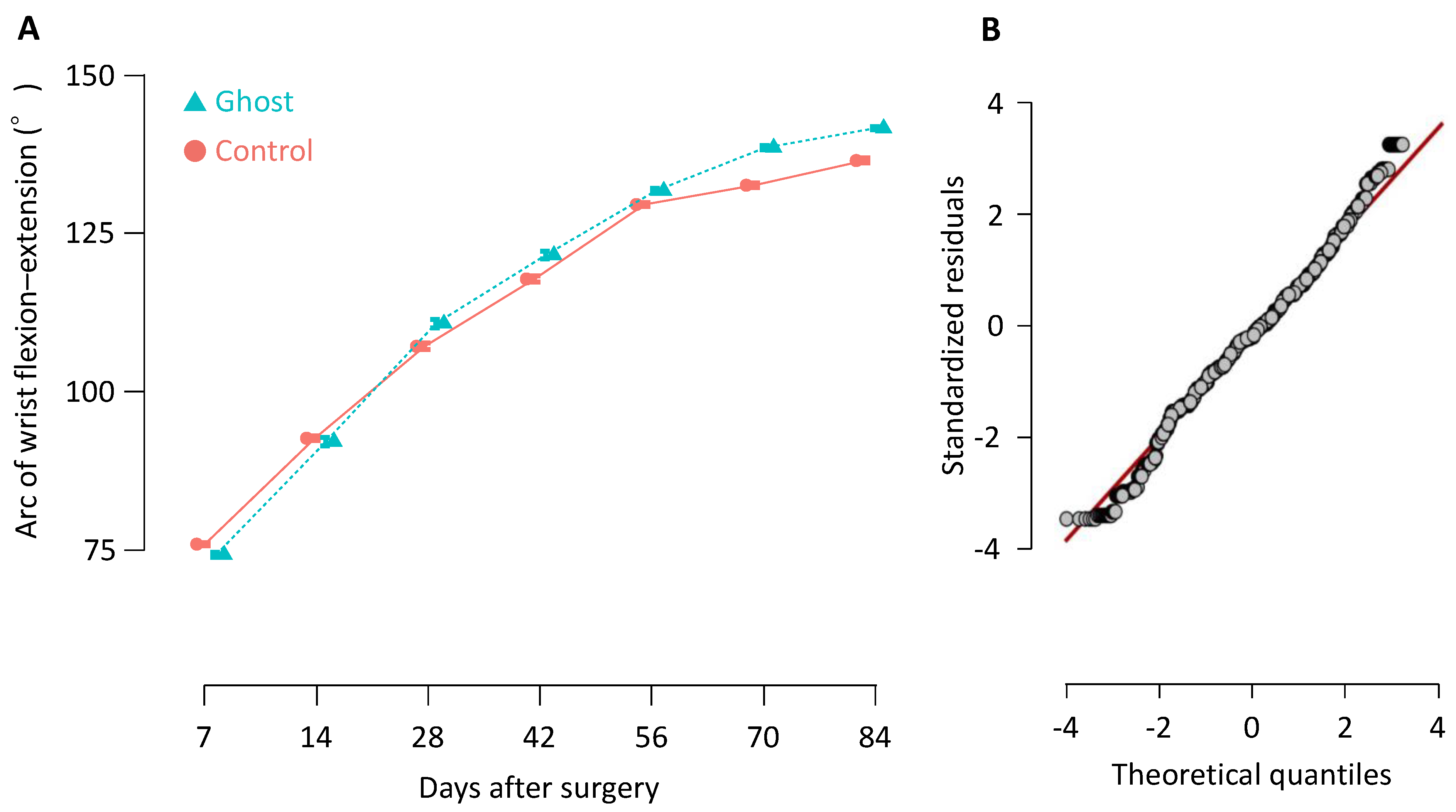
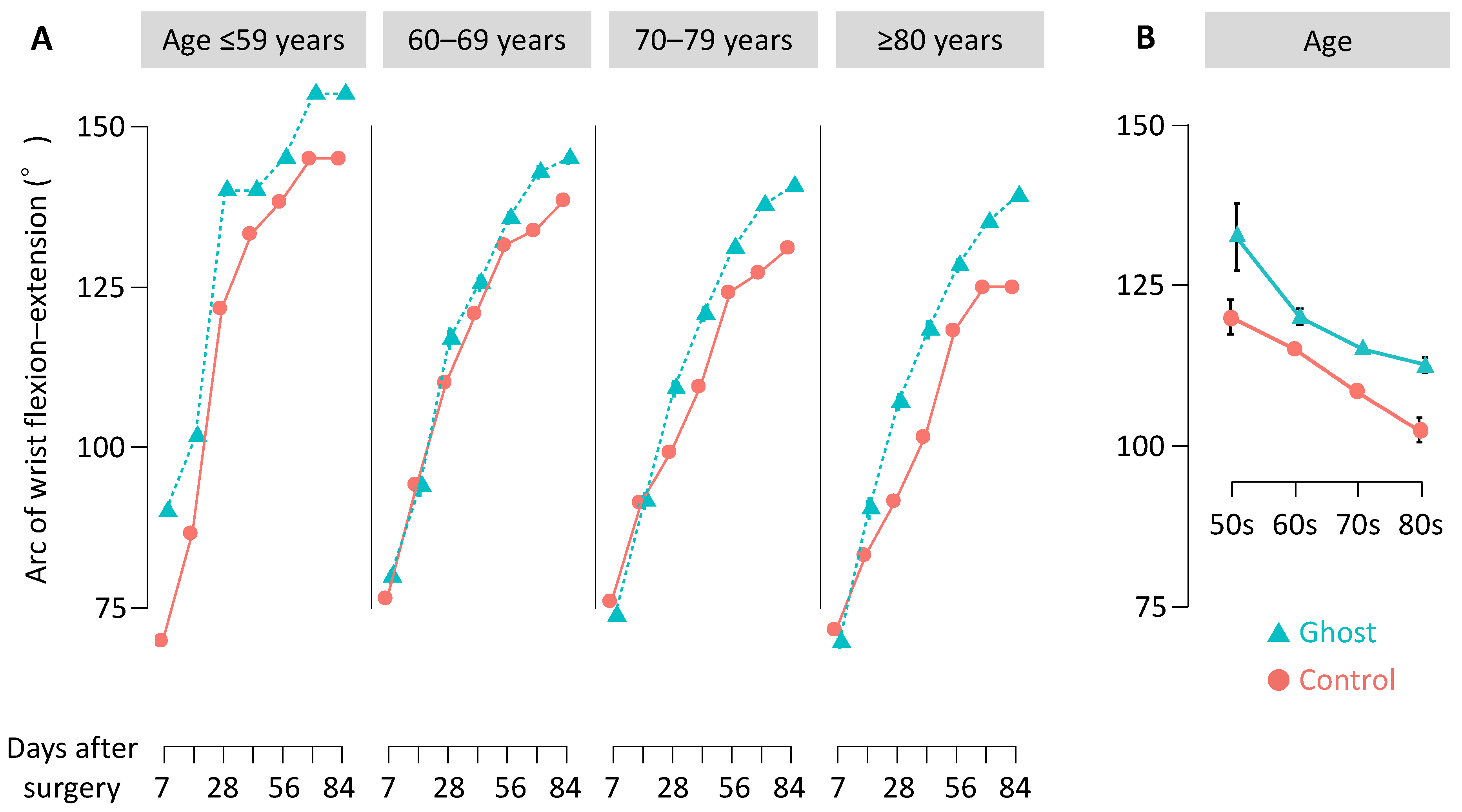
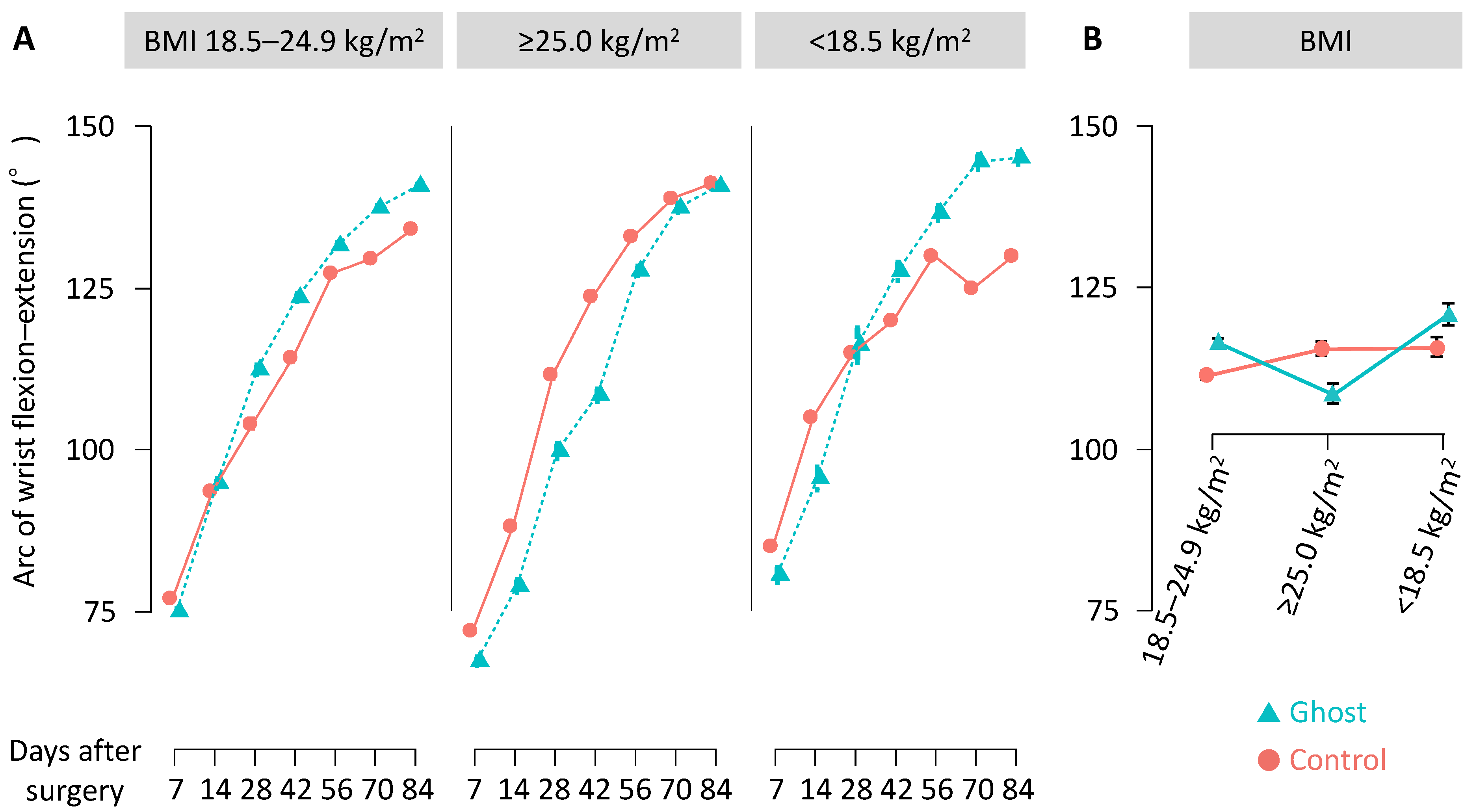
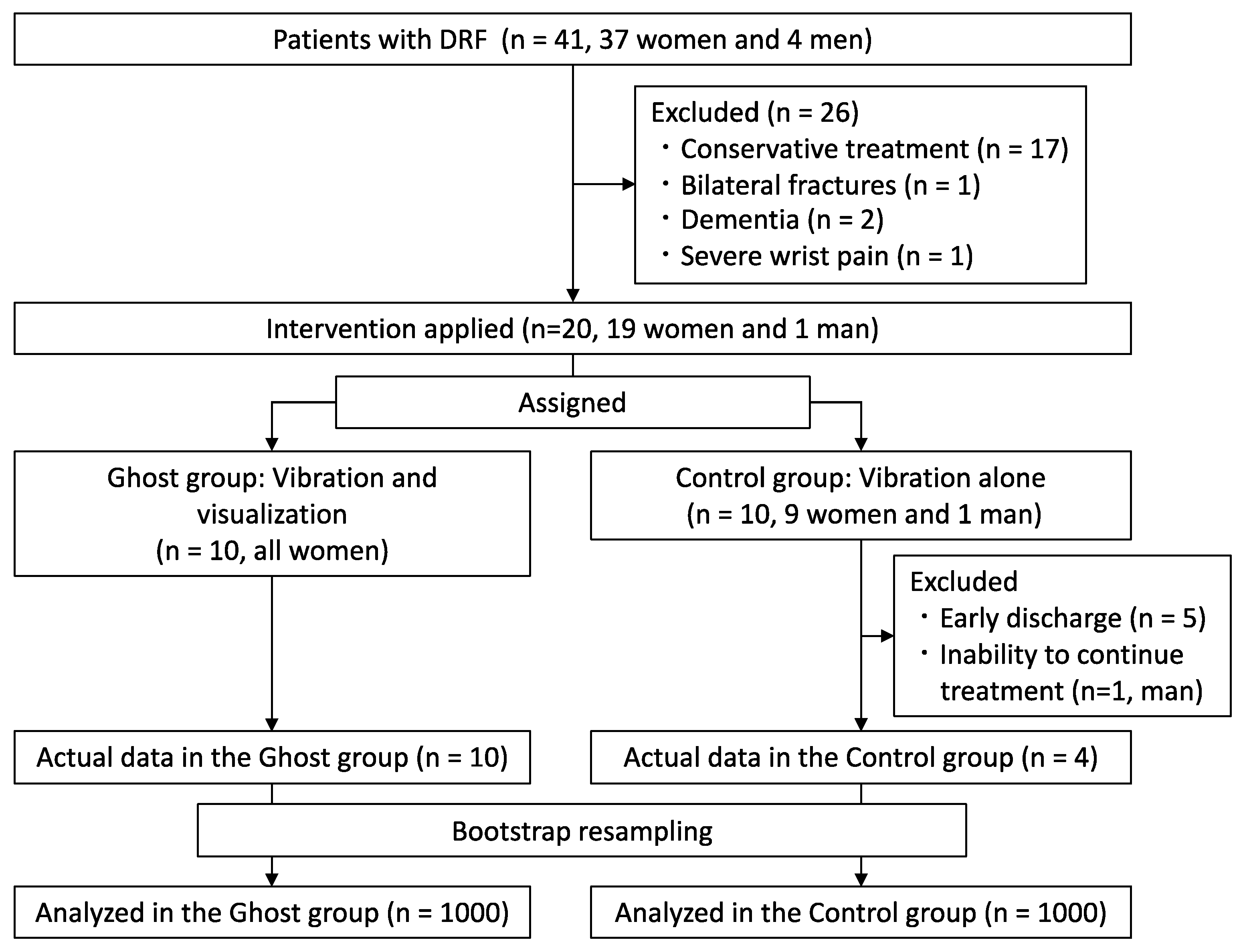
This study examined the clinical feasibility of a prototype device (development name: Ghost) for facilitating range of motion (RoM) recovery in the acute phase in patients with distal radius fractures (DRF). The Ghost device involves the administration of a combination of vibratory and visual stimuli. We divided the patients into the Ghost (n = 10) and control group (n = 4; tendon vibration only) groups. The experimental interventions were administered between the day after surgery and day 7 postoperatively. Traditional hand therapy was provided to both groups once daily from day 7 until day 84 postoperatively and once a week from day 84 until the end of the intervention period. Because vibratory stimulation makes the patient focus on wrist flexion, the primary outcome was the arc of wrist flexion-extension on the injured side, which was measured on days 7, 14, 28, 42, 56, 70, and 84. Analysis of covariance was applied using a bootstrap method to evaluate changes over time and compare them between the groups. Analyses was performed after stratification by age and body mass index. Both interventions improved RoM over time in patients with DRF. Results showed that Ghost has greater efficacy for improving wrist RoM in DRF patients than vibration alone. Treatment with Ghost can result in good RoM improvement during the acute phase of DRF in young patients and those with and normal or low body mass index. Further study is needed to verify our findings and assess the extent of RoM recovery.
Keywords: distal radius fractures; vibration; visualization; rehabilitation; range of motion distal radius fractures; vibration; visualization; rehabilitation; range of motion