Article

Pure Electric Sweeper Performance Analysis and Test Verification of Dust Extraction Port
1
School of Mechanical Engineering, Anhui Polytechnic University, Wuhu 241000, China
2
Anhui Airuite New Energy Special Vehicle Co., Ltd., Wuhu 241200, China
*
Author to whom correspondence should be addressed.
Appl. Sci. 2022, 12(10), 5188; https://doi.org/10.3390/app12105188
Submission received: 19 April 2022 / Revised: 17 May 2022 / Accepted: 19 May 2022 / Published: 20 May 2022
(This article belongs to the Special Issue Advances on Structural Engineering, Volume III)

Abstract

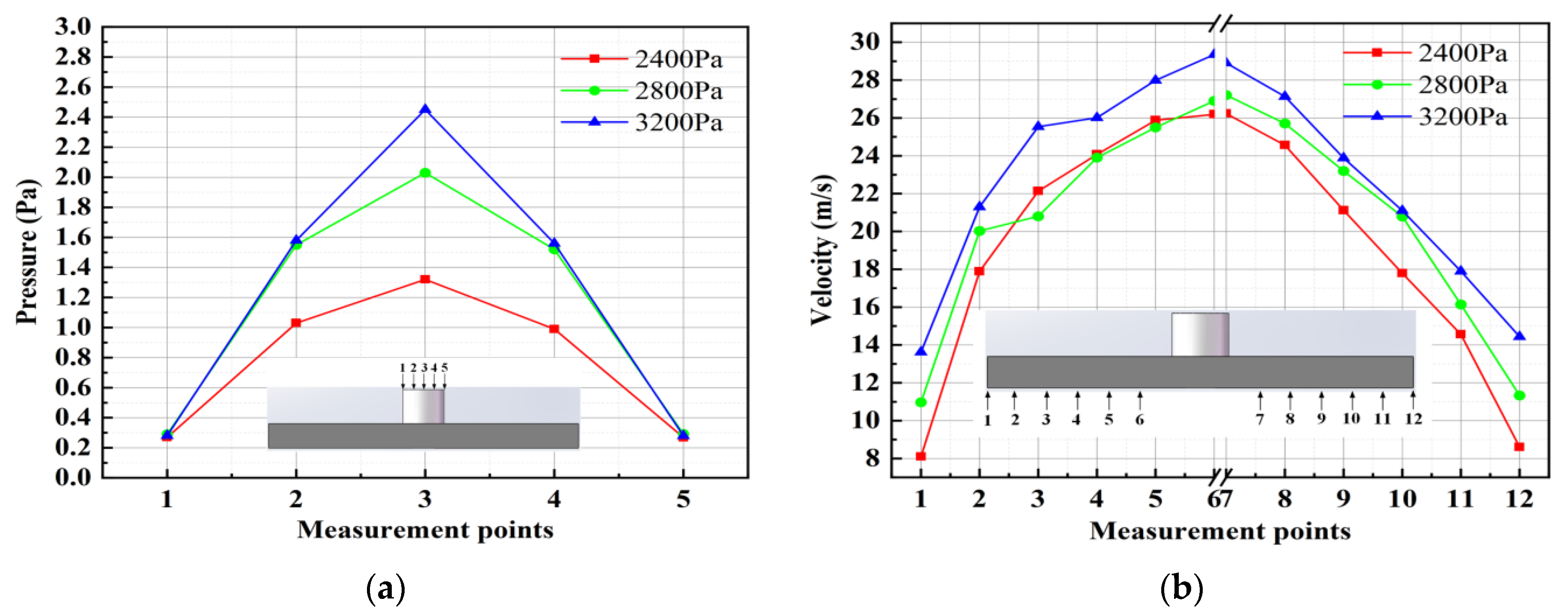
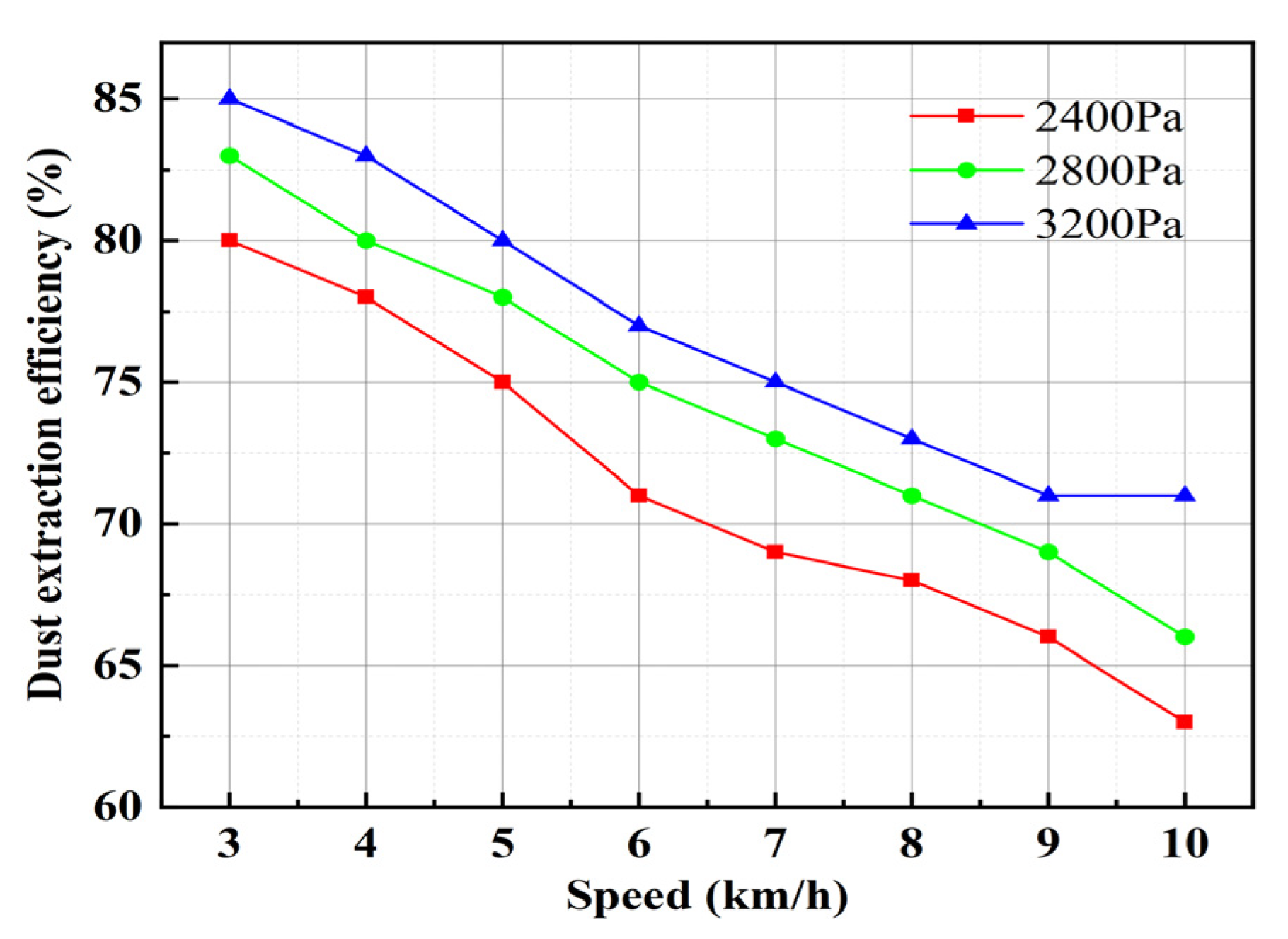
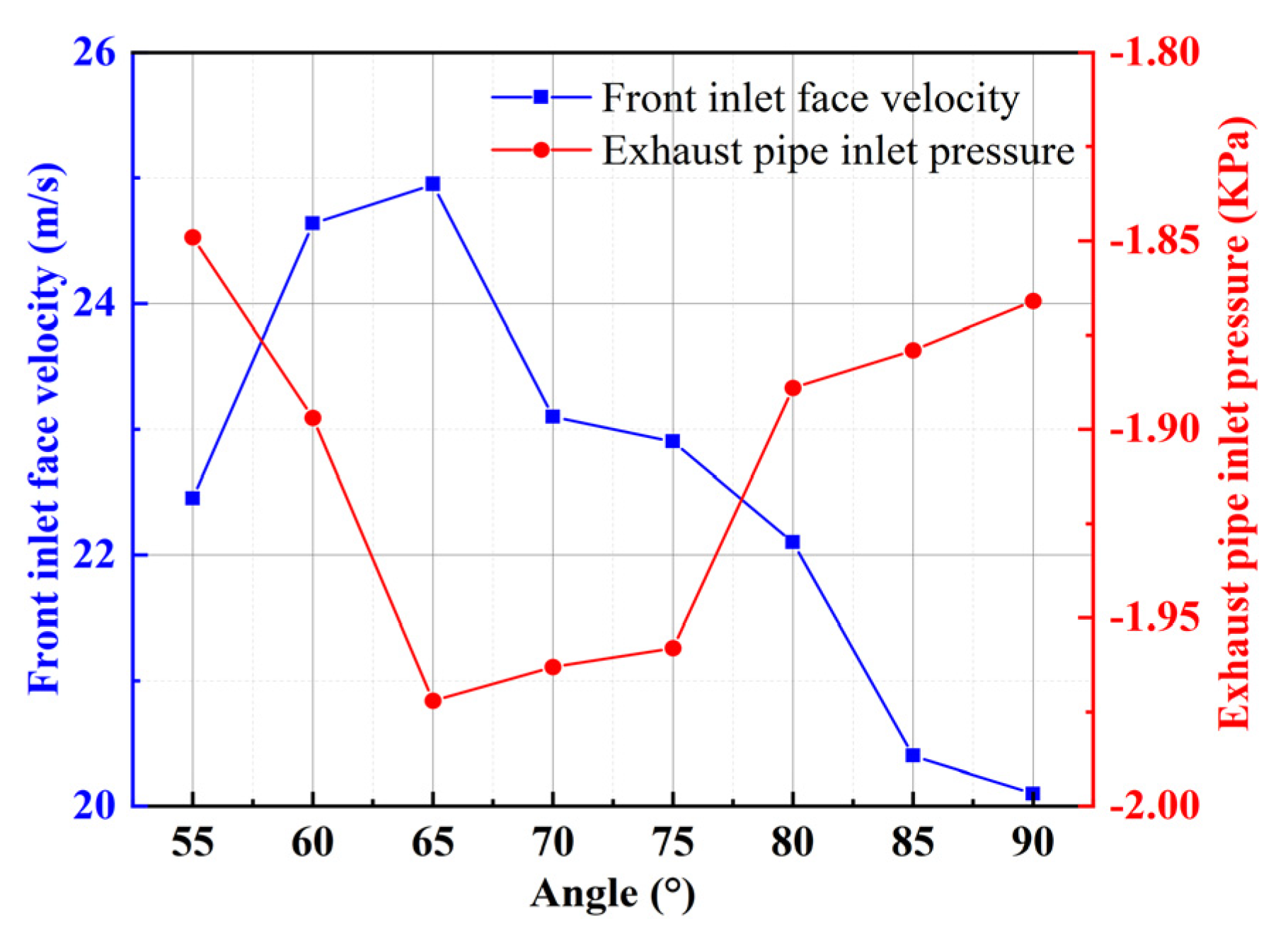
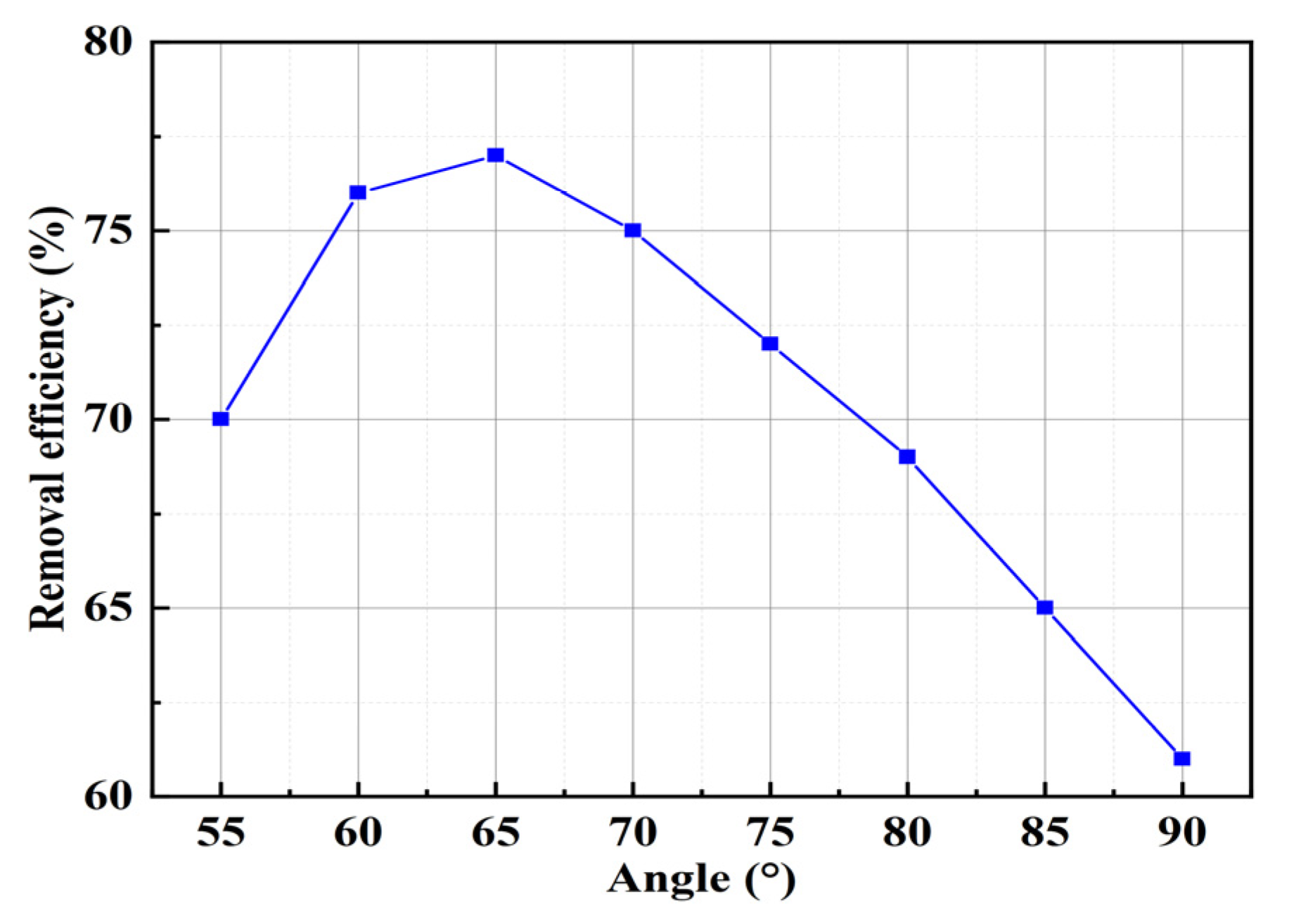
Purely electric sweepers are widely used in the urban sanitation industry due to their emission-free nature and ease of miniaturisation. The dust suction port is the key to the dust suction system of the sweeper, and improving the design level of the dust suction port of the sweeper can effectively improve the operational performance of the sweeper. Using the company’s self-developed Ruiqing S26 pure electric sweeper as the research object, a CFD (Computational Fluid Dynamics) method was used to analyse the influence of the dust suction port structure parameters (front baffle tilt angle, outlet diameter) and sweeper operation parameters (driving speed, operating pressure) on the dust suction effect of the sweeper, and was verified through real vehicle tests. The results of the study show that changing the angle and outlet diameter results in a change in the flow field characteristics and, consequently, the same change in the removal efficiency, with 65° and 160 mm being the optimum angle and outlet diameter, respectively. The tests investigated the flow field characteristics of the dust extraction opening and the removal efficiency. This study can provide theoretical reference for performance optimisation and parameter matching of the sweeper.
Keywords: electric sweepers; performance analysis; test verification; flow field characteristics; dust extraction efficiency electric sweepers; performance analysis; test verification; flow field characteristics; dust extraction efficiency