Article

System of Systems Lifecycle Management—A New Concept Based on Process Engineering Methodologies

1
Department of Telecommunications and Media Informatics, Budapest University of Technology and Economics, 2 Magyar Tudósok krt., H-1117 Budapest, Hungary
2
Faculty of Engineering, Mondragon University, Goiru kalea 2, Arrasate-Mondragon, E-20500 Gipuzkoa, Spain
*
Author to whom correspondence should be addressed.
Appl. Sci. 2021, 11(8), 3386; https://doi.org/10.3390/app11083386
Submission received: 25 February 2021 / Revised: 2 April 2021 / Accepted: 5 April 2021 / Published: 9 April 2021
(This article belongs to the Special Issue Lifecycle and Supply Chain Optimization in Industry 4.0)

Abstract

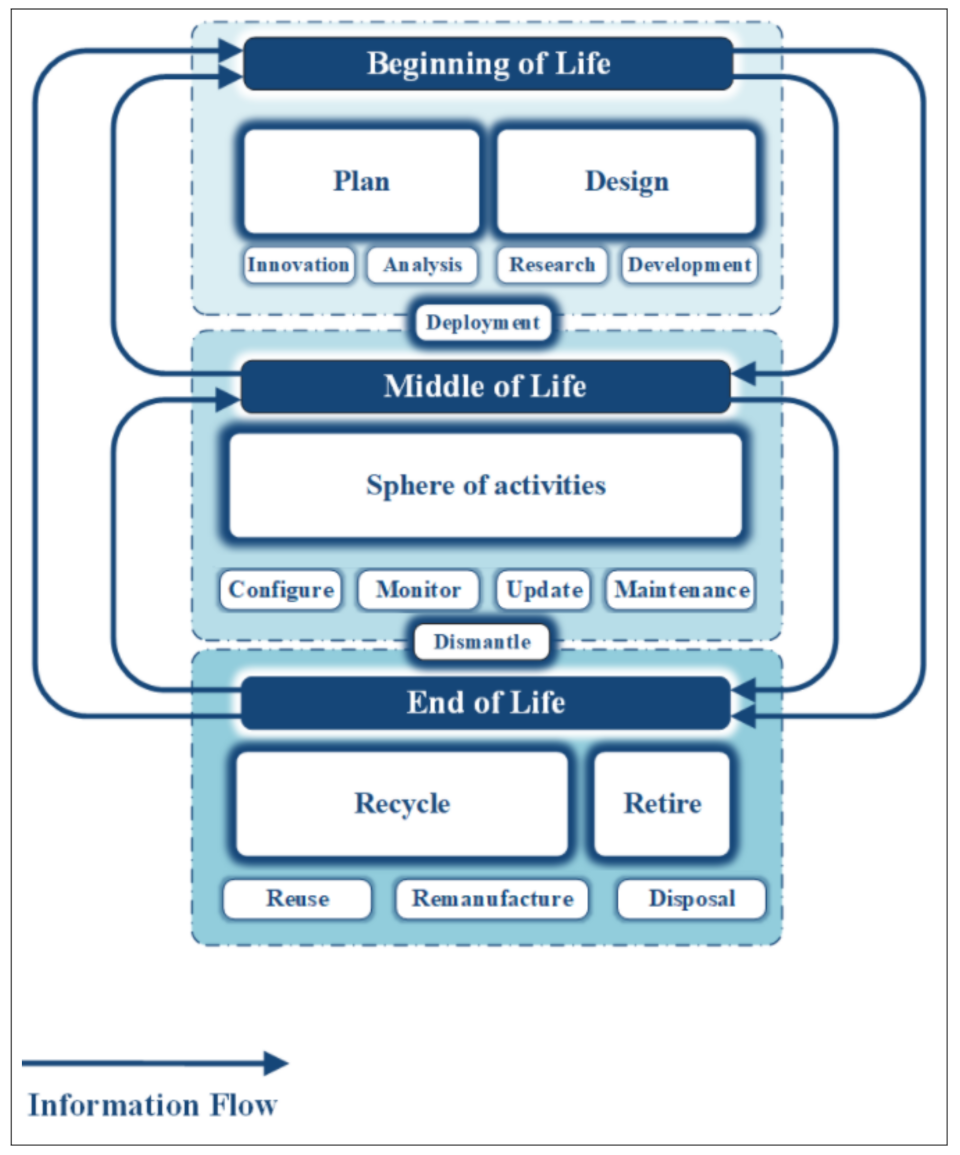
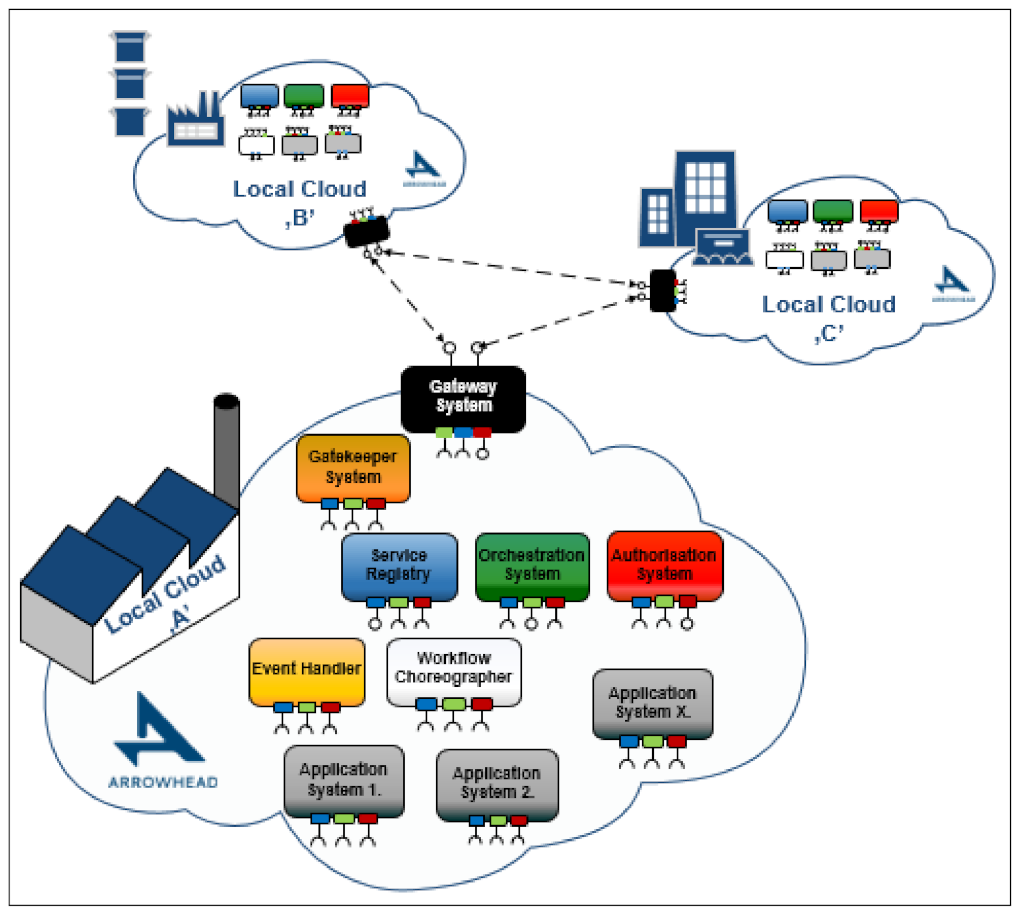
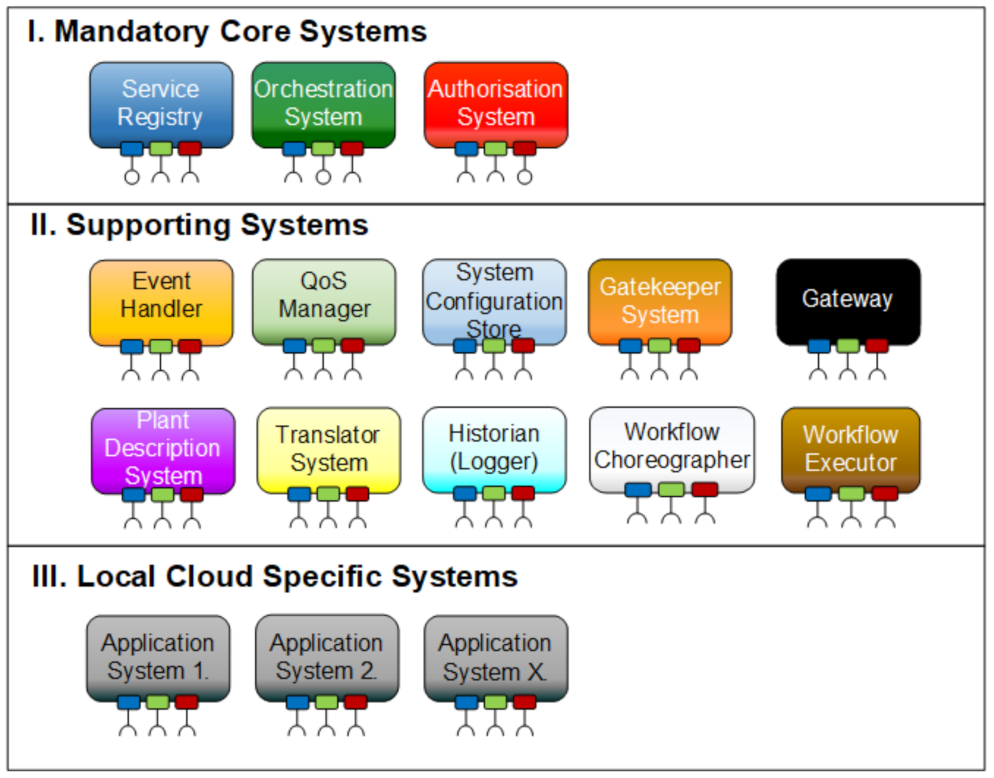
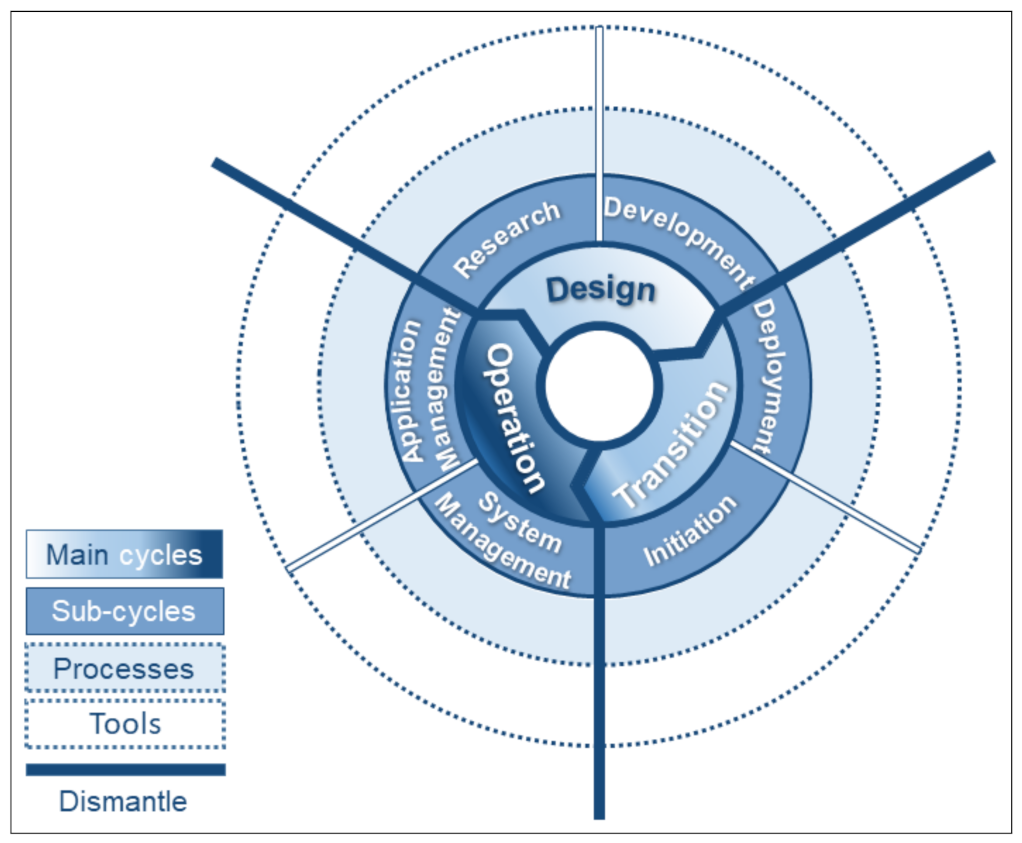
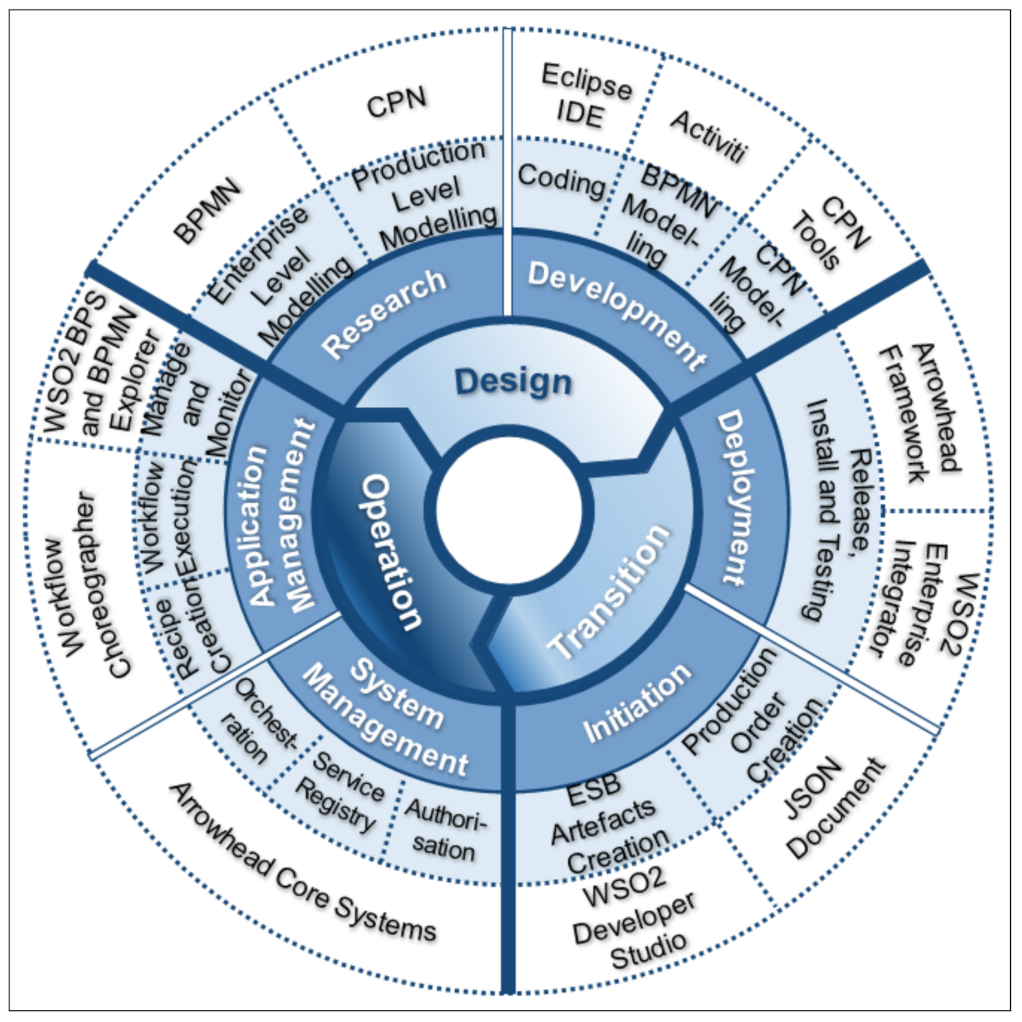
In order to tackle interoperability issues of large-scale automation systems, SOA (Service-Oriented Architecture) principles, where information exchange is manifested by systems providing and consuming services, have already been introduced. However, the deployment, operation, and maintenance of an extensive SoS (System of Systems) mean enormous challenges for system integrators as well as network and service operators. The existing lifecycle management approaches do not cover all aspects of SoS management; therefore, an integrated solution is required. The purpose of this paper is to introduce a new lifecycle approach, namely the SoSLM (System of Systems Lifecycle Management). This paper first provides an in-depth description and comparison of the most relevant process engineering methodologies and ITSM (Information Technology Service Management) frameworks, and how they affect various lifecycle management strategies. The paper’s novelty strives to introduce an Industry 4.0-compatible PLM (Product Lifecycle Management) model and to extend it to cover SoS management-related issues on well-known process engineering methodologies. The presented methodologies are adapted to the PLM model, thus creating the recommended SoSLM model. This is supported by demonstrations of how the IIoT (Industrial Internet of Things) applications and services can be developed and handled. Accordingly, complete implementation and integration are presented based on the proposed SoSLM model, using the Arrowhead framework that is available for IIoT SoS.
Keywords: service-oriented architecture; system of systems; lifecycle management; process engineering; ITSM frameworks; product lifecycle management; system of systems lifecycle management service-oriented architecture; system of systems; lifecycle management; process engineering; ITSM frameworks; product lifecycle management; system of systems lifecycle management