Article

Elucidating the Mechanical Energy for Cyclization of a DNA Origami Tile
School of Mechanical Engineering, Purdue University, West Lafayette, IN 47907, USA
*
Author to whom correspondence should be addressed.
Appl. Sci. 2021, 11(5), 2357; https://doi.org/10.3390/app11052357
Submission received: 7 February 2021 / Revised: 27 February 2021 / Accepted: 3 March 2021 / Published: 6 March 2021
(This article belongs to the Special Issue Mechanical Design in DNA Nanotechnology)

Abstract

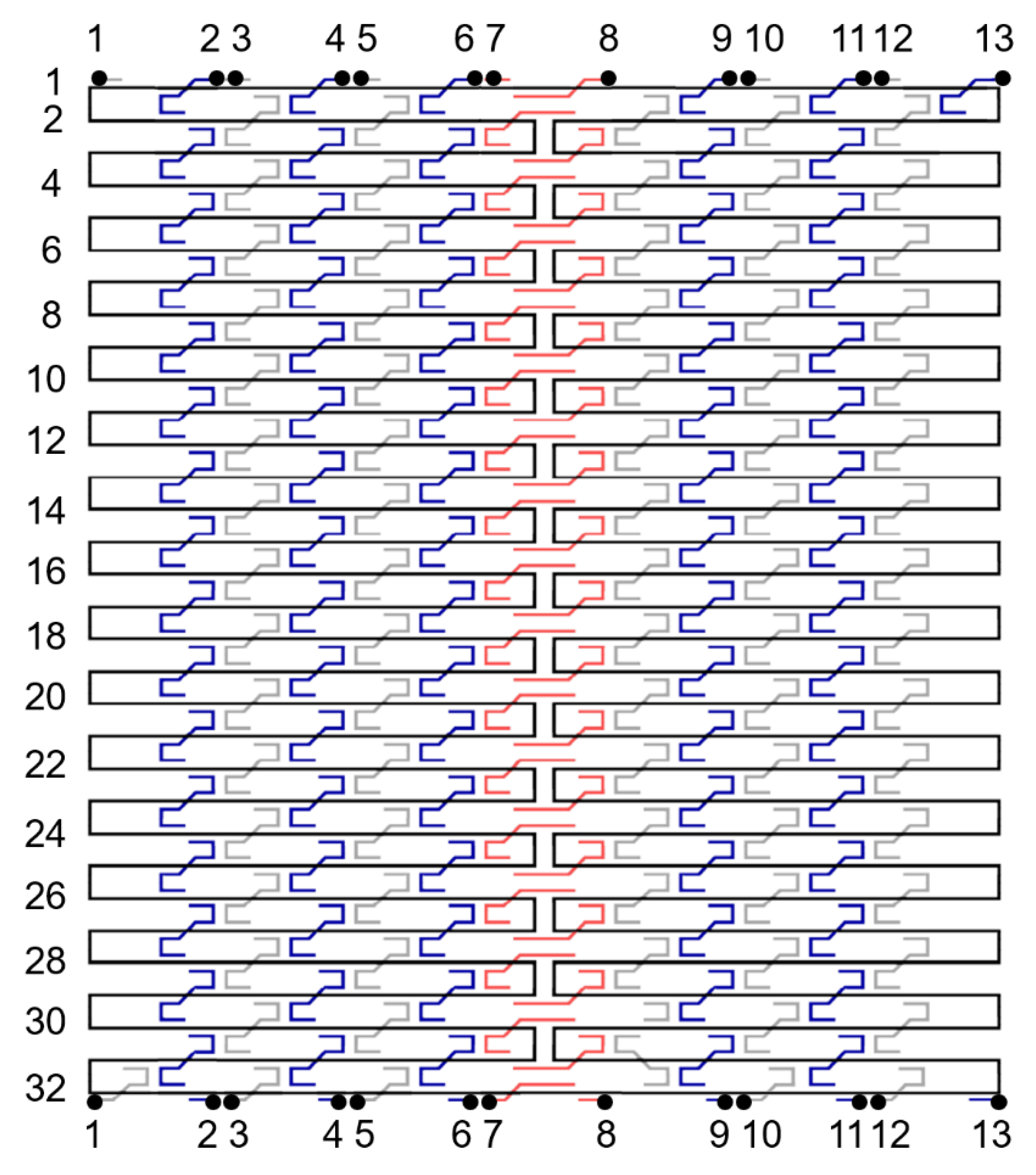
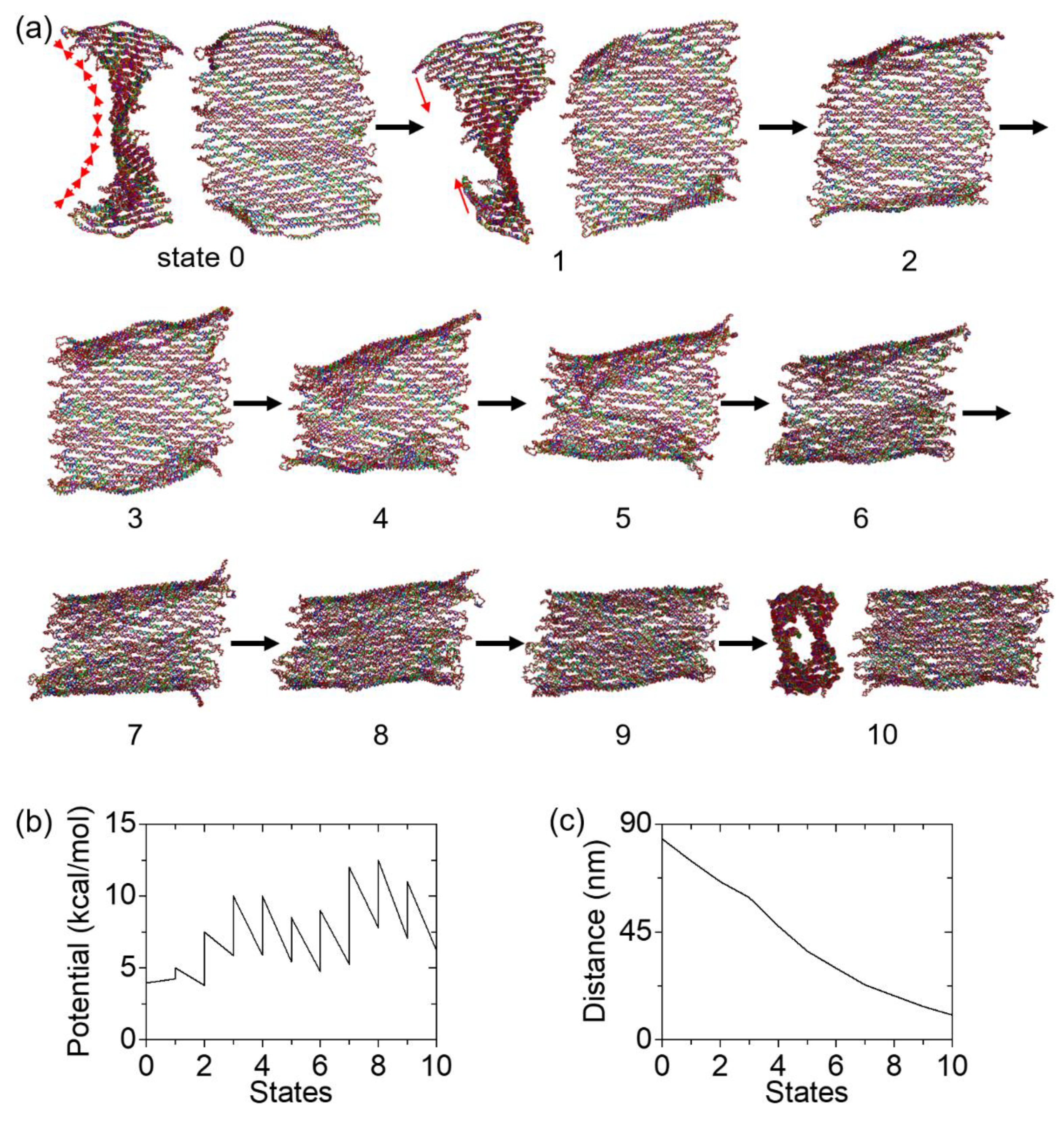
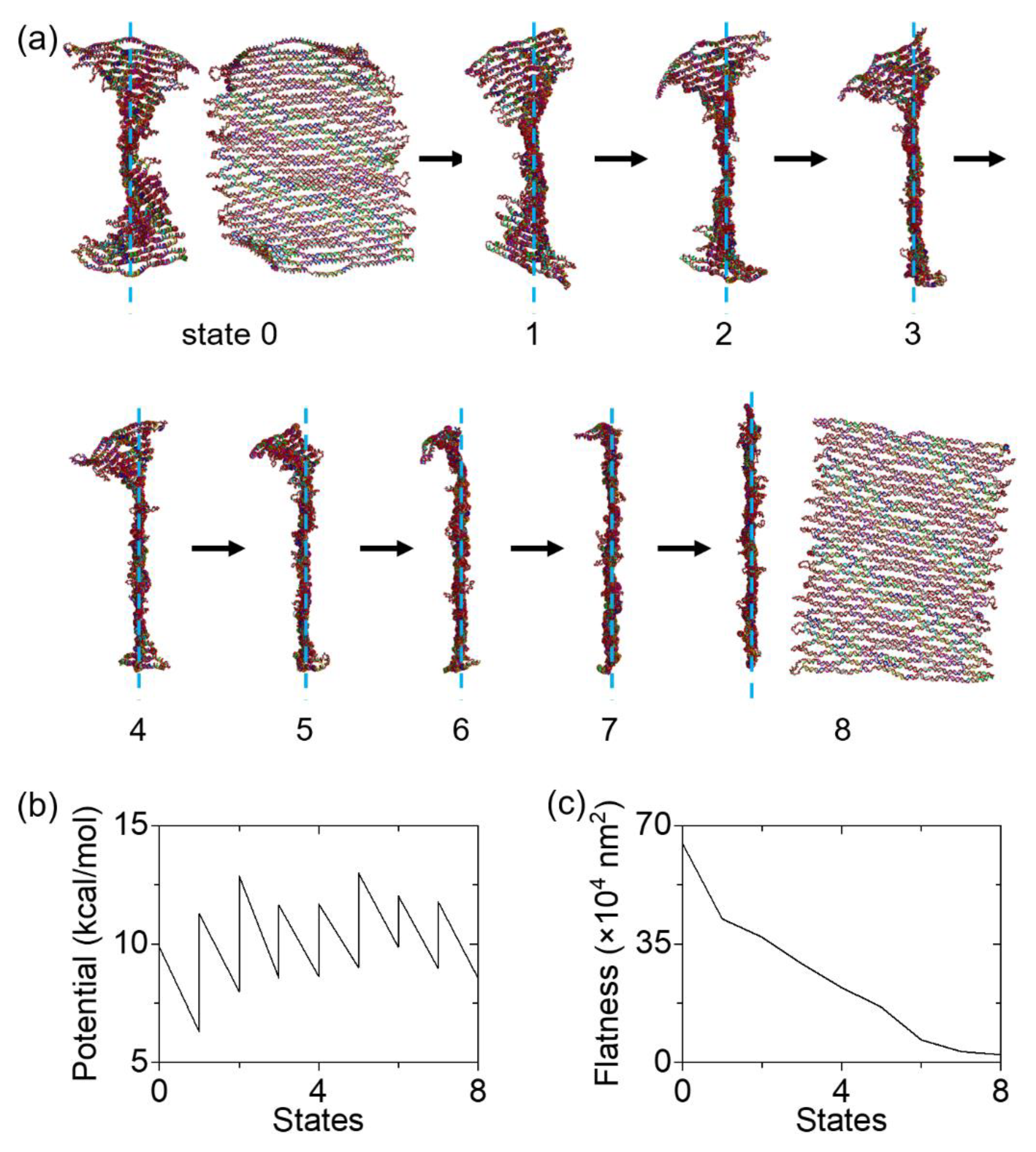
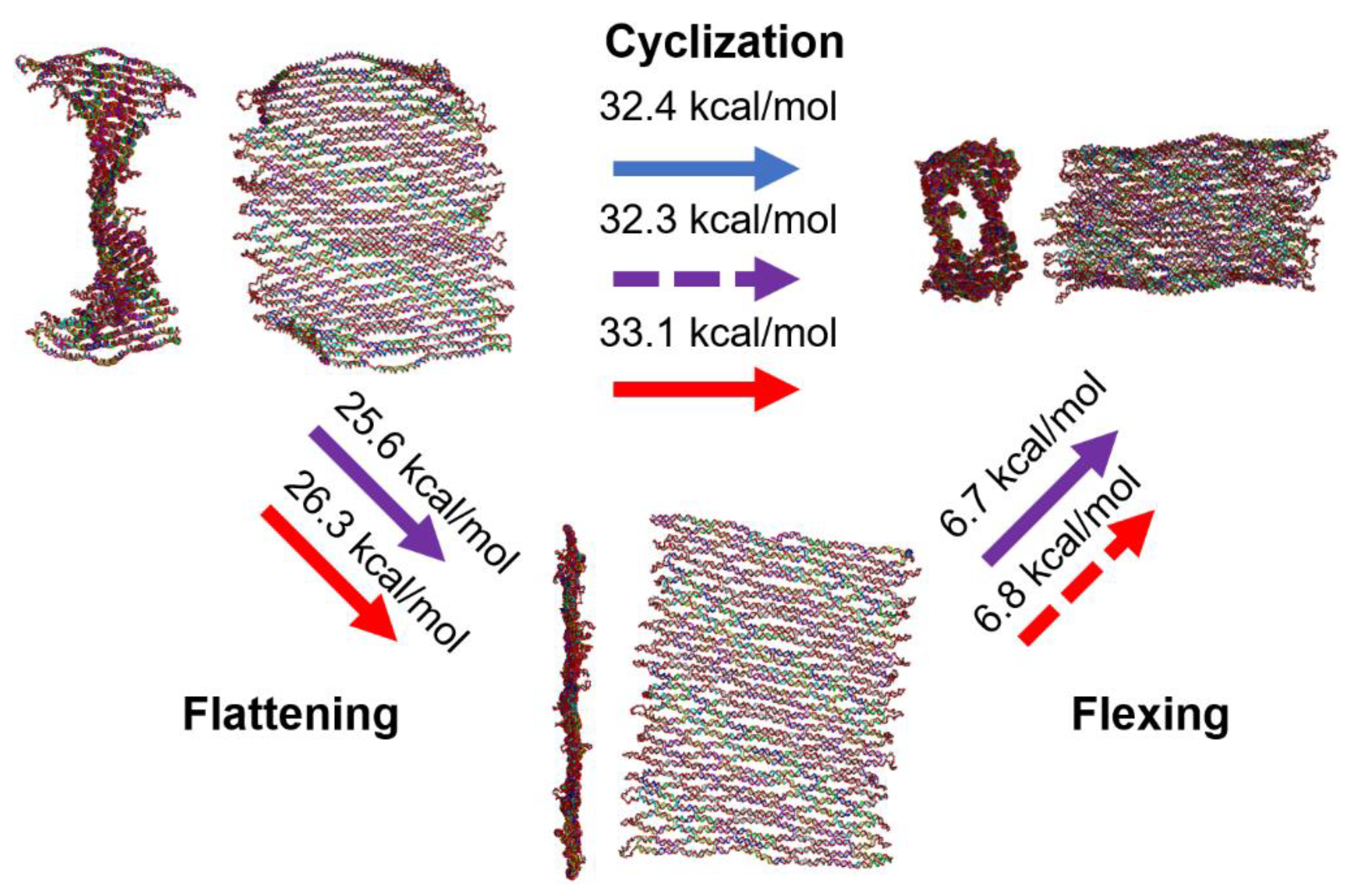
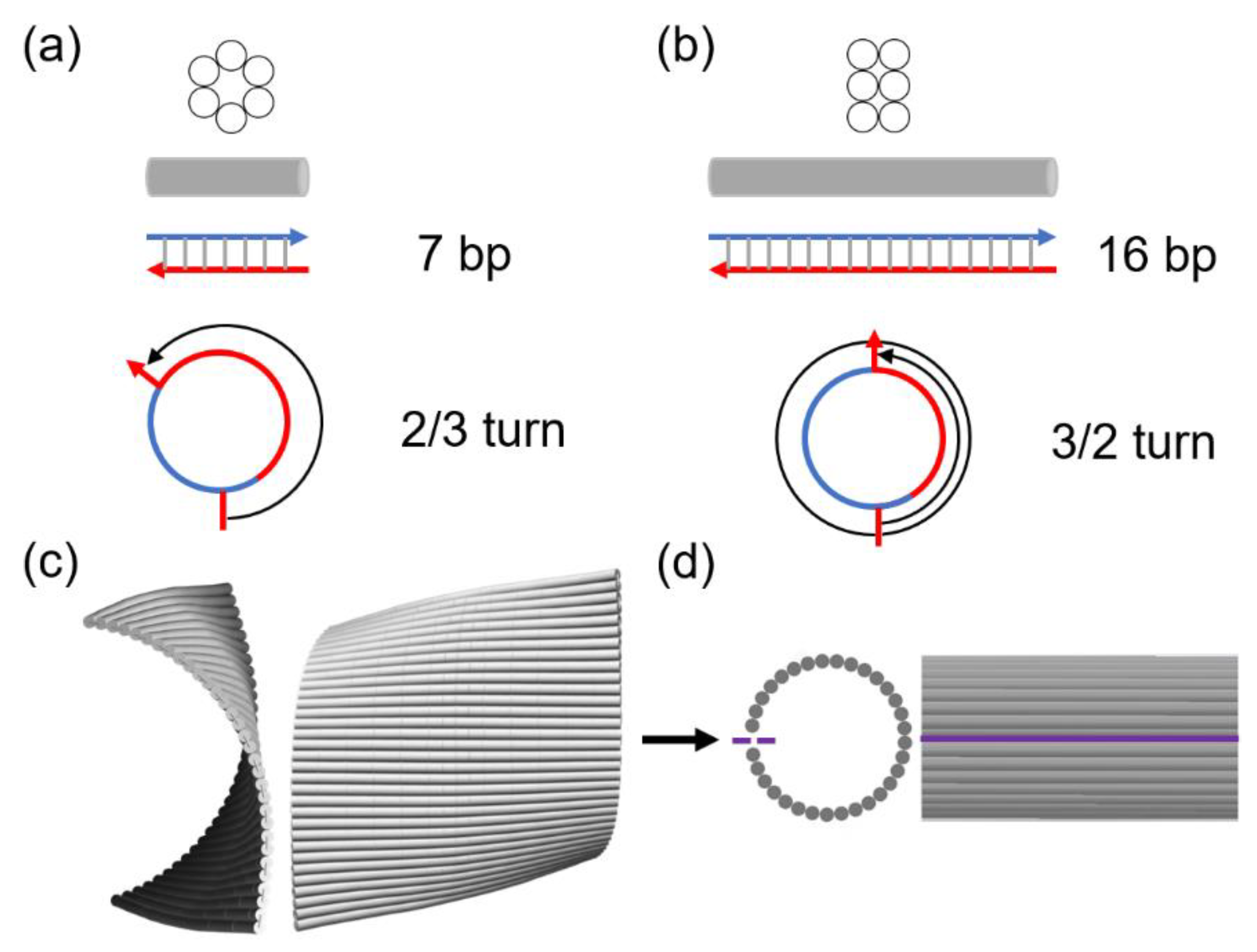
DNA origami has emerged as a versatile method to synthesize nanostructures with high precision. This bottom-up self-assembly approach can produce not only complex static architectures, but also dynamic reconfigurable structures with tunable properties. While DNA origami has been explored increasingly for diverse applications, such as biomedical and biophysical tools, related mechanics are also under active investigation. Here we studied the structural properties of DNA origami and investigated the energy needed to deform the DNA structures. We used a single-layer rectangular DNA origami tile as a model system and studied its cyclization process. This origami tile was designed with an inherent twist by placing crossovers every 16 base-pairs (bp), corresponding to a helical pitch of 10.67 bp/turn, which is slightly different from that of native B-form DNA (~10.5 bp/turn). We used molecular dynamics (MD) simulations based on a coarse-grained model on an open-source computational platform, oxDNA. We calculated the energies needed to overcome the initial curvature and induce mechanical deformation by applying linear spring forces. We found that the initial curvature may be overcome gradually during cyclization and a total of ~33.1 kcal/mol is required to complete the deformation. These results provide insights into the DNA origami mechanics and should be useful for diverse applications such as adaptive reconfiguration and energy absorption.
Keywords: DNA nanotechnology; DNA origami; self-assembly; DNA helicity; mechanics; deformation; cyclization; MD simulations; numerical analysis; oxDNA DNA nanotechnology; DNA origami; self-assembly; DNA helicity; mechanics; deformation; cyclization; MD simulations; numerical analysis; oxDNA