Article

HAZOP Analysis in Terms of Safety Operations Processes for Oil Production Units: A Case Study
by
Artur de J. Penelas
1 and
José C. M. Pires
2,*
1
FEUAN-Faculty of Engineering, University Agostinho Neto, Avenida Ho Chi Minh 56, Luanda 5 0307, Angola
2
LEPABE-Laboratory for Process Engineering, Environment, Biotechnology and Energy, Faculty of Engineering, University of Porto, Roberto Frias, 4200-465 Porto, Portugal
*
Author to whom correspondence should be addressed.
Appl. Sci. 2021, 11(21), 10210; https://doi.org/10.3390/app112110210
Submission received: 26 August 2021 / Revised: 20 October 2021 / Accepted: 22 October 2021 / Published: 31 October 2021

Abstract

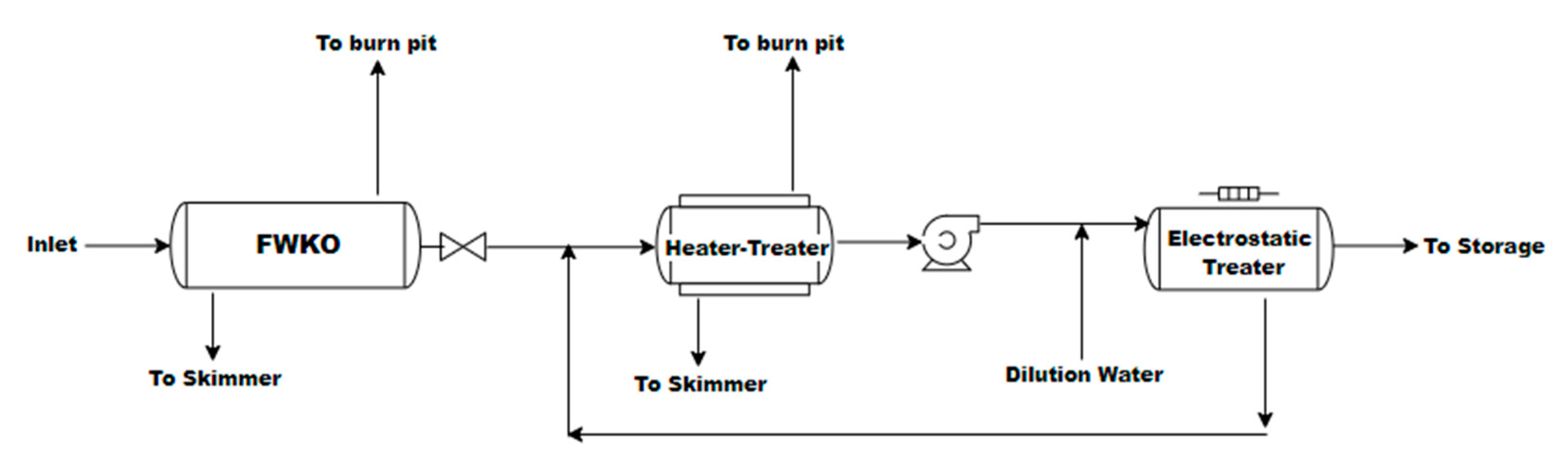
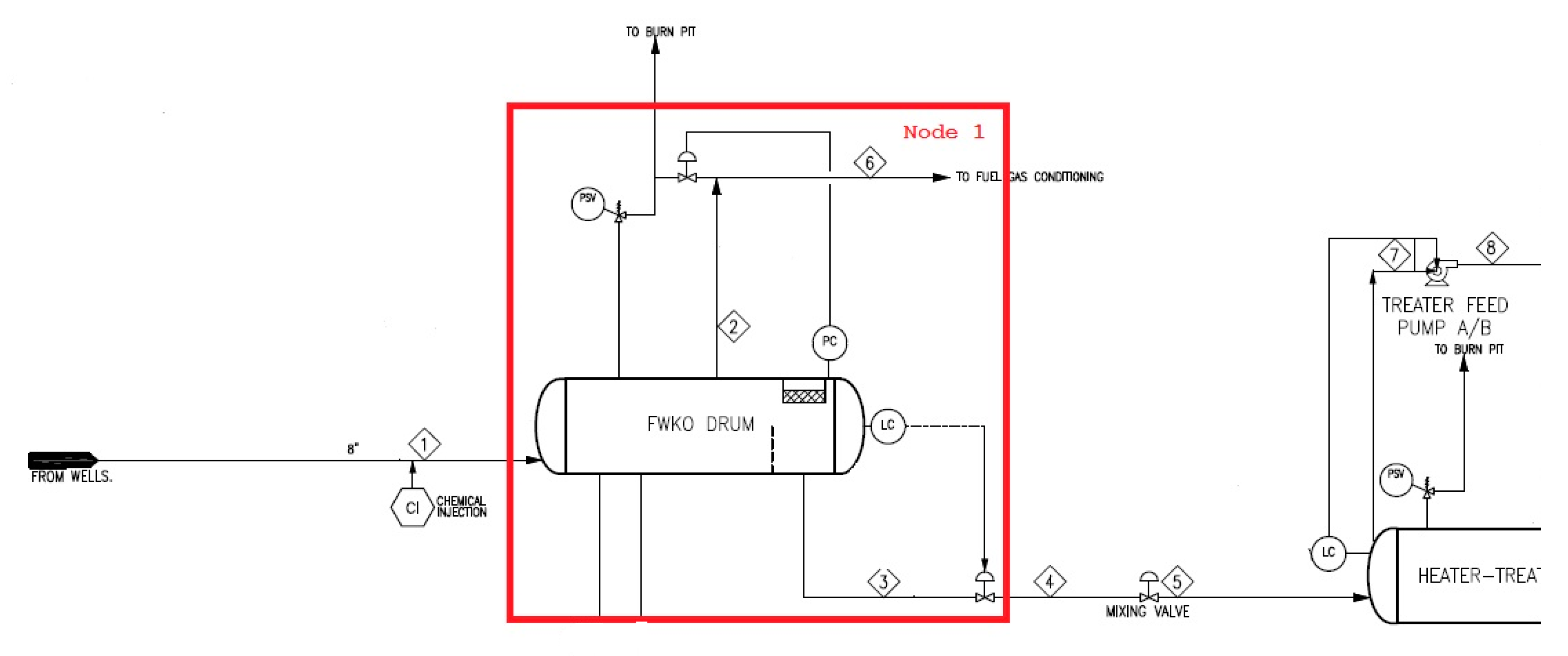
The Hazard and Operability Study (HAZOP) methodology is considered one of the most effective techniques for risk analysis, developed fundamentally to provide regular processes with reduced risks that aim to guarantee the safety of activities and the operability of the production units. The study aims to apply the HAZOP methodology in process and safety operations in the oil production industry. A crude oil production unit was divided into smaller sections that were analysed. By applying the HAZOP methodology, 71 possibilities of relevant risks were identified. The environmental, health and economic impacts were estimated to establish safeguard priorities for them. The application of this methodology and the defined safeguards generated 47 recommendations to mitigate the detected problems. The study contributions were to demonstrate the efficacies of HAZOP methodology to identify potential hazards and evaluate the potential hazards obtained for malfunctioning of equipment and property in terms of the resultant impacts either new or existing process facilities, and as a useful tool to provide essential knowledge for the companies’ leaders, decision-maker, and operations managers.
Keywords: HAZOP analysis; hazard identification; oil production; process safety; production unit HAZOP analysis; hazard identification; oil production; process safety; production unit