Article

Research on the Posture Control Method of Hexapod Robot for Rugged Terrain


State Key Lab of Robotics and System, Harbin Institute of Technology, Harbin 150080, China
*
Authors to whom correspondence should be addressed.
Co-first authors.
Appl. Sci. 2020, 10(19), 6725; https://doi.org/10.3390/app10196725
Submission received: 15 August 2020 / Revised: 17 September 2020 / Accepted: 21 September 2020 / Published: 25 September 2020
(This article belongs to the Section Robotics and Automation)

Abstract

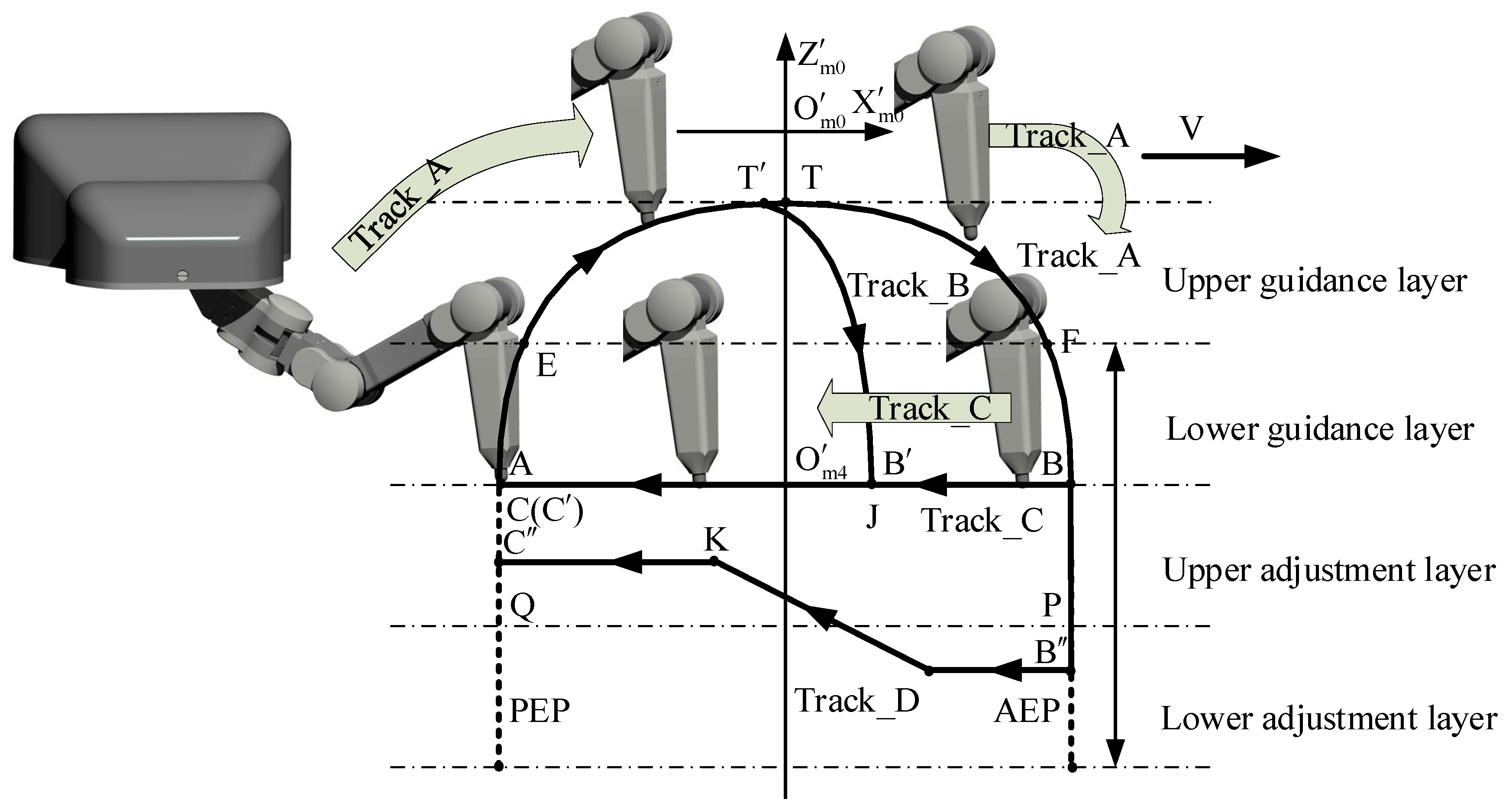
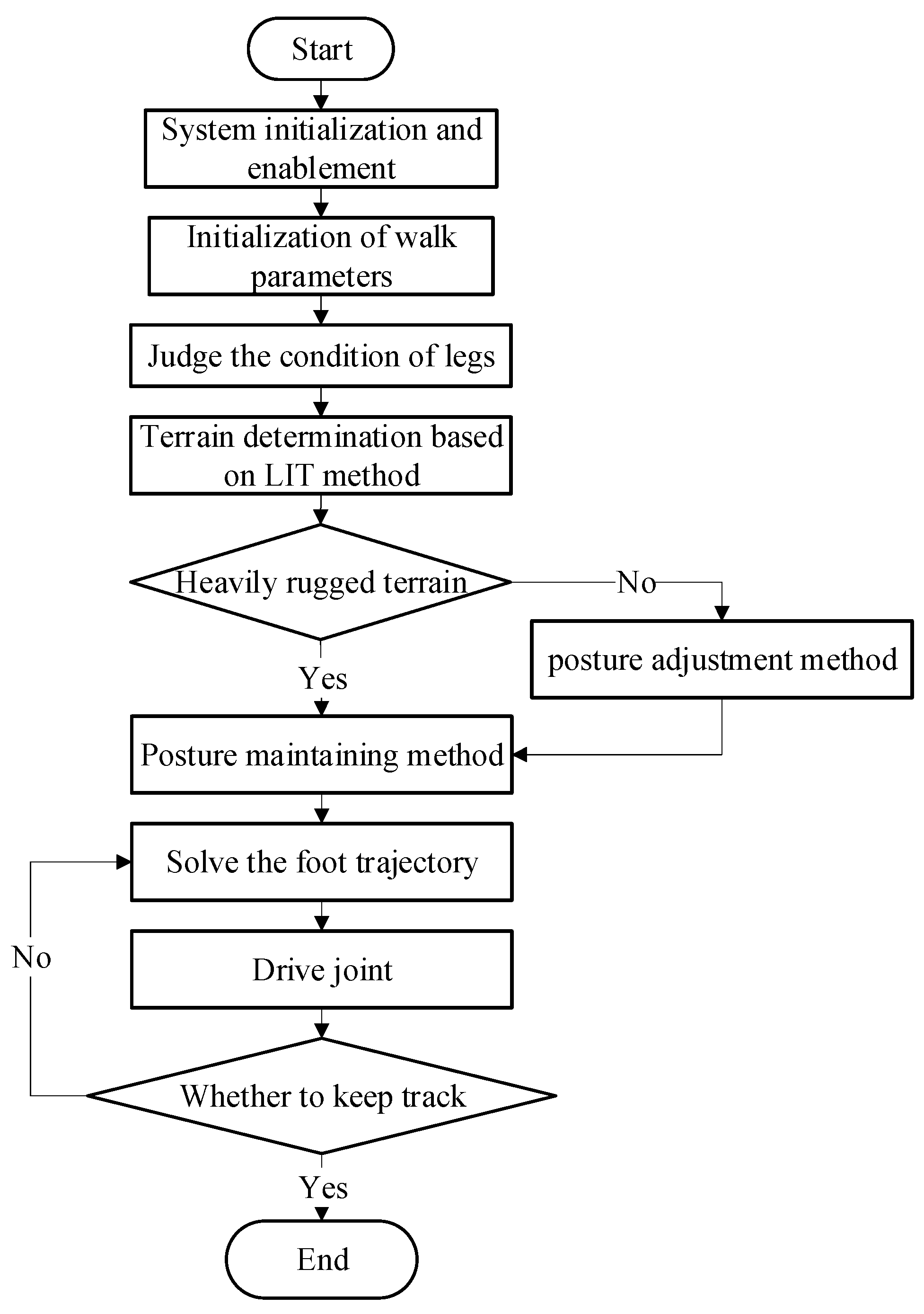
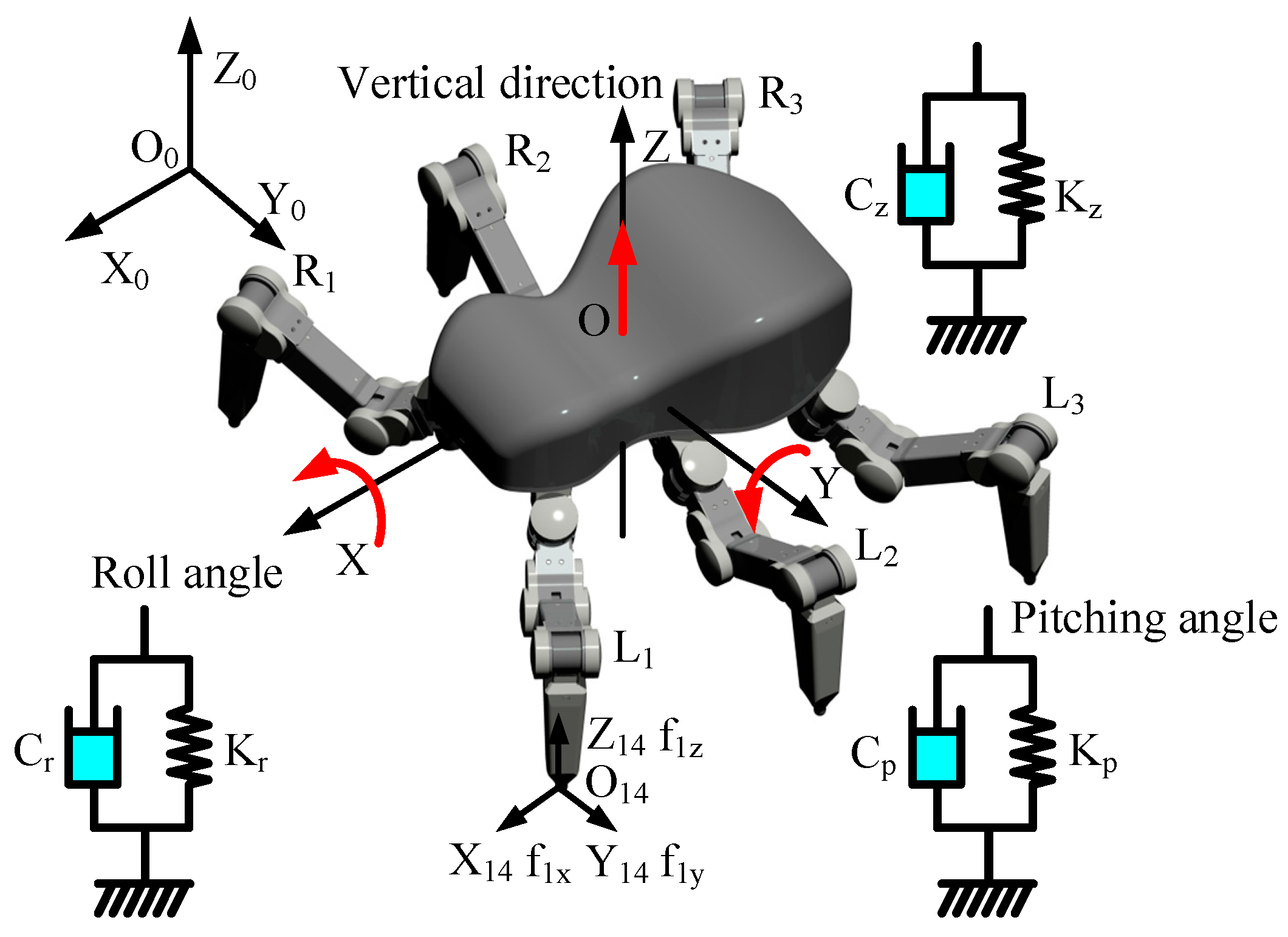
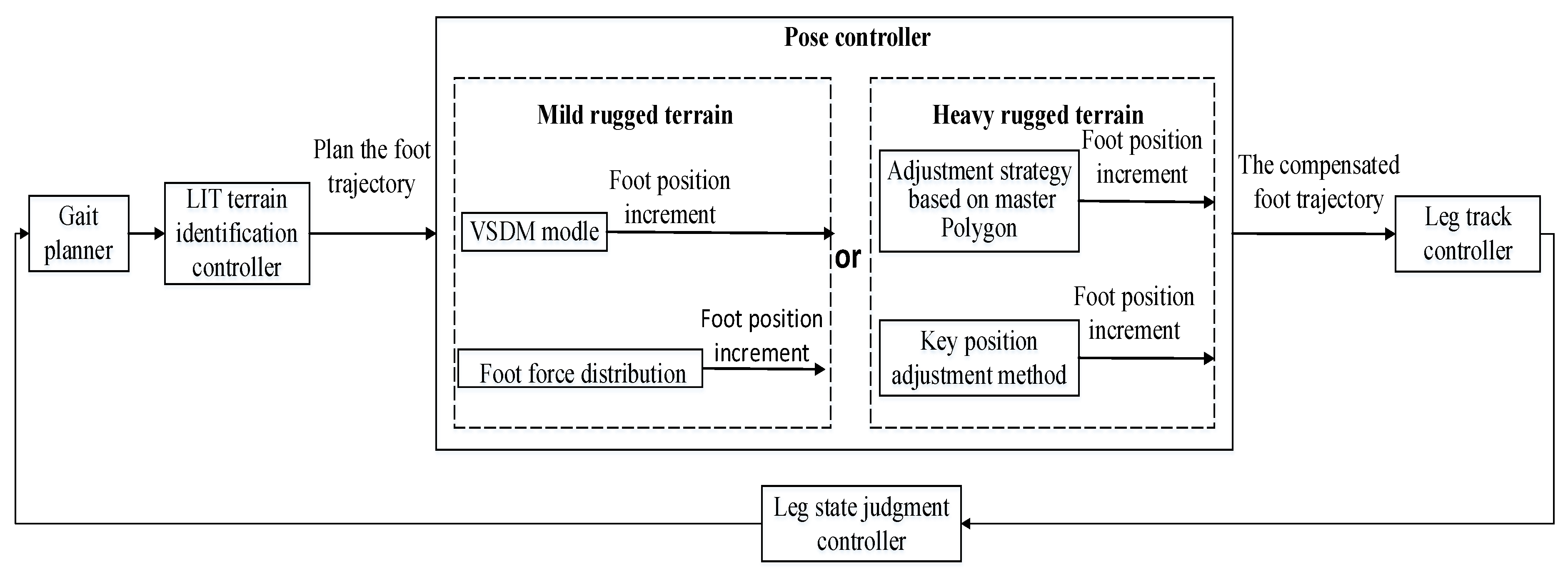
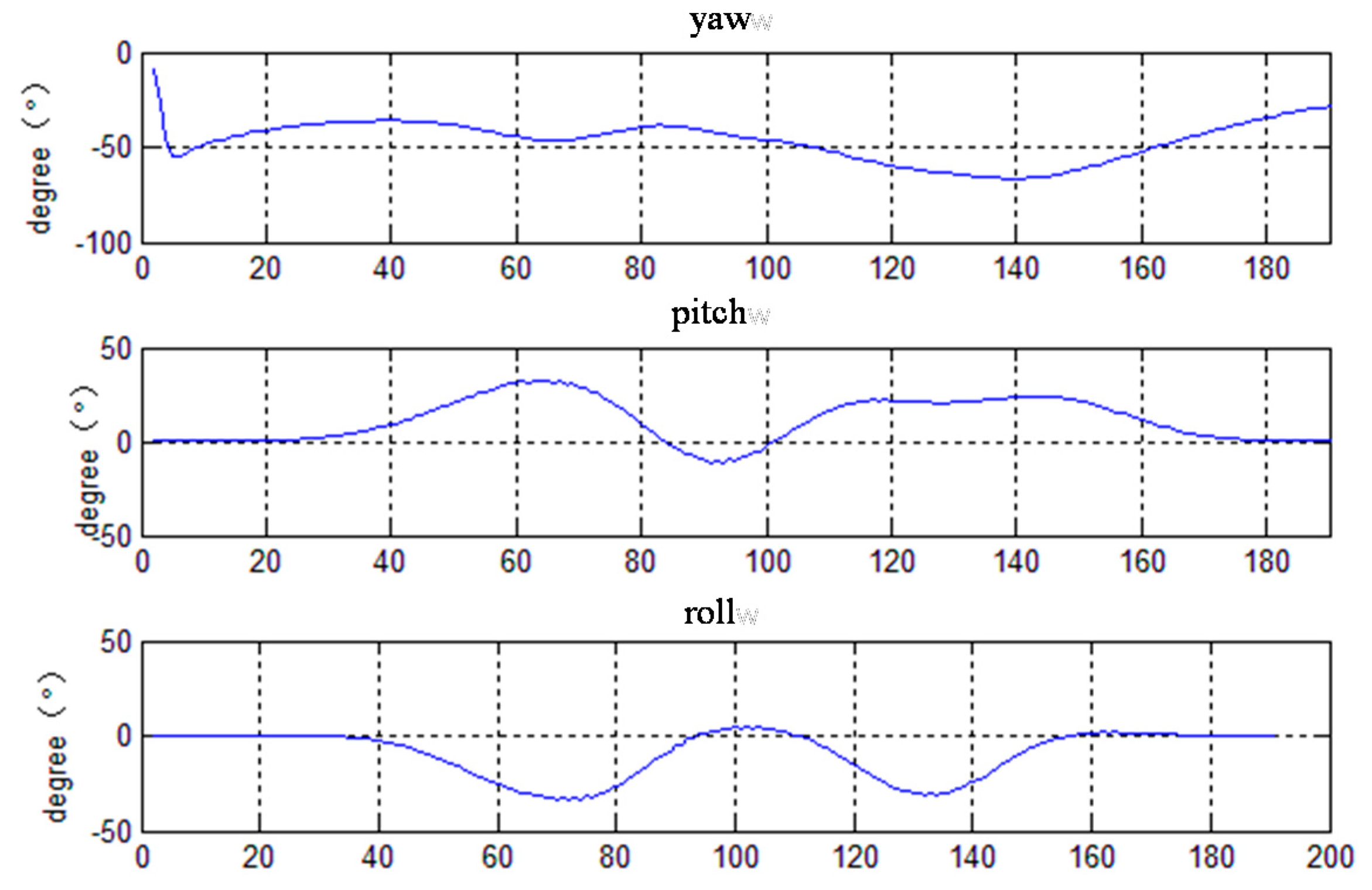
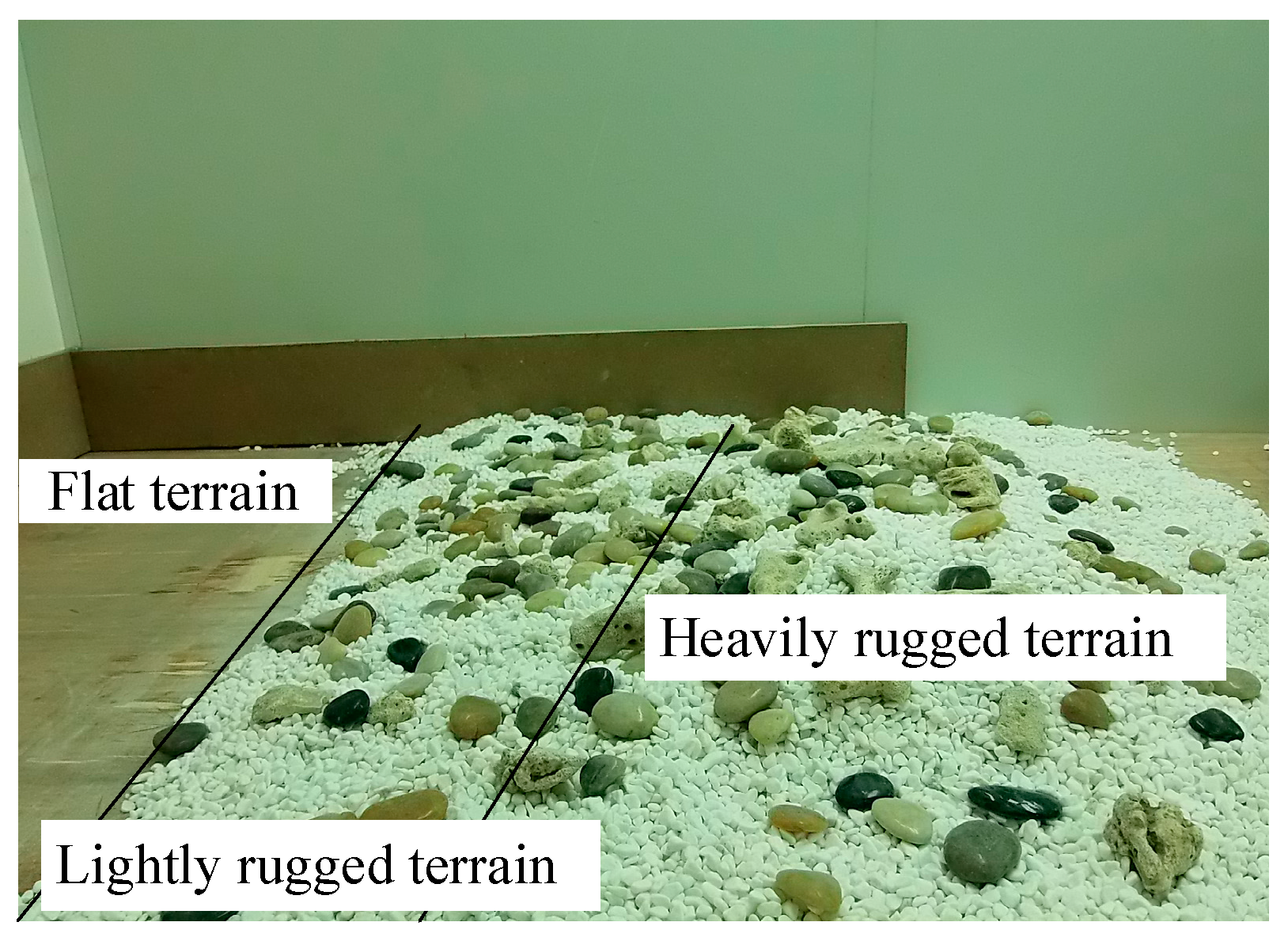
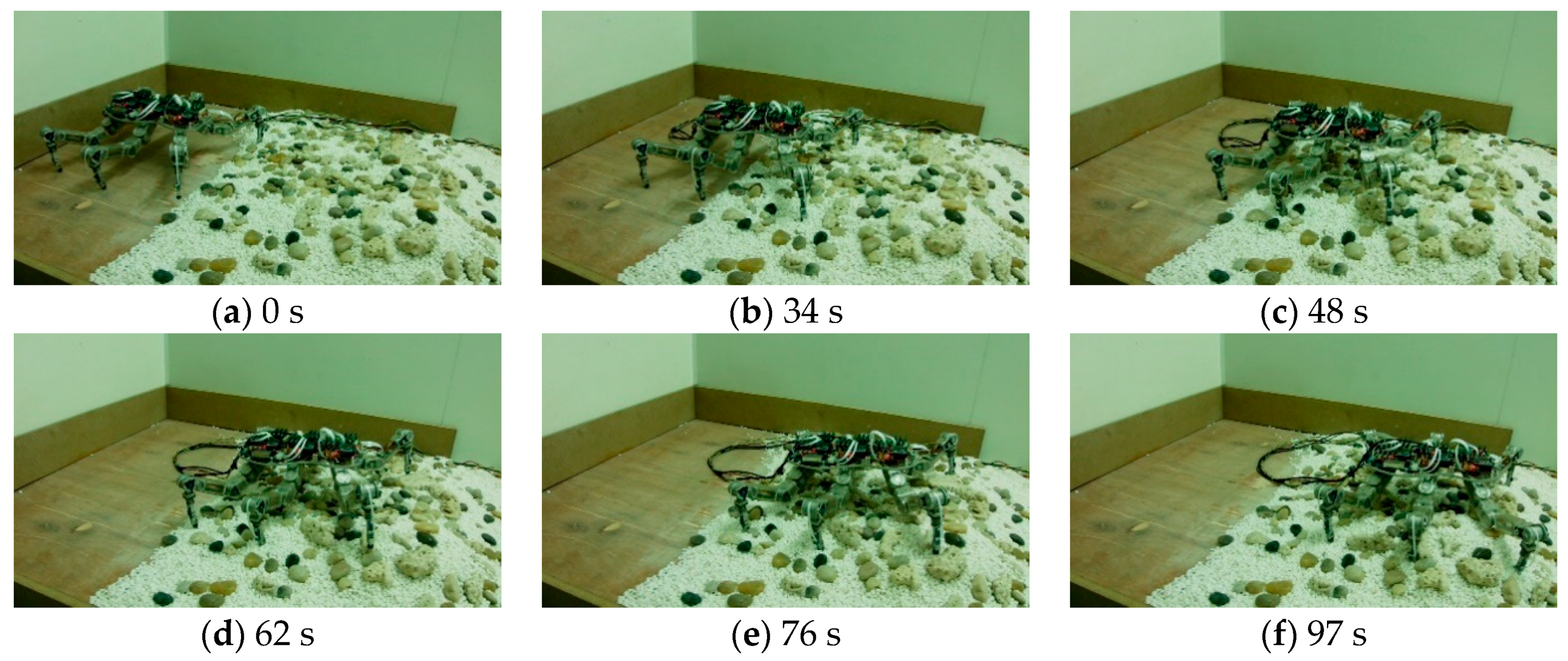
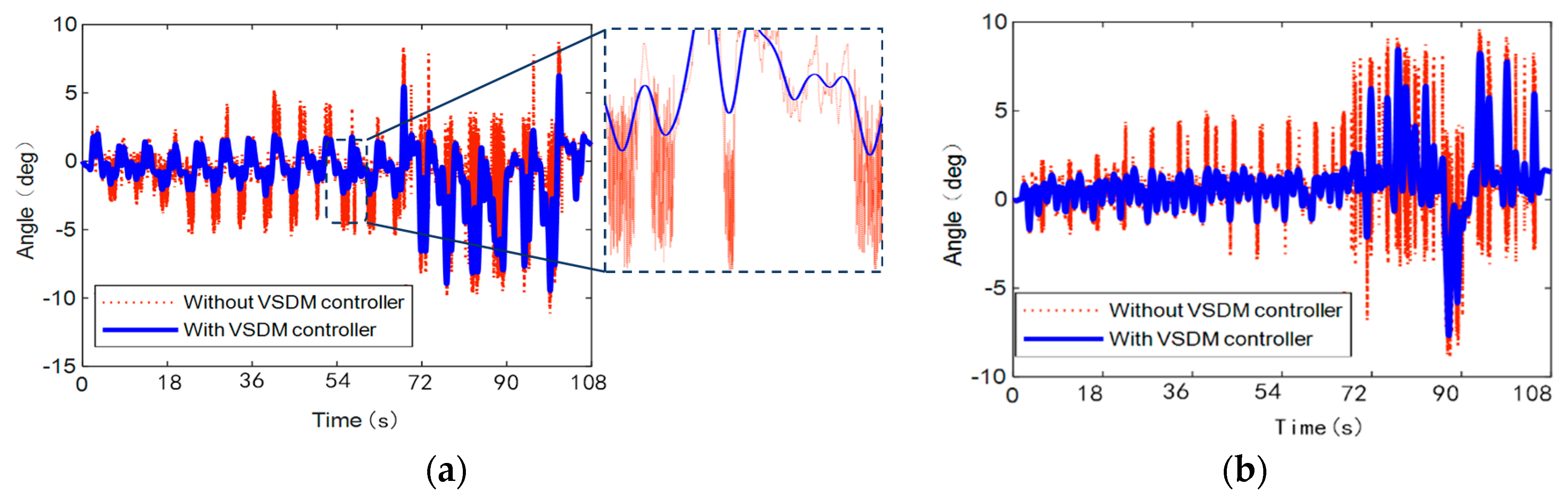
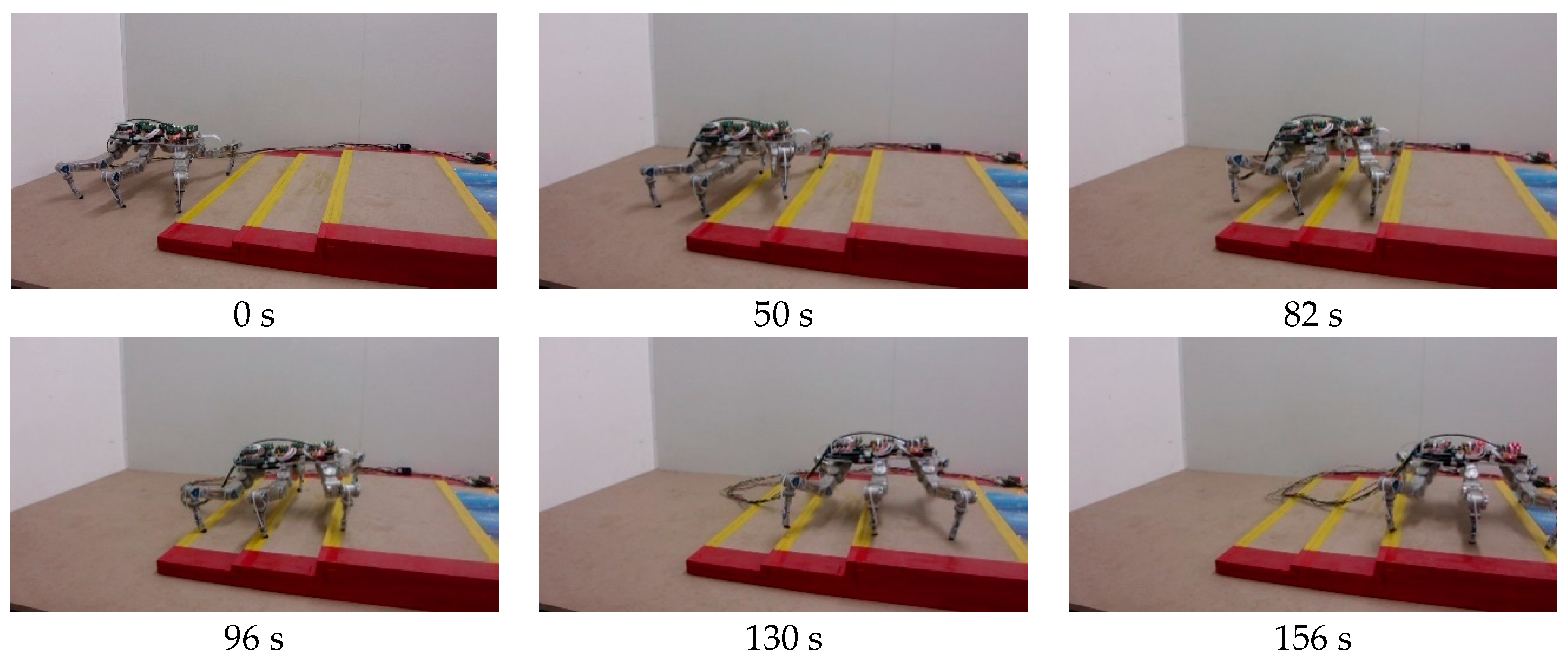
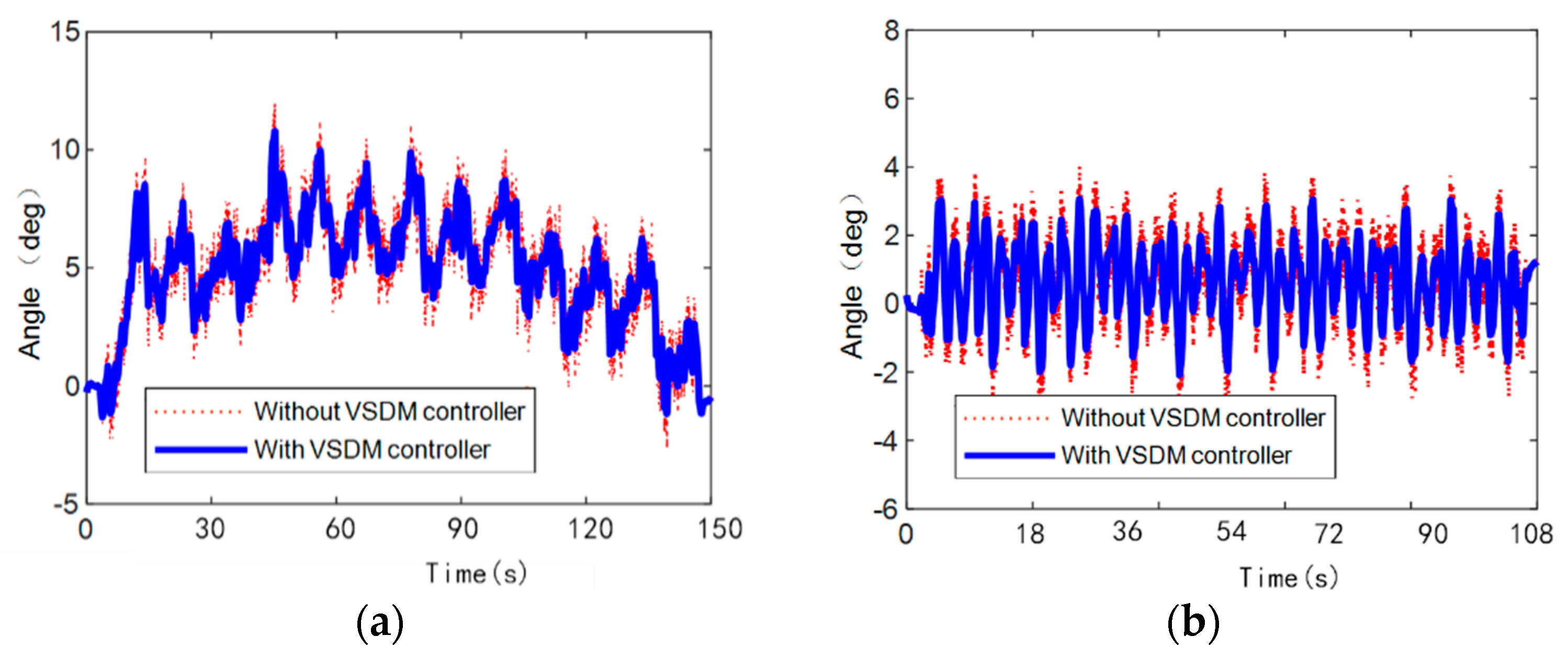
This paper proposes a hexapod robot posture control method for rugged terrain to solve the problem of difficulty in realizing the posture control of a foot robot in rough terrain. The walking gait and original position of a six-legged robot is planned, and the Layer Identification of Tracking (LIT) strategy is developed to enable the robot to distinguish mild rugged terrain and severe rugged terrains automatically. The virtual suspension dynamic model is established. In mild rugged terrain, the posture maintenance strategy is adopted to keep the stability of the torso. In severe rugged terrain, the posture adjustment strategy is adopted to ensure the leg workspace and make it more widely adapt to the changing terrain, and a gravity center position adjustment method based on foot force distribution is designed to use foot force as feedback to control the position and attitude. The experiment of posture control in rough terrain and climbing experiment in the ladder terrain shows that the hexapod robot has good posture maintenance and posture adjustment effects when traversing complex terrain through the posture maintenance strategy and the posture adjustment strategy. Combined with the terrain identification method based on LIT, the hexapod robot can successfully climb the ladder terrain through the identification of the changing ladder terrain, and the movement of the posture adjustment process is stable.
Keywords: hexapod robot; foot trajectory planning; posture control; rugged terrain; autonomous recognition hexapod robot; foot trajectory planning; posture control; rugged terrain; autonomous recognition