1. Introduction
The growing importance of environmental, social and governance considerations has increased the demand for reliable and comparable corporate sustainability information. This development has placed greater pressure on firms to connect environmental measurement with managerial decision-making, external reporting, and performance evaluation (
Shmelev & Gilardi, 2025). Green accounting is central to this process because it provides the internal information required to identify the environmental costs, monitor resource use, and assess the consequences of corporate activities (
Asiaei et al., 2022). At the same time, sustainability reporting determines how this information is communicated and incorporated into ESG assessment.
Regulatory developments have further increased the importance of this relationship. The EU Non-Financial Reporting Directive and the subsequent Corporate Sustainability Reporting Directive strengthened expectations concerning the consistency, transparency, and comparability of sustainability information (
European Commission, 2021). As a result, green accounting, sustainability reporting and ESG evaluation have become increasingly connected. However, these areas have not developed as separate research streams, making it difficult to determine how the field has evolved and how its principal concepts are intellectually related.
Organizations increasingly operate in dynamic ESG environments shaped by regulatory change, climate-related risks, stakeholder pressure, technological development, and growing demands for transparent sustainability information. These conditions affect not only external reporting but also internal planning, performance measurement, resource allocation, risk assessment, and managerial decision-making. Green accounting can therefore be understood as part of the management-control infrastructure through which organizations identify environmental costs, monitor resource use, evaluate sustainability initiatives, and respond to changing institutional expectations. Sustainability reporting subsequently connects this internally generated accounting and control information with external ESG evaluation and stakeholder accountability.
This study addresses this need through a bibliometric analysis of Scopus-indexed journal articles published between 2005 and 2026. Bibliometrix, Biblioshiny v.5.3.0 and VOSviewer v.1.6.20 are used to examine publication trends, leading journals, geographical contributions, keyword co-occurrence, thematic development, and conceptual structures. The study therefore provides a structured overview of the knowledge base connecting green accounting with ESG research.
Additionally, this study makes three contributions. First, it maps the development and intellectual structure of research connecting green accounting, sustainability reporting, and ESG performance. Second, it interprets green accounting not only as an environmental measurement practice but also as an organizational information and management-control mechanism that supports planning, monitoring, decision-making, and performance evaluation. Third, it explains how sustainability reporting connects internally generated accounting and control information with external ESG evaluation under dynamic regulatory, technological, and stakeholder conditions. In doing so, the study integrates accounting, management control, sustainability reporting, and ESG research within a common conceptual framework.
The paper is structured as follows.
Section 2 reviews the development of green accounting, sustainability reporting, and ESG performance and presents the research gap and conceptual synthesis.
Section 3 describes the bibliometric methodology and the study selection process.
Section 4 presents the results generated through bibliometrics, Biblioshiny and VOSviewer.
Section 5 discusses the principal findings and their implications for the development of the field.
Section 6 concludes the paper, while
Section 7 outlines the main limitations and directions for future research.
2. Literature Review
2.1. From Environmental Accounting to ESG Measurement
The connection between accounting and corporate sustainability developed initially through environmental accounting. This research stream emerged in response to the limited capacity of conventional accounting systems to identify the environmental consequences of production. Environmental costs were often included in general overhead accounts, which reduced their visibility and weakened their use in managerial decisions.
Swalih et al. (
2024) address these limitations through environmental management accounting, which combines monetary information with physical data on material and energy flows. This approach made it possible to trace the cost of water emissions, resource losses and non-product output to the processes in which they originated. Environmental performance was therefore translated into information that could be incorporated into cost assessment and operational control.
The development of sustainability accounting broadened this earlier focus. Rather than concentrating exclusively on environmental expenditure and physical resource flows, sustainability accounting considered how accounting systems could report a wider assessment of corporate responsibility (
Christ et al., 2024;
Huston, 2025). Singhania and others (
Singhania et al., 2025) observed that the term was frequently applied without a consistent conceptual meaning. They distinguish its substantive use as an information management approach from its superficial use as a general label for environmental reporting. Under the former interpretation, sustainability accounting connects organizational activities with their economic, environmental, and social consequences. Its purpose is to produce decision-relevant information rather than merely expand the content of corporate reports.
This conceptual development altered the role assigned to accounting information. Environmental accounting had primarily sought to reveal costs and resource inefficiencies that conventional systems failed to identify. Sustainability accounting extended this function by connecting such information with corporate responsibility and sustainable development (
Abubakr et al., 2024). The transition did not eliminate environmental accounting. Instead, it placed environmental measurement within a wider information system that addressed several dimensions of organizational performance (
Voskopoulou et al., 2025). Green accounting can therefore be understood as part of this development, particularly when environmental information is incorporated into corporate measurement and management rather than treated solely as a disclosure item.
The emergence of ESG measurement represents a further stage in this progression. ESG systems do not simply record environmental and sustainability information. They convert corporate data into indicators, scores, and ratings intended to support comparisons between firms (
Berradia, 2026). This process involves the decisions about which corporate activities should be measured, how individual indicators should be constructed, and how the environmental, social and governance dimensions should be weighted. ESG measurement therefore depends on the information generated by corporate accounting and reporting systems, but it also reflects the methodological choices of rating providers (
D’Ecclesia et al., 2024).
Berg et al. (
2022) demonstrate the importance of these methodological choices. Their comparison of six major ESG rating agencies found substantial disagreement between the ratings assigned to the same companies. The authors attribute most of this divergence to differences in measurement and scope, while differences in weighting play a smaller role. Their findings show that ESG scores are not neutral representations of corporate sustainability. They are constructed evaluations whose results depend on both the underlying information and the methodology used to interpret it.
The availability of additional corporate information does not necessarily remove this measurement problem.
Christensen et al. (
2022) found that greater ESG disclosure was associated with higher disagreement among ESG rating agencies rather than greater consensus. The disagreement was particularly pronounced for outcome-based measures, which different providers interpreted in different ways. This evidence indicates that the transition from sustainability information to ESG measurement is not automatic. More extensive disclosure may increase the amount of information available while leaving unresolved questions concerning classification, materiality, and measurement.
The progression from environmental accounting to ESG measurement therefore involves two connected but distinct processes. Environmental and sustainability accounting generate information about corporate impact and resource use. ESG measurement subsequently selects and aggregates this information to evaluate corporate performance. This distinction explains why the present study combines accounting-related terms with ESG metrics, ratings, disclosure, and performance in its bibliometric search strategy. The two groups of terms represent different stages of the same information process rather than interchangeable concepts.
An additional implication of this development concerns the investment management industry. Green and environmental accounting generate firm-level information concerning emissions, resource consumption, environmental costs, liabilities, and climate-related exposures. When communicated through sustainability reporting, this information becomes an input into ESG analysis, valuation, portfolio screening, risk management, investment-product development, and shareholder engagement. Survey evidence indicates that investment professionals primarily use ESG information because of its perceived relevance to investment performance, although the absence of consistent reporting standards remains an important barrier (
Amel-Zadeh & Serafeim, 2018). Institutional investors also consider climate risks financially relevant and frequently address them through risk management and engagement rather than divestment alone (
Krueger et al., 2020).
Ilhan et al. (
2023) similarly identified strong institutional-investor demand for improved climate-risk disclosure. However, the investment usefulness of environmental information depends on its reliability and comparability. Disagreement among ESG ratings, particularly concerning environmental measurement, can complicate portfolio assessment and benchmarking (
Berg et al., 2022;
Christensen et al., 2022). Green accounting may therefore affect investment management indirectly by improving the environmental information on which external ESG analyses depend, although this relationship requires further direct empirical investigation.
2.2. ESG Performance and Sustainability Reporting
Recent research has shifted attention from the volume of sustainability disclosure to the extent to which reporting corresponds with measurable ESG outcomes. The relationship cannot be assumed to be linear. Imperiale et al. examined (
Imperiale et al., 2023) 146 listed utility companies between 2017 and 2021 and identified an inverted U-shaped relationship between sustainability reporting quality and ESG performance. Improvements in reporting quality were initially associated with strong environmental and social performance. Beyond a certain level, however, additional reporting quality did not produce equivalent performance improvements. No significant relationship was identified for the governance dimension. These findings indicate that extensive reporting may eventually become disconnected from substantive corporate outcomes, particularly when communication develops more rapidly than operational change.
The correspondence between reporting and performance also depends on how sustainability information is presented.
Sun et al. (
2024) analyzed 5985 firm-year observations from Chinese listed companies and found that stronger ESG performance was associated with a more positive reporting tone. The study also showed that the use of the Global Reporting Initiative Framework and external assurance restricted excessively positive language. Reporting frameworks and assurance therefore appear to serve a governance function by limiting managerial discretion over how sustainability outcomes are communicated. This evidence is particularly relevant because reporting quality concerns not only the indicators disclosed but also whether the accompanying narrative represents corporate performance in a balanced manner.
Mandatory sustainability reporting may also influence corporate performance by changing the conditions under which governance mechanisms operate.
Vitale et al. (
2025) examined an international sample of 840 companies and found that reporting regulation did not produce uniform effects across environmental and social dimensions. The introduction of mandatory requirements altered the influence of board characteristics, managerial incentives, and governance practices on ESG outcomes. Compensation linked to ESG targets was positively associated with sustainability performance in the absence of reporting regulation, whereas this effect weakened after mandatory requirements were introduced. The findings suggest that reporting obligations alone do not guarantee substantive improvement and may redirect managerial attention toward regulatory compliance rather than broader sustainability objectives.
The relationship may also operate in the opposite direction, as firms with stronger outcomes may develop higher quality sustainability disclosure.
Shao et al. (
2026) studied 3678 Chinese listed firms from 2014 to 2023 and found that ESG performance significantly improved the quality of corporate social responsibility disclosure. Investor and media attention partially mediated this relationship, indicating that external scrutiny encourages firms with stronger sustainability performance to communicate their activities more comprehensively. The effect was present in both state-owned and non-state-owned firms, although it was stronger among non-state-owned companies.
These findings show that sustainability reporting is neither a simple reflection of ESG performance nor an automatic driver of improvement. Their relationship is shaped by reporting quality, narrative choices, assurance practices, regulatory conditions, and stakeholder scrutiny. Sustainability reporting can strengthen the visibility and accountability of ESG activities, but it can also become detached from operational performance when firms prioritize the presentation of sustainability information over the achievement of measurable outcomes.
2.3. Theoretical and Empirical Linkages Between Green Accounting and ESG Performance
Empirical research on the relationship between green accounting and ESG performance remains narrower than the expanding literature suggests. Most studies do not assess overall ESG performance through a composite score. Instead, they examine corporate environmental performance and represent green accounting through environmental management accounting practices. The available evidence therefore establishes a clearer connection with the environmental pillar of ESG than with the combined environmental, social, and governance dimensions.
Asiaei et al. (
2022) examined whether environmental management accounting enables firms to transform green intellectual capital into improved environmental outcomes. Their findings support the mediating role of environmental management accounting. Green resources and knowledge did not influence performance independently of the system used to organize and apply them. The study therefore presents green accounting as a mechanism that converts environmental capabilities into measurable organizational outcomes. This result is important because it shifts the analysis away from the mere possession of green resources and toward their integration into accounting and managerial processes.
The effect of green accounting also appears to depend on the environmental strategy pursued by the firm.
Appannan et al. (
2023) found that environmental management accounting mediated the effects of pollution prevention and clean technology strategies on environmental performance. The same mediating effect was not identified for process stewardship. These differences indicate that green accounting does not produce uniform results across all environmental initiatives. Its contribution is stronger when firms use accounting information to evaluate identifiable investments, resource savings, and pollution reduction activities. It may be weaker when environmental responsibilities are distributed across broader operational processes that are difficult to quantify through established accounting measures.
Further evidence identifies environmental innovation as a central mechanism within this relationship.
Hanif et al. (
2023) reported a significant association between environmental management accounting and corporate environmental performance in manufacturing firms. Their analysis also emphasized the role of green process innovation in translating accounting information into operational improvements. Green accounting can reveal inefficient material use and environmental costs, but performance improvements depend on whether management uses this information to redesign production processes. Accounting information therefore becomes consequential when it supports changes in organizational activity rather than remaining confined to measurement and control.
Gerged et al. (
2024) reached a related conclusion in their study of small- and medium-sized enterprises. They found a significant direct relationship between environmental management accounting and firm performance, including both environmental and financial outcomes. Environmental innovation mediated this relationship while stakeholder integration strengthened the relationship between innovation and performance. The findings show that accounting information alone is not the final source of performance improvement. Its value depends on the organizational capacity to convert the information into innovation and on the involvement of stakeholders in that process.
Recent evidence from manufacturing SMEs in Yemen provides additional support for this interpretation.
Hasan et al. (
2024) identified a positive effect of environmental management accounting on environmental performance and found that green innovation partially mediated the relationship. The partial mediation result indicates that green accounting may influence environmental performance directly through stronger monitoring and control. It may also operate indirectly by encouraging firms to modify their products and production processes. The consistency of this finding with the earlier studies strengthens the argument that innovation represents a recurring pathway between accounting practices and environmental outcomes.
Despite the broadly positive findings, the evidence does not establish a universal relationship between green accounting and overall ESG performance. The literature is concentrated in manufacturing firms, SMEs, and developing economies. Much of the evidence is based on cross-sectional surveys and self-reported measures. These designs are useful for examining organizational mechanics, but they provide limited evidence about long-term effects and causal direction. More importantly, most studies measure environmental performance rather than composite ESG performance. The social and governance consequences of green accounting therefore remain less directly examined.
The existing literature supports a positive but conditional relationship. Green accounting contributes to environmental performance when accounting information is integrated into strategy, operational control, and innovation. Its effect varies according to the type of environmental strategy and the organizational context in which it is implemented. The evidence is therefore insufficient to assume that the adoption of green accounting automatically produces stronger ESG performance. This limitation creates the need to examine how the relationship has been conceptualised across the literature and which dimensions remain undeveloped.
2.4. Green Accounting as a Management Control Mechanism in Dynamic ESG Contexts
Green accounting can be understood as an element of management control because it generates environmental information that supports planning, monitoring, decision-making, and performance evaluation (
Khan & Gupta, 2024). By identifying environmental costs, material losses, energy consumption, emissions, and resource inefficiencies, green accounting expands the information available to managers beyond conventional financial measures. This information can subsequently be incorporated into budgets, investment evaluations, operational targets, performance indicators, and internal accountability mechanisms (
Le et al., 2019).
The management control relevance of green accounting becomes particularly important in dynamic organizational environments. Organizations are increasingly exposed to regulatory change and evolving ESG expectations. These pressures create uncertainty and require accounting systems that can provide timely and decision-relevant information. Environmental management accounting can assist organizations in responding to these conditions by connecting environmental impacts with operational processes, resource allocation, innovation, and strategic decision-making (
Kusumaningtyas et al., 2026;
Sneideriene & Legenzova, 2025a).
Sustainability reporting extends this internal control function by communicating selected accounting information to investors, regulators, and other stakeholders. It therefore acts as an interface between internal management control processes and external ESG evaluation. However, the quality of external reporting depends on the reliability of the underlying accounting systems. When green accounting is integrated into planning, monitoring, and performance assessment, sustainability reporting is more likely to reflect organizational activities and outcomes rather than operate solely as a disclosure exercise (
Su et al., 2022).
From this perspective, the relationship examined in this study can be represented as follows: dynamic ESG pressures influence the development of green accounting information, which supports management control processes, sustainability reporting, and organizational responses to external ESG evaluation. This framework provides the conceptual basis for interpreting the bibliometric findings in relation to management control and dynamic organizational environments.
2.5. Research Gap and Conceptual Synthesis
Although green accounting, sustainability reporting, and ESG performance have received increasing academic attention, their interrelationship has not yet been sufficiently integrated within a common analytical framework. Existing research mainly examines how green accounting supports environmental management and operational improvement, while fewer studies address its broader association with corporate ESG performance. Similarly, sustainability reporting is often studied as an outcome of corporate disclosure practices rather than as a mechanism through which internally generated green accounting information becomes visible to external stakeholders.
The literature presents a connected organizational process rather than a simple direct relationship between green accounting and ESG performance. Dynamic ESG pressures, including regulatory change, stakeholder expectations, climate-related risks, and technological developments, increase the demand for reliable environmental information. Green accounting supports this process by generating information for planning, monitoring, resource allocation, and performance evaluation. Management-control systems help organizations incorporate this information into managerial decisions and operational responses, while sustainability reporting communicates selected information to external stakeholders and ESG evaluators. The proposed relationship is
Dynamic ESG pressures => Green Accounting information => Management control processes => Sustainability reporting => ESG evaluation and organizational response.
Accordingly, the study is guided by the following research questions.
RQ1: How has research connecting green accounting, sustainability reporting, and ESG performance evolved over time?
RQ2: What are the principal conceptual and thematic structures of this research domain?
RQ3: How do green accounting and sustainability reporting contribute to management control and organizational responses to dynamic ESG environments?
3. Methodology
This study adopts an empirical, quantitative bibliometric research design. The empirical units are 321 Scopus-indexed journal articles and their associated bibliographic metadata, including publication years, sources, authors, countries, citations, references, and keywords. Unlike explanatory firm-level research, bibliometric analysis is not intended to estimate causal relationships or test hypotheses concerning organizational or ESG performance. Instead, bibliometric performance analysis and science-mapping techniques quantify the development, intellectual structure, and conceptual relationships of a research field (
Zupic & Čater, 2015;
Donthu et al., 2021). Accordingly, the present study is guided by descriptive and relational research questions rather than conventional null hypotheses. The absence of inferential hypothesis tests therefore reflects the alignment between the research questions and the selected methodology rather than an absence of empirical analysis.
The present study should therefore not be classified as a narrative review. Its original empirical contribution lies in constructing a defined bibliographic dataset and applying quantitative performance, network, thematic, and factorial analyses to generate new findings concerning the development, intellectual structure, and conceptual organization of the research field.
Scopus was selected as the bibliographic database because of its extensive coverage of peer-reviewed research across accounting, business, management, finance, environmental studies, and sustainability-related disciplines (
Pranckutė, 2021). The bibliographic search was conducted on 17 July 2026 and covered publications indexed in Scopus from 2005 up to the search date. The search was restricted to English-language journal articles. Because the 2026 publication year was incomplete at the time of data collection, findings concerning that year should be interpreted as provisional.
The search strategy combined two groups of terms. The first group comprised “sustainability accounting,” “sustainable accounting,” “green accounting,” and “environmental accounting.” These expressions represent the principal terms used to describe accounting practices concerned with identifying, measuring, and reporting environmental and sustainability-related information. Including the four expressions increased the coverage of the search because researchers frequently use different terms to describe closely related accounting approaches.
The second group comprised “ESG metrics,” “ESG scores,” “ESG ratings,” “ESG disclosure,” “sustainability reporting,” and “ESG performance.” These terms represent the principal mechanisms through which corporate environmental, social, and governance activities are measured, evaluated, communicated, and compared. The resulting Boolean search expression was:
(“sustainability accounting” OR “sustainable accounting” OR “green accounting” OR “environmental accounting”) AND (“ESG metrics” OR “ESG scores” OR “ESG ratings” OR “ESG disclosure” OR “sustainability reporting” OR “ESG performance”).
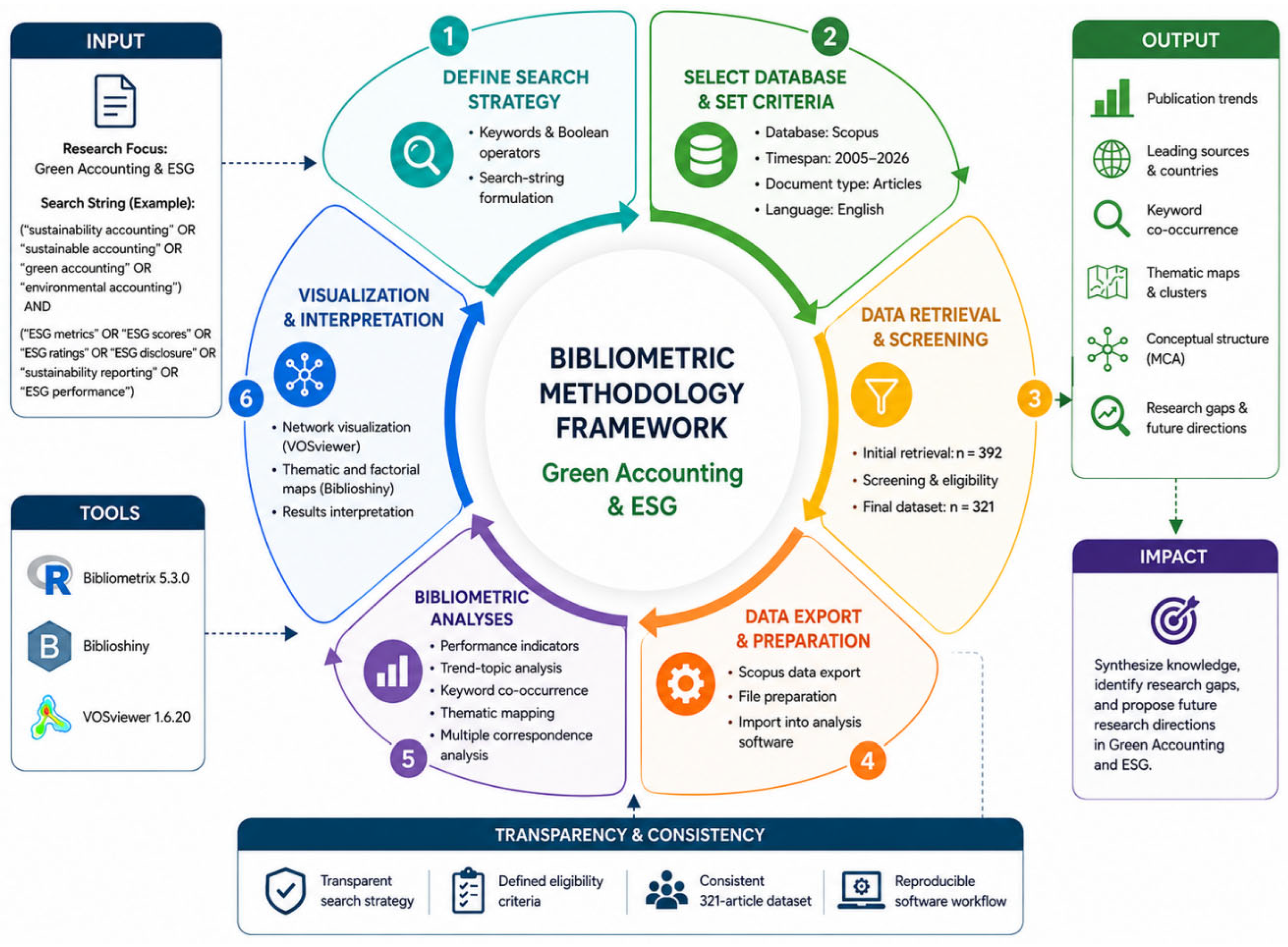
The search initially returned 392 records. The database filters restricted the results to English-language journal articles published between 2005 and 2026. The titles, abstracts, and keywords of the retrieved records were subsequently screened for eligibility. Publications were included when they substantively addressed at least one green, environmental, or sustainability accounting concept together with ESG measurement, ESG disclosure, sustainability reporting, or ESG performance. Records were excluded when the accounting or ESG terminology appeared only incidentally or when the publication did not substantively address the relationship examined in this study. Following screening, 71 records were excluded, resulting in a final dataset of 321 articles. No publisher-specific filter was applied during the database search; therefore, records were not restricted to journals published by MDPI or by any other publisher.
The bibliographic records were exported from Scopus and imported into Bibliometrix, Biblioshiny, and VOSviewer. The same final dataset of 321 articles was used consistently across the analyses.
Figure 1 summarizes the bibliometric methodology and study-selection process, beginning with the formulation of the search strategy and database selection and continuing through record screening, bibliometric analysis, visualization, and interpretation.
The analysis was conducted using Bibliometrix version 5.3.0 through its Biblioshiny interface (
Aria & Cuccurullo, 2017) and VOSviewer version 1.6.20 (
Van Eck & Waltman, 2010). Bibliometrix and Biblioshiny were used to calculate the principal performance indicators, including annual scientific production, leading publication sources, geographical contributions, authorship patterns, international collaboration, citations, author keywords, and references. Trend-topic analysis was used to examine how the prominence of the principal research topics changed over time. The thematic map classified themes according to their centrality and density, thereby distinguishing motor, basic, niche, and emerging or declining themes.
The analyses were organized in accordance with the three research questions. Publication growth, leading sources, and geographical contributions addressed RQ1 by documenting the evolution of the field. Trend-topic analysis, thematic mapping, keyword co-occurrence, and multiple correspondence analysis addressed RQ2 by identifying its principal conceptual and thematic structures. The interpretation of themes concerning environmental management, accountability, corporate governance, innovation, digitalization, and organizational performance provided the basis for addressing RQ3. The bibliometric findings identify patterns and conceptual relationships within the published literature; they do not establish causal relationships between green accounting practices and firm-level ESG performance.
4. Results
The results organized in relation to the three research questions. Publication growth, leading sources, and geographical contributions address RQ1 by showing how research connecting green accounting, sustainability reporting, and ESG performance has evolved over time. Trend-topic analysis, thematic mapping, keyword co-occurrence, and multiple correspondence analysis address RQ2 by identifying the principal conceptual and thematic structures of the field. Finally, the interpretation of themes related to environmental management, accountability, corporate governance, innovation, digitalization, and organizational performance provides the basis for addressing RQ3 concerning the contribution of green accounting and sustainability reporting to management control and organizational responses in dynamic ESG environments.
A total of 321 published original articles between 2005 and 2026 were included in the bibliometric analysis.
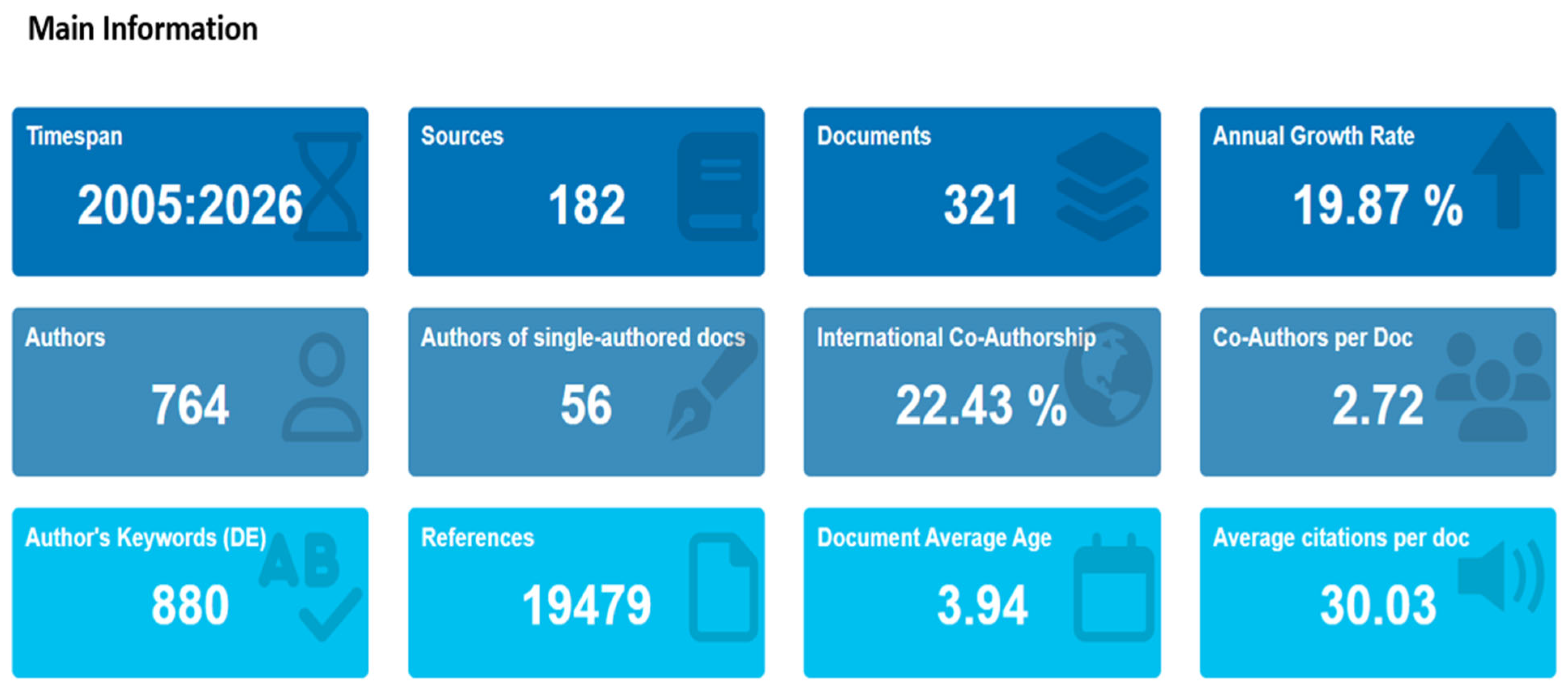
Figure 2 presents the main characteristics of the bibliometric data set. The analysis includes 321 documents published across 182 sources. A total of 764 authors contributed to these publications, with an average of 2.72 co-authors per document, while international co-authorship accounted for 22.43% of the data set. The annual growth rate of scientific production reached 19.87%, indicating the increasing academic interest in green accounting and ESG research. Moreover, the documents contained 880 author keywords and cited 19,479 references. The average document age was 3.94 years, while its publication received an average of 30.03 citations, suggesting that the field is both relatively recent and influential.
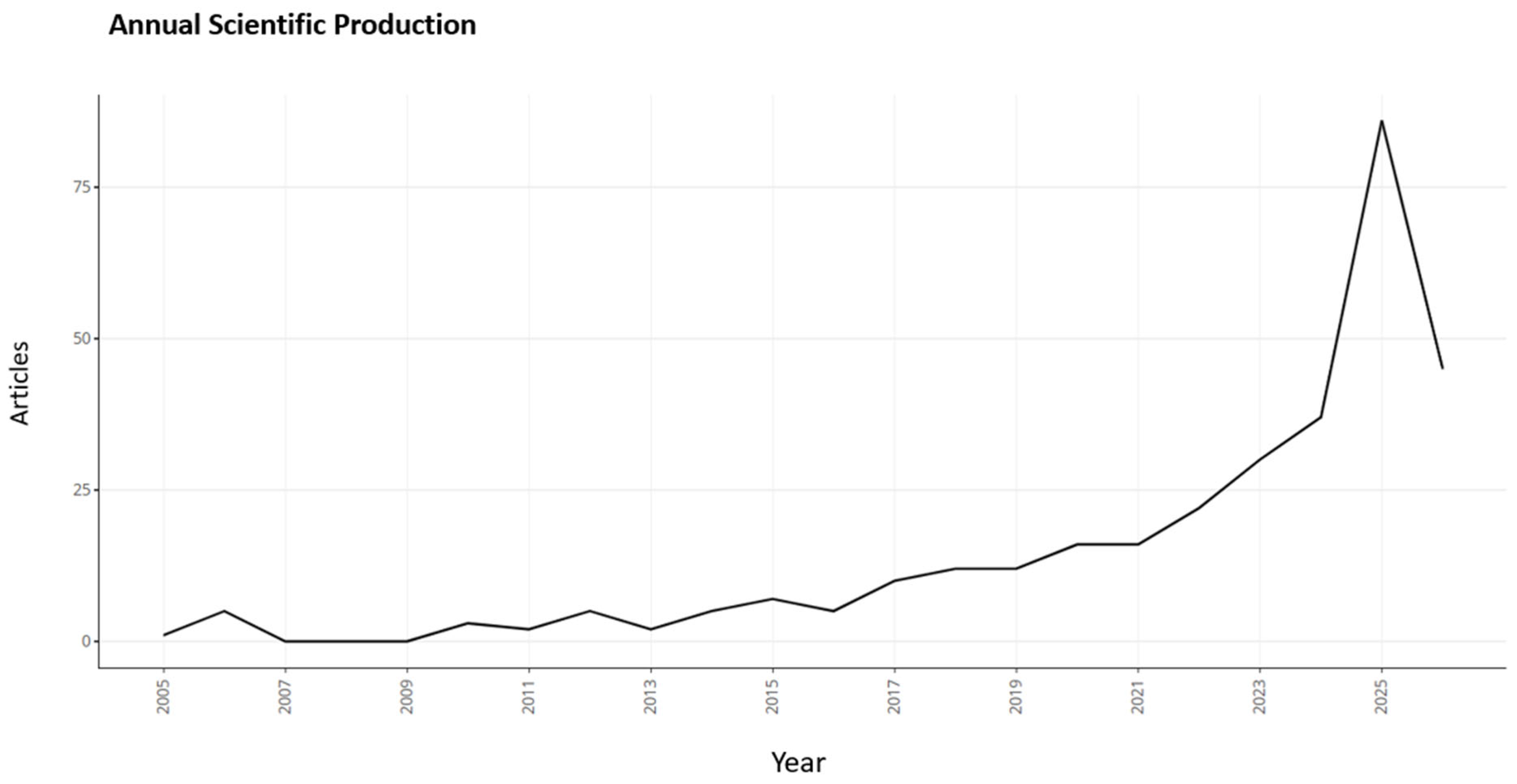
Figure 3 illustrates the evolution of annual scientific production in green accounting at IHG Research between 2005 and 2026. Publication activity remained limited and relative irregular during the first decade, followed by a gradual increase from 2017 onward. This rise coincided with important developments in sustainability disclosure, including the implementation of the EU Non-Financial Reporting Directive for the 2017 financial year and the publication of the TCFD recommendations on climate-related financial disclosures. A stronger upward trend is evident after 2021, when sustainability reporting received further regulatory and institutional attention through the European Commission’s proposal for the Corporate Sustainability Reporting Directive and the establishment of the International Sustainability Standards Board at COP26 (
European Commission, 2021). These developments likely increased academic interest in the measurement, disclosure, and accounting treatment of ESG information. Scientific production reached its highest level in 2025, while the decline observed in 2026 should be interpreted cautiously because publication and indexing data for the most recent year are still incomplete.
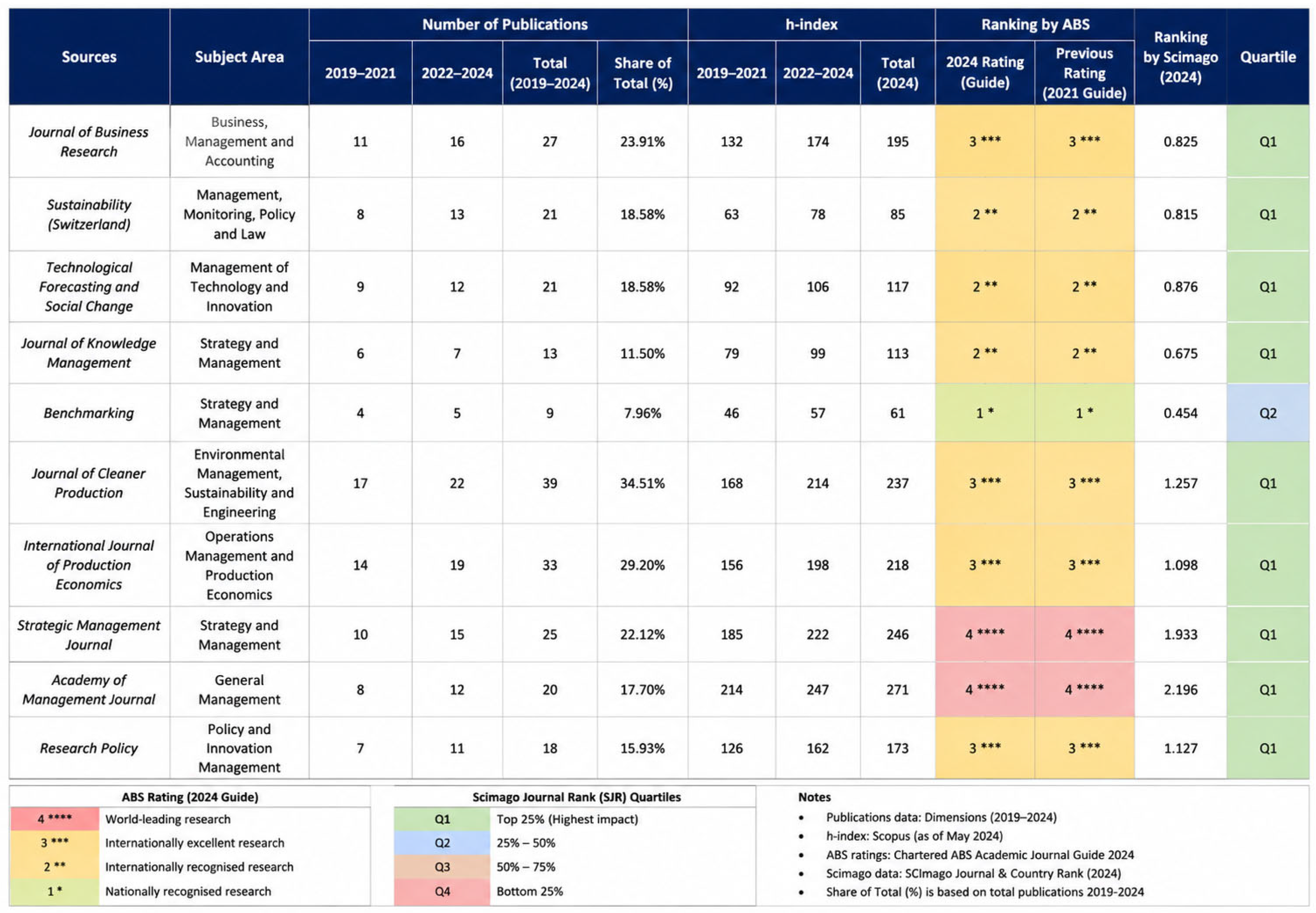
The journals with the highest number of publications in green accounting and ESG research are presented in
Figure 4. The
Journal of Cleaner Production ranks first with 39 articles, followed by the
International Journal of Production Economics with 33 articles and the Journal of Business Research with 27.
Strategic Management Journal published 25 articles while
Sustainability and
Technological Forecasting and Social Change contributed to 21 articles each. This distribution shows that the field is developed through several closely connected research streams. Publications in the
Journal of Cleaner Production and the
International Journal of Production Economics link green accounting and ESG with environmental management, resource efficiency, production systems, and operational performance (
Gunarathne & Lee, 2021;
Hanif et al., 2023;
Tian & Sarkis, 2020). By contrast, the strong presence of the
Journal of Business Research,
Strategic Management Journal, and
Academy of Management Journal connects the topic with corporate strategy, managerial decision making, governance and firm performance (
Lee & Raschke, 2023). The inclusion of
Research Policy, Journal of Knowledge Management and
Technological Forecasting and Social Change further indicates that these ESG and green accounting are also examined in relation to innovation knowledge development and sustainability policy (
Jin et al., 2024). Therefore, the field extends beyond the technical measurement and disclosure of environmental information and increasingly considers how such information affects strategic choices, organizational processes, and production decisions. Most of the listed journals are classified as Q1, while the
Strategic Management Journal and
the Academy of Management Journal also hold 4-star ABS ratings in the highest h-indices in the table, indicating the strong influence of the strategic and organizational dimensions of this research area.
Table 1 presents the countries with the highest scientific production in green accounting and ESG research. Among the European countries, Italy records the strongest contribution with 72 publications, followed by the United Kingdom with 43, Spain with 26 and Germany, with 20. This concentration indicates that Europe plays a central role in the development of the field, which may be associated with a growing regulatory emphasis on the sustainability reporting and corporate environmental accountability (
Rusu et al., 2026;
Sharma, 2026). Outside Europe, the United states, Australia, China, India, Indonesia, and Canada also show substantial research activity, confirming the international expansion of the topic. Greece, however, does not appear among the 10 most productive countries. This absence identifies a geographical research cap and suggests the need for further investigation into the adoption of green accounting and ESG practices by Greek firms, particularly in relation to regulatory compliance, corporate disclosure, and environmental and financial performance.
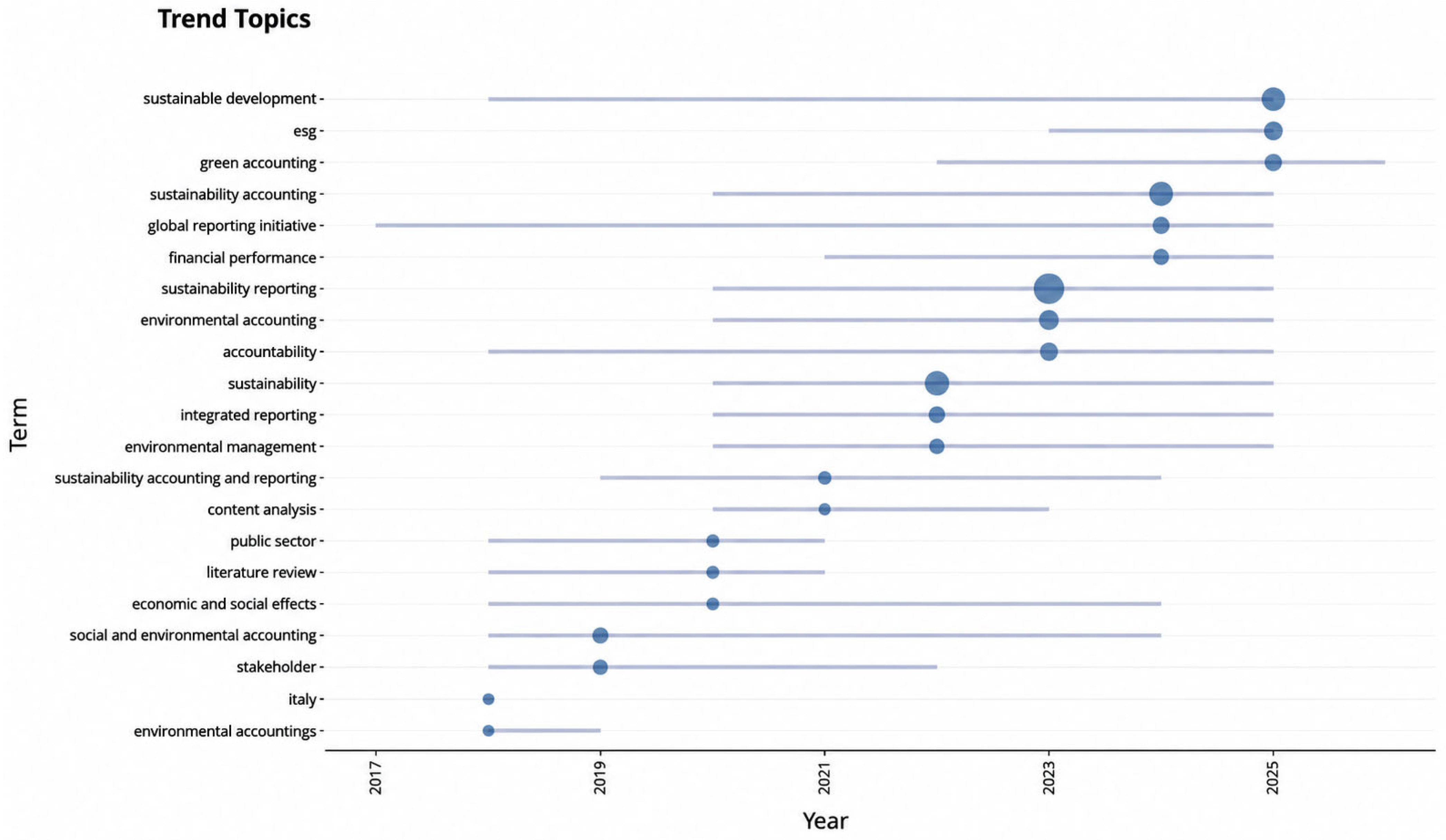
Figure 5 presents the evolution of the main topics in green accounting and ESG between 2017 and 2025. The horizontal lines indicate the period during which each term appeared in the literature, while the circles identify the year for greatest prominence; larger circles represent a higher frequency of occurrence. In the earlier period, research was mainly associated with “environmental accountings”, “Italy”, “stakeholder” and “social and environmental accounting”, with their highest prominence occurring between 2018 and 2019. During 2020 and 2021 attention shift toward “public sector”, “literature review”, “economic and social effects”, “content analysis” and “sustainability accounting and reporting”. From 2022 onward “sustainability”, “intergrading reporting”, and “environmental management” became more visible, followed in 2023 by stronger emphasis on “sustainability reporting”, “environmental accounting” and “accountability”. The most recent period is dominated by “sustainability accounting”, “financial performance”, “Global Reporting Initiative”, “green accounting”, “ESG” and “sustainable development”, with several of these topics reaching this highest prominence in 2024 or 2025. The figure therefore shows a gradual movement from narrower environmental and stakeholder-related topics toward ESG measurement, sustainability reporting, reporting frameworks, and financial performance (
Petropoulou et al., 2024;
Fernandez Salazar et al., 2026).
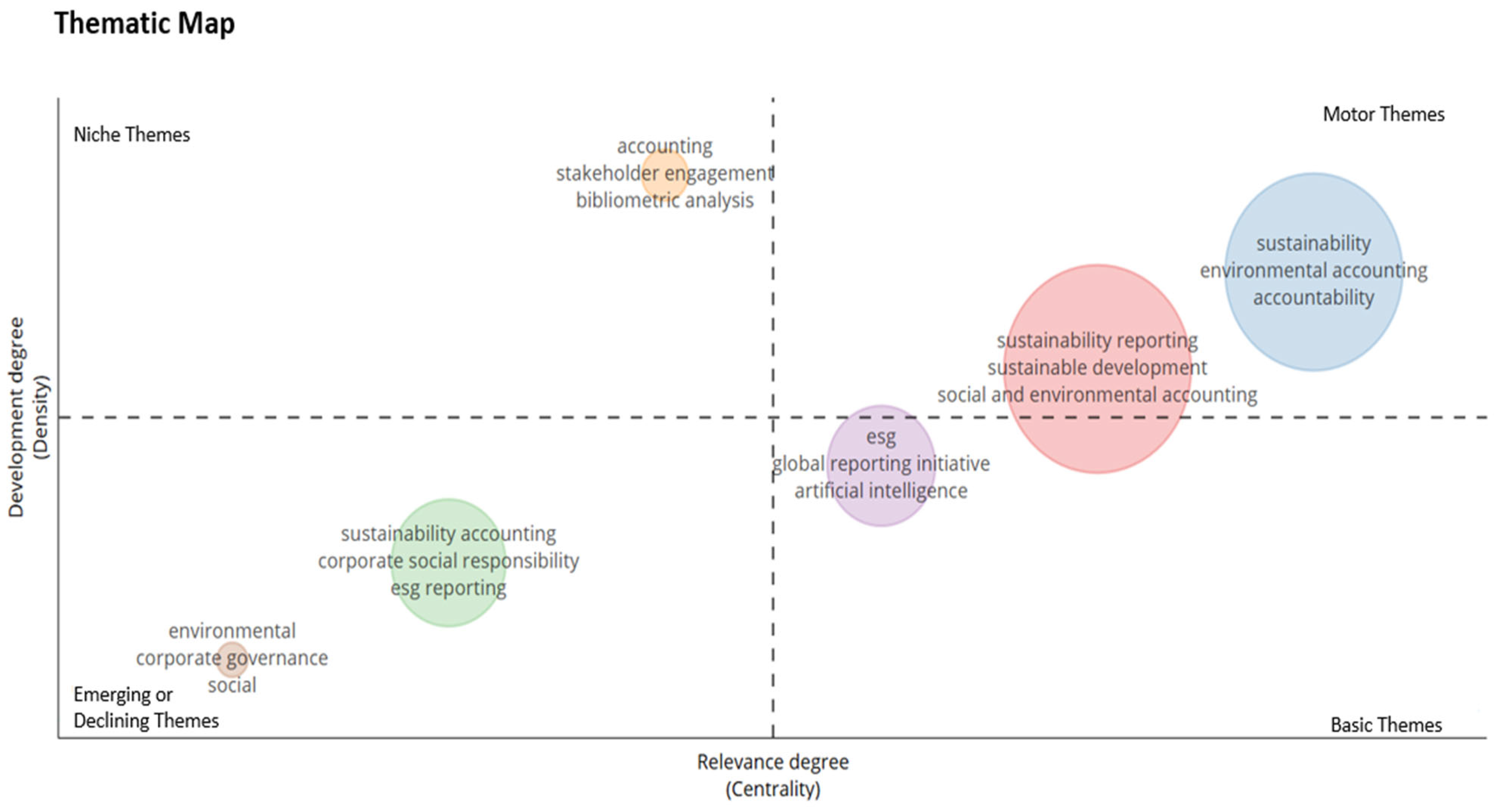
Figure 6 presents the thematic structure of green accounting and ESG research according to centrality and density. Centrality reflects the relevance of the theme to the wide research field, whereas density indicates its level of internal development (
Hussain et al., 2024). The upper right quadrant contains the motor themes where “sustainability”, “environmental accounting” and “accountability” form the most developed and influential cluster. A second cluster composed of “sustainability reporting”, “sustainability development” and “social environmental accounting” is positioned close to the motor theme area, confirming its strong integration into the field. In the lower right quadrant “ESG”, “global reporting initiative” and “artificial intelligence” appear as basic themes, indicating that they are central to the literature, but remain less internally developed. The upper left quadrant includes the niche cluster of “accounting”, “stakeholder engagement”, and “bibliometric analysis”, which is relatively specialized but less connected to the broader research structure. Finally, the lower left contract includes “sustainability accounting” “corporate social responsibility” “ESG reporting” “environmental”, “corporate governance” and “social”, identifying themes that are either emerging or losing prominence. Overall, the map shows the sustainability, environmental accounting, accountability, and sustainability report. Think currently forms the conceptual core of the field, while ESG-related, reporting and governance themes still require further development and stronger integration.
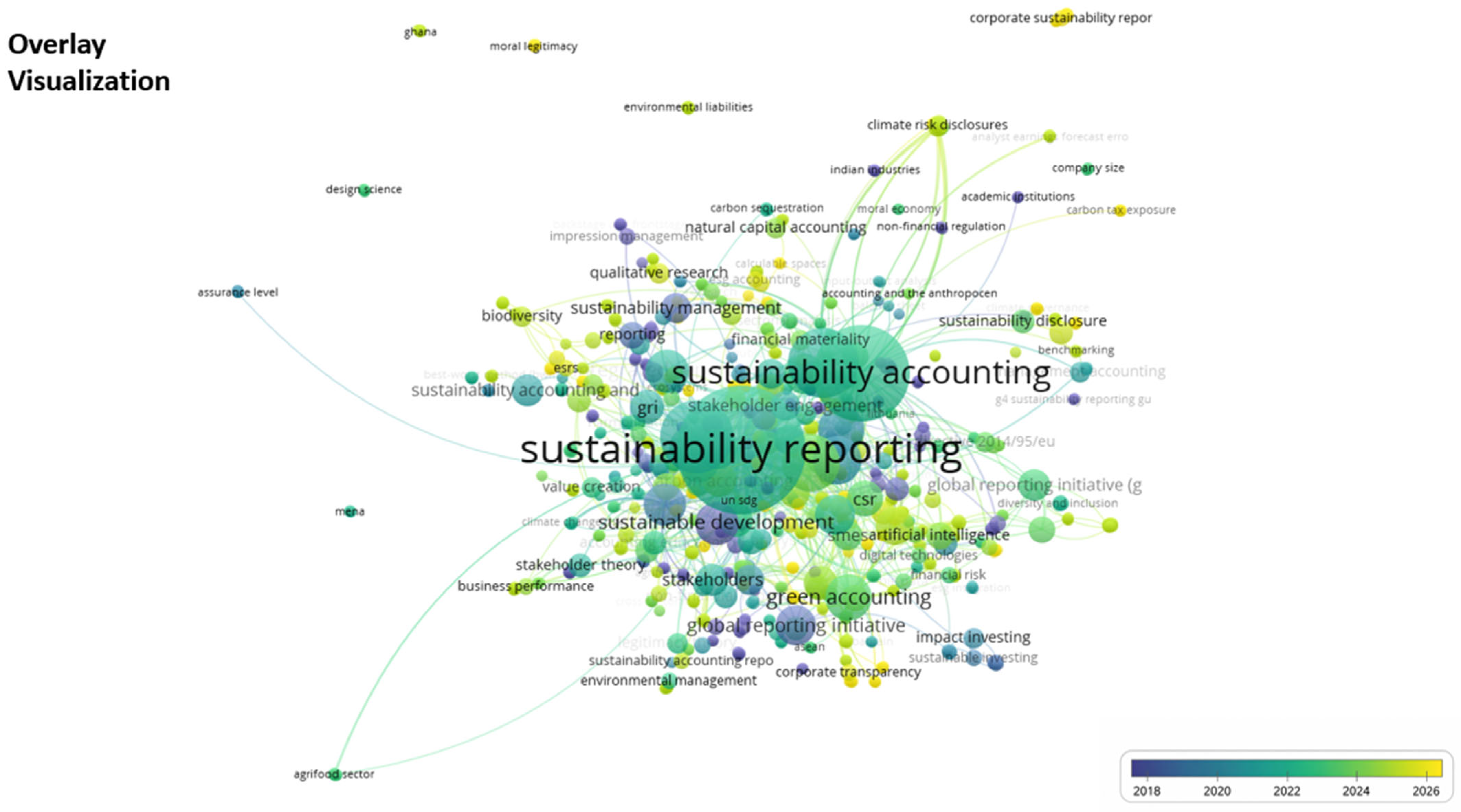
Figure 7 presents the overlay visualization author-keyword co-occurrence in green Accounting and ESG research. The size of each node represents the frequency of a key word, while the links indicate the strength of its relationship with other terms. The colour scale reflects the average publication year, with blue and purple representing earlier topics and green and yellow indicating more recent research interests. “Sustainability reporting” and “sustainability accounting” appear as the most prominent in central keywords demonstrating their dominant position within the literature. These terms are closely connected with “green accounting”, “sustainable development”, “stakeholders”, “global reporting initiative”, “financial materiality” and “sustainability disclosure”. Early studies were more closely associated with topics such as impression management, assurance, and reporting practices, whereas more recent research has focused on climate risk disclosure, carbon exposure, biodiversity, corporate sustainability reporting and artificial intelligence (
Sneideriene & Legenzova, 2025b;
Sundarasen et al., 2024). The visualization therefore illustrates the transition of the field from conventional sustainability reporting assurance issues toward more specialized topics related to climate risk, ESG regulation and advance disclosure practices.
The final figure of the bibliometric analysis,
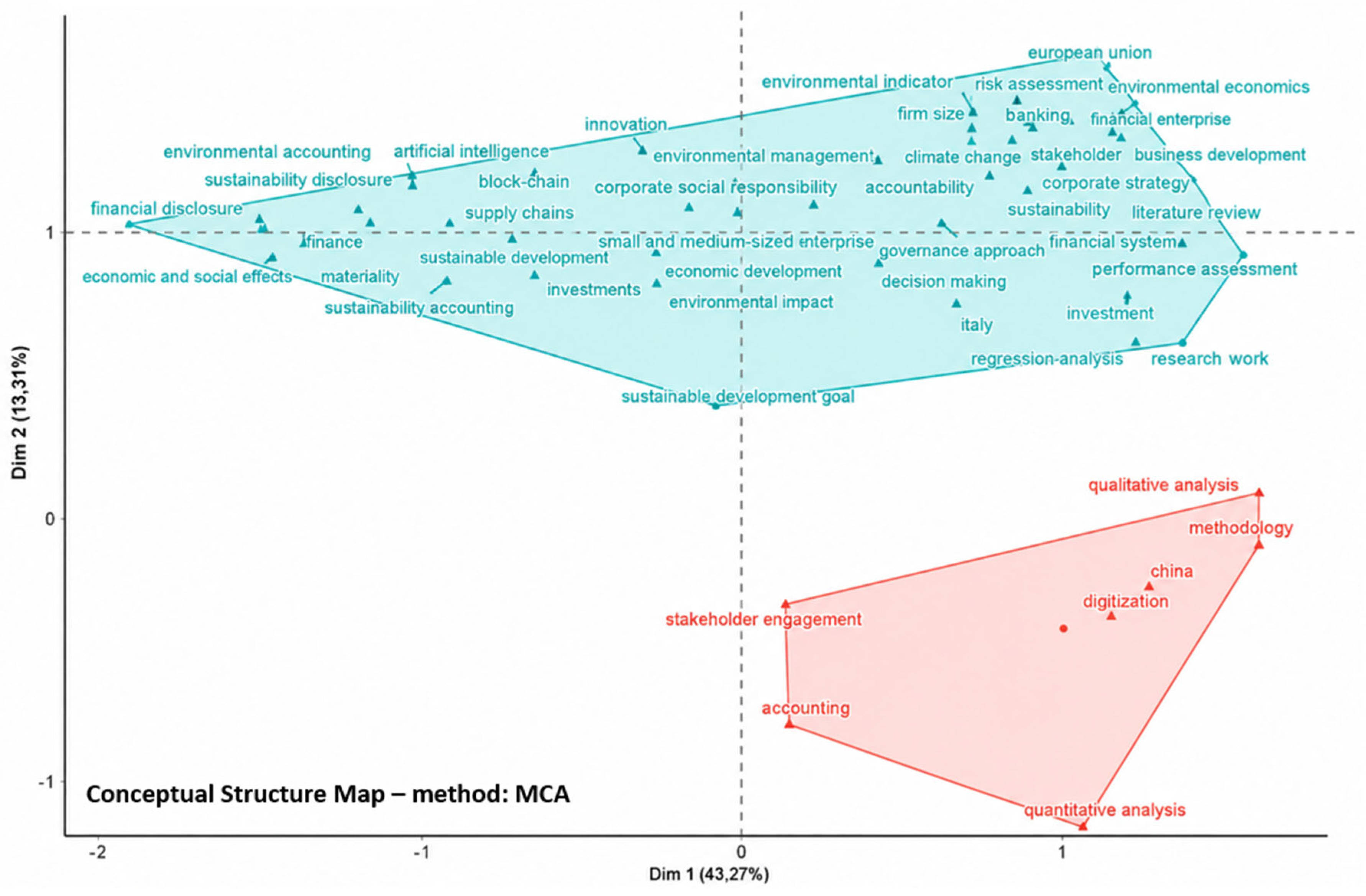
Figure 8 presents the conceptual structure of green accounting and ESG research using multiple correspondence analysis (MCA). The first dimension explains 43.27% of the variation while the second accounts for 13.31%. Two main clusters are identified. The larger turquoise cluster contains the central concepts of the field, including environmental accounting, sustainability, disclosure, corporate social responsibility, environmental management, climate change, accountability, governance, financial performance, and sustainability. The close positioning of these terms indicates that the literature frequently examines them as interconnected aspects of corporate sustainability and ESG performance. The red cluster is more clearly separated and includes accounting, stakeholder engagement, digitalization, China, qualitative and quantitative analysis, and methodology. Its position suggests a district research stream focused more strongly on empirical approaches, geographical applications, and methodological design. The distance between the two clusters indicates that these methodological and digitalization-related studies remain less integrative with a broader conceptual literature on environmental accounting, governance, and corporate sustainability (
Petropoulou et al., 2024).
5. Discussion
The expansion of research after 2017, and particularly after 2021, coincides with increasing institutionalization of sustainability reporting. The implementation of the EU Non-Financial Reporting Directive and the subsequent proposal for the Corporate Sustainability Reporting Directive strengthened the demand for structured, comparable sustainability information (
Abubakr et al., 2024;
Voskopoulou et al., 2025). The growth observed in the bibliometric results can therefore be interpreted as part of a broader transition from voluntary environmental disclosure toward more formalized ESG measurement in corporate accountability.
The thematic findings indicate a growing convergence between environmental accounting, sustainability reporting and corporate performance.
Tian and Sarkis (
2020) demonstrate how environmental accounting can be incorporated into supply chain performance measurement, while
Hanif et al. (
2023) and
Gunarathne and Lee (
2021) connect environmental management accounting with cleaner production, green innovation, and improved environmental outcomes. The presence of stakeholder strategy and financial performance themes is also consistent with
Lee and Raschke (
2023), who associated stakeholder legitimacy with corporate greening and financial performance, and Jin et al., who identify relationship between ESG activism and green innovation. These studies support the interpretation that the field is moving beyond the technical measurement of environmental costs toward the strategic use of sustainability information.
Sustainability reporting appears to provide the main connection between internal accounting information and external ESG assessment. This interpretation is consistent with recent research on ESG reporting frameworks and the wider evolution of ESG from corporate responsibility toward more structured performance measurement. The bibliometric maps, nevertheless, indicate that green accounting and ESG remain related but not fully consolidated within a single research stream. The contribution of this study is therefore to clarify how these areas are becoming increasingly interconnected through reporting, accountability, innovation, and performance.
From a management perspective, the findings indicate that green accounting is increasingly associated with organizational processes through which environmental information is measured, interpreted, and incorporated into managerial action. The identified connections between environmental accounting, accountability, governance, innovation, financial performance, climate-related disclosure, and digitalization suggest that the field is moving beyond the recording of environmental costs. Green accounting is becoming linked with planning, operational monitoring, investment evaluation, performance measurement, and organizational adaptation. Sustainability reporting functions as the interface between these internal control processes and external ESG assessment. However, this interpretation is conceptual rather than causal, as the bibliometric evidence identifies relationships among themes in the literature but does not demonstrate that green accounting directly causes stronger organizational or ESG performance. Because management control was not included as a separate term in the bibliometric search query, the study does not claim to map the entire management-control literature. Instead, management control provides an interpretive lens for explaining how green accounting information supports organizational planning, monitoring, decision-making, reporting, and adaptation in dynamic ESG environments.
Taken together, these findings support the conceptual synthesis developed in
Section 2.4 and
Section 2.5. The expansion of the literature following major regulatory and institutional developments reflects the dynamic ESG pressures represented at the beginning of the proposed framework. The central position of environmental and sustainability accounting indicates the growing importance of generating structured environmental information, while its connections with innovation, governance, accountability, financial performance, and digitalization show how this information is increasingly incorporated into management-control processes and organizational decision-making. The prominence of sustainability reporting further supports its proposed role as the interface through which internally generated information becomes visible to external stakeholders and ESG evaluators. The collective pattern therefore suggests a connected organizational pathway—dynamic ESG pressures, green accounting information, management control, sustainability reporting, and ESG evaluation and response—rather than a set of isolated research themes. This synthesis provides conceptual support for the proposed model, although the bibliometric evidence does not test or establish causal relationships between its individual components.
6. Conclusions
This study clarifies the position of green accounting within the expanding ESG research field. The bibliometric evidence indicates that green accounting is increasingly examined as part of a broader corporate information system rather than as an isolated environmental accounting technique. Its role extends from the internal measurement of environmental costs and resource use to the production of information that supports sustainability reporting, accountability, and ESG evaluation. The analysis therefore brings together research streams that have often developed separately and provides a more coherent understanding of their conceptual relationship.
In dynamic organizational environments, green accounting can support organizational adaptation by providing structured information on environmental costs, resource use and operational performance. Its relevance therefore extends beyond external disclosure and regulatory compliance. When integrated into management-control processes, green accounting can support planning, monitoring, resource allocation, performance evaluation, and managerial responses to changing regulatory, technological, and stakeholder pressures. Sustainability reporting then communicates selected internal information to external stakeholders and connects organizational control processes with ESG evaluation. Taken together, these findings demonstrate a transition from environmental accounting as a predominantly measurement, reporting, and disclosure function toward an organizational capability that informs strategy, management control, resource allocation, and managerial decision-making.
A central conclusion is that sustainability reporting represents the main connection between green accounting practices and externally assessed ESG performance. Green accounting produces information on environmental activities and impacts while reporting determines whether this information becomes accessible, comparable, and credible to investors and other stakeholders. This relationship highlights the importance of the quality of the information communicated. Extensive disclosure alone cannot guarantee that reported ESG outcomes accurately represent corporate practices. The value of sustainability reporting depends on whether it is supported by reliable accounting systems and connected with measurable organizational performance.
The study also identifies an important direction for the continued development of the field. Existing research provides considerable evidence concerning the environmental consequences of accounting practices, whereas their relationship with overall ESG performance remains less clearly established. In particular, the social and governance implications of green accounting require greater attention. Future research should examine how environmental accounting information interacts with workforce and community outcomes, stakeholder relationships, board oversight, risk governance, internal controls, and managerial accountability. Such research would extend the field beyond its predominantly environmental focus and contribute to a more integrated understanding of ESG accounting.
By mapping the intellectual structure of the literature, this study provides a foundation for such an empirical investigation. Its main contribution lies in demonstrating that green accounting, management control, sustainability reporting, and ESG evaluation should not be treated as independent domains but as interconnected components of organizational sustainability measurement, decision-making, communication, and accountability.
7. Limitations and Future Research
7.1. Limitations
This study is subject to several limitations. First, the bibliometric dataset was obtained exclusively from Scopus. Although Scopus provides extensive multidisciplinary coverage, reliance on a single database may have excluded relevant publications indexed only in Web of Science or other bibliographic databases. Second, the analysis was restricted to English-language journal articles. Consequently, relevant publications in other languages and other document types, including books, book chapters, conference proceedings, and professional reports, were not included.
Third, the composition of the dataset depends on the specific keywords and Boolean search expression used. Although the search incorporated several established terms for green, environmental, and sustainability accounting and ESG measurement and reporting, alternative terminology may have produced a different set of publications. The study may therefore not capture every relevant contribution to the broader research domain. In particular, “management control” was not included as a separate term in the search query. Management control was used as an interpretive framework for explaining the organizational implications of green accounting information, but the study does not claim to provide a comprehensive mapping of the management-control literature.
Fourth, bibliometric analysis identifies publication patterns, thematic relationships, conceptual proximity, and associations among research terms. It does not establish causal relationships or demonstrate that the adoption of green accounting directly improves organizational or ESG performance. Firm-level causal effects therefore cannot be inferred from the reported networks and thematic structures. Fifth, the 2026 publication year was incomplete at the time of data collection, and the results for that year should consequently be interpreted as provisional. Finally, eligibility screening was conducted by the sole author using the stated inclusion and exclusion criteria. Although the criteria were applied consistently, the absence of an independent second reviewer may have introduced an element of selection judgment.
7.2. Future Research
Future research should extend the present analysis through firm-level empirical studies. In particular, attention should be given to the strength and statistical significance of the relationship between green accounting practices and corporate ESG performance. Sustainability reporting quality should also be examined as a possible mediating mechanism through which internally generated environmental information becomes reflected in external ESG assessments. Longitudinal and cross-sectoral research could help determine whether these relationships persist over time and whether they differ according to organizational and institutional conditions. Future research should also examine how the quality and comparability of green accounting information influence the investment management industry. Potential outcomes include asset allocation, security valuation, portfolio risk assessment, sustainable-fund flows, shareholder engagement, and the cost of capital. Longitudinal research could investigate whether stronger internal environmental accounting systems and external assurance reduce ESG-rating disagreement. Further studies could also examine whether sustainability-reporting quality mediates the relationship between internally generated environmental information and investor behaviour.