1. Introduction
Organizations operate in environments characterized by increasing volatility, uncertainty, and complexity. Globalization, technological disruption, economic instability, and geopolitical tensions have significantly increased the frequency and impact of crises affecting both public and private organizations. As a result, crisis management has evolved from a reactive emergency response function into a strategic organizational capability that plays a critical role in ensuring institutional resilience and long-term performance (
Wenzel et al., 2021).
Within the organizational governance literature, crisis management is increasingly conceptualized as a multidimensional capability that enables institutions to anticipate, absorb, adapt to, and recover from disruptive events while maintaining operational continuity and strategic objectives. In this context, organizational resilience has become a central concept for understanding how organizations respond to complex disruptions (
Duchek, 2020). Rather than focusing exclusively on post-crisis recovery, contemporary crisis management frameworks emphasize preparedness, learning, and adaptive institutional structures capable of responding effectively to unexpected shocks (
Schakel & Wolbers, 2021). In this context, organizational learning and knowledge integration processes have become central mechanisms through which institutions transform experience into adaptive responses. Crises provide critical learning opportunities that enable organizations to refine routines, improve coordination, and strengthen long-term resilience.
The United Arab Emirates (UAE) provides a particularly relevant empirical context for examining these dynamics. Over the past few decades, the country has implemented ambitious economic diversification strategies and governance reforms to strengthen institutional resilience. Nevertheless, external shocks such as oil price volatility and the COVID-19 pandemic have exposed vulnerabilities in crisis preparedness mechanisms across both public and private sectors. These disruptions highlight the importance of adaptive governance systems capable of coordinating rapid responses during crises (
Janssen & Van der Voort, 2020).
Previous research highlights the importance of formal governance mechanisms—such as policies, procedures, and financial resources—in improving crisis preparedness. Structured crisis-governance frameworks reduce uncertainty and enhance coordination among organizational actors during disruptive events (
Lee et al., 2020). At the same time, financial robustness has been identified as a critical factor enabling organizations to allocate resources for contingency planning, technological investment, and operational continuity during crises (
Obrenovic et al., 2020;
Duchek, 2020).
However, structural conditions alone do not guarantee effective crisis management outcomes. Increasingly, scholars emphasize the role of organizational culture and behavioral dynamics in translating formal governance structures into coordinated crisis responses (
Schein, 1990). Organizational culture influences how employees perceive risk, respond to uncertainty, and collaborate during emergencies.
To explain these behavioral mechanisms, we draw on the Theory of Planned Behavior (TPB). According to TPB, intention is the immediate antecedent of behavior and is shaped by three cognitive determinants: attitude toward the behavior, subjective norms, and perceived behavioral control (
Ajzen, 1991). In crisis management settings, attitude captures the perceived desirability and usefulness of complying with crisis-related rules; subjective norms reflect perceived social and institutional expectations; and perceived behavioral control captures the perceived ease and ability to follow official guidance and use crisis-response tools. These assumptions are particularly relevant during public health crises, when institutional policies are effective only when individuals perceive them as legitimate, feasible, and socially supported.
Building on this perspective, the present study makes an incremental contribution by integrating two levels of crisis-governance explanation that are often examined separately. At the organizational level, it examines whether trained human resources, policies and procedures, and financial stability are associated with crisis management success, with crisis management culture as a mediating factor. At the behavioral level, it extends the model using the Theory of Planned Behavior (TPB), assessing whether attitude, subjective norms, and perceived behavioral control are associated with intention to comply with crisis-related directives and whether this intention is linked to crisis management success.
The specific research gap addressed by this study is therefore the limited empirical understanding of how structural preparedness, learning-oriented crisis culture, and individual-level behavioral intention jointly operate within the same crisis-governance framework. Existing studies tend to emphasize either organizational resources and resilience or individual compliance mechanisms; comparatively fewer studies connect these perspectives in an emerging-economy context such as the UAE. By combining a structural–cultural crisis management model with a TPB-based behavioral extension, this paper clarifies the added value of linking institutional preparedness, knowledge-based culture, and behavioral motivation in explaining crisis management success.
2. Literature Review and Theoretical Framework
2.1. Theoretical Foundations
This study is grounded in four complementary theoretical perspectives: organizational resilience, dynamic capabilities and organizational learning, institutional theory, and the Theory of Planned Behavior (TPB). These perspectives provide the basis for understanding crisis management success as a multilevel outcome that depends on organizational resources, learning-oriented culture, institutional expectations, and individual willingness to comply with crisis-related measures.
Organizational resilience theory explains how organizations anticipate, absorb, adapt to, and recover from disruptive events while maintaining core operations and strategic continuity (
Duchek, 2020;
Hillmann & Guenther, 2021;
Linnenluecke, 2017). From this perspective, crisis management is not limited to emergency response; it is a strategic capability that incorporates preparedness, coordination, learning, and adaptation before, during, and after disruptive events.
Dynamic capabilities theory further clarifies how organizations sense emerging threats, seize opportunities for adaptation, and reconfigure internal resources under uncertainty (
Teece et al., 1997). In crisis contexts, trained human resources, formal procedures, financial stability, and crisis management culture can be interpreted as capabilities that enable organizations to convert knowledge and resources into coordinated action. Organizational learning is central to this process because crises generate feedback that can be transformed into improved routines, better communication, and stronger preparedness for future disruptions (
Williams et al., 2017;
Bundy et al., 2017).
Institutional theory complements this organizational perspective by emphasizing the role of formal rules, legitimacy pressures, and normative expectations in shaping crisis responses (
Meyer & Rowan, 1977;
DiMaggio & Powell, 1983). This perspective is particularly relevant in the UAE context, where public-health regulations, governmental directives, and institutional trust are important elements of crisis governance. However, institutional theory does not fully explain why individuals accept and enact crisis-related rules or technologies.
The TPB provides the behavioral foundation of the study. According to
Ajzen (
1991), intention is the immediate antecedent of behavior and is shaped by attitude, subjective norms, and perceived behavioral control. In crisis management settings, attitude reflects the perceived usefulness and desirability of compliance, subjective norms reflect perceived social and institutional support, and perceived behavioral control reflects the perceived ease and feasibility of following official rules and using crisis-response tools. TPB therefore explains the micro-foundations through which formal crisis governance may translate into individual willingness to act.
2.2. Conceptual Background and Key Constructs
2.2.1. Crisis Management Success and Organizational Resilience
Crisis management research has evolved from reactive emergency response models toward integrated organizational resilience frameworks. Early research emphasized response and recovery mechanisms (
Pearson & Clair, 1998;
Boin et al., 2013), whereas contemporary approaches stress preparedness, adaptive governance structures, and learning processes that enable organizations to respond effectively to complex crises (
Schakel & Wolbers, 2021;
Li et al., 2021). In this study, crisis management success refers to the perceived effectiveness of governmental and organizational responses, including satisfaction with crisis handling, app functionality and use, and trust in government support during the crisis.
2.2.2. Structural and Financial Determinants
Trained human resources constitute a key component of crisis preparedness because training strengthens competencies in risk identification, decision-making, and communication during disruptions (
Alketbi et al., 2022;
Kutieshat & Farmanesh, 2022). Nevertheless, competencies alone do not automatically produce successful crisis performance. Their effectiveness depends on whether organizational contexts support the application of knowledge through leadership, coordination, and shared preparedness routines.
Policies and procedures provide the formal governance framework for crisis management. Clear protocols reduce ambiguity, clarify responsibilities, and facilitate coordination during emergencies (
Ansell et al., 2010;
Lee et al., 2020;
Thielsch et al., 2021). Organizations with more developed procedures are expected to coordinate more effectively and to achieve better crisis management outcomes. Financial stability also represents a critical pillar of resilience because financially robust institutions can mobilize resources, maintain continuity, invest in digital tools, and protect employees and stakeholders during systemic shocks, while risk-related managerial characteristics may also shape resilience under uncertainty (
Obrenovic et al., 2020;
Duchek, 2020;
Soares de Lima et al., 2026).
2.2.3. Crisis Management Culture as a Knowledge-Based Capability
Crisis management culture is conceptualized as a knowledge-based and learning-oriented capability that supports the assimilation of past experiences and the continuous adaptation of crisis-response practices (
Schein, 1990;
Weick & Sutcliffe, 2007). It includes shared preparedness values, coordination routines, transparency, and proactive risk-management assumptions. A strong crisis management culture can activate structural resources by aligning individual behaviors with organizational routines and by transforming formal procedures into coordinated crisis action (
Madi Odeh et al., 2023;
Aravidou et al., 2025).
2.2.4. TPB-Based Behavioral Constructs
The behavioral extension focuses on attitude, subjective norms, perceived behavioral control, and intention. In the context of COVID-19-related crisis measures, attitude captures whether respondents perceived official rules and tracing applications as useful, safe, and convenient. Subjective norms capture the perceived support of family, friends, the government, and health authorities. Perceived behavioral control captures the perceived ease and practical feasibility of following official rules and using digital crisis tools. Behavioral intention reflects the willingness to share official tracing app data and to comply with governmental rules during the pandemic. These constructs are expected to explain how crisis-governance measures are translated into individual-level motivation for compliance.
2.3. Conceptual Model
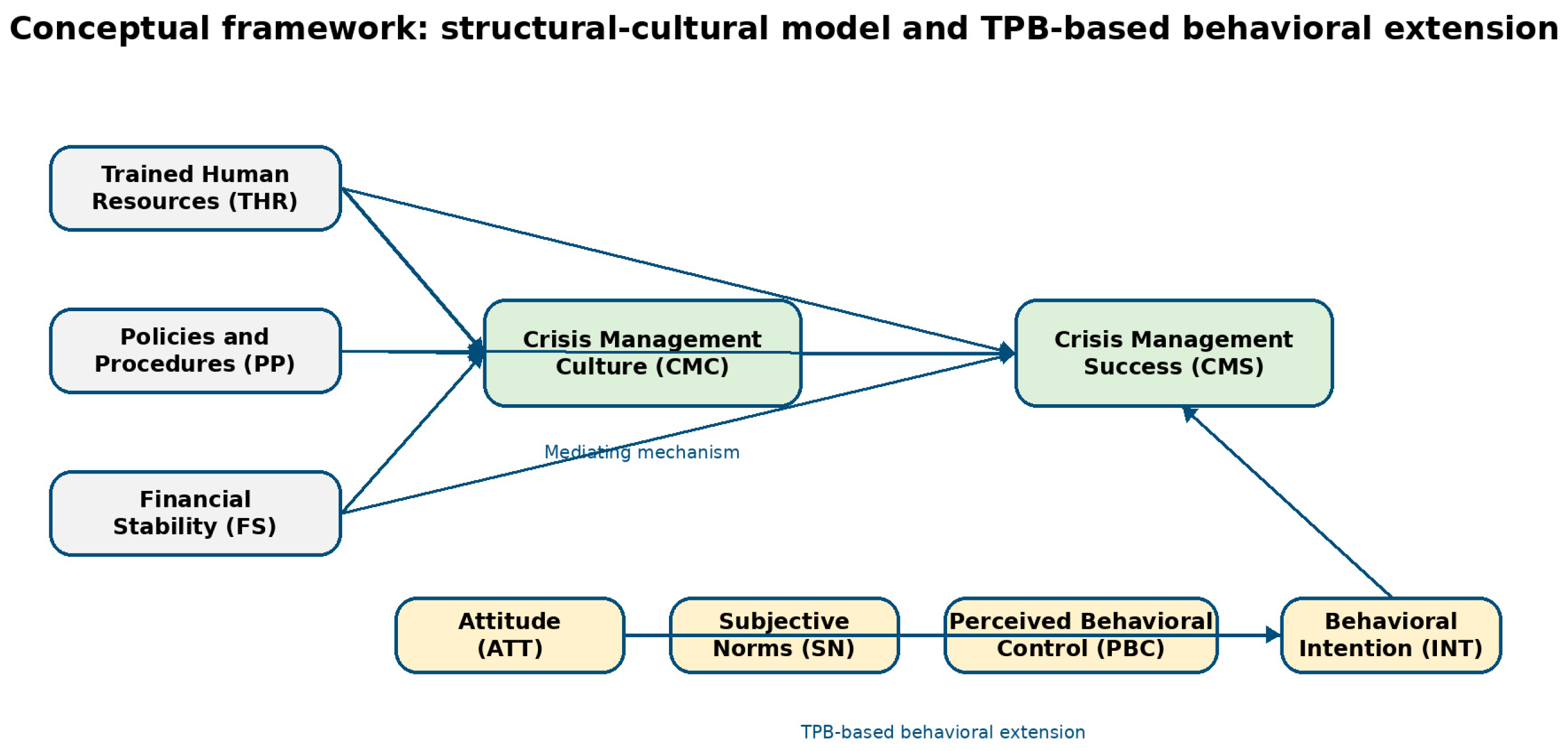
Figure 1 illustrates the conceptual framework. To improve readability, the model explicitly distinguishes the structural–cultural crisis management component from the TPB-based behavioral extension and shows how both components are linked to crisis management success.
The structural–cultural component examines the associations between trained human resources, policies and procedures, financial stability, crisis management culture, and crisis management success. Crisis management culture is modeled as the mediating mechanism through which structural preparedness may be translated into coordinated crisis-response capacity. The TPB-based behavioral extension examines how attitude, subjective norms, and perceived behavioral control are associated with behavioral intention and how intention is associated with crisis management success.
2.4. Research Hypotheses
2.4.1. Structural Determinants of Crisis Management Success
Trained human resources are expected to improve crisis management success because training strengthens employees’ ability to identify warning signals, communicate under pressure, coordinate actions, and apply crisis protocols. However, because training may be effective only when activated within an appropriate organizational context, the direct relationship is empirically examined.
H1. Trained Human Resources positively influences Crisis Management Success.
Policies and procedures provide formal guidance for crisis response by clarifying responsibilities, communication channels, escalation processes, and contingency actions. Clear procedures reduce ambiguity and support coordinated decision-making during disruptive events.
H2. Policies and Procedures positively influence Crisis Management Success.
Financial stability enables institutions to allocate resources rapidly, maintain operational continuity, invest in crisis technologies, and protect employees and stakeholders during disruption. Financially stable organizations are therefore better positioned to absorb shocks and sustain coordinated responses.
H3. Financial Stability positively influences Crisis Management Success.
Crisis management culture reflects shared values, routines, and assumptions related to preparedness, learning, coordination, and proactive risk management. Such culture enables organizations to transform formal resources into collective action and adaptive responses.
H4. Crisis Management Culture positively influences Crisis Management Success.
2.4.2. Mediating Role of Crisis Management Culture
Structural resources do not automatically generate successful crisis outcomes. Training, procedures, and financial resources must be internalized through shared cultural values and learning-oriented routines. Crisis management culture is therefore expected to operate as an activating mechanism that connects structural preparedness with successful crisis response.
H5. Crisis Management Culture mediates the relationship between Trained Human Resources and Crisis Management Success.
H6. Crisis Management Culture mediates the relationship between Policies and Procedures and Crisis Management Success.
H7. Crisis Management Culture mediates the relationship between Financial Stability and Crisis Management Success.
2.4.3. TPB-Based Behavioral Extension
The TPB-based extension explains how individual perceptions are associated with intentions to comply with crisis-related directives. When individuals perceive official crisis measures as useful, legitimate, socially supported, and easy to follow, they are expected to report stronger intentions to comply with them.
H8. Attitude positively influences Intention toward crisis management.
H9. Subjective Norms positively influence Intention toward crisis management.
H10. Perceived Behavioral Control positively influences Intention toward crisis management.
Finally, behavioral intention is expected to be associated with crisis management success because intentions to follow official rules, share crisis-related information, and use official digital tools can contribute to coordinated institutional responses.
H11. Intention positively influences Crisis Management Success.
3. Materials and Methods
3.1. Research Design
This study uses a quantitative, deductive, and cross-sectional research design. The objective is not to establish definitive causal effects, but to examine theoretically grounded associations, direct paths, and indirect relationships among organizational, financial, cultural, and behavioral determinants of crisis management success. Because the data are cross-sectional, the empirical results are interpreted as evidence consistent with the proposed theoretical framework rather than as proof of temporal or causal ordering.
Accordingly, the study should be understood as an examination of perceived associations among constructs. The design does not allow conclusions about causal ordering, changes over time, or actual crisis performance measured independently of respondents’ perceptions. This point is particularly important for the interpretation of mediation effects, which are treated as statistical indirect associations rather than definitive causal mechanisms.
A cross-sectional survey strategy was employed to collect primary data from respondents in the United Arab Emirates (UAE), with a particular focus on perceptions of government crisis response during the COVID-19 pandemic and the use of official crisis-related digital tools.
3.2. Sample and Data Collection
The target population comprised respondents with direct experience of government crisis-management measures in the UAE. A non-probability approach combining purposive and convenience sampling was used. This design was appropriate for an exploratory study of crisis-response perceptions because it enabled access to respondents familiar with public crisis practices, COVID-19 rules, governmental communication, support measures, and digital tracing tools.
The procedure did not use a stratified random design; therefore, no statistical strata were defined, and the sample cannot be considered statistically representative of the entire UAE population. The findings should consequently be generalized cautiously and interpreted as context-specific evidence from respondents with relevant crisis-management experience rather than as population-level estimates.
Respondents were eligible when they had direct experience with COVID-19-related government crisis measures in the UAE, including official rules, public communication, support measures, or official digital crisis-response tools. The sample profile indicates a concentration of UAE nationals, male respondents, government-sector employees, and participants with substantial professional experience. Consequently, the respondent profile should be considered when interpreting the findings, because the perceptions captured in the survey may reflect the views of a specific group of experienced and institutionally connected respondents rather than the broader UAE population.
The final sample consisted of 313 valid responses. Prior to full-scale data collection, a pilot study involving 30 respondents was conducted to ensure clarity and reliability of the instrument.
Data were collected using a structured questionnaire based on a five-point Likert scale (1 = strongly disagree; 5 = strongly agree). Participation was voluntary, responses were anonymous, and confidentiality was assured.
Because the data were collected through a single self-reported questionnaire, the analysis relies on respondents’ perceptions rather than independently observed crisis-management outcomes. This limitation is considered in the interpretation of the results and in the discussion of generalizability.
3.3. Measurement of Variables
All constructs were measured using multi-item Likert-scale items adapted from prior studies and contextualized to crisis management and COVID-19-related government response in the UAE. The structural–cultural component included Trained Human Resources, Policies and Procedures, Financial Stability, Crisis Management Culture, and Crisis Management Success. The TPB-based extension included Attitude, Subjective Norms, Perceived Behavioral Control, and Behavioral Intention. To improve measurement transparency using the available empirical output, the manuscript adds
Appendix A, which reports the retained item codes, concise indicator descriptions, and corrected item-total correlations from the SPSS reliability analyses. These item-level diagnostics complement the construct-level evidence reported through Cronbach’s alpha, composite reliability, AVE, and the Fornell–Larcker criterion.
Table 1 summarizes the operationalization of the constructs used in the structural–cultural model and the TPB-based behavioral extension.
At the item level, additional reliability evidence was available from the SPSS output. Therefore,
Appendix A reports corrected item-total correlations for the retained indicators. This approach complements the reported PLS-SEM construct-level statistics while avoiding the introduction of unverified item-level loading values.
Internal consistency reliability was assessed using Cronbach’s alpha and composite reliability for the main structural–cultural constructs. Construct validity was evaluated using composite reliability (CR) and average variance extracted (AVE), and discriminant validity was evaluated using the Fornell–Larcker criterion. The TPB-based behavioral extension was assessed through the structural paths linking attitude, subjective norms, perceived behavioral control, intention, and crisis management success. This distinction clarifies which measurement indicators are reported for the structural–cultural model and which behavioral paths are reported as the TPB-based extension.
3.4. Data Analysis Strategy
A two-step analytical approach was adopted to provide complementary evidence rather than redundant tests. First, a regression-based mediation analysis was used to provide a transparent, easily interpretable assessment of the direct and indirect relationships in the structural–cultural model. Second, PLS-SEM was used to simultaneously estimate latent-variable relationships, assess measurement properties, and test mediation and the TPB-based behavioral extension via bootstrapping.
For interpretation, the PLS-SEM results are treated as the primary empirical evidence because this approach estimates latent-variable relationships, measurement properties, and bootstrapped indirect effects simultaneously. The regression-based mediation analysis is used as complementary evidence to provide an accessible robustness check of the main mediation logic. Therefore, convergence between the two approaches strengthens the interpretation, but the results are not presented as independent causal proof.
3.4.1. Regression-Based Mediation Analysis (SPSS)
Preliminary mediation analysis was conducted using SPSS (Version 23) following the four-step procedure proposed by
Baron and Kenny (
1986). This approach examined the direct effects of trained human resources, policies and procedures, financial stability, and crisis management culture on crisis management success, as well as the mediating role of crisis management culture.
Regressing Crisis Management Success on trained human resources, policies and procedures, and financial stability.
Regressing Crisis Management Culture on trained human resources, policies and procedures, and financial stability.
Regressing Crisis Management Success on both the mediator and the independent variables.
Assessing mediation significance using Sobel’s test.
Descriptive statistics (mean and standard deviation) were also computed.
3.4.2. PLS-SEM Analysis
To overcome limitations associated with classical regression assumptions and to analyze latent constructs simultaneously, Partial Least Squares Structural Equation Modeling (PLS-SEM) was performed using SmartPLS 4, following the guidelines of
Hair et al. (
2012). PLS-SEM is suitable for exploratory models and mediation structures because it allows the estimation of multiple relationships between latent constructs without imposing strict distributional assumptions. The structural–cultural component and the TPB-based behavioral extension were examined using path coefficients, explained variance, and bootstrapping results.
The analysis proceeded in two stages:
Crisis Management Culture was modeled as the mediating construct within the structural–cultural model. In contrast, Behavioral Intention was modeled as the central TPB construct linking attitude, subjective norms, and perceived behavioral control to crisis management success.
The two approaches are therefore complementary. Regression-based mediation provides an accessible robustness check of the main mediation logic. In contrast, PLS-SEM is appropriate for modeling latent constructs, estimating multiple paths simultaneously, and evaluating the measurement model. The interpretation of the results prioritizes consistency across the two approaches and avoids treating the dual analysis as a claim of stronger causal identification.
4. Results
4.1. Descriptive Statistics
The final sample consisted of 313 respondents. The majority were male (79.23%), while females represented 20.8%. Most participants were UAE nationals (86.6%), with expatriates accounting for 13.4%.
The age distribution was concentrated in the middle-aged categories, with 47.3% aged 36–45 years and 33.9% aged 46–55 years. Younger respondents (18–25 years) accounted for 3.8% of the sample, while only 2.2% were aged 55 or older. Regarding educational attainment, 41.9% held undergraduate degrees and 25.9% held master’s degrees.
In terms of professional background, 67.4% of the respondents were employed in government sectors, 19.8% were employed in private firms, 3.2% were self-employed, and 9.3% were unemployed. Most participants reported substantial work experience, with 44.7% indicating 21–30 years of professional experience.
Overall, the respondent profile confirms that the sample is not demographically balanced across gender, nationality, sector, or age. This composition is useful for capturing perceptions among respondents with relevant professional and institutional exposure to crisis measures, but it also limits the extent to which the findings can be generalized to all residents, organizations, or sectors in the UAE.
4.2. Measurement Model Assessment
4.2.1. Internal Consistency and Convergent Validity
Internal consistency reliability was assessed using Cronbach’s alpha and composite reliability for the main structural–cultural constructs. All reported values exceeded the recommended threshold of 0.70, indicating satisfactory reliability.
Convergent validity was evaluated using the Average Variance Extracted (AVE). All reported AVE values were above the recommended threshold of 0.50, confirming adequate convergent validity.
Table 2 summarizes reliability and validity indicators for the main structural–cultural constructs.
To increase transparency,
Appendix A reports the retained item codes, concise indicator descriptions, and corrected item-total correlations from the construct- or block-specific SPSS reliability output. Across the available scales, corrected item-total correlations ranged from 0.590 to 0.827, exceeding the commonly used 0.50 benchmark and supporting item-level internal consistency. This additional evidence complements the PLS-SEM construct-level reliability and convergent validity results reported in
Table 2.
4.2.2. Discriminant Validity
Discriminant validity was assessed using the Fornell–Larcker criterion. The square roots of the AVEs for each construct exceeded their correlations with other constructs, except for the correlation between Crisis Management Culture and Crisis Management Success, which exhibited high conceptual proximity.
Although the discriminant validity criterion is largely satisfied, the strong association between Crisis Management Culture and Crisis Management Success warrants cautious interpretation, as it may indicate conceptual proximity between the cultural mechanism and the outcome variable. The constructs are retained as distinct because Crisis Management Culture captures shared preparedness values, learning routines, and coordination norms. In contrast, Crisis Management Success captures perceived effectiveness of crisis handling, trust, and satisfaction with the crisis response. Nevertheless, this overlap is acknowledged as a limitation and should be further examined in future studies using longitudinal or multi-source data.
Given the available validity evidence, discriminant validity is assessed primarily through the Fornell–Larcker criterion and through the theoretical distinction between constructs. Additional item-level diagnostics in
Appendix A support internal consistency, while the high CMC-CMS association is treated cautiously as evidence of conceptual proximity rather than ignored.
Table 3 reports the discriminant validity results using the Fornell–Larcker criterion.
To improve the alignment between theory and empirical tests,
Table 4 maps each model component to the corresponding hypotheses and empirical tests. This table clarifies which relationships belong to the structural–cultural model, which relationships represent mediation tests, and which relationships form the TPB-based behavioral extension.
4.3. Structural and Mediation Results
4.3.1. Direct Effects
Regression-based results indicated that Model 1 (without the mediator) explained 46.2% of the variance in Crisis Management Success (R2 = 0.462). After including Crisis Management Culture as a mediator, the explained variance increased to 70% (R2 = 0.700), providing evidence consistent with a substantial mediation pattern.
Path coefficients revealed the following:
Trained Human Resources had no significant direct effect on Crisis Management Success.
Policies and Procedures exhibited a significant positive effect.
Financial Stability demonstrated a moderate positive effect.
Crisis Management Culture exerted a strong positive effect.
Additionally, within the TPB-based behavioral extension, Attitude, Subjective Norms, and Perceived Behavioral Control were significantly associated with Intention, and Intention was strongly associated with Crisis Management Success.
Table 5 summarizes the structural model results.
4.3.2. Mediation Analysis
Bootstrapping analysis (5000 resamples) indicated significant indirect effects for all structural determinants through Crisis Management Culture. These indirect effects are interpreted as evidence that structural resources are associated with crisis management success, partly through a learning-oriented cultural mechanism, rather than as evidence of definitive causal mediation.
Accordingly, the mediation findings should be read as evidence of statistically significant indirect associations within the proposed model. They do not demonstrate temporal sequencing or causal mediation, because all variables were measured at one point in time and from the same self-reported source.
Variance Accounted For (VAF) values indicate the following:
THR → CMC → CMS: VAF > 100%, indicating a suppressor-type mediation pattern. In practical terms, this means that training is not directly associated with crisis management success when considered alone, but it becomes relevant through crisis management culture. The result suggests that training contributes to better crisis outcomes when embedded in shared routines, collective learning, and coordinated preparedness norms.
PP → CMC → CMS: partial-to-strong mediation (~79%).
FS → CMC → CMS: strong mediation (~86%).
In the TPB-based behavioral extension, intention operated as the central behavioral construct linking attitude, subjective norms, and perceived behavioral control to crisis management success. This finding is theoretically consistent with TPB because intention captures the motivational readiness to comply with crisis-related rules and to use official crisis-response tools.
Table 6 reports the indirect effects and mediation analysis.
5. Discussion
5.1. Interpretation of Findings
The findings suggest a multilevel pattern of associations linking structural determinants, crisis management culture, TPB-based behavioral mechanisms, and crisis management success within the UAE context.
First, trained human resources did not exhibit a significant direct effect on crisis management success. This result challenges the assumption that technical competence alone guarantees resilience. Instead, the significant indirect effect through crisis management culture suggests that training becomes effective when competencies are embedded within a supportive cultural framework that promotes shared preparedness, coordination, and learning.
Second, policies and procedures demonstrated a significant positive direct effect on crisis management success. This supports governance-based perspectives emphasizing the role of structured protocols in reducing ambiguity and enhancing coordinated responses. Similarly, financial stability showed a significant positive influence, reinforcing the importance of resource availability and fiscal robustness as foundational pillars of resilience.
Most notably, crisis management culture emerged as a central mediating mechanism. The mediation analysis provides evidence consistent with the view that culture may partially mediate the association between structural resources and crisis outcomes. However, the strong empirical link between crisis management culture and crisis management success also suggests that these constructs are conceptually close; therefore, the findings should be interpreted as indicating a close relationship between culture and perceived success rather than as proof that culture alone causes crisis success.
Within the TPB-based behavioral extension, attitude, subjective norms, and perceived behavioral control were significantly associated with intention, and intention was strongly associated with crisis management success. This pattern supports the TPB assumption that compliance-related intentions are shaped by favorable evaluations of the behavior, perceived social and institutional support, and perceived feasibility of acting. In the context of crisis governance, these results suggest that citizens and organizational actors may be more willing to support official crisis measures when they perceive them as useful, socially supported, and easy to follow.
Overall, the results suggest that crisis management success is not merely associated with resources or formal structures but also with culturally embedded and behaviorally activated institutional systems. These findings are consistent with previous research highlighting the importance of organizational culture in activating structural resources during crises (
Duchek, 2020;
Bundy et al., 2017).
5.2. Theoretical Implications
This study contributes to crisis management, organizational resilience, and the behavioral governance literature in several ways.
First, it advances a multilevel explanation of crisis performance by integrating structural preparedness, crisis management culture, and behavioral intention within a unified framework. Rather than treating resources, culture, and individual compliance as isolated domains, the study shows how they can operate as complementary dimensions of crisis governance.
Second, the findings extend the Theory of Planned Behavior to crisis management research. The TPB-based extension indicates that attitude, subjective norms, and perceived behavioral control are relevant for understanding intention toward crisis-related compliance, thereby providing a behavioral explanation of how formal crisis measures may be translated into individual willingness to act.
Third, the results support the conceptualization of crisis management culture as a dynamic and knowledge-based capability. Culture appears not only as a contextual variable but also as a mechanism through which structural determinants are associated with crisis-related outcomes. At the same time, the strong association between culture and success underscores the need for future research to refine the conceptual boundaries among preparedness culture, perceived effectiveness, and actual crisis performance.
Finally, by situating the study within the UAE context, the research contributes to sustainability and governance scholarship by illustrating how resilient governance systems may operate in rapidly developing economies facing complex systemic risks.
5.3. Managerial and Policy Implications
The findings offer actionable implications for policymakers and institutional leaders in the UAE and comparable crisis-prone governance contexts, while recognizing that the cross-sectional design supports cautious, evidence-informed recommendations rather than definitive causal prescriptions.
First, investments in training programs should be accompanied by initiatives that reinforce shared values, collective preparedness norms, and behavioral alignment. Technical training alone is insufficient unless embedded within a coherent crisis management culture that enables employees to apply their competencies collectively.
Second, policymakers should continue strengthening formal crisis-governance frameworks, including standardized procedures and transparent communication channels. Structured protocols significantly enhance crisis performance, particularly when culturally internalized.
Third, maintaining financial stability remains critical for sustainable resilience. Financial buffers enable rapid resource mobilization and reduce vulnerability during systemic shocks.
Finally, behavioral interventions should be incorporated into crisis preparedness strategies. Communication campaigns should not only inform the public but also strengthen positive attitudes toward official measures, reinforce supportive social norms, and increase perceived behavioral control by making rules and digital tools easy to understand and use. This behavioral architecture complements structural preparedness and strengthens institutional resilience.
6. Conclusions
In this study, we examined the structural, cultural, and behavioral determinants associated with crisis management success in the UAE. The findings provide cross-sectional evidence consistent with the view that crisis performance is linked to institutional resources, crisis management culture, and behavioral intention.
While policies and financial stability exert direct positive effects, trained human resources influence crisis success primarily through cultural mediation. Crisis management culture plays a pivotal role in activating structural preparedness and shaping behavioral mechanisms.
Furthermore, intention, as shaped by attitude, subjective norms, and perceived behavioral control, appears to be a central behavioral construct associated with crisis management success. This supports the relevance of the Theory of Planned Behavior as a complementary behavioral lens in institutional crisis contexts.
These findings highlight that sustainable crisis governance is associated not only with material resources and formal structures but also with shared values and intentional behavioral alignment. Given the non-probability sample and cross-sectional design, the conclusions should be understood as theoretically grounded associations that require further validation through longitudinal, experimental, and multi-source research designs.
The generalizability of these conclusions is limited by the non-probability sampling approach and by the respondent profile, which is concentrated among UAE nationals, male respondents, and government-sector employees.
7. Limitations and Future Research
Despite its contributions, the study presents several limitations. First, the use of self-reported data may introduce perceptual bias, particularly in constructs related to intention and organizational culture. Second, the cross-sectional design limits the ability to capture temporal dynamics of behavioral change and institutional learning. Third, although the TPB-based extension provides useful behavioral insights, future studies should further validate the behavioral constructs across different crisis contexts and institutional settings. Fourth, the non-probability sampling strategy and the concentration of respondents in specific demographic and professional categories limit external validity. Fifth, because the data are self-reported and collected in a single wave, common method bias and perceptual consistency may inflate associations among crisis management culture, intention, and perceived crisis management success. Future studies should address these limitations by using probability or stratified samples, objective performance indicators, and longitudinal or multi-source data.
Future research should adopt longitudinal designs to examine how crisis management culture and behavioral intention evolve over time, particularly following major disruptive events. Experimental studies could investigate targeted behavioral interventions to strengthen the antecedents of intention, such as scenario-based simulations or norm-reinforcement mechanisms.
Comparative cross-country analyses would also enhance generalizability and allow for examination of cultural variations in crisis-governance systems. Finally, qualitative studies involving crisis managers could deepen understanding of how intention and perceived control operate under real-world uncertainty.
Author Contributions
Methodology, R.A.; Investigation, R.A.; Data curation, R.A.; Writing—original draft, R.A.; Writing—review and editing, A.M.C.C.; Supervision, A.M.C.C. All authors have read and agreed to the published version of the manuscript.
Funding
This research received no external funding.
Institutional Review Board Statement
The study is based on an anonymous survey and does not involve the collection of personally identifiable data, nor does it include any intervention, experimentation, or sensitive personal information. According to the applicable European and national regulations, formal ethical approval is not required for this type of research: At the European level, the study complies with the principles established in the General Data Protection Regulation (GDPR), particularly regarding the processing of anonymized data, which falls outside the scope of personal data protection requirements when individuals are not identifiable (Recital 26). At the national level (Spain), this approach is consistent with Ley Orgánica 3/2018 de Protección de Datos Personales y garantía de los derechos digitales, which aligns with the GDPR and confirms that fully anonymized data are not subject to the same regulatory requirements as personal data. Furthermore, according to standard research ethics guidelines in the social sciences, studies based on voluntary, anonymous surveys that do not involve vulnerable populations or sensitive data are generally exempt from formal ethics committee approval. Participation in the study was entirely voluntary, and informed consent was obtained from all participants prior to data collection.
Informed Consent Statement
Informed consent was obtained from all participants.
Data Availability Statement
The original contributions presented in this study are included in the article. Further inquiries can be directed to the corresponding author.
Conflicts of Interest
Author Rashid Alnaqbi was employed by the company Etisalat Telecommunications Company. The authors declare no conflicts of interest.
Appendix A. Measurement Indicators and Item-Level Reliability Evidence
Table A1 reports the retained item codes, concise indicator descriptions, and corrected item-total correlations obtained from the available SPSS reliability analyses. The table was added to improve the transparency of the measurements in response to the reviewer’s request for a clearer presentation of the measurement model. Corrected item-total correlations are reported as item-level internal-consistency diagnostics and complement the construct-level PLS-SEM evidence reported in
Table 2.
Table A1.
Measurement indicators and corrected item-total correlations.
Table A1.
Measurement indicators and corrected item-total correlations.
| Construct/Analytical Block | Item Code | Measurement Item/Indicator | Corrected Item-Total Correlation |
|---|
| Crisis Management Success | CMS_1 | Satisfaction with government crisis handling. | 0.801 |
| Crisis Management Success | CMS_2 | Perceived effectiveness of crisis-related application function and usage. | 0.788 |
| Crisis Management Success | CMS_3 | Trust in government support during the crisis. | 0.703 |
| Trained Human Resources | THR_1 | Training to handle crises. | 0.789 |
| Trained Human Resources | THR_2 | Ability to communicate effectively during COVID-19 crisis briefings. | 0.808 |
| Trained Human Resources | THR_3 | Ability to evaluate early crisis signals. | 0.725 |
| Policies and Procedures | PP_1 | Existence of government plans and procedures for potential crises. | 0.785 |
| Policies and Procedures | PP_2 | Definition of crisis teams, responsibilities, and procedures. | 0.793 |
| Policies and Procedures | PP_3 | Action practices addressing social, environmental, economic, and financial impacts. | 0.746 |
| Financial Stability | FS_1 | Capacity to cover basic needs during crises. | 0.646 |
| Financial Stability | FS_2 | Support for remote work access and continuity during crises. | 0.674 |
| Financial Stability | FS_3 | Protection of employees and continuity of support during crises. | 0.590 |
| Behavioral/cultural block | SNM_1 | Perceived support from family or close contacts for following COVID-19 rules. | 0.734 |
| Behavioral/cultural block | SNM_2 | Perceived support from government or public institutions for following COVID-19 rules. | 0.715 |
| Behavioral/cultural block | SNM_3 | Perceived support from health authorities or relevant social actors for crisis-related compliance. | 0.748 |
| Behavioral/cultural block | BI_1 | Willingness to share official tracing-app data. | 0.788 |
| Behavioral/cultural block | BI_2 | Willingness to follow government rules during the pandemic. | 0.769 |
| Behavioral/cultural block | BI_3 | Willingness to use official crisis-response tools. | 0.703 |
| Behavioral/cultural block | BI_4 | Willingness to support coordinated crisis-response measures. | 0.713 |
| Behavioral/cultural block | AT_1 | Perceived convenience of following official rules and using official tracing applications. | 0.743 |
| Behavioral/cultural block | AT_2 | Perceived safety and comfort of crisis-related compliance. | 0.799 |
| Behavioral/cultural block | PR_1 | Perceived usefulness of official rules and tracing applications. | 0.785 |
| Behavioral/cultural block | PR_2 | Perceived ease of using official crisis-response tools and following guidance. | 0.827 |
| Behavioral/cultural block | PR_3 | Perceived feasibility and practical ability to comply with crisis-related rules. | 0.744 |
References
- Ajzen, I. (1991). The theory of planned behavior. Organizational Behavior and Human Decision Processes, 50, 179–211. [Google Scholar] [CrossRef]
- Alketbi, A. H. S. B., Jimber del Rio, J. A., & Ibáñez Fernández, A. (2022). Exploring the role of human resource development functions on crisis management: The case of Dubai-UAE during COVID-19 crisis. PLoS ONE, 17, e0263034. [Google Scholar] [CrossRef] [PubMed]
- Ansell, C., Boin, A., & Keller, A. (2010). Managing transboundary crises: Identifying the building blocks of an effective response system. Journal of Contingencies and Crisis Management, 18, 195–207. [Google Scholar] [CrossRef]
- Aravidou, K., Triantari, S., & Zervas, I. (2025). Leadership and mediation approaches for social cohesion in the Greek public sector. Administrative Sciences, 15, 248. [Google Scholar] [CrossRef]
- Baron, R. M., & Kenny, D. A. (1986). The moderator–mediator variable distinction in social psychological research: Conceptual, strategic, and statistical considerations. Journal of Personality and Social Psychology, 51, 1173–1182. [Google Scholar] [CrossRef] [PubMed]
- Boin, A., Kuipers, S., & Overdijk, W. (2013). Leadership in times of crisis: A framework for assessment. International Review of Public Administration, 18, 79–91. [Google Scholar] [CrossRef]
- Bundy, J., Pfarrer, M. D., Short, C. E., & Coombs, W. T. (2017). Crises and crisis management: Integration, interpretation, and research development. Journal of Management, 43, 1661–1692. [Google Scholar] [CrossRef]
- DiMaggio, P. J., & Powell, W. W. (1983). The iron cage revisited: Institutional isomorphism and collective rationality in organizational fields. American Sociological Review, 48, 147–160. [Google Scholar] [CrossRef]
- Duchek, S. (2020). Organizational resilience: A capability-based conceptualization. Business Research, 13, 215–246. [Google Scholar] [CrossRef]
- Hair, J. F., Sarstedt, M., Ringle, C. M., & Mena, J. A. (2012). An assessment of the use of partial least squares structural equation modeling in marketing research. Journal of the Academy of Marketing Science, 40, 414–433. [Google Scholar] [CrossRef]
- Hillmann, J., & Guenther, E. (2021). Organizational resilience: A valuable construct for management research? International Journal of Management Reviews, 23, 7–44. [Google Scholar] [CrossRef]
- Janssen, M., & Van der Voort, H. (2020). Agile and adaptive governance in crisis response: Lessons from the COVID-19 pandemic. International Journal of Information Management, 55, 102180. [Google Scholar] [CrossRef] [PubMed]
- Kutieshat, R., & Farmanesh, P. (2022). The impact of new human resource management practices on innovation performance during the COVID-19 crisis: A new perception on enhancing the educational sector. Sustainability, 14, 2872. [Google Scholar] [CrossRef]
- Lee, S., Hwang, C., & Moon, M. J. (2020). Policy learning and crisis policymaking: Quadruple-loop learning and COVID-19 responses in South Korea. Policy and Society, 39, 363–381. [Google Scholar] [CrossRef] [PubMed]
- Li, B., Zhong, Y., Zhang, T., & Hua, N. (2021). Transcending the COVID-19 crisis: Business resilience and innovation of the restaurant industry in China. Journal of Hospitality and Tourism Management, 49, 44–53. [Google Scholar] [CrossRef]
- Linnenluecke, M. K. (2017). Resilience in business and management research: A review of influential publications and a research agenda. International Journal of Management Reviews, 19, 4–30. [Google Scholar] [CrossRef]
- Madi Odeh, R. B. S., Obeidat, B. Y., Jaradat, M. O., Masa’deh, R., & Alshurideh, M. T. (2023). The transformational leadership role in achieving organizational resilience through adaptive cultures: The case of Dubai service sector. Journal of Productivity and Performance Management, 72, 440–468. [Google Scholar] [CrossRef]
- Meyer, J. W., & Rowan, B. (1977). Institutionalized organizations: Formal structure as myth and ceremony. American Journal of Sociology, 83, 340–363. [Google Scholar] [CrossRef] [PubMed]
- Obrenovic, B., Du, J., Godinic, D., Tsoy, D., Khan, M. A. S., & Jakhongirov, I. (2020). Sustaining enterprise operations and productivity during the COVID-19 pandemic: Enterprise effectiveness and sustainability model. Sustainability, 12, 5981. [Google Scholar] [CrossRef]
- Pearson, C. M., & Clair, J. A. (1998). Reframing crisis management. Academy of Management Review, 23, 59–76. [Google Scholar] [CrossRef]
- Schakel, J. K., & Wolbers, J. (2021). To the edge and beyond: How fast-response organizations adapt in rapidly changing crisis situations. Human Relations, 74, 405–436. [Google Scholar] [CrossRef]
- Schein, E. H. (1990). Organizational culture. American Psychologist, 45, 109–119. [Google Scholar] [CrossRef]
- Soares de Lima, J. S., Nobre, L. H. N., Silva, W. V., & Sousa, J. C. (2026). Resilience and risk tolerance of small entrepreneurs in the Brazilian Northeast. Administrative Sciences, 16, 132. [Google Scholar] [CrossRef]
- Teece, D. J., Pisano, G., & Shuen, A. (1997). Dynamic capabilities and strategic management. Strategic Management Journal, 18, 509–533. [Google Scholar] [CrossRef]
- Thielsch, M. T., Röseler, S., Kirsch, J., Lamers, C., & Hertel, G. (2021). Managing pandemics—Demands, resources, and effective behaviors within crisis management teams. Applied Psychology, 70, 150–187. [Google Scholar] [CrossRef] [PubMed]
- Weick, K. E., & Sutcliffe, K. M. (2007). Managing the unexpected: Resilient performance in an age of uncertainty (2nd ed.). Jossey-Bass. [Google Scholar]
- Wenzel, M., Stanske, S., & Lieberman, M. B. (2021). Strategic responses to crisis. Strategic Management Journal, 42, O16–O27. [Google Scholar] [CrossRef]
- Williams, T. A., Gruber, D. A., Sutcliffe, K. M., Shepherd, D. A., & Zhao, E. Y. (2017). Organizational response to adversity: Fusing crisis management and resilience research streams. Academy of Management Annals, 11, 733–769. [Google Scholar] [CrossRef]
| Disclaimer/Publisher’s Note: The statements, opinions and data contained in all publications are solely those of the individual author(s) and contributor(s) and not of MDPI and/or the editor(s). MDPI and/or the editor(s) disclaim responsibility for any injury to people or property resulting from any ideas, methods, instructions or products referred to in the content. |