1. Introduction
The business case for CSR posits that firms engage in CSR not solely for ethical or philanthropic reasons but based on a strategic expectation of beneficial outcomes such as enhanced reputation, risk reduction, market differentiation, stakeholder trust and improved financial performance (
McWilliams & Siegel, 2001;
Weber, 2008). Accordingly, firms that adopt CSR initiatives often evaluate these activities in terms of their perceived value contribution to organizational effectiveness and competitive positioning (
Aguinis & Glavas, 2012;
Fatma & Rahman, 2016).
Existing CSR research can generally be grouped into two major streams. The first examines the outcomes of CSR adoption, demonstrating its effects on corporate reputation, customer loyalty, stakeholder relationships, competitive advantage and organizational performance (
Luo & Bhattacharya, 2006;
Weber, 2008;
Aguinis & Glavas, 2012). The second focuses on the antecedents of CSR adoption, investigating why firms engage in CSR and identifying the organizational, institutional and strategic factors that encourage CSR adoption (
Bansal & Roth, 2000;
Ioannou & Serafeim, 2015). While these streams have substantially advanced understanding of CSR adoption and its consequences, considerably less attention has been devoted to what happens after CSR has already been adopted. In particular, limited research has examined whether CSR adoption encourages firms to continue allocating resources to CSR initiatives and to increase their future CSR investment. As a result, the processes and conditions that influence the continuation and expansion of CSR engagement remain insufficiently understood. More specifically, an important gap remains regarding the process through which initial CSR adoption evolves into sustained or expanded CSR investment. Consequently, it remains unclear whether firms increase future CSR investment because they perceive benefits from previous CSR engagement, because they allocate greater financial resources to CSR activities, or because contextual barriers either facilitate or constrain this transition.
In response to this research gap, the present study adopts a holistic approach to CSR adoption, recognizing that CSR is not limited to a single initiative or isolated activity, but instead reflects a broader, multidimensional strategic orientation. This approach combines the principles of CSR and the degree of their integration into the daily operations of a company, its relationships with stakeholder groups, the implementation of qualitative principles and policies within the organization and its engagement in broader social activities. According to the Holistic Approach, a socially responsible company applies CSR across a wide range of areas without placing significant hierarchies among them. A socially responsible firm is therefore defined as one that adopts CSR in multiple fields. Consequently, the Holistic Approach records CSR separately in these dimensions and represents the most integrated and comprehensive classification. A precursor to this perspective can be considered the guide published by
Ashbridge (
2005), which offers an extensive overview of policies and activities that companies adopt within the framework of CSR. A similar categorization emerges from the ISO 26000 (
ISO, 2012) standard—an international guidance document on social responsibility. ISO 26000 provides essential recommendations for CSR, serving as a foundation for both public and private organizations that aim to integrate CSR into their strategies as a means to achieve the benefits of socially responsible operations. The Holistic Approach includes seven categories as domains of CSR application, which closely align with the classifications provided by ISO 26000 (
ISO, 2012) and
Ashbridge (
2005). Socially responsible enterprises are those that adopt CSR in relation to the following areas: the natural environment, the workforce, the local community, the marketplace, the supply chain, the stakeholders and finally the vision, the values and the leadership of the organization.
Such an approach acknowledges that firms rarely engage in CSR through singular programs; they often implement a combination of initiatives that collectively represent their overall CSR posture. By conceptualizing CSR adoption in a comprehensive, integrated manner, this study captures the full extent of a firm’s social responsibility engagement and provides a more accurate foundation for examining its influence on future CSR investment intentions. The adoption of a holistic CSR perspective is particularly important for the objectives of the present study. Future CSR investment reflects a firm’s willingness to sustain or expand its overall commitment to social responsibility rather than to continue a single isolated initiative. Consequently, assessing CSR adoption through a narrow or one-dimensional measure may underestimate the extent to which CSR has become embedded within organizational strategy. Firms that implement CSR across multiple domains are more likely to institutionalize CSR as a strategic orientation and therefore demonstrate a stronger propensity for future CSR investment. By capturing CSR adoption as a multidimensional construct, the present study aims to examine more accurately how broad organizational engagement with CSR translates into sustained investment intentions and long-term commitment to responsible business practices.
Based on the above, the present study seeks to examine whether CSR adoption encourages firms to increase their future CSR investment, how this relationship occurs and under which conditions it may be strengthened or weakened. Beyond its CSR focus, the study addresses a broader managerial question concerning how firms make strategic resource allocation decisions after CSR adoption has occurred. Future CSR investment represents a managerial commitment of organizational resources and therefore reflects decision-making processes related to strategic priorities, governance and long-term value creation. In doing so, the study develops and tests a comprehensive framework explaining how initial CSR engagement evolves into a sustained strategic investment process.
This study contributes to CSR literature in several important ways. Whereas most prior CSR research has focused on the antecedents of CSR adoption or the organizational outcomes generated by CSR engagement, the present study shifts attention to a largely overlooked question: whether CSR adoption itself stimulates firms’ willingness to increase CSR investment in the future. In doing so, the study extends the business case perspective beyond the examination of CSR outcomes and investigates the mechanisms that transform CSR engagement into a sustained strategic commitment. It further develops and empirically tests an integrated framework that combines resource-based, stakeholder and business case perspectives to explain how CSR adoption influences future CSR investment. Specifically, it demonstrates that perceived benefits and budget availability operate as mediating mechanisms through which CSR adoption encourages continued investment, while institutional barriers constrain this process. This moves beyond the dominant direct-effect approach found in much of the CSR literature and provides a more nuanced understanding of the processes linking CSR engagement to long-term investment decisions. Moreover, the study contributes empirically by examining these relationships using data from a large sample of business executives and by conceptualizing CSR adoption through a holistic multidimensional framework that captures the breadth of CSR implementation across organizational domains. The findings therefore provide new evidence regarding the drivers and constraints of sustained CSR investment, offering insights into how managers allocate resources to CSR initiatives, how CSR priorities become embedded within organizational decision-making processes and how firms transform CSR from an initial adoption decision into an enduring strategic orientation.
2. Theoretical Framework
Although CSR adoption and its organizational outcomes have been widely examined in academic literature, considerably less attention has been devoted to the relationship between CSR adoption and future CSR investment. This process creates a self-reinforcing cycle in which CSR adoption not only improves current organizational practices but also increases the likelihood of future budgetary allocations toward CSR activities.
The proposed model is grounded in the complementary insights of the Resource-Based View, Dynamic Capabilities Theory, Stakeholder Theory and the Business Case Perspective. Rather than operating independently, these theoretical perspectives collectively explain how CSR adoption evolves into a sustained investment process. The RBV argues that CSR adoption contributes to the development of valuable organizational resources, such as reputation, stakeholder trust and internal capabilities, which can generate competitive advantage. Dynamic Capabilities Theory extends this argument by suggesting that firms continuously adapt and reconfigure these CSR-related resources in response to changing environmental and stakeholder demands. Stakeholder Theory and the Business Case Perspective provide the motivational mechanisms underlying this process. Stakeholder Theory posits that CSR strengthens relationships with key stakeholder groups, generating legitimacy, trust and support. The Business Case Perspective suggests that managers evaluate these outcomes in terms of their contribution to organizational performance and competitive positioning. When firms perceive that CSR creates value, they become more willing to allocate additional resources to CSR initiatives. Therefore, perceived benefits and budget availability can be understood as mechanisms through which CSR adoption translates into future CSR investment. At the same time, the continuation of this process depends on contextual conditions. While CSR-related resources and capabilities encourage sustained investment, institutional barriers may restrict firms’ ability to capitalize on these advantages by weakening regulatory support, policy incentives and legitimacy pressures. Accordingly, the present study conceptualizes CSR adoption as a strategic capability-building process whose influence on future CSR investment is mediated by perceived benefits, budget availability and conditioned by the institutional environment.
The relationship between CSR adoption and future CSR investment can be primarily explained through two complementary mechanisms: capability accumulation and stakeholder legitimacy. From the perspective of the RBV and Dynamic Capabilities Theory, CSR adoption contributes to the development of valuable organizational resources, routines and capabilities that accumulate over time (
Hart, 1995,
2011). Through the implementation of CSR initiatives, firms develop knowledge, stakeholder-management competencies, sustainability practices and organizational processes that become embedded within their operations. As these capabilities mature, firms are incentivized to maintain and expand them through continued investment. Consequently, CSR adoption is not a one-time activity but the beginning of a capability-building process that encourages further allocation of resources to CSR-related initiatives.
Stakeholder Theory provides a complementary explanation for this relationship. CSR adoption strengthens relationships with key stakeholder groups, including customers, employees, investors and local communities, thereby enhancing organizational legitimacy and trust (
Freeman, 1984;
Khan et al., 2016). As stakeholder expectations regarding responsible business conduct increase, firms face growing incentives to sustain and expand their CSR commitments. Reducing CSR engagement may jeopardize stakeholder support and undermine previously established legitimacy. Therefore, firms that have already adopted CSR are more likely to continue investing in CSR activities in order to preserve these stakeholder relationships. Empirical evidence supports these theoretical arguments. Previous studies have shown that firms with stronger CSR engagement often benefit from improved access to finance, more favorable investor perceptions and greater organizational value, all of which facilitate the continuation of CSR investments (
Cheng et al., 2014;
Flammer, 2013;
Ioannou & Serafeim, 2015). Likewise, the institutionalization of CSR through reporting systems, environmental management standards and sustainability-related processes further reinforces long-term commitment to CSR activities (
Darnall et al., 2008;
Delmas & Montes-Sancho, 2011;
Christensen et al., 2021). Together, these findings suggest that CSR adoption initiates a self-reinforcing process in which accumulated organizational capabilities and enhanced stakeholder legitimacy encourage firms to sustain and expand their CSR investments over time. Based on the above, the following hypothesis is proposed:
H1: CSR adoption will have a positive impact on future CSR investment.
The existing literature indicates that several issues are perceived as barriers to the implementation of Corporate Social Responsibility (CSR). These variables act as intervening factors that negatively influence the relationship between CSR adoption and its outcomes (
Esteban-Sanchez et al., 2017;
Lee et al., 2013;
Pham et al., 2021;
Ye et al., 2021). Among these barriers, financial constraints are often highlighted in literature as the most significant but not the unique (
Alemagi et al., 2006;
Arevalo & Aravind, 2011;
Faisal, 2010;
Goyal & Kumar, 2017;
Laudal, 2011). Such financial barriers typically include high implementation costs (
Esteban-Sanchez et al., 2017;
Lee et al., 2013), general financial expenses (
Gadenne et al., 2009;
Hsu & Cheng, 2012) and market or demand uncertainty (
Cheffi et al., 2021).
Shen et al. (
2015) emphasize that financial restrictions represent the most critical limitations to CSR adoption and exert a significant influence on its implementation. These barriers may directly affect the budget available for CSR investment as well as the diffusion of CSR practices (
Hsu & Cheng, 2012). Similarly, the literature shows that CSR adoption is not always prioritized, leading firms to allocate their available resources to other investments, thereby reducing the availability of funds for CSR initiatives (
Fafaliou et al., 2006;
Faisal, 2010). Additionally, studies indicate that the extent of CSR adoption is associated with the barriers that play a regulatory role in determining the financial resources a company allocates to CSR implementation (
Agudo-Valiente et al., 2017;
Goyal & Kumar, 2017;
Loosemore & Lim, 2018;
Shen et al., 2015). Based on the above, the following hypothesis is proposed:
H2a: Financial barriers negatively moderate the relationship between CSR adoption and future CSR investment.
Except for financial, another important limitation is the institutional barriers that often deter business, especially SMEs, from adopting CSR in their activities. The institutional barriers are mostly associated with the lack of institutional support, particularly in terms of assistance for CSR implementation (
Pham et al., 2021), as regulatory voids, insufficient policy frameworks, weak enforcement mechanisms and inadequate incentive structures (
Fatima & Elbanna, 2022;
Mutua, 2025). These barriers may weaken, stagnate or even reverse the expected progression from initial CSR adoption to sustained or increased CSR investment over time, thus acting as a negative moderating factor. This role of institutional barriers is further supported by empirical evidence connecting institutional constraints to reduced CSR commitment and performance.
Ortiz-Martínez et al. (
2023) showed that weak institutional support and the lack of regulatory pressure negatively influence the internalisation of CSR principles, limiting long-term engagement and integration into corporate strategy. Likewise,
Bux et al. (
2024) demonstrate that while CSR adoption can enhance sustainability outcomes, the strength of this relationship is contingent upon contextual factors such as regulatory support and institutional readiness. In environments characterized by institutional challenges and bureaucracy (like Greece), firms tend to adopt CSR reactively and superficially, demonstrating limited progression towards deeper investment or strategic CSR expansion (
Bux et al., 2024). Based on the above:
H2b: Institutional barriers negatively moderate the relationship between CSR adoption and future CSR investment.
The relationship between the adoption of CSR and the potential benefits has been widely researched, showing that businesses engaged in CSR activities experience benefits. These benefits may vary depending on different sector, business, time, consumer and other specific factors. Although this relationship is well established and widely proved to be positive, only a few studies have moved beyond this and questioned if this impact can drive further investment in future. This is a long-term engagement with CSR adoption, which may represent an initial strategic commitment, but it does not automatically lead to continued or increased investment unless firms perceive that CSR generates tangible or intangible benefits (
Rhou et al., 2016). The perception of benefits derived from CSR may serve as a key reinforcing mechanism that informs subsequent resource allocation decisions (
Luo & Bhattacharya, 2006;
Bocquet et al., 2013).
Weber (
2008) explicitly argues that CSR generates multidimensional and it is this perceived value that encourages firms to deepen their CSR engagement over time. Thus, perceived business benefits may act as a checkpoint through which CSR adoption translates into intentions for further CSR investment. In this context,
Fatma and Rahman (
2016) found that managers are more likely to allocate future CSR budgetary resources when they believe CSR leads to improved financial outcomes and stakeholder relations. Similarly,
De Villiers et al. (
2011) showed that firms increase CSR investment when decision-makers perceive reputational and regulatory advantages from CSR adoption. Accordingly,
Hussain et al. (
2019) found that perceived benefits such as brand image and brand identity have a mediating effect on the intention to invest in CSR, reinforcing the business will to adopt CSR. These studies suggest that perceived business benefits serve as a mechanism that guides whether firms remain committed to or expand their CSR strategies.
From a theoretical perspective, perceived benefits represent the cognitive mechanism linking stakeholder value creation to managerial investment decisions. As firms recognize the strategic value generated by CSR activities, they become more willing to commit additional resources to future CSR initiatives. In this context, perceived benefits function as a mediating cognitive mechanism connecting earlier CSR adoption to future CSR investment intentions. Therefore, it is reasonable to propose that CSR adoption influences future CSR investment indirectly through perceived benefits. Firms that adopt CSR are expected to recognize greater strategic value from their CSR activities. These positive evaluations subsequently increase their willingness to allocate resources to future CSR initiatives. Based on the above, the following hypothesis is proposed:
H3: Perceived benefits positively mediate the relationship between CSR adoption and future CSR investment, such that CSR adoption increases perceived benefits, which in turn increase firms’ intention to invest in CSR in the future.
The decision to increase CSR engagement over time is contingent not only on a firm’s strategic orientation but also relies on access to financial resources that can further drive CSR investment (
McWilliams & Siegel, 2001). Within the business case paradigm, CSR is conceptualized as a strategic investment that requires the allocation of substantial monetary resources for sustainability initiatives, reporting, certification, stakeholder programs and innovation (
Weber, 2008). Thus, the ability to maintain or deepen CSR involvement is influenced by the firm’s available budgetary capacity for CSR-related activities (
Wang et al., 2016). Previous CSR adoption may lead to increased internal budget allocation for CSR, especially when the adopted CSR initiatives begin to demonstrate financial, reputational or other benefits (
Rhou et al., 2016). When firms experience favorable outcomes from CSR adoption, managerial willingness to pledge financial resources for CSR implementation tends to increase as CSR becomes integrated into strategic planning and budget cycles (
De Villiers et al., 2011). Furthermore, according to the resource-based view (RBV), resource allocation is a signal of strategic priority; thus, CSR adoption that becomes institutionalized often leads to a more formal financial commitment through budget allocation (
Tang et al., 2012). As firms increasingly embed CSR in annual financial planning processes, CSR-related budget allocation may reflect the extent to which CSR has been incorporated into organizational planning and resource allocation processes, thereby supporting continued CSR investment. Therefore, budget availability may serve as an important indicator of managerial willingness to allocate resources to CSR activities and, consequently, as a mechanism through which CSR adoption influences future CSR investment. Firms that have previously adopted CSR are more likely to earmark specific CSR budgets, ensuring continuity and expansion of CSR projects. In this sense, CSR budget availability represents a mediator on the link between CSR adoption and CSR investment intentions.
A critical conceptual distinction in CSR research concerns the difference between financial barriers and budget availability, as these constructs, although related, capture fundamentally different dimensions of organizational decision-making. Financial barriers refer to constraints that hinder or limit CSR adoption and expansion, such as high implementation costs, limited access to financial resources or market uncertainty (
Gadenne et al., 2009;
Hsu & Cheng, 2012;
Shen et al., 2015). These barriers operate as external or perceived obstacles that restrict managerial action and may weaken the relationship between CSR adoption and future investment. In contrast, budget availability reflects an internal managerial decision regarding the allocation of financial resources to CSR activities. Rather than representing a constraint, it captures the degree to which CSR is prioritized within the firm’s strategic and financial planning processes (
McWilliams & Siegel, 2001;
Wang et al., 2016). While financial barriers may reduce the capacity or willingness of firms to invest in CSR, budget availability indicates the actual commitment of resources once strategic intent has been established. Therefore, financial barriers function as limiting conditions, whereas budget availability acts as an enabling mechanism that translates CSR adoption into sustained or increased future investment. This distinction supports their simultaneous inclusion in empirical models, with barriers conceptualized as moderators and budget availability as a mediating variable. Consistent with the RBV and Dynamic Capabilities Theory, budget allocation reflects the firm’s commitment to maintaining and expanding valuable CSR-related capabilities. Therefore, budget availability represents a strategic mechanism through which CSR adoption is translated into future investment. In the present study, budget availability is conceptualized as a managerial resource-allocation indicator rather than a comprehensive financial capability construct. The focus is not on capturing all dimensions of organizational financial capacity, but on assessing the extent to which firms allocate a portion of their available resources to CSR-related activities. Consequently, the budget indicator serves as a practical proxy for managerial commitment to CSR investment and is consistent with the study’s objective of examining how CSR adoption influences future investment decisions. Based on the above:
H4: Budget availability positively mediates the relationship between CSR adoption and future CSR investment.
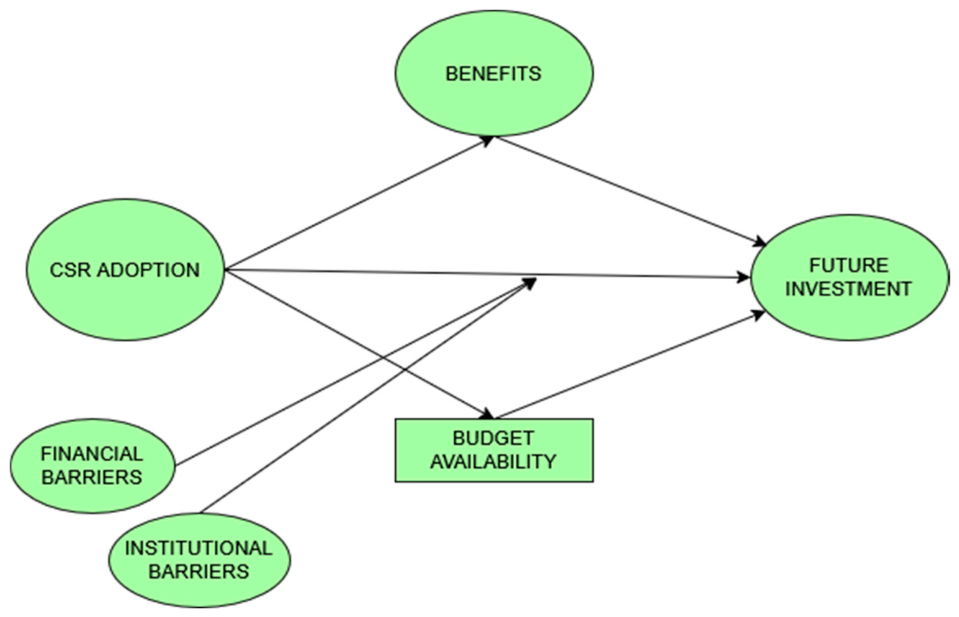
Consequently, the conceptual framework is presented in
Figure 1.
3. Materials and Methods
We built a research model based on six main constructs—CSR Adoption, Perceived Benefits, Future Investment, Available Budget, Financial Barriers and Institutional Barriers. The CSR Adoption has been measured in seven different fields, based on the Holistic CSR approach model (
Ashbridge, 2005;
ISO, 2012;
Dragotis et al., 2026). Following this classification, we measure the CSR adoption as a second-order latent variable that is reflected in seven first-order latent variables, specifically in Employee Education and Training with 2 items (ET), Environmental Responsibility with 6 items (EN), Local Community Responsibility with 3 items (LC), Product Responsibility with 3 items (PR), Supplier CSR Commitment with 3 items (S), Stakeholder Engagement with 4 items (ST), Ethical Vision and Values with 5 items (VV), based on similar works (
Abaeian et al., 2019;
Zlatanović, 2015;
Arevalo & Aravind, 2011). The Perceived Benefits second-order latent variable is also reflected in three first-order latent variables—Consumer Relations (CR), Brand Image (BI) and Innovation Capability (IC) that are measured by eight, three and two statements, respectively (
Santos, 2011;
Loosemore & Lim, 2018;
Zlatanović, 2015). The Budget Availability has been measured as single item factor, measuring the proportion of the budget that is dedicated to CSR compared to the total budget spent for marketing purposes. A single-item measure was considered appropriate because the construct captures a concrete and specific organizational indicator, namely the proportion of resources allocated to CSR activities relative to the overall marketing budget. Consistent with previous methodological recommendations for objective or narrowly defined constructs, the measure was intended to capture managerial allocation decisions rather than a broader multidimensional assessment of financial capability. Financial and Institutional Barriers have been measured with two and three items, respectively, adapted from relevant research (
Arevalo & Aravind, 2011;
Santos, 2011). Future Investment has measured the intention of the sample to increase (or decrease) the investment of CSR in future. All multi-item constructs were measured using a five-point Likert scale ranging from 1 = “Strongly Disagree” to 5 = “Strongly Agree”. The measurement items were adapted from the previously validated scales in the CSR literature and were reviewed to ensure their suitability for the Greek business context. The questionnaire was translated into Greek using a translation procedure to ensure conceptual equivalence and linguistic accuracy. Prior to the main survey, the instrument was pilot tested with a small group of business executives to confirm clarity and relevance.
The research has been focused on businesses operating in Greece that have engaged with CSR. For sampling purposes, we used the LinkedIn platform, recruiting companies’ executives who approved their participation. To be eligible for participation, respondents were required to hold a managerial position with knowledge of their firm’s strategic and CSR-related activities. In addition, respondents were asked whether their organization had implemented CSR-related practices or initiatives. Only respondents indicating prior CSR engagement were retained in the final sample. CSR engagement was assessed through respondents’ self-reports regarding the implementation of CSR-related activities and practices within their organizations. No external verification procedure was employed. Given that the respondents occupied managerial, executive or ownership positions and were expected to possess direct knowledge of their firms’ CSR activities, self-reported assessments were considered appropriate for the purposes of this study.
Data screening procedures were conducted prior to analysis. Responses with substantial missing data, incomplete questionnaires and cases failing eligibility requirements were excluded from the final dataset. A total of 1450 executives were initially contacted through LinkedIn. Of these, 592 agreed to participate and completed the questionnaire. After data screening and the removal of incomplete or ineligible responses, 568 valid questionnaires were retained from business Managers, CEOs and Owners from various regions of Greece, yielding an effective response rate of 39.2%.
Data has been collected between February and May 2023, with the approval of the University Ethics Committee. The sample demographic characteristics are presented in
Table 1.
4. Results
We first present the descriptive statistics in
Table 2.
Confirmatory Factor Analysis (CFA) was conducted simultaneously for all the variables of the study. The results of CFA were deemed satisfactory and acceptable (CMIN/DF = 2436; CFI = 0.924; NFI = 0.88; TLI = 0.919; RMSEA = 0.049; PCLOSE = 0.431) (
Hair et al., 2014). All retained measurement items exhibited standardized factor loadings above the recommended threshold of 0.50, supporting the adequacy of the measurement model. No substantial cross-loadings were observed. No items were removed during the CFA process. The internal consistency (Alpha and Construct Reliability > 0.6) and Convergent Validity (AVE > 0.5) levels are presented in
Table 2, showing satisfactory levels. Although a small number of constructs exhibited reliability statistics close to conventional threshold values, all constructs satisfied the minimum criteria. Cronbach’s alpha values exceeded the recommended threshold of 0.70, while Composite Reliability values were above the minimum acceptable level of 0.60 for exploratory research. The relatively lower CR value for Employee Education may be attributable to the limited number of indicators (two items), a condition under which Cronbach’s alpha and composite reliability estimates may diverge.
Moreover, all Average Variance Extracted (AVE) values exceeded the recommended threshold of 0.50, indicating satisfactory convergent validity. Therefore, the measurement model demonstrates acceptable reliability and validity for subsequent structural analysis. Since all variables were collected through a single survey instrument, the potential for common method bias was assessed using Harman’s single-factor test. All measurement items were entered into an exploratory factor analysis. The results indicated that the factor accounted for 27.61% of the total variance, which is below the commonly accepted threshold of 50%. Therefore, common method bias is unlikely to represent a serious concern in the present study. To further assess the validity of the measurement model, discriminant validity was evaluated using the Heterotrait–Monotrait ratio (HTMT). As shown in
Table 3, all HTMT values were below the recommended threshold of 0.85 (
Henseler et al., 2015), indicating satisfactory discriminant validity among the study constructs. The highest HTMT value was observed between Vision and Values and Stakeholder Engagement (HTMT = 0.80), which remained below the recommended cutoff value. These results suggest that the constructs are empirically distinct and measure different conceptual domains.
Structural Equations Modeling (SEM) and AMOS statistical package have been used to estimate the interactions between latent variables of the research (
Table 4). All coefficients reported in
Table 4 represent standardized path coefficients estimated within the structural equation model. To assess the significance of the indirect effects, a bootstrap mediation procedure was performed using 5000 bootstrap resamples. Following contemporary recommendations for mediation testing, statistical significance was evaluated using bias-corrected 95% confidence intervals. Indirect effects were considered significant when the confidence interval did not include zero.
Results indicate that “CSR Adoption” and “Perceived Benefits” constructs are significantly related to all the reflecting first-order latent variables, confirming the robustness of the reflective measurement structure. At the same time, every link between model construct is also significant with positive effects. CSR Adoption is found to exert a significant positive effect on both Perceived Benefits and Budget Availability. Moreover, both Perceived Benefits and Budget Availability demonstrate significant positive effects on Future Investment, supporting their role as potential mediators. Additionally, CSR Adoption exerts a direct positive effect on Future Investment, suggesting that CSR-engaged firms are more likely to demonstrate a continued intention to invest in CSR initiatives. Collectively, these results validate hypothesized structural relationships and provide a foundation for further testing mediation and moderation effects.
Table 5 presents the results of the mediation analysis examining the mechanisms through which CSR Adoption influences Future CSR Investment. Following the recommendations of
Preacher and Hayes (
2008), mediation effects were assessed using a bootstrap procedure. The indirect effects were estimated based on the product of the standardized path coefficients, while the overall significance of the mediation model was evaluated through bootstrap confidence intervals. The results indicate that Perceived Benefits partially mediate the relationship between CSR Adoption and Future CSR Investment. Specifically, CSR Adoption positively influences Perceived Benefits (β = 0.499), which in turn positively affects Future CSR Investment (β = 0.137). The resulting indirect effect is β = 0.068, supporting H3. Similarly, Budget Availability was found to mediate the relationship between CSR Adoption and Future CSR Investment. CSR Adoption positively affects Budget Availability (β = 0.279), while Budget Availability positively influences Future CSR Investment (β = 0.141). The resulting indirect effect is β = 0.039, supporting H4. To assess the overall significance of the mediation model, bootstrapping was performed using bias-corrected confidence intervals. The total indirect effect of CSR Adoption on Future CSR Investment was statistically significant (β = 0.108, [0.060, 0.163],
p < 0.001), indicating that the mediating mechanisms jointly transmit the influence of CSR Adoption on Future CSR Investment.
The moderation analysis has been accomplished, testing institutional and financial barriers as moderators in the relationship between CSR Adoption and Future Investment (
Table 6). The results indicate that the main effect of CSR Adoption on Future CSR Investment is positive and significant across both models, confirming that higher CSR involvement generally leads to stronger intentions for future investment. However, the interaction terms reveal important differences between the two types of barriers. Specifically, the interaction between CSR Adoption and Institutional Barriers is negative and statistically significant (b = −0.093,
p < 0.01), confirming that higher levels of institutional obstacles weaken the positive effect of CSR adoption on future investment. In contrast, the interaction between CSR Adoption and Financial Barriers is statistically non-significant (
p > 0.05). The R
2 values (0.211 and 0.195, respectively) further indicate that adding the interaction terms modestly improves model explanatory power.
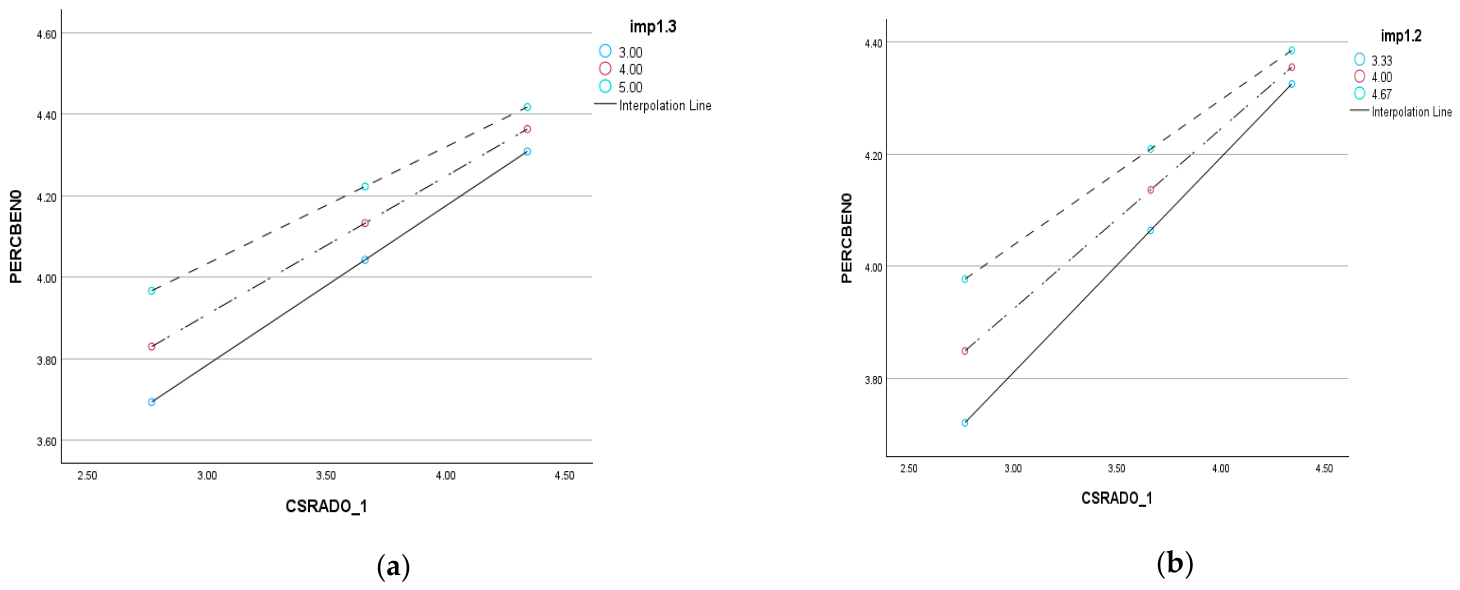
Figure 2 visually depicts the interaction effects examined in
Table 6.
Figure 2a illustrates the moderating role of Institutional Barriers. The slope representing the relationship between CSR Adoption and Future Investment is steeper when institutional barriers are low, indicating stronger reinforcement of CSR investment intentions. However, under high institutional barriers, the slope flattens considerably, showing that the positive influence of CSR adoption on future investment weakens. This visualization reinforces the statistical evidence that institutional constraints act as a limiting factor, discouraging firms from continuing their CSR investment trajectory.
Figure 2b presents the moderating effect of Financial Barriers. Here, the slopes for high and low financial barriers appear relatively parallel, with no meaningful divergence, indicating that financial constraints do not materially alter the strength of the relationship between CSR Adoption and Future Investment. This visual confirmation aligns with the non-significant interaction term reported in
Table 5, further validating that financial pressures alone do not deter firms from pursuing CSR investment once they have already committed to CSR engagement.
Finally,
Table 7 summarizes the outcomes of the hypothesis testing based on the structural, mediation and moderation analyses. The results provide strong empirical evidence for the proposed research model. Hypothesis H1, which proposed that CSR adoption has a positive impact on future CSR investment, is supported by the significant total effect of CSR adoption on future investment (b = 0.35, SE = 0.062,
p = 0.001), indicating a strong overall influence of CSR adoption after accounting for both mediation and moderation mechanisms. Hypothesis H2a, concerning the negative moderating role of financial barriers in the relationship between CSR adoption and future investment, is not supported, as the interaction effect is not statistically significant (b = −0.05,
p = 0.168). Contrary, Hypothesis H2b, which proposed a moderating role of institutional barriers, is supported, with the interaction effect being negative and statistically significant (b = −0.09,
p = 0.008).
Additionally, Hypothesis H3, predicting a positive mediating effect of perceived benefits, is supported, as evidenced by the significant indirect effect of CSR adoption on future investment through perceived benefits (b = 0.06, p = 0.001). Similarly, Hypothesis H4, proposing a positive mediating role of budget availability, is supported, with the corresponding indirect effect being positive and statistically significant (b = 0.04, p = 0.001). Overall, the results confirm that CSR adoption influences future CSR investment through multiple pathways, including direct effects, positive mediation through perceived benefits and budget availability and a negative moderating effect of institutional barriers.
5. Discussion
The findings provide important insights into how CSR adoption evolves into sustained CSR investment. Overall, the results confirm that CSR adoption constitutes a self-reinforcing strategic process, rather than a one-off managerial decision. The positive and significant relationship between CSR adoption and future CSR investment supports prior research suggesting that firms engaging in CSR tend to institutionalize such practices and expand them over time (
Ioannou & Serafeim, 2015;
Hawn & Ioannou, 2016). This finding aligns with the resource-based and dynamic capabilities perspectives, according to which CSR generates firm-specific capabilities and organizational routines that require continuous investment and further development (
Hart, 2011). Once CSR becomes embedded in the firm’s strategic orientation, it evolves into a sustained commitment reflected in future budget allocations. This finding is consistent with previous studies suggesting that CSR generates organizational capabilities, stakeholder trust and reputational assets that encourage firms to maintain and expand responsible business practices (
Hart, 1995,
2011;
Ioannou & Serafeim, 2015). However, the present study extends existing research by demonstrating that CSR adoption not only produces organizational outcomes but also directly influences firms’ willingness to increase future CSR investment.
An interesting finding concerns the non-significant moderating effect of financial barriers. Although financial constraints may be perceived as obstacles, as cited by prior literature (
Gadenne et al., 2009;
Hsu & Cheng, 2012;
Shen et al., 2015), they do not significantly alter the extent to which CSR Adoption translates into future investment. This result suggests that once firms have already engaged in CSR, financial constraints lose their inhibiting power. In other words, firms committed to CSR appear to maintain their willingness to invest further, even under financial pressure, potentially viewing CSR as a long-term strategic commitment rather than a cost-sensitive activity. This finding is consistent with the business case perspective, which posits that CSR is not merely a cost-based decision but an activity that generates value, contributing to competitive advantage and long-term performance (
McWilliams & Siegel, 2001;
Weber, 2008). It also resonates with empirical evidence indicating that firms with established CSR practices may experience improved access to finance and reduced capital constraints, thereby mitigating the impact of financial limitations (
Cheng et al., 2014).
In contrast, the study highlights the critical role of institutional barriers as a significant negative moderator. The weakening effect of institutional constraints on the CSR adoption–future investment relationship underscores the importance of the external environment in shaping CSR. This finding is in line with institutional theory, which emphasizes that regulatory frameworks, governance quality and policy support are key determinants of CSR engagement (
Ioannou & Serafeim, 2015;
Ortiz-Martínez et al., 2023). In contexts characterized by regulatory voids, inefficiencies, bureaucratic burdens or weak government support, firms may lose their willingness to reinvest in CSR. Thus, while financial constraints may not deter committed firms, institutional deficiencies can significantly hinder the progression of CSR from adoption to strategic investment.
The distinction between financial and institutional barriers may be particularly relevant within the Greek business environment. Greece has experienced prolonged periods of economic uncertainty, during which firms have become accustomed to operating under financial constraints and resource limitations. Consequently, organizations that have already integrated CSR into their strategic orientation may perceive CSR investment as a necessary component of long-term competitiveness rather than as a discretionary expenditure that can be easily reduced during periods of financial pressure. In contrast, institutional barriers represent challenges that are more difficult for individual firms to overcome. Bureaucratic complexity, regulatory inconsistency, limited governmental support and the absence of strong incentive mechanisms may weaken the strategic value associated with CSR initiatives and reduce managerial willingness to expand CSR investments. Therefore, the present findings suggest that the continuity of CSR investment depends less on firms’ internal financial constraints and more on the quality of the institutional environment within which CSR activities are implemented and evaluated.
This finding contributes to the CSR literature by suggesting that the factors influencing the continuation of CSR investment may differ from those influencing initial CSR adoption. While financial resources are often emphasized as barriers to adopting CSR practices, the present results indicate that institutional quality may become the more decisive factor once CSR has already been embedded within organizational strategy.
Another highly significant contribution of this study lies in the strong mediating role of perceived benefits. The results demonstrate that CSR adoption increases future CSR investment indirectly by enhancing managers’ perceptions of the value generated by CSR initiatives. This finding provides empirical support for the argument that CSR-related benefits (such as brand reputation, stronger stakeholder relationships, enhanced innovation capacity, etc.) serve as key drivers of continued engagement (
Luo & Bhattacharya, 2006;
Bocquet et al., 2013;
Fatma & Rahman, 2016). Importantly, this mechanism highlights the cognitive and evaluative dimension of CSR decision-making. Firms do not automatically increase CSR investment after adoption; they do so when they recognize the benefits associated with CSR activities. This result extends prior literature by demonstrating that perceived benefits function not only as outcomes of CSR but also as drivers of future strategic behavior. In this sense, perceived benefits act as a feedback loop that reinforces CSR engagement over time. This aligns with
Weber (
2008), who argues that the multidimensional value of CSR is a key factor motivating firms to deepen their involvement, as well as with
Rhou et al. (
2016), who emphasize that continued CSR investment depends on the recognition of tangible and intangible returns. The present findings therefore suggest that CSR adoption initiates a learning process within firms, whereby positive outcomes increase managerial confidence in CSR as a strategic investment, leading to further resource allocation. The significant mediating role of perceived benefits is consistent with prior research emphasizing the business case for CSR and the importance of managerial perceptions in shaping strategic decisions (
Weber, 2008;
Aguinis & Glavas, 2012). While previous studies have primarily examined perceived benefits as outcomes of CSR engagement, the present findings suggest that these benefits also function as mechanisms through which CSR adoption encourages continued investment.
Additionally, the mediating role of budget availability further supports the argument that CSR adoption influences internal financial planning processes. The results indicate that CSR adoption contributes to increased allocation of financial resources toward CSR, which in turn facilitates future investment. This finding is consistent with the resource-based view, which considers resource allocation as an indicator of strategic priority (
Tang et al., 2012). Once CSR becomes embedded in organizational routines, it is more likely to be incorporated into formal budgeting processes, ensuring continuity and expansion of CSR initiatives. This result is aligned with research highlighting the importance of resource allocation and strategic budgeting in sustaining CSR initiatives (
Bansal, 2005). The findings extend this literature by showing that budget availability operates as an intermediary mechanism linking CSR adoption to future investment intentions.
The findings of our study suggest that the transition from CSR adoption to future CSR investment is driven by a combination of internal reinforcement mechanisms and external contextual factors. On the one hand, perceived benefits and budget availability act as enabling mechanisms that translate CSR engagement into sustained investment. On the other hand, institutional barriers can constrain this process, while financial barriers appear to play a less critical role than previously assumed. This understanding contributes to the CSR literature by demonstrating that the determinants of CSR continuation differ from those influencing initial adoption. Specifically, while financial constraints may be important at the adoption stage, they become less relevant once CSR is integrated into the firm’s strategic framework, whereas cognitive evaluations of benefits and institutional conditions emerge as more decisive factors in shaping future CSR investment trajectories.
The present study extends existing CSR research by shifting the focus from the consequences of CSR adoption to the determinants of continued CSR investment. While prior studies have largely examined how CSR affects organizational performance, reputation, stakeholder relationships or financial outcomes, the current research investigates whether CSR adoption itself generates conditions that motivate firms to expand future CSR investment. The study focuses on perceived benefits, budget availability and institutional barriers may be perceived as a process-oriented explanation of how CSR evolves from an initial managerial decision into a long-term strategic commitment.
6. Limitations and Future Research
Despite its contributions, our study is subject to several limitations that should be considered when interpreting the findings. First, the study employed a cross-sectional research design, which limits the ability to establish causal relationships among CSR adoption, perceived benefits, budget availability and future CSR investment. Although the proposed model is theoretically grounded, the temporal sequence implied by the hypotheses cannot be fully verified using data collected at a single point in time. Future longitudinal studies would be valuable for examining how CSR adoption evolves into sustained investment decisions over time and for providing stronger evidence regarding causal mechanisms. Second, the study relies on self-reported responses provided by business executives. While managers represent an appropriate source of information regarding organizational CSR activities and strategic investment decisions, the use of a single respondent per firm may introduce common method bias and social desirability effects. This issue may be particularly relevant for constructs such as perceived benefits and future CSR investment intentions, where respondents may overestimate the positive outcomes associated with CSR engagement or express intentions that do not fully translate into future organizational behavior. Consequently, the observed relationships may partially reflect managerial perceptions rather than objective organizational outcomes. Third, the measurement of future CSR investment captures managerial intentions rather than actual future investment behavior. Although investment intentions are commonly used as predictors of subsequent organizational actions, future research could strengthen the evidence by incorporating longitudinal financial data, CSR expenditures or sustainability reporting indicators to assess whether stated intentions ultimately translate into realized CSR investments. Fourth, budget availability was operationalized using a single-item indicator reflecting the proportion of resources allocated to CSR activities. Although this measure was selected because it captures a specific and concrete managerial resource-allocation decision, it does not encompass all dimensions of organizational financial capability or resource availability. Future research could employ more comprehensive measures, including objective financial indicators and multidimensional budget allocation scales, to further explore the role of financial resources in sustaining CSR investment. Finally, the study was conducted exclusively in Greece, a national context characterized by specific institutional, regulatory and economic conditions. Given the significant moderating role of institutional barriers identified in the study, caution should be exercised when generalizing the findings to countries with different governance structures, regulatory environments or levels of institutional support for CSR. Comparative cross-country studies would provide valuable insights into the extent to which the mechanisms identified in this research are context-specific or universally applicable.
Future research may extend the present findings in several ways. Longitudinal studies could provide deeper insights into the dynamic relationship between CSR adoption and future investment, evaluating how firms transition from initial engagement to long-term strategic commitment. Future research could also employ multi-source data, combining managerial perceptions with objective financial and CSR performance indicators, to reduce potential biases and enhance measurement robustness. Additionally, further investigation into the conceptualization and measurement of budget availability is warranted, potentially through multi-item scales or objective financial ratios, to better reflect its role as a strategic resource. Comparative cross-country studies would also be valuable in examining how different institutional environments influence the mechanisms identified in this study, particularly the moderating role of institutional barriers. Finally, future research could explore additional mediating and moderating variables (e.g., organizational culture, leadership commitment, market competition, etc.) to provide a more comprehensive understanding of the diverse factors that may drive CSR investment.