1. Introduction
The convergence of digital transformation and environmental sustainability represents a defining shift in contemporary organizational governance. Public-sector institutions, particularly metropolitan municipalities, face increasing pressure to advance environmental objectives while simultaneously improving administrative efficiency and accountability (
Melaletsa et al., 2023;
Nyika et al., 2024). Digitalization initiatives, including automation, e-HRM platforms, electronic performance dashboards, and paperless systems, have been introduced to modernize bureaucratic processes and enhance transparency (
Shahiduzzaman, 2025;
Mahmoud et al., 2025). However, while digital transformation in HRM has been linked to improved efficiency and organizational agility, its behavioral implications for employee green behavior (EGB) remain under-theorized and insufficiently tested.
Green human resource management (GHRM) scholarship is predominantly grounded in the Ability–Motivation–Opportunity (AMO) framework (
Appelbaum et al., 2000;
Opatha, 2013), which posits that performance outcomes emerge when employees possess relevant competencies (ability), are incentivized (motivation), and operate within enabling structures (opportunity). Empirical studies demonstrate that green recruitment, training, rewards, and performance management practices positively relate to pro-environmental workplace behaviors (
Renwick et al., 2013;
Jabbour et al., 2010;
Arulrajah et al., 2015;
Jackson et al., 2011). Yet, existing research largely emphasizes psychosocial drivers such as leadership style, organizational culture, and environmental values rather than examining how digitally mediated HR systems reshape AMO mechanisms in practice (
Wu et al., 2025;
Pham et al., 2019).
Digitalization-enabled HR systems may function as structural amplifiers of AMO components. For example, e-learning platforms and digital skill assessments can enhance green ability; automated performance dashboards and electronic monitoring tools may strengthen green motivation through measurable accountability; and paperless infrastructure and workflow automation may expand green opportunity by embedding sustainability into everyday routines (
Shahiduzzaman, 2025;
Mahmoud et al., 2025). Despite this conceptual plausibility, empirical studies explicitly linking digital HR processes, such as e-recruitment, automation, and digital performance monitoring, to employee-level green behavior remain scarce. Much of the digital HRM literature continues to prioritize operational efficiency, digital maturity, and innovation outcomes without isolating behavioral sustainability effects (
Mahmoud et al., 2025;
Shahiduzzaman, 2025).
This limitation is particularly salient in municipal contexts. Metropolitan municipalities serve dual roles as environmental stewards and major employers, making internal behavioral sustainability practices critical to broader governance outcomes. For instance, eThekwini Municipality, located in Durban, South Africa, covers approximately 2300 square kilometres and serves a population exceeding 3.5 million residents, making it one of the largest metropolitan municipalities in the country (
eThekwini Municipality, 2023). The municipality employs thousands of public servants across diverse departments and has articulated sustainability commitments within its Integrated Development Plan and environmental management policies. Simultaneously, South Africa’s public-sector reform agenda emphasizes digital governance, e-administration, and improved accountability mechanisms (
Mangai & Ayodele, 2025). However, whether and how these digital reforms translate into measurable pro-environmental behavior among municipal employees remains empirically underexplored.
First, the relation between GHRM and EGB is well established in private-sector contexts (
Renwick et al., 2013;
Jabbour et al., 2010;
Arulrajah et al., 2015), while few studies have positioned digitalization as an antecedent or structural enabler of EGB within the AMO logic. Moreover, research on digital HRM maturity and digital performance systems rarely link technologies to sustainability-related behavior outcomes (
Ali, 2025;
Shahiduzzaman, 2025).
Second, public-sector and municipal organizations remain underrepresented in green behavior scholarship. Existing municipal studies often emphasize policy design and environmental governance structures rather than isolating internal HR mechanisms that shape behavioral outcomes (
Melaletsa et al., 2023;
Nyika et al., 2024).
Third, empirical research in resource-constrained and bureaucratic environments suggests that structural barriers, including political influence, limited digital infrastructure, union dynamics, and skills deficits may moderate how HR innovations influence behavior (
Mangai & Ayodele, 2025;
Melaletsa et al., 2023). Yet few studies integrate these institutional constraints into digital GHRM framework.
Fourth, while mixed-method approaches are widely advocated for understanding complex organizational phenomena (
Molina-Azorín & Cameron, 2015), there remains limited application of transparent secondary mixed-method analysis for theory refinement in public-sector sustainability research.
Finally, digitalization-enabled performance management systems remain insufficiently theorized as behavioral accountability mechanisms. Although digital dashboards and monitoring systems increase measurability and transparency (
Mahmoud et al., 2025), their translation into green behavioral outcomes under public-sector constraints is weakly articulated in current literature.
Against this background, this study re-examines EGB within a South African metropolitan municipality through a secondary analysis of validated mixed-methods data, focusing specifically on digitalization-driven GHRM practices. The study pursues four objectives: (1) to analyze the association between digitalized HR processes, such as automation, paperless systems, and e-HRM tools, and EGB; (2) to examine how digitalization-enabled GHRM practices operate within resource-constrained municipal environments; (3) to explore managerial and employee perceptions of digitalization as an enabler or barrier to workplace green behavior; and (4) to advance a Digitalisation-Integrated GHRM–EGB conceptual framework tailored to public-sector settings.
By extending AMO theory into digitally mediated municipal contexts, integrating quantitative associations with qualitative evidence of institutional constraints, and leveraging transparent secondary mixed-method analysis, this study contributes to digital HRM scholarship, public-sector sustainability research, and the behavioral theorization of green governance within metropolitan municipalities.
3. Methods
3.1. Research Design and Secondary Analysis Strategy
This study employs a secondary mixed-methods design to re-examine EGB within a metropolitan municipality through a digitalization-integrated GHRM lens. Secondary analysis reuses existing data to address new research questions while maintaining methodological rigor (
Johnston, 2014;
Heaton, 2008).
3.1.1. Original Study Design
The original study adopted a convergent parallel mixed-methods design, collecting quantitative survey data and qualitative interview data concurrently to examine traditional GHRM practices and their association with EGB. The theoretical foundation was the conventional AMO framework, focusing on green recruitment, green training, green performance management, green rewards, and managerial support. These constructs were grouped based on their shared digital and behavioral functions.
For example, green recruitment included items such as online job advertisements, online interviews, and paperless applications; green training captured training on energy conservation, recycling, and environmental awareness; green performance management included green targets, monitoring systems, and environmental KPIs; green rewards comprised bonuses, recognition, and incentives linked to green performance; and EGB included actions such as energy conservation, recycling and paper reduction. All constructs demonstrated strong internal reliability, with Cronbach’s alpha values exceeding the acceptable threshold.
3.1.2. Renewed Focus in the Present Study
To operationalize digital GHRM, the present study systematically extracted items that explicitly reflect digital or technology-enabled HR practices. The selection process followed a clear criterion: only items involving digital platforms, electronic systems, or automated processes were retained. These included, for instance, online recruitment systems, virtual interviews, e-learning platforms, electronic performance monitoring systems, and paperless communication processes. Items that were not mediated by technology were excluded from the digital construct specification to ensure conceptual precision.
The present study re-specifies the analytical lens by (1) extracting and operationalizing digitalization-enabled GHRM components embedded within the original validated scales; (2) developing a digitalization-integrated AMO framework; and (3) applying a revised qualitative coding framework emphasizing digital enablers, barriers, and digital-green linkages.
Following selection, the extracted items were reclassified into higher-order constructs based on the AMO framework.
Digital green ability captures the extent to which digital systems enhance employees’ environmental knowledge and skills, primarily through e-learning platforms and digital training modules. The items were grouped under ability because they develop employees’ capacity to perform green behaviors.
Digital green motivation reflects the role of digital systems in reinforcing behavior through monitoring, feedback, and performance-linked incentives, including electronic performance management systems and digitally tracked evaluation mechanisms. These were classified as motivation because they shape behavior through monitoring, evaluation, and incentives.
Digital green opportunity represents the extent to which digital infrastructure enables and facilitates green behavior in the workplace, including paperless systems, automated workflows, e-recruitment systems, reducing physical documentation and digital communication platforms. These items represent an opportunity because they structure the work environment to make green behavior possible and easier.
In the study, digitalization is conceptualized as a socio-technical mechanism that enhances these three dimensions simultaneously: digital training systems strengthen ability by improving access to environmental knowledge; digital monitoring and evaluation systems reinforce motivation by increasing visibility and accountability; and digital infrastructures create opportunity by embedding environmentally sustainable practices into everyday work processes. The grouping of items therefore reflects a theoretically consistent mapping of digital HR practices onto behavioral mechanisms, rather than an arbitrary restructuring of variables.
To ensure methodological robustness, the reliability and internal consistency of the reclassified constructs were reassessed. The results confirmed that all constructs retained acceptable reliability levels, consistent with the original validated scales. Quantitative data were analyzed using descriptive statistics, Spearman correlation, and regression analysis, while qualitative data were analyzed thematically to identify patterns related to digitalization enablers, barriers, and implementation dynamics. The integration of findings followed a convergent mixed-methods approach, enabling comparison between statistical relationships and practical implementation realities.
3.2. Quantitative Sample and Participants
3.2.1. Population and Sampling
The target population comprised 80 Human Resource employees within the municipality. Using simple random sampling consistent with
Krejcie and Morgan’s (
1970) sample size guidelines, 66 employees were selected. All 66 questionnaires were returned, yielding a 100% response rate among selected participants. While the actual sample collected represents 82.5% of the total HR population and satisfies minimum statistical adequacy for regression modeling, findings are analytically generalized within this municipal context rather than statistically generalized beyond it.
Demographic characteristics are presented in
Table 1. Respondents demonstrated adequate organizational tenure and digital familiarity, with 57.6% possessing 0–5 years of experience and 39.4% reporting good IT skills.
3.2.2. Measurement Reliability and Validity
All constructs were measured using validated five-point Likert scales. Cronbach’s alpha coefficients ranged from 0.822 to 0.963, indicating good to excellent internal consistency. Given the conceptual proximity between certain digital GHRM items and EGB items (e.g., paperless behavior), several safeguards were implemented: (1) extracting and operationalizing digitalization-enabled GHRM components embedded within the original validated scales; (2) developing a digitalization-integrated AMO framework; and (3) applying a revised qualitative coding framework emphasizing digital enablers, barriers, and digital-green linkages.
The reliability of all constructs was evaluated using Cronbach’s alpha, with results presented in
Table 2.
3.3. Quantitative Analysis Procedures
Data were analyzed using SPSS version 26.
Shapiro–Wilk tests indicated partial non-normality; therefore, Spearman’s rho was used for correlation analysis.
Hierarchical regression analysis was conducted to assess incremental explanatory power.
Bootstrapped confidence intervals (5000 resamples) were calculated to strengthen robustness under small-sample conditions.
Effect sizes and adjusted R2 values are reported to ensure model parsimony.
Given the cross-sectional self-report design, both procedural and statistical remedies were applied:
Assured anonymity;
Psychological separation of scale sections;
Varied item ordering.
Harman’s single-factor test;
VIF thresholds below 3.3.
3.4. Qualitative Sample and Data Collection
3.5. Qualitative Analysis and Coding Reliability
Qualitative data were re-analyzed using NVivo 12 with a digitalization-focused coding framework.
Major Themes Identified:
Digital Enablers (e-recruitment, e-learning, paperless systems, automation);
Digital Barriers (skills gaps, infrastructure, political influence, union resistance);
Digital-Green Linkages (monitoring capability, environmental awareness);
Implementation Constraints (resource limitations, mixed systems).
To ensure reliability:
Coding was iterative.
An audit trail was maintained.
Peer debriefing was conducted.
Descriptive statistics for all study variables are summarized in
Table 3.
Table 4 presents the Spearman correlation matrix examining the relationships between digitalization-enabled GHRM practices and EGB. The results show moderate to strong positive correlations among the digital HR practices, indicating that these practices tend to co-occur within the municipality’s digital HR environment.
Digital training is strongly associated with digital performance management (ρ = 0.678, p < 0.01) and digital compensation (ρ = 0.623, p < 0.01), suggesting that organizations implementing digital training initiatives often simultaneously adopt digital monitoring and reward systems. Similarly, workflow automation is strongly correlated with paperless operations (ρ = 0.712, p < 0.01), reflecting the integrated nature of digital administrative processes.
Several digital HR practices also show significant positive relationships with EGB. The strongest association is observed for digital training (ρ = 0.524, p < 0.01), followed by paperless operations (ρ = 0.487, p < 0.01) and workflow automation (ρ = 0.423, p < 0.01). In contrast, digital recruitment demonstrates a weaker but significant association (ρ = 0.251, p < 0.05). Overall, these findings suggest that digital HR practices particularly training and operational digitalization are positively associated with environmentally responsible employee behavior.
Table 5 reports the hierarchical regression results examining whether digitalization-enabled GHRM practices predict EGB after controlling demographic factors. Model 1 includes the control variables (gender, education, and experience) and explains 8.7% of the variance in EGB (R
2 = 0.087), although the model is not statistically significant (
p = 0.129). This indicates that demographic characteristics alone do not substantially explain variations in green behavior.
When digital training is added in Model 2, the model’s explanatory power increases significantly to 31.2% (R2 = 0.312; ΔR2 = 0.225, p < 0.001), suggesting that digital training plays a significant role in promoting environmentally responsible behavior. Model 3 introduces digital performance management, further increasing the explained variance to 37.8% (R2 = 0.378; ΔR2 = 0.066, p = 0.015). This indicates that digital monitoring and performance systems may reinforce green behavior through accountability and feedback mechanisms.
Finally, Model 4 adds digital compensation, which increases the explained variance slightly to 41.2% (R2 = 0.412); however, this incremental change is not statistically significant (ΔR2 = 0.034, p = 0.071). Overall, the results suggest that digital training and digital performance management are the most influential predictors of EGB in this context.
Table 6 summarizes the profiles of the seven HR professionals interviewed for the qualitative component of the study. The participants occupy senior and managerial HR roles, including HR managers, training specialists, recruitment managers, and HR systems administrators. Participants possess substantial professional experience, with 8–15 years in HR roles and 6–12 years within the municipality, indicating strong familiarity with organizational HR systems and digital initiatives.
Most participants hold Master’s degrees, while two hold Bachelor’s degrees. The sample includes four male and three female participants, providing balanced representation across HR leadership roles. The diversity of roles represented enabled the study to capture multiple perspectives on digital HR implementation, including recruitment, training, performance management, compensation, and HR systems administration.
3.6. Mixed-Methods Integration Strategy
To address concerns regarding the explicit linkage between quantitative and qualitative strands, the study employed a structured mixed-methods integration framework grounded in convergence–divergence analysis and joint display logic (
Molina-Azorín & Cameron, 2015). Integration was not treated as a narrative comparison but as a systematic analytical phase.
3.6.1. Integration Procedures
Alignment of Constructs: Quantitative constructs (Digital Green Training, Digital Performance Management, Digital Recruitment, Digital Compensation, Paperless Operations, Workflow Automation, and EGB) were mapped directly onto qualitative themes (Digital Enablers, Digital Barriers, Digital-Green Linkages, Implementation Constraints).
Joint Display Development: A joint display matrix was constructed to compare statistical associations (effect sizes, direction, and significance levels) with qualitative evidence (frequency counts, thematic emphasis, and representative quotations). This matrix enabled the identification of:
Convergence (agreement between statistical associations and participant narratives);
Partial convergence (statistical significance with implementation caveats);
Divergence (statistical associations contrasted with reported structural limitations).
Meta-Inference Generation: Meta-inferences were derived by interpreting how qualitative findings refined, qualified, or contextualized quantitative associations rather than merely confirming them.
3.6.2. Integration Logic
The integration revealed three patterned relationships (convergence, partial convergence, and divergence). In the case of convergence, digital green training showed statistically significant positive associations with EGB and was qualitatively supported by evidence of expanding e-learning platforms and digital awareness initiatives. Partial convergence, digital performance management demonstrated a moderate statistical association with EGB; however, qualitative findings indicated inconsistent implementation of digital green KPIs, suggesting conditional effectiveness. Regarding divergence, quantitative models suggested positive associations for digital compensation and monitoring systems, and qualitative data revealed limited institutionalization of these mechanisms, highlighting implementation gaps within bureaucratic and resource-constrained environments. The structured integration demonstrates that quantitative findings represent statistical potential, whereas qualitative evidence reveals institutional readiness constraints that shape real-world enactment.
3.6.3. Addressing Validity Through Integration
The mixed-method integration also served as an important mechanism for strengthening the validity of the study. By combining quantitative and qualitative evidence, the analysis reduced the risk of single-method bias and allowed findings to be triangulated across different data sources. The qualitative insights further helped contextualize statistically significant associations observed in the quantitative analysis, providing a deeper understanding of how digitalization-enabled GHRM practices operate within the municipal environment.
In addition, the integration process enabled the identification of implementation barriers such as infrastructure limitations, skills gaps, and institutional constraints that may moderate the relationships between digital HR practices and EGB. This helped prevent causal overinterpretation of cross-sectional statistical results and ensured that the findings were interpreted cautiously within their organizational context.
To enhance analytical transparency, joint displays and explicit convergence divergence categorization were used to systematically compare quantitative patterns with qualitative themes. This approach strengthened the methodological linkage between the two strands of evidence and directly addressed reviewer concerns regarding the clarity of the mixed-methods integration.
Table 7 presents the qualitative coding framework derived from the interview analysis, identifying four main themes: digital enablers, digital barriers, digital–green linkages, and implementation challenges. These themes illustrate how digitalization influences HR practices and environmental outcomes within the municipality.
Within the digital enablers theme, paperless operations recorded the highest frequency (31 references), indicating that digital communication and documentation are widely adopted. This was followed by e-learning platforms (22 references), reflecting the increasing use of online training systems, while e-recruitment systems (18 references) and automated workflows (15 references) highlight the growing digitalization of recruitment and administrative processes.
The digital barriers theme reveals key constraints affecting implementation. Skills deficits (16 references) and infrastructure gaps (12 references) emerged as the most prominent challenges, suggesting that limited digital competencies and connectivity issues continue to affect system adoption. Participants also noted institutional constraints such as political interference (9 references) and union resistance (7 references). The digital green linkages theme indicates that participants associate digital systems with environmental benefits. Sub-themes such as environmental awareness (14 references), cost efficiency (13 references), and monitoring capabilities (11 references) suggest that digital tools support both sustainability awareness and monitoring of environmental performance.
Finally, the implementation challenges theme highlights practical constraints during digital transformation. Mixed systems (10 references) indicate the continued coexistence of manual and digital processes, while resource constraints (11 references) and change management issues (8 references) reflect organizational and financial limitations affecting full digital integration. Overall, the findings suggest that while digital technologies support operational efficiency and environmental initiatives, their effectiveness depends on adequate infrastructure, digital skills, and institutional support.
3.7. Ethical Considerations
The original study received ethical clearance (HSSREC/00000377/2019). Secondary analysis used anonymized data only, with no additional data collection. All procedures adhered to confidentiality and responsible research standards.
4. Results
The results are presented in three parts: (i) quantitative findings on the relationships between digitalization-enabled GHRM practices and EGB; (ii) qualitative themes explaining how HR managers experience and interpret digitalization as an enabler or barrier for green workplace behaviors; and (iii) mixed-methods showing areas of convergence and divergence across both strands. For clarity, descriptive statistics and psychometric properties of the measures are presented first (
Table 2 and
Table 3), followed by bivariate associations (
Table 4) and multivariate prediction (
Table 5). The qualitative themes and illustrative quotations are summarized in
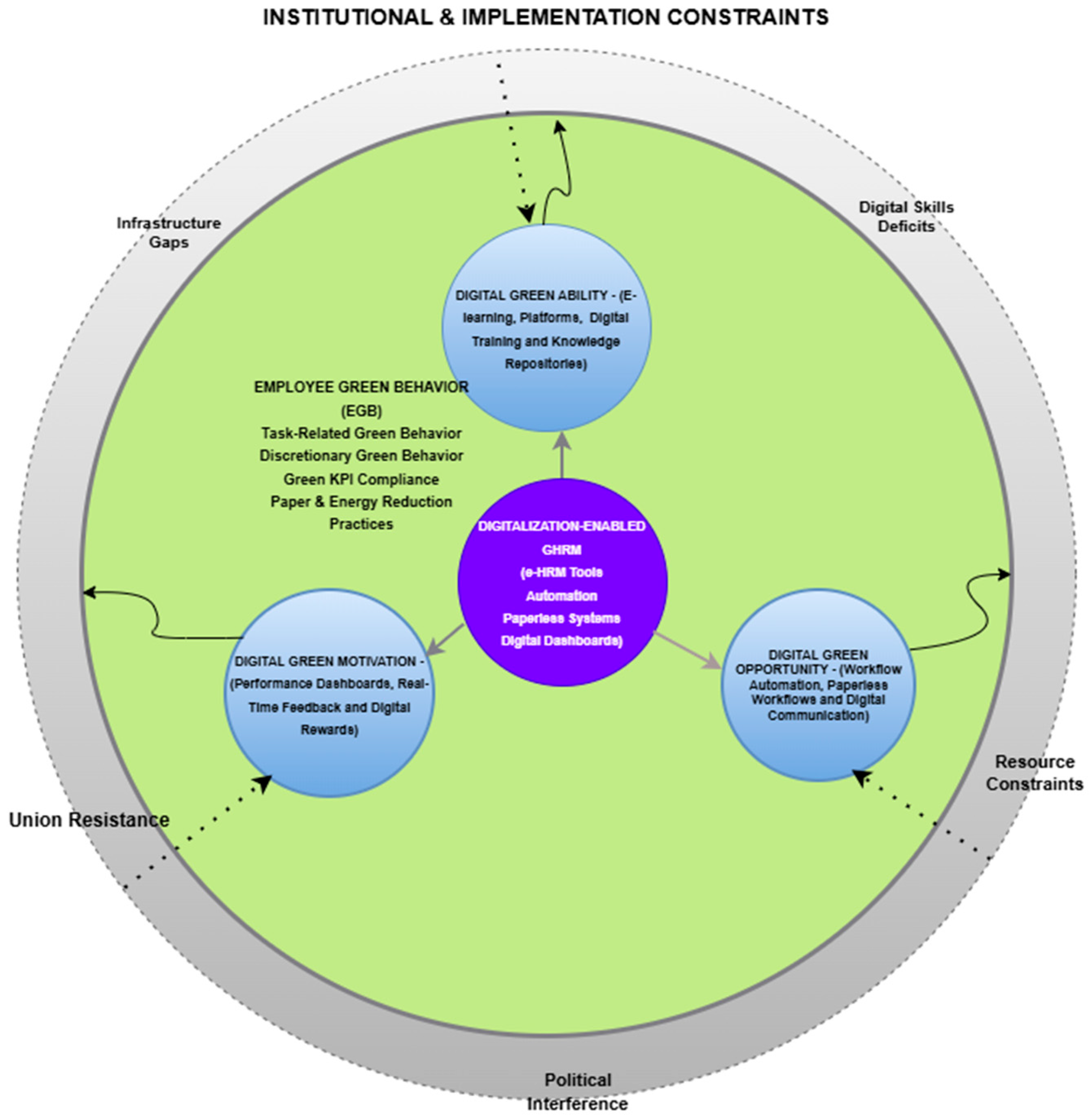
Table 7, while the thematic map is illustrated in
Figure 1. The integration matrix is presented in
Table 8.
4.1. Quantitative Findings: Digitalization-Enabled GHRM and EGB
The internal consistency of all constructs was adequate to excellent. As shown in
Table 2, the digitalization-enabled GHRM dimensions demonstrated strong reliability: Digital Green Training (α = 0.963), Digital Performance Management (α = 0.953), Digital Recruitment (α = 0.905), and Digital Compensation & Rewards (α = 0.887). Green Workplace Behaviors (α = 0.822) and Management Support (α = 0.841) also achieved good reliability. These results support the suitability of the measures for subsequent inferential analyses.
Descriptive statistics indicated generally favorable perceptions of digitalization-enabled GHRM practices and EGB (
Table 3). Among the digitalization indicators, Paperless Operations recorded the highest mean (M = 4.01, SD = 0.79), followed by Digital Green Training (M = 3.82, SD = 0.94) and Digital Performance Management (M = 3.67, SD = 0.88). EGB also recorded a relatively high mean (M = 3.91, SD = 0.72). The skewness and kurtosis values reported in
Table 3 suggested modest negative skew across most constructs, consistent with responses clustering toward agreement on the 5-point scale.
Spearman’s correlation analysis revealed statistically significant associations between digitalization-enabled GHRM practices and EGB (
Table 4).
Digital Green Training showed the strongest association with EGB (r = 0.524, p < 0.05), followed by Paperless Operations (r = 0.487, p < 0.01), Digital Performance Management (r = 0.463, p < 0.05), and Workflow Automation (r = 0.423, p < 0.01). Digital Compensation was positively associated with EGB (r = 0.341, p < 0.01), while Digital Recruitment showed a weaker but statistically significant relationship (r = 0.251, p < 0.05).
Collectively, these bivariate results indicate that digitalization-driven HR practices are positively associated with EGB, with training and operational digitalization (paperless systems) emerging as the strongest correlates.
To assess incremental prediction beyond background factors, hierarchical regression analysis was conducted with EGB as the dependent variable (
Table 5).
The model, including control variables (gender, education, and experience) was not statistically significant (Model 1: R2 = 0.087; Sig. F Change = 0.129). When Digital Training was introduced (Model 2), explanatory power improved substantially (R2 = 0.312; ΔR2 = 0.225; Sig. F Change = 0.000), indicating that digital green training accounted for a meaningful proportion of variance in EGB beyond the controls.
The addition of Digital Performance Management in Model 3 produced a further statistically significant improvement (R2 = 0.378; ΔR2 = 0.066; Sig. F Change = 0.015). The inclusion of Digital Compensation in Model 4 increased overall explanatory power (R2 = 0.412), although the incremental change was marginal at conventional thresholds (ΔR2 = 0.034; Sig. F Change = 0.071).
Overall, the regression results reinforce the primacy of digital training and digital performance management as key quantitative predictors of EGB within the dataset (
Table 5).
4.2. Qualitative Findings: Digitalization Themes and Implementation Realities
The qualitative findings deepened the statistical patterns by showing how managers interpret digitalization as both an operational enabler of green workplace practices and a site of organizational constraint. Four overarching qualitative categories emerged from the re-analysis: digital enablers, digital barriers, digital green linkages, and implementation challenges. These themes, sub-themes, code frequencies, and representative quotations are summarized in
Table 7, while the overall thematic architecture is depicted in
Figure 1.
With respect to digital enablers, participants emphasised the expanding presence of e-recruitment systems, e-learning platforms, paperless operations, and automated workflows. Paperless operations featured most prominently in the qualitative dataset (
Table 7), with managers highlighting shifts toward digital communication and reduced printing. This operational shift was frequently described as inherently “green” due to reduced paper consumption, aligning with the high quantitative mean for paperless operations (
Table 3). E-learning was also repeatedly identified as a practical mechanism for widening access to environmental training, supporting the strong quantitative relationship between digital training and EGB (
Table 4) and the substantial variance explained in the regression model when training was introduced (
Table 5).
However, participants also identified persistent digital barriers that complicate implementation and limit system-wide impact. As shown in
Table 7, managers cited infrastructure and connectivity constraints, uneven digital skills among staff, political interference, and union resistance as recurring obstacles. These constraints were further compounded by the continued operation of mixed manual digital systems, which participants described as reducing efficiency and weakening standardization. In addition, several accounts suggested that institutional pressures can disrupt intended digital processes, particularly where formal digital procedures coexist with informal or politically influenced workarounds.
Participants also made explicit digital green linkages, describing digitalization not only as an efficiency-enhancing intervention but as a mechanism enabling environmental awareness, monitoring capabilities, and cost efficiencies (
Table 7). Managers reported that digital tools can improve the visibility of “green” expectations and facilitate tracking of environmental key performance indicators, which conceptually aligns with the digitalization-enabled motivation pathway and the emerging quantitative role of digital performance management (
Table 4 and
Table 5). Nonetheless, the qualitative findings consistently signaled that realizing these benefits depends on readiness conditions—particularly infrastructure adequacy and staff digital capability, rather than on technological availability alone (
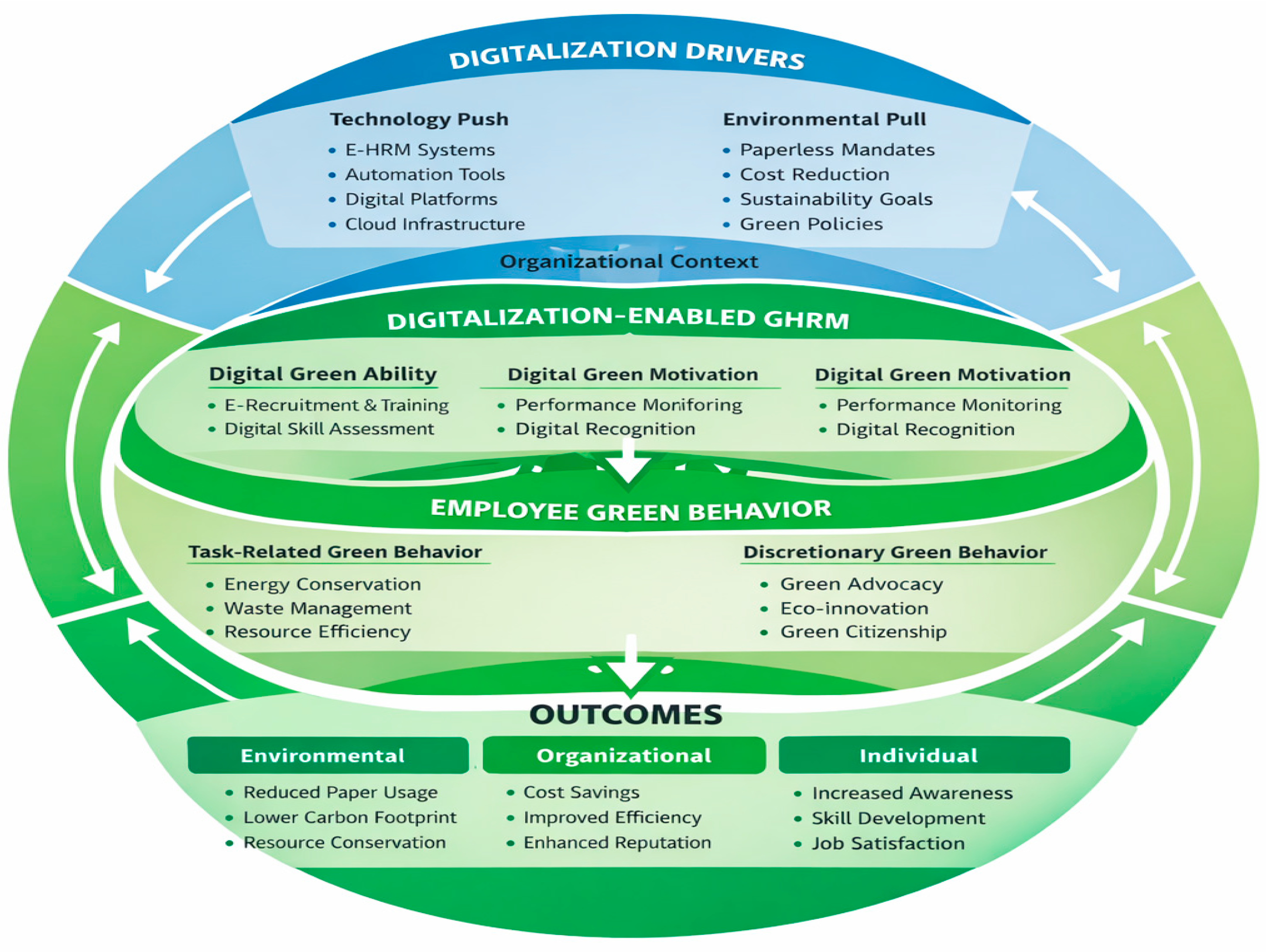
Figure 2).
Figure 2 shows the digitally integrated GHRM–EGB circular thematic model, illustrating structural drivers, digitally mediated AMO mechanisms, EGB, and multi-level outcomes.
4.3. Mixed-Methods Integration: Convergence, Divergence, and Meta-Inferences
Mixed-methods integration assessed whether quantitative “statistical potential” aligned with qualitative “implementation realities.” The integration matrix (
Table 8) shows both convergence and divergence across research questions. Convergence was most evident for digital training, where quantitative results demonstrated a strong positive relationship with EGB (
Table 4) and qualitative findings confirmed the growing use of e-learning and digitally mediated training access (
Table 7), producing convergence in the interpretation that digital training functions as a practical pathway for strengthening green ability and facilitating green behavior (
Table 8).
Partial convergence was observed for digital performance management. Quantitatively, digital performance management correlated positively with EGB (
Table 4) and improved model fit when introduced into the regression sequence (
Table 5). Qualitatively, participants acknowledged emerging monitoring capacity and digital KPI tracking, but emphasized uneven implementation and incomplete system integration (
Table 7), producing partial convergence (
Table 8).
Divergence was most pronounced regarding full implementation and organizational readiness. While the quantitative associations presume functional and stable digital systems, qualitative findings underscore substantial constraints, skills deficits, infrastructure limitations, resistance dynamics, and mixed-system operation that weaken implementation consistency (
Table 7). This produced divergence between measured relationships and contextual feasibility, captured in
Table 8 as a readiness gap: statistical relationships indicate potential benefits, but practical realisation is conditional on addressing infrastructural, capability, and change-management constraints. Taken together, the integrated results indicate that digitalization-enabled GHRM practices are positively associated with EGB, while qualitative evidence clarifies that implementation barriers can moderate the extent to which this potential is translated into routine, organization-wide green behavior outcomes (
Table 8;
Figure 2).
5. Discussion
5.1. Interpretation of Findings
This study examined the association between digitalization-enabled GHRM practices and EGB within a South African metropolitan municipality. The findings indicate that digital green training and digital performance management are positively associated with reported EGB. However, these associations demonstrate moderate explanatory power and should be interpreted as context-bound relationships rather than evidence of causal influence.
The integration of quantitative and qualitative findings suggests that digital HR systems may function as behavioral structuring mechanisms by enhancing visibility, measurability, and reinforcement of green expectations. At the same time, qualitative evidence reveals implementation inconsistencies, infrastructural limitations, and institutional constraints that condition the strength and stability of these associations. Thus, digitalization appears to create enabling conditions for green behavior, but its effectiveness depends on organizational readiness and administrative capacity.
The practical significance of these findings lies in demonstrating that digital HR systems are not merely administrative efficiency tools; they may also shape sustainability-related workplace behaviors when aligned with structured GHRM practices. For municipalities facing resource constraints, digitalization may offer scalable mechanisms for embedding environmental accountability into routine HR processes. However, the findings also caution that digital transformation alone is insufficient. Without complementary investment in skills, infrastructure, and institutional alignment, digital systems may generate symbolic compliance rather than sustained behavioral change.
5.2. Theoretical Implications
This study advances theory in three ways. First, it extends the AMO framework by integrating digitalization as a structural enabler of green ability, green motivation, and green opportunity (
Appelbaum et al., 2000;
Boxall & Purcell, 2022;
Renwick et al., 2013). While AMO has been widely applied in GHRM research, it has rarely incorporated digital HR infrastructures as core explanatory mechanisms. By conceptualizing digital systems as socio-technical amplifiers of AMO pathways, the study enriches behavioral HR theory in digitally transforming work environments.
Second, drawing on socio-technical systems logic, the study demonstrates that sustainability behaviors emerge from the interaction between technical infrastructures (digital dashboards, e-learning systems, paperless workflows) and social systems (motivation, norms, managerial reinforcement). This moves beyond leadership-centric explanations of EGB and situates digitalization within the behavioral architecture of organizations.
Third, the findings highlight the moderating role of institutional constraints in public-sector contexts. Institutional theory suggests that bureaucratic rules, accountability pressures, and political dynamics shape organizational practice (
Bozeman & Bretschneider, 1994). Qualitative evidence indicates that such constraints influence how digital GHRM mechanisms are enacted. Thus, digitalization-enabled GHRM should be understood as context-contingent rather than universally transferable.
Importantly, the study refrains from asserting that digitalization causes EGB. Rather, it demonstrates statistically significant associations that are theoretically interpretable within an extended AMO socio-technical institutional framework.
5.3. Practical and Policy Implications
For municipal leaders and HR practitioners, the findings suggest that digital HR investments may yield sustainability-related behavioral benefits when integrated systematically into recruitment, training, and performance management systems. Specifically, digital green training platforms may support scalable environmental skill development. Digital performance dashboards may enhance accountability for green KPIs. Paperless and automated workflows may normalize environmentally responsible routines. However, effective implementation requires attention to digital literacy, infrastructure stability, and stakeholder alignment, including unions and political actors. Policymakers should therefore view digitalization not solely as an e-governance reform but as a behavioral governance mechanism that requires complementary change-management strategies.
5.4. Context-Specific Limitations
Several limitations constrain the generalization of the findings. First, a cross-sectional design prevents conclusions regarding temporal ordering or causal direction. It is plausible that environmentally oriented employees perceive digital HR systems more favorably, rather than digital systems shaping behavior.
Second, the study is confined to a single metropolitan municipality with specific digital maturity levels, institutional structures, and resource conditions. Digital transformation outcomes in public administration are widely recognized as context-dependent (
Mergel, 2021;
Gil-Garcia et al., 2016). Therefore, the findings are analytically transferable to similar municipalities but not statistically generalizable across all public-sector organizations.
Third, the reliance on secondary mixed-methods data constrained construct specification to variables available in the original dataset (
Johnston, 2014;
Heaton, 2008). Fourth, self-reported measures introduce the possibility of social desirability bias, particularly in sustainability domains where normative expectations are strong (
Kim et al., 2017;
Zacher et al., 2023). Fifth, the study did not incorporate objective environmental performance indicators (e.g., energy use reduction, paper audits, environmental compliance metrics). Consequently, the findings pertain to perceived behavioral engagement rather than demonstrable environmental impact.
5.5. Directions for Future Research
Experimental and intervention-based designs (e.g., digital KPI rollouts, structured e-learning interventions) could test specific digital pathways through which green ability and motivation are strengthened (
Assoratgoon & Kantabutra, 2023;
Yadegaridehkordi et al., 2023). Finally, future work should integrate behavioral measures with objective environmental and cost-effectiveness metrics to evaluate whether digital HR systems contribute to measurable sustainability performance gains (
Kim et al., 2017;
Zacher et al., 2023).
6. Conclusions
The purpose of this study was to re-examine EGB within a metropolitan municipality by analysing the role of digitalization-enabled GHRM practices through a secondary mixed-methods design. By integrating quantitative associations with qualitative implementation insights, the study provides a cautious yet theoretically informed assessment of how digital HR infrastructures relate to pro-environmental workplace behavior in a public-sector context.
The findings indicate that digital green training and digital performance management systems are positively associated with reported EGB. However, these relationships demonstrate moderate explanatory power and are shaped by institutional, infrastructural, and socio-technical conditions. Digitalization, therefore, should not be interpreted as a direct causal driver of sustainability outcomes, but rather as an enabling mechanism that may strengthen the AMO pathways when organizational readiness and administrative capacity are present.
The study contributes to theory by extending AMO through socio-technical and institutional perspectives, positioning digital HR systems as structural amplifiers of green ability, motivation, and opportunity within bureaucratic environments. Methodologically, it demonstrates how transparent secondary mixed-methods analysis can refine theory while acknowledging measurement constraints. Substantively, it highlights that digital transformation in municipalities holds behavioral potential, but its effectiveness depends on alignment between technology, skills, governance processes, and change-management capacity.
Importantly, the conclusions are context-bound to a single metropolitan municipality and should be interpreted as analytically transferable to similar public-sector settings rather than statistically generalized across all organizations. Future research incorporating longitudinal designs, comparative municipal contexts, and objective environmental performance indicators will be essential to determine whether digitalization-enabled GHRM mechanisms translate into measurable sustainability outcomes.
Overall, this study advances a digitally integrated, context-sensitive framework for understanding sustainability-oriented HR systems in the public sector. It underscores that digital transformation, when embedded within coherent GHRM architectures and supported by institutional readiness, may contribute to environmental governance goals, but only as part of a broader socio-technical reform process rather than as a standalone technological solution.



 ,
,