1. Introduction
Student entrepreneurship has become a central topic in economic and educational literature and is frequently associated with innovation (
Martín-Navarro et al., 2023;
Gomes et al., 2025), economic growth (
Colombelli et al., 2022;
Passavanti et al., 2023), and sustainable development (
Zhang et al., 2025;
Liu et al., 2025). Traditionally, research has been based on the premise that stimulating creativity and innovation directly intensifies entrepreneurial intentions and, implicitly, leads to the emergence of new businesses (
Mgueraman & El Abboubi, 2025;
Alam et al., 2026). However, recent empirical evidence suggests the existence of a persistent gap between intention and behaviour, especially in emerging economies (
Prakash & Arora, 2025).
The Theory of Planned Behaviour (TPB), an extension of the Theory of Reasoned Action, was used as the analytical framework for this study. Entrepreneurial intention was the central concept, defined as a “self-recognised personal intention to establish a new business, accompanied by conscious planning in this regard” (
Pérez-Fernández et al., 2022;
Tekic & Tsyrenova, 2024). The Theory of Planned Behaviour has been extensively supported by empirical evidence, indicating that intention and perception explain most actual behaviour. In order to adapt to the modern context, the theory was further refined to incorporate the influence of technology on human behaviour (
Ajzen, 2020), but its core remains rooted in the construct of attitudes (
Ivanov et al., 2024).
To provide evidence on the current state of knowledge regarding students’ entrepreneurial intentions, a bibliometric analysis was conducted (
Appendix A). The results indicated six research directions relevant to the present study.
The first research direction highlights a recent focus on two topics associated with entrepreneurial intention. More specifically, the attributes “social” and “sustainable” are included in the analysis to allow the exploration of TPB in more specific contexts, determined by the economic and cultural situation (
Wach et al., 2023), the influence of macro-environmental factors (such as entrepreneurial education, family support and social support) (
Nguyen et al., 2020), or contextual factors (such as social aspects and perceived barriers) (
Prakash & Arora, 2025), orientation towards green entrepreneurship and towards sustainability (
J. P. S. Kumar et al., 2026). The common message of the research was that although attitude is very important in the development of a sustainable entrepreneurial intention, due to different economic and social contexts, entrepreneurial intentions may have different predictors, and the results cannot be generalised.
The central element of the second research direction is “differentiation.” Studies have analysed not only gender differences, personal attitudes, and perceived behavioural control (
Sitaridis & Kitsios, 2017), but also deeper aspects, such as innovative cognitive style (
Pejic Bach et al., 2018), specific barriers (“conservative familial atmosphere, risk-averse cultural norms, and limited access to helpful resources and experiences in universities”) (
Z. X. Chen & Guo, 2024) and the pillars of the student entrepreneurial ecosystem (entrepreneurial education, regulatory support, and opportunity recognition for university students) (
Gera et al., 2024).
Another research direction has been highlighted by the fact that entrepreneurial intentions have not been analysed only as observable outcomes, but also from the perspective of the individual desire. In this context, an expansion of the theoretical foundation of research beyond TPB is noted, integrating also the Theory of Reasoned Action and entrepreneurial event theory (
Tung et al., 2020). New variables were included in the analysis, such as perceived entrepreneurial desirability, entrepreneurial feasibility, attitude toward sustainability, and intrinsic and extrinsic rewards (
Rehman et al., 2023;
Srivastava et al., 2024), creativity, proactive personality, and passion (
Bico & Knezovic, 2023;
R. Kumar & Shukla, 2023).
Recent studies have indicated that personal attitude is better explained when not only social norms but also social capital are taken into account. Thus, social capital was recognised as a motivational factor that has the potential to increase entrepreneurs’ inclination to take risks in starting new businesses (
Mothibi et al., 2024). In the contemporary context, digitalisation does not replace, but reshapes the cognitive foundation of entrepreneurial action, and social capital contributes to the transformation of trust networks into digital ecosystems, which, in turn, can facilitate digital entrepreneurship (
Damasceno et al., 2025).
When the identification of new variables was no longer a major objective, research shifted towards a more rigorous evaluation of the direct and indirect impact on students’ entrepreneurial intentions. The role of moderating factors (which filter influences) was analysed more closely. Thus, studies were identified that examined entrepreneurial intentions in unfriendly entrepreneurial environments, which underscore the need to place greater value on entrepreneurial education and the entrepreneurial family environment (
Tormo-Carbó et al., 2024). Greater attention was paid to creativity (
Laguía et al., 2019;
Amofah, 2025) and self-efficacy (
Farrukh et al., 2018;
Alzamel, 2021;
Malhotra & Kiran, 2024;
Nayak et al., 2025;
A. Sharma et al., 2026). These studies included filtering variables in the analysis (such as resource accessibility, personality traits, risk tolerance, need for achievement, competence, and social resilience).
Although the recent literature has been expanded to identify new determinants and to assess the nature of their influences on students’ entrepreneurial intentions, few studies have analysed the specific contexts of emerging economies. In addition, given the limited generalisability of the results (given that analyses on small samples predominate), an expansion of research is still needed to capture better the particularities of students’ entrepreneurial intentions in different environments and over different time periods. By assessing the role of less analysed contextual factors, the literature could be enriched with additional evidence useful not only for improving the educational policies but also for the adequacy of policies focused on enhancing of economic activities by stimulating entrepreneurial initiatives.
Based on the results of the literature review, framed within the broader debate on the Theory of Planned Behaviour, and using a previously unexplored sample as a benchmark, this study was designed to answer the following research questions: Q1. What are the determinants with a significant impact on student entrepreneurial intentions? Q2. Is their influence direct or filtered?
To answer these research questions, the present study considered the evaluation of the entrepreneurial intentions of university students in the field of economics and business. The aim of understanding and predicting student behaviour was based on the assumption that entrepreneurial intention is stronger when attitudes are more favourable, subjective norms are more influential, and perceived control is greater. However, recognising the intention–behaviour gap, where students (and individuals in general) do not always act in line with their intentions, the study incorporated additional constructs.
Taking into account the recommendations formulated in the previous literature, but also the research gaps identified, this study extends the specific analyses, integrating contextual aspects and new variables such as inherited capital, proactivity and innovation, resilience and self-efficacy, assuming financial risk, economic barriers, credit barriers, financial knowledge, and access to public and private financing. To test the influences of these factors, descriptive, exploratory factor, and logistic regression analyses were run.
The novelty of this research lies in identifying the acceptance of financial risk as a veto factor. The research aimed to overcome the simplistic view that more innovation means more start-ups. This study proposes a filtered intent model and shows that innovation acts as a catalyst for entrepreneurship only when the student’s risk-assumption threshold is reached. This explains why many educational programs focused exclusively on creativity fail to increase the start-up rate in emerging economies such as Romania (
Tudose et al., 2025).
The main contributions of the study can be summarised as follows. Firstly, evidence was provided according to which resilience and self-efficacy are important predictors of entrepreneurial intentions. Secondly, the research identified and explained two major psychological paradoxes: the innovation paradox and the financial risk barrier paradox. Thirdly, the impact of the origin of capital as a determinant of the manifestation of entrepreneurial intention was documented. Fourthly, the direct effect of assuming financial risk was evaluated, as well as its interaction with proactivity and innovation. Last but not least, entrepreneurial profiles were mapped to identify significant differences induced by digital orientation, capital allocation, sectoral preferences, and the origin of capital.
From a structural perspective, this study was organised as follows. The next section documents the interdependencies between entrepreneurial intention and the selected determinants. The third section presents the methodology for data collection and processing. The following section presents the results and discussions initiated based on the obtained findings. The last section synthesises the conclusions, highlights the practical implications of the study, and points out potential future directions for research development.
2. Theoretical Framework and Research Hypotheses
This section synthesises the results of the most relevant and current studies by predecessors, focused on evaluating the impact of the determinants of entrepreneurial intentions. The purpose of defining the theoretical framework was to issue pertinent hypotheses to be tested on the selected sample. Achieving the assumed objective requires care and responsibility, as studies have provided mixed results.
2.1. Entrepreneurial Intention Among Students
Following the TPB syllogisms, most studies have admitted that entrepreneurial intention, including in the case of students, depends on three antecedents: attitude (represented by favourable/unfavourable evaluations regarding behaviour), subjective norm (reflected through the perceived social pressure to perform or not perform the behaviour), and perceived behavioural control (translated as the perceived ease or difficulty of performing the behaviour). According to studies, attitude, subjective norms, and perceived behavioural control usually explain 30–45% of the variance in entrepreneurial intentions (
Kautonen et al., 2013).
To better explain the impact of the determinants of entrepreneurial intentions, studies have extended the analyses to include contextual factors. For instance, analyses conducted on different samples, in different periods, and in different contexts have provided evidence according to which students’ entrepreneurial intentions are positively influenced by: attitudes, perceived control, subjective norms, moral obligation (
Mgueraman & El Abboubi, 2025); perceived support (
Prakash & Arora, 2025); perceived behavioural control, entrepreneurial education, and family support—in emerging economies, to which are added societal support, subjective norms, and personal attitude—in developed economies (
Nguyen et al., 2020); personal attitude, perceived behavioural control, and university support (undergraduate students) (
Belwal et al., 2023); students’ personal attraction toward entrepreneurship and perceived behavioural control (
Mgueraman & El Abboubi, 2025); perceived behavioural control, hospitality behaviour, attitude toward hospitality, and subjective norms (in the case of students from tourism programs in Thailand—
Yoopetch & Chirapanda, 2024); business incubators and internship programs (
Zreen et al., 2019).
Other studies have provided evidence according to which social entrepreneurial intentions are negatively influenced by perceived barriers (
Prakash & Arora, 2025) or by barriers to start-ups (
Tung et al., 2020). The detailed literature review in the first section of this article revealed that there were also studies signalling that entrepreneurial intentions are not significantly influenced by: empathy (
Mgueraman & El Abboubi, 2025); perceived subjective norms and social evaluation, in the case of students from private universities (
Al-Shammari & Waleed, 2018); the family environment (
Henley et al., 2017).
2.2. Proactivity and Innovation as Predictors of Entrepreneurial Intentions
According to recent studies, proactivity (analysed within the broader context of the proactive personality) has been classified as an important determinant of entrepreneurial activity (
Lopes et al., 2024). Its positive impact has been explained by the fact that entrepreneurs, to identify innovative projects, consciously and intentionally evaluate the external environment. Their attention is focused on evaluating the intensity of economic activity (number of businesses), the legal form of the businesses, and the targeted fields of activity.
Within the broader context of sustainable development goals,
Lopes et al. (
2024) analysed the antecedents of entrepreneurial intention among students in Central Africa. Using an online questionnaire, they collected responses from 308 participants, who self-evaluated on a 5-point scale their attitude toward sustainable entrepreneurship, perceived behavioural control, the subjective norms guiding them, inclination toward risk-taking, perceived creativity, proactive personality, and internal locus of control. Based on the appropriately selected quantitative analyses, the above-mentioned authors showed that the three dimensions associated with TPB, as well as the other previously listed variables, have a positive and statistically significant impact on sustainability-oriented entrepreneurial intentions. With regard to proactivity, they associate it with the entrepreneurial ability to identify an unsatisfied need. Through innovation and creativity, proactivity translates into a business opportunity.
According to studies conducted by
Morales-Jiménez et al. (
2020), the positive impact of proactivity on entrepreneurial intentions is explained by the fact that students anticipate consequences and opportunities and undertake actions that take into account the identified contexts. Associated with patience, perseverance, adaptability, and willingness to accept adverse outcomes, proactivity develops strategic business thinking. These conclusions were formulated based on analyses performed on a sample of 102 students who evaluated their likelihood of venturing into a business in the medium term (two to five years). Compared to other analysed variables, proactivity proved to be associated with creativity.
Other studies have analysed the interaction between proactivity and entrepreneurial intention in a more specific framework, based on the causal behaviour manifested before the establishment of a business (
Martín-Navarro et al., 2023). Based on the responses provided by 464 Spanish students, they confirmed that proactivity and creativity (respectively, creative innovation) have the most significant influences on entrepreneurial intentions. This is because proactive students have not only initiative but also the ability to anticipate changes before they materialise.
Similar results were reached by other researchers who integrated the analysis of proactivity into broader contexts, such as risk-taking capacity, empathy, and emotional intelligence (
L. Sharma et al., 2026), respectively, creativity, entrepreneurial self-efficacy, and passion (
R. Kumar & Shukla, 2023). Other authors, analysing the alchemy of personality and the intentions of Portuguese students to become “circular entrepreneurs,” showed that intentions to promote circular entrepreneurial activities are strengthened by creativity, innovation, and proactivity (
Gomes et al., 2025).
In light of the above, the first hypothesis was formulated:
H1: Proactivity and innovation (as indicators of the tendency to take initiative and seek creative solutions) have a positive impact on students’ entrepreneurial intentions.
2.3. Resilience and Self-Efficacy–Drivers of Entrepreneurial Intentions
Self-efficacy has been considered “the passion to solve difficult problems, confidence to deal efficiently with unexpected events, maturity to remain calm and composed while facing difficulties and the ability to provide solutions in difficult situations” (
Biswas & Verma, 2021). From another perspective, self-efficacy has been defined as the confidence in one’s own ability to achieve desired results when specific plans are put into action (
Maslakçi et al., 2024). This is the context in which resilience and self-efficacy are often analysed together.
Self-efficacy, also accepted as a “synonym for perceived behavioural control,” has a special significance in entrepreneurship, reflecting the entrepreneur’s conviction regarding their abilities in developing new businesses (
Morales-Jiménez et al., 2020). Students who believe they have the potential to create a new business demonstrate self-efficacy. Considered a vital trait for the entrepreneur, alongside proactivity and innovation, self-efficacy has been analysed as part of personality traits. In this context, to advance knowledge, the mentioned authors proposed the analysis of self-efficacy as a determinant of entrepreneurial alertness. The arguments for this approach were that the awareness of one’s own capacities improves the entrepreneur’s receptivity and attention (
Biswas & Verma, 2021;
Yasir et al., 2020). These studies highlighted both the direct and indirect positive effects, of self-efficacy and proactivity on entrepreneurial intentions. Other studies have argued that self-efficacy plays an important role not only in the manifestation of entrepreneurial intentions but also in the recognition of opportunities in the entrepreneurial process, as well as in the effective use of necessary resources (
Baluku et al., 2016).
Other authors have sought to explain the role of resilience and self-efficacy from the perspective of positive psychological capital, conducting analyses on data physically collected from 574 students from three major universities in Cyprus. By incorporating additional variables (hope and optimism) into the equation,
Maslakçi et al. (
2024) showed that three of the four components of psychological capital (resilience, self-efficacy, and hope) positively and significantly influenced students’ entrepreneurial intentions. In contrast, advancing the analysis to capture gender differences, these authors showed that entrepreneurial intentions were positively and significantly influenced by optimism, hope, and self-efficacy—in the case of male students, and by resilience and hope, respectively—in the case of female students.
In an attempt to shed more light on the determining relationship between entrepreneurial education and entrepreneurial intention, based on data collected from 271 business students,
Amani et al. (
2024) showed that entrepreneurial self-efficacy plays a significant mediating role, its influence manifesting both directly and indirectly (through the entrepreneurial environment).
Other authors have examined whether these interdependencies differ when the background environment is taken into account. Thus, conducting research exclusively on students from rural areas, based on Social Cognitive Theory,
Ghouse et al. (
2024) provided evidence regarding the positive impact of entrepreneurial self-efficacy on entrepreneurial intentions, emphasising that higher self-efficacy facilitates the translation of competencies into entrepreneurial ambitions. Furthermore, when self-efficacy is coupled with experiential learning, the positive impact on entrepreneurial intentions is enhanced, thereby strengthening resilience. These results are convergent with the findings of previous studies, which proved that, due to confidence in one’s entrepreneurial abilities, self-efficacy stimulates entrepreneurial intentions because it enables a more effective use of networks (
Piperopoulos & Dimov, 2015).
Other studies (
Bui et al., 2025) grounded their research on self-determination theory and placed resilience and opportunity recognition as mediating factors in the relationship between education and entrepreneurial intentions. The results of the analyses, conducted on a sample of 962 Vietnamese business students from 9 universities, suggest that the impact of entrepreneurial education on entrepreneurial intentions is sequentially mediated by resilience and opportunity recognition. A similar mediating role of resilience was identified by
Bellini et al. (
2025) when they analysed the entrepreneurial aptitudes of Italian students (reflected through leadership and self-assessment capacity) in relation to entrepreneurial intentions. The particularity of this study lies in its focus on psychological resilience, characterised by the ability to overcome stress, trauma, or major changes and return to equilibrium.
From the perspectives identified in the specialised literature, the present study proposes testing the hypothesis:
H2: Resilience and self-efficacy are important key drivers that support students’ entrepreneurial intentions.
2.4. Access to Financing–A Precondition for the Manifestation of Entrepreneurial Intentions
Leveraging the predictions of formal financing theories within ecosystems,
Campos-Sánchez et al. (
2025) explored whether the choice of financing source has a direct influence on entrepreneurial intentions. From this perspective, they analysed the extent to which financing (formal and informal) influences the entrepreneurial intentions of female students at a public university in Mexico. In the category of formal (external) sources, they included: bank loans, venture capital, and government financing. In the category of informal (internal) sources were included personal funds and support from family and friends. Access to formal financing was evaluated through perceived trust in financial institutions, the level of knowledge regarding procedures specific to such financing, the perceived capacity to meet eligibility/creditworthiness criteria, and the preference for using these resources during the entrepreneurial launch phase. Access to informal financing was evaluated from the perspective of ease of obtaining (from family members or friends), knowledge of informal financing alternatives, willingness to accept financing costs and specific risks, and willingness to share profits and partial control of the business, respectively. Based on confirmatory factor analysis and structural equation modelling, they showed that both formal and informal financing positively influence entrepreneurial intention, noting that perceptions of formal financing exerted a stronger influence on entrepreneurial intentions.
In a more original approach,
Montero-Benavides et al. (
2025) questioned the extent to which TPB predictions are validated in the case of Spanish music students. To this end, they analysed entrepreneurial intentions and relevant determinants such as: personal attitude, perceived behavioural control, subjective norms, and the intention to use crowdfunding as an alternative source of financing. They hypothesised that the willingness of potential entrepreneurs to use crowdfunding can be approached as a behavioural intention. To better capture the context, explanatory variables were also included in the analysis, such as: facilitating conditions, testability, perceived risk, and perceived trust. The first two explanatory variables proved to be positively associated with the intention to use crowdfunding. In contrast, the intention to use crowdfunding did not significantly influence entrepreneurial intention. These results contradicted the findings of other researchers (
Festa et al., 2023;
O’Donnell, 2023), who indicated that entrepreneurial intentions are positively influenced by knowledge of crowdfunding and access to its specific platforms.
Borozan et al. (
2024) adopted a different analytical strategy and examined the inverse relationship, showing that entrepreneurial intentions have a positive impact on crowdfunding financing.
Amofah et al. (
2020) analysed the entrepreneurial intentions of students from the perspective of attitude, subjective norm, locus of control, entrepreneurial self-efficacy, and environmental support. Their results revealed that, except for self-efficacy, all other variables had a significant influence. From the perspective relevant to the present study, environmental support was analysed more closely. The above-mentioned authors noted that students perceive access to capital favourably when evaluating their own entrepreneurial intentions. Conversely, when the environment is hostile (lending or the legal framework is restrictive), students are less likely to engage into entrepreneurship. In a hostile economic environment marked by insufficient financing, securing access to funding is a critical ingredient for success. Although they did not explicitly refer to obtaining exceptional financing (such as inheriting a sum), their final conclusion was that any financial support received by a potential entrepreneur could positively influence entrepreneurial intentions.
Although they did not have an explicit intention to evaluate the student-age population, targeting young female entrepreneurs instead,
Singh et al. (
2025) analysed the extent to which access to credit (assessed based on credit formalities, the banking process, the lending process, staff reception, and the incentive scheme) could have an impact on entrepreneurial self-efficacy. The results confirmed that all analysed variables contributed significantly to increasing accessibility to financing and improving self-efficacy. At the same time, it was shown that entrepreneurial intentions are strongly and favourably influenced by the entrepreneurial capacity to access bank financing.
Analysing entrepreneurial intentions from the perspective of the “the push-pull-mooring model”, which explains the forces that lead a subject to make radical decisions (justified by one’s own precarious economic situation, difficult economic conditions, the difficulty of getting hired, or social recognition),
Ojiaku et al. (
2018) introduced specific variables into the analysis: government support, personal attitude, and self-efficacy (as mooring variables); independence, autonomy, profit-seeking, and the exploitation of market opportunities (as pull variables for entrepreneurship); and circumstances that compel individuals to start a business (as push factors, directly related to redundancy, job insecurity, job dissatisfaction, and unemployment). The hypotheses on which the researchers based their study were that pull variables determine an individual to set up a business, while mooring variables (including personal, social, or cultural factors) can hinder or stimulate the orientation toward entrepreneurship. The results indicated that pull and mooring factors significantly influenced entrepreneurial intentions. When control variables were included, the results further showed that environmental factors (availability of financing and government support), the subjective norm and personal attitude, risk tolerance, and self-efficacy significantly influence entrepreneurial intentions.
Other studies (
Dan et al., 2024) adopted a more original research strategy and analysed entrepreneurial intention from the perspective of key actors: the university, the government, support organisations, financing providers, research organisations, large enterprises, and service providers. The study is relevant because it addresses not only access to financing but also the sufficiency of financing, arguing that easier access to financing creates more opportunities to convert financial capital into business assets. At the same time, they identify the financing providers that can support students’ entrepreneurial intentions: academic organisations, such as the universities themselves or student entrepreneurial societies; non-profit collective funds intended for creative entrepreneurship; and student loans from banks and credit organisations. The results revealed that four important actors (universities, financing providers, research organisations, and large enterprises) influence students’ entrepreneurial intentions.
Regarding inherited capital, this line of research is less common in the literature dedicated to the analysis of entrepreneurial intentions. No studies were identified that explicitly evaluate entrepreneurial intention when the subject acquires an exceptional sum (for example, a sum of money acquired through inheritance). Individuals’ options can be multiple, but the focus of this study was to evaluate whether a student inheriting a sum could be a pull factor for entrepreneurship, making them more determined to invest in a business rather than other types of investments (such as purchasing a house or creating bank deposits).
Considering that inheritance could represent a decision at the family level, entrepreneurial intentions were also analysed from the perspective of family influences. A notable study is that conducted by
Pablo-Lerchundi et al. (
2014), who analysed the attitude of Spanish engineering students toward entrepreneurship in the context of family support. Emphasising knowledge transfer, they showed that students’ entrepreneurial intentions are strongly influenced by their parents’ workplace (private employer vs. public employer). More specifically, the final conclusion of the research was that role models play a very important role in forming entrepreneurial intentions. More precisely, it was shown that “self-employed parents grow children with higher entrepreneurial intentions.” This aspect is also supported by
Mujahid et al. (
2020), who pointed out that children who grow up in families that own a business are more likely to become entrepreneurs.
The same positive approach was observed by
Austin and Nauta (
2016) when they examined exposure to entrepreneurial role models and self-efficacy as predictors of women’s entrepreneurial intentions; entrepreneurial role models were associated with stronger entrepreneurial intentions; self-efficacy mediated the relationships between both forms of exposure to role models and entrepreneurial intentions.
Building on previous research, the following hypotheses are proposed:
H3: Private financing has a positive impact on entrepreneurial intentions.
H4: Public financing has a positive impact on entrepreneurial intentions.
H5: Inherited capital has a positive impact on entrepreneurial intentions.
2.5. The Role of Financial Knowledge in the Manifestation of Entrepreneurial Intentions
The majority of studies have included education more broadly in the debate, whose fundamental role is to transform theoretical knowledge into practical skills, innovation, and economic value. Entrepreneurial (or financial) education is not limited to the accumulation of specific information but develops essential competencies and skills for risk management and adaptation to change. As shown in the studies reviewed above, evidence regarding the impact of education on entrepreneurial intention can be easily identified (
Nguyen et al., 2020;
Amani et al., 2024;
Bellini et al., 2025).
More recent studies (
Hoang & Luu, 2025), signalling that the efficiency of entrepreneurial education in forming students’ entrepreneurial intentions remains inconsistent and controversial, conducted time-lagged research on two different samples: technology students and business students. For the first sample, they found a curvilinear relationship between entrepreneurial education and entrepreneurial intentions. This evolution was strongly influenced by resilience and passion. The arguments offered by the researchers were that when individuals exhibit higher or lower levels of resilience, entrepreneurial passion has a stronger/weaker positive impact on entrepreneurial intentions. In other words, resilience interacts with cognition to shape students’ entrepreneurial intentions. In a complementary approach, other studies have emphasised that in transition economies, marked by deficiencies in attitude and resources (i.e., skills, competencies, and knowledge), entrepreneurial intention can be delayed. In such contexts, entrepreneurial motivation acts as the link between intention and action. Therefore, entrepreneurial education programs that stimulate entrepreneurial motivation should be offered to encourage students to engage in entrepreneurship (
Solesvik, 2013).
In a more original approach,
Tsaknis and Sahinidis (
2025) explored the role of knowledge in shaping entrepreneurial intentions, integrating sustainability aspects into the analysis. Based on a pre-test-post-test survey applied to business administration students in Athens, the results showed that sustainability-oriented entrepreneurial education enhances entrepreneurial intentions, and students’ confidence and knowledge regarding sustainable entrepreneurship are essential for developing a sustainable entrepreneurial mindset.
A smaller number of studies have highlighted the need to develop entrepreneurial skills and knowledge about financing options.
Borozan et al. (
2024) noted that formal financial education is vital for early exposure to financial concepts. Furthermore, financial education improves access for underrepresented groups, supporting the reduction in costs associated with literacy (
Lusardi, 2019).
Few studies were identified that did not find a clear relationship between entrepreneurial (respectively, financial) education and entrepreneurial intentions. For example,
Ghouse et al. (
2024) argued that, in addition to formal training programs, exposure to different operational facets of a business can contribute to the development of entrepreneurial self-efficacy. However, the results of their empirical research did not find a significant correlation between education and entrepreneurial intentions.
Radović and Njegomir (
2016) observed that improving financial literacy and the understanding of risk management are essential for increasing the long-term success and sustainability of young entrepreneurs. Understanding how to achieve or demonstrate creditworthiness can positively influence entrepreneurial intentions.
Piperopoulos and Dimov (
2015) provided evidence that higher self-efficacy is associated with lower entrepreneurial intentions in theoretically oriented courses and higher entrepreneurial intentions in practically oriented courses. The findings also emphasise the need to develop entrepreneurial skills and knowledge about financing options, suggesting that crowdfunding should be included in educational programs to stimulate financial literacy and prepare students for modern entrepreneurship.
Based on the findings presented in this section, the following hypothesis is proposed:
H6: Financial knowledge has a positive impact on entrepreneurial intentions.
2.6. Barriers That Can Hinder Entrepreneurial Intentions. Attitude Toward Risk
A review of the literature on student entrepreneurial intentions shows that, the main barriers that hinder entrepreneurial intentions includes: lack of capital, lack of support (through support mechanisms, formal aid, or legal assistance), lack of knowledge/skills, lack of confidence, compliance costs, challenging business conditions, risks (operational, start-up), fear of failure, workload and irregular income, anxiety, and concerns about starting a job.
In the vast majority of cases, studies document the negative impact of these barriers on students’ entrepreneurial intentions.
Sitaridis and Kitsios (
2020) noted that, when self-assessing their entrepreneurial intentions, students consider account various inhibiting factors of the social and economic context, as well as their own deficits in knowledge, abilities, and competencies. To evaluate the impact of perceived barriers, they analysed constraints imposed by: knowledge, experience, legislation, taxation, risk, market access, and the business idea. Among these barriers, risk had a greater impact on students’ perceptions, followed by skills and market access.
Although they focused on the analysis of business education and its relationship with entrepreneurial intentions,
Ferdousi et al. (
2025) noted that financial constraints and regulatory challenges are the most common examples of barriers that negatively influence entrepreneurial intentions. Similarly,
Mujahid et al. (
2020) sought to identify the main personality traits and their impact on entrepreneurial intentions, by integrating the direct and mediating effects of perceived support and perceived barriers. Defining perceived barriers as negative/discouraging factors present in the external environment, they tested whether the lack of support from the government and society discourages potential entrepreneurs. Their results reveal that risk inclination (as a personality dimension) has the largest significant positive impact on entrepreneurial intentions. Regarding the mediating relationship, perceived barriers was found to moderate the relationship between personality traits and entrepreneurial intention, exerting a negative influence.
In a more original approach,
Eid et al. (
2023) explored entrepreneurial intentions among female students in Saudi Arabia, evaluating the complex relationships between attitude, subjective norm, perceived behavioural control, and entrepreneurial intention. Their results highlighted an inverse relationship between social norms and entrepreneurial intentions. These unfavourable/negative social norms acted as a significant barrier to entrepreneurial intentions.
Tsaknis and Sahinidis (
2025), in the context of evaluating the importance of knowledge in the manifestation of entrepreneurial intentions, noted that students who are aware of available resources, financing options, sustainable business networks, and mentoring opportunities are more likely to perceive fewer barriers to entrepreneurship.
Butkouskaya et al. (
2020) analysed formal endogenous barriers (related to education and experience) and informal ones (related to internal motivations and interests) and pointed out that the theory centred on the analysis of obstacles to student entrepreneurship is controversial. Testing whether students’ perceptions of the importance of obstacles prevent them from creating new businesses, they showed that there are gender differences regarding informal and financial barriers. Endogenous barriers (formal and informal) proved to be obstacles to the creation of new businesses, concluding that informal factors are more relevant than formal ones.
Other studies have stood out due to the lack of explanatory power of perceived barriers to entrepreneurship. For example, taking national origins into account,
Yagiz (
2025) analysed the factors and barriers of entrepreneurial intentions among students of different nationalities studying in Turkey. He defined barriers as “individuals’ beliefs that a particular obstacle exists and prevents them from taking action to start a business.” Based on exploratory and confirmatory factor analyses, he tested four categories of barriers: lack of knowledge, lack of support, start-up risks, and entrepreneurial anxiety (decomposed into: fear of failure, irregular income, and overworking, as well as doubts about personal abilities and lack of ideas). Statistical analyses indicated that, although students stated they faced various barriers, these did not influence their entrepreneurial intentions. A similar situation was reported by
Rajh et al. (
2018), who analysed entrepreneurial intentions for 1200 economics and business students from four Southeast European countries. In both cases, a possible explanation for the lack of statistical significance is the differences in perception regarding the national economic environment and business climate (both research papers included students from several countries in their analysis). However, the argument should not be generalised, given that studies focused on students from different countries have been identified that supported the negative impact (
Tung et al., 2020).
Amofah et al. (
2024) analysed the relationships between environmental support (private associations, public support bodies, and training for young entrepreneurs, loans under particularly favourable conditions, technical assistance for starting businesses, business centres) and entrepreneurial intentions. Conducting analyses on students of different nationalities, they showed that this support significantly influenced attitudes and intentions among Spanish students, but not among Polish students. The study concluded that, although environmental support does not fully determine entrepreneurial intention, it has a significant impact on attitude and behavioural control.
Unlike previous studies,
Bakkar et al. (
2021) used secondary data to evaluate whether institutional dimension influences students’ intentions either to establish a company or to take over an existing one. They used sets of institutional variables to evaluate economic prosperity and economic freedom. They constructed an economic freedom index, which captures global risks and the strengths/weaknesses of economies, providing clues about governance, development, access to information, and personal empowerment. More specifically, economic freedom included three pillars: the rule of law (property rights, absence of corruption, and fiscal freedom), regulatory efficiency (business freedom, labour freedom, and monetary freedom), and open markets (trade freedom, investment freedom, and financial freedom). The results reveal that both entrepreneurship options are affected by corruption and limited business freedom. Property rights, fiscal freedom, government spending, monetary freedom, and investment freedom affect only start-ups, while financial freedom have a negative effect on both options.
In light of the above, the following hypothesis is proposed:
H7: Students’ entrepreneurial intentions are negatively influenced by perceived barriers.
It is well-documented that financial decisions associated with entrepreneurial intentions often involve significant risks. Risk-assumption is an important aspect when differentiating between entrepreneurs and managers. Therefore, risk-assumption represents a primary entrepreneurial attribute. Attitude toward risk (in general, or exposure to/tolerance of financial risk) has been analysed as a factor with both direct and indirect influence on entrepreneurial intentions. The results of these analyses are synthesised below.
Regarding direct influence, the theory provides evidence that the propensity for risk-assumption positively influences entrepreneurial intentions. For example,
Biswas and Verma (
2021) documented this hypothesis and confirmed it for innovation, proactivity, risk-assumption inclination, entrepreneurial attitude, and self-efficacy. Starting from the premise that start-ups—as a realisation of entrepreneurial intentions—entail significant inherent risks,
Primandaru (
2019) confirmed that risk tolerance is a determinant factor of individual’s intentions to engage in entrepreneurial activities.
Radović and Njegomir (
2016) argued that “young entrepreneurs face significant challenges in managing financial risks, and the main causes are: limited experience, restricted access to financing, and insufficient knowledge about financial instruments.” Consequently, they propose specific strategies for managing these risks based on hedging instruments/insurance, diversification of financing sources, and effective cost-control practices associated with financing.
Krichen and Chaabouni (
2022) analysed the attitude toward risk in a pandemic context and observed that students perceive personal entrepreneurial risk as being more important than other entrepreneurial risks (such as financial risk and social risk). They demonstrated that perceived financial risk has a significant effect on entrepreneurial intention only in the case of students who see the COVID-19 crisis as an opportunity. Similar results were reached by
Agbemava et al. (
2025), who analysed risk tolerance correlated with investment intensity. They centred their analysis of student entrepreneurial intention on the perspective of financial self-efficacy and financial risk tolerance. Their results revealed that both determinants have favourable direct influences. The indirect effect of risk tolerance was also analysed, and the results confirmed the mediating effect in the relationship between financial self-efficacy and entrepreneurial intentions.
Regarding indirect influence,
Salameh et al. (
2022) integrated risk analysis into broader analyses of personality traits that explain entrepreneurial intention (extraversion, openness to experience, conscientiousness, neuroticism, and agreeableness). Financial risk-assumption served a mediating role. Two of the personality traits (extraversion and openness to experience) proved to have a positive association with exposure to financial risk, while the other three dimensions proved to have a negative association (neuroticism, conscientiousness, and agreeableness). For example, depending on personality type, individuals tend to have preferences regarding financial risks associated with investments. Risk-adverse individuals exhibiting risk aversion invest money in safer bonds, while individuals who accept risks more easily prefer to invest in higher-risk investments (
Gul et al., 2021).
Although they focused more on analysing the impact of proactivity on entrepreneurial intentions,
Morales-Jiménez et al. (
2020) pointed out that the dimension of risk exposure is strongly linked to the experimentation component. Other authors, although they did not conduct direct analyses on students, examined the effect of perceived behavioural control and “munificent environment” factors on entrepreneurial intention. Thus, they showed that the inclination toward risk-assumption weakened the link between entrepreneurial behaviour and entrepreneurial intention but had a significant effect on both entrepreneurial intention and entrepreneurial behaviour. Their recommendation was to stimulate the inclination toward risk-assumption precisely to support entrepreneurial intentions.
Taking into account the results of previous research, and to advance knowledge in a less-researched direction, the present study proposes the following hypothesis:
H8: Financial risk-assumption has a direct influence on entrepreneurial intentions.
2.7. Paradox-Based Perspectives and Self-Efficacy
The recent evolution of the literature indicates a shift from linear models of intention toward complex theoretical frameworks that integrate the paradox perspective and nuanced cognitive mechanisms. A key direction in modelling entrepreneurial motivation is proposed by
Ngo et al. (
2025), concerned with advancing entrepreneurial motivation theories through the lens of paradox, and evaluating how a paradox mindset determines entrepreneurial intentions through the medium of entrepreneurial self-efficacy. They started from the premise that entrepreneurs constantly face paradoxes—contradictory yet interrelated elements that co-exist and persist over time. They also drew on previous studies showing that individuals with a paradox mindset are less risk-averse because they are confident in their ability to handle uncertainties. In other words, individuals with a higher risk tolerance can be considered to have an additional advantage in becoming entrepreneurs. Their research results revealed that the impact of a paradox mindset on entrepreneurial intentions is mediated by entrepreneurial self-efficacy, indicating that individuals are more likely to start new businesses. The temporal perspective analysis revealed that a closer focus on the past helps individuals with a paradox mindset develop their entrepreneurial self-efficacy, while a weaker focus on the present positively influences how individuals develop confidence in their entrepreneurial abilities.
This conceptualisation of paradox is extended to subjective well-being by
Stephens and Bahaw (
2025), who analysed another type of paradox associated with entrepreneurship: that of high well-being in the context of unfulfilled desires. Centring the analysis on self-employed individuals within contexts marked by different well-being frameworks (“hedonic and eudaimonic well-being frameworks”), they aimed to answer three research questions: (a) what are the desires that must be fulfilled for the self-employed to reach a sense of well-being; (b) does self-employment fulfil or frustrate the desires of self-employed workers?; (c) the extent to which future career intentions are influenced by the (in)ability to satisfy desires through involvement in self-employment. They identified five fundamental desires that improve well-being: a good financial situation, a satisfying career, work–life balance, good health, and feelings of security. The paradox highlighted by them is that the analysed subjects—even though they identified numerous unfulfilled desires—reported a high overall state of well-being and, in most cases, a strong intention to continue working for themselves. Invoking the principle of compensation, they noted that the fulfilment of certain fundamental desires influences subjective well-being differently, mitigating the adverse effects of unfulfilled desires.
While the cognitive foundation is often marked by such paradoxes, the translation of these intentions into action within the university environment encounters specific behavioural barriers.
Alam et al. (
2026) analysed secondary sources and observed that although 50% of university students in emerging economies have entrepreneurial ambitions, less than 10% take actual steps to materialise their entrepreneurial intentions. The explanation is based on procrastination, which they consider a specific problem for university students. Procrastination occurs because it involves the intentional and irrational delay of important tasks in exchange for more pleasant or less urgent activities, even when their negative consequences are consciously recognised. Consequently, they demonstrate the negative impact of procrastination on entrepreneurial activity.
To address these barriers, modern educational interventions are adopting innovative strategies.
McQuillan and Gavigan (
2024) explored a climate entrepreneurship program at a technological university in Dublin, centred on developing formal and informal entrepreneurial curricula to encourage students and researchers to think like entrepreneurs and seek sustainable value propositions for local and societal challenges. The ultimate goal was to evaluate the impact of climate entrepreneurship education on the skills and intention to establish a climate enterprise. Secondarily, it aimed to evaluate how different types of interventions influence the impact on students. In the context of specific debates, the authors identify a “paradox of simplicity” for entrepreneurial education in the field of sustainability. Specifically, they discuss the development of board games (as an innovative approach), primarily for simplicity, where students leverage peer help to integrate climate impact into a customer value proposition. These board games provide students with the opportunity to engage in more hands-on learning.
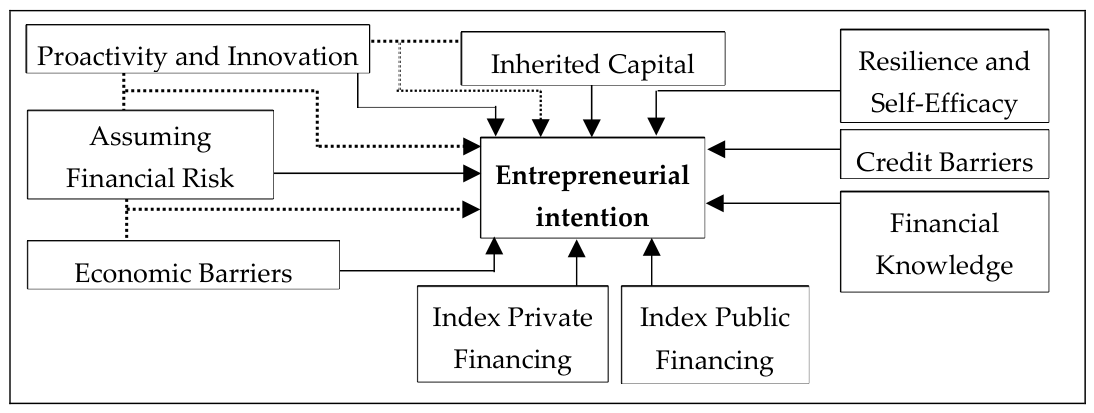
Based on the above hypotheses, this study proposes a conceptual framework titled the Filtered Entrepreneurial Intent Model (
Figure 1). This model integrates individual psychological dimensions with perceived environmental barriers, illustrating how entrepreneurial intent is shaped through a complex filtration process where risk tolerance and capital availability act as key filtering mechanisms between creative potential and the actual commitment to becoming an entrepreneur.
3. Materials and Methods
Previous studies have indicated that university students are suitable for the study of entrepreneurial intentions due to their life stage and the career choices they face (
Meoli et al., 2020). Furthermore, previous studies have confirmed that students who have graduated from certain fields of study are more likely to engage in entrepreneurial activities (
Vuong et al., 2020). For these reasons, the present study is focused on analysing the entrepreneurial intentions of students in the field of business. This focus enables a more nuanced understanding of how specialised academic training interacts with the previously discussed determinants.
3.1. Data
Data collection was carried out among students enrolled at Alexandru Ioan Cuza University of Iasi (UAIC), Romania, including both bachelor’s and master’s degree candidates. To construct the questionnaire, both the questionnaires used in previous research were taken into account (
Rusu et al., 2022). Before the main survey, the questionnaire was pilot-tested with 12 respondents to assess its reliability and content validity, and minor adjustments were made accordingly. The final version of the survey instrument was distributed online via Google Forms. The data were gathered over one month, between May and June 2025. The final sample consisted of 237 students.
Data were collected through a standardised questionnaire specifically designed to investigate students’ entrepreneurial intentions within the Romanian higher education context. As the survey was conducted in Romania, the instrument was structured to capture individual-level determinants of entrepreneurial intention while also reflecting nationally relevant institutional and educational conditions.
The questionnaire comprised two main sections. The first included socio-demographic variables (gender, type of residence-urban/rural, and the presence of entrepreneurial role models among family members or friends), selected based on prior evidence highlighting the role of social background and contextual exposure in shaping entrepreneurial intention. The second section operationalised key psychological and behavioural constructs frequently employed in entrepreneurship research.
Most attitudinal items were measured using five-point Likert scales (ranging from “strongly agree” to “strongly disagree”). The selected constructs, like self-efficacy, risk orientation, personal initiative, performance orientation, resilience in the face of failure, and decision-making autonomy, were included due to their strong theoretical foundations in models such as the Theory of Planned Behaviour and related intention-based frameworks. These dimensions are consistently identified in the literature as significant predictors of entrepreneurial intention and early-stage entrepreneurial behaviour.
In addition, the questionnaire explored perceptions regarding the role of formal education in fostering entrepreneurial competencies, perceived determinants of business start-up decisions, institutional and financial barriers, and the respondents’ level of knowledge concerning available financing mechanisms in Romania. The inclusion of these items was motivated by the need to assess not only individual predispositions but also perceived structural constraints and enabling factors specific to the national context.
To provide deeper insights of potential entrepreneurial behaviour, the instrument also included applied and hypothetical scenarios (e.g., the allocation of a substantial inherited sum, preferred sectors of activity, or anticipated business risks). These items were designed to move beyond declarative intention and approximate behavioural reasoning in simulated decision-making contexts.
Furthermore, several open-ended questions (such as identifying inspirational entrepreneurs or indicating priority public measures to support start-ups) were incorporated to capture qualitative insights that complementing the quantitative analysis and allow for the identification of context-specific perceptions.
By combining closed-ended, scaled, hypothetical, and open-ended items, the questionnaire enables both rigorous statistical analysis of distributions and relationships between variables and a more in-depth interpretation of individual perceptions. The survey items were subsequently grouped to construct composite variables used in the empirical analysis. The resulting variables and their operational definitions are presented in
Table 1.
Overall, the sample shows diversity in terms of geographical origin and exposure to entrepreneurial role models, while displaying a pronounced gender imbalance and a strong concentration in finance-related specialisations. The predominance of female respondents and of students enrolled in Finance and Banking programmes should be considered when interpreting the findings, as the results primarily reflect the perspectives of a predominantly female and finance-oriented student population. Consequently, the scope of inference is primarily directed towards this demographic, a detailed reflection on these implications being further addressed in the Discussion and Limitations sections.
The psychological and contextual dimensions were constructed using Exploratory Factor Analysis (EFA) with Principal Axis Factoring and Promax rotation. This method was preferred to ensure that the latent variables, such as Proactivity and Innovation or Economic Barriers, capture the shared variance of their respective items while eliminating measurement error. The resulting factor scores were saved as standardised variables (z-scores), ensuring that each unit of change in the logistic regression model represents one standard deviation from the mean, thus allowing more precise comparisons of the relative impact of each psychological trait.
Beyond the core predictors utilised in the logistic regression, the dataset includes several complementary dimensions aimed at providing a broader view of the student profile. The analysis incorporates socio-demographic benchmarks (gender, residential background, and academic specialisation) to contextualise the findings within the specific environment of the Faculty of Economics and Business Administration. Furthermore, to bridge the gap between abstract psychological constructs and concrete entrepreneurial aspirations, the study tracks descriptive variables such as Digital vs. Traditional orientation, Capital allocation priorities, and Sectoral preferences. These elements allow for a dual interpretation of the results. While the variables in
Table 1 establish the statistical determinants of intention, the descriptive indicators and demographic data provide the necessary context to explain the relationships identified.
3.2. Methods Used
To identify the determinants of students’ entrepreneurial intentions, this study employed a binary logistic regression analysis, a statistical method specifically designed for models where the dependent variable is dichotomous. In this research, the dependent variable is defined as the presence of entrepreneurial intention, coded as binary variable: 1 representing the existence of intention and 0 representing its absence.
The logistic regression model estimates the probability (p) that an individual manifests entrepreneurial intentions based on a set of independent psychological, contextual, and socio-demographic variables. The general equation of the model is expressed as follows:
where p represents the probability of manifestation of entrepreneurial intention,
is the odds ratio, β
0 is the intercept, and β
i are the coefficients of the explanatory variables X
i. Exponentiation of the coefficients (Odds ratio Exp(β
i)) allows the interpretation of the effect of each independent variable on the probability of entrepreneurial intention. Thus, values greater than 1 indicate an increase in the chances of manifesting the intention, while values less than 1 reflect a decrease in the likelihood.
Data analysis was performed using Jamovi statistical software (version 2.3). The analytical procedure involved several distinct stages. The first stage refers to construct validation and factorisation. To ensure construct validity, the psychological and contextual dimensions were operationalised using Exploratory Factor Analysis (EFA) with Principal Axis Factoring and Promax rotation. This approach ensured that latent variables, such as Proactivity and Innovation or Economic Barriers, captured the shared variance of their respective items while minimising measurement error. The resulting factor scores were saved as standardised variables (z-scores), so that each unit of change in the regression model represents one standard deviation from the sample mean. The internal consistency of the factorial constructs was verified using Cronbach’s Alpha (α). Only constructs yielding values above the recommended academic threshold of 0.70 were retained, ensuring that the survey instrument provided reliable measurements of the students’ psychological profiles.
Predictors were included into the logit model, including standardised factorial scores, binary recoded variables (e.g., Inherited Capital), and aggregated indices for private and public financing. The model’s performance was assessed using the Omnibus Test for overall significance and pseudo-coefficients of determination: McFadden R2 and Nagelkerke R2. Furthermore, multicollinearity was monitored through the Variance Inflation Factor (VIF), with values maintained below the conservative threshold of 2.5 to ensure coefficient stability.
By integrating EFA-derived factor scores into a logistic framework, this methodology enables a precise assessment of how psychological traits and perceived structural constraints, such as the identified Innovation Paradox, interact to shape the entrepreneurial aspirations of the UAIC student sample.
5. Discussions
The empirical results of the Filtered Entrepreneurial Intent Model reveal a nuanced picture of student entrepreneurship. The specific profile of the sample provides a plausible explanation for the identified paradoxes. Students specialised in Finance and Banking are academically trained to identify, quantify, and mitigate risks. This professional bias might explain why Assuming Financial Risk (H8) showed a significant inverse relationship with intention: unlike students from other fields, those in finance may have a more realistic and cautious perception of the capital requirements and market volatility in Romania. Furthermore, the predominantly female composition of the sample (68.78%) is consistent with the existing literature (
Ojiaku et al., 2018), suggesting that women often perceive higher levels of risk and report more significant barriers in entrepreneurship, which further clarifies why innovation and proactivity did not follow a simple linear path to intention in this study.
The regression results (
Table 3) reveal a complex and somewhat counterintuitive psychological profile for the aspiring entrepreneur. Resilience and Self-Efficacy emerged as significant positive predictor, confirming that students who possess higher confidence in their ability to complete difficult tasks and learn from failure are more than twice as likely to intend to start a business. This finding reinforces the role of positive psychological capital as a fundamental pillar of entrepreneurial drive, consistent with the evidence provided by
Biswas and Verma (
2021) and
Maslakçi et al. (
2024), who identify self-efficacy and resilience as core determinants of intentionality across diverse student populations.
However, the model identifies two major psychological paradoxes. The first is the Innovation Paradox. Contrary to much of the existing literature, Proactivity and innovation show a significant negative relationship with intention. This suggests that the most creative and discovery-oriented students are significantly less likely to opt for entrepreneurship within the local context. This finding may point toward a creativity drain, where innovative individuals perceive the local business environment as too rigid or bureaucratic to accommodate novel ideas, leading them to seek opportunities in established international organisations or cross-border freelancing. This paradox of high potential aligns with recent findings by
Stephens and Bahaw (
2025), who observe that individuals with strong cognitive and hedonic desires often experience a filtering of their intentions when faced with complex environmental frustrations, suggesting that perceived satisfaction in other domains may diminish the urgency to pursue entrepreneurial risks. The second paradox identified is the one of the Financial Risk Barrier. Assuming Financial Risk was identified as a major inhibitor in the model. The high aversion to risking personal capital reduces the odds of entrepreneurial intention by approximately 58%. This highlights that for this sample, personal financial security acts as a critical threshold that outweighs the potential rewards of a business opportunity. This observation aligns with the findings of
Ojiaku et al. (
2018), who argue that perceived environmental barriers and the lack of financial safety nets often function as a primary deterrent, neutralising even high levels of entrepreneurial motivation.
To further investigate this financial sensitivity, the model incorporated the impact of capital origin through a hypothetical inheritance scenario. The results reveal that the preference for investing external capital is the strongest catalyst for intent in the entire model, with an Odds Ratio of 4.30. This indicates that the availability of risk-free liquidity increases the likelihood of entrepreneurial aspiration more than fourfold, effectively becoming the primary driver of intent when personal financial ruin is no longer a threat. This finding is consistent with the evidence provided by
Campos-Sánchez et al. (
2025), who demonstrate that the specific source of financing—particularly when it reduces the reliance on formal, high-risk credit—functions as a decisive bridge between abstract interest and concrete entrepreneurial commitment.
Regarding external factors, Economic Barriers (expressing instability, taxes, and political climate) stand as the only significant contextual predictor, exhibiting a surprising positive impact. While this relationship appears counterintuitive, it may suggest that entrepreneurial intention is not the product of naive optimism but rather a form of realistic resilience. Students with high intentions appear to be the most aware of macroeconomic difficulties; for them, these barriers do not necessarily act as a deterrent but rather as a known environment they have already decided to navigate. However, this positive coefficient requires a cautious interpretation: it might reflect a “necessity-driven” mindset where students perceive entrepreneurship as a viable path despite (or because of) a challenging economic climate, rather than the barriers being a direct stimulus for intent. As argued by
Biswas and Verma (
2021), and further validated by
Maslakçi et al. (
2024), the interaction between individual resilience and self-efficacy creates a psychological buffer that may prevent environmental barriers from stifling entrepreneurial aspirations.
Notably, variables such as Credit Barriers and Access to Public/Private Financing did not reach statistical significance, indicating that for students in the nascent stage of intention formation, external structural facilitators or perceived banking hurdles are less important factors that do not yet play a decisive role. Although Financial Knowledge approached the significance threshold (
p = 0.094), it remains statistically non-significant by conventional standards. This lack of significance, combined with the marginal negative trend, suggests that higher financial literacy might lead to a more cautious, risk-averse evaluation of entrepreneurial ventures, potentially acting as a reality check that dampens intent, though this relationship requires further empirical validation. This suggests that in the nascent stage of intention formation, formal education and the mere availability of grants are secondary to the internal psychological contradiction between personal resilience, external capital availability, and financial fear. The effect of risk aversion (H8) appears to render these external factors irrelevant at this stage. In this sense, the results support the emphasis placed by
Kautonen et al. (
2013) on the primacy of internal motivational drivers over external structural facilitators in the early stages of the entrepreneurial process, confirming that psychological filters act as the primary gatekeepers of intent.
Testing the interaction effect (
Table 4) revealed a counterintuitive phenomenon, hereafter referred to as the “Innovation Paradox”. Specifically, the variable Proactivity and Innovation exerted a significant negative influence on entrepreneurial intention. This suggests that, contrary to classical entrepreneurial theories, students with higher levels of inventiveness and proactive behaviour are less likely to manifest the intention to start a business in the current context. This counterintuitive finding aligns with the “paradox of unfulfilled desires” described by
Stephens and Bahaw (
2025), where individuals with high cognitive aspirations may experience a strategic decoupling of intent when they perceive a misalignment between their innovative potential and the rigidity of the external environment.
Furthermore, while Economic Barriers were found to have a significant positive relationship with intention, indicating a “realistic resilience” among aspiring entrepreneurs, the interaction between Innovation and Economic Barriers was not statistically significant. This lack of significance implies that the aversion of innovative students toward entrepreneurship is not a direct by product of systemic economic instability (e.g., bureaucracy or market volatility). The pivotal discovery of this research emerged when introducing Assuming Financial Risk as a moderator. As shown in the second model testing the interaction effect (
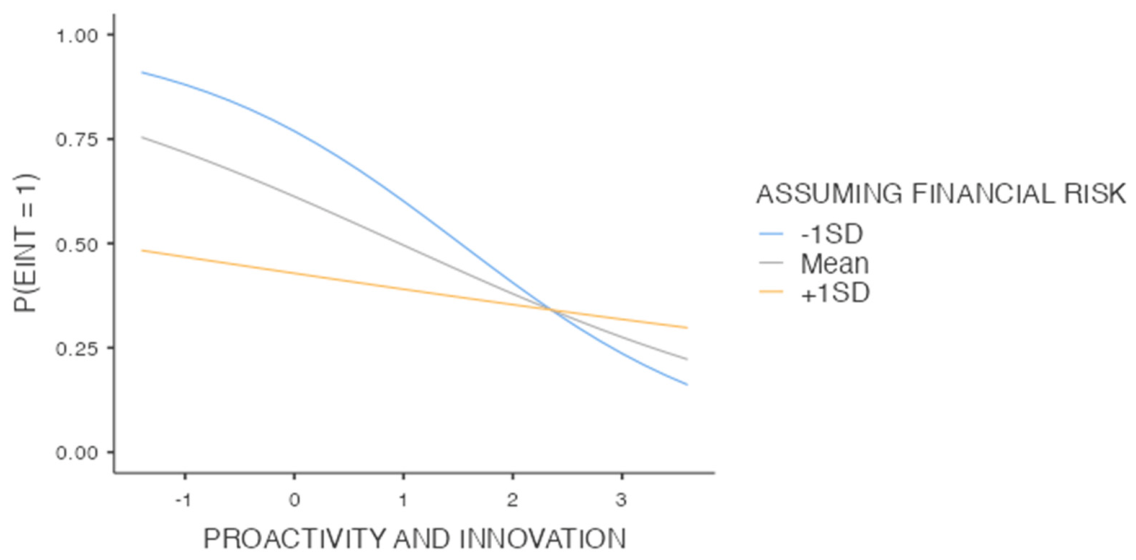
Table 5), the interaction term Proactivity and Innovation * Assuming Financial Risk is statistically significant. While both Innovation and the fear of losing personal capital act as inhibitors when analysed independently, their interaction reveals a critical filtering mechanism. The visual representation of these marginal means (
Figure 1) confirms that the negative impact of innovation on intent is almost exclusively concentrated among students with high risk aversion. For those willing to assume financial risk, the “innovation drain” is neutralised, allowing creative potential to translate into entrepreneurial intent.
These findings provide a significant departure from the existing literature and previous studies. While previous research often emphasises that access to finance is the primary hurdle, this study demonstrates that the bottleneck is not the availability of funds, but the psychological perception of risk loss that disproportionately affects the most innovative minds. This shift from structural to psychological constraints is supported by
Kautonen et al. (
2013), who emphasise that subjective perceptions often override objective conditions, and is further validated by
Ojiaku et al. (
2018) and
Gera et al. (
2024), whose findings suggest that the fear of failure and environmental risk assessment act as more significant deterrents than the lack of institutional support.
Therefore, starting from the above results, we argue that the “Innovation Paradox” identified in this sample of Finance and Banking students stems from a high level of “informed prudence”. Students who are proactive and inventive are also more capable of performing complex risk-reward analyses. In an environment perceived as high-risk, their very proactivity leads them to seek safer creative outlets, such as intrapreneurship in multinational corporations or high-end freelancing, rather than local entrepreneurship. This suggests a “Creative Brain Drain” where the most capable individuals opt out of the entrepreneurial ecosystem to protect their financial security. From a policy perspective, the results suggest that to foster high-value entrepreneurship, Romanian universities and government bodies should shift their focus from teaching business ideas to providing risk-mitigation frameworks. Reducing the personal financial stakes for innovative students, through seed grants that do not require personal collateral or through specialised incubators, could be the key to unlocking the latent entrepreneurial potential of the most proactive youth. This research thus provides a new lens through geographical and psychological specificity, challenging the universal applicability of Western-centric entrepreneurial models in the Eastern European context.
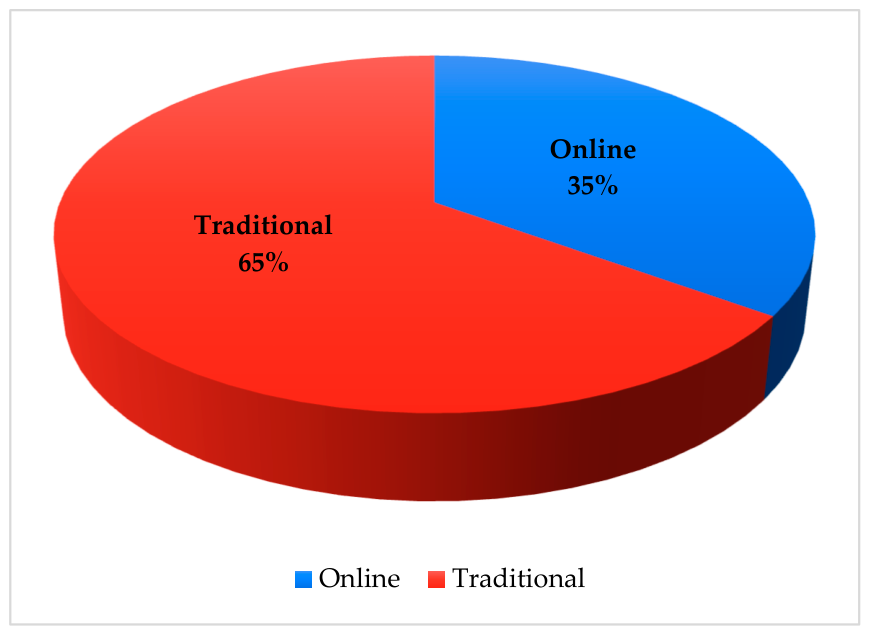
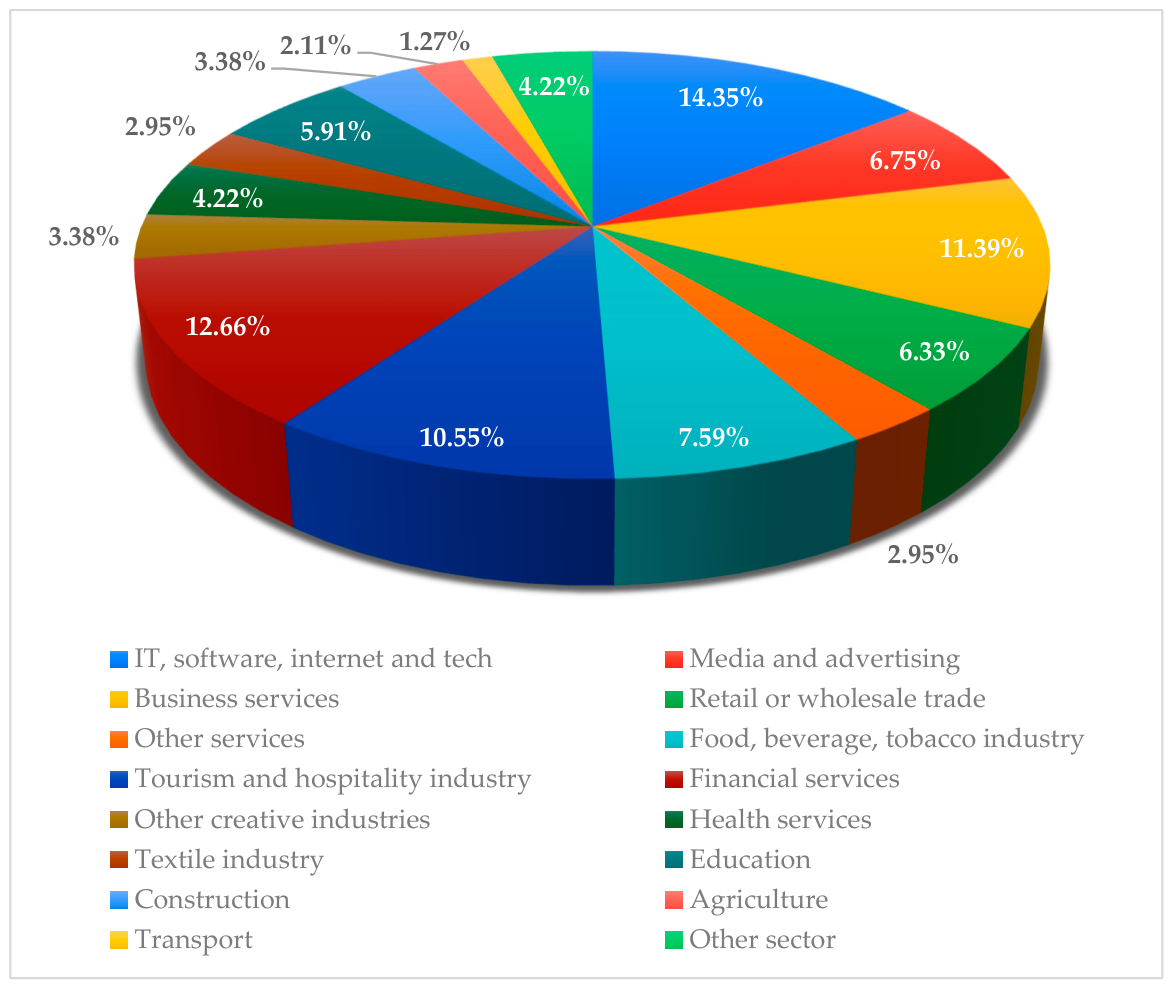
To complement the econometric analysis, a descriptive assessment of students’ entrepreneurial preferences was conducted, focusing on the nature of the business, the hypothetical management of a significant windfall, and the preferred industries for start-up activity. The results in
Figure 2 reveal a significant inclination towards the digital economy. Approximately 35% of respondents would opt for an Online Business, while 65% still lean towards Traditional models. In the context of the “Innovation Paradox” identified earlier, this distribution suggests that while the digital shift is present, a majority of students still perceive entrepreneurship through the lens of traditional operations. This high percentage for traditional businesses, combined with the earlier found Economic Barriers significance, explains why risk aversion remains so high: traditional businesses typically require higher upfront capital and face more physical bureaucratic hurdles than digital ones.
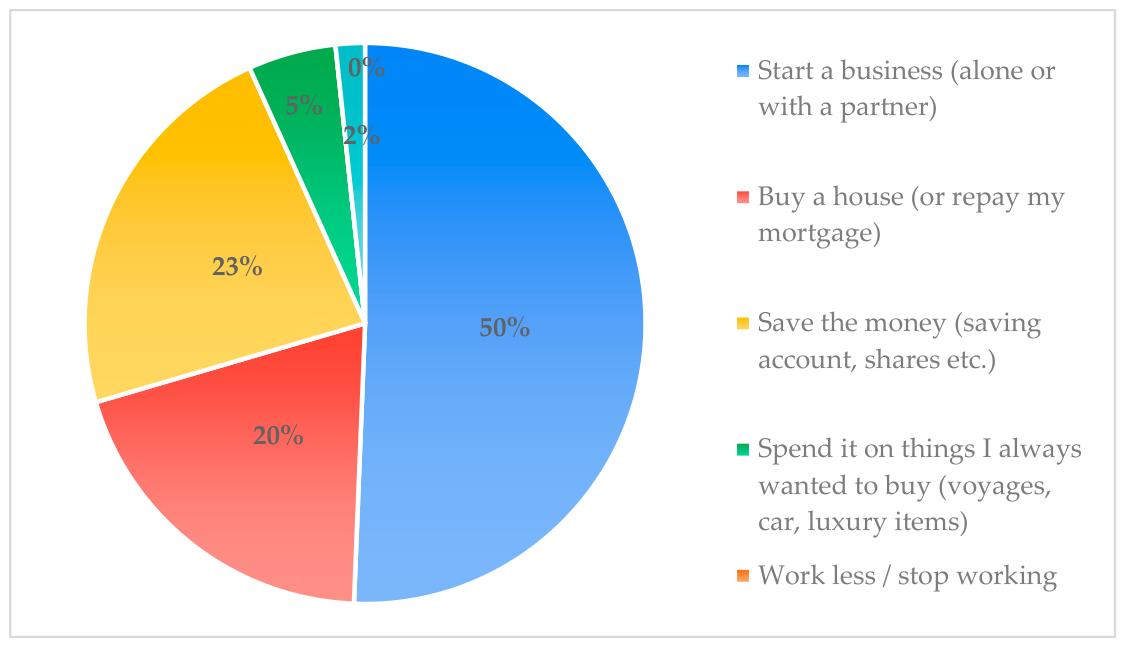
When presented with a hypothetical inheritance of 300.000 RON (
Figure 3), the respondents’ choices serve as a proxy for their real risk appetite and investment priorities. Over half of the students would use the capital to “Start a business (alone or with a partner)”. This indicates a strong latent entrepreneurial spirit when the “Financial Risk” (the fear of losing personal savings) is removed. A significant portion (20%) would choose to “Buy a house or repay a mortgage”, reflecting a traditional Romanian preference for real estate security. Around 23% of the students are focused on conservative savings, they would choose to “Save the money (accounts, shares)”, showing a high degree of prudence. This result proves that the intention is there, but it is unlocked only when capital is perceived as external (inheritance) rather than earned (personal savings). This reinforces the earlier finding that financial risk is the primary veto factor.
The sectoral distribution shows a heavy concentration in service-oriented and tech-based industries (
Figure 4). Therefore, if they were to establish a new business, among the top choices of students are IT, Software, Tech, and Business Services. Retail/Wholesale and Tourism/Hospitality remain popular, consistent with the traditional business preference mentioned above. Creative Industries and Education/Health show smaller but distinct niches.
Thus, the preference for IT and Business Services aligns with the proactive/innovative profile of the students. However, the fact that many still choose Retail (a high-competition, low-margin sector) explains why Economic Barriers are perceived as so significant. There is a clear divide between the Digital Innovators and the Traditional Consolidators within the UAIC student body.
The convergence of these descriptive results paints a clear picture. Students possess high entrepreneurial aspirations when financial stakes are neutralised (as seen in the inheritance scenario), and they are increasingly looking towards digital and tech sectors. However, the persistence of traditional business preferences and conservative asset-saving behaviours (housing/savings) explains why, in the regression model, Assuming Financial Risk acts as such a powerful moderator. The “Innovation Paradox” is essentially a conflict between high-tech aspirations and a deeply rooted need for financial security.
Testing the interaction effect results (
Table 6) by including a hypothetical interaction shows significant results. The empirical evidence reveals a socio-economic reality. The hypothetical infusion of external capital via an inheritance acts as a strong catalyst for the general student population, yet it fails to act as a solution for the high-innovation segment. The model reveals that the intention to invest an inheritance in a business is the strongest predictor of overall entrepreneurial intent. This highlights a state of latent entrepreneurship among students, which requires the total removal of financial risk to become active. Consequently, the transition from inclination to concrete intent is blocked by perceived wealth insecurity rather than a lack of vocational interest. The high Odds Ratio indicates that the presence of liquid, risk-free capital increases the likelihood of entrepreneurial aspiration more than fourfold. These results confirm that while informal funding is a decisive catalyst for cementing aspirations (
Campos-Sánchez et al., 2025), structural financial insecurity remains a dominant deterrent that overshadows vocational interest (
Ojiaku et al., 2018).
The non-significant interaction between Proactivity and Innovation and Inherited Capital suggests that the Innovation Paradox is not a liquidity problem. Even when presented with a significant capital buffer (like an inheritance), the most innovative and proactive students do not significantly reverse their negative stance toward the local entrepreneurial environment. This suggests that among the high-potential creative segment of the UAIC student body, entrepreneurial avoidance cannot be attributed solely to liquidity constraints. Instead, it is likely rooted in a deeper scepticism toward the institutional environment, bureaucratic complexity, or the perceived lack of high-tech infrastructure in the domestic market. If the aversion of creative students toward entrepreneurship were simply a matter of lacking starting capital, we would have observed a significant positive interaction, where the inheritance would unlock their latent intent.
Although external capital infusions and financial security mechanisms can encourage a broad range of students to pursue entrepreneurship, such measures remain insufficient for those with high proactivity scores. To convert high-proactivity students into founders, policymakers must look beyond simple capital injections and address the qualitative aspects of the business ecosystem, such as institutional stability and the promotion of innovation-friendly regulations. This finding adds a layer of novelty to the study by demonstrating that the Creative Brain Drain is a complex psychological and institutional phenomenon that cannot be addressed solely through financial means.