


Abstract
In a global business environment marked by digital disruption, Small and Medium-sized Enterprises (SMEs) must integrate digital transformation with strategic agility and organizational resilience. This study addresses the fragmentation of the current management literature by developing an AI-driven meta-theory through a high-performance computational synthesis of 4811 academic publications from the OpenAlex database. Utilizing a theoretically grounded hybrid framework of lexical filtering (TF-IDF), semantic embedding (SciBERT), and a diverse ensemble of five Large Language Models (LLMs), we move beyond descriptive mapping to identify the ontological and integrative mechanisms of SME adaptation. The methodology is validated through a multi-stage expert audit of model reasoning traces to ensure theoretical alignment. Results reveal a clear dominance of Contingency Theory (20.5%) and Resource-Based View (14.1%), which are re-conceptualized here as Regulatory–Technical Brokerage and Internal Fortification. Through Social Network Analysis (SNA) and Aggregate Constraint metrics, the study identifies Innovation Frontiers that are operationally challenging to synthesize through traditional manual reviews at this scale. The research concludes by formulating four meta-theoretical propositions and an integrative synergetic mechanism, explaining how SME resilience emerges as an emergent property of cross-layer alignment between technical, cognitive, and structural logics. By providing this causal roadmap, the study establishes a robust, AI-augmented blueprint for SMEs to function as intelligent, self-regulating nodes within a Post-Normal digital ecosystem.
1. Introduction
Socio-economic fluctuations and unprecedented digital disruptions in the global business environment are forcing Small and Medium-sized Enterprises (SMEs) to redesign their business models and strategic orientations. In this context, digital transformation (DT) is not just a technological infrastructure update; it also stands out as a fundamental mechanism that enables SMEs to survive in the face of crises and transforms existing constraints into strategic opportunities (Sinha et al., 2025). The integration of SMEs into the digital revolution directly impacts the organizational resilience, strategic agility, and innovation capacities of these enterprises (Setiawan et al., 2025). While Duchek (2020) conceptualizes organizational resilience as a dynamic capability consisting of anticipation, coping, and adaptation processes rather than a static output (Duchek, 2020), Malik and Terzidis (2025a) emphasize that this structure alone is not enough, and when considered together with strategic adaptation, businesses can not only resist crises but thrive in environments of uncertainty (Malik & Terzidis, 2025b). Following this, Malik and Terzidis (2026) argue that organizational resilience has evolved from being a fixed capacity, especially in the digital age and in the context of SMEs, to a structure that is constantly transforming and reshaped by data-driven decision-making, agility, and digital competencies (Malik & Terzidis, 2026). When these studies are evaluated together, it is seen that organizational resilience is a multi-layered, process-oriented and constantly evolving phenomenon. Therefore, it is revealed that static, one-dimensional or context-detached approaches may be insufficient in the analysis and theoretical synthesis of such concepts.
The current academic literature contains numerous studies examining the digital transformation processes of SMEs from the perspective of different management theories such as Dynamic Capabilities, Resource-Based View (RBV), and Institutional Theory (Musah et al., 2026; Nahar & Alam, 2026). While traditional systematic literature reviews (SLRs) provide essential qualitative depth and nuanced interpretation, the rapidly expanding volume of digital transformation literature introduces significant operational complexity for manual synthesis (Tsakalerou et al., 2025). To address this, our study integrates macro-level computational synthesis to support these established review methodologies, enabling the identification of large-scale structural patterns across extensive datasets that complement granular human-led analysis.
Although, it is important to clarify that this AI-augmented approach is not a replacement for the irreplaceable qualitative depth provided by traditional systematic literature reviews. Rather, it offers a complementary macro-level lens. While AI excels at identifying structural patterns and mapping innovation frontiers across thousands of documents—a task that is operationally prohibitive for manual synthesis—human-led reviews remain essential for identifying the deep-seated epistemological shifts and nuanced narratives that define the administrative sciences.
This study, prepared within this framework, aims to develop a new artificial intelligence-supported (AI-driven) meta-theory that transcends descriptive literature mapping to integrate the dimensions of Digital Transformation, Strategic Agility, and Organizational Resilience in the SME sector. By subjecting 4811 academic publications from the OpenAlex database to a three-stage high-performance computational synthesis, our study moves beyond mere data aggregation. It establishes a robust, AI-supported ontological blueprint that identifies the integrative mechanisms of how SMEs respond to digital disruption. This macro-level synthesis provides the field of management sciences with a holistic perspective, articulating the causal relationships between the strategic, technological, operational, and financial facilitators of SME transformation.
2. Previous Studies
For SMEs, the adoption of digital technologies has become a prerequisite for gaining a competitive advantage and developing strategic agility in increasingly complex market dynamics. The literature shows that digitalization not only improves operational processes in SMEs but also enables rapid response to market changes by using organizational agility as a mediator factor (Wulandari et al., 2026) Advanced digital infrastructure increases firms’ capacity for ambidextrous innovation and simultaneously supports both exploratory and exploitative innovation processes (Wang et al., 2026) Especially in resource-limited environments, digital platform capabilities provide a strategic basis for SMEs to overcome structural constraints and produce innovative business models. External turmoil such as pandemics, supply chain disruptions, and geopolitical shocks profoundly tests the organizational resilience of SMEs. Research highlights that digital adaptation in times of crisis is not just a recovery tool for SMEs but also a growth mechanism that counteracts the effects of the crisis (Sinha et al., 2025) Strategic resilience and digital leadership orientation directly impact firms’ capacity to anticipate the future and develop resilience to environmental fluctuations (Alam et al., 2025) In conditions of fierce market competition and instability, SMEs integrate frugal innovation and digital business transformation, reducing their vulnerabilities and transforming their disadvantaged constraints into flexible market opportunities (Al Omoush et al., 2025).
In the literature, the digital transformation processes of SMEs are often shaped around three main theories:
- Resource-Based Approach (RBV): Describes how SMEs with limited resources integrate their financial, human, and technological capital into sustainable firm performance (Musah et al., 2026; Nasution et al., 2026).
- Dynamic Capabilities Theory (DCT): Argues that digital capabilities empower businesses to sensing, seizing, and transforming opportunities during times of technological disruption (Alqam et al., 2025; Durman et al., 2025).
- Institutional Theory: It is used to make sense of external environmental factors such as regulatory pressures, financial access barriers, and market entry challenges that SMEs are exposed to in their global expansion and adoption of digital platforms (Nahar & Alam, 2026) A review of the literature shows that SLRs and bibliometric analyses on the digitalization of SMEs are conducted extensively (Tsakalerou et al., 2025).
While these studies offer rich thematic insights through nuanced qualitative interpretation, the sheer volume of global academic output necessitates augmented analytical tools. This study builds upon the foundations of traditional SLRs, leveraging Large Language Models to offer a broader, interdisciplinary perspective on the next generation of meta-theories. The use of Large Language Models (LLMs) in high-performance computational pipelines offers the potential to map theoretical clusters and unexplored multidimensional relationships in the literature by simultaneously processing tens of thousands of paper data (Antons et al., 2023; Malik & Terzidis, 2025a). This innovative paradigm shift will provide a rich, inclusive, and robust analytical foundation for the construction of the next generation of meta-theories needed in the field of strategic agility and resilience. In this context, our study fills a very strategic research gap by exceeding the methodological, theoretical and comprehensive limits of existing studies on SME digitalization, agility and resilience in the literature. While Levy and Powell (2002) consider SME transformation as a gradual and non-linear progress process (Levy & Powell, 2002), Li et al. (2018) reveal that dynamic competencies are at the core of this process and that digital transformation is related not only to technology adoption but also to organizational perception, learning, and restructuring capacity (Li et al., 2018). While Mou et al. (2022) show that digital transformation directly produces performance outputs through data-based tools in the marketing dimension, Ojonugwa et al. (2021) emphasize that this process should be systematically measured and managed through digital maturity frameworks (Ojonugwa et al., 2021). When these studies are evaluated together, it is seen that digital transformation in SMEs exhibits a gradual, multi-layered, data-oriented and competency-based complex structure. A holistic analysis of such a multidimensional and fragmented literature is limited to traditional singular methods; It makes it difficult to establish systematic relationships between different conceptual frameworks, processes and performance dimensions. Therefore, the AI-assisted synthesis approach preferred in our study offers a methodologically necessary and appropriate choice in terms of revealing interconceptual relationships, analyzing multiple dimensions simultaneously, and modeling the dynamic nature of digital transformation in a more inclusive way by bringing together heterogeneous literature in a holistic meta-theoretical framework. The main gaps that the study fills by differentiating itself from the existing studies in the literature can be explained on three main axes as follows:
A large part of the studies conducted on the digital transformation and resilience of SMEs in the current academic literature are based on traditional SLR or basic bibliometric analyses based on software such as VOSviewer (version 1.6.20) (Putri et al., 2025; Tsakalerou et al., 2025). Although these traditional methods are useful in creating narrow-scope thematic maps, they are insufficient to holistically analyze the complex and dynamic processes brought about by new generation digital technologies due to the overly fragmented nature of the literature (Keskin et al., 2026; Zamani, 2022; Zeba et al., 2021). This study scales the practice of thematic synthesis, providing a computational framework that extracts macro-level patterns from large data sets to support theoretical development. Research in the literature examines the digital transformation performance of SMEs in highly independent frameworks, often centering on only one of the management theories such as Resource-Based Approach (RBV), Dynamic Capabilities Theory (DCT), or Enterprise Theory (Sagala & Ori, 2025; Zamani, 2022) This dispersed infrastructure offered by existing studies is insufficient to simultaneously explain the agile structures that seize opportunities and the resilient structures that survive shocks simultaneously during times of catastrophic crises (Surahman et al., 2023) The project fills the gap of constructing an overarching meta-theory that clarifies whether existing theories are sufficient to explain SME adaptation or whether new interdisciplinary theories are needed through algorithmic coding, breaking away from a narrow perspective that tests mere theories. Existing empirical reviews and evaluations in the literature often focus on a specific geography, a single industry (e.g., only India, Vietnam, or a specific sector), or individual crisis periods such as COVID-19, limiting the global generalizability of findings on SME strategies (Surahman et al., 2023; Tsakalerou et al., 2025) Our study eliminates local limits by making a global meta-data extraction (data ingestion) through the OpenAlex database; It offers a universal taxonomy at the macro level that maps under-represented academic fields in the literature.
3. Methodology
This study aims to examine the literature on Digital Transformation, Strategic Agility and Organizational Resilience of Small and Medium-Sized Enterprises (SMEs) in a holistic way. Bibliometrics stands out as a method that allows information extraction using single mathematical and statistical methods (Keskin et al., 2026; Yalcin et al., 2025; Zalluhoğlu et al., 2025; Zeba et al., 2021; Zhang et al., 2025). For this purpose, unlike the workflow suggested by Donthu et al. data obtained from global academic publications and a framework covering basic management theories were analyzed through a structured hybrid framework that integrates lexical filtering (TF-IDF), semantic embedding (SciBERT), and multi-architecture Large Language Models (LLMs) reasoning (Donthu et al., 2021). Thus, it is intended that the study will offer a systematic, context-aware perspective, offering a comprehensive understanding of the field.
3.1. Data Collection
The academic data were collected from the OpenAlex database, an open-access platform encompassing global academic publications, authors, institutions, and citation networks (Forchino & Torres-Salinas, 2026). During the data extraction, a special search query was prepared to cover studies related to SMEs and digital transformation including the keywords digital transformation, digitalization, digitization, strategic agility, and organizational resilience along and was conducted on 28 February 2026. In addition, only articles, those in English, and studies published since 2000 are filtered. In this process, a data set containing the information of the publications was created.
A total of 5174 publications were obtained during the data collection phase, and this dataset served as the basis for subsequent analysis phases. Thus, an up-to-date academic database was provided for the study.
3.2. Data Cleaning
The collected dataset underwent data cleaning steps before being made available for analysis. In this process, publications that did not contain abstracts were removed from the data set as abstracts are critical for understanding the content of publications and classifying them according to management theories. As a result of the cleanup process, 4811 publications out of the original 5174 records containing complete textual information were retained. The data cleaning and preprocessing phase is a critical step in the reliability and accuracy of analyses (Tang et al., 2024). Removing records with missing or incomplete information increases the accuracy of the classification process with Large Language Models (LLMs) by reducing noise and improving semantic clarity (Khurana et al., 2023), thereby reducing theoretical mismatches.
3.3. Theoretical Framework for Analysis and Determination of Management Theories
In order to enable the computational analysis of theoretical foundations in the literature, a structured theory ontology was developed for the LLMs. By structuring domain knowledge in this manner, the framework mitigates the limitations of traditional keyword-based extraction by enabling LLMs to leverage ontology-based information extraction (OBIE). This approach allows the model to identify theoretical statements at both contextual and semantic levels, rather than through simple lexical matching (Antons et al., 2023; Wimalasuriya & Dou, 2010).
Within this architecture, the models perform grounded zero-shot classification, where the reasoning process is anchored to the explicitly defined ontological components—Definition, Core Problem, Core Concept/Anchor, Mechanism, and Distinguishing Features—rather than relying solely on the models’ internal generative weights. This approach ensures that theoretical identification is contextually grounded in established ontology, significantly reducing the risk of semantic drift and generative hallucination (Pan et al., 2024). In this context, theories such as Scientific Management, Administrative Theory, Bureaucratic Theory, Human Relations Theory, Systems Theory, Contingency Theory, Resource Dependence Theory, Institutional Theory, Transaction Cost Theory, Agency Theory, and the Resource-Based View were incorporated into the ontology.
The selection of the 11 core management theories was not arbitrary; it follows a dual-logic selection criteria: (1) Evolutionary Coverage, ensuring representation from classical (Scientific Management), transitional (Systems Theory), and contemporary (RBV/DCT) eras to capture the historical evolution of resilience; and (2) Boundary-spanning Relevance, selecting theories that specifically address the firm’s interface with technology, environment, and internal resource orchestration.
Along with this approach, theories were identified not only through direct citation frequency but also by capturing their conceptual content and contextual usage, as measured through TF-IDF lexical weighting and SciBERT-based semantic embeddings.
The decision to integrate TF-IDF and SciBERT into a hybrid scoring pipeline is grounded in the necessity of balancing terminological precision with contextual depth. While SciBERT, as a dense retriever, excels at capturing the latent semantic nuances and thematic overlaps within management theories, it can occasionally suffer from ‘semantic drift’ or overlook specific, low-frequency technical terms. To mitigate this, TF-IDF is utilized as a sparse lexical signal to anchor the identification process in the exact terminology defined within our management ontology. This hybrid approach combining sparse lexical expansion with dense semantic embedding follows established benchmarks in information retrieval which demonstrate that such a synergy significantly optimizes retrieval precision and ensures that the classification remains grounded in the ‘gold-standard’ knowledge base rather than relying solely on generative inference (Formal et al., 2021; Karpukhin et al., 2020; Luan et al., 2021; Thakur et al., 2021).
3.4. TF-IDF and SciBERT-Based Ranking of Management Theories
Within this study, both TF-IDF and SciBERT models utilized the structured ontology as a reference knowledge base. For each research text, all management theories in the ontology were separately scored based on their relevance. The combined use of TF-IDF and SciBERT is crucial, as it leverages the strengths of both models: TF-IDF provides a reliable identification of key terms, while SciBERT captures the deeper semantic meaning and theoretical nuances, ensuring a contextually accurate classification of management theories (Karpukhin et al., 2020; Malik & Terzidis, 2025a, Formal et al., 2021).
By narrowing candidates through this hybrid scoring before applying a multi-LLM ensemble, this hybrid approach facilitates high thematic precision by anchoring generative insights in a structured knowledge base (Ganaie et al., 2021; Pan et al., 2024). While manual analysis provides irreplaceable qualitative depth, the computational pipeline systematizes the screening process, reducing the risk of inconsistent classification that can occur in large-scale manual reviews due to cognitive fatigue or terminological ambiguity (Antons et al., 2023; Malik & Terzidis, 2025a). This ensures that the identified ‘Theoretical Distribution’ is not just a frequency count of words, but a rigorous mapping of actual theoretical mechanisms. To integrate these complementary signals, a weighted scoring scheme was applied, assigning 70% to the SciBERT semantic score and 30% to the TF-IDF lexical score (Luan et al., 2021).
Weighted Semantic-Lexical Score = 0.3 × TF-IDF Score + 0.7 × SciBERT Score
The specific allocation of weights in this hybrid scoring scheme follows a dual-logic design aimed at maximizing both contextual depth and terminological precision. This weighting ratio aligns with established hybrid retrieval benchmarks in natural language processing (Formal et al., 2021; Karpukhin et al., 2020), which demonstrate that prioritizing semantically dense vectors while retaining a minority weight for sparse lexical signals optimizes retrieval precision and mitigates semantic drift (Luan et al., 2021), ensuring that the model’s decisions are grounded in the structured, gold-standard knowledge base rather than relying solely on generative inference (Luan et al., 2021; Thakur et al., 2021).
3.5. LLM-Based Thematic Analysis and Classification
In the classification phase, the publications were assigned to management theories using a diverse ensemble of five language models: Qwen 3 (8B), Gemma 3 (12B), LLaMA 3 (8B), Mixtral (8×7B), and DeepSeek-R1 (8B). These models were specifically chosen to represent a variety of underlying architectures and training methodologies, facilitating a broad assessment of how different model structures affect classification performance. Instead of depending on a single model, this study employs a multi-model strategy to minimize model-specific biases and increase the overall reliability of the classification results. A comprehensive overview of these selected models and their specific implications for the classification phase is presented in Table 1.
Table 1.
Comparative Overview of LLMs and Implications for Classification.
Utilizing a multi-architecture ensemble is a documented strategy to mitigate model-specific inductive biases. By leveraging heterogeneous training paradigms, we ensure that the consensus is driven by underlying theoretical signals rather than architectural artifacts (Ganaie et al., 2021; Ji et al., 2023).
Following the scoring process, the top two weighted semantic-lexical candidate theories for each publication were selected and provided to the models for final classification. Each publication was evaluated based on its conceptual content, problem framing, and thematic focus, which were then aligned with the contextual information of the top two weighted semantic-lexical candidate theories. By narrowing down the candidate theories beforehand, the models performed the final classification using a more focused set of theories, thereby reducing computational complexity and enhancing the accuracy of the classification process compared to evaluating all theories simultaneously (Antons et al., 2023; Malik & Terzidis, 2025a; Ganaie et al., 2021; Pan et al., 2024).
To ensure deterministic outputs and maximize the reproducibility of the classification, the temperature parameter for all five models was set to 0. This configuration minimizes stochastic variation in model responses, ensuring that the thematic assignments are consistently grounded in the provided contextual evidence rather than generative randomness (Grullon-Polanco, 2026). The implementation of a ‘No Match’ safe exit and a deterministic temperature setting (T = 0) follow best practices in computational linguistics to minimize hallucinations and ensure the reproducibility of qualitative assignments (Zhang et al., 2025; Ji et al., 2023).
Furthermore, to mitigate the risk of forced classification and potential overfitting, a no match option was provided as a safe exit point. This allowed the models to remain neutral when the textual content did not align sufficiently with the conceptual boundaries of the candidate theories (Lin et al., 2022), thereby ensuring that only high-confidence, evidence-based assignments were recorded (Ji et al., 2023). To ensure the reproducibility of this decision logic, the full architecture of the multi-stage system prompt—including the specific instructions for theoretical boundary checking, the ‘no match’ exit criteria, and the qualitative justification requirements—is provided in Appendix B. This documentation details how the LLMs were anchored to the structured management theory ontology during the reasoning process.
This documentation details how the LLMs were anchored to the structured management theory ontology during the reasoning process. Crucially, this process operationalizes ‘Instruction-Based Validation,’ where the models’ decision-making is strictly constrained by an expert-defined ontology—consisting of specific definitions, core concepts, and mechanisms—rather than stochastic inference. By providing these semantic boundary conditions, we ensure the ensemble functions as a domain-specific expert system, anchoring its validity in established theoretical structures (Ji et al., 2023; Zhang et al., 2025).
The use of model diversity and weighted scoring ensured the accurate classification of conceptual categories, significantly reducing the risk of overfitting (Ji et al., 2023). By selecting the top two candidate theories based on both lexical and semantic relevance, the approach mitigated the potential for misclassification, allowing for a more focused and precise analysis (Antons et al., 2023; Malik & Terzidis, 2025a). Furthermore, the incorporation of various model architectures, each with its own strengths in reasoning and contextual understanding, improved the accuracy and interpretability of the zero-shot classification process (Ganaie et al., 2021). This multi-model approach not only enhanced the robustness of the classification outcomes but also provided greater transparency in the decision-making process of each model, ensuring more reliable results (Ji et al., 2023; Lin et al., 2022).
The computational framework utilized in this study is designed as a methodological augmentation that allows for the synthesis of academic literature at a scale and granularity—4811 publications—that would be operationally prohibitive for manual review alone (Antons et al., 2023; Donthu et al., 2021). While traditional systematic reviews offer deep interpretive nuances on smaller sets of papers, our AI-driven approach serves to ‘augment’ the researcher’s capability by identifying high-level ontological patterns and cross-disciplinary links across massive datasets (Malik & Terzidis, 2025a; Zeba et al., 2021). This hybrid synergy ensures that the resulting meta-theory is grounded both in the breadth of global data and the depth of established management logic (Malik & Terzidis, 2026).
This study advocates for a hybrid synthesis approach, where AI-driven computational scale and traditional systematic literature review (SLR) principles function as complementary pillars. While traditional SLR is unsurpassed in providing deep, nuanced interpretive insights into a focused set of studies, it faces operational ‘diminishing returns’ when dealing with massive datasets (e.g., >4000 publications) (Antons et al., 2023; Donthu et al., 2021). Our AI-driven framework addresses this ‘scale gap’ by applying the rigorous filtering and categorization logic of SLR at a high-performance level (Malik & Terzidis, 2025a). By combining computational breadth (SNA and LLM ensemble) with human-led theoretical triangulation (Meta-theoretical construction), the research achieves a ‘best-of-both-worlds’ synergy (Borgatti et al., 2009; Pan et al., 2024). This hybridity ensures that the resulting meta-theory remains empirically grounded in a vast data landscape while maintaining the qualitative rigor expected in high-level management scholarship (Suddaby, 2010).
3.6. Model Comparison and Definite Theory Assignment
After the classification process, the outputs of the five models were systematically compared to assess both the consistency and agreement among their classifications. To quantify the degree of alignment between the models’ results, we used Cohen’s kappa, a statistical measure that evaluates the extent of agreement between categorical classifications. This approach provided a standardized metric for assessing the reliability and robustness of the classification outcomes across different model architectures (Cohen, 1960).
The analysis demonstrated that the Cohen’s Kappa scores between the five models varied between 58% and 80%, with the overall observed agreement rate of 81.43%. This strong level of agreement suggests that the models, despite their architectural differences, consistently identified similar theoretical classifications based on the selected candidates and contextual inputs. The relatively high agreement rate indicates that the models were able to align their classifications effectively, ensuring robust and reliable results across different approaches (Cohen, 1960; McHugh, 2012).
κ: Cohen’s Kappa, Po: Observed agreement
The use of a multi-model ensemble mitigates model-specific bias and systematic error by leveraging architectures with different training paradigms. Agreement across these heterogeneous models suggests that classifications are driven by underlying theoretical signals rather than model-specific artifacts. This architectural diversity enhances the robustness of the results and supports the reliability of the observed consensus in mapping academic texts onto conceptual categories within management science (Ganaie et al., 2021; Ji et al., 2023; Antons et al., 2023; Malik & Terzidis, 2025a).
To demonstrate the interpretability and practical accuracy of the AI-driven classification, a series of illustrative examples are provided in Appendix B. These examples were selected through a stratified random sampling of 10 publications representing the most dominant theoretical clusters. This showcase illustrates how the multi-stage pipeline processes raw abstract text, identifies candidate theories through hybrid scoring, and reaches a final consensus through the LLM ensemble even in ambiguous cases. In addition, the appendix includes LLM Reasoning that presents brief model-generated explanations for the final theoretical assignments, offering insight into how the ensemble interpreted the conceptual cues within each abstract. By presenting the qualitative justification for these assignments—such as the distinction between resource-based and contingency-driven SME strategies—the study provides a transparent view of the alignment between the computational output and the underlying management logic, serving as a robust qualitative benchmark for the methodology’s reliability.
To further strengthen the validity of the synthesis, these samples and their corresponding reasoning traces were manually audited by the researchers (domain experts). This expert audit confirmed that the models correctly identified complex theoretical mechanisms (e.g., sense-making in SA or resource bundling in RBV) according to the provided ontology. This manual verification ensures that the large-scale computational results are grounded in accurate theoretical logic rather than generative guesswork (Appendix B).
To establish a definitive theory classification for each publication, a majority voting approach was applied. The theory selected by the majority of the models was assigned as the final classification, ensuring that the outcome reflects a consensus across multiple LLM perspectives (Ganaie et al., 2021).
While the multi-model ensemble and weighted scoring significantly mitigate the risks of misclassification, we acknowledge the inherent limitations of LLMs in interpreting highly ambiguous or multi-theoretic texts, which were addressed through the majority voting consensus.
4. Results
This section presents the empirical findings derived from the computational synthesis, mapping the intellectual topography of SME resilience and strategic agility in the digital transformation era. To ensure a structured empirical workflow, the analysis begins with an overall theoretical distribution to identify the historical frequency and baseline dominance of the core frameworks driving the discourse. This distribution is followed by a temporal growth trajectory analysis to trace the mathematical evolution, conceptual acceleration, and saturation points of these foundational frameworks over time. Subsequently, a comprehensive Social Network Analysis (SNA) is executed to map the macro-level knowledge network structure and disciplinary connectivity of the domain, leveraging structural topology parameters to decode core structural core-periphery dynamics. The analysis then evaluates the shared structural patterns across theoretical perspectives to reveal hidden thematic alignments and cross-cutting conceptual intersections. Finally, the empirical pipeline delineates the unique structural profiles and contextual roles of each individual management theory, identifying the distinct mechanisms—ranging from regulatory brokerage to internal consolidation—that define their specific contributions to small-firm adaptation and transition the empirical data into a highly integrated, multi-layered meta-theoretical synthesis.
4.1. Theoretical Distribution of Management Literature
Figure 1 presents the distribution of organizational theories identified in the analyzed corpus. The results reveal a clear dominance of Contingency Theory, which accounts for 20.5% of the identified theories. This indicates that the existing body of research on SME resilience and strategic agility primarily conceptualizes organizational adaptation through contextual alignment, a perspective fundamentally rooted in the work of Lawrence and Lorsch (1967). The strong presence of Contingency Theory suggests that resilience in SMEs is frequently interpreted through the lens of contextual adaptation, emphasizing the alignment between organizational structures, strategic decisions, and environmental uncertainty (Venkatraman, 1989; Weick, 1976).
Figure 1.
Theoretical Distribution.
A second tier of theories, including the Resource-Based View (RBV) (14.1%) and Resource Dependence Theory (RDT) (9.5%), appears with moderate frequency. These resource-focused perspectives highlight the central role of resource access, control, and strategic deployment in enabling firms to sustain competitiveness and adaptive capacity, consistent with the resource orchestration and competitive advantage frameworks established by Barney (1991) and Sirmon et al. (2011), as well as the external dependency logic of Hillman et al. (2009).
Another set of theories, including Administrative Theory (10.9%) and Behavioral Theories (10.8%), emphasizes formal organizational mechanisms and human behavior, showing how structure, governance, and individual actions shape adaptive and strategic processes (Bolisani & Bratianu, 2018). Systems Theory (8.8%), which does not neatly fit into the previous sets, draws attention to interdependencies and organizational functioning, underlining the importance of viewing the organization as an integrated system (Weick, 1976).
Conversely, the distribution reveals a notable marginalization of certain classical frameworks, with Agency Theory (1.4%) and Bureaucratic Theory (1.3%) representing the lowest frequency in the corpus. The secondary status of Agency Theory suggests that in the SME context, the traditional principal-agent conflict is often overshadowed by the urgent necessity of collective survival and strategic alignment against external shocks. Similarly, the minimal presence of Bureaucratic Theory highlights a fundamental shift in the literature: the rigid, rule-bound structures of traditional bureaucracy are increasingly viewed as antithetical to the Strategic Agility required for digital transformation (Sambamurthy et al., 2003; Setiawan et al., 2025).
This theoretical de-prioritization confirms that the academic discourse has moved away from static, hierarchical control mechanisms toward more fluid, adaptive, and resource-oriented models (Teece, 2007, 2014b) that better reflect the idiosyncratic nature of small-firm governance (Li et al., 2018).
Taken together, the distribution indicates that the intellectual foundations of SME resilience research are structured around three dominant theoretical logics: environmental adaptation, resource orchestration, and organizational governance. These theoretical clusters provide the conceptual scaffolding (Suddaby, 2010) upon which the proposed AI-driven meta-theoretical synthesis is constructed (Malik & Terzidis, 2025a, 2026), enabling the integration of fragmented insights across global research streams (Antons et al., 2023).
4.2. Temporal Evolution of Dominant Theoretical Foundations
The temporal evolution of the six dominant frameworks, validated by several growth modeling and shown by the best fit (Fisher–Pry growth modeling), reveals a synchronized shift from fragmented academic curiosity to a mathematically consistent phase of conceptual consolidation. While all theories exhibit a synchronized Take-off Phase around 2018–2019, their growth dynamics and saturation points offer unique insights into the changing priorities of SME resilience (Figure 2):
Figure 2.
Temporal Evolution of Dominant Theoretical Foundations.
4.2.1. Structural Stability Before 2018
Across all panels, the period between 2005 and approximately 2017 shows relatively low and stable publication counts. This suggests that theoretical discussions of SME resilience and strategic agility were fragmented and limited in scale during this phase.
4.2.2. Rapid Theoretical Expansion After 2018
Beginning around 2018–2019, a pronounced acceleration becomes visible across all theories. The number of publications referencing these frameworks increases sharply, indicating a period of conceptual consolidation within the field. This surge coincides with a broader global focus on organizational resilience in response to heightened economic uncertainty, digital transformation pressures, and systemic disruptions.
4.2.3. Dominance of Environmental Adaptation
Among the six perspectives, Contingency Theory exhibits the most substantial growth trajectory, reaching the highest publication counts in recent years. This trend reflects the increasing importance of environmental alignment and contextual adaptation in explaining how SMEs maintain resilience and strategic flexibility.
4.2.4. Resource-Focused Perspectives
The Resource-Based View and Resource Dependence Theory show strong upward trajectories, emphasizing the central role of resource acquisition, orchestration, and capability development in enabling firms to respond effectively to environmental turbulence.
4.2.5. Organizational and Behavioral Perspectives
Administrative Theory and Behavioral Theories display moderate growth, highlighting the influence of formal organizational mechanisms and human behavior in shaping adaptive and strategic processes.
4.2.6. Systematic Perspectives as Complementary Explanations
The growth of Systems Theory, while more moderate compared to contingency and resource-focused perspectives, demonstrates a clear upward trend after 2020. This indicates an increasing interest in interdependencies, organizational functioning, and integrated system-level mechanisms that shape strategic agility and resilience in SMEs.
4.2.7. Evidence of Theoretical Convergence
Taken together, the six trajectories suggest a theoretical convergence that has emerged in the literature. Rather than relying on a single explanatory paradigm, contemporary research is increasingly incorporating theories of environmental adaptation (Contingency Theory), resource orchestration (Resource-Based View and Resource Dependence Theory), organizational and behavioral mechanisms (Administrative Theory and Behavioral Theories), and systemic perspectives (Systems Theory).
4.3. Knowledge Network Structure and Disciplinary Connectivity
In addition to the qualitative insights provided by traditional SLRs, this SNA-driven approach offers a computational lens to reveal hidden theoretical connections and structural paradoxes across massive datasets (Borgatti et al., 2009). The analyzed corpus reveals a multi-layered information ecosystem where SME resilience is conceptualized through distinct structural roles: the core foundations, strategic bridges, and innovation frontiers.
4.3.1. The Core: Understanding Degree Centrality as Stability
The Core of the network is defined by high Degree Centrality. These domains represent the primary gravity centers where the majority of academic discourse is anchored (Borgatti et al., 2009).
4.3.2. The Bridges: Identifying Betweenness as Strategic Flow
Interdisciplinary connectivity is maintained by nodes with high Betweenness Centrality. These are the strategic Bridges of the network. In the context of SME studies, these bridges represent the mechanisms through which abstract theory is translated into operational routines (Borgatti et al., 2009).
4.3.3. The Frontiers: Mapping Constraint as Innovation Potential
The most dynamic and novel aspect of this study lies in the application of Aggregate Constraint metrics, which provides an analytical depth unattainable through traditional SLRs (Antons et al., 2023). While conventional human-led reviews primarily focus on descriptive summarization and the categorization of explicit metadata, our AI-driven SNA enables the examination of the underlying mathematical topology of the global knowledge network (Borgatti et al., 2009).
By utilizing SNA, this study deconstructs the ‘Regulatory–Technical Paradox’: the interdependence between rigid legal frameworks and volatile digital frontiers. This computational lens reveals that SME resilience is not a binary choice between stability and flexibility, but a systemic integration of both within a unified knowledge network (Borgatti et al., 2009). To illustrate these structural alignments visually, the distinct knowledge network structures and domain mappings for each management theory are represented in Figure 3, Figure 4, Figure 5, Figure 6, Figure 7 and Figure 8.
Figure 3.
Contingency Theory Concept Mapping.
Figure 4.
Resource-Based View (RBV) Concept Map.
Figure 5.
Resource Dependence Concept Map.
Figure 6.
Administrative Theory Concept Map.
Figure 7.
Behavioral Theories Concept Map.
Figure 8.
Systems Theory Concept Map.
In the following sections, we move from this global overview to a granular SNA of each dominant theoretical framework, deconstructing their unique roles in the SME resilience ecosystem.
4.4. Shared Structural Patterns Across Theoretical Perspectives
Across the theoretical perspectives examined in the SNA, several consistent structural patterns emerge, revealing a deeply interconnected foundation in SME resilience and strategic agility research. This shared architecture demonstrates how diverse management theories converge to address the complexities of the digital era.
4.4.1. The Triadic Disciplinary Anchor
The network is firmly anchored in three core disciplinary domains: Business, Marketing, and Computer Science. These fields consistently exhibit the highest degree centrality and structural constraint across all theories. This suggests that for SMEs, resilience is not a singular administrative function but a multi-dimensional capability. It requires the seamless integration of managerial logic (Business), market-oriented sensing (Marketing), and technological infrastructure (Computer Science) to maintain a sustainable competitive advantage in volatile environments, as also suggested by Teece in 2007.
4.4.2. Operational Brokerage and Knowledge Mediation
A critical shared pattern is the role of brokerage in facilitating knowledge flows. Fields such as Process Management and Knowledge Management consistently occupy high betweenness centrality positions. Within the SME context, these domains act as the connective tissue that translates abstract theoretical principles into actionable operational routines. This indicates that the transition from strategic agility to organizational resilience is mediated by how effectively an SME can codify knowledge and optimize its internal processes (Bolisani & Bratianu, 2018). As the analysis shows, this mediation is often supported by Digital Transformation and Artificial Intelligence acting as primary technological bridges, a structural role that aligns with the brokerage and knowledge transfer mechanisms discussed by Borgatti et al. (2009).
4.4.3. Innovation Frontiers and Emerging Interfaces
The analysis reveals a consistent openness in the network’s periphery. Domains characterized by low aggregate constraint—such as Cyber Threats, Fintech, Metaverse, Green Innovation, and Sustainability Reporting—function as the leading edges of theoretical expansion. These areas represent innovation interfaces where SMEs explore new strategic frontiers, reflecting the dynamic capabilities needed to navigate what Teece (2007) describes as rapidly shifting technological and market environments. The presence of Information Security and Cybersecurity across multiple theories highlights a collective academic shift: in the digital age, resilience is increasingly defined by an organization’s ability to safeguard its digital assets against systemic shocks, a necessity for sustaining competitive advantage as emphasized in contemporary digital strategy research (Setiawan et al., 2025; Zeba et al., 2021).
4.4.4. Structural Hybridity in Knowledge Production
The identified research corpus exhibits a unique structural hybridity, combining the stability of a cohesive disciplinary core with the flexibility of loosely connected peripheries. This duality reflects the reality of SME survival; firms must lean on established management paradigms such as formal governance and resource orchestration (Barney, 1991; Sirmon et al., 2011) while simultaneously engaging in interdisciplinary recombination to navigate “New Normal” conditions. This structural arrangement mirrors what Weick (1976) describes as “loosely coupled systems,” where the core provides the necessary stability while the flexible periphery allows for the rapid adaptation required to survive systemic disruptions.
4.5. Contingency Theory: Regulatory–Technical Brokerage
While Contingency Theory remains the dominant framework in the corpus (20.5%), the SNA results reveal that its role is far more specialized than a general environmental fit model. In the context of SME resilience, this theory functions as a Regulatory–Technical Brokerage hub, bridging the gap between rigid legal/engineering standards and dynamic digital adaptation. As Borgatti et al. (2009) suggest regarding network brokerage roles, this positioning allows the theory to act as a crucial intermediary, translating structural constraints into strategic flexibility. This specific brokerage function suggests that SME adaptation is not merely about “fit” in the classical sense proposed by Lawrence and Lorsch (1967), but about the active mediation between institutional pressures and technological opportunities.
This role of Regulatory–Technical Brokerage suggests that SMEs utilize technical standards and legal compliance as a stabilizing ‘anchor’ in volatile markets. This finding aligns with the Institutional Theory’s concept of ‘coercive isomorphism,’ where firms achieve legitimacy by aligning with external regulatory pressures (DiMaggio & Powell, 1983). Furthermore, it confirms the Contingency Theory’s premise that organizational survival depends on a precise ‘fit’ between internal technical structures and external environmental demands (Lawrence & Lorsch, 1967).
4.5.1. The Compliance–Engineering Nexus
Unlike other theories, Contingency Theory displays a unique concentration of Law and Engineering within its Betweenness Centrality and All Degree metrics. For SMEs, this indicates that strategic agility is not merely a managerial choice but a structured response to regulatory compliance and technical standards. The data suggests that SME resilience is contingent upon the firm’s ability to navigate legal frameworks while maintaining engineering integrity, positioning the theory as a “guardian of structural and legal stability.” This dual focus aligns with the core principles of Lawrence and Lorsch (1967), where organizational success depends on the “fit” between internal structures and external environmental demands, which in the digital era increasingly involves complex regulatory and technical constraints.
4.5.2. Cybersecurity as a Contingent Survival Factor
A striking feature in the Low Aggregate Constraint column is the prominence of Cyber Threats, Cloud Computing Security, and Cyberwarfare. This suggests that in the modern landscape, an SME’s survival is no longer just about market demand but about its contingent response to digital vulnerability. By occupying a low-constraint position, these domains represent the “flexible frontiers” where SMEs must innovate their security protocols to remain resilient against systemic digital shocks. This finding indicates that digital resilience has emerged as a critical dynamic capability, as described by Teece (2007), where the firm’s ability to reconfigure its technological defenses is essential for navigating highly volatile and hostile environments (Zeba et al., 2021).
4.5.3. Operational and Perceptual Mediation
The high betweenness of Process Management and Public Relations highlights a dual-track adaptation mechanism. SMEs do not just adapt internally; they must manage the perception of that adaptation. Process Management acts as the internal bridge, ensuring operational routines align with environmental shifts. Public Relations acts as the external bridge, managing stakeholder expectations during periods of volatility. This suggests that Contingency Theory provides the brokerage necessary for SMEs to communicate their stability to a turbulent market.
4.5.4. The Scaling Phenomenon in SME Growth
One of the most critical findings is the position of Scaling as a low-constraint node. In the SME lifecycle, scaling is often viewed as a linear goal (Borgatti et al., 2009; Teece, 2007). However, the SNA suggests that within Contingency Theory, scaling is an emergent property—it is less about internal will and more about the structural fit between the firm’s digital capabilities and its environmental context. For an SME, growth is a contingent outcome of technical and digital alignment as also suggested by Alqam et al. (2025).
From this SNA lens, Contingency Theory tells that SME resilience is built on a Tripod of External Alignment: Legal Compliance, Technical Soundness, and Digital Safeguarding. While other theories prioritize the strategic accumulation of resources, Contingency Theory focuses on how the SME interfaces with the complex rules and technical threats of its ecosystem.
4.6. Resource-Based View (RBV): Cohesive Consolidation
With a 14.1% share in the corpus, the Resource-Based View (RBV) represents the internal fortress strategy of SME resilience. Unlike the external alignment seen in Contingency Theory, the SNA tables for RBV reveal a much more tightly knit and specialized structure, focusing on the deep integration of internal assets.
The dominance of the Internal Fortification cluster demonstrates that SMEs prioritize the protection of internal resource bundles to withstand external shocks. This resonates with the core tenets of the Resource-Based View (RBV), specifically the focus on sustaining competitive advantage through resources that are valuable, rare, and inimitable (Barney, 1991). In a digital context, this ‘fortress’ strategy exemplifies the ‘Resource Orchestration’ needed to maintain operational continuity (Sirmon et al., 2011).
4.6.1. The Digital–Biological Convergence
A defining feature in the High Aggregate Constraint column is the clustering of Microbiology and Biology alongside Computer Science and Business. This indicates that RBV literature in this context is predominantly driven by high-tech Biology-oriented SMEs. For these firms, resource allocation is not about choosing between science and business; it is about the seamless integration of data with computational power. Resilience is found in the DNA of the organization—where scientific intellectual property is inseparable from the digital infrastructure used to process it, reflecting the essential role of digital capability in reconfiguring specialized resources (Durman et al., 2025; Teece, 2007).
4.6.2. Resilience as Material Science and Thermodynamics
The presence of Resilience and Thermodynamics with high All Degree scores highlight the critical role of industrial and technical infrastructure in SMEs. The SNA data suggests that for these firms, internal strength is defined by the stability and efficiency of physical systems.
4.6.3. Exploiting the Fintech and Market Intelligence Interface
The Low Aggregate Constraint column reveals the innovation valves where SMEs can gain a VRIN (Valuable, Rare, Inimitable, Non-substitutable) advantage: Fintech & Internal Financing suggests that SMEs are increasingly using internal digital capabilities to bypass traditional credit constraints, turning financial management into a strategic resource, as suggested by Alqam et al. (2025) and Musah et al. (2026). Market Intelligence, instead of buying external data, the SNA shows that building an internal intelligence capacity is a low-constraint frontier that drives superior competitive advantage, reflecting the internal resource orchestration highlighted by Sirmon et al. (2011).
4.6.4. From Corporate Philosophy to Asset Security
The high centrality of Philosophy and Sociology within the RBV network indicates that resource management is, at its heart, a matter of Organizational Culture. However, when this philosophical foundation meets Asset (Computer Security) in the low-constraint area, it sends a clear message to SMEs: Digital assets are only sustainable resources if they are protected by a deep-rooted security culture rather than just a software firewall. This perspective aligns with the strategic roadmap for digital-age SMEs developed by Malik and Terzidis (2026), emphasizing that digital maturity must be underpinned by a robust organizational framework (Ojonugwa et al., 2021).
If Contingency Theory teaches SMEs how to fit in with the world, the RBV SNA structure teaches them how to stand out from within. It consolidates the SME as a unified power tower where digital tools (Fintech/Security), organizational health, and operational toughness are merged into a singular, inimitable competitive force.
4.7. Resource Dependence Theory: Boundary-Spanning Externalization
In the SME context, Resource Dependence Theory (RDT) shifts the focus from internal assets to the power dynamics of external relationships. The SNA data reveals that RDT functions as a Boundary-Spanning framework, where the SME’s resilience is defined by how it manages its dependencies on external providers, supply chains, and global economic shifts.
The cluster of Boundary-Spanning Externalization indicates that SMEs manage their resilience by carefully navigating external dependencies. This operationalizes Resource Dependence Theory (RDT), emphasizing that an organization’s autonomy is a function of its ability to manage vital external resource flows (Hillman et al., 2009). This strategic externalization allows SMEs to bypass internal resource constraints by leveraging ecosystem-wide agility.
4.7.1. The Supply Chain as a Strategic Anchor
A defining feature of the RDT SNA table is the high centrality of Supply Chain and Process Management. Unlike the previous theories, RDT treats the supply chain as a primary disciplinary anchor. For an SME, this indicates that resilience is not an isolated internal state but a shared condition with its partners. The high constraint in these areas suggests that SMEs are often locked into their supply chain structures, making the management of these external dependencies the most critical hurdle for strategic agility. This structural interdependency underscores the core tenets of Resource Dependence Theory (Hillman et al., 2009), where SME resilience becomes a function of how effectively the firm navigates its digital and operational links with external partners (Sambamurthy et al., 2003; Surahman et al., 2023).
4.7.2. Sanctions and Global Vulnerability (The New Normal)
The Low Aggregate Constraint column for RDT uncovers some of the most real-world risks found in the entire study: Economic Sanctions and the New Normal. This unique divergence demonstrates that RDT serves as the primary lens for examining SME survival amid macro-political shocks. While an SME might possess strong internal resources (RBV), the structural insights provided by RDT warn that external power plays, such as international sanctions, can paralyze a firm lacking diversified resource dependencies. This emphasizes that SME resilience is increasingly contingent upon navigating the “new normal” of global volatility, where strategic survival depends on managing digital and institutional links to mitigate external disruptions (Al Omoush et al., 2025; Sinha et al., 2025). Furthermore, the necessity of reconfiguring these dependencies to maintain performance in crisis-ridden environments is a central theme in recent explorations of SME agility (Setiawan et al., 2025).
4.7.3. Financial Hybridity: Working Capital and Futures Contracts
The Low Constraint innovation frontiers, we see Working Capital, Financial The Low Constraint innovation frontiers reveal Working Capital, Financial Management, and Futures Contracts. This suggests a very practical SME survival kit. To mitigate dependency on volatile markets or predatory lenders, the literature points toward sophisticated financial tools. By mastering Futures Contracts or optimizing Working Capital, an SME can buffer itself against the price fluctuations of the raw materials or energy it depends on. This strategic use of financial and digital options to secure operational stability is mirrored in the framework of agility and specialized resource orchestration developed by Sambamurthy et al. (2003) and Sirmon et al. (2011). Furthermore, the integration of these tools into the firm’s core capabilities reflects the technology-driven resource utilization described by Nasution et al. (2026) and Sagala and Ori (2025) as necessary for enhancing performance in turbulent environments.
4.7.4. Green Innovation and Digital Analytics as Power Balancers
The emergence of Green Innovation, Business Analytics, and Predictive Analytics in the low-constraint periphery reveals how SMEs fight back against dependency. By adopting Green Innovation, an SME reduces its dependence on traditional, scarce, or expensive energy resources, a strategy that aligns with the global shift toward green growth and sustainable resource utilization (Putri et al., 2025; Yalcin et al., 2025). Similarly, utilizing Predictive Analytics allows an SME to anticipate supply chain disruptions before they happen, effectively shifting the power balance back in its favor. This proactive integration of analytical capabilities and innovative orientations serves as a critical driver for SME performance and long-term viability in data-driven business environments (Setiawan et al., 2025; Zalluhoğlu et al., 2025).
From the RDT lens, an SME is not an island; it is a node in a power web. The SNA structure highlights that SME resilience depends on externalization: the ability to span boundaries to secure resources while using digital tools (Analytics) and financial strategies to ensure that dependency does not turn into vulnerability.
4.8. Administrative Theory: Techno-Administrative Hybridization
In the SME context, Administrative Theory (AT) has evolved far beyond Fayol’s classical principles. The SNA data reveals a profound transformation where traditional governance and formal structures have merged with digital operating systems, creating a Techno-Administrative backbone for resilience.
The emergence of Techno-Administrative Hybridization highlights a shift where administrative logic is no longer separate from technological mediation. This finding supports recent scholarly debates on Digital Transformation, suggesting that digitalization is not merely an add-on but a fundamental restructuring of the firm’s administrative backbone (Vial, 2019). This hybridization acts as a ‘dynamic capability,’ enabling firms to reconfigure their internal processes in real-time (Teece, 2014b).
4.8.1. The Digital Foundation of Governance
The most striking feature of the AT SNA table is the high centrality and constraint of Operating Systems. Unlike any other theory, AT positions the Operating System as a core disciplinary anchor alongside Business and Process Management. For an SME, this suggests that administration is no longer just a manual hierarchy; it is digitally encoded. Resilience is built on the stability and efficiency of the firm’s digital infrastructure, which serves as the modern office or bureaucracy. This digital encoding of organizational routines highlights the critical shift toward business process digitalization, as analyzed by Alqam et al. (2025) and Nahar and Alam (2026), where the underlying technology becomes the fundamental platform for operational continuity. Within this framework, the digital infrastructure is not merely a tool but a strategic asset, a perspective echoed in the findings of Zamani (2022) regarding the firm’s capacity to navigate complex environments.
4.8.2. Financial Risk and Investment Management as Control Mechanisms
The Low Aggregate Constraint column for AT highlights a shift toward sophisticated financial administration: Investment Management, Financial Risk Management, and Liquidity Risk. This indicates that for SMEs, administrative agility involves more than just managing people—it requires the precise management of capital flows. By treating Liquidity Risk as an administrative task, SMEs can ensure they have the financial oxygen to survive sudden market shifts. This integration of financial risk management into the administrative core is consistent with the observations of Nasution et al. (2026) regarding the technology-driven resource utilization necessary to stabilize performance under volatile conditions. Furthermore, such administrative precision in managing liquidity and capital flows is underscored by Alqam et al. (2025) and Setiawan et al. (2025), who highlight the role of digital readiness in propelling business process performance and overall SME success.
4.8.3. The Ethical and Global Expansion: Sharia, Islam, and Climate Change
A unique divergence in the AT network is the emergence of Sharia, Islam, and Climate Change in the low-constraint periphery. This reveals that administrative frameworks in SMEs are increasingly incorporating ethical and environmental governance. Whether it is aligning with Islamic finance principles or integrating climate-related reporting (ESG), the data shows that SME administration now spans global ethical and environmental boundaries, reflecting a more end-to-end Responsible Management approach. This expansion of the administrative core to include sustainable and ethical orientations aligns with the growing emphasis on green growth and the integration of diverse institutional perspectives in SME expansion (Nahar & Alam, 2026; Putri et al., 2025). Furthermore, the role of specialized digital and financial pathways in facilitating this transition toward carbon neutrality and sustainable logistics is a central theme in contemporary SME strategy (Yalcin et al., 2025; Zalluhoğlu et al., 2025).
4.8.4. Human-Centric Hybridity: Skills and Change Management
The presence of Skills Management and Change Management (ITSM) in the innovation frontiers highlights the human side of the techno-hybrid. In an SME, where roles are often fluid, the administration of skills is critical. The SNA suggests that SMEs achieve resilience by institutionalizing Change Management within their IT service frameworks, ensuring that whenever technology changes, the administrative structure and human skills evolve in lockstep. This synchronized evolution of technical and human assets is central to building dynamic capabilities, as identified by Alqam et al. (2025), where digital readiness acts as a catalyst for business process performance. Furthermore, embedding change management within the digital infrastructure is a strategy explored by Setiawan et al. (2025) and Zamani (2022), reflecting the necessity of reconfiguring internal competencies to sustain competitive advantage in evolving technological eras.
From the AT lens, an SME’s resilience is not just a matter of luck or resources—it is a matter of Design. The SNA structure highlights that modern SME administration is a hybrid of Digital Systems (Operating Systems), Financial Safeguards (Liquidity/Risk), and Global Values (Climate/Ethics). It is the Command-and-Control center that allows the SME to remain organized while navigating a chaotic digital landscape.
4.9. Behavioral Theories: Distributed Cognitive Integration
While Administrative Theory provides the skeleton of the organization, Behavioral Theories—accounting for 10.8% of the corpus—represent its nervous system. The SNA data reveals a shift from simple human relations to a sophisticated model of Distributed Cognitive Integration, where SME resilience is a product of collective intelligence and digital engagement.
In the SME context, Behavioral Theories move beyond traditional leadership styles to focus on how knowledge is processed, shared, and acted upon across the human-tech interface. The SNA results highlight that resilience is a cognitive achievement, rooted in the mental agility of the workforce and their engagement with the digital ecosystem. This perspective aligns with the conceptualization of organizational resilience as a capability-based process, where the collective ability to anticipate and respond to change is fundamental (Duchek, 2020; Lengnick-Hall et al., 2011). Furthermore, the emphasis on knowledge processing and digital engagement reflects the emergent strategies necessary for SMEs to leverage their intellectual capital and digital readiness in increasingly complex environments (Bolisani & Bratianu, 2018; Tsakalerou et al., 2025).
The prominence of Behavioral Theories underscores that resilience is deeply rooted in Distributed Cognitive Integration. This finding emphasizes that the ability to sense and respond to crises is distributed across the firm’s human and digital agents, rather than being centralized. This resonates with the Upper Echelons Theory and recent advances in Behavioral Strategy, which argue that the ‘Digital Mindset’ of the organization acts as a critical filter for strategic agility (Korber & McNaughton, 2017). This cognitive alignment ensures that technological capabilities are effectively translated into resilient organizational behaviors under high-pressure scenarios (Lengnick-Hall et al., 2011).
4.9.1. The Psychology–Political Science Nexus
A unique structural feature of the Behavioral SNA table is the high centrality of Psychology alongside Political Science. This suggests that in SMEs, organizational behavior is not just about individual motivation; it is about the politics of participation. Resilience is built when the psychological safety of employees meets a political structure that allows for decentralized decision-making. For an SME, this means that behavioral agility is a governance tool used to navigate internal and external power dynamics. This interplay between psychological safety and organizational structure is a phenomenon documented by Duchek (2020) and Lengnick-Hall et al. (2011), who argue that institutional frameworks must support proactive behavioral responses to build capacity-based resilience. Furthermore, the role of such governance in managing institutional complexity and power relations is a central tenet in the research conducted by Nahar and Alam (2026) and Tsakalerou et al. (2025) regarding SME expansion and survival.
4.9.2. Cognition and Mindfulness as Internal Shock Absorbers
The Low Aggregate Constraint column for Behavioral Theories uncovers deeply human-centric frontiers: Cognition, Mindfulness, and Transparency (Behavior). This is a significant divergence from the technical focus of previous theories. It implies that SME resilience is increasingly viewed through the lens of Mental Readiness. Mindfulness in this context is not just a wellness trend; it is a strategic capability that allows SME owners and employees to remain calm and analytical during systemic shocks, such as the COVID-19 pandemic. This shift toward a capability-based conceptualization of resilience emphasizes the importance of cognitive and behavioral readiness in anticipating and adapting to organizational crises (Duchek, 2020; Lengnick-Hall et al., 2011). Furthermore, the role of transparent and innovative orientations in sustaining SME performance during such global disruptions is a documented driver of survival in contemporary environments (Surahman et al., 2023; Tsakalerou et al., 2025).
4.9.3. Digital Behavior: Customer Engagement and Social Responsibility
The emergence of Customer Engagement, Social Responsibility, and Absorptive Capacity in the innovation frontiers reveals the external side of behavioral integration. An SME’s resilience is tied to its ability to absorb market information and transform it into engaged customer relationships, a process that relies on the firm’s absorptive capacity to drive business innovation (Durman et al., 2025). In this context, digital platforms act as engines for scaling human empathy, transforming Social Responsibility from a passive slogan into an active behavioral routine. By institutionalizing the social pillar of ESG through transparent reporting and real-time feedback, SMEs transition from reactive management to value-driven resilience. This digital-behavioral integration aligns with recent findings that link digital readiness and social accountability to enhanced SME performance and strategic growth (Alqam et al., 2025; Putri et al., 2025).
4.9.4. The SME Mindset
Interestingly, mindset appears as a low-constraint node specifically under Behavioral Theories, highlighting that being an SME is as much a behavioral identity as a size category. The SME mindset—characterized by flexibility, proximity to the customer, and rapid behavioral shifts—serves as a distinct cognitive advantage that larger, bureaucratic firms struggle to replicate. This behavioral agility is consistent with the conceptualization of strategic agility and resource orchestration proposed by Sambamurthy et al. (2003) and Sirmon et al. (2011), where the firm’s ability to rapidly reconfigure its specialized assets is key to maintaining a competitive edge. Furthermore, such cognitive and innovative orientations are identified as primary determinants of performance and long-term viability in complex market environments within the studies led by Setiawan et al. (2025) and Tsakalerou et al. (2025).
From the Behavioral lens, an SME is a Collective Mindset. The SNA structure emphasizes that resilience is achieved when high-level Cognition and Mindfulness are distributed across the firm. It is about building a culture where Transparency and Absorptive Capacity allow the organization to learn faster than the environment changes, using digital engagement to anchor the firm in its social and market ecosystem.
4.10. Systems Theory: Meta-Integrative Architecture
In the SME context, Systems Theory shifts the focus from individual components to the interdependencies and feedback loops that define the firm. The SNA data reveals a highly technical and interconnected structure, where resilience is treated as an emergent property of a system-of-systems.
The identification of Systems Theory as a meta-integrative architecture suggests that SME resilience is not a collection of isolated traits but an emergent property of interconnected subsystems. This systemic view aligns with contemporary research on Organizational Complexity, which posits that firms must maintain a balance between internal stability and external adaptability (Burnard & Bhamra, 2011). By functioning as a ‘Meta-Integrative’ framework, this cluster operationalizes the General Systems Theory principle where the ‘whole’ (resilience) is greater than the sum of its parts (digital tools or individual strategies), a perspective that is increasingly vital for navigating non-linear digital disruptions (Bolisani & Bratianu, 2018).
4.10.1. The Digital Nervous System (World Wide Web & Computer Security)
A unique structural hallmark of the Systems Theory SNA table is the high centrality of the World Wide Web and Computer Security. Unlike other theories that treat digital tools as assets (RBV) or administrative aids (AT), Systems Theory treats the Web as the environment itself. For an SME, this indicates that the firm is no longer a physical entity with digital add-ons; it is a node within a global digital system. Resilience, therefore, is not about internal strength but about Systemic Connectivity and the ability to maintain Computer Security as a vital boundary-maintenance function. This perspective finds strong support in the observations of Nasution et al. (2026) and Nahar and Alam (2026), who explore how technology-driven resource utilization and digital platforms redefine firm boundaries. Furthermore, the role of digital infrastructure as a fundamental platform for operational continuity in such systems is increasingly emphasized in contemporary SME research conducted by Alqam et al. (2025) and Zamani (2022).
4.10.2. Quantum Frontiers and Future-Proofing (Quantum Cryptography)
The Low Aggregate Constraint column for Systems Theory uncovers the most advanced innovation frontiers in the entire study: Quantum Information, Quantum Cryptography, and Public-Key Cryptography. This suggests that Systems Theory is the primary lens for Future-Proofing SMEs. By positioning these high-tech domains as low-constraint interfaces, the data implies that long-term SME resilience depends on staying ahead of the systemic curve—anticipating a future where traditional digital boundaries might be broken by quantum computing. This proactive stance for maintaining a competitive edge in evolving technological eras is echoed in the strategic insights of Zamani (2022). Furthermore, the push for such advanced security reflects the technology-driven resource utilization described by Nasution et al. (2026) to stabilize performance, a view also supported by claims of Setiawan et al. (2025) regarding the necessity of digital readiness in volatile environments.
4.10.3. Human–Machine Symbiosis: Wearable Technology and Virtual Actors
The emergence of Wearable Technology, Wearable Computers, and Virtual Actors in the innovation periphery is a significant divergence. This reveals a post-human systems approach where the SME’s boundaries are extended. Whether it is using Wearables to optimize warehouse worker safety or Virtual Actors for customer interaction, the SNA suggests that SMEs are evolving into Cyber-Physical Systems. In this architecture, human and machine inputs are integrated into a single, self-regulating feedback loop. This transformation into a cyber-physical entity is supported by claims of Alqam et al. (2025) regarding the profound impact of business process digitalization on operational architectures. Furthermore, as suggested by Nasution et al. (2026) in their analysis of technology-driven resource utilization, such integration is vital for stabilizing performance, a trajectory that mirrors the evolving technological era discussed by Zamani (2022).
4.10.4. Sovereignty and Public Health: The Global Macro-System
The presence of Sovereignty and Public Health as low-constraint nodes highlights the SME’s place within the Mega-System. An SME’s agility is shown to be constrained by—and integrated with—national health systems and geopolitical sovereignty. The data suggests that for an SME to be truly resilient, its internal systems must be decoupled enough to survive a national crisis (Sovereignty) while being coupled enough to benefit from public infrastructure (Public Health). This delicate balance between firm autonomy and institutional dependence is echoed in the strategic insights of Nahar and Alam (2026), who explore how businesses navigate the intersection of digital platforms and national institutional boundaries. Furthermore, the capacity to effectively leverage such external public systems is identified as a key success determinant in the research conducted by Tsakalerou et al. (2025). This perspective aligns with claims made by Putri et al. (2025), who emphasize that an SME’s long-term viability is increasingly dictated by its ability to adapt to global and national environmental shifts.
From the Systems lens, an SME is a Self-Regulating Organism in a digital ocean. The SNA structure emphasizes that resilience is achieved through Meta-Integration: balancing the immediate needs of the World Wide Web environment with the futuristic protection of Quantum Cryptography. It is the architectural blueprint that allows an SME to be more than just a business—it becomes a smart, adaptive, and interconnected system capable of evolving with the global macro-environment.
4.11. Conclusion of the SNA
This study demonstrates that SME resilience in the age of digital transformation is not a static characteristic, but a dynamic, multi-dimensional equilibrium. By leveraging a hybrid AI-driven methodology, we have decoded a literature that is simultaneously anchored in a stable Business–Technical core and expanding through volatile Innovation Frontiers. Our analysis reveals that true strategic agility emerges at the intersection of six distinct theoretical logics: the External Alignment of Contingency Theory, the Internal Consolidation of the Resource-Based View, the Boundary-Spanning of Resource Dependence, the Techno-Administrative order of Administrative Theory, the Distributed Cognition of Behavioral perspectives, and the Meta-Integrative Architecture of Systems Theory. For the modern SME, resilience is the ability to harmonize these diverging forces—balancing legal compliance with quantum-ready security, and organizational mindfulness with global supply chain power dynamics. Ultimately, this research provides a roadmap for a Post-Normal era, where the survival of small and medium-sized enterprises depends on their capacity to function not merely as isolated businesses, but as intelligent, self-regulating, and interconnected nodes within a global digital ecosystem.
5. Ontological and Epistemological Status of the Meta-Theory
To address the distinction between advanced literature mapping and the proposed AI-driven meta-theory, it is essential to define its ontological and epistemological foundations. This study does not merely aggregate data; it constructs a framework that is simultaneously Integrative, Explanatory, and Predictive.
In terms of ontological status, the meta-theory posits that SME resilience is an emergent property of a cyber-physical system. It integrates fragmented theories (e.g., RBV, Contingency, Systems Theory) by identifying the latent governance logic that governs them. It explains why certain SMEs survive digital shocks not through a single theoretical lens, but through the cross-layer alignment of technical safeguards (Systems), organizational mindfulness (Behavioral), and resource orchestration (RBV).
Regarding its epistemological status, knowledge in this meta-theory is produced through computational synthesis rather than subjective interpretation. By utilizing SciBERT for semantic embedding and multi-LLM ensembles for consensus, the study establishes a new classificatory taxonomy. This taxonomy identifies Innovation Frontiers and Structural Paradoxes (e.g., the Regulatory-Technical Paradox) that remain invisible to traditional, human-centric epistemologies.
Advancing beyond descriptive literature mapping, unlike a standard literature map which describes what is being researched, this meta-theory proposes a roadmap. It suggests that the transition from strategic agility to long-term resilience is mediated by the SME’s ability to function as a self-regulating node within a global digital ecosystem—a conceptual leap derived from the algorithmic synthesis of 4811 distinct academic voices.
5.1. Conceptual Triad: The Structural Integration of DT, SA, and OR
To address the conceptual boundaries of the proposed meta-theory, it is essential to specify the functional relationships between Digital Transformation (DT), Strategic Agility (SA), and Organizational Resilience (OR). This study conceptualizes these constructs as a dynamic sequence rather than isolated phenomena.
Digital Transformation serves as the technological enabler, providing the requisite digital infrastructure and data-driven visibility. However, beyond infrastructure, DT fundamentally expands the firm’s information processing capacity. By filtering environmental noise through AI-augmented tools, DT enhances the ‘Sensing’ capability of the SME—the first pillar of strategic agility—allowing managers to identify emerging market patterns and innovation frontiers that are otherwise invisible to manual observation.
This transition from DT to SA is not merely technical but cognitive. As suggested by the Dynamic Capabilities framework (Teece, 2014a), the ability to ‘sense’ opportunities is contingent upon the quality of information flows. In our model, DT functions as the ‘digital nervous system’ that reduces cognitive load, enabling Strategic Agility to operate not as a reactive pivot, but as a proactive reconfiguration of resources based on high-fidelity environmental signals.
Strategic Agility functions as the operational engine that translates digital insights into survival outcomes. By enabling the rapid reconfiguration of resources in response to environmental shocks, SA ensures that the SME does not remain static during a crisis. This fluid resource orchestration—supported by Dynamic Capabilities (Teece, 2014b)—is what transforms temporary adaptability into long-term Organizational Resilience. In this context, SA is the mandatory bridge: without the agility to reallocate assets, even the most advanced digital maturity (DT) remains passive and fails to produce systemic resilience (OR).
Consequently, Organizational Resilience is not merely a static state of survival; it is the cumulative systemic outcome of repeated agile reconfigurations. This perspective aligns with the idea that resilience is a dynamic process where the firm learns to transform external disruptions into strategic growth opportunities.
In short, our computational synthesis suggests that Digital Transformation serves as the technological enabler, providing the requisite digital infrastructure and data-driven visibility. Strategic Agility operates as the processual mediator, enabling the firm to pivot and reconfigure resources rapidly in response to environmental volatility. Finally, Organizational Resilience emerges as the systemic outcome—an emergent property of the firm’s ability to maintain continuity through digital-backed agility. Without digital maturity, agility remains reactive; without strategic agility, resilience remains passive and fragile. This structural triad forms the backbone of the ‘SME Resilience Synergetics’ mechanism, explaining how SMEs transition from technical adoption to long-term survivability.
The integrated flow and functional interdependencies of this conceptual triad are illustrated in Figure 9.
Figure 9.
The Conceptual Triad: Interdependencies between Digital Transformation, Strategic Agility, and Organizational Resilience.
5.2. From Descriptive Mapping to Formal Meta-Theoretical Propositions
Based on the patterns identified through computational synthesis, we propose the following meta-theoretical propositions as a conceptual baseline for further empirical validation. These propositions represent a synthesis of the observed theoretical convergence rather than exhaustive causal certainties. They provide an AI-augmented roadmap for understanding how technical, behavioral, and systemic layers potentially align to produce resilience in SMEs:
- Proposition 1 (Cross-Layer Functional Resonance): SME Resilience is a function of cross-layer functional resonance. The intensity of Organizational Resilience (OR) is positively moderated by the fidelity of information transfer from technical safeguards (Layer 1) to cognitive-administrative routines (Layer 2 & 3). This implies that digital transformation does not produce resilience through sheer presence, but through the seamless alignment of its technical, cognitive, and structural logics. In the digital era, this resonance reflects the ‘Digital Options’ theory, where IT assets create a platform for future agility and resilience (Venkatraman, 1989; Sambamurthy et al., 2003).
- Proposition 2 (The Agility-Resilience Duality): Strategic Agility (SA) and Organizational Resilience (OR) function as a complementary duality where SA serves as the ‘external-facing sensing engine’ and OR acts as the ‘internal-facing stabilizing anchor.’ The meta-theory proposes that structural fragility occurs as a non-linear function of the imbalance between the rate of strategic pivoting (SA) and the firm’s capacity for systemic resource reconfiguration. For SMEs, this balance is a critical survival mechanism against ‘competency traps’ during rapid digital transitions (O’Reilly & Tushman, 2013; Levinthal & March, 1993).
- Proposition 3 (The Mediation of Digital Mindset): The conversion of external digital capabilities (Resource Dependence) into internal competitive advantage (Resource-Based View) is significantly mediated by the SME Digital Mindset. We propose that a firm’s Absorptive Capacity functions as the rate-limiting step in the transition speed at which technical signals are institutionalized into rare, inimitable, and valuable (VRIN) systemic assets. This distributed autonomy is consistent with the ‘Loose Coupling’ theory, which suggests that decentralized structures prevent systemic collapse when one part of the organization fails (Weick, 1976).
- Proposition 4 (The Principle of Systemic Sovereignty): Long-term survivability in a post-normal digital ecosystem is a function of Systemic Sovereignty maintained through ‘Strategic Decoupling.’ The meta-theory posits that optimal resilience is achieved when an SME functions as a self-regulating, autonomous node, where the degree of operational continuity is inversely proportional to the firm’s non-redundant dependence on centralized global infrastructures. This evolutionary trajectory ensures that SMEs remain ‘antifragile,’ gaining strength from stressors through cumulative knowledge absorption (Teece, 2007; Bolisani & Bratianu, 2018).
5.3. Boundary Conditions
The proposed meta-theory is not a universal solution for all organizational contexts; its predictive and explanatory power is contingent upon three primary boundary conditions: Environmental Velocity, Digital Threshold and Managerial Agency.
The framework is most effective in ‘Post-Normal’ digital ecosystems characterized by high environmental velocity and technological interdependence. In stable niches with negligible digital disruption, the necessity for ‘Sensing’ and ‘Strategic Decoupling’ is diminished. A minimum threshold of digital maturity is required to initiate the flow from Layer 1 to Layer 2. For SMEs operating in purely analog environments, the ‘Signal Filtering’ mechanism lacks the requisite data inputs to generate systemic resilience. The model assumes a degree of managerial agency where owners possess the discretionary power to reconfigure resources in response to AI-augmented insights. In contexts where structural rigidity prevents resource orchestration, the transition from strategic agility to resilience remains operationally blocked.
5.4. From Formal Meta-Theoretical Propositions to Meta-Theoretical Layers
The proposed meta-theory moves beyond a static classification of theories by articulating a dynamic Integrative Mechanism termed SME Resilience Synergetics. This mechanism explains how SMEs transition from reactive sensing to proactive fortification through a non-linear, symbiotic interaction of the six identified theoretical logics. Unlike traditional mapping, which treats theories as parallel silos, this synergetic framework illustrates their functional interdependencies across three operational layers:
- Layer 1: The Adaptive Periphery (Sensing and Alignment): The mechanism initiates at the boundary between the firm and its environment. Here, Contingency Theory and Systems Theory operate in tandem as the radar of the enterprise. While Contingency logic ensures that the SME aligns its internal structures with rigid legal and technical standards (Regulatory–Technical Brokerage), Systems Theory facilitates the firm’s connectivity as an open node within the global digital ocean. Resilience in this layer is not about internal strength, but about Environmental Fit and Systemic Integration, ensuring the firm remains synchronized with macro-economic and technological shifts.
The transition from the Adaptive Periphery (Layer 1) to the Cognitive Engine (Layer 2) is governed by a ‘Signal Filtering’ mechanism. In this stage, the raw technical and environmental data captured at the periphery are not merely transferred; they are translated into strategic insights via Regulatory–Technical Brokerage. This ensures that environmental noise is discarded, and only high-fidelity signals reach the firm’s nervous system, preventing cognitive overload and ensuring that strategic agility remains focused on relevant market shifts.
- Layer 2: The Cognitive Engine (Processing and Governance): Once external signals are captured, they are processed through the firm’s nervous system, where Behavioral Theories and Administrative Theory converge. This is the core integrative stage: raw environmental data is filtered through Organizational Mindfulness and Psychological Safety (Behavioral logic), preventing knee-jerk reactions to digital disruption. Simultaneously, Administrative Theory provides the digitally encoded governance—the techno-administrative backbone—that institutionalizes these cognitive insights into repeatable operational routines. At this stage, strategic agility is transformed into Decisional Intelligence.
Subsequently, the move from the Cognitive Engine (Layer 2) to the Resilient Core (Layer 3) is a process of ‘Institutionalization’. Here, the fluid and fleeting agile responses (Decisional Intelligence) generated in the second layer are digitally encoded into the firm’s techno-administrative backbone. This transition is critical because it ensures that temporary adaptive successes are not lost but are instead transformed into repeatable operational routines and permanent systemic capabilities.
- Layer 3: The Resilient Core (Fortification and Power Dynamics): The final stage of the mechanism involves the solidification of insights into sustainable assets. The Resource-Based View (RBV) acts as the internal fortress, where temporary agile responses are codified into rare, inimitable, and valuable (VRIN) digital capabilities. However, this fortification is balanced by Resource Dependence Theory (RDT), which manages the power dynamics of the firm’s external vulnerabilities. SMEs achieve true resilience when they can leverage their internal resources (RBV) to reduce predatory dependencies on external providers (RDT), effectively turning dependency into strategic autonomy.
6. Discussion
This study demonstrates that SME resilience in the digital age is not a static trait, but a multidimensional emergent property arising from the dynamic interplay of six distinct theoretical logics. Our SNA reveals that the literature has evolved beyond traditional debates of environmental fit or internal resource management, moving toward a hybrid architecture where technical, legal, behavioral, and systemic layers are deeply intertwined. This move toward a hybrid architecture reflects a fundamental shift from static alignment to a more dynamic, multi-layered view of performance, consistent with the Dynamic Capabilities framework which emphasizes the continuous renewal of organizational structures (Teece, 2014b).
The core of this architecture—anchored in Business, Marketing, and Computer Science—acts as the primary foundation for organizational agility. However, the contribution of this analysis lies in identifying how these disciplines merge on a theoretical level. For instance, Contingency Theory has evolved from a general model of environmental adaptation into a Regulatory–Technical Brokerage. This suggests that for a modern SME, strategic agility is no longer just a managerial choice but a structured response to legal frameworks and engineering standards, positioning the theory as a guardian of structural stability in a volatile digital landscape. By framing agility as a ‘structured response’ to legal and technical standards, our findings extend Institutional Theory, illustrating how SMEs navigate ‘coercive isomorphism’ to gain systemic legitimacy (DiMaggio & Powell, 1983).
The relationship between resource-focused perspectives (RBV and RDT) highlights a significant paradigm shift. The traditional view of the Resource-Based View, which emphasizes fortifying internal assets, is enriched in our findings by metaphors from biology and materials science. By conceptualizing resilience as an organic DNA or a thermodynamic ability to absorb market heat, the literature suggests that resources are not static inventories but energy-efficient, adaptive mechanisms. This re-conceptualization of resources as ‘dynamic energy’ rather than ‘static assets’ bridges the gap between the classic Resource-Based View (Barney, 1991) and modern Resource Orchestration theories, where the value lies in the coordination and deployment of assets under pressure (Sirmon et al., 2011). Conversely, Resource Dependence Theory uncovers the vulnerabilities of the New Normal, where economic sanctions and macro-political shocks force SMEs to use financial instruments and green innovation as strategic power balancers to secure their external boundaries.
The administrative and behavioral perspectives provide the nervous system for this technical structure. The convergence of Administrative Theory with digital operating systems suggests that SME governance is now digitally encoded. This infrastructure is supported by a distributed cognitive system where Mindfulness and Psychological Safety function as internal shock absorbers. Notably, the emergence of the SME Mindset as a distinct node confirms that the inherent flexibility and customer proximity of small firms remain a cognitive competitive advantage that larger, bureaucratic organizations struggle to replicate. This human-centric competitive advantage aligns with the Behavioral Strategy literature, confirming that an organization’s ‘Digital Mindset’ serves as a critical filter for interpreting and responding to external shocks (Lengnick-Hall et al., 2011).
Ultimately, Systems Theory integrates these fragments into a global system-of-systems, projecting SMEs beyond their physical boundaries into a future of human–machine symbiosis and quantum-ready security (Bolisani & Bratianu, 2018). By synthesizing these fragmented research streams through a hybrid approach that combines expert theoretical knowledge with an AI-driven lens, this study provides a strategic roadmap. This meta-theoretical perspective suggests that resilience is a sophisticated orchestration of legal compliance, technical soundness, and organizational cognition within an increasingly interconnected global ecosystem.
This systemic meta-integration aligns with the Complexity Theory perspective, where organizational resilience is viewed not as a defensive buffer, but as a proactive capacity for self-organization within a turbulent environment (Burnard & Bhamra, 2011). By positioning the SME as an ‘intelligent node’ within a digital ocean, our meta-theory extends the General Systems Theory premise that the survivability of a subsystem depends on its seamless integration and information exchange with the larger macro-system (Bolisani & Bratianu, 2018). Ultimately, this synergy between human-centric mindfulness and quantum-ready technical systems provides a blueprint for what scholars describe as ‘Digital Resilience’—a state where firms gain strength from the very stressors that disrupt the post-normal ecosystem (Korber & McNaughton, 2017).
Conclusively, this study contributes to the discourse from isolated survival strategies to a systemic meta-theoretical architecture, providing both researchers and practitioners with a sophisticated, AI-enhanced blueprint for sustaining competitive advantage in an increasingly volatile digital landscape.
7. Limitations
While this AI-driven synthesis offers a novel meta-theoretical perspective, it is essential to acknowledge its inherent boundary conditions to maintain a balanced scholarly stance. Despite the implementation of constrained candidate pruning and weighted lexical–semantic filtering to mitigate generative hallucinations, the probabilistic nature of Large Language Models (LLMs) implies a residual margin for error in complex theoretical nuanced classification. Furthermore, while the ensemble approach and majority voting minimize model-specific biases, the meta-theory produced remains a conceptual scaffolding rather than an exhaustive finality. This framework is intended to invite further empirical validation and human-in-the-loop refinement, recognizing that computational synthesis provides powerful augmentation to, rather than a total replacement for, traditional qualitative theoretical development in the administrative sciences.
The reliance on a single primary academic repository creates a structural information bottleneck. By anchoring the analysis primarily in the metadata and indexed corpus of a single global database, this synthesis may inadvertently exclude hidden strategic wisdom and indigenous management insights found in specialized regional archives or gray literature not captured by major indexing services. This potential exclusion of non-indexed intellectual capital may limit the universal applicability of the meta-theoretical framework.
In addition to the constraints, an important limitation emerges regarding the issue of construct clarity and theoretical precision. While the proposed AI-driven synthesis attempts to systematically organize fragmented theoretical insights, the abstraction process inherently risks generating constructs that may lack definitional sharpness, clear scope conditions, and relational specificity. As highlighted in the construct clarity literature, theoretical constructs require precise definitions, explicit boundary conditions, and coherent relationships with adjacent constructs to ensure cumulative knowledge building (Suddaby, 2010). However, LLM-based synthesis despite lexical–semantic filtering may inadvertently introduce surplus meaning, semantic drift, or overly broad conceptual categorizations. Moreover, the meta-theoretical constructs generated through probabilistic inference may obscure underlying epistemological differences across source studies. This creates a risk of artificial coherence, where heterogeneous theoretical traditions are algorithmically harmonized without fully preserving their original ontological and methodological distinctions. Consequently, the resulting framework may privilege surface-level semantic alignment over deep theoretical consistency.
While this computational approach excels at processing large-scale datasets with high consistency, we acknowledge that it prioritizes systematic pattern recognition over the subjective, interpretative depth of manual reviews. Our use of reasoning-optimized and logic-enhanced architectures was specifically intended to mitigate semantic oversimplification. However, we position this meta-theory as a computational baseline that complements, rather than replaces, traditional qualitative inquiry, providing a rigorous structural map for future deep-dive human analysis. While the algorithmic safeguards taken provide high consistency at scale, we position this meta-theory as a baseline that invites further human-led qualitative refinement, recognizing that human expertise remains indispensable for capturing the deep-seated epistemological nuances that purely automated processes may overlook.
Another limitation relates to the insufficient specification of scope conditions. While the synthesis aggregates findings across diverse organizational contexts, it does not always explicitly delineate temporal, spatial, or contextual boundaries under which the derived constructs hold. This may lead to implicit overgeneralization, reducing the contextual sensitivity that is essential in management and administrative sciences. Additionally, although ensemble modeling and majority voting reduce model-specific bias, they may also reinforce dominant patterns in the data, potentially marginalizing minority theoretical perspectives or novel constructs. This introduces a form of epistemic bias rooted not in individual models, but in the aggregated consensus mechanism itself.
Author Contributions
Conceptualization, H.Y.; Methodology, H.Y.; Software, E.Ç.K. and H.Y.; Validation, H.Y.; Formal analysis, H.Y.; Resources, E.Ç.K. and H.Y.; Writing—original draft, E.Ç.K.; Visualization, E.Ç.K. and H.Y.; Supervision, H.Y. All authors have read and agreed to the published version of the manuscript.
Funding
This research received no external funding.
Institutional Review Board Statement
Not applicable.
Informed Consent Statement
Not applicable.
Data Availability Statement
The data presented in this study are openly available in [OpenAlex] [https://openalex.org/].
Conflicts of Interest
The authors declare no conflicts of interest.
Appendix A
Table A1.
Social Network Parameters of Contingency Theory Concept Mapping.
Table A2.
Social Network Parameters of Resource-Based View (RBV) Theory Concept Mapping.
Table A3.
Social Network Parameters of Resource Dependence Theory Concept Mapping.
Table A4.
Social Network Parameters of Administrative Theory Concept Mapping.
Table A5.
Social Network Parameters of Behavioral Theories Concept Mapping.
Table A6.
Social Network Parameters of Systems Theory Concept Mapping.
Appendix B. The System Prompt and Decision Logic
To ensure consistency and eliminate generative noise, a structured “Grounded Zero-Shot” prompt was utilized. The prompt was designed to anchor the Large Language Models (LLMs) to the domain-specific knowledge provided in the Core Management Theories ontology and to ensure high-confidence results and eliminate stochastic variation (randomness) in model outputs, the following execution parameters were strictly applied across all five ensemble models (Qwen 3, Gemma 3, LLaMA 3, Mixtral, and DeepSeek-R1):
Temperature: 0 (Configured to ensure deterministic, reproducible, and greedy decoding).
Top-P/Top-K: 2 (Minimizing probability mass to prioritize the most likely token).
Response Format: Restricted to integer identifiers or a specific “No Match” string.
The Classification Prompt:
System Role: A management research expert.
Context Integration: {Provides detailed definitions, mechanisms, and distinguishing features of the top 2 candidate theories identified via SciBERT/TF-IDF}.
Task: Select the SINGLE theory that best matches the abstract.
Decision Constraints:
- Output the theory identifier. * If the textual content does not align sufficiently with the conceptual boundaries of the candidate theories, output 0 or Invalid (The “No Match” safety exit).
Table A7.
Illustrative Examples of AI-Driven Theory Classification and Logic Validation.
References
- Alam, M. M. D., Razzak, M. R., Khreis, S. H. A., Al Balushi, M. K., & Al Lawati, H. (2025). Digital leadership orientation and organizational resilience: Strategic foresight, agility, and flexibility. Management Decision, 1–31. [Google Scholar] [CrossRef] [Scilit]
- Al Omoush, K., Lassala, C., & Ribeiro-Navarrete, S. (2025). The role of digital business transformation in frugal innovation and SMEs’ resilience in emerging markets. International Journal of Emerging Markets, 20(1), 366–386. [Google Scholar] [CrossRef] [Scilit]
- Alqam, H. S., Razzak, M. R., & Bachkirov, A. A. (2025). Driving SME success through digital readiness and dynamic capabilities in propelling business process digitalization and performance. Journal of Entrepreneurship in Emerging Economies, 17(6), 1699–1722. [Google Scholar] [CrossRef] [Scilit]
- Antons, D., Breidbach, C. F., Joshi, A. M., & Salge, T. O. (2023). Computational literature reviews: Method, algorithms, and roadmap. Organizational Research Methods, 26(1), 107–138. [Google Scholar] [CrossRef] [Scilit]
- Barney, J. (1991). Firm resources and sustained competitive advantage. Journal of Management, 17(1), 99–120. [Google Scholar] [CrossRef] [Scilit]
- Bolisani, E., & Bratianu, C. (2018). Emergent knowledge strategies: Strategic thinking in knowledge management. Springer International Publishing. [Google Scholar] [CrossRef] [Scilit]
- Borgatti, S. P., Mehra, A., Brass, D. J., & Labianca, G. (2009). Network analysis in the social sciences. Science, 323(5916), 892–895. [Google Scholar] [CrossRef] [Scilit] [PubMed]
- Burnard, K., & Bhamra, R. (2011). Organisational resilience: Development of a conceptual framework for organisational responses. International Journal of Production Research, 49(18), 5581–5599. [Google Scholar] [CrossRef] [Scilit]
- Cohen, J. (1960). A coefficient of agreement for nominal scales. Educational and Psychological Measurement, 20(1), 37–46. [Google Scholar] [CrossRef] [Scilit]
- DiMaggio, P. J., & Powell, W. W. (1983). The iron cage revisited: Institutional isomorphism and collective rationality in organizational fields. American Sociological Review, 48(2), 147–160. [Google Scholar] [CrossRef] [Scilit]
- Donthu, N., Kumar, S., Mukherjee, D., Pandey, N., & Lim, W. M. (2021). How to conduct a bibliometric analysis: An overview and guidelines. Journal of Business Research, 133, 285–296. [Google Scholar] [CrossRef] [Scilit]
- Duchek, S. (2020). Organizational resilience: A capability-based conceptualization. Business Research, 13(1), 215–246. [Google Scholar] [CrossRef] [Scilit]
- Durman, S., Iyiola, K., Alzubi, A. B., & Aljuhmani, H. Y. (2025). Dynamic capabilities in action: Digital capability, business model innovation and absorptive capacity. Management Decision. Ahead of print. [Google Scholar] [CrossRef] [Scilit]
- Forchino, M. V., & Torres-Salinas, D. (2026). The OpenAlex database in review: Evaluating its applications, capabilities, and limitations. Journal of Informetrics, 20(2), 101800. [Google Scholar] [CrossRef] [Scilit]
- Formal, T., Piwowarski, B., & Clinchant, S. (2021). SPLADE: Sparse lexical and expansion model for first stage ranking. In Proceedings of the 44th international ACM SIGIR conference on research and development in information retrieval (pp. 2288–2292). Association for Computing Machinery. [Google Scholar] [CrossRef] [Scilit]
- Ganaie, M. A., Hu, M., Malik, A. K., Tanveer, M., & Suganthan, P. N. (2021). Ensemble deep learning: A review. arXiv, arXiv:2104.02395. [Google Scholar] [CrossRef] [Scilit]
- Grullon-Polanco, L. (2026). LLM-assisted genre analysis: The effect of sampling temperature on reliability. Results in Applied Machine Learning, 5(2), 100314. [Google Scholar] [CrossRef] [Scilit]
- Hillman, A. J., Withers, M. C., & Collins, B. J. (2009). Resource dependence theory: A review. Journal of Management, 35(6), 1404–1427. [Google Scholar] [CrossRef] [Scilit]
- Ji, Z., Lee, N., Frieske, R., Yu, T., Su, D., Xu, Y., Ishii, E., Bang, Y. J., Madotto, A., & Fung, P. (2023). Survey of hallucination in natural language generation. ACM Computing Surveys, 55(12), 248. [Google Scholar] [CrossRef] [Scilit]
- Karpukhin, V., Oguz, B., Min, S., Lewis, P., Wu, L., Edunov, S., Chen, D., & Yih, W. T. (2020). Dense passage retrieval for open-domain question answering. In Proceedings of the 2020 conference on empirical methods in natural language processing (EMNLP) (pp. 6769–6781). Association for Computational Linguistics. [Google Scholar] [CrossRef] [Scilit]
- Keskin, H., Yalcin, H., & Esen, E. (2026). Bridging the readability gap: Corporate disclosure trends. Management Decision. Ahead of print. [Google Scholar] [CrossRef] [Scilit]
- Khurana, D., Koli, A., Khatter, K., & Singh, S. (2023). Natural language processing: State of the art, current trends and challenges. Multimedia Tools and Applications, 82(1), 3713–3744. [Google Scholar] [CrossRef] [Scilit]
- Korber, S., & McNaughton, R. B. (2017). Resilience and entrepreneurship: A systematic literature review. International Journal of Entrepreneurial Behavior & Research, 24(7), 1129–1154. [Google Scholar] [CrossRef] [Scilit]
- Lawrence, P. R., & Lorsch, J. W. (1967). Differentiation and integration in complex organizations. Administrative Science Quarterly, 12(1), 1–47. [Google Scholar] [CrossRef] [Scilit]
- Lengnick-Hall, C. A., Beck, T. E., & Lengnick-Hall, M. L. (2011). Developing a capacity for organizational resilience through strategic human resource management. Human Resource Management Review, 21(3), 243–255. [Google Scholar] [CrossRef] [Scilit]
- Levinthal, D. A., & March, J. G. (1993). The myopia of learning. Strategic Management Journal, 14(S2), 95–112. [Google Scholar] [CrossRef] [Scilit]
- Levy, M., & Powell, P. (2002). SME transformation: Modelling progressions. In ECIS 2002 proceedings (p. 90). European Conference on Information System. [Google Scholar]
- Li, L., Su, F., Zhang, W., & Mao, J. Y. (2018). Digital transformation by SME entrepreneurs: A capability perspective. Information Systems Journal, 28(6), 1129–1157. [Google Scholar] [CrossRef] [Scilit]
- Lin, S., Hilton, J., & Evans, O. (2022). Teaching models to express their uncertainty in words. arXiv, arXiv:2205.14334. [Google Scholar] [CrossRef] [Scilit]
- Luan, Y., Eisenstein, J., Toutanova, K., & Chang, M. W. (2021). Sparse, dense, and attentional representations for text retrieval. Transactions of the Association for Computational Linguistics, 9, 329–345. [Google Scholar] [CrossRef] [Scilit]
- Malik, F. S., & Terzidis, O. (2025a). A hybrid framework for creating artificial intelligence-augmented systematic literature reviews. Management Review Quarterly. Ahead of print. [Google Scholar] [CrossRef] [Scilit]
- Malik, F. S., & Terzidis, O. (2025b). Scaffolding artifact in entrepreneurship: A design science approach. Journal of Business Venturing Design, 5, 100035. [Google Scholar] [CrossRef] [Scilit]
- Malik, F. S., & Terzidis, O. (2026). The metamorphosis of organizational resilience: A strategic roadmap for SMEs in the digital age. Review of Managerial Science. Ahead of print. [Google Scholar] [CrossRef] [Scilit]
- McHugh, M. L. (2012). Interrater reliability: The kappa statistic. Biochemia Medica, 22(3), 276–282. [Google Scholar] [CrossRef] [Scilit] [PubMed]
- Mou, A. J., Hossain, M. S., & Siddiqui, N. A. (2022). Digital transformation in marketing: Evaluating the impact of web analytics and SEO on SME growth. American Journal of Interdisciplinary Studies, 3(4), 61–90. [Google Scholar] [CrossRef] [Scilit]
- Musah, A., Adenutsi, D. E., & Okyere, B. (2026). The moderating role of entrepreneurial orientation in the relationship between digital transformation, corporate tax reputation, and tax compliance among SME. Sustainable Futures, 11, 101641. [Google Scholar] [CrossRef] [Scilit]
- Nahar, S., & Alam, M. (2026). Technology-enabled cross-border entrepreneurship: The role of digital platforms in SME expansion through the lens of institutional theory. Thunderbird International Business Review. Ahead of print. [Google Scholar] [CrossRef] [Scilit]
- Nasution, M. D. T. P., Rossanty, Y., Harahap, R., Tanjung, A. R., & Nasution, T. A. M. (2026). Technology-driven resource utilization and integration to enhance firm performance. APTISI Transactions on Technopreneurship, 8(1), 268–283. [Google Scholar] [CrossRef] [Scilit]
- Ojonugwa, B. M., Ikponmwoba, S. O., Chima, O. K., Ezeilo, O. J., Adesuyi, M. O., & Ochefu, A. (2021). Building digital maturity frameworks for SME transformation in data-driven business environments. International Journal of Multidisciplinary Research and Growth Evaluation, 2(2), 368–373. [Google Scholar] [CrossRef] [Scilit]
- O’Reilly, C. A., III, & Tushman, M. L. (2013). Organizational ambidexterity: Past, present, and future. Academy of Management Perspectives, 27(4), 324–338. [Google Scholar] [CrossRef] [Scilit]
- Pan, S., Luo, L., Wang, Y., Chen, C., Wang, J., & Wu, X. (2024). Unifying large language models and knowledge graphs: A roadmap. IEEE Transactions on Knowledge and Data Engineering, 36, 3580–3599. [Google Scholar] [CrossRef] [Scilit]
- Putri, A. N. A., Hermawan, P., Mirzanti, I. R., Meadows, M., & Sadraei, R. (2025). Exploring green growth in SMEs: Global trends, challenges, and future directions. Foresight and STI Governance, 19(1), 16–31. [Google Scholar] [CrossRef] [Scilit]
- Sagala, G. H., & Ori, D. (2025). Exploring digital transformation strategy to achieve SMEs resilience and antifragility: A systematic literature review. Journal of Small Business and Entrepreneurship, 37(3), 495–524. [Google Scholar] [CrossRef] [Scilit]
- Sambamurthy, V., Bharadwaj, A., & Grover, V. (2003). Shaping agility through digital options: Reconceptualizing the role of information technology in contemporary firms. MIS Quarterly, 27(2), 237–263. [Google Scholar] [CrossRef] [Scilit]
- Setiawan, B., Pamungkas, B., Mekaniwati, A., & Kusuma, P. M. (2025). The strategic role of digital transformation, dynamic and agile capabilities for the performance of micro, small, and medium enterprises (MSMEs). Bottom Line, 38(2), 130–153. [Google Scholar] [CrossRef] [Scilit]
- Sinha, K. K., Raby, S., & Salari, T. (2025). Exploring the scope and depth of digitalisation in times of crisis: Implications for SME resilience. International Small Business Journal: Researching Entrepreneurship, 43(3), 219–245. [Google Scholar] [CrossRef] [Scilit]
- Sirmon, D. G., Hitt, M. A., Ireland, R. D., & Gilbert, B. A. (2011). Resource orchestration to create competitive advantage: Breadth, depth, and life cycle effects. Journal of Management, 37(5), 1390–1412. [Google Scholar] [CrossRef] [Scilit]
- Suddaby, R. (2010). Construct clarity in theories of management and organization: Editor’s comments. Academy of Management Review, 35(3), 346–357. [Google Scholar]
- Surahman, S., Shee, H., Fitrian, Z., Adi, A. S., & Yudaruddin, R. (2023). The effect of digital transformation and innovation on SMEs’ performance in times of COVID-19. Problems and Perspectives in Management, 21(4), 84–100. [Google Scholar] [CrossRef] [Scilit]
- Tang, L., Zhao, P., Pan, Z., Duan, X., & Pardalos, P. M. (2024). A two-stage denoising framework for zero-shot learning with noisy labels. Information Sciences, 654, 119852. [Google Scholar] [CrossRef] [Scilit]
- Teece, D. J. (2007). Explicating dynamic capabilities: The nature and microfoundations of (sustainable) enterprise performance. Strategic Management Journal, 28(13), 1319–1350. [Google Scholar] [CrossRef] [Scilit]
- Teece, D. J. (2014a). A dynamic capabilities-based entrepreneurial theory of the multinational enterprise. Journal of International Business Studies, 45(1), 8–37. [Google Scholar] [CrossRef] [Scilit]
- Teece, D. J. (2014b). The foundations of enterprise performance: Dynamic and ordinary capabilities in an (economic) theory of firms. Academy of Management Perspectives, 28(4), 328–352. [Google Scholar] [CrossRef] [Scilit]
- Thakur, B., Dubey, P., Benitez, J., Torres, J. P., Reddy, S., Shokar, N., Aung, K., Mukherjee, D., & Dwivedi, A. K. (2021). A systematic review and meta-analysis of geographic differences in comorbidities and associated severity and mortality among individuals with COVID-19. Scientific Reports, 11(1), 8562. [Google Scholar] [CrossRef] [Scilit] [PubMed]
- Tsakalerou, M., Abil, A., Ribière, V., Lukhmanov, Y., & Tynybayeva, N. (2025). The innovation capability equation: A systematic review of global determinants of SME’s success. Journal of Innovation and Knowledge, 10(4), 100757. [Google Scholar] [CrossRef] [Scilit]
- Venkatraman, N. (1989). The concept of fit in strategy research: Toward verbal and statistical correspondence. Academy of Management Review, 14(3), 423–444. [Google Scholar] [CrossRef] [Scilit]
- Vial, G. (2019). Understanding digital transformation: A review and a research agenda. The Journal of Strategic Information Systems, 28(2), 118–144. [Google Scholar] [CrossRef] [Scilit]
- Wang, W., Yan, Z., & Zhang, J. (2026). The impact of digital infrastructure on ambidextrous innovation: Evidence from specialized, sophisticated, distinctive, and innovative enterprises in China. International Journal of Innovation Studies, 10(1), 106–121. [Google Scholar] [CrossRef] [Scilit]
- Weick, K. E. (1976). Educational organizations as loosely coupled systems. Administrative Science Quarterly, 21(1), 1–19. Available online: https://www.jstor.org/stable/2391875 (accessed on 7 April 2026). [CrossRef] [Scilit]
- Wimalasuriya, D. C., & Dou, D. (2010). Ontology-based information extraction: An introduction and a survey of current approaches. Journal of Information Science, 36(3), 306–323. [Google Scholar] [CrossRef] [Scilit]
- Wulandari, S. S., Maula, F. I., Pahlevi, T., Hakim, L., Handayani, S., Rahmawati, F., Muhlisin, & Zulkifli, M. F. B. (2026). Determinants of digitalized MSME competitiveness in improving export capacity to achieve sustainable development goals (SDGs). Cogent Business & Management, 13(1), 2598929. [Google Scholar] [CrossRef] [Scilit]
- Yalcin, H., Demirhan, D., Aracioglu, B., Daim, T. U., Xing, Z., & Meissner, D. (2025). FinTech and the green transition: Exploring pathways to ignite innovation for carbon neutrality in global supply chains. Technology in Society, 84, 103094. [Google Scholar] [CrossRef] [Scilit]
- Zalluhoğlu, A. E., Günay, G. N., Aracıoğlu, B., & Yalçın, H. (2025). Sustainable logistics: Innovative orientations and global trends in scientific research. Foresight, 27(5), 1011–1027. [Google Scholar] [CrossRef] [Scilit]
- Zamani, S. Z. (2022). Small and medium enterprises (SMEs) facing an evolving technological era: A systematic literature review on the adoption of technologies in SMEs. European Journal of Innovation Management, 25(6), 735–757. [Google Scholar] [CrossRef] [Scilit]
- Zeba, G., Dabić, M., Čičak, M., Daim, T., & Yalcin, H. (2021). Technology mining: Artificial intelligence in manufacturing. Technological Forecasting and Social Change, 171, 120971. [Google Scholar] [CrossRef] [Scilit]
- Zhang, W., Zhang, W., Daim, T., & Yalçın, H. (2025). AI challenges conventional knowledge management: Light the way for reframing SECI model and Ba theory. Journal of Knowledge Management, 29(5), 1618–1654. [Google Scholar] [CrossRef] [Scilit]
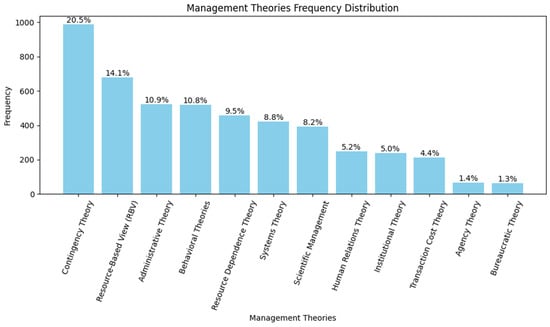
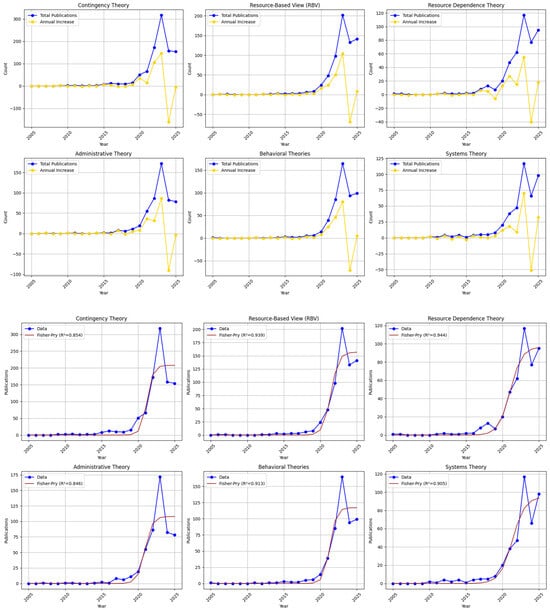
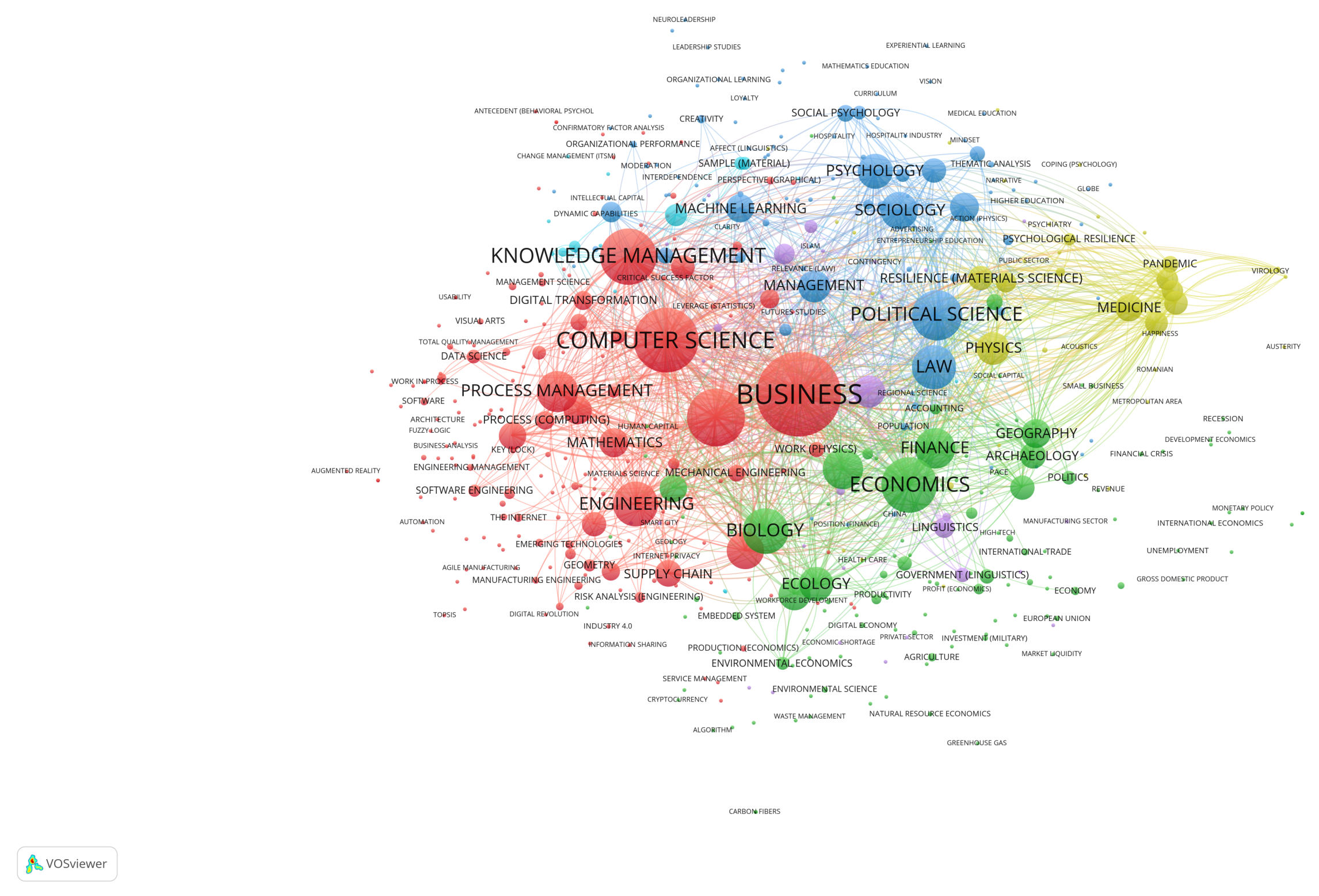
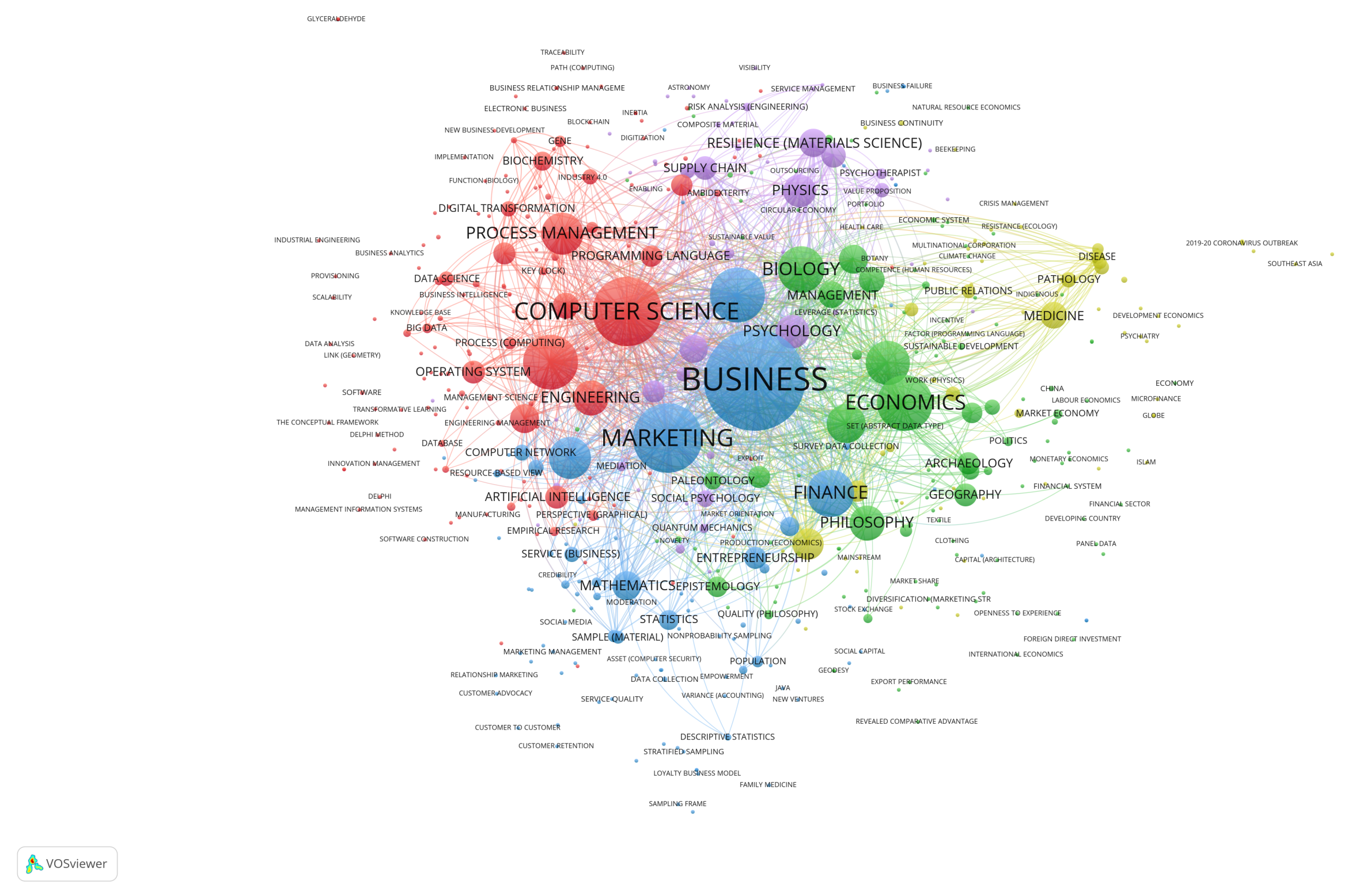
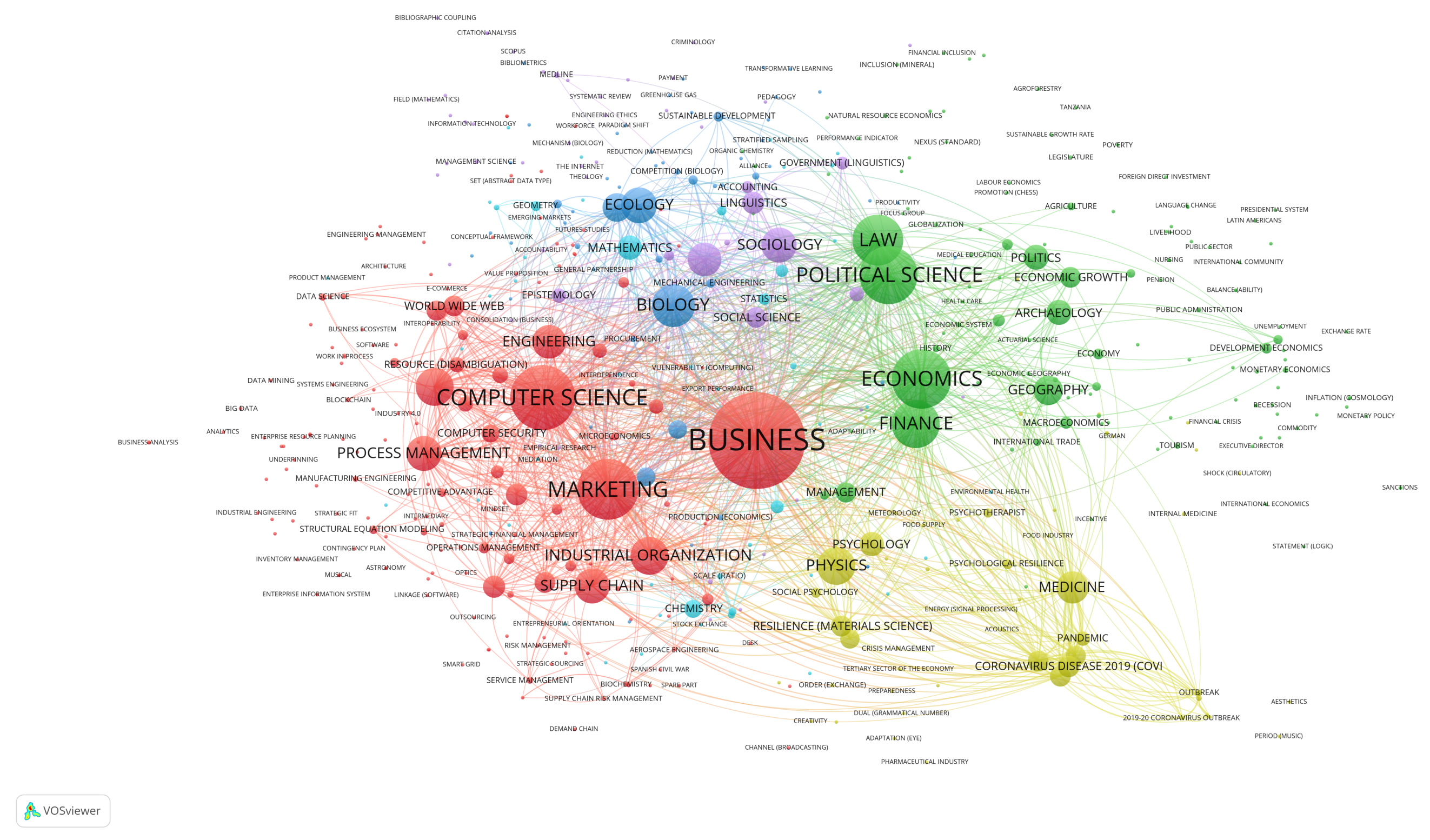
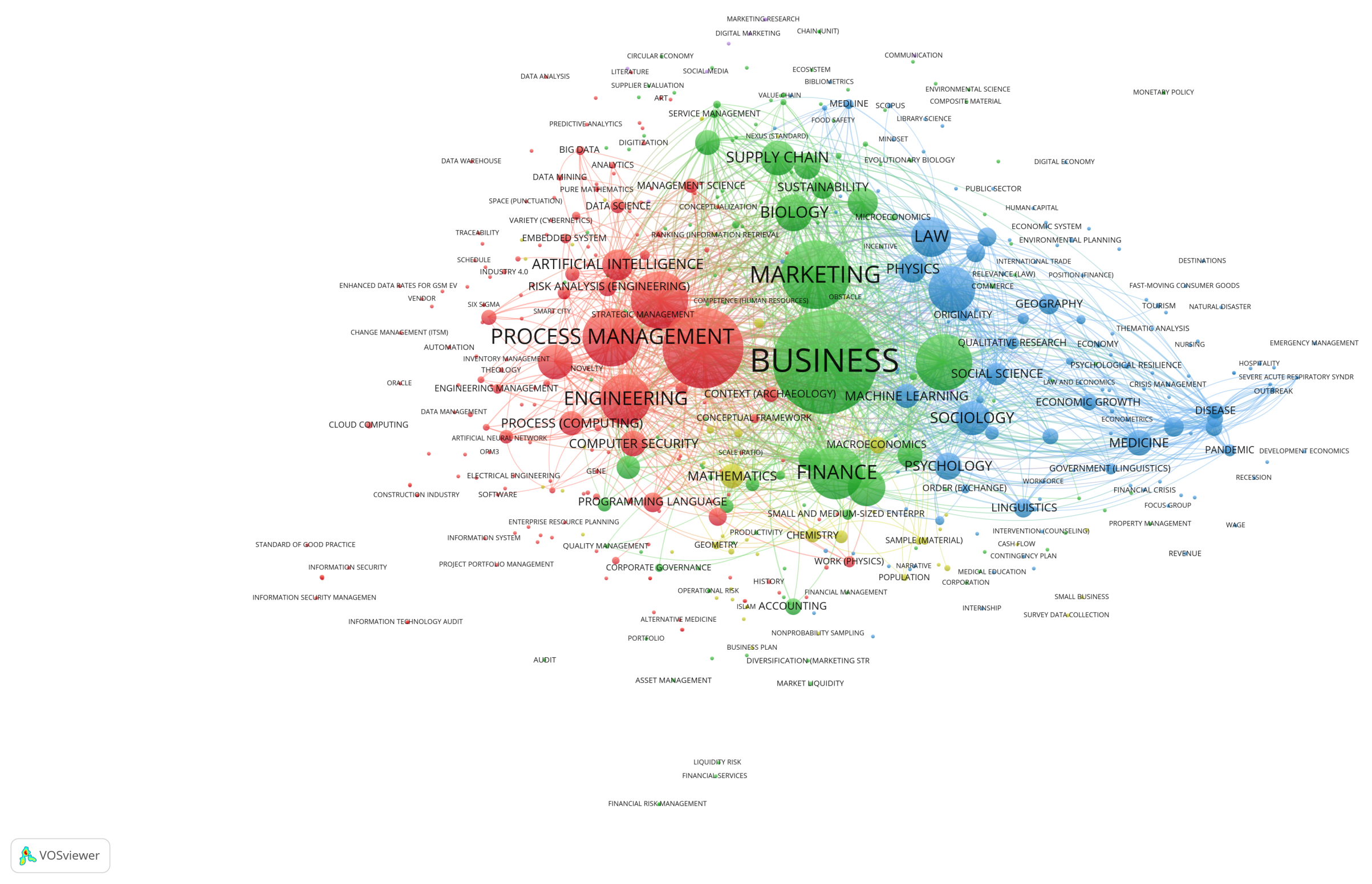
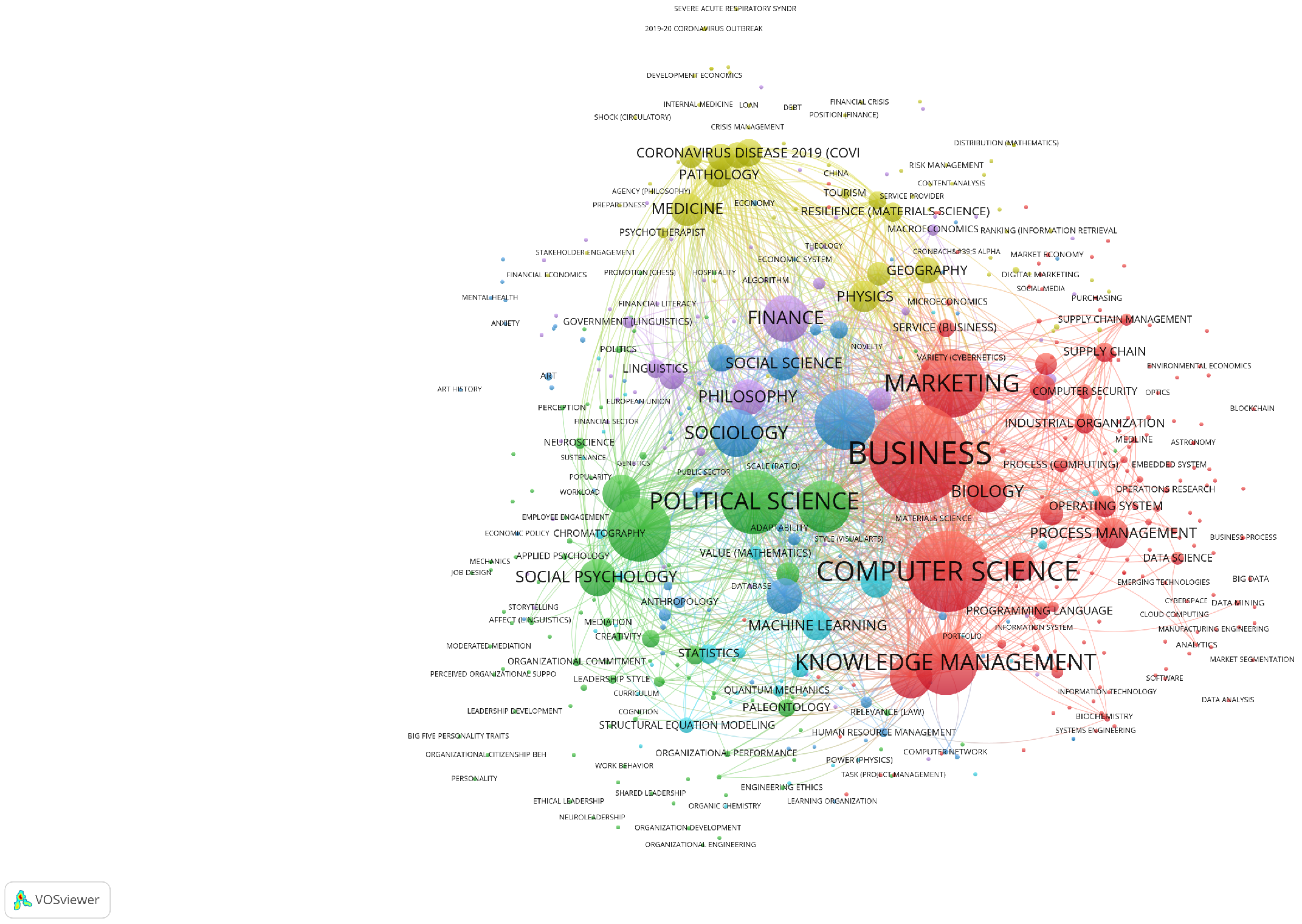
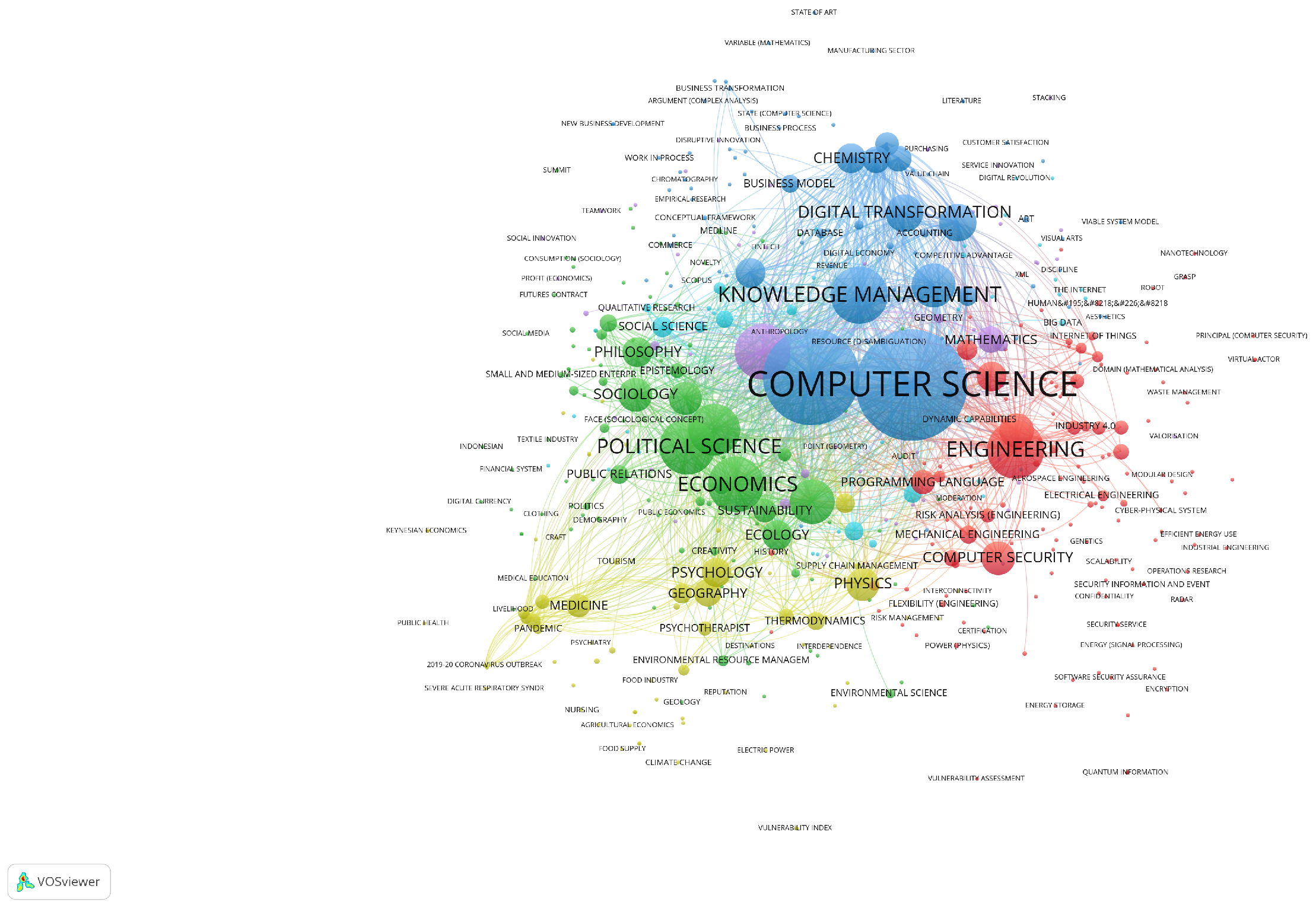
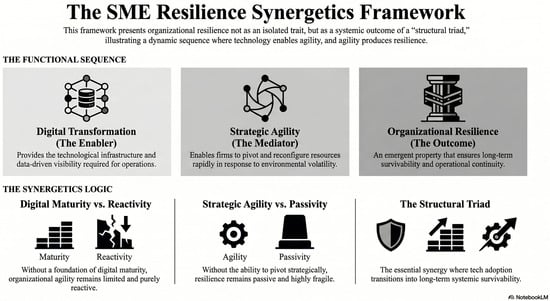
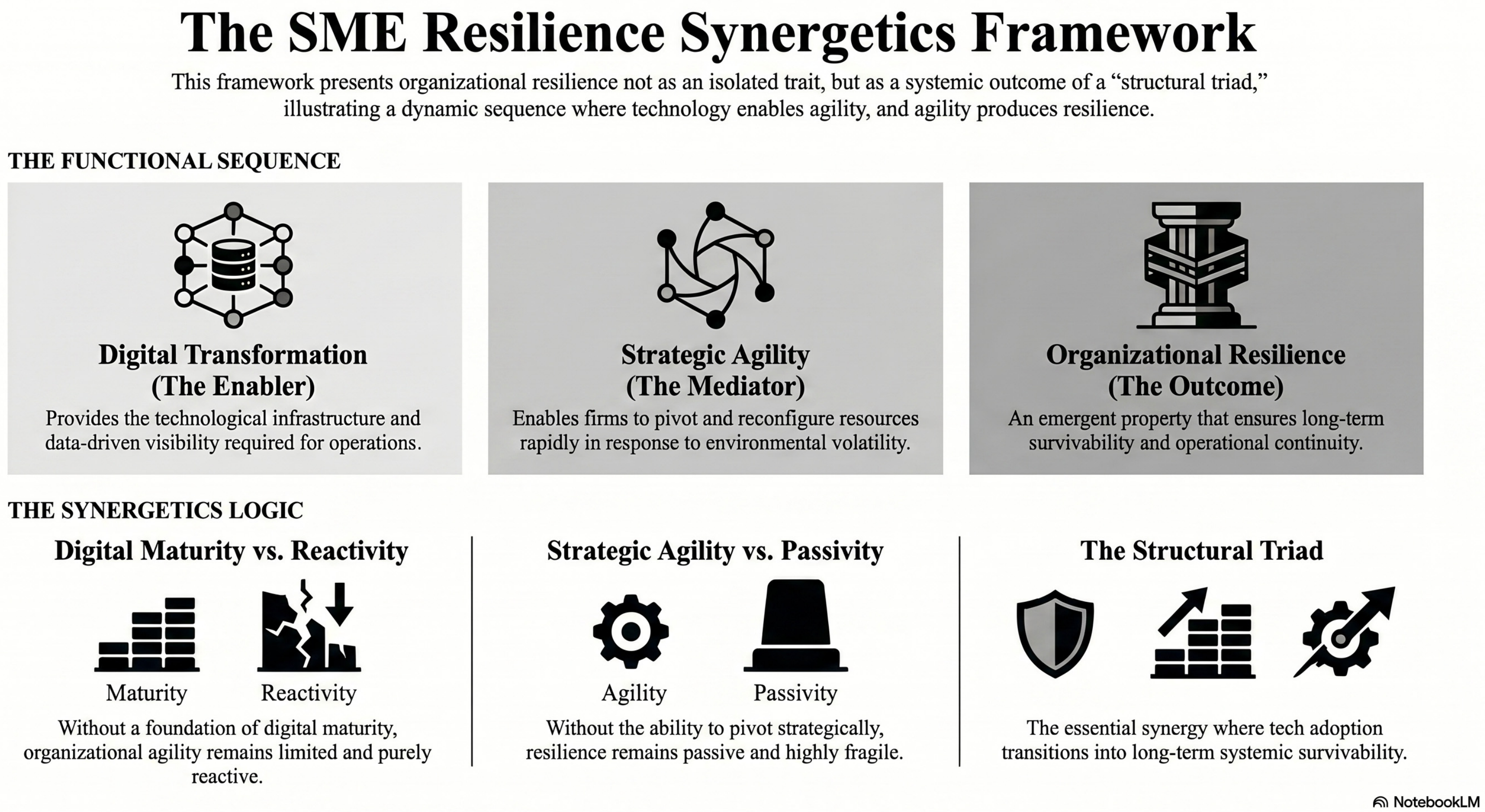

Disclaimer/Publisher’s Note: The statements, opinions and data contained in all publications are solely those of the individual author(s) and contributor(s) and not of MDPI and/or the editor(s). MDPI and/or the editor(s) disclaim responsibility for any injury to people or property resulting from any ideas, methods, instructions or products referred to in the content. |
© 2026 by the authors. Licensee MDPI, Basel, Switzerland. This article is an open access article distributed under the terms and conditions of the Creative Commons Attribution (CC BY) license.