1. Introduction
In today’s rapidly evolving business environment, digital transformation has emerged as a critical driver of organizational development, competitiveness, and sustainable growth. Particularly in developing and emerging economies, digital transformation involves not only the adoption of advanced digital technologies but also their effective integration into organizational processes, structures, and strategies. Through this transformation, firms aim to enhance operational efficiency, improve customer engagement, and strengthen their market position.
Organizations across industries are increasingly adopting digital technologies to streamline operations, enhance decision-making, and deliver superior customer experiences (
Afuah & Tucci, 2020;
Westerman et al., 2014). Digital transformation represents a comprehensive process that integrates digital technologies into various business functions, enabling organizations to improve productivity, flexibility, and innovation capacity. Moreover, it encompasses a wide range of strategic objectives, including organizational resilience, customer satisfaction, and long-term business sustainability (
Westerman et al., 2014).
Digital transformation goals typically include improving operational efficiency, optimizing supply chain management, enhancing customer relationships, and fostering innovation capabilities. By aligning organizational strategies with these goals, firms can leverage digital technologies to achieve significant improvements in overall performance and business outcomes (
Westerman et al., 2014). The impacts of digital transformation extend beyond internal operations and influence customer expectations, industry structures, and competitive dynamics. Digital technologies can reshape business models, redefine value creation processes, and transform interactions with stakeholders (
Afuah & Tucci, 2020).
One of the most significant areas influenced by digital transformation is customer satisfaction, particularly in the context of online shopping and digital marketplaces. The widespread adoption of e-commerce platforms has led customers to expect seamless, personalized, and reliable digital experiences throughout their purchasing journey (
Dwivedi et al., 2019). Consequently, organizations must adapt core business processes such as inventory management, order fulfillment, and customer service to meet evolving customer expectations and ensure high levels of satisfaction.
In addition, digital transformation has fundamentally altered supply chain management practices through the emergence of digital or smart supply chains. By utilizing technologies such as the Internet of Things (IoT), big data analytics, and artificial intelligence, firms can develop agile, transparent, and resilient supply networks that enable real-time monitoring and rapid response to disruptions (
Ivanov, 2018).
To achieve effective digital transformation, organizations must fulfill several key requirements that form the foundation of their digital strategies. These include robust cybersecurity systems, investments in human capital and digital capabilities, well-defined data governance frameworks, and the development of an organizational culture that promotes innovation and agility (
Afuah & Tucci, 2020;
Westerman et al., 2014). Addressing these requirements enables firms to overcome transformation-related challenges and build resilient, future-oriented digital ecosystems.
Recent empirical and review studies conducted in developed country contexts provide substantial evidence on the relationship between digital transformation and firm performance. For example, studies based on large firm datasets demonstrate that digital transformation significantly enhances operational efficiency, innovation capability, and financial performance (
Guo et al., 2021). Similarly, systematic literature reviews highlight that digital transformation supports business model innovation and value creation, which are critical drivers of firm performance in mature economies (
Vial, 2019;
Verhoef et al., 2021).
In developed countries, firms are more likely to adopt advanced digital technologies such as artificial intelligence, big data analytics, cloud computing, and integrated information systems, which facilitate data-driven decision-making and process optimization (
Bharadwaj et al., 2013). These digital capabilities are found to be strongly associated with improved organizational agility and competitive advantage. Furthermore, research suggests that the strategic alignment between digital initiatives and business objectives plays a crucial role in translating digital investments into tangible performance outcomes (
Teece, 2018).
Overall, the literature from developed economies consistently indicates that digital transformation is not only a technological shift but also a strategic organizational change that enhances firm performance through improved efficiency, innovation, and business model adaptation.
Despite the growing body of literature on digital transformation and firm performance, empirical research examining the combined relationship between digital transformation, business development, and organizational performance in emerging economies remains limited. While previous studies have primarily focused on the direct impact of digital transformation on firm performance, the role of business development as an intermediary mechanism has received relatively little attention. This study aims to address this gap by investigating how digital transformation influences firm performance both directly and indirectly through business development in emerging countries.
Most digital transformation studies have been conducted in developed countries, leaving limited empirical evidence from developing economies. This study addresses this gap by collecting data from manufacturing firms in Turkey, examining the effects of digital transformation on business development and firm performance in a developing country context.
There is a scarcity of empirical studies investigating how digital transformation enhances business development capabilities. This study provides evidence of the strong and positive effect of digital transformation on business development, filling an important gap in the literature.
Accordingly, this study seeks to answer the following research questions:
RQ1: Is there a relationship between digital transformation and firm performance in emerging countries?
RQ2: Is there a relationship between digital transformation and business development in emerging countries?
RQ3: Is there a relationship between business development and firm performance in emerging countries?
To examine these relationships, data were collected from 100 manufacturing firms operating in Turkiye. The study participants consisted of middle- and top-level managers who possess substantial knowledge of their organizations’ digital strategies and performance outcomes. This study seeks to contribute to both theoretical and practical literature by providing actionable insights for managers and policymakers aiming to achieve sustained growth and competitive advantage in digital environments.
2. Literature Review
2.1. Business Development
Despite the growing body of research on business development, the concept remains theoretically fragmented, with no widely accepted definition or clearly established conceptual boundaries (
Achtenhagen et al., 2017). Existing studies tend to approach business development from different angles, often emphasizing distinct dimensions such as market expansion, product development, customer acquisition, or technological advancement. For instance,
Berends et al. (
2007) conceptualize business development as a multidimensional process encompassing the development of new products, markets, customers, technologies, and applications, as well as their various combinations. While this broad perspective reflects the dynamic and integrative nature of business development, it also contributes to conceptual ambiguity, making it difficult to establish a unified theoretical framework.
This lack of conceptual clarity is further reinforced by firm-level heterogeneity. Differences in strategic orientation, organizational structure, and stages of firm growth shape how business development activities are designed and implemented, resulting in diverse and context-dependent practices. As a consequence, business development cannot be fully understood through a single theoretical lens.
Voeth et al. (
2018) argue that the field lacks a comprehensive and coherent theoretical foundation capable of systematically explaining both the processes and outcomes of business development. Although various theoretical perspectives have been proposed, they remain fragmented and insufficiently integrated, limiting the accumulation of consistent empirical evidence and hindering theory development (
Wei & Lin, 2024).
To address this fragmentation, recent studies increasingly frame business development as a strategic and process-oriented construct that connects opportunity identification with value creation and performance outcomes. In this view, business development is not merely a functional activity but a cross-organizational capability that enables firms to explore and exploit growth opportunities. It involves a combination of strategic planning, relationship management, innovation activities, and organizational learning processes.
Houterman et al. (
2014) define business development as a set of tasks and processes required to identify, develop, and implement growth opportunities both within and across organizational boundaries. Similarly,
Pollack (
2012) emphasize that business development is primarily concerned with creating long-term value through customers, markets, and strategic partnerships, highlighting its relational and strategic nature.
Importantly, business development is closely linked to organizational transformation and performance improvement. It encompasses managerial actions aimed at strengthening internal capabilities—such as employee development and innovation capacity—while simultaneously enhancing external alignment through supply chain integration and strategic partnerships. In this sense, business development functions as a bridge between internal resources and external market opportunities, contributing to improved firm performance outcomes. To operationalize these strategic processes, firms employ a range of analytical tools, including SWOT analysis, Internal Factor Evaluation (IFE), External Factor Evaluation (EFE), and the Quantitative Strategic Planning Matrix (QSPM). These tools facilitate a structured assessment of internal strengths and weaknesses as well as external opportunities and threats, enabling firms to align their business development strategies with their broader competitive environment.
Overall, the literature suggests that business development should be understood as a multidimensional and context-dependent construct that integrates strategic intent, organizational capabilities, and market-oriented activities. However, the lack of theoretical integration and empirical consistency continues to limit a comprehensive understanding of its role in enhancing firm performance, particularly in dynamic and technology-driven environments.
2.2. Digital Transformation (Dt)
Despite the rapid expansion of digital transformation across industries, the concept remains multifaceted and context-dependent, lacking a fully integrated theoretical framework (
Ebert & Duarte, 2016). Digital transformation is generally understood as the adoption and integration of disruptive digital technologies to enhance productivity, value creation, and organizational outcomes. However, prior research emphasizes different dimensions of this transformation, ranging from technological adoption to business model innovation and societal impact, which contributes to conceptual fragmentation. While digital technologies have achieved high levels of diffusion, many organizations continue to face significant challenges in their implementation, particularly due to internal resource constraints and external environmental pressures.
Existing literature highlights that digital transformation operates across both economic and social dimensions. On the one hand, it enables firms to improve productivity, develop innovative business models, and enhance financial performance. On the other hand, it fosters organizational change by promoting collaborative cultures, strengthening digital competencies, and improving data governance and cybersecurity practices (
Ebert & Duarte, 2016). This dual nature suggests that digital transformation should be viewed not merely as a technological shift but as a broader organizational and strategic process.
From a strategic perspective, digital transformation is closely linked to entrepreneurial activity and competitive dynamics. Firms increasingly operate in dual modes, maintaining traditional operations while simultaneously exploring disruptive innovations and emerging markets.
Christensen (
2015) highlights that digital and software-based technologies facilitate rapid responses to changing customer needs, thereby intensifying competitive pressures. However, incumbent firms often hesitate to adopt radical innovations due to the risk of cannibalizing existing products, which creates opportunities for new entrants and reinforces the disruptive potential of digital transformation.
The literature further emphasizes that the impact of digital transformation depends on the development of specific organizational capabilities. Technologies such as robotics, additive manufacturing, and interconnected digital systems have been shown to enhance productivity, although their effects vary depending on adoption levels and contextual factors (
Ebert & Duarte, 2016). In this regard, digital initiatives have been found to support sustainability and strategic performance, particularly in small and medium-sized enterprises (
Imran et al., 2025).
A growing stream of research conceptualizes digital transformation capabilities in terms of technological readiness, exploration, and exploitation. Technological readiness reflects the willingness and ability of firms to adopt new technologies, shaped by factors such as perceived usefulness and ease of use (
Davis, 1989;
Parasuraman & Colby, 2015). Exploration and exploitation, in turn, represent complementary innovation strategies, where firms balance the pursuit of new opportunities with the refinement of existing capabilities (
He & Wong, 2004). From a resource-based perspective, firm performance depends on how effectively these capabilities are developed and deployed (
Barney, 1991), while continuous investment in research and development enhances innovation capacity and access to knowledge (
Deeds, 2001;
Schendel, 1994).
Moreover, digital transformation is increasingly embedded within broader organizational ecosystems.
Akram et al. (
2018) identify key domains such as customer engagement, business model innovation, process automation, and digital security, all of which contribute to value creation and performance outcomes. In addition, intangible assets, including intellectual property rights, play a crucial role in supporting entrepreneurial behavior and innovation (
Czarnitzki et al., 2015;
Shane, 2001). These findings suggest that digital transformation should be understood as an ecosystem-driven process rather than a firm-level technological upgrade.
In manufacturing contexts, digital transformation is most prominently associated with Industry 4.0, which integrates advanced technologies such as artificial intelligence, the Internet of Things, robotics, cloud computing, and big data analytics into production systems (
Savastano et al., 2019). This paradigm has evolved into a global framework for enhancing productivity, flexibility, and operational efficiency, as evidenced by its adoption by leading multinational firms as well as emerging market players.
Empirical evidence consistently supports a positive relationship between digital transformation and firm performance, although this relationship is often contingent on contextual and organizational factors. For example
Kohtamäki et al. (
2019) emphasize its context-dependent nature. Similarly,
Nabiyeva et al. (
2021) demonstrate that even incremental increases in digitalization can lead to significant performance gains.
Finally, recent research highlights that digital transformation is shaped by a complex interaction of technological, organizational, managerial, and environmental factors. Digital adoption enhances competitiveness, market expansion, and service quality, while organizational characteristics such as managerial capabilities, firm size, and innovation capacity influence adoption outcomes (
Ferreira et al., 2019). In addition, adaptability and institutional entrepreneurship play a critical role in enabling firms to respond to dynamic environments and to leverage digital opportunities effectively.
Overall, the literature suggests that digital transformation is not a singular process but a multidimensional and capability-driven phenomenon that integrates technology, strategy, and organizational change. However, despite extensive research, the lack of theoretical integration and context-specific empirical evidence continues to limit a comprehensive understanding of how digital transformation translates into firm performance, particularly across different industrial and economic settings.
According to
Garay-Rondero et al. (
2020) potential impact of digital supply chain is shown by
Table 1.
Table 1 is adapted from
Garay-Rondero et al. (
2020), who systematically identified and ranked the potential impacts of digital supply chains (DSC). Their ranking is based on an extensive assessment of digital supply chain capabilities and their contributions to operational and strategic performance. The table highlights key benefits such as end-to-end visibility, accurate demand forecasting, and enhanced information management, which are widely recognized as core enablers of digital transformation.
In the context of this study, these ranked impacts are utilized to frame the role of digital supply chains within the broader digital transformation process. They also provide a conceptual foundation for understanding how digital capabilities may contribute to firm-level outcomes.
Table 2 shows advanced digital technologies.
2.3. Determinants and Challenges of Digital Transformation
In today’s dynamic business environment, organizations increasingly recognize the transformative potential of digital technologies for enhancing competitiveness, operational efficiency, and customer experience. Accordingly, digital transformation has emerged as a strategic necessity rather than a technological option. However, successful digital transformation requires not only technological investment but also strong leadership, supportive organizational culture, and effective strategic alignment.
2.3.1. Leadership and Managerial Capabilities
Leadership plays a central role in initiating and sustaining digital transformation. The active involvement of top management and close collaboration between business and information systems executives are essential for integrating digital strategy with corporate objectives (
Grover et al., 1995). Successful transformation combines emerging digital technologies with existing organizational competencies to generate new value propositions (
Sebastian et al., 2017).
Empirical evidence suggests that managerial characteristics are more strongly associated with advanced stages of digital transformation than firm-level characteristics. According to
Porfírio et al. (
2021), democratic leadership styles, strong mission coherence, and effective strategic management systems facilitate deeper digital integration. Moreover, managerial alignment with organizational objectives enhances employee commitment and helps overcome structural and operational barriers. Authentic leadership that effectively communicates digital vision and strategic priorities therefore represents a critical enabler of transformation.
2.3.2. Organizational Culture and Digital Orientation
In addition to leadership, organizational culture constitutes a fundamental prerequisite for digital transformation. Organizational culture provides a stable framework that guides employees’ responses to technological change (
Costanza et al., 2016). However, cultural transformation cannot be achieved solely through persuasion or formal policies. Instead, it evolves gradually through shared values, learning processes, and supportive practices.
Organizations can foster digital culture by reinforcing collaborative behaviors, creativity, continuous improvement, and knowledge sharing (
Claver et al., 2000;
Kane et al., 2015).
Duerr et al. (
2018) emphasize that digital culture is reflected in new forms of internal and external collaboration, shared digital values, and inclusive decision-making structures. These cultural elements facilitate employee empowerment and strengthen innovation capacity.
Furthermore,
Martínez-Caro et al. (
2020) demonstrate that digital culture supports both business digitization and digital technologies’ value development. While business digitization enhances operational efficiency, digital value development strengthens strategic performance. These processes are complementary and jointly contribute to organizational competitiveness. Importantly, technology acceptance remains a critical condition, as digital initiatives cannot succeed without employee engagement and trust.
2.3.3. Barriers to Digital Transformation
Despite its potential benefits, digital transformation is frequently constrained by multiple organizational and environmental barriers. Integrating digital and physical layers into traditional business models generates structural tensions, particularly in firms originating from conventional production systems (
Hanelt et al., 2015;
Jones et al., 2021).
Previous studies identify several major categories of barriers.
Vogelsang et al. (
2019) emphasize skill-related, technical, and individual barriers, including insufficient IT knowledge, legacy systems, and resistance to change. Similarly,
Borangiu et al. (
2019) highlight conceptual, societal, and environmental challenges, while
Mahmood et al. (
2019) point to weak strategic alignment and technological disruption. Financial constraints and uncertainty regarding economic benefits further hinder digital investment (
Raj et al., 2020).
In line with the “innovator’s dilemma” framework proposed by
Christensen (
2015), established firms may hesitate to pursue radical digital innovation due to concerns over cannibalization and unclear returns on investment. Consequently, inadequate strategic vision, limited digital capabilities, and risk-averse organizational cultures often slow transformation processes.
External factors such as weak regulatory frameworks, labor skill shortages, and restricted access to finance disproportionately affect small and medium-sized enterprises (
Hirsch-Kreinsen, 2016). Moreover, the COVID-19 pandemic has further exposed vulnerabilities in digital infrastructures and highlighted the importance of digital preparedness (
Dana et al., 2021).
2.3.4. Digital Business Resilience
Beyond adoption and implementation, sustainable digital transformation depends on organizational resilience. Digital business resilience refers to a firm’s capacity to anticipate, absorb, and recover from digital disruptions, including cyberattacks, system failures, and data breaches (
Capriglione et al., 2019).
High levels of digital resilience reduce downtime, strengthen cybersecurity, enhance customer trust, and support regulatory compliance. Moreover, effective recovery systems and continuity planning enable organizations to maintain service quality and competitive advantage. According to
BSI (
2019), organizational resilience comprises three core domains: operational resilience, supply chain resilience, and information resilience.
To strengthen digital resilience, firms must conduct systematic risk assessments, regularly test digital infrastructures, develop incident response mechanisms, and invest in employee training. Extensive failover and recovery testing is particularly important for preventing data loss and ensuring business continuity. By integrating resilience into digital strategies, organizations can minimize operational risks and reinforce long-term digital competitiveness.
2.3.5. Integrated Perspective
Overall, digital transformation is shaped by the interaction of leadership capabilities, organizational culture, structural barriers, and resilience mechanisms. Effective leadership aligns digital initiatives with corporate strategy, while supportive culture fosters innovation and technology acceptance. At the same time, overcoming technical, organizational, and environmental barriers is essential for sustaining transformation. Finally, digital business resilience enhances firms’ capacity to adapt and thrive in uncertain environments.
Accordingly, organizations that simultaneously develop managerial competencies, cultural readiness, strategic alignment, and resilience capacities are more likely to achieve successful and sustainable digital transformation.
2.3.6. Firm Performance
Digital transformation (DT) strategies are widely associated with improvements in operational efficiency, cost reduction, and innovation capacity. Accordingly, firms implementing DT initiatives are generally expected to achieve superior performance compared to those that do not adopt such strategies. However, the effective implementation of a DT strategy depends largely on managerial commitment and alignment with shareholders’ interests. In the presence of agency conflicts, managers may pursue personal objectives rather than maximizing firm value (
Jensen & Meckling, 2019). Under such circumstances, the anticipated performance benefits of digital transformation may not fully materialize. This concern is consistent with the survey findings reported by
Wipro Digital (
2017), which highlight the gap between digital strategy formulation and execution. Therefore, the relationship between digital transformation and firm performance remains theoretically ambiguous and empirically testable.
Moreover, firms may exhibit a baseline or “normal” level of DT adoption shaped by their structural and operational characteristics. For instance, larger firms are typically expected to demonstrate a higher degree of digital adoption. We conceptualize DT adoption beyond this expected benchmark as an excess level of digital transformation. The distinction between normal and excess DT adoption enables a more refined analysis of performance outcomes. Although prior research rarely decomposes DT adoption into normal versus excess components, similar methodological approaches have been applied in accounting to distinguish between normal and abnormal accruals, and in finance to identify normal versus over- or under-investment behaviors (
Zhai et al., 2022).
2.4. Business Development, Firm Performance, and Digital Transformation
The relationship between business development, digital transformation, and firm performance is increasingly conceptualized as an interdependent and mutually reinforcing process in the literature. Business development activities—such as market expansion, innovation, customer acquisition, and strategic partnerships—serve as a mechanism for identifying and exploiting growth opportunities, while digital transformation provides the technological and organizational infrastructure that enables these opportunities to be scaled efficiently and effectively (
Berends et al., 2007;
Houterman et al., 2014;
Pollack, 2012). In this sense, digital transformation acts as an enabling capability that strengthens business development processes by improving data-driven decision-making, operational agility, and market responsiveness (
Ebert & Duarte, 2016). When effectively aligned, these two constructs jointly contribute to enhanced firm performance through improved productivity, innovation capacity, and strategic flexibility. Empirical studies further support that firms leveraging digital transformation achieve superior performance outcomes, although these effects are contingent on organizational capabilities, managerial alignment, and contextual factors (
Kohtamäki et al., 2019;
Nabiyeva et al., 2021). Therefore, business development can be viewed as the strategic driver of value creation, digital transformation as the enabling infrastructure, and firm performance as the resulting outcome of their integrated implementation within dynamic and competitive environments.
3. Research Methodology
3.1. Hypothesis Development
This study examines the relationships among digital transformation, business development, and firm performance. Drawing on the resource-based view (
Helfat & Peteraf, 2003;
Teece, 2007), innovation theory, and digitalization literature, the proposed conceptual framework assumes that digital capabilities and business development practices jointly contribute to organizational competitiveness and performance (
Bharadwaj et al., 2013;
Vial, 2019;
Verhoef et al., 2021).
Digital transformation enables firms to redesign business processes, enhance operational efficiency, strengthen customer engagement, and develop innovative products and services (
Sebastian et al., 2017;
Kane et al., 2015). Prior studies indicate that investments in digital technologies increase organizational flexibility and responsiveness in dynamic markets (
Bharadwaj et al., 2013;
Vial, 2019). Through automation, big data analytics, and digital platforms, firms can optimize resource utilization and reduce transaction costs, thereby improving productivity and profitability (
Verhoef et al., 2021;
Martínez-Caro et al., 2020). Advanced analytical and decision-support-based maturity models further enable organizations to systematically evaluate their digital capabilities and manage technology-driven transformation processes more effectively (
Zarrin et al., 2025). According to
Saadatmand et al. (
2024) firms with higher levels of digital maturity are better positioned to cope with environmental uncertainty and sustain long-term growth. In particular, the increasing integration of artificial intelligence, big data analytics, and machine learning into business and investment processes further strengthens firms’ ability to generate accurate insights, improve decision quality, and achieve superior performance outcomes through advanced predictive and nonlinear modeling capabilities.
From an innovation perspective, digital transformation supports both disruptive and incremental innovation by integrating emerging technologies into core business activities (
Christensen, 2015;
Nambisan et al., 2019). In particular, the disruptive innovation framework proposed by The Innovator’s Dilemma highlights how digital technologies reshape value creation mechanisms and generate competitive advantage. Empirical evidence suggests that digitalization enhances financial and operational performance by strengthening strategic alignment and market responsiveness (
Ferreira et al., 2019;
Martínez-Caro et al., 2020). Moreover, real-time data access and advanced analytics improve decision-making quality and support effective strategic planning and risk management (
Vial, 2019).
Accordingly, firms with higher levels of digital maturity are better positioned to cope with environmental uncertainty and sustain long-term growth.
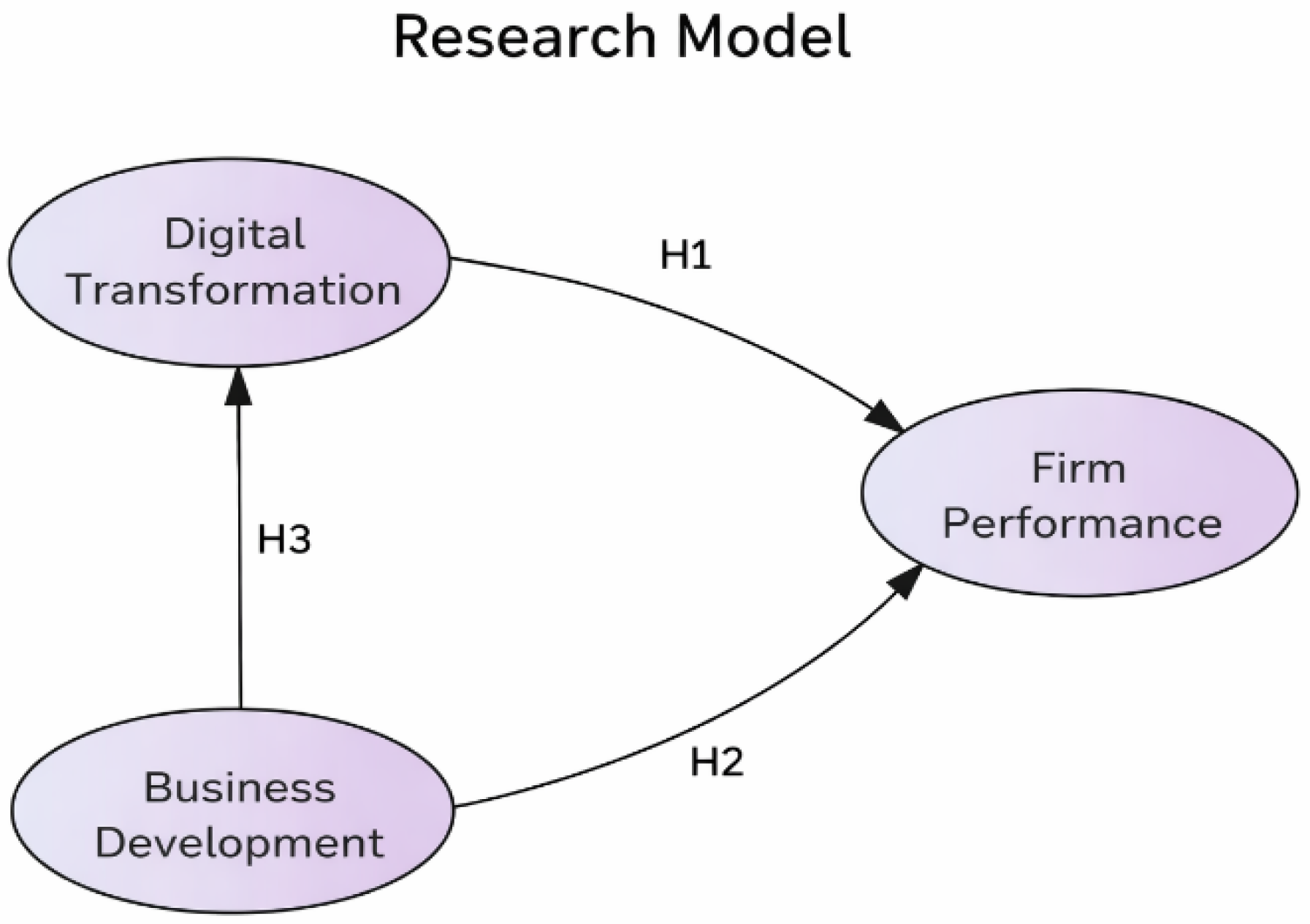
Based on these arguments, the following hypothesis is proposed:
H1. Digital transformation has a significant positive effect on firm performance.
Business development focuses on identifying growth opportunities, strengthening customer relationships, and expanding market presence (
Hitt et al., 2017). Through strategic partnerships, market exploration, and innovation-oriented initiatives, business development activities directly contribute to revenue generation and competitive positioning (
Lumpkin & Dess, 1996). Previous research indicates that effective business development enhances firm performance by facilitating access to new markets, improving customer retention, and supporting product and service diversification (
Ferreira et al., 2019;
Nambisan et al., 2019). By aligning internal capabilities with external opportunities, firms can create sustainable value and reinforce their strategic advantage (
Teece, 2007).
Furthermore, business development supports organizational learning and knowledge accumulation, which are essential for continuous improvement and innovation (
Helfat & Peteraf, 2003;
Hitt et al., 2017). Firms that systematically invest in business development tend to achieve higher operational efficiency, brand recognition, and market share. In addition, business development strengthens firms’ ability to respond proactively to competitive pressures through market-oriented strategies (
Lumpkin & Dess, 1996). Consequently, organizations that effectively manage their business development processes are more likely to achieve superior performance outcomes.
Thus, the following hypothesis is formulated:
H2. Business development has a significant positive effect on firm performance.
Digital transformation and business development are closely interconnected and mutually reinforcing processes (
Nambisan et al., 2019;
Verhoef et al., 2021). Digital technologies reshape how firms identify opportunities, interact with customers, and coordinate value chain activities. Through digital platforms, customer relationship management systems, and data-driven marketing tools, firms can significantly enhance their business development capabilities (
Sebastian et al., 2017;
Ferreira et al., 2019). These technologies facilitate more effective market intelligence and personalized customer engagement. On the other hand,
Mladenova (
2024) emphasizes that the adoption of digital technologies in SMEs not only facilitates process improvements but also enables the development of new business models and capabilities, which in turn support enhanced organizational performance and business development.
Moreover, digital tools improve communication and collaboration with partners and suppliers, thereby strengthening inter-organizational networks (
Bharadwaj et al., 2013;
Verhoef et al., 2021). Digital infrastructure also enables firms to scale operations, enter global markets, and develop innovative distribution channels. However, the positive impact of digital transformation on business development is not automatic. Limited managerial capabilities, weak digital culture, and low absorptive capacity may constrain this relationship (
Kane et al., 2015). Therefore, examining the nature and direction of this relationship is essential for understanding how digitalization contributes to organizational growth. Furthermore,
Ramadan et al. (
2023) argue that digital transformation enhances organizational agility and knowledge transfer, which in turn supports business model innovation and strengthens firms’ business development capabilities. The adaptation of the Hoshin Kanri model for digital transformation provides a structured approach to business development by aligning technology, processes, human resources, and customer orientation with strategic objectives, thereby supporting sustainable growth and value creation (
Umantsiv et al., 2025).
Based on these considerations, the following hypothesis is proposed:
H3. Digital transformation has a significant positive effect on business development.
This study assumes that digital transformation directly enhances firm performance and contributes to performance through its influence on business development (
Bharadwaj et al., 2013;
Vial, 2019). Business development serves as a key mechanism through which firms transform technological capabilities into economic value (
Teece, 2007;
Ferreira et al., 2019).
3.2. Survey Instrument
A survey instrument was developed to investigate the relationships between Digital transformation, business development, and firm performance, based on a comprehensive review of the relevant literature. The constructs of the study are measured using five-point Likert-type scales, ranging from 1 = “strongly disagree” to 5 = “strongly agree.” While it has been generally claimed that the ideal number of item alternatives is seven, the literature suggests that a five-point scale appears to be less confusing and much simpler (
Dawes, 2008) and increases response rate and response quality (
Bouranta et al., 2009). It should also be noted that the five-point scale has been widely used in technology transfer literature and quality management literature (
Abbas, 2020;
Pagani et al., 2020;
Zhou & Li, 2020).
Table 3 shows characteristics of sample firms.
Brief descriptions of the measures used in this study are provided in the following subsections.
Dependent Variable:
Firm performance
The items that measure firm performance in this study were adapted from the extant literature (
AlMulhim, 2021;
Yoo et al., 2010;
Nasiri et al., 2020;
Martínez-Caro et al., 2020;
Judge & Douglas, 1998;
Quinn & Rohrbaugh, 1983;
Nayal et al., 2021;
Abdallah et al., 2021;
Belhadi et al., 2021;
Gupta et al., 2020;
Agyabeng-Mensah et al., 2020;
Delic et al., 2019;
Cao & Zhang, 2011;
Calantone et al., 2004;
Chen, 2009). Firm Performance is composed of 4 dimensions, which includes:
FP1: Sales Growth:
Sales growth refers to the extent to which a firm’s revenues increase over a specific period of time.
FP2: Productivity
Productivity represents the efficiency with which a firm utilizes its resources to produce outputs.
FP3: Sustainable Supply Chain Firm Performance
Sustainable supply chain firm performance captures the firm’s ability to manage its supply chain activities in an environmentally and socially responsible manner while maintaining operational effectiveness.
FP4: Cost Reduction
Cost reduction reflects the firm’s capability to minimize operational and production costs while maintaining quality and performance levels.
Independent Variables:
Digital Transformation
To measure DT, scales adapted from earlier studies were used (
Berman, 2012;
Frank et al., 2019;
Hagberg et al., 2016;
Leviäkangas, 2016;
Li, 2018;
Matt et al., 2015;
Pramanik et al., 2019;
Nasiri et al., 2020;
Gibson, 2018;
Bala & Verma, 2018;
Srividhya, 2019;
Westerman et al., 2014;
Chaffey & Chadwick, 2016;
Masrianto et al., 2022;
Garcia-Perez et al., 2023). The items that measure the level of DT are as follows:
DT1: Firm’s Digitalization Awareness
Firm’s digitalization awareness refers to the organization’s recognition and understanding of the importance and potential of digital technologies.
DT2: Data Computing Adoption
Data computing adoption indicates the extent to which a firm utilizes computational technologies for processing and managing data.
DT3: Data Analytics
Data analytics represents the firm’s capability to analyze and interpret data to support decision-making processes.
DT4: Integration of Digital Systems
Integration of digital systems refers to the degree to which different digital platforms and technologies are interconnected within the organization.
DT5: Digital Customer Experience
Digital customer experience captures how effectively a firm delivers services and interactions to customers through digital channels.
DT6: Customer Experience
Customer experience reflects the overall perception and satisfaction of customers based on their interactions with the firm.
DT7: Engaging the Organization
Engaging the organization refers to the extent to which employees and stakeholders are involved in and support digital initiatives.
DT8: Smart Technologies
Smart technologies represent the adoption of advanced technologies such as AI, IoT, and automation to improve business processes.
DT9: Cyber Security:
Cyber security denotes the measures and practices implemented to protect digital systems, data, and networks from unauthorized access and threats.
Business Development:
The items that measure leadership were drawn from previous research (
Nayal et al., 2021;
Muduli et al., 2020;
Agyabeng-Mensah et al., 2020;
Morgan et al., 2016;
Cao & Zhang, 2011;
Bolatan et al., 2022;
Abbas, 2020;
Ang et al., 2000;
Negron, 2020;
Saraph et al., 1989;
Soliman, 2020;
Prajogo & Sohal, 2006;
Sirén & Kohtamäki, 2016;
Prodanova et al., 2019) and are the following:
BD1: Supply Chain:
Supply chain refers to the management and coordination of activities involved in sourcing, producing, and delivering products or services.
BD2: R&D:
Research and development represents the firm’s efforts to innovate and develop new products, services, or processes.
BD3: Leadership:
Leadership reflects the ability of management to guide, influence, and support the organization toward achieving its goals.
BD4: Employee Development:
Employee development indicates the firm’s initiatives to enhance employees’ skills, knowledge, and competencies.
BD5: Strategic Planning:
Strategic planning refers to the process of defining organizational goals and determining the actions required to achieve them.
Control Variables:
The term “firm age” (AGE) refers to a categorical variable comprised of three ranges based on the total number of years since the establishment of the business (i.e., “less than 10 years”, “10 to 20 years,” and “more than 20 years”). AGE is a common control variable used to determine whether elder, more seasoned businesses differ from newer businesses in terms of the study’s dependent variable.
To control industry variations (IND), a dichotomous variable was used to represent resource-intensive manufacturing industries and technology-intensive manufacturing industries. The resource-intensive sectors included the food, tobacco, textile, paper, timber and furniture, energy, and mining industries, while the technology-intensive sectors included the automotive, electronics, machinery, equipment, metals, chemicals, and pharmaceuticals sectors.
Utilizing a categorical variable that distinguished between large enterprises and SMEs, company size (SIZE) was determined. Large enterprises are defined as having more than 250 employees, while small and medium-sized enterprises (SMEs) are defined as having fewer than 250 employees.
The type of ownership (OWN) was measured by a categorical variable, with 0 indicating a locally owned business, 1 a foreign owned business, and 2 a locally and foreign owned business.
4. Results
The data analysis was carried out in three phases. Initially, confirmatory factor analysis (CFA) was used to assess the reliability and validity of the study’s constructs. The likelihood of common method bias (CMB) was evaluated using Harman’s single factor test. The hypothesized relationships between the study’s constructs were then examined using structural equation modeling (SEM).
The CFA results are presented in
Table 4. All regression weights exceed 0.62 and are statistically significant (
p < 0.01). The model demonstrates an acceptable but not excellent fit to the data. While the χ
2/df ratio (2.101) falls within recommended thresholds, incremental fit indices such as CFI (0.876), TLI (0.856), and IFI (0.878) are slightly below the commonly suggested cutoff of 0.90. Furthermore, the RMSEA value (0.105) indicates a poor fit according to conventional criteria (
Hair et al., 2010). These results suggest that the model provides a moderate fit and may benefit from further refinement.
The results present the paths from Digital Transformation to several specific indicators (DT1, DT2, DT3, …, DT9), which indicate the relationship between Digital Transformation and these specific measures. All these paths show positive relationships, with standardized regression weights ranging from 0.703 to 0.805. These findings suggest that Digital Transformation has a positive influence on all these specific indicators, with each indicator showing a relatively strong association with Digital Transformation.
Similarly, there are paths from Business Development to specific indicators (BD1, BD2, BD3, …, BD5), indicating the relationship between Business Development and these measures. All these paths show positive relationships, with standardized regression weights ranging from 0.627 to 0.834. This suggests that Business Development has a positive influence on all these specific indicators, with varying strengths of association.
Lastly, there are paths from Firm Performance to specific indicators (FP1, FP2, FP3, FP4), which demonstrate the relationship between Firm Performance and these measures. All these paths show positive relationships, with standardized regression weights ranging from 0.663 to 0.874. These findings indicate that Firm Performance has a positive influence on all these specific indicators, with each indicator displaying a moderate to strong association with Firm Performance.
Overall, the results of this SEM analysis support the hypothesis that Digital Transformation positively influences both Business Development and Firm Performance. Additionally, Business Development is found to have a positive influence on Firm Performance, albeit to a lesser extent. These findings provide empirical evidence for the importance of Digital Transformation in driving Business Development and subsequently impacting Firm Performance. The specific indicators of Digital Transformation, Business Development, and Firm Performance exhibit positive and significant associations with their respective latent constructs, supporting the measurement relationships in the model. These interpretations are based on the reported CFA results and are complemented by model fit indices and significance tests presented in the study, which together provide an assessment of the model’s validity and reliability.
Table 5,
Table 6 and
Table 7 show analysis results.
A SEM analysis using AMOS was conducted to test the study’s hypotheses.
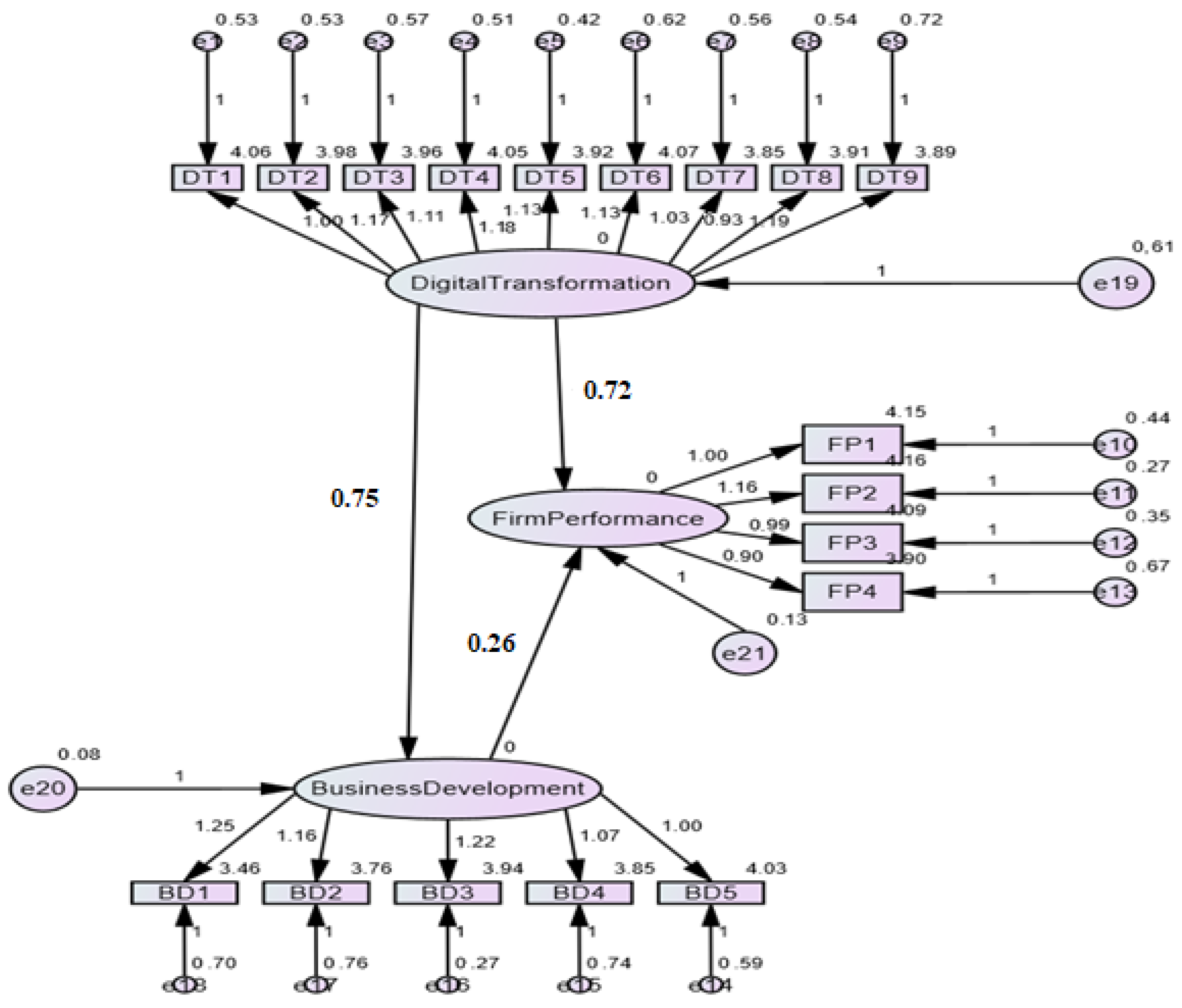
Figure 1 presents the structural model results. The overall model fit can be considered acceptable but not optimal. Although the χ
2/df ratio (2.101) falls within the recommended threshold, several incremental fit indices—CFI (0.876), TLI (0.856), and IFI (0.878)—remain slightly below the commonly suggested cutoff value of 0.90. In addition, the RMSEA value (0.105) indicates a poor fit according to conventional criteria (
Hair et al., 2010). These findings suggest that the model demonstrates a moderate level of fit and may benefit from further refinement.
Table 8 reports the parameter estimates and significance levels for each hypothesized relationship.
The results of the structural equation modeling (SEM) analysis using AMOS are presented below:
Hypothesis 1. “Impact of Digital Transformation on Firm Performance”: The standardized regression weight for this path is 0.700, indicating a moderate positive relationship between Digital Transformation and Firm Performance. This suggests that an increase in Digital Transformation is associated with a moderate increase in Firm Performance.
Hypothesis 2. “The impact of Business Development on Firm Performance”: The standardized regression weight for this path is 0.213, indicating a weak positive relationship between Business Development and Firm Performance. While there is a positive association, it is relatively small compared to the other relationships in the model. However, it is not significant.
Hypothesis 3. “Impact of Digital Transformation on Business Development”: The standardized regression weight for this path is 0.898, indicating a strong positive relationship between Digital Transformation and Business Development. This suggests that as Digital Transformation increases, Business Development tends to increase significantly.
Figure 2 shows our research analysis results.
5. Discussion
The findings of this study provide important insights into the relationships among digital transformation, business development, and firm performance. The results support Hypothesis 1, which proposed a positive effect of digital transformation on firm performance. The standardized regression weight of 0.700 indicates a moderate and statistically significant positive relationship between digital transformation and firm performance. This finding suggests that as organizations intensify their digital transformation efforts, they are likely to achieve noticeable improvements in their overall performance. It also emphasizes the critical role of digital technologies in enhancing operational efficiency, strengthening competitive advantage, and supporting sustainable business success in the contemporary digital environment.
Regarding Hypothesis 2, which examined the impact of business development on firm performance, the results reveal a weak positive relationship, as reflected by the standardized regression weight of 0.213. Although a positive association exists between business development and firm performance, this relationship was not statistically significant. This finding indicates that business development alone may not directly translate into performance gains and that its effects may depend on contextual factors such as industry characteristics, organizational capabilities, and market conditions. Therefore, the influence of business development on firm performance appears to be more complex and may require further empirical investigation.
In contrast, Hypothesis 3, which investigated the effect of digital transformation on business development, was strongly supported by the empirical results. The standardized regression weight of 0.898 demonstrates a strong and statistically significant positive relationship between digital transformation and business development. This result suggests that digital transformation initiatives substantially enhance firms’ ability to identify growth opportunities, strengthen customer relationships, and expand market presence.
Overall, these findings highlight the pivotal role of digital transformation in fostering organizational growth and competitiveness. Digital transformation not only directly improves firm performance but also contributes to performance by strengthening business development processes. By enabling firms to respond more effectively to changing market dynamics and capitalize on emerging opportunities, digital transformation emerges as a key driver of long-term organizational success.
6. Conclusions
This study demonstrates the critical role of digital transformation in enhancing both firm performance and business development. The findings indicate that organizations that strategically adopt and integrate digital technologies into their operations are more likely to achieve higher operational efficiency, improved customer experiences, and sustainable growth. By leveraging digital tools and platforms, firms can strengthen their competitive positions and adapt more effectively to the dynamic business environment.
However, the results also reveal that the relationship between business development and firm performance is more complex and context-dependent. Although a positive association exists, it is relatively weak and statistically insignificant, suggesting that business development activities alone may not be sufficient to generate direct performance gains. Instead, their effectiveness appears to be influenced by organizational capabilities, industry conditions, and market environments. Therefore, further research is needed to explore additional mediating and moderating variables that may shape this relationship.
From a contextual perspective, this study highlights the transformative potential of digital technologies in developing countries. Digital transformation emerges as a key driver of business development and firm performance in emerging economies, where digitalization can facilitate access to global markets, enhance productivity, and support sustainable economic growth. A comprehensive understanding of these dynamics can enable policymakers, managers, and other stakeholders to formulate informed strategies aimed at maximizing the benefits of digital transformation.
This research contributes to the literature by enriching the theoretical understanding of the relationships among digital transformation, business development, and firm performance. First, the study provides empirical evidence of a moderate and positive relationship between digital transformation and firm performance, thereby reinforcing existing theories that emphasize the strategic value of digital capabilities. Second, by identifying the weak and context-specific relationship between business development and performance, the study highlights the nuanced nature of this linkage and adds complexity to prevailing theoretical perspectives.
Moreover, the strong positive relationship between digital transformation and business development offers valuable insights into how digital initiatives stimulate organizational growth mechanisms. By integrating these relationships into a unified conceptual framework, this study advances a more holistic perspective on how technological, strategic, and organizational factors interact to shape firm competitiveness.
This study has addressed several important gaps in the literature. First, while most digital transformation research has been conducted in developed countries, this study empirically examines the effects of digital transformation on business development and firm performance in a developing economy context, using data from manufacturing firms in Turkey. Furthermore, the study provides evidence of the strong and positive effect of digital transformation on business development, offering a significant empirical contribution to the literature. Finally, an integrated conceptual framework linking digital transformation → business development → firm performance was developed and tested. Collectively, these contributions enhance the understanding of digital transformation in developing economies, the performance implications for firms of different sizes, and the mechanisms through which digital transformation fosters business development and firm performance.
The findings of this study offer important implications for managers and policymakers. The confirmed positive impact of digital transformation on firm performance suggests that investments in digital technologies can yield tangible performance benefits. Accordingly, organizations should prioritize digital transformation initiatives and develop comprehensive strategies to ensure their effective implementation. Although the direct impact of business development on performance appears limited, recognizing its context-dependent nature enables managers to design more tailored and adaptive strategies. Firms can enhance the effectiveness of business development activities by aligning them with digital capabilities and organizational resources.
Furthermore, the strong linkage between digital transformation and business development underscores the importance of digital initiatives as catalysts for growth. This is particularly relevant for firms operating in developing countries, where digitalization can serve as a powerful tool for economic advancement and global integration. For policymakers, these findings provide guidance for designing supportive regulatory frameworks, infrastructure investments, and capacity-building programs that foster digital adoption. Overall, this study contributes to the literature by proposing and empirically validating an integrated framework that explains the interrelationships among digital transformation, business development, and firm performance. The results offer practical insights into how organizations can optimize digital transformation processes and strengthen business development strategies. By highlighting the strategic role of digital technologies, this research supports leaders in leveraging digitalization to enhance competitiveness, respond to market changes, and capitalize on emerging opportunities.
Despite the valuable insights provided by this study, several limitations should be acknowledged. First, the research is conducted within the context of a single country, which may limit the generalizability of the findings. Future studies are encouraged to validate the proposed model through comparative analyses across different countries and institutional settings. Second, this study does not focus on a specific industry. Future research could examine firms operating within particular sectors to better understand sector-specific dynamics and variations in digital transformation, business development, and firm performance. Additional moderating variables could be incorporated to capture more complex relationships among the constructs. For instance, factors such as cybersecurity capabilities and organizational culture may influence operational performance and technology adaptation. Examining these variables as moderators could provide a deeper understanding of the mechanisms underlying digital transformation and performance outcomes. Finally, future research may benefit from longitudinal data and mixed-method approaches to examine the dynamic nature of digital transformation processes over time. Such approaches could enhance the robustness of the findings and offer richer insights into causal relationships.