1. Introduction to the Phenomenon of Interest
In an era marked by unprecedented societal disruptions—where organizations must navigate chaotic ambiguity, shifting boundaries, and conflicting stakeholder priorities—the need for adaptive and resilient strategic management has never been greater. As
Camillus et al. (
2021) highlight, phenomena such as globalization, technological innovation, and the imperatives of Environmental, Social, and Governance (ESG) considerations are converging to create environments that challenge conventional management theory and practice. Within this context, the literature on organizational routines offers a valuable lens for understanding how organizations can sustain coherence, foster innovation, and respond dynamically to uncertainty. By examining the role of routines in organizational response to disruptions, this paper contributes to the evolving discourse on organizational adaptation and resilience in the face of societal disruption.
The global COVID-19 pandemic has been one of the most consequential disruptions that the world has lived through in the last several decades, impacting human lifespan and healthspan, global supply chains, social networks, and work practices. In particular, the outcome of hybrid work—where employees alternate between remote and in-person work arrangements—represents a fundamental transformation in organizational work routines. Rather than merely enhancing flexibility or individual performance, hybrid work reconfigures core patterns of how and where work is done (
Katsoudas & Patel, 2022). The shift to hybrid work gained momentum during the COVID-19 pandemic, a significant external event that disrupted established work arrangements across firms. According to a 2022 Pew Research Center study, 44% of respondents reported that working from home made it easier to complete tasks and meet deadlines. While such benefits partly explain the rise and persistence of hybrid work, our interest lies in understanding it as a shift in performative organizational work routines, rather than just as a Human Resource (HR) policy. In analyzing how large U.S. firms responded to the pandemic, we observed and drilled down into an intriguing pattern: despite being subjected to the same external event (COVID-19), firms diverged in how they adjusted their work routines, and for how long. The COVID-19 pandemic represented one of the most extreme and rapid external events to cause changes in organizational work routines in recent history (
Katsoudas & Patel, 2022;
Pew Research Center, 2022). And yet, while some Fortune 100 firms have institutionalized hybrid work (e.g., Apple), others have returned to traditional on-site models (e.g., J.P. Morgan Chase). We found these differences to be puzzling because we expected changes in work routines to align with contextual factors such as regional severity of COVID-19 outbreaks, sector types, or local policy regimes. However, these explanations proved insufficient. For instance, firms in the same industries and regions often took different positions, and those with similar pandemic exposure made different work arrangements. This challenged our assumptions about how external events drive organizational work routine change and prompted us to examine how firms process and interpret such external events. Through this lens, we observed a more nuanced pattern: variations in hybrid work adoption among the largest U.S. firms appeared to correlate with the internal structural complexity of these firms, in particular the number of U.S. subsidiaries they operated.
This pattern raised an abductive puzzle for us: Why did a widespread external event, such as COVID-19, lead to such divergent shifts in work routines? What internal features of organizations shape whether they interpret such external events as temporary disturbances or as triggers for lasting work routine change? Motivated by this puzzle, we conducted an empirical investigation of hybrid job postings by Fortune 100 firms between 2017 and 2023. We used archival data to track the adoption of hybrid work, measured as the ratio of hybrid to total job postings. While overall adoption rose sharply after 2020, from less than 1% pre-pandemic to over 13% by 2023, the patterns were far from uniform across regions and industries. Hybrid work adoption surged in the Northeast but lagged in the South. We observed that firms with a higher number of subsidiaries adopted hybrid work rapidly but later retreated. Hybrid work adoption increased in retail but stagnated in manufacturing. These anomalies led us to investigate hybrid work adoption more deeply.
As we moved back and forth between empirical observations and theoretical frameworks, it was clear that the existence of an external event alone could not fully explain differences in hybrid work adoption. To make sense of the differences we observed in hybrid work adoption, we turned to Event System Theory (EST), which offers a foundation for understanding how external events trigger organizational change (
Morgeson et al., 2015). EST defines events as time- and space-bound occurrences marked by novelty, disruption, and criticality (
Morgeson et al., 2015). Research using this lens has explored how events influence individual behaviors (e.g., coworker turnover, career transitions), team outcomes (e.g., leadership changes, conflict episodes), and organizational responses (e.g., downsizing, mergers) (
Puranik et al., 2021;
Wang et al., 2011;
Hale et al., 2016;
Davis et al., 2015;
Zellmer-Bruhn, 2003;
Li et al., 2020;
Groysberg et al., 2016). Recent work has further developed EST, theorizing cross-level event interactions and systems of events.
Halinski et al. (
2025) demonstrate how internal and external events interact to shape employee creativity and managerial decision-making. Meanwhile,
Flynn et al. (
2025) and
Lu and Zhou (
2025) show how event dimensions, such as duration, timing, and spatial proximity, influence organizational outcomes ranging from energy efficiency to financial performance. These studies suggest that event characteristics alone do not fully explain organizational responses; they must be understood in the specific organizational context.
These studies helped us to initially situate COVID-19 as a high-magnitude external event, both novel and disruptive. However, as we iterated between the theory and our data, it became clear that event strength alone was insufficient to explain the patterned variation in hybrid work adoptions. In firms with similar exposure levels, hybrid work trajectories still diverged. We needed a framework that could help unpack this heterogeneity.
Caner and Madhavan’s (
2024) circumplex model of external events provided a promising next step. Their framework extends EST by introducing four dimensions of external events—magnitude, clustering, coupling, and space—that characterize the structure and influence of external events. They also introduce the concept of a disruption system, in which an external event becomes consequential for organizational change only if it triggers an organizational response. They propose that the sharedness of mental models moderates how organizations perceive and respond to event characteristics. This theoretical lens helped explain several aspects of our data. COVID-19 was a big event (magnitude) and transitioned from an episodic external event to a continuous event through mutations of the COVID-19 virus (clustering). During the COVID-19 pandemic, multiple elements such as various organizations and governments interacted by sharing knowledge and ideas (
Barton et al., 2020) (coupling). The COVID-19 impact was more severe at the entry points of the U.S. (space). All four of these dimensions shaped how firms perceived and responded to the pandemic. However, these external event dimensions did not account for all variations in hybrid work adoption.
Our discovery process led us to a critical insight: organizational responses were not solely a function of external event dimensions, but also of organizations’ internal information processing capacity (
Galbraith, 1974;
Morgeson, 2005;
Nigam & Ocasio, 2010). However, external events often overwhelm organizational systems, making it difficult to discern what information is salient, how to interpret cause–effect relationships, and which responses are viable (
Foss, 2020;
Milliken, 1987). This led us toward the idea of information-processing architectures within firms, particularly those influenced by structural features such as the number of U.S. subsidiaries. These features could reflect differences in how cognitively complex a firm’s internal representations of the environment were, and how flexibly they could respond. Thus, while
Caner and Madhavan (
2024) highlight the sharedness of mental models as a moderator, our data suggest that the complexity of those models might be a key factor in the differences in the adoption of hybrid work by U.S. firms in response to the pandemic.
While shared mental models help align interpretations and facilitate coordinated responses (
Klimoski & Mohammed, 1994;
Cannon-Bowers et al., 1993), the complexity of shared mental models (MMC) is also critical in information processing in dynamic environments (
Uitdewilligen et al., 2023). MMC refers to the richness, differentiation, and interconnectedness of the internal representations that organizational constituents hold about their environment (
Curseu & Rus, 2005;
Uitdewilligen et al., 2023). For instance, a firm with high MMC may have the capacity to coordinate mental models across different divisions, whereas a firm with low MMC may operate through a more centralized approach. Prior work suggests that more complex mental models capture a greater number of task-relevant elements and more elaborate relationships among them, enhancing an organization’s ability to search for, interpret, and integrate diverse or conflicting information (
Calori et al., 1994;
Curseu & Rus, 2005;
Burke et al., 2006;
Christianson, 2019). In our abductive study, MMC emerged as a plausible explanatory lens for understanding why similarly exposed firms responded so differently to the COVID-19 pandemic. While shared mental models help coordinate interpretation and response (
Klimoski & Mohammed, 1994;
Cannon-Bowers et al., 1993), we found that MMC shaped how firms interpreted the disruptive external event, COVID-19, and whether they enacted changes in their work routines. Thus, we propose MMC as a theoretically grounded and empirically supported construct that explains differences in firms’ information processing capacity, which underlie their divergent responses to disruptive external events.
As our discovery process unfolded, it became clear that understanding divergent hybrid work adoption required more than an account of how organizations interpreted disruptive events. We also needed a way to theorize how those interpretations were performed through patterned organizational action. This insight led us to routine dynamics as a generative theoretical frame. Routine dynamics research conceptualizes routines not as static habits, but as emergent, performative patterns—“repetitive, recognizable patterns of interdependent actions, carried out by multiple actors at specific times” (
Feldman & Pentland, 2003, p. 95). While routines offer stability, they are also sites of change, especially when triggered by exogenous events like financial crises or technological disruptions (
Feldman, 2000;
Becker, 2004;
Aroles & McLean, 2016). Importantly, routines are structured by two interrelated aspects: the ostensive aspect—the abstract understanding of the routine—and the performative aspect—the actual enactments in context (
Feldman & Pentland, 2003;
Dionysiou & Tsoukas, 2013). These aspects interact recursively: performative variation can reshape ostensive understandings, and revised ostensive templates can reorient performance.
In light of this framework, we began to see hybrid work policies not only as HR policy changes, but as shifts in performative routines—in how, where, and when work is done. The heterogeneity in hybrid work adoption may reflect not only differences in how firms interpret external events but also differences in their responses to those external events. For example, in response to the same external event, some firms may have reconfigured their routines to accommodate hybrid work for an extended period. In contrast, others may have reinforced on-site work norms after the initial impact of the external event subsided. Our data suggest that this process may have been shaped by the complexity of firms’ mental models. Firms with less complex mental models tended to adopt hybrid work more cautiously but showed greater stability over time. In contrast, firms with higher mental model complexity moved more quickly into hybrid arrangements but were more likely to retreat from them later—perhaps because greater structural complexity made sustained change harder to coordinate. Thus, routine dynamics provides the theoretical bridge between how organizations interpret external events and how those interpretations are enacted and revised over time, highlighting how mental model complexity shapes not just whether organizations change routines, but how enduring those changes ultimately are.
To summarize, we are motivated by a striking empirical puzzle: Why did a commonly experienced external event—the COVID-19 pandemic—produce such divergent shifts in hybrid work routines among the largest firms in the U.S.? What explains why some organizations embraced hybrid work as a durable transformation, while others reverted to pre-pandemic norms, despite similar exposures to the same event? And how does the complexity of a firm’s shared mental model shape whether disruption is interpreted as a transitory threat or an opportunity to reconfigure foundational routines?
2. Methodology
To investigate this phenomenon, we adopted an empirically grounded quantitative discovery approach—specifically, an abductive design using archival data—to examine how organizational work routines change in response to external events. This approach is especially well-suited for exploring emergent or poorly understood phenomena, such as the adoption of hybrid work models following the COVID-19 pandemic. Archival data allow us to observe actual firm behaviors and policy shifts over time, enabling us to detect patterns in how work routines evolve without relying solely on self-reported measures, which may be susceptible to bias.
This abductive approach enables iterative movement between data and theory, facilitating the development of insights grounded in empirical evidence. The quantitative component enables us to systematically track relationships, such as between job posting trends and external events, across a large and diverse set of firms. This method captures the complexity of organizational responses to external events and facilitates the identification of patterns that may hold broader theoretical significance. In this sense, our analysis contributes to theory development by surfacing novel empirical regularities that can inform and extend existing frameworks (
Bamberger & Ang, 2016).
2.1. Data and Empirical Setting
Our empirical context comprises the 100 largest U.S. firms, based on the
Fortune 500 list published in June/July 2023, which ranks firms by annual revenue. We restricted our sample to publicly traded firms, resulting in a final sample that spans 63 industry segments across seven sectors (see
Table 1). We selected Fortune 100 firms for two reasons. First, these firms adopted hybrid work early on, making them ideal cases for examining how large organizations reconfigure routines in response to external events. Since Fortune 100 firms are large, visible, and respected firms, their practices often influence smaller firms, offering a vantage point into emerging norms in the workplace (
Lund et al., 2021). Second, the size and operational scale of these firms that involve geographically dispersed business units may require the adoption of hybrid work. This provides a suitable context for examining how organizational routines associated with hybrid work are performed, stabilized, or reversed. Thus, through this setting, we can gain a deeper understanding of how features, such as regions, sectors, and internal complexity, influence the organizational routine change (
Gibson & Gibbs, 2006).
2.2. Measures and Variables
Hybrid work: To assess changes in organizational work routines, specifically shifts in policies regarding where employees are required to work, we utilized job posting data from Lightcast.io. This subscription-based database offers labor market insights to businesses, communities, and educational institutions. The dataset captures firms’ job posting activity from 2010 onward. Lightcast categorizes work locations in job postings into four groups: remote (jobs described as remote), non-remote (jobs described as on-site), hybrid (jobs described as partially remote and partially on-site), and unknown (job postings that do not specify remote or on-site status). We relied on Lightcast’s categorization for our analysis.
Hybrid job postings: This variable represents the job postings that specify work locations as hybrid in the job posting data. The hybrid job postings variable is calculated as a ratio for each firm and year, determined by dividing the number of hybrid job postings by the total number of job postings for that firm in that year.
Baseline job postings: This variable represents the baseline hybrid job posting before the pandemic. We established a baseline Work From Anywhere (WFA) figure for two main purposes: first, to visualize how post-pandemic WFA routines differ from the baseline before the pandemic, and second, to identify and understand the factors influencing any changes in firms’ WFA routines before and after the COVID-19 pandemic. We used the sum of hybrid job postings and total job postings over the three years before the COVID-19 pandemic (2017, 2018, and 2019) to calculate the ratio of hybrid jobs to total jobs as our baseline. Specifically, for each firm, we first summed up the number of hybrid jobs across these three years. Next, we summed up the total number of jobs over the same period. To establish a baseline total job postings ratio, we then calculated the hybrid job postings baseline ratio for each firm by dividing the three-year sum of hybrid job postings by the three-year sum of total job postings. To determine the average baseline hybrid job posting for our sample, we averaged these hybrid job posting ratio figures across all firms.
Event Year: The event in our study is COVID-19 pandemic and we consider 2020 as the event year in the study because the World Health Organization (WHO) declared COVID-19 a global pandemic on 11 March 2020 (
Cucinotta & Vanelli, 2020).
Sectors: To assess whether industries where firms are listed impact changes in their organizational work routines, we identified the primary industries of our firms using their Standard Industrial Classification (SIC) codes. The firms in our sample spanned 63 unique industries, covering 7 SIC divisions. To name our industry sectors we relied on information from “
https://www.naics.com/sic-codes-counts-division/” (last accessed on 3 February 2026). Based on these data, we then created the following sectors: Manufacturing (SIC 2011–3845), Transportation, Communications, Electric, Gas and Sanitary service (TCEGS) (SIC 4210–4922), Wholesale Trade (SIC 5045–5171), Retail Trade (SIC 5211–5961), Finance, Insurance and Real Estate (FIRE) (SIC 6020–6331), and Services (SIC 7370–9997).
Firm Headquarters (HQ)location (State): We sourced firm HQ location data from address information provided by the WRDS-COMPUSTAT-North America Fundamentals database. The firms in our dataset are in 26 unique states: TX, IL, NC, NY, CA, CO, NE, MN, VA, NJ, CT, OH, GA, PA, TN, MI, MA, MD, RI, OR, AR, WA, ID, KY, IN, MO. Supplementing this information with the information from U.S. Census Bureau Regions and Divisions, we created a categorical region variable to group firms in four regions as follows: Northeast, West, South, and Midwest regions.
Mental Model Complexity (MMC): To evaluate the complexity of firms’ mental models, we relied on our firms’ US subsidiary counts. We acquired subsidiary details for our sample firms from the WRDS Company Subsidiary Data beginning from 2015 and ending in 2021. When we were working on this study, Compustat did not have updated subsidiary data for 2022 and beyond. Therefore, we held the subsidiary counts as constant between 2021 and 2022. We measured MMC by the number of firms’ US subsidiaries. The count of a firm’s subsidiaries can be used as a measure of the complexity of its shared mental models because managing multiple subsidiaries involves sophisticated coordination, diverse strategic adaptations, intricate resource allocation, risk management, innovation facilitation, and integration activities (
Chandler, 1990). These activities reflect advanced cognitive processes and decision-making structures necessary to oversee varied operations, comply with different regulations, and achieve organizational synergies (
Doz & Prahalad, 1991). Thus, the presence of a high number of subsidiaries is likely to be correlated with the complexity of shared mental models. We created categories for subsidiary counts, dividing them into high and low MMC groups. To do this, we first calculated the mean value for the total number of subsidiaries in each year. Using the mean value, we created a dummy variable to distinguish between low and high MMC. A firm was classified as having a high MMC (coded as 1) if its total number of subsidiaries was above the mean subsidiary count for that specific year and as having a low MMC (coded as 0) if it was below or equal to the mean for that specific year.
2.3. Empirical Strategy
We began by examining patterns in the data to identify important anomalies (
Bamberger & Ang, 2016). Through the analysis of job posting data from large US firms, our discoveries can help explain why firms did not adopt hybrid work across the board. We presented the trends in graph formats to facilitate visual interpretations.
3. Discussion of Findings
Although all firms in the sample were exposed to the same disruptive external event—the COVID-19 pandemic—yet our data analysis reveals substantial heterogeneity in hybrid work adoption across regions, industries, and internal organizational factors. This variation supports the core premise of
Caner and Madhavan’s (
2024) disruption framework: organizational responses to external events are shaped not only by the events themselves but also by how organizations interpret and process information along four dimensions of external events: magnitude, coupling, clustering, and space. Below, we summarize our findings across these dimensions and contextual factors. We also propose plausible explanations for the observed variations in hybrid work adoption by linking
Caner and Madhavan’s (
2024) framework to our empirical results.
As shown in
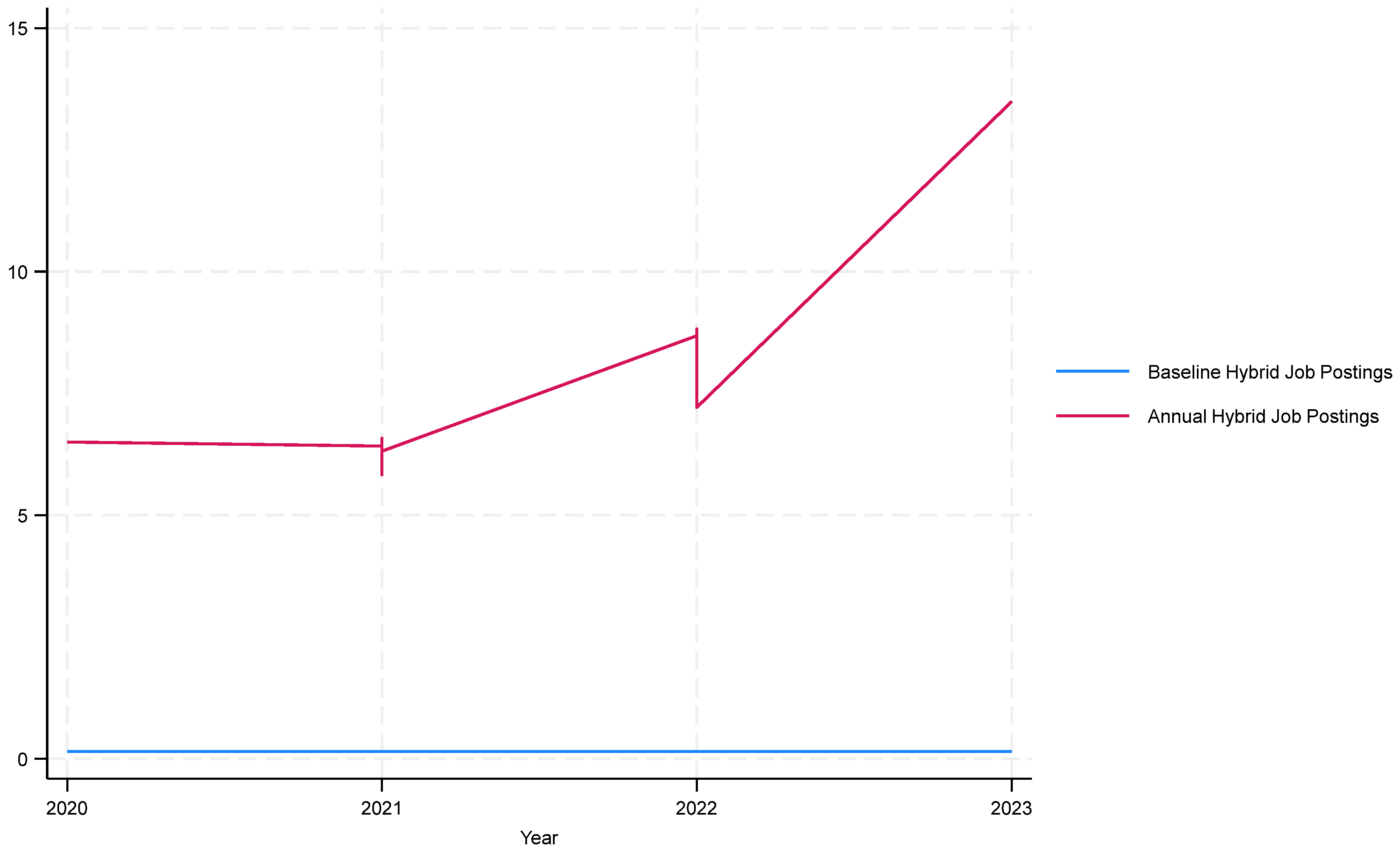
Figure 1, hybrid work adoption among large U.S. firms rose dramatically from less than 1% (blue baseline) pre-pandemic to over 13% (red line) by 2023. However, this increase was not linear. After a sharp rise in 2020, adoption dipped slightly in 2021 before climbing again in 2022. According to the magnitude dimension, one would expect organizational responses to diminish as the magnitude of the external event declines. However, despite the number of COVID-19 cases dropping from 238,964 in 2020 to 143,839 in 2023, firms as a whole did not revert to pre-pandemic work routines. This suggests that factors beyond magnitude are likely to influence firms’ adoption of hybrid work.
Figure 1 also illustrates the influence of the clustering dimension on organizational routines. While COVID-19 began as an episodic event in 2020, it evolved into a continuous one due to viral mutations. Unlike one-time disruptions, continuous events provide repeated opportunities for organizations to process information and adapt (
Cohen & Bacdayan, 1994). This aligns with the theory that continuous events foster clearer cause-and-effect understandings and promote enduring routine changes, such as widespread hybrid work adoption (
Cohen & Bacdayan, 1994).
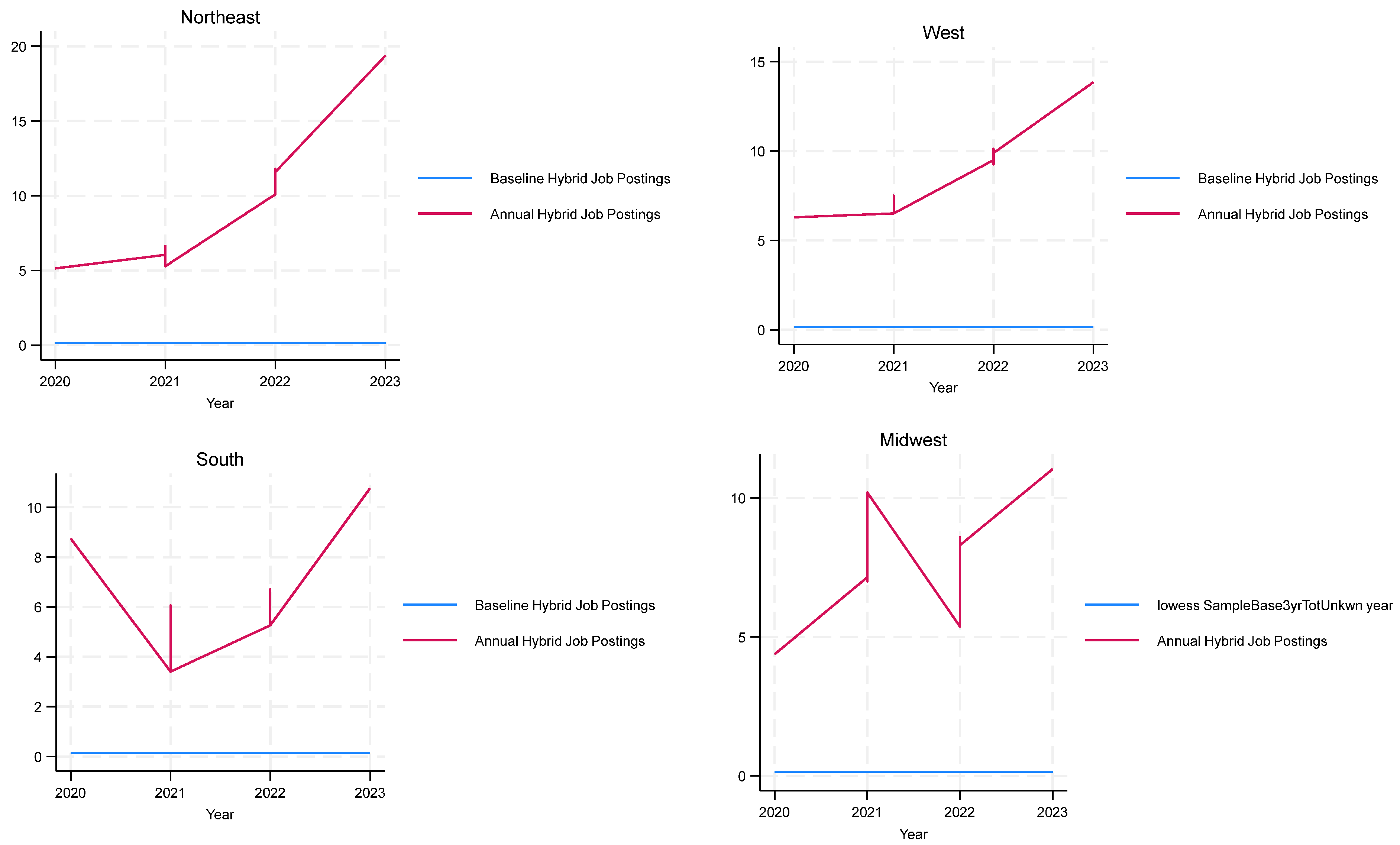
Figure 2 reveals regional variation in hybrid work adoption. Firms in the Northeast had the highest rates (~20% by 2023), followed by the West (~14%). The South and Midwest lagged behind (~11%) and showed higher volatility. These patterns may be understood through the space dimension—the physical and perceptual distance between the event’s origin and impacted entities (
Caner & Madhavan, 2024). For instance, when COVID-19 was first reported to the WHO on 3 January 2020, and later spread to U.S. entry points like San Francisco, New York City, and Los Angeles, proximity played a key role. The first confirmed U.S. case (Washington state, 20 January 2020) further demonstrates this effect.
Figure 2 supports the notion that geographic and institutional distance to external events influences firms’ responses to external events. This aligns with
Minniti et al.’s (
2025) study, which suggests that institutional distance influences the capacity of local public entities and firms to respond to external events. The greater the institutional distance and geographical distance, the less effective the response to external events (
Minniti et al., 2025). Even as the pandemic’s acute phase diminished, particularly after widespread vaccine distribution in 2021, firms in regions with high hybrid work adoption continued to maintain hybrid routines. This persistence suggests that other regional attributes—such as population density, health policies, and sociopolitical norms—reinforced adoption. For instance, the Northeast, which had the highest hybrid work adoption, is also the most densely populated U.S. region, housing 17.2% of the population in 2021 (
Statista, 2025). Greater population density may increase the risk of virus transmission, reinforcing the appeal of hybrid work. Thus, the space dimension’s influence is not only geographical but also shaped by local environmental and institutional contexts. For example, densely populated urban areas face vulnerability during external events, requiring adaptive work arrangements that align with both public health imperatives and the local institutional capacity to respond (
Minniti et al., 2025).
In addition, these regional differences may reflect not only geographical proximity but also institutional and political space. The COVID-19 pandemic became a highly politicized disruption in the US, with substantial variation in the perceived legitimacy of the pandemic response, and in the extent of social reinforcement of public health practices. Consistent with the space dimension, this suggests that space reflects not only geography but also institutional and political distance, which shapes the significance of an external event and the appropriate organizational response. In regions where hybrid work aligned more closely with local norms and policies, it may have been more likely to continue. In regions where such practices are viewed as less necessary or less legitimate, firms may face weaker local support for hybrid work
1.
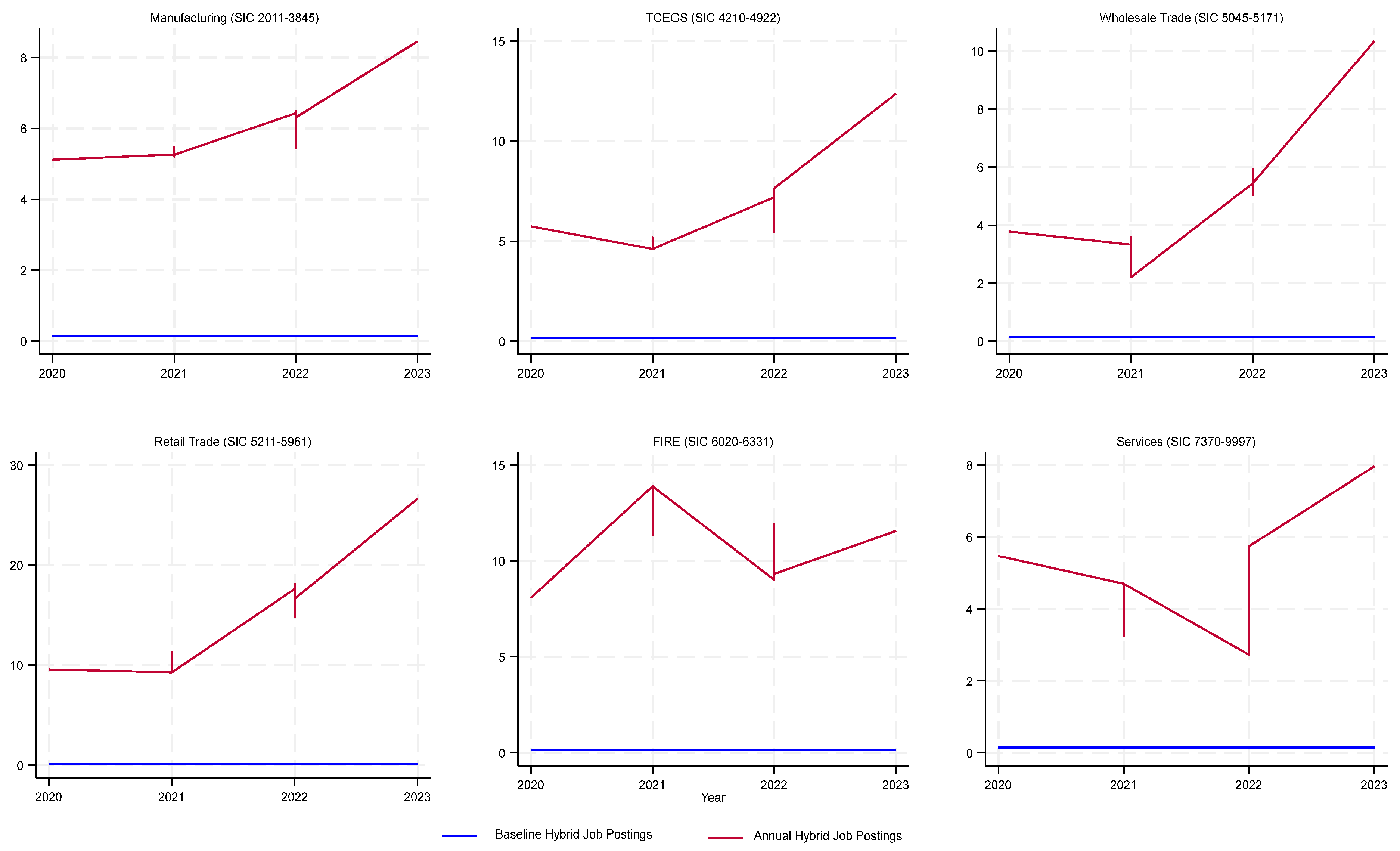
Figure 3 highlights sector-level differences. Retail trade and FIRE were among the earliest adopters of hybrid work. Retail adoption surged later, while FIRE spiked early and then stabilized (~26% and ~14%, respectively, by 2023). In contrast, manufacturing, TCEGS, wholesale trade, and services showed slower but steady increases. These patterns can be explained by the coupling dimension, which considers the degree of interdependence among event elements. Although COVID-19 was a highly coupled event (
Caner & Madhavan, 2024), firms in different industries responded differently due to structural and operational differences, such as the greater customer-facing demands in services compared to manufacturing. However, we discovered an interesting pattern. If the highly coupled nature of COVID-19 alone drove firms’ adoption of hybrid work, we would expect similar patterns across industries. However, the data show otherwise. We propose that the interaction between coupling and sector characteristics better explains this variation. For instance,
McElheran et al. (
2024) found that manufacturing led in early AI adoption (12% extensive-margin rate), while retail and FIRE had lower adoption rates (4% and <6%, respectively), despite FIRE’s high digital maturity. Thus, sector context potentially moderates the effect of coupling on organizational responses.
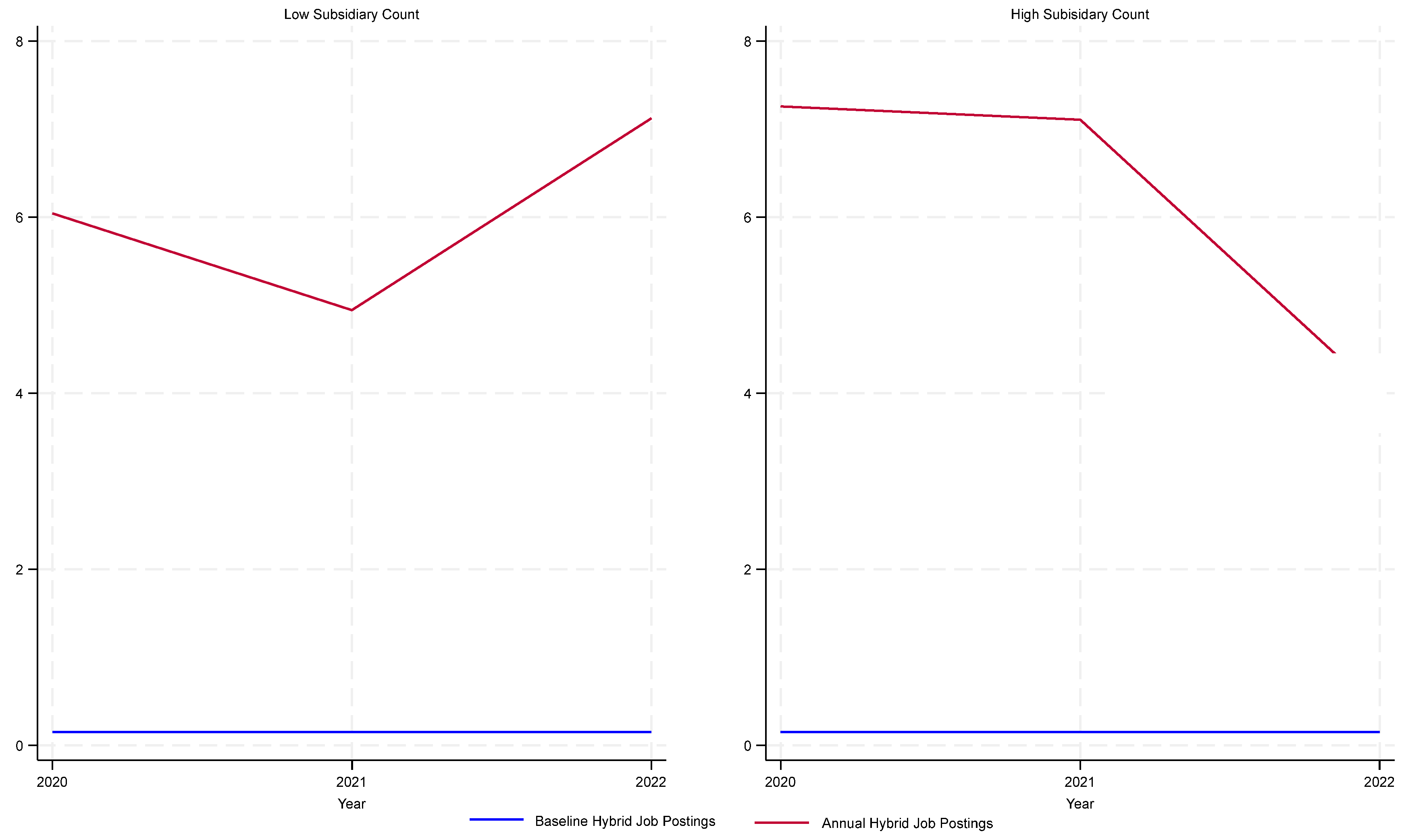
Figure 4 compares firms with high and low mental model complexity (MMC), using the number of subsidiaries as a proxy. Low-MMC firms followed a U-shaped pattern, with a modest decline in hybrid job postings in 2021, followed by a recovery in 2022. In contrast, high-MMC firms maintained relatively high levels of hybrid adoption in 2020 and 2021 but showed a marked retreat in 2022. This pattern suggests that while structural complexity may support early adoption, it can hinder sustained implementation, possibly due to coordination burdens, compliance demands, or evolving strategic priorities.
When sector and region are considered together (
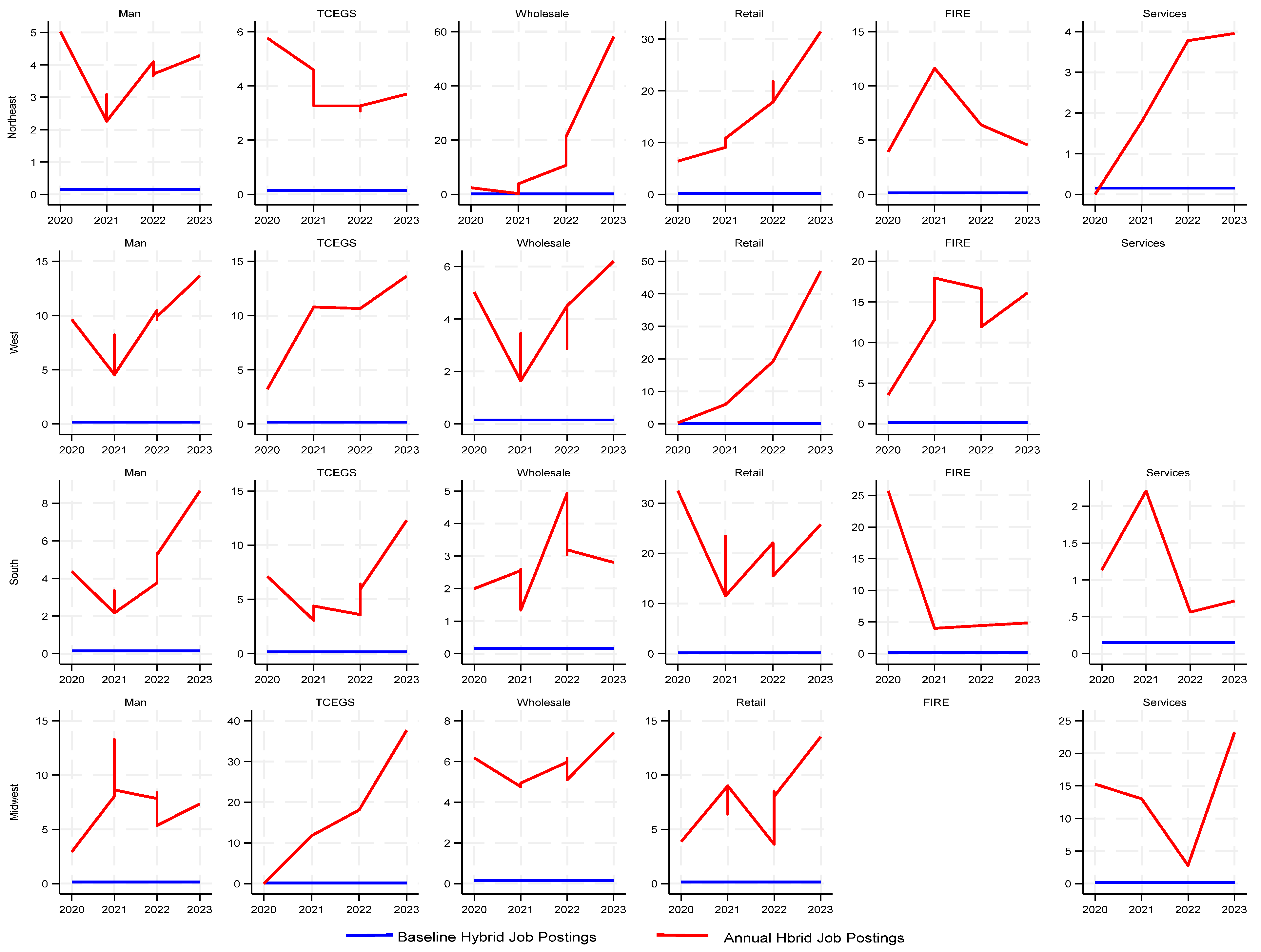
Figure 5), a diverging pattern in hybrid work adoption becomes evident. Across all four U.S. regions, the retail sector showed a notable uptick in hybrid job postings beginning in 2022, with especially strong and consistent growth in the West. In the South, retail postings also rise, but the trend is more erratic, suggesting greater volatility year to year. Manufacturing displays a common pattern across regions: a dip in hybrid postings around 2021—likely reflecting a return to in-person plant operations—followed by recovery in 2022 and 2023, potentially due to hybridization of white-collar roles. FIRE industries show early surges in hybrid postings—peaking around 2021 in the Northeast and West—before declining or stabilizing, indicating a potential period of early experimentation that was later scaled back. Meanwhile, the services sector remains a relatively low adopter of hybrid formats, except in the South, where a decline follows a spike in 2021, and in the Midwest, where hybrid adoption sharply increases again by 2023.
At the regional level, the West stands out as the most consistent adopter, with sustained growth in retail, TCEGS, and manufacturing. The Midwest exhibits a striking post-2021 surge in TCEGS hybrid postings, unmatched by other regions, and maintains a continued upward momentum in retail and services. The South, by contrast, exhibits the most volatility, particularly in retail and wholesale, which may reflect more reactive or uneven policy responses. In the Northeast, a dramatic spike in wholesale hybrid postings in 2022, combined with an earlier peak in FIRE in 2021, suggests a wave of initial experimentation with hybrid models that may have later stabilized or retreated. The spike in wholesale may reflect a shift toward remote management of logistics and supply chain functions, which are more easily decoupled from physical presence.
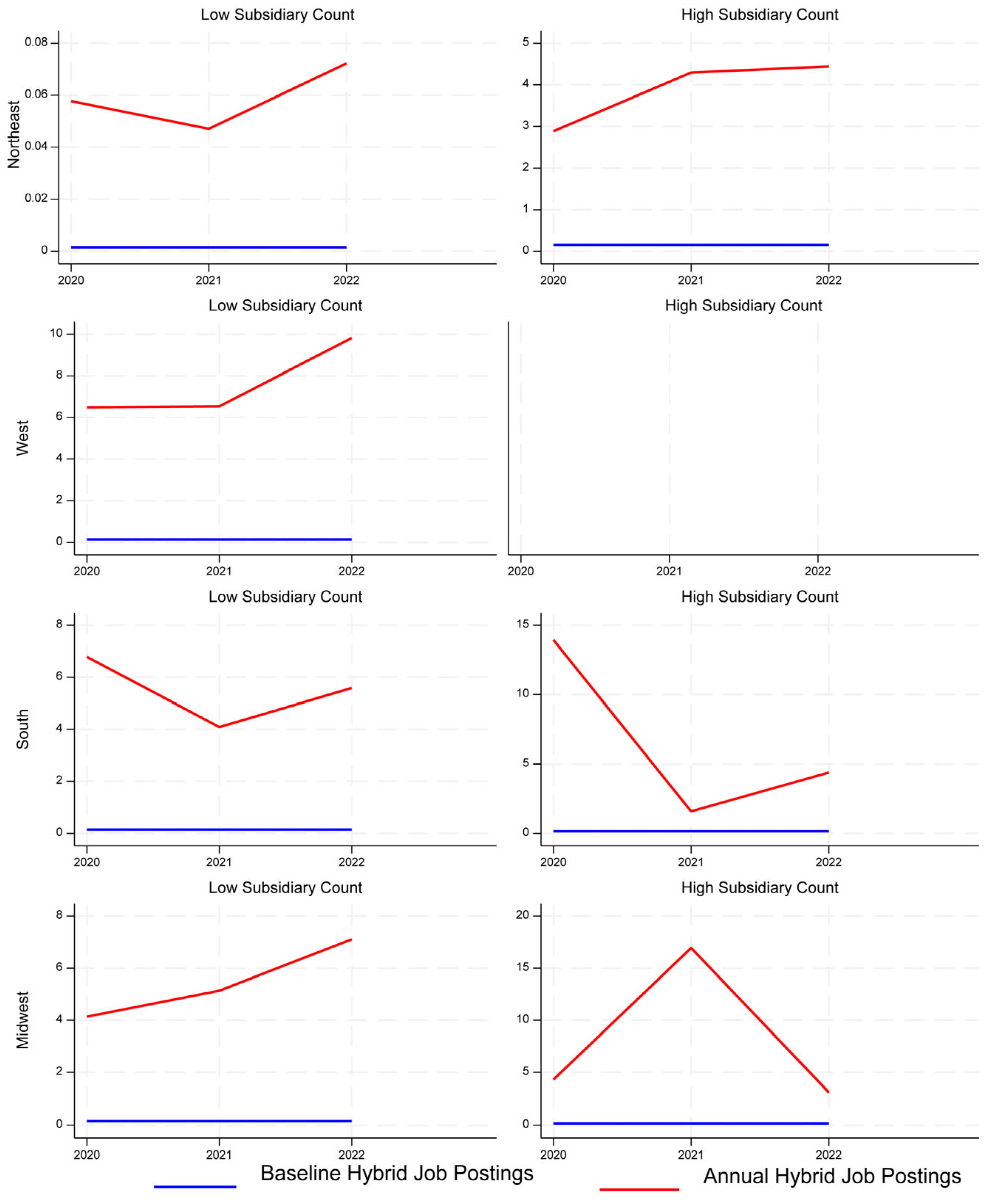
Figure 6 adds further nuance by illustrating how MMC interacts with regional context. High-MMC firms in the Northeast exhibit consistent growth in hybrid postings over time, indicating a sustained commitment to hybrid routines. In contrast, high-MMC firms in the South scale back sharply after early adoption in 2020, with only a modest recovery by 2022. In the Midwest, high-MMC firms showed a spike in 2021, followed by a decline, indicating short-term experimentation rather than sustained change. Among low-MMC firms, those in the West demonstrate steady growth from 2020 to 2022. Similarly, low-MMC firms in the Midwest show an upward trend. In the South, low-MMC firms follow a U-shaped pattern—declining in 2021 and rising again in 2022—while those in the Northeast remain relatively flat. These interaction patterns reinforce the idea that hybrid work adoption is not uniform, but rather highly contingent upon both organizational structure and regional context.
Taken together, these findings suggest that hybrid work strategies varied across regions, industries, and firm-level characteristics. The interplay between internal complexity and external geographic pressures shapes changes in hybrid work. However, we note that it is important to consider the distribution of firms when interpreting these trends. For example, the absence of Fortune 100 firms in the FIRE sector in the Midwest or in the services sector in the West may help explain some observed gaps or anomalies. Ultimately, the variation we document aligns with
Caner and Madhavan’s (
2024) disruption framework, which posits that organizational responses to external disruptive events like the COVID-19 pandemic are shaped not only by the event’s magnitude but also by how firms interpret and process disruptions across dimensions such as space, coupling, and clustering.