Review

Analyzing and Mapping the Leadership Literature and Its Organizational Implications: An Integrative Analysis


1
Department of Management and Information Systems, Manavgat Faculty of Social Sciences and Humanities, Akdeniz University, Manavgat, Antalya 07600, Türkiye
2
Department of Gastronomy and Culinary Arts, Manavgat Faculty of Tourism, Akdeniz University, Antalya 07600, Türkiye
*
Author to whom correspondence should be addressed.
Adm. Sci. 2025, 15(12), 479; https://doi.org/10.3390/admsci15120479
Submission received: 23 September 2025 / Revised: 17 November 2025 / Accepted: 3 December 2025 / Published: 8 December 2025

Abstract

With an emphasis on organizational outcomes and emerging leadership approaches, this review assessed the major contributions of leadership research over the past two decades and explored the evolution of theoretical developments in the field. Following more than twenty years of scholarly attention to leadership models and typologies, the aim of this study is to provide a comprehensive analysis of the literature on leadership theories and their associated organizational variables. An exploratory and complementary research design was adopted to address the gaps left by previous systematic literature reviews. The findings indicate that, when organizational-level constructs are examined in relation to widely studied leadership theories, several dominant frameworks emerge, including transformational, transactional, laissez-faire, ethical, authentic, ambidextrous, and self-leadership. The results suggest that nearly all major organizational constructs have been investigated in connection with leadership development. Variables such as performance, job satisfaction, and personality appear most frequently, whereas terms such as life satisfaction, performance appraisal, and workplace bullying appear less often. Notably, a key finding of this review is the identification of several leadership theories present in the broader literature but absent from the ranking or co-occurrence analysis. These overlooked theories include instrumental leadership, dark leadership, hybrid, digital or e-leadership, and participative leadership.

1. Introduction

Research on effective leadership traits, behaviors, leadership impact, and leadership styles is typically the foundation for leadership theorems. Leadership theory focuses on the traits and actions that people may do to enhance their leadership skills, even though it also explains how and why some people become leaders. In organizational studies, management, and many other related subjects, leadership has been one of the most extensively studied issues. Scholars have examined the concept of leadership from various perspectives (Dansereau et al., 2013, p. 798). So far, many leadership theories have been identified, and many studies have been conducted on most of them. In addition, there are also leadership theories that have received little attention. Researchers have not reached a consensus on which theory is the best (Bennett, 2009; Allio, 2013). Researchers and theorists have analyzed behavior and consulted organizational literature to develop pre-existing leadership theories compatible with the definition of leadership. According to some, conventional leadership theory was created for the industrial era and did not account for the possibility that collaborative, international organizational networks will replace it in the future (Otte, 2015). It has been argued that because of the emergence of a technological digital world, transparency, and the necessity for leaders to lead across various dimensions, present leadership theories are unable to fulfill the demands of today’s organizational needs (Bennis, 2013).
It can be said that the focus of leadership theories, which are accepted as a constantly changing phenomenon, over time shapes the literature accumulation in relation to organizational and managerial concepts. The distinction between traditional and modern leadership practices has become evident in the literature over time. There has been an increasing number of studies investigating how widespread non-traditional leadership practices have become and why leaders choose to ignore the recommended academic teachings of traditional leadership theories. Leadership is a complex phenomenon, and although it has been studied for a long time, there is still no consensus on what it is (Bennett, 2009; Northouse, 2013; Allio, 2013). According to recent study, expectations, significant advancements in technology, and ongoing change have affected contemporary leadership theories. It has been highlighted, therefore, that despite the large corpus of leadership theories that exist today, these theories still need to be updated or modified to be more useful in conquering the difficulties that come with the complexity and globalization of today’s world (Bennis, 2013).
After nearly a century of exploration, leadership research has evolved through several major stages, beginning with trait theory, behavior theory, and situational theory—and has now entered what is commonly referred to as the era of new leadership theory. Rather than representing a single unified framework, new leadership theory serves as an umbrella term encompassing a range of complex and multidimensional approaches to leadership. These include prominent perspectives such as transformational leadership theory, charismatic leadership theory, leader–member exchange (LMX) theory, and follower-centered approaches, among others. Substantial progress has been achieved in the study of modern leadership, providing strong empirical support for the effectiveness of leadership practices. Scholars argue that a systematic review of published studies is now both timely and necessary, as bibliometric analysis can help structure and synthesize the expanding body of leadership knowledge (Batistič et al., 2017; Hama & Mahadi, 2021; Vijayakumar et al., 2018).
A vast and comprehensive body of literature on leadership and leadership theories has emerged over time. This extensive research has stimulated curiosity among scholars and theorists, revealing numerous gaps that warrant further investigation. The aim of this review is to identify issues that previous literature analyses have overlooked and to address these gaps through a bibliometric analysis based on relevant keywords retrieved from the Web of Science (WoS) database, covering the period from 2003 to 2024. Although prior studies have made substantial contributions to the understanding of leadership within specific domains, they often represent only a subset of the broader leadership field and therefore fail to provide a comprehensive overview. One of the primary objectives of this research is to offer readers and researchers a holistic understanding of the current state of leadership scholarship and to highlight the potential for significant yet unexplored areas of inquiry for both practitioners and academics interested in leadership.
The lack of research that fully reveals these gaps serves as the starting point of this study, as scholars have noted uncertainty regarding which leadership-related issues should be prioritized (Carton, 2022). The currently emerging literature on leadership remains fragmented and in need of a comprehensive synthesis. Existing bibliometric studies have attempted to address many of the challenges encountered in previous reviews and meta-analyses of leadership development (Vogel et al., 2020). Building on this foundation, the present review examines the achievements of leadership research over the past two decades to reveal the development and theoretical evolution of new leadership theories. Specifically, this study conducts an in-depth bibliometric analysis of the literature on leadership theories and related organizational variables, which have been central to leadership scholarship for more than twenty years.
Accordingly, this study seeks to address the following research questions:
  • RQ1: Which leadership theories have received the most attention in the leadership literature over the past 20 years?
  • RQ2: Which organizational implications have been the focus of leadership literature?
  • RQ3: Which leadership theories show growth and development in the literature?
These research questions aim to identify the most frequently examined organizational concepts and leadership theories by systematically analyzing the literature from past to present. Addressing these questions will enhance the scientific rigor and reliability of leadership studies by clarifying trends, theoretical progress, and areas requiring further exploration.

2. Literature Review

What Is Known So Far About Leadership Theories?

The environment, culture, context, and demands of the situation have all influenced the contextualization of leadership, which has been used over time in a variety of disciplines, and fields (Giesecke, 2007; Riggs, 2001). Leadership theory examines the qualities and characteristics of a good leader. It details the characteristics, qualities and behaviors required to be an effective leader in accordance with each theory (Dess & Picken, 2000). Leadership theories help explain how leaders use and develop these characteristics. Subsequent theories of leadership shifted their attention from the characteristics that set leaders apart from followers to other variables like skill levels and situational conditions. In recent years, there has been a formalization of leadership theories, making them easier to comprehend, discuss, and use in real-world analysis. While early leadership theories tended to focus on the characteristics and behaviors of successful leaders, later theories began to consider the role of followers and the contextual nature of leadership (Bolden et al., 2003). It has been stated that leadership theories should be stated consistently at the leader level, and leadership theories should be stated consistently at the level of behaviors (Carton, 2022, p. 78). Different titles for the categories created by relevant scholars have emerged because of the categorization of leadership ideas in published studies (Turner & Baker, 2018).
Transactional theory was created to boost business productivity during the industrial revolution. It is a leadership strategy that highlights the need of hierarchy to boost productivity inside a business. These managers value structure highly and utilize their power to impose regulations to motivate employees to give their best work. Employees that meet objectives are rewarded, according to this philosophy. Additionally, the idea assumes that workers must follow management instructions. Using the principle of transactional leadership, managers monitor their staff, rewarding them when they meet goals and disciplining them when they do not.
Max Weber is credited with introducing the theory of transactional leadership in 1947 (McCleskey, 2014). Transactional leadership involves an exchange process between followers and leaders (McCleskey, 2014; Rowold, 2014). Ardichvili and Manderscheid (2008) argued that transactional leadership is the primary management approach between leaders and followers, involving the reciprocal exchange of values and benefits. The introduction of transformational leadership marked the beginning of a new era in leadership research. According to this theory, the relationship between leaders and staff can benefit the organization. Effective leaders inspire employees to exceed their capabilities by developing a vision for team members and motivating them to achieve it. The concept of transformational leadership was first developed by James MacGregor Burns in the 1970s and later expanded upon by Bass in 1985 (Deschamps et al., 2016; Lord et al., 2017). According to Northouse (2013), the main principle of transformational leadership is that it involves transforming organizations. Ejene and Abasilim (2013) conducted a study on the impact of transformational and transactional leadership styles within organizations. According to Judge and Piccolo (2004), it is challenging to distinguish the effect of each leadership style due to their high correlation. Transactional leadership involves a mutual interaction between leaders and followers to meet their respective needs. However, transformational leadership involves interaction between leaders and followers to create a more innovative environment for the benefit of the entire organization (Judge & Piccolo, 2004).
The contingency theory of leadership hypothesis suggests that there is no one correct way to manage support, as the most appropriate strategy for success depends on both internal and external factors. According to probability theory, selecting the right candidate for the right scenario is crucial. Fiedler (1967) developed contingency theory, which posits that successful responses to specific situations require types of leadership. Prindle (2012) also discusses this theory. Conger and Kanungo (1994) noted that effective leadership changed in the 1980s due to changes in the business world. Earlier distinctions between task-oriented and people-oriented leadership, as well as contingency approaches such as Fiedler’s Contingency and Path Goal Theories, were deemed inadequate in addressing specific organizational leadership issues of the 1980s. Due to the rapid globalization of the world, leading large-scale companies and succeeding in change efforts has become increasingly challenging.
Leadership theory research originated in the early nineteenth century with the ‘great man’ leadership model (Kirkpatrick & Locke, 1991), which suggested that leadership qualities were inherited (Kirkpatrick & Locke, 1991, p. 48). The Great Man Theory is one of the earliest theories on leadership, assuming that these qualities are innate, indicating that leaders are born, not created, and cannot be learned (Allio, 2013). Leadership trait theory expands on the Great Man theory, positing that effective leaders possess specific personality and behavioral characteristics. These qualities enable them to lead effectively in various situations. According to trait theorists, leadership traits are innate and cannot be acquired through education or training (Northouse, 2013).
Based on behaviorists theory, a person’s leadership abilities are believed to be shaped by their environment. Effective management is influenced by various learning abilities. Unlike the leadership model, the behavioral theory posits that leaders are not born but rather trained and developed. Behavioral theories of leadership place significant emphasis on the pacesetter’s behaviors, suggesting that observing a leader’s behavior is the best indicator of their potential success. Trait theory and behavioral theory differ in their focus. While trait theory emphasizes specific characteristics of an individual, behavioral theory concentrates on the actions of the individual (Gupta & Singh, 2013).
The situational leadership theory, developed by Hersey and Blanchard in 1969, assumes that a leader can modify the behaviors of their followers by first assessing the readiness of the employees and then adapting their behavior to suit them. The theory was studied by the researcher due to its accountability of both leaders and employees in business environments. Often used in conjunction with other leadership theories, the situational leadership theory provides direction and encourages participation, affiliation, and support (Hersey & Blanchard, 1977).
The functional theory of leadership emphasizes the management of employment or organization, rather than the formal appointment of a leader. The functional leadership approach supports the power to get things done through the behavior of people, rather than relying on a single individual. Identifying common elements that could predict or define potential charismatic leadership is a difficult task for researchers (Grabo & Van Vugt, 2016). The autocratic leader makes decisions without involving subordinates, while the laissez-faire leader takes no real leadership role other than assuming the position and allows their subordinates to decide. In contrast, the democratic leader reaches out to their subordinates and decides after considering their input. According to Breevaart and Zacher (2019), laissez-faire leadership should not be considered true leadership due to its characteristics of indifference and neglect, even if performed by someone with the formal title of leader.
The philosophy of authentic leadership prioritizes sincere performance, introspection, and adhering to core values and convictions. Genuine leaders generate confidence and uplift others via their morality and openness. The five traits that George highlighted in 2003 are included in the authentic leadership theory: relationships and commitment; self-discipline and consistency; heart and compassion; beliefs and behaviors; and purpose and passion (Sisselman-Borgia & Torino, 2005). According to Day et al. (2014), developing authentic leadership is a more involved process that is fundamentally individualized and based on human capital. To illustrate the similarities and distinctive qualities of authentic leadership theory as well as the organizational and environmental factors that have sparked interest in the study of authentic leadership, Avolio and Gardner (2005) compared it with transformational, charismatic, servant, and spiritual leadership perspectives.
The servant leadership theory prioritizes the needs of customers over personal interests. It focuses on serving and supporting team members, maintaining department quantity, and promoting personal growth and development. Servant leadership has a moral perspective that considers the welfare of others and the interests of followers (Gregoire & Arendt, 2014). Servant leadership theory involves the accumulation and use of power by a person in a leadership position. The leader shares power and prioritizes the needs of others by helping them develop and perform as effectively as possible (Greenleaf, 1977). Servant leadership begins with the natural feeling of wanting to serve first. It is a conscious choice that drives a person to desire to lead. The servant first ensures that they serve the highest priority needs of others. The concept of servant leadership has gained popularity in recent years (Sendjaya & Sarros, 2002). Many researchers consider servant leadership a valid organizational theory (R. F. Russell & Stone, 2002) with great potential for theoretical and practical development.
The literature currently in publication contains numerous systematic analyses of research on leadership and leadership behaviors. Several studies have been conducted to gain a thorough understanding of pertinent ideas and research on leadership development. These studies offer theoretical and empirical insights that provide important information on the longitudinal nature of leadership development (Day et al., 2014; Abdullah, 2021; Ashiq et al., 2023; Dinibutun, 2020). Day et al. (2014) conducted a review of articles and special issues that have contributed to scholarly advances since the inception of The Leadership Quarterly. The review highlights areas where additional focus is needed to establish a stronger, evidence-based foundation for leadership development and feedback processes.
Megheirkouni and Mejheirkouni (2020) carried out a review of the theoretical and empirical literature on leadership development published in the Journal of Management Development since the 2000s. Their research confirmed that leadership theories form the basis of leadership development theories. They also suggested that leadership and management development theories are interdependent and cannot be viewed in isolation from the challenges faced by organizations. This text presents a comprehensive review of the literature on leadership development, identifying the key challenges that organizations face in the twenty-first century. It also examines current leadership theories that can be used for leadership development. The following leadership theories will be discussed: traits approach, skills approach, leader–member exchange (LMX) theory, transformational leadership, servant leadership, authentic leadership, ethical leadership, team leadership, and self-leadership (Megheirkouni & Mejheirkouni, 2020, p. 98).
Dinibutun’s (2020) literature analysis aims to provide a clear understanding of leadership and its theories to create the most effective type of leadership. The article offers a comprehensive review of the literature, research, and theoretical framework of leadership. It emphasizes the need to fully understand the leadership approaches mentioned to ensure individual and organizational effectiveness and efficiency. In a separate literature review, Ashiq et al. (2023) carried out a bibliometric review of leadership publications to examine the literature on library leaders. Abdullah (2021) proposed that the bibliometric review approach has the potential to make significant contributions to the current research on leadership excellence in order to present a coherent overview of the leadership excellence research trend that can encourage readers and researchers to analyze the information for their future studies and to categorize the most productive countries in leadership literature, authors, journals, institutions and fields of study (Abdullah, 2021).
Carton (2022) compiled empirical research on leadership conducted since 2010, including the study of leaders and leadership as a cause or effect. Hama and Mahadi (2021) evaluated global research trends on leadership based on publication output, productive authorship, citations, and affiliated countries using VOSviewer (version 1.6.20). Vijayakumar et al. (2018) conducted a Scopus-indexed study on research trends in global leadership over a 45-year period from 1971 to 2016. Similarly, Tal and Gordon (2016) conducted a bibliometric review of leadership articles to investigate emerging trends in general leadership studies. Batistič et al. (2017) conducted research on a similar path from 1980 to 2013, using WoS as a data mining source. Turner and Baker (2018) aimed to define the life cycle of leadership theory from the perspectives of human resources development and leadership literature. Using five-year time periods, Hiller et al. (2011) determined the most prevalent leadership theories across a 25-year span for their review article on leadership theories. According to Hiller et al. (2011, p. 1164), the theories that have been studied the most include LMX, trait, behavioral, transformational, and strategic. After examining empirical and theoretical studies that comprised three or more leadership theories, Meuser et al. (2016, p. 1383) found six focal leadership structures: The text already satisfies the required requirements, and nothing was altered.
In their 2010 review of leadership research from 2000 to 2009, Gardner et al. (2010) categorized leadership theories into eight sections: trait theories, behavioral theories, contingency theories, multiple-level approaches, leadership and information processing, neo-charismatic approaches, other prominent approaches (power), and other approaches and new directions. When reviewing leadership theories for issues related to levels of analysis, Yammarino et al. (2005) identified 17 leadership categories. Dionne et al. (2014) provided additional extensive categorizations. According to Dionne et al. (2014), servant leadership falls under the category of follower-centered theories, while Gardner et al. (2010) categorize it under new orientations such as ethical, servant, spiritual, and authentic leadership. However, Dionne et al. (2014) defines collectivist leadership theories as including shared leadership, distributed leadership, participatory leadership, network leadership, complexity leadership, collective leadership, entrepreneurial leadership, complex leadership, team leadership, and empowering leadership.
As the twenty-first century advances, leadership scholarship has expanded to address the growing complexity, fluidity, and technological embeddedness of contemporary work environments. In addition to well-established perspectives, new theoretical lenses—such as instrumental leadership, process-oriented models, hybrid leadership, and global leadership—have gained prominence for their ability to capture emerging organizational realities. These frameworks collectively emphasize that effective leadership now requires not only motivating followers but also interpreting complex environments, coordinating dispersed resources, and aligning organizational efforts amid rapid change. Within this evolving landscape, hybrid leadership has become increasingly salient due to the widespread adoption of hybrid work arrangements, where employees operate across both physical and digital spaces. Hybrid leaders must cultivate collaboration and engagement across geographically dispersed teams by effectively leveraging information and communication technologies (ICTs). Consequently, hybrid leadership is now viewed as a critical competency for navigating the challenges and opportunities introduced by flexible, technology-mediated work structures. Leaders in hybrid contexts must balance autonomy and coordination, sustain team cohesion despite reduced physical interaction, and ensure equitable participation across virtual and in-person settings. The expanding attention to hybrid leadership complements other contemporary theories—such as instrumental leadership, which integrates strategic and pragmatic elements with Bass’s (1985) full-range leadership model (Antonakis & House, 2014). Together, these emerging perspectives reflect a broader shift toward leadership models that account for contextual dynamism, distributed collaboration, and the increasing centrality of digital technologies in organizational life. They highlight a new leadership imperative: to guide organizations through environments characterized by uncertainty, global interdependence, and evolving modes of work.

3. Methodological Approach

3.1. Selection Procedures

This bibliometric study is part of an integrative literature review, explaining how the search and selection criteria are determined during the selection phase (Chavriya et al., 2023). The findings and results are integrated with existing literature to provide a comprehensive understanding of the topic (Chavriya et al., 2023, p. 18). According to Elsbach and van Knippenberg (2020, p. 1277), integrative literature reviews generate new insights through the critical analysis and synthesis of existing studies, offering a representative overview of a research field. Following the integrative review guidelines proposed by Snyder (2019), this bibliometric analysis uses data obtained from the Web of Science database covering the years 2003 to 2024. The last twenty years have been incorporated into the study due to the extensive corpus of literature on leadership that has accumulated over this period. The Web of Science is recognized as a reliable and internationally accepted database that enhances the quality and credibility of academic research (Clarivate, 2023).
This study aims to strengthen research reliability by applying an integrative approach and adopting comprehensive perspectives. Integrative methods involve combining multiple research processes within a theoretical and practical framework, ensuring consistency and coherence across methods. This article specifically conducts an integrative review of the managerial and organizational aspects of leadership theories. Such reviews consider a topic from multiple research design and methodological perspectives to offer a more complete understanding of the phenomenon being examined (see Whittemore & Knafl, 2005; Gough et al., 2012; Torraco, 2016; Soares et al., 2014; Kysh, 2013; Sharma et al., 2023).
In an integrative review, the Preferred Reporting Items for Systematic Reviews and Meta-Analyses (PRISMA) guidelines clarify the criteria for including and excluding studies during the search and selection stages (Moher et al., 2009). These guidelines enhance transparency, consistency, and methodological rigor, improving the reproducibility and credibility of findings while reducing bias (Page et al., 2021). As noted by Zupic and Čater (2015), bibliometric studies help researchers identify key works and objectively map the structure of a research field. The bibliometric research process involved several stages: (1) defining the research problem, (2) reviewing relevant literature, (3) determining the database, search terms, and inclusion/exclusion criteria, (4) selecting the bibliometric method and software, (5) collecting and organizing data, (6) uploading and analyzing data in the software, and (7) visualizing and reporting the results with related interpretations and recommendations. The PRISMA steps were followed to ensure transparency and consistency in the inclusion criteria (Moher et al., 2009).

3.2. Data Collection

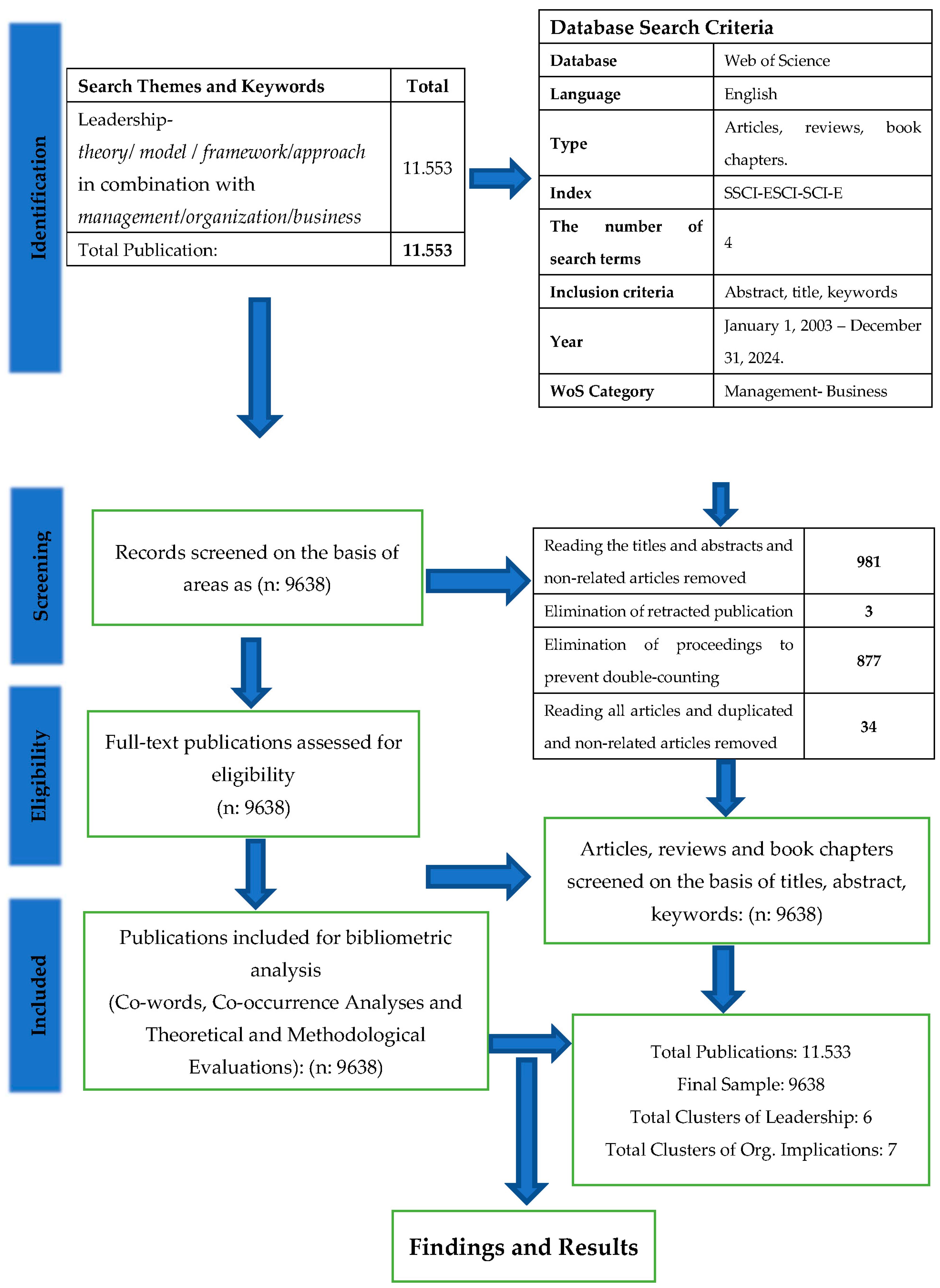
The search strings were intentionally developed to capture a broad range of relevant literature and were not combined into a single unified query; instead, each term was examined separately to determine its individual retrieval volume. The inclusion criteria were established as follows: document types included articles, reviews, and book chapters; the language was restricted to English; and the publication period covered 2003–2024. The search was conducted within the SCI-Expanded, SSCI, A&HCI, and ESCI indices. Limiting the sample to English-language publications ensured consistency, comparability, and alignment with globally accepted academic standards. The literature search employed the keywords “leadership theory/model/framework/approach” in combination with “management/organization/business” using Boolean operators. The initial search yielded 11,533 records, as presented in Figure 1 and Table 1. After filtering the results to include only English-language journal articles classified under the subject areas of Business and Management, the dataset was reduced to 9638 publications (see Figure 1).

3.3. Bibliometric Analysis and Data Visualization

After all files were consolidated into a single dataset, the analysis was conducted using the R and Biblioshiny interface, the Bibliometrix package, and VOSviewer (version 1.6.18). VOSviewer is a software application designed to construct and visualize bibliometric networks based on co-word relations, co-occurrence patterns, word clouds, and clustering techniques. These networks may represent journals, authors, or individual publications. In addition, VOSviewer incorporates text-mining capabilities that facilitate the generation and interpretation of bibliometric maps.
This review adopts an exploratory research approach and employs bibliometric analysis combined with scientific mapping, a methodology that has gained increasing prominence due to its ability to examine academic output quantitatively. The emphasis on quantitative indicators enables the systematic assessment of scientific publications within clearly defined statistical parameters. The complementary use of VOSviewer (version 1.6.20) and Bibliometrix (version 5.2.0) strengthened the robustness of the findings by integrating visual and analytical perspectives. VOSviewer provides intuitive visualizations of co-authorship networks, keyword co-occurrence structures, and bibliographic coupling through interactive graphical interfaces. In contrast, Bibliometrix offers advanced analytical functions, including classical bibliometric indicators, temporal trend assessments, and comprehensive structured outputs. These outputs include conceptual, intellectual, and social structure maps that illuminate interdisciplinary linkages within the knowledge domain (Taques, 2025).
Through science mapping, this study explores the structural patterns and developmental dynamics of literature concerning organizational variables and leadership theories. Bibliometric analyses were conducted using the Bibliometrix package in R (version 5.2.0) and VOSviewer (version 1.6.20), with all data extracted from the Web of Science (WoS), an authoritative and widely utilized research database (Birkle et al., 2020). Metadata were processed and visualized using R, chosen for its open-source environment and strong visualization capabilities (Aria & Cuccurullo, 2017), in conjunction with VOSviewer.

4. Bibliometric Findings

This study began with the definition of research terms and the analysis of their status in the literature. Research terms are synonymous and closely related to the theme in the literature of leadership theories related to management and business. All data information obtained from the database using research terms is presented in Table 1.
According to Table 1, the primary information contained in the research data comprises the annual growth rate in the field over the past two decades and detailed publication statistics. The annual document production rate demonstrates a slight negative growth of −0.16%, which may reflect a gradual decline in scholarly interest in the topic. The analysis further indicates that most studies are produced through collaborative authorship, with an average of 2.7 authors per document and an international co-authorship rate of 32.68%. A total of 1999 publications were authored by a single researcher. In terms of document type, journal articles constitute the largest category, with 8798 records. Overall, the evaluation of the research data suggests that it possesses the scope and characteristics necessary to yield meaningful and reliable analytical results.

4.1. Word Cloud Analysis

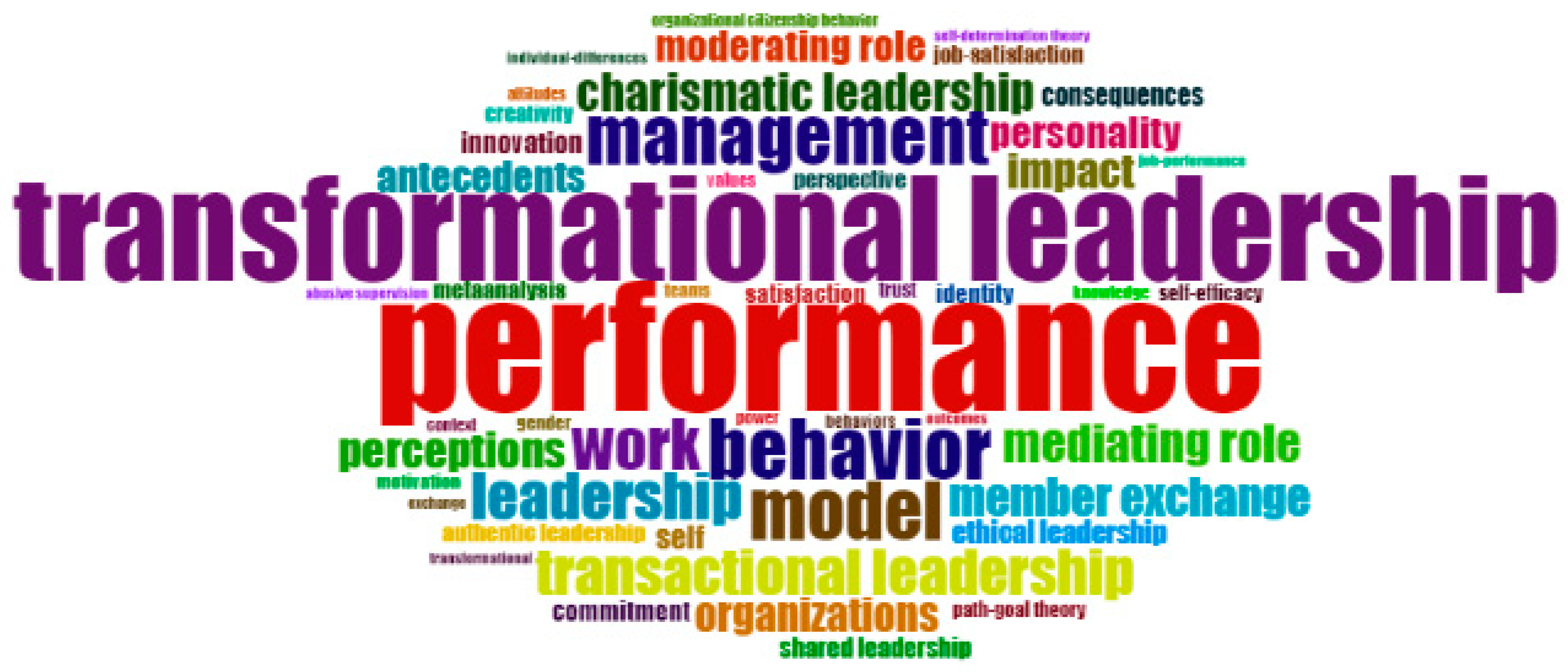
According to R’s word cloud analysis of the Bibliometrix package, Figure 2 shows word cloud visually.
According to Figure 2, the purpose of employing a word cloud in this study is to identify and visualize the most frequently occurring research terms, thereby indicating the areas where most of the scholarly attention has been concentrated. The word cloud, also referred to as a tag cloud, transforms textual data into single-word visual representations, in which the size, color, and spatial arrangement of each term reflect its relative prominence within the dataset (Depaolo & Wilkinson, 2014). In this visualization, the larger and more centrally positioned words signify topics that have attracted substantial research interest, whereas smaller words denote emerging themes or underexplored areas that offer potential directions for future inquiry. The analysis reveals that the most dominant terms include performance, transformational leadership, work behavior, and transactional leadership. These terms indicate the core focus areas in the existing body of literature. In contrast, smaller and less prominent terms—such as charismatic leadership, leader–member exchange, personality, job satisfaction, ethical leadership, commitment, shared leadership, innovation, and creativity—represent secondary or developing research themes that warrant further investigation (Mulay et al., 2020). Importantly, a word cloud not only conveys term frequency but also provides insight into conceptual relationships and thematic centrality within a body of text (Atenstaedt, 2012). In this context, the visualization underscores that transformational leadership and performance have been among the most extensively studied topics in the field of leadership research over the past five decades. Furthermore, transformational leadership has been explored as a predictive construct in relation to other leadership theories, such as Leader–Member Exchange (LMX), thereby reinforcing its theoretical significance and empirical relevance within leadership studies (Keskes et al., 2018).

4.2. Co-Occurrences of Research Terms

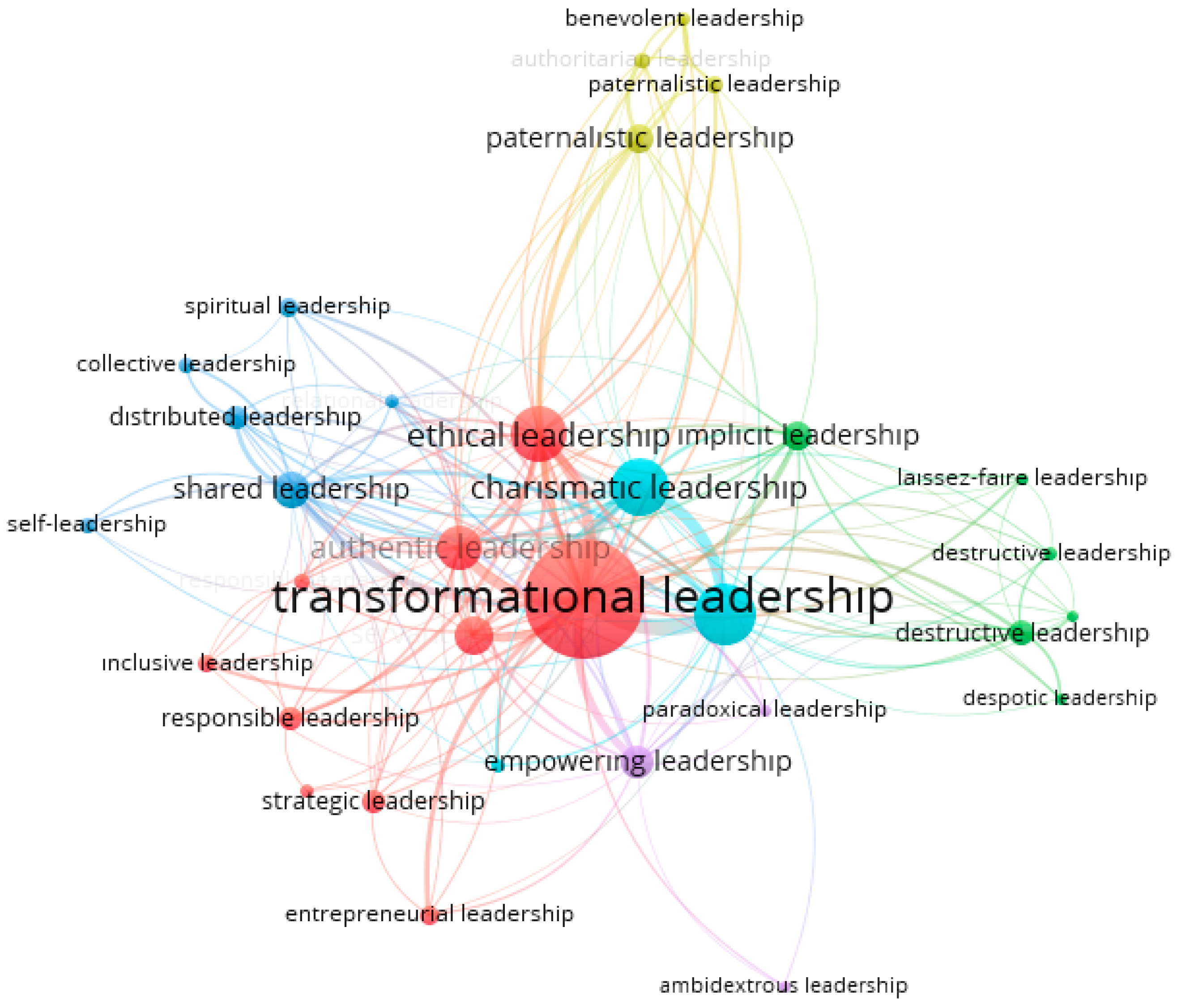
Based on the co-occurrence analysis presented in Figure 3, a synthesis of keywords was conducted to enhance the comprehension of the dataset. Co-occurrence analysis is a bibliometric technique employed to map the intellectual structure of a research field by identifying relationships among keywords. Over the past two decades, this method has evolved substantially and has become a widely adopted approach in bibliometric studies. It entails quantifying the frequency with which terms appear together within a defined aggregation unit, thereby emphasizing their co-occurrence relationships. The data are generally represented in a matrix format, with the rows and columns denoting the joint occurrence of keywords across publications. Through this process, the most frequently utilized keywords are identified, revealing the dominant subjects and research trends within the field. The primary themes addressed in the analyzed articles were determined through keyword analysis and thematic clustering. In this study, a minimum occurrence threshold of five was established. Of the 28,258 total keywords identified, 3371 met this criterion, resulting in the formation of seven clusters.
Table 2 presents the ten most frequently occurring keywords. The analysis proceeded in two stages. In the first stage, various leadership theories represented in the dataset were examined to determine which have received substantial scholarly attention and which remain underrepresented in the literature. This stage provided a comprehensive, unbiased overview of leadership theory research, thereby facilitating the identification of theoretical gaps. In the second stage, the organizational concepts and themes most frequently associated with leadership theories were analyzed.
Previous research has also identified the emergence of new or modified leadership theories operating at hierarchical or multilevel structures (Hiller et al., 2011; Dionne et al., 2014). Moreover, recent scholarly efforts have sought to extend leadership theory into networked contexts, wherein leadership emerges through shared or distributed mechanisms. The present study contributes to this growing body of literature by examining the leadership theories most prominently represented in existing research and by offering insights into their developmental trajectories and potential directions for future theoretical advancement.
According to Figure 3, studies focusing on leadership theories within the field of management and business most frequently emphasize theories exhibiting intermediate-level formations. The terms with the highest frequency of occurrence correspond to the topics that have been most extensively examined in the existing literature. A comprehensive list of the most commonly occurring leadership theories is presented in Table 2.
As illustrated in Figure 3 and summarized in Table 2, six distinct clusters of leadership theories were identified, the detailed composition of which is presented in Table 3. Table 2 enumerates the leadership theories most frequently cited in the scholarly literature, organized according to their relative prevalence. Among these, transformational leadership theory emerges as the most prominent by a substantial margin, reflecting its dominant position within the field. It is followed by transactional, charismatic, ethical, authentic, and servant leadership theories, each of which has attracted significant academic attention. In contrast, paradoxical, ambidextrous and global leadership theories appear less frequently in the literature, indicating a more limited scope of scholarly engagement or relatively recent conceptual development.
The transformational, transactional, and charismatic leadership theories are recognized as complex, multi-dimensional, and multi-source frameworks that have profoundly influenced the evolution of contemporary leadership research. Collectively, these theories constitute the conceptual foundation of the “new leadership theory” paradigm, which emphasizes the enhancement of leadership effectiveness through the exploration of leader–follower dynamics, motivational mechanisms, and organizational outcomes. Research grounded in this paradigm has achieved considerable theoretical and empirical success, contributing to a more nuanced understanding of leadership behavior and its impact across diverse contexts.
The interrelationships and conceptual linkages among these leadership theories can be more clearly discerned through the clusters they form. The clustering process reveals how leadership theories tend to coalesce based on shared constructions, complementary dimensions, and overlapping theoretical assumptions. Accordingly, the six clusters identified in this study reflect not only thematic proximity but also the evolution of thought within the broader leadership discourse. The specific configurations and compositions of these clusters are delineated in Table 3, providing insight into the intellectual structure and interconnectivity of leadership theory development.
Summary of leadership theory clusters; recent analyses of leadership theory clusters (Table 3; Figure 3) reveal the breadth and evolution of leadership research. The first cluster, which contains the greatest number of terms, centers on transformational leadership, while the sixth, with the fewest terms, focuses on servant leadership. Despite being introduced more than five decades ago, transformational leadership remains the most extensively studied and influential theory in the leadership field (Dinh et al., 2014). Its continued prominence reflects its relevance to modern organizational challenges and its potential to generate more sustainable results than traditional management development programs (Megheirkouni & Mejheirkouni, 2020). Bass’s (1985) full-range model of transformational leadership, later formalized and empirically tested across disciplines (Antonakis & House, 2014), continues to shape both academic inquiry and leadership practice. Nevertheless, some scholars have questioned its conceptual clarity and even called for its abolition (van Knippenberg & Sitkin, 2013; Turner & Baker, 2018). Transformational and transactional leadership have also been linked to adult developmental theory and progressive skill acquisition (C. J. Russell & Kuhnert, 1992).
Closely related to transformational leadership, charismatic leadership continues to attract substantial scholarly interest, particularly in relation to leadership development (Day, 2000; Dinh et al., 2014). In this review, charismatic leadership ranks third in prevalence, followed by ethical leadership, which ranked fourth with 361 co-occurrences. Ethical leadership has gained recognition in both business ethics and leadership development literature, although additional research is needed to clarify its integration with other leadership paradigms.
Authentic leadership is among the most recent theoretical developments, emphasizing values, moral integrity, and behavioral consistency (Day et al., 2014). It has been examined as a positive predictor of both leader effectiveness and moral outcomes (Vogel et al., 2020). Servant leadership, which emphasizes altruism and serving others (Spears, 2002), remains under conceptual development but continues to integrate with related theories such as transformational, responsible, and authentic leadership (Carter & Baghurst, 2014). The Leadership Quarterly’s (2005) special issue on authentic leadership marked a turning point in balancing practice-based leadership development with theory-driven scholarship.
Over the past decade, shared leadership has also gained traction as a follower-centered approach emphasizing collaborative influence rather than hierarchical control (Dinh et al., 2014; Lord et al., 2017). Similarly, empowering leadership—which involves granting employees autonomy, discretion, and decision-making power—has become increasingly important in dynamic organizational settings (Albrecht & Andreetta, 2011; Liu, 2015). These developments indicate a broader academic shift from leader-centric to relational and participatory conceptions of leadership.
Another key area of inquiry is paternalistic leadership, which blends authoritarian control with benevolent care and moral guidance (Aycan, 2006). This leadership style, often observed in collectivist cultures, aligns with autocratic and supportive leadership theories and reflects an emphasis on familial or moral dimensions of authority (Pearce, 2005). However, debate continues regarding the authenticity of leaders’ benevolence and the potential instrumental motives behind such behavior.
The second cluster of theories signals the growing importance of emerging leadership paradigms and the relative decline of traditional models (Gardner et al., 2010). Among these, implicit leadership theory—derived from cognitive psychology—conceptualizes leadership as a set of internal schemas used by individuals to identify effective leaders (Lord et al., 1984; Lu et al., 2008; Epitropaki et al., 2013). This perspective highlights how perceptions and expectations shape leadership judgments. In contrast, destructive leadership, examined in The Leadership Quarterly (2007) and SIOP conferences (2008, 2009), focuses on harmful leadership behaviors that negatively impact organizations and followers (Krasikova et al., 2013).
Responsible leadership, first formalized by Pless and Maak (2011), has emerged as an integrative framework that bridges theoretical gaps and responds to the practical challenges faced by contemporary leaders. Similarly, strategic leadership links leadership behavior with organizational strategy by incorporating insights from multiple styles, including transformational, visionary, adaptive, and ethical leadership (Bass, 1985; Waldman et al., 1990; Crossan et al., 2008). It emphasizes the importance of vision setting, capability utilization, ethical culture, and long-term organizational balance (Ireland & Hitt, 1999; Hagen et al., 1998).
Entrepreneurial leadership applies leadership principles to entrepreneurial contexts characterized by uncertainty and competition (Carden & Callahan, 2007). Its theoretical development has been slow, though it holds significant potential for fostering innovation. Similarly, spiritual leadership centers on vision, altruistic love, and perseverance, aligning leadership practice with intrinsic motivation and purpose (Fry, 2003). Inclusive leadership—which promotes participation and recognition of all team members—remains underexplored, while self-leadership has gained empirical momentum but still faces conceptual ambiguities.
The rise of relational and collective leadership reflects a broader shift from individualistic to pluralistic models (Mehr, 2019; Clarke, 2018; Denis et al., 2012). Relational leadership, described as an umbrella concept, views leadership as an ongoing social process embedded in relationships rather than as a function of individual traits or roles. Collective leadership studies further advocate for distributed influence, although conceptual distinctions among collective, collaborative, and integrative leadership remain unclear.
Several negative or paradoxical leadership theories have also gained scholarly attention. Laissez-faire leadership, traditionally viewed as ineffective, has been found to yield limited positive outcomes in certain contexts (J. Zhang et al., 2023), though it generally correlates with negative employee effects (Bass & Avolio, 1993; Hinkin & Schriesheim, 2008; Skogstad et al., 2014; Hu et al., 2022). Despotic leadership, characterized by authoritarian and exploitative behavior, is considered among the most damaging leadership styles (Tepper, 2000; Schmidt et al., 2018). Paradoxical leadership, which integrates seemingly contradictory yet complementary behaviors to balance organizational and individual needs, continues to gain interest but suffers from conceptual overlap with other constructs and inconsistent findings (Y. Zhang et al., 2015; Hoch et al., 2018; Lee et al., 2023). Meanwhile, ambidextrous leadership emphasizes leaders’ capacity to alternate between exploration and exploitation behaviors to foster innovation (Rosing et al., 2011).
Finally, global leadership has emerged as a key field, emphasizing the adaptation of leadership styles to diverse cultural contexts and globalized environments (Rosing et al., 2011). Research has highlighted the importance of understanding leadership as both a cultural construct and a locally contingent process (Steers et al., 2012). Despite its growing relevance, the global leadership field remains relatively small and underdeveloped (Mendenhall et al., 2012). Ongoing theoretical refinement seeks to integrate cross-cultural perspectives and contextual expectations into a more unified framework (Turner & Baker, 2018).
Overall, the clustering of leadership theories demonstrates the field’s growing complexity and diversification. Established theories such as transformational, transactional, and charismatic leadership continue to dominate empirical research, while newer frameworks—including authentic, responsible, and relational leadership—reflect a paradigm shift toward ethical, collective, and participatory models. Concurrently, emerging theories such as paradoxical, ambidextrous, and global leadership underscore the need for adaptive and context-sensitive approaches suited to the demands of modern organizations.
This clustering analysis highlights that while leadership theory has evolved from hierarchical and trait-based perspectives toward more dynamic, relational, and integrative models, significant conceptual overlap persists. Future research must focus on synthesizing these perspectives and empirically testing their interactions to develop a more unified and contextual adaptable understanding of leadership.

4.3. Organizational Implications in Leadership Theory Literature

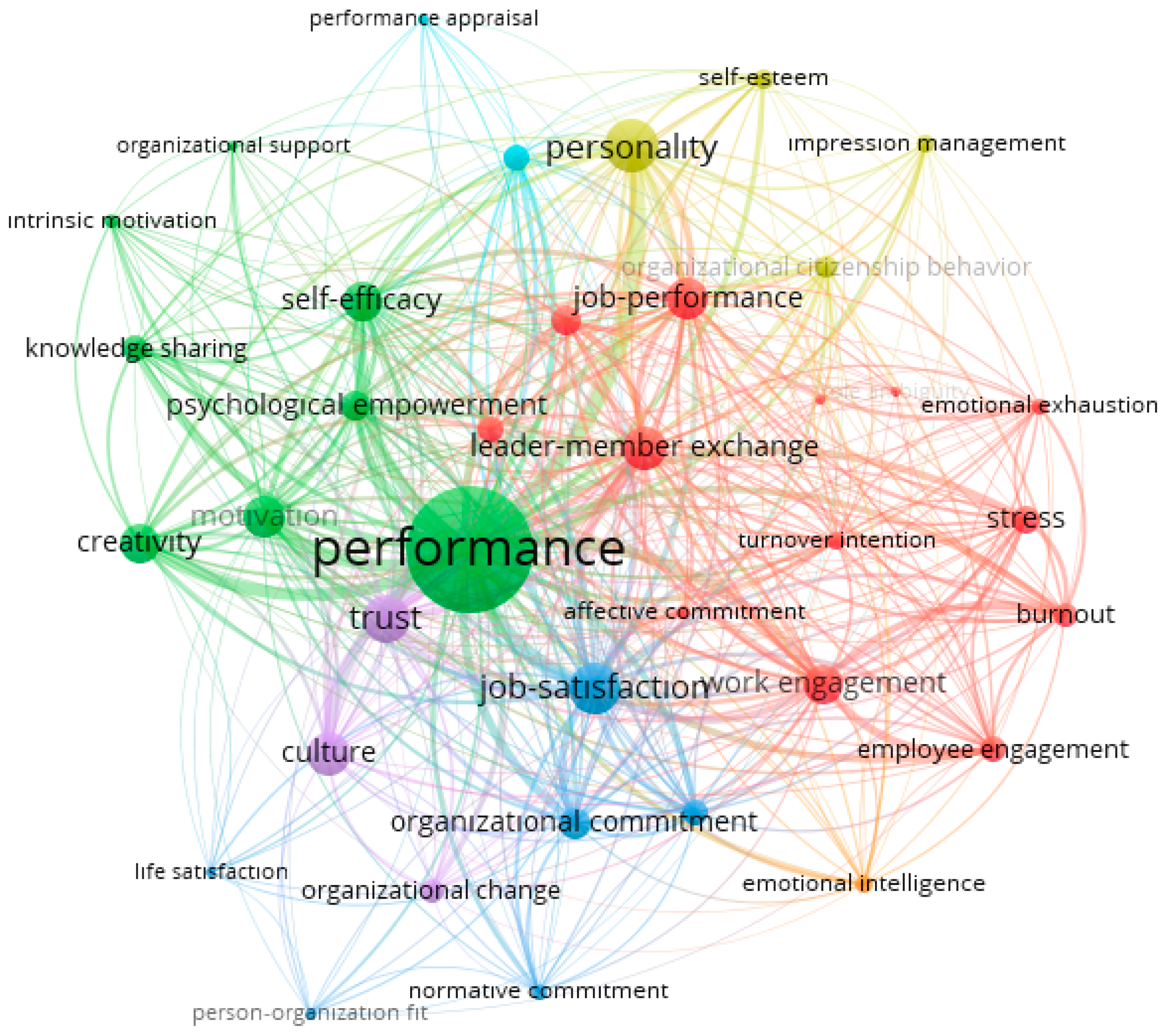
Leadership theories are crucial in shaping organizational and managerial success. Leaders who understand and apply relevant theories can foster better communication, collaboration, and employee engagement. At the organizational level, research on leadership theory is central to the field. Organizations are collectives pursuing common goals, and leadership plays a crucial role in this process by influencing individuals or groups to work towards these goals (Ouchi, 1980). The similarities between leadership theories and the organizational field are evident and significant. Leadership is a well-researched topic in the organizational field (Day, 2000; Yukl et al., 2002). It has an impact not only on individual followers but also on teams, departments, and the entire organization (Hiller et al., 2011). Figure 4 depicts the co-occurrence map of organizational variables or terms in the leadership theories literature.
According to Figure 4, in studies focused on leadership theories in the field of management and business, organizational variables or terms with medium formation are seen the most. It can be said that the terms that occur most are the most studied topics in the leadership theories literature. The full list of commonly occurring organizational terms is listed in Table 4.
Table 4 shows the organizational variables examined together with leadership theories. Organizational expressions appear to occur in a wide range. We can say that leadership development has been investigated with all organizational factors in the literature. While performance, job satisfaction, personality, trust and leader–member exchange are listed first, concepts such as performance appraisal, life satisfaction, workplace bullying, role ambiguity and organizational support are listed last. As shown in Figure 4 and Table 4, seven clusters were identified in Table 5.
Table 5 illustrates that the organizational-level concepts most frequently found in the leadership theory literature form seven clusters. Leadership theory research is a fundamental aspect of organizational science (Dinh et al., 2014; Gardner et al., 2010). The review of leadership literature indicates that certain theories still generate academic interest in comprehending leadership phenomena, while interest in other theoretical areas has decreased in recent years. Leadership influences many factors in the organizational context, such as culture, communication, networks, and resources. It will be useful to group organizational concepts into positive and negative concepts in which leadership theories are investigated to make a comprehensive evaluation. With his behaviors and characteristics, a leader either develops his followers positively or causes them to experience negative behaviors and events. The concepts of burnout, emotional exhaustion, role ambiguity, stress, turnover intention, and workplace bullying are the concepts that are in the first cluster of these negative concepts, that is, they are associated together in the literature of leadership theories. The organizational variables most discussed in this research are performance, job satisfaction, personality, trust, leader–member interaction, work engagement, self-efficacy, creativity, motivation, and culture et al. It turned out to be. Organizational variables that show the least common occurrence, performance appraisal, life satisfaction, workplace bullying, organizational support.

5. Discussion and Implications

The aim of this bibliometric study was to examine publication trends and patterns in the literature on leadership theories between 2003 and 2024. While some concepts are examined more frequently in leadership theory research, other concepts are relatively neglected. Behaviors that involve helping people initiate action are particularly salient. This is an important consideration, including studies that focus on activating and motivating employees through tactics such as setting goals and removing obstacles. However, it can be said that these issues have fallen out of favor in recent years. With a complementary and exploratory research design, completed the analyzes left incomplete by the systematic literature analyses carried out so far and presented the ranking of the concepts at the organizational and managerial level according to their level of interest. Leadership is a multi-level structure, and existing leadership theories should be presented in association with organizational and managerial factors, rather than examined alone. This is because leadership theories have not been integrated across levels of analysis (Turner & Baker, 2018). This current review aims to address the limitations of existing reviews using bibliometric techniques, and to summarize and provide a review of the existing literature on leadership development theories, with the aim of providing an informative and summarized perspective on the evolution, development, and availability of the field. In recent years, there has been an increased interest in bibliometric analysis of leadership development and theories (Vogel et al., 2020; Day et al., 2014; Abdullah, 2021; Ashiq et al., 2023; Dinibutun, 2020).

5.1. Theoretical Implications

The most formed leadership theories at the organizational level include transformational, transactional, laissez-faire, ethical, authentic, ambidextrous, and self-leadership theories. Previous studies have categorized leadership behavior as transformational, transactional, and laissez-faire styles and examined their impact on performance and job stress. Research has demonstrated that the transformational leadership style is associated with reduced symptoms and feelings of stress among subordinates, as well as burnout (Dey & Fernandes, 2020). The situation is similar for transactional leadership, although the evidence is less consistent. According to Lyons and Schneider (2009), individuals exhibit greater stress and burnout symptoms under a laissez-faire leadership style.
Transformational leadership is a theory where leaders inspire followers to experience increased motivation and performance levels (Yukl, 1999). Impression management tactics (Peck & Hogue, 2018) and transactional leadership styles (Deichmann & Stam, 2015) are also important for effective leadership. Transformational leadership theory is the most extensively studied and popular theory in the field of leadership development. This review focuses on this theory, which is defined as a leadership approach where the leader transforms their followers, inspires them, builds trust, encourages innovation, and develops their skills (Bass, 1985). Transformational leadership is a widely discussed theory in the literature due to its positive impact on employee motivation. By increasing intrinsic motivation, employees become more effective and efficient in their job performance. It is important to sensitize employees to this approach to ensure efficient job performance (Sahu et al., 2018).
During the industrial revolution, transactional theory managers emerged with the aim of increasing company efficiency and organizational effectiveness. They attach great importance to structure and use their authority to enforce rules, inspiring staff to perform at their best. Research indicates that transactional leadership is the most common leadership style in organizations, focusing on goal achievement and performance management (Dong, 2023). Examining transactional leadership and understanding the roles and influence mechanisms of leaders are crucial to improving organizational performance, increasing organizational resilience, and developing leadership.
According to Bass (1985), transformational leadership is consistently linked to organizational variables such as leadership effectiveness, satisfaction, innovation, quality improvement, and both subjective and objective performance evaluation, as well as organizational justice. The underlying process, however, remains unclear. One gap in the research on organizational justice is the lack of consideration given to emotions, despite their frequent mention in justice theories (Weiss et al., 1999). The influence of transformational leadership on procedural justice has been observed to generate positive emotions, while transactional leadership has been found to impact not only distributive justice but also positive emotions (Hendrian & Patiro, 2019).
This review focuses on the issue of performance within organizations, with particular attention given to job performance and leadership studies. Dong (2023) suggested that while transactional leaders can have a positive impact on organizational performance, an excessive emphasis on this leadership style may hinder innovation and long-term growth. Ambidextrous leadership is considered a crucial factor in achieving organizational success. Numerous studies have investigated its impact on improving firm performance (Rosing et al., 2011). Both empirical and conceptual studies have demonstrated that strategic leadership actions have a significant effect on performance (Quigley & Graffin, 2017; Ireland & Hitt, 1999).
Transactional leaders set goals, establish clear agreements about expectations from organizational members, and provide constructive feedback to keep everyone on task (Bass & Avolio, 1993; Howell & Hall-Merenda, 2002). Transformational leadership, on the other hand, is characterized by charisma, inspiration, intellectual stimulation, and individualized consideration (Bass & Avolio, 1993). Ethical leaders help individuals to transcend their personal interests for the sake of the firm’s larger vision. They believe in people and are guided by a strong set of values, including loyalty, trust, and personal attention to employees. This approach can have a positive impact on organizational commitment, as evidenced by its association with service quality, job satisfaction, and organizational commitment (Okpara & Wynn, 2008).
Authentic leadership is closely linked to emotional intelligence, particularly transparency competence (Boyatzis et al., 2011). Authentic leaders are individuals who lead and influence others, and therefore, the social/relationship management dimension and Emotional Intelligence competencies such as confidence, emotional expression, and influence should also be related to authentic leadership. Empathy should be related to the moral perspective aspects of authentic leadership. Authentic leadership is a type of positive leadership theory that emphasizes honesty and staying true to oneself. It is considered the foundation of other positive leadership styles and has a positive impact on individuals, teams, and organizations. Therefore, academics and business managers have extensively discussed and researched this topic (Lemoine et al., 2019; Lyubovnikova et al., 2017). A positive evaluation of authentic leadership is consistent with employees’ self-worth and perception of corporate values, which in turn strengthens both. It is important to maintain objectivity and avoid subjective evaluations, while using clear and concise language with a logical flow of information. Technical terms should be explained when first used, and a formal register should be maintained. The content of the improved text must be as close as possible to the source text, and the addition of further aspects must be avoided at all costs. The text should be free from grammatical errors, spelling mistakes, and punctuation errors. Authentic leadership promotes mutual trust and transparent interpersonal relationships with subordinates by demonstrating subordinates’ true feelings, beliefs, and values. It is important to note that this statement is subjective and should be marked as such.
Previous research has demonstrated that ambidextrous leadership is positively associated with various organizational outcomes, including innovation (Rosing et al., 2011) team effectiveness (Zacher & Rosing, 2015) and organizational learning (Jansen et al., 2009). Additionally, studies have shown that supportive leadership has a positive impact on employee satisfaction by providing socio-emotional support in the workplace. Therefore, it is linked to job outcomes such as job satisfaction (Judge & Piccolo, 2004; Rafferty & Griffin, 2006) and turnover intentions (Eisenberger et al., 2002). Researchers and practitioners also argue that person–organization fit (P-O fit) is another important factor for success in a competitive business environment by maintaining a flexible and committed workforce. P-O fit has significant effects on various workplace outcomes, including job satisfaction (Verquer et al., 2003).
Responsible leadership weighs and balances various demands from all stakeholders in accordance with ethical rules, then strives to establish and maintain permanent and reliable relationships with stakeholders, aiming to ensure the sustainable development of the institution and society (Pless & Maak, 2011).
Self-leadership strategies can enhance the development of self-esteem. Individuals who perceive themselves as successful tend to have positive feelings and make positive self-judgments (Ross, 2014). The feeling of goodness and worth is maintained through active and effective experiences, and these feelings can be further increased by applying self-leadership strategies. Self-esteem may be a result rather than a cause of doing well (Neff, 2011). Leaders with high self-esteem can accept positive feedback graciously, take negative feedback without taking it personally, forgive themselves for mistakes, and bounce back from failure.
Organizational justice may be more likely when leadership is fair, as opposed to when unfair and undesirable leadership is reinforced (Bahar et al., 2015). According to Khan et al. (2023), organizational justice plays a mediating role between transformational and transactional leadership and employee performance.
According to trait theory of leadership, leaders are considered to behave in various ways because they have internal qualities. Curiosity, self-control, empathy, ambition, and self-confidence are the basic characteristics needed in leadership. Numerous authors have linked leadership types to the personality types that leaders do and do not possess. Among the best-known personality theories is the Big Five theory, which shows a positive relationship with leadership, especially transformational and transactional leadership (Garzón-Lasso et al., 2023).
Finally, this review highlights the significance of organizational citizenship behaviors for organizations. Therefore, it is crucial for organizations to consider these factors when attempting to promote OCB among their employees. It is important to note that all these variables have been found to have an impact on OCB. Many variables have been studied as predictors of OCB, including leadership styles (Lian & Tui, 2012), organizational trust (H. Zhang et al., 2010), job satisfaction (Swaminathan & Jawahar, 2013), organizational commitment (Ibrahim & Aslinda, 2013), and organizational justice. Leadership style is one of the most challenging variables, defined as the techniques used to influence and direct the activities of others (Rezaei & Mahmoudi, 2017).

5.2. Practical Implications

This review highlights the substantial growth of literature on leadership and leadership theories, as evidenced by emerging keywords and important themes. This large-scale literature accumulation shows that there are many research gaps for researchers and theorists. It also includes information to identify issues that previous literature analyzes did not emphasize or overlook and fill in the gaps. These pursuits in the literature described so far, although making significant contributions to the body of knowledge regarding specific fields, can be considered a subset of leadership and therefore have not been examined comprehensively, providing a complete overview of the leadership studies researched. This article contains relevant information for researchers and theorists of leadership and leadership theories about the current state of the field and can guide academics who want to conduct research in this field.
Emphasizing the relationships between different leadership phenomena and organizational and managerial factors, which can organize leadership theory and provide many useful frameworks, can facilitate the development of more integrative research agendas that examine how leaders, followers and larger social systems together influence the development of organizational events. Leadership theories are widely accepted and applied in practice; thanks to the interest they generate. Practitioners take them into consideration when leading, ensuring the continuity of these theories over time. This process is the result of intrapersonal and interpersonal processes that produce phenomena in organizations (Dinh et al., 2014).
The initial contribution of the essay is to show where each leadership theory stands and how important it is in the literature, as well as to determine which theory has advanced the area the most. Research at the organizational level is the focus of the study of leadership. Leadership has accumulated literature with studies and research addressed at different levels, both individual, organizational, and theoretical. The contribution of research focusing on organizational structure and individual level to leadership theory varies and varies depending on the context and social order. The second contribution is that it shows that there are no new organizational concepts that will contribute to the literature by determining organizational variables. In this study, which proves that almost all organizational concepts are included in the literature, as seen in Table 4, it is seen that the sub-dimensions of organizational concepts also receive intense attention in detail and contribute to the literature.
This review is a resource for academics seeking to explore extensively researched leadership theories that have attracted significant attention in practice, with a focus on organizational and managerial variables. The conceptual classification of leadership theories and organizational variables is crucial in determining future research areas. This classification is based on similarities observed in the examination of existing literature’s general definition and conceptual structure. It enables us to propose alternative avenues for future research in these fields and to showcase scientific advancements in the literature. Furthermore, investigations that explore the implementation and transfer of research, which comprehensively evaluates the entire domain and deeply theorizes new and existing leadership behaviors, would be highly valuable. While theoretical contributions are prioritized in research articles, it is important to present practical and easily understandable themes to provide practical suggestions to researchers and academics. This ensures the adoption of their findings leads to more effective and understandable developments in the field.

6. Limitations and Future Research Direction

Despite the contributions presented, this study is subject to several limitations across different contexts. First, the comprehensive and detailed dataset was derived from a single database, which may restrict the breadth of the included literature. Although both software programs offer extensive analytical capabilities, the authors adapted the bibliometric tools, research scope, and analytical procedures to align with the characteristics of the selected dataset. Additionally, the scope of the research and the vast body of literature on the topic required limiting the analysis to specific document types. Finally, the use of both programs in tandem was feasible only because the data were compiled in two different formats, which may introduce methodological constraints.
The study includes both leadership theories and all organizational variables that are investigated together. However, this research has revealed that there are other leadership theories in the literature that have not been explored yet and are still in the development stage. To guide future studies in the field of leadership, this review has identified the leadership theories and organizational concepts that are most prevalent in the literature. Furthermore, this study’s most notable finding is the absence of certain leadership theories from the literature and field, which were not identified in the co-occurrence analysis and therefore not included in the rankings. This review discusses various types of dark leadership: dark leadership, digital leadership or e-leadership, instrumental leadership, and participative leadership theories. Despite the negative consequences associated with dark leadership theory, such as exploitative leadership, petty tyranny, and undermining of managers, it remains a significant concern for research. This review does not present any findings related to the development of digital leadership, e-leadership theory and hybrid leadership. Technology has changed both the context of leadership and how leadership can be implemented in the new context. Changes in technology, work, organizations, and mindsets highlight the need to discuss digital leadership and consider the critical role digital leadership plays in combating organizational and technological changes (Eberly et al., 2013). Despite the increase in studies on participative leadership in recent years, this review has not found evidence of its effectiveness. Based on the literature review, participative leadership is a democratic style that involves subordinates in organizational decision-making and management. The aim is to enhance employees’ sense of ownership and integrate their personal goals into organizational goals. This style can effectively improve employee engagement and job satisfaction. In the daily leadership process, leaders implement ‘participation management’ for their subordinates. This includes conveying meaningful values, organizing reporting, and employing flexible promotion strategies (Jing et al., 2017).
The absence of sustainability leadership in the findings may reflect its recent emergence, varied terminology, and dispersion across interdisciplinary fields outside mainstream leadership research. As such, sustainability-oriented leadership studies may be underrepresented in this analysis, suggesting a direction for future research to integrate sustainability perspectives within established leadership frameworks.
Leadership theories have overlooked the role of culture. Currently, there is limited knowledge on how a leader’s cultural background can impact the relationship between leading and key outcomes. Furthermore, the influence of culture on leaders’ evaluation and selection is not well understood. However, studies suggest that leaders with high emotional intelligence are more likely to exhibit transformational leadership behaviors than those with lower levels of emotional intelligence. There is limited research on the relationship between emotional intelligence and leadership.

7. Conclusions

This review is restricted to the Web of Science database and the titles, keywords, and abstracts of 9638 publications used in the search queries. It is important to note that while WoS is a comprehensive and reliable database, it does not encompass all published literature on the subject. In this review, leadership theories that have been formed in different categories or classifications have been revealed as titles without discrimination or grouping. All items pertaining to both leadership theories and accompanying organizational variables, concepts, or factors are shown. The aim of this review is to show that the study has an integrative review method, which is an exploratory and decisive literature review research design, and that it is the most appropriate method to fully achieve the purpose of the research. The research questions are presented clearly in visual maps and tables and supported by explanations. This bibliometric study mapped publication trends in leadership theory research from 2003 to 2024, revealing uneven attention across concepts. While foundational behaviors that facilitate employee action—such as motivating, goal setting, and obstacle removal—were once central, they have declined in recent scholarly focus. Using an exploratory bibliometric approach, this study extends prior reviews by offering a structured ranking of leadership concepts at organizational and managerial levels. The findings underscore the need to better integrate leadership theories across levels of analysis, as current frameworks remain fragmented (Turner & Baker, 2018). By synthesizing two decades of research, this review contributes to the growing bibliometric literature on leadership theory and highlights opportunities for reinvigorating underexplored areas and advancing more comprehensive multi-level perspectives. Finally, transformational, transactional, charismatic, ethical, authentic, and servant leadership theories—each of which has garnered substantial scholarly attention—emerge as the most frequently examined theoretical frameworks. In contrast, paradoxical, ambidextrous, and global leadership theories appear less frequently in the literature, suggesting a narrower scope of scholarly engagement or their relatively recent conceptual development. Similarly, concepts such as performance, job satisfaction, personality, trust, and leader–member exchange are among the most prominently featured themes. Conversely, topics such as performance appraisal, life satisfaction, workplace bullying, role ambiguity, and organizational support occur less frequently and tend to appear toward the end of the list.

Author Contributions

Conceptualization, H.A.; Methodology, N.O.; Analysis, H.A.; Formal analysis, N.O.; Writing—original draft, N.O. and H.A.; Writing—review & editing, N.O. and H.A. All authors have read and agreed to the published version of the manuscript.

Funding

This research received no external funding.

Institutional Review Board Statement

Not applicable.

Informed Consent Statement

Not applicable.

Data Availability Statement

The corresponding author can provide the datasets created and/or analyzed during this investigation upon reasonable request, but they are not publicly accessible.

Conflicts of Interest

The authors declare no conflicts of interest.

Abbreviation

WoSWeb of Science
LMXLeader–Member Exchange
DLDestructive leadership
RLResponsible leadership
OCBOrganizational Citizenship Behavior

References

  1. Abdullah, K. H. (2021). Publication trends of leadership excellence: A bibliometric review using VOSviewer. Advances in Business Research International Journal, 7(1), 170–180. [Google Scholar] [CrossRef]
  2. Albrecht, S. L., & Andreetta, M. (2011). The influence of empowering leadership, empowerment and engagement on affective commitment and turnover intentions in community health service workers: Test of a model. Leadership in Health Services, 24(3), 228–237. [Google Scholar] [CrossRef]
  3. Allio, R. J. (2013). Leaders and leadership: Many theories, but what advice is reliable? Strategy & Leadership, 41(1), 4–14. [Google Scholar] [CrossRef]
  4. Antonakis, J., & House, R. J. (2014). Instrumental leadership: Measurement and extension of transformational–transactional leadership theory. The Leadership Quarterly, 25(4), 746–771. [Google Scholar] [CrossRef]
  5. Ardichvili, A. A., & Manderscheid, S. (2008). Emerging practices in leadership development: An introduction. Advances in Developing Human Resources, 10, 619–631. [Google Scholar] [CrossRef]
  6. Aria, M., & Cuccurullo, C. (2017). Bibliometrix: An R-tool for comprehensive science mapping analysis. Journal of Informetrics, 11, 959–975. [Google Scholar] [CrossRef]
  7. Ashiq, M., Ur Rehman, S., Ahmad, N., Atoum, I., Aqil, M., & Ahmad, S. (2023). A bibliometric review of leadership literature in library and information science profession, 1959–2022. SAGE Open, 13(4). [Google Scholar] [CrossRef]
  8. Atenstaedt, R. (2012). Word cloud analysis of the BJGP. British Journal of General Practice, 62, 148. [Google Scholar] [CrossRef]
  9. Avolio, B. J., & Gardner, W. L. (2005). Authentic leadership development: Getting to the root of positive forms of leadership. The Leadership Quarterly, 16(3), 315–338. [Google Scholar] [CrossRef]
  10. Aycan, Z. (2006). Paternalism: Towards conceptual refinement and operationalization. In K. S. Yang, K. K. Hwang, & U. Kim (Eds.), Scientific advances in indigenous psychologies: Empirical, philosophical, and cultural contributions (pp. 445–466). Sage. [Google Scholar]
  11. Bahar, T., Turhan, M., Helvacı, İ., & Koprulu, O. (2015). The effect of the leadership perception and organizational justice on organizational commitment. International Review of Management and Marketing, 5, 180–194. [Google Scholar]
  12. Bass, B. M. (1985). Leadership and performance beyond expectations. The Free Press. [Google Scholar]
  13. Bass, B. M., & Avolio, B. J. (1993). Transformational leadership: A response to critiques. In M. M. Chemers, & R. Ayman (Eds.), Leadership theory and research: Perspectives and directions (pp. 49–80). Academic Press. [Google Scholar]
  14. Batistič, S., Černe, M., & Vogel, B. (2017). Just how multi-level is leadership research? A document co-citation analysis 1980–2013 on leadership constructs and outcomes. The Leadership Quarterly, 28(1), 86–103. [Google Scholar] [CrossRef]
  15. Bennett, T. M. (2009). A study of the management leadership style preferred by IT subordinates. Journal of Organizational Culture, Communication and Conflict, 13(2), 1–25. [Google Scholar]
  16. Bennis, W. G. (2013). Leadership in a digital world: Embracing transparency and adaptive capacity. MIS Quarterly, 37(2), 635–636. [Google Scholar]
  17. Birkle, C., Pendlebury, D. A., Schnell, J., & Adams, J. (2020). Web of Science as a data source for research on scientific and scholarly activity. Quantitative Science Studies, 1(1), 363–376. [Google Scholar] [CrossRef]
  18. Bolden, R., Gosling, J., Marturano, A., & Dennison, P. (2003). A review of leadership theory and competency frameworks. Center for Leadership Studies, University of Exeter. [Google Scholar]
  19. Boyatzis, R., Brizz, T., & Godwin, L. (2011). The effect of religious leaders’ emotional and social competencies on improving parish vibrancy. Journal of Leadership & Organizational Studies, 18(2), 192–206. [Google Scholar] [CrossRef]
  20. Breevaart, K., & Zacher, H. (2019). Main and interactive effects of weekly transformational and laissez-faire leadership on followers’ trust in the leader and leader effectiveness. Journal of Occupational and Organizational Psychology, 92(2), 384–409. [Google Scholar] [CrossRef]
  21. Carden, L., & Callahan, J. (2007). Creating leaders or loyalists: Conflicting identities in a leadership development program. Human Resource Development International, 10(2), 169–186. [Google Scholar] [CrossRef]
  22. Carter, D., & Baghurst, T. (2014). The influence of servant leadership on restaurant employee engagement. Journal of Business Ethics, 124, 453–464. [Google Scholar] [CrossRef]
  23. Carton, A. M. (2022). The science of leadership: A theoretical model and research agenda. Annual Review of Organizational Psychology and Organizational Behavior, 9, 61–93. [Google Scholar] [CrossRef]
  24. Chavriya, S., Sharma, G. D., & Mahendru, M. (2023). Financial inclusion as a tool for sustainable macroeconomic growth: An integrative analysis. Annals of Public and Cooperative Economics, 95(2), 527–551. [Google Scholar] [CrossRef]
  25. Clarivate. (2023). Web of Science platform: The world’s leading citation database. Clarivate Analytics. Available online: https://www.webofscience.com/ (accessed on 10 July 2025).
  26. Clarke, N. (2018). Relational leadership: Theory, practice and development. Routledge. [Google Scholar]
  27. Conger, J. A., & Kanungo, R. N. (1994). Charismatic leadership in organizations: Perceived behavioral attributes and their measurement. Journal of Organizational Behavior, 15(5), 439–452. [Google Scholar] [CrossRef]
  28. Crossan, M., Vera, D., & Nanjad, L. (2008). Transcendent leadership: Strategic leadership in dynamic environments. The Leadership Quarterly, 19(5), 569–581. [Google Scholar] [CrossRef]
  29. Dansereau, F., Seitz, S. R., Chiu, C., Shaughnessy, B., & Yammarino, F. J. (2013). What makes leadership, leadership? Using self-expansion theory to integrate traditional and contemporary approaches. The Leadership Quarterly, 24, 798–821. [Google Scholar] [CrossRef]
  30. Day, D. V. (2000). Leadership development: A review in context. The Leadership Quarterly, 11(4), 581–613. [Google Scholar] [CrossRef]
  31. Day, D. V., Fleenor, J. W., Atwater, L. E., Sturm, R. E., & McKee, R. A. (2014). Advances in leader and leadership development: A review of 25 years of research and theory. The Leadership Quarterly, 25, 63–82. [Google Scholar] [CrossRef]
  32. Deichmann, D., & Stam, D. (2015). Leveraging transformational and transactional leadership to cultivate the generation of organization-focused ideas. The Leadership Quarterly, 26(2), 204–219. [Google Scholar] [CrossRef]
  33. Denis, J. L., Langley, A., & Sergi, V. (2012). Leadership in the plural. Academy of Management Annals, 6, 211–283. [Google Scholar] [CrossRef]
  34. Depaolo, C., & Wilkinson, K. (2014). Get your head into the clouds: Using word clouds for analyzing qualitative assessment data. TechTrends, 58, 38–44. [Google Scholar] [CrossRef]
  35. Deschamps, C., Rinfret, N., Lagacé, M. C., & Privé, C. (2016). Transformational leadership and change: How leaders influence their followers’ motivation through organizational justice. Journal of Healthcare Management, 61(3), 194–213. [Google Scholar] [CrossRef]
  36. Dess, G. G., & Picken, J. C. (2000). Changing roles: Leadership in the 21st century. Organizational Dynamics, 28(3), 18–34. [Google Scholar] [CrossRef]
  37. Dey, R., & Fernandes, F. (2020). A study of leadership behavior and work stress (burnout) of Gen Y management students. DSIMS The Management Quest, 2(2), 32–63. [Google Scholar]
  38. Dinh, J. E., Lord, R. G., Gardner, W. L., Meuser, J. D., Liden, R. C., & Hu, J. (2014). Leadership theory and research in the new millennium: Current theoretical trends and changing perspectives. The Leadership Quarterly, 25, 36–62. [Google Scholar] [CrossRef]
  39. Dinibutun, S. R. (2020). Leadership: A comprehensive review of literature, research and theoretical framework. Journal of Economics and Business, 3(1), 44–64. [Google Scholar] [CrossRef]
  40. Dionne, S. D., Gupta, A., Sotak, K. L., Shirreffs, K. A., Serban, A., Hao, C., Kim, D. H., & Yammarino, F. J. (2014). A 25-year perspective on levels of analysis in leadership research. The Leadership Quarterly, 25(1), 6–35. [Google Scholar] [CrossRef]
  41. Dong, B. (2023). A systematic review of the transactional leadership literature and future outlook. Academic Journal of Management and Social Sciences, 2(3), 21–27. [Google Scholar] [CrossRef]
  42. Eberly, M. B., Johnson, M. D., & Hernandez, M. (2013). An integrative process model of leadership: Examining loci, mechanisms, and event cycles. American Psychologist, 68(6), 427–443. [Google Scholar] [CrossRef]
  43. Eisenberger, R., Stinglhamber, F., Vandenberghe, C., Sucharski, I. L., & Rhoades, L. (2002). Perceived supervisor support: Contributions to perceived organizational support and employee retention. Journal of Applied Psychology, 87(3), 565–573. [Google Scholar] [CrossRef]
  44. Ejene, E.I., & Abasilim, U.D. (2013). Impact of Transactional and Transformational Leadership Styles on Organisational Performance: Empirical Evidence from Nigeria. The Journal of Commerce, 5(1), 30. Available online: https://www.proquest.com/scholarly-journals/impact-transactional-transformational-leadership/docview/1348575266/se-2 (accessed on 25 April 2025).
  45. Elsbach, K. D., & van Knippenberg, D. (2020). Creating high-impact literature reviews: An argument for integrative reviews. Journal of Management Studies, 57(6), 1277–1289. [Google Scholar] [CrossRef]
  46. Epitropaki, O., Sy, T., Martin, R., Tram-Quon, S., & Topakas, A. (2013). Implicit leadership and followership theories “in the wild”: Taking stock of information-processing approaches to leadership and followership in organizational settings. The Leadership Quarterly, 24(6), 858–881. [Google Scholar] [CrossRef]
  47. Fiedler, F. E. (1967). A theory of leadership effectiveness. McGraw-Hill. [Google Scholar]
  48. Fry, L. W. (2003). Toward a theory of spiritual leadership. The Leadership Quarterly, 14(6), 693–727. [Google Scholar] [CrossRef]
  49. Gardner, W. L., Lowe, K. B., Moss, T. W., Mahoney, K. T., & Cogliser, C. C. (2010). Scholarly leadership of the study of leadership: A review of The Leadership Quarterly’s second decade, 2000–2009. The Leadership Quarterly, 21(6), 922–958. [Google Scholar] [CrossRef]
  50. Garzón-Lasso, F. A., Arenas-Arango, S. M., & Illera-Osorio, M. (2023). Is there a correlation between personality and leadership? A summary of the main theories. Cuadernos Hispanoamericanos de Psicología, 22(2), 1–17. Available online: https://revistas.unbosque.edu.co/index.php/CHP (accessed on 12 May 2025). [CrossRef]
  51. Giesecke, J. R. (2007). Modeling leadership theories. In P. Hernon, & N. Rossiter (Eds.), Making a difference: Leadership and academic libraries (pp. 49–60). Libraries Unlimited. [Google Scholar]
  52. Gough, D., Thomas, J., & Oliver, S. (2012). Clarifying differences between review designs and methods. Systematic Reviews, 1, 28. [Google Scholar] [CrossRef]
  53. Grabo, A., & Van Vugt, M. (2016). Charismatic leadership and the evolution of cooperation. Evolution and Human Behavior, 37, 399–406. [Google Scholar] [CrossRef]
  54. Greenleaf, R. K. (1977). The servant as leader. Greenleaf Center. [Google Scholar]
  55. Gregoire, M. B., & Arendt, S. W. (2014). Leadership: Reflections over the past 100 years. Journal of the Academy of Nutrition and Dietetics, 114, S10–S19. [Google Scholar] [CrossRef]
  56. Gupta, V., & Singh, S. (2013). How leaders impact employee creativity: A study of Indian R&D laboratories. Management Research Review, 36(1), 66–88. [Google Scholar] [CrossRef]
  57. Hagen, A. F., Hassan, M. T., & Amin, S. G. (1998). Critical strategic leadership components: An empirical investigation. Advanced Management Journal, 63(3), 39–44. [Google Scholar]
  58. Hama, M. F. M., & Mahadi, B. (2021). Bibliometric analysis of global research trends on leadership using Scopus database. International Journal of Academic Research in Business and Social Sciences, 11(10), 799–813. [Google Scholar] [CrossRef]
  59. Hendrian, H., & Patiro, S. P. S. (2019). The effect of leadership and organizational justice in predicting positive emotion of Indonesian civil servants. In Proceedings of the 2nd international seminar on business, economics, social science and technology (ISBEST 2019). Advances in Economics, Business and Management Research, Volume 143. Atlantis Press. [Google Scholar]
  60. Hersey, P., & Blanchard, K. H. (1977). Management of organizational behavior: Utilizing human resources (3rd ed.). Prentice Hall. [Google Scholar]
  61. Hiller, N. J., DeChurch, L. A., Murase, T., & Doty, D. (2011). Searching for outcomes of leadership: A 25-year review. Journal of Management, 37(4), 1137–1177. [Google Scholar] [CrossRef]
  62. Hinkin, T. R., & Schriesheim, C. A. (2008). An examination of “nonleadership”: From laissez-faire leadership to leader reward omission and punishment omission. Journal of Applied Psychology, 93(6), 1234–1248. [Google Scholar] [CrossRef] [PubMed]
  63. Hoch, J. E., Bommer, W. H., Dulebohn, J. H., & Wu, D. (2018). Do ethical, authentic, and servant leadership explain variance above and beyond transformational leadership? A meta-analysis. Journal of Management, 44(2), 501–529. [Google Scholar] [CrossRef]
  64. Howell, J. M., & Hall-Merenda, K. E. (2002). The ties that bind: The impact of leader–member exchange, transformational and transactional leadership, and distance on predicting follower performance. Journal of Applied Psychology, 84(5), 680–694. [Google Scholar] [CrossRef]
  65. Hu, B., Harold, C. M., & Kim, D. (2022). Stealing time on the company’s dime: Examining the indirect effect of laissez-faire leadership on employee time theft. Journal of Business Ethics. Advance online publication. [Google Scholar] [CrossRef]
  66. Ibrahim, M. A., & Aslinda, A. (2013). Relationship between organizational commitment and organisational citizenship behavior (OCB) at government-owned corporation companies. Journal of Public Administration and Governance, 3(3), 35–42. [Google Scholar] [CrossRef]
  67. Ireland, R. D., & Hitt, M. A. (1999). Achieving and maintaining strategic competitiveness in the 21st century: The role of strategic leadership. Academy of Management Executive, 13(1), 63–72. [Google Scholar] [CrossRef]
  68. Jansen, J. J., Vera, D., & Crossan, M. M. (2009). Strategic leadership for exploration and exploitation: The moderating role of environmental dynamism. The Leadership Quarterly, 20(1), 5–18. [Google Scholar] [CrossRef]
  69. Jing, Z., Jianshi, G., Jinlian, L., & Yao, T. (2017). A case study of the promoting strategies for innovation contest within a company. Science Research Management, 38, 57–65. [Google Scholar] [CrossRef]
  70. Judge, T. A., & Piccolo, R. F. (2004). Transformational and transactional leadership: A meta-analytic test of their relative validity. Journal of Applied Psychology, 89(5), 755–768. [Google Scholar] [CrossRef]
  71. Keskes, I., Sallan, J. M., Simo, P., & Fernandez, V. (2018). Transformational leadership and organizational commitment: Mediating role of leader–member exchange. Journal of Management Development, 37(3), 271–284. [Google Scholar] [CrossRef]
  72. Khan, I. U., Gan, G. G. G., Khan, M. T. I., & Saif, N. (2023). Role of organizational justice in linking leadership styles and academics’ performance in higher education. Administrative Sciences, 13(4), 101. [Google Scholar] [CrossRef]
  73. Kirkpatrick, S. A., & Locke, E. A. (1991). Leadership: Do traits matter? Academy of Management Executive, 5(2), 48–60. [Google Scholar]
  74. Krasikova, D. V., Green, S. G., & LeBreton, J. M. (2013). Destructive leadership: A theoretical review, integration, and future research agenda. Journal of Management, 39(5), 1308–1338. [Google Scholar] [CrossRef]
  75. Kysh, L. (2013). Systematic reviews, randomized control trials, cohort studies. Information Services Librarian. [Google Scholar]
  76. Lee, A., Lyubovnikova, J., Zheng, Y., & Li, Z. F. (2023). Paradoxical leadership: A meta-analytical review. Frontiers in Organizational Psychology, 1, 1229543. [Google Scholar] [CrossRef]
  77. Lemoine, G. J., Hartnell, C. A., & Leroy, H. (2019). Taking stock of moral approaches to leadership: An integrative review of ethical, authentic, and servant leadership. Academy of Management Annals, 13(1), 148–187. [Google Scholar] [CrossRef]
  78. Lian, L. K., & Tui, L. G. (2012). Leadership styles and organizational citizenship behavior: The mediating effect of subordinates’ competence and downward influence tactics. Journal of Applied Business & Economics, 13(2), 59–69. [Google Scholar]
  79. Liu, Y. (2015). The review of empowerment leadership. Open Journal of Business and Management, 3, 476–482. [Google Scholar] [CrossRef]
  80. Lord, R. G., Day, D. V., Zaccaro, S. J., Avolio, B. J., & Eagly, A. H. (2017). Leadership in applied psychology: Three waves of theory and research. Journal of Applied Psychology, 102(3), 434–451. [Google Scholar] [CrossRef]
  81. Lord, R. G., Foti, R. J., & de Vader, C. L. (1984). A test of leadership categorization theory: Internal structure, information processing, and leadership perceptions. Organizational Behavior and Human Performance, 34(3), 343–378. [Google Scholar] [CrossRef]
  82. Lu, H. Z., Liu, Y. F., & Xu, K. (2008). Implicit leadership theory: A new development of cognitive revolution in leadership research. Psychological Science, 31, 242–244. [Google Scholar] [CrossRef]
  83. Lyons, J. B., & Schneider, T. R. (2009). The effects of leadership style on stress outcomes. The Leadership Quarterly, 20(5), 737–748. [Google Scholar] [CrossRef]
  84. Lyubovnikova, J., Legood, A., Turner, N., & Mamakouka, A. (2017). How authentic leadership influences team performance: The mediating role of team reflexivity. Journal of Business Ethics, 141(1), 59–70. [Google Scholar] [CrossRef]
  85. McCleskey, J. (2014). Situational, transformational, and transactional leadership and leadership development. Journal of Business Studies Quarterly, 5(4), 117–130. [Google Scholar]
  86. Megheirkouni, M., & Mejheirkouni, A. (2020). Leadership development trends and challenges in the twenty-first century: Rethinking the priorities. Journal of Management Development, 39(1), 97–124. [Google Scholar] [CrossRef]
  87. Mehr, E. S. (2019). Leadership driven by Kaupapa Māori: A relational lens. Te Whānau o Waipareira. [Google Scholar]
  88. Mendenhall, M. E., Reiche, S., Bird, A., & Osland, J. S. (2012). Defining the “global” in global leadership. Journal of World Business, 47(4), 493–503. [Google Scholar] [CrossRef]
  89. Meuser, J. D., Gardner, W. L., Dinh, J. E., Hu, J., Liden, R. C., & Lord, R. G. (2016). A network analysis of leadership theory: The infancy of integration. Journal of Management, 42(5), 1374–1403. [Google Scholar] [CrossRef]
  90. Moher, D., Liberati, A., Tetzlaff, J., Altman, D. G., & PRISMA Group. (2009). Preferred reporting items for systematic reviews and meta-analyses: The PRISMA statement. PLoS Medicine, 6(7), e1000097. [Google Scholar] [CrossRef]
  91. Mulay, P., Joshi, R., & Chaudhari, A. (2020). Distributed incremental clustering algorithms: A bibliometric and word-cloud review analysis. Science & Technology Libraries, 39, 289–306. [Google Scholar] [CrossRef]
  92. Neff, K. D. (2011). Self-compassion, self-esteem, and well-being. Social and Personality Psychology Compass, 5(1), 1–12. [Google Scholar] [CrossRef]
  93. Northouse, P. G. (2013). Leadership: Theory and practice (6th ed.). Sage Publications. [Google Scholar]
  94. Okpara, J. O., & Wynn, P. (2008). The impact of ethical climate on job satisfaction and commitment in Nigeria. Journal of Management Development, 27(9), 935–950. [Google Scholar] [CrossRef]
  95. Otte, S. (2015). Implementing a Dominican model of leadership. Educational Considerations, 43(1), 4–12. [Google Scholar] [CrossRef]
  96. Ouchi, W. G. (1980). Markets, bureaucracies, and clans. Administrative Science Quarterly, 25(1), 129–141. [Google Scholar] [CrossRef]
  97. Page, M. J., McKenzie, J. E., Bossuyt, P. M., Boutron, I., Hoffmann, T. C., Mulrow, C. D., Shamseer, L., Tetzlaff, J. M., Akl, E. A., Brennan, S. E., Chou, R., Glanville, J., Grimshaw, J. M., Hróbjartsson, A., Lalu, M. M., Li, T., Loder, E. W., Mayo-Wilson, E., McDonald, S., … Moher, D. (2021). The PRISMA 2020 statement: An updated guideline for reporting systematic reviews. BMJ, 372, n71. [Google Scholar] [CrossRef]
  98. Pearce, J. L. (2005, August 5–10). Paternalism and radical organizational change. Academy of Management Meeting, Honolulu, HI, USA. [Google Scholar]
  99. Peck, J. A., & Hogue, M. (2018). Acting with the best of intentions… or not: A typology and model of impression management in leadership. The Leadership Quarterly, 29(1), 123–134. [Google Scholar] [CrossRef]
  100. Pless, N. M., & Maak, T. (2011). Responsible leadership: Pathways to the future. Journal of Business Ethics, 98(Suppl 1), 3–13. [Google Scholar] [CrossRef]
  101. Prindle, R. (2012). Purposeful resistance leadership theory. International Journal of Business and Social Science, 3(15), 9–12. [Google Scholar]
  102. Quigley, T. J., & Graffin, S. D. (2017). Reaffirming the CEO effect is significant and much larger than chance: A comment on Fitza (2014). Strategic Management Journal, 38(3), 793–801. [Google Scholar] [CrossRef]
  103. Rafferty, A. E., & Griffin, M. A. (2006). Refining individualized consideration: Distinguishing developmental leadership and supportive leadership. Journal of Occupational and Organizational Psychology, 79(1), 37–61. [Google Scholar] [CrossRef]
  104. Rezaei, L., & Mahmoudi, M. (2017). A model for explaining organizational citizenship behavior based on job satisfaction and organizational justice at Arsanjani Islamic Azad University. Quarterly Journal of New Approach in Educational Management, 8(2), 265–285. [Google Scholar]
  105. Riggs, D. E. (2001). The crisis and opportunities in library leadership. Journal of Library Administration, 32(3–4), 5–17. [Google Scholar] [CrossRef]
  106. Rosing, K., Frese, M., & Bausch, A. (2011). Explaining the heterogeneity of the leadership–innovation relationship: Ambidextrous leadership. The Leadership Quarterly, 22(5), 956–974. [Google Scholar] [CrossRef]
  107. Ross, S. (2014). A conceptual model for understanding the process of self-leadership development and action-steps to promote personal leadership development. Journal of Management Development, 33(4), 299–323. [Google Scholar] [CrossRef]
  108. Rowold, J. (2014). Instrumental leadership: Extending the transformational–transactional leadership paradigm. Zeitschrift für Personalforschung, 28(3), 367–390. [Google Scholar] [CrossRef]
  109. Russell, C. J., & Kuhnert, K. W. (1992). New frontiers in management selection systems: Where measurement technologies and theory collide. The Leadership Quarterly, 3(2), 109–135. [Google Scholar] [CrossRef]
  110. Russell, R. F., & Stone, A. G. (2002). A review of servant leadership attributes: Developing a practical model. Leadership & Organization Development Journal, 23(3), 145–157. [Google Scholar] [CrossRef]
  111. Sahu, S., Pathardikar, A., & Kumar, A. (2018). Transformational leadership and turnover: Mediating effects of employee engagement, employer branding, and psychological attachment. Leadership & Organization Development Journal, 39(3), 82–99. [Google Scholar] [CrossRef]
  112. Schmidt, R. A., Lee, T. D., Winstein, C., Wulf, G., & Zelaznik, H. N. (2018). Motor control and learning: A behavioral emphasis. Human Kinetics. [Google Scholar]
  113. Sendjaya, S., & Sarros, J. C. (2002). Servant leadership: Its origin, development, and application in organizations. Journal of Leadership & Organizational Studies, 9(2), 57–65. [Google Scholar] [CrossRef]
  114. Sharma, G. D., Verma, M., Taheri, B., Chopra, R., & Parihar, J. S. (2023). Socio-economic aspects of hydrogen energy: An integrative review. Technological Forecasting & Social Change, 192, 122574. [Google Scholar] [CrossRef]
  115. Sisselman-Borgia, A. G., & Torino, G. C. (2005). Innovations in experiential learning for adult learning. Journal of Applied Learning in Higher Education, 7, 3–13. [Google Scholar] [CrossRef]
  116. Skogstad, A., Hetland, J., Glasø, L., & Einarsen, S. (2014). Is avoidant leadership a root cause of subordinate stress? Longitudinal relationships between laissez-faire leadership and role ambiguity. Work & Stress, 28(4), 323–341. [Google Scholar] [CrossRef]
  117. Snyder, H. (2019). Literature review as a research methodology: An overview and guidelines. Journal of Business Research, 104, 333–339. [Google Scholar] [CrossRef]
  118. Soares, C. B., Hoga, L. A. K., Peduzzi, M., Sangaleti, C., Yonekura, T., & Silva, D. R. A. D. (2014). Integrative review: Concepts and methods used in nursing. Revista da Escola de Enfermagem da USP, 48(2), 329–339. [Google Scholar] [CrossRef]
  119. Spears, L. C. (2002). Tracing the past, present, and future of servant leadership. In L. C. Spears, & M. Lawrence (Eds.), Focus on leadership: Servant-leadership for the twenty-first century (pp. 1–10). John Wiley & Sons. [Google Scholar]
  120. Steers, R. M., Sanchez-Runde, C., & Nardon, L. (2012). Leadership in a global context: New directions in research and theory development. Journal of World Business, 47(4), 479–482. [Google Scholar] [CrossRef]
  121. Swaminathan, S., & Jawahar, P. D. (2013). Job satisfaction as a predictor of organizational citizenship behavior: An empirical study. Global Journal of Business Research, 7, 71–80. [Google Scholar]
  122. Tal, D., & Gordon, A. (2016). Leadership of the present, current theories of multiple involvements: A bibliometric analysis. Scientometrics, 107(1), 259–269. [Google Scholar] [CrossRef]
  123. Taques, F. H. (2025). Mapping scientific knowledge on patents: A bibliometric analysis using PATSTAT. FinTech, 4, 32. [Google Scholar] [CrossRef]
  124. Tepper, B. J. (2000). Consequences of abusive supervision. Academy of Management Journal, 43(2), 178–190. [Google Scholar] [CrossRef]
  125. Torraco, R. J. (2016). Writing integrative literature reviews: Using the past and present to explore the future. Human Resource Development Review, 15(4), 404–428. [Google Scholar] [CrossRef]
  126. Turner, J. R., & Baker, R. (2018). A review of leadership theories: Identifying a lack of growth in the HRD leadership domain. European Journal of Training and Development, 42(7/8), 470–498. [Google Scholar] [CrossRef]
  127. van Knippenberg, D., & Sitkin, S. B. (2013). A critical assessment of charismatic–transformational leadership research: Back to the drawing board? The Academy of Management Annals, 7(1), 1–60. [Google Scholar] [CrossRef]
  128. Verquer, M. L., Beehr, T. A., & Wagner, S. H. (2003). A meta-analysis of relations between person–organization fit and work attitudes. Journal of Vocational Behavior, 63(3), 473–489. [Google Scholar] [CrossRef]
  129. Vijayakumar, P. B., Morley, M. J., Heraty, N., Mendenhall, M. E., & Osland, J. S. (2018). Leadership in the global context: Bibliometric and thematic patterns of an evolving field. In Advances in global leadership. Emerald Publishing. [Google Scholar]
  130. Vogel, B., Reichard, R. J., Batistič, S., & Černe, M. (2020). A bibliometric review of the leadership development field: How we got here, where we are, and where we are headed. The Leadership Quarterly, 38, 101381. [Google Scholar] [CrossRef]
  131. Waldman, D. A., Bass, B. M., & Yammarino, F. J. (1990). Adding to contingent-reward behavior: The augmenting effect of charismatic leadership. Group & Organization Management, 15(4), 381–394. [Google Scholar] [CrossRef]
  132. Weiss, H. M., Suckow, K., & Cropanzano, R. (1999). Effects of justice conditions on discrete emotions. Journal of Applied Psychology, 84(5), 786–794. [Google Scholar] [CrossRef]
  133. Whittemore, R., & Knafl, K. (2005). The integrative review: Updated methodology. Journal of Advanced Nursing, 52(5), 546–553. [Google Scholar] [CrossRef]
  134. Yammarino, F. J., Dionne, S. D., Chun, J. U., & Dansereau, F. (2005). Leadership and levels of analysis: A state-of-the-science review. The Leadership Quarterly, 16(6), 879–919. [Google Scholar] [CrossRef]
  135. Yukl, G. (1999). An evaluation of conceptual weaknesses in transformational and charismatic leadership theories. The Leadership Quarterly, 10(2), 285–305. [Google Scholar] [CrossRef]
  136. Yukl, G., Gordon, A., & Taber, T. (2002). A hierarchical taxonomy of leadership behavior: Integrating a half century of behavior research. Journal of Leadership & Organizational Studies, 9(1), 15–32. [Google Scholar] [CrossRef]
  137. Zacher, H., & Rosing, K. (2015). Ambidextrous leadership and team innovation. Leadership & Organization Development Journal, 36, 54–68. [Google Scholar] [CrossRef]
  138. Zhang, H., Zhao, S. M., & Fang, H. B. (2010). The impact of job security on organizational citizenship behavior: The mediating effect of organizational trust. Journal of Business Economics, 9, 33–38. [Google Scholar]
  139. Zhang, J., Wang, Y., & Gao, F. (2023). The dark and bright side of laissez-faire leadership: Does subordinates’ goal orientation make a difference? Frontiers in Psychology, 14, 1077357. [Google Scholar] [CrossRef]
  140. Zhang, Y., Waldman, D. A., Han, Y. L., & Li, X. B. (2015). Paradoxical leader behaviors in people management: Antecedents and consequences. Academy of Management Journal, 58, 538–566. [Google Scholar] [CrossRef]
  141. Zupic, I., & Čater, T. (2015). Bibliometric methods in management and organization. Organizational Research Methods, 18(3), 429–472. [Google Scholar] [CrossRef]
Figure 1. Preferred Reporting Items for Systematic Reviews and Meta-Analyses (PRISMA) flow diagram.
Admsci 15 00479 g001
Figure 2. Word Cloud.
Admsci 15 00479 g002
Figure 3. Co-occurrences clustering map of Leadership Themes.
Admsci 15 00479 g003
Figure 4. Keywords co-occurrence clustering map of organizational implications.
Admsci 15 00479 g004
Table 1. Main information.
Main Information About Data
Timespan2003:2024
Sources (Journals, Books, etc.)1246
Documents11,533
Annual Growth Rate %−0.16
Document Average Age6.82
Average citations per doc34.06
Document Contents
Keywords Plus (ID)8711
Author’s Keywords (DE)20,598
Authors
Authors19,564
Authors of single-authored docs1703
Authors Collaboration
Single-authored docs1999
Co-Authors per Doc2.7
International co-authorships %32.68
Document Types
article8798
article; book chapter706
article; early access649
proceedings paper87
publication with expression of concern2
article; retracted publication3
book review; early access1
editorial material; book chapter46
editorial material; early access2
proceedings paper790
review498
review; book chapter13
review; early access25
Table 2. The list of co-occurrences of leadership theories in the literature.
NoKeywordOccurrencesTotal Link Strength
1Transformational leadership155513,732
2Transactional leadership4353981
3Charismatic leadership3803150
4Ethical leadership3613144
5Authentic leadership2291926
6Servant leadership1701520
7Shared leadership1531310
8Empowering leadership1291188
9Paternalistic leadership95829
10Implicit leadership94618
11Destructive leadership70477
12Responsible leadership67474
13Strategic leadership63437
14Entrepreneurial leadership65377
15Spiritual leadership47347
16Authoritarian leadership44296
17Inclusive leadership33295
18Self-leadership31263
19Benevolent leadership25257
20Relational leadership21185
21Collective leadership29179
22Laissez-faire leadership19167
23Despotic leadership16163
24Exploitative leadership18158
25Paradoxical leadership19157
26Ambidextrous leadership17154
27Global leadership23138
Table 3. Clusters of co-occurrences of leadership theories in the literature.
Cluster NumberItems
Cluster 1Authentic, entrepreneurial, ethical, global, inclusive, responsible, servant, strategic, transformational
Cluster 2Despotic, destructive, exploitative, implicit, laissez-faire
Cluster 3Collective, relational, self, shared, spiritual
Cluster 4Authoritarian, benevolent, paternalistic
Cluster 5Ambidextrous, empowering, paradoxical
Cluster 6Charismatic, strategic, transactional
Table 4. The list of co-occurrences of organizational-level terms found in the literature.
NoKeywordsOccurrencesTotal Link StrengthNoKeywordsOccurrencesTotal Link Strength
1Performance301724,91921Burnout1161079
2Job satisfaction520477122Organizational citizenship behaviour92914
3Personality536445523Organizational change120821
4Trust455375824Self esteem81700
5Leader–member Exchange364334325Turnover intention61616
6Work engagement309297426Normative commitment58566
7Job performance331292227Emotional exhaustion56554
8Self-efficacy321280928Impression management72539
9Creativity299273629Emotional intelligence66523
10Motivation331273230Intrinsic motivation42419
11Culture361262131Affective commitment36358
12Psychological empowerment180179032Person-organization fit32240
13Organizational commitment190174733Organizational support17178
14Perceived organizational support172160334Role ambiguity15160
15Stress162133435Workplace bullying14155
16Knowledge sharing141125036Life satisfaction17153
17Turnover134121437Performance appraisal15141
18Employee engagement1251204
19Psychological safety1301187
20Organizational support1261107
Table 5. Clusters of co-occurrences of organization implications in the literature.
Cluster NumberItems
Cluster 1Affective commitment, burnout, emotional exhaustion, employee engagement, job performance, leader–member exchange, perceived organizational support, psychological safety, role ambiguity, stress, turnover intention, work engagement, workplace bullying
Cluster 2Creativity, intrinsic motivation, knowledge sharing, motivation, organizational support, performance, psychological empowerment, self-efficacy
Cluster 3Job satisfaction, life satisfaction, normative commitment, organizational commitment, person–organization fit, turnover
Cluster 4Impression management, organizational citizenship, personality, self-esteem
Cluster 5Culture, organizational change, trust
Cluster 6Organizational justice, performance appraisal
Cluster 7Emotional intelligence
Disclaimer/Publisher’s Note: The statements, opinions and data contained in all publications are solely those of the individual author(s) and contributor(s) and not of MDPI and/or the editor(s). MDPI and/or the editor(s) disclaim responsibility for any injury to people or property resulting from any ideas, methods, instructions or products referred to in the content.