Systematic Review

A Systematic Analysis of Big Data-Driven Humanitarian Supply Chain Management Research: Implications for Emerging Economies


IMI Delhi, New Delhi 110016, India
Adm. Sci. 2025, 15(12), 478; https://doi.org/10.3390/admsci15120478
Submission received: 14 July 2025 / Revised: 17 November 2025 / Accepted: 21 November 2025 / Published: 8 December 2025
(This article belongs to the Special Issue Supply Chain Management in Emerging Economies)

Abstract

Big data technologies have greatly enhanced the effectiveness of humanitarian logistics. However, most research in this area has focused on developed countries, with limited application to emerging economies. This study aims to address that gap by systematically reviewing global literature to broaden the understanding of big data-driven humanitarian supply chain management in developing countries. We analysed a collection of 64 scholarly articles using bibliometric techniques. The findings indicate that research in this field is experiencing exponential growth. The conceptual structure of the literature identifies six major themes: (1) big data and humanitarian logistics (motor theme), (2) digital technologies (a transitional theme evolving from foundational to central), (3) humanitarian supply chains (base theme), (4) emergency logistics (emerging theme), (5) blockchain technology, and (6) sustainability in humanitarian supply chains. This paper discusses both theoretical and practical implications relevant to emerging economies. By contextualising global knowledge for developing countries, we can enhance the legitimacy and applicability of considerable data-based humanitarian supply chain management research.

1. Introduction

The adoption of big data and AI-driven technologies is rapidly increasing across various management domains, including production, marketing, operations, and humanitarian efforts. The frequency of humanitarian disasters—both natural and man-made—is escalating quickly, posing significant threats to human lives, infrastructure, and essential resources (Akhtar et al., 2025; Mazar et al., 2025; Papadopoulos et al., 2017). Humanitarian supply chains play a crucial role in mitigating the adverse effects of such crises by delivering necessary relief materials promptly and efficiently (Dubey et al., 2020; Patil & Madaan, 2024; Vanajakumari et al., 2016).
Due to the unpredictable and sudden nature of most disasters, response mechanisms need to be swift, adaptive, and innovative. As a result, humanitarian supply chains must be designed to be both agile and resilient (Dubey et al., 2021b; Altay & Narayanan, 2022). Numerous studies have investigated strategies to enhance the effectiveness of humanitarian supply chains, identifying key factors that contribute to their operational success (Bag et al., 2022; Dubey et al., 2019, 2022).
Big data technologies have the potential to significantly improve the effectiveness of humanitarian supply chains (Dubey et al., 2022; Altay & Labonte, 2014). Humanitarian organisations often encounter challenges in data management, such as difficulties in collecting accurate and timely information, reliance on incomplete or outdated datasets, and limited technological capabilities to integrate and utilise complex, multisource, and multiformat data (Güleser, 2026). These technologies allow relief agencies to analyse historical data, predict future disaster events, and develop more effective response strategies (Kondraganti et al., 2024). Additional benefits include enhanced collaboration, informed decision-making, optimised supply chains, and efficient resource allocation. As a result, academic interest in the application of big data in this field has grown rapidly in recent years (Carnero Quispe et al., 2025; Dubey et al., 2022; Zeng & Yi, 2023).
The recent surge in research related to humanitarian logistics has highlighted the need for a structured and comprehensive evaluation of the field (Kondraganti et al., 2024). In response, several literature reviews have focused on the applications of big data in humanitarian supply chains. These reviews have explored various aspects, including the use of big data across different disaster operation categories (Kondraganti et al., 2024), theoretical frameworks and methodologies in humanitarian logistics (Nawazish et al., 2024), challenges in implementing big data technologies (Sharma & Joshi, 2020), facility location problems (Carnero Quispe et al., 2025), and prioritisation models (Carnero Quispe et al., 2024).
While these reviews have provided valuable insights, they have certain limitations. First, their scope is often narrow, focusing on specific aspects such as operational challenges or prioritisation frameworks. This limitation restricts the generalizability of their findings. Therefore, the present review adopts a broader approach. Second, most existing analyses rely on research from developed economies, making it risky to apply their conclusions directly to emerging markets without contextual adaptation (Alshahrani, 2023). Developing economies differ significantly from developed countries in terms of government policy, per capita income, global integration, and economic structure (Alshahrani, 2023). Emerging economies also face unique challenges in humanitarian supply chain management, including infrastructural deficits, limited technological capacity, and coordination issues. This study aims to explore how big data technologies can help address these challenges. Prior research has indicated that such technologies can enhance real-time data analysis, accelerate decision-making, improve information sharing, optimise logistics, foster inter-agency collaboration, and enable efficient resource allocation (Gupta et al., 2019; Song et al., 2020).
This paper aims to extend insights from big data-based humanitarian supply chain research to the context of emerging economies, addressing their unique challenges. To achieve this, the authors conducted a comprehensive review of existing literature, identifying key research areas and themes. These themes were contextualised to assess their relevance and applicability within emerging markets. The study also highlights influential research contributions, current trends, and future directions in the field. Additionally, it presents both theoretical and practical implications for humanitarian supply chains operating in developing countries.
This analysis makes a meaningful contribution to both theory and practice. From a research perspective, identifying influential studies has clarified how foundational theories have shaped the field, providing a basis for future inquiry. The conceptual framework developed through this review reveals major themes and their potential evolution, helping to pinpoint promising areas for further exploration. The core contribution of this paper lies in adapting global knowledge on big data technologies to the specific needs of humanitarian supply chains in emerging economies. These findings can help practitioners and policymakers improve the sustainability and efficiency of humanitarian operations in resource-constrained settings.
The paper is organised as follows: it begins with an introduction, followed by a methodology section that outlines the data retrieval and analysis process. The subsequent sections present the findings, discussion, and conclusion.

2. Material and Methods

The objective of this research is to conduct a comprehensive review and evaluation of the existing literature on big data and humanitarian logistics. This paper specifically addresses the following research questions:
  • RQ1: What are the most influential individual works and institutions in big data-based research on humanitarian supply chains?
  • RQ2: What are the current and emerging themes (conceptual knowledge maps) in big data-related research on humanitarian supply chains?
  • RQ3: What is the pattern of collaboration among the most productive authors and institutions?
  • RQ4: What are the theoretical and practical implications of big data-based humanitarian supply chain knowledge in the context of emerging countries?
A structured literature review was conducted, and the relevant studies were analysed using bibliometric techniques. Structured literature reviews are now a widely accepted approach for evaluating research on specific topics or phenomena (Rocco et al., 2023). These reviews aim to “develop insights, critical reflections, future research paths, and research questions” (Massaro et al., 2016, p. 2). This paper seeks to understand the conceptual knowledge structure of the big data and humanitarian logistics research domain by employing bibliometric methods. These techniques are valuable for constructing the knowledge base of a research field through the analysis of bibliographic metadata and have been applied across various domains for this purpose (Bansal et al., 2024; Khoshakhlagh et al., 2023, 2024; V. Pereira et al., 2024). Beyond mapping the existing knowledge structure, bibliometric analysis also reveals the evolution of a research field, providing insights into potential future developments and trends (S. Kumar et al., 2024).
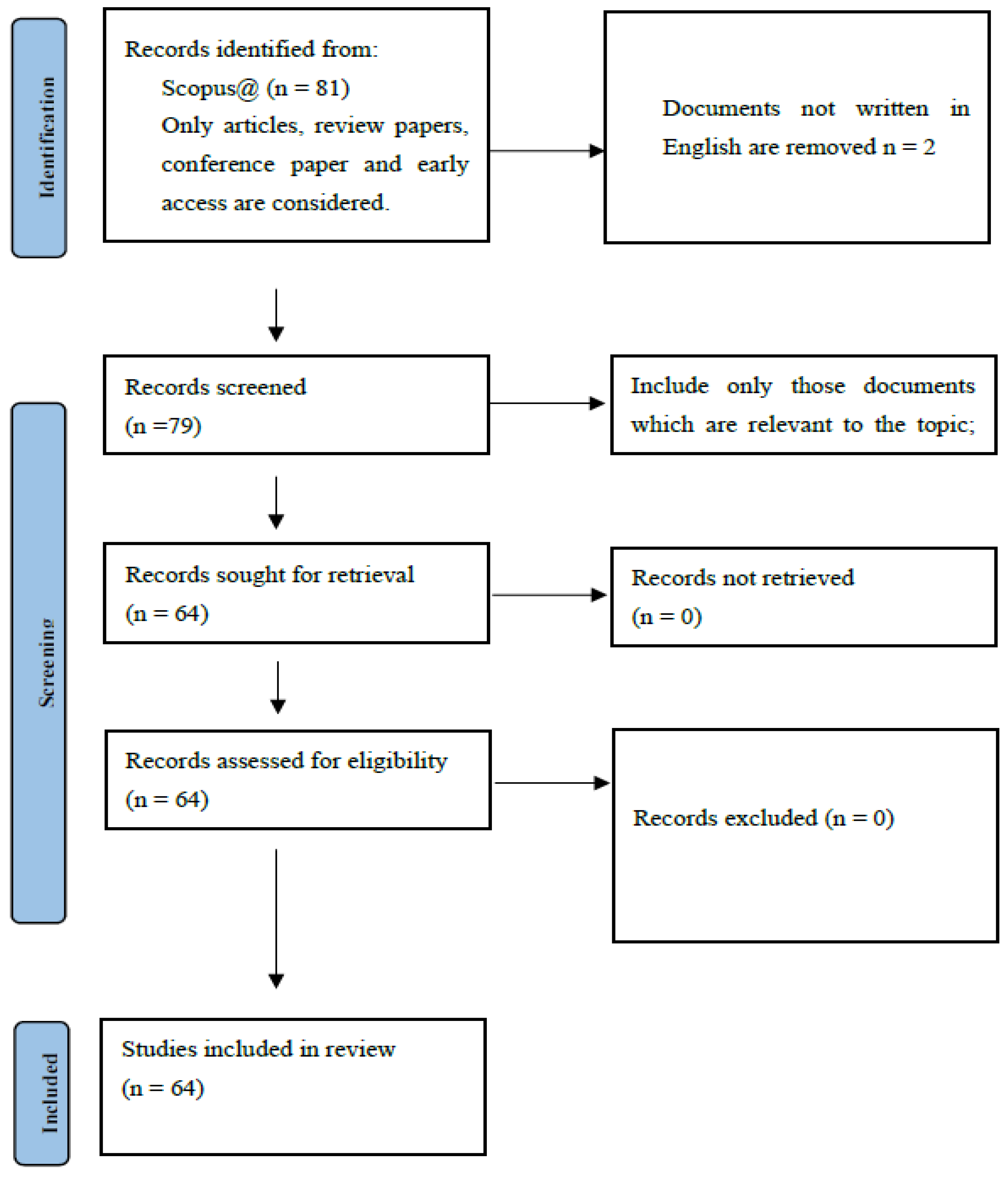
The authors employed the PRISMA 2020 framework, which provides a systematic and objective process for conducting structured literature reviews and meta-analyses. This approach ensures transparency, consistency, and completeness in reporting systematic reviews (Sohrabi et al., 2021). Figure 1 illustrates the PRISMA flow process. Following this framework (Liberati et al., 2009), the authors retrieved relevant literature from the Scopus® data-base and analysed it using bibliometric techniques, such as keyword co-occurrence analysis. Scopus and Web of Science are two major databases that provide metadata for social science literature. Scopus® was chosen because it is widely recognised as the most comprehensive data-base of peer-reviewed literature in the social sciences (Emich et al., 2020). This review is registered in the Open Science Framework public registry.

2.1. Data Retrieval

To retrieve the relevant research stock on big data and humanitarian logistics, a four-step PRISMA process was employed, which includes identifying relevant research documents using keywords, screening the identified research documents, assessing the eligibility of the screened documents, and including eligible documents (Liberati et al., 2009).
In the first step, the literature identification, a list of keywords was used to search for relevant research documents. These keywords included “humanitarian logistics OR humanitarian supply chain OR humanitarian supply chain management OR emergency logistics OR emergency supply chain OR emergency operations OR humanitarian operations AND big data OR big data analytics OR digital technology.” This search, conducted in the titles, keywords, and abstract fields in April 2025, yielded 81 research documents.
Documents not written in English, errata, book chapters, and books were removed, resulting in the elimination of three documents in this step. In the next step, the remaining 78 research documents were screened for any missing metadata. Following this, the remaining documents (title and abstract) were reviewed for relevance to the current research field, resulting in the elimination of 14 additional documents. Finally, a list of 64 research documents was compiled for final analysis. This list comprises 35 research articles, five review papers, and 24 conference papers. Including existing reviews helps ascertain what is already known and unknown, provides context, and positions the current review relative to existing reviews. The inclusion of peer-reviewed conference papers enhances the comprehensiveness of the review and reduces bias.

2.2. Data Analysis

After selecting the relevant research documents, their metadata—such as keywords, abstracts, and cited references—was retrieved and analysed. The authors examined the research stock using bibliometric techniques, including performance analysis and co-word analysis (science mapping). Performance analysis primarily identifies the most influential contributors within a research field, while keyword co-occurrence analysis allows for a deeper understanding of thematic connections.

3. Results

This section details the findings of the analysis. First, the paper analyses publication trends and reviews influential papers in the field of big data and humanitarian logistics research. The Section 2, discusses conceptual structure through a strategic map, while the Section 3 presents the authors’ collaboration patterns. Finally, the Section 4 highlights the collaboration map among the most productive institutes and universities.

3.1. Performance Analysis

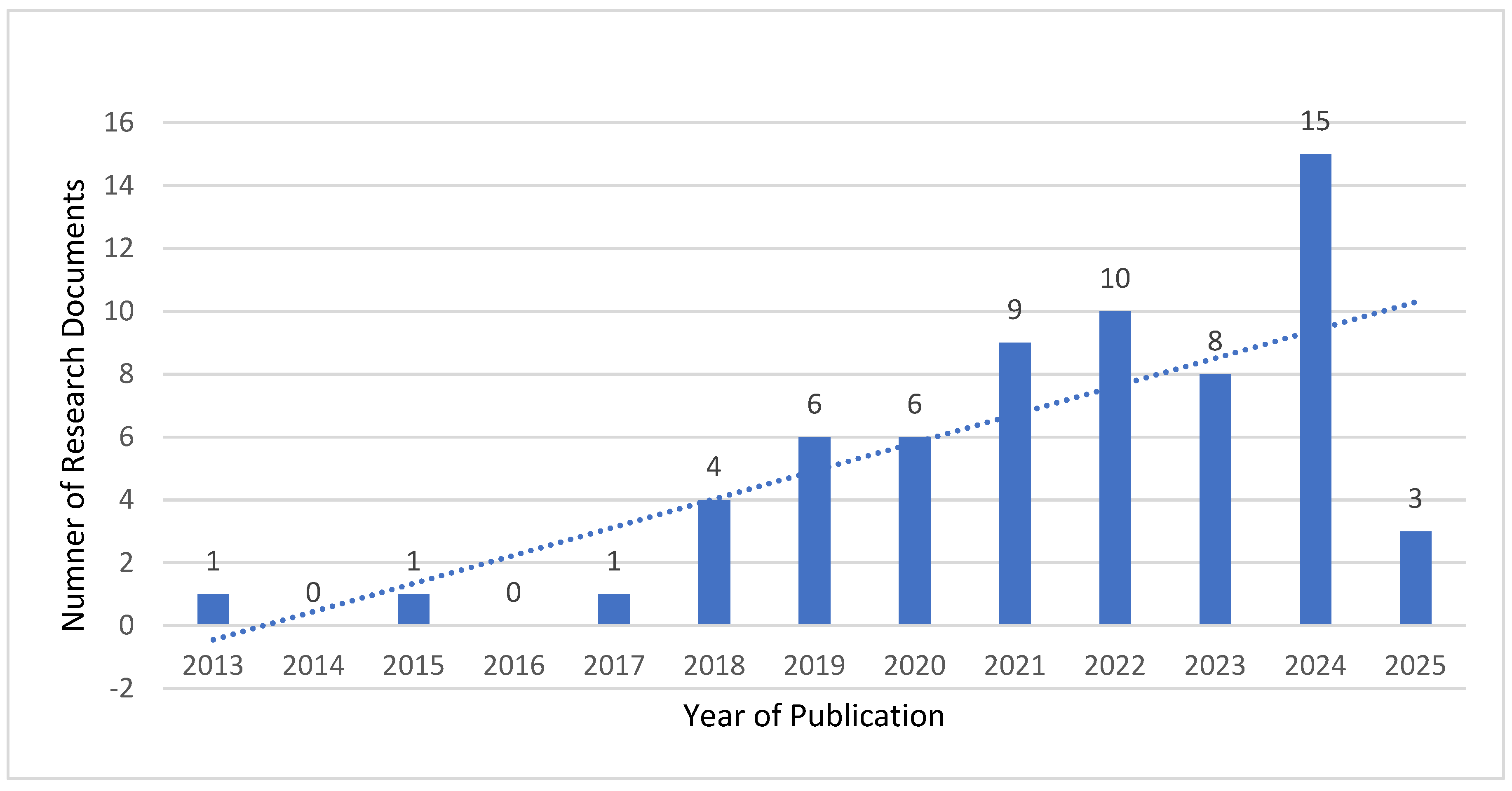
Figure 2 presents the annual publication trend in this research field, and it is evident that the first relevant paper on big data and humanitarian logistics was published in 2013. Since then, publication trends have continued to grow.
Next, the most cited papers in this research field were identified and presented in Table 1. The analysis indicates that Dubey et al. (2019) is the most influential paper, with 318 citations. This study, grounded in information processing theory, demonstrates that big data analytical capabilities enhance trust and collaborative performance among civil and military agencies engaged in disaster relief operations. The second most influential paper, Dubey et al. (2018), highlights the role of big data and predictive analytics in promoting coordination within humanitarian supply chains. This work is based on the contingent resource-based view of the firm. The third most influential paper, Dubey et al. (2021a), adopts the resource-based view and contingency theory to examine how big AI-driven data analytics strengthen the relationship between information alignment, collaboration, and supply chain agility in humanitarian organisations. The fourth most influential paper, Dubey et al. (2022), advocates for the role of artificial intelligence-driven big data analytics in enhancing agility, resilience, and overall performance in humanitarian logistics. Notably, this paper also critiques the limitations of resource and dynamic capability theories, suggesting that a practice-based perspective may offer a more robust explanation for emergency logistics.
Next, the most influential paper (Lakshmanaprabu et al., 2019) discussed the role of IoT and big data classification techniques in the medical field. The sixth most influential paper (Gupta et al., 2019) was a review paper that consolidates the literature on big data and humanitarian supply chains. The seventh most influential paper (Prasad et al., 2018) was based on the assumptions of resource-dependent theory and suggests that applications of big data analytics can lead to superior humanitarian outcomes by connecting the needs of the recipient community with various stakeholders/donors. The eight most influential papers (Wu et al., 2020) suggested that big data obtained from social media can help optimise urban emergency logistics operations. The ninth most influential (Bag et al., 2022) listed a few big data analytics barriers in sustainable humanitarian logistics and the tenth most influential paper (Jeble et al., 2020; Rejeb et al., 2024) was based on the resource-based view and social capital perspective and confirms the role of big data and predictive analytics capability in promoting humanitarian supply chain effectiveness. Conclusively, the top-cited research articles highlight the role of big data in enhancing the effectiveness of humanitarian logistics.
Next, authors have identified the most productive Institutes/universities in this research field (Table 2). It is evident from Table 2 that universities from developed economies hold the first three ranks in the list, although the maximum number of institutions in this list are from China. The implication of this revelation is that big data-based humanitarian supply chain research is also gaining momentum in emerging countries.

3.2. Conceptual Map of Big Data and Humanitarian Logistics

A conceptual map of a research field is a visual representation of key concepts, themes, theories, methodologies, and trends within a specific research area. The conceptual map of a research field helps in understanding how various themes, topics, theories and methods are connected and built upon each other. Additionally, it helps in understanding how knowledge evolves and transitions within a research field, how paradigms shift, and what new areas of inquiry emerge. Conclusively, a conceptual map structures the complex understanding of the research field in a more straightforward and more digestible manner.
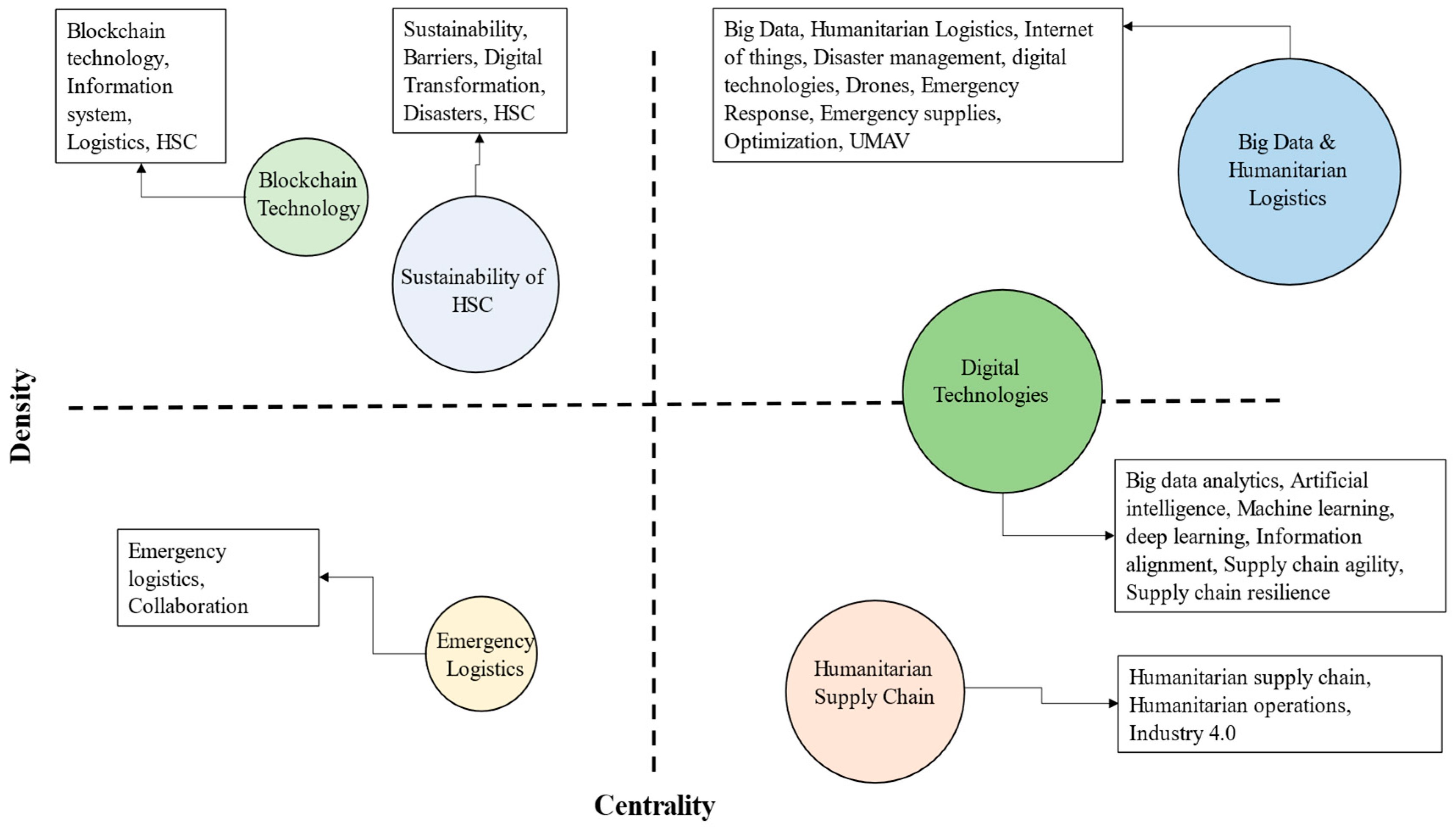
To construct the structural map of the present research field, a strategic map was created using the keyword co-occurrence technique in the Bibliometrix package (Aria & Cuccurullo, 2017). This is a two-dimensional map that organises the key topics/themes of a research field into four quadrants based on density and centrality rank values. These four quadrants are the motor quadrant (high centrality and high density), the base quadrant (high centrality and low density), the emerging quadrant (low centrality and low density) and the niche quadrant (low centrality and high density). The themes or topics of a research field are structured in these four quadrants according to their degree of relevance to the focused research field (centrality) and their degree of internal cohesion or strength within a theme or topic (density). The strategic map of big data and humanitarian supply chain research field (Figure 3) is composed of six major themes: one motor theme in the motor quadrant, one base theme in the base quadrant, one theme in the emerging quadrant, two themes in the niche quadrant, and one transitioning theme between the base and motor quadrants. The Bibliometrix package utilises specific algorithms (e.g., Louvain, Walktrap, Spherical k-means, or simple network component detection) to group keywords into clusters/themes. These themes are explained below.

3.2.1. Motor Theme

Only one theme appears in the motor quadrant, and it is named ‘big data and humanitarian logistics.’ This theme has high density and centrality rank values, meaning it is core to the current research field, and topics within this theme are strongly correlated with one another. Topics covered in this theme are current and play a significant role in shaping knowledge in big data-based humanitarian supply chains. This theme comprises keywords such as big data, humanitarian logistics, Internet of Things, disaster management, digital technologies, drones, emergency response, emergency supplies, optimisation, and uncrewed aerial vehicles. The nature of inquiries in this theme’s research revolves around the use of big data and big data-based technologies in achieving efficiency and sustainability in emergency responses, such as the utilisation of satellites and drones for real-time data collection (Prasad et al., 2018). This theme’s research is primarily based on the resource-based view (Nagendra et al., 2022).

3.2.2. Base Theme

The base quadrant of the present research field has one theme, namely ‘humanitarian supply chain’, and this theme constitutes keywords such as humanitarian supply chains, humanitarian operations and Industry 4.0. This theme has high rank values, which means this theme is important to present research field in and offers a connection between various topics and themes of this research field; however, this theme has a low density score, i.e., weak internal links. The main research questions addressed in the base theme are the role of Industry 4.0 enablers (i.e., Big Data, RFID, IoT, Blockchain, and Artificial Intelligence) in promoting trust, coordination, agility, and resilience in the humanitarian supply chain (Shayganmehr et al., 2024; Zekhnini et al., 2024).

3.2.3. Base/Motor Transition Theme

The conceptual map of this research field has one base to motor quadrant transitioning theme, namely ‘digital technologies. This theme constitutes keywords such as big data analytics, artificial intelligence, machine learning, deep learning, information alignment, supply chain agility, supply chain resilience and so on. This theme serves as a link between the base and motor themes. The base theme primarily focuses on the topic of Industry 4.0 and its role in the humanitarian supply chain. In contrast, the motor theme has extended the inquiries to factors that will facilitate the utility of Industry 4.0, such as the integration of satellite data and the use of drones (Sengupta et al., 2022).
The theme ‘digital technologies’ has explained how the use of deep learning and machine learning models can make humanitarian supply chains more agile and resilient (E. T. Pereira & Shafique, 2024).

3.2.4. Niche Themes

The conceptual map of the present knowledge base has two themes, namely ‘blockchain technology’ and ‘sustainability of humanitarian supply chain’. Themes in this quadrant have a high density rank value, which means these themes are sufficiently developed; however, they are weakly linked to the rest of the research field and are isolated.
This theme is composed of keywords such as blockchain technology, information system, logistics and HSC. Blockchain technology is found to add to the transparency and accountability of HSC operations. Blockchain technology enabled the decentralisation of supply chain ledgers and provided all stakeholders with real-time tracking of aid material. Additionally, blockchain can be utilised to provide a tamper-proof record of transactions in humanitarian operations (Baharmand et al., 2021). Conclusively, blockchain technology enhances transparency, accountability, and traceability and thus adds to the trust and commitment among various stakeholders. Trust is an important precursor of the success of humanitarian operations (Gao et al., 2024).
The second niche theme, i.e., sustainability of humanitarian supply chain, is composed of keywords such as sustainability barriers, digital transformation, disaster, and humanitarian supply chain. Research in this theme has addressed various aspects of sustainability in the humanitarian supply chain, such as barriers that hinder the application of big data and predictive analytics in the humanitarian supply chain (Bag & Arnesh, 2019) and facilitating the use of digital technologies in the humanitarian supply chain for achieving (Bag et al., 2023).

3.2.5. Emerging Theme

The conceptual map of big data and humanitarian logistics research base has one emerging theme namely ‘emergency logistics.’ This theme is composed of keywords such as emergency logistics and collaboration. This theme has low rank value for both density and centrality. In other words, this theme has weak internal as well as external linkage. Research on this theme is emerging and has addressed research problems such as how an organisation’s culture that embraces AI-driven big data analytics can influence the agility and resilience of the emergency supply chain (Michel et al., 2023) and digital technologies and the emergency supply chain (Dubey et al., 2022) and so on.
This analysis also helped authors in identifying the unique challenges faced by humanitarian relief organisations in the emerging countries context. Significant barriers in humanitarian supply chain in emerging countries context are poor quality of data, inadequate infrastructure such as roads, etc.; poor digital infrastructure, lack of financial support, delayed response time, limited skill set and technical expertise, lack of coordination and collaboration among various stakeholders, organisational resistance to adopt new technologies, information sharing and knowledge sharing, knowledge asymmetry and so on (Altay & Pal, 2014; Bag et al., 2022; P. Kumar et al., 2024). Indeed, these challenges are significant and big data-based technologies can be leveraged to enhance the efficiency of the humanitarian supply chain in an emerging country context.

3.3. Authors’ Collaboration Map

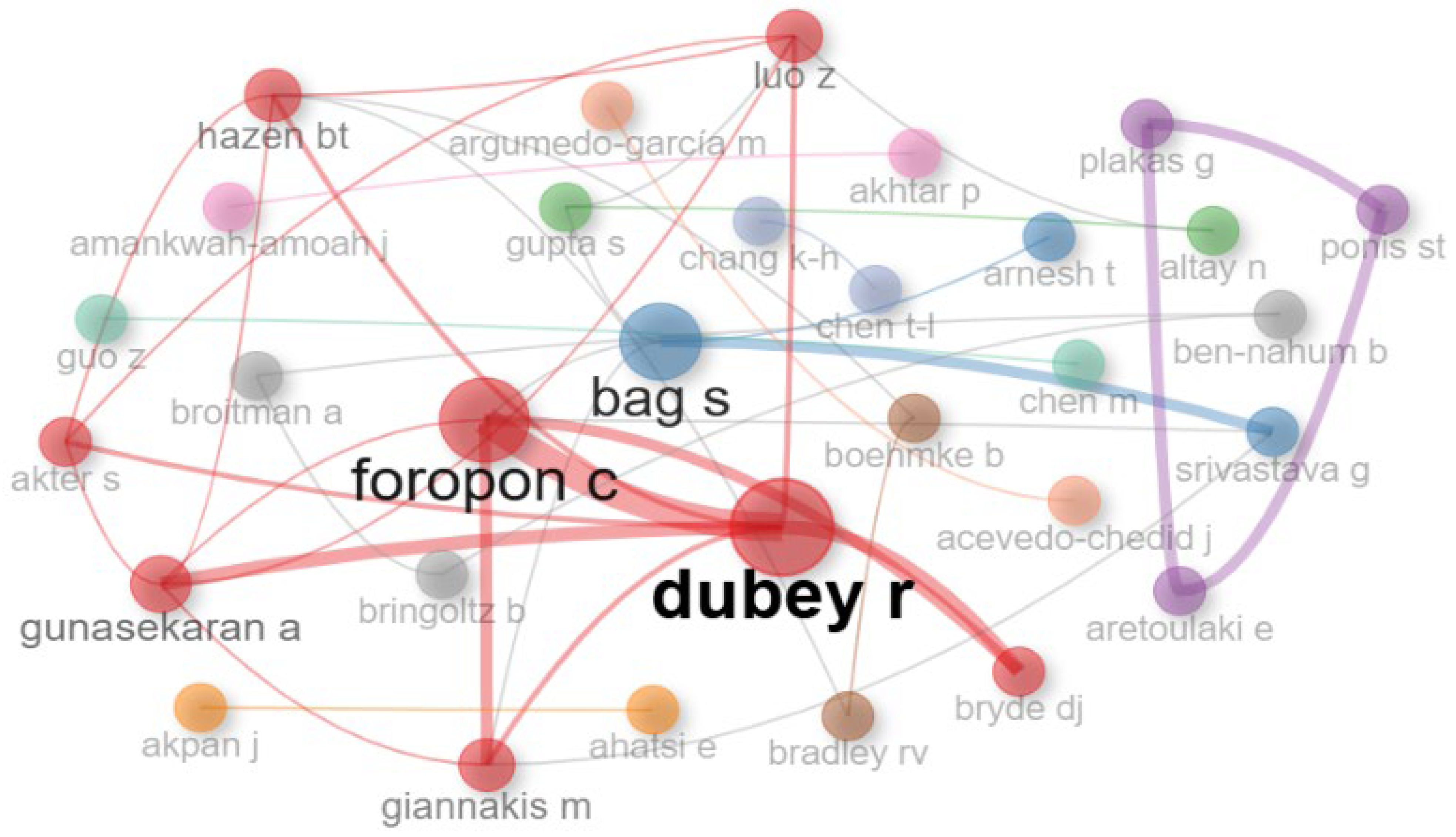
Next, to understand the pattern of collaboration between the scholars/authors of the big data-based humanitarian supply chain, an authors’ collaboration map was constituted (Figure 4). This map consists of bubbles of various sizes. Each bubble represents an author, and the size of the bubble represents the quantity of research published by that specific author. These bubbles are connected to other bubbles, and the density of the connecting line represents the strength of the co-authorship. For example: the line that connects Dubey, R., Foropon, C. was the thickest line. It is notable to record that the largest co-authorship network is among scholars, namely Dubey, R., Foropon, C., Gunasekaran, A., Akter, S., Hazen, B.T., Luo, Z. and Giannakis, M. All these authors are affiliated with universities/institutes of developed economies except Luo, Z.

3.4. Institute Collaboration Map

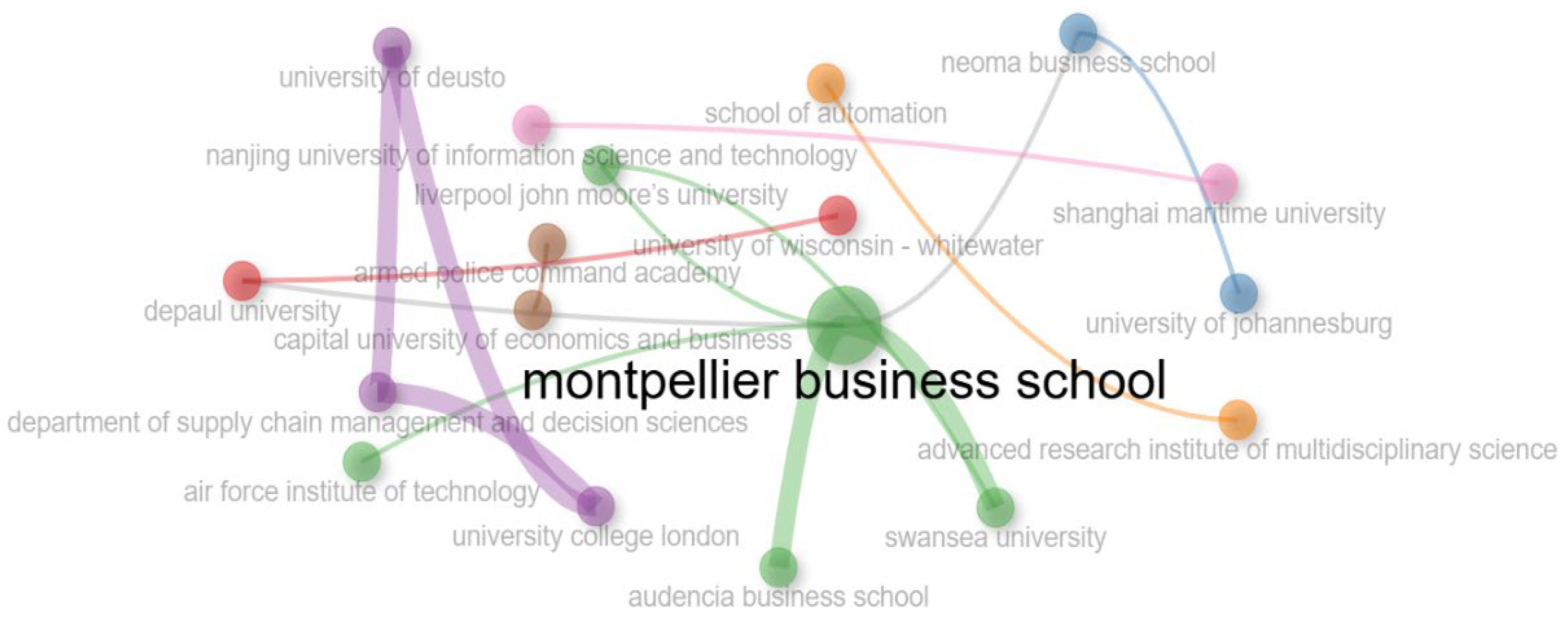
Figure 5 presents the collaboration pattern among the most productive Institutes/Universities. Figure 5 depicts multiple collaboration clusters, each represented by assorted colours, highlighting regional collaboration. The size of the node and the thickness of the lines stand for the volume produced by an Institute and the frequency of collaboration among various institutes, respectively. Montpellier Business School appeared as the central node in this map. This shows the pivotal role of Montpellier Business School in big data-based humanitarian supply chain research. Primarily, Montpellier’s research collaboration occurred with developed countries’ Institutes, namely the Air Force Institute of Technology, Audencia Business School, and Swansea University. Figure 5 also revealed the collaboration between developed and emerging countries, for example, Neoma Business School, University College London, and Shanghai Maritime University. This analysis proved the exchange of knowledge and interconnectedness among various Institutes.

4. Discussion and Implications

The objective of this paper is to systematically evaluate the research field of big data and humanitarian supply chains and to suggest implications for emerging market contexts. Specifically, the study addresses four objectives:
  • RQ1: Conduct a performance analysis of this research field.
  • RQ2: Construct a conceptual knowledge map of the current research landscape.
  • RQ3: Develop a collaboration map of the most productive authors and institutions.
  • RQ4: Identify theoretical and practical implications of big data-related research (global knowledge) for humanitarian supply chains in emerging economies.
To achieve RQ1, annual publication trends were analysed (Figure 1), and the most cited research papers and institutions were identified (Table 1 and Table 2, respectively). The performance analysis indicates that this research area gained significant momentum only after 2018, with annual publications steadily increasing since then. The most influential studies have examined the role of big data-based technologies—such as machine learning, artificial intelligence, deep learning, and autonomous systems—in enhancing the performance of humanitarian operations. For example, social media analytics have been used to improve responses to urban emergency situations. The list of the most productive institutions is dominated by universities located in developed economies.
Addressing RQ2, the analysis developed a conceptual knowledge base of this research field using keyword co-occurrence analysis. A strategic knowledge map was constructed, organising the existing research into six major themes:
  • Big data and humanitarian logistics (motor theme);
  • Digital technologies (transition theme between base and motor);
  • Humanitarian supply chain (base theme);
  • Emergency logistics (emerging theme);
  • Blockchain technology;
  • Sustainability of humanitarian supply chains (niche theme).
These findings highlight the growth and evolution of the research field, illustrating how various themes are interconnected and pointing to potential directions for future research. They underscore emerging trends and key focus areas for further exploration. This analysis also presented the collaboration pattern among the most productive authors and institutes (RQ 3).
Lastly, the present review also helped in identifying various challenges pertaining to humanitarian logistics in the context of emerging countries. These challenges are mainly related to a lack of physical infrastructure (such as road conditions, limited access to remote areas, damaged infrastructure); data and information gaps; lack of coordination among various organisations involved, limited use of technology, lack of people capabilities and so on. On the basis of this analysis, the authors offered the theoretical and practical implications of this research field from an emerging country’s perspective (RQ 4).

4.1. Theoretical Implications for the Emerging Countries Context

The present analysis offers multiple implications for both theory and practice. It is evident that the current research landscape is primarily dominated by studies from developed economies, while research from emerging countries remains comparatively underrepresented. This paper attempts to address this gap by extending global knowledge to the context of emerging economies and discussing the corresponding implications.
The first theoretical implication for research in emerging countries is the extension of resource-based and dynamic capabilities theories to their specific contexts. Existing studies have established that big data-driven resources and capabilities enhance the prediction of disaster events, facilitate resource planning for relief operations, enable agile responses, and support effective stakeholder coordination (Bag et al., 2023). Since developing countries often lack adequate resources for managing emergency operations, extending resource-based and dynamic capability perspectives to emerging economies can provide valuable frameworks and models. These can leverage big data capabilities to build agility, resilience, and efficiency in the implementation of humanitarian supply chains (Mazar et al., 2025).
Second, other important perspectives in this research field include information processing theory, alignment theory, practice-based theory, and others (Dubey et al., 2022). These represent recent and alternative explanations to traditional frameworks and demonstrate how the adoption of big data-driven technologies can enhance coordination among stakeholders by enabling real-time information sharing, fostering trust, and creating symmetry (Zekhnini et al., 2024). Emerging economies are often characterised by weak institutional frameworks, infrastructure constraints, and a low degree of coordination among stakeholders such as disaster management agencies, NGOs, and local government bodies. The alignment theory emphasises relational and collaborative aspects and can be applied to improve coordination among these stakeholders in emerging countries. Similarly, information processing theory can be used to enhance the effectiveness of decision-making. Extending these theories to emerging economies would contribute significantly to developing swift and efficient responses to emergency operations.
Next, the emerging themes identified in the strategic map highlight the growing relevance of big data-based technologies, such as blockchain and digital platforms, in humanitarian supply chains (Sakas et al., 2023; Shayganmehr et al., 2024). The adoption of these technologies can clearly enhance the effectiveness of humanitarian supply chain activities, especially in resource-scarce developing countries. Accordingly, emerging countries can apply the proposed models and frameworks to strengthen their capabilities and more effectively leverage these technologies.
Additionally, this paper presents a collaboration map of authors and institutions. The authors’ collaboration map indicates that Dubey R, Foropon C, and Bag S play a central role in big data-based humanitarian supply chain research. Their work has established that big data technologies—such as predictive analytics, IoT, and blockchain—should be leveraged to enhance the overall efficacy of these operations (Akhtar et al., 2025; Marić et al., 2022). An interesting insight from this analysis (see Figure 4) is that the collaboration network among scholars from developed economies is denser and reflects large-scale implementation. In contrast, the networks among scholars from developing economies are more diverse and tend to focus on challenges related to local contexts, such as capacity building, data accessibility, and adaptation and adoption of big data solutions for disaster response (Ahatsi & Olanrewaju, 2025). A specific implication for developing economies is that interregional collaboration should be strengthened to bridge gaps, foster knowledge sharing, and support the adaptation of big data technologies to meet localised needs (Zekhnini et al., 2024).
Lastly, this paper also offers an understanding of publication collaboration among various institutes, and it is observed that universities and institutes from developed economies are highly central and influential in this research domain, although the participation of emerging countries’ institutes is increasing speedily.

4.2. Practical Implications for the Emerging Countries Context

The present analysis also suggests certain meaningful practical interventions in addition to theoretical implications for emerging countries. First, the use of big data-based technologies, AI tools, and ML models in analysing complex and big data for predicting the occurrence of disasters and in designing swift response strategies using real-time decision-making approaches. More specifically, techniques such as time series forecasting could help in predicting the future resource requirements to enable a swift response to such events (Ahatsi & Olanrewaju, 2025). BDA-based techniques can also help in designing an early warning system that will locate potential disasters before they occur, managing them proactively.
Second, increased information alignment and inter-agency coordination using digital technologies could enhance inventory management, delivery tracking, and the effectiveness of relief operations in resource-constrained emerging markets. Big data-based technologies would enhance the transparency and accountability of various actors by continuously tracking resources and data, thereby improving their effectiveness and efficiency. In addition, these technologies can be used to optimise the relief operations, thus reducing the cost and time lag in disaster response (Ahatsi & Olanrewaju, 2025).
Third, emerging economies can compensate for scarce resources by developing context-specific big data-based digital infrastructure to tackle emergency logistics. For example, blockchain technologies can be utilised for a transparent, accountable, and fraud-free aid distribution system. Additionally, integrating BDA with the enterprise resource planning system can enhance collaboration and partnerships among various stakeholders, facilitating effective resource management during a crisis.
Fourth, in a data-scarce and technologically underdeveloped context, government and regulators should invest in digital infrastructure and data literacy training. Data literacy training for effective use of big data-based technologies can significantly maximise the impact of these technologies in humanitarian logistics.

5. Conclusions, Limitations, and Future Research

This paper aims to analyse the big data and humanitarian supply chain literature systematically using a bibliometric technique. This analysis has yielded the conceptual structure of the present research field and identified the major research themes and emerging areas. This analysis suggests that big data and digital technologies have enormous potential to enhance the performance of emergency logistics. There are a few areas where this technological advancement can help gather and analyse complex, multisource data in real time for better decision-making and resource allocation. These digital capabilities are also found to promote collaboration among various stakeholders and institutions through enhancing the inter-partner trust. Additionally, big data-based capabilities are found to streamline emergency logistics operations. In addition to these findings, our analysis also suggests specific theoretical and practical implications for the context of an emerging country.
Although our findings make a significant contribution to the current research field, they also have certain limitations. First, the present analysis is based on data retrieved from the Scopus data-base, which is a precedent; however, data source triangulation is suggested for future enquiries. The present paper employed bibliometric techniques for data analysis. The bibliometric techniques themselves have several limitations, including methodological inconsistencies, inherent biases in bibliometric databases, and the integration of bibliometric techniques with other approaches in the literature review. In terms of methodological limitations, the major limitation is the lack of methodological consistency. Bibliometric analyses often suffer from ambiguity in the application of various bibliometric techniques, which can lead to inconsistencies in conclusions and applications of such analyses (Azarian et al., 2023). The popular databases for retrieving bibliometric metadata of relevant research are Web of Science and Scopus databases. Although these two databases offer sufficient coverage in the business management domain, there is a risk of excluding some relevant pieces of research due to language and regional differences. Lastly, bibliometric techniques may not provide a comprehensive understanding of the research field and, therefore, require integration with other structural literature review approaches (Boell & Cecez-Kecmanovic, 2015).
Future research in big data-based technologies and humanitarian logistics in the emerging marketing context can be extended to address the unique challenges of these contexts. For example, future research can integrate various theoretical perspectives such as technological acceptance model (what are the barriers and enablers of use of big data-based technologies in humanitarian logistics?), information processing theory (explore the role of big data in improving the coordination among government agencies, NGOs, and other partners), and resource and dynamic capability perspective (how big data-based capabilities can enhance the resilience of humanitarian operations and how big data-based technologies can support adaptive logistics strategies). A few other research questions could focus on the role of big data technologies in enhancing transparency and accountability, as well as donor trust and other related aspects. Research can also examine the issues related to data privacy, digital divide, and other ethical concerns in humanitarian logistics within the context of emerging countries.

Funding

This research received no external funding.

Institutional Review Board Statement

Not applicable.

Informed Consent Statement

Not applicable.

Data Availability Statement

Data is available on request.

Conflicts of Interest

The author declares no conflicts of interest.

References

  1. Ahatsi, E., & Olanrewaju, O. A. (2025). Enhancing humanitarian supply chain resilience: Evaluating artificial intelligence and big data analytics in two nations. Logistics, 9(2), 64. [Google Scholar] [CrossRef]
  2. Akhtar, P., De Silva, M., Khan, Z., Tarba, S., Amankwah-Amoah, J., & Wood, G. (2025). Digital transformation in public-private collaborations: The success of humanitarian supply chain operations. International Journal of Production Economics, 279, 109461. [Google Scholar] [CrossRef]
  3. Alshahrani, S. T. (2023). Industry 4.0 in “major emerging markets”: A systematic literature review of benefits, use, challenges, and mitigation strategies in supply chain management. Sustainability, 15, 14811. [Google Scholar] [CrossRef]
  4. Altay, N., & Labonte, M. (2014). Challenges in humanitarian information management and exchange: Evidence from Haiti. Disasters, 38, S50–S72. [Google Scholar] [CrossRef] [PubMed]
  5. Altay, N., & Narayanan, A. (2022). Forecasting in humanitarian operations: Literature review and research needs. International Journal of Forecasting, 38(3), 1234–1244. [Google Scholar] [CrossRef] [PubMed]
  6. Altay, N., & Pal, R. (2014). Information diffusion among agents: Implications for humanitarian logistics. International Journal of Production Economics, 151, 93–104. [Google Scholar]
  7. Aria, M., & Cuccurullo, C. (2017). Bibliometrix: An R-tool for comprehensive science mapping analysis. Journal of Informetrics, 11(4), 959–975. [Google Scholar] [CrossRef]
  8. Azarian, M., Yu, H., Shiferaw, A. T., & Stevik, T. K. (2023). Do we perform systematic literature review right? A scientific mapping and methodological assessment. Logistics, 7(4), 89. [Google Scholar] [CrossRef]
  9. Bag, S., & Arnesh, T. (2019, October 23–25). Barriers to BDPA applications in sustainable HSC practices. International Conference on Industrial Engineering and Operations Management (pp. 319–334), Toronto, ON, Canada. [Google Scholar]
  10. Bag, S., Gupta, S., & Wood, L. (2022). Big data analytics in sustainable humanitarian supply chain: Barriers and their interactions. Annals of Operations Research, 319(1), 721–760. [Google Scholar] [CrossRef]
  11. Bag, S., Rahman, M. S., Srivastava, G., Giannakis, M., & Foropon, C. (2023). Data-driven digital transformation and the implications for antifragility in the humanitarian supply chain. International Journal of Production Economics, 266, 109059. [Google Scholar] [CrossRef]
  12. Baharmand, H., Maghsoudi, A., & Coppi, G. (2021). Exploring the application of blockchain to humanitarian supply chains: Insights from Humanitarian Supply Blockchain pilot project. International Journal of Operations & Production Management, 41(9), 1522–1543. [Google Scholar] [CrossRef]
  13. Bansal, S., Kumar, S., Ali, S., Singh, S., Nangia, P., & Bamel, U. (2024). Harnessing digital finance for sustainability: An integrative review and research agenda. Research in International Business and Finance, 74, 102682. [Google Scholar] [CrossRef]
  14. Boell, S. K., & Cecez-Kecmanovic, D. (2015). On being ‘systematic’ in literature reviews in IS. Journal of Information Technology, 30(2), 161–173. [Google Scholar] [CrossRef]
  15. Carnero Quispe, M. F., Chambilla Mamani, L. D., Yoshizaki, H. T. Y., & Brito Junior, I. D. (2025). Temporary facility location problem in humanitarian logistics: A systematic literature review. Logistics, 9(1), 42. [Google Scholar] [CrossRef]
  16. Carnero Quispe, M. F., Couto, A. S., de Brito Junior, I., Cunha, L. R. A., Siqueira, R. M., & Yoshizaki, H. T. Y. (2024). Humanitarian logistics prioritization models: A systematic literature review. Logistics, 8(2), 60. [Google Scholar] [CrossRef]
  17. Dubey, R., Bryde, D. J., Dwivedi, Y. K., Graham, G., & Foropon, C. (2022). Impact of artificial intelligence-driven big data analytics culture on agility and resilience in humanitarian supply chain: A practice-based view. International Journal of Production Economics, 250, 108618. [Google Scholar] [CrossRef]
  18. Dubey, R., Bryde, D. J., Foropon, C., Tiwari, M., Dwivedi, Y., & Schiffling, S. (2021a). An investigation of information alignment and collaboration as complements to supply chain agility in humanitarian supply chain. International Journal of Production Research, 59(5), 1586–1605. [Google Scholar] [CrossRef]
  19. Dubey, R., Gunasekaran, A., Bryde, D. J., Dwivedi, Y. K., & Papadopoulos, T. (2020). Blockchain technology for enhancing swift-trust, collaboration and resilience within a humanitarian supply chain setting. International Journal of Production Research, 58, 3381–3398. [Google Scholar] [CrossRef]
  20. Dubey, R., Gunasekaran, A., Childe, S. J., Fosso Wamba, S., Roubaud, D., & Foropon, C. (2021b). Empirical investigation of data analytics capability and organizational flexibility as complements to supply chain resilience. International Journal of Production Research, 59(1), 110–128. [Google Scholar] [CrossRef]
  21. Dubey, R., Gunasekaran, A., Childe, S. J., Roubaud, D., Wamba, S. F., Giannakis, M., & Foropon, C. (2019). Big data analytics and organizational culture as complements to swift trust and collaborative performance in the humanitarian supply chain. International Journal of Production Economics, 210, 120–136. [Google Scholar] [CrossRef]
  22. Dubey, R., Luo, Z., Gunasekaran, A., Akter, S., Hazen, B. T., & Douglas, M. A. (2018). Big data and predictive analytics in humanitarian supply chains: Enabling visibility and coordination in the presence of swift trust. The International Journal of Logistics Management, 29(2), 485–512. [Google Scholar] [CrossRef]
  23. Emich, K. J., Kumar, S., Lu, L., Norder, K., & Pandey, N. (2020). Mapping 50 years of small group research through small group research. Small Group Research, 51(6), 659–699. [Google Scholar] [CrossRef]
  24. Gao, X., Chen, Z., Huang, G., & Hezam, I. M. (2024). Blockchain-enabled safeguard mechanism in SCP-based relief supply chain designs in response to long-term disasters. IEEE Access, 12, 133054–133066. [Google Scholar] [CrossRef]
  25. Gupta, S., Altay, N., & Luo, Z. (2019). Big data in humanitarian supply chain management: A review and further research directions. Annals of Operations Research, 283(1), 1153–1173. [Google Scholar] [CrossRef]
  26. Güleser, D. (2026). Data-driven humanitarian supply chains in disaster relief: Enhancing responsiveness and efficiency through predictive analytics. In Reshaping humanitarian logistics with AI, predictive analytics, and autonomous systems (pp. 45–68). IGI Global Scientific Publishing. [Google Scholar]
  27. Jeble, S., Kumari, S., Venkatesh, V. G., & Singh, M. (2020). Influence of big data and predictive analytics and social capital on performance of humanitarian supply chain: Developing framework and future research directions. Benchmarking: An International Journal, 27(2), 606–633. [Google Scholar] [CrossRef]
  28. Khoshakhlagh, A. H., Mohammadzadeh, M., Bamel, U., & Gruszecka-Kosowska, A. (2023). Human exposure to heavy metals and related cancer development: A bibliometric analysis. Environmental Science and Pollution Research, 30(51), 109867–109888. [Google Scholar] [CrossRef]
  29. Khoshakhlagh, A. H., Mohammadzadeh, M., Sicard, P., & Bamel, U. (2024). Human exposure to formaldehyde and health risk assessment: A 46-year systematic literature review. Environmental Geochemistry and Health, 46(6), 206. [Google Scholar] [CrossRef]
  30. Kondraganti, A., Narayanamurthy, G., & Sharifi, H. (2024). A systematic literature review on the use of big data analytics in humanitarian and disaster operations. Annals of Operations Research, 335, 1015–1052. [Google Scholar] [CrossRef] [PubMed]
  31. Kumar, P., Singh, R. K., & Shahgholian, A. (2024). Learnings from COVID-19 for managing humanitarian supply chains: Systematic literature review and future research directions. Annals of Operations Research, 335(3), 899–935. [Google Scholar] [CrossRef]
  32. Kumar, S., Lim, W. M., Sureka, R., Jabbour, C. J. C., & Bamel, U. (2024). Balanced scorecard: Trends, developments, and future directions. Review of Managerial Science, 18(8), 2397–2439. [Google Scholar] [CrossRef]
  33. Lakshmanaprabu, S. K., Shankar, K., Ilayaraja, M., Nasir, A. W., Vijayakumar, V., & Chilamkurti, N. (2019). Random forest for big data classification in the internet of things using optimal features. International Journal of Machine Learning and Cybernetics, 10(10), 2609–2618. [Google Scholar] [CrossRef]
  34. Liberati, A., Altman, D. G., Tetzlaff, J., Mulrow, C., Gøtzsche, P. C., Ioannidis, J. P., Clarke, M., Devereaux, P. J., Kleijnen, J., & Moher, D. (2009). The PRISMA statement for reporting systematic reviews and meta-analyses of studies that evaluate healthcare interventions: Explanation and elaboration. Bmj, 339, b2700. [Google Scholar] [CrossRef]
  35. Marić, J., Galera-Zarco, C., & Opazo-Basáez, M. (2022). The emergent role of digital technologies in the context of humanitarian supply chains: A systematic literature review. Annals of Operations Research, 319(1), 1003–1044. [Google Scholar] [CrossRef]
  36. Massaro, M., Dumay, J., & Guthrie, J. (2016). On the shoulders of giants: Undertaking a structured literature review in accounting. Accounting, Auditing & Accountability Journal, 29(5), 767–801. [Google Scholar] [CrossRef]
  37. Mazar, M., Gossett, K., & Shashi, M. (2025). Sustainable strategies for improving humanitarian supply chain management in the united nations using dynamic capability theory. Standards, 4, 154–175. [Google Scholar] [CrossRef]
  38. Michel, S., Gerbaix, S., & Bidan, M. (2023). Dimensions and sub-dimensions of emergency supply chain resilience: A case study of Médecins Sans Frontières Logistique during the COVID-19 pandemic. Supply Chain Management: An International Journal, 28(5), 939–953. [Google Scholar] [CrossRef]
  39. Nagendra, N. P., Narayanamurthy, G., & Moser, R. (2022). Management of humanitarian relief operations using satellite big data analytics: The case of Kerala floods. Annals of Operations Research, 319, 885–910. [Google Scholar] [CrossRef]
  40. Nawazish, M., Nandakumar, M. K., & Mateen, A. (2024). Are humanitarian supply chains sustainable? A systematic review and future research themes. Benchmarking: An International Journal, 31(8), 2565–2601. [Google Scholar] [CrossRef]
  41. Papadopoulos, T., Gunasekaran, A., Dubey, R., Altay, N., Childe, S. J., & Fosso-Wamba, S. (2017). The role of Big Data in explaining disaster resilience in supply chains for sustainability. Journal of Cleaner Production, 142, 1108–1118. [Google Scholar] [CrossRef]
  42. Patil, A., & Madaan, J. (2024). A study on the research clusters in the humanitarian supply chain literature: A systematic review. Logistics, 8, 128. [Google Scholar] [CrossRef]
  43. Pereira, E. T., & Shafique, M. N. (2024). The role of artificial intelligence in supply chain agility: A perspective of humanitarian supply chain. Engineering Economics, 35(1), 77–89. [Google Scholar] [CrossRef]
  44. Pereira, V., Laker, B., Bamel, U., Sharma, G. D., & Paul, H. (2024). Customer engagement strategies within family businesses in emerging economies: A multi-method study. Journal of Business Research, 174, 114508. [Google Scholar] [CrossRef]
  45. Prasad, S., Zakaria, R., & Altay, N. (2018). Big data in humanitarian supply chain networks: A resource dependence perspective. Annals of Operations Research, 270, 383–413. [Google Scholar] [CrossRef]
  46. Rejeb, A., Rejeb, K., & Zrelli, I. (2024). Analyzing barriers to internet of things (IoT) adoption in humanitarian logistics: An ISM–DEMATEL approach. Logistics, 8(2), 38. [Google Scholar] [CrossRef]
  47. Rocco, T. S., Plakhotnik, M. S., McGill, C. M., Huyler, D., & Collins, J. C. (2023). Conducting and writing a structured literature review in human resource development. Human Resource Development Review, 22(1), 104–125. [Google Scholar] [CrossRef]
  48. Sakas, D. P., Giannakopoulos, N. T., Terzi, M. C., Kanellos, N., & Liontakis, A. (2023). Digital transformation management of supply chain firms based on big data from DeFi social media profiles. Electronics, 12, 4219. [Google Scholar] [CrossRef]
  49. Sengupta, T., Narayanamurthy, G., Moser, R., Pereira, V., & Bhattacharjee, D. (2022). Disruptive technologies for achieving supply chain resilience in COVID-19 era: An implementation case study of satellite imagery and blockchain technologies in fish supply chain. Information Systems Frontiers, 24(4), 1107–1123. [Google Scholar] [CrossRef] [PubMed]
  50. Sharma, P., & Joshi, A. (2020). Challenges of using big data for humanitarian relief: Lessons from the literature. Journal of Humanitarian Logistics and Supply Chain Management, 10(4), 423–446. [Google Scholar] [CrossRef]
  51. Shayganmehr, M., Gupta, S., Laguir, I., Stekelorum, R., & Kumar, A. (2024). Assessing the role of industry 4.0 for enhancing swift trust and coordination in humanitarian supply chain. Annals of Operations Research, 335, 1053–1085. [Google Scholar] [CrossRef]
  52. Sohrabi, C., Franchi, T., Mathew, G., Kerwan, A., Nicola, M., Griffin, M., & Agha, R. (2021). PRISMA 2020 statement: What’s new and the importance of reporting guidelines. International Journal of Surgery, 88, 105918. [Google Scholar] [CrossRef]
  53. Song, X., Zhang, H., Akerkar, R., Huang, H., Guo, S., Zhong, L., & Culotta, A. (2020). Big data and emergency management: Concepts, methodologies, and applications. IEEE Transactions on Big Data, 8(2), 397–419. [Google Scholar] [CrossRef]
  54. Vanajakumari, M., Kumar, S., & Gupta, S. (2016). An integrated logistic model for predictable disasters. Production and Operations Management, 25(5), 791–811. [Google Scholar] [CrossRef]
  55. Wu, X., Cao, Y., Xiao, Y., & Guo, J. (2020). Finding urban rainstorms and waterlogging disasters based on microblogging data and the location-routing problem model of urban emergency logistics. Annals of Operations Research, 290(1), 865–896. [Google Scholar] [CrossRef]
  56. Zekhnini, K., Tarei, P. K., Benabdellah, A. C., & Oktari, R. S. (2024). Analyzing the dyadic relationship between the performance enablers to achieve the humanitarian supply chain 4.0. International Journal of Disaster Risk Reduction, 115, 105046. [Google Scholar] [CrossRef]
  57. Zeng, X., & Yi, J. (2023). Analysis of the impact of big data and artificial intelligence technology on supply chain management. Symmetry, 15, 1801. [Google Scholar] [CrossRef]
Figure 1. PRISMA Flow Diagram.
Admsci 15 00478 g001
Figure 2. Annual Publication Trend. Source: Author’s analysis of Scopus data retrieved in April 2025.
Admsci 15 00478 g002
Figure 3. Strategic Map of Big Data and Humanitarian Logistics.
Admsci 15 00478 g003
Figure 4. Authors’ collaboration map.
Admsci 15 00478 g004
Figure 5. Institutes/universities collaboration map.
Admsci 15 00478 g005
Table 1. Most cited/influential research papers in Big Data and Humanitarian Logistics.
CitationTitleJournalTCTC per YearNTC
Dubey et al. (2019)Big data analytics and organisational culture as complements to swift trust and collaborative performance in the humanitarian supply chainInternational Journal of Production Economics31845.433.27
Dubey et al. (2018)Big data and predictive analytics in humanitarian supply chains: Enabling visibility and coordination in the presence of swift trustThe International Journal of Logistics Management17221.502.60
Dubey et al. (2021a)An investigation of information alignment and collaboration as complements to supply chain agility in the humanitarian supply chainInternational Journal of Production Research15831.607.90
Dubey et al. (2022)Impact of artificial intelligence-driven big data analytics culture on agility and resilience in humanitarian supply chain: A practice-based viewInternational Journal of Production Economics15639.004.47
Lakshmanaprabu et al. (2019)Random forest for big data classification in the Internet of Things using optimal featuresInternational journal of machine learning and cybernetics13719.571.41
Gupta et al. (2019)Big data in humanitarian supply chain management: A review and further research directionsAnnals of Operations Research9213.140.95
Prasad et al. (2018)Big data in humanitarian supply chain networks: A resource dependence perspective. Annals of Operations Research9111.381.37
Wu et al. (2020)Finding urban rainstorm and waterlogging disasters based on microblogging data and the location-routing problem model of urban emergency logisticsAnnals of Operations Research589.672.49
Bag et al. (2022)Big data analytics in sustainable humanitarian supply chain: Barriers and their interactionsAnnals of Operations Research5112.751.46
Jeble et al. (2020)Influence of big data, predictive analytics and social capital on performance of humanitarian supply chain: Developing framework and future research directionsBenchmarking: An International Journal488.002.06
Source: Author’s analysis of Scopus data retrieved in April 2025; TC: Total Citations; NTC: Normalised Total Citations.
Table 2. Most relevant affiliations (Institutes/Universities).
AffiliationArticles
Montpellier Business School, France9
National Technical University of Athens, Greece6
Air Force Institute of Technology, USA5
Capital University of Economics and Business, China5
North China Institute of Science and Technology, China5
North China University of Water Resources and Electric Power, China5
China People’s Police University, China4
Liverpool John Moores University, UK4
Changyi People’s Hospital, China3
Durban University of Technology, South Africa3
Source: Authors’ analysis of Scopus© data.
Disclaimer/Publisher’s Note: The statements, opinions and data contained in all publications are solely those of the individual author(s) and contributor(s) and not of MDPI and/or the editor(s). MDPI and/or the editor(s) disclaim responsibility for any injury to people or property resulting from any ideas, methods, instructions or products referred to in the content.