Article

Life Cycle Assessment of a Three-Bedroom House in Saudi Arabia

by
Muhammad Asif
1,*,
Ammar Hamoud Ahmad Dehwah
1,
Farhan Ashraf
2,
Hassan Saeed Khan
1,
Mian Mobeen Shaukat
1 and
Muhammad Tahir Hassan
3
1
Architectural Engineering Department, King Fahd University of Petroleum & Minerals, Dhahran 31261, Saudi Arabia
2
Mechanical Engineering Department, University of Management and Technology, Lahore, Pakistan
3
School of Engineering and Built Environment, Glasgow Caledonian University, Glasgow G4 0BA, UK
*
Author to whom correspondence should be addressed.
Environments 2017, 4(3), 52; https://doi.org/10.3390/environments4030052

Submission received: 15 June 2017 / Revised: 9 July 2017 / Accepted: 12 July 2017 / Published: 19 July 2017

Abstract

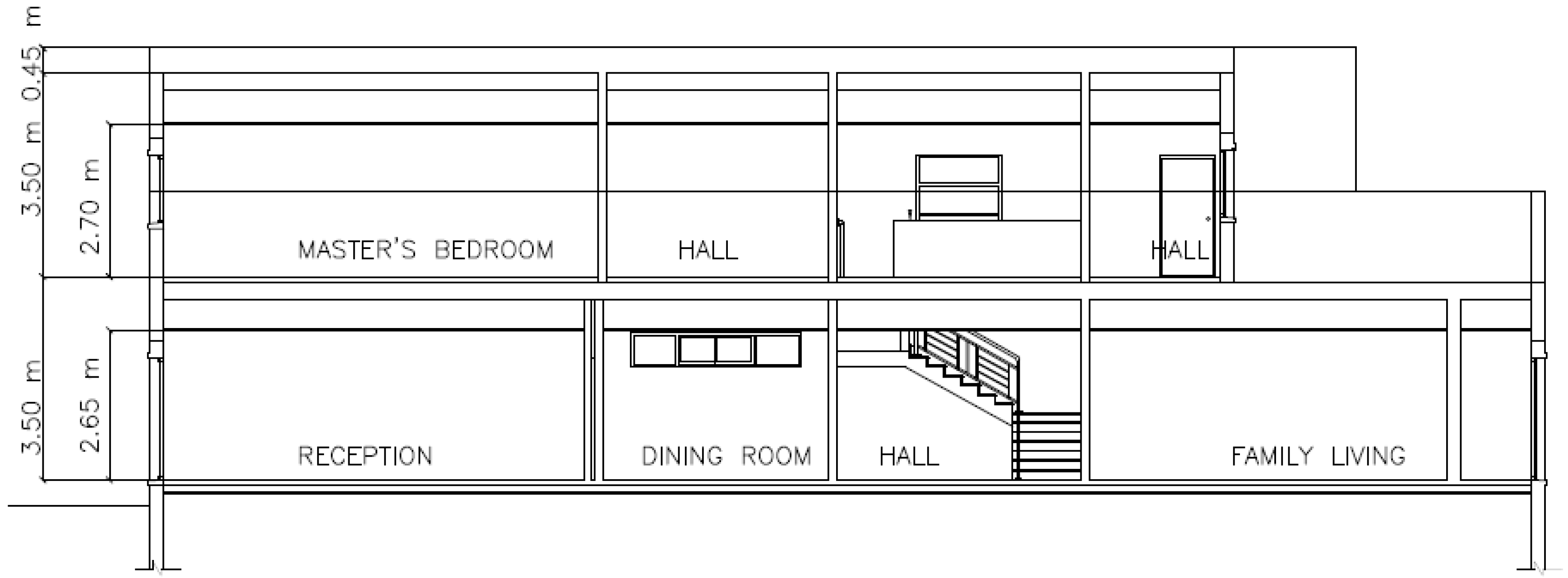
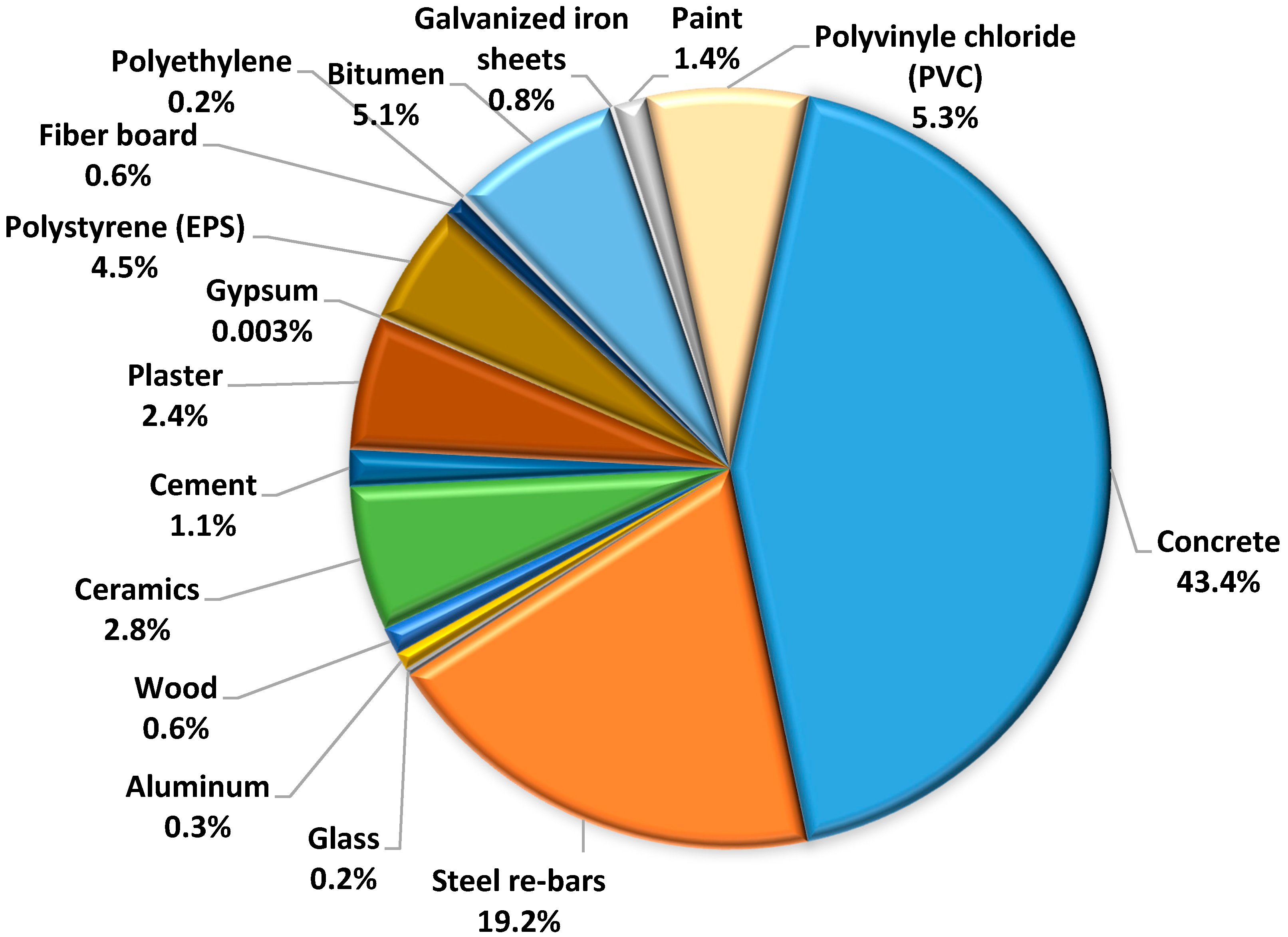
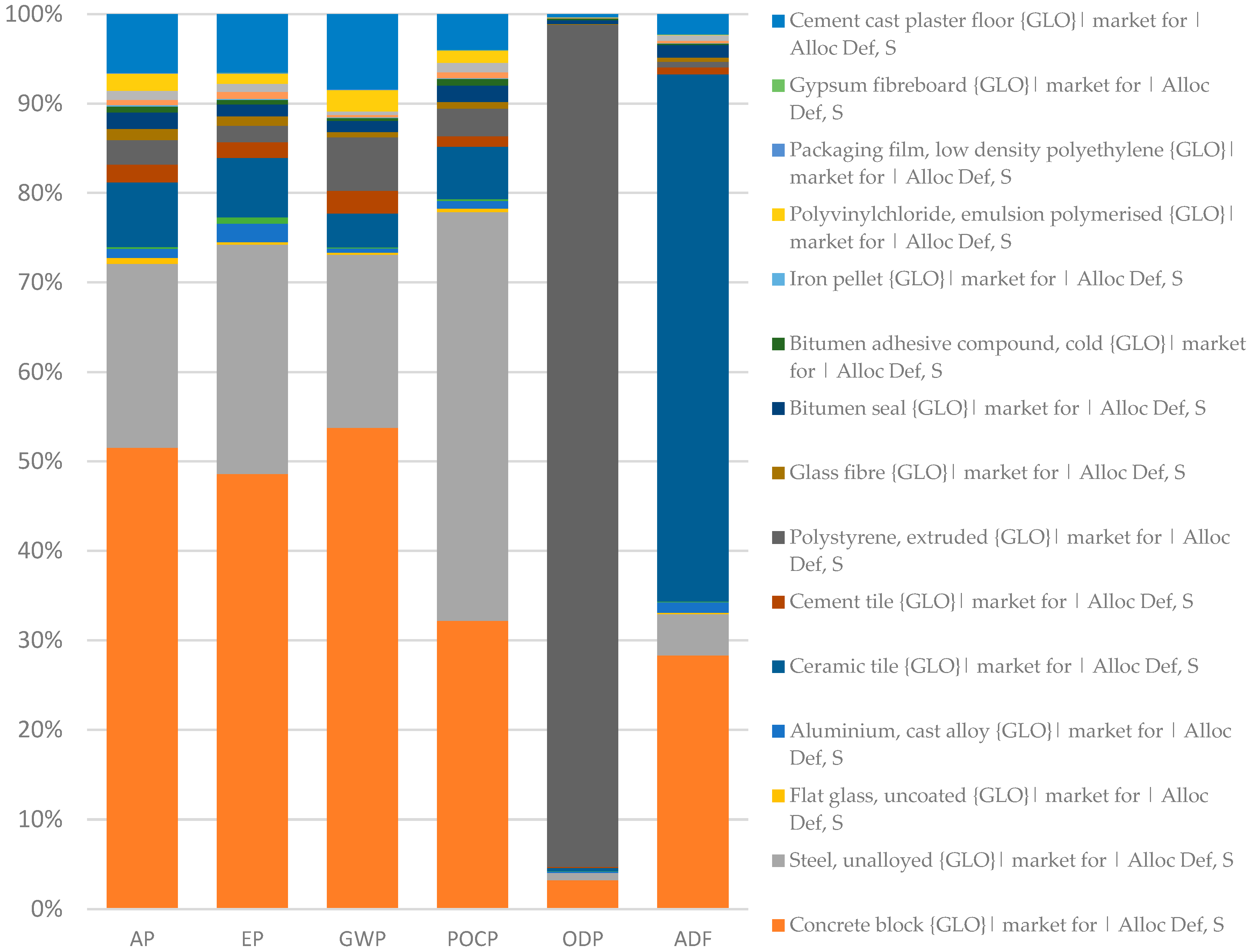
The building sector is one of the crucial stakeholders in the global energy and environmental scenario. Life cycle assessment (LCA) is a tool widely used to evaluate the environmental performance of buildings, materials and activities. Saudi Arabia has a rapidly growing construction sector with over $1 Trillion of ongoing projects. The housing sector, annually needing over 2.32 million new residential units in coming years, is yet to entertain environmental performance of buildings in its list of priorities. The present work undertakes a LCA study of a three-bedroom modern villa located in Dhahran. Providing the structural details of the villa, an account of the 18 main construction materials in terms of quantity and application has been produced. Embodied energy of these materials has been estimated adopting ‘cradle-to-gate’ approach. Environmental impacts of the materials have been modeled with the help of SimaPro software. The results suggest that concrete accounts for more than 43% of the total embodied energy of the house and is also the predominant material in terms of the overall environmental impacts. Steel is the second most prominent material both in terms of quantity and embodied energy.
Keywords: buildings; sustainability; life cycle assessment; embodied energy; environment; materials buildings; sustainability; life cycle assessment; embodied energy; environment; materials