
Systematic Review

Global Trends and Research and Gaps in Anaerobic Digestion: A Systematic and Bibliometric Review with Implications for Ghana

by
James Darmey
1,2,*,
Satyanarayana Narra
1,
Osei-Wusu Achaw
2,
Walter Stinner
3,
Isaac Kwasi Frimpong
2,
Nene Kwabla Amoatey
2,
Theophilus Ofori Agyekum
2 and
Daniel Amaniampong
2
1
Department of Waste and Resource Management, University of Rostock, 18059 Rostock, Germany
2
Department of Chemical Engineering, Kumasi Technical University, Kumasi P.O. Box 854, Ghana
3
Bioenergy System Department, DBFZ German Biomass Research Center gGmbH, Torgauer Str. 116, 04347 Leipzig, Germany
*
Author to whom correspondence should be addressed.
Environments 2026, 13(7), 408; https://doi.org/10.3390/environments13070408
Submission received: 22 April 2026 / Revised: 11 July 2026 / Accepted: 14 July 2026 / Published: 20 July 2026

Abstract

Anaerobic digestion (AD) is an effective technology for sustainable waste management, renewable energy production and resource recovery within a circular economy. This study offers a systematic bibliometric review of global advances in AD research and assesses their relevance to Ghana. Using the PRISMA framework, the literature from 2011 to 2025 was sourced from the Scopus database and analysed through bibliometric and thematic methods. The review emphasises four key factors affecting AD performance: municipal solid waste as feedstock, pretreatment technologies, biochemical methane potential (BMP) assessment and process optimisation. Studies were included if they addressed any of these themes. Non-English publications, inaccessible full texts and papers lacking bibliographic metadata were excluded. After screening 3424 records, 61 studies were included in the systematic review. After metadata screening, 3374 of the 3424 retrieved records were retained for bibliometric analysis. Results show that municipal solid waste, food waste, agricultural residues and sewage sludge are promising sources for biogas generation. Pretreatment techniques, including thermal, chemical, mechanical and biological, significantly enhance substrate biodegradability and methane production. BMP assessment is a reliable way to gauge feedstock suitability and energy recovery potential. Optimising parameters like pH, temperature, organic loading, hydraulic retention time and co-digestion ratios improves process stability and biogas yield. The review highlights the increasing use of modelling and optimisation to boost digester performance and facilitate scale-up. In Ghana, abundant organic waste offers significant opportunities for biogas development. Employing advanced feedstock characterisation, pretreatment, BMP evaluation and optimisation can improve AD efficiency, support renewable energy, reduce waste disposal issues and promote Ghana’s shift toward a sustainable circular bioeconomy.

1. Introduction

The development of sustainable energy solutions has become increasingly critical in addressing the dual challenges of energy scarcity and environmental degradation, particularly in developing nations [1]. Anaerobic digestion, a biological process that converts organic waste into biogas, offers a promising solution in this regard. It serves not only as a renewable energy source but also as an effective means of waste management [2,3]. In Ghana, the potential of anaerobic digestion is gaining recognition; however, its adoption remains limited due to several operational and systemic challenges [4]. These include infrastructural inadequacies, limited technical expertise and a lack of localised research and innovation capacity. While the global biogas industry continues to advance through sophisticated technological integrations, such as real-time monitoring systems and automated control mechanisms, its implementation in Ghana remains sporadic and underdeveloped [5,6].
Despite the growing global momentum, existing reviews of anaerobic digestion research often focus on technological advances or regional case studies without systematically comparing the position of emerging economies such as Ghana within the global research landscape. This article contributes by combining a systematic review with a bibliometric analysis to critically evaluate Ghana’s role in anaerobic digestion research in relation to global trends. Unlike traditional reviews, bibliometrics enables the mapping of collaboration networks, keyword evolution and thematic clusters, thereby revealing research gaps and opportunities that are not visible through narrative synthesis alone. However, bibliometric approaches are limited by their reliance on publication metadata rather than experimental outcomes and by the exclusion of non-indexed or non-English studies.
Recent research emphasises the importance of developing context-appropriate technologies that address local barriers to implementation [7]. The global literature reflects increased interest in optimising digester performance, particularly in resource-constrained environments [8,9]. Technological innovations, such as improved reactor designs and real-time data feedback systems, have emerged to address operational inefficiencies [10,11]. These developments are particularly relevant to countries like Ghana, where successful deployment depends heavily on system reliability and adaptability. Yet, comparative analysis shows that while countries in Asia and Europe are advancing large-scale waste-to-energy applications and policy-driven circular economy integration, Ghana’s literature remains narrowly focused on small-scale waste management applications, with limited exploration of pretreatment strategies, digestate utilisation and optimisation of operational parameters [12,13,14,15].
Addressing these research deficiencies will be essential for the successful implementation of anaerobic digestion technologies in Ghana. Doing so would not only improve energy access and environmental quality but also contribute to agricultural sustainability by effectively recycling organic nutrients. Moreover, the creation of robust institutional frameworks and investment in technical capacity-building are vital to supporting innovation and expanding the research base.
This review thoroughly analyses the latest progress in anaerobic digestion technologies, focusing on biomass pretreatment, substrate traits, reactor setups, operating parameters and optimisation strategies. It highlights the main technical challenges, new developments and future research needs to facilitate the effective and sustainable expansion of anaerobic digestion systems in Ghana. It also uses bibliometric analysis to examine global research trends, collaboration networks and gaps pertinent to Ghana’s bioenergy goals. By positioning Ghana’s emerging research within the broader international context, this study distinguishes itself from previous reviews and contributes to the body of knowledge on sustainable energy transitions in Ghana and the world.

2. Methods

2.1. Comprehensive Review

2.1.1. Study Design

This study adopted an integrated review design combining a systematic literature review, bibliometric analysis and narrative synthesis to examine global trends in anaerobic digestion research and their relevance to Ghana. The three approaches were intentionally combined because each served a different purpose. The systematic review identified and interpreted 61 studies directly relevant to the four focal themes: municipal solid waste as a feedstock, feedstock pretreatment, biochemical methane potential assessment and process optimisation. The bibliometric analysis, based on a cleaned dataset of 3374 publications, mapped global research patterns, keyword evolution and collaboration networks using VOSviewer (version 1.6.20). Finally, a narrative synthesis was employed to integrate findings across the four thematic domains, as a meta-analysis was not feasible given the heterogeneity of study types. The objective was to map research development and publication trends across four thematic areas related to anaerobic digestion: municipal solid waste as a feedstock, feedstock pretreatment for biogas digestion, the biochemical methane potential of feedstocks and the optimisation of operating parameters in biogas production. Unlike traditional systematic reviews that assess treatment efficacy, this review emphasised bibliometric synthesis to evaluate thematic emphasis, keyword evolution and institutional participation, particularly in research relevant to the Ghanaian context.

2.1.2. Review Framework

The review was guided by the PRISMA 2020 framework to ensure transparency, consistency and reproducibility in the screening and selection process. The framework structured the review into clearly defined stages: identification, screening, eligibility and inclusion. It also provided a common basis for managing the records used in both the systematic and bibliometric components of the study. The review framework further defined the study’s thematic focus around four core areas: municipal solid waste as a feedstock, feedstock pretreatment, biochemical methane potential assessment, and process optimisation. These themes were used to organise the extracted data, compare the literature and connect the global findings to the Ghanaian context.

2.1.3. Data Source and Search Strategy

The literature search was conducted in the Scopus database using a structured Boolean search string to capture publications on anaerobic digestion, biogas production, feedstock pretreatment, biochemical methane potential, municipal solid waste and process optimisation. The search string was constructed around three concept blocks: the anaerobic digestion/biogas terms, the feedstock terms and the process-related terms, with an additional geographic filter to retain studies relevant to Ghana, Africa, developing countries and the wider international context.
The complete search string was as follows:
TITLE-ABS-KEY((“anaerobic digestion” OR biogas OR “methane production” OR biomethane) AND (“municipal solid waste” OR “organic waste” OR “food waste” OR “agricultural residue*” OR lignocellulosic OR biomass) AND (pretreatment OR “thermal pretreatment” OR “chemical pretreatment” OR “mechanical pretreatment” OR “biological pretreatment” OR “BMP” OR “biochemical methane potential” OR “process optimisation” OR “process optimization”)) AND (“Ghana” OR “Africa” OR “developing coun-tries” OR “emerging economies” OR worldwide OR globe OR international).
The search was limited to English-language publications from 2011 to March 2025. Supplementary filters were applied to include journal articles, review articles and conceptual studies with accessible full text and relevant bibliographic metadata. To improve coverage, backward citation tracking was conducted using reference lists from highly relevant studies. The search strategy was intentionally broad to capture the review’s main thematic areas while remaining focused on anaerobic digestion research relevant to the present study.

2.1.4. Inclusion and Exclusion Criteria

Studies were included if they addressed any of the four thematic domains and contributed either empirical evidence, review-based summaries, or bibliometric insight into research trends in anaerobic digestion. These included original experimental studies, review articles and conceptual papers that contributed bibliographic metadata relevant to keyword, authorship, or regional analysis. Exclusion criteria included lack of thematic relevance, non-English language, missing full text and absence of metadata necessary for bibliometric processing. Commentaries and editorials were excluded unless they presented structured studies or trend-based overviews; when multiple papers cited the same study, the most comprehensive publication was retained.

2.1.5. Data Extraction and Quality Assessment

Two reviewers independently extracted data. Information gathered included the study title, authors, publication year, country of origin, affiliated institutions, journal name, study type, keywords and relevance to one or more of the four focal themes. Articles were categorised according to their thematic area and bibliographic value. Instances of author or institution repetition were recorded to trace co-authorship networks.
For the purposes of this review, a structured appraisal framework was used to ensure consistency in interpretation and assess the completeness of reporting across studies. This appraisal was applied as a qualitative interpretive guide rather than as a formal risk-of-bias tool, because the evidence base included heterogeneous study designs that could not be assessed with one uniform instrument. The purpose was not to exclude studies, but to identify differences in reporting quality and methodological clarity that affect how the findings should be interpreted.

2.1.6. Comprehensive Review Results

  • Search Results
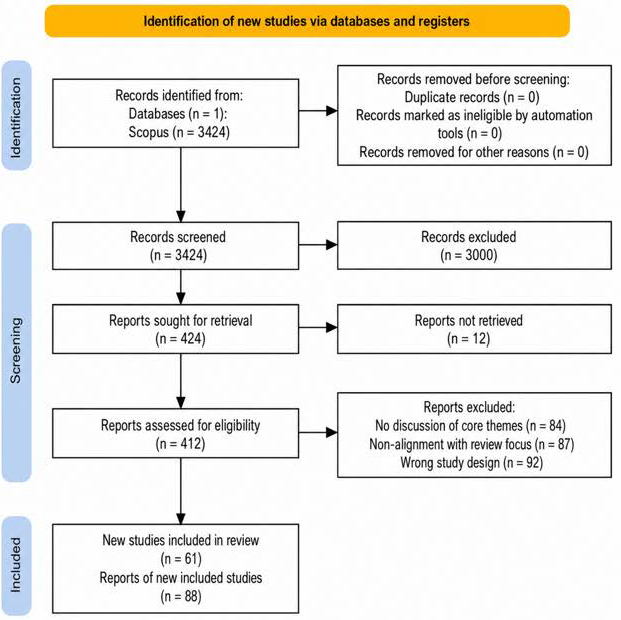
The initial search in the Scopus database yielded 3424 unique records, as seen in Figure 1. After screening titles and abstracts, 3000 were excluded for not being relevant to anaerobic digestion or the specified thematic domains. The remaining 424 articles underwent full-text screening. Of these, 12 reports were not retrievable due to access limitations.
Out of the 412 full-text articles reviewed, 263 were excluded based on predefined criteria such as lack of alignment with the review’s focus, missing metadata, or absence of discussion on any of the four core themes. After accounting for multiple outputs from some research groups, 61 unique studies were ultimately included, represented by 62 full-text reports. These studies were geographically distributed, with a concentration in Asia and Europe. Direct contributions from Ghana were limited; however, the reviewed literature nonetheless offered insights relevant to Ghanaian research and highlighted the country’s emerging participation in the field of anaerobic digestion.
Figure 1 below shows the flow diagram of the search strategy and study identification [16].

2.2. Bibliometric Review

2.2.1. Search Strategy

The bibliometric analysis was conducted using the same Scopus dataset compiled for the systematic review. The initial search yielded 3424 records; after removing irrelevant entries, 3374 remained for bibliometric analysis. This broader analysis examined a range of publication types, including experimental studies, reviews and bibliometric investigations, to assess long-term research patterns and institutional collaborations across the four focus areas. Search terms included combinations of “anaerobic digestion,” “biogas,” “methane production,” “municipal solid waste,” “pretreatment,” “lignocellulosic biomass,” “optimisation,” and “biochemical methane potential.” All English-language publications from 2011 to 2025 were considered for inclusion. Publications were retained regardless of methodology, provided they contributed to thematic or bibliometric insight.

2.2.2. Data Processing and Analysis

Complete bibliographic data were exported to CSV and processed with VOSviewer (version 1.6.20). Three dimensions of bibliometric analysis were applied. First, keyword co-occurrence was analysed to identify dominant and emerging research topics within the anaerobic digestion literature. Second, co-authorship networks were visualised to reveal patterns of institutional and international collaboration. Third, the distribution of publication outputs by country was analysed to assess geographic engagement with the four core themes. Keywords and authors appearing in 5 or more publications were included in the mapping and fractional counting was used to ensure balanced representation in multi-author publications.

2.2.3. Bibliometric Analysis Results

  • Bibliometric Coverage
From the full dataset of 3374 publications, 932 were related to municipal solid waste as feedstock for anaerobic digestion. A total of 367 focused on pretreatment methods to enhance biogas yields. The biochemical methane potential of various feedstocks was investigated in 1901 publications, while 174 addressed the optimisation of operating parameters such as temperature, pH, retention time and organic loading rate. These subsets provided a comprehensive basis for analysing bibliometric trends and thematic development across the sector.

2.3. Data Synthesis

Because the included studies varied in design, scale, feedstock type and outcome reporting, a meta-analysis was not feasible. Instead, a narrative synthesis was used to integrate the findings from the 61 included studies and connect them with the bibliometric results. This approach allowed the review to move beyond simple description and provide a more analytical interpretation of the literature. The synthesis, therefore, not only summarised the evidence but also examined its relevance to Ghana, particularly in relation to feedstock availability, pretreatment options, process optimisation and the country’s limited visibility in indexed anaerobic digestion research.

3. Biogas Production in Ghana

The contextual description of Ghana presented in this chapter is derived from a combination of the 61 studies included in the Scopus-based review database and, where necessary, supplementary peer-reviewed literature and articles to provide additional background on Ghana’s biogas sector.

3.1. Introduction

The increasing demand for sustainable energy solutions in Ghana highlights the need for innovative approaches to harnessing renewable resources. Among these, biogas production emerges as a promising alternative that not only meets energy needs but also supports waste management and environmental sustainability. Biogas, primarily composed of methane and carbon dioxide, is generated through the anaerobic digestion of organic materials, which are abundant in Ghana’s agricultural and urban settings. Given the country’s large agricultural sector and growing urban population, biogas production has significant potential to enhance energy security and reduce reliance on fossil fuels. This section examines the current state of biogas technology in Ghana, focusing on its economic viability, social implications and environmental benefits. By highlighting the multifaceted advantages of biogas production, Ghana advances toward a greener energy future while promoting community development and economic growth [17].

3.2. Current State of Biogas Production and Research in Ghana

Biogas production in Ghana has experienced gradual adoption, but several challenges limit its widespread implementation. Although some biogas facilities are operational, many remain underutilised due to technical inefficiencies, insufficient funding and limited research. Most biogas plants in Ghana focus on waste management rather than energy generation, reducing their overall impact on the country’s energy supply [18]. Additionally, digesters often face operational challenges, including poor maintenance, inadequate feedstock pretreatment and inefficient microbial activity, resulting in low methane yields [5].
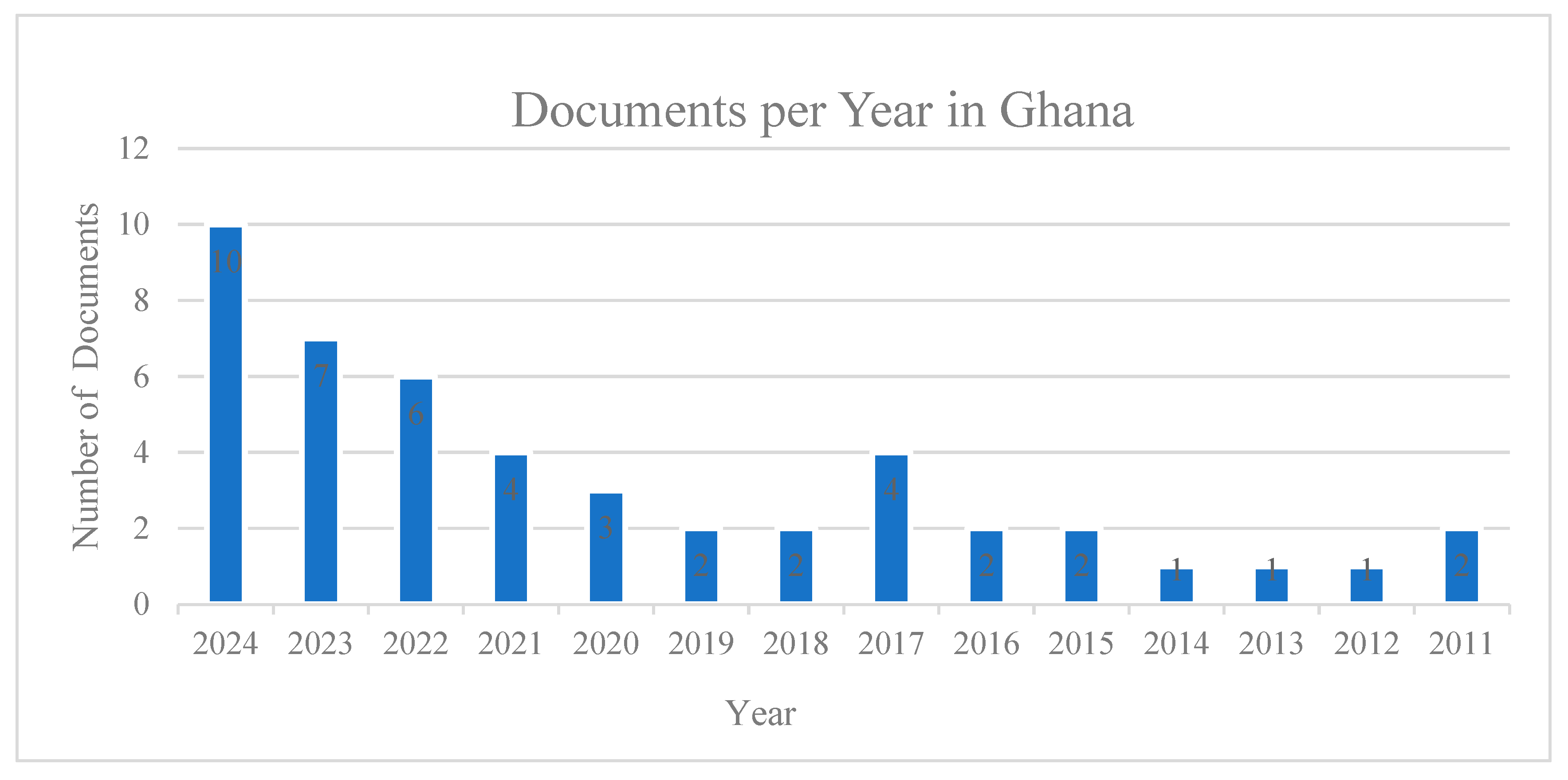
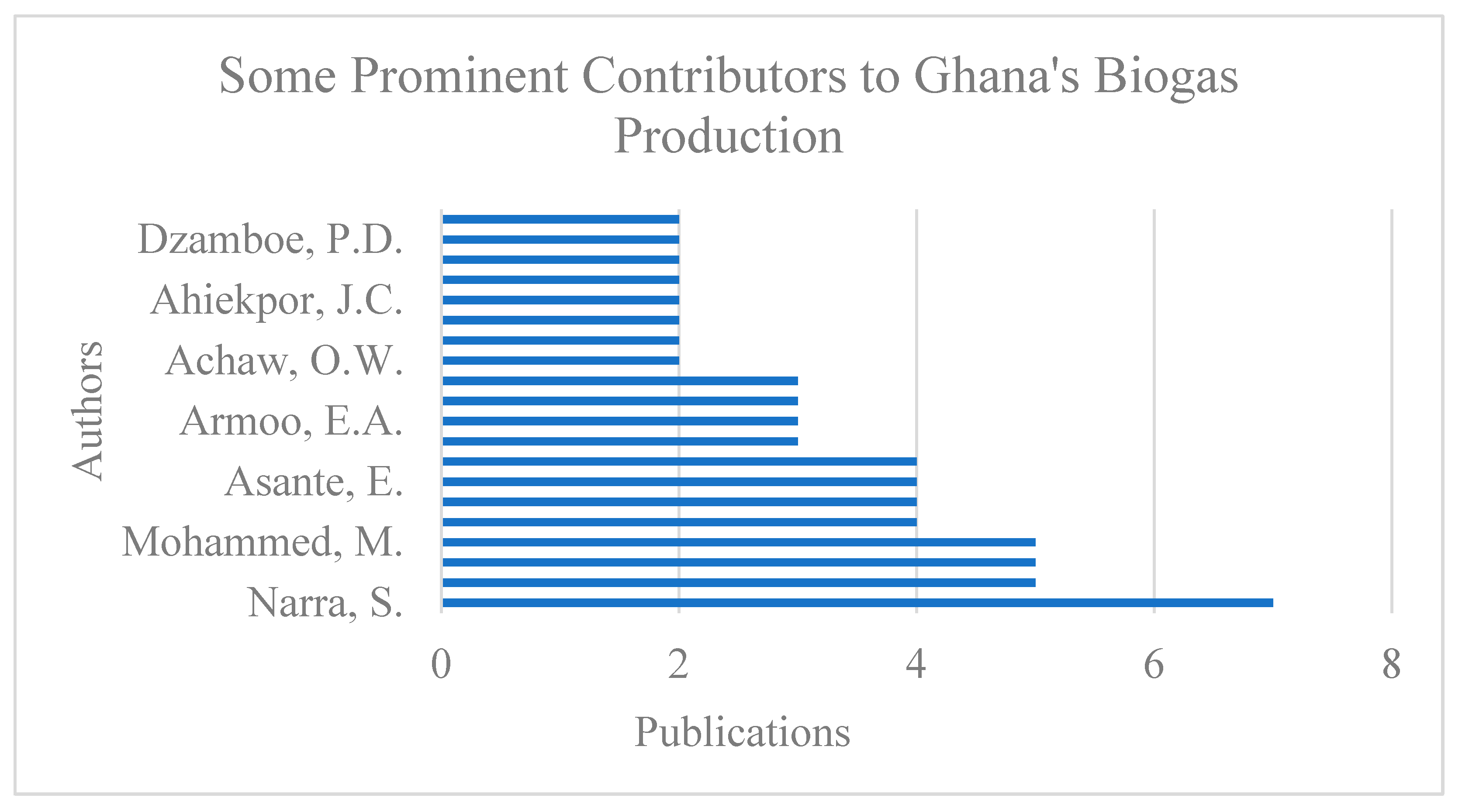
Another major challenge is the absence of real-time monitoring systems to optimise biogas production. A recent bibliometric review indicates that many digesters in low-resource settings struggle with these systems, highlighting the need for improved monitoring tools to enhance biogas performance and reliability [5]. Studies show that limited research and innovation in Ghana have contributed to the failure of many biogas projects, highlighting the need for technological advancements and policy support [19]. Compared to leading nations in biogas research, Ghana’s research output remains low, underscoring the need for increased investment and collaboration with international institutions to advance the sector. Bibliometric analysis reveals that while countries with substantial renewable energy research produce a large volume of studies on biogas technology, developing countries contribute only a small portion of publications on biogas operation, monitoring and innovation [5]. From 2011 to 2024, Ghanaian researchers have produced 47 research documents on biogas production, as shown in Figure 2. This shows that research on biogas production is low, though it has increased since 2021. Figure 3 below shows some prominent contributors to Ghana’s biogas production.

3.3. Existing Biogas Facilities and Their Operational Capacity

Ghana’s biogas facilities are mainly small-scale digesters used for waste treatment rather than large-scale energy production. Similar to trends in Argentina, where biogas plants serve both environmental and energy purposes, Ghana’s facilities also serve a dual purpose [18]. However, many plants remain underutilised, serving more as environmental remediation systems than effective energy solutions. Optimising the operational capacity of these plants through better technology, policy incentives and infrastructure development could significantly improve Ghana’s energy security [20]. Table 1 presents biogas development in Ghana across various pilot-scale facilities that integrate waste management with energy production. Large pilot plants like the Safisana plant in Ashaiman, the Ghana Oil Palm Development Company (“GOPDC”) biogas systems in Kade and the Das Biogas & Construction Limited plant in Accra lead the sector by relying on high volume feedstocks such as faecal sludge, palm oil mill effluent and municipal organic waste, which are abundant in Ghana due to rapid urbanisation and agro-processing activities. This produces a higher quantity of biogas, indicating their strong potential for large-scale renewable energy production and waste management. Medium-scale facilities, such as the HPW Fresh & Dry plant and the Gyankobaa Hybrid facility, demonstrate the important role of fruit processing waste and municipal solid waste in energy production. These facilities typically generate a smaller quantity of biogas and the integration of solar-PV-pyrolysis systems at the Gyankobaa facility demonstrates a diversified approach to renewable energy production. Meanwhile, small pilot facilities like the OxRight demonstration facility focus on community-level impact, commonly use agricultural and organic waste and generate low-energy outputs. The Kwamoka energy hybrid plant, currently under development, focuses on waste-to-energy and solar power technologies, using wood and agricultural residues as feedstocks for bioenergy generation. Overall, these facilities demonstrate Ghana’s ability to leverage diverse feedstocks for sustainable energy generation.
Although several biogas systems have been implemented in Ghana, their performance remains largely below global standards. Most facilities operate on a small- to medium-scale and rely primarily on simple, inexpensive digester designs, which limit process efficiency and biogas yield. Challenges such as inconsistent feedstock supply, inadequate maintenance and limited technical optimisation further reduce overall performance. In comparison, biogas systems in developed regions such as Europe and China are more advanced, with widespread use of co-digestion strategies and biogas upgrading technologies, thereby achieving higher methane yields [30,31]. This highlights a significant performance gap between Ghanaian biogas systems and established global standards. Overall, there is a need to implement advanced biogas systems, such as large-scale biogas facilities in Ghana, to manage the massive volume of waste generated in the country while simultaneously meeting energy demands.

3.4. Benefits of Biogas Production in Ghana

Overall, these facilities demonstrate Ghana’s ability to leverage diverse feedstocks for sustainable energy generation.
Environmental benefits: In Ghana, organic waste from agriculture, households and markets constitutes a large share of municipal solid waste. Studies show that uncontrolled decomposition of such waste contributes significantly to methane emissions from landfills and open dumpsites. The adoption of biogas digesters helps divert organic waste from these disposal pathways, reducing greenhouse gas emissions while producing renewable energy. For example, assessments of waste-to-energy initiatives in Ghana report that anaerobic digestion of market and livestock waste can substantially reduce methane release while improving waste management efficiency [32]. In addition, digestate produced by biogas systems has been shown to improve soil fertility and crop yields in Ghanaian agricultural systems, thus reducing reliance on synthetic fertilisers [33].
Economic benefits: Biogas projects in Ghana contribute to local economic activity by creating employment along the waste-to-energy value chain. Evidence from community-scale and institutional biogas plants shows clear opportunities in waste collection, digester construction, system maintenance and fertiliser distribution. Decentralised renewable energy projects, including biogas, support local entrepreneurship and reduce household expenditure on conventional fuels [34]. Furthermore, sanitation-linked biogas systems in schools and public institutions have demonstrated cost savings through reduced waste management expenses and energy substitution [35].
Social and health benefits: Biogas adoption in Ghana has been linked to improved public health outcomes, especially in rural and peri-urban areas. Reduced reliance on fuelwood and charcoal lowers indoor air pollution, which is associated with respiratory illnesses. Studies on household and institutional digesters in sub-Saharan Africa, including Ghana, show improved living conditions, better sanitation and increased access to energy for cooking and lighting [36].
Research on biogas production shows that countries with mature biogas industries have made notable progress through large-scale facilities, co-digestion strategies, and biogas upgrading technologies. These advances are backed by strong policies and ongoing research funding. As a result, these countries have achieved higher methane yields, integrated biogas into their national energy systems, and contributed to climate change mitigation efforts. Conversely, Ghana’s biogas efforts are still mainly small-scale, sanitation-oriented, and limited by technical inefficiencies and weak monitoring. The review highlights a clear gap: despite abundant organic waste and a growing urban population that could support a vibrant biogas sector, the lack of advanced pretreatment, optimisation, and policy support has hampered its potential. This comparison emphasises both the challenges Ghana faces and the opportunities to learn from global best practices, transforming biogas from just waste management into a reliable energy source that improves energy security, reduces environmental impacts, and fuels socio-economic growth.

4. Municipal Solid Waste as a Feedstock for Anaerobic Digestion: Ghana vs. The World

This chapter presents a global comparative analysis of municipal solid waste (MSW) as a feedstock for anaerobic digestion, using both the literature and bibliometric analyses. It provides a global comparative baseline against which Ghana’s status regarding the anaerobic digestion of MSW is evaluated.
The increase in urbanisation and industrialisation has led to a significant rise in municipal solid waste (MSW) generation worldwide. This phenomenon poses considerable environmental challenges, especially in developing nations, where inadequate waste management infrastructure exacerbates the issue [37]. Municipal solid waste is a complex mixture comprising organic materials that present a valuable opportunity for energy recovery through anaerobic digestion. This process not only provides a sustainable method for waste disposal but also converts organic waste into biogas, which can be harnessed for electricity and heating, addressing both energy and environmental concerns [38,39].
In examining Ghana’s approach to managing MSW relative to global practices, it is evident that incorporating AD technologies could enhance resource recovery and contribute to a circular economy, thereby promoting sustainability and mitigating the adverse effects of waste accumulation.

4.1. Overview of Municipal Solid Waste Management in Ghana Against the World

Effective municipal solid waste management (MSWM) in Ghana is a complex challenge driven by rapid urbanisation, population growth and inadequate infrastructure. Waste generation continues to rise due to increased consumption and urban activities, yet the capacity for proper management has not kept pace. Consequently, many urban centres experience severe waste accumulation, negatively affecting public health and the environment. Recent studies highlight the energy potential of Ghana’s municipal waste, revealing that a significant portion is organic and combustible, which can be efficiently processed through anaerobic digestion [37]. This method not only mitigates the growing waste crisis but also enhances energy recovery, aligning with global circular economy best practices [39]. Consequently, embracing this approach could facilitate a sustainable transition in Ghana’s waste management, transforming waste into valuable resources while addressing pressing environmental issues. About 2.01 billion tons of municipal solid waste (MSW) are generated worldwide annually and are expected to increase to about 3.4 billion tons by the end of 2050 [40]. This increase in MSW generation is likely due to population growth, global industrialisation and rapid urbanisation, posing major environmental challenges [41]. Municipal solid waste management in Ghana differs significantly from that in European countries in terms of generation rates, composition, collection efficiency and the use of advanced technologies. In Ghana, the average waste generation is estimated to be 0.47 kg/person/day, producing over 12,710–14,000 tons of solid waste daily, from a population of about 27 million, with a high proportion consisting of 60% organics and 14% plastics [41,42], where only 10% of solid wastes are properly disposed of. According to Fobil [43], Accra, the capital city of Ghana, generates approximately 1000 tons of waste per day, with an estimated annual generation rate of 3.7 tons per person and only 55% of this waste is collected annually. In contrast, European countries are known to generate more MSW. In 2024, the average MSW generation was estimated at 517 kg per capita per year, up slightly from 511 kg in 2023. As of 2024, the EU recycled an average of 248 kg per capita, representing approximately 48.1% of the total MSW generated. MSW generation varied differently among the European countries, such as Austria (782 kg per capita), Denmark (755 kg per capita), Luxembourg (approximately 712 kg per capita) and Belgium (699 kg per capita), reported to have the highest MSW generation rate per person, while Romania (305 kg per capita), Poland (387 kg per capita) and Estonia (375 kg per capita) were reported to have the lowest MSW generation rate per person. The variations in MSW generation rates across these countries reflect differences in consumption patterns, economic wealth and the collection and management of municipal waste [44,45]. European countries, characterised by higher living standards and consumption levels, tend to generate higher MWS per capita, consisting of a larger proportion of papers (25–35%), plastics (7–10%) and organics (25–34%) [46]. In contrast, Ghana generates less MSW per capita due to lower consumption levels and a higher proportion of organic waste, which constitutes a significant fraction of the waste stream [42]. Despite generating more waste, Europe has developed the Waste Framework Directive, which introduces the “Waste Hierarchy”, which prioritises waste prevention, reuse, recycling and resource recovery. This aims to promote sustainable waste management practices, minimise waste generation and drive the shift towards a circular economy within the EU. Ghana, on the other hand, faces challenges, including inadequate infrastructure, limited recycling capacity and reliance on unsanitary landfilling, open dumping and open incineration, resulting in environmental and public health risks [47,48,49]. While Europe widely adopts Waste-to-Energy (WtE) technology, operating specifically waste incineration plants that reduce landfill waste volumes and promote energy recovery [47,48], Ghana has only limited and inefficient incineration plants with no energy recovery and lacks effective technologies, policies and funding [50]. The management of MSW in Ghana and Europe differs significantly. In Ghana, the majority of MSW collected ends up in designated dumps or unengineered landfill sites, with minimal formal material recovery. These solid wastes are disposed of through uncontrolled dumping and open burning due to the absence of trash collection systems and landfills in rural areas and small towns, including densely populated areas, posing potential health risks. Insufficient waste-reduction measures, weak enforcement of environmental regulations and a lack of waste-management skills are among the reasons for inadequate MSW management in Ghana [50,51,52]. In contrast, European countries employ advanced, integrated MSW management systems based on strict environmental regulations and circular economy principles, prioritising reuse, recycling and energy recovery. These systems are supported by strong legislative frameworks such as the European Union Waste Framework Directive. MSW management in Europe has transitioned from reliance on landfills to approaches such as recycling, composting and incineration. Unlike Ghana, MSW management in Europe has a recycling rate of 48.1% [45,47,53]. Overall, while European countries generate significantly more MSW per capita, they demonstrate advanced, technology-driven, policy-oriented systems that ensure efficient waste management and environmental sustainability. In contrast, Ghana, which generates less MSW per capita, is still evolving while facing major challenges in collection, disposal and treatment, as well as funding and infrastructure limitations, resulting in environmental and public health risks. This comparison highlights the need for Ghana to transition towards an integrated solid waste management (ISWM) system and strengthen regulatory frameworks.

4.2. Global Practices in Anaerobic Digestion of Municipal Solid Waste: Ghana vs. Global Trends in Anaerobic Digestion

Solid waste management is a universal issue humanity faces due to inefficient collection and improper disposal methods. In particular, municipal solid waste (MSW), driven by rapid urbanisation and population growth, poses major environmental challenges and health risks [40,54,55,56]. Waste-to-Energy (WtE) technologies are known to facilitate energy recovery by converting waste into biogas, electricity, heat or fuel. Anaerobic digestion, a WtE technology, has emerged globally as one of the most promising solutions for converting MSW, particularly its organic fraction (OFMSW), into renewable energy and nutrients such as biogas and digestate, contributing to circular economy systems [56,57].
Despite the global popularity of AD technology, its implementation remains deeply uneven worldwide. Biogas production through AD is widely used, developed and regulated across Europe, Asia and America, including countries such as Germany, Switzerland, Italy and Brazil, which are leading the way and continues to expand in developing countries such as India, Nepal, Rwanda, Uganda and South Africa, while, despite biogas potential, the adoption of AD practice for MSW management in sub-Saharan Africa is slow and inconsistent, like in Ghana, which continue to predominantly rely on un-sanitary landfilling activities, open dumping and incineration, resulting in environmental and public health risks, likely due to challenges faced such as inadequate infrastructure, low public awareness and ineffective policies and regulations [54,55,58].
Over the past few decades, the AD of MSW scale has experienced a substantial global growth, particularly in developed regions such as Europe and Asia. In Europe, for instance, 17,400 and 17,376 biogas plants were registered, generating approximately 61 TWh and 60.6 TWh of electricity from biogas in 2015 and 2016, respectively, reflecting an increase in biogas production driven by strong renewable energy policies, alongside economic, environmental and climate benefits. In Asia as well, AD technology for biogas production has been emerging rapidly. Additionally, most biogas production occurs in the United States and Europe, although other regions are increasingly deploying AD technology as well [59,60,61,62]. Globally, the practice of AD to treat MSW has evolved toward large-scale in developed countries, including both wet and dry digestion systems, as well as single-stage and two-stage systems, operated in continuous or semi-continuous mode under thermophilic conditions (50–60 °C), which offers a faster degradation rate than mesophilic conditions, resulting in faster biogas production. Moreover, in Europe and other developed regions, there are sufficient economic resources to implement the AD system. Also, advanced process optimisation, such as co-digestion and pretreatment techniques (physical and biological), has been employed to enhance the biodegradability of MSW and the efficiency of AD, resulting in increased biogas yield [57,63,64,65]. In contrast, the adoption of AD for MSW at scale in developing countries like Ghana remains limited and underdeveloped. Although the country generated approximately 12,710 tons of MSW per day in 2015 and is estimated to generate 20,392 tons/day in 2030, with a high organic fraction (61%) that presents strong potential for AD, MSW management is still dominated by open dumping, landfilling and incineration. Consequently, the technology is not widely implemented for large-scale MSW treatment, mainly due to a lack of data on specific MSW streams and their biogas potential, inadequate technical expertise, high capital costs and weak policy frameworks [42,48,50,55,66]. Furthermore, existing AD technology for MSW in Ghana is mostly applied at small scales, including small-scale fixed-dome and floating-drum biogas digesters, as well as single-stage systems, operated in batch mode under mesophilic conditions [57,66,67]. Additionally, in developed regions like Europe, efficient waste segregation and strong policy frameworks, such as the “Waste Hierarchy” in the Waste Framework Directive and renewable energy policies, strongly support the implementation of AD practices, while in Ghana, policy frameworks still lack specific policies and regulations governing AD practices, as well as the utilisation of biogas potential and digestate quality standards [67,68,69].
In summary, while global trends in AD of MSW are characterised by large-scale deployment, advanced technologies and integration with circular economy systems, Ghana remains at an early stage of adoption.

4.3. Bibliometric Analysis: Municipal Solid Waste as Feedstock for Anaerobic Digestion

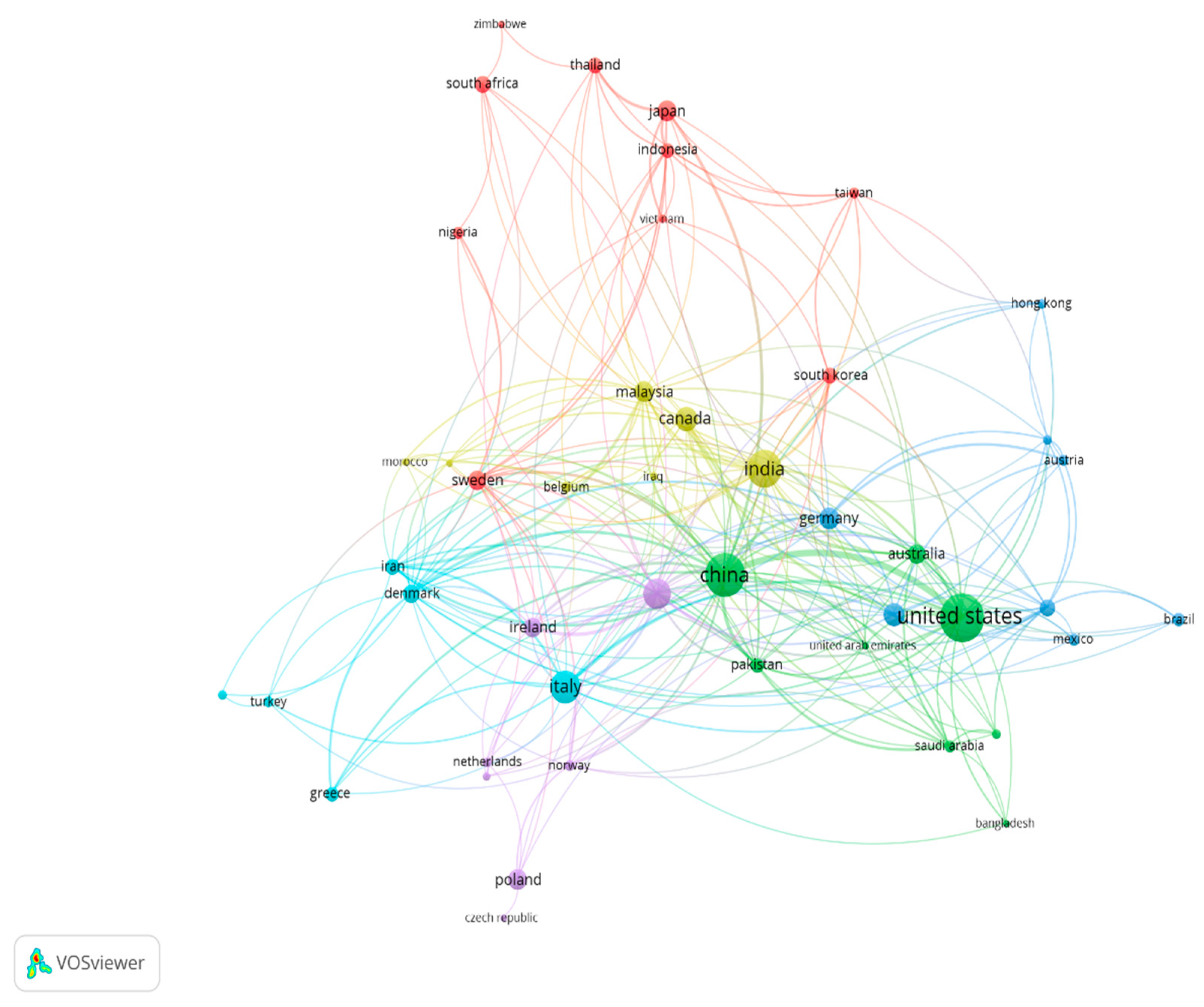
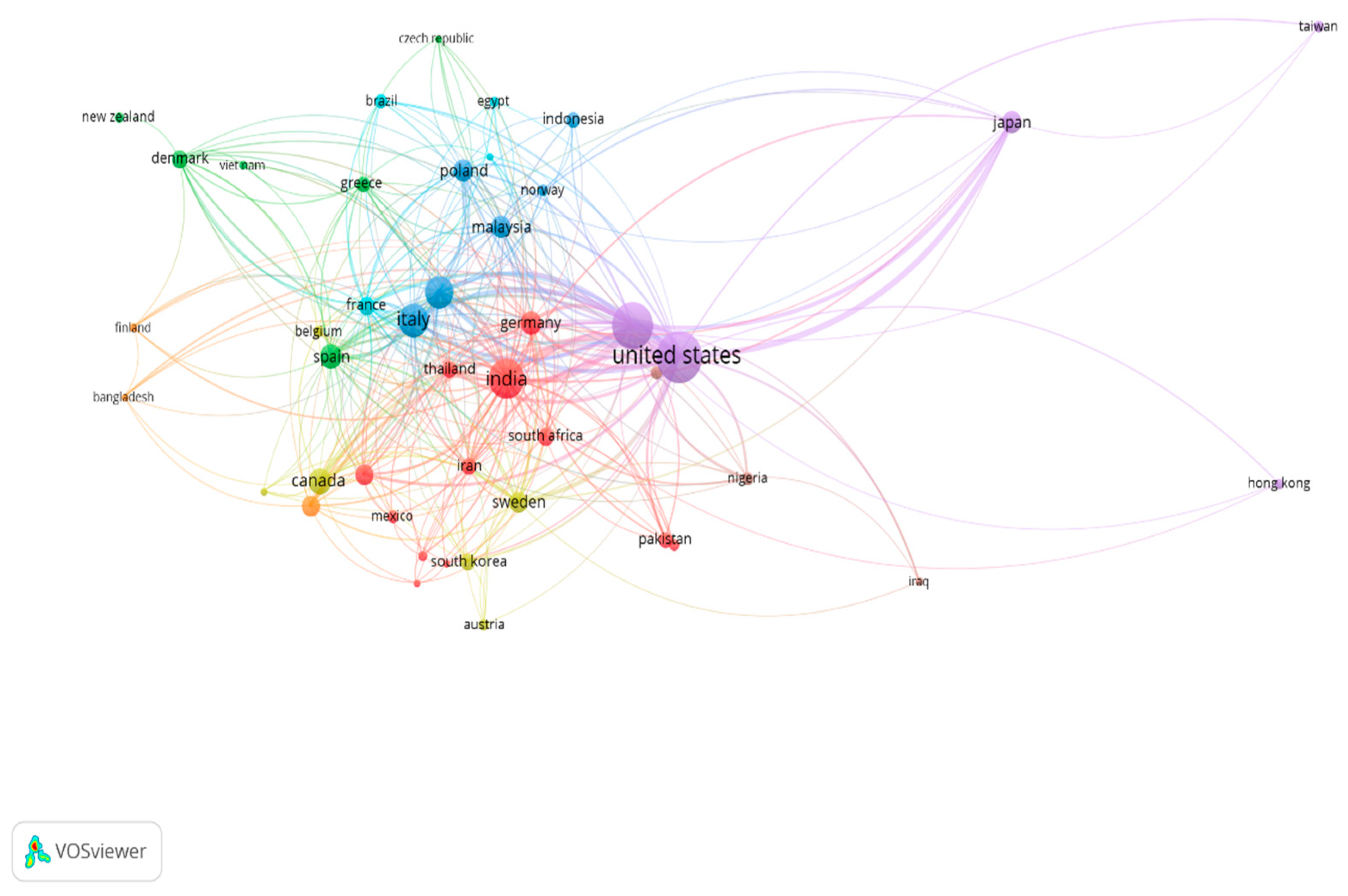
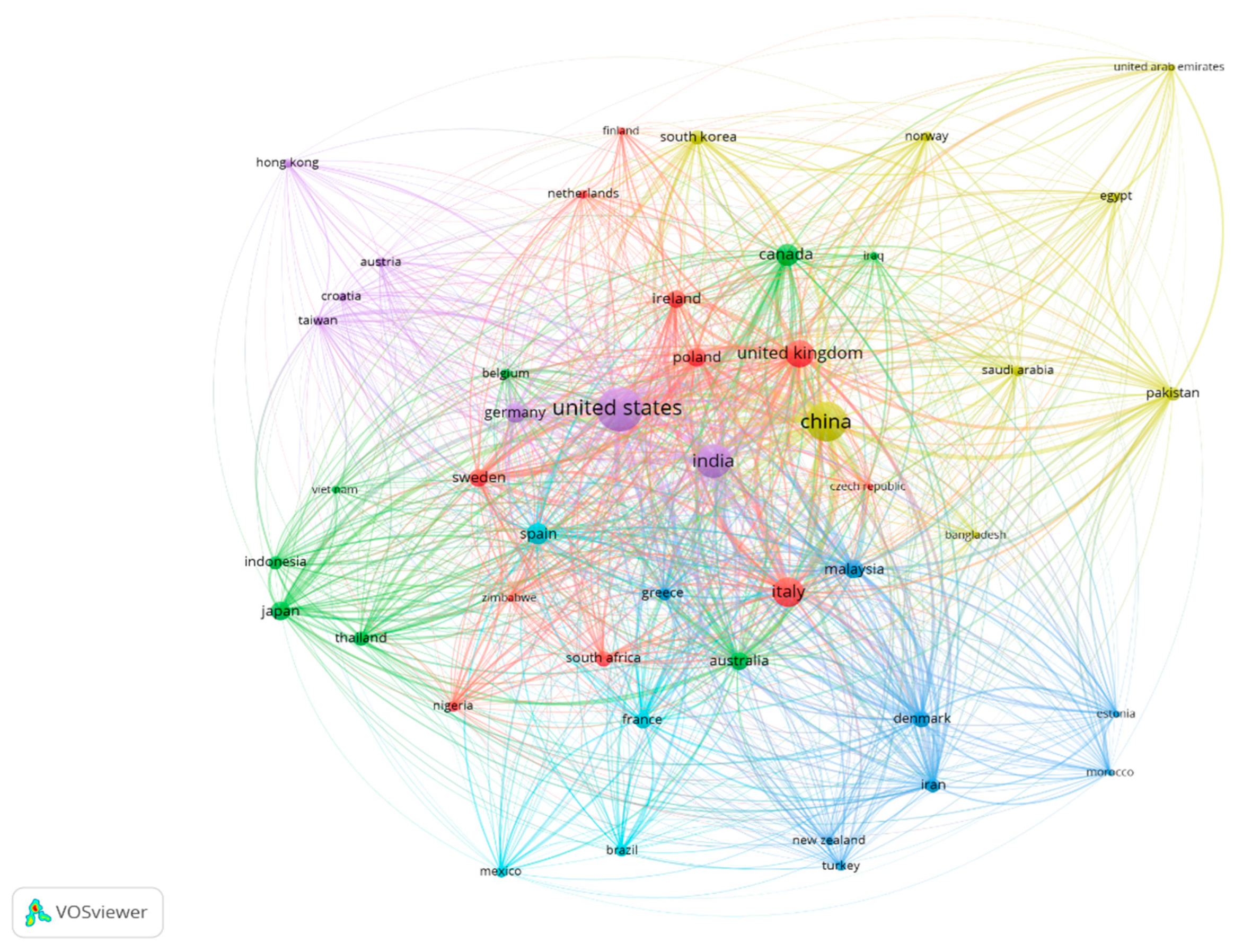
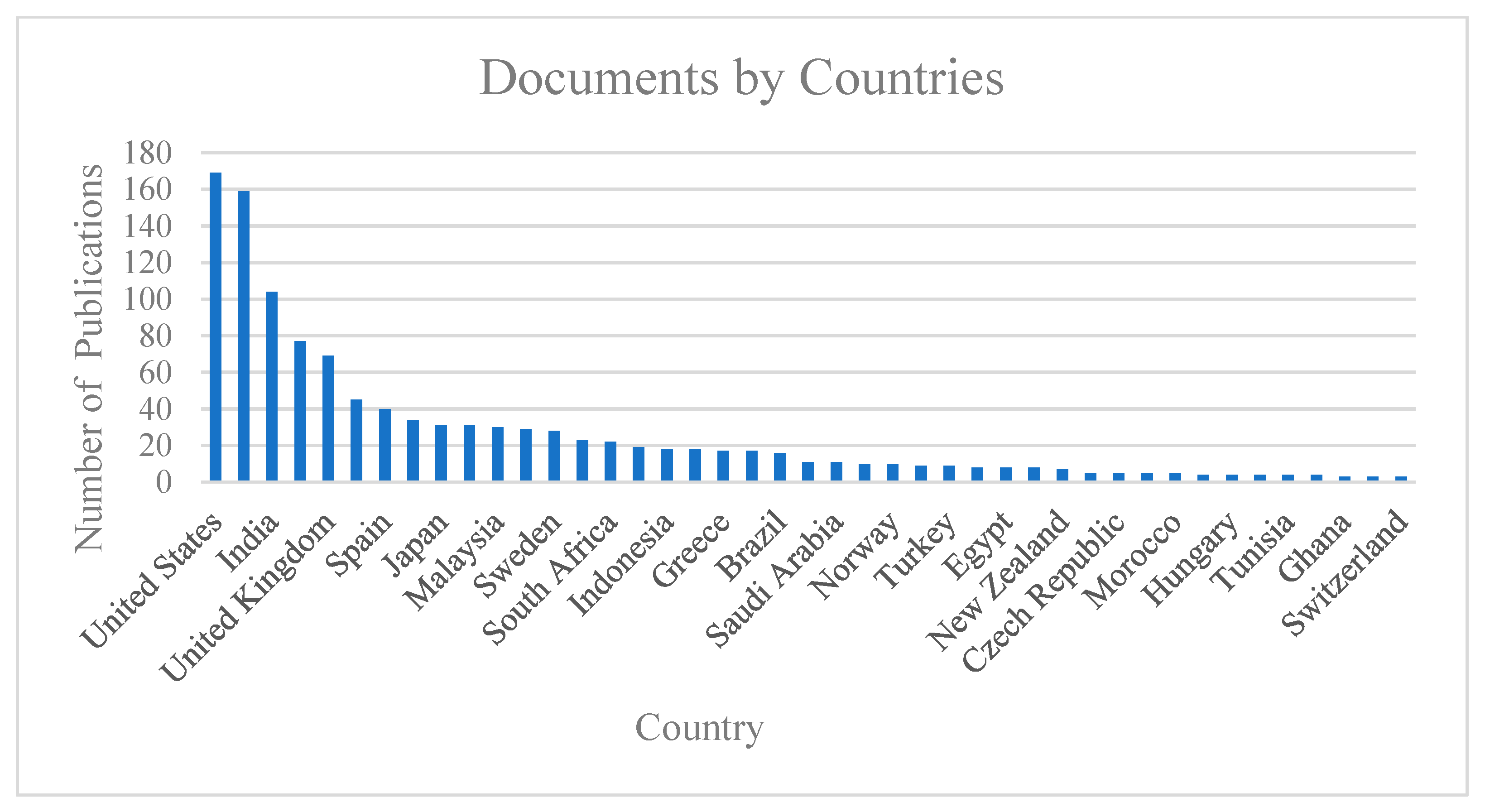
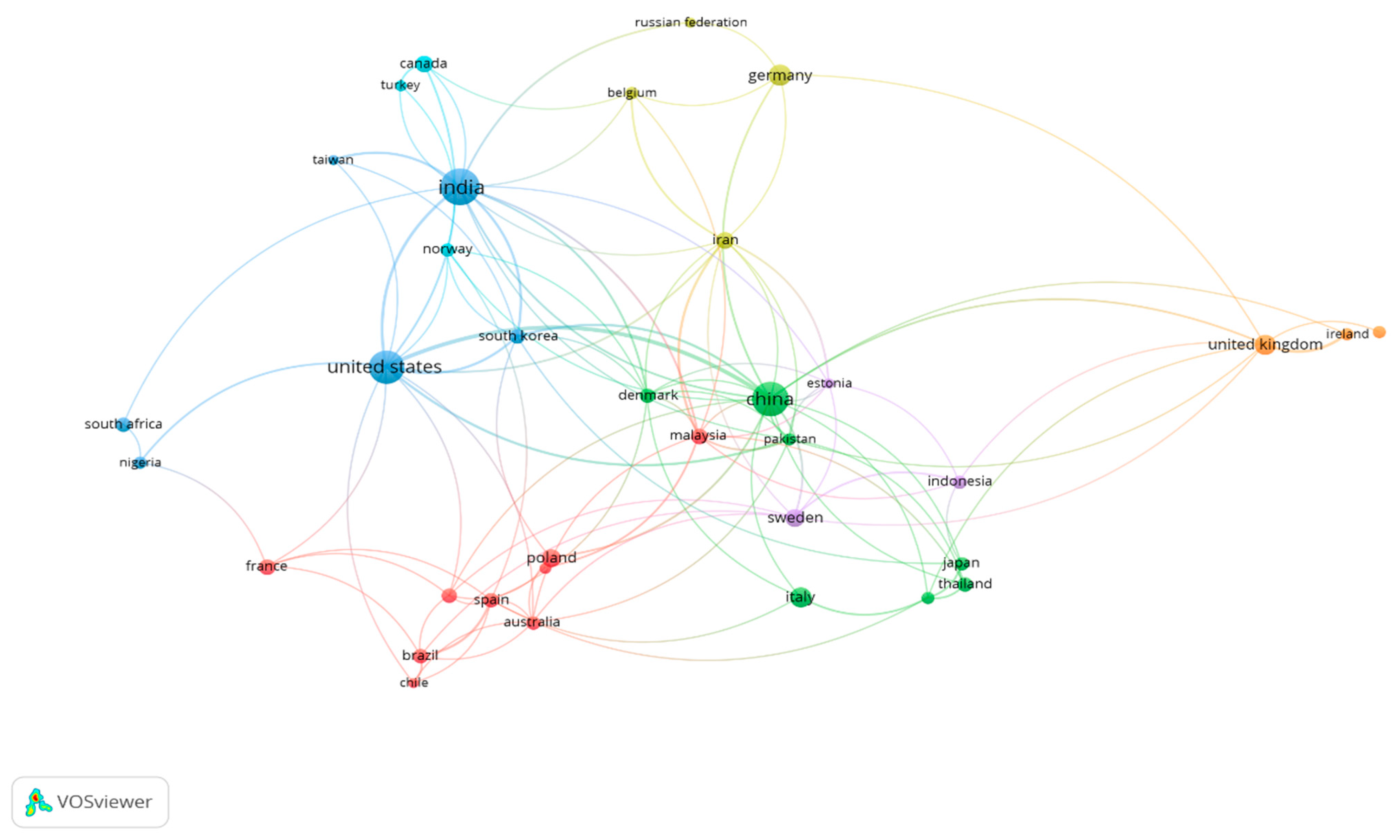
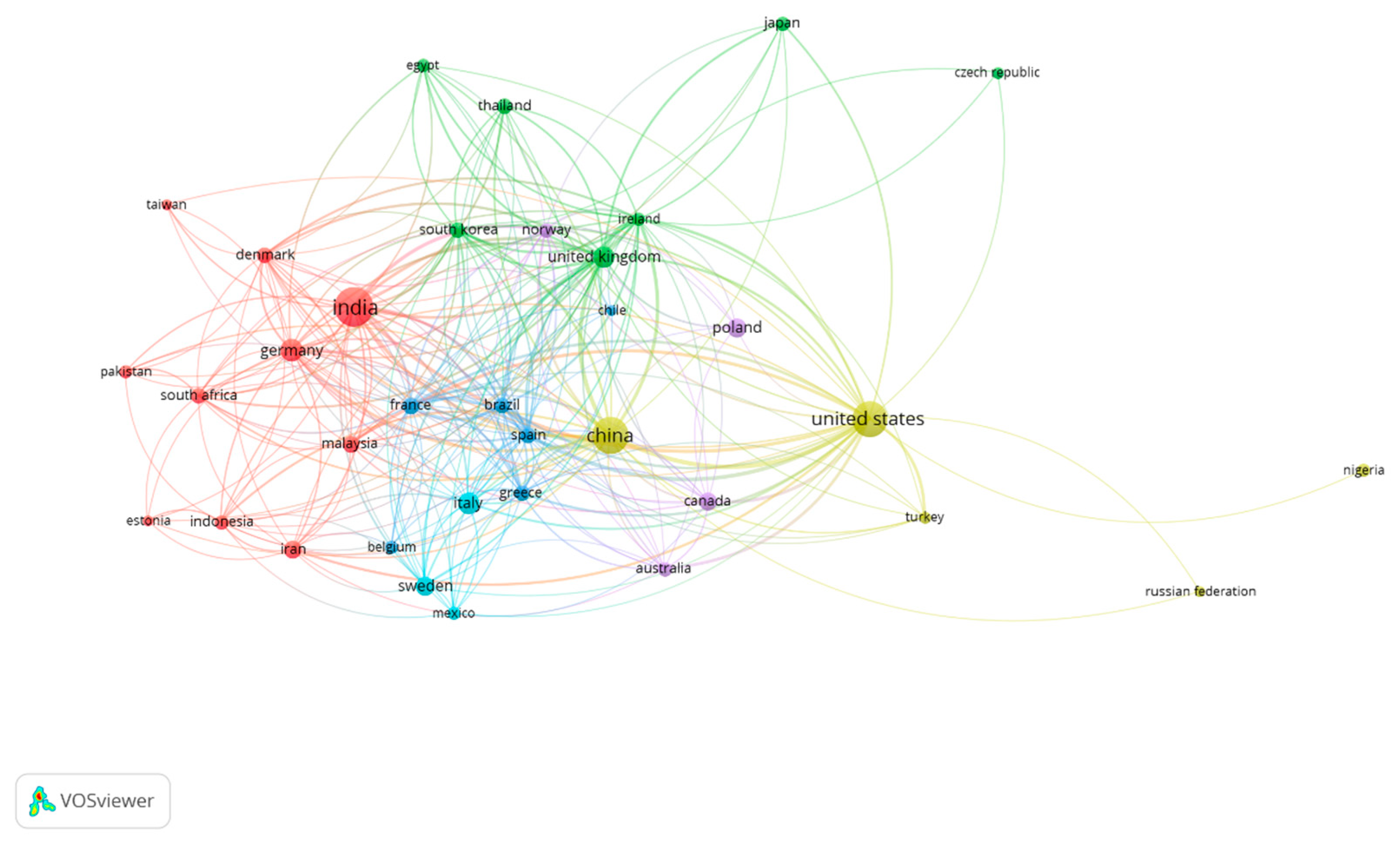
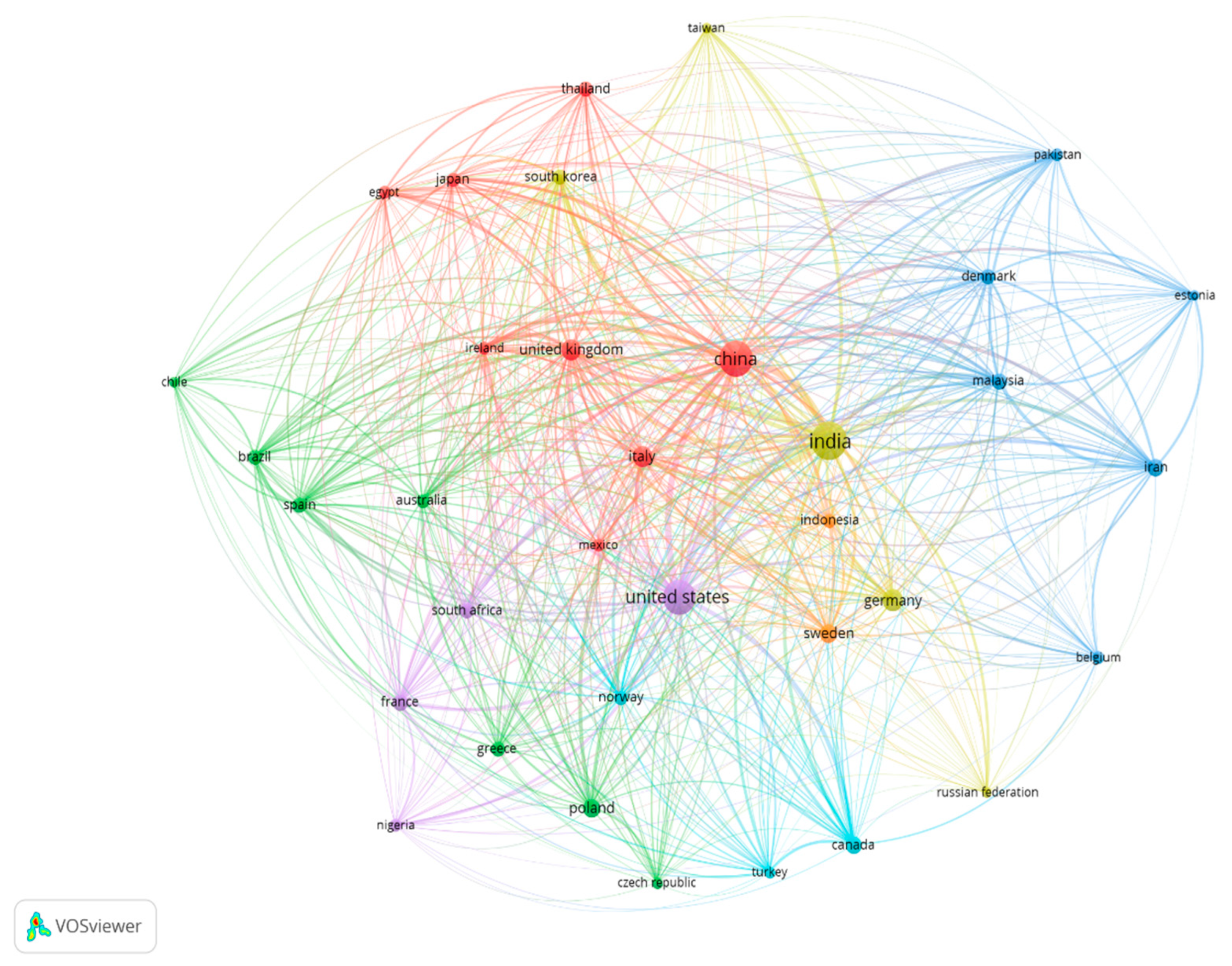
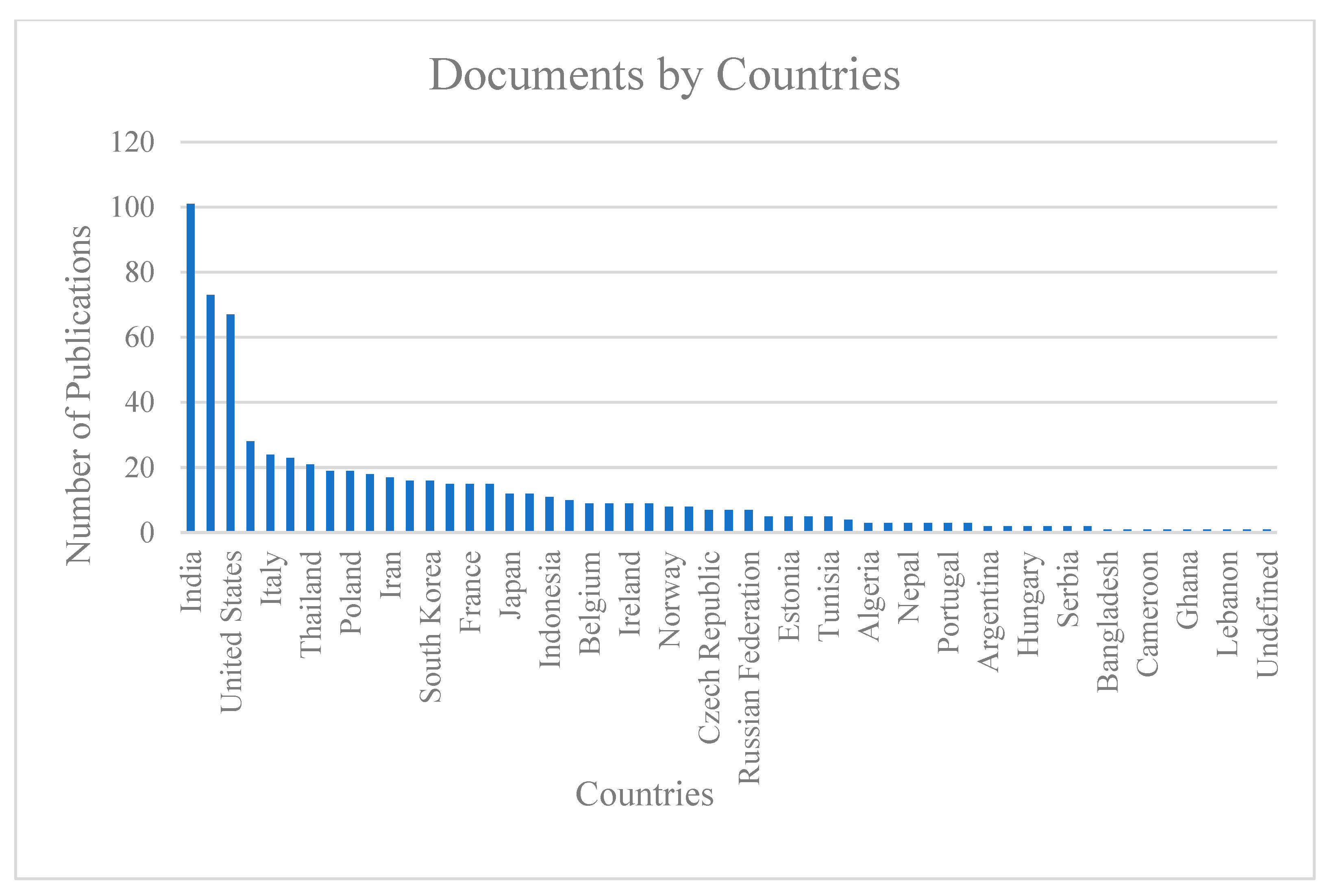
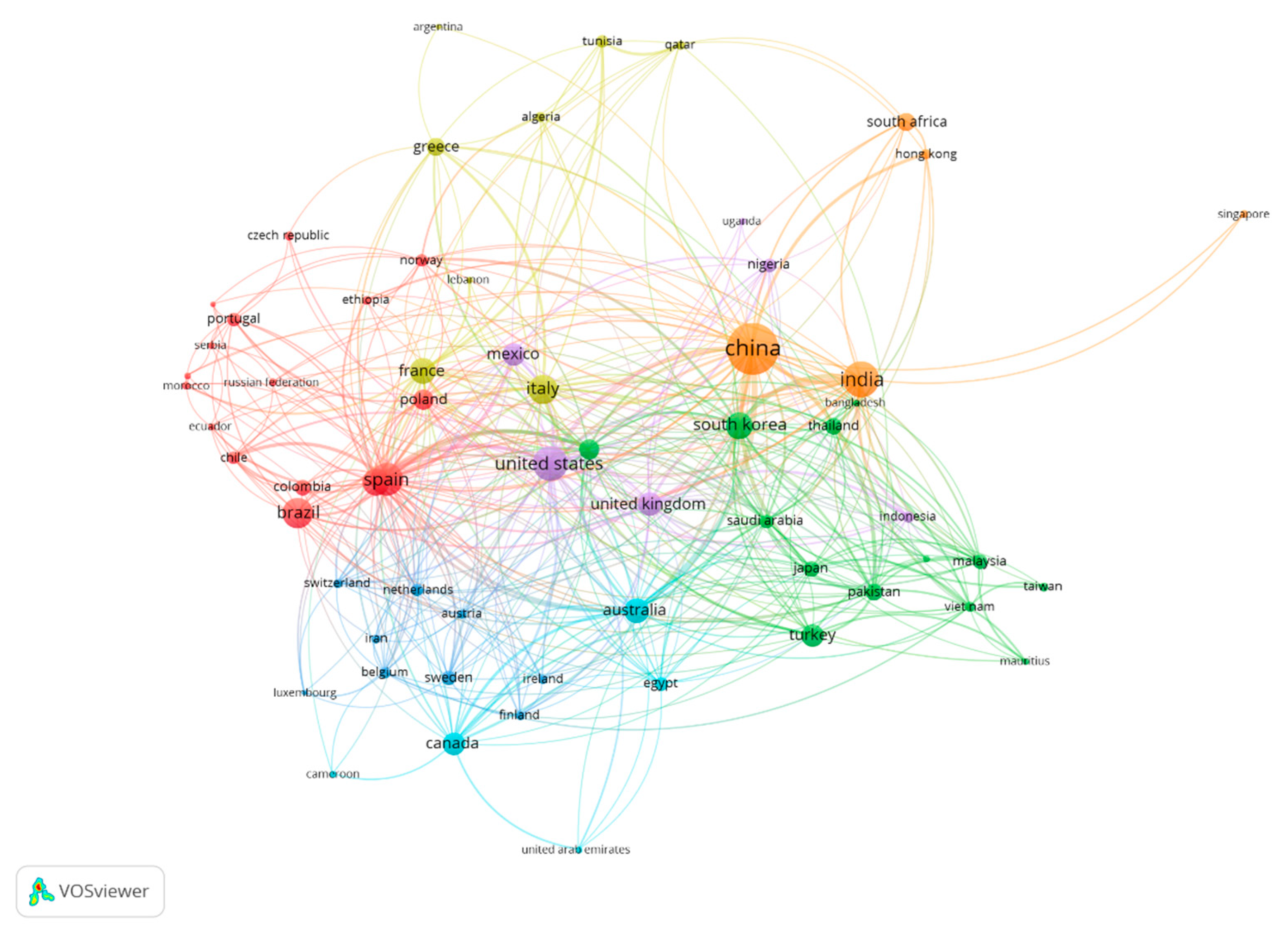
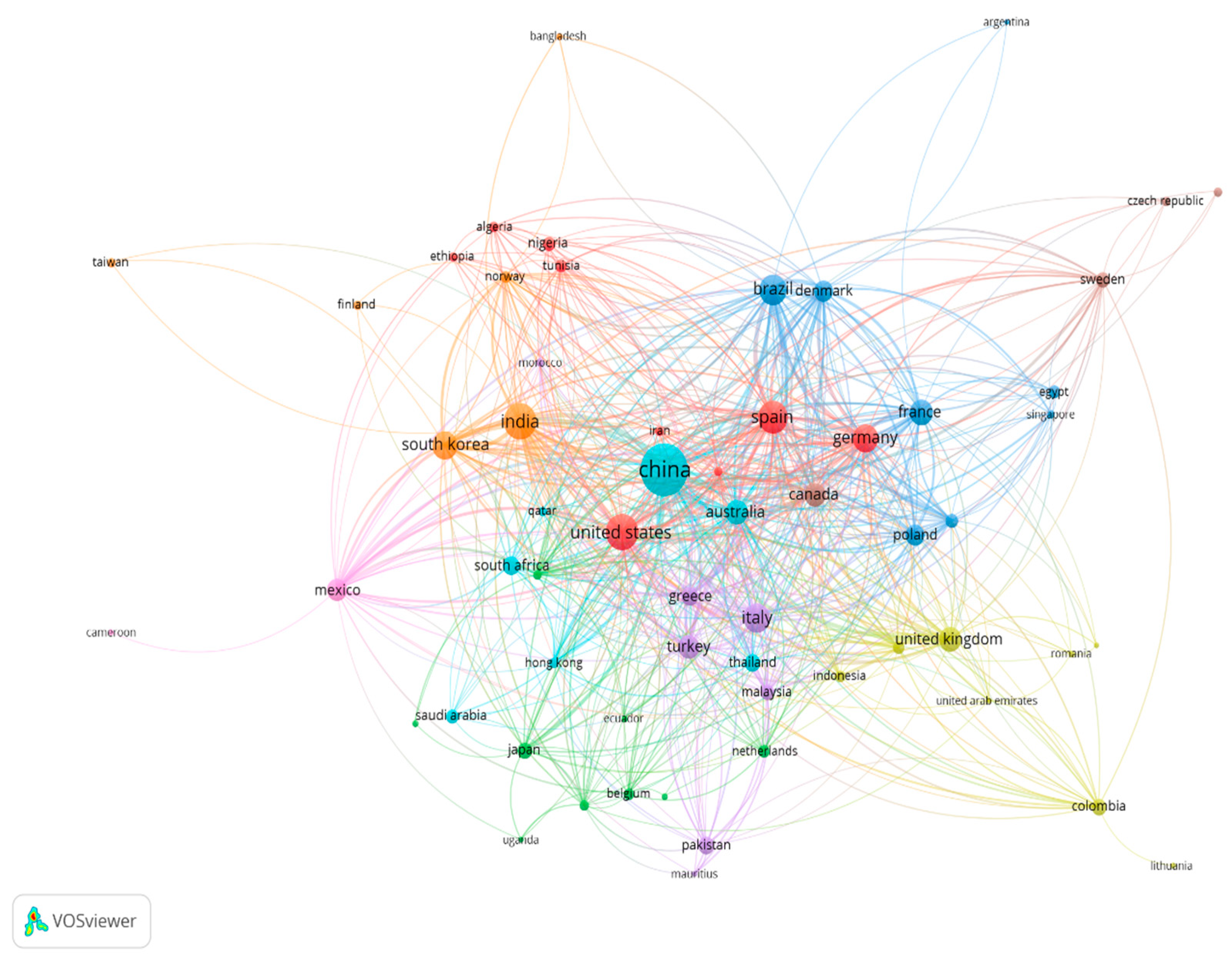
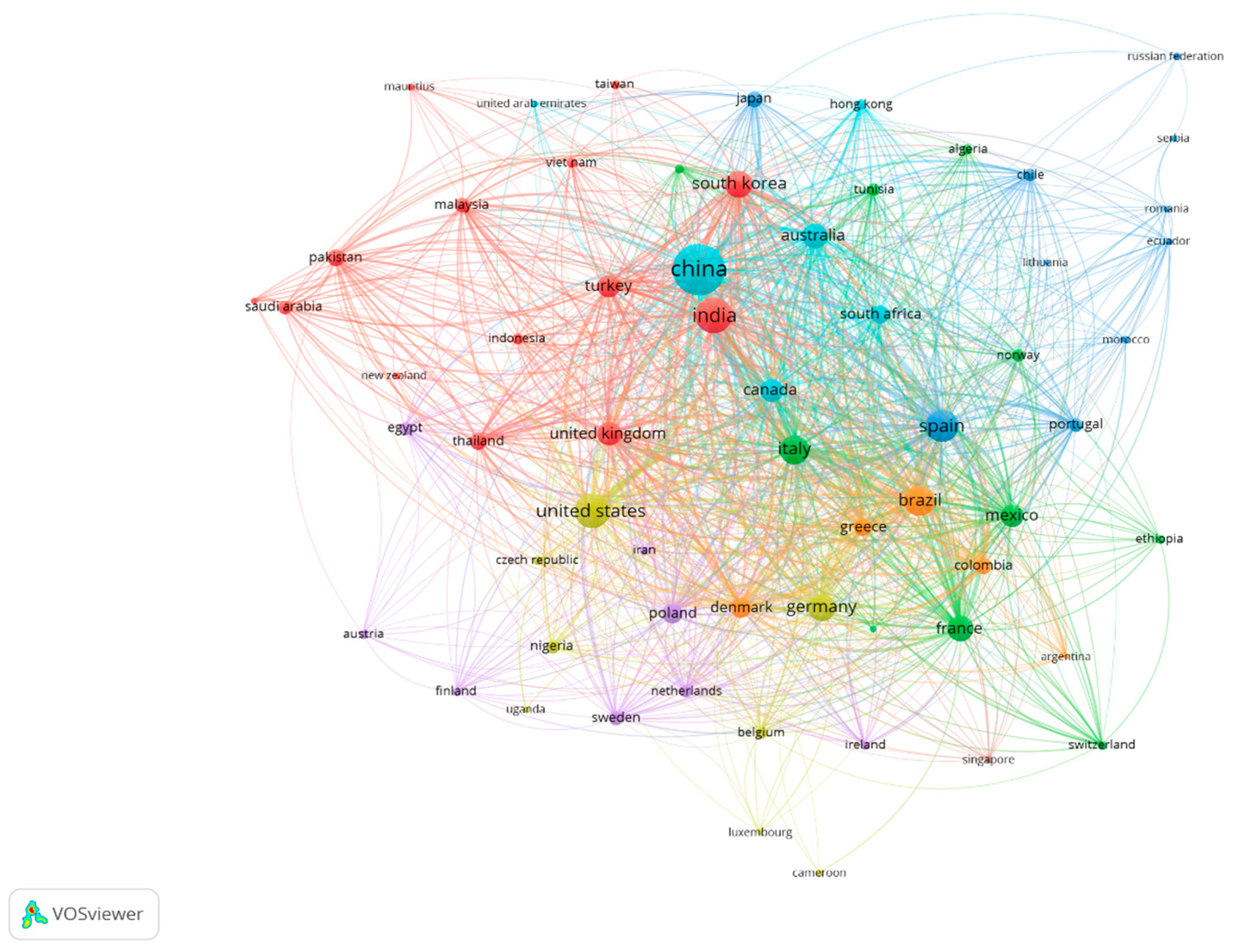
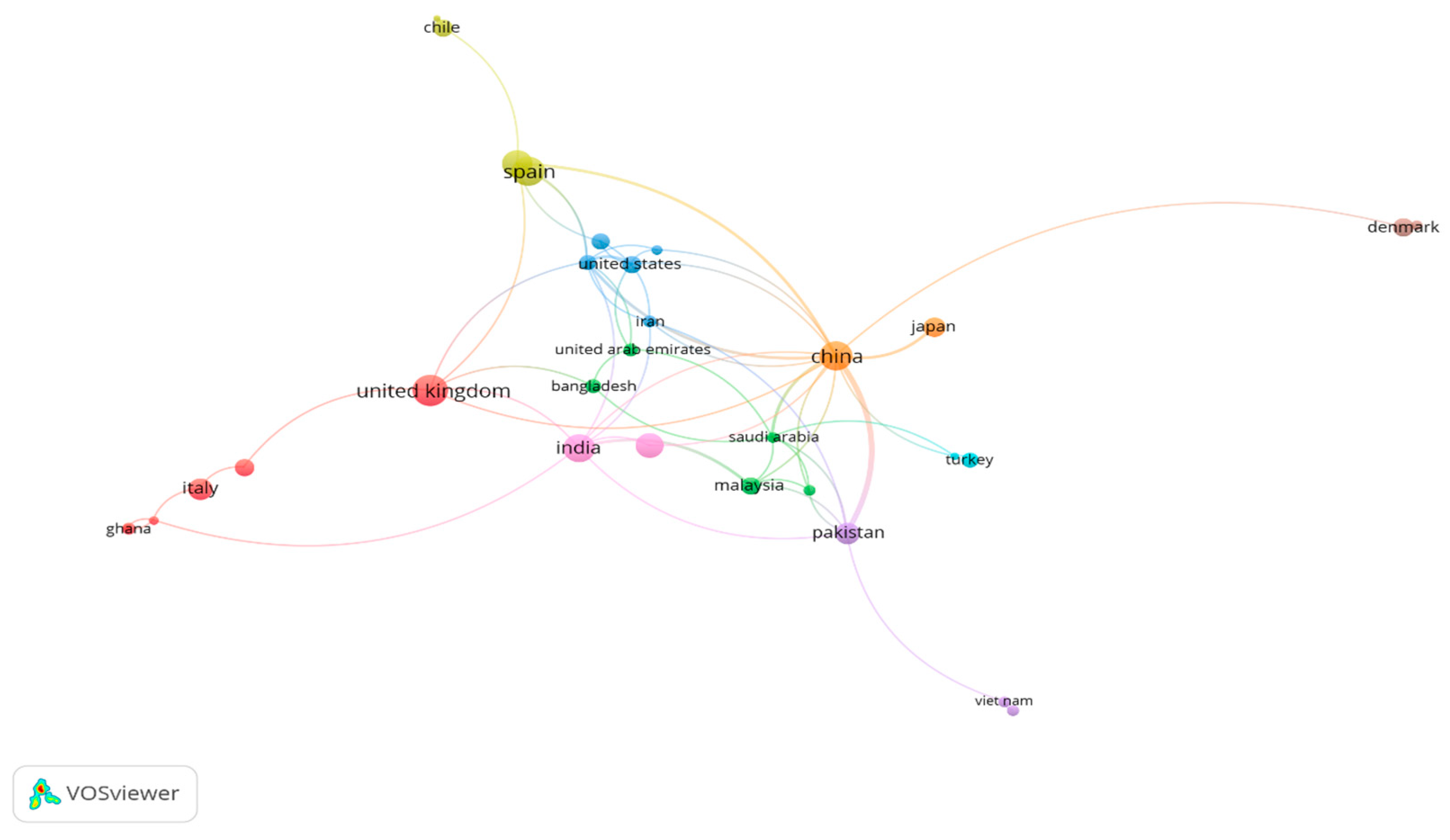
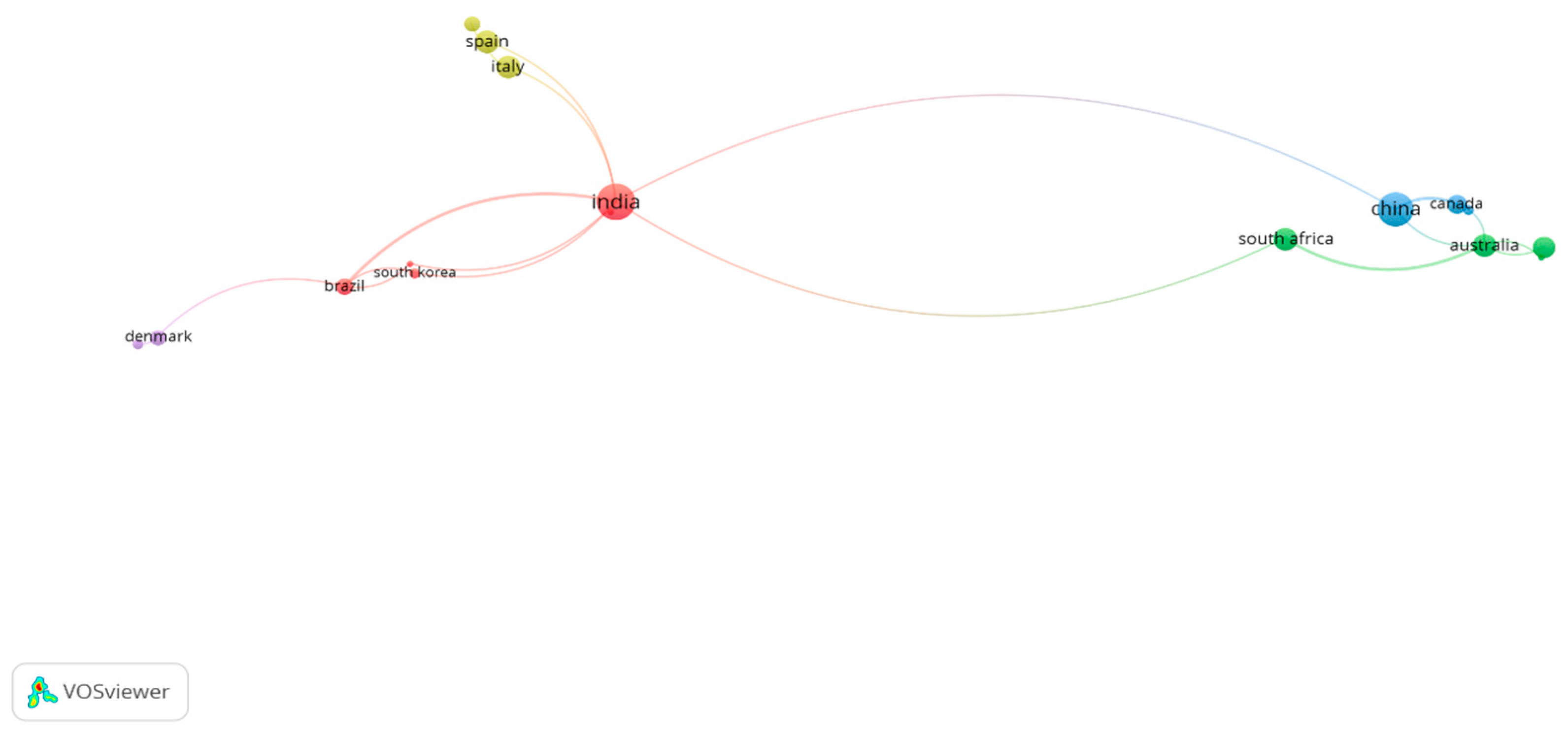
Bibliometric analysis using VOSviewer demonstrates that research on feedstock pretreatment for biogas production is globally represented but unevenly distributed, with some regions showing stronger collaborative intensity and thematic leadership than others, as shown in Figure 4, Figure 5, Figure 6 and Figure 7. The bibliometric analysis of municipal solid waste (MSW) as a feedstock for anaerobic digestion reveals a highly collaborative, globally distributed research landscape, structured into distinct clusters that highlight both regional strengths and thematic priorities.
Co-authorship clusters (Figure 4) demonstrate how knowledge exchange is organised across continents. Cluster 1 (Red) reflects Asia–Africa collaborations, with Japan and South Korea transferring advanced waste treatment expertise to emerging economies such as Nigeria and Zimbabwe, while Sweden bridges European expertise into these networks. Cluster 2 (Green) is dominated by China and the United States, whose partnerships with Australia, Saudi Arabia and South Asian nations like Bangladesh and Pakistan blend industrial applications with academic research, underscoring their leadership in global waste-to-energy innovation. Cluster 3 (Blue) represents Europe–Latin America alliances, led by Germany and France, applying European expertise to Latin American challenges in Brazil and Mexico. Cluster 4 (Yellow) highlights India’s central role, supported by Canada’s advanced research and Malaysia and Morocco’s emerging sectors, reflecting a balance of developed and developing economies. Cluster 5 (Purple) is a European hub, with the UK and the Netherlands pioneering circular economy strategies and extending them into Eastern Europe. Cluster 6 (Sea Blue) forms a Mediterranean–Asia-Pacific network, led by Denmark and Italy, adapting biogas technologies to diverse climatic and economic conditions. Collectively, these clusters show that co-authorship is not only regional but also cross-continental, with developed nations anchoring collaborations and emerging economies increasingly active in adapting technologies to local contexts.
Comparative evidence across co-authorship studies highlights that knowledge exchange in municipal solid waste and anaerobic digestion research is structured through interconnected regional and intercontinental partnerships rather than a single dominant centre. Established research countries in Europe, Asia and North America consistently serve as anchors of collaboration, while emerging economies participate through partnerships that facilitate the adaptation of waste-to-energy technologies to local conditions. Across clusters, the prevailing pattern is one of technology transfer, shared methodological development and increasing cross-continental engagement, with developed countries contributing stronger research infrastructure and emerging countries contributing contextual application. Taken together, these findings confirm that the field is collaborative but uneven, with co-authorship networks increasingly linking advanced research systems to regions where waste management and biogas development remain at earlier stages. For Ghana, this asymmetry underscores the importance of building sustained partnerships with established centres to enhance visibility, strengthen methodological capacity and accelerate the integration of biogas technologies into national waste management strategies.
Citation clusters (Figure 5) reinforce these dynamics by revealing intellectual influence and citation flows. Cluster 1 (Red), with Germany and India at its core, reflects strong intercontinental citation exchanges, consolidating its global leadership. Cluster 2 (Green), led by Denmark and Spain, emphasises European regional strength in biogas research. Cluster 3 (Blue) highlights emerging players such as Malaysia and Indonesia, leveraging abundant organic waste resources alongside European partners. Cluster 4 (Yellow) links Canada, South Korea and Sweden, forming transcontinental ties that advance waste-to-energy strategies. Cluster 5 (Purple), dominated by China, Japan, Taiwan and the US, represents the most influential group, driving technological innovation and shaping global discourse. Cluster 6 (Light Blue) connects Brazil, France, Egypt and Morocco, blending policy-driven European approaches with growing African and Latin American interest. Cluster 7 (Orange) and Cluster 8 (Brown) represent smaller but significant contributions, with Australia–Bangladesh–Finland and Iraq–Nigeria–Saudi Arabia gradually expanding their presence. These citation clusters show that intellectual leadership is concentrated in a few dominant nations, but new entrants are steadily gaining recognition.
A synthesis of citation network studies shows that intellectual influence in municipal solid waste research for anaerobic digestion is not evenly distributed but concentrated within a limited number of countries. Germany, India, Denmark, Spain, China, Japan, the United States and the United Kingdom consistently emerge as central nodes, shaping the field’s intellectual trajectory. Rather than forming a single dominant centre, the literature is organised into several interconnected citation clusters that reflect both regional strength and thematic leadership. This clustering pattern demonstrates that while research influence is mature, it remains asymmetrical, with certain countries exerting disproportionate impact on methodological development and thematic emphasis. At the same time, contributions from Malaysia, Indonesia, Brazil, Egypt, Morocco, Iraq, Nigeria and Saudi Arabia indicate a gradual widening of participation, though these remain peripheral in the overall citation structure. Taken together, the citation patterns point to a research landscape that is consolidated yet uneven, where established systems continue to define the main intellectual directions while emerging regions are beginning to expand the boundaries of participation. For Ghana, limited citation centrality underscores the need to strengthen collaborative ties with established centres of influence. Doing so would not only enhance visibility and intellectual impact but also facilitate methodological transfer and capacity building, thereby positioning Ghana more prominently within the evolving global research landscape on municipal solid waste digestion.
Bibliographic coupling clusters (Figure 6) reveal shared intellectual foundations and thematic alignments. Cluster 1 (Red), linking the UK, South Africa and Nigeria, reflects strong bibliographic ties in advancing MSW utilisation for anaerobic digestion. Cluster 2 (Green), including Australia, Canada and Japan, demonstrates international cooperation in the application of AD technologies across diverse settings. Cluster 3 (Blue), with Denmark, Iran and Malaysia, highlights shared contributions toward improving digestion efficiency. Cluster 4 (Yellow), featuring China, South Korea and Saudi Arabia, emphasises regional strategies in Asia and the Middle East. Cluster 5 (Purple), composed of Germany, the US and India, represents the technological vanguard driving innovation and policy development. Cluster 6 (Sea Blue), linking Brazil, France, Mexico and Spain, underscores Latin American–European collaboration in sustainable waste treatment. These bibliographic clusters illustrate how countries align around shared references, reinforcing thematic cohesion across regions.
Integrated findings from bibliographic coupling analyses indicate that the literature on municipal solid waste digestion shares a relatively coherent intellectual base, with several countries drawing on common references across substrate characterisation, waste-to-energy conversion, digestion efficiency and circular economy strategies. The United Kingdom, Germany, the United States, India, Denmark, South Africa, Nigeria, Australia, Canada, Japan, Brazil, France, Mexico and Spain appear linked through overlapping research priorities rather than identical institutional structures, suggesting that the field is consolidating around shared scientific questions even where collaboration patterns remain uneven. At the same time, the coupling structure highlights that thematic alignment does not necessarily translate into equal visibility or influence, since countries with stronger publication systems occupy more prominent positions in the network. This confirms that while the intellectual foundations of the field are mature and increasingly convergent, research capacity and impact remain unevenly distributed across regions. For Ghana, this asymmetry underscores the importance of not only aligning with global thematic priorities but also strengthening publication output and visibility to ensure greater influence within the evolving bibliometric landscape.
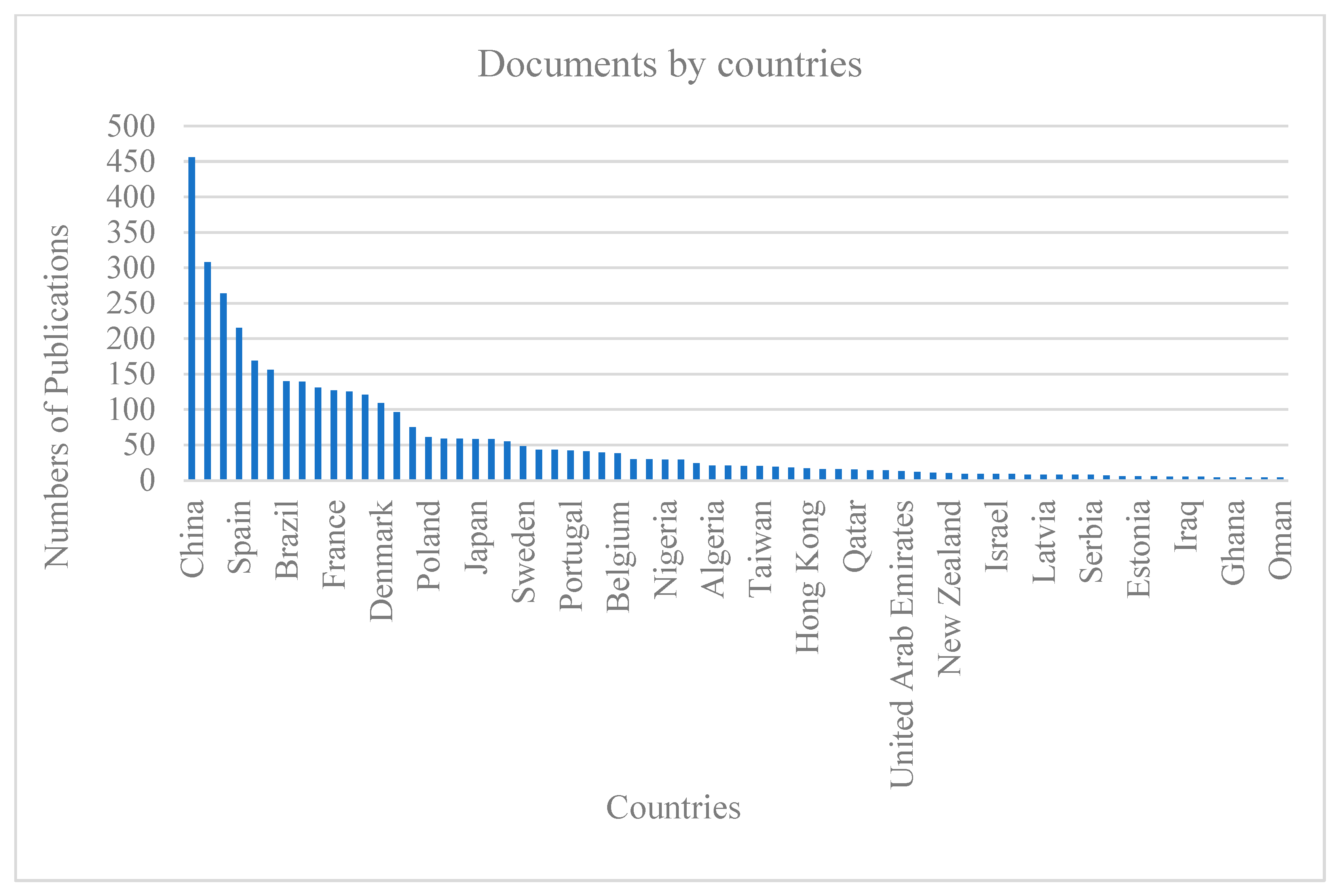
Publication output (Figure 7) confirms the dominance of the United States (169 publications), China (159) and India (104), reflecting their strong research activity in MSW-to-biogas conversion. European nations such as Italy (77), the UK (69) and Spain (40) also contribute significantly, emphasising sustainability and the integration of the circular economy. Other contributors include Canada (45), Germany (34), Japan (31) and Poland (31). Ghana, with only three publications, remains marginal in global output despite its substantial generation of organic waste. Publication output further reinforces the concentration of research activity in a small number of countries. The United States, China and India contribute the most studies, indicating sustained engagement with municipal solid waste-to-biogas research and strong institutional capacity in this area. European countries, particularly Italy, the United Kingdom and Spain, also make substantial contributions, reflecting continued interest in sustainability, waste valorisation and the integration of the circular economy. Other countries, such as Canada, Germany, Japan and Poland, appear as important but secondary contributors, supporting a broad international research base. By contrast, Ghana’s very low output, despite its substantial organic waste generation, highlights a clear disconnect between local resource potential and research visibility indexed. This suggests that Ghana has not yet developed a strong publication presence in this thematic area, even though the subject is highly relevant to its waste management and renewable energy needs.
Building on the wider biogas context, analysing municipal solid waste reveals that Ghana’s challenge is not a lack of organic waste or technical capacity. Instead, it is the insufficient integration of that potential into a comprehensive waste-to-energy system. Evidence shows that Ghana’s MSW is well-suited for anaerobic digestion due to its high organic content, yet the country primarily relies on open dumping, uncontrolled landfilling, and small-scale digestion. This suggests that feedstock availability is no longer the main issue; the real challenges are waste segregation, collection efficiency, policy support, and the reliable operation of digestion systems at scale. Essentially, the municipal waste stream exists as a resource, but it is not yet systematically used for energy and nutrient recovery.
The global comparison also shows that countries with higher waste generation than Ghana have advanced further, not because they generate less waste, but because they have built the policy, regulatory and technical systems needed to recover value from it. Europe’s experience demonstrates that large-scale MSW digestion works best when supported by source separation, co-digestion, pretreatment, upgrading technologies and strong institutional frameworks. Ghana, by contrast, remains constrained by fragmented waste management, low recycling rates, weak enforcement and limited investment in advanced treatment systems. The implication is that Ghana should not simply copy large industrial models from developed countries but should adapt them to local realities by prioritising organic waste segregation, decentralised digestion where appropriate and targeted expansion of larger plants in urban centres where waste volumes can sustain them.
The bibliometric evidence further strengthens this conclusion by showing that Ghana remains marginal in the global MSW-to-biogas research landscape, despite the relevance of the topic to its urban waste crisis and energy needs. The low publication output reflects limited research visibility and weak participation in the global knowledge network, which in turn slows the development of locally suitable technical solutions. Taken together, the findings suggest that Ghana’s future progress in anaerobic digestion will depend on moving beyond isolated pilot projects toward a coordinated system that connects research, regulation, waste management practice and renewable energy planning.

5. Feedstocks for Biogas Production (Anaerobic Digestion): Ghana vs. The World

5.1. Feedstock Pretreatment for Biogas Production (Anaerobic Digestion): Ghana vs. The World

Biogas production through anaerobic digestion presents a viable solution for renewable energy generation and greenhouse gas reduction. This process involves breaking down organic materials, such as sewage sludge, livestock manure, municipal solid waste and agricultural residues, in the absence of oxygen to produce methane-rich biogas. However, the efficiency of anaerobic digestion depends on the feedstock pretreatment method, thereby enhancing methane yield and digestion rate.
In Ghana, where biomass is a primary energy resource, the effective utilisation of feedstocks such as crop residues is paramount. Studies indicate that crop residues can generate substantial amounts of energy, with Ghana having a theoretical potential of 623.84PJ [13]. However, the inherent complexity of biomass poses challenges, necessitating innovative pretreatment methods to improve digestibility and methane yield. In contrast, global research has made significant advancements in pretreatment technologies, integrating sophisticated methodologies to optimise biogas production. This section compares Ghana’s research and implementation efforts in biogas feedstock pretreatment with global advancements, highlighting opportunities and barriers in the field.

5.1.1. Comparative Analysis of Feedstock Pretreatment Methods in Ghana and Global Practices

Feedstock pretreatment is essential for optimising anaerobic digestion, especially for lignocellulosic and complex organic materials. Various pretreatment techniques have been explored worldwide to improve methane yield and digestion efficiency [70]. Thermal pretreatment, such as steam explosion, has been widely used for waste-activated sludge and microalgae, as it enhances biodegradability by breaking down cell walls [71]. Saponification is preferred for fatty residues and animal by-products because it reduces lipid accumulation, which could inhibit microbial activity. Alkali and biological pretreatments have shown promise for lignocellulosic biomass, as they facilitate delignification and improve the digestibility of plant-based feedstocks [72,73].
Developed countries, including Denmark, Germany and Sweden, have successfully integrated pretreatment technologies into large-scale biogas plants. For instance, Denmark has implemented ammonia fibre explosion and steam explosion pretreatments to improve the conversion of agricultural residues into bioenergy [74]. Similarly, Sweden has focused on organosolv and ionic-liquid pretreatments to enhance the efficiency of lignocellulosic feedstocks for biogas production [72]. In the United States, comminution and enzymatic hydrolysis have been combined with thermal pretreatment to increase methane production from municipal solid waste [75]. These technological advancements have contributed to the expansion of biogas production, making it a crucial component of the renewable energy mix in these countries.
In Ghana, significant reliance on biomass, including crop residues and livestock by-products, has increased interest in improving biomass utilisation for energy production. While biomass gasification has been applied to enhance energy access in rural communities, it is a thermochemical conversion process rather than a pretreatment method for anaerobic digestion [13]. However, Ghana has yet to integrate advanced enzymatic and microbial processes on a large scale, limiting its ability to maximise resource utilisation. Compared with global practices, these practices often incorporate such techniques not only to address agro-food waste management but also to promote a circular bioeconomy through biorefineries [76].
Moreover, pretreatment techniques vary in efficiency improvements. For thermal pretreatment, a study on Miscanthus lutarioriparius reported a 57% increase in methane yield in comparison with the untreated substrate using steam explosion pretreatment [77]. As for chemical pretreatment, a study using wheat straw as substrate reported an increase of 128% methane yield from 0.7% w/w KOH-pretreated wheat straw than the untreated wheat straw [78], while for biological pretreatment, a study also reported a 72.6% increase in methane yield over control from sawdust treated with a microbial consortium LCDC isolated from rotten sawdust [79]. Finally, in a mechanical pretreatment study, an increase in methane yield of up to 22% was reported from treated lignocellulosic materials via mechanical grinding [80].
Examples of feedstock types, pretreatment methods and reported methane yields from different countries are summarised in Table 2.
Beyond these reported yields, a closer examination reveals substantial variability across studies, driven by methodological differences, substrate-specific effects and uncertainties in performance indicators.
While pretreatment technologies consistently improve methane yield, the extent of enhancement varies considerably across studies. This variability is attributable to several methodological and substrate-specific factors. For instance, thermal hydrolysis often yields higher methane recovery in lignocellulosic feedstocks, yet outcomes vary with temperature regimes, residence times and the lignin content of the substrate. Similarly, alkaline pretreatment shows promising results for municipal solid waste, but performance indicators fluctuate with chemical dosage and pH control strategies. Mechanical methods such as milling and shear-mixing (rotary drum pre-composting) improve biodegradability, though reported gains are inconsistent due to differences in particle size reduction and energy input requirements. Biological pretreatments, including enzymatic hydrolysis and microbial consortia, are highly substrate-dependent, with yields varying with enzyme and microbial specificities and feedstock composition.
In addition, methodological differences in biochemical methane potential (BMP) assays such as inoculum source, incubation conditions and analytical protocols make cross-study comparison difficult and introduce uncertainty into reported performance indicators. Comparative analysis reveals that some studies employ batch BMP tests under controlled laboratory conditions, while others rely on semi-continuous digesters that better reflect operational realities but yield less reproducible data. For this reason, the comparative value of pretreatment studies lies less in the absolute methane yield reported and more in the broader patterns they reveal about substrate responsiveness and process feasibility. Agricultural residues with high lignocellulosic fractions generally benefit more from pretreatment than easily degradable organic wastes, whereas food waste and some municipal organic fractions may show only limited gains or fail to justify the additional energy and chemical inputs required. This suggests that pretreatment selection should be substrate-specific rather than universal.
For Ghana, where feedstocks range from faecal sludge to agro-industrial residues, the uncertainty associated with pretreatment outcomes underscores the importance of context-specific evaluation. Reported methane yields from international studies cannot be directly extrapolated without accounting for substrate variability, methodological differences and operational constraints. A rigorous comparative framework that integrates uncertainty analysis and substrate-specific effects would therefore strengthen the applicability of global pretreatment findings to Ghanaian biogas development.

5.1.2. Challenges and Opportunities in Feedstock Pretreatment for Biogas Production in Ghana

Ghana has substantial untapped biomass resources, particularly in the agricultural and municipal waste sectors, which could serve as feedstocks for biogas production. Studies have demonstrated the feasibility of using various organic waste materials for biogas generation [95]. A notable case study at the Kwame Nkrumah University of Science and Technology (KNUST) estimated that sewage sludge could generate between 50 and 120 kW of power, depending on digester size [96]. This study highlights the potential of wastewater treatment facilities to integrate biogas recovery into their operations.
Despite this potential, Ghana’s biogas sector faces challenges in feedstock pretreatment and large-scale implementation. Unlike countries with well-established biogas industries, Ghana has limited infrastructure and expertise in industrial-scale anaerobic digestion. Research on pretreatment strategies remains relatively underdeveloped, with most studies focusing on small-scale applications. The limited adoption of advanced pretreatment methods, such as thermal and enzymatic hydrolysis, has constrained biogas production efficiency. Furthermore, Ghana’s reliance on traditional anaerobic digestion techniques without proper feedstock optimisation has led to suboptimal methane yields [66].
Another major constraint is the lack of supportive policies and investment in biogas technology. Although initiatives like the Biogas Technologies Promotion Project have aimed to increase awareness and the implementation of biogas systems, large-scale adoption remains low due to financial and technical barriers [97]. In contrast, countries such as Germany and Denmark have established incentive programmes and subsidies to encourage biogas production and the adoption of pretreatment technologies. Moreover, the implementation of biogas plants in Ghana is often stymied by a lack of thorough assessments of available biomass resources and their conversion potential. By systematically evaluating local feedstock sources, Ghana can enhance biogas production, thereby improving energy access and contributing to sustainable development goals.
Biogas production via anaerobic digestion offers significant potential for renewable energy generation in Ghana. However, the efficiency of this process relies on feedstock pretreatment strategies, which remain underdeveloped in the country compared to global advancements. While developed nations have adopted advanced pretreatment technologies to enhance methane yield and optimise digestion rates, Ghana’s biogas sector faces challenges due to limited research, technological expertise and policy support. The abundance of agricultural residues in Ghana, such as cocoa pod husks, offers a unique opportunity to enhance energy production through anaerobic digestion. Biomass remains crucial to the energy needs of rural communities, where approximately 80% of cooking energy is derived from traditional methods, underscoring the need to transition to more sustainable processes [13].
Moreover, as global demand for renewable energy rises, Ghana’s potential to utilise biowastes for biogas production aligns with broader environmental objectives. Anaerobic digestion not only produces a clean energy source but also yields biofertilisers that can enhance agricultural productivity, making this technology vital for rural development and sustainability in the region [98]. To bridge this gap, Ghana must prioritise research into feedstock pretreatment technologies, focusing on cost-effective, locally adaptable solutions. Collaboration with international institutions and private sector investments could facilitate knowledge transfer and the implementation of advanced pretreatment methods. Additionally, government policies should support biogas production through financial incentives, subsidies and capacity-building programmes to train professionals in biogas plant design and operation. Ultimately, acknowledging and addressing these gaps can pave the way for impactful advancements in biogas production in Ghana, contributing to global sustainability efforts.
Although various feedstock pretreatment techniques have been explored globally to improve the biodegradability of lignocellulosic and other complex organic materials and to enhance methane yield during AD, their applicability varies across socio-economic and technological contexts [70]. Pretreatment methods, including thermal, physical, chemical and biological pretreatments, have demonstrated significant improvements in methane yield in developed countries; however, their implementation often entails capital costs, technical expertise, environmental concerns and energy requirements [99]. In contrast, developing countries such as Ghana face several challenges, including limited infrastructure, inadequate technical capacity, lack of supportive policies and financial constraints, which may hinder the adoption of such pretreatment techniques. Therefore, beyond their technical performance, it is important to critically evaluate pretreatment techniques based on their economic feasibility, limitations and suitability for local conditions in developing countries like Ghana. Table 3 below presents a critical comparison of commonly reported pretreatment technologies, their performance, limitations and feasibility under Ghanaian conditions.
As shown in Table 3 above, pretreatment techniques generally improve the biodegradability and methane yield of feedstocks; however, their implementation in Ghana may be constrained by high operational costs, energy requirements, weak policies, limited infrastructure and technical expertise. Conversely, the biological pretreatment method, compared with other pretreatment methods, appears more feasible under Ghanaian conditions due to its lower cost and lower energy requirements.

5.1.3. Bibliometric Analysis: Feedstock Pretreatment for Biogas Production

  • Co-Authorship of Feedstock Pretreatment for Biogas Production Against Countries
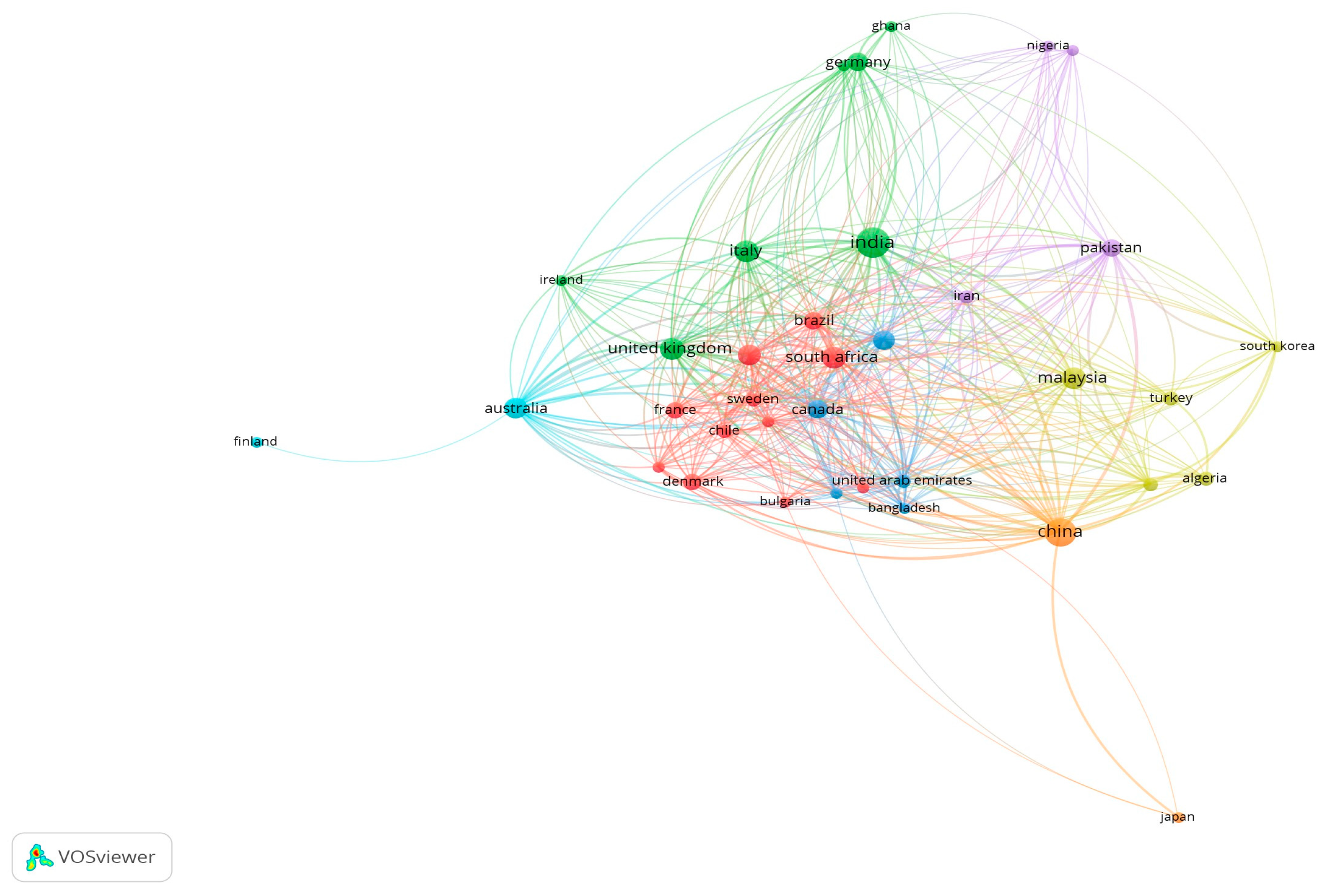
The clusters in the co-authorship network represent groups of countries that frequently collaborate on research publications.
Cluster 1 (Red) includes Australia, Brazil, Chile, the Czech Republic, France, Greece, Malaysia, Poland and Spain, indicating strong research ties among European, South American and Asia-Pacific countries in environmental science, renewable energy and engineering.
Cluster 2 (Green), consisting of China, Denmark, Egypt, Italy, Japan, Pakistan and Thailand, highlights international collaborations in technology, chemistry and materials science, with China and Japan playing central roles.
Cluster 3 (Blue), which includes India, Nigeria, South Africa, South Korea, Taiwan and the United States, demonstrates significant research partnerships between the US, Asia and Africa, potentially focusing on technology, pharmaceuticals, energy and sustainability.
In Cluster 4 (Yellow), Belgium, Germany, Iran and Russia form a European–Middle Eastern research network, emphasising nuclear physics, engineering and materials science.
Cluster 5 (Purple), composed of Estonia, Indonesia and Sweden, suggests a focus on sustainability, renewable energy, or climate change research.
Cluster 6 (Light Blue), which includes Canada, Norway and Turkey, collaborates in environmental science, petroleum research and medical sciences.
Cluster 7 (Orange), formed by Ireland, Mexico and the United Kingdom, highlights a research bridge between Europe and Latin America in climate science, engineering, or medicine. The overall network shows that the United States, India, China and the United Kingdom are central players in global research collaborations, while regional ties also remain strong.
The co-authorship network for feedstock pretreatment in biogas production shows a globally distributed but unevenly structured collaboration pattern, with several regional and interregional clusters reflecting shared research interests and institutional partnerships. The network suggests that countries in Europe, Asia, the Americas and Africa are linked through collaborative research on environmental science, renewable energy, engineering and related applied fields. The United States, China, India and the United Kingdom appear to occupy central positions in the network, indicating their stronger role in connecting different research communities and shaping the direction of the literature. For Ghana and other similar contexts, this pattern is important because it shows that pretreatment research is still largely driven by external research systems, with relatively little visible contribution from countries where anaerobic digestion could have high practical value. This highlights the need for stronger local research capacity, more South–South collaboration and greater adaptation of pretreatment strategies to Ghanaian feedstocks and operating conditions.
Figure 8 below shows the co-authorship on feedstock pretreatment for biogas production by country.
  • Citation of Co-Authorship of Feedstock Pretreatment for Biogas Production Against Countries
The citation network among countries, as shown in Figure 9, is divided into six distinct clusters, each representing strong research connections and citation exchanges within specific groups of nations.
Cluster 1 (Red), the largest group, includes Denmark, Estonia, Germany, India, Indonesia, Iran, Malaysia, Pakistan, South Africa and Taiwan. This cluster suggests a strong research collaboration among these countries, with India and Germany likely playing central roles in connecting multiple regions. The presence of countries from different continents indicates a diverse research network.
Cluster 2 (Green) consists of the Czech Republic, Egypt, Ireland, Japan, South Korea, Thailand and the United Kingdom. This group is characterised by significant collaboration between European, Asian and Middle Eastern nations, with the United Kingdom and Japan likely serving as key contributors to global research citations.
Cluster 3 (Blue) features Belgium, Brazil, Chile, France, Greece and Spain, forming a European–Latin American research alliance. The inclusion of Belgium and France suggests strong European involvement, while Brazil and Chile highlight South America’s growing impact on global research.
Cluster 4 (Yellow) is a powerful group with China, Nigeria, Russia, Turkey and the United States. This cluster represents a major research collaboration between leading scientific nations (China and the United States) and emerging research contributors such as Nigeria and Turkey. The United States and China are likely to account for many citations in this group.
Cluster 5 (Purple) comprises Australia, Canada, Norway and Poland, indicating a research network among developed countries with strong academic infrastructure. The presence of Australia and Canada indicates active participation in international research.
Cluster 6 (Sea Blue), the smallest cluster, includes Italy, Mexico and Sweden, forming a unique collaboration between Europe and Latin America. This grouping suggests that these nations frequently cite each other’s work, possibly within specific fields of study.
Cross-study citation analyses demonstrate that the global research landscape on municipal solid waste and anaerobic digestion is connected but unevenly structured, with citations concentrated in a few large international clusters rather than evenly spread across countries. Nations with established research systems such as China, the United States, Germany, India, the United Kingdom and Denmark consistently occupy central positions in directing citation flows, while contributions from Africa, Latin America and parts of Asia and Europe are incorporated mainly through broader transnational linkages. The network further shows that influence arises not from a single dominant hub but from overlapping alliances linking established and emerging contributors.
  • Bibliographic Coupling of Co-Authorship of Feedstock Pretreatment for Biogas Production Against Countries
The bibliographic coupling analysis, as shown in Figure 10, reveals seven distinct clusters of countries based on shared references in academic publications.
Cluster 1 (Red), comprising China, Egypt, Ireland, Italy, Japan, Mexico, Thailand and the United Kingdom, indicates a strong, interconnected research network with shared research themes and frequent citation overlap.
Similarly, Cluster 2 (Green), which includes Australia, Brazil, Chile, the Czech Republic, Greece, Poland and Spain, demonstrates significant bibliographic coupling, suggesting shared academic influences and research activities.
Cluster 3 (Blue), comprising Belgium, Denmark, Estonia, Iran, Malaysia and Pakistan, highlights alignment among these countries in terms of cited references and collaborative efforts.
Meanwhile, Cluster 4 (yellow), featuring Germany, India, the Russian Federation, South Korea and Taiwan, suggests a strong research connection, likely driven by mutual interests in specific scientific fields.
Cluster 5 (Purple), comprising France, Nigeria, South Africa and the United States, shows a notable level of shared citations, possibly due to partnerships in international research initiatives.
Additionally, Cluster 6 (Sea Blue), which includes Canada, Norway and Turkey, suggests that these countries share a common academic influence and are frequently cited together.
Lastly, Cluster 7 (orange), comprising only Indonesia and Sweden, shows a unique yet strong bibliographic linkage, highlighting their specific research collaborations.
The bibliographic coupling analysis shows a coherent but unevenly distributed knowledge base, with countries grouping around shared references rather than uniform collaboration intensity. The largest and most connected clusters are dominated by countries such as China, the United Kingdom, India, Germany, the United States, Italy and several European and Asian nations, indicating that research in this area is shaped by a relatively small number of overlapping intellectual foundations. At the same time, the presence of mixed regional clusters across Europe, Asia, the Americas and Africa suggests that the field is internationally connected, but thematic alignment is stronger among countries with similar research priorities and publication capacity.
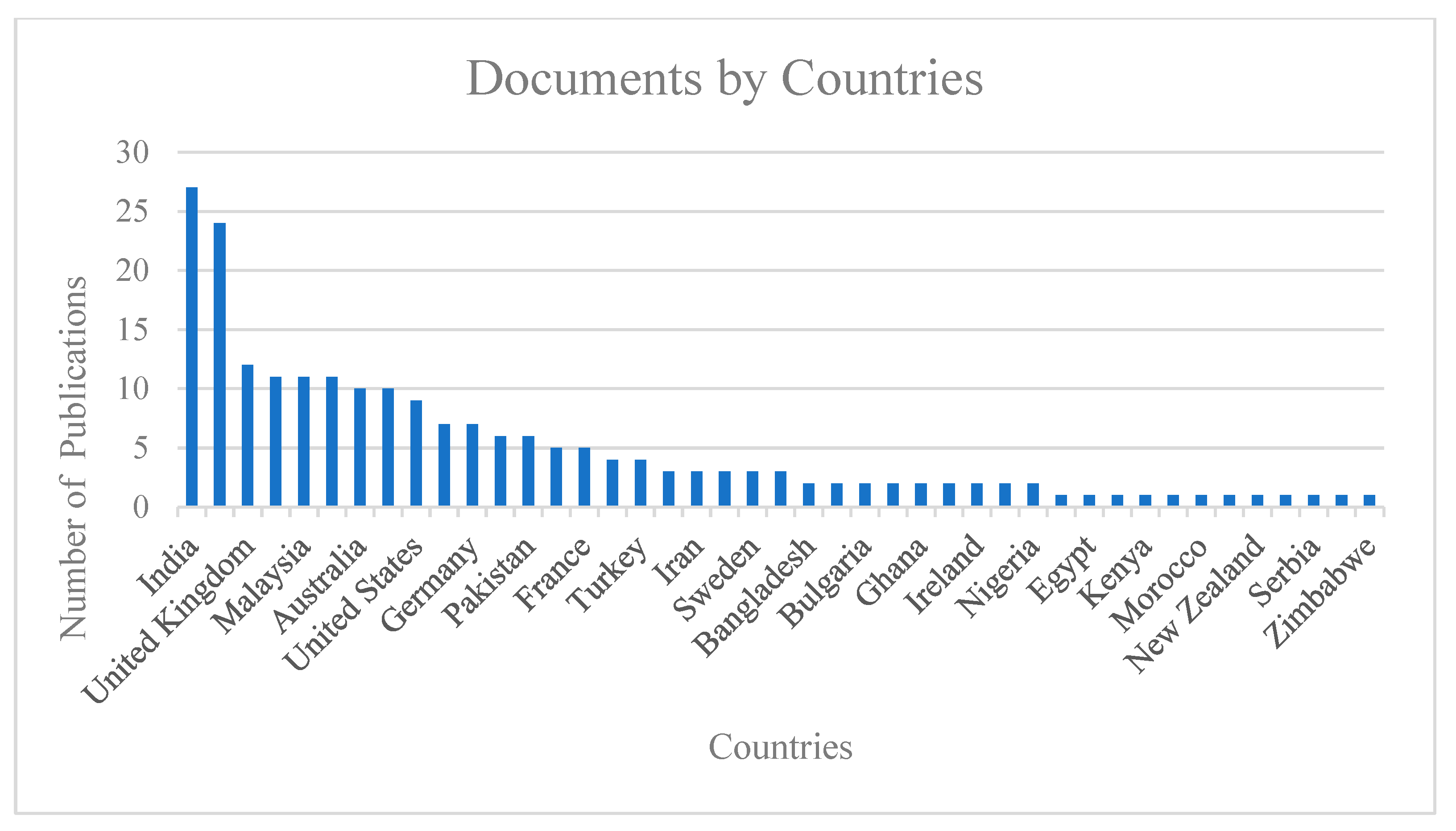
  • Documents on Feedstock Pretreatment for Biogas Production by Countries
The data shown in Figure 11 represent the number of publications on feedstock pretreatment for biogas production by country. India leads with 101 publications, followed by China with 73 and the United States with 67, showing strong research activity in improving biogas yield through pretreatment methods. European countries such as the United Kingdom (28), Italy (24) and Germany (23) also contribute significantly, reflecting their commitment to optimising anaerobic digestion processes. Other nations, including Thailand (21), Canada (19), Poland (19) and Sweden (18), have notable research output, indicating a focus on improving feedstock breakdown to enhance methane production.
Ghana has only one publication, indicating very limited research output in this area. Ghana has abundant organic waste, including agricultural residues, food waste and municipal solid waste, which could benefit from pretreatment using mechanical, thermal, chemical and biological methods to enhance methane yield. Despite the limited number of publications, Ghana can strengthen its research on feedstock pretreatment by increasing funding, providing policy support and collaborating with leading research nations. By focusing on efficient pretreatment techniques, Ghana can improve biogas production, reduce organic waste and contribute to sustainable energy solutions.

5.2. Feedstock Characteristics Influencing Methane Yield Performance Across Global and Ghana Studies

The performance of feedstocks in anaerobic digestion is strongly influenced by their characteristics, including volatile solids content (VS), total solids content (TS), carbon-to-nitrogen ratio (C/N), moisture content (MC) and lignocellulosic composition, which affect the biodegradability of the substrate, microbial activity and methane yields. Variations in these characteristics contribute significantly to the differences in methane yields reported across different feedstocks and regions. Therefore, understanding their characteristics is essential to evaluate their suitability for biogas production. Table 4 below presents key feedstock characteristics reported across global and Ghanaian studies.
Table 4 summarises the key characteristics of common anaerobic digestion feedstocks and their influence on methane yield. In general, substrates with high volatile solids content, balanced C/N ratios and low lignin exhibit higher biodegradability and methane yield potential. In contrast, lignin-rich feedstocks such as agricultural residues exhibit lower degradation efficiency unless subjected to effective pretreatment, such as physicochemical or biological methods. These characteristics determine the suitability of the feedstock and its performance in anaerobic digestion systems [106].
Cross-study comparison further indicates that methane yields from municipal solid waste digestion vary widely depending on regional waste composition and management practices. Studies from Europe and Asia consistently report higher yields, often exceeding 400–500 m3 CH4 per tonne of volatile solids, whereas African case studies, including Ghana, typically achieve lower yields due to limited segregation, higher contamination levels and reduced adoption of pretreatment. However, the reported outcomes are not uniform, as methane production is strongly influenced by waste composition, source segregation, moisture content and the presence of plastics, sand and other non-biodegradable fractions. Studies that applied source separation or pre-sorting generally reported higher stability and improved gas yields, suggesting that feedstock quality is a more important determinant of performance than waste quantity alone. Evidence also shows that co-digestion of MSW with agro-industrial residues enhances methane recovery by 15–30% compared to mono-digestion [105,107], though variability remains substantial across operational scales. These findings suggest that while MSW represents a promising feedstock, its performance is highly context-dependent and requires systematic evaluation of composition, pretreatment and co-digestion strategies. For Ghana, this implies that municipal solid waste can support biogas production, but only when collection, sorting and pretreatment systems are sufficiently organised to reduce variability in the incoming substrate.
The global literature consistently demonstrates that pretreatment of feedstocks is central to improving the efficiency of anaerobic digestion. Techniques such as thermal hydrolysis, alkaline treatment, mechanical grinding, and biological processes have been shown to substantially enhance methane yields, particularly for lignocellulosic residues, including crop wastes, husks, and straw. Reported improvements range from modest gains with mechanical methods to more than doubling yields with chemical pretreatment, underscoring the importance of substrate-specific optimisation. Countries such as Denmark, Germany, Sweden and China have successfully embedded these approaches into large-scale biogas systems, linking them to wider circular economy strategies and achieving significant efficiency gains.
In Ghana, the situation is evidently different. Although the country possesses abundant biomass resources, including agricultural residues, faecal sludge, food waste and municipal organic waste, the challenge lies in making these feedstocks technically suitable for stable methane production. Research on pretreatment remains limited, and most digesters rely on traditional anaerobic digestion methods that yield suboptimal results. Only a small number of studies have examined Ghanaian substrates in detail, and even fewer have tested them under conditions that reflect operational realities. This gap highlights constraints that are not only technological but also institutional, including weak research capacity, lack of standardised BMP data and limited pathways for translating experimental findings into practice.
Evidence synthesis shows that pretreatment is not a universal fix, as its success varies with feedstock, operating conditions, energy input, and local feasibility. For Ghana, selecting pretreatment methods should focus more on affordability, scalability, and compatibility with existing infrastructure and technical skills than solely on laboratory performance. Progress depends on emphasising low-cost, biologically or mechanically simple approaches, while strengthening evidence for the main substrates in the waste stream. This approach could turn Ghana’s abundant biomass into a dependable biogas source, assuming pretreatment strategies suit local conditions and are supported by institutional investment and sound policies.

6. Biochemical Methane Potential of Feedstock: Ghana vs. The World

6.1. Biochemical Methane Potential and Its Importance

Biochemical methane potential (BMP) is a standardised laboratory parameter used to evaluate the suitability of organic feedstocks for biogas production via anaerobic digestion. It measures the ultimate methane yield from various organic feedstocks, both liquid and solid, under controlled conditions and is expressed as the volume of dry methane per unit mass of volatile solids (VS) added, in units of NLCH_4/KgVS or NmLCH_4/gVS [111,112,113]. BMP provides a direct measure of the biodegradability of various organic feedstocks and serves as a vital reference index for ensuring stable and reliable biogas production [112,114,115]. Additionally, BMP estimation has become an essential analytical technique for the design, optimisation and monitoring of AD of organic waste feedstocks [114,115,116]. It is also a good method for establishing the baseline performance of AD and its data are useful for designing AD parameters to optimise methane yield [117]. Moreover, biomass feedstocks such as animal manure, municipal solid waste (MSW), food waste, crop residues and sewage sludge, commonly used in AD, exhibit different BMP values depending on their chemical composition [117]. Several factors affect the BMP of biomass feedstocks, including feedstock composition, nutrient balance, total and volatile solids (VS) content, carbon/nitrogen ratio, chemical and biological oxygen demand and the presence of inhibitory substances.
The importance of BMP lies in its wide range of applications in biogas production. First, it is used as a screening tool for feedstock selection, helping researchers and engineers identify the most promising biomass for AD by comparing methane yield and biodegradability [112]. Second, BMP helps to optimise the efficiency and profitability of biogas plant design and biogas capacity sizing. Third, it also helps in evaluating the toxicity of biomass feedstocks by detecting inhibitory compounds present in them [118]. Furthermore, BMP helps evaluate the optimal ratios for co-digestion of different feedstocks, which can enhance methane yield [119].

Trends on Biochemical Methane Potential of Feedstocks Around the World vs. Ghana

Research on the biochemical methane potential (BMP) of diverse biomass feedstocks used for biogas production has expanded considerably over the past decade, with BMP values varying worldwide. In Europe, BMP research is widely applied and supported by mature biogas and biomethane industries, as well as strict environmental regulatory frameworks under the EU Renewable Energy Directive. A variety of feedstocks, such as food waste, animal manure, sewage sludge, agricultural residues, municipal solid waste, energy crops and emerging substrates such as insect frass, have been characterised using BMP assays. Food waste yields high methane, whereas other feedstocks, such as animal manure and agricultural residues, yield moderate methane [112,119,120,121]. Asian research, particularly in countries such as China, India, Pakistan, Vietnam and Thailand, has contributed to the BMP characterisation of dominant biomass feedstocks in these regions, including rice straw, food waste, corn straw and agricultural residues [122,123,124,125]. The BMP characterisation of rice straw has been reported in multiple Asian countries, including China and Thailand, with variability in BMP data likely due to harvest season and pretreatment methods [122,126]. Additionally, food waste is a widely used biomass feedstock for biogas production in multiple cities, such as Beijing, China, and is characterised by high BMP values [123]. Moreover, in the United States and Brazil, BMP research has reported the use of livestock manure, municipal waste and agricultural waste as feedstocks for biogas production, generating methane-rich biogas [125,127]. Similarly, sugarcane bagasse from Brazil and Mexico in America has been tested for BMP [128]. In contrast, BMP research in Ghana remains limited due to technical, environmental and economic constraints and is mostly focused on a narrow range of locally available biomass feedstocks such as municipal solid waste (OFMSW), animal manure, faecal sludge and agricultural residues, including cocoa pod husks and cassava peels, reflecting the dominant organic waste streams of Ghana [1,125,129]. However, unlike some developed regions, Ghana lacks BMP characterisation of a wide variety of biomass feedstocks, making optimisation and scale-up of biogas technologies difficult. Furthermore, while Ghana possesses abundant biomass feedstocks with promising methane potential, there remains a gap in the characterisation of BMP relative to global research advancements. Table 5 below shows reported BMP values of some biomass feedstocks from international studies, while Table 6 shows reported BMP values of some biomass feedstocks from Ghana studies.
Comparing Table 5 and Table 6, Europe has the most advanced BMP data, covering various biomass feedstocks, while Asia demonstrates substantial biomass availability and growing research on BMP characterisation, particularly for crop residues. Ghana, on the other hand, shows a comparable range of BMP data for common feedstocks but still lacks sufficient BMP data on diverse feedstocks, which limits process optimisation and scale-up. Moreover, despite Ghana generating abundant OFMSW (over 60%), which has high potential for biogas production, there are limited experimental BMP assay studies on OFMSW, indicating a significant research gap in BMP feedstock characterisation [132,133].
While Table 5 and Table 6 present reported BMP values for selected biomass feedstocks from global and Ghanaian studies, a direct comparison of methane yields across feedstocks provides a better understanding of their performance in biogas production. This comparison helps identify high-performing feedstocks, understand variations in methane generation potential and evaluate how Ghanaian feedstocks compare with those reported internationally. Therefore, Table 7 below summarises the methane yields of selected biomass feedstocks from both global and Ghanaian studies to provide a clearer comparison of their biogas production potential.
Comparative analysis of BMP studies further reveals significant heterogeneity in reported yields, largely attributable to methodological differences. Batch BMP assays under controlled laboratory conditions often produce reproducible indicators of feedstock potential, yet semi-continuous trials report yields that are 20–40% lower, reflecting operational realities such as microbial adaptation and substrate variability. Quantitative synthesis also shows that lignocellulosic substrates consistently underperform compared with food waste and sewage sludge unless pretreated, with methane yields varying by 40–50% across studies. The broader evidence suggests that BMP testing is most valuable when used to rank feedstocks, guide co-digestion decisions and support local feasibility assessment, particularly in contexts such as Ghana, where waste composition may vary significantly across seasons and locations.

6.2. Bibliometric Analysis: Biochemical Methane Potential of Feedstock

Bibliometric analysis using VOSviewer revealed that research on the biochemical methane potential (BMP) of feedstock is characterised by extensive international collaboration and strong global research networks, as seen in Figure 12, Figure 13 and Figure 14. Co-authorship, citation and bibliographic coupling analyses showed that countries such as China, the United States, India, Spain, Germany and South Korea dominate research on methane potential, reflecting substantial investments in renewable energy, biomass utilisation and sustainable waste management technologies, as seen in Figure 15. The co-authorship network demonstrated strong collaboration among countries across Europe, Asia, North America, Africa and Latin America. European countries such as Spain, Germany, Belgium, Sweden and the Netherlands showed strong interconnected research activity focused on sustainable waste management and bioenergy development. Asian countries, including China, India, Japan and South Korea, emerged as major contributors to technology-driven approaches for methane production and feedstock optimisation. Similarly, collaborations involving African countries such as Nigeria, Egypt, Ethiopia, Cameroon, South Africa and Uganda indicate increasing interest in renewable energy recovery and biomass utilisation within developing regions. The citation analysis further highlighted the global influence of countries such as China, the United States, Germany, Spain and India in shaping research directions in biochemical methane potential studies. Their high citation impact reflects significant contributions to feedstock characterisation, methane yield optimisation and improvements in anaerobic digestion performance. Emerging economies, including Saudi Arabia, Pakistan, Malaysia, Thailand and Turkey, also demonstrated growing participation, indicating expanding global attention towards sustainable bioenergy technologies. Bibliographic coupling analysis revealed strong shared research interests among countries engaged in methane potential assessment, particularly in agricultural waste utilisation, biomass conversion and waste-to-energy applications. The clustering patterns revealed increasing international collaboration aimed at improving methane production technologies and enhancing renewable energy generation from organic waste materials. Analysis of publication output by country showed that China recorded the highest number of publications, followed by the United States and India, demonstrating their strong research investment in bioenergy and anaerobic digestion systems. European countries such as Spain, Italy, Germany and France also maintained significant research contributions, supported by established environmental policies and advanced waste management systems.
Ghana recorded only 4 publications on biochemical methane potential research, indicating limited but emerging research activity in this field. Existing studies in Ghana mainly focus on the utilisation of agricultural residues such as cassava peels, palm oil waste and other organic biomass for biogas production. Despite the country’s significant biomass availability, research development remains constrained by limited funding, inadequate infrastructure, weak policy implementation and low international research collaboration. To improve Ghana’s contribution to and practical application of biochemical methane potential studies, investment in renewable energy research should be strengthened, collaboration with leading research countries promoted and partnerships with other African countries actively engaged in anaerobic digestion and bioenergy research enhanced, including Nigeria, South Africa, Egypt, Tunisia and Ethiopia. Such collaborations could support knowledge transfer, joint research initiatives, technology adaptation and capacity building in waste-to-energy systems. Ghana should also improve waste segregation systems, encourage the valorisation of agricultural waste and develop policies that support waste-to-energy technologies. Greater attention should be directed towards translating laboratory-scale methane potential studies into pilot-scale and community-level applications that are economically feasible and adaptable to local conditions.
The BMP evidence makes it clear that biochemical methane potential (BMP) assays are fundamental to biogas development, serving as a practical screening tool to identify promising substrates, compare feedstocks and guide co-digestion and reactor design. Studies across Europe, Asia and North America consistently show that methane potential is highly feedstock-dependent. Food waste, sewage sludge, and manure show strong BMP performance, whereas lignocellulosic materials, such as crop residues, generally require pretreatment to achieve comparable yields. This reinforces the broader conclusion that the technical value of a feedstock cannot be judged by quantity alone, since substrate chemistry, seasonal variation and operating conditions shape actual digestibility and methane output. BMP data therefore provide the analytical foundation for reliable process design and optimisation scale-up.
For Ghana, the challenge is not the availability of biomass but the adequacy of its characterisation. Although several promising substrates exist, including organic fractions of municipal solid waste, cocoa pod husks, cassava peels, faecal sludge and food waste, the number of experimentally validated BMP studies remains very small, with many reported values still theoretical rather than operationally verified. This narrow evidence base limits the country’s ability to compare feedstocks, prioritise investment and design digesters suited to local conditions. Methodological gaps, such as the absence of standardised BMP protocols and insufficient field-reflective testing, further constrain the translation of laboratory findings into practice.
The bibliometric evidence confirms that Ghana is still on the margins of this research area. This means that future progress will depend not only on more BMP studies but also on stronger collaboration and standardised testing protocols. BMP is not a laboratory metric but a missing decision-making tool that Ghana must strengthen to connect abundant waste streams to practical biogas development. Stronger collaboration with established research centres, investment in local capacity and the integration of BMP data into policy and planning frameworks will be essential.

7. Operating Parameters of Anaerobic Digestion on Biogas Production and Methane Content Around the World vs. Ghana

The performance of anaerobic digestion in terms of biogas yield and methane (CH4) concentration is strongly influenced by key physicochemical and biological operating parameters such as temperature, hydraulic retention time (HRT), pH, organic loading rate (OLR), carbon–nitrogen (C/N) ratio, Total Solids (TS) content and ammonia. These parameters must all be understood and carefully controlled during the AD process to maximise methane production [145,146,147,148]. Globally, in AD practice, temperature is a fundamental and effective parameter that impacts the metabolic activity of microorganisms involved in the process. Two main temperature regimes are widely recognised in AD: mesophilic (25–40 °C) and thermophilic (50–60 °C). Mesophilic digestion, with lower temperature conditions, proceeds more slowly and yields less biogas, whereas thermophilic digestion, with higher temperature conditions, accelerates digestion and increases biogas yield [107,145,146,147]. Similarly, pH is critical for stability, as excessive acidity or alkalinity can inhibit microbial growth, thereby affecting methane production. Different microbial groups in AD are reported to have distinct pH requirements; methanogens are most active near neutrality (6.6–7.8), whereas acidogenic microbes thrive at slightly acidic values (5–6) [107,145,147]. Hydraulic retention time (HRT) is essential for maintaining process stability and biogas productivity. HRT is related to the loading rate; a shorter HRT corresponds to a higher loading rate and vice versa. Shorter HRTs (10 to 30 days) are associated with VFA acidification, resulting in inhibitory effects but allowing increased process efficiency, whereas longer HRTs are necessary for the digestion of lignocellulosic wastes and decrease capital costs [107,145,146,149,150]. Organic loading rate (OLR) is among the most important parameters for AD stability, as it governs the balance between acidogenesis and methanogenic uptake. Excessive loading can cause VFA accumulation, lower pH and inhibit methanogens, increasing the risk of instability [107,145,151,152]. The carbon–nitrogen (C/N) ratio is one of the most influential parameters for AD stability and effectiveness. A low C/N ratio leads to ammonia accumulation due to excess nitrogen, inhibiting microbial activity, whereas a high C/N ratio ensures sufficient carbon substrates are available for methanogens to produce methane, given limited nitrogen [107,145,153]. Total Solids (TS) content in AD plays an important role in digester operation, with high-TS AD receiving considerable attention. Studies report that continuous high-TS digesters yield higher biogas than low-TS digesters operating at the same retention time [146,154]. Finally, ammonia concentration is a basic parameter in the AD process and in methane production. Although it is a nutrient for microbial growth, excessive amounts can prevent growth and inhibit the AD process [147,155]. In a developing country like Ghana, studies show that AD systems are influenced by key parameters such as temperature, hydraulic retention time (HRT), carbon-to-nitrogen ratio (C/N), pH and the organic loading rate (OLR), which can have positive or negative effects on the physical environment and production efficiency if not properly controlled [122]. In most studies, temperature is mesophilic (25–35 °C), pH ranges from acidic to neutral (6.49–7.4) and HRTs are within an optimal range under mesophilic conditions, ensuring stable methane production. Moreover, OLR has also been reported to be considerably lower and the C/N ratio is often suggested to fall within the recommended ideal range (20:1 to 30:1) for some feedstocks, such as cow dung. If the ratio of others does not fall within the range, co-digestion is utilised to achieve an optimal ratio for efficient methane production [156,157,158]. These differences show that, even though the operating parameters of AD remain consistent globally, factors such as local climate conditions and feedstock variability can significantly influence these parameters and, in turn, methane yield in Ghana [156]. Table 8 below shows the AD operating parameter ranges for feedstocks for biogas production across the World vs. Ghana.
AD systems operate within well-controlled operating parameter ranges, which result in stable biogas production, while in Ghana, some of these systems operate under less controlled conditions. For example, global AD systems may use thermophilic conditions to enhance methane and biogas yields, whereas systems in Ghana mostly rely on ambient mesophilic conditions, limiting process intensification and potentially resulting in lower biogas yields. Similarly, global HRT values are generally higher than those reported in Ghana, reducing digestion locally.
Furthermore, even though optimal ranges for parameter optimisation have been identified through global research, their application in developing countries like Ghana may be limited by economic or technical constraints. For example, conditions that improve methane production often demand high energy use, monitoring and process control, which may not be practical in low-resource settings [4]. Table 9 below presents a comparative assessment of key AD operating parameters, their effects on biogas production, associated trade-offs and feasibility under Ghanaian conditions.
Overall, the comparison of AD operating parameters shows that while global anaerobic digestion systems maintain more tightly controlled and optimised conditions, Ghanaian systems tend to operate within broader yet functional parameter ranges. This suggests that effective biogas production can still be achieved locally when key factors such as temperature, pH, HRT, OLR, and C/N ratio are properly managed.
The literature on process optimisation shows a clear shift from single-parameter experimentation toward more integrated approaches that consider multiple interacting variables. While pH, temperature, hydraulic retention time, organic loading rate and co-digestion ratio are all important individually, the reviewed studies indicate that their effects are strongly interdependent and cannot always be understood in isolation. For example, a condition that improves methane yield with one substrate type may yield lower stability or conversion efficiency with another, depending on microbial adaptation and digester design. However, reported performance indicators vary depending on digester design and monitoring sophistication. Comparative data suggest that systems equipped with real-time monitoring achieve 10–20% higher methane yields and greater process stability than those relying on manual control. This explains why multifactorial methods such as response surface methodology and factorial experimental designs are increasingly preferred over one-factor-at-a-time approaches. Similarly, co-digestion strategies consistently outperform mono-digestion, with yield improvements of 15–25% across multiple studies. These findings demonstrate that optimisation measures are most effective when integrated with advanced monitoring and co-digestion approaches, rather than applied in isolation. This lesson is particularly relevant for Ghana, where many digesters currently operate with limited technical oversight.

7.1. One-Time-Factorial and Multifactorial Parameters Analysis in AD for Biogas Production

One widely used experimental approach in AD studies is the one-factor-at-a-time (OFAT) method, also referred to as the single-factorial approach, whereby one operational parameter (temperature, organic loading rate (OLR), total solids (TS), or hydraulic retention time (HRT)) is varied at a time, while the others are kept constant, for process optimisation. This method is easy to operate, implement and interpret and helps in understanding the effect of each individual parameter on AD performance, without the need for complex experimental designs or advanced statistical analysis techniques [168,169]. However, despite its widespread use, the OFAT method has limitations that limit its reliability and effectiveness in the AD process. One major limitation of OFAT is that it ignores synergistic interactions among process variables, which can lead to false optimal conditions, especially when such interactions are significant. Additionally, it is inefficient and time-consuming, requiring numerous sequential experimental runs, especially when many variables need to be optimised. This makes it costly and may lead to inefficient use of resources [168,169]. As a result, reliance on OFAT can limit optimisation of biogas and methane yield.
To overcome these limitations of OFAT, multifactorial methods such as fractional factorial experimental design (FFD) and response surface methodology (RSM) have been widely adopted globally. These methods can evaluate the interactions among various process variables and are cheaper, less time-consuming and more reliable than OFAT [170,171]. Globally, FFD and RSM have been used in AD optimisation studies to improve biogas yield efficiency. For instance, FFD combined with RSM has been successfully applied in a study to analyse, optimise and evaluate the interactive effects of four operating factors (sludge retention time [SRT], sludge type, temperature and pH) regarding VFAs production from municipal sludge via acidogenic fermentation process in AD [170]. Similarly, RSM has been used in another study to model and optimise methane yield from AD of pig dung [172]. Additionally, RSM has been reported to be employed in research to design and optimise experimental conditions for biogas production via AD, focusing on key operational parameters such as pH, temperature, substrate concentration, loading rate and retention time [173,174]. These methods are widely used in Europe, Asia, America and some sub-Saharan African countries. However, in Ghana, although many studies have relied on traditional one-factor-at-a-time (OFAT) methods, despite its limitations, a small but growing number of studies have begun adopting multifactorial approaches as alternatives to overcome OFAT gaps, showing their potential benefits. For example, a study in [175] applied a ternary mixture combined with RSM to optimise the co-digestion of human excreta, food waste and kitchen residues, resulting in increased methane and biogas yields and synergy. Further evidence comes from a study in [176], which employed RSM combined with Box–Behnken (BBD) design to model, evaluate and optimise the interactive effects of four process variables (pH, temperature, HRT and feedstock inoculum (F/I) ratio) for the biogas production of Miscanthus Fuscus and cow dung via anaerobic co-digestion, instead of relying on OFAT, because of its reported limitations. This study identified the most significant control variables for maximising biogas production. Based on the available studies, a multifactorial method such as RSM is suitable and effective for improving biogas production and methane yield in Ghana. Moreover, in rural areas of Ghana, AD systems are mostly small-scale, so a simplified multifactorial method such as basic RSM could be adopted, as reported in [175], which used RSM for co-digestion of human excreta from rural dwellers in Ghana. For urban areas, like Kumasi or Accra, AD systems are either medium or large-scale; then, multifactorial methods like RSM-based experimental design or FFD could be suitably adopted, as reported in a study in [176], which used RSM-BBD for the biogas production of Miscanthus Fuscus and cow dung from Adako Jachie, a peri-urban area in the Ashanti region. Another study reported in [177] used an RSM central composite design (CCD) to optimise the removal of COD from wastewater via AD in Kumasi, Ghana [175,176,177].

7.2. Bibliometric Analysis of Optimisation of Operating Parameters of Biogas Production: Ghana vs. The World

A bibliometric analysis using VOSviewer revealed extensive international collaboration in research on the optimisation of biogas production. Co-authorship, citation and bibliographic coupling analyses identified key contributors, including India, China, the UK, the US, Germany, Italy and Malaysia, focusing on efficiency improvements through parameters such as temperature, pH, retention time, substrate composition and microbial activity, as shown in Figure 16, Figure 17 and Figure 18. The co-authorship network showed strong collaborations across countries in Europe, Asia, North America, Africa and the Middle East. Notably, the UK played a central role, especially through partnerships with Ghana and other European nations, supporting renewable energy initiatives in developing regions. China, the US and India also maintained extensive global networks fueled by major investments in bioenergy and waste management. Emerging players such as Nigeria, Pakistan, Algeria and Vietnam are increasingly engaged in biogas research. Citation analysis identifies India and China as primary influences shaping global trends, especially in anaerobic digestion, feedstock management, methane yield and waste-to-energy solutions. European countries like Italy, Spain, France, Denmark and Greece also play significant roles, particularly in process optimisation, circular economy integration and large-scale biogas deployment. Bibliographic coupling shows shared research interests among countries such as Germany, India, Ghana, Belgium, Brazil, South Africa, Malaysia, South Korea, China and Japan in the optimisation of biogas parameters. Ghana’s involvement underscores its expanding role in international research on renewable energy and anaerobic digestion. Publication data reveal India as the leading country in publication count, closely followed by China, indicating active research efforts to improve biogas production efficiency, as illustrated in Figure 19. Other nations, such as the UK, Italy, Malaysia, South Africa, Australia, Spain and the US, have also made notable contributions to advancing anaerobic digestion technology. Ghana has only two publications on optimising biogas production parameters, indicating limited but growing research activity in this field. Most research in Ghana focuses on enhancing methane production from agricultural residues and organic waste. Despite abundant biomass resources and rising energy needs, Ghana’s progress is hampered by limited funding, inadequate infrastructure and the limited application of anaerobic digestion technologies at scale.
The review indicates that methane production in anaerobic digestion depends not only on feedstock type but also heavily on process control. The literature shows that stable operation requires maintaining optimal levels of temperature, pH, hydraulic retention time, organic loading, carbon–nitrogen ratio, total solids, and ammonia, with the best outcomes achieved when these factors are managed collectively rather than separately. This highlights that anaerobic digestion is a systems process, where high feedstock potential alone does not ensure maximum methane output unless the digester environment is properly optimised.
For Ghana, the key inference is that the country’s operating ranges are broadly compatible with anaerobic digestion, especially under mesophilic conditions, but the challenge lies in keeping these parameters stable in practice. Most digesters operate under ambient mesophilic temperatures, with variable retention times, loading rates and ammonia levels. This suggests that biogas performance is limited more by process inconsistency than by technical impossibility. This is significant because it indicates that Ghana does not necessarily need to adopt the most advanced thermophilic environment or highly capital-intensive systems to improve yields. But more reliable process control, better monitoring, and feedstock-blending strategies that fit local conditions could deliver meaningful gains in methane output. Modest improvements in operational discipline, therefore, have the potential to enhance performance without requiring major technological transformation.
The discussion of multifactorial optimisation further strengthens this conclusion. The literature suggests that one-factor approaches are useful for basic understanding but too limited for real-system optimisation because they ignore interactions among parameters. Multifactorial methods such as response surface methodology (RSM) factorial designs are better suited to identifying the combined effects of pH, temperature, loading, retention time and inoculum ratio. The Ghanaian studies already reviewed indicate that this approach is feasible in local contexts and can improve methane output even in small-scale systems. This shows that the next step for Ghana is not simply to run more experiments, but to adopt more integrated optimisation strategies that reflect the way actual digesters operate.

8. AD Process Systems Across the World vs. Ghana

8.1. Batch and Continuous AD Process Systems Across the World vs. Ghana

Anaerobic digestion systems used for biogas production are generally categorised as batch or continuous processes based on their feeding mode [178]. Globally, both types are commonly employed to treat municipal solid waste, agricultural residues, wastewater sludge, livestock manure and food waste [179]. In a batch AD system, biomass is added all at once, sealed and allowed to digest over a set retention period. Once digestion is finished, the system is emptied and a new batch of feedstock is introduced. These batch systems are considered technically simple and easy to operate, with fewer moving parts, high efficiency, low cost, minimal maintenance and minimal energy loss. They are also well-suited for small-scale applications [178,180,181,182]. However, biogas production in these systems is irregular: it rises after start-up and then declines slowly throughout the digestion cycle, often requiring an additional digester charged at regular intervals to ensure process stability and energy efficiency. As a result, such systems are often more suitable for small-scale or minor farm applications, given their low biogas production capacity [182]. Common batch AD systems used globally include single-stage batch digesters, anaerobic sequential batch reactors (ASBRs), garage-type digesters and dry batch digesters [183]. In contrast, in a continuous AD process system, fresh organic substrate is regularly fed into the digester while digestate is continuously or periodically removed, resulting in a constant production of biogas [178,184,185]. These systems are more technologically advanced and widely adopted in industrial and commercial biogas plants around the world because of their advantages, including better process stability, higher biogas yields and quality, a constant biogas production rate by maintaining steady feedstock input, lower operating costs and uninterrupted digestion. However, such systems also have disadvantages, including higher initial investment costs, technical difficulties with the loading pump and high energy requirements for processing [178,186,187]. Some continuous AD systems applied globally include continuous stirred-tank reactors (CSTRs), upflow anaerobic sludge blanket (UASB) reactors, expanded granular sludge beds, plug-flow digesters and two-phase anaerobic digesters [185,188]. Among the various batch and continuous AD digesters, CSTRs are regarded as among the most advanced and widely used continuous systems worldwide due to their simple design, efficient mixing, stable temperature distribution and suitability for large-scale co-digestion of complex organic waste [189,190]. In Ghana, both batch and continuous AD systems are utilised, though their scale and technological sophistication fall well short of global standards. In rural areas, small-scale fixed-dome and floating drum digesters are mainly used, typically operating in continuous feeding mode because they are cheaper and simpler to build. Fixed-dome digesters are the most common, accounting for about 80%, due to their durability and lower cost compared to floating drum digesters, which are less favoured because of issues like corrosion and maintenance challenges [191,192,193]. In urban Ghana, larger industrial-scale systems such as UASB (Upflow Anaerobic Sludge Blanket), CSTR (Continuous Stirred Tank Reactor) and HPF (Horizontal Plug Flow) are the most prevalent. For example, USAB has been adopted by biogas plants at Guinness Ghana Breweries Limited in Kumasi and the Zoomlion Faecal Treatment Plant at Lavender Hills. While these systems are widely used in developed countries, their broader adoption in Ghana is limited by high capital costs and a lack of technical expertise. Globally, continuous AD systems are preferred for industrial production because they offer more stable and higher biogas yields. In Ghana, adopting these systems still presents opportunities to explore even more advanced technologies for urban applications [191]. Table 10 below provides a comparative summary of Batch and Continuous AD System Types: Global vs. Ghana.

8.2. Types of Biogas Systems: Small, Medium and Large Scale

Biogas systems can range dramatically in size, scale and use. They differ in scale and energy output, which directly influence their application and suitability for different user groups. They are commonly grouped into three categories, which are small-, medium- and large-scale systems, based on their size, daily biogas production and energy output [196,197,198]. Small-scale biogas systems, often referred to as household or domestic biogas systems, are mostly employed in rural and semi-urban areas and are designed to serve individual households and farms, typically generating 1–25 m3 of biogas per day, with some very small units generating even less than 1 m3 of biogas per day [197,199,200,201,202]. The three main digesters used at this scale are the fixed-dome digester, developed in China and widely employed in diverse developing countries; the floating drum digester, developed in India; and the Balloon/bag digester, employed in Latin American countries [202]. These small-scale biogas systems are commonly fed with feedstocks such as animal manure, human waste, crop residues, livestock manure, food waste and kitchen waste, sewage sludge and small-agricultural residues [197,199,201,202]. The primary purpose of the biogas generated from these small-scale systems is for cooking and lighting, replacing reliance on high-emission fuels like charcoal and firewood, causing indoor air pollution, while improving sanitation [197,199,201,203,204]. On the other hand, medium-scale biogas systems are employed in both rural and urban areas and often adopted by small businesses, farms, agro-processing industries and rural energy cooperatives [203,205]. These systems operate at a higher capacity, typically generating 25–2500 m3 of biogas per day and utilise a broader range of feedstocks, including crop residues, food processing waste, agro-industrial residues, livestock manure and abattoir waste. The biogas generated from these medium-scale systems is used not only for cooking but also for heating, electricity generation, or supporting small-scale industrial processes [197,200]. Finally, large-scale biogas systems, often referred to as industrial-scale biogas systems, are mainly set up in urban areas or industrialised regions and are designed to process large volumes of waste, generating > 2500 m3 of biogas per day. These systems are typically associated with large-scale wastewater treatment plants, the agricultural and food industries, other industrial operations and municipal solid waste treatment facilities [197,200,202]. They are fed with feedstocks, including food waste, sewage sludge, industrial organic waste, energy crops, agro-processing waste, and municipal solid waste (OFMSW) and the biogas generated at this scale is used for providing heat, electricity, combined heat and power (CHP) generation, direct injection into natural gas networks after upgrading to biomethane, or as a vehicles fuel following purification [124,197,202].

Current Trends of Small-, Medium- and Large-Scale Biogas Systems in the World vs. Ghana

Globally, small-scale biogas systems, also called household or domestic biogas systems, have been predominantly adopted in rural areas, mainly in Asia, South America and Africa, over the last 50 years [201]. Across Asia, particularly in China, Thailand, India, Nepal, Vietnam, Bangladesh, Sri Lanka and Pakistan, large programmes for domestic biogas production in rural areas that provide clean energy for cooking and lighting have been reported [124]. These systems, due to their advantages of reducing reliance on fossil fuels and firewood and lowering indoor air pollution, have been widely promoted and financially supported by governments and development aid organisations in large parts of Asia and are known to be cost-effective methods of reducing greenhouse gas (GHG) emissions from animal manure [206]. In China alone, over 40 million household biogas digesters were installed and used predominantly in rural areas by the early 2010s, improving the environment, the quality of rural life and sanitation [207]. Although biogas production is still less developed in Africa than in other regions, despite the large volume of waste available, about 67,000 household biogas digesters were installed in five African countries (16,419 in Kenya, 13,584 in Ethiopia, 13,037 in Tanzania, 6504 in Uganda and 7518 in Burkina Faso) by the Africa Biogas Partnership Programme (ABPP), providing clean energy for cooking for at least 10 million Africans. Several domestic biogas plants have been reported in Latin America for rural households, with Bolivia having over 1000 installed [124,208]. Moreover, in Europe, small-scale biogas systems have been reported to be particularly applicable in rural agricultural areas, where average farm sizes are currently insufficient to meet the feedstock requirements of medium- and large-scale plants, resulting in reliance on smaller organic feedstocks. Despite the apparent benefits of these small-scale systems for handling smaller feedstocks, they remain underutilised, with much of the research to date focusing on large-scale systems [209]. Meanwhile, medium-scale biogas systems have been increasingly deployed in both rural and urban areas. In rural areas, medium-scale biogas systems have been co-located with agro-processing industries, transforming agricultural residues into biogas to address energy shortages, as in China, one of the world’s largest agricultural countries. Currently, these systems have been adopted in rural areas of China, with over 27,000 medium- and large-scale biogas plants recorded in early 2010 [207]. For instance, in Vietnam, about 500–600 commercial biogas units were estimated to be operational in medium- to large-sized animal farms, generating electricity. On the other hand, in urban areas, as in developed regions like Europe, medium-scale biogas systems are co-located with large-scale agricultural or food-processing industries, converting biogas to electricity in combined heat and power units. An example is Germany, where most biogas production is done using medium-scale anaerobic digesters [124,125,210]. Finally, large-scale biogas systems are primarily adopted in urban areas worldwide and are mostly used in developed regions, such as Europe, Asia and the Americas. Across Asia, particularly in China, these large-scale systems have been preferred by the Chinese government over household or small-scale biogas systems, due to their ability to separate energy production from residential areas [59,207]. For instance, the Medium- and Long-Term Development Plan in China set a target of 8000 large-scale biogas projects by 2020, with an annual production of 50 billion m3. Also, a study in [211] indicated that by the end of 2015, 6737 large-scale biogas plants were in operation in China. However, a study also reported the use of 27,000 medium- and large-scale biogas plants in rural China in early 2010 [125,207,211]. Furthermore, in Latin America, large-scale biogas plants have been built to use effluents from palm oil mills and large farms in Colombia, Honduras and Argentina. Similarly, in the United States, large-scale biogas plants have been installed to treat from 1 to several hundred million gallons per day of waste from Wastewater Treatment Plants [124,212]. In Europe, most research on biogas production conducted focuses on large-scale systems [209]. Although Africa has a large volume of waste and significant biomass energy potential, the development of large-scale biogas systems, particularly in urban areas, remains emergent. But there is still an opportunity for African countries to learn from developed regions, such as Europe, Asia and the Americas, to adopt large-scale biogas technology. An example was shown in Burkina Faso, where the first large-scale industrial biogas generation plant in West Africa was developed, treating human faeces to generate biogas for grid electricity [124,125,213]. Additionally, small-scale biogas systems offer easy operation and maintenance, cost-effectiveness and superior environmental and economic performance compared to medium- and large-scale systems. They still offer higher efficiency and provide more benefits to users and society than small-scale systems, with lower per-unit biogas production costs due to economies of scale [125,207,214].
In Ghana, similar patterns exist but at a lower level of deployment. Small-scale biogas systems are mainly found in rural areas, where organic waste is treated to produce biogas for household cooking and sanitation improvement. Fixed-dome digesters are the most used, due to their durability and suitability for rural conditions. However, their adoption remains low due to financial constraints, inadequate technical expertise and limited public awareness [191,192]. Meanwhile, medium-scale biogas systems are less widespread but have emerged in some peri-urban institutions, particularly in schools, hospitals and small agro-processing facilities [191]. On the other hand, large-scale biogas systems are primarily expected to be developed in urban areas, yet remain in their infancy. The first large-scale biogas plant was commissioned in 1992, while small and medium-scale systems remain dominant [191,215]. Studies report that large-scale biogas plants in Ghana include a 2000 m3 digester processing oil palm waste and a 900 m3 digester processing fruit waste, with the latter processing wastes from an oil palm mill and a fruit processing company. Some feedstocks, such as MSW, have the potential to generate biogas, particularly in urban cities like Accra and Kumasi, where large amounts of waste are generated daily. The limited development of large-scale biogas systems in Ghana might be due to financial constraints, poor institutional framework and infrastructure, lack of technical expertise, weak environmental policies and limited cognisance of the viability of biogas as an energy source for electricity and heat generation, as well as a sustainable waste management method [125,216,217]. Hence, based on the global evidence reviewed and Ghana’s current conditions, different biogas scales are recommended for rural and urban areas. For rural areas, small-scale or household biogas systems are the best fit, particularly fixed-dome digesters, because they are low-cost, require minimal technology and maintenance, are safe and can digest a variety of locally available feedstocks. They also offer a direct, affordable pathway to clean, renewable fuels for cooking and lighting, as well as improved public health and sanitation for rural communities [192,218]. For urban areas, medium-scale biogas systems are the most suitable option, offering a balance between cost and efficiency, given the high volume of organic waste, particularly MSW, generated in cities like Accra, Kumasi, Tamale and Takoradi. Large-scale biogas systems require high investment costs, complex and adequate infrastructure and robust grid networks, which may not yet be sustainable in Ghana compared with Europe, America and Asia [125,214,216,219].
In rural Ghana, where organic waste production is generally lower but still biodegradable, biogas from small-scale digesters is typically used for household cooking, process heat and lighting, with some applications for electricity [220,221]. Conversely, in urban areas like Ghana, where waste generation reaches 4037.21 tonnes per day (65.8% organics), Kumasi—4080.35 tonnes per day (48.4% organics), Takoradi—161 tonnes per day (60.0% organics) and Tamale—119 tonnes per day (58.6% organics), medium-scale biogas systems are more suitable, based on the amount of MSW produced. The biogas generated can be used for electricity and heat, or upgraded to biomethane [24,216,222].

8.3. Digestate Utilisation and Management Across the World vs. Ghana

Digestate is a by-product of anaerobic digestion, which can be solid, semi-solid, or liquid. It is rich in nutrients like nitrogen, phosphorus, potassium and organic matter, making it vital for plant growth [223,224]. Globally, digestate use has shifted from being seen mainly as waste to being valued as a resource for agriculture, nutrient recovery and circular economy practices, especially in Europe, the US and China [225,226]. In Europe, it is often applied as a biofertiliser and soil enhancer to boost soil health and crop yields [226,227]. In the US, liquid digestate is spread on farms, while solid digestate from manure is reused as cow bedding or composted for gardening [226]. China similarly uses manure slurry and solid digestate on farmland as biofertilisers, thanks to their high organic, phosphorus, nitrogen and mineral content [228]. However, adoption of digestate remains limited in sub-Saharan Africa (SSA), where anaerobic digestion technology is still developing [229,230]. Despite this, digestate’s rich nutrients, microorganisms and organic matter suggest it could be a promising biomass fertiliser, improving soil health and crop productivity while offering a sustainable alternative to chemical fertilisers [229]. For instance, South African studies indicate that digestate from slaughterhouse waste is nutrient-dense and suitable as a biofertiliser [226,231]. Similarly, in countries like Ghana, digestate from agricultural waste, such as rice husks, has been recognised for its high nutrient and fertilising properties, making it useful as a soil conditioner and fertiliser [232]. When properly managed, this high nutrient and organic matter content, along with a low C:N ratio, can enhance plant growth and soil quality, serving as a cost-effective alternative to chemical fertilisers and aiding organic waste management [233,234,235,236].
Although digestate has advantageous qualities and is highly valuable as a biofertiliser, soil amendment, or energy source, improper handling, treatment, or management can lead to environmental risks because of its chemical makeup [237,238]. For instance, studies indicate that wrong application or extended soil retention of digestate without immediate crop uptake can cause nutrient loss, mainly nitrogen as NO3, which can leach into deeper soil layers and contaminate groundwater [234,239]. Direct discharge of digestate into water bodies may cause eutrophication due to its high nutrient levels, harming aquatic ecosystems [239]. If not properly managed, digestate may threaten environmental and human health by negatively impacting plants, soil and aquatic life [234]. Globally, digestate management has shifted toward a structured system emphasising treatment, regulation and resource recovery rather than simple disposal [236,238]. Countries with advanced biogas industries showcase innovations like biochar production, nutrient recovery and integration into two-stage anaerobic systems [240,241,242]. Regulatory frameworks, including environmental and nutrient management policies, ensure digestate quality in nations such as Austria, Canada (Ontario), Denmark, Germany, the Netherlands, Sweden, Switzerland and the UK [237]. In Europe, digestate is treated via composting to produce organic fertilisers, replacing synthetic ones on farms. The 2014 EU Regulation recognised digestate from bio-waste as an organic fertiliser, thereby increasing its use, which had previously been limited by a lack of awareness [238]. Conversely, in sub-Saharan Africa, digestate management is underdeveloped despite its potential to substitute for chemical fertilisers, boost yields and improve soil health. Barriers, including regulatory gaps, limited technology access, soil health concerns, climate resilience and farmer awareness, hinder widespread adoption [241,242]. Often, digestate is discharged directly, causing environmental issues such as GHG emissions and contamination [243]. For example, in Ghana, despite publicity around AD technology, digestate management remains weak due to lax regulation, infrastructure gaps and low farmer awareness of its fertilisation value [232]. A better alternative is to recover and treat digestate as a biofertiliser or convert it into valuable products such as biochar through thermochemical processes [243,244]. Strengthening policies on digestate management and creating a conducive environment for the adoption of best practices are essential for SSA countries [245].

9. Summarised Interpretation of Results—Systematic Review

Table 11 presents the main findings from the review, along with supplementary methodological and contextual references, covering feedstock characteristics, pretreatment strategies, biochemical methane potential (BMP) assays, operating parameters, and system configurations. The evidence demonstrates considerable variability in methane yields across substrates and conditions, underscoring the heterogeneity of anaerobic digestion (AD) systems and the challenges of drawing direct comparisons between studies.
Over half of the reviewed literature focused on evaluating the performance of pretreatment methods. Steam explosion [82,84,91] and hydrothermal treatment [83,86] consistently enhanced methane yields, confirming their effectiveness in breaking down lignocellulosic structures. Mechanical milling [85,90] and chemical pretreatments [92,93] improved biodegradability but introduced trade-offs in energy demand, corrosion risks, and environmental concerns. Biological pretreatments [87,94,102] demonstrated environmentally friendly pathways with high degradation capacity, though longer treatment durations and technical expertise remain limiting factors in low-resource settings such as Ghana.
Across feedstocks, food waste [103,104,120,123,131] repeatedly demonstrated high biodegradability and methane potential, aligning with its balanced C/N ratio and favourable moisture content. In contrast, lignocellulosic residues such as rice straw [83,105,122,144] and sugarcane bagasse [106,128] yielded moderate methane outputs constrained by high lignin content and unfavourable C/N ratios. Cocoa pod husks [86,108] and cassava peel [130] confirmed Ghana’s local feedstocks as viable but moderate contributors, with yields lower than global food waste benchmarks. Animal manures [107,124] yielded stable methane due to favourable C/N ratios, whereas human excreta [109,110] exhibited limitations due to nitrogen imbalance, underscoring the importance of co-digestion strategies to balance nutrient profiles.
BMP assays [120,121,122,123,124,125,126,127,128,129,130,131] confirmed their reliability as predictive tools for feedstock suitability, with global ranges (92–627 NmL CH4/g VS) aligning closely with Ghanaian estimates (175–300 NmL CH4/g VS for food waste). This convergence underscores the methodological robustness of BMP testing and its applicability across diverse geographic contexts. Operating parameters [145,146,147,148,149,150,151,152,153,154,155,156,157,158,159,160,161,162,163,164,165,166] reinforced mesophilic conditions (25–37 °C) as most feasible in Ghana, balancing microbial stability with lower energy requirements. Optimal ranges for pH (6.5–7.5), hydraulic retention time (20–26 days) and organic loading rate (1.9–5 kg VS/m3/day) were consistently associated with stable methane yields, though deviations led to volatile fatty acid accumulation and reduced process efficiency.
Finally, system configuration studies [154,176,185,188,191,194,195] have confirmed that continuous systems, such as continuously stirred tank reactors (CSTRs) and plug-flow digesters, provide higher efficiency and stability, particularly under steady-state operation. Batch systems, while suitable for small-scale applications, demonstrated irregular gas output and moderate stability, requiring additional design considerations to maintain consistent performance. This distinction is particularly relevant for Ghana, where small-scale digesters dominate but continuous systems offer greater potential for scaling biogas production. The systematic review demonstrates that while global advances in pretreatment and optimisation have significantly improved anaerobic digestion performance, their translation into Ghanaian practice requires careful consideration of cost, infrastructure and technical expertise. Food waste and animal manures represent the most promising substrates under local conditions, while lignocellulosic residues such as rice straw and cocoa pods require pretreatment to overcome structural barriers. Mesophilic operation and continuous system configurations emerge as the most feasible pathways for Ghana, offering a balance between efficiency, stability and resource constraints. This synthesis provides the analytical linkage among bibliometric trends, empirical evidence, and contextual feasibility, positioning Ghana’s biogas sector within the broader global landscape and identifying clear priorities for research, policy, and practice.

10. Discussion and the Way Forward for Ghana

Anaerobic digestion offers Ghana a unique chance to turn its waste management issues into a steady source of renewable energy. This study highlights that, although global AD research has advanced with pretreatment innovations, process improvements and monitoring tools, Ghana’s adoption remains scattered. A significant insight from the literature is the gap between laboratory experiments and actual industrial anaerobic digestion systems. Most studies focus on small-scale batch digesters operating under ideal conditions, such as controlled pH, temperature, substrate makeup and hydraulic retention times. While these are useful for understanding microbial activity and substrate biodegradability, they do not directly translate into industrial settings. Large-scale facilities processing municipal solid waste face more complex operational conditions, including varied feedstock, fluctuating moisture levels, equipment fouling and high energy needs for waste sorting and pretreatment. Industrial systems also require continuous monitoring, gas cleanup, digestate handling and reliable utility supplies, raising operational complexity and costs. Additionally, many advanced technologies, such as thermophilic multi-stage digestion, bioelectrochemical enhancement and integrated pretreatment, have not become widely commercialised due to high capital investment and operational challenges. Although these innovations show high methane potential in lab tests, their use in resource-limited environments remains limited and uncertain [246,247,248,249].
Key barriers include insufficient waste segregation and pretreatment infrastructure, which are major technical constraints. Poor source separation diminishes feedstock quality, decreases methane production and complicates operations. Another significant obstacle is the limited capacity for monitoring and maintenance, leading to underperforming facilities. Financial challenges and weak institutional support further hinder technology deployment and long-term sustainability. These issues are critical as they directly impact the operational reliability and economic viability of AD systems.
The bibliometric results reveal that Ghana has a limited contribution to global research on MSW anaerobic digestion, with only a few published studies. Yet the country produces large amounts of organic municipal waste, especially in major cities such as Accra and Kumasi, indicating significant potential for waste-to-energy projects. To adopt anaerobic digestion technologies effectively, Ghana must distinguish between those suitable for laboratory testing and those practical, given local economic and infrastructural realities. High-tech industrial systems used in Europe and North America rely on efficient waste sorting, automated monitoring and reliable electricity—conditions that are not consistently available across Ghana.
From a technical standpoint, initial efforts should target enhancing feedstock quality using source separation and locally suitable pretreatment techniques. These measures provide quick advantages in process stability and methane yield without requiring substantial investment compared to advanced reactor designs. Subsequently, emphasis should be placed on optimising monitoring, maintenance and operational systems to boost existing facility performance. Research should focus on tailoring pretreatment solutions for Ghanaian feedstocks like municipal waste, agro-industrial residues and faecal sludge, while establishing standardised methods for methane potential evaluation and digestate use.
In rural and peri-urban areas, small-scale or community digesters may be more practical due to lower costs, simpler operation and adaptability to mixed waste streams. These systems can generate local energy and reduce pollution from unmanaged waste. Conversely, large, centralised digesters might be better suited for urban centres with enough waste volume to justify the investment. Facilities like Safisana in Ashaiman and GOPDC in Kade show that large-scale operations are feasible, but many digesters are underused due to poor maintenance, lack of pretreatment and limited monitoring systems. This reveals a bigger problem: research is not being effectively turned into practical, technical solutions. The consequences are significant. Without strategies tailored to local conditions, AD risks being seen only as a waste treatment method rather than a reliable energy source. Managing digestate, a nutrient-rich by-product, is another largely overlooked opportunity. It could enhance soil fertility and decrease dependence on synthetic fertilisers, supporting agricultural sustainability. However, studies on its effectiveness in Ghana are limited. Weak institutional frameworks and limited funding further slow progress, leaving promising technologies reliant on donor aid rather than local solutions. Moving forward, Ghana should adopt a comprehensive approach that combines research, policy, finance and technical skills. Research should focus on practical studies that adapt pretreatment methods to Ghanaian feedstocks like municipal waste, agro-industrial residues and faecal sludge. Standard procedures for testing methane potential and using digestate are crucial for ensuring compatibility and integration into farming. Collaboration among universities, technical institutes and industry can speed up innovation and reduce duplication. Policy reforms are vital too. AD should be included in national renewable energy and waste management plans, with clear targets for biogas contribution. Incentives for waste sorting at the source would improve feedstock quality, while certification and quality standards for biogas tech would boost confidence among investors and communities. Financial strategies should include blended financing models that combine subsidies, low-interest loans and private investments to reduce risk. Public–private partnerships (PPPs) can help grow biogas plants in cities and industrial hubs. Using climate finance and carbon credit markets can attract ongoing international funding. Lastly, building local capacity through specialised training in digester design, pretreatment and monitoring is essential. Supporting local manufacture of digesters and equipment would cut costs and reduce dependence on imports. Setting up technical support centres for monitoring, benchmarking and troubleshooting would ensure reliable, scalable operations.
Despite these insights, several limitations should be acknowledged. The analysis was restricted to publications indexed in the Scopus database and may not capture relevant grey literature, technical reports, or locally published studies. In addition, bibliometric indicators reflect research activity rather than the technical or economic performance of anaerobic digestion systems. The limited number of Ghana-specific studies also constrains the depth of country-level analysis, necessitating the inference of some conclusions from international experience. These limitations highlight the need for further field-based, economic and implementation-focused research in the Ghanaian context.

11. Conclusions

This study provides a comprehensive systematic and bibliometric review of anaerobic digestion research, highlighting global trends in feedstock use, pretreatment methods, biochemical methane potential, process optimisation and system performance. The findings show that the United States, China and India lead research output, supported by strong collaboration networks and technological innovation, while Ghana remains behind despite growing interest. Feedstock characteristics, including composition, biodegradability, moisture content and C/N ratio, were found to be critical for anaerobic digestion efficiency, with municipal solid waste, agricultural residues, food waste and sewage sludge showing considerable potential. Co-digestion and pretreatment, mainly low-energy biological methods, were identified as important strategies for improving nutrient balance, substrate accessibility and methane yield.
Operational factors such as pH, temperature, hydraulic retention time, organic loading rate and mixing intensity remain essential for maintaining stability and enhancing methane production. The use of modelling and optimisation tools, including response surface methodology and kinetic modelling, further improves process efficiency and predictive accuracy. Emerging areas such as process intensification, integration with other waste treatment technologies, digestate valorisation and circular economy applications indicate the evolving role of anaerobic digestion in sustainable waste management.
However, major barriers remain in Ghana, including weak infrastructure, limited research capacity and funding, inadequate locally adapted pretreatment and optimisation strategies, poor waste separation, low public awareness and insufficient policy support. These gaps also present opportunities for strategic development through research and innovation focused on local feedstocks, cost-effective pretreatment methods, pilot-to-industrial scale facility development and stronger policy incentives for private-sector participation. Capacity building through education, technical training and academia–industry collaboration, together with improved waste segregation and international technology transfer, will be critical for advancing anaerobic digestion in Ghana. Integrating anaerobic digestion into the circular economy can convert organic waste into biogas and biofertilizer. This will support energy security, environmental sustainability and agricultural productivity.
This work establishes a bibliometric baseline linking global progress in anaerobic digestion with Ghana’s current gaps. Future research should prioritise locally suitable pretreatment technologies, methane potential testing, long-term digester monitoring and digestate valorisation to support a scalable and sustainable anaerobic digestion sector.

Author Contributions

This article was originally conceived and designed by J.D. An initial draft was prepared by J.D. The first draft was reviewed by J.D. and assisted by I.K.F., N.K.A., T.O.A. and D.A. The final draft was reviewed by S.N., W.S. and O.-W.A. All authors have read and agreed to the published version of the manuscript.

Funding

The APC was funded by the University of Rostock, Rostock, Germany.

Data Availability Statement

All datasets supporting the conclusions of this study are included within the manuscript. Additional details can be made available by the corresponding author upon reasonable request.

Acknowledgments

During the preparation of this manuscript/study, the authors used Grammarly (V1.2.258.1885) for the purposes of improving the grammar of this manuscript. The authors have reviewed and edited the output and take full responsibility for the content of this publication.

Conflicts of Interest

The authors declare that they have no conflicts of interest.

References

  1. Darmey, J.; Narra, S.; Achaw, O.W.; Amoatey, N.K.; Tabbicca, K.E.; Ahiekpor, J.C. Investigating the Biochemical Methane Potential of Kumasi’s Municipal Solid Wastes. Afr. J. Appl. Res. 2025, 11, 34–50. [Google Scholar] [CrossRef] [Scilit]
  2. Rasapoor, M.; Young, B.; Brar, R.; Sarmah, A.; Zhuang, W.Q.; Baroutian, S. Recognizing the challenges of anaerobic digestion: Critical steps toward improving biogas generation. Fuel 2020, 261, 116497. [Google Scholar] [CrossRef] [Scilit]
  3. Klinkner, B.A. Anaerobic digestion as a renewable energy source and waste management technology: What must be done for this technology to realize success in the United States. UMass Law Rev. 2014, 9, 68. [Google Scholar]
  4. Issahaku, M.; Derkyi, N.S.A.; Kemausuor, F. Assessing small-scale biogas digester adoption challenges and prospects in Ghana: Challenges and prospects of biogas adoption in Ghana. Int. J. Energy Water Resour. 2025, 9, 1449–1466. [Google Scholar] [CrossRef] [Scilit]
  5. Issahaku, M.; Derkyi, N.S.A.; Kemausuor, F. Operation and Maintenance of Small-Scale Biogas Digesters: Scoping Review and Bibliometric Analysis of Literature. Am. Acad. Sci. Res. J. Eng. 2022, 89, 184–215. [Google Scholar]
  6. Smith, J.U.; Fischer, A.; Hallett, P.D.; Homans, H.Y.; Smith, P.; Abdul-Salam, Y.; Emmerling, H.H.; Phimister, E. Sustainable use of organic resources for bioenergy, food and water provision in rural Sub-Saharan Africa. Renew. Sustain. Energy Rev. 2015, 50, 903–917. [Google Scholar] [CrossRef] [Scilit]
  7. Strande, L.; Brdjanovic, D. (Eds.) Faecal Sludge Management: Systems Approach for Implementation and Operation; IWA Publishing: London, UK, 2014. [Google Scholar]
  8. Zhang, H. Optimizing environmental conditions for sustainable biogas production through anaerobic co-digestion of agricultural wastes: A comprehensive analysis of temperature and pH dynamics. J. Phys. Sci. Adv. Mater. 2025, 1, 1–21. [Google Scholar]
  9. Camacho-López, J.; González-López, M.E.; Barrios-Piña, H.A.; Gradilla-Hernández, M.S.; Reyes-Villegas, E. Unlocking sustainable energy: Navigating the complexities of biogas plant siting in developed and developing nations. J. Environ. Manag. 2026, 405, 129725. [Google Scholar] [CrossRef] [Scilit]
  10. Nguyen, D.; Gadhamshetty, V.; Nitayavardhana, S.; Khanal, S.K. Automatic process control in anaerobic digestion technology: A critical review. Bioresour. Technol. 2015, 193, 513–522. [Google Scholar] [CrossRef] [Scilit] [PubMed]
  11. Madsen, M.; Holm-Nielsen, J.B.; Esbensen, K.H. Monitoring of anaerobic digestion processes: A review perspective. Renew. Sustain. Energy Rev. 2011, 15, 3141–3155. [Google Scholar] [CrossRef] [Scilit]
  12. Muis, R.; Anggraini, N.; Radde, H.A.; Rachman, I.; Matsumoto, T. Current Update Waste to Energy in Developing Country: A Review and Bibliometric Analysis. J. Community Based Environ. Eng. Manag. 2024, 8, 35–44. [Google Scholar] [CrossRef] [Scilit]
  13. Nelson, N.; Darkwa, J.; Calautit, J. Prospects of Bioenergy Production for Sustainable Rural Development in Ghana. J. Sustain. Bioenergy Syst. 2021, 11, 227–259. [Google Scholar] [CrossRef]
  14. Duku, M.H.; Gu, S.; Hagan, E.B. A comprehensive review of biomass resources and biofuels potential in Ghana. Renew. Sustain. Energy Rev. 2011, 15, 404–415. [Google Scholar] [CrossRef] [Scilit]
  15. Fofie, E.A. Resource Recovery from Waste—Investigating the Use of Digestate as an Organic Fertiliser for Nutrient Poor Soils. Ph.D. Thesis, Lancaster University, Lancaster, UK, 2025. Available online: https://core.ac.uk/download/649342963.pdf (accessed on 10 October 2025).
  16. Haddaway, N.R.; Page, M.J.; Pritchard, C.C.; McGuinness, L.A. PRISMA2020: An R package and Shiny app for producing PRISMA 2020-compliant flow diagrams, with interactivity for optimised digital transparency and Open Synthesis. Campbell Syst. Rev. 2022, 18, e1230. [Google Scholar] [CrossRef] [Scilit] [PubMed]
  17. Mensah, T.N.O. The Role of Modern Bioenergy in Solar Photovoltaic Driven and Defossilised Power Systems—The Case of Ghana. Ph.D. Thesis, Lappeenranta-Lahti University of Technology, Lappeenranta, Finland, 2019. [Google Scholar]
  18. Rahmatzafran, A.; Rosslee, D.; Rianawati, E.; Loeksmanto, H.I.; Hilbert, J.; Alemmu, S.; Mohammed, M.; Eremed, B.W.; Salie, Y. DiBiCoo: Biogas Markets and Frameworks in Argentina, Ethiopia, Ghana, Indonesia and South Africa. Digit. Glob. Biogas Coop. 2020, 1, 1–222. [Google Scholar]
  19. Subedi, M.; Matthews, R.B.; Pogson, M.; Abegaz, A.; Balana, B.B.; Oyesiku-Blakemore, J.; Smith, J. Can biogas digesters help to reduce deforestation in Africa? Biomass Bioenergy 2014, 70, 87–98. [Google Scholar] [CrossRef] [Scilit]
  20. Nkansah, C. Strategic Development of Ghana’s Midstream and Downstream Gas Infrastructure for Regional Energy Security. 2025. Available online: https://www.researchgate.net/profile/Christopher-Nkansah/publication/392798660_Strategic_Development_of_Ghana's_Midstream_and_Downstream_Gas_Infrastructure_for_Regional_Energy_Security/links/6853848cdf3fa4286a417648/Strategic-Development-of-Ghanas-Midstream-and-Downstream-Gas-Infrastructure-for-Regional-Energy-Security.pdf (accessed on 20 May 2026).
  21. Twinomunuji, E.; Kemausuor, F.; Black, M.; Roy, A.; Leach, M.; Oduro, R.; Sadhukhan, J.; Murphy, R. The Potential for Bottled Biogas for Clean Cooking in Africa; MECS Working Paper 2020; MECS: Chesterfield, MO, USA, 2020; Available online: https://www.mecs.org.uk/wp-content/uploads/2020/12/Potential-for-bottled-biogas-for-clean-cooking-in-Africa_Feb-2020-working-paper.pdf (accessed on 20 June 2026).
  22. Global LPG Partnership (GLPGP). Assessing Potential for BioLPG Production and Use Within the Cooking Energy Sector in Africa; Global LPG Partnership: New York, NY, USA, 2020; Available online: https://glpgp.org/s/GLPGP-Potential-for-BioLPG-Production-and-Use-as-Clean-Cooking-Energy-in-Africa-2020.pdf (accessed on 25 May 2026).
  23. Energy Commission of Ghana. A Baseline Study of Renewable Energy Technologies in Ghana; Energy Commission of Ghana: Accra, Ghana, 2018. Available online: http://energycom.gov.gh/rett/documents-downloads?download=173:baseline-study-ofrenewable-energy-technologies (accessed on 25 May 2026).
  24. Ghana Climate Innovation Centre. Reducing Accra’s Carbon Footprint: Das Biogas Plant to Process 65,700 CT of Waste Annually. Available online: https://ghanacic.ashesi.edu.gh/reducing-accras-carbon-footprint-das-biogas-plant-to-process-65700-ct-of-waste-annually/ (accessed on 24 January 2025).
  25. Das Biogas & Construction Limited. Das Biogas: Turning Waste to Energy. Available online: https://dasbiogas.com (accessed on 30 May 2026).
  26. Kwamoka Energy Ltd. The Power Project. Available online: https://kwamokaenergy.com/the-power-project/ (accessed on 20 May 2026).
  27. Tena, N. 400 kW Hybrid Waste-to-Energy Power Plant a First for Ghana; ESI Africa: Cape Town, South Africa, 2022; Available online: https://www.esi-africa.com/energy-efficiency/400kw-hybrid-waste-to-energy-power-plant-a-first-for-ghana/ (accessed on 20 May 2026).
  28. Bioenergy Insight. Hybrid Biogas Plant is First for West Africa. Available online: https://www.bioenergy-news.com/news/hybrid-biogas-plant-is-first-for-west-africa/ (accessed on 10 April 2026).
  29. OxRight Energy. Ghanaian Biogas Facility. Available online: https://oxright.com/project/ghanaian-biogas-facility/ (accessed on 18 May 2026).
  30. Pavičić, J.; Novak Mavar, K.; Brkić, V.; Simon, K. Biogas and Biomethane Production and Usage: Technology Development, Advantages and Challenges in Europe. Energies 2022, 15, 2940. [Google Scholar] [CrossRef] [Scilit]
  31. Deng, L.; Liu, Y.; Zheng, D.; Wang, L.; Pu, X.; Song, L.; Wang, Z.; Lei, Y.; Chen, Z.; Long, Y. Application and Development of Biogas Technology for the Treatment of Waste in China. Renew. Sustain. Energy Rev. 2017, 70, 845–851. [Google Scholar] [CrossRef] [Scilit]
  32. Tompkins, E.L.; Mensah, A.; King, L.; Long, K.; Lawson, E.T.; Hutton, C.; Anh, V.; Gordon, C.; Fish, M.; Dyer, J.; et al. An investigation of the evidence of benefits from climate compatible development. Cent. Clim. Change Econ. Policy 2013, 124, 1–31. [Google Scholar]
  33. Basu, R. Evaluation of Some Renewable Energy Technologies. Min. Miner. Depos. 2017, 11, 29–37. [Google Scholar] [CrossRef] [Scilit]
  34. Piterou, A.; Coles, A.M. A review of business models for decentralised renewable energy projects. Bus. Strategy Environ. 2021, 30, 1468–1480. [Google Scholar]
  35. Makumbi, D.; Uzorka, A.; Ukagwu, J.K. Current status of biogas technology adoption in Uganda. J. Food Innov. Nutr. Environ. Sci. 2025, 2, 212–224. [Google Scholar] [CrossRef] [Scilit]
  36. Bansal, V.; Tumwesige, V.; Smith, J.U. Water for small-scale biogas digesters in sub-Saharan Africa. GCB Bioenergy 2017, 9, 339–357. [Google Scholar] [CrossRef] [Scilit]
  37. Onungwe, I.; Hunt, D.V.L.; Jefferson, I. Transitioning towards circular economy through municipal solid waste analysis and characterisation using SowaCLINK software. Front. Sustain. 2024, 5, 1321319. [Google Scholar] [CrossRef] [Scilit]
  38. Moya, D.; Aldás, C.; López, G.; Kaparaju, P. Municipal solid waste as a valuable renewable energy resource: A worldwide opportunity of energy recovery by using waste-to-energy technologies. Energy Procedia 2017, 134, 286–295. [Google Scholar] [CrossRef] [Scilit]
  39. Palacio, J.C.E.; Santos, J.J.C.S.; Renó, M.L.G.; Juarez Corrêa Furtado Júnior, M.C.; Reyes, A.M.M.; Orozco, D.J.R. Municipal Solid Waste Management and Energy Recovery. In IntechOpen; IntechOpen: London, UK, 2019. [Google Scholar] [CrossRef] [Scilit]
  40. Kaza, S.; Yao, L.; Bhada-Tata, P.; Van Woerden, F. What a Waste 2.0: A Global Snapshot of Solid Waste Management to 2050; World Bank: Washington, DC, USA, 2018; Available online: https://openknowledge.worldbank.org/handle/10986/30317 (accessed on 10 April 2026).
  41. Yakah, N.; Samavati, M.; Akuoko Kwarteng, A.; Martin, A.; Simons, A. Prospects of Waste Incineration for Improved Municipal Solid Waste (MSW) Management in Ghana—A Review. Clean Technol. 2023, 5, 997–1011. [Google Scholar] [CrossRef] [Scilit]
  42. Miezah, K.; Obiri-Danso, K.; Kádár, Z.; Fei-Baffoe, B.; Mensah, M.Y. Municipal solid waste characterization and quantification as a measure towards effective waste management in Ghana. Waste Manag. 2015, 46, 15–27. [Google Scholar] [CrossRef] [Scilit] [PubMed]
  43. Amo-Asamoah, E.; Owusu-Manu, D.G.; Asumadu, G.; Ghansah, F.A.; Edwards, D.J. Potential for waste to energy generation of municipal solid waste (MSW) in the Kumasi metropolis of Ghana. Int. J. Energy Sect. Manag. 2020, 14, 1315–1331. [Google Scholar] [CrossRef] [Scilit]
  44. Eurostat. 513 kg of Municipal Waste Generated per Person in the EU. Available online: https://ec.europa.eu/eurostat/web/products-eurostat-news/w/ddn-20240208-2 (accessed on 8 February 2024).
  45. Eurostat. 517 kg Municipal Waste per Capita in 2024. Available online: https://ec.europa.eu/eurostat/web/products-eurostat-news/w/ddn-20260330-1 (accessed on 30 March 2026).
  46. Hondroyiannis, G.; Sardianou, E.; Nikou, V.; Evangelinos, K.; Nikolaou, I. Waste generation and macroeconomic drivers: A panel study for European countries and regions. Manag. Environ. Qual. Int. J. 2024, 35, 1118–1136. [Google Scholar] [CrossRef] [Scilit]
  47. Yakah, N.; Kwarteng, A.A.; Addy, C.; Yirenkyi, M.; Martin, A.; Simons, A. Techno-Economic Assessment of Municipal Solid Waste (MSW) Incineration in Ghana. Processes 2024, 12, 1286. [Google Scholar] [CrossRef] [Scilit]
  48. Darmey, J.; Ahiekpor, J.C.; Narra, S.; Achaw, O.-W.; Ansah, H.F. Municipal Solid Waste Generation Trend and Bioenergy Recovery Potential: A Review. Energies 2023, 16, 7753. [Google Scholar] [CrossRef] [Scilit]
  49. Oduro-Appiah, K.; Afful, A.; Kotey, V.N.; De Vries, N. Working with the Informal Service Chain as a Locally Appropriate Strategy for Sustainable Modernization of Municipal Solid Waste Management Systems in Lower-Middle Income Cities: Lessons from Accra, Ghana. Resources 2019, 8, 12. [Google Scholar] [CrossRef] [Scilit]
  50. Tahiru, A.W.; Cobbina, S.J.; Asare, W.; Takal, S.U. Unlocking energy from waste: A comprehensive analysis of municipal solid waste recovery potential in Ghana. World 2024, 5, 192–218. [Google Scholar] [CrossRef] [Scilit]
  51. Asare, W.; Oduro Kwarteng, S.; Donkor, E.A.; Rockson, M.A. Recovery of municipal solid waste recyclables under different incentive schemes in Tamale, Ghana. Sustainability 2020, 12, 9869. [Google Scholar] [CrossRef] [Scilit]
  52. Asare, W.; Oduro-Kwarteng, S.; Donkor, E.A.; Rockson, M.A. Incentives for improving municipal solid waste source separation behaviour: The case of Tamale Metropolis, Ghana. SN Soc. Sci. 2021, 1, 132. [Google Scholar] [CrossRef] [Scilit]
  53. European Environment Agency (EEA). Municipal Waste Generation Across European Countries. Available online: https://www.eea.europa.eu (accessed on 20 May 2026).
  54. Nsekela, E.; Deferme, W.; Chacha, N. Optimization of biogas production using municipal solid waste in sub–Saharan Africa: A systematic review. Discov. Sustain. 2026, 7, 337. [Google Scholar] [CrossRef] [Scilit]
  55. Kusi-Appiah, M.; Murphy, R.J.; Liu, L. An Analysis of Municipal Solid Waste Management in Ghana: A Scoping Review of Challenges, Opportunities and Technology Options. Sustainability 2025, 17, 8266. [Google Scholar] [CrossRef] [Scilit]
  56. Kang, A.J.; Yuan, Q. Enhanced Anaerobic Digestion of Organic Waste. In Solid Waste Management in Rural Areas; InTech: London, UK, 2017. [Google Scholar] [CrossRef] [Scilit]
  57. Ibarra-Esparza, F.E.; González-López, M.E.; Ibarra-Esparza, J.; Lara-Topete, G.O.; Senés-Guerrero, C.; Cansdale, A.; Gradilla-Hernández, M.S. Implementation of anaerobic digestion for valorizing the organic fraction of municipal solid waste in developing countries: Technical insights from a systematic review. J. Environ. Manag. 2023, 347, 118993. [Google Scholar] [CrossRef] [Scilit] [PubMed]
  58. Agyepong, K.A. Waste Management Options in Ghana, Future Strategy. 2018. Available online: https://imaniafrica.org/2018/04/waste-management-options-ghana-future-strategy/ (accessed on 13 July 2026).
  59. Gadirli, G.; Pilarska, A.A.; Dach, J.; Pilarski, K.; Kolasa-Wiecek, A.; Borowiak , K. Fundamentals, Operation and Global Prospects for the Development of Biogas Plant—A Review. Energies 2024, 17, 568. [Google Scholar] [CrossRef] [Scilit]
  60. EBA. Statistical Report 2018: Annual Statistical Report of the European Biogas Association; EBA: Brussels, Belgium, 2018; Available online: https://www.europeanbiogas.eu/wp-content/uploads/2019/05/EBA_Statistical-Report-2018_AbrigedPublic_web.pdf (accessed on 20 May 2026).
  61. Van Fan, Y.; Klemeš, J.J.; Lee, C.T.; Perry, S. Anaerobic digestion of municipal solid waste: Energy and carbon emission footprint. J. Environ. Manag. 2018, 223, 888–897. [Google Scholar] [CrossRef] [Scilit] [PubMed]
  62. Lim, W.J.; Chin, N.L.; Yusof, A.Y.; Yahya, A.; Tee, T.P. Food waste handling in Malaysia and comparison with other Asian countries. Int. Food Res. J. 2016, 23, S1. [Google Scholar]
  63. Vasco-Correa, J.; Khanal, S.; Manandhar, A.; Shah, A. Anaerobic digestion for bioenergy production: Global status, environmental and techno-economic implications and government policies. Bioresour. Technol. 2018, 247, 1015–1026. [Google Scholar] [CrossRef] [Scilit] [PubMed]
  64. Montgomery, L.F.; Bochmann, G. Pretreatment of Feedstock for Enhanced Biogas Production; IEA Bioenergy: Dublin, Ireland, 2014; pp. 1–20. [Google Scholar]
  65. Achinas, S.; Achinas, V.; Euverink, G.J.W. A technological overview of biogas production from biowaste. Engineering 2017, 3, 299–307. [Google Scholar] [CrossRef] [Scilit]
  66. Williams , P.A.; Narra, S.; Antwi, E.; Quaye, W.; Hagan, E.; Asare, R.; Qwusu-Arthur, J.; Ekanthalu, V.S. Review of Barriers to Effective Implementation of Waste and Energy Management Policies in Ghana: Implications for the Promotion of Waste-to-Energy Technologies. Waste 2023, 1, 313–332. [Google Scholar] [CrossRef] [Scilit]
  67. Amos, C. Analysis of Abattoir Waste for Biogas Production in Kumasi Ghana. Master’s Thesis, Pan African University, Nairobi, Kenya, 2018. Available online: https://repository.pauwes-cop.net/bitstream/handle/1/217/Amos%20Chenamani.pdf?sequence=1 (accessed on 20 May 2026). [CrossRef] [Scilit]
  68. Zhang, C.; Hu, M.; Di Maio, F.; Sprecher, B.; Yang, X.; Tukker, A. An overview of the waste hierarchy framework for analyzing the circularity in construction and demolition waste management in Europe. Sci. Total Environ. 2022, 803, 149892. [Google Scholar] [CrossRef] [Scilit] [PubMed]
  69. Kemausuor, F.; Adaramola, M.S.; Morken, J. A review of commercial biogas systems and lessons for Africa. Energies 2018, 11, 2984. [Google Scholar] [CrossRef] [Scilit]
  70. Olatunji, K.O.; Ahmed, N.A.; Ogunkunle, O. Optimization of biogas yield from lignocellulosic materials with different pretreatment methods: A review. Biotechnol. Biofuels 2021, 14, 159. [Google Scholar] [CrossRef] [Scilit] [PubMed]
  71. Carrere, H.; Antonopoulou, G.; Affes, R.; Passos, F.; Battimelli, A.; Lyberatos, G.; Ferrer, I. Review of feedstock pretreatment strategies for improved anaerobic digestion: From lab-scale research to full-scale application. Bioresour. Technol. 2016, 199, 386–397. [Google Scholar] [CrossRef] [Scilit] [PubMed]
  72. Millati, R.; Wikandari, R.; Ariyanto, T.; Putri, R.U.; Taherzadeh, M.J. Pretreatment technologies for anaerobic digestion of lignocelluloses and toxic feedstocks. Bioresour. Technol. 2020, 304, 122998. [Google Scholar] [CrossRef] [Scilit] [PubMed]
  73. Paudel, S.R.; Banjara, S.P.; Choi, O.K.; Park, K.Y.; Kim, Y.M.; Lee, J.W. Pretreatment of agricultural biomass for anaerobic digestion: Current state and challenges. Bioresour. Technol. 2017, 245, 1194–1205. [Google Scholar] [CrossRef] [Scilit] [PubMed]
  74. Saville, B.A. Pretreatment options. In Plant Biomass Conversion; John Wiley & Sons: Hoboken, NJ, USA, 2011; pp. 199–226. [Google Scholar]
  75. Kumar, A. Pretreatment methods of lignocellulosic materials for biofuel production: A review. J. Emerg. Trends Eng. Appl. Sci. 2013, 4, 1–2. [Google Scholar] [CrossRef]
  76. Ezeorba, T.P.C.; Okeke, E.S.; Mayel, M.H.; Nwuche, C.O.; Ezike, T.C. Recent advances in biotechnological valorization of agro-food wastes (AFW): Optimizing integrated approaches for sustainable biorefinery and circular bioeconomy. Bioresour. Technol. Rep. 2024, 26, 101823. [Google Scholar] [CrossRef] [Scilit]
  77. Nges, I.A.; Li, C.; Wang, B.; Xiao, L.; Yi, Z.; Liu, J. Physio-Chemical Pretreatments for Improved Methane Potential of Miscanthus lutarioriparius. Fuel 2016, 166, 29–35. [Google Scholar] [CrossRef] [Scilit]
  78. Romero-Güiza, M.S.; Wahid, R.; Hernández, V.; Møller, H.; Fernández, B. Improvement of Wheat Straw Anaerobic Digestion through Alkali Pre-Treatment: Carbohydrates Bioavailability Evaluation and Economic Feasibility. Sci. Total Environ. 2017, 595, 651–659. [Google Scholar] [CrossRef] [Scilit] [PubMed]
  79. Ali, S.S.; Abomohra, A.E.-F.; Sun, J. Effective Bio-Pretreatment of Sawdust Waste with a Novel Microbial Consortium for Enhanced Biomethanation Biofuels Institute, School of the Environment and Safety Engineering, Jiangsu. Bioresour. Technol. 2017, 238, 425–432. [Google Scholar] [CrossRef] [Scilit] [PubMed]
  80. Dahunsi, S. Mechanical Pretreatment of Lignocelluloses for Enhanced Biogas Production: Methane Yield Prediction from Biomass Structural Components. Bioresour. Technol. 2019, 280, 18–26. [Google Scholar] [CrossRef] [Scilit] [PubMed]
  81. Liu, C.; Yuan, H.; Zou, D.; Liu, Y.; Zhu, B.; Li, X. Improving biomethane production and mass bioconversion of corn stover anaerobic digestion by adding NaOH pretreatment and trace elements. BioMed Res. Int. 2015, 2015, 125241. [Google Scholar] [CrossRef] [Scilit] [PubMed]
  82. Siddhu, A.M.H.; Jianghao, L.; Zhang, R.; Jinmiao, L.; Ji, J.; He, Y.; Chen, C.; Liu, G. Potential of Black Liquor of Potassium Hydroxide to Pretreat Corn Stover for Biomethane Production. BioResources 2016, 11, 4550–4563. [Google Scholar] [CrossRef] [Scilit]
  83. Luo, T.; Huang, H.; Mei, Z.; Shen, F.; Ge, Y.; Hu, G.; Meng, X. Hydrothermal pretreatment of rice straw at relatively lower temperature to improve biogas production via anaerobic digestion. Chin. Chem. Lett. 2019, 30, 1219–1223. [Google Scholar] [CrossRef] [Scilit]
  84. Lizasoain, J.; Rincón, M.; Theuretzbacher, F.; Enguídanos, R.; Nielsen, P.J.; Potthast, A.; Zweckmair, T.; Gronauer, A.; Bauer, A. Biogas production from reed biomass: Effect of pretreatment using different steam explosion conditions. Biomass Bioenergy 2016, 95, 84–91. [Google Scholar] [CrossRef] [Scilit]
  85. Mancini, G.; Papirio, S.; Lens, P.N.L.; Esposito, G. Increased biogas production from wheat straw by chemical pretreatments. Renew. Energy 2018, 119, 608–614. [Google Scholar] [CrossRef] [Scilit]
  86. Antwi, E.; Engler, N.; Nelles, M.; Schüch, A. Anaerobic digestion and the effect of hydrothermal pretreatment on the biogas yield of cocoa pods residues. Waste Manag. 2019, 88, 131–140. [Google Scholar] [CrossRef] [Scilit] [PubMed]
  87. Olanipekun, A.A.; Oladejo, O.S. Enhancement of Biogas Production from Sawdust through Sustainable Alkaline and Biological Pretreatment Methods. LAUTECH J. Civ. Environ. Stud. 2022, 9, 1–12. [Google Scholar] [CrossRef] [Scilit]
  88. Poszytek, K.; Pyzik, A.; Sobczak, A.; Lipinski, L.; Sklodowska, A.; Drewniak, L. The effect of the source of microorganisms on adaptation of hydrolytic consortia dedicated to anaerobic digestion of maize silage. Anaerobe 2017, 46, 46–55. [Google Scholar] [CrossRef] [Scilit] [PubMed]
  89. Herrmann, C.; Plogsties, V.; Willms, M.; Hengelhaupt, F.; Eberl, V.; Eckner, J.; Straub, C.; Idler, C.; Heiermann, M. Methane production potential of various crop species grown in energy crop rotations. Landtechnik 2016, 71, 194–208. [Google Scholar] [CrossRef]
  90. Kang, X.; Zhang, Y.; Song, B.; Sun, Y.; Li, L.; He, Y.; Kong, X.; Luo, X.; Yuan, Z. The effect of mechanical pretreatment on the anaerobic digestion of Hybrid Pennisetum. Fuel 2019, 252, 469–474. [Google Scholar] [CrossRef] [Scilit]
  91. Li, C.; Liu, G.; Nges, I.A.; Liu, J. Enhanced biomethane production from Miscanthus lutarioriparius using steam explosion pretreatment. Fuel 2016, 179, 267–273. [Google Scholar] [CrossRef] [Scilit]
  92. Song, Z.; Yang, G.; Liu, X.; Yan, Z.; Yuan, Y.; Liao, Y. Comparison of seven chemical pretreatments of corn straw for improving methane yield by anaerobic digestion. PLoS ONE 2014, 9, e101617. [Google Scholar] [CrossRef] [Scilit] [PubMed]
  93. Syaichurrozi, I.; Villta, P.K.; Nabilah, N.; Rusdi, R. Effect of sulfuric acid pretreatment on biogas production from Salvinia molesta. J. Environ. Chem. Eng. 2019, 7, 102857. [Google Scholar] [CrossRef] [Scilit]
  94. Pilarska, A.A.; Kulupa, T.; Kubiak, A.; Wolna-Maruwka, A.; Pilarski, K.; Niewiadomska, A. Anaerobic Digestion of Food Waste—A Short Review. Energies 2023, 16, 5742. [Google Scholar] [CrossRef] [Scilit]
  95. Darmey, J.; Ahiekpor, J.C.; Achaw, O.W.; Narra, S.; Mensah, I. Bioenergy: Physicochemical Properties and Energy Potential of Selected Wastes in Kumasi, Ghana. In Proceedings of the 38th International Conference on Advances in “Chemical, Biological and Environmental Sciences”, Porto, Portugal, 16–18 January 2023; Volume 16. [Google Scholar]
  96. Arthur, R.; Brew-Hammond, A. Potential biogas production from sewage sludge: A case study of the sewage treatment plant at Kwame Nkrumah University of Science and Technology, Ghana. Int. J. Energy Environ. 2010, 1, 1009–1016. [Google Scholar]
  97. Arthur, R.; Baidoo, M.F.; Osei, G.; Boamah, L.; Kwofie, S. Evaluation of potential feedstocks for sustainable biogas production in Ghana: Quantification, energy generation and CO2 abatement. Cogent Environ. Sci. 2020, 6, 1868162. [Google Scholar] [CrossRef] [Scilit]
  98. Hosseini, M. Biochar Application in Anaerobic Digestion of Food Waste for Inhibition Mitigation and Biogas Production Improvement. Ph.D. Thesis, University of Windsor, Windsor, ON, Canada, 2022. [Google Scholar]
  99. Peral, C. Biomass pretreatment strategies (technologies, environmental performance, economic considerations, industrial implementation). In Biotransformation of Agricultural Waste and By-Products; Elsevier: Amsterdam, The Netherlands, 2016; pp. 125–160. [Google Scholar] [CrossRef] [Scilit]
  100. Hernández-Beltrán, J.U.; Hernández-De Lira, I.O.; Cruz-Santos, M.M.; Saucedo-Luevanos, A.; Hernández-Terán, F.; Balagurusamy, N. Insight into Pretreatment Methods of Lignocellulosic Biomass to Increase Biogas Yield: Current State, Challenges and Opportunities. Appl. Sci. 2019, 9, 3721. [Google Scholar] [CrossRef] [Scilit]
  101. Darmey, J.; Narra, S.; Achaw, O.-W.; Stinner, W.; Ahiekpor, J.C.; Ansah, H.F.; N’guessan, B.A.; Agyekum, T.O.; Nutakor, E.M.K. A Review of Pretreatment Strategies for Anaerobic Digestion: Unlocking the Biogas Generation Potential of Wastes in Ghana. Waste 2025, 3, 24. [Google Scholar] [CrossRef] [Scilit]
  102. Fu, S.F.; Chen, K.Q.; Zhu, R.; Sun, W.X.; Zou, H.; Guo, R.B. Improved anaerobic digestion performance of Miscanthus floridulus by different pretreatment methods and preliminary economic analysis. Energy Convers. Manag. 2018, 159, 121–128. [Google Scholar] [CrossRef] [Scilit]
  103. He, K.; Liu, Y.; Tian, L.; He, W.; Cheng, Q. Review in anaerobic digestion of food waste. Heliyon 2024, 10, e28200. [Google Scholar] [CrossRef] [Scilit] [PubMed]
  104. Yong, Z.; Dong, Y.; Zhang, X.; Tan, T. Anaerobic co-digestion of food waste and straw for biogas production. Renew. Energy 2015, 78, 527–530. [Google Scholar] [CrossRef] [Scilit]
  105. Alengebawy, A.; Ran, Y.; Ghimire, N.; Osman, A.I.; Ai, P. Rice straw for energy and value-added products in China: A review. Environ. Chem. Lett. 2023, 21, 2729–2760. [Google Scholar] [CrossRef] [Scilit] [PubMed]
  106. Pereira, L.M.S.; Pereira, C.V.R.; Baraldi, I.J.; Sophiatti, I.V.M.; Magrini, F.E.; Paesi, S.; Kaparaju, P.; Edwiges, T. Methane yield and microbial dynamics in solid-state anaerobic codigestion of sugar cane bagasse and bovine manure. ACS Omega 2026, 11, 13149–13159. [Google Scholar] [CrossRef] [Scilit] [PubMed]
  107. Pilarski, K.; Pilarska, A.A. Kinetics and Energy Yield in Anaerobic Digestion: Effects of Substrate Composition and Fundamental Operating Conditions. Energies 2025, 18, 6262. [Google Scholar] [CrossRef] [Scilit]
  108. Arthur, R.; Nyamekye, C.; Kwofie, S.; Baidoo, M.F. Integrated assessment of bio-methane potential from cocoa pod husk in Ghana using physicochemical characterisation and geospatial techniques. Sci. Afr. 2025, 29, e02795. [Google Scholar] [CrossRef] [Scilit]
  109. Appiagyei Osei-Owusu, B.; Baidoo, M.F.; Arthur, R.; Oduro-Kwarteng, S. Physico-chemical characterization of selected feedstocks as co-substrates for household biogas generation in Ghana. Int. J. Sustain. Eng. 2023, 16, 117–128. [Google Scholar] [CrossRef] [Scilit]
  110. Osei-Owusu, B.A.; Arthur, R.; Baidoo, M.F.; Oduro-Kwarteng, S.; Amenaghawon, A.N. Anaerobic co-digestion of human excreta, food leftovers and kitchen residue: 1 ternary mixture design, synergistic effects and RSM approach. Heliyon 2024, 10, e24080. [Google Scholar] [CrossRef] [Scilit] [PubMed]
  111. Holliger, C.; Alves, M.; Andrade, D.; Angelidaki, I.; Astals, S.; Baier, U.; Wierinck, I. Towards a standardization of biomethane potential tests. Water Sci. Technol. 2016, 74, 2515–2522. [Google Scholar] [CrossRef] [Scilit] [PubMed]
  112. Cabrita, T.M.; Santos, M.T. Biochemical Methane Potential Assays for Organic Wastes as an Anaerobic Digestion Feedstock. Sustainability 2023, 15, 11573. [Google Scholar] [CrossRef] [Scilit]
  113. Jensen, P.D.; Ge, H.; Batstone, D.J. Assessing the role of biochemical methane potential tests in determining anaerobic degradability rate and extent. Water Sci. Technol. 2011, 64, 880–886. [Google Scholar] [CrossRef] [Scilit] [PubMed]
  114. Mortreuil, P.; Baggio, S.; Lagnet, C.; Schraauwers, B.; Monlau, F. Fast prediction of organic wastes methane potential by near infrared reflectance spectroscopy: A successful tool for farm-scale biogas plant monitoring. Waste Manag. Res. 2018, 36, 800–809. [Google Scholar] [CrossRef] [Scilit] [PubMed]
  115. Yang, G.; Li, Y.; Zhen, F.; Xu, Y.; Liu, J.; Li, N.; Zhang, L. Biochemical methane potential prediction for mixed feedstocks of straw and manure in anaerobic co-digestion. Bioresour. Technol. 2021, 326, 124745. [Google Scholar] [CrossRef] [Scilit] [PubMed]
  116. Da Silva, C.; Astals, S.; Peces, M.; Campos, J.L.; Guerrero, L. Biochemical methane potential (BMP) tests: Reducing test time by early parameter estimation. Waste Manag. 2018, 71, 19–24. [Google Scholar] [CrossRef] [Scilit] [PubMed]
  117. Jingura, R.M.; Kamusoko, R. Methods for determination of biomethane potential of feedstocks: A review. Biofuel Res. J. 2017, 4, 573–586. [Google Scholar] [CrossRef] [Scilit]
  118. BiogasWorld. Biogas Production Optimization with BMP Testing; BiogasWorld: Québec, QC, Canada, 2023; Available online: https://biogasworld.com/news/biogas-production-optimization-with-bmp-testing/ (accessed on 13 July 2026).
  119. Triolo, J.M.; Sommer, S.G.; Møller, H.B.; Weisbjerg, M.R.; Jiang, X.Y. A new algorithm to characterize biodegradability of biomass during anaerobic digestion: Influence of lignin concentration on methane production potential. Bioresour. Technol. 2011, 102, 9395–9402. [Google Scholar] [CrossRef] [Scilit] [PubMed]
  120. Browne, J.D.; Murphy, J.D. Assessment of the resource associated with biomethane from food waste. Appl. Energy 2013, 104, 170–177. [Google Scholar] [CrossRef] [Scilit]
  121. Wojnarova, P.; Jachimowicz, P.; Bułkowska, K. Comprehensive assessment of frass as a biogas resource: Insights from the European insect farming industry. J. Environ. Chem. Eng. 2025, 13, 120089. [Google Scholar] [CrossRef] [Scilit]
  122. Zhong, W.; Zhang, Z.; Luo, Y.; Sun, S.; Qiao, W.; Xiao, M. Effect of biological pretreatments in enhancing corn straw biogas production. Bioresour. Technol. 2011, 102, 11177–11182. [Google Scholar] [CrossRef] [Scilit] [PubMed]
  123. Li, Y.; Jin, Y.; Borrion, A.; Li, H.; Li, J. Effects of organic composition on mesophilic anaerobic digestion of food waste. Bioresour. Technol. 2017, 244, 213–224. [Google Scholar] [CrossRef] [Scilit] [PubMed]
  124. Scarlat, N.; Dallemand, J.F.; Fahl, F. Biogas: Developments and perspectives in Europe. Renew. Energy 2018, 129, 457–472. [Google Scholar] [CrossRef] [Scilit]
  125. Kaniapan, S.; Pasupuleti, J.; Patma Nesan, K.; Abubackar , H.N.; Umar, H.A.; Oladosu, T.L.; Bello, S.R.; Rene, E.R. A Review of the Sustainable Utilization of Rice Residues of Bioenergy Conversion Using Different Valorisation Techniques, their Challenges, and Techno-Economic Assessment. Int. J. Environ. Res. Public Health 2022, 19, 3427. [Google Scholar] [CrossRef] [Scilit]
  126. Youyong, W. Enhancement of Biogas Production from Rice Straw Through AcoD with Sewage Sludge and Chemical and Enzyme Pre-Treatment. Ph.D. Thesis, RMIT University, Melbourne, Australia, 2024. Available online: https://research-repository.rmit.edu.au/articles/thesis/Enhancement_of_biogas_production_from_rice_straw_through_AcoD_with_sewage_sludge_and_chemical_and_enzyme_pre-treatment_/27579990?file=50748714 (accessed on 13 July 2026).
  127. Kafle, G.K.; Chen, L. Comparison on batch anaerobic digestion of five different livestock manures and prediction of biochemical methane potential (BMP) using different statistical models. Waste Manag. 2016, 48, 492–502. [Google Scholar] [CrossRef] [Scilit] [PubMed]
  128. Rabelo, S.C.; Carrère, H.; Maciel Filho, R.; Costa, A.C. Production of bioethanol, methane and heat from sugarcane bagasse in a biorefinery concept. Bioresour. Technol. 2011, 102, 7887–7895. [Google Scholar] [CrossRef] [Scilit] [PubMed]
  129. Li, Y.; Yan, F.; Li, T.; Zhou, Y.; Jiang, H.; Qian, M.; Xu, Q. High-solid anaerobic digestion of corn straw for methane production and pretreatment of bio-briquette. Bioresour. Technol. 2018, 250, 741–749. [Google Scholar] [CrossRef] [Scilit] [PubMed]
  130. Kusi, J.Y.; Empl, F.; Müller, R.; Pelz, S.; Poetsch, J.; Sailer, G.; Attiogbe, F. An Evaluation of Biogas Potential of Cassava, Yam and Plantain Peel Mixtures Using Theoretical Models and Hohenheim Biogas Yield Test-Based Experiments. Energies 2025, 18, 947. [Google Scholar] [CrossRef] [Scilit]
  131. Arnal-Sierra, R.; Colantoni, S.; Awopone, A.; Boateng, I.; Agyapong, K.; Sarfo, F.K.; Borràs, E. Anaerobic Co-Digestion of Food Waste in Ghana: Biological Methane Potential and Process Stabilisation Challenges in a Rural Setting. Sustainability 2025, 17, 7590. [Google Scholar] [CrossRef] [Scilit]
  132. Baah, D.; Kharlamova, M. Sustainable utilization and processing of municipal solid waste in Ghana. Int. Res. J. 2018, 6, 020. [Google Scholar] [CrossRef]
  133. Sarpong, D.; Amankwaa, G.; Martienssen, M.; Burkhardt, M. A Novel Biomethane (BMP) and Composting (CMP) Potential Framework for Determining Biogas and Composting Potential of Urban Organic Waste. Environ. Technol. 2024, 45, 1471–1482. [Google Scholar] [CrossRef] [Scilit]
  134. Lin, J.; Zuo, J.; Gan, L.; Li, P.; Liu, F.; Wang, K.; Chen, L.; Gan, H. Effects of mixture ratio on anaerobic co-digestion with fruit and vegetable waste and food waste of China. J. Environ. Sci. 2011, 23, 1403–1408. [Google Scholar] [CrossRef] [Scilit]
  135. Li, K.; Liu, R.; Sun, C. A review of methane production from agricultural residues in China. Renew. Sustain. Energy Rev. 2016, 54, 857–865. [Google Scholar] [CrossRef] [Scilit]
  136. Zhang, C.; Xiao, G.; Peng, L.; Su, H.; Tan, T. The anaerobic co-digestion of food waste and cattle manure. Bioresour. Technol. 2013, 129, 170–176. [Google Scholar] [CrossRef] [Scilit] [PubMed]
  137. Zhang, W.; Lang, Q.; Fang, M.; Li, X.; Bah, H.; Dong, H.; Dong, R. Combinedeffect of crude fat content and initial substrate concentration on batch anaerobic digestion characteristics of food waste. Bioresour. Technol. 2017, 232, 304–312. [Google Scholar] [CrossRef] [Scilit] [PubMed]
  138. Frigon, J.C.; Roy, C.; Guiot, S.R. Anaerobic co-digestion of dairy manure with mulched switchgrass for improvement of the methane yield. Bioprocess. Biosyst. Eng. 2012, 35, 341–349. [Google Scholar] [PubMed]
  139. Garcia, N.H.; Mattioli, A.; Gil, A.; Frison, N.; Battista, F.; Bolzonella, D. Evaluation of the methane potential of different agricultural and food processing substrates for improved biogas production in rural areas. Renew. Sustain. Energy Rev. 2019, 112, 1–10. [Google Scholar] [CrossRef] [Scilit]
  140. Chen, X.; Zhang, Y.; Gu, Y.; Liu, Z.; Shen, Z.; Chu, H.; Zhou, X. Enhancing methane production from rice straw by extrusion pretreatment. Appl. Energy 2014, 122, 34–41. [Google Scholar] [CrossRef] [Scilit]
  141. Baldino, C.; Pavlenko, N.; Searle, S.; Christensen, A. The Potential for Low-Carbon Renewable Methane in Heating, Power and Transport in the European Union; International Council on Clean Transportation: Washington, DC, USA, 2018; Available online: https://theicct.org/sites/default/files/publications/Renewable_Gas_EU-28_20181016.pdf (accessed on 13 July 2026).
  142. Li, Y.; Zhang, R.; Liu, G.; Chen, C.; He, Y.; Liu, X. Comparison of methane production potential, biodegradability and kinetics of different organic substrates. Bioresour. Technol. 2013, 149, 565–569. [Google Scholar] [CrossRef] [Scilit] [PubMed]
  143. Uddin, M.M.; Wright, M.M. Anaerobic digestion fundamentals, challenges and technological advances. Phys. Sci. Rev. 2023, 8, 2819–2837. [Google Scholar]
  144. Hashemi, B.; Sarker, S.; Lamb, J.J.; Lien, K.M. Yield improvements in anaerobic digestion of lignocellulosic feedstocks. J. Clean. Prod. 2021, 288, 125447. [Google Scholar] [CrossRef] [Scilit]
  145. Ogunniyi, O.J.; Mbohwa, C.; Onu, P.; Chikumba, S.; Phuluwa, H. Optimization of Biogas Generation from an Anaerobic Digester: A Review. Mater. Proc. 2026, 31, 5. [Google Scholar] [CrossRef] [Scilit]
  146. Meegoda, J.N.; Li, B.; Patel, K.; Wang, L.B. A Review of the Processes, Parameters and Optimization of Anaerobic Digestion. Int. J. Environ. Res. Public Health 2018, 15, 2224. [Google Scholar] [CrossRef] [Scilit] [PubMed]
  147. Samani Majd, S.; Abdoli, M.A.; Karbassi, A.; Pourzamani, H.R.; Rezaee, M. Effect of physical and chemical operating parameters on anaerobic digestion of manure and biogas production: A review. J. Environ. Health Sustain. Dev. 2017, 2, 235–247. [Google Scholar]
  148. Inayat, A.; Ahmed, S.F.; Djavanroodi, F.; Al-Ali, F.; Alsallani, M.; Mangoosh, S. Process simulation and optimization of anaerobic co-digestion. Front. Energy Res. 2021, 9, 764463. [Google Scholar] [CrossRef] [Scilit]
  149. Kim, W.; Shin, S.G.; Lim, J.; Hwang, S. Effect of temperature and hydraulic retention time on volatile fatty acid production based on bacterial community structure in anaerobic acidogenesis using swine wastewater. Bioprocess Biosyst. Eng. 2013, 36, 791–798. [Google Scholar] [CrossRef] [Scilit] [PubMed]
  150. Shi, X.S.; Dong, J.J.; Yu, J.H.; Yin, H.; Hu, S.M.; Huang, S.X.; Yuan, X.Z. Effect of hydraulic retention time on anaerobic digestion of wheat straw in the semicontinuous continuous stirred-tank reactors. BioMed Res. Int. 2017, 2017, 2457805. [Google Scholar] [CrossRef] [Scilit] [PubMed]
  151. Baweja, M.; Baredar, P.; Lal, R.R. Parametric Evaluation of Bio-Digestion Process—A Review. Am. J. Energy Eng. 2018, 6, 6–9. [Google Scholar] [CrossRef] [Scilit]
  152. Kang, X.; Liu, Y.; Liu, W.; Wang, L.; Li, C. Fermentation and biogas production of alkaline wasted sludge enhanced in a bioelectrolysis-assisted anaerobic digestion reactor under increasing organic loads. Sustainability 2023, 15, 1443. [Google Scholar] [CrossRef] [Scilit]
  153. Zamri, M.F.M.A.; Hasmady, S.; Akhiar, A.; Ideris, F.; Shamsuddin, A.H.; Mofijur, M.; Mahlia, T.M.I. A comprehensive review on anaerobic digestion of organic fraction of municipal solid waste. Renew. Sustain. Energy Rev. 2021, 137, 110637. [Google Scholar] [CrossRef] [Scilit]
  154. Duan, N.; Dong, B.; Wu, B.; Dai, X. High-solid anaerobic digestion of sewage sludge under mesophilic conditions: Feasibility study. Bioresour. Technol. 2012, 104, 150–156. [Google Scholar] [CrossRef] [Scilit] [PubMed]
  155. Guendouz, J.; Buffiere, P.; Cacho, J.; Carrère, M.; Delgenes, J.P. Dry anaerobic digestion in batch mode: Design and operation of a laboratory-scale, completely mixed reactor. Waste Manag. 2010, 30, 1768–1771. [Google Scholar] [CrossRef] [Scilit] [PubMed]
  156. Amano, K.O.A.; Appiah-Danquah, E.; Adom, E. Investigation on mesophilic anaerobic co-digestion of community waste and cow dung: Effect of operating parameters. MOJ Eco Environ. Sci. 2019, 4, 314–321. [Google Scholar] [CrossRef] [Scilit]
  157. Zainudeen, M.N.; Kwarteng, M.; Nyamful, A.; Mohammed, L.; Mutala, M. Effect of temperature and pH variation on anaerobic digestion for biogas production. Ghana J. Agric. Sci. 2021, 56, 1–13. [Google Scholar] [CrossRef] [Scilit]
  158. Bryant, I.M.; Kumi, F.; Fobir, C. Assessment of performance mesophilic single-stage biogas digester for treating agricultural wastes. J. Ghana Inst. Eng. 2025, 25, 61–68. [Google Scholar] [CrossRef] [Scilit]
  159. Sailer, G.; Silberhorn, M.; Eichermüller, J.; Poetsch, J.; Pelz, S.; Oechsner, H.; Müller, J. Influence of Digester Temperature on Methane Yield of Organic Fraction of Municipal Solid Waste (OFMSW). Appl. Sci. 2021, 11, 2907. [Google Scholar] [CrossRef] [Scilit]
  160. Nagao, N.; Tajima, N.; Kawai, M.; Niwa, C.; Kurosawa, N.; Matsuyama, T.; Toda, T. Maximum organic loading rate for the single-stage wet anaerobic digestion of food waste. Bioresour. Technol. 2012, 118, 210–218. [Google Scholar] [CrossRef] [Scilit] [PubMed]
  161. Rus, E.; Winter, P.; Smith, S.R. Optimum anaerobic digestion organic loading rates. In Proceedings of the 18th European Biosolids and Organic Resources Conference and Exhibition, Manchester, UK, 18–19 November 2013; pp. 19–20. [Google Scholar]
  162. Darko, C.N.S. The Effects of Inoculum Acclimatisation on the Methanogenesis of Ecklonia Maxima. Doctoral Dissertation, University of Ghana, Accra, Ghana, 2020. [Google Scholar]
  163. Tetteh, G.K. Assessment of Anaerobic Digestion of Faecal Sludge in Kumasi Metropolis, Ghana. Master’s Thesis, Kwame Nkrumah University of Science and Technology, Kumasi, Ghana, 2018. Available online: https://afwasakm.afwasa.org/produit/assessment-of-anaerobic-digestion-of-faecal-sludge-in-kumasi-metropolis-ghana/ (accessed on 13 July 2026).
  164. Biocon Group. Ammonia Inhibition in Anaerobic Digestion: Is It Silently Sabotaging Your Biogas Plant Performance? Biocon Group: Bengaluru, India, 2026; Available online: https://www.biocongroup.co.uk/insights/ammonia-inhibition-in-anaerobic-digestion-is-it-silently-sabotaging-your-biogas-plant-performance (accessed on 13 July 2026).
  165. Vögeli, Y.; Lohri, C.R.; Gallardo, A.; Diener, S.; Zurbrügg, C. Anaerobic Digestion of Biowaste in Developing Countries; Sandec: Department of Water and Sanitation in Developing Countries: Dübendorf, Switzerland, 2014; Volume 137. [Google Scholar]
  166. Sarker, S.; Lamb, J.J.; Hjelme, D.R.; Lien, K.M. A Review of the Role of Critical Parameters in the Design and Operation of Biogas Production Plants. Appl. Sci. 2019, 9, 1915. [Google Scholar] [CrossRef] [Scilit]
  167. Moset, V.; Poulsen, M.; Wahid, R.; Højberg, O.; Møller, H.B. Mesophilic versus thermophilic anaerobic digestion of cattle manure: Methane productivity and microbial ecology. Microb. Biotechnol. 2015, 8, 787–800. [Google Scholar] [CrossRef] [Scilit] [PubMed]
  168. Humbird, D.; Fei, Q. Scale-up considerations for biofuels. In Biotechnology for Biofuel Production and Optimization; Elsevier: Amsterdam, The Netherlands, 2016; pp. 513–537. [Google Scholar] [CrossRef] [Scilit]
  169. SixSigma.us. OFAT (One-Factor-at-a-Time): All You Need to Know. SixSigma.us. 2024. Available online: https://www.6sigma.us/six-sigma-in-focus/ofat-one-factor-at-a-time/ (accessed on 7 May 2026).
  170. Nabaterega, R.; Kieft, B.; Hallam, S.J.; Eskicioglu, C. Fractional factorial experimental design for optimizing volatile fatty acids from anaerobic fermentation of municipal sludge: Microbial community and activity investigation. Renew. Energy 2022, 199, 733–744. [Google Scholar] [CrossRef] [Scilit]
  171. Madondo, N.I.; Chetty, M. Anaerobic co-digestion of sewage sludge and bio-based glycerol: Optimisation of process variables using one-factor-at-a-time (OFAT) and Box-Behnken Design (BBD) techniques. S. Afr. J. Chem. Eng. 2022, 40, 87–99. [Google Scholar] [CrossRef] [Scilit]
  172. Adama, K.K.; Ikhazuangbe, P.M.O. Modeling and Optimization of Anaerobic Biogas Digestion Process of Pig Dung Using Response Surface Methodology. NIPES J. Sci. Technol. Res. 2022, 4, 220–232. [Google Scholar] [CrossRef]
  173. Zobeashia, S.S.L.T.; Abioye, O.P.; Ijah, U.J.J.; Oyewole, O.A.; Aransiola, S.A.; Maddela, N.R.; Prasad, R. Design and optimization of anaerobic digestion systems by advanced microbial community dynamics modelling. Discov. Chem. 2025, 2, 360. [Google Scholar] [CrossRef] [Scilit]
  174. Djimtoingar, S.S.; Derkyi, N.S.A.; Kuranchie, F.A.; Yankyera, J.K. A review of response surface methodology for biogas process optimization. Cogent Eng. 2022, 9, 2115283. [Google Scholar] [CrossRef] [Scilit]
  175. Lare, F.; Sossou, S.K.; Konate, Y. Mixture Design Optimisation of Anaerobic Co-digestion of Human Excreta and Livestock Manure for Enhanced Methane Production. Bioprocess Biosyst. Eng. 2026, 49, 1909–1922. [Google Scholar] [CrossRef] [Scilit] [PubMed]
  176. Tetteh, E.; Amano, K.O.A.; Asante-Sackey, D.; Armah, E. Response surface optimisation of biogas potential in codigestion of Miscanthus fuscus and cow dung. Int. J. Technol. 2018, 9, 944–954. [Google Scholar] [CrossRef] [Scilit]
  177. Imoro, A.Z.; Owiredu, R.A.; Osarenotor, O.; Acheampong, N.A.; Duwiejuah, A.B.; Mensah, M. Optimisation of chemical oxygen demand removal from animal house wastewater using central composite design. Appl. Water Sci. 2022, 12, 275. [Google Scholar] [CrossRef] [Scilit]
  178. Aworanti, O.A.; Agbede, O.O.; Agarry, S.E.; Ajani, A.O.; Ogunkunle, O.; Laseinde, O.T.; Rahman, S.M.A.; Fattah, I.M.R. Anaerobic Digestion Technology; Encyclopedia: Chicago, IL, USA, 2023; Available online: https://encyclopedia.pub/entry/43607 (accessed on 13 July 2026).
  179. United States Environmental Protection Agency. Types of Anaerobic Digesters; U.S. EPA: Washington, DC, USA, 2025. Available online: https://www.epa.gov/anaerobic-digestion/types-anaerobic-digesters (accessed on 13 July 2026).
  180. Anyaoku, C.C.; Baroutian, S. Decentralized anaerobic digestion systems for increased utilization of biogas from municipal solid waste. Renew. Sustain. Energy Rev. 2018, 90, 982–991. [Google Scholar] [CrossRef] [Scilit]
  181. Abu-Reesh, I.M. Kinetics of anaerobic digestion of labaneh whey in a batch reactor. Afr. J. Biotechnol. 2014, 13, 1745–1755. [Google Scholar] [CrossRef] [Scilit]
  182. Lnu, S. Classification of Anaerobic Digesters. Doctoral Dissertation, Toronto Metropolitan University, Toronto, ON, Canada, 2019. [Google Scholar]
  183. Evans, A.; Strezov, V.; Evans, T.J. Anaerobic Digestion. In Biomass Process Technology; CRC Press: Boca Raton, FL, USA, 2014; pp. 177–212. [Google Scholar]
  184. Chen, X.; Yan, W.; Sheng, K.; Sanati, M. Comparison of high-solids to liquid anaerobic co-digestion of food waste and green waste. Bioresour. Technol. 2014, 154, 215–221. [Google Scholar] [CrossRef] [Scilit] [PubMed]
  185. Wikipedia. Anaerobic digestion. In Wikipedia; Wikimedia Foundation: San Francisco, CA, USA, 2025; Available online: https://en.wikipedia.org/wiki/Anaerobic_digestion (accessed on 7 May 2026).
  186. Green Gas Inc. Stages of Anaerobic Digestion: Essential Guide to Biogas Production; Green Gas Inc.: Calgary, AB, Canada, 2025; Available online: https://greengasinc.com/energy/stages-of-anaerobic-digestion (accessed on 13 July 2026).
  187. Van, D.P.; Fujiwara, T.; Tho, B.L.; Toan, P.P.S.; Minh, G.H. A review of anaerobic digestion systems for biodegradable waste: Configurations, operating parameters and current trends. Environ. Eng. Res. 2020, 25, 1–17. [Google Scholar] [CrossRef] [Scilit]
  188. Cleanergy Tech Solutions Pvt. Ltd. Different Types of Anaerobic Digesters; Cleanergy Tech Solutions Pvt. Ltd.: Pune, India, 2024; Available online: https://cleanergy.co.in/blog/different-types-of-anaerobic-digesters (accessed on 13 July 2026).
  189. Shah, S.V.; Lamba, B.Y.; Tiwari, A.K.; Chen, W.H. Sustainable biogas production via anaerobic digestion with focus on CSTR technology: A review. J. Taiwan Inst. Chem. Eng. 2024, 162, 105575. [Google Scholar] [CrossRef] [Scilit]
  190. SEBIGAS Renewable Energy. CSTR Reactor|Efficient Biogas Production. SEBIGAS Renewable Energy. Available online: https://www.sebigas.it/en/biogas-technology/cstr-reactor/ (accessed on 7 May 2026).
  191. Awafo, E.A.; Agyeman, V.K. Development of biogas resources and technologies in Ghana, a survey. Int. J. Energy Environ. 2020, 11, 167–178. [Google Scholar]
  192. Yahaya, N.L.; Lawal, M.; Verma, A.K.; Upadhyay, S.K.; Bhojiya, A.A. Role of Microorganism in Biogas Production from Animal Waste and Slurries. In Current Research Trends and Applications in Waste Management; Kashyap, B.K., Solanki, M.K., Eds.; Springer: Singapore, 2023; pp. 191–225. [Google Scholar] [CrossRef] [Scilit]
  193. Kinyua, M.N.; Rowse, L.E.; Ergas, S.J. Review of small-scale tubular anaerobic digesters treating livestock waste in the developing world. Renew. Sustain. Energy Rev. 2016, 58, 896–910. [Google Scholar] [CrossRef] [Scilit]
  194. Lohri, C.R.; Vögeli, Y.; Zurbrügg, C.; Mensah, E.; Baier, U. Development of a dry digestion biogas plant in Kumasi, Ghana. In Proceedings of the WasteSafe Conference, Kumasi, Ghana, 10–12 February 2013. [Google Scholar]
  195. Ampomah-Benefo, K.; Yankson, A.A.; Koffi, H.A.; Hughes, A.F.; Amuzu, J.K.A.; Kakane, V.C.K.; Addae-Kagyah, M.K.A. A prototype of anaerobic biomass digester for biogas production. Sci. Dev. 2018, 2, 23–38. [Google Scholar]
  196. International Renewable Energy Agency (IRENA). Measuring Small-Scale Biogas Capacity and Production; IRENA: Abu Dhabi, United Arab Emirates, 2016; Available online: https://www.irena.org/-/media/Files/IRENA/Agency/Publication/2016/IRENA_Statistics_Measuring_small-scale_biogas_2016.pdf (accessed on 7 May 2026).
  197. Mukonza, C.; Leach, M. Review of the Current State of Biogas Technologies and Their Role in Multi-Fuel Clean Cooking Strategies in Selected African and Asian Countries; Modern Energy Cooking Services (MECS): Leicestershire, UK, 2025. [Google Scholar]
  198. Mutungwazi, A.; Mukumba, P.; Makak, G. Biogas digester types installed in South Africa: A review. Renew. Sustain. Energy Rev. 2018, 81, 172–180. [Google Scholar] [CrossRef] [Scilit]
  199. Ngetuny, J.; Baldauf, T.; Zörner, W. Optimizing feedstock selection for sustainable small-scale biogas systems using the analytic hierarchy process. Energies 2025, 18, 1739. [Google Scholar] [CrossRef] [Scilit]
  200. Bureau of Indian Standards. Design, Construction, Installation and Operation of Biogas (Biomethane) Plant—Code of Practice (IS 9478:2023); Bureau of Indian Standards: New Delhi, India, 2023. Available online: https://www.slideshare.net/slideshow/bis2023-design-construction-installation-of-biogas-plantpdf/266135731 (accessed on 7 May 2026).
  201. Pilloni, M.; Hamed, T.A. Small-size biogas technology applications for rural areas in the context of developing countries. In Anaerobic Digestion in Built Environments; IntechOpen: London, UK, 2021; Volume 10, pp. 70–72. [Google Scholar]
  202. International Renewable Energy Agency (IRENA). Biogas for Domestic Cooking: Technology Brief; IRENA: Abu Dhabi, United Arab Emirates, 2017; Available online: https://biblioteca.olade.org/opac-tmpl/Documentos/cg00530.pdf (accessed on 7 May 2026).
  203. Surendra, K.C.; Takara, D.; Hashimoto, A.G.; Khanal, S.K. Biogas as a sustainable energy source for developing countries: Opportunities and challenges. Renew. Sustain. Energy Rev. 2014, 31, 846–859. [Google Scholar] [CrossRef] [Scilit]
  204. World Biogas Association. Global Potential of Biogas; World Biogas Association: London, UK, 2019; Available online: http://www.worldbiogasassociation.org/wp-content/uploads/2019/09/WBA-execsummary-4ppa4_digital-Sept-2019.pdf (accessed on 9 August 2024).
  205. González, R.; García-Cascallana, J.; Gutiérrez-Bravo, J.; Gómez, X. Decentralized biogas production in urban areas: Studying the feasibility of using high-efficiency engines. Eng 2023, 4, 2204–2225. [Google Scholar] [CrossRef] [Scilit]
  206. Bruun, S.; Jensen, L.S.; Sommer, S. Small-scale household biogas digesters: An option for global warming mitigation or a potential climate bomb? Renew. Sustain. Energy Rev. 2014, 33, 736–741. [Google Scholar] [CrossRef] [Scilit]
  207. Song, Z.; Zhang, C.; Yang, G.; Feng, Y.; Ren, G.; Han, X. Comparison of biogas development from households and medium and large-scale biogas plants in rural China. Renew. Sustain. Energy Rev. 2014, 33, 204–213. [Google Scholar] [CrossRef] [Scilit]
  208. Africa Biogas Partnership Programme. 2017. Available online: http://africabiogas.org/ (accessed on 7 May 2026).
  209. O’Connor, S.; Ehimen, E.; Pillai, S.C.; Black, A.; Tormey, D.; Bartlett, J. Biogas production from small-scale anaerobic digestion plants on European farms. Renew. Sustain. Energy Rev. 2021, 139, 110580. [Google Scholar] [CrossRef] [Scilit]
  210. Heffels, T.; McKenna, R.; Fichtner, W. Direct marketing of electricity from biogas and biomethane: An economic analysis of several business models in Germany. J. Manag. Control 2012, 23, 53–70. [Google Scholar] [CrossRef] [Scilit]
  211. Chen, B.; Hayat, T.; Alsaedi, A. History of biogas production in China. In Biogas Systems in China; Springer: Berlin/Heidelberg, Germany, 2017; pp. 1–15. [Google Scholar]
  212. Kapoor, R.; Vijay, V.D. Evaluation of existing low-cost gas bottling systems for vehicles use adaption in developing economies. In Public Deliverable EU FP7 VALORGAS Project; Grant Agreement No. 241334; University of Southampton: Southampton, UK, 2013. [Google Scholar]
  213. Chen, H.; Xu, Q.; Cheng, S.; Wu, T.; Boitin, T.; Lohani, S.P.; Wang, X. Comprehensive analysis and greenhouse gas reduction assessment of the first large-scale biogas generation plant in West Africa. Atmosphere 2023, 14, 876. [Google Scholar] [CrossRef] [Scilit]
  214. Jiang, X.; Sommer, S.G.; Christensen, K.V. A review of the biogas industry in China. Energy Policy 2011, 39, 6073–6081. [Google Scholar] [CrossRef] [Scilit]
  215. Bayitse, R. Biogas Production at CSIR–Institute of Industrial Research (IIR), Ghana; RECIRCULATE Project; Lancaster University: Lancaster, UK, 2021; Available online: http://wp.lancs.ac.uk/recirculate/2021/10/biogas-csir-iir/ (accessed on 1 May 2026).
  216. Kissi, S.K.; Bryant, I.M.; Boateng, S.N.; Antwi, G.B. Assessment of Ghana’s Municipal Solid Waste for Valorization—A Review. Preprints 2024, 2024091493. [Google Scholar] [CrossRef] [Scilit]
  217. Mugodo, K.; Magama, P.P.; Dhavu, K. Biogas production potential from agricultural and agro-processing waste in South Africa. Waste Biomass Valorization 2017, 8, 2383–2392. [Google Scholar] [CrossRef] [Scilit]
  218. Zafar, S. The Benefits of Biogas Systems for Rural Areas; BioEnergy Consult: Aligarh, India, 2024; Available online: http://bioenergyconsultant.com/benefits-of-biogas-in-rural-areas/ (accessed on 1 May 2026).
  219. Sakah, M.; Diawuo, F.A.; Katzenbach, R.; Gyamfi, S. Towards a sustainable electrification in Ghana: A review of renewable energy deployment policies. Renew. Sustain. Energy Rev. 2017, 79, 544–557. [Google Scholar] [CrossRef] [Scilit]
  220. Vinti, G.; Bauza, V.; Clasen, T.; Tudor, T.; Zurbrügg, C.; Vaccari, M. Health risks of solid waste management practices in rural Ghana: A semi-quantitative approach toward a solid waste safety plan. Environ. Res. 2023, 216, 114728. [Google Scholar] [CrossRef] [Scilit] [PubMed]
  221. Black, M.J.; Roy, A.; Twinomunuji, E.; Kemausuor, F.; Oduro, R.; Leach, M.; Murphy, R. Bottled biogas—An opportunity for clean cooking in Ghana and Uganda. Energies 2021, 14, 3856. [Google Scholar] [CrossRef] [Scilit]
  222. Francisco Lopez, A.; Lago Rodriguez, T.; Faraji Abdolmeleki, S.; Galera Martinez, M.; Bello Bugallo, P.M. From Biogas to Biomethane: An In-depth Review of Upgrading Technologies that Enhance Sustainability and Reduce Greenhouse Gas Emissions. Appl. Sci. 2024, 14, 2342. [Google Scholar] [CrossRef] [Scilit]
  223. Issah, A.A.; Kabera, T.; Kemausuor, F. Biogas optimisation processes and effluent quality: A review. Biomass Bioenergy 2020, 133, 105449. [Google Scholar] [CrossRef] [Scilit]
  224. Viancelli, A.; Schneider, T.M.; Demczuk, T.; Delmoral, A.P.; Petry, B.; Collato, M.M.; Michelon, W. Unlocking the value of biomass: Exploring microbial strategies for biogas and volatile fatty acids generation. Bioresour. Technol. Rep. 2023, 23, 101522. [Google Scholar] [CrossRef] [Scilit]
  225. Lohosha, R.; Palamarchuk, V.; Krychkovskyi, V. Market circulation of digestate in Ukraine and other countries. Balt. J. Econ. Stud. 2025, 11, 196–206. [Google Scholar] [CrossRef] [Scilit]
  226. Jankauskienė, J.; Laužikė, K.; Kaupaitė, S. The Use of Anaerobic Digestate for Greenhouse Horticulture. Agronomy 2024, 14, 2437. [Google Scholar] [CrossRef] [Scilit]
  227. Plana, P.V.; Noche, B. A review of the current digestate distribution models: Storage and transport. WIT Trans. Ecol. Environ. 2016, 202, 345–357. [Google Scholar] [CrossRef] [Scilit]
  228. Bian, B.; Yang, D. Distribution of heavy metals in raw and anaerobically digested pig slurry: A full-scale study in Taihu Basin, China. Desalin. Water Treat. 2017, 63, 145–151. [Google Scholar] [CrossRef] [Scilit]
  229. Rama, H.; Tolo, T.; Letsoalo, G.A.B.; Roopnarain, A. Potential of digestate as an emerging biomass-based biofertiliser for sustainable agriculture in Africa. In Biofertilisers for Sustainable Agriculture in Africa; Nciizah, A.D., Mupambwa, H.A., Nyambo, P., Eds.; Springer: Singapore, 2026; pp. 63–83. [Google Scholar] [CrossRef] [Scilit]
  230. Sibanda, T.; Uzabakiriho, J.D. Animal Manure as an Alternative Bioenergy Resource in Rural Sub-Saharan Africa: Present Insights, Challenges and Propects for Future Advancements. Energies 2024, 17, 1839. [Google Scholar] [CrossRef] [Scilit]
  231. Alexander, R. Farmers are finding economic benefit to generating their own cow bedding and quick release fertiliser. BioCycle 2012, 53, 56. Available online: https://www.biocycle.net/digestate-utilization-in-the-u-s/ (accessed on 16 September 2024).
  232. Karikari, P. Biogas Concept for Rice Husk Management in Ghana. Master’s Thesis, Tampere University, Tampere, Finland, 2023. [Google Scholar]
  233. Lamolinara, B.; Pérez-Martínez, A.; Guardado-Yordi, E.; Guillén Fiallos, C.; Diéguez-Santana, K.; Ruiz-Mercado, G.J. Anaerobic digestate management, environmental impacts and techno-economic challenges. Waste Manag. 2022, 140, 14–30. [Google Scholar] [CrossRef] [Scilit] [PubMed]
  234. Nkoa, R. Agricultural benefits and environmental risks of soil fertilization with anaerobic digestates: A review. Agron. Sustain. Dev. 2014, 34, 473–492. [Google Scholar] [CrossRef] [Scilit]
  235. Guan, D.; Zhao, J.; Wang, Y.; Fu, Z.; Zhang, D.; Zhang, H.; Xie, J.; Sun, Y.; Zhu, J.; Wang, D. A critical review on sustainable management and resource utilization of digestate. Process Saf. Environ. Prot. 2024, 183, 339–354. [Google Scholar] [CrossRef] [Scilit]
  236. Martín-Sanz-Garrido, C.; Revuelta-Aramburu, M.; Santos-Montes, A.M.; Morales-Polo, C. A review on anaerobic digestate as a biofertiliser: Characteristics, production and environmental impacts from a life cycle assessment perspective. Appl. Sci. 2025, 15, 8635. [Google Scholar] [CrossRef] [Scilit]
  237. Al Seadi, T.; Lukehurst, C. Quality management of digestate from biogas plants used as fertiliser. IEA Bioenergy 2012, 37, 40. [Google Scholar] [CrossRef] [Scilit]
  238. Kovačić, Đ.; Lončarić, Z.; Jović, J.; Samac, D.; Popović, B.; Tišma, M. Digestate Management and Processing Practices: A Review. Appl. Sci. 2022, 12, 9216. [Google Scholar] [CrossRef] [Scilit]
  239. Ermis, H. Digestate from Anaerobic Digestion—Solution to Fertiliser Crisis; CABR: Beijing, China, 2022; Available online: https://www.cabr.ie/wp-content/uploads/2022/10/Anaerobic-digestion.pdf (accessed on 9 June 2026).
  240. Chojnacka, K.; Moustakas, K. Anaerobic solid-state digestate management for carbon neutrality and fertiliser use: A review of current practices and future opportunities. Biomass Bioenergy 2024, 180, 106991. [Google Scholar] [CrossRef] [Scilit]
  241. Mazzanti, G.; Demichelis, F.; Fino, D.; Tommasi, T. A closed-loop valorization of waste biomass through two-stage anaerobic digestion and solid-state digestate exploitation. Renew. Sustain. Energy Rev. 2025, 207, 114938. [Google Scholar] [CrossRef] [Scilit]
  242. Light, C.; Nwabughiolulu, U.J.; Nwobia, L.I. Advancing decarbonisation through sustainable solid-state digestate management in biogas systems: Economic, agronomic and environmental implications. BIMA J. Sci. Technol. Gombe 2026, 9, 34–53. [Google Scholar] [CrossRef] [Scilit]
  243. Roopnarain, A.; Akindolire, M.A.; Rama, H.; Ndaba, B. Casting Light on the Micro-Organisms in Digestate: Diversity and Untapped Potential. Fermentation 2023, 9, 160. [Google Scholar] [CrossRef] [Scilit]
  244. Oshoma, C.E.; Ajieh, M.U.; Onigho, O.O.; Enerijiofi, K.E.; Ogbomida, E.T.; Ezemonye, L.I.N. Assessment of the effects of temperature and time on the bacteriological quality and heavy metal of digestate as a safe biofertiliser. Geomicrobiol. J. 2025, 42, 205–212. [Google Scholar] [CrossRef] [Scilit]
  245. Ndambi, O.A.; Pelster, D.E.; Owino, J.O.; de Buisonjé, F.; Vellinga, T. Manure management practices and policies in Sub-Saharan Africa: Implications on manure quality as a fertiliser. Front. Sustain. Food Syst. 2019, 3, 29. [Google Scholar] [CrossRef] [Scilit]
  246. Fagbohungbe, M.O. Optimisation of Small Scale Anaerobic Digestion Technology. Ph.D. Thesis, Lancaster University, Lancaster, UK, 2015. [Google Scholar]
  247. Salem, K.S.; Clayson, K.; Salas, M.; Haque, N.; Rao, R.; Agate, S.; Pal, L. A critical review of existing and emerging technologies and systems to optimize solid waste management for feedstocks and energy conversion. Matter 2023, 6, 3348–3377. [Google Scholar] [CrossRef] [Scilit]
  248. Nagi, G.E.; Hassanein, A. Risk management and safety auditing in anaerobic digestion: Driving operational excellence. In Anaerobic Digestion for Bioenergy; Woodhead Publishing: Cambridge, UK, 2026; pp. 393–420. [Google Scholar]
  249. Rani, A.; Negi, S.; Chen, Y.N.; Yu, C.H.; Pan, S.Y. Electrochemical Biogas Upgrading: Energy, Environmental, Economic and Engineering Considerations. GCB Bioenergy 2025, 17, e70063. [Google Scholar] [CrossRef] [Scilit]
Figure 1. Flow diagram of search strategy and study identification. Adopted from [16].
Environments 13 00408 g001
Figure 2. Document Per Year (on Biogas Production) in Ghana (Sourced from Scopus database).
Environments 13 00408 g002
Figure 3. Some Top Authors (Sourced from Scopus database).
Environments 13 00408 g003
Figure 4. Co-authorship of municipal solid waste as feedstock for anaerobic digestion across countries (sourced from VOSviewer).
Environments 13 00408 g004
Figure 5. Citation of municipal solid waste as feedstock for anaerobic digestion across countries (sourced from VOSviewer).
Environments 13 00408 g005
Figure 6. Bibliographic Coupling Against Countries (sourced from VOSviewer).
Environments 13 00408 g006
Figure 7. Documents per country.
Environments 13 00408 g007
Figure 8. Co-authorship on feedstock pretreatment for biogas production by country (sourced from VOSviewer).
Environments 13 00408 g008
Figure 9. Citation of co-authorship of feedstock pretreatment for biogas production against countries (sourced from VOSviewer).
Environments 13 00408 g009
Figure 10. Bibliographic Coupling Against Countries (sourced from VOSviewer).
Environments 13 00408 g010
Figure 11. Document on Feedstock Pretreatment for Biogas Production by countries (Sourced from Scopus database).
Environments 13 00408 g011
Figure 12. Co-authorship of biochemical methane potential of feedstock against countries (sourced from VOSviewer).
Environments 13 00408 g012
Figure 13. Citation of biochemical methane potential of feedstock against countries (sourced from VOSviewer).
Environments 13 00408 g013
Figure 14. Bibliographic coupling on biochemical methane potential of feedstock against countries (Sourced from VOSviewer).
Environments 13 00408 g014
Figure 15. Document of Biochemical Methane Potential of Feedstock by Countries (Sourced from Scopus database).
Environments 13 00408 g015
Figure 16. Co-authorship of Optimisation of Operating Parameters of Biogas Production against Countries (sourced from VOSviewer).
Environments 13 00408 g016
Figure 17. Citation of Optimisation of Operating Parameters of Biogas Production against Countries, (sourced from VOSviewer).
Environments 13 00408 g017
Figure 18. Bibliographic coupling against countries (sourced from VOSviewer).
Environments 13 00408 g018
Figure 19. Documents of Optimisation of Operating Parameters of Biogas Production by Countries (Sourced from Scopus database).
Environments 13 00408 g019
Table 1. Some major biogas facilities in Ghana.
Facilities NameScaleLocationFeedstocksBioenergy/Biogas Quantity ProducedReferences
Safisana PlantLarge pilotAshaiman, Greater AccraFaecal Sludge, Organic Market Waste, abattoir waste and influent waste15,925 m3 biogas/day[21,22]
Ghana Oil Palm Development Company (“GOPDC”)Large pilotKade, Eastern Regionpalm oil mill effluent (“POME”)18,000 m3 biogas/day[22,23]
Das Biogas–AMA PlantLarge pilotAccra Metropolitan AreaOrganic municipal waste52,925 m3 biogas/year[24,25]
Kwamoka Energy Hybrid PlantUnder-developmentOti light Industrial area, Sokoban, KumasiWood and agricultural residues-[26]
HPW Fresh & Dry plantsMedium pilotAdeiso, Eastern RegionFruit processing waste (coconut, papaya, banana, mango and pineapple)328,500 m3 biogas/year[22]
Gyankobaa Hybrid PV-Biogas-Pyrolysis PlantMedium pilotGyankobaa, Atwima Nwabiagya South, Ashanti RegionMunicipal solid waste-[27,28]
OxRight Demonstration Small PilotGhanaAgricultural and organic waste1120 m3 biogas/year[29]
Table 2. Feedstock pretreatment for biogas production.
FeedstocksPretreatment MethodMethane Yield (mL CH4/g VS)CountryReference
Corn Stover2% NaOH, 3 days at ambient temperatureNot specifiedChina[81]
Corn StoverSteam explosion217.5China[82]
Rice StrawHydrothermal (100 °C, 10 min)280China[83]
Reed BiomassSteam explosion (200 °C, 15 min)355Spain[84]
Wheat StrawMechanical (0.3 mm milling)245.6Not specified[85]
Cocoa Pod ResiduesHydrothermal (150 °C)289.3Ghana[86]
Sawdust (Quercus genus)Biological and alkaline pretreatmentNot specifiedNigeria[87]
Maize SilageMicrobial consortium with high cellulolytic activity393.3Poland[88]
Sugar BeetSilage350.4–399.4Germany[89]
SunflowersSilage210–286.1Germany[89]
Winter WheatSilage269.2–327.6Germany[89]
Barley StrawMechanical pretreatment (rotary drum pre-composting)339China[90]
Miscanthus lutarioripariusSteam explosion (198 °C, 3 min)274.1China[91]
Corn StoverSteam explosion (200 °C, 10 min)250China[91]
Corn StrawOxidative pretreatment (Hydrogen peroxide)216.7Indonesia[92]
Salvina molestaAcidic pretreatment (sulfuric acid)17.4USA[93]
Willow SawdustFungal pretreatment (Leiotrametes menziesii)62.4Poland[94]
Wheat StrawSteam explosion (200 °C, 15 min)Untreated: 180;
Pretreated: 280
China[95]
Wheat StrawHydrothermal (160 °C, 45 min)Untreated: 180;
Pretreated: 309.6
China[95]
Pig manureCo-Digestion (Mesophilic, Neutral pH)201.5–481.0-[96]
Cow manure Mechanical/Co-Digestion (Mesophilic, Neutral pH)58.5–201.5-[96]
Cattle ManureMechanical separation/Co-digestion450–600Ghana[97]
Cafeteria WasteMechanical shredding/Fat removal400–520Canada[98]
Market WasteCo-digestion with livestock manure300–380Canada[98]
Vegetative waste, waste wood, garden waste, citrus wasteGasification-United States[99]
Table 3. Comparative assessment of various pretreatment techniques for AD and their feasibility under Ghanaian conditions.
Pretreatment MethodWorldwide PerformanceLimitation in GhanaFeasibility Under Ghanaian ConditionsReferences
Thermal pretreatment (steam explosion, hydrothermal)High methane yield
Expensive
High energy demand, expensive equipment, limited infrastructureLow-medium[66,100,101]
Chemical pretreatment (Alkali, Acid)Less expensive,
High degradation of complex organic molecules,
High efficiency
Chemical costs, corrosion risks,
Environmental concerns
Medium [100,101]
Mechanical pretreatment (milling, shredding)Expensive
High energy requirements
Improve biogas production
Equipment maintenance and high electricity requirementsHigh [100,101]
Biological pretreatment (fungi, microbes)High degradation capacity of cellulose/hemicelluloses/lignin. Environmentally friendly,
Enhance biogas yield
Less energy required
Longer treatment duration, limited technical expertiseHigh[101,102]
Table 4. Characteristics of common anaerobic digestion feedstocks and variability in reported methane yields due to composition, pretreatment and methodological differences.
FeedstocksVS&TS (%)C/N RatioLignocellulosic Content (%)MC (%)Methane Yield PotentialCountry/RegionReferences
Food waste23.1 VS
23.70 TS
28.4
Balance
Not givenNot givenHigh; due to balanced C/N ratioChina [103,104]
Rice straw60–70 VS
>15 TS
45.73
High
Cellulose: 38.44
Hemicellulose: 27.21
Lignin: 18.83
10.78
Low
Moderate; high VS but high C/N ratio and lignin, reducing methane yieldChina [105]
Sugarcane bagasse94.2 VS
96.3 TS
227
High
Not givenNot givenLow-moderate; high VS but very high C/N ratio leading to nitrogen deficiencyBrazil [106]
Cattle manure70–85 VS
20–30 TS
15–25
Moderate
Not givenNot givenModerate-high; C/N ratio is closed to the optimum rangeEurope [107]
MSW20–35 TS
80–90 VS
15–25
Moderate
Not givenNot givenModerate-high; C/N ratio is favourableEurope[107]
Cocoa pod husk67.82 VS 91.95 TS45.49
High
Cellulose: 37.90
Hemicellulose: 54.00
Lignin: 4.10
Not givenModerate; high C/N ratio and low nitrogenGhana[108]
Food waste83.99 VS 25.80 TS32.59
Balanced
Not given74.35
High
High; due to high VS, high MC and favourable biodegradabilityGhana[109,110]
Human excreta82.81 VS
11.34 TS
8.36
Low
Not given88.68
High
Moderate; high VS but low C/N ratioGhana[109,110]
Table 5. Reported BMP values of some biomass feedstocks from Global Studies.
FeedstocksBMP Range Values
NmLCH4/gVS
Country/RegionReferences
Food waste467–529Europe[120]
385–627China[123]
Rice straw 92–196 China[122]
Corn straw205.9 ± 3.4China[129]
Sugarcane bagasse140–220Brazil[128]
Sewage sludge300–400Europe[124]
Pig slurry 250–350Europe[124]
Poultry manure300–500Europe[124]
Grass 300–450Europe[124]
Vegetable waste200–251Europe[124]
Table 6. Reported BMP values of some biomass feedstocks from Ghana.
FeedstocksBMP Range Values
NmLCH4/gVS
Data TypeReferences
Cocoa pod husks477.94Theoretical estimate[108]
OFMSW 219.35Theoretical estimate[1]
Cassava peel217.45Theoretical estimate[130]
Sewage sludgeNot reported--
Faecal sludge120–250-[125]
Food waste175–300Experimental estimate[131]
Table 7. Reported methane yields of selected biomass feedstocks from Global and Ghanaian Studies.
FeedstocksMethane Yield (L CH4/kg VS)Country/RegionReferences
Fruit and vegetable waste420China[134]
Wheat straw297China[135]
Cotton stalk 240China[135]
Food waste410–573Europe[136,137]
Switchgrass140–205Europe[138]
Energy crops250–350Europe[139]
Rice straw227.3China[140]
Pig manure450Europe[141]
Fruits and Vegetable waste342Europe[142]
Food waste435USA[143]
Rice straw420 Ghana[144]
Food waste135.27 Ghana[110]
Human excreta253.89Ghana[110]
Fruits and vegetables198.86Ghana[110]
Table 8. AD operating parameter ranges of feedstocks for biogas production across the world vs. Ghana.
ParametersWorld RangeGhana RangeReferences
Temperature Mesophilic: 25–37 °C; Thermophilic: 50–60 °CMesophilic: 25–35 °C[145,156,157,159]
pH6.5–7.66.0–7.7[145,157]
HRT10 to 40 days
(Mesophilic)
20–26 days[145,156,158]
OLR1–10 kg VS/m3/day1.9–5 kg VS/m3/day[160,161,162]
C/N Ratio20:1 to 30:120:1 to 30:1[145,157]
TS content 5–40% TS3–30% TS[160,163]
Ammonia<150 mg/LUp to 1.5 g/L[131,147,164]
Table 9. Comparative assessment of key AD operating parameters and their feasibility under Ghanaian conditions.
Operating ParametersTypical Optimum RangeEffect on Biogas Production and Methane YieldLimitations/Trade-OffsFeasibility Under Ghanaian ConditionsReferences
pH6.5–7.5Maintains methanogenic activity and process stability; deviations can suppress methane production and lead to volatile fatty acid (VFA) accumulation.Requires regular monitoring and buffering; chemical addition may increase operating costs.High—can be monitored and adjusted using relatively simple operational methods or device like a pH controller.[165,166]
Temperature (Mesophilic)30–40 °CProvides stable microbial activity and reliable biogas production with lower energy requirements.Lower methane yield and longer digestion times compared with thermophilic operation.High—compatible with Ghana’s tropical climate and lower energy requirements.[165,167]
Temperature (Thermophilic)50–60 °CIncreases reaction rates, pathogen destruction and biogas production while reducing retention time.Additional energy inputs required, increased operational costs and lower process stability.Low–feasible, mainly for industrial-scale facilities with reliable energy supply.[146,165]
Hydraulic Retention Time (HRT)10–40 days at mesophilic rangeLonger HRT generally improves substrate degradation and methane recovery.Excessively long HRT increases digester size and capital cost; very short HRT may cause biomass washout and VFAs acidification.Medium–High—achievable but may require larger digesters and higher capital investment.[165,166]
Organic Loading Rate (OLR)1–8 kg VS m−3 day−1Increasing OLR enriched bacteria species,
can increase volumetric biogas production
Excessive OLR may result in acidification, VFA accumulation and process failure.Medium—requires technical expertise and regular monitoring to prevent overloading.[165,166]
C/N Ratio20–30Supports balanced microbial growth and efficient methane yield.Low C/N can cause ammonia inhibition, high C/N may result in nutrient deficiency and lower methane yield.High—can be improved through co-digestion of locally available feedstocks.[107,165]
Table 10. Comparative Summary of Batch and Continuous AD System Types: World vs. Ghana.
AD System TypesWorldGhanaEnergy EfficiencyProcess StabilityReferences
Batch systemssingle-stage batch digesters, anaerobic sequential batch reactors (ASBR), garage-type digesters, dry batch digesterssingle-stage batch digesters; dry batch digesters; laboratory-scale digesterModerate to high for small-scale applications, but lower overall efficiency due to irregular biogas production Moderate stability; requires additional digester to maintain stable output[154,176,194,195]
Continuous systemsCSTR, USAB, expanded granular sludge beds (EGSB), plug flow digesters, two-phase anaerobic digestersfixed-dome, floating drum digesters, CSTR, USAB, Horizontal Plug Flow (HPF)High energy efficiency and biogas productionHigh process stability due to continuous feeding and steady-state operation[185,188,191]
Table 11. Main findings of the systematic review.
ReferenceFeedstock/ThemePretreatment/ConditionMethane YieldMain Findings
[81]Corn stover2% NaOH, 3 days ambientNot specifiedThe experimental results showed alkaline pretreatment improved degradation efficiency in China.
[82]Corn stoverSteam explosion217.5 mL CH4/g VSThis paper investigates steam explosion and confirms enhanced methane yield compared to untreated stover.
[83]Rice strawHydrothermal (100 °C, 10 min)280 mL CH4/g VSThe experimental results showed hydrothermal pretreatment improved biogas recovery.
[84]Reed biomassSteam explosion (200 °C, 15 min)355 mL CH4/g VSThis result confirms steam explosion significantly enhanced methane yield in Spain.
[85]Wheat strawMechanical milling (0.3 mm)245.6 mL CH4/g VSThis paper investigates mechanical pretreatment and confirms improved biodegradability despite high energy demand.
[86]Cocoa pod residuesHydrothermal (150 °C)289.3 mL CH4/g VSThe experimental results showed hydrothermal pretreatment increased methane yield in Ghana.
[87]Sawdust (Quercus genus)Biological + alkalineNot specifiedThis paper investigates combined pretreatment and confirms enhanced biomethanation in Nigeria.
[88]Maize silageMicrobial consortium393.3 mL CH4/g VSThe experimental results showed microbial pretreatment improved cellulose breakdown in Poland.
[89]Sugar beet, sunflower, wheatSilage210–399 mL CH4/g VSThis paper investigates silage crops and confirms variable methane yields depending on species in Germany.
[90]Barley strawMechanical (rotary drum pre-composting)339 mL CH4/kg VSThe experimental results showed mechanical pretreatment improved methane yield in China.
[91]Miscanthus lutarioripariusSteam explosion (198 °C, 3 min)274.1 mL CH4/g VSThis paper investigates steam explosion and confirms improved methane yield in China.
[92]Corn strawOxidative (H2O2)216.7 mL CH4/g VSThe experimental results showed oxidative pretreatment enhanced methane yield in Indonesia.
[93]Salvina molestaAcidic (sulfuric acid)17.4 mL CH4/g VSThis paper investigates acid pretreatment and confirms low methane yield in USA conditions.
[94]Willow sawdustFungal pretreatment62.4 mL CH4/g VSThe experimental results showed fungal pretreatment improved biodegradability in Poland.
[66,100,101]Pretreatment comparisonThermal, chemical, mechanical, biologicalVariableThese papers investigates pretreatment methods worldwide and confirms thermal yields are highest but least feasible in Ghana.
[101,102]Biological pretreatmentFungi, microbesHigh degradationThe results confirm biological pretreatment is environmentally friendly and feasible in Ghana.
[103,104]Food wasteBalanced C/N ratioHigh methane potentialThe experimental results showed food waste has high biodegradability and methane yield in China.
[105]Rice strawHigh lignin, high C/NModerate methaneThis paper investigates rice straw and confirms lignin content reduces methane yield.
[106]Sugarcane bagasseHigh C/N ratioLow–moderate methaneThe experimental results showed nitrogen deficiency limits yield in Brazil.
[107]Cattle manure, MSWModerate C/NModerate–high methaneThis paper investigates manure/MSW and confirms favourable C/N ratios improve yield in Europe.
[108]Cocoa pod huskHigh C/N ratio477.9 NmL CH4/g VS (theoretical)This paper investigates cocoa pods and confirms moderate methane potential in Ghana.
[109,110]Food waste, human excretaBalanced vs. low C/N135–300 NmL CH4/g VSThe experimental results showed food waste has high yield, while human excreta is limited by low C/N in Ghana.
[120,123]Food wasteBMP assays385–627 NmL CH4/g VSPapers investigates BMP values and confirms food waste has high methane potential in Europe and China.
[122]Rice strawBMP assays92–196 NmL CH4/g VSThe experimental results showed rice straw has low BMP due to lignin content.
[128]Sugarcane bagasseBMP assays140–220 NmL CH4/g VSThis paper investigates bagasse and confirms moderate methane potential in Brazil.
[124]Sewage sludge, pig slurry, poultry manureBMP assays250–500 NmL CH4/g VSThe experimental results showed animal manures have high methane potential in Europe.
[130]Cassava peelBMP assays217.45 NmL CH4/g VSThis paper investigates cassava peel and confirms moderate methane potential in Ghana.
[131]Food waste (Ghana)BMP assays175–300 NmL CH4/g VSThe experimental results showed food waste has high methane potential under Ghanaian conditions.
[134,135,136,137,138,139,140,141,142,143]Global feedstocksVarious198–573 L CH4/kg VSThese papers investigates global feedstocks and confirms food waste and pig manure have highest yields.
[144]Rice straw (Ghana)Experimental420 L CH4/kg VSThe experimental results showed rice straw has high methane yield in Ghana.
[145,146,147,148,149,150,151,152,153,154,155,156,157,158,159,160,161,162,163,164,165,166]Operating parameterspH, temperature, HRT, OLRVariableThe paper here investigates operating ranges and confirms mesophilic conditions are most feasible in Ghana.
[154,176,194,195]AD system typesBatch systemsModerate efficiencyInvestigates batch digesters and confirms moderate stability but irregular gas output.
[185,188,191]AD system typesContinuous systemsHigh efficiencyThe experimental results showed continuous systems provide stable operation and higher yields.
Disclaimer/Publisher’s Note: The statements, opinions and data contained in all publications are solely those of the individual author(s) and contributor(s) and not of MDPI and/or the editor(s). MDPI and/or the editor(s) disclaim responsibility for any injury to people or property resulting from any ideas, methods, instructions or products referred to in the content.