
A Hybrid AHP–TOPSIS–SBSC Framework for Sustainable Soil Protection in Surface Coal Mining

 , , , and
Abstract
1. Introduction
- The total number of potentially contaminated sites;
- The number of sites undergoing stabilization and remediation measures;
- Actual and estimated remediation costs;
- The primary pollutants affecting soil and surface water.
2. Literature Review
2.1. Soil Contamination in Mining Areas
2.2. MCDM Methods in Environmental Management
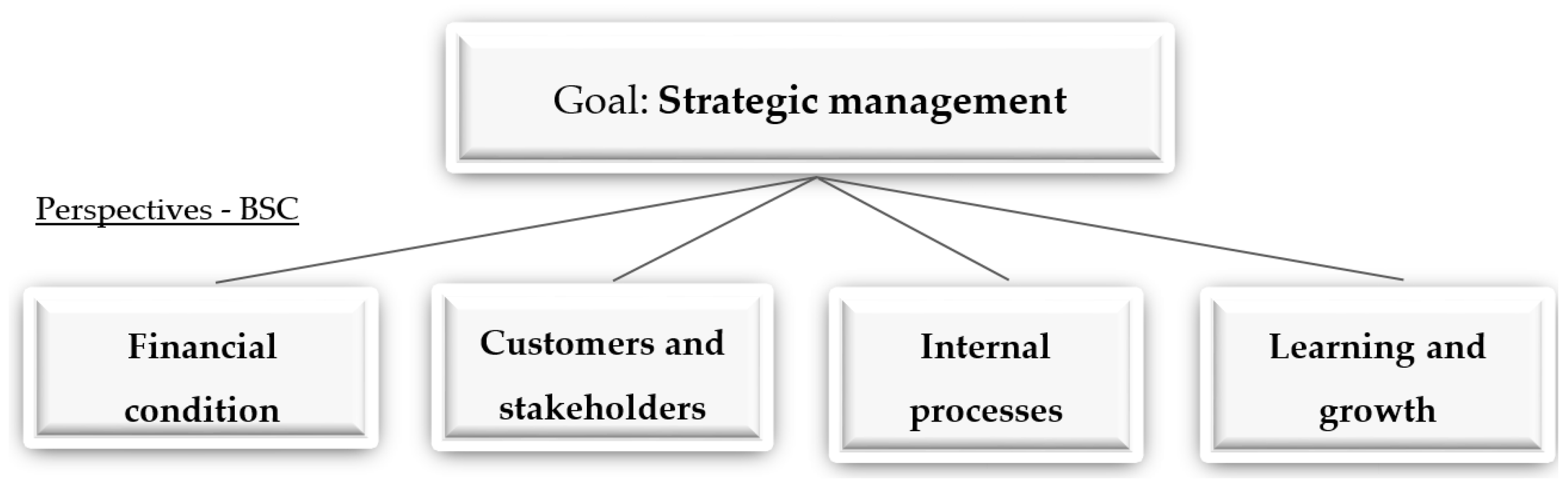
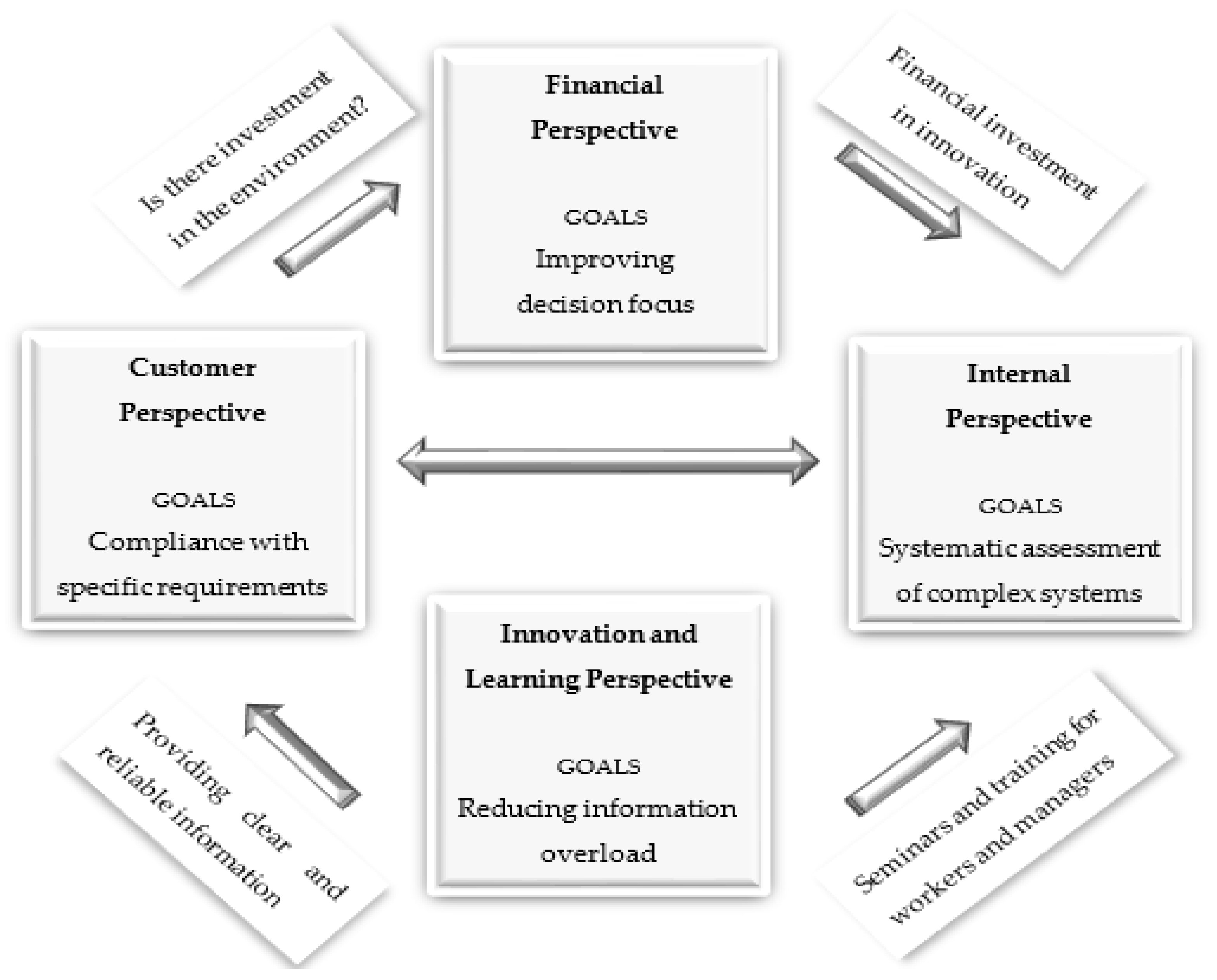
2.3. BSC and SBSC in Environmental Systems
2.4. Research Gap
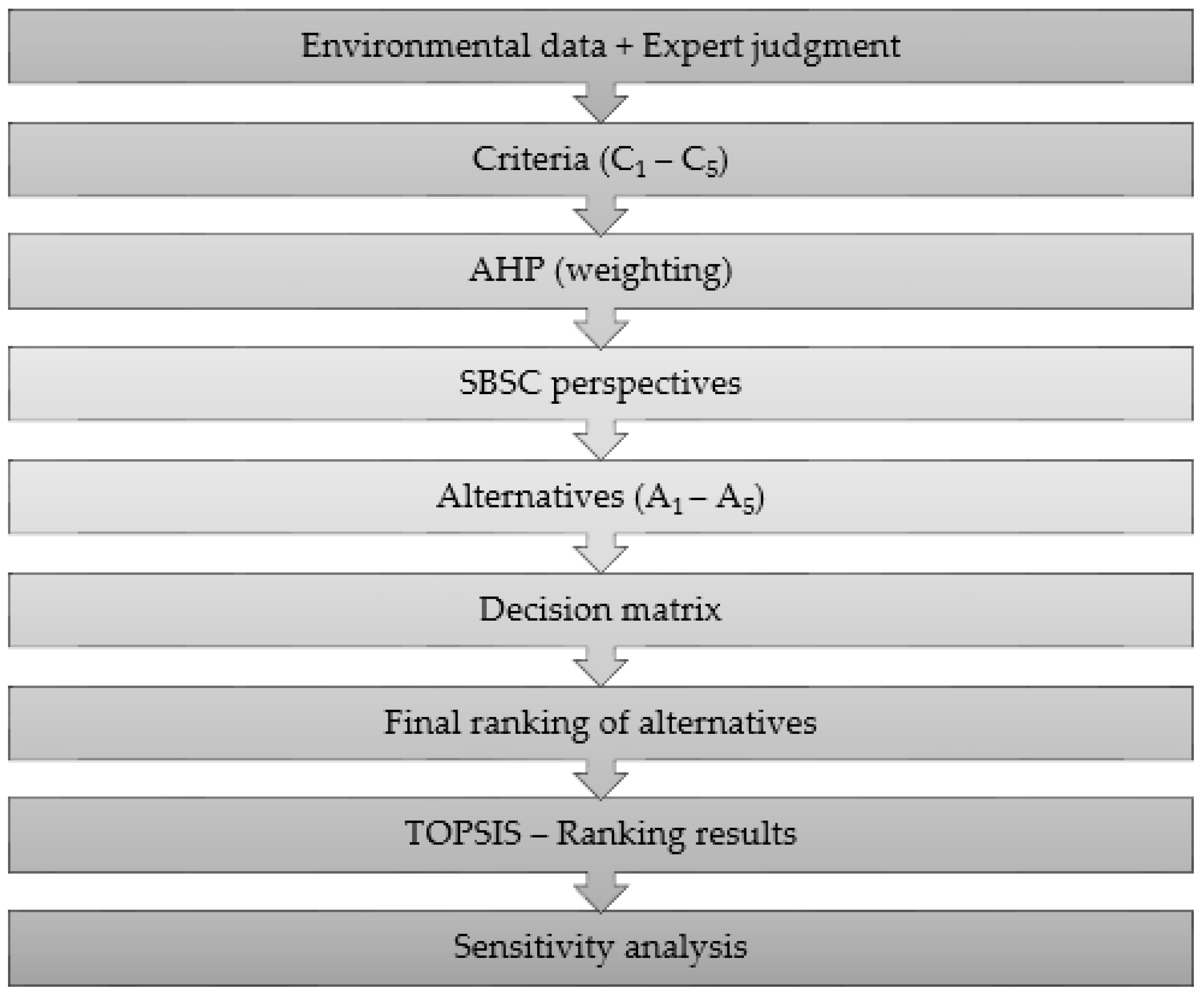
3. Methodology and Results
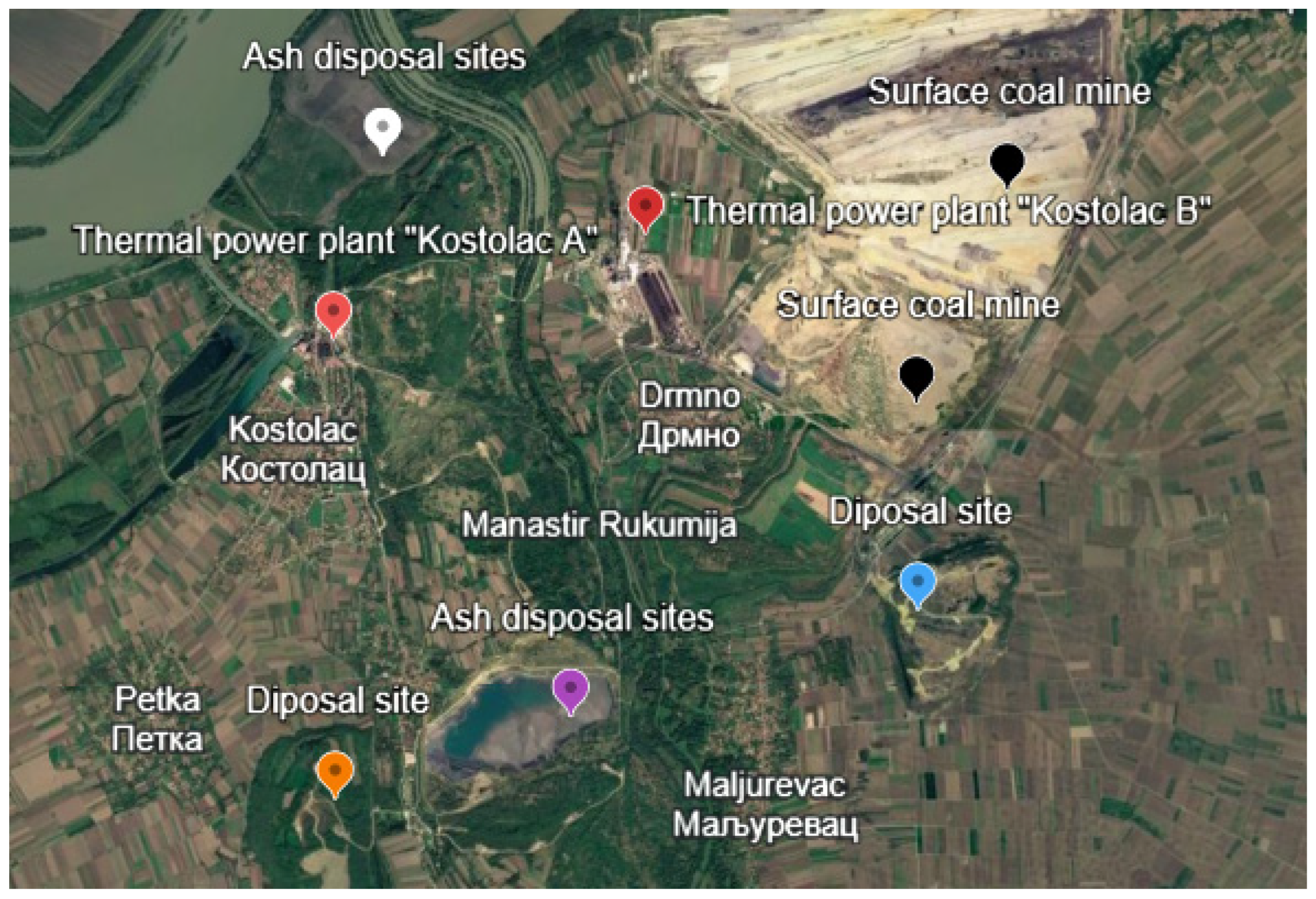
3.1. Study Area
3.2. Criteria Definition
- C1—Environmental effectiveness refers to the ability of a solution to reduce soil contamination, mitigate PTEs presence, and control land degradation, thereby contributing to long-term ecosystem restoration;
- C2—Economic affordability considers both initial investment and operational costs, reflecting the financial feasibility and cost-efficiency of the proposed solutions;
- C3—Technical feasibility assesses the availability, maturity, and applicability of required technologies, as well as the complexity of implementation under existing technical conditions;
- C4—Social acceptance evaluates the impact on local communities and the level of stakeholder support, including potential social benefits, conflicts, and overall acceptability;
- C5—Risk reduction measures the extent to which a solution minimizes environmental and operational risks, including uncertainty reduction and prevention of unintended consequences.
3.3. AHP Weighting of Criteria
3.4. Definition of Alternatives
- A1—Current practice (status quo) represents the continuation of existing soil management practices without the introduction of additional environmental protection measures. It serves as a baseline scenario, characterized by low environmental effectiveness (C1) and minimal cost (C2), but limited contribution to risk reduction (C5) [6].
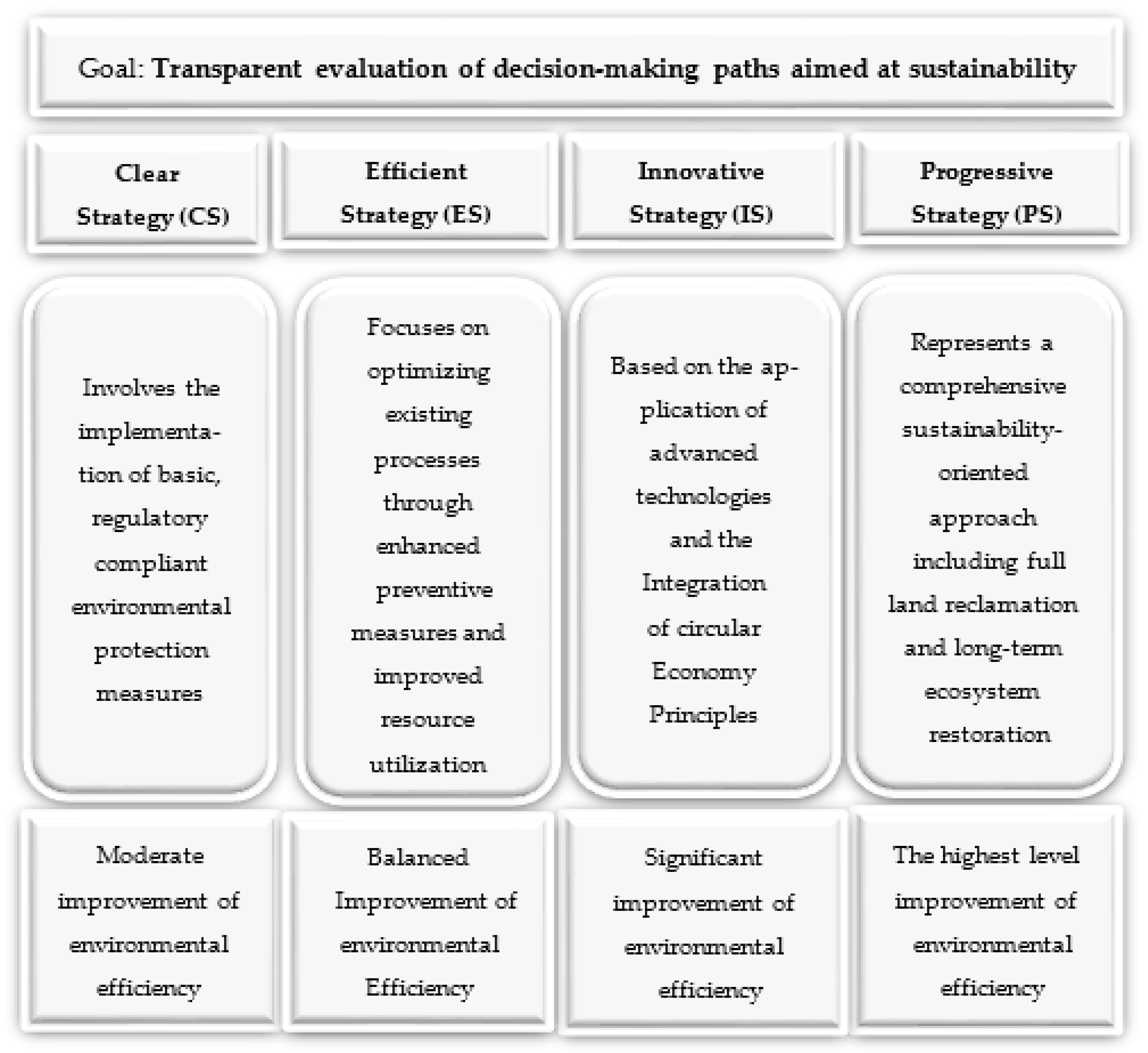
- A2—Clear Strategy (CS) involves the implementation of basic, regulatory-compliant environmental protection measures, providing moderate improvements in environmental effectiveness (C1) and risk reduction (C5), while maintaining relatively high economic affordability (C2) and technical feasibility (C3) [29].
- A3—Efficient Strategy (ES) focuses on optimizing existing processes through enhanced preventive measures and improved resource utilization, achieving a balanced performance across environmental effectiveness (C1), economic affordability (C2), and technical feasibility (C3), along with increased social acceptance (C4) [32].
- A4—Innovative Strategy (IS) is based on the application of advanced technologies and the integration of circular economy principles. It significantly improves environmental effectiveness (C1) and risk reduction (C5), although it requires higher investment (C2) and increased technical complexity (C3) [37].
- A5—Progressive Strategy (PS) represents a comprehensive sustainability-oriented approach, including full land reclamation and long-term ecosystem restoration. It achieves the highest performance in environmental effectiveness (C1), social acceptance (C4), and risk reduction (C5), but involves substantial economic costs (C2) and demanding technical requirements (C3) [39].
3.5. Decision Matrix and Criteria Weights
3.6. TOPSIS Method
3.7. Sensitivity Analysis
4. Discussion
5. Conclusions and Contributions
5.1. The Main Contributions
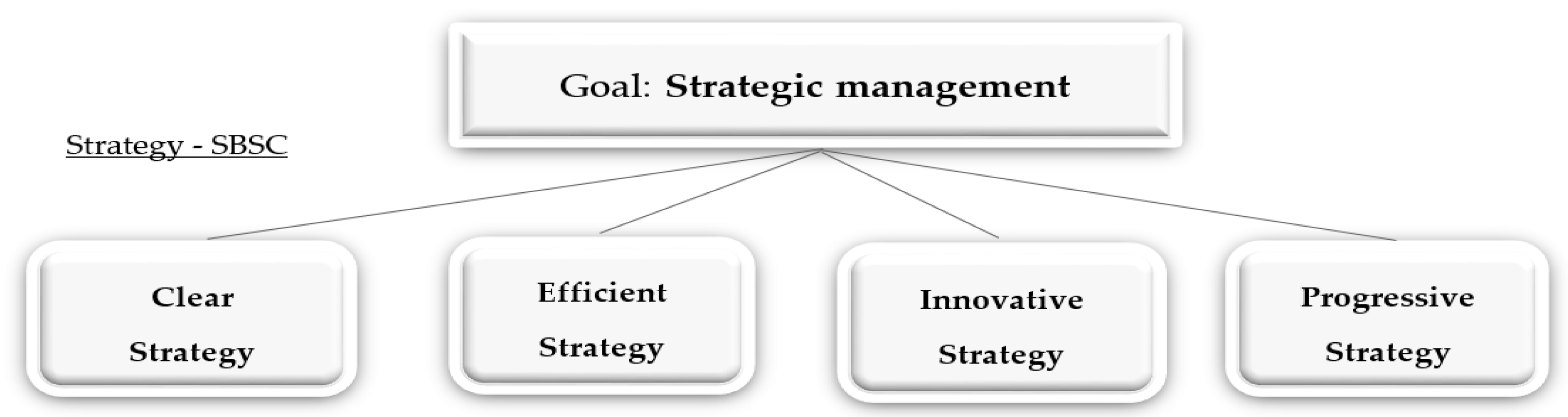
- Methodological contribution: The study proposes an integrated AHP–SBSC–TOPSIS framework that combines multi-criteria decision-making with strategic management perspectives, enabling a structured and transparent evaluation process in environmental management.
- Theoretical contribution: The research extends existing approaches by bridging the gap between environmental impact assessment and decision-support systems, particularly in the context of soil protection in mining environments.
- Practical contribution: The proposed model provides a decision-support tool applicable to mining and energy companies and policymakers for selecting optimal soil protection strategies under real-world constraints.
- Robustness validation: The inclusion of sensitivity analysis confirms the stability and reliability of the model, strengthening its credibility and applicability in practice.
5.2. Limitations and Future Research
Author Contributions
Funding
Data Availability Statement
Conflicts of Interest
References
- Regulation on the Rulebook on the National List of Environmental Indicators. Official Gazette of the Republic of Serbia 2011, No. 37/2011. Available online: https://pravno-informacioni-sistem.rs/eli/rep/sgrs/ministarstva/pravilnik/2011/37/3/reg (accessed on 20 March 2026).
- Report on the State of the Environment in the Republic of Serbia for 2024 Republic of Serbia; Ministry of Environmental Protection, Environmental Protection Agency: Belgrade, Serbia, 2025. Available online: https://sepa.gov.rs/wp-content/uploads/2025/12/Izvestaj-2024.pdf (accessed on 20 March 2026).
- Garbacz, A.; Nowak, A.; Marzec-Grządziel, A.; Przybyś, M.; Gałązka, A.; Jaroszuk-Ściseł, J.; Grzywaczewski, G. Impact of Coal Waste Rock on Biological and Physicochemical Properties of Soils with Different Agricultural Uses. Sustainability 2025, 17, 2603. [Google Scholar] [CrossRef]
- Yong, M.-T.; Babla, M.; Karan, K.; Katwal, U.; Jahandari, S.; Matta, P. Coal tailings as a soil conditioner: Evaluation of tailing properties and effect on tomato plants. Plant Growth Regul. 2022, 98, 439–450. [Google Scholar] [CrossRef] [PubMed]
- Liu, W.; Feng, X.; Cao, F.; Wu, D.; Zhang, G.; Vincze, E.; Wang, Y.; Chen, Z.-H.; Wu, F. An ATP binding cassette transporter HvABCB25 confers aluminum detoxification in wild barley. J. Hazard. Mater. 2021, 401, 123371. [Google Scholar] [CrossRef] [PubMed]
- Firozjaei, M.K.; Sedighi, A.; Firozjaei, H.K.; Kiavarz, M.; Homaee, M.; Arsanjani, J.J.; Makki, M.; Naimi, B.; Alavipanah, S.K. A historical and future impact assessment of mining activities on surface biophysical characteristics change: A remote sensing-based approach: A historical and future impact assessment of mining activities on surface. Ecol. Indic. 2021, 122, 107264. [Google Scholar] [CrossRef]
- Park, I.; Tabelin, C.B.; Jeon, S.; Li, X.; Seno, K.; Ito, M.; Hiroyoshi, N.A. Review of recent strategies for acid mine drainage prevention and mine tailings recycling. Chemosphere 2019, 219, 588–606. [Google Scholar] [CrossRef]
- Ali, M.A.H.; Qian, W.; Rabeiy, R.; Saleem, H.A.; Mohamed, A.S.; Muhammad, A.U.; Shebl, A. Environmental impact assessment of leachate from mining tailings using electrical resistivity imaging. Sci. Rep. 2025, 15, 23671. [Google Scholar] [CrossRef]
- Yurkevich, N.V.; Yurkevich, N.; Bortnikova, S.B.; Karin, Y.G. Current State of the Abandoned Mine Wastes: Environmental Risks. Prospects for Extraction and Reclamation. In Abstracts of the Second Eurasian RISK-2020 Conference and Symposium; AIJR Publisher: Uttar Pradesh, India, 2020. [Google Scholar] [CrossRef]
- Yurkevich, N.V.; Abrosimova, N.; Bortnikova, S.B.; Karin, Y.G.; Saeva, O.P. Geophysical investigations for evaluation of environmental pollution in a mine tailings area. Toxicol. Environ. Chem. 2017, 99, 1328–1345. [Google Scholar] [CrossRef]
- Uredba o Graničnim Vrednostima Zagađujućih; Štetnih i Opasnih Materija u Zemljištu. Službeni Glasnik RS; br. 30/18 i 64/19. (Eng. Regulation on Limit Values of Pollutants; Harmful and Dangerous Substances in the Soil. Official Gazette of RS). Available online: https://www.paragraf.rs/propisi/uredba-granicnim-vrednostima-zagadjujucih-stetnih-opasnih-materija-zemljistu.html (accessed on 25 March 2026).
- Parikh, S.; James, B. Soil: The Foundation of Agriculture. Nat. Educ. Knowl. 2012, 3, 2. [Google Scholar]
- Rouhani, A.; Gusiatin, M.Z.; Hejcman, M. An overview of the impacts of coal mining and processing on soil: Assessment; monitoring; and challenges in the Czech Republic. Environ. Geochem. Health 2023, 45, 7459–7490. [Google Scholar] [CrossRef]
- Zheng, G.; Mei, S.; Wu, Y.; Cui, P. The Current Status of Contaminated Site Remediation and Application Prospects of Artificial Intelligence—A Review. Environments 2026, 13, 212. [Google Scholar] [CrossRef]
- García-Martínez, J.B.; Ríos Niño, L.T.; Saavedra Gómez, L.N.; Barajas-Ferreira, C.; Zuorro, A.; Barajas-Solano, A.F. Environmental Performance of Chlorella sp.-Based Phytoremediation Across Multiple Wastewater Scenarios: A Comparative Life Cycle Assessment. Environments 2026, 13, 155. [Google Scholar] [CrossRef]
- Jin, X.; Zheng, J.; Hua, S.; Tong, X. Influencing factors of deformation and failure of porous coal under conventional loading. Facta Univ. Ser. Mech. Eng. 2025, 23, 161–170. [Google Scholar] [CrossRef]
- Stević, Z.; Ulutas, A.; Topal, A.; Marinković, D.; Cavoski, S. A new objective method for determining criteria weights in MCDM models—LOGSTA. Int. J. Simul. Model. 2025, 24, 589–600. [Google Scholar] [CrossRef]
- Petrović, N.; Marković, S.; Nikolić, B.; Jovanović, V.; Petrović, M. Evaluating Alternative Propulsion Systems for Urban Public Transport in Niš: A Multicriteria Decision-Making Approach. J. Eng. Manag. Syst. Eng. 2024, 3, 72–81. [Google Scholar] [CrossRef]
- Petrović, N.; Jovanović, V.; Petrović, M.; Nikolić, B.; Pavlović, J. Evaluating the operation performance of the Serbian transport Freight system by using multiple criteria decision-making technique. Eng. Today 2022, 1, 33–40. [Google Scholar] [CrossRef]
- Petrović, N.; Jovanović, V.; Marković, S.; Marinković, D.; Petrović, M. Multicriteria Sustainability Assessment of Transport Modes: A European Union Case Study for 2020. J. Green Econ. Low-Carbon Dev. 2024, 3, 36–44. [Google Scholar] [CrossRef]
- Mandal, N.; Sarkar, P.; Petrović, N. Multi-Criteria Decision-Making for Ranking Renewable Energy Sources: A Case Study from the Republic of Serbia. J. Eng. Manag. Syst. Eng. 2025, 4, 109–121. [Google Scholar] [CrossRef]
- Petrović, N.; Jovanović, V.; Petrović, M.; Nikolić, B.; Mihajlović, J. Comparative Investigation of Normalization Techniques and Their Influence on MCDM Ranking—A Case Study. Spectr. Mech. Eng. Oper. Res. 2025, 2, 172–190. [Google Scholar] [CrossRef]
- Ozdemir, A.C. Use of Integrated AHP-TOPSIS Method In selectIon of Optimum Mine Planning for open-pit Mines. Arch. Min. Sci. 2023, 68, 35–53. [Google Scholar] [CrossRef]
- Çelikbilek, Y.; Tüysüz, F. An in-depth review of theory of the TOPSIS method: An experimental analysis. J. Manag. Anal. 2020, 7, 281–300. [Google Scholar] [CrossRef]
- Ghorui, N.; Ghosh, A.; Algehyne, E.A.; Mondal, S.P.; Saha, A.K. AHP-TOPSIS Inspired Shopping Mall Site Selection Problem with Fuzzy Data. Mathematics 2020, 8, 1380. [Google Scholar] [CrossRef]
- Nazarov, A. Strategic Market Entry Decision-Making in Africa’s Satellite Sector: A Comparative Analysis Using Topsis and Ahp Methods. In Proceedings of Azerbaijan High Technical Educational Institutions; Azerbaijan State Oil and Industry University: Baku, Azerbaijan, 2024; pp. 85–94. [Google Scholar] [CrossRef]
- Rahman, M. Comparative Analysis of AHP and TOPSIS Methods in Retail Business Location Selection Decision Support System. J. Electr. Comput. Exp. 2024, 2, 52–57. [Google Scholar] [CrossRef]
- Liladhar Rane, N.L.; Achari, A.; Choudhary, S. Multi-Criteria Decision-Making (MCDM) as a powerful tool for sustainable development: Effective applications of AHP, FAHP, TOPSIS, ELECTRE, and VIKOR in sustainability. Int. Res. J. Mod. Eng. Technol. Sci. 2023, 5, 2654–2670. [Google Scholar] [CrossRef]
- Huang, I.B.; Keisler, J.; Linkov, I. Multi-criteria decision analysis in environmental sciences: Ten years of applications and trends. Sci. Total Environ. 2011, 409, 3578–3594. [Google Scholar] [CrossRef] [PubMed]
- Oliveira, C.A.; Fijakowska, O.; Silva, J.R. Implementation of Balanced Scorecard: Case study of a Portuguese higher education institution. Manag. J. Contemp. Manag. Issues 2021, 26, 169–188. [Google Scholar] [CrossRef]
- Kaplan, R.S.; Norton, D.P. The BSC: Measures that drive performance. Harv. Bus. Rev. 1992, 70, 71–79. [Google Scholar]
- Kaplan, R.S.; Norton, D.P. Transforming the Balanced Scorecard from Performance Measurement to Strategic Management American Accounting Association Accounting. Horizons 2001, 15, 87–104. [Google Scholar] [CrossRef]
- Jovanovic, J. Management of the organization based on balanced scorecards. Int. J. Qual. Res. 2011, 5, 317–325. [Google Scholar]
- Sharon, C. The Balanced Scorecard: A Strategic Tool in Implementing Homeland Security Strategies. Applying the Balanced Scorecard, Homeland Security Affairs. 2008. Available online: https://www.hsaj.org/articles/115 (accessed on 12 February 2026).
- Alptekin, N. Construction of Balanced Scorecard Using Analytic Hierarchy Process. Marmara Üniv. İktisadi İdari Bilim. Derg. 2008, 25, 677–691. [Google Scholar]
- Ayvaz, E.; Pehlivanl, D. The Use of Time Driven Activity Based Costing and Analytic Hierarchy Process Method in the BSC Implementation. Int. J. Bus. Manag. 2011, 6, 146–158. [Google Scholar] [CrossRef][Green Version]
- Martín-Gómez, A.M.; Pineda-Ganfornina, M.; Ávila-Gutiérrez, M.J.; Agote-Garrido, A.; Lama-Ruiz, J.R. Balanced Scorecard for Circular Economy: A Methodology for Sustainable Organizational Transformation. Sustainability 2024, 16, 1464. [Google Scholar] [CrossRef]
- Jaiswal, V.; Thaker, K. Studying research in balanced scorecard over the years in performance management systems: A bibliometric analysis. Int. J. Product. Perform. Manag. 2024, 73, 2558–2582. [Google Scholar] [CrossRef]
- Gupta, S.; Kumar, U. An analytical hierarchy process (AHP)-guided decision model for underground mining method selection. Int. J. Min. Reclam. Environ. 2012, 26, 324–336. [Google Scholar] [CrossRef]
- Malenovic Nikolic, J. Environmental Management System Modelling in Mining and Energy Complexes. Doctoral Dissertation, University of Belgrade, Beograd, Serbia, 2016. Available online: https://nardus.mpn.gov.rs/bitstream/handle/123456789/8016/Disertacija.pdf?Sequence=6&isallowed=y (accessed on 10 February 2026).
- Petrović, N.; Jovanović, V.; Marinković, D.; Nikolić, B.; Marković, S. Logistics Companies’ Efficiency Analysis and Ranking by the DEA-Fuzzy AHP Approach. Appl. Sci. 2025, 15, 9549. [Google Scholar] [CrossRef]
- Mukhametzyanov, I.Z.; Pamučar, D. Equivalence of MCDM Methods and Synthesis of Solution Based on Ratings Obtained in Different Models. Decis. Mak. Appl. Manag. Eng. 2025, 8, 1–20. [Google Scholar]
- Sevgi, E.; Figen, A.Z. Determination of Renewable Energy Growth Using Cluster Analysis and Multi-Criteria Decision-Making Methods. Appl. Sci. 2025, 15, 1575. [Google Scholar] [CrossRef]
- Kalan, O.; Işık, M.; Yüksel, F.Ş. An Application Using ELECTRE and MOORA Methods in the Selection of International Airport Transfer Center (Hub) in Türkiye. Appl. Sci. 2024, 14, 7678. [Google Scholar] [CrossRef]
- Božanić, D.; Puška, A.; Tešić, D.; Štilić, A.; Ullah, K.; Muhsen, Y.; Hezam, I. Fuzzy ahp—Fuzzy mabac model for ranking a combined construction machine—Backhoe loader. Facta Univ. Ser. Mech. Eng. 2025, 23, 605–625. [Google Scholar] [CrossRef]
- Yalçin, G. Development of a fuzzy-based decision support system for sustainable tractor selection in green ports. Facta Univ. Ser. Mech. Eng. 2025, 23, 579–604. [Google Scholar] [CrossRef]
- Puška, A.; Štilić, A.; Pamučar, D.; Božanić, D.; Nedeljković, M. Introducing a Novel multi-criteria Ranking of Alternatives with Weights of Criterion (RAWEC) model. Methods X 2024, 12, 102628. [Google Scholar] [CrossRef] [PubMed]
- Yürüyen, A.A.; Ulutaş, A. Assessing the Urban Competitiveness of European Cities Using LOPCOW-RAWEC Methodologies. Int. J. Knowl. Innov. Stud. 2024, 2, 179–189. [Google Scholar] [CrossRef]
- Kaur, I.; Balaji, N.; Suresh, A.; Manoharan, S.N.; Balakrishnan, S.; Jagadesh, T. Ai-driven blockchain solutions for enhancing decision-making in complex engineering projects. Eng. Rev. 2025, 45, 21–40. [Google Scholar] [CrossRef]
- Dhal, P.R.; Choudhury, B.B.; Sahoo, S.K. Evaluating motor choices for a smart wheelchair prototype using an integrated TODIM-CoCoSo approach with MEREC weighting. Eng. Rev. 2024, 44, 22–44. [Google Scholar] [CrossRef]
- Buchmeister, B.; Palcic, I.; Ojstersek, R.; Kovic, K.; Javernik, A. Multicriteria Optimisation of Machining Operations Using a Spreadsheet Model. Teh. Glas. 2024, 18, 445–451. [Google Scholar] [CrossRef]
- Tamošiūnas, A. Application of Multicriteria Decision Analysis Approach Managing Solar Prosumer Choices: Implications for Households, Regulatory Authorities, and Contractors. Teh. Vjesn. 2024, 31, 1786–1795. [Google Scholar] [CrossRef]
- Więckowski, J.; Sałabun, W. Comparative Sensitivity Analysis in Composite Material Selection: Evaluating OAT and COMSAM Methods in Multi-criteria Decision-making. Spectr. Mech. Eng. Oper. Res. 2024, 2, 1–12. [Google Scholar] [CrossRef]
- Madanchian, M.; Taherdoost, H. A comprehensive guide to the TOPSIS method for multi-criteriadecision making. Sustain. Soc. Dev. 2023, 1, 2220. [Google Scholar] [CrossRef]
- Belbağ, S. A Fermatean Fuzzy SWARA-TOPSIS Based Approach for Sustainable Packaging Selection in Logistics Operations. Sustainability 2026, 18, 2522. [Google Scholar] [CrossRef]
- Balusa, B.C.; Gorai, A.G. Sensitivity analysis of fuzzy-analytic hierarchical process (FAHP) decision-making model in selection of underground metal mining method. J. Sustain. Min. 2019, 18, 8–17. [Google Scholar] [CrossRef]
- Vinogradova-Zinkevič, I. Comparative Sensitivity Analysis of Some Fuzzy AHP Methods. Mathematics 2023, 11, 4984. [Google Scholar] [CrossRef]
- Triantaphyllou, E.; Sánchez, A. A Sensitivity Analysis Approach for Some Deterministic Multi-Criteria Decision-Making Methods. Decis. Sci. 1997, 28, 151–194. [Google Scholar] [CrossRef]
- Ahmad, M.; Satrovic, E. Relating fiscal decentralization and financial inclusion to environmental sustainability: Criticality of natural resources. J. Environ. Manag. 2023, 325, 116633. [Google Scholar] [CrossRef]
- Alhassan, H.; Kwakwa, P.A.; Donkoh, S.A. The interrelationships among financial development, economic growth and environmental sustainability: Evidence from Ghana. Environ. Sci. Pollut. Res. Int. 2022, 29, 37057–37070. [Google Scholar] [CrossRef]
- Mensah, F.; Meteku, B.E.; Narh, F.K. Strengthening the Polluter Pays Principle in Ghana:governance reforms for ecological and economic sustainability. Acad. Environ. Sci. Sustain. 2026, 3, 1–17. [Google Scholar]
- Elsharkawy, E.; Sharkawy, A. Environmental risk assessment (ERA). Arch. Clin. Toxicol. 2025, 7, 46–50. [Google Scholar] [CrossRef]
- Dirrigl, F.J.; Chavez, A.; Hudson, R.; Hudson, R. Identifying Regional Environmental and Sustainability Issues: Adoption of an Interdisciplinary Design Charrette Approach. J. Plan. Educ. Res. 2021, 44, 796–807. [Google Scholar] [CrossRef]
- Bartan, A.; Kucukali, S.; Ar, I.; Baris, K. An integrated environmental risk assessment framework for coal-fired power plants: A fuzzy logic approach. Risk Anal. 2023, 43, 530–547. [Google Scholar] [CrossRef] [PubMed]
- Abdulrahman, A.; Ahmed, A.; Elkhalifah, A. Quantitative and Qualitative Methods of Risk Assessment in Garry Thermal Power Plant. Int. Res. J. Eng. Technol. 2020, 7, 3201–3223. [Google Scholar]




| Criteria | C1 | C2 | C3 | C4 | C5 |
|---|---|---|---|---|---|
| C1 Environmental effectiveness | 1 | 5 | 3 | 4 | 1/2 |
| C2 Economic affordability | 1/5 | 1 | 1/2 | 1/3 | 1/7 |
| C3 Technical feasibility | 1/3 | 2 | 1 | 1/2 | 1/4 |
| C4 Social acceptance | 1/4 | 3 | 2 | 1 | 1/3 |
| C5 Risk reduction | 2 | 7 | 4 | 3 | 1 |
| Criteria | Weight | Rank |
|---|---|---|
| C5 Risk reduction | 0.419 | 1 |
| C1 Environmental effectiveness | 0.307 | 2 |
| C4 Social acceptance | 0.133 | 3 |
| C3 Technical feasibility | 0.091 | 4 |
| C2 Economic affordability | 0.051 | 5 |
| C1 | C2 | C3 | C4 | C5 | |
|---|---|---|---|---|---|
| A1 | 2 | 9 | 9 | 3 | 2 |
| A2 | 5 | 8 | 8 | 6 | 5 |
| A3 | 7 | 6 | 7 | 7 | 7 |
| A4 | 8 | 5 | 6 | 8 | 8 |
| A5 | 10 | 3 | 5 | 9 | 10 |
| Alternative | Closeness Coefficient | Rank |
|---|---|---|
| A5 Progressive Strategy | 0.898 | 1 |
| A4 Innovative Strategy | 0.719 | 2 |
| A3 Efficient Strategy | 0.571 | 3 |
| A2 Clear Strategy | 0.347 | 4 |
| A1 Current practice | 0.102 | 5 |
| Criteria | A1 | A2 | A3 | A4 | A5 | Final Ranking | |
|---|---|---|---|---|---|---|---|
| Base model | Original AHP weights | 0.102 | 0.347 | 0.571 | 0.719 | 0.898 | A5 > A4 > A3 > A2 > A1 |
| S1 | C5 reduced by 20% | 0.114 | 0.352 | 0.570 | 0.715 | 0.886 | A5 > A4 > A3 > A2 > A1 |
| S2 | C2 increased by 50% | 0.125 | 0.355 | 0.568 | 0.710 | 0.875 | A5 > A4 > A3 > A2 > A1 |
| S3 | Equal weights | 0.368 | 0.505 | 0.599 | 0.630 | 0.632 | A5 > A4 > A3 > A2 > A1 |
| S4 | C1 increased by 20% | 0.096 | 0.349 | 0.573 | 0.722 | 0.904 | A5 > A4 > A3 > A2 > A1 |
Disclaimer/Publisher’s Note: The statements, opinions and data contained in all publications are solely those of the individual author(s) and contributor(s) and not of MDPI and/or the editor(s). MDPI and/or the editor(s) disclaim responsibility for any injury to people or property resulting from any ideas, methods, instructions or products referred to in the content. |
© 2026 by the authors. Licensee MDPI, Basel, Switzerland. This article is an open access article distributed under the terms and conditions of the Creative Commons Attribution (CC BY) license.
Share and Cite
Malenović-Nikolić, J.; Petrović, N.; Marinković, D.; Mančić, M.; Simić, V. A Hybrid AHP–TOPSIS–SBSC Framework for Sustainable Soil Protection in Surface Coal Mining. Environments 2026, 13, 338. https://doi.org/10.3390/environments13060338
Malenović-Nikolić J, Petrović N, Marinković D, Mančić M, Simić V. A Hybrid AHP–TOPSIS–SBSC Framework for Sustainable Soil Protection in Surface Coal Mining. Environments. 2026; 13(6):338. https://doi.org/10.3390/environments13060338
Chicago/Turabian StyleMalenović-Nikolić, Jelena, Nikola Petrović, Dragan Marinković, Marko Mančić, and Vladimir Simić. 2026. "A Hybrid AHP–TOPSIS–SBSC Framework for Sustainable Soil Protection in Surface Coal Mining" Environments 13, no. 6: 338. https://doi.org/10.3390/environments13060338
APA StyleMalenović-Nikolić, J., Petrović, N., Marinković, D., Mančić, M., & Simić, V. (2026). A Hybrid AHP–TOPSIS–SBSC Framework for Sustainable Soil Protection in Surface Coal Mining. Environments, 13(6), 338. https://doi.org/10.3390/environments13060338