Article

A Hybrid AHP–TOPSIS–SBSC Framework for Sustainable Soil Protection in Surface Coal Mining

by
Jelena Malenović-Nikolić
1,
Nikola Petrović
2,
Dragan Marinković
3,4,5,*,
Marko Mančić
2 and
Vladimir Simić
6,7,8
1
Faculty of Occupational Safety, University of Niš, 18000 Niš, Serbia
2
Faculty of Mechanical Engineering, University of Niš, 18000 Niš, Serbia
3
Faculty of Mechanical Engineering and Transport Systems, Technical University Berlin, 10623 Berlin, Germany
4
Institute of Mechanical Science, Vilnius Gediminas Technical University, LT-10223 Vilnius, Lithuania
5
University College, Korea University, 145 Anam-ro, Seongbuk-gu, Seoul 02841, Republic of Korea
6
Faculty of Transport and Traffic Engineering, University of Belgrade, Vojvode Stepe 305, 11010 Belgrade, Serbia
7
BEU-Scientific Research Center, Baku Engineering University, Hasan Aliyev Str. 120, Baku AZ0101, Azerbaijan
8
Faculty of Engineering and Technology, Sunway University, Selangor 47500, Malaysia
*
Author to whom correspondence should be addressed.
Environments 2026, 13(6), 338; https://doi.org/10.3390/environments13060338 (registering DOI)
Submission received: 3 May 2026 / Revised: 9 June 2026 / Accepted: 10 June 2026 / Published: 12 June 2026

Abstract

Soil vulnerability is commonly assessed using environmental indicators; however, the lack of systematic and continuous monitoring often leads to incomplete and fragmented data, particularly in surface coal mining areas affected by potentially toxic element (PTE) contamination. Existing studies mainly focus on impact assessment, with limited emphasis on structured decision-support frameworks for selecting optimal soil protection strategies. This study addresses this gap by proposing an integrated hybrid decision-making framework that combines the Analytic Hierarchy Process (AHP), Sustainability Balanced Scorecard (SBSC), and the Technique for Order Preference by Similarity to Ideal Solution (TOPSIS). The main contribution lies in integrating strategic sustainability perspectives (SBSC) with quantitative multi-criteria methods (AHP and TOPSIS), enabling a transparent and consistent evaluation of soil protection strategies across environmental, economic, technical, and social dimensions. The framework was applied to the Kostolac mining and energy complex in Serbia as a representative case study, using data from the State of the Environment Report as the basis for expert evaluation. The results identify risk reduction and environmental effectiveness as the dominant criteria, while the Progressive Strategy (SBSC) achieved the highest ranking. Sensitivity analysis confirmed the robustness of the model. From a policy perspective, the findings support prioritizing sustainability-oriented and risk-reduction strategies in mining regulations and investment planning.

1. Introduction

The National List of Environmental Indicators of Serbia includes four key soil indicators [1]: management of contaminated sites, land-use change, soil erosion, and soil organic carbon content. The Report on the State of the Environment of the Republic of Serbia is prepared based on these officially adopted environmental indicators. However, a key challenge remains the insufficiently organized monitoring system, despite the legal obligation for annual data reporting. The expert team made decisions based on the available indicator values at the national level, which pertain to the state of agricultural land, the degree of soil threat in urban zones, contaminated site management, and land-use change. The primary role in decision-making is held by the soil quality indicator, based on the concentration of pollutants from point sources. The analysis is based on the monitoring of concentrations of Pb, Cd, Zn, Cu, Ni, Cr, As, and Hg, which were found to exceed limit values in the Kostolac region—specifically in the industrial zone, the water supply source zone, and near the landfill. The remediation value for Ni was exceeded in one sample near the landfill and in one sample within the water supply source zone [2].
The management of contaminated sites represents a critical indicator for assessing the environmental impact of the mining and energy sector. It is defined based on the following components [1]:
  • The total number of potentially contaminated sites;
  • The number of sites undergoing stabilization and remediation measures;
  • Actual and estimated remediation costs;
  • The primary pollutants affecting soil and surface water.
The number of sites where stabilization and remediation measures are being undertaken refers to both the energy sector and waste management.
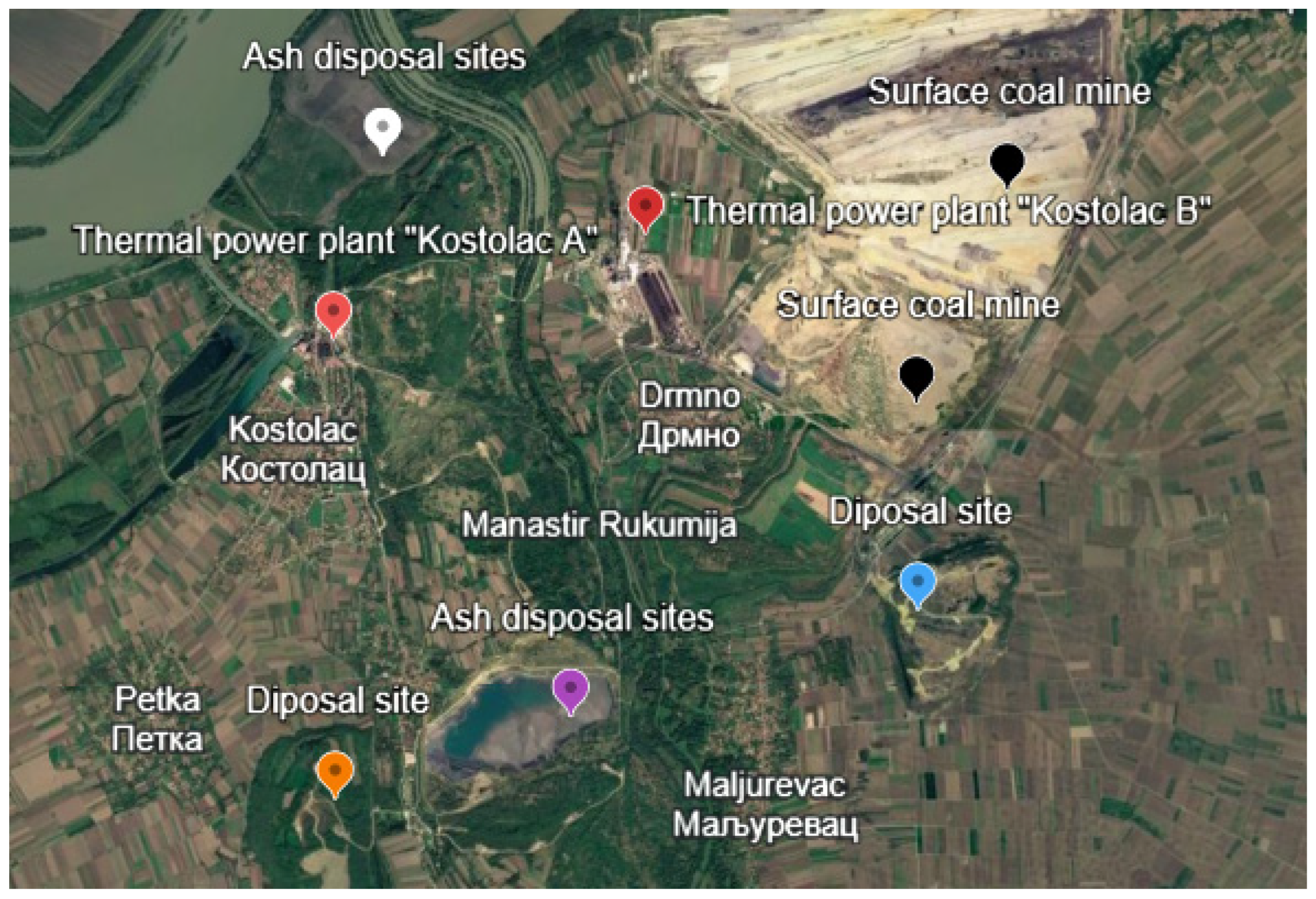
The area of Kostolac mining and energy complex (Figure 1) is exposed to pollution originating from coal dust, fly ash, drainage water, and particulate matter emitted from the slopes of the open-pit mine, tailings dumps, ash disposal sites, and coal combustion products.
Soil pollution indicators provide a significant foundation for the development of environmental models. These data enable stakeholders within the mining and energy sector to identify inefficiencies in the implementation of protection measures and improve soil quality management. Environmental management in coal mining systems requires structured decision-support approaches capable of integrating multiple conflicting criteria. Establishing a foundation for multi-criteria decision-making (MCDM) reduces the degree of subjectivity in the decision-making process. The Analytic Hierarchy Process (AHP) method and the Balanced Scorecard (BSC) method can contribute to the improvement of the management process.
Although environmental indicators and multi-criteria decision-making methods such as the Analytic Hierarchy Process have been widely applied in assessing soil degradation and pollution, their application is predominantly focused on impact evaluation rather than on supporting strategic decision-making. Furthermore, while sustainability-oriented extensions such as the Sustainability Balanced Scorecard provide a structured perspective for environmental management (SBSC), they are rarely quantitatively integrated with multi-criteria decision-making methods (AHP and TOPSIS). In parallel, strategic management tools such as the BSC and its sustainability-oriented extensions have been used to structure environmental management processes, but often without quantitative integration into decision-making models.
As a result, the integration of MCDM methods with strategic management frameworks for the selection of optimal soil protection strategies (SBSC) in mining areas remains insufficiently explored in the existing literature.
This study addresses the identified research gap by developing an integrated AHP–SBSC–TOPSIS decision-making framework for the evaluation and selection of soil protection strategies in surface coal mining systems, with application to the Kostolac mining and energy complex (Figure 1).
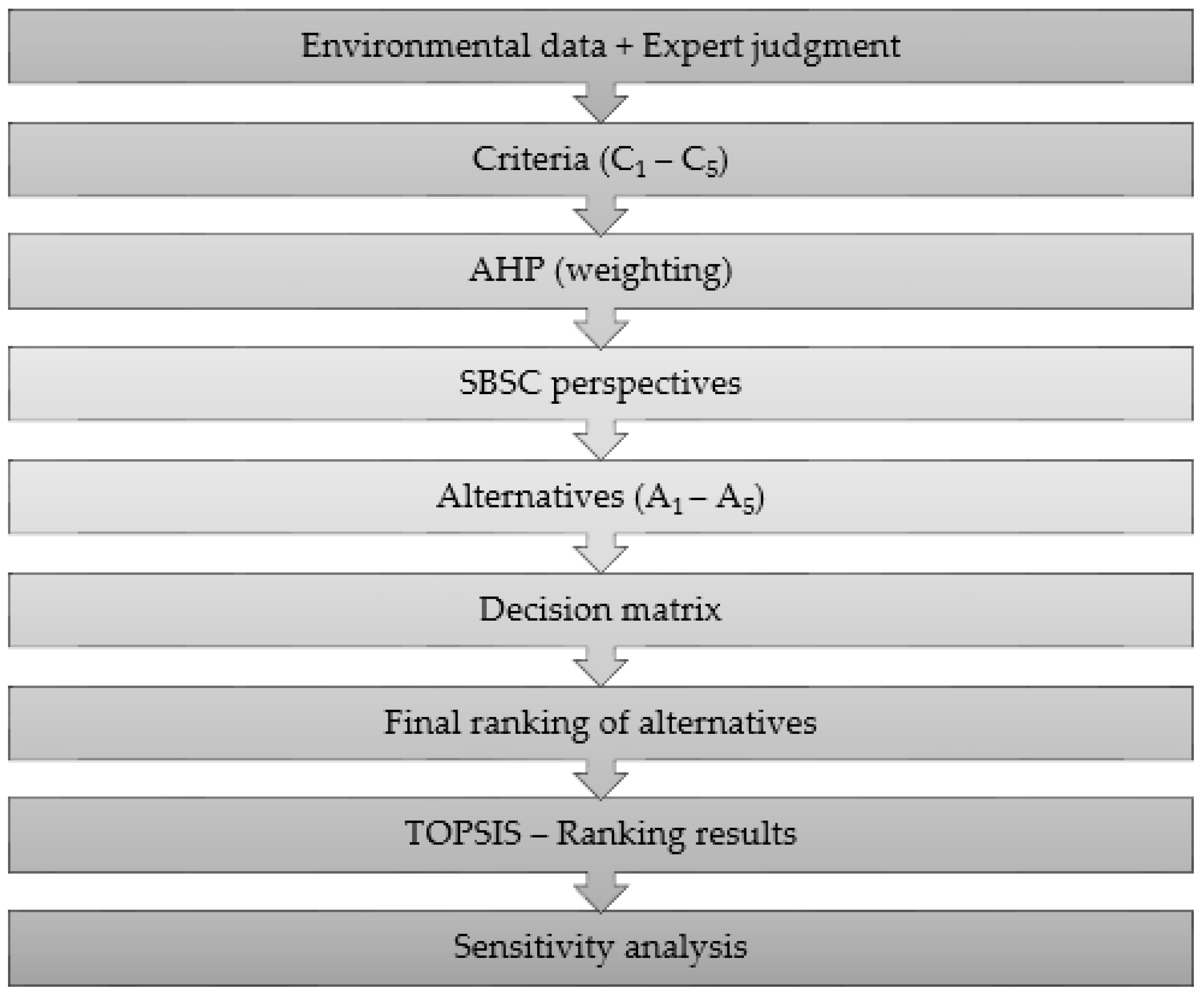
The proposed framework (Figure 2) enables the systematic integration of sustainability-oriented strategic criteria with quantitative multi-criteria evaluation, thereby overcoming the limitations of existing approaches that treat environmental assessment and decision-making as separate processes.
In addition to its methodological contribution, the proposed framework provides practical support for decision-makers in mining and energy systems by facilitating the evaluation of soil protection strategies under environmental, technical, economic, and social constraints. The SBSC method provides an additional contribution to this methodology, as it creates a foundation for gradually resolving technical problems defined as priorities within multi-criteria analyses, even under financial constraints. The defined SBSC strategic perspectives can be used in the management process to address environmental and financial issues, moving from simpler to more complex and financially demanding ones.

2. Literature Review

Soil contamination in mining areas has been widely investigated, particularly in relation to the presence of PTEs and their impact on environmental quality and agricultural production. Previous studies can be broadly grouped into three main research directions: (i) assessment of PTE contamination, (ii) analysis of soil–water interactions, and (iii) evaluation of remediation and sustainable land-use strategies.

2.1. Soil Contamination in Mining Areas

The presence of PTEs originating from tailings disposal in agricultural soil has been studied at various locations [2], with results consistently indicating similar environmental issues. In the vicinity of Požarevac, limit values for PTEs were exceeded for Pb, Cd, Zn, Cu, Ni, Sr, As, and Hg within the industrial zone, the water supply source zone, and near the tailings disposal site. Furthermore, the remediation value for Ni was exceeded in a single sample near the disposal site and in another sample within the water supply source zone [2].
Potentially toxic element concentrations exceeding these limits directly affect the biological and physicochemical properties of the soil [3] and indirectly impact crop quality [4], as well as human and animal health. Although this paper focuses on the negative impacts, the analysis of sustainable agriculture also reveals positive aspects of using tailings for agro melioration and soil improvement under controlled conditions [4,5]. Analyzing past mining activities and predicting the potential consequences of future coal exploitation are significant aspects of strategic planning [6] and the preservation of soil quality. It is essential that energy development strategies incorporate activities related to drainage water treatment and the timely reclamation of tailings ponds [7], directing financial investments toward techniques for prevention and recycling of mining residues. The environmental difficulties from mining tailings arise mainly from legacy dump sites because these residues spread pollution through surrounding areas [8]; consequently, PTEs reach agricultural land via contaminated groundwater. The issue of PTEs in the soil also arises from open-air tailings disposal characterized by inadequate or outdated filter protection and direct exposure to atmospheric precipitation [9]. It is necessary to determine the composition and flow of leachate from tailings sites, identify potential exceedances of limit concentrations for Fe, Cu, Zn, Cd, As, and Sb, and pinpoint localities where drainage water runoff has occurred outside the tailings boundaries [10] in order to implement corrective measures for groundwater and soil protection. The regulation on limit values for polluting, harmful, and hazardous substances in soil stipulates that a monitoring system in Serbia tracks the degree of soil hazard in urban zones based on the exceedance of limit and remediation values [11]. Intensive land use has resulted in deforestation, water shortages, and rapidly increasing desertification of vast areas of the globe, all of which threaten the sustainability of agricultural systems [12]. Coal exploitation and tailings disposal lead to changes in soil productivity, hydraulic characteristics, and porosity, while triggering a wide range of ecological problems [13], including PTE pollution and soil degradation caused by active or abandoned open-pit mines.
The implementation of sustainable management processes can provide robust support for improving soil quality and ensuring sustainable land use [14]. Analysis of the negative impact of tailings dumps on soil quality suggests the necessity of prioritizing these issues through techno-economic analysis, local risk assessment [15], the minimization of ecological risks and economic costs, and the assurance of remediation efficiency [14]. Coal exploration requires drilling wells in the coal seam, so soil stability should be determined in field conditions [16]. Different techniques for determining criteria weights can be classified into subjective, objective, and hybrid approaches [17]. The integration of multi-criteria decision-making techniques has enabled a systematic analysis of each alternative relative to established criteria [18] and the evaluation of the system’s operational performance [19]. These results emphasize the need for strategic adjustments in planning [20], where key evaluation criteria would include parameters such as construction costs, return on investment (ROI) period, environmental impact, annual production capacity, and the potential for integration with alternative energy sources [21]. Comparative research on normalization techniques and their impact on ranking have also been considered in the context of selecting sustainable expenditures and overcoming economic instability [22], as well as in the evaluation of sustainable transport systems [18] and alignment of real-world scenarios with sustainability objectives [20].
Despite extensive research on soil contamination, most studies focus on impact assessment rather than on decision-support frameworks for selecting optimal protection strategies.

2.2. MCDM Methods in Environmental Management

The MCDM methods, particularly AHP and TOPSIS, have been widely applied in environmental and engineering decision problems. An integrated AHP–TOPSIS framework has been proposed for optimizing mine planning in open-pit mining, demonstrating its capability to structure complex decision hierarchies and identify optimal alternatives under multiple criteria [23].
TOPSIS is widely adopted due to its computational efficiency and clear discrimination between ideal and non-ideal solutions [24], while AHP provides a consistent mechanism for incorporating subjective judgments and handling hierarchical criteria structures.
The combined application of AHP and TOPSIS is particularly effective under conditions of incomplete or uncertain data, such as site selection and related engineering decision problems [25,26].
Rather than serving as independent tools, these methods act as complementary approaches: AHP is primarily used to derive reliable criteria weights, whereas TOPSIS enables robust ranking of alternatives based on distance from ideal solutions. Comparative studies confirm that AHP ensures consistency and transparency in decision structuring, while TOPSIS enhances robustness and computational tractability [27].
Accordingly, their integration has been widely employed in complex decision contexts, including resource management and sustainable development [28]. In environmental applications, MCDM approaches facilitate the prioritization of alternatives by simultaneously considering ecological, technical, and economic criteria, while also supporting the integration of stakeholder preferences into the decision-making process [29].
However, many existing applications rely on the isolated use of individual MCDM methods, limiting their ability to capture complex interactions between strategic and environmental criteria. This highlights the need for integrated frameworks that combine weighting, structuring, and ranking mechanisms within a unified decision-making process.

2.3. BSC and SBSC in Environmental Systems

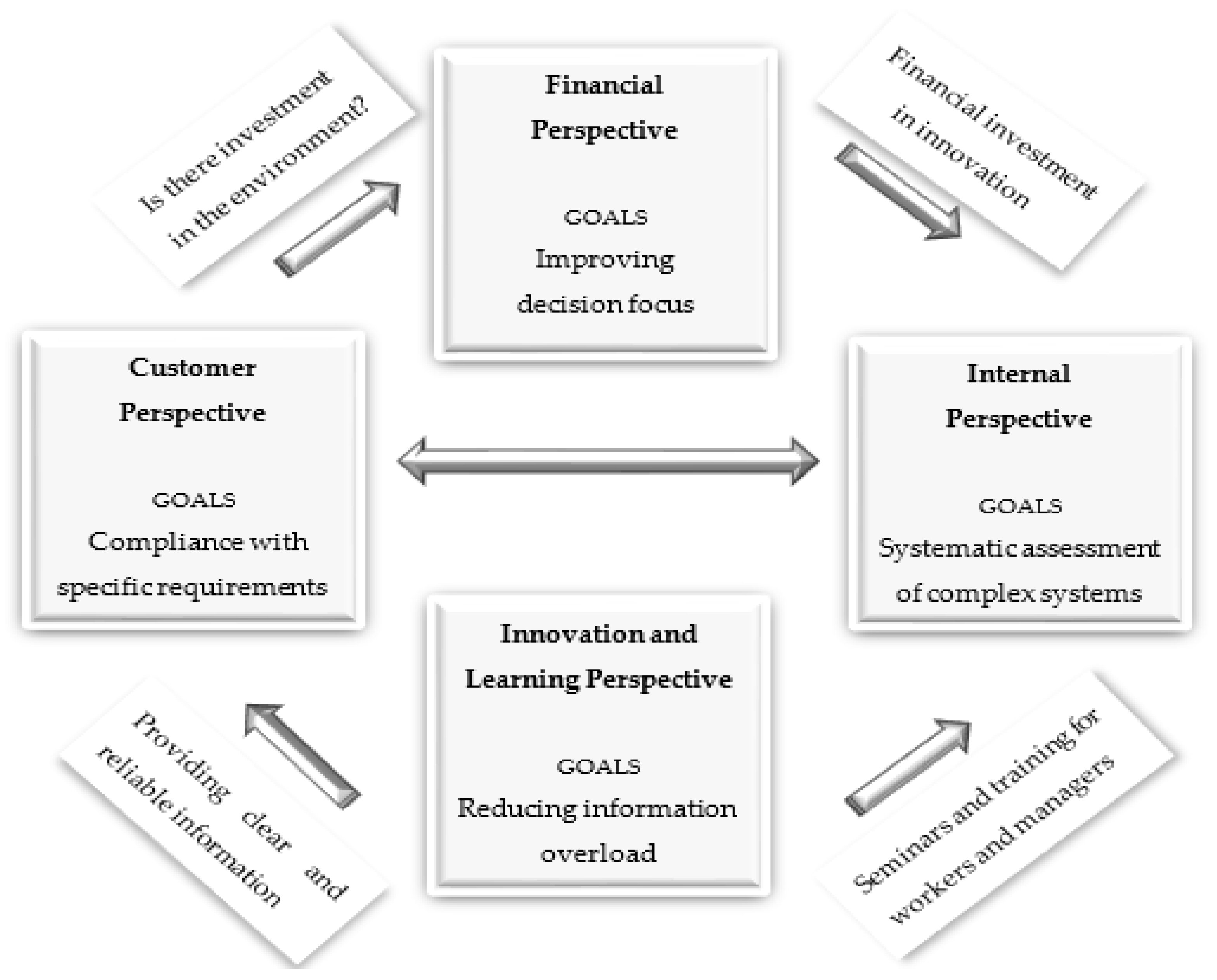
The BSC provides a structured framework for performance evaluation through four interconnected perspectives: financial, customer, internal processes, and learning and growth [30,31]. By organizing strategic objectives across these dimensions, BSC enables the systematic assessment of complex systems while reducing information overload and improving decision focus [32]. In environmental systems, its effectiveness depends on the appropriate definition of strategic perspectives and measurable indicators aligned with specific objectives [33]. The method supports the identification of performance gaps through balanced indicator systems and facilitates structured evaluation when integrated with multi-criteria decision-making approaches [34,35].
To address sustainability challenges, the SBSC extends the traditional BSC by incorporating environmental and social dimensions into strategic management [36,37]. This extension enables the alignment of business objectives with sustainability principles, including circular economy strategies and climate change mitigation [38,39]. The SBSC thus provides a structured basis for evaluating sustainable solutions by integrating environmental, social, and economic criteria within a unified framework [40]. However, despite its conceptual advantages, the application of BSC and SBSC in environmental decision-making remains limited by several challenges.
These challenges include the difficulty of defining appropriate sustainability indicators, the lack of integration with quantitative decision-support methods [41,42,43,44], and the insufficient ability to handle uncertainty [45,46,47,48] and subjective judgments in complex systems [44,49,50,51,52]. As a result, there is a clear need for hybrid frameworks that combine SBSC with advanced multi-criteria decision-making methods to improve robustness, transparency [53], and practical applicability in environmental management contexts.

2.4. Research Gap

Despite these contributions, the integration of MCDM methods and strategic management frameworks for selecting optimal soil protection strategies remains limited. However, existing studies rarely integrate MCDM methods with SBSC perspectives for selecting soil protection strategies in mining environments. Based on the identified research gap, a hybrid AHP–SBSC–TOPSIS framework is developed and applied in the following section.
This study addresses this gap by proposing a hybrid decision-support framework that integrates AHP for weighting, SBSC for structuring, and TOPSIS for ranking, enabling a comprehensive and systematic evaluation of soil protection strategies.

3. Methodology and Results

3.1. Study Area

The study area is the Kostolac mining and energy complex, located near the city of Požarevac, Serbia. This area is characterized by intensive surface coal mining operations, accompanied by the disposal of overburden, ash, and slag. Such activities contribute significantly to soil degradation through the accumulation and dispersion of pollutants, particularly PTEs originating from coal dust, fly ash, and drainage water.
In addition to its environmental significance, the Kostolac area represents a relevant case for analyzing the challenges of sustainable soil protection in mining environments, where industrial activities directly affect land quality and long-term ecosystem stability. The selection of this site as a case study was based on the availability of environmental data, the documented presence of mining-related soil degradation, and its representativeness of similar pollution problems in Serbia.
Therefore, the study area provides an appropriate basis for evaluating and comparing alternative soil protection strategies within the proposed multi-criteria decision-making framework.

3.2. Criteria Definition

The selection of evaluation criteria is based on relevant environmental indicators, an extensive literature review, and the specific characteristics of soil degradation in mining environments. To ensure a consistent and comprehensive assessment, five key criteria were defined, reflecting the environmental, economic, technical, and social dimensions aligned with the SBSC framework.
  • C1—Environmental effectiveness refers to the ability of a solution to reduce soil contamination, mitigate PTEs presence, and control land degradation, thereby contributing to long-term ecosystem restoration;
  • C2—Economic affordability considers both initial investment and operational costs, reflecting the financial feasibility and cost-efficiency of the proposed solutions;
  • C3—Technical feasibility assesses the availability, maturity, and applicability of required technologies, as well as the complexity of implementation under existing technical conditions;
  • C4—Social acceptance evaluates the impact on local communities and the level of stakeholder support, including potential social benefits, conflicts, and overall acceptability;
  • C5—Risk reduction measures the extent to which a solution minimizes environmental and operational risks, including uncertainty reduction and prevention of unintended consequences.
Collectively, these criteria provide a structured and balanced basis for evaluating soil protection strategies, enabling the integration of multiple sustainability dimensions within the proposed multi-criteria decision-making framework.

3.3. AHP Weighting of Criteria

The relative importance of the evaluation criteria was determined using the AHP method, originally developed by Thomas L. Saaty [23]. The method was selected due to its capability to structure complex decision problems and systematically derives criteria weights based on expert judgment.
Pairwise comparisons were performed using the Saaty 1–9 scale, where numerical values express the relative importance of one criterion over another, ranging from equal importance to extreme dominance. The evaluation was conducted by a panel of domain experts with relevant academic and professional expertise in environmental protection, mining engineering, and risk management, ensuring a comprehensive and balanced assessment.
The expert panel consisted of seven participants with relevant academic and professional expertise in environmental protection, mining engineering, and risk management. Specifically, the panel included three academic researchers specializing in environmental systems and sustainability, two mining engineers with practical experience in surface coal mining operations, and two experts in environmental risk assessment and management from industry and public sector institutions.
All experts had more than 10 years of professional experience in their respective fields, ensuring a high level of domain knowledge and familiarity with soil protection challenges in mining environments. The selection of experts was based on their demonstrated involvement in environmental impact assessment, sustainable resource management, and decision-support methodologies.
To ensure the reliability of the pairwise comparisons, individual judgments were collected independently and subsequently aggregated using the geometric mean method, which is commonly applied in AHP to synthesize group decision-making results. This approach reduces individual bias and provides a consistent representation of collective expert opinion.
Based on expert judgments, a pairwise comparison matrix was constructed, where each element represents the relative importance ratio between criteria. The priority vector (criteria weights) was obtained through matrix normalization and eigenvector calculation, representing the relative contribution of each criterion to the overall decision-making process.
The consistency of the pairwise comparisons was evaluated using the Consistency Index (CI) and Consistency Ratio (CR). The CI is defined as:
C I = λ m a x n n 1
where n is the matrix dimension and λmax is the maximum eigenvalue of the comparison matrix. The consistency ratio is calculated as:
C R = C I R I
where RI denotes the random index. A consistency ratio below the threshold value of 0.10 indicates an acceptable level of consistency in expert judgments.
The resulting weight coefficients quantify the relative importance of each criterion and provide a reliable basis for subsequent multi-criteria analysis. These weights are further used in the TOPSIS method to rank soil protection strategies within the proposed decision-making framework. This approach reduces subjectivity by structuring expert judgments within a consistent mathematical framework.

3.4. Definition of Alternatives

Based on the shortcomings identified through multi-criteria decision-making and the potential elements that can contribute to the company’s development, a realistic framework for defining development strategies is established.
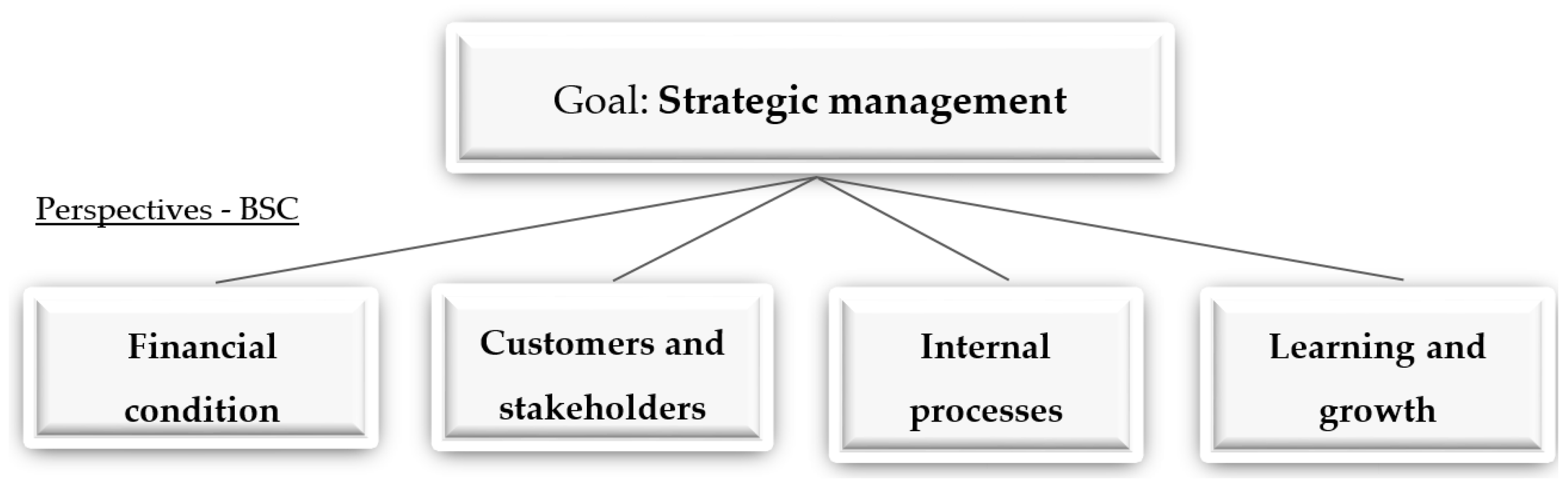
The BSC model identifies four related perspectives on activities that are likely to be critical to most organizations and to all levels within organizations [36]. These four perspectives of the BSC—including the general characteristics of the perspectives, the relationships between them, and the qualities that a performance criterion should have [36]—depend on the specific case, but the starting point for defining these perspectives remains the same (Figure 3 and Figure 4).
The activity-based management method, which continually directs the attention of managers towards development using the data obtained by focusing on activities [36], largely defines the level of company development and the relationship with customers and stakeholders, who impose specific requirements.
Innovative and developmental perspectives should be integrated into internal processes in order to modernize production. Securing financial conditions is crucial for implementing the management strategy while maintaining a balance between the defined perspectives. In this case, the creation of the development process was carried out in an innovative manner, utilizing the results of the AHP and TOPSIS methods, while also respecting the principles of sustainable development to define SBSC strategies.
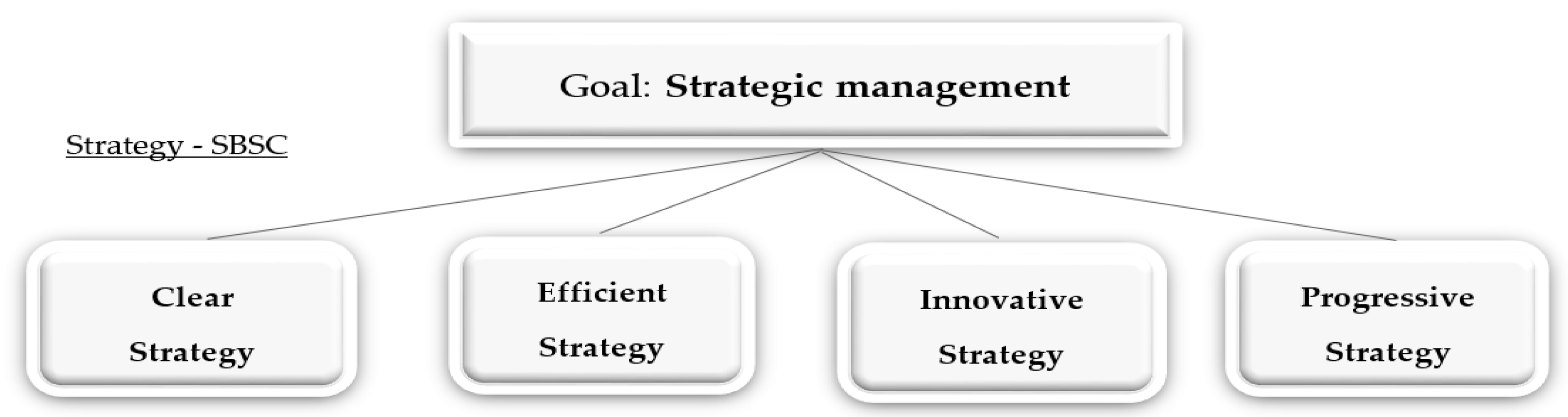
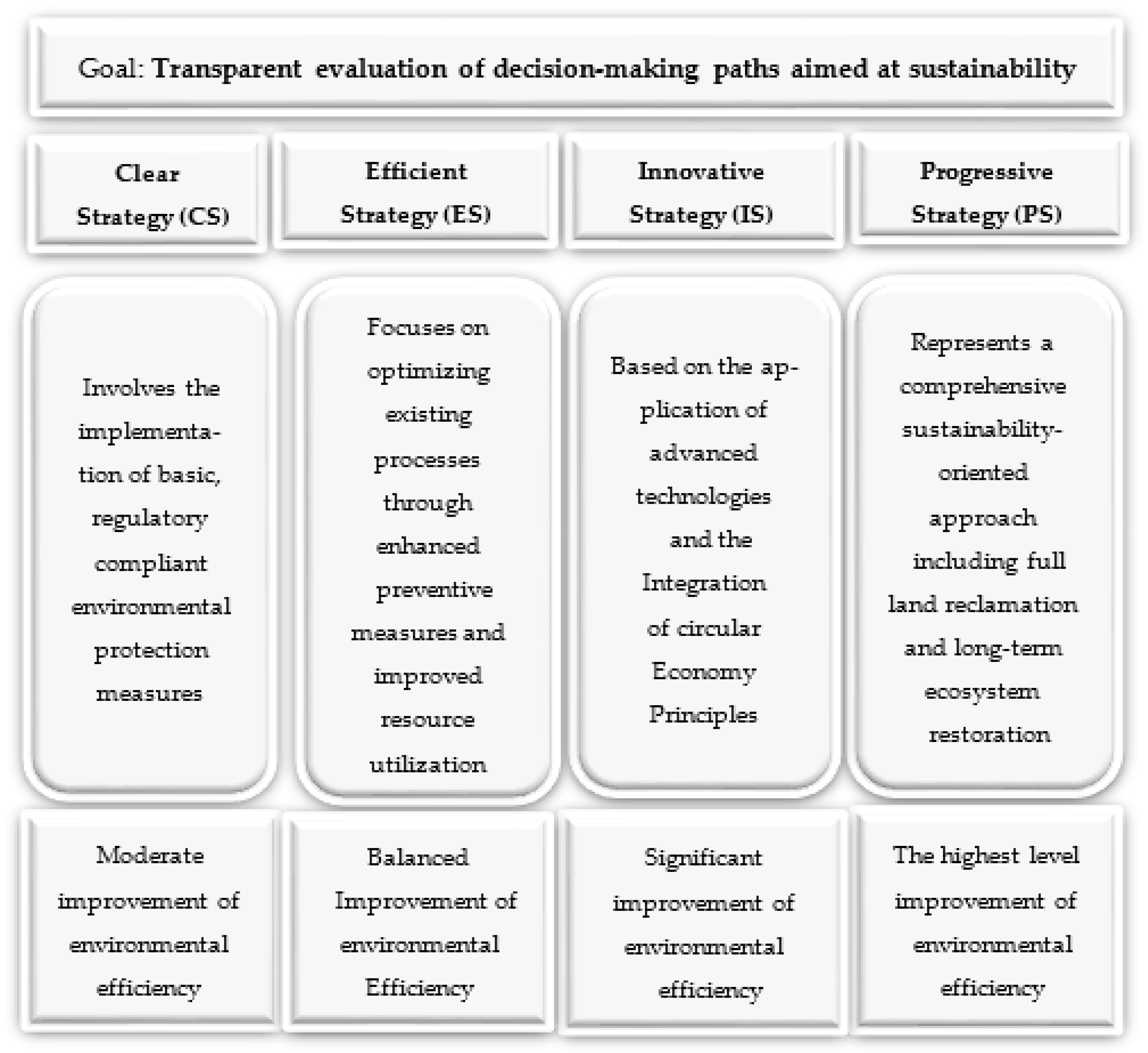
The definition of alternatives is grounded in the SBSC framework (Figure 5), ensuring the alignment of environmental, economic, technical, and social dimensions in soil protection management [6,31]. Based on this framework, five alternative soil protection strategies were developed, representing increasing levels of implementation complexity, sustainability integration, and investment intensity [7,36].
The link between SBSC perspectives and the selected criteria is based, to a greater or lesser extent, on perspectives for decision-making oriented towards sustainability (Figure 6) and the adherence to eco-efficiency principles. A clear strategy, as a primary form of development, implies the application of basic measures for soil quality protection in mining and energy complexes.
An effective strategy can be achieved if the environmental protection system is organized adequately and preventive protection measures are implemented in a timely manner. An innovative strategy involves securing funds to innovate the waste disposal processes resulting from the transformation of coal from its primary to secondary and final forms. A progressive strategy, as the most significant method of preserving soil quality, entails the implementation of land reclamation measures.
In this framework, environmental effectiveness (C1) and risk reduction (C5) are primarily associated with the environmental and internal-process perspectives of the SBSC, economic affordability (C2) reflects the financial perspective, social acceptance (C4) corresponds to the stakeholder perspective, while technical feasibility (C3) is linked to the learning, innovation, and process-improvement dimensions. This mapping enables the systematic translation of SBSC strategic perspectives into measurable evaluation criteria.
  • A1—Current practice (status quo) represents the continuation of existing soil management practices without the introduction of additional environmental protection measures. It serves as a baseline scenario, characterized by low environmental effectiveness (C1) and minimal cost (C2), but limited contribution to risk reduction (C5) [6].
  • A2—Clear Strategy (CS) involves the implementation of basic, regulatory-compliant environmental protection measures, providing moderate improvements in environmental effectiveness (C1) and risk reduction (C5), while maintaining relatively high economic affordability (C2) and technical feasibility (C3) [29].
  • A3—Efficient Strategy (ES) focuses on optimizing existing processes through enhanced preventive measures and improved resource utilization, achieving a balanced performance across environmental effectiveness (C1), economic affordability (C2), and technical feasibility (C3), along with increased social acceptance (C4) [32].
  • A4—Innovative Strategy (IS) is based on the application of advanced technologies and the integration of circular economy principles. It significantly improves environmental effectiveness (C1) and risk reduction (C5), although it requires higher investment (C2) and increased technical complexity (C3) [37].
  • A5—Progressive Strategy (PS) represents a comprehensive sustainability-oriented approach, including full land reclamation and long-term ecosystem restoration. It achieves the highest performance in environmental effectiveness (C1), social acceptance (C4), and risk reduction (C5), but involves substantial economic costs (C2) and demanding technical requirements (C3) [39].
Overall, the defined alternatives reflect different strategic levels of sustainability implementation and corresponding trade-offs among the evaluation criteria (C1–C5), enabling a systematic comparison within the proposed multi-criteria decision-making framework [40]. This structured definition of alternatives enables a transparent evaluation of sustainability-oriented decision pathways in mining-affected environments.

3.5. Decision Matrix and Criteria Weights

A decision matrix was constructed to evaluate the performance of each alternative with respect to the defined criteria (C1–C5). The evaluation values were obtained based on environmental data (soil contamination indicators) and expert assessment of technical, economic, and social aspects. The performance of alternatives was assessed using a standardized scale from 1 to 9, where higher values indicate better performance. The environmental indicators reported in the State of the Environment Report were first analyzed by the expert panel. The reported levels of soil contamination, environmental risks, remediation requirements, and expected environmental benefits were translated into a 1–9 evaluation scale. Higher scores were assigned to alternatives expected to provide greater environmental effectiveness, higher risk reduction, stronger social acceptance, and better technical performance. Lower scores were assigned to alternatives with limited environmental benefits or reduced ability to mitigate the identified soil protection problems. The resulting evaluations were used to construct the decision matrix. The scoring rules were predefined prior to the evaluation process. The experts applied a common assessment framework based on the severity of environmental impacts, the extent of soil contamination, the expected effectiveness of mitigation measures, implementation feasibility, and the anticipated long-term benefits of each strategy. This ensured consistency and comparability of evaluations across all alternatives. All seven experts performed their evaluations independently before the aggregation process. The final scores used in the decision matrix were obtained by aggregating the individual expert assessments. All criteria were treated as benefit-type criteria to ensure a consistent evaluation framework, where higher scores uniformly correspond to more desirable outcomes.
The relative importance of the criteria was derived using the AHP method, as described in Section 3.3. The resulting prioritization reflects the dominance of environmental and risk-related considerations in sustainable soil protection. In particular, risk reduction (C5) emerges as the most influential criterion, followed by environmental effectiveness (C1). Social acceptance (C4) is ranked above technical feasibility (C3), while economic affordability (C2) has the lowest weight, indicating that sustainability performance prevails over cost minimization in the decision context. The pairwise comparison matrix is presented in Table 1.
Based on the pairwise comparison matrix, the normalized weights of the criteria were derived as follows (Table 2).
The consistency of the pairwise comparisons was verified using the Consistency Index (CI) and Consistency Ratio (CR). For the defined matrix, λmax = 5.137, CI = 0.034, and CR = 0.031. Since CR < 0.10, the level of consistency is considered acceptable, confirming the reliability of the expert judgments.
The obtained weight distribution highlights a clear preference for strategies that maximize environmental impact and minimize risk, while economic considerations play a secondary role. This weighting structure directly influences the subsequent ranking of alternatives, favoring sustainability-oriented solutions within the MCDM framework. This prioritization structure reflects a decision-making paradigm focused on long-term environmental sustainability rather than short-term economic efficiency.

3.6. TOPSIS Method

The TOPSIS method was applied to rank the defined alternatives. The method is based on the principle that the optimal alternative should have the shortest distance from the positive ideal solution and the greatest distance from the negative ideal solution [49,54,55].
The TOPSIS procedure consists of several steps. First, the decision matrix is normalized using vector normalization:
r i j = x i j i = 1 m x i j 2
where rij represents the normalized performance of alternative i with respect to the criterion j [49].
The weighted normalized matrix is then calculated as:
v i j = w j r i j
where wj denotes the weight of criterion j obtained using the AHP method [23]. The positive-ideal solution (A+) and the negative-ideal solution (Aˉ) are determined using the following formulas [49]:
A + = max v i j , A = min v i j
where the ideal solution consists of the best values, while the negative ideal solution consists of the worst values for each criterion [49].
The separation measures from the ideal and negative ideal solutions are calculated as:
S i + = j = 1 m v i j v j + 2 , S i = j = 1 m v i j v j 2
The relative closeness coefficient is defined as:
S i = S i S i + + S i
The initial decision matrix was obtained based on the data analysis from the State of the Environment Report [2], which experts evaluated during multi-criteria decision-making using the AHP method.
The results of the AHP method, presented as weight coefficients, were used as a starting point for defining the evaluations according to the TOPSIS method. In this way, a hybrid relationship between the two methods (AHP and TOPSIS) was achieved, allowing the results of the same expert opinion to be considered indirectly. The initial decision matrix is presented in Table 3.
The final ranking of alternatives is presented in Table 4.
The results indicate that the Progressive Strategy (A5) represents the optimal solution, achieving the highest closeness coefficient (0.898), followed by the Innovative Strategy (A4) and the Efficient Strategy (A3). The Clear Strategy (A2) and Current Practice (A1) show significantly lower performance.
The obtained ranking demonstrates that strategies incorporating advanced environmental protection measures and resource recovery outperform conventional approaches. Furthermore, the results confirm the dominant influence of environmental effectiveness and risk reduction, previously identified as the most significant criteria in the AHP analysis.
The integration of AHP-derived weights with the TOPSIS ranking procedure ensures a consistent and transparent evaluation of alternatives within the proposed decision-making framework.
Specific information regarding the selection of experts for defining the initial conditions of the AHP and TOPSIS methods is detailed in Section 3.3. The experts participated in the first phase of the evaluation, where they ranked the indicators of the mining and energy complex’s impact on soil quality. Through the weight coefficients of the AHP method, the aggregation of their assessments was indirectly integrated into the TOPSIS method results to mitigate subjective biases within a consistent mathematical framework. The same panel of seven experts participated in all stages of the evaluation process. Individual pairwise comparison judgments were collected independently and aggregated using the geometric mean method, which was subsequently used to derive the AHP weights and to support the evaluation of alternatives in the TOPSIS analysis.

3.7. Sensitivity Analysis

To evaluate the robustness of the proposed AHP–TOPSIS model, a sensitivity analysis was conducted by varying the weights of the evaluation criteria under several scenarios [56,57,58]. The objective was to examine whether changes in criteria importance could affect the final ranking of alternatives.
In the first scenario (S1), the weight of Risk reduction (C5) was reduced by 20%, with proportional adjustment of the remaining criteria. The ranking order remained unchanged, with (A5) Progressive Strategy retaining the leading position, followed by A4, A3, A2, and A1.
In the second scenario (S2), the weight of Economic affordability (C2) was increased by 50% to simulate a cost-oriented decision context. The ranking structure remained stable, indicating that economic considerations do not outweigh environmental effectiveness and risk reduction.
In the third scenario (S3), equal weights were assigned to all criteria. Under these conditions, the differences between alternatives decreased, particularly between A4 and A5; however, A5 remained the top-ranked alternative.
In the fourth scenario (S4), the weight of Environmental effectiveness (C1) was increased by 20%. The ranking order was again unaffected, further confirming the dominance of environmentally oriented strategies.
The results of the sensitivity analysis are presented in Table 5.
Overall, the sensitivity analysis demonstrates that the proposed model is robust, as the ranking of alternatives remains consistent across all tested scenarios. This stability confirms that (A5) Progressive Strategy is the optimal solution, regardless of moderate variations in criteria weights.
The consistency of the ranking further indicates that the decision-making framework is not overly sensitive to subjective weighting, thereby enhancing its reliability and practical applicability in environmental management contexts.
This robustness supports the validity of the proposed hybrid AHP–TOPSIS framework as a reliable decision-support tool for sustainable soil protection planning.

4. Discussion

The results obtained through the integrated AHP–TOPSIS framework provide a consistent and analytically robust basis for evaluating soil protection strategies in surface coal mining systems. The AHP analysis identified risk reduction (C5) and environmental effectiveness (C1) as the most influential criteria, emphasizing the priority of minimizing environmental hazards and improving soil quality in mining-affected areas. This finding is consistent with the principles of sustainable environmental management [59], where ecological integrity and risk mitigation prevail over purely economic considerations [60,61]. Study analyses show that the proposed solutions contribute to directing funding toward achieving ecological balance [31] and implementing the principles of sustainable development [59], as well as establishing an adequate relationship between financial development, economic growth, and environmental sustainability [36,60,61]. Such an approach is aligned with contemporary sustainability-oriented decision-making frameworks that emphasize environmental protection, risk mitigation, and long-term development objectives.
The application of the TOPSIS method enabled a comprehensive ranking of alternative strategies based on their overall performance. The results indicate that the Progressive Strategy (A5) represents the optimal solution, reflecting its strong performance across key criteria, particularly environmental effectiveness and risk reduction. The integration of advanced reclamation measures, resource recovery, and long-term ecosystem restoration explains its dominant position. The Innovative Strategy (A4), ranked second, represents a feasible alternative in situations where financial or technical constraints limit the implementation of fully progressive solutions.
In contrast, the Current Practice (A1) exhibited the lowest performance, confirming that conventional approaches based on minimal intervention and basic monitoring are insufficient for addressing complex soil contamination problems in mining environments. This result highlights the need for a transition toward more advanced, sustainability-oriented management strategies.
The sensitivity analysis further strengthens the validity of the results. The stability of the ranking across all tested scenarios indicates that the proposed model is robust and not overly sensitive to moderate variations in criteria weights. Even under cost-oriented conditions or equal weighting schemes, environmentally advanced strategies maintained their dominance, reinforcing the reliability of the decision-making framework.
The obtained findings are in line with recent studies emphasizing the importance of integrating environmental and risk-related criteria into decision-making processes [62,63] in mining and energy systems [62]. Previous research has demonstrated that environmental risk assessment and sustainability-oriented evaluation frameworks play a significant role in supporting strategic decision-making and environmental management [62,63,64]. However, unlike many existing approaches that focus primarily on impact assessment and risk evaluation [65], the proposed framework provides a structured decision-support mechanism for selecting optimal soil protection strategies. By integrating AHP weighting, SBSC-based structuring, and TOPSIS ranking, the model establishes a direct link between environmental evaluation and strategic decision-making. However, the proposed framework extends existing approaches by integrating strategic sustainability perspectives (SBSC) with quantitative ranking methods (AHP–TOPSIS), thereby supporting not only environmental assessment but also strategy selection.
From a practical perspective, the results suggest that mining and energy companies, such as Elektroprivreda Srbije, should prioritize the gradual implementation of progressive and innovative strategies. Although such approaches may require higher initial investments, their long-term benefits in terms of environmental protection, risk mitigation, and stakeholder acceptance outweigh short-term economic constraints.
Overall, the proposed framework demonstrates strong potential as a reliable and transparent decision-support tool for policymakers and management structures involved in sustainable soil protection planning in mining regions.
These results contribute to the growing body of research on integrated decision-support systems for sustainable resource management under complex environmental conditions.

5. Conclusions and Contributions

This study proposes an integrated hybrid decision-making framework for the evaluation and selection of soil protection strategies in surface coal mining areas. By combining the AHP method, SBSC perspectives, and the TOPSIS method, the model enables a comprehensive assessment that simultaneously considers environmental, economic, technical, and social dimensions.
The results of the AHP analysis indicate that risk reduction and environmental effectiveness are the most influential criteria, emphasizing the importance of prioritizing ecological protection and long-term environmental stability in mining systems. The TOPSIS results identify the Progressive Strategy (A5) as the optimal solution, while the Innovative Strategy (A4) represents a feasible alternative under financial and technical constraints.
The sensitivity analysis confirms the robustness of the proposed model, as the ranking of alternatives remains stable across all tested scenarios. This demonstrates that the decision-making framework is not sensitive to moderate variations in criteria weights, thereby enhancing its reliability and applicability in real-world conditions.
From a practical perspective, the findings suggest that mining and energy companies, including Elektroprivreda Srbije, should prioritize the gradual transition toward advanced and sustainability-oriented soil protection strategies. Although such approaches require higher initial investments, their long-term benefits in terms of environmental quality, risk mitigation, and stakeholder acceptance outweigh short-term economic constraints.
Overall, the proposed framework represents a reliable and transparent decision-support tool that can be adapted to other mining regions facing similar environmental challenges. The advantage of applying the hybrid model lies in the systematic analysis of key soil pollution indicators, which are defined in a similar manner in other Balkan countries. The presented methodology can also be applied within the European Union, as the National Environmental Quality Indicators are created based on the indicators of the European Environment Agency. However, it should be emphasized that the method is based on the analysis of data whose values exceed the prescribed limit values, meaning that it is necessary to adapt the observational aspects to specific environmental problems and regions.

5.1. The Main Contributions

The main contributions of this research can be summarized as follows:
  • Methodological contribution: The study proposes an integrated AHP–SBSC–TOPSIS framework that combines multi-criteria decision-making with strategic management perspectives, enabling a structured and transparent evaluation process in environmental management.
  • Theoretical contribution: The research extends existing approaches by bridging the gap between environmental impact assessment and decision-support systems, particularly in the context of soil protection in mining environments.
  • Practical contribution: The proposed model provides a decision-support tool applicable to mining and energy companies and policymakers for selecting optimal soil protection strategies under real-world constraints.
  • Robustness validation: The inclusion of sensitivity analysis confirms the stability and reliability of the model, strengthening its credibility and applicability in practice.

5.2. Limitations and Future Research

Despite its contributions, the study has certain limitations. The evaluation of alternatives partially relies on expert judgment due to the limited availability of comprehensive datasets for all criteria.
Future research may focus on integrating real-time environmental monitoring data, expanding the set of evaluation criteria, and applying advanced approaches such as fuzzy or hybrid MCDM methods to further improve decision accuracy and model flexibility.

Author Contributions

Conceptualization, J.M.-N., N.P., D.M., M.M. and V.S.; methodology, J.M.-N.; validation, D.M. and N.P.; formal analysis, J.M.-N. and M.M.; investigation, J.M.-N.; resources, D.M. and V.S.; data curation, N.P. and D.M.; writing—original draft preparation, J.M.-N., V.S. and N.P.; writing—review and editing, J.M.-N., N.P. and D.M.; visualization, J.M.-N., N.P. and D.M.; supervision, D.M., M.M. and V.S.; project administration, D.M.; All authors have read and agreed to the published version of the manuscript.

Funding

This research was financially supported by the Ministry of Education, Science and Technological Development and Innovation of the Republic of Serbia (Contract No. 451-03-34/2026-03/200109).

Data Availability Statement

This study primarily relies on publicly available and published data.

Conflicts of Interest

The authors declare no conflicts of interest.

References

  1. Regulation on the Rulebook on the National List of Environmental Indicators. Official Gazette of the Republic of Serbia 2011, No. 37/2011. Available online: https://pravno-informacioni-sistem.rs/eli/rep/sgrs/ministarstva/pravilnik/2011/37/3/reg (accessed on 20 March 2026).
  2. Report on the State of the Environment in the Republic of Serbia for 2024 Republic of Serbia; Ministry of Environmental Protection, Environmental Protection Agency: Belgrade, Serbia, 2025. Available online: https://sepa.gov.rs/wp-content/uploads/2025/12/Izvestaj-2024.pdf (accessed on 20 March 2026).
  3. Garbacz, A.; Nowak, A.; Marzec-Grządziel, A.; Przybyś, M.; Gałązka, A.; Jaroszuk-Ściseł, J.; Grzywaczewski, G. Impact of Coal Waste Rock on Biological and Physicochemical Properties of Soils with Different Agricultural Uses. Sustainability 2025, 17, 2603. [Google Scholar] [CrossRef]
  4. Yong, M.-T.; Babla, M.; Karan, K.; Katwal, U.; Jahandari, S.; Matta, P. Coal tailings as a soil conditioner: Evaluation of tailing properties and effect on tomato plants. Plant Growth Regul. 2022, 98, 439–450. [Google Scholar] [CrossRef] [PubMed]
  5. Liu, W.; Feng, X.; Cao, F.; Wu, D.; Zhang, G.; Vincze, E.; Wang, Y.; Chen, Z.-H.; Wu, F. An ATP binding cassette transporter HvABCB25 confers aluminum detoxification in wild barley. J. Hazard. Mater. 2021, 401, 123371. [Google Scholar] [CrossRef] [PubMed]
  6. Firozjaei, M.K.; Sedighi, A.; Firozjaei, H.K.; Kiavarz, M.; Homaee, M.; Arsanjani, J.J.; Makki, M.; Naimi, B.; Alavipanah, S.K. A historical and future impact assessment of mining activities on surface biophysical characteristics change: A remote sensing-based approach: A historical and future impact assessment of mining activities on surface. Ecol. Indic. 2021, 122, 107264. [Google Scholar] [CrossRef]
  7. Park, I.; Tabelin, C.B.; Jeon, S.; Li, X.; Seno, K.; Ito, M.; Hiroyoshi, N.A. Review of recent strategies for acid mine drainage prevention and mine tailings recycling. Chemosphere 2019, 219, 588–606. [Google Scholar] [CrossRef]
  8. Ali, M.A.H.; Qian, W.; Rabeiy, R.; Saleem, H.A.; Mohamed, A.S.; Muhammad, A.U.; Shebl, A. Environmental impact assessment of leachate from mining tailings using electrical resistivity imaging. Sci. Rep. 2025, 15, 23671. [Google Scholar] [CrossRef]
  9. Yurkevich, N.V.; Yurkevich, N.; Bortnikova, S.B.; Karin, Y.G. Current State of the Abandoned Mine Wastes: Environmental Risks. Prospects for Extraction and Reclamation. In Abstracts of the Second Eurasian RISK-2020 Conference and Symposium; AIJR Publisher: Uttar Pradesh, India, 2020. [Google Scholar] [CrossRef]
  10. Yurkevich, N.V.; Abrosimova, N.; Bortnikova, S.B.; Karin, Y.G.; Saeva, O.P. Geophysical investigations for evaluation of environmental pollution in a mine tailings area. Toxicol. Environ. Chem. 2017, 99, 1328–1345. [Google Scholar] [CrossRef]
  11. Uredba o Graničnim Vrednostima Zagađujućih; Štetnih i Opasnih Materija u Zemljištu. Službeni Glasnik RS; br. 30/18 i 64/19. (Eng. Regulation on Limit Values of Pollutants; Harmful and Dangerous Substances in the Soil. Official Gazette of RS). Available online: https://www.paragraf.rs/propisi/uredba-granicnim-vrednostima-zagadjujucih-stetnih-opasnih-materija-zemljistu.html (accessed on 25 March 2026).
  12. Parikh, S.; James, B. Soil: The Foundation of Agriculture. Nat. Educ. Knowl. 2012, 3, 2. [Google Scholar]
  13. Rouhani, A.; Gusiatin, M.Z.; Hejcman, M. An overview of the impacts of coal mining and processing on soil: Assessment; monitoring; and challenges in the Czech Republic. Environ. Geochem. Health 2023, 45, 7459–7490. [Google Scholar] [CrossRef]
  14. Zheng, G.; Mei, S.; Wu, Y.; Cui, P. The Current Status of Contaminated Site Remediation and Application Prospects of Artificial Intelligence—A Review. Environments 2026, 13, 212. [Google Scholar] [CrossRef]
  15. García-Martínez, J.B.; Ríos Niño, L.T.; Saavedra Gómez, L.N.; Barajas-Ferreira, C.; Zuorro, A.; Barajas-Solano, A.F. Environmental Performance of Chlorella sp.-Based Phytoremediation Across Multiple Wastewater Scenarios: A Comparative Life Cycle Assessment. Environments 2026, 13, 155. [Google Scholar] [CrossRef]
  16. Jin, X.; Zheng, J.; Hua, S.; Tong, X. Influencing factors of deformation and failure of porous coal under conventional loading. Facta Univ. Ser. Mech. Eng. 2025, 23, 161–170. [Google Scholar] [CrossRef]
  17. Stević, Z.; Ulutas, A.; Topal, A.; Marinković, D.; Cavoski, S. A new objective method for determining criteria weights in MCDM models—LOGSTA. Int. J. Simul. Model. 2025, 24, 589–600. [Google Scholar] [CrossRef]
  18. Petrović, N.; Marković, S.; Nikolić, B.; Jovanović, V.; Petrović, M. Evaluating Alternative Propulsion Systems for Urban Public Transport in Niš: A Multicriteria Decision-Making Approach. J. Eng. Manag. Syst. Eng. 2024, 3, 72–81. [Google Scholar] [CrossRef]
  19. Petrović, N.; Jovanović, V.; Petrović, M.; Nikolić, B.; Pavlović, J. Evaluating the operation performance of the Serbian transport Freight system by using multiple criteria decision-making technique. Eng. Today 2022, 1, 33–40. [Google Scholar] [CrossRef]
  20. Petrović, N.; Jovanović, V.; Marković, S.; Marinković, D.; Petrović, M. Multicriteria Sustainability Assessment of Transport Modes: A European Union Case Study for 2020. J. Green Econ. Low-Carbon Dev. 2024, 3, 36–44. [Google Scholar] [CrossRef]
  21. Mandal, N.; Sarkar, P.; Petrović, N. Multi-Criteria Decision-Making for Ranking Renewable Energy Sources: A Case Study from the Republic of Serbia. J. Eng. Manag. Syst. Eng. 2025, 4, 109–121. [Google Scholar] [CrossRef]
  22. Petrović, N.; Jovanović, V.; Petrović, M.; Nikolić, B.; Mihajlović, J. Comparative Investigation of Normalization Techniques and Their Influence on MCDM Ranking—A Case Study. Spectr. Mech. Eng. Oper. Res. 2025, 2, 172–190. [Google Scholar] [CrossRef]
  23. Ozdemir, A.C. Use of Integrated AHP-TOPSIS Method In selectIon of Optimum Mine Planning for open-pit Mines. Arch. Min. Sci. 2023, 68, 35–53. [Google Scholar] [CrossRef]
  24. Çelikbilek, Y.; Tüysüz, F. An in-depth review of theory of the TOPSIS method: An experimental analysis. J. Manag. Anal. 2020, 7, 281–300. [Google Scholar] [CrossRef]
  25. Ghorui, N.; Ghosh, A.; Algehyne, E.A.; Mondal, S.P.; Saha, A.K. AHP-TOPSIS Inspired Shopping Mall Site Selection Problem with Fuzzy Data. Mathematics 2020, 8, 1380. [Google Scholar] [CrossRef]
  26. Nazarov, A. Strategic Market Entry Decision-Making in Africa’s Satellite Sector: A Comparative Analysis Using Topsis and Ahp Methods. In Proceedings of Azerbaijan High Technical Educational Institutions; Azerbaijan State Oil and Industry University: Baku, Azerbaijan, 2024; pp. 85–94. [Google Scholar] [CrossRef]
  27. Rahman, M. Comparative Analysis of AHP and TOPSIS Methods in Retail Business Location Selection Decision Support System. J. Electr. Comput. Exp. 2024, 2, 52–57. [Google Scholar] [CrossRef]
  28. Liladhar Rane, N.L.; Achari, A.; Choudhary, S. Multi-Criteria Decision-Making (MCDM) as a powerful tool for sustainable development: Effective applications of AHP, FAHP, TOPSIS, ELECTRE, and VIKOR in sustainability. Int. Res. J. Mod. Eng. Technol. Sci. 2023, 5, 2654–2670. [Google Scholar] [CrossRef]
  29. Huang, I.B.; Keisler, J.; Linkov, I. Multi-criteria decision analysis in environmental sciences: Ten years of applications and trends. Sci. Total Environ. 2011, 409, 3578–3594. [Google Scholar] [CrossRef] [PubMed]
  30. Oliveira, C.A.; Fijakowska, O.; Silva, J.R. Implementation of Balanced Scorecard: Case study of a Portuguese higher education institution. Manag. J. Contemp. Manag. Issues 2021, 26, 169–188. [Google Scholar] [CrossRef]
  31. Kaplan, R.S.; Norton, D.P. The BSC: Measures that drive performance. Harv. Bus. Rev. 1992, 70, 71–79. [Google Scholar]
  32. Kaplan, R.S.; Norton, D.P. Transforming the Balanced Scorecard from Performance Measurement to Strategic Management American Accounting Association Accounting. Horizons 2001, 15, 87–104. [Google Scholar] [CrossRef]
  33. Jovanovic, J. Management of the organization based on balanced scorecards. Int. J. Qual. Res. 2011, 5, 317–325. [Google Scholar]
  34. Sharon, C. The Balanced Scorecard: A Strategic Tool in Implementing Homeland Security Strategies. Applying the Balanced Scorecard, Homeland Security Affairs. 2008. Available online: https://www.hsaj.org/articles/115 (accessed on 12 February 2026).
  35. Alptekin, N. Construction of Balanced Scorecard Using Analytic Hierarchy Process. Marmara Üniv. İktisadi İdari Bilim. Derg. 2008, 25, 677–691. [Google Scholar]
  36. Ayvaz, E.; Pehlivanl, D. The Use of Time Driven Activity Based Costing and Analytic Hierarchy Process Method in the BSC Implementation. Int. J. Bus. Manag. 2011, 6, 146–158. [Google Scholar] [CrossRef][Green Version]
  37. Martín-Gómez, A.M.; Pineda-Ganfornina, M.; Ávila-Gutiérrez, M.J.; Agote-Garrido, A.; Lama-Ruiz, J.R. Balanced Scorecard for Circular Economy: A Methodology for Sustainable Organizational Transformation. Sustainability 2024, 16, 1464. [Google Scholar] [CrossRef]
  38. Jaiswal, V.; Thaker, K. Studying research in balanced scorecard over the years in performance management systems: A bibliometric analysis. Int. J. Product. Perform. Manag. 2024, 73, 2558–2582. [Google Scholar] [CrossRef]
  39. Gupta, S.; Kumar, U. An analytical hierarchy process (AHP)-guided decision model for underground mining method selection. Int. J. Min. Reclam. Environ. 2012, 26, 324–336. [Google Scholar] [CrossRef]
  40. Malenovic Nikolic, J. Environmental Management System Modelling in Mining and Energy Complexes. Doctoral Dissertation, University of Belgrade, Beograd, Serbia, 2016. Available online: https://nardus.mpn.gov.rs/bitstream/handle/123456789/8016/Disertacija.pdf?Sequence=6&isallowed=y (accessed on 10 February 2026).
  41. Petrović, N.; Jovanović, V.; Marinković, D.; Nikolić, B.; Marković, S. Logistics Companies’ Efficiency Analysis and Ranking by the DEA-Fuzzy AHP Approach. Appl. Sci. 2025, 15, 9549. [Google Scholar] [CrossRef]
  42. Mukhametzyanov, I.Z.; Pamučar, D. Equivalence of MCDM Methods and Synthesis of Solution Based on Ratings Obtained in Different Models. Decis. Mak. Appl. Manag. Eng. 2025, 8, 1–20. [Google Scholar]
  43. Sevgi, E.; Figen, A.Z. Determination of Renewable Energy Growth Using Cluster Analysis and Multi-Criteria Decision-Making Methods. Appl. Sci. 2025, 15, 1575. [Google Scholar] [CrossRef]
  44. Kalan, O.; Işık, M.; Yüksel, F.Ş. An Application Using ELECTRE and MOORA Methods in the Selection of International Airport Transfer Center (Hub) in Türkiye. Appl. Sci. 2024, 14, 7678. [Google Scholar] [CrossRef]
  45. Božanić, D.; Puška, A.; Tešić, D.; Štilić, A.; Ullah, K.; Muhsen, Y.; Hezam, I. Fuzzy ahp—Fuzzy mabac model for ranking a combined construction machine—Backhoe loader. Facta Univ. Ser. Mech. Eng. 2025, 23, 605–625. [Google Scholar] [CrossRef]
  46. Yalçin, G. Development of a fuzzy-based decision support system for sustainable tractor selection in green ports. Facta Univ. Ser. Mech. Eng. 2025, 23, 579–604. [Google Scholar] [CrossRef]
  47. Puška, A.; Štilić, A.; Pamučar, D.; Božanić, D.; Nedeljković, M. Introducing a Novel multi-criteria Ranking of Alternatives with Weights of Criterion (RAWEC) model. Methods X 2024, 12, 102628. [Google Scholar] [CrossRef] [PubMed]
  48. Yürüyen, A.A.; Ulutaş, A. Assessing the Urban Competitiveness of European Cities Using LOPCOW-RAWEC Methodologies. Int. J. Knowl. Innov. Stud. 2024, 2, 179–189. [Google Scholar] [CrossRef]
  49. Kaur, I.; Balaji, N.; Suresh, A.; Manoharan, S.N.; Balakrishnan, S.; Jagadesh, T. Ai-driven blockchain solutions for enhancing decision-making in complex engineering projects. Eng. Rev. 2025, 45, 21–40. [Google Scholar] [CrossRef]
  50. Dhal, P.R.; Choudhury, B.B.; Sahoo, S.K. Evaluating motor choices for a smart wheelchair prototype using an integrated TODIM-CoCoSo approach with MEREC weighting. Eng. Rev. 2024, 44, 22–44. [Google Scholar] [CrossRef]
  51. Buchmeister, B.; Palcic, I.; Ojstersek, R.; Kovic, K.; Javernik, A. Multicriteria Optimisation of Machining Operations Using a Spreadsheet Model. Teh. Glas. 2024, 18, 445–451. [Google Scholar] [CrossRef]
  52. Tamošiūnas, A. Application of Multicriteria Decision Analysis Approach Managing Solar Prosumer Choices: Implications for Households, Regulatory Authorities, and Contractors. Teh. Vjesn. 2024, 31, 1786–1795. [Google Scholar] [CrossRef]
  53. Więckowski, J.; Sałabun, W. Comparative Sensitivity Analysis in Composite Material Selection: Evaluating OAT and COMSAM Methods in Multi-criteria Decision-making. Spectr. Mech. Eng. Oper. Res. 2024, 2, 1–12. [Google Scholar] [CrossRef]
  54. Madanchian, M.; Taherdoost, H. A comprehensive guide to the TOPSIS method for multi-criteriadecision making. Sustain. Soc. Dev. 2023, 1, 2220. [Google Scholar] [CrossRef]
  55. Belbağ, S. A Fermatean Fuzzy SWARA-TOPSIS Based Approach for Sustainable Packaging Selection in Logistics Operations. Sustainability 2026, 18, 2522. [Google Scholar] [CrossRef]
  56. Balusa, B.C.; Gorai, A.G. Sensitivity analysis of fuzzy-analytic hierarchical process (FAHP) decision-making model in selection of underground metal mining method. J. Sustain. Min. 2019, 18, 8–17. [Google Scholar] [CrossRef]
  57. Vinogradova-Zinkevič, I. Comparative Sensitivity Analysis of Some Fuzzy AHP Methods. Mathematics 2023, 11, 4984. [Google Scholar] [CrossRef]
  58. Triantaphyllou, E.; Sánchez, A. A Sensitivity Analysis Approach for Some Deterministic Multi-Criteria Decision-Making Methods. Decis. Sci. 1997, 28, 151–194. [Google Scholar] [CrossRef]
  59. Ahmad, M.; Satrovic, E. Relating fiscal decentralization and financial inclusion to environmental sustainability: Criticality of natural resources. J. Environ. Manag. 2023, 325, 116633. [Google Scholar] [CrossRef]
  60. Alhassan, H.; Kwakwa, P.A.; Donkoh, S.A. The interrelationships among financial development, economic growth and environmental sustainability: Evidence from Ghana. Environ. Sci. Pollut. Res. Int. 2022, 29, 37057–37070. [Google Scholar] [CrossRef]
  61. Mensah, F.; Meteku, B.E.; Narh, F.K. Strengthening the Polluter Pays Principle in Ghana:governance reforms for ecological and economic sustainability. Acad. Environ. Sci. Sustain. 2026, 3, 1–17. [Google Scholar]
  62. Elsharkawy, E.; Sharkawy, A. Environmental risk assessment (ERA). Arch. Clin. Toxicol. 2025, 7, 46–50. [Google Scholar] [CrossRef]
  63. Dirrigl, F.J.; Chavez, A.; Hudson, R.; Hudson, R. Identifying Regional Environmental and Sustainability Issues: Adoption of an Interdisciplinary Design Charrette Approach. J. Plan. Educ. Res. 2021, 44, 796–807. [Google Scholar] [CrossRef]
  64. Bartan, A.; Kucukali, S.; Ar, I.; Baris, K. An integrated environmental risk assessment framework for coal-fired power plants: A fuzzy logic approach. Risk Anal. 2023, 43, 530–547. [Google Scholar] [CrossRef] [PubMed]
  65. Abdulrahman, A.; Ahmed, A.; Elkhalifah, A. Quantitative and Qualitative Methods of Risk Assessment in Garry Thermal Power Plant. Int. Res. J. Eng. Technol. 2020, 7, 3201–3223. [Google Scholar]
Figure 1. Locations where limit values for potentially toxic elements (Cu, Zn, Ni, Cr, Cd, Ba, Pb, and Hg) are exceeded within the city of Požarevac. Source: Authors’ own work.
Environments 13 00338 g001
Figure 2. Proposed AHP–SBSC–TOPSIS decision-making framework.
Environments 13 00338 g002
Figure 3. The Basic Structure of hierarchy for the BSC.
Environments 13 00338 g003
Figure 4. The Balanced Scorecard—Performance measures.
Environments 13 00338 g004
Figure 5. The Basic Structure of hierarchy for the SBSC.
Environments 13 00338 g005
Figure 6. The link between SBSC perspectives and the selected criteria.
Environments 13 00338 g006
Table 1. The pairwise comparison matrix.
CriteriaC1C2C3C4C5
C1 Environmental effectiveness15341/2
C2 Economic affordability1/511/21/31/7
C3 Technical feasibility1/3211/21/4
C4 Social acceptance1/43211/3
C5 Risk reduction27431
Table 2. The normalized weights of the criteria.
CriteriaWeightRank
C5 Risk reduction0.4191
C1 Environmental effectiveness0.3072
C4 Social acceptance0.1333
C3 Technical feasibility0.0914
C2 Economic affordability0.0515
Table 3. The initial decision matrix.
C1C2C3C4C5
A129932
A258865
A376777
A485688
A51035910
Table 4. Final ranking of alternatives based on TOPSIS results.
AlternativeCloseness CoefficientRank
A5 Progressive Strategy0.8981
A4 Innovative Strategy0.7192
A3 Efficient Strategy0.5713
A2 Clear Strategy0.3474
A1 Current practice0.1025
Table 5. Sensitivity analysis results for different weighting scenarios.
CriteriaA1A2A3A4A5Final Ranking
Base modelOriginal AHP weights0.1020.3470.5710.7190.898A5 > A4 > A3 > A2 > A1
S1C5 reduced by 20%0.1140.3520.5700.7150.886A5 > A4 > A3 > A2 > A1
S2C2 increased by 50%0.1250.3550.5680.7100.875A5 > A4 > A3 > A2 > A1
S3Equal weights0.3680.5050.5990.6300.632A5 > A4 > A3 > A2 > A1
S4C1 increased by 20%0.0960.3490.5730.7220.904A5 > A4 > A3 > A2 > A1
Disclaimer/Publisher’s Note: The statements, opinions and data contained in all publications are solely those of the individual author(s) and contributor(s) and not of MDPI and/or the editor(s). MDPI and/or the editor(s) disclaim responsibility for any injury to people or property resulting from any ideas, methods, instructions or products referred to in the content.