Article

Waste-Derived Fertilizers Enhance Soil Functionality: A Multi-Indicator Assessment in Mediterranean Agroecosystems


Department of AGRARIA, “Mediterranea” University, 89122 Reggio Calabria, Italy
*
Author to whom correspondence should be addressed.
Environments 2026, 13(6), 315; https://doi.org/10.3390/environments13060315

Submission received: 30 April 2026 / Revised: 25 May 2026 / Accepted: 1 June 2026 / Published: 4 June 2026

Abstract

Soil degradation and organic matter depletion threaten the sustainability of Mediterranean agroecosystems, highlighting the need for effective and sustainable soil restoration strategies. This study evaluated the short-term effects of composts and vermicomposts derived from chestnut sawdust and food waste on soil functionality and broccoli quality under field conditions using a multi-indicator assessment framework. Six fertilization treatments, including composts, vermicomposts, horse manure, mineral NPK fertilization, and an unfertilized control, were tested in broccoli-cultivated plots. Organic amendments significantly improved soil chemical, biochemical, and biological properties compared with mineral fertilization and the unfertilized control. Vermicompost 10/90 (10% sawdust:90% wet waste) produced the strongest effects, increasing soil organic carbon and organic matter by about 85%, cation exchange capacity by 45%, and dehydrogenase activity by 83% compared with the unfertilized control. Compost and vermicompost treatments also enhanced microbial biomass carbon, enzymatic activities, and QBS-ar values, indicating improved soil biological quality and microarthropod diversity. Broccoli quality was significantly influenced by fertilization regime. Vermicompost 10/90 increased vitamin C by 154%, vitamin E by 54%, total proteins by 18%, and total carbohydrates by 17% compared with the unfertilized control. Organic amendments also enhanced total phenolics, flavonoids, and antioxidant activity relative to NPK and control treatments. Principal component and correlation analyses revealed strong positive relationships among organic matter accumulation, microbial activity, enzymatic processes, soil biodiversity, and crop nutritional quality. Overall, the integrated multi-indicator approach demonstrated that waste-derived organic amendments improve soil functionality and crop quality simultaneously, supporting their use as sustainable tools for circular and resilient Mediterranean agricultural systems.

1. Introduction

Healthy soils are essential for agricultural productivity, ecosystem stability, and the regulation of biogeochemical cycles under changing climatic conditions [1]. However, soil quality is increasingly threatened by intensive agricultural practices, excessive mineral fertilization, and the progressive depletion of organic matter, which together represent major constraints to the sustainability of cropping systems worldwide [2]. Soil degradation is characterized by declines in organic carbon, microbial biomass, nutrient cycling efficiency, and soil faunal diversity, ultimately impairing key soil functions [3]. These processes are particularly severe in Mediterranean regions, where hydroclimatic variability, water scarcity, and erosion accelerate degradation and reduce the capacity of soils to sustain ecosystem services [4]. Consequently, sustainable soil management strategies capable of restoring organic matter and biological functioning are urgently required.
Organic amendments have received increasing attention as sustainable tools for improving soil fertility and functionality because they supply both labile and stabilized organic carbon, stimulate microbial activity, and enhance soil structure and water retention [5,6]. In this context, the recycling of organic wastes through composting and vermicomposting represents a promising approach within circular economy systems, allowing the recovery of nutrients while reducing environmental impacts. Vermicomposts, in particular, are characterized by high humic content, active microbial communities, and readily available organic compounds, which can strongly influence soil biochemical and biological processes [7]. Despite these advantages, field-based evidence integrating multiple soil quality indicators to assess short-term responses to organic amendments remains limited, especially in Mediterranean environments characterized by low organic matter content and reduced functional resilience [8]. Because soil quality cannot be directly measured, its evaluation relies on a suite of complementary indicators describing physical, chemical, biochemical, microbiological, and faunal components [9]. Among these, biological and biochemical parameters—such as enzymatic activities, microbial biomass carbon (MBC), cation exchange capacity (CEC), and soil biodiversity indices (e.g., QBS-ar)—are particularly sensitive in detecting short-term changes induced by management practices [10,11]. Nevertheless, the relationships linking organic amendment composition, microbial stimulation, enzymatic activity, soil biodiversity, and crop nutritional quality are still insufficiently explored under real agricultural conditions.
Therefore, a multi-indicator framework is essential to capture the complexity of soil responses and to identify early changes in soil functionality following organic amendment application. The novelty of the present study lies in the simultaneous integration of chemical, biochemical, microbiological, faunal (QBS-ar), and broccoli nutritional indicators in a field-based experiment under Mediterranean conditions. We hypothesize that organic amendments will produce measurable short-term improvements in soil biological and biochemical indicators, enhancing overall soil functionality compared to unamended and mineral-fertilized soils.
The objectives of this study are to:
I.
quantify short-term changes in soil physical, chemical, biochemical, and microbiological properties following organic amendment application;
II.
identify the most sensitive indicators for detecting early soil quality changes under Mediterranean conditions;
III.
evaluate the effectiveness of compost and vermicompost derived from organic wastes in improving soil functionality.
This study provides a field-based, integrative assessment of soil responses to organic amendments under Mediterranean conditions, contributing to the understanding of how waste-derived fertilizers can enhance soil functionality and support sustainable soil management.

2. Materials and Methods

2.1. Experimental Site, Treatments and Soil Sampling

The field experiment was conducted at Orfei Farm, located in the municipality of Motta San Giovanni (southern Italy), at an altitude of 450 m a.s.l. The area is characterized by a semi-arid Mediterranean climate, with pronounced seasonal variability and soils typical of environments prone to degradation processes. According to the FAO classification system [12], the experimental soil was identified as a sandy clay loam with a particle size distribution of approximately 65% sand, 23% silt, and 12% clay. Experimental plots (18 m2 each) were arranged in a randomized block design with three replications per treatment. A total of six fertilization treatments were tested, along with an unfertilized control. The treatments included: Compost with a 50/50 chestnut sawdust to wet waste ratio (C50/50); Compost with a 10/90 chestnut sawdust to wet waste ratio (C10/90); Vermicompost with a 50/50 chestnut sawdust to wet waste ratio (V50/50); Vermicompost with a 10/90 chestnut sawdust to wet waste ratio (V10/90); Horse manure (HM); Synthetic NPK fertilizer (20:10:10). In this study, wet waste refers to the biodegradable organic fraction used as the moist, readily degradable component of the composting and vermicomposting mixtures, mainly consisting of food and vegetable residues. The compost and vermicompost treatments were applied at a rate of 3100 kg ha−1, horse manure at 4300 kg ha−1, and the chemical NPK fertilizer at 1700 kg ha−1. The reference crop was Calabrian broccoli (Brassica oleracea var. italica), which served as the biological model for evaluating the effects of organic and inorganic fertilization on crop quality. Seedlings were transplanted in open-field conditions using a spacing of 70 cm × 50 cm, corresponding to approximately 28,500 plants ha−1. The crop cycle was conducted from October to February under Mediterranean open-field conditions, with mean air temperatures ranging from 10 to 18 °C, maximum temperatures occasionally reaching 22–24 °C during autumn periods, and cumulative rainfall during the experimental period of approximately 350–450 mm, mainly concentrated between November and January. During the experimental period, all plots were managed uniformly. Irrigation was supplied when required according to crop water demand and seasonal rainfall, weeds were controlled manually/mechanically, and plant protection measures were applied only when necessary following local agronomic practice. No additional fertilization was applied after the initial treatment application.
Soil sampling was carried out at two key stages of the experimental cycle:
(i)
T0—prior to the application of any treatment (baseline conditions);
(ii)
T1—at the end of the experiment, during broccoli harvest;
At each sampling time, five broccoli plants and five composite soil samples were collected from each treatment plot. For the QBS-ar analysis, five additional soil samples were collected per treatment to ensure sufficient replication for faunal community assessment. Soil samples were taken from the 0–20 cm soil layer, after removing surface residues. Soil samples intended for physicochemical analyses were air-dried at room temperature, gently crushed, homogenized, and sieved through a 2 mm mesh before analysis. Fresh soil subsamples intended for microbiological and enzymatic determinations were immediately placed in sterile polyethylene bags, transported to the laboratory in cooled containers, and stored at 4 °C until analysis. These analyses were performed within 48 h after sampling to minimize changes in microbial and enzymatic activity.
For QBS-ar analysis, five additional undisturbed soil samples were collected from each treatment to ensure sufficient replication for faunal community assessment. These samples were kept fresh, transported to the laboratory under cool conditions, and processed immediately for microarthropod extraction.
At harvest, five broccoli plants per treatment plot were randomly selected. Edible portions were separated, washed with distilled water, gently dried with absorbent paper, homogenized, and stored at −20 °C until nutritional and nutraceutical analyses. For dry matter determination, aliquots of fresh plant material were oven-dried at 65 °C until constant weight.

2.2. Chemical, Biochemical, and Microbiological Analyses of Soil

Soil characterization was performed using an integrated set of physical, chemical, biochemical, and microbiological determinations, identified as fundamental indicators of soil quality according to a multi-indicator framework. Soil water content (WC) was determined gravimetrically by oven-drying samples at 105 °C [13], until constant weight using a ventilated laboratory oven (Memmert UF55, Memmert GmbH, Schwabach, Germany). Soil texture was analyzed using the Bouyoucos hydrometer method [14]. Electrical conductivity (EC) was measured in a 1:5 soil-to-water suspension after 1 h of controlled agitation (15 rpm) using a conductivity meter (HI-993310, Hanna Instruments, Villafranca Padovana, Italy), and soil pH was determined in distilled water (1:2.5 w/v) using a glass electrode pH meter equipped with a glass electrode (Crison Basic 20+, Crison Instruments, Alella, Spain). Organic carbon (OC) and total nitrogen (TN) contents were quantified using a LECO CN628 elemental analyzer. Organic matter (OM) was estimated by multiplying OC by a conversion factor of 1.72, and the C/N ratio was subsequently calculated. The cation exchange capacity (CEC), considered a functional indicator of soil fertility, was determined according to the method of Mehlich et al. [15]. Water-extractable phenolic compounds, representing the labile organic fraction, were quantified using the Folin–Ciocalteu method [16] and measured spectrophotometrically using a UV–Vis spectrophotometer (UV-1800, Shimadzu Corporation, Kyoto, Japan), with results expressed as gallic acid equivalents (GAE). Enzymatic activities were evaluated as proxies of soil biochemical functioning: dehydrogenase activity (DHA) was determined according to [17] as an indicator of overall microbial metabolic activity; catalase activity (CAT) was measured volumetrically by quantifying oxygen evolution following incubation with hydrogen peroxide [18]; and fluorescein diacetate hydrolysis (FDA), representing overall hydrolytic enzymatic potential, was determined following Dick et al. [19]. Absorbance measurements for enzymatic assays were performed using the UV–Vis spectrophotometer described above. Microbial biomass carbon (MBC) was assessed using the chloroform fumigation–extraction method [20] with 20 g oven-dry equivalent subsamples. Fumigated and non-fumigated extracts were analyzed for soluble organic carbon by the Walkley–Black procedure [21], applying a correction factor of 0.38 to estimate MBC. Data are the mean of 5 replications.

2.3. Soil Fauna Analysis

The structure of the soil microarthropod community used as an integrative biological indicator of soil quality was assessed following Bano and Roy [22] and Angelini et al. [23]. For each sample, 1 kg of fresh soil was placed on a 2 mm mesh screen in a Berlese–Tüllgren extraction apparatus above a funnel containing an alcohol:glycerol preservative solution (2:1). Arthropod migration was induced by a 40–60 W incandescent lamp positioned approximately 20 cm above the soil surface. Extraction was maintained for ten days, a duration selected to allow gradual drying of the soil sample and complete migration of microarthropods from the soil matrix into the preservative solution.
Extracted organisms were observed under a stereomicroscope at 20–40× magnification and classified into Biological Forms according to their morphological adaptation to the soil environment. The assignment of each organism to a Biological Form was based on eco-morphological traits such as pigmentation, eye reduction, appendage development, body shape, and degree of adaptation to edaphic life, following the QBS-ar reference procedure [23]. Each Biological Form was assigned an eco-morphological index (EMI), with higher EMI values corresponding to greater adaptation to soil habitats. When multiple Biological Forms belonging to the same taxonomic group were present, the highest EMI value was used, as recommended by Angelini et al. [23].
To reduce potential subjectivity in the assignment of Biological Forms, all samples were examined using the same identification criteria and reference tables, and doubtful specimens were re-checked before final classification. The QBS-ar index was calculated as the sum of all EMI scores recorded for each sample.

2.4. Nutritional and Nutraceutical Analyses of Broccoli

Broccoli samples were analyzed for water content (WC), dry weight (DW), and a suite of nutritional and nutraceutical quality parameters. WC was determined as the percentage of mass loss following oven-drying at 65 °C until constant weight, while DW was expressed as the residual mass after dehydration. Total phenolic content was quantified by the Folin–Ciocalteu method [16] following the procedure of Velioglu et al. [24]. Total flavonoids were determined using the aluminium chloride colorimetric assay described by Djeridane et al. [25]. Antioxidant activity was assessed using two complementary assays: ABTS+ radical cation decolorization [26] and DPPH radical scavenging capacity [27]. Total antioxidant capacity (TAC) and vitamin E were determined according to Prieto et al. [28], whereas ascorbic acid (vitamin C) was quantified following Davies and Masten [29]. Total protein content was measured using the Bradford assay [30], and total carbohydrates were quantified using the phenol–sulfuric acid method of Hedge et al. [31]. All spectrophotometric measurements were performed using calibrated instruments and analytical-grade reagents. Calibration curves were prepared using appropriate analytical standards for each assay, and all analyses were carried out in triplicate to ensure analytical reproducibility and quality control. Blank samples and reagent controls were included where appropriate to minimize analytical interference and ensure measurement reliability.

2.5. Statistical Analyses

Data normality and homoscedasticity were verified prior to ANOVA. All experimental data were subjected to one-way analysis of variance (ANOVA). Differences among treatments were evaluated using Tukey’s Honestly Significant Difference (HSD) test. Multivariate relationships between soil parameters and broccoli biochemical traits were explored through Principal Component Analysis (PCA). Pearson correlation coefficients were calculated to assess linear associations among variables. Statistical analyses were performed using MATLAB R2024b (The MathWorks Inc., Natick, MA, USA), adopting a significance threshold of p ≤ 0.05.

3. Results

3.1. Effects of Fertilizers on Soil Quality

Table 1 reports the soil properties measured before treatment application (T0) and after the completion of the fertilization treatments. Initial soil conditions were characterized by an organic carbon (OC) content of 1.37%, a C/N ratio of 7.21, dehydrogenase activity (DHA) of 15.11 µg TTF g−1 h−1, microbial biomass carbon (MBC) of 376.1 µg C g−1, and fluorescein diacetate hydrolase (FDA) activity of 2.15 µg g−1. Following fertilization, soil chemical and biochemical properties improved markedly across treatments. Compost and vermicompost applications significantly increased electrical conductivity (EC), with values reaching up to 732 µS cm−1, while soil pH remained relatively stable, indicating no acidification effects. Among treatments, vermicompost 10/90 produced the greatest increase in organic carbon, reaching 3.28%, corresponding to an increase of over 140% compared to baseline conditions. Compost 50/50 resulted in the highest microbial biomass carbon (495.39 µg C g−1), whereas compost 10/90 showed the strongest stimulation of microbial activity, with dehydrogenase activity increasing by 152% (37.07 µg TTF g−1 h−1). Cation exchange capacity (CEC) also increased under organic amendments, rising from 16.1 to 23.1 cmol(+) kg−1, indicating enhanced nutrient retention and improved soil fertility.
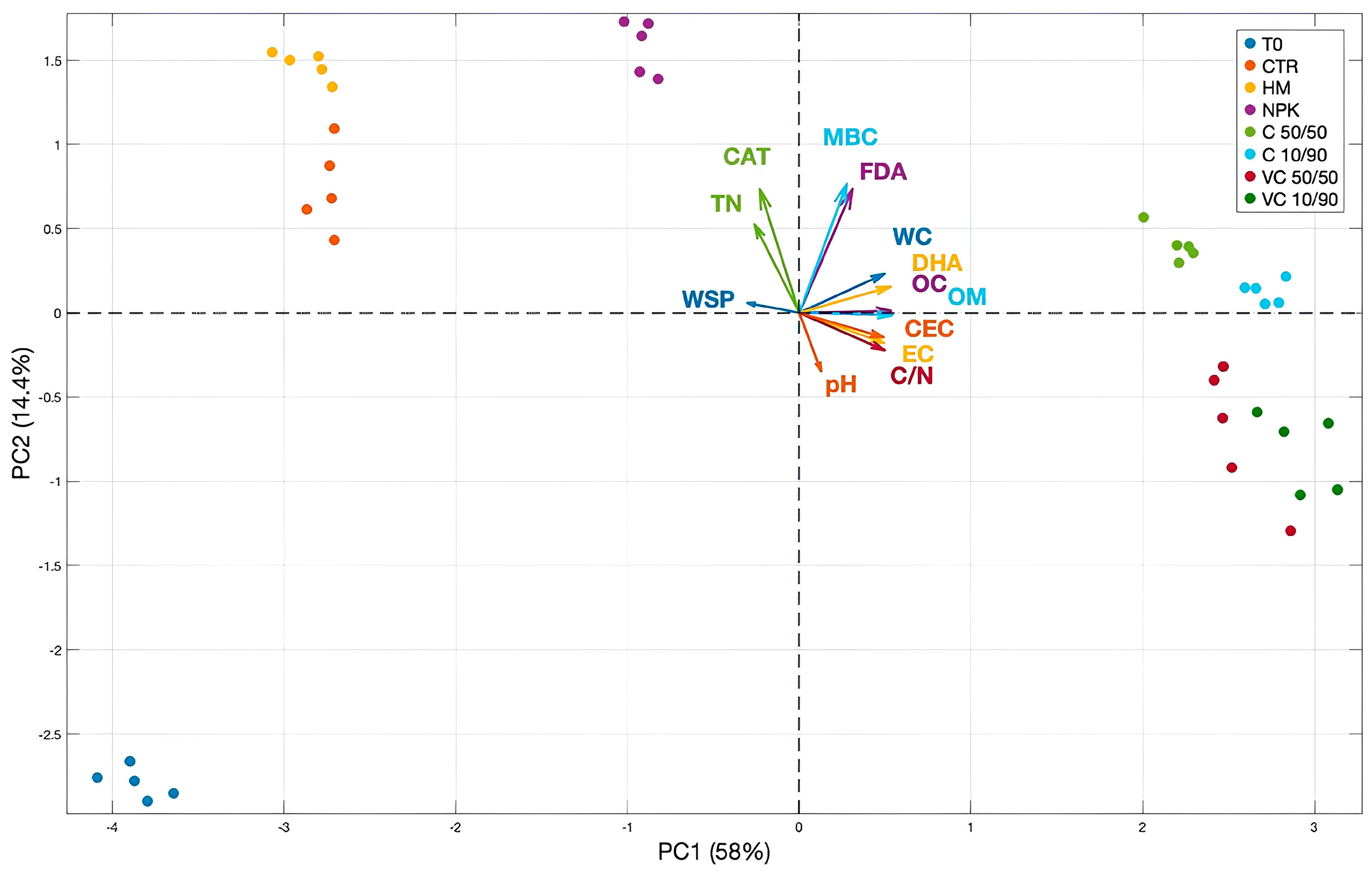
Principal component analysis (PCA; Figure 1) revealed a clear separation of soil parameters according to fertilization treatments. Control (CTR), NPK, and horse manure (HM) were located in the upper left quadrant and were positively associated with total nitrogen (TN) and catalase activity (CAT). Vermicompost treatments (VC 50/50 and VC 10/90) were primarily distributed in the lower right quadrant, showing strong associations with pH, C/N ratio, electrical conductivity (EC), and cation exchange capacity (CEC). Compost treatments (C50/50 and C10/90) clustered in the upper region of the biplot and were closely related to dehydrogenase activity (DHA), microbial biomass carbon (MBC), organic matter (OM), and fluorescein diacetate hydrolase (FDA). The T0 samples were positioned in the lower left quadrant, with negative scores on both principal components, reflecting generally low values across all measured soil parameters.
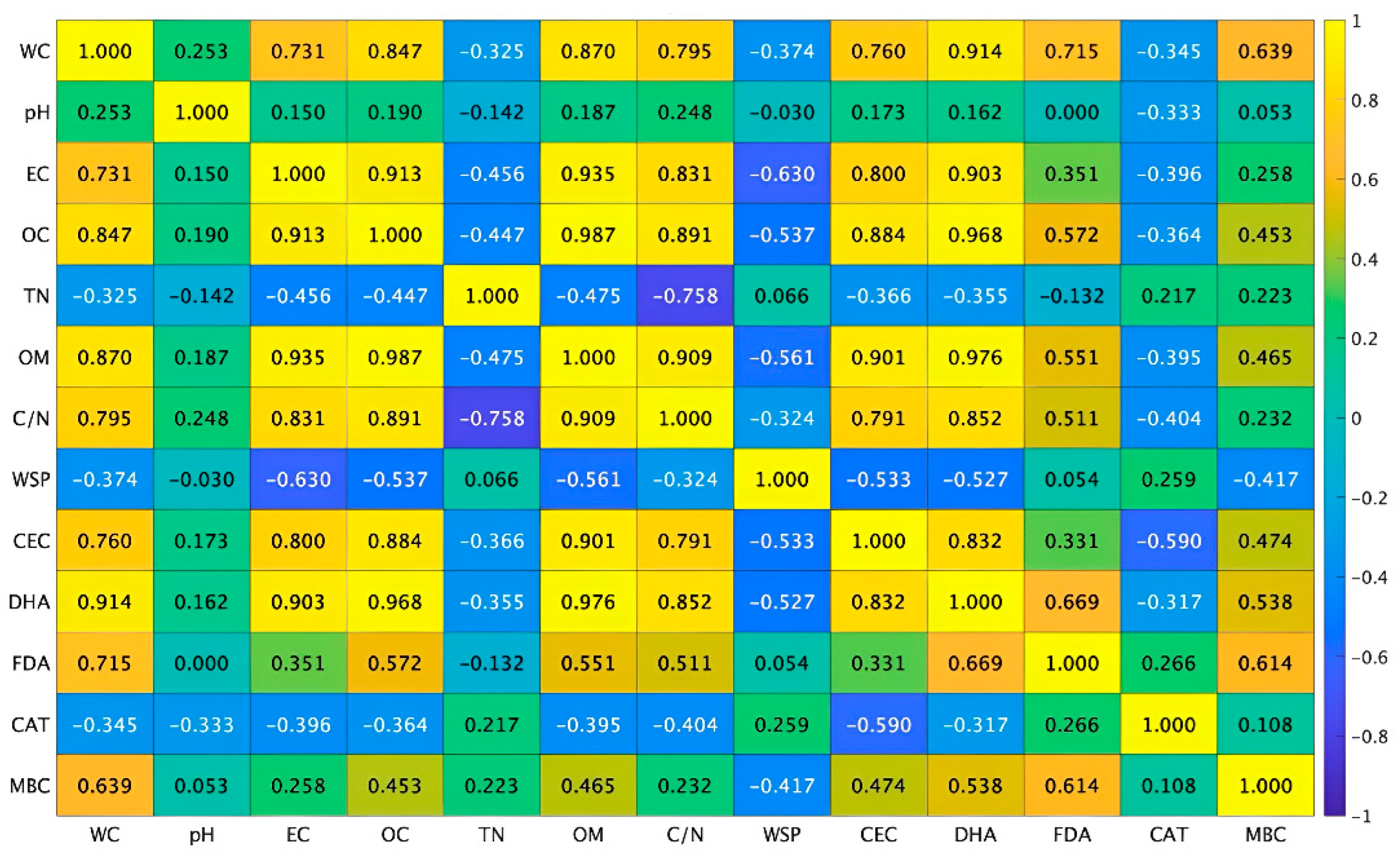
Pearson correlation analysis (Figure 2) revealed significant relationships among the chemical and biological soil parameters. Very strong positive correlations (r > 0.90) were observed between organic carbon (OC) and organic matter (OM) (r = 0.987), OC and dehydrogenase activity (DHA) (r = 0.968), and OM and DHA (r = 0.976). Strong positive correlations were also found between electrical conductivity (EC) and OM (r = 0.935), EC and OC (r = 0.913), and EC and DHA (r = 0.903). Water content (WC) was positively correlated with OC (r = 0.847), OM (r = 0.870), DHA (r = 0.914), and cation exchange capacity (CEC) (r = 0.760). CEC showed strong positive correlations with OM (r = 0.901), OC (r = 0.884), and DHA (r = 0.832). In contrast, total nitrogen (TN) was negatively correlated with most soil parameters, particularly with the C/N ratio (r = −0.758), OM (r = −0.475), and EC (r = −0.456). Catalase activity (CAT) also showed negative correlations with CEC (r = −0.590), OM (r = −0.395), and OC (r = −0.364). Soil pH exhibited weak or negligible correlations with most of the analysed parameters.

3.2. QBS-ar Index

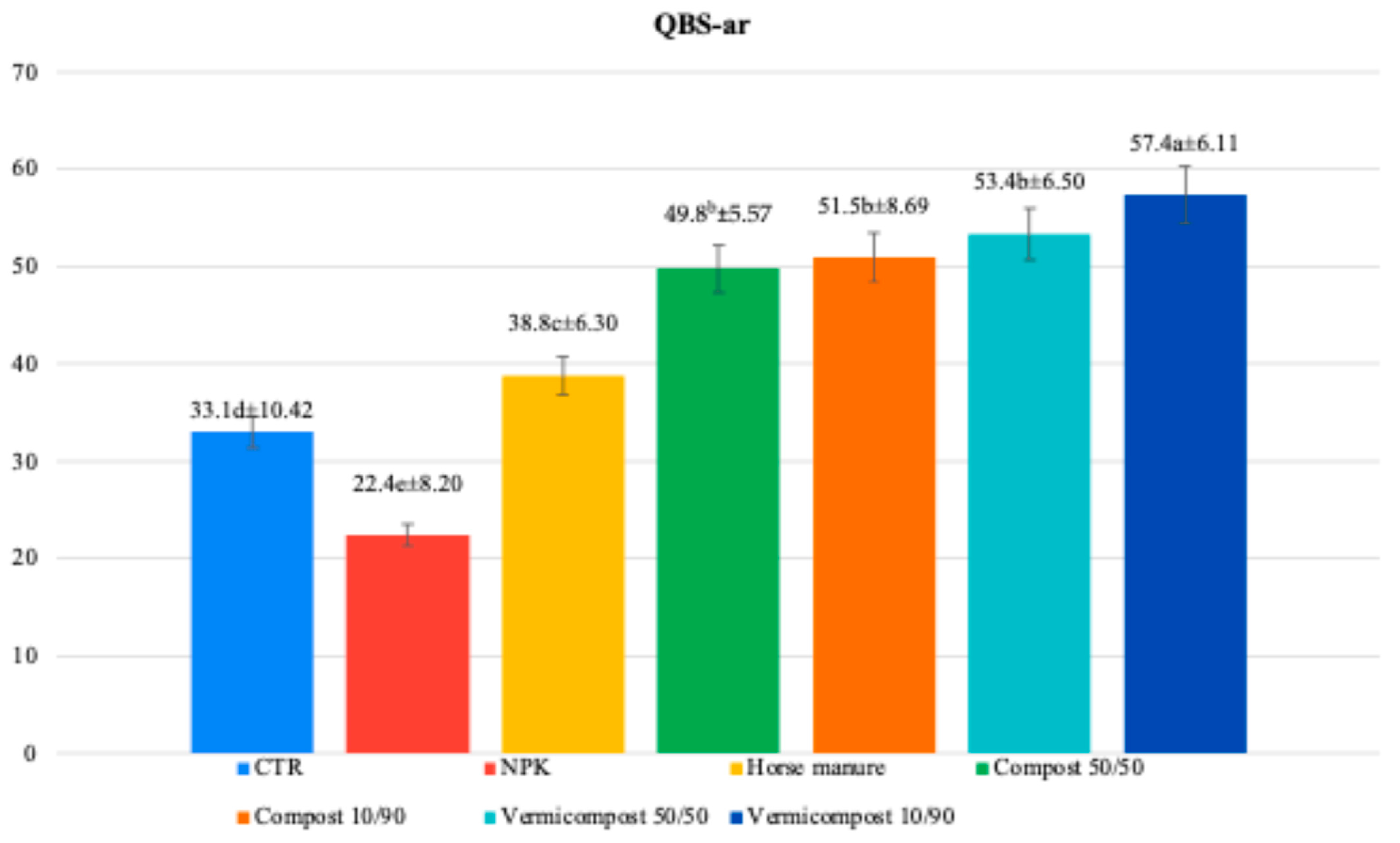
The QBS-ar index showed significant variation among fertilization treatments (Figure 3). Organic waste-derived amendments markedly increased QBS-ar values compared to both the unfertilized control (CTR) and the NPK treatment. Among the treatments, vermicompost 10/90 exhibited the highest QBS-ar values, indicating the strongest enhancement of soil biological quality, followed by both compost treatments (C50/50 and C10/90).
In contrast, soils treated with NPK showed the lowest QBS-ar scores, even lower than the unfertilized control, suggesting a reduced abundance and ecological adaptation of soil microarthropod communities under mineral fertilization. Horse manure showed intermediate values, indicating a moderate improvement in soil biological quality compared to synthetic fertilization but lower effectiveness than compost and vermicompost.
Overall, the QBS-ar index clearly discriminated among fertilization strategies, highlighting the positive effect of organic waste-based amendments on soil faunal biodiversity and biological quality.

3.3. Broccoli Quality

Broccoli grown in soils amended with organic waste-based fertilizers exhibited enhanced nutritional and nutraceutical profiles compared to T0, the unfertilized control (CTR), and NPK treatments (Table 2). The highest total phenolic contents were recorded in plants treated with compost 10/90 (58.62 mg GAE g−1 dw) and vermicompost 10/90 (58.19 mg GAE g−1 dw). Total flavonoid concentrations were significantly higher in all organic amendment treatments compared to T0, CTR, and horse manure (HM), with the greatest values observed under C10/90 and VC10/90. Antioxidant activity, assessed by DPPH, ABTS+, and total antioxidant capacity (TAC) assays, was highest in broccoli treated with vermicomposts, whereas the lowest values were observed in the unfertilized control. Vermicompost 10/90 also resulted in the greatest increase in vitamin content, with vitamin C reaching 54.38 mg ascorbic acid 100 g−1 dw and vitamin E 8.18 mg α-tocopherol 100 g−1 dw, compared to 21.38 and 5.31 mg dw in CTR, and 39.62 and 5.90 mg dw in NPK, respectively. Organic amendments further enhanced primary metabolites, with increased total protein and carbohydrate contents compared to CTR, NPK, and HM. Among all treatments, vermicompost 10/90 showed the strongest effect, yielding the highest concentrations of total protein (93.21 mg BSA g−1 dw) and total carbohydrates (139.08 mg glucose g−1 dw).
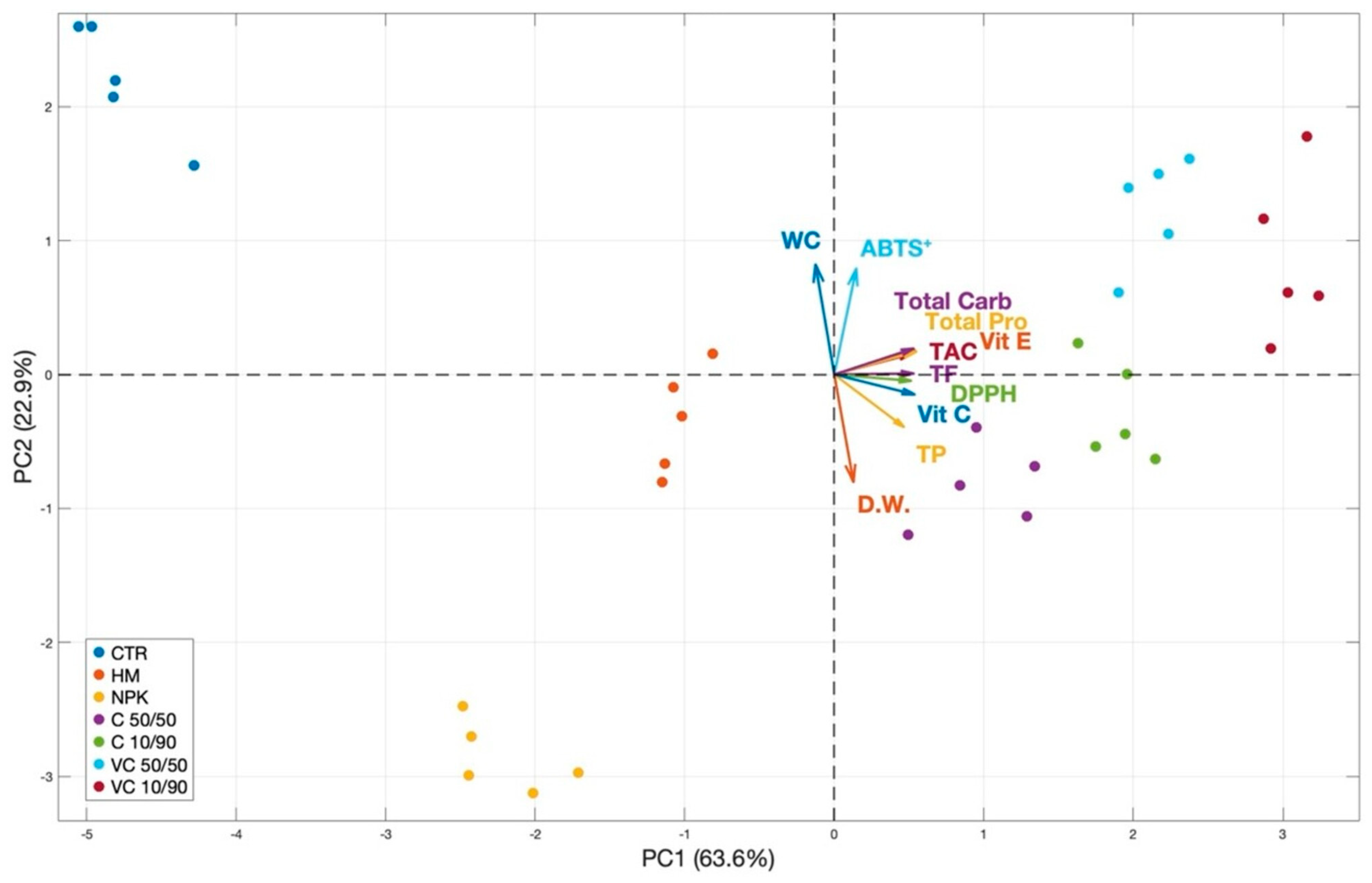
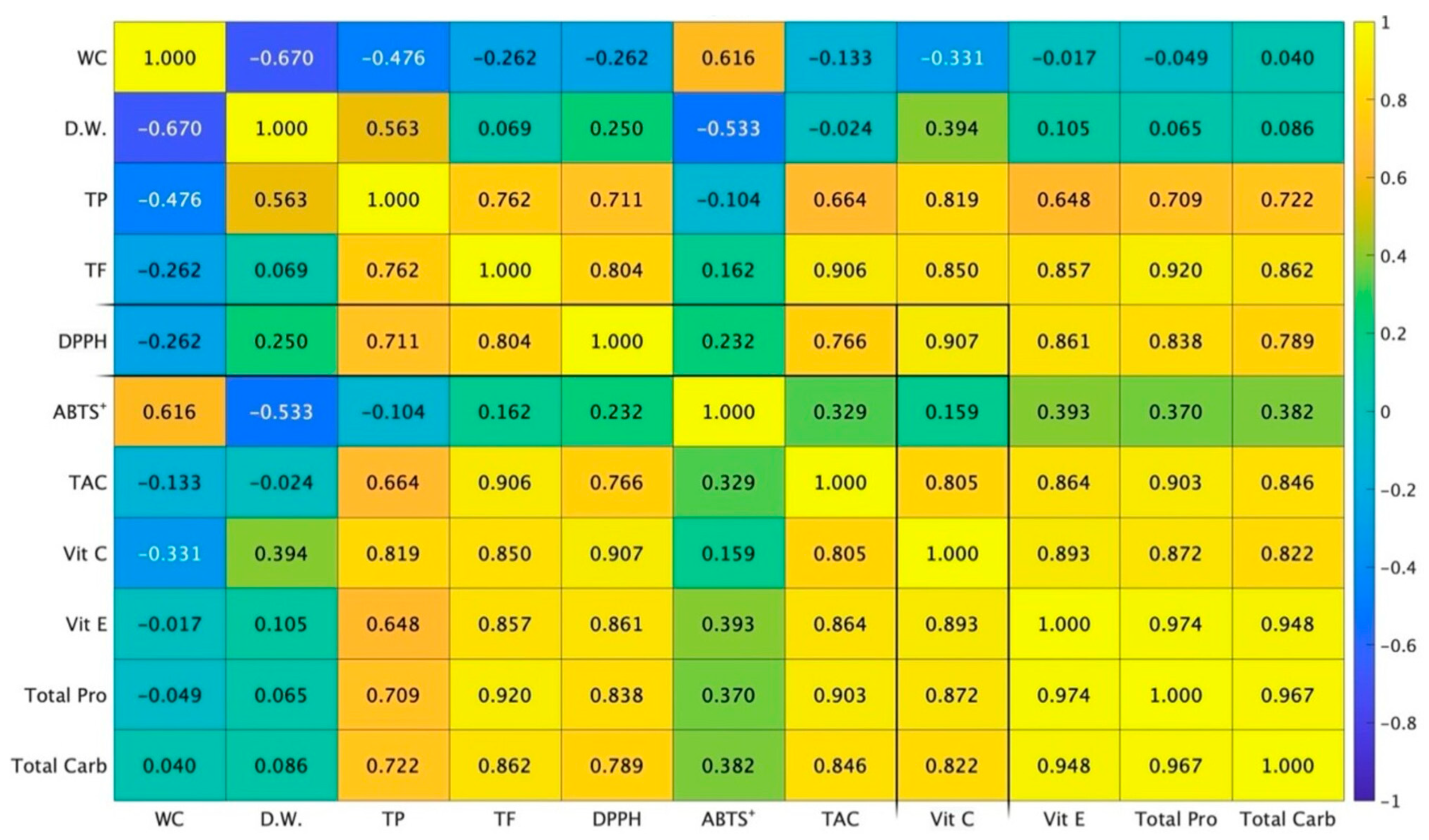
PCA biplot analysis (Figure 4) showed a clear separation of treatments based on broccoli nutritional and nutraceutical traits. The unfertilized control (CTR), NPK, and horse manure (HM) were located in the left quadrant and showed no strong association with the measured quality parameters. CTR was positioned in the upper left quadrant, whereas NPK and HM were located in the lower left quadrant, all characterized by negative scores along PC1. In contrast, vermicompost treatments (VC50/50 and VC10/90) were distributed in the upper right quadrant and were positively associated with total carbohydrates, total proteins, total antioxidant capacity (TAC), ABTS+ activity, and vitamin E, and to a lesser extent with total flavonoids (TF). Compost treatments (C50/50 and C10/90) were mainly located in the lower right quadrant and were positively associated with total phenols (TP), DPPH activity, vitamin C, and dry weight (DW), with a weaker association with TF. Pearson correlation analysis (Figure 5) further highlighted strong relationships among crop quality parameters. Very strong positive correlations (r > 0.90) were observed between vitamin E and total proteins (r = 0.974), vitamin E and total carbohydrates (r = 0.948), and total proteins and total carbohydrates (r = 0.967). Strong positive correlations were also found between TF and total proteins (r = 0.920), TF and TAC (r = 0.906), and DPPH activity and vitamin C (r = 0.907). Antioxidant-related parameters were closely interrelated, with strong correlations between TAC and vitamin E (r = 0.864), TAC and vitamin C (r = 0.805), vitamin C and vitamin E (r = 0.893), and vitamin C and total proteins (r = 0.872). Total phenols showed positive correlations with TF (r = 0.762), DPPH (r = 0.711), vitamin C (r = 0.819), and total carbohydrates (r = 0.722). ABTS+ activity exhibited generally moderate correlations with other variables, with slightly higher associations with vitamin E (r = 0.393) and DPPH (r = 0.232). Water content (WC) was negatively correlated with dry weight (DW) (r = −0.670) and total phenols (r = −0.476), and showed weak negative correlations with most other parameters. Dry weight displayed a moderate positive correlation with total phenols (r = 0.563) and weaker associations with the remaining biochemical traits.

3.4. Multi-Indicator Assessment of Soil Quality

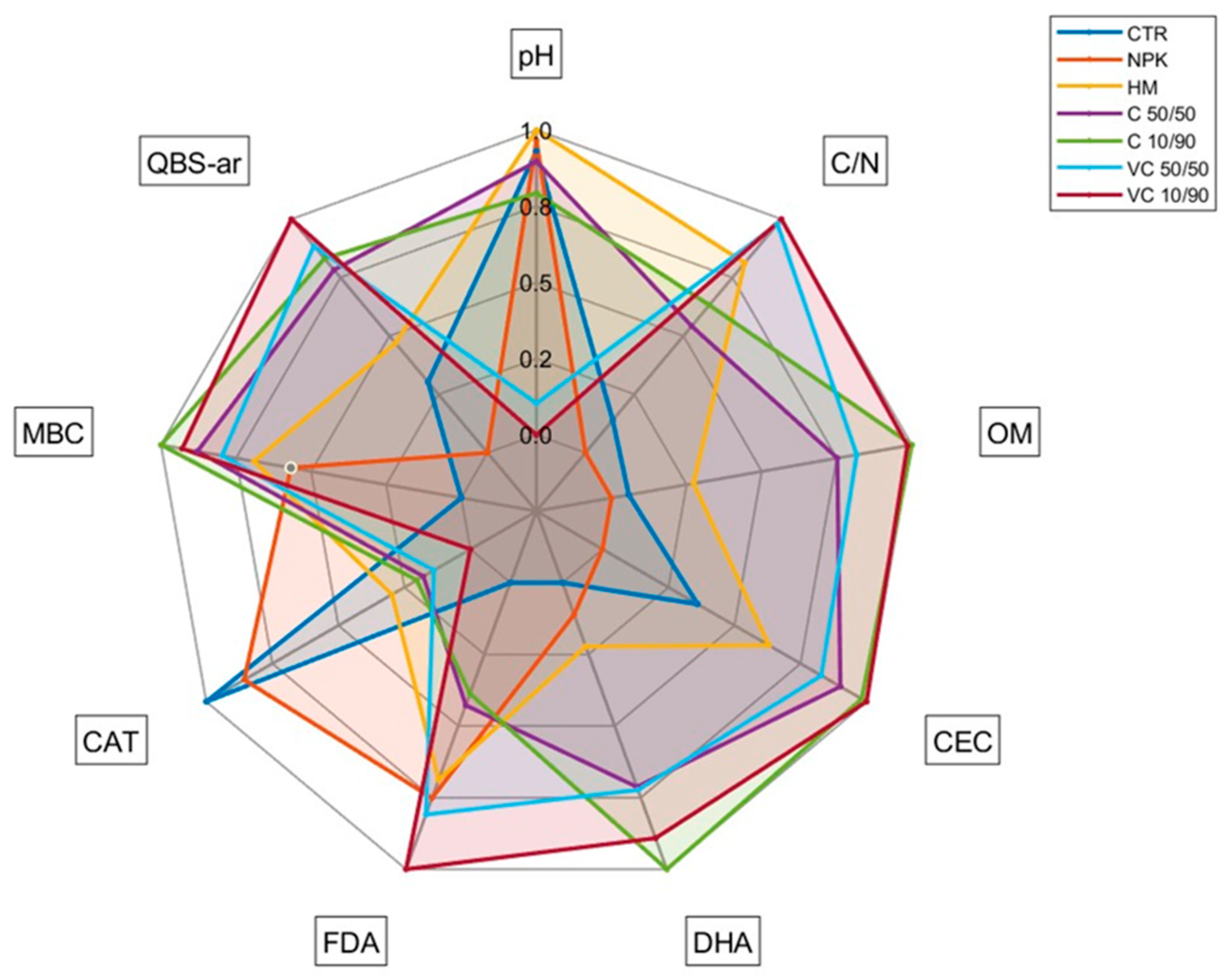
The spider plot (Figure 6) provides an integrated comparison of the relative performance of the main soil quality indicators across treatments. Organic amendments, particularly compost 10/90 and both vermicompost formulations, exhibited the highest normalised values for chemical indicators (CEC, OM, C/N) and biological parameters (DHA, FDA, MBC, QBS-ar), highlighting their strong positive influence on overall soil functionality. In contrast, NPK and the unfertilised control (CTR) showed consistently lower values for most indicators, especially those related to microbial activity and biochemical processes. The multidimensional structure of the plot illustrates that organic waste-based amendments promote a coordinated improvement of both chemical and biological soil properties. Overall, the multi-indicator approach clearly demonstrates the superior effectiveness of organic amendments in enhancing soil quality compared to mineral fertilisation.

4. Discussion

4.1. Effects of Fertilizers on Soil Quality and QBS-ar Index

The results demonstrate that organic waste-derived amendments significantly improved soil quality across chemical, biochemical, and biological dimensions, in agreement with the soil quality framework proposed by Bünemann et al. [9], which emphasizes the integration of multiple indicators to assess soil functionality under different management practices. These findings are consistent with current soil health frameworks emphasizing the integration of multiple indicators to assess soil functionality under different management practices, as recently reported by Li et al. [32].
Organic amendments, particularly vermicompost 10/90, produced the strongest improvements in organic carbon, organic matter, cation exchange capacity (CEC), and C/N ratio, confirming their effectiveness in enhancing soil fertility in Mediterranean systems [8,33]. The increase in CEC reflects enhanced humification and the accumulation of negatively charged functional groups associated with organic inputs [34,35]. The concurrent increase in electrical conductivity (EC) likely reflects greater ion availability following organic matter mineralisation, indicating improved nutrient availability, although potential long-term salinity effects should be considered under repeated applications.
Biochemical and microbiological indicators revealed a strong stimulation of soil metabolic activity. Dehydrogenase activity (DHA), fluorescein diacetate hydrolase (FDA), and microbial biomass carbon (MBC) increased significantly under compost and especially vermicompost treatments, confirming that organic substrates promote microbial growth and enzymatic processes involved in nutrient cycling [7,11]. The strong correlations among OC, OM, DHA, and MBC highlight the central role of organic carbon in regulating microbial activity and soil functionality. PCA results further supported these findings, showing that organic treatments were associated with coordinated improvements in chemical and biological indicators, whereas NPK primarily stimulated microbial activity without enhancing soil organic matter or structural properties.
The QBS-ar index confirmed the positive effects of organic amendments on soil faunal communities. Higher QBS-ar values under compost and vermicompost treatments indicate improved habitat quality and increased microarthropod diversity, consistent with previous studies highlighting the sensitivity of soil fauna to organic matter inputs [36,37,38]. Enhanced microbial and enzymatic activity may also have contributed to the increased QBS-ar values by improving habitat quality and resource availability for soil microarthropods. In contrast, NPK resulted in lower QBS-ar values than the unfertilised control, suggesting potential negative effects of mineral fertilisation on soil biodiversity, likely due to reduced organic matter inputs and altered soil conditions [36].

4.2. Broccoli Quality

Broccoli quality was strongly influenced by fertilisation regime, reflecting the close relationship between soil conditions and crop nutritional composition. Organic amendments, particularly vermicompost 10/90, significantly enhanced both primary metabolites (proteins and carbohydrates) and secondary metabolites (phenolics, flavonoids, vitamins).
The increase in antioxidant compounds suggests that organic fertilisation promotes metabolic pathways involved in secondary metabolite synthesis, likely through improved nutrient balance and enhanced soil biological activity [39,40]. Comparable increases in antioxidant compounds and phenolic content following organic fertilisation have also been reported in vegetable crops grown under sustainable management systems [39,41]. In contrast, NPK fertilisation mainly supported primary metabolism, with limited effects on antioxidant compounds, indicating that mineral inputs alone may not stimulate secondary metabolism to the same extent [41].
PCA confirmed these patterns, showing clear associations between organic treatments and nutraceutical traits, whereas NPK was more closely related to primary metabolic parameters. These results indicate that improvements in soil biological and biochemical properties are directly linked to enhanced crop nutritional quality.

4.3. Multi-Indicator Assessment of Soil Quality

The multi-indicator approach provided a comprehensive assessment of soil functionality, highlighting the importance of integrating chemical, biological, and faunal indicators. This approach aligns with current soil quality assessment frameworks, which emphasize the need for multidimensional evaluation to capture ecosystem responses to management practices [9,32]. The spider plot clearly showed that compost and vermicompost treatments, particularly VC 10/90, promoted a coordinated improvement across chemical, biochemical, microbiological, and faunal soil quality indicators. In contrast, NPK and control treatments exhibited more limited and unbalanced responses, mainly associated with isolated increases in selected parameters rather than a comprehensive enhancement of soil functionality. These findings demonstrate that organic amendments improve not only individual soil properties, but also the functional integration among soil biological, biochemical, and chemical processes, thereby contributing to greater soil resilience and ecosystem stability [9,32].
The effectiveness of the multi-indicator framework was further supported by PCA and correlation analyses, which revealed strong positive relationships among organic carbon accumulation, microbial biomass, enzymatic activities, cation exchange capacity, and QBS-ar values. Similar integrated responses following organic amendment application have recently been reported by Li et al. [32], Huang et al. [35], and Gallese et al. [37], highlighting the importance of combining biological and biochemical indicators for a more realistic assessment of soil ecological functionality.
Overall, the multi-indicator framework proved effective in identifying treatment-specific responses and in capturing the synergistic effects of organic amendments on soil functionality. The combined evaluation of chemical, biochemical, microbiological, and faunal indicators provided a more comprehensive interpretation of soil ecosystem responses under different fertilisation regimes and further supports the use of integrated soil quality assessment approaches for sustainable soil management in Mediterranean agroecosystems [9,32,36,37,38].

5. Conclusions

This study demonstrates that compost and vermicompost derived from organic waste can significantly improve soil functionality and crop quality under Mediterranean agroecosystem conditions. Organic amendments enhanced soil chemical fertility, microbial biomass, enzymatic activity, and soil faunal diversity, confirming the importance of biologically active organic inputs for restoring degraded or low-organic-matter soils. Among the tested treatments, vermicompost 10/90 showed the most consistent and integrated positive effects across chemical, biochemical, microbiological, and faunal indicators, highlighting the importance of substrate composition in determining soil responses.
In contrast, mineral fertilisation (NPK) mainly stimulated selected biochemical processes without producing comparable improvements in soil organic matter accumulation, soil biodiversity, or overall ecological functionality. These findings suggest that mineral fertilisation alone may be insufficient to support long-term soil resilience and biological stability in Mediterranean environments.
The observed improvements in soil quality were closely associated with enhanced broccoli nutritional and nutraceutical traits, including antioxidant compounds, vitamins, proteins, and carbohydrates. This confirms the strong relationship between soil biological functionality and crop nutritional quality and supports the potential role of waste-derived organic amendments in sustainable food production systems.
The multi-indicator approach adopted in this study proved effective for capturing the complexity of soil ecosystem responses and identifying coordinated interactions among chemical, biochemical, microbiological, and faunal processes. The integration of complementary indicators allowed a more comprehensive interpretation of treatment effects compared with the use of single soil parameters alone.
However, the present study was based on short-term observations under site-specific Mediterranean field conditions, and therefore the results should be interpreted within these experimental limitations. Although organic amendments significantly improved several indicators of soil quality, repeated long-term applications may alter soil C:N dynamics, nutrient availability, salinity, and organic matter turnover, potentially influencing long-term soil fertility and crop performance.
Future research should therefore focus on long-term field experiments aimed at evaluating the agronomic stability, environmental sustainability, and ecological impacts of repeated compost and vermicompost applications under different pedoclimatic conditions. Additional studies investigating the mechanistic relationships among organic matter composition, microbial processes, soil biodiversity, and crop metabolic responses would further improve the understanding of how waste-derived amendments regulate soil functionality and agricultural sustainability.

Author Contributions

Conceptualization, A.M. (Adele Muscolo), M.O. and L.S.; methodology, F.M.; A.M. (Angela Maffia); software, L.S.; validation, A.M. (Adele Muscolo), and C.M.; formal analysis, F.M. and A.M. (Angela Maffia); investigation, S.B. data curation, F.M. and A.M. (Angela Maffia); writing—original draft preparation, M.O. and L.S.; writing—review and editing, A.M. and E.A.; visualization, M.O., L.S.; project administration, A.M. (Adele Muscolo); funding acquisition, A.M. (Adele Muscolo). All authors have read and agreed to the published version of the manuscript.

Funding

This work was supported by the Agritech National Research Center and received funding from the European Union Next-Generation EU (PIANO NAZIONALE DI RIPRESA E RESILI-ENZA (PNRR)—MISSIONE 4 COMPONENTE 2, INVESTIMENTO 1.4—D.D. 1032 17 June 2022, CN00000022).

Data Availability Statement

The original contributions presented in this study are included in the article. Further inquiries can be directed to the corresponding author.

Conflicts of Interest

The authors declare no conflicts of interest.

References

  1. Telo Da Gama, J. The Role of Soils in Sustainability, Climate Change, and Ecosystem Services: Challenges and Opportunities. Ecologies 2023, 4, 552–567. [Google Scholar] [CrossRef]
  2. Nguyen, T.P.L.; Virdis, S.G.P. Climate Variability and Future Responses of Agricultural Systems in Mediterranean Region. Farming Syst. 2025, 3, 100153. [Google Scholar] [CrossRef]
  3. Wu, H.; Cheng, X.; Zhou, Y.; Zhou, G.; Zhang, H.; Fang, X.; Shi, Y. Feedbacks between Vegetation and Soil in Global Forest Degradation: A Meta-Analysis. Ecol. Indic. 2026, 185, 114738. [Google Scholar] [CrossRef]
  4. Elshaikh, A.; Mabrouki, J. Impact of Agricultural Soil Degradation on Water and Food Security. In Artificial Intelligence Systems in Environmental Engineering; CRC Press: Boca Raton, FL, USA, 2024; pp. 13–24. [Google Scholar]
  5. Miransari, M. (Ed.) Soil Nutrients; Environmental Health—Physical, Chemical and Biological Factors; Nova Science Pub Inc.: New York, NY, USA, 2012. [Google Scholar]
  6. Muscolo, A.; Marra, F.; Canino, F.; Maffia, A.; Mallamaci, C.; Russo, M. Growth, Nutritional Quality and Antioxidant Capacity of Lettuce Grown on Two Different Soils with Sulphur-Based Fertilizer, Organic and Chemical Fertilizers. Sci. Hortic. 2022, 305, 111421. [Google Scholar] [CrossRef]
  7. Wang, F.; Zhang, Y.; Su, Y.; Wu, D.; Xie, B. Pollutant Control and Nutrient Recovery of Organic Solid Waste by Earthworms: Mechanism and Agricultural Benefits of Vermicomposting. J. Environ. Chem. Eng. 2024, 12, 112610. [Google Scholar] [CrossRef]
  8. Gerke, J. The Central Role of Soil Organic Matter in Soil Fertility and Carbon Storage. Soil Syst. 2022, 6, 33. [Google Scholar] [CrossRef]
  9. Bünemann, E.K.; Bongiorno, G.; Bai, Z.; Creamer, R.E.; De Deyn, G.; De Goede, R.; Fleskens, L.; Geissen, V.; Kuyper, T.W.; Mäder, P.; et al. Soil Quality—A Critical Review. Soil Biol. Biochem. 2018, 120, 105–125. [Google Scholar] [CrossRef]
  10. Chaudhry, H.; Vasava, H.B.; Chen, S.; Saurette, D.; Beri, A.; Gillespie, A.; Biswas, A. Evaluating the Soil Quality Index Using Three Methods to Assess Soil Fertility. Sensors 2024, 24, 864. [Google Scholar] [CrossRef] [PubMed]
  11. Semenov, M.V.; Zhelezova, A.D.; Ksenofontova, N.A.; Ivanova, E.A.; Nikitin, D.A.; Semenov, V.M. Microbiological Indicators for Assessing the Effects of Agricultural Practices on Soil Health: A Review. Agronomy 2025, 15, 335. [Google Scholar] [CrossRef]
  12. FAO. Agricultural Biodiversity: FAO Multifunctional Character of Agriculture and Land; FAO: Rome, Italy, 1999. [Google Scholar]
  13. AOAC. Official Methods of Analysis, 18th ed.; Association of Official Analytical: Rockville, MD, USA, 2005. [Google Scholar]
  14. Bouyoucos, G.J. Hydrometer Method Improved for Making Particle Size Analyses of Soils1. Agron. J. 1962, 54, 464–465. [Google Scholar] [CrossRef]
  15. Mehlich, A. Rapid Determination of Cation and Anion Exchange Properties and pHe of Soils. J. Assoc. Off. Agric. Chem. 1953, 36, 445–457. [Google Scholar] [CrossRef][Green Version]
  16. Box, J.D. Investigation of the Folin-Ciocalteau Phenol Reagent for the Determination of Polyphenolic Substances in Natural Waters. Water Res. 1983, 17, 511–525. [Google Scholar] [CrossRef]
  17. von Mersi, W.; Schinner, F. An Improved and Accurate Method for Determining the Dehydrogenase Activity of Soils with Iodonitrotetrazolium Chloride. Biol. Fertil. Soils 1991, 11, 216–220. [Google Scholar] [CrossRef]
  18. Beck, T. Die Messung Der Katalaseaktivität von Böden. Z. Für Pflanzenernähr. Bodenkd. 1971, 130, 68–81. [Google Scholar] [CrossRef]
  19. Dick, R.P.; Breakwell, D.P.; Turco, R.F. Soil Enzyme Activities and Biodiversity Measurements as Integrative Microbiological Indicators. In Methods for Assessing Soil Quality; John Wiley & Sons, Ltd.: Hoboken, NJ, USA, 1997; pp. 247–271. [Google Scholar]
  20. Vance, E.D.; Brookes, P.C.; Jenkinson, D.S. An Extraction Method for Measuring Soil Microbial Biomass C. Soil Biol. Biochem. 1987, 19, 703–707. [Google Scholar] [CrossRef]
  21. Walkley, A.; Black, I. An Examination of the Degtjareff Method for Determining Soil Organic Matter and a Proposed Modification of the Chromic Acid Titration Method. Soil Sci. 1934, 37, 29–38. [Google Scholar] [CrossRef]
  22. Bano, R.; Roy, S. Extraction of Soil Microarthropods: A Low Cost Berlese- Tullgren Funnels Extractor. Int. J. Fauna Biol. Stud. 2016, 2, 14–17. [Google Scholar]
  23. Angelini, P.; Fenoglio, S.; Isaia, M.; Jacomini, C.; Migliorini, M.; Morisi, A. Biomonitoraggio. In Tecniche di Biomonitoraggio del Suolo; ARPA Piemonte: Turin, Italy, 2002. [Google Scholar]
  24. Velioglu, Y.S.; Mazza, G.; Gao, L.; Oomah, B.D. Antioxidant Activity and Total Phenolics in Selected Fruits, Vegetables, and Grain Products. J. Agric. Food Chem. 1998, 46, 4113–4117. [Google Scholar] [CrossRef]
  25. Djeridane, A.; Yousfi, M.; Nadjemi, B.; Boutassouna, D.; Stocker, P.; Vidal, N. Antioxidant Activity of Some Algerian Medicinal Plants Extracts Containing Phenolic Compounds. Food Chem. 2006, 97, 654–660. [Google Scholar] [CrossRef]
  26. Re, R.; Pellegrini, N.; Proteggente, A.; Pannala, A.; Yang, M.; Rice-Evans, C. Antioxidant Activity Applying an Improved ABTS Radical Cation Decolorization Assay. Free Radic. Biol. Med. 1999, 26, 1231–1237. [Google Scholar] [CrossRef]
  27. Barreca, D.; Bellocco, E.; Caristi, C.; Leuzzi, U.; Gattuso, G. Flavonoid Composition and Antioxidant Activity of Juices from Chinotto (Citrus × Myrtifolia Raf.) Fruits at Different Ripening Stages. J. Agric. Food Chem. 2010, 58, 3031–3036. [Google Scholar] [CrossRef]
  28. Prieto, P.; Pineda, M.; Aguilar, M. Spectrophotometric Quantitation of Antioxidant Capacity through the Formation of a Phosphomolybdenum Complex: Specific Application to the Determination of Vitamin E. Anal. Biochem. 1999, 269, 337–341. [Google Scholar] [CrossRef]
  29. Davies, S.H.R.; Masten, S.J. Spectrophotometric Method for Ascorbic Acid Using Dichlorophenolindophenol: Elimination of the Interference Due to Iron. Anal. Chim. Acta 1991, 248, 225–227. [Google Scholar] [CrossRef]
  30. Kruger, N.J. The Bradford Method For Protein Quantitation. In The Protein Protocols Handbook; Walker, J.M., Ed.; Humana Press: Totowa, NJ, USA, 2009; pp. 17–24. [Google Scholar]
  31. Hedge, J.E.; Hofreiter, B.T.; Whistler, R.L. Carbohydrate Chemistry; Academic Press: New York, NY, USA, 1962; Volume 17, pp. 71–80. [Google Scholar]
  32. Li, Y.; Zhao, H.; Liu, J.; Chaonan, C.; Yuxuan, G. A Framework for Selecting and Assessing Soil Quality Indicators for Sustainable Soil Management in Waste Dumps. Sci. Rep. 2024, 14, 8491. [Google Scholar] [CrossRef]
  33. Sharma, S.; Lishika, B.; Shubham; Kaushal, S. Soil Quality Indicators: A Comprehensive Review. Int. J. Plant Soil Sci. 2023, 35, 315–325. [Google Scholar] [CrossRef]
  34. Mahajan, N.C.; Mrunalini, K.; Prasad, K.S.K.; Naresh, R.K.; Sirisha, L. Soil Quality Indicators, Building Soil Organic Matter and Microbial Derived Inputs to Soil Organic Matter under Conservation Agriculture Ecosystem: A Review. Int. J. Curr. Microbiol. Appl. Sci. 2019, 8, 1859–1879. [Google Scholar] [CrossRef]
  35. Huang, R.; Li, W.; Niu, M.; Hu, B. Organic Farming to Improve Soil Quality and the Functional Structure of Soil Microbial Communities. Agriculture 2025, 15, 1381. [Google Scholar] [CrossRef]
  36. Menta, C.; Remelli, S. Soil Health and Arthropods: From Complex System to Worthwhile Investigation. Insects 2020, 11, 54. [Google Scholar] [CrossRef]
  37. Gallese, F.; Gismero-Rodriguez, L.; Govednik, A.; Giagnoni, L.; Lumini, E.; Suhadolc, M.; Vaccari, F.P.; Maienza, A. Soil microarthropods as tools for monitoring soil quality: The QBS-AR Index in three European agroecosystems. Agriculture 2025, 15, 89. [Google Scholar] [CrossRef]
  38. Remelli, S.; Menta, C. Soil biological quality across land-use gradients: An arthropod-based index from a comprehensive literature review. Agric. Ecosyst. Environ. 2026, 404, 110375. [Google Scholar] [CrossRef]
  39. González-Coria, J.; Lozano-Castellón, J.; Jaime-Rodríguez, C.; Olmo-Cunillera, A.; Laveriano-Santos, E.P.; Pérez, M.; Lamuela-Raventós, R.M.; Puig, J.; Vallverdú-Queralt, A.; Romanyà, J. The Effects of Differentiated Organic Fertilization on Tomato Production and Phenolic Content in Traditional and High-Yielding Varieties. Antioxidants 2022, 11, 2127. [Google Scholar] [CrossRef]
  40. Sindesi, O.; Mashece, W.; Silwana, S.; Sigidi, M. The Role of Nitrogen Fertilisation in Enhancing Growth, Yield, and Secondary Metabolite Production in Medicinal Plants: A Review. DOAJ 2025, 134, 183–199. [Google Scholar]
  41. Antonious, G. The Impact of Organic, Inorganic Fertilizers, and Biochar on Phytochemicals Content of Three Brassicaceae Vegetables. Appl. Sci. 2023, 13, 8801. [Google Scholar] [CrossRef]
Figure 1. Principal component analysis (PCA) analysis of the chemical and physical properties of the different treatments. T0 = before the application of any treatment; CTR (control) = soil without fertilize; NPK = nitrogen–phosphorous–potassium; HM = horse manure; C 50/50 = compost with 50% wood sawdust + 50% wet waste; C 10/90 = compost with 10% wood sawdust + 90% wet waste; VC 50/50 = vermicompost with 50% wood sawdust + 50% wet waste and VC 10/90 = vermicompost with 10% wood sawdust + 90% wet waste. WC = water content; pH; EC = electric conductivity; OC = organic carbon; TN = total nitrogen; OM = organic matter; C/N = carbon nitrogen ratio; WSP = water-soluble phenols; CEC = cation exchange capacity; DHA = dehydrogenase; FDA = fluorescein diacetate hydrolase; CAT = catalase; MBC = microbial biomass carbon.
Environments 13 00315 g001
Figure 2. Pearson correlation matrix illustrating the relationships among biochemical, chemical, and physical soil parameters. Correlation coefficients range from −1 (strong negative correlation, in dark blue) to +1 (strong positive correlation, in yellow), as shown by the color scale on the right. WC = water content; pH = potential of hydrogen; EC = electrical conductivity; OC = organic carbon; TN = total nitrogen; OM = organic matter; C/N = carbon–nitrogen ratio; WSP = water-soluble phenols; CEC = cation exchange capacity; DHA = dehydrogenase activity; FDA = fluorescein diacetate hydrolase; CAT = catalase; MBC = microbial biomass carbon.
Environments 13 00315 g002
Figure 3. The QBS-ar index. CTR (control) = unfertilized soil; NPK = nitrogen–phosphorous–potassium; HM = horse manure; C 50/50 = compost with 50% wood sawdust + 50% wet waste; C 10/90 = compost with 10% wood sawdust + 90% wet waste; VC 50/50 = vermicompost with 50% wood sawdust + 50% wet waste and VC 10/90 = vermicompost with10% wood sawdust + 90% wet waste. Data are the means of five replicates ± standard deviation. Different letters in the same row indicate significant differences (Turkey’s test p ≤ 0.05).
Environments 13 00315 g003
Figure 4. Principal component analysis (PCA) analysis of the chemical and physical properties of the different treatment: CTR (control) = soil without fertilize; HM = horse manure; NPK = nitrogen–phosphorous–potassium; C 50/50 = compost with 50% wood sawdust + 50% wet waste; C 10/90 = compost with 10% wood sawdust + 90% wet waste; VC 50/50 = vermicompost with 50% wood sawdust + 50% wet waste and VC 10/90 = vermicompost with10% wood sawdust + 90% wet waste. WC = water content; D.W. = dry weight; Total Carb = total carbohydrates; Total Pro = total proteins; TP = total phenols; TAC = total antioxidant capacity; ABTS+ = 2,2′-azino-bis-3-etilbenzotiazolin-6-solfonato; DPPH = 2,2-difenil-1-picrilidrazile; Vit C = vitamin C; Vit E = vitamin E; TF = total flavonoids.
Environments 13 00315 g004
Figure 5. Pearson correlation matrix illustrating the relationships among nutritional and antioxidant parameters of the crop. Correlation coefficients range from −1 (strong negative correlation, in dark blue) to +1 (strong positive correlation, in yellow), as indicated by the color scale on the right. The evaluated variables include: WC = water content; D.W. = dry weight; TP = total phenols; TF = total flavonoids; DPPH = 2,2-difenil-1-picrilidrazile; ABTS+ = 2,2′-azino-bis-3-etilbenzotiazolin-6-solfonato; TAC = total antioxidant capacity; Vit C = vitamin C; Vit E = vitamin E; Total Pro = total proteins; Total Carb = total carbohydrates.
Environments 13 00315 g005
Figure 6. Spider plot illustrating the multi-indicator assessment of soil quality under different fertilization regimes. Normalised values (0–1 scale) are reported for the following soil quality indicators: pH; C/N = carbon-to-nitrogen ratio; OM = organic matter; CEC = cation exchange capacity; DHA = dehydrogenase activity; FDA = fluorescein diacetate hydrolase activity; CAT = catalase activity; MBC = microbial biomass carbon; QBS-ar = soil biological quality index. The treatments include: NPK = nitrogen–phosphorous–potassium; HM = horse manure; C 50/50 = compost with 50% wood sawdust + 50% wet waste; C 10/90 = compost with 10% wood sawdust + 90% wet waste; VC 50/50 = vermicompost with 50% wood sawdust + 50% wet waste; VC 10/90 = vermicompost with 10% wood sawdust + 90% wet waste along with an unfertilized control CTR (control) = soil without fertilizers.
Environments 13 00315 g006
Table 1. Chemical and biochemical properties of soils before the application of any treatment T0 and at the broccoli harvest (six months after the treatments). Six fertilization treatments were tested: NPK = nitrogen–phosphorous–potassium; HM = horse manure; C 50/50 = compost with 50% wood sawdust + 50% wet waste; C 10/90 = compost with 10% wood sawdust + 90% wet waste; VC 50/50 = vermicompost with 50% wood sawdust + 50% wet waste; VC 10/90 = vermicompost with 10% wood sawdust + 90% wet waste along with an unfertilized control CTR (control) = soil without fertilizers.
T0CTRHMNPKC 50/50C 10/90VC 50/50VC 10/90
WC18.2 d ± 0.819.4 d ± 0.921.3 c ± 1.124.1 b ± 1.225.9 a ± 1.325.1 a ± 1.226.8 a ± 1.426.2 a ± 1.3
pH8.5 a ± 0.28.3 a ± 1.88.1 a ± 2.18.3 a ± 2.48.4 a ± 2.68.3 a ± 1.48.2 a ± 3.28.1 a ± 0.9
EC307.3 d ± 12.1329 d ± 14.2304 d ± 13.8291 d ± 12.9535 c ± 18.4732 a ± 21.3561 c ± 19.2611 b ± 20.1
OC1.37 d ± 0.081.77 c ± 0.091.61 c ± 0.082.09 b ± 0.112.91 a ± 0.143.25 a ± 0.163.01 a ± 0.153.28 a ± 0.16
TN0.19 b ± 0.010.18 b ± 0.010.21 a ± 0.020.23 a ± 0.020.18 b ± 0.010.21 a ± 0.020.14 c ± 0.010.15 c ± 0.01
OM2.36 d ± 0.123.05 c ± 0.142.78 c ± 0.133.60 b ± 0.165.02 a ± 0.215.60 a ± 0.235.19 a ± 0.225.65 a ± 0.24
C/N7.21 d ± 0.349.83 c ± 0.427.67 d ± 0.369.09 c ± 0.4116.17 b ± 0.6815.48 b ± 0.6521.50 a ± 0.8921.87 a ± 0.91
WSP276.1 a ± 11.8286 a ± 12.4318 a ± 13.9310 a ± 13.6142 c ± 7.2176 b ± 8.8289 a ± 12.6277 a ± 12.1
CEC16.1 b ± 0.715.9 b ± 0.712.5 c ± 0.620.3 a ± 0.921.6 a ± 0.922.8 a ± 1.021.2 a ± 0.923.1 a ± 1.0
DHA15.11 d ± 0.8219.76 c ± 1.0523.12 b ± 1.2125.43 b ± 1.3233.14 a ± 1.6737.07 a ± 1.8433.11 a ± 1.6636.14 a ± 1.79
FDA2.15 b ± 0.144.54 a ± 0.265.63 a ± 0.315.39 a ± 0.304.98 a ± 0.284.89 a ± 0.275.54 a ± 0.315.87 a ± 0.33
CAT1.26 e ± 0.083.76 a ± 0.213.17 b ± 0.182.06 c ± 0.131.98 c ± 0.121.96 c ± 0.121.84 c ± 0.111.56 d ± 0.10
MBC376.1 b ± 18.2434.17 a ± 20.8432.47 a ± 20.7494.98 a ± 23.1495.39 a ± 23.2462.98 a ± 21.9454.29 a ± 21.6424.11 a ± 20.4
WC = water content (%); pH; EC = electric conductivity (dS/m); OC = organic carbon (%); TN = total nitrogen (%); OM = organic matter (%); C/N = carbon nitrogen ratio; WSP = water-soluble phenols (µg TAEg−1ds); CEC = cation exchange capacity (cmol (+) Kg−1 d.s.); DHA = dehydrogenase (µg TTFg−1 h−1 d.s.); FDA = fluorescein diacetate hydrolase (µg fluoresceing−1 d.s.); CAT = catalase (O2%/3 min/g); MBC = microbial biomass carbon (µgC g−1 f.s.). Data are the means of five replicates ± standard deviation. Different letters in the same row indicate significant differences (Turkey’s test p ≤ 0.05).
Table 2. Analysis of broccoli grown in soil differently treated: NPK = nitrogen–phosphorous–potassium; HM = horse manure; C 50/50 = compost with 50% wood sawdust + 50% wet waste; C 10/90 = compost with 10% wood sawdust + 90% wet waste; VC 50/50 = vermicompost with 50% wood sawdust + 50% wet waste; VC 10/90 = vermicompost with 10% wood sawdust + 90% wet waste along with an unfertilized control CTR (control) = soil without fertilizers.
CTRNPKHMC 50/50C 10/90VC 50/50VC 10/90
WC86.4 a ± 0.384.7 a ± 0.485.3 a ± 0.285.2 a ± 0.385.6 a ± 0.386.0 a ± 0.285.6 a ± 0.2
DW13.6 a ± 0.215.3 a ± 0.314.7 a ± 0.214.8 a ± 0.214.4 a ± 0.214.0 a ± 0.314.4 a ± 0.3
TP53.12 c ± 0.4856.72 a ± 0.5256.10 b ± 0.4556.81 a ± 0.5158.62 a ± 0.4656.43 b ± 0.4758.19 a ± 0.44
TF4.97 d ± 0.085.29 c ± 0.095.98 b ± 0.076.33 ab ± 0.086.41 a ± 0.066.32 ab ± 0.076.35 a ± 0.06
DPPH22.61 c ± 0.1423.35 b ± 0.1223.42 b ± 0.1123.57 b ± 0.1423.71 b ± 0.1124.10 a ± 0.0924.02 a ± 0.10
ABTS+33.47 b ± 0.1832.79 b ± 0.1733.39 b ± 0.0933.02 b ± 0.1633.4 b ± 0.0933.68 a ± 0.1433.88 a ± 0.21
TAC1.49 c ± 0.031.52 c ± 0.031.68 b ± 0.041.75 b ± 0.031.72 b ± 0.031.84 a ± 0.021.82 a ± 0.02
Vit C21.38 g ± 0.4239.62 f ± 0.5541.05 e ± 0.4843.74 d ± 0.4647.53 c ± 0.4952.58 b ± 0.5154.38 a ± 0.52
Vit E5.31 d ± 0.095.90 c ± 0.106.09 c ± 0.097.26 b ± 0.087.36 b ± 0.078.21 a ± 0.098.18 a ± 0.08
Tot Pro79.29 e ± 0.8580.46 e ± 0.8183.21 d ± 0.7789.10 c ± 0.7390.12 b ± 0.3091.34 a ± 0.9193.21 a ± 0.97
Tot Carb119.15 d ± 1.02121.09 d ± 0.95121.52 d ± 0.91131.36 c ± 0.88136.39 b ± 0.86135.06 b ± 0.84139.08 a ± 0.81
WC = water content (%); DW = dry weight (%); TP = total phenols (mg GAE g−1 dw); TF = total flavonoids (mg QE g−1); DPPH = 2,2-difenil-1-picrilidrazile (inhibition %); ABTS+ = 2,2′-azino-bis-3-etilbenzotiazolin-6-solfonato (µM Trolox g−1 dw); TAC = total antioxidant capacity (mg α-tocopherol 100g−1 dw); Vit C = Vitamin C (mg ascorbic acid 100g−1 dw); Vit E = Vitamin E (mg α-tocopherol 100g−1 dw); Total Pro = Tot Protein (mg BSA g−1 dw); Tot Carb = Total Carbohydrates (mg Glucose g−1 dw). Data are the means of five replicates ± standard deviation. Different letters in the same row indicate significant differences (Turkey’s test p ≤ 0.05).
Disclaimer/Publisher’s Note: The statements, opinions and data contained in all publications are solely those of the individual author(s) and contributor(s) and not of MDPI and/or the editor(s). MDPI and/or the editor(s) disclaim responsibility for any injury to people or property resulting from any ideas, methods, instructions or products referred to in the content.