
Article

Water Resilience of Aldina heterophylla (Fabaceae): An Endemic Tree from Amazonian White-Sand Forests Under Drought and Waterlogging Stress

by
Sthefanie Gomes Paes
1,
Layon Oreste Demarchi
1,
Aline Lopes
1,2,3,*,
Lilian Cristine Camillo
2,
Marcos Melo Corrêa
4,
Maria Gracimar Pacheco de Araujo
4,
Cristiane da Silva Ferreira
5 and
Maria Teresa Fernandez Piedade
1
1
Ecology, Monitoring and Sustainable Use of Wetlands Group, National Institute for Amazonian Research (INPA), Manaus 69080-971, Brazil
2
Graduate Program in Clean Technologies, Cesumar University (UniCesumar), Maringá 87050-390, Brazil
3
Cesumar Institute of Science, Technology and Innovation (ICETI), Cesumar University (UniCesumar), Maringá 87050-390, Brazil
4
Plant Anatomy Laboratory (LAV), Federal University of Amazonas (UFAM), Manaus 69080-900, Brazil
5
Department of Botany, Plant Physiology and Stress Laboratory, Institute of Biological Sciences, University of Brasília (UnB), Darcy Ribeiro Campus, Brasília 70910-900, Brazil
*
Author to whom correspondence should be addressed.
Environments 2026, 13(6), 295; https://doi.org/10.3390/environments13060295
Submission received: 26 April 2026 / Revised: 20 May 2026 / Accepted: 22 May 2026 / Published: 27 May 2026

Abstract

Amazonian white-sand forests (campinarana) are highly specialized ecosystems characterized by nutrient-poor sandy soils and pronounced seasonal variation in water availability. Plant species inhabiting these environments are exposed to alternating periods of water deficit and soil saturation, which may strongly constrain recruitment and early establishment. Aldina heterophylla is an endemic tree species specialist in these habitats. This study evaluated seed germination, biomass allocation, anatomical traits, and early seedling responses of A. heterophylla under contrasting water regimes: control, partial flooding, and drought. Seedling performance was assessed after 50 and 100 days of treatment. After 50 days, flooded seedlings showed significantly greater root biomass than control plants, indicating short-term plastic adjustment to saturated soils. However, prolonged flooding induced chlorosis, necrosis, leaf abscission, and partial mortality. In contrast, drought-stressed seedlings developed leaf senescence but maintained 100% survival throughout the experiment. Morphological and physiological traits varied significantly over time among treatments, particularly leaf number, height, and chlorophyll dynamics. The results indicate that A. heterophylla seedlings are more tolerant to water deficit than to prolonged flooding, although they display adaptive responses to temporary soil saturation. These findings improve understanding of regeneration processes in Amazonian white-sand ecosystems and provide relevant information for conservation planning under increasing climatic extremes.

1. Introduction

The Amazon region, globally recognized for its exceptional biodiversity and ecological complexity, has been increasingly threatened by global climate change and disordered human expansion, including intensified deforestation, forest degradation, and wildfires [1,2,3]. These drivers have promoted habitat loss and fragmentation, altered hydrological regimes, reduced forest resilience, and increased the frequency of severe droughts and extreme floods, with direct consequences for water cycling, carbon dynamics, and the ecological integrity of the biome [4,5,6,7]. Recent evidence has highlighted the increasing frequency and intensity of extreme drought and flood events in the Amazon, reinforcing concerns about ecosystem resilience under climate change scenarios [8].
Among the ecosystems most sensitive to these environmental changes are the Amazonian campinaranas, open to forested vegetation formations associated with sandy, acidic, and extremely nutrient-poor soils, frequently classified as podzols and strongly influenced by seasonal groundwater fluctuations [9]. These fluctuations generate alternating periods of soil waterlogging and physiological drought, creating highly restrictive conditions for plant establishment. In such oligotrophic environments, hydric and edaphic stress act as strong environmental filters, favoring species with highly specialized functional strategies and elevated phenotypic plasticity capable of coping simultaneously with high irradiance, low nutrient availability, and marked soil moisture variation [10].
Campinaranas are characterized by relatively low species richness compared with adjacent terra firme forests, but they harbor high ecological specialization and remarkable levels of endemism [11,12]. Soil chemical poverty and seasonal fluctuations in the water table select species capable of tolerating nutrient scarcity and hydrological stress, often resulting in local dominance by a small number of species [13]. Along hydro-edaphic gradients, species distribution is strongly associated with morphological and physiological traits that confer tolerance to both flooding and drought [11]. Recent studies have also emphasized the ecological vulnerability of white-sand ecosystems under ongoing climatic and land-use changes [14].
Although campinaranas occupy only approximately 5–7% of the Amazon Basin, they occur in disjunct patches across highly leached white-sand landscapes and support a flora with a high proportion of endemic and habitat-restricted taxa [9,11]. In these areas, seasonal changes in groundwater levels may either restrict access to water or cause prolonged flooding of the root zone, resulting in hypoxic or anoxic soil conditions [15]. Such hydrological extremes strongly influence community structure, seed germination, and seedling recruitment. Flooding acts as an ecological filter by selecting species with morphological and ecophysiological traits such as adventitious roots, hypertrophied lenticels, stem swelling, and rapid post-flood recovery, whereas drought selects traits related to water conservation, biomass allocation, embolism resistance, and root system efficiency [13,16,17,18,19,20].
Recent studies have demonstrated that hydrological niche segregation is a central mechanism structuring Amazonian forests, where species differ in rooting depth, xylem vulnerability, access to groundwater, and tolerance to seasonal water deficits [18,21]. Previous ecophysiological studies have shown that A. heterophylla exhibits adjustments in leaf gas exchange and photon capture along vegetation gradients in Amazonian ecosystems, indicating considerable physiological plasticity under contrasting environmental conditions [2]. These strategies may determine both ecosystem resilience under normal climatic oscillations and vulnerability under intensified drought scenarios predicted for the Amazonian forest [18,22]. Understanding the responses of endemic species from white-sand ecosystems is therefore essential, since these habitats are naturally stressful and especially vulnerable to climate change.
Among the woody species typical of these environments, Aldina heterophylla Spruce ex Benth (Fabaceae) stands out as an important structural component of Amazonian campinaranas, strongly associated with nutrient-poor white-sand soils and seasonal hydrological oscillations [23]. This species has a restricted geographic distribution on the Amazon and is currently classified as Vulnerable in conservation assessments due to the continuing decline in the extent and quality of its habitat [24]. The increasing degradation of white-sand ecosystems caused by urban and agricultural expansion, fire, sand extraction, and selective logging further threatens specialized and endemic taxa [25].
Despite its ecological relevance, little is known about the regeneration ecology of A. heterophylla, particularly during the critical early life stages of germination and seedling establishment [26]. These ontogenetic stages are frequently the main demographic bottlenecks in tropical trees and largely determine recruitment success under stressful environmental conditions [27,28]. Studies with Amazonian species have shown that seedlings may be more vulnerable to drought than to flooding in some systems, whereas in others successful establishment depends on tolerance to temporary inundation [17,29]. Whether A. heterophylla combines tolerance to both hydrological extremes remains unknown.
Therefore, this study aimed to investigate the germination strategies and adaptive capacity of seedlings of A. heterophylla, a dominant endemic woody species of Amazonian campinaranas, under contrasting water availability conditions. We hypothesized that, because this species is naturally associated with oligotrophic sandy soils and environments subject to seasonal water limitation, it also exhibits morphological and ecophysiological adjustments that allow survival under temporary soil saturation, consistent with its occurrence across campinarana hydrological gradients.

2. Materials and Methods

2.1. Study Species

Among tree species occurring in campinarana ecosystems of Central Amazonia, A. heterophylla Spruce ex Benth (Fabaceae) has been identified as one of the most important dominant species [9,25,30]. The species may facilitate the establishment of other plants through the shade provided by its broad and laterally expanded canopy, which may reach a diameter up to twice the height of the tree [11]. It develops a thick and tortuous trunk with branching architecture, rough bark, and high capacity for retaining water and organic matter. These traits confer relevant ecological importance, particularly due to the abundance of epiphytes hosted on its branches [31].
In shrub campinarana physiognomies, A. heterophylla grows on exposed sandy, nutrient-poor, and highly leached soils under intense irradiance and elevated temperatures, reaching approximately 7–9 m in height. In forested campinaranas, the species develops on sandy-silty soils covered by a thick organic layer, under milder light and temperature conditions, reaching 9–25 m in height [12,13]. Habitat characteristics and reproductive structures of the species are presented in Figure 1. Locally known as macucu, macucu-de-sangue, macucu-da-campina, angelim-da-campina, campineiro it is one of the few campinarana species capable of attaining large stem diameters comparable to those of terra firme trees. Its durable wood makes it a target for timber extraction by local communities [25].

2.2. Biological Material Collection

Biological material was collected in the Uatumã Sustainable Development Reserve (RDS Uatumã) under coordinates 2°15′23.5″ S and 58°46′59.1″ W, Amazonas State, Brazil. The regional climate is humid equatorial, with marked rainfall seasonality and annual precipitation averaging 2030 mm. The rainy season extends from November to May, with peak rainfall in March and April (mean values of 298.4 and 278.7 mm, respectively). The dry season occurs from June to October, with August and September being the driest months (mean 72 mm). Mean annual temperature is approximately 27 °C [32].
A total of 60 mature fruits were collected from 15 mother trees located in forested campinarana areas during May 2018. Fruits were stored in paper bags and transported to the National Institute for Amazonian Research (INPA). In the laboratory, seeds were manually removed from fruits and washed in running water to remove pulp residues (mechanical scarification). Seeds showing no visible damage caused by insects, fungi, or other pathogens were selected. Seeds were homogenized and divided into two lots of 30 units each [33].
The following seed traits were measured: (a) longitudinal length, from base to apex; (b) width, using a digital caliper with 0.05 mm precision; and (c) initial seed mass, measured using an analytical balance (Uni Bloc–Shimadzu, Kyoto, Japan) with 0.001 g precision.

2.3. Seed Germination and Seedling Development

The germination experiment was conducted in a greenhouse at INPA/MAUA under ambient temperature, humidity, and natural light conditions. Six plastic trays (20 × 40 cm), each containing 10 seeds, were filled with inert vermiculite substrate.
Seed germination was monitored daily for 90 days and defined by radicle emergence. Germinated seeds were transplanted into circular pots (20 cm diameter × 15 cm height) filled with soil collected from the same site where fruits were harvested. Seedlings were considered established when eophylls (protophylls) were fully developed [34], and germination stages were classified according to [28].
At the beginning of the treatments, seedlings were at similar developmental stages and still retained their cotyledons. A total of 36 seedlings were selected and randomly assigned to three treatments (n = 12 per treatment): (i) control—daily irrigation; (ii) partial flooding—water column maintained 2 cm above the substrate surface; and (iii) water deficit—irrigation every 15 days.
The experiment lasted 100 days. After 50 days of treatment, six individuals per treatment were harvested for biomass analyses, and the remaining individuals were harvested after 100 days. Seedling survival was monitored throughout the experiment and recorded at each sampling time (50 and 100 days). Survival (%) was calculated based on the proportion of living seedlings relative to the number of individuals remaining in each treatment at each evaluation period, whereas mortality (%) represented the proportion of non-surviving individuals. At each sampling time (50 and 100 days), seedlings were separated into roots, stems, and leaves to obtain fresh mass. The material was then dried in a forced-air oven at 60 °C until constant weight (48 h) and weighed using a semi-analytical balance (Uni Bloc–Shimadzu Corp., Kyoto, Japan) with a precision of 0.001 g.

2.4. Morphological and Physiological Measurements

Throughout the experiment, seedlings were monitored weekly for changes in growth and physiological condition. The number of live and dead leaves was recorded, and seedling was height measured from the soil surface to the apical meristem. Visual symptoms associated with stress, including chlorosis, necrosis, and leaf senescence, were also documented.
Leaf chlorophyll content was measured using a portable chlorophyll meter (ClorofiLOG, Falker, Porto Alegre, Brazil), allowing non-destructive estimation of photosynthetic pigment levels over time. This measurement was used as a proxy for physiological status, since direct measurements of gas exchange and plant water potential were not performed. In addition, potential adaptive morphological responses to flooding, such as stem hypertrophy and lenticel formation, were photographed using a digital camera (Canon EOS Rebel T5, Canon Inc., Tokyo, Japan).

2.5. Anatomical and Histochemical Analyses

For anatomical characterization, root and cotyledon samples were sectioned transversely using a bench microtome (model LPC, Rolemberg e Bhering LTDA, Belo Horizonte, Brazil). Sections were examined for the description of protective, storage, and vascular tissues.
For histochemical analyses, fresh sections of roots and cotyledons were subjected to specific staining reagents to detect reserve compounds. Lugol’s iodine solution was used to identify starch grains, Xylidine Ponceau was applied for protein detection, and Sudan III was used to identify lipids, following Jensen [35]. Observations were performed under a ZEISS stereomicroscope (Carl Zeiss, Oberkochen, Germany) at 80× magnification.

2.6. Statistical Analyses

Differences in biomass variables among treatments were evaluated using one-way Analysis of Variance (ANOVA), followed by Tukey’s post hoc test when significant treatment effects were detected. Differences in seedling survival among treatments at 100 days were assessed using Fisher’s exact test, considering the frequency of surviving and non-surviving individuals in each treatment. Statistical significance was considered at p < 0.05.
Prior to analysis, data were tested for normality using the Shapiro–Wilk test, and homogeneity of variances was assessed to verify ANOVA assumptions. When assumptions were violated, data distributions were inspected before proceeding with analyses.
Temporal responses of repeated variables, including leaf number, seedling height, and chlorophyll content, were analyzed using repeated-measures ANOVA to evaluate the effects of treatment, time, and treatment × time interactions. Assumptions of normality, homoscedasticity, and sphericity were verified before analysis.
For graphical representation of temporal dynamics, raw data were transformed into relative variation, in which the value of each individual at time t was divided by its initial value at time t 0 (relative variation = V t / V t 0 ). This normalization procedure established a common baseline equal to 1 across all treatments, facilitating comparisons of the magnitude of growth and physiological responses to water stress over the 100-day experimental period.
All statistical analyses were performed using the R statistical software environment (R version 4.5.0).

3. Results

3.1. Functional Adaptation Mechanisms and Anatomical Characterization

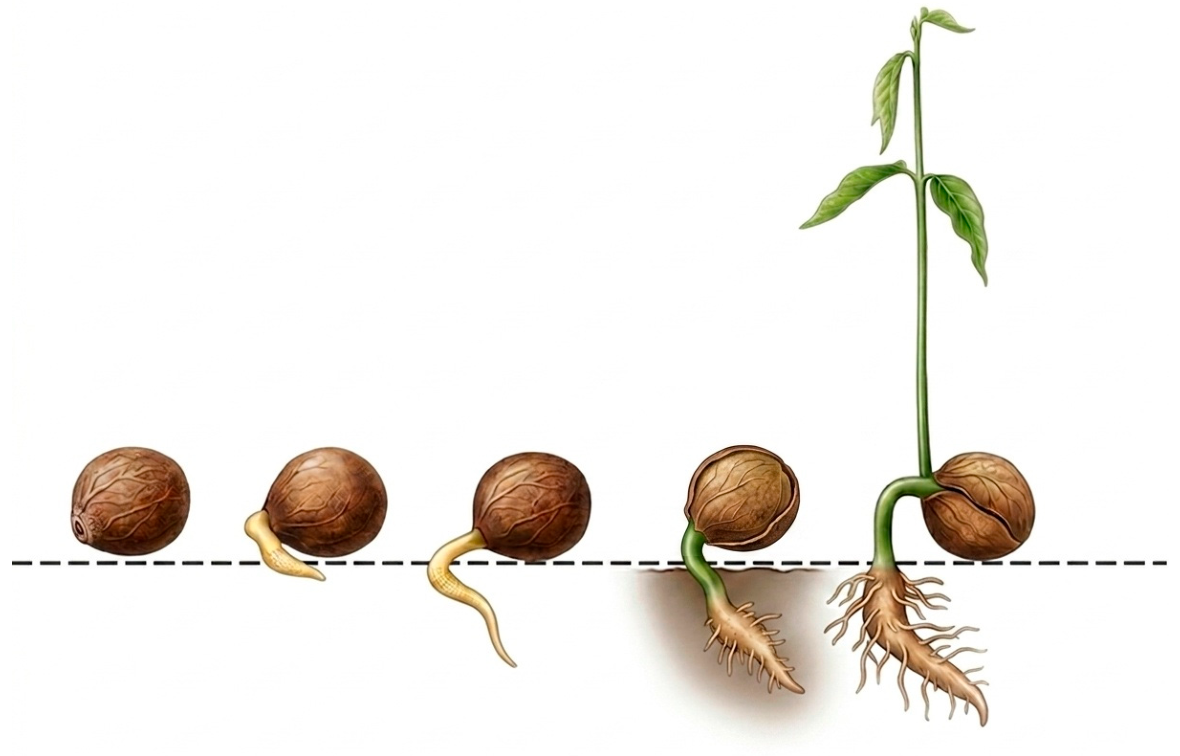
Seedlings exhibited cryptocotylar, hypogeal, reserve-type germination (CHR), with cotyledons remaining attached during early development (Figure 2).
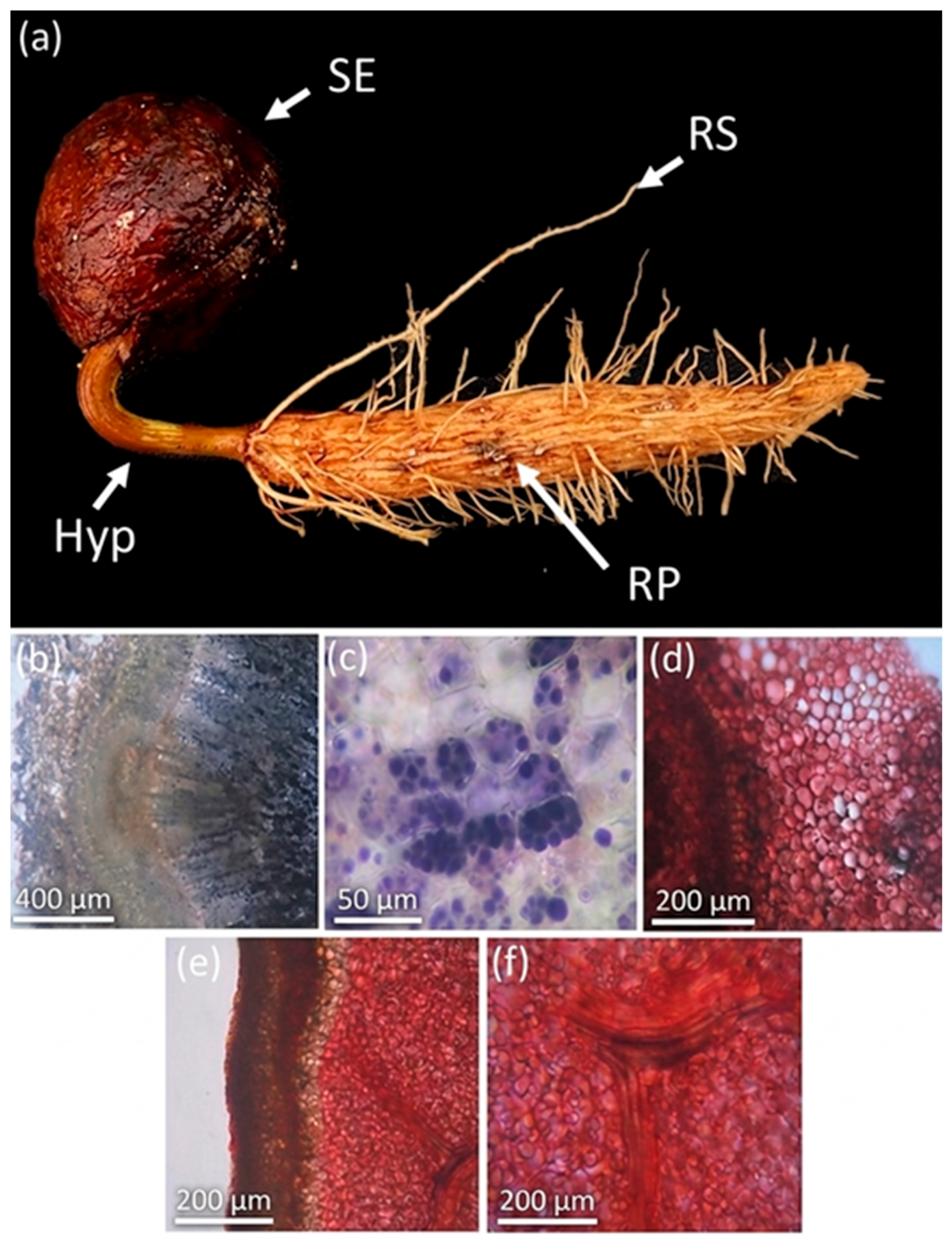
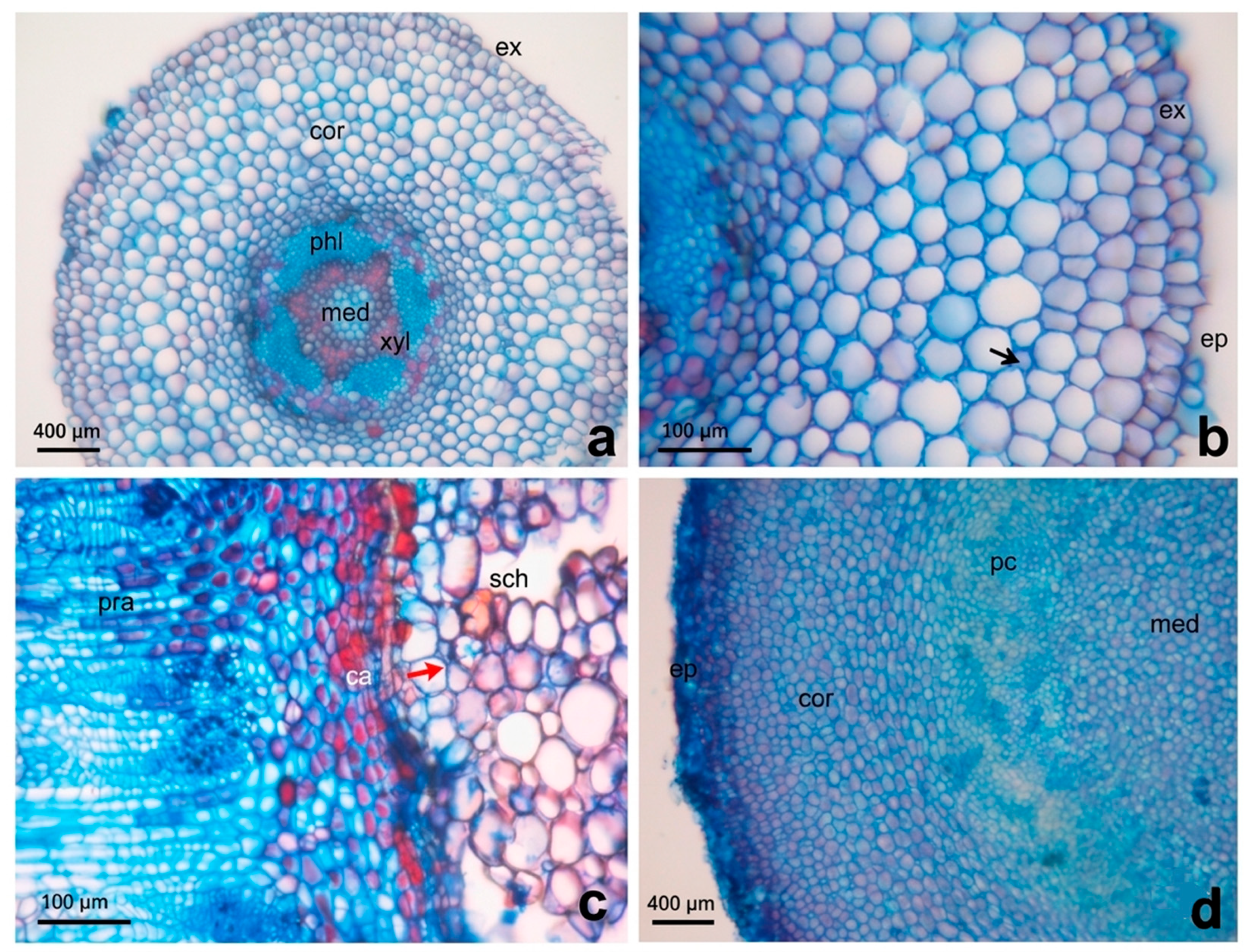
The primary root of A. heterophylla exhibited a thickened, tuberous-like morphology with several lateral roots, supporting its role as a storage organ during early development (Figure 3a). In transverse view, the root’s anatomical structure reveals a uniseriate exodermis and a highly developed cortex. This thick cortex consists of parenchymatic cells of variable shapes, where conspicuous schizogenous spaces potentially associated with internal aeration are formed by the separation of cortical cells (Figure 3b). Histochemical analysis confirmed the specialized storage function of these tissues. A strong positive reaction for starch was observed in the primary root, with numerous starch grains densely packed within the cortical parenchymatic cells (Figure 3b,c). Histochemical tests for proteins showed a presence in the root parenchyma (Figure 3d), indicating the accumulation of nitrogenous compounds. Transverse sections of the seed showed homogeneous protein accumulation within storage tissues (Figure 3e,f), indicating the maintenance of reserve compounds during early seedling development.
Internally, the endodermis delimited the vascular cylinder, followed by the pericycle. The vascular system exhibited a polyarch organization, with multiple xylem poles (xyl), predominantly protoxylem, alternating with phloem (phl), suggesting high conductive capacity and efficient resource transport during early seedling establishment under fluctuating soil moisture conditions. The medulla (med) was reduced and occupied the central portion of the organ. Near the insertion of the epicotyl, cambium (ca) and parenchymatic rays (pra) were observed. In the cotyledonary petiole, a uniseriate epidermis (ep), developed cortex, and broad medulla composed of parenchymatic cells were recorded (Figure 4).
Overall, these anatomical and histochemical traits indicate functional adjustments potentially associated with resource storage, internal aeration, and tolerance to hydrological stress during early establishment.

3.2. Effects on Biomass

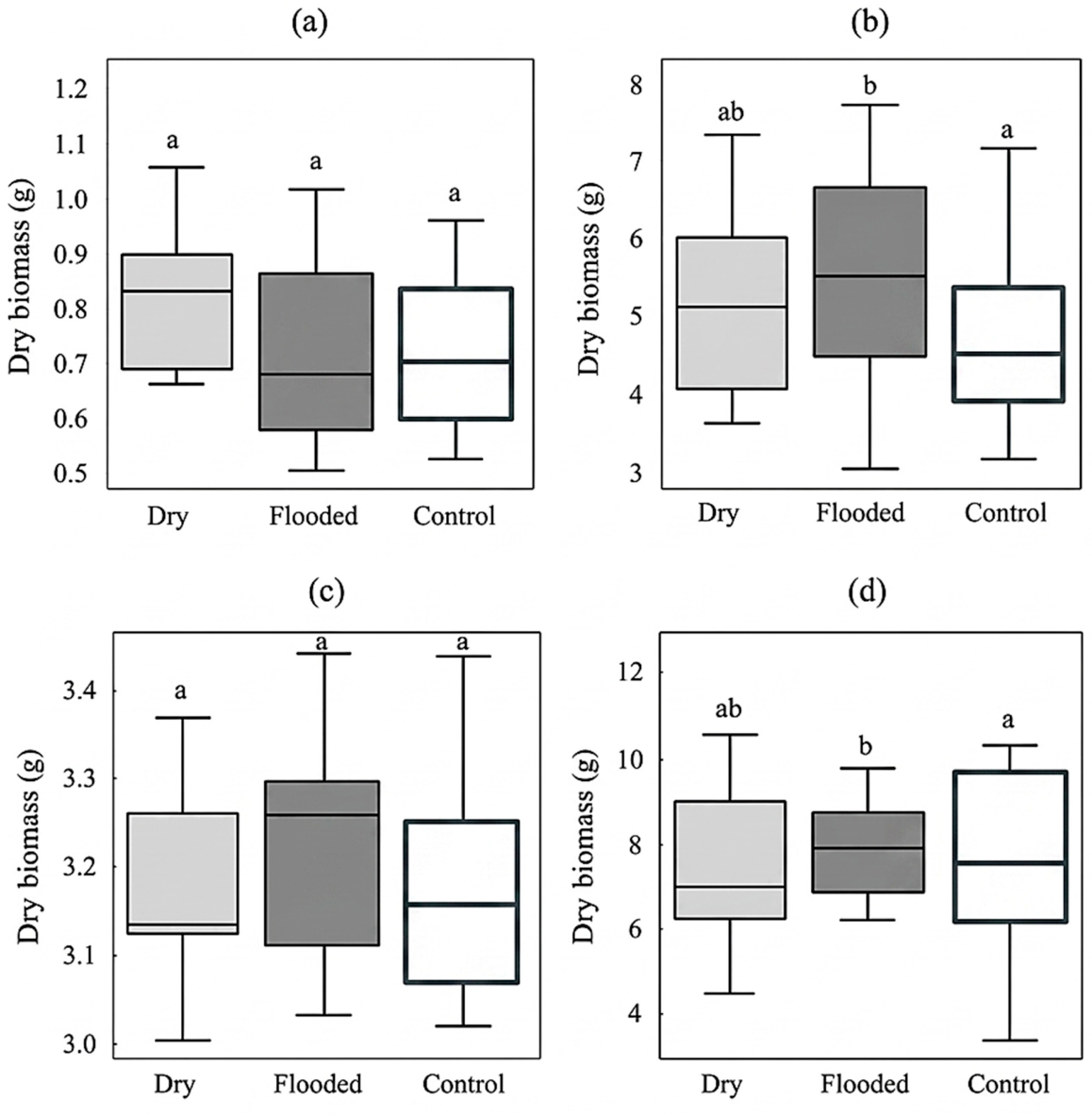
After 50 days of experiment, there was no significant effect of treatments on leaf dry mass (ANOVA, F = 0.14; p = 0.86) or stem dry mass (ANOVA, F = 0.29; p = 0.75). However, treatments significantly affected root dry biomass (ANOVA, F = 4.32; p = 0.03), with the highest values recorded under the flooded treatment. Total dry biomass also differed significantly among treatments (ANOVA, F = 3.54; p = 0.05), with differences detected between control and flooded seedlings (p = 0.04), but not between drought and flooded (p = 0.22) or drought and control treatments (p = 0.65) (Figure 5).
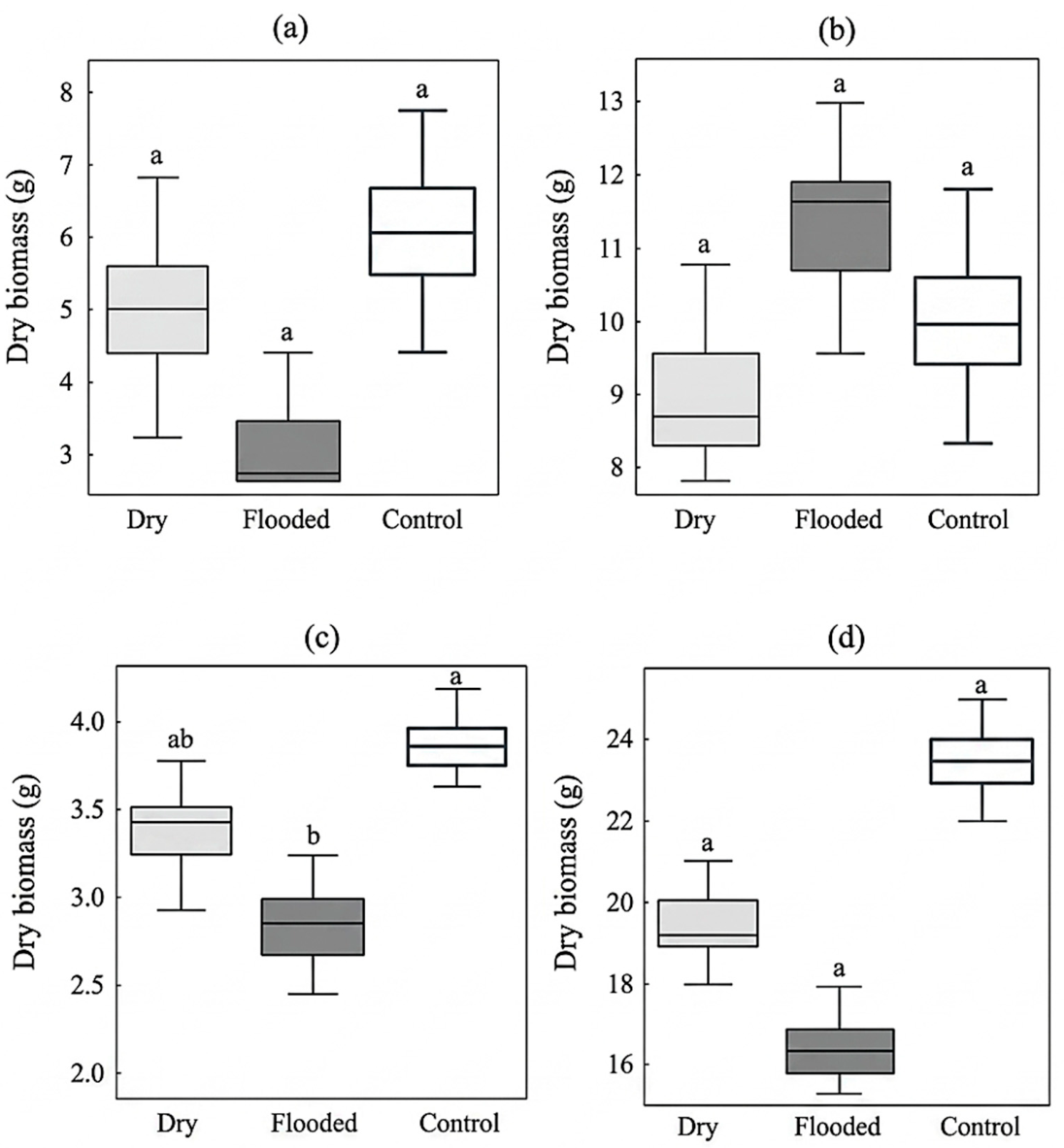
After 100 days of experiment, no treatment effect was observed for leaf dry mass (ANOVA, F = 2.35; p = 0.12). Stem dry mass differed among treatments (ANOVA, F = 4.07; p = 0.03), particularly between control and flooded seedlings, whereas no differences were detected between drought and flooded (p = 0.18) or drought and control treatments (p = 0.61).
No differences were found in root dry biomass (ANOVA, F = 0.94; p = 0.41) or total dry biomass (ANOVA, F = 2.06; p = 0.16) among treatments (Figure 6). Despite the absence of significant differences in total dry biomass, flooded seedlings exhibited reduced survival at the end of the experiment (33.3%; Table 1).

3.3. Ecophysiological Responses to Drought and Soil Saturation

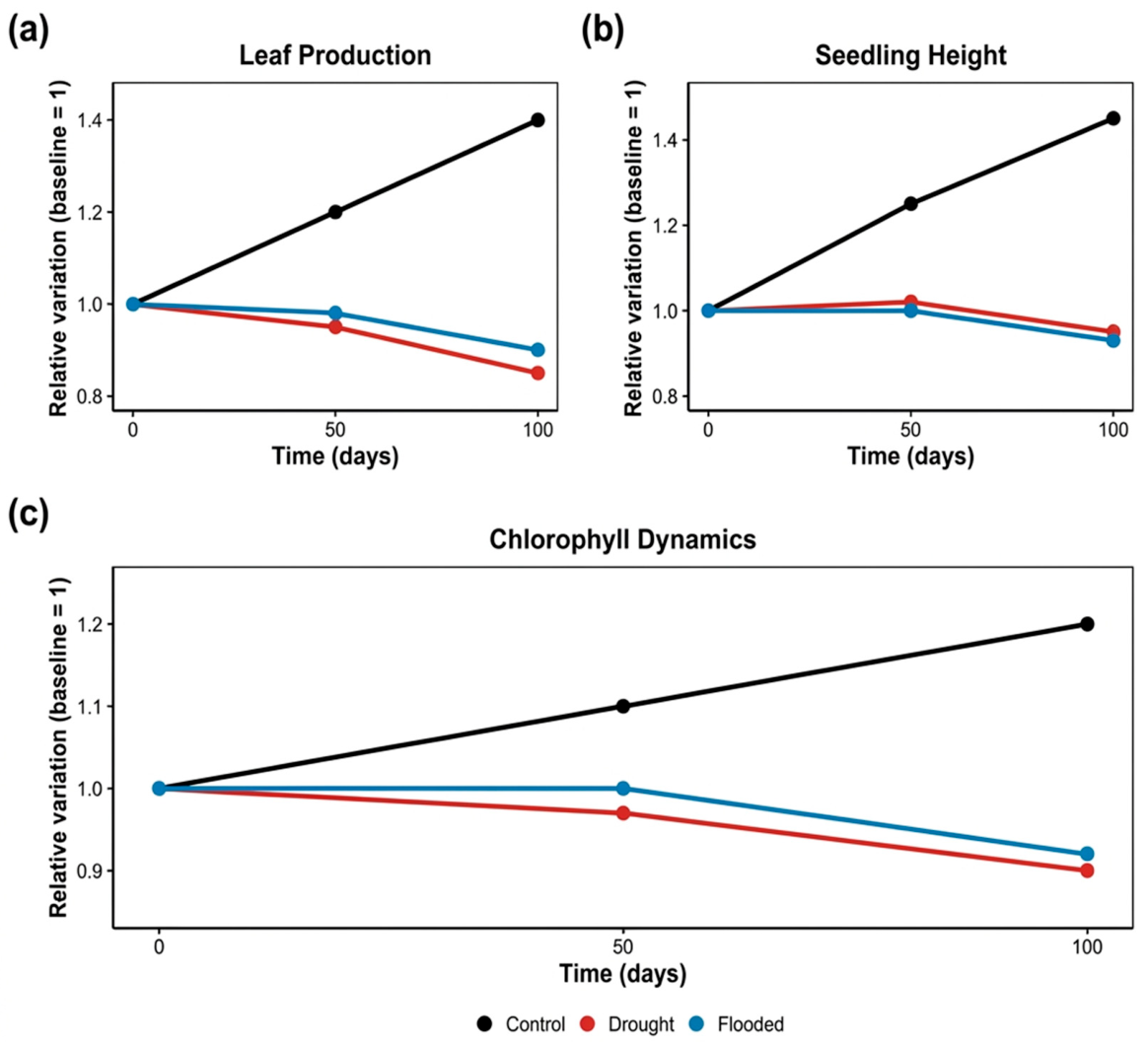
Significant differences were observed over time in morphological variables (leaf number and height) and physiological variables (total chlorophyll). Leaf number was significantly affected by water condition (F = 7.538; p = 0.005), with lower values observed under both drought and soil saturation compared to the control (Figure 7a). This pattern was consistent with biomass allocation, as leaf dry biomass was also significantly reduced under both stress conditions across the experimental period (Figure 5a and Figure 6a). The interaction between time and water condition was significant (F = 4.828; p < 0.001), indicating that the effects of water stress on leaf production became more pronounced over time.
Plant height was strongly affected by water condition (F = 48.412; p = 0.002), with reduced growth under both drought and flooded conditions compared to the control (Figure 7b). Time (F = 4.688; p < 0.001) and its interaction with water condition (F = 48.412; p < 0.001) were also significant, indicating distinct growth trajectories among treatments over the experimental period.
Water condition alone did not significantly affect total chlorophyll concentration (F = 2.410; p = 0.124). However, chlorophyll levels varied significantly over time (F = 3.297; p < 0.001), and the interaction between time and water condition was significant (F = 3.261; p < 0.001), indicating that chlorophyll responses differed among treatments throughout the experiment (Figure 7c). The reductions in leaf number and changes in chlorophyll dynamics observed under flooding likely preceded the chlorosis, necrosis, and mortality recorded after prolonged exposure. Under drought conditions, seedlings also exhibited progressive leaf senescence, including leaf yellowing and reduced leaf production over time, although no mortality was observed during the experimental period (see Section 3.4). These physiological patterns should be interpreted as indirect responses, as chlorophyll content was used as a proxy rather than direct measurements of photosynthetic performance.

3.4. Effects on Morphology, Physiology, and Seedling Survival

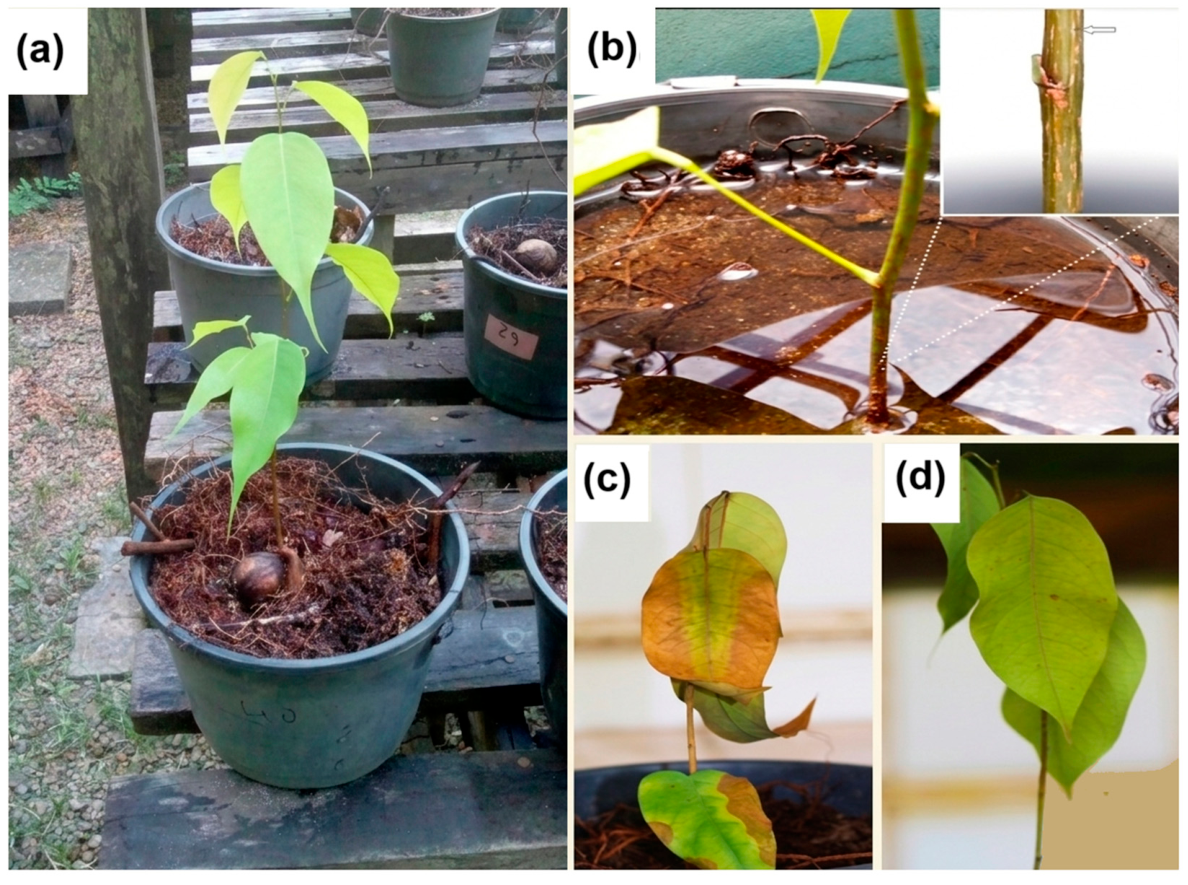
After 50 days of treatment, all seedlings survived under control, drought, and flooded conditions (100% survival in all treatments). Seedlings under control conditions maintained normal morphology and development throughout the experiment (Figure 8a). Although no mortality was observed at this stage, seedlings subjected to soil saturation exhibited hypertrophied lenticel formation and changes in stem morphology, indicating early adaptive responses to flooding (Figure 8b). These responses occurred concurrently with changes in root biomass allocation under flooded conditions (Section 3.2), suggesting temporary acclimation to hypoxic stress.
From approximately the 60th day onward, prolonged flooding induced progressive stress symptoms, including chlorophyll reduction, leaf chlorosis, necrosis, and subsequent leaf abscission. Chlorotic lesions initially appeared along leaf margins and gradually expanded toward the central lamina, impairing plant growth (Figure 8c). The reduction in leaf number and chlorophyll observed under prolonged flooding (Figure 7a,c) preceded leaf necrosis, abscission, and subsequent mortality under prolonged soil saturation.
At the end of the 100-day experiment, all seedlings in the control and drought treatments remained viable (100% survival), whereas only 2 of the 6 flooded seedlings survived, corresponding to 33.3% survival and 66.7% mortality (Table 1). Survival differed significantly among treatments at 100 days (Fisher’s exact test, p = 0.015).
Seedlings exposed to drought exhibited leaf senescence by the end of the experiment; however, no mortality was recorded under this treatment (Figure 8d). Overall, prolonged soil saturation negatively affected morphological and physiological performance, whereas drought induced senescence without compromising seedling survival.

4. Discussion

A. heterophylla exhibited a combination of morphological, anatomical, physiological, and biochemical traits associated with tolerance to both water deficit and temporary soil saturation. These responses are consistent with the hydro-edaphic dynamics of Amazonian campinaranas, where fluctuations in groundwater level and low soil fertility impose strong selective pressures on plant establishment and survival [16,36]. In such environments, species capable of adjusting biomass allocation and root functioning under contrasting hydrological conditions are more likely to survive and establish successfully.
One of the most relevant findings of this study was the increase in root dry biomass under flooded conditions after 50 days of treatment. While many Amazonian flood-tolerant species typically maintain or even reduce root biomass to minimize oxygen demand under hypoxia [17,37], A. heterophylla exhibited a distinct investment pattern. This greater allocation to roots under waterlogging may represent a specialized adaptive response to the nutrient-poor and highly permeable soils of campinaranas, where root plasticity is essential to maximize nutrient acquisition during seasonal transitions [27]. Similar increases in root-to-shoot ratios have been observed in other white-sand specialists, suggesting that maintaining an expansive root system, potentially coupled with morphological adaptations like lenticels, allows these taxa to sustain metabolic activity even under restrictive hydrological conditions [29,38]. Thus, the root plasticity of A. heterophylla appears to be a key trait for its establishment in the dual-stress environment of white-sand ecosystems.
The formation of hypertrophied lenticels in flooded seedlings further supports the interpretation that A. heterophylla possesses functional traits associated with flood tolerance. Lenticels are commonly induced under inundation and increase gas exchange between the atmosphere and internal tissues, facilitating oxygen diffusion to submerged roots [39,40]. Similar structures have been described in Amazonian floodplain trees and species from seasonally flooded savannas, where they are considered essential for survival under prolonged waterlogging [16,19].
In addition to lenticel formation, seedlings subjected to soil saturation showed greater stem elongation than those in the control and drought treatments. This response may indicate a partial escape strategy, in which vertical growth helps maintain aboveground tissues aerated and reduces the negative effects of prolonged submergence [15]. Such strategies have been documented in flood-tolerant tropical trees and may occur simultaneously with quiescence mechanisms, including reduced metabolism and temporary growth suppression [15,20].
Despite these adaptive responses, prolonged flooding ultimately induced clear stress symptoms, including chlorosis, foliar necrosis, leaf abscission, and reduced seedling survival, resulting in 66.7% mortality after 100 days. These responses likely reflect the combined effects of root hypoxia and impaired nutrient uptake. Oxygen deficiency in flooded soils reduces root respiration, nutrient transport, and photosynthetic performance, often leading to nutrient deficiencies and tissue senescence [41]. Similar flooding-induced chlorosis has been reported in several tropical species [42,43,44]. Although total biomass did not differ significantly among treatments after 100 days, the marked reduction in survival suggests that biomass responses alone may underestimate physiological thresholds associated with prolonged flooding. Therefore, while A. heterophylla exhibited moderate tolerance to temporary soil saturation, extended flooding appears to exceed its physiological tolerance limits.
Under drought treatment, all seedlings survived until the end of the experiment, although foliar senescence was observed. Leaf senescence under water deficit is widely recognized as a drought-avoidance mechanism that reduces transpiring surface area, lowers metabolic demand, and promotes nutrient remobilization before leaf abscission [45,46]. This response suggests that A. heterophylla is comparatively more tolerant to soil water shortage than to prolonged flooding, which is coherent with its occurrence in white-sand habitats frequently exposed to rapid drainage and seasonal drought.
Anatomical analyses also revealed important structural traits related to environmental resilience. The occurrence of scleromorphic traits previously described for A. heterophylla in Amazonian campinaranas further supports the interpretation that this species is highly specialized for nutrient-poor and hydrologically stressful environments [5]. The presence of a differentiated exodermis may function as a protective barrier regulating water and ion movement while reducing pathogen invasion and water loss [47]. Schizogenous spaces observed in the cortex may facilitate internal aeration under oxygen-poor conditions, acting analogously to incipient aerenchyma [48]. In addition, the polyarch vascular organization of the primary root suggests efficient water and nutrient conduction during early development [49]. Together, these anatomical features indicate a high degree of ecological plasticity compatible with fluctuating soil moisture regimes.
Histochemical tests demonstrated the presence of starch in roots and proteins in roots and seeds, indicating substantial reserve storage. In stressful ecosystems such as campinaranas, nutrient reserves may be crucial for seedling establishment because external nutrient availability is extremely low. Seed reserves support germination, respiration, tissue differentiation, and early root expansion before seedlings become fully autotrophic [50,51,52,53]. In Fabaceae, storage proteins such as globulins and albumins are particularly important during early development [54]. The large seeds of A. heterophylla therefore likely represent an adaptive strategy in which greater investment per propagule increases establishment success in oligotrophic soils [55].
This strategy, however, may also involve demographic trade-offs. Species producing fewer, larger seeds often exhibit lower recruitment rates and slower population recovery after disturbance [56]. For endemic taxa restricted to campinaranas, habitat degradation combined with climate change may substantially increase extinction risk through reduced regeneration opportunities [22,57]. Deforestation, fire, sand extraction, and hydrological disruption are therefore likely to be especially harmful for populations of A. heterophylla [25], also compromising the enormous epiphytic flora strongly associated with this species in campinaranas [23].
The responses observed here show notable convergence with woody species from other nutrient-poor seasonal ecosystems such as the Cerrado. In both systems, dominant species often exhibit strong root investment, reserve storage organs, morphological plasticity, and drought-deciduous behavior [29,35]. However, unlike some Cerrado trees that show high mortality under flooding due to lack of adaptive structures [58], A. heterophylla maintained low mortality and displayed clear flood-response mechanisms, suggesting a broader hydrological tolerance spectrum.
From a broader ecological perspective, these findings are particularly relevant under current climate change scenarios. Intensification of extreme droughts and floods has already altered mortality patterns, forest dynamics, and carbon cycling across the Amazon [59,60,61]. Predicting the persistence of white-sand ecosystems requires understanding how their dominant endemic species respond to hydrological instability during the earliest life stages, when mortality risk is highest.
Despite the insights provided by chlorophyll dynamics and morphological responses, the absence of direct measurements of gas exchange and plant water status limits a more detailed mechanistic interpretation of physiological responses under stress conditions. Future studies incorporating these variables would further improve understanding of the functional strategies of this species under contrasting hydrological regimes.
Overall, A. heterophylla combines four main strategies: (i) storage of starch and proteins in roots and seeds; (ii) strong root investment under stressful conditions; (iii) lenticel formation and morphological adjustment under flooding; and (iv) leaf senescence under drought. These integrated traits likely explain its ecological success in campinaranas and may confer resilience under moderate hydrological fluctuations. Nevertheless, increasing climatic extremes and continued habitat loss may exceed this adaptive capacity in the future.

5. Conclusions

The results indicate that A. heterophylla exhibits moderate tolerance to hydrological variation during early establishment, showing short-term adaptive responses to soil flooding through changes in root biomass allocation while maintaining high survival during the first 50 days of exposure. These findings suggest that the species possesses morphological and physiological plasticity that enables adjustment to contrasting water conditions typical of Amazonian white-sand forests.
The development of adaptive traits such as altered root biomass allocation under flooding, reserve storage in roots and seeds, and drought-induced leaf senescence suggests coordinated strategies that may favor seedling establishment under nutrient-poor environments subjected to alternating periods of water deficit and soil saturation.
However, prolonged flooding induced chlorosis, necrosis, leaf abscission, and 66.7% mortality after 100 days, indicating that tolerance to soil saturation has physiological limits under extended stress conditions. Although biomass responses alone did not fully reflect these effects, reduced survival under prolonged flooding highlights the importance of considering multiple indicators of stress tolerance during early establishment.
Overall, this study contributes to understanding the regeneration ecology of an endemic Amazonian tree species and highlights the role of functional plasticity in seedling establishment within white-sand ecosystems. These findings may also support future studies on conservation and restoration strategies for Amazonian campinarana vegetation.

Author Contributions

Conceptualization, S.G.P., A.L., L.O.D. and M.T.F.P.; methodology, S.G.P., L.O.D., L.C.C., M.M.C. and M.G.P.d.A.; software, S.G.P. and A.L.; validation, A.L., C.d.S.F. and M.T.F.P.; formal analysis, S.G.P., A.L. and L.O.D.; investigation, S.G.P., L.O.D. and A.L.; resources, A.L., M.T.F.P. and C.d.S.F.; data curation, S.G.P. and A.L.; writing—original draft preparation, S.G.P. and A.L.; writing—review and editing, A.L., L.O.D., C.d.S.F., M.T.F.P., L.C.C., M.M.C. and M.G.P.d.A.; visualization, S.G.P. and A.L.; supervision, A.L. and M.T.F.P.; project administration, A.L.; funding acquisition, A.L. and M.T.F.P. All authors have read and agreed to the published version of the manuscript.

Funding

This research was funded by Conselho Nacional de Desenvolvimento Científico e Tecnológico (CNPq) for financing the project Programa de Pesquisas Ecológicas de Longa duração–PELD FAPEAM/PELD-MAUA Phase III, Process:01.02.016301.02630/2022-76) and Phase IV (CNPq/PELD-MAUA, Process: 446044/2024-5.

Data Availability Statement

The data presented in this study are available from the corresponding author upon reasonable request.

Acknowledgments

We thank the Cesumar Institute of Science, Technology and Innovation and Fundação Araucária for the research fellowship awarded to A.L., as well as the Ecology, Monitoring and Sustainable Use of Wetlands Group (MAUA) for the logistical support provided. We also thank the Plant Anatomy Laboratory (LAV) of the Institute of Biological Sciences (ICB) at the Federal University of Amazonas for providing the infrastructure necessary to carry out the anatomical analyses. During the preparation of this manuscript, the authors used ChatGPT 5.5 by OpenAI for language revision, improvement of textual clarity, and preparation of the graphical abstract. The authors carefully reviewed and edited all generated outputs and assume full responsibility for the content of this publication.

Conflicts of Interest

The authors declare no conflicts of interest.

Abbreviations

The following abbreviations are used in this manuscript:
ANOVAAnalysis of Variance
cmCentimeter
°CDegrees Celsius
epEpidermis
exExodermis
FF statistic
gGram
medMedulla (pith)
mmMillimeter
pProbability value
phlPhloem
praParenchymatic rays
schSchizogenous spaces
xylXylem
µmMicrometer

References

  1. Marengo, J.A.; Souza, C.M.; Thonicke, K.; Burton, C.; Halladay, K.; Betts, R.A.; Alves, L.M.; Soares, W.R. Changes in climate and land use over the Amazon region: Current and future variability and trends. Front. Earth Sci. 2018, 6, 228. [Google Scholar] [CrossRef] [Scilit]
  2. Rodrigues, J.V.F.C.; Gonçalves, J.F.C. Leaf gas exchange, photon capture and light harvest in Aldina heterophylla along a vegetation gradient in the Amazon rainforest. Am. J. Plant Sci. 2014, 5, 1477–1487. [Google Scholar] [CrossRef]
  3. De Benedicto, S.C.; Longo, R.M.; Ferreira, D.H.L.; Sugahara, C.R.; Ribeiro, A.Í.; Castañeda-Ayarza, J.A.; da Silva, L.H.V. Integrating strategies aimed at biodiversity and water resource sustainability in the Amazonian region. Sustainability 2025, 17, 4010. [Google Scholar] [CrossRef] [Scilit]
  4. Boulton, C.A.; Lenton, T.M.; Boers, N. Pronounced loss of Amazon rainforest resilience since the early 2000s. Nat. Clim. Change 2022, 12, 271–278. [Google Scholar] [CrossRef] [Scilit]
  5. Araujo, M.G.P.; Mendonca, M.S.D. Escleromorfismo foliar de Aldina heterophylla Spruce ex Benth (Leguminosae: Papilionoideae) em três campinas da Amazônia Central. Acta Amazon. 1998, 28, 353. [Google Scholar] [CrossRef] [Scilit]
  6. Brando, P.M.; Barlow, J.; Macedo, M.N.; Silvério, D.V.; Ferreira, J.N.; Maracahipes, L.; Anderson, L.; Morton, D.C.; Alencar, A.; Paolucci, L.N. Tipping points of Amazonian forests: Beyond myths and toward solutions. Annu. Rev. Environ. Resour. 2025, 50, 97–131. [Google Scholar] [CrossRef] [Scilit]
  7. Souza, C.M., Jr.; Marengo, J.; Ferreira, B.; Ribeiro, J.; Schirmbeck, L.W.; Schirmbeck, J.; Hirye, M.; Cunha, A.; Wiederhecker, H.C.; O Latuf, M. Amazon severe drought in 2023 triggered surface water loss. Environ. Res. Clim. 2024, 3, 041002. [Google Scholar] [CrossRef] [Scilit]
  8. da Silva, S.S.; Brown, F.; de Oliveira Sampaio, A.; Silva, A.L.C.; dos Santos, N.C.R.S.; Lima, A.C.; de Souza Aquino, A.M.; da Costa Silva, P.H.; do Vale Moreira, J.G.; Oliveira, I.; et al. Amazon climate extremes: Increasing droughts and floods in Brazil’s state of Acre. Perspect. Ecol. Conserv. 2023, 21, 311–317. [Google Scholar] [CrossRef] [Scilit]
  9. Demarchi, L.O.; Klein, V.P.; Aguiar, D.P.P.; Marinho, L.C.; Ferreira, M.J.; Lopes, A.; da Cruz, J.; Quaresma, A.C.; Schöngart, J.; Wittmann, F.; et al. The specialized white-sand flora of the Uatumã Sustainable Development Reserve, central Amazon, Brazil. Check List 2022, 18, 187–217. [Google Scholar] [CrossRef] [Scilit]
  10. da Natividade, P.H.S.; Campos, M.V.; Ferreira, B.G.; dos Santos, R.D.C.O. Unexplored diversity of galls and new superhost plants from an Amazonian floodplain forest in Brazil. Braz. J. Bot. 2025, 48, 81–92. [Google Scholar] [CrossRef] [Scilit]
  11. Adeney, J.M.; Christensen, N.L.; Vicentini, A.; Cohn-Haft, M. White-sand ecosystems in Amazonia. Biotropica 2016, 48, 7–23. [Google Scholar] [CrossRef] [Scilit]
  12. Oliveira, A.A.; Daly, D.C.; Vicentini, A.; Cohn-Haft, M. Floresta sobre areia: Campinaranas e igapós. In Florestas do Rio Negro; Oliveira, A.A., Daly, D.C., Eds.; Companhia das Letras: São Paulo, Brazil, 2001; pp. 181–199. [Google Scholar]
  13. Targhetta, N.; Kesselmeier, J.; Wittmann, F. Effects of the hydro-edaphic gradient on tree species composition and above-ground wood biomass of oligotrophic forest ecosystems in the central Amazon basin. Folia Geobot. 2015, 50, 185–205. [Google Scholar] [CrossRef] [Scilit]
  14. Ferreira, A.C.; de Albuquerque Correa, C.M.; Gordo, M.; Vaz-de-Mello, F.Z.; Cupello, M.; Salomão, R.P. Ecological communities in white-sand Amazonian rainforests are sensitive to deforestation—A dung beetle case. Insect Conserv. Divers. 2025, 18, 330–342. [Google Scholar] [CrossRef] [Scilit]
  15. Wittmann, F. Amazonian freshwater wetlands: Biodiversity, livelihoods, and conservation. In Wetlands of Tropical and Subtropical South and Central America; Springer: Cham, Switzerland, 2025; pp. 123–154. [Google Scholar]
  16. Chada, S.; Asiedu, S.K.; Ofoe, R.; Abbey, L. An overview of plant morpho-physiology, biochemicals, and metabolic pathways under water stress. Hortic. Int. J. 2023, 7, 115–125. [Google Scholar] [CrossRef] [Scilit]
  17. Langan, L.; Scheiter, S.; Hickler, T.; Higgins, S.I. Amazon forest resistance to drought is increased by diversity in hydraulic traits. Nat. Commun. 2025, 16, 8246. [Google Scholar] [CrossRef] [Scilit]
  18. Brum, M.; Vadeboncoeur, M.A.; Ivanov, V.; Asbjornsen, H.; Saleska, S.; Alves, L.F.; Penha, D.; Dias, J.D.; Aragão, L.E.O.C.; Barros, F.; et al. Hydrological niche segregation defines forest structure and drought tolerance strategies in a seasonal Amazon forest. J. Ecol. 2019, 107, 318–333. [Google Scholar] [CrossRef] [Scilit]
  19. de Oliveira, R.L.C. Edaphic factors and flooding periodicity determining forest types in a topographic gradient in the Northern Brazilian Amazonia. Int. J. Plant Soil Sci. 2019, 28, 1–11. [Google Scholar]
  20. Malaviya, P.; Sharma, R.; Sharma, A.; Biswas, J.K. Climate change impacts on morpho-anatomical traits, physiological processes and survival strategies of plants: A comprehensive review. Int. J. Environ. Sci. Technol. 2025, 22, 14729–14752. [Google Scholar] [CrossRef] [Scilit]
  21. Ivanov, V.Y.; Hutyra, L.R.; Wofsy, S.C.; Munger, J.W.; Saleska, S.R.; de Oliveira, R.C.; de Camargo, P.B. Root niche separation can explain avoidance of seasonal drought stress and vulnerability of overstory trees to extended drought in a mature Amazonian forest. Water Resour. Res. 2012, 48, W12507. [Google Scholar] [CrossRef] [Scilit]
  22. Esquivel-Muelbert, A.; Baker, T.R.; Dexter, K.G.; Lewis, S.L.; Brienen, R.J.W.; Feldpausch, T.R.; Lloyd, J.; Monteagudo-Mendoza, A.; Arroyo, L.; Álvarez-Dávila, E.; et al. Compositional response of Amazon forests to climate change. Glob. Change Biol. 2019, 25, 39–56. [Google Scholar] [CrossRef] [Scilit]
  23. Montero, P.G. White-sand ecosystems in the Amazon region: Location, distinctive features, ecology. A review. In Psammic Peinobiomes: Nutrient-Limited Ecosystems of the Upper Orinoco and Rio Negro Basins; Springer International Publishing: Cham, Switzerland, 2023; pp. 7–52. [Google Scholar]
  24. Fernandez, E.; Amorim, A. Aldina heterophylla (Fabaceae). In Lista Vermelha da Flora Brasileira; Jardim Botânico do Rio de Janeiro: Rio de Janeiro, Brazil, 2018. [Google Scholar]
  25. Demarchi, L.O.; Scudeller, V.V.; Moura, L.C.; Lopes, A.; Piedade, M.T.F. Logging impact on Amazonian white-sand forests: Perspectives from a sustainable development reserve. Acta Amazon. 2019, 49, 316–323. [Google Scholar] [CrossRef] [Scilit]
  26. Stropp, J.; van der Sleen, P.; Assunção, P.A.; Silva, A.L.; ter Steege, H. Tree communities of white-sand and terra-firme forests of the upper Rio Negro. Acta Amazon. 2011, 41, 521–544. [Google Scholar] [CrossRef] [Scilit]
  27. Leal, A.; Benchimol, M.; Costa, H.C.; Faria, D.; Cazetta, E. Impacts of landscape-scale forest loss and a dry event on the demographic structure of the endangered palm Euterpe edulis Mart. in the Atlantic Forest. Front. For. Glob. Change 2022, 5, 909901. [Google Scholar] [CrossRef] [Scilit]
  28. Wang, X.; Sun, S.; Sedio, B.E.; Glomglieng, S.; Cao, M.; Cao, K.; Yang, J.; Zhang, J.; Yang, J. Niche differentiation along multiple functional-trait dimensions contributes to high local diversity of Euphorbiaceae in a tropical tree assemblage. J. Ecol. 2022, 110, 2731–2744. [Google Scholar] [CrossRef] [Scilit]
  29. De Melo, R.B.; Franco, A.C.; Silva, C.S.; Piedade, M.T.F.; Ferreira, C.S. Seed germination and seedling development in response to submergence in tree species of the Central Amazonian floodplains. AoB Plants 2015, 7, plv041. [Google Scholar] [CrossRef] [Scilit] [PubMed]
  30. Flora e Funga do Brasil. Aldina heterophylla Spruce ex Benth. Jardim Botânico do Rio de Janeiro. 2025. Available online: https://reflora.jbrj.gov.br/ (accessed on 20 December 2025).
  31. Klein, V.P.; Demarchi, L.O.; Quaresma, A.C.; da Cruz, J.; Piedade, M.T.F. The vascular epiphyte flora in a white-sand ecosystem of the Uatumã Sustainable Development Reserve, Central Amazon. Check List 2022, 18, 157–186. [Google Scholar] [CrossRef] [Scilit]
  32. IDESAM. Plano de Gestão da Reserva de Desenvolvimento Sustentável do Uatumã; Instituto de Conservação e Desenvolvimento Sustentável da Amazônia: Manaus, Brazil, 2009. [Google Scholar]
  33. Brasil. Ministério da Agricultura; Pecuária e Abastecimento. Instruções Normativas e Manuais Técnicos Para Análise de Sementes de Espécies Florestais Nativas; MAPA: Brasília, Brazil, 2019.
  34. Winkler, D.E.; Garbowski, M.; Kožić, K.; Ladouceur, E.; Larson, J.; Martin, S.; Roscher, C.; Slate, M.L.; Korell, L. Facilitating comparable research in seedling functional ecology. Methods Ecol. Evol. 2024, 15, 464–476. [Google Scholar] [CrossRef] [Scilit]
  35. Jensen, W.A. Botanical Histochemistry: Principles and Practice; Freeman: San Francisco, CA, USA, 1962. [Google Scholar]
  36. Cheaib, A.; Chieppa, J.; Perkowski, E.A.; Smith, N.G. Soil resource acquisition strategy modulates global plant nutrient and water economics. New Phytol. 2025, 246, 1536–1553. [Google Scholar] [CrossRef] [Scilit]
  37. De Simone, O.; Müller, E.; Junk, W.J.; Schmidt, W. Adaptations of Central Amazon tree species to prolonged flooding: Root morphology and leaf longevity. Plant Biol. 2002, 4, 515–522. [Google Scholar] [CrossRef] [Scilit]
  38. Ribeiro-Júnior, N.G.; Marimon, B.H.; Marimon, B.S.; Cruz, W.J.; Silva, I.V.; Galbraith, D.R.; Gloor, E.; Phillips, O.L. Anatomical functional traits and hydraulic vulnerability of trees in different water conditions in southern Amazonia. Am. J. Bot. 2023, 110, e16146. [Google Scholar] [CrossRef] [Scilit]
  39. Li, S.; Lu, S.; Wang, J.; Chen, Z.; Zhang, Y.; Duan, J.; Liu, P.; Wang, X.; Guo, J. Responses of physiological, morphological and anatomical traits to abiotic stress in woody plants. Forests 2023, 14, 1784. [Google Scholar] [CrossRef] [Scilit]
  40. Daniel, K.; Hartman, S. How plant roots respond to waterlogging. J. Exp. Bot. 2024, 75, 511–525. [Google Scholar] [CrossRef] [Scilit]
  41. Zhang, Y.; Chen, X.; Geng, S.; Zhang, X. A review of soil waterlogging impacts, mechanisms, and adaptive strategies. Front. Plant Sci. 2025, 16, 1545912. [Google Scholar] [CrossRef] [Scilit]
  42. Rodríguez-Páez, L.A.; Seleiman, M.F.; Alhammad, B.A.; Pineda-Rodríguez, Y.Y.; Pompelli, M.F.; Martins, A.O.; Dias-Pereira, J.; Araújo, W.L. Photosynthesis, anatomy, and metabolism as a tool for assessing physiological modulation in five native species of the Brazilian Atlantic forest. Plants 2024, 13, 1906. [Google Scholar] [CrossRef] [Scilit]
  43. Polanía, B.S.; Aldana, A.M.; Bottin, M.; Cruz, D.M.; Castro-Lima, F.; Stevenson, P.R.; Sanchez, A. Effect of seasonal rains and floods on seedling recruitment and compositional similarity in two lowland tropical forests. Forests 2020, 11, 1297. [Google Scholar] [CrossRef] [Scilit]
  44. Fischer, G.; Casierra-Posada, F.; Blanke, M. Impact of waterlogging on fruit crops in the era of climate change, with emphasis on tropical and subtropical species: A review. Agron. Colomb. 2023, 41, e108351. [Google Scholar] [CrossRef] [Scilit]
  45. Bucci, S.J.; Goldstein, G.; Meinzer, F.C.; Franco, A.C.; Campanello, P.I.; Scholz, F.G. Mechanisms contributing to seasonal homeostasis of minimum leaf water potential and predawn diseilibrium between soil and plant water potential in neotropical savanna trees. Trees 2005, 19, 296–304. [Google Scholar] [CrossRef] [Scilit]
  46. Munné-Bosch, S.; Alegre, L. Die and let live: Leaf senescence contributes to plant survival under drought stress. Funct. Plant Biol. 2004, 31, 203–216. [Google Scholar] [CrossRef] [Scilit]
  47. Ogorek, L.L.P.; Jiménez, J.d.l.C.; Visser, E.J.W.; Takahashi, H.; Nakazono, M.; Shabala, S.; Pedersen, O. Outer apoplastic barriers in roots: Prospects for abiotic stress tolerance. Funct. Plant Biol. 2023, 51, FP23133. [Google Scholar] [CrossRef] [Scilit]
  48. Striker, G.G. An overview of oxygen transport in plants: Diffusion and convection. Plant Biol. 2023, 25, 842–847. [Google Scholar] [CrossRef] [Scilit]
  49. Umaña, M.N.; Cao, M.; Lin, L.; Swenson, N.G.; Zhang, C. Trade-offs in above- and below-ground biomass allocation influencing seedling growth in a tropical forest. J. Ecol. 2021, 109, 1184–1193. [Google Scholar] [CrossRef] [Scilit]
  50. Suda, C.N.; Giorgini, J.F. Seed reserve composition and mobilization during germination and initial seedling development of Euphorbia heterophylla. Rev. Bras. Fisiol. Veg. 2000, 12, 226–245. [Google Scholar] [CrossRef] [Scilit]
  51. Azevedo-Da-Silva, D.A.; Alves-De-Oliveira, D.F.; Bezerra-De-Oliveira, H.C.; Feitosa, T.M.; Da Silva, I.B.; Giordani, R.B.; Voigt, E.L. Reserve mobilization and secondary metabolites during seed germination and seedling establishment of the tree Erythrina velutina (Fabaceae). Rev. Biol. Trop. 2023, 71, e49004. [Google Scholar] [CrossRef] [Scilit]
  52. Herrera-Ramírez, D.; Hartmann, H.; Römermann, C.; Trumbore, S.; Muhr, J.; Maracahipes-Santos, L.; Brando, P.; Silvério, D.; Huang, J.; Kuhlmann, I.; et al. Anatomical distribution of starch in the stemwood influences carbon dynamics and suggests storage-growth trade-offs in some tropical trees. J. Ecol. 2023, 111, 2532–2548. [Google Scholar] [CrossRef] [Scilit]
  53. Alves-De-Oliveira, D.; Alves-Da-Silva, H.; Avelino, A.; Nunes, L.; Voigt, E. Reserve mobilisation exhibits a biphasic pattern during seedling establishment in the Caatinga pioneer species Pityrocarpa moniliformis. Rodriguésia 2023, 74, e4014. [Google Scholar] [CrossRef] [Scilit]
  54. Lima, C.C.; Borge, E.E.L.; Gurgel, E.S.C. Mobilization of storage reserves in Dalbergia spruceana Benth. (Fabaceae) seeds during germination at different temperatures. Floresta Ambiente 2023, 30, e20220078. [Google Scholar] [CrossRef] [Scilit]
  55. Kerwer, L.; Nieto, A.; Espinosa, C.I.; Schleuning, M.; Neuschulz, E.L. Seed size mediates environmental filtering of seedling recruitment in a seasonally dry tropical forest. For. Ecol. Manag. 2025, 594, 122958. [Google Scholar] [CrossRef] [Scilit]
  56. Muller-Landau, H.C. The tolerance–fecundity trade-off and the maintenance of diversity in seed size. Proc. Natl. Acad. Sci. USA 2010, 107, 4242–4247. [Google Scholar] [CrossRef] [Scilit]
  57. Cerqueira, G.R.; Sierra, A.M.; Ilkiu-Borges, A.L.; Mota-de-Oliveira, S.; Zartman, C.E. Unveiled diversity: Amazonian campinaranas harbor twice the number of bryophyte species recorded in the last century. Acta Bot. Bras. 2021, 35, 418–431. [Google Scholar] [CrossRef] [Scilit]
  58. Bogarín, M.R.; Reis, L.K.; Laura, V.A.; Pott, A.; Szabo, J.K.; Garcia, L.C. Morphological and phenological strategies for flooding tolerance in Cerrado and Pantanal trees: Implications for restoration under new legislation. Restor. Ecol. 2023, 31, e13660. [Google Scholar] [CrossRef] [Scilit]
  59. Latrubesse, E.M.; Arima, E.Y.; Dunne, T.; Park, E.; Baker, V.R.; D’Horta, F.M.; Wight, C.; Wittmann, F.; Zuanon, J.; Baker, P.A.; et al. Damming the rivers of the Amazon basin. Nature 2017, 546, 363–369. [Google Scholar] [CrossRef] [Scilit]
  60. Marengo, J.A.; Espinoza, J.C. Extreme seasonal droughts and floods in Amazonia: Causes, trends and impacts. Int. J. Climatol. 2016, 36, 1033–1050. [Google Scholar] [CrossRef] [Scilit]
  61. Aleixo, I.; Norris, D.; Hemerik, L.; Barbosa, A.; Prata, E.; Costa, F.; Poorter, L. Amazonian rainforest tree mortality driven by climate and functional traits. Nat. Clim. Change 2019, 9, 384–388. [Google Scholar] [CrossRef] [Scilit]
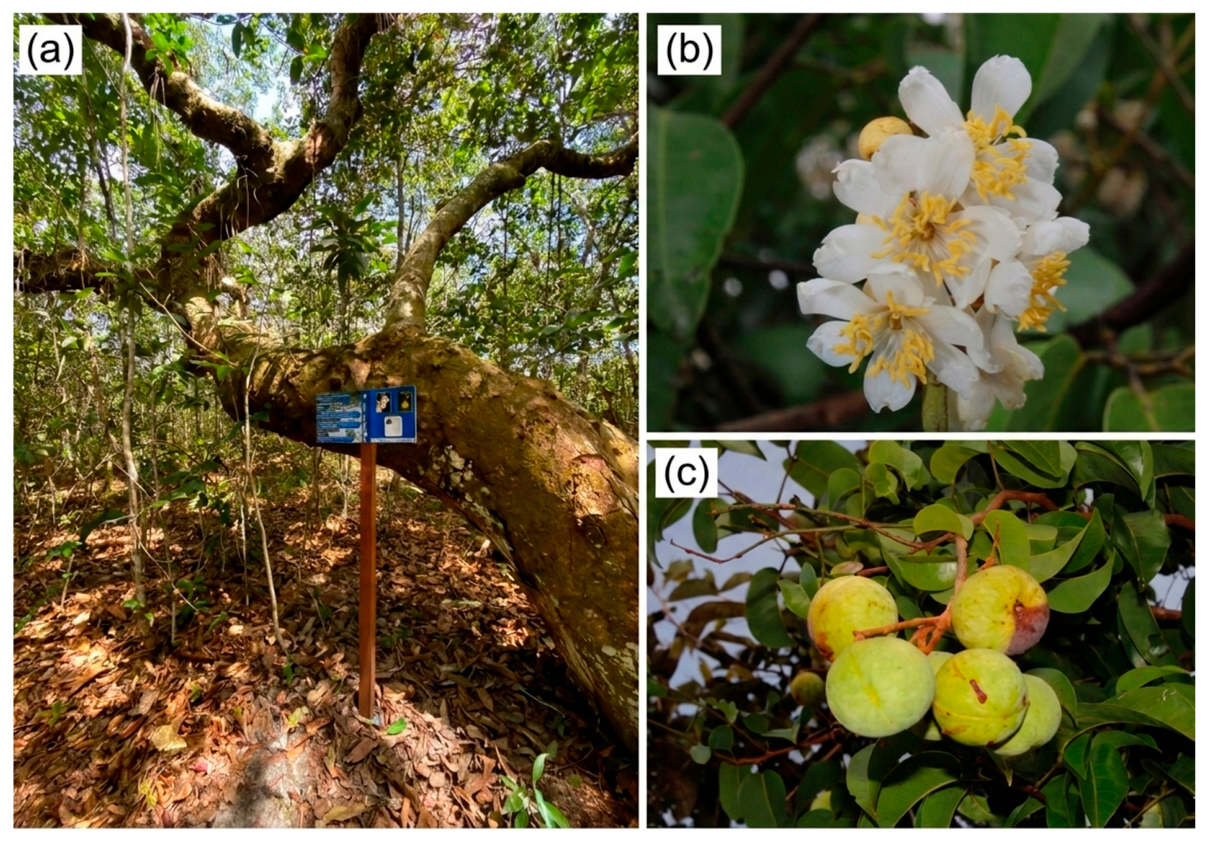
Figure 1. Habitat and reproductive morphology of A. heterophylla. (a) General view of the natural habitat, highlighting the characteristic growth form and the tortuous trunk; (b) Inflorescence; (c) Branch with developing immature fruits. Photos: L.O. Demarchi.
Environments 13 00295 g001
Figure 2. Morphological stages of hypogeal seedling development of A. heterophylla. The dashed line indicates soil level. Artwork by Marcos Melo, digital color enhancement performed using AI-assisted tools.
Environments 13 00295 g002
Figure 3. Morphological and histochemical characterization of A. heterophylla. (a) Young seedling showing seed (SE), hypocotyl (Hyp), primary root (RP), and secondary roots (RS). (b,c) Transverse sections of the primary root showing starch grains in the cortical parenchyma (arrows). (d) Positive reaction for proteins in the root cortex (arrow). (e,f) Transverse sections of the seed showing protein accumulation in storage cells (arrows). Scale bars: (b) = 400 µm; (c) = 50 µm; (df) = 200 µm.
Environments 13 00295 g003
Figure 4. Transverse sections of the primary root and cotyledonary petiole of A. heterophylla Spruce ex Benth. (a) General root organization showing the cortex (cor), phloem (phl), xylem (xyl), and medulla (med). (b) Detail of the peripheral region highlighting the epidermis (ep), exodermis (ex), and intercellular spaces (arrow). (c) Primary root in the region near the epicotyl insertion, evidencing the vascular cambium (ca; red arrow), parenchymatic rays (pra), and schizogenous spaces (sch). (d) General organization of the cotyledonary petiole showing the cortical (cor), procambium (pc) and medullary (med) regions. Scale bars: (a,d) = 400 µm; (b,c) = 100 µm.
Environments 13 00295 g004
Figure 5. Dry biomass (g) of A. heterophylla seedlings after 50 days of experiment. Biomass partitioning into: (a) leaves, (b) roots, (c) stems and (d) total biomass. Different lowercase letters indicate significant differences between treatments (Dry, Flooded and Control) based on Tukey’s test (p < 0.05).
Environments 13 00295 g005
Figure 6. Dry biomass (g) of A. heterophylla seedlings after 100 days of experiment. Biomass partitioning into: (a) leaves, (b) roots, (c) stems and (d) total biomass. Different lowercase letters indicate significant differences between treatments (Dry, Flooded and Control) based on Tukey’s test (p < 0.05).
Environments 13 00295 g006
Figure 7. Temporal responses of A. heterophylla seedlings under control, drought, and flooded conditions over 100 days. Panels show relative variation (baseline = 1) in leaf production (a), seedling height (b), and chlorophyll dynamics (c). Values represent observed mean responses over time for each treatment.
Environments 13 00295 g007
Figure 8. Morphological and physiological responses of A. heterophylla seedlings under contrasting water regimes. (a) Seedling under control conditions showing normal development. (b) Seedling exposed to soil saturation for 60 days, showing hypertrophied lenticels (inset: detail indicated by arrow). (c) Leaf chlorosis and necrosis under prolonged flooding, followed by leaf abscission. (d) Leaf senescence observed in seedlings subjected to drought stress.
Environments 13 00295 g008
Table 1. Survival and mortality of Aldina heterophylla seedlings under control, drought, and flooded conditions after 50 and 100 days.
Time (Days)TreatmentSeedlings
Evaluated (n)
Surviving
Seedlings (n)
Survival (%)Mortality (%)
50Control12121000
50Drought12121000
50Flooded12121000
100Control6 *61000
100Drought6 *61000
100Flooded6 *233.366.7
* Remaining seedlings after destructive sampling performed for biomass analyses at day 50.
Disclaimer/Publisher’s Note: The statements, opinions and data contained in all publications are solely those of the individual author(s) and contributor(s) and not of MDPI and/or the editor(s). MDPI and/or the editor(s) disclaim responsibility for any injury to people or property resulting from any ideas, methods, instructions or products referred to in the content.