Article

Bioactive Compounds in Medicinal Plants as Affected by the Level of Potentially Toxic Element Contamination in Soil


1
Department of Agroenvironmental Chemistry and Plant Nutrition, Czech University of Life Sciences in Prague, CZ-165 00 Prague, Czech Republic
2
Department of Food Science, Czech University of Life Sciences in Prague, CZ-165 00 Prague, Czech Republic
*
Author to whom correspondence should be addressed.
Environments 2026, 13(4), 227; https://doi.org/10.3390/environments13040227
Submission received: 4 March 2026 / Revised: 10 April 2026 / Accepted: 17 April 2026 / Published: 21 April 2026

Abstract

Medicinal plants represent important sources of bioactive compounds with beneficial effects on human health. However, many medicinal species are ruderal plants capable of growing in soils with elevated contents of potentially toxic elements (PTEs) such as Cd, Pb, and Zn. In addition to the potential accumulation of PTEs in plant biomass, the response of the plant metabolome—including bioactive substances with beneficial health effects—to elevated PTE levels in plants should also be considered. The potential impact of soil PTEs on the plant metabolome was investigated in three widely used medicinal plants, Taraxacum sp., Achillea millefolium, and Hypericum maculatum, sampled in an area polluted with PTEs. The total soil contents of the PTEs ranged between 7.7 and 65 mg/kg for Cd, 1541 and 3897 mg/kg for Pb, and 245 and 6553 mg/kg for Zn. A qualitative analysis of the whole plant metabolomes of the three plant species indicated close interrelationships between the selected metals and bioactive substances. Subsequently, a model pot experiment was conducted in which Taraxacum sp. plants were cultivated in three soils with stepwise increasing Cd, Pb, and Zn contents, and selected bioactive compounds were quantified. The results showed a decrease in the concentrations of some phenolic compounds in the aboveground parts of Taraxacum sp. grown in extremely polluted soil, supporting the hypothesis that stress induced by PTEs may affect the metabolic pathways of these compounds. In contrast, higher levels of phenolic compounds were observed in Taraxacum sp. roots grown in moderately contaminated soil, suggesting that milder soil contamination may activate defence mechanisms and stimulate phenolic metabolism. However, although the contents of bioactive compounds in plants indicate an improvement of the quality of these medicinal plants, the elevated element contents in the plant biomass can represent a potential risk for consumers.

1. Introduction

Environmental pollution with potentially toxic elements (PTEs) is a long-term and global ecological problem. Plants growing in contaminated soils absorb these elements, which can enter the food chain and thus pose a risk not only to ecosystems but also to human and animal health. Soil contamination can negatively affect plant growth, plant yield, crop quality, and the composition of active substances, and it can also reduce biodiversity and disrupt the soil microbial balance. Medicinal plants are valued for their bioactive substances such as phenolic compounds, flavonoids, and other secondary metabolites, which exhibit antioxidant, anti-inflammatory, and other biological effects. However, the benefits of the bioactive compounds in these plants can be hampered by a wide spectrum of environmental pollutants that are able to accumulate in plant tissues (posing a risk to potential consumers) and adversely affect their amount and composition (resulting in a decrease in the potential therapeutic effect of the plant).
Taraxacum sect. Ruderalia Kirschner et al. (Asteraceae, common name dandelion) belongs to a group of widespread medicinal plants with various therapeutic applications. Taraxacum sect. Ruderalia is considered a cosmopolitan species, occurring on all continents except Antarctica. Its adaptability allows it to grow from lowlands to mountainous areas, and although it prefers disturbed habitats, it can establish itself in almost any soil type. It is often found in abandoned fields, along roads and railways, and in city parks, meadows, or even gardens, where it is considered a weed [1]. Sesquiterpene lactones are one of the most important groups of medicinal metabolites in Taraxacum sp. The main representatives include taraxacin, taraxacolide, ixerin D, and 11β,13-dihydrolactucin. Flavonoids such as luteolin, quercetin, and apigenin are another important group of metabolites in Taraxacum sp., as well as phenolic acids such as chlorogenic acid, caffeic acid, and chicoric acid [2,3,4,5]. Polysaccharides, especially inulin, are important components of Taraxacum sp. roots [6]. Triterpenes and sterols contained in Taraxacum sp. include taraxasterol, β-sitosterol, and α-amyrin [7]. Biel et al. [8] also reported high contents of tocopherols, thiamine, riboflavin, and niacin in Taraxacum sp. leaves.
Similarly to Taraxacum sp., there are many other widespread medicinal plant species that contain multiple bioactive compounds and are able to grow in various soil and climatic conditions. Among them, Hypericum maculatum L., H. perforatum L. (Hypericaceae, common name St John’s wort), and Achillea millefolium L. (Asteraceae, common name yarrow) belong to plant species with ecological characteristics similar to those of Taraxacum sp., i.e., they can share similar soil and climate conditions and are tolerant to elevated PTE contents in soil. The composition of their bioactive compounds is very complex, consisting of numerous and variable substances. For instance, in H. maculatum, the most well-known compound is hypericin, belonging to the naphthodianthrones; its highest content is found in the flowers and buds. Another group consists of flavones and flavonol derivatives, mainly quercetin glycosides (quercitrin, hyperoside, and others). Other active substances include phloroglucinic derivatives (e.g., hyperforin and adhyperforin); xanthones, most abundant in the roots; as well as proanthocyanidins and tannins found mainly in the aboveground biomass outside the flowers; essential oils; phenol carboxylic acids; and waxes [9,10]. Achillea millefolium contains essential oil (0.05–0.25%), consisting of a number of monoterpene and sesquiterpene hydrocarbons such as chamazulene, monoterpene epoxides (cineol), bicyclic monoterpenes (camphor), as well as sesquiterpene lactones (achillicin); flavonoids are also found in yarrow plants [11,12]. However, different chemotypes of the essential oils can occur, affecting the potential bioactivity of these compounds.
Taraxacum sp., as well as many other medicinal plants, is characterised by the ability to take up and accumulate PTEs such as Cd, Cr, Cu, Fe, Pb, and Zn, where the distribution of these metals in the plant depends on the type of contamination and soil properties [13,14,15,16,17,18,19,20,21]. For example, in Macedonia, high levels of elements were recorded in the vicinity of a Pb and Zn smelter, where the metal content of Taraxacum sp. (Ba, Cr, Cd, Fe, Sr, Pb, and Zn) depended on the level of contamination of the area [14]. Significant relationships between main soil characteristics and the uptake of PTEs (Mn, Zn, Cu, Pb, Ni, and Cd) by plants were also observed for A. millefolium and H. perforatum [22,23,24]. Similarly, elevated levels of Cd, Cu, Pb, and Zn in A. millefolium and H. maculatum, compared to many other plant species growing in contaminated soil, were reported by Asare et al. [25,26,27]. Therefore, the cultivation of these plants on risk-element-contaminated soils can deteriorate their quality as medicinal plants.
As documented, for instance, by Wahsha et al. [28], Taraxacum sp. belongs to plant species that are highly tolerant of environmental pollution. However, the uptake of PTEs can adversely affect plant growth and development. Several major changes in the morphology and physiology of Taraxacum sp. growing in contaminated soils have been reported. These include a reduction in leaf thickness and structural changes such as a decrease in palisade and spongy parenchyma. In the root system, changes in micromorphology have been observed, with parenchymatous tissue showing cell deformations and changes in intercellular space [13,29]. The impact of high soil Pb pollution on plant morphology has also been reported in H. perforatum [30]. Long-term exposure to PTEs affects not only morphology but also plant metabolism. The chlorophyll content in the leaves decreases, which in turn reduces photosynthetic activity. In mitochondria, a decrease in the number of membrane cristae has been observed, potentially leading to reduced energy metabolism [29]. Taraxacum sp. exposed to pollution by hazardous elements shows increased lipid peroxidation, an indicator of oxidative stress. In this case, lipid peroxidation parameters such as malondialdehyde content are strongly correlated with the content of mobile forms of Pb and Zn in soil [31].
The Příbram region is one of the most important historical centres of mining and metallurgy in the Czech Republic. The history of Ag and Pb mining in this area dates back to at least the 13th century. In the new millennium, Kovohutě Příbram became one of the leading European facilities for Pb recycling and the processing of electrical waste. The greatest environmental burden was caused by lead ore mining, which produced large amounts of metallurgical waste and dust particles with a high content of hazardous elements. Between 1970 and 1982, the plant produced emissions of between 200 and 400 t of Pb per year [32]. The plant is currently equipped with high-quality separation equipment, and emissions of Pb and other elements have therefore been minimised.
Pollution occurs not only in soils but also in watercourse sediments and in the air [33,34]. Increased Pb content in the air and the accumulation of hazardous elements in soils and plants have a negative impact on the level and quality of agricultural production [35]. Rieuwerts et al. [32] collected soil samples at 61 locations in the Příbram region and reported contents exceeding 50,000 mg Pb/kg, 20,000 mg Zn/kg, and 50 mg Cd/kg in forest soils. Asare et al. [25,26,27] monitored risk element contents in herbal communities in various areas of the Příbram region and reported elevated contents of PTEs (especially Cd, Pb, and Zn) in both soils and plants, as well as medicinal plants such as H. maculatum and Taraxacum sp. occupying top positions among the analysed plant species with respect to Cd content in aboveground biomass.
Although elevated risk element contents in medicinal plants have been documented by many authors, information concerning potential changes in the composition of bioactive compounds due to the high uptake of PTEs remains limited and ambiguous. While the response of essential oil production to elevated risk element concentrations in soil has already been investigated, surprisingly little information is available on the fate of phenolic compounds in plants growing in risk-element-polluted soils. However, the amount and composition of bioactive compounds in medicinal plants determine their beneficial effects on human health. Therefore, the main objective of this study was to evaluate the potential impact of soil PTEs on the content and composition of major bioactive compounds in three widely used medicinal plants: Taraxacum sp., A. millefolium, and H. maculatum. In particular, potential changes in selected bioactive compound contents in Taraxacum sp. as affected by soil risk element levels were investigated under model conditions.

2. Materials and Methods

2.1. Monitoring of Wild-Living Medicinal Plants

Two locations within the Příbram region were monitored in this study. As the first sampling area, a long-term short rotation coppice was selected, where the phytoextraction ability of two clones from the genus Salix and two clones from the genus Populus [36,37] was being tested. Additionally, the herbal community at the short rotation coppice area was sampled, and risk element uptake by individual plant species was evaluated by Asare et al. [25]. Among these species, the occurrence of Taraxacum sp. and H. maculatum was recorded, and their ability to accumulate PTEs (predominantly Cd) was confirmed. Similarly, Asare et al. [26,27] mapped herbal communities growing in an extremely polluted area close to the Litavka river, characterised by extremely high soil risk element contents [38], including their ability to take up PTEs. At this location, numerous occurrences of A. millefolium were reported. At these locations, aboveground biomass of the three plant species and roots of Taraxacum sp. were collected for the qualitative determination of bioactive compounds. Whereas shoots are used as medicinal plant material in the case of A. millefolium and H. maculatum, both roots and shoots of Taraxacum sp. exhibit medicinal effects. Therefore, roots were sampled for Taraxacum sp. only. The plant samples were gently washed, freeze-dried (FreeZone® 6 Liter Benchtop Freeze Dry System; Labconco Corp., Kansas City, MO, USA), and homogenised (IKA-Werke GmbH & Co. KG, Staufen, Germany) prior to analysis.

2.2. Pot Experiment

For the quantification of selected bioactive compounds in Taraxacum sp. plants, a pot experiment was established in an outdoor, precipitation-controlled vegetation hall. Three soils differing in their level of risk element pollution were collected according to [39]. The soil with the lowest level of Cd and Pb contamination was collected north of Lhota near Příbram and was designated ‘Hluboš’. The moderately contaminated soil originated from an area south of Lhota, referred to as ‘Halda’. The most contaminated soil was collected near the Litavka river, close to the village of Trhové Dušníky (referred to as ‘Litavka’). The selected locations were as follows: soil ‘Hluboš’ (49°43′15.730″ N; 13°58′33.126″ E), soil ‘Halda’ (49°42′43.450″ N; 13°59′7.615″ E), and soil ‘Litavka’ (49°43′9.353″ N; 14°0′49.828″ E). The soil samples were collected from a depth of approximately 20 cm. After collection, the soils were homogenised and passed through a 5 mm mesh sieve to remove larger particles and ensure homogeneity for experimental use.
Taraxacum sp. plants were collected at early growth stages directly from areas near contaminated soils (i.e., plants adapted to contaminated environments). This approach was chosen because of concerns that cultivation from seed under unfavourable soil conditions might not result in successful growth. Four pots containing 1.5 kg of soil were prepared for each experimental soil, and two plants were planted in each pot during April–May 2024. The soil moisture was regularly controlled and maintained at 60% of the maximum water-holding capacity using deionised water, and weed plants were regularly removed; other cultivation conditions, such as light and temperature, were not managed. After the termination of the experiment, the aboveground biomass and roots were processed as described above, and soil samples were crushed manually in a mortar and sieved through a 2 mm mesh sieve. The prepared soil and plant samples were subsequently used for chemical analyses to evaluate the effect of soil contamination on the content of medicinal metabolites in the studied plants.

2.3. Analytical Procedures

2.3.1. Soil Physicochemical Parameters and Risk Element Contents in Soils

Soil pH was determined in water extracts (1:10 w/v). Cation exchange capacity (CEC) was calculated as the sum of Ca, Mg, K, Na, Fe, Mn, and Al extractable in 0.1 mol/L BaCl2 (w/v = 1 + 20 for 2 h) [40]. For total soil carbon and nitrogen determination, a CHNS Vario MACRO cube (Elementar Analysensysteme GmbH, Langenselbold, Germany) analyser was used, where C and N were determined via a thermal conductivity detector. The Mehlich III extraction procedure was performed by shaking the extractant for 10 min [41] for the determination of the available nutrient status of soils. The soil characteristics and available nutrient contents are summarized in Table 1.
The pseudo-total contents of elements in the soils were determined as follows: Aliquots (approximately 0.5 g) of air-dried soil were decomposed in digestion vessels containing 10 mL of aqua regia (1:3 mixture of nitric acid and hydrochloric acid). The mixture was heated in an Ethos 1 (MLS GmbH, Leutkirch im Allgäu, Germany) microwave-assisted wet digestion system for 33 min at 210 °C. Each determination was provided in triplicates, blanks represented 10% of the total number of samples. A certified reference material RM 7003 Silty Clay Loam (Analytika, Prague, Czech Republic) was applied for the quality assurance of the analytical data. The recoveries for the individual elements were 91% for As, 96% for Be, 95% for Cd, 91% for Co, 99% for Cu, 95% for Cr, 110% for Ni, 108% for Pb, 96% for V and 95% for Zn. The bioavailable fraction of element content in soils was determined by adding 0.5 g of each sample to 10 mL of 0.11 mol/L CH3COOH solution [42].
To determine the element contents in the plant biomass samples, aliquots (approximately 0.5 g dry matter) were weighed into digestion vessels, and concentrated HNO3 (8.0 mL) and 30% H2O2 (2.0 mL) were added. The reaction mixtures were heated in an Ethos 1 (MLS GmbH Leutkirch im Allgäu, Germany), microwave-assisted wet digestion system for 30 min at 220 °C. Each determination was provided in triplicates, blanks represented 10% of the total number of samples. After cooling, the digests were quantitatively transferred to 20 mL glass tubes and filled to volume with deionised water. For the quality assurance of the analytical data, a certified reference material (NIST CRM tomato leaves 1573) was used. The recoveries for the individual elements were 98% for Cd, 105% for Pb, and 101% for Zn.
Inductively coupled plasma–atomic emission spectrometry (Agilent 720; Agilent Technologies Inc., Santa Clara, CA, USA), equipped with a two-channel peristaltic pump, a Struman-Masters spray chamber, and a V-groove pneumatic nebuliser made of inert material, was used to determine the risk element contents in the soil and plant digests as well as the soil extracts. The instrument was calibrated by the external calibration method using a suitably diluted mixed standard solution (ASTASOL-MIX, Analytika, Czech Republic). The limits of detection (LODs) were 1.2 mg/kg for As, 0,07 mg/kg for Be, 0.06 mg/kg for Cd, 0.15 mg/kg for Co, 0.15 mg/kg for Cr, 0.22 mg/kg for Cu, 0.18 mg/kg for Ni, 1.2 mg/kg for Pb, 0.11 mg/kg for V, and 0.03 mg/kg for Zn. The limits of quantification (LOQs) were 4 mg/kg for As, 0.2 mg/kg for Be, 0.2 mg/kg for Cd, 0.5 mg/kg for Co, 0.5 mg/kg for Cr, 0.73 mg/kg for Cu, 0.6 mg/kg for Ni, 4 mg/kg for Pb, 0.4 mg/kg for V, and 0.1 mg/kg for Zn.

2.3.2. Chromatographic System

The dried plant materials for the qualitative determination of the whole plant metabolome were prepared according to Rusalepp et al. [43]. Each dried plant sample (1 g) was weighed into a 50 mL centrifuge tube, and 10 mL of methanol:water (80:20, v/v) was added. Sample tubes were covered with aluminium foil to prevent possible light-induced phenolic degradation and placed on an orbital shaker for extraction at 200 rpm for 24 h. Following extraction, the samples were centrifuged at 4600 rpm for 15 min at +4 °C. An aliquot of 1 mL of clear supernatant was transferred to microcentrifuge tubes and stored at −80 °C until analysis. The freezing step also provided additional clean-up by removing the majority of co-extracted fats and other components with limited solubility in the methanol:water mixture [44]. These compounds were removed by high-speed centrifugation (15,000 rpm for 10 min) prior to analysis, and the clear supernatant was used for liquid chromatography–quadrupole time-of-flight mass spectrometry analysis.
For the extraction of the phenolic compounds, 50 mg of dry matter (leaves and roots) of Taraxacum sp. were weighed into 1.5 mL plastic Eppendorf centrifuge tubes. One millilitre of extraction reagent consisting of 80% methanol supplemented with 2,6-di-tert-butyl-4-methylphenol was added to each sample. The samples were mixed on a vortex for 1 min and placed in an ultrasonic bath for 3 min. The tubes were then placed on a rotary mixer and mixed for 1 h at laboratory temperature, followed by a further short sonication for 1 min. The samples were centrifuged for 10 min at 4 °C and 15,000 rpm to remove solid particles. The supernatants were transferred to new Eppendorf tubes and stored overnight at −18 °C for protein precipitation. On the day of the analysis, the samples were centrifuged again under the same conditions, and the resulting supernatants were transferred to chromatography vials.
The ultra-high-performance liquid chromatography system (Ultimate 3000; Dionex, Thermo Fisher Scientific, Waltham, MA, USA) consisted of a high-pressure binary pump, temperature-controlled autosampler, mobile phase degasser, and column thermostat. The system was connected to a high-resolution accurate mass quadrupole time-of-flight mass spectrometer (Impact II; Bruker Daltonik, Bremen, Germany). Chromatographic separation was achieved using a reversed-phase Acclaim C18 column (1.2 µm, 1.7 mm × 100 mm; Thermo Fisher Scientific) thermostated at 40 °C, with a mobile phase flow rate of 0.25 mL min−1. The mobile phase consisted of water with 0.1% formic acid (A) and methanol (B). The gradient programme started at 5% B for 1.5 min, followed by a linear increase to 70% B over 25 min, then to 100% B at 30 min. This composition was held isocratically for 3 min, after which B was returned to 5% between 33 and 34 min and maintained until 40 min for column re-equilibration. The injection volume was 5 µL. The samples were analysed in both positive and negative ionisation modes using electrospray ionisation, with a mass resolution > 60,000 and scan rate of 0.5 Hz. The ions were monitored in the range of 60–1500 m/z. For quantitative analysis, protonated [M + H]+ or deprotonated [M − H] molecular ions were used.
Data acquisition was performed using OTOF Control 4.0 Compass and HyStar 3.2 software (Bruker Daltonik). For the quantification of selected phenolic compounds, data corresponding to selected high-relevance features were further processed using TASQ 2.2 and Compass DataAnalysis 5.2 software (Bruker Daltonik). Compound identification was based on retention time and accurate mass, together with comparison to commercial reference standards. The concentrations of identified phenolic compounds were determined using external calibration curves constructed from responses obtained at a minimum of seven concentration levels.

2.4. Data Processing

For preliminary screening, the analytical protocol consisted of the extraction of essential data from raw chromatographic datasets for untargeted metabolomic profiling using XCMS Online (version 3.7.1), including relationship detection, retention time correction, and alignment. As an additional step, a multivariate analysis of the XCMS-derived data was performed using MetaboAnalyst 4.0 (https://www.metaboanalyst.ca, accessed on 25 October 2024), a web-based platform. The correlations between the selected metals and active substances were evaluated using Microsoft Excel 2019, version 1808 (Microsoft Office Professional 2019; Microsoft Corporation, Redmond, WA, USA). The correlation results were filtered using a high correlation threshold (r = 0.9 or −0.9), and substances showing strong correlations with respective PTEs were plotted in the corresponding graphs presented below.
For the pot experiment, a principal component analysis (PCA) was performed using MetaboAnalyst 6.0 to reduce data dimensionality, identify underlying patterns, and determine compounds exerting the greatest influence on metabolic differences among samples. The PCA outputs were visualised using component score plots and component loading plots. The analytical data were additionally processed using Microsoft Office Excel 2007 and Statistica 12 CZ software (DataBon s.r.o., Prague, Czech Republic). One-way analysis of variance at a significance level of α = 0.05, followed by Tukey’s test, was applied.
The risk assessment code (RAC) evaluates the potential ability of metals to be released and subsequently enter the food chain. It is calculated as the ratio of the mobile proportion of an element extractable with 0.11 mol/L acetic acid to its pseudo-total content. When the percentage of an extractable element is <1%, there is no risk; 1–10% indicates low risk; 11–30% medium risk; 31–50% high risk; and 51–100% very high risk [45].

3. Results and Discussion

3.1. PTE Contents in Soils

Public Notice No. 153/2016 [46] sets preventive values for element contents in soils in the Czech Republic as follows: 20 mg/kg As, 2 mg/kg Be, 0.5 mg/kg Cd, 60 mg/kg Cu, 50 mg/kg Ni, 60 mg/kg Pb, 120 mg/kg Zn, 30 mg/kg Co, 90 mg/kg Cr, and 130 mg/kg V. The element levels in the areas used for the monitoring of wild-living medicinal plants have already been published by Asare et al. [25,27]. At the sampling points where Taraxacum sp. and H. maculatum were collected, the total contents of PTEs ranged between 7.7 and 9.76 mg/kg for Cd, 1541 and 1929 mg/kg for Pb, and 245 and 320 mg/kg for Zn. These values substantially exceeded the preventive values and, in the case of Cd and Pb, even exceeded the indicative values, where soil element contents represent a potential risk for crop contamination and can directly threaten human and animal health (i.e., 2 mg/kg for Cd and 400 mg/kg for Pb). At the sampling area for A. millefolium, the soil element contents reached up to 65 mg/kg for Cd, 3897 mg/kg for Pb, and 6553 mg/kg for Zn. Thus, the indicative value representing a potential risk to plant growth and soil biological value (i.e., 400 mg kg−1 for Zn) was exceeded, as well as the abovementioned risks in the case of Cd and Pb.
The pseudo-total contents of the PTEs in the soils used for the pot experiment are summarised in Table 2. The elements exceeding preventive values included As, which was above the limit in all samples. The highest As value was measured in Litavka soil (375 mg/kg), which was approximately 10 times higher than in Hluboš (24.9 mg/kg) and Halda (36.6 mg/kg) soils. A similar trend was observed for Cd, with concentrations in Litavka soil (16.1 mg/kg) reaching significantly higher levels than in Halda (2.53 mg/kg) and Hluboš (1.48 mg/kg) soils, all of which exceeded the preventive limit. Similarly, Pb exceeded both the preventive and indicative values in all samples, with the highest concentration again recorded in Litavka soil (3181 mg/kg). In Halda soil, the Pb content was 519 mg/kg, while in Hluboš soil it was 366 mg/kg. Elevated values were also found for Zn, particularly in Litavka soil (2366 mg/kg); however, in the remaining soil samples the indicative value was not exceeded. For the other analysed elements, preventive values were not substantially exceeded.
These results confirm As, Cd, Pb, and Zn as the main pollutants across the Příbram region, as previously reported [47,48], with particular emphasis on Pb, Zn, and Cd contamination. The findings correspond with those of Šichorová et al. [34], who detected, for example, Pb contents exceeding 2500 mg/kg in topsoil from the Příbram area. However, the potential risk posed by these elements depends not only on their total (pseudo-total) soil contents but also on soil properties such as pH and sorption capacity [49].
Figure 1 documents the significant differences in CEC and pH among individual soil samples. The lowest CEC value was recorded in Litavka soil, representing the most highly contaminated locality, whereas the highest CEC was measured in the least contaminated Hluboš soil. Similarly, the lowest pH was observed in Litavka soil, which can be characterised as strongly acidic, while the remaining soils were only slightly acidic. While Halda and Hluboš soils originated from agriculturally used arable land and were classified as cambisols, Litavka soil is a fluvisol type, with samples collected from an uncultivated meadow. These differences account for the contrasting soil characteristics observed.
Table 3 shows that potentially bioaccessible proportions of PTEs largely reflected differences in key soil characteristics, with mobile element proportions generally decreasing in the order Litavka > Halda > Hluboš. In the case of As, Cr, and V, extractable element proportions were below detection limits, despite total As contents substantially exceeding preventive values. By contrast, the other major pollutants of the area (i.e., Cd, Pb, and Zn) were extractable in measurable proportions.
Compared with pseudo-total contents, Pb extractability was substantially lower than that of Cd and Zn. Accordingly, RAC values indicate a high environmental risk of Cd and Zn in Litavka soil and a low environmental risk of Pb in this soil. In the case of Cd, high RAC levels were also recorded for Halda and Hluboš soils, followed by RAC = 10% for Zn in these two soils.

3.2. PTE Contents in Plants

The contents of Cd, Pb, and Zn in wild-growing medicinal plants (Taraxacum sp., H. maculatum, and A. millefolium) were presented among other plant species growing in the sampling areas by Asare et al. [25,27]. All analysed plants showed a particularly high Cd accumulation capacity. Cadmium contents varied between 1.75 and 8.64 mg/kg for A. millefolium, between 6.81 and 43.7 mg/kg for H. maculatum, between 6.10 and 17.9 mg/kg for the shoots, and between 6.30 and 11.3 mg/kg for the roots of Taraxacum sp. For Pb, the element contents in plants ranged between 0.96 and 5.22 mg/kg for A. millefolium, between 6.61 and 22.1 mg/kg for H. maculatum, between 25.0 and 47.0 mg/kg for the shoots, and between 54.9 and 215 mg/kg for the roots of Taraxacum sp. In the case of Zn, maximum concentrations of the investigated elements were 313 mg/kg for A. millefolium, 91.8 mg/kg for H. maculatum, 109 mg/kg for Taraxacum sp. shoots, and 80.1 mg/kg for Taraxacum sp. roots.
According to Alloway [50], Zn contents in plants not exceeding 400 mg/kg can be considered elevated but do not pose direct toxic effects to plants. Quezada-Hinojosa et al. [51] described mechanisms by which plants limit metal entry or effectively detoxify metals in their roots, resulting in a limited metal transfer to aboveground biomass. This mechanism was confirmed in the case of Pb in Taraxacum sp.; however, for Cd and Zn, the contents in roots and shoots were comparable. Therefore, these conclusions cannot be applied to PTEs in general.
Gjorgieva et al. [14] reported that Taraxacum sp. is among plant species that accumulate metals efficiently, unlike many other plants. This observation is consistent with the literature, where Taraxacum sp. has repeatedly been described as having strong accumulation potential for metals such as Cd, Cr, Cu, Fe, Pb, and Zn [13,14,15,52]. A study from Italy [13] showed that Taraxacum sp. growing on soils contaminated with metal sulphides effectively accumulates these elements and is also able to transport them to aboveground parts. However, in the case of Cd, the highest contents of this element were found in H. maculatum plants. According to Moreno-Jiménez et al. [52], H. perforatum can be considered a potential Cd hyperaccumulator. Similarly, Králová and Masarovičová [53] stated that H. perforatum belongs among Cd and Zn hyperaccumulators. It can therefore be assumed that the related species H. maculatum may exhibit similar properties. The targeted cultivation of Hypericum sp. together with fast-growing woody species could thus increase the effectiveness of soil remediation at contaminated sites. By contrast, A. millefolium showed only a limited ability to accumulate Cd and Pb, while Zn levels were comparable to those observed in other studied plant species.
Taraxacum sp. is considered a suitable bioindicator of environmental Cd pollution because it is able to grow even at extremely contaminated sites [54]. Its suitability as an indicator plant in Pb-, Cd-, and Zn-polluted areas was confirmed by Babayan et al. [55], Gómez-Arroyo et al. [56], and Fröhlichová et al. [54]. Higher contents of Zn and Cu in Taraxacum sp. leaves compared with other plant species commonly occurring in urban ecosystems were reported by Shtangeeva et al. [57]. Similarly, Malinowska et al. [58] observed enhanced Cu and Zn contents in Taraxacum sp. plants growing in soils adversely affected by dense traffic, compared with other plant species in the investigated area. Moreover, Cu contents exceeding limits valid in Poland were also recorded for A. millefolium. Bech et al. [59] reported high Pb contents in Taraxacum sp. plants growing on mine tailings, where the efficient translocation of this element from roots to aboveground biomass was observed. The maximum soil Cd, Pb, and Zn contents determined by Degórska [60] in urban soils in Katowice (a highly industrialised area of southern Poland) were comparable to those found in this study. In those soils, the element contents in the Taraxacum sp. leaves reached up to 93 mg/kg for Pb, 807 mg/kg for Zn, and 15.7 mg/kg for Cd. These values were not reached in the present experiment.
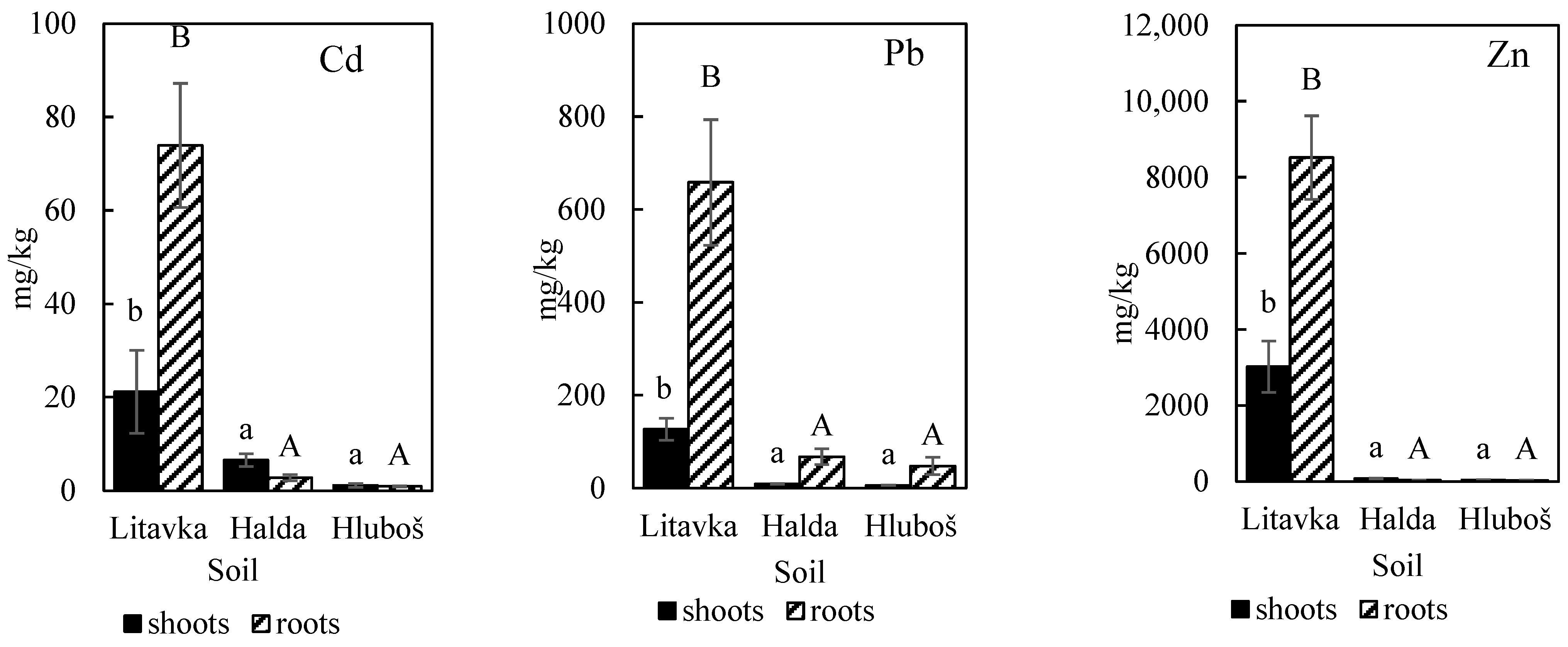
The Cd, Pb, and Zn contents in the Taraxacum sp. plants cultivated in the pot experiment are summarised in Figure 2. Cadmium clearly exceeded typical concentrations, reaching values above 70 mg/kg in Taraxacum sp. roots, whereas Kabata-Pendias [48] reported a typical range of 0.1–0.4 mg/kg and Bini et al. [13] reported 0.52 mg/kg even in polluted areas. These differences indicate not only the extreme pollution of Litavka soil with the high bioaccessibility of Cd, but also the excellent accumulation capacity of Taraxacum sp., as also reported by Adamczyk-Szabela et al. [17]. Quezada-Hinojosa et al. [51] reported that high soil Cd levels reduce Cd accumulation in leaves and aboveground biomass, with a corresponding increase in Cd retention in roots. This pattern was confirmed only for the extremely polluted Litavka soil; in the less contaminated Halda and Hluboš soils, Cd concentrations in the leaves exceeded those in the roots.
Increased accumulation was also observed for Pb and Zn. The lead contents in Taraxacum sp. roots from the Litavka site exceeded 600 mg/kg, whereas typical values in non-polluted areas are reported to be only 1.5–2.4 mg/kg [48]. For Zn, concentrations of up to 8000 mg/kg were recorded at the Litavka site, while typical plant values range from 12 to 47 mg/kg [48]. Bini et al. [13] reported only 65.7 mg/kg in contaminated areas. These results clearly show that the values obtained in this study far exceed common background levels. Taraxacum sp. therefore appears to be a very suitable bioindicator of Zn and Pb pollution, as also confirmed by Bretzel et al. [61] and by Antonova and Pozolotina [62].

3.3. Plant Metabolome as Affected by PTE Contents in Soils

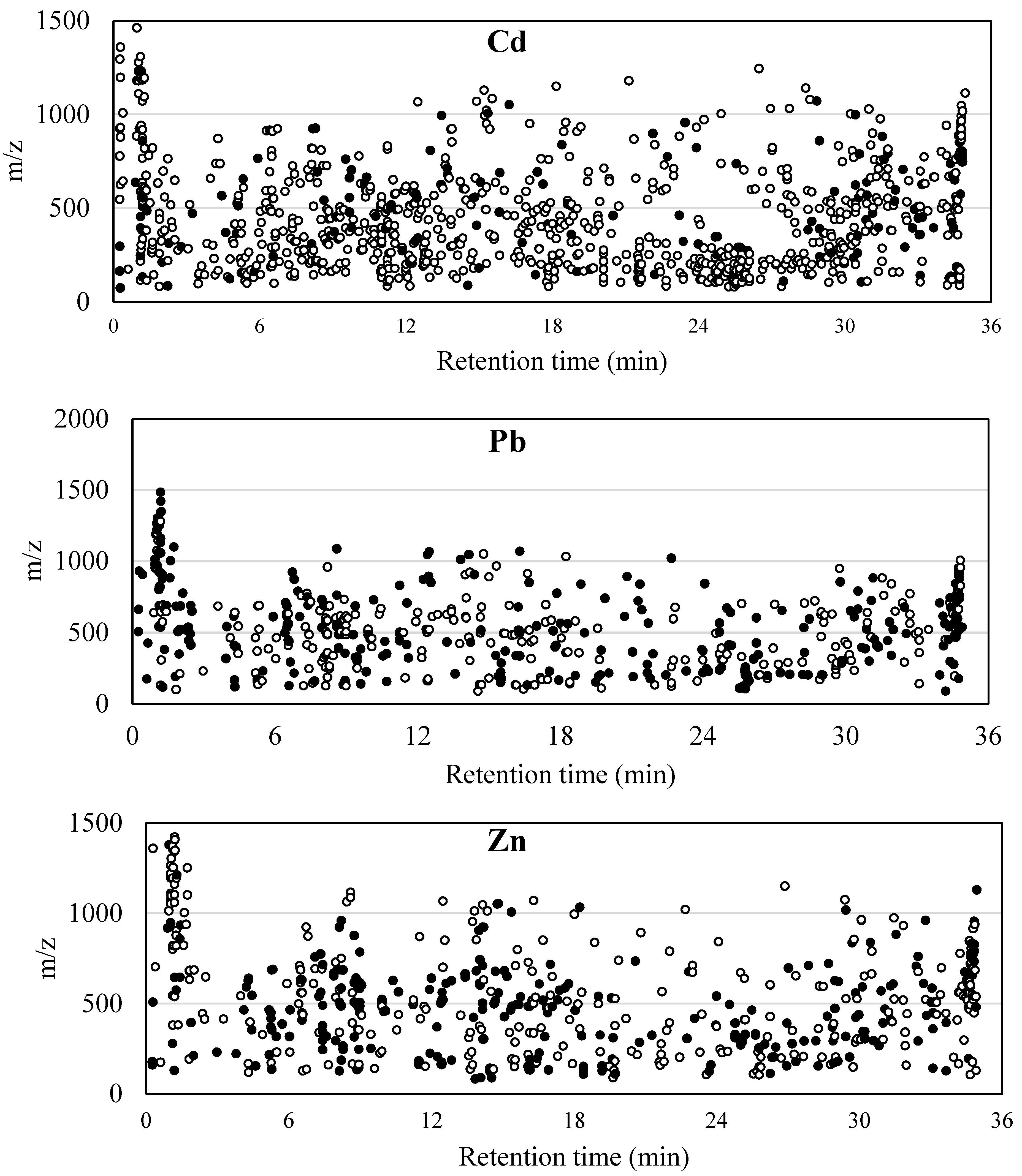
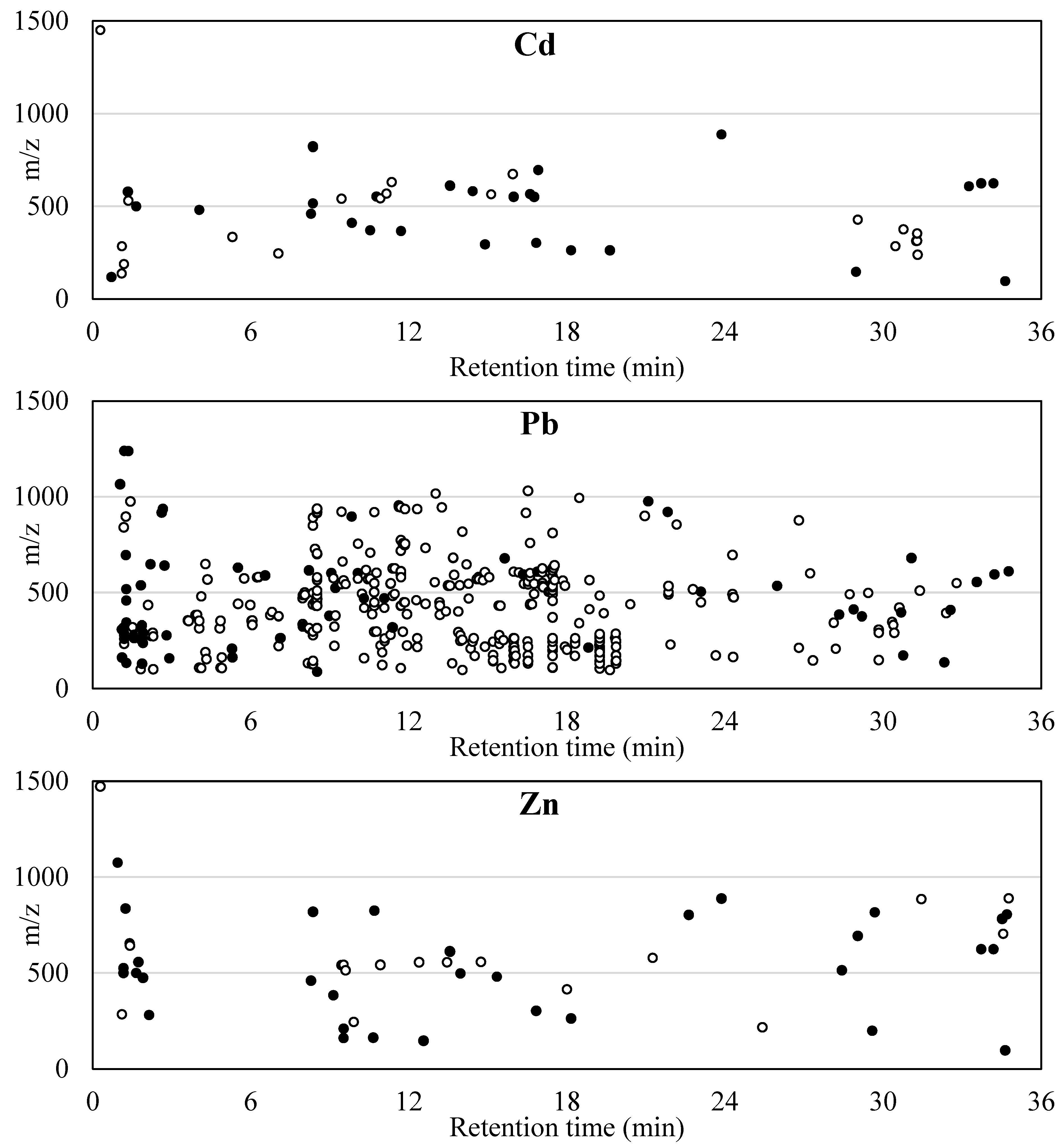
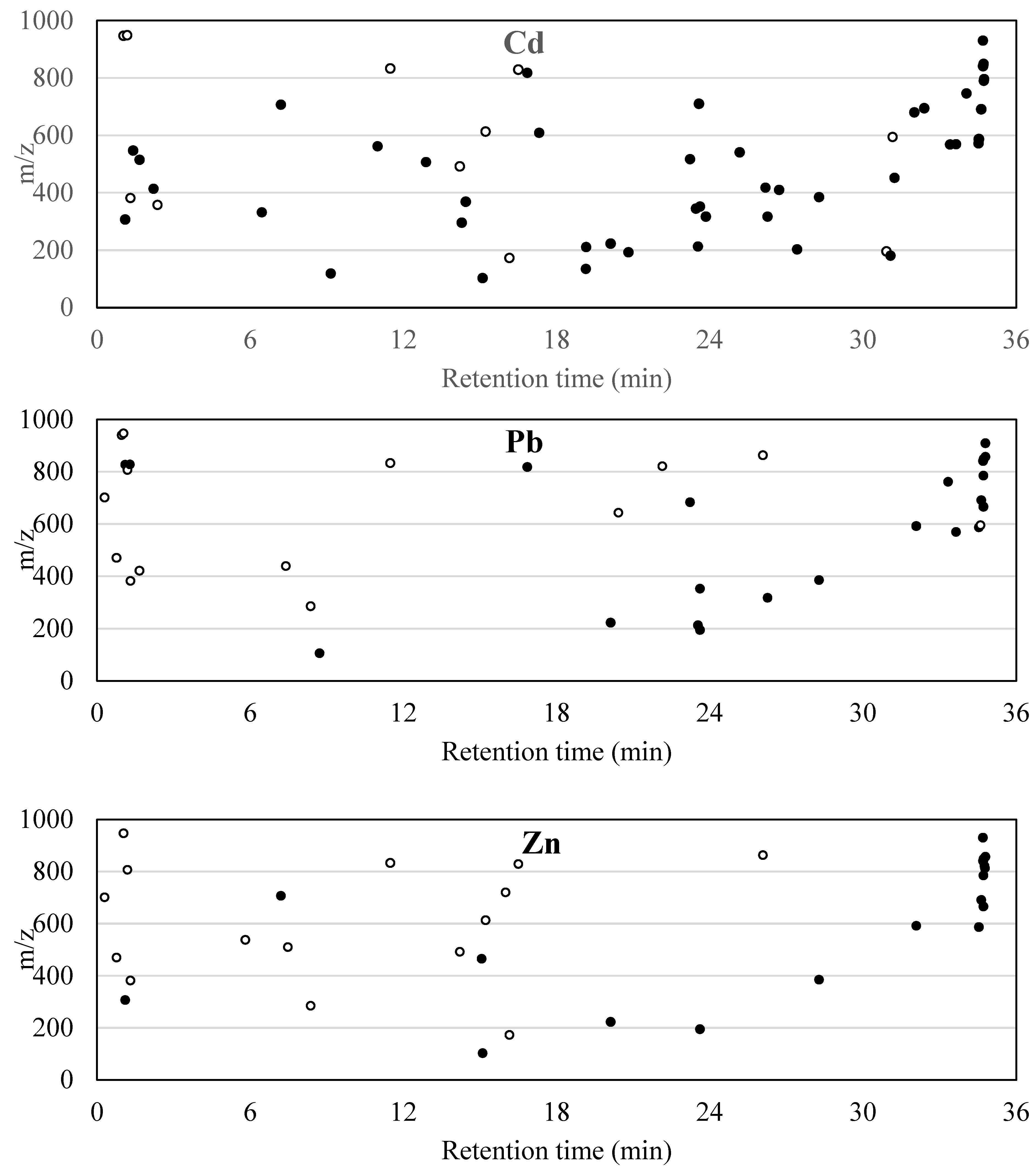
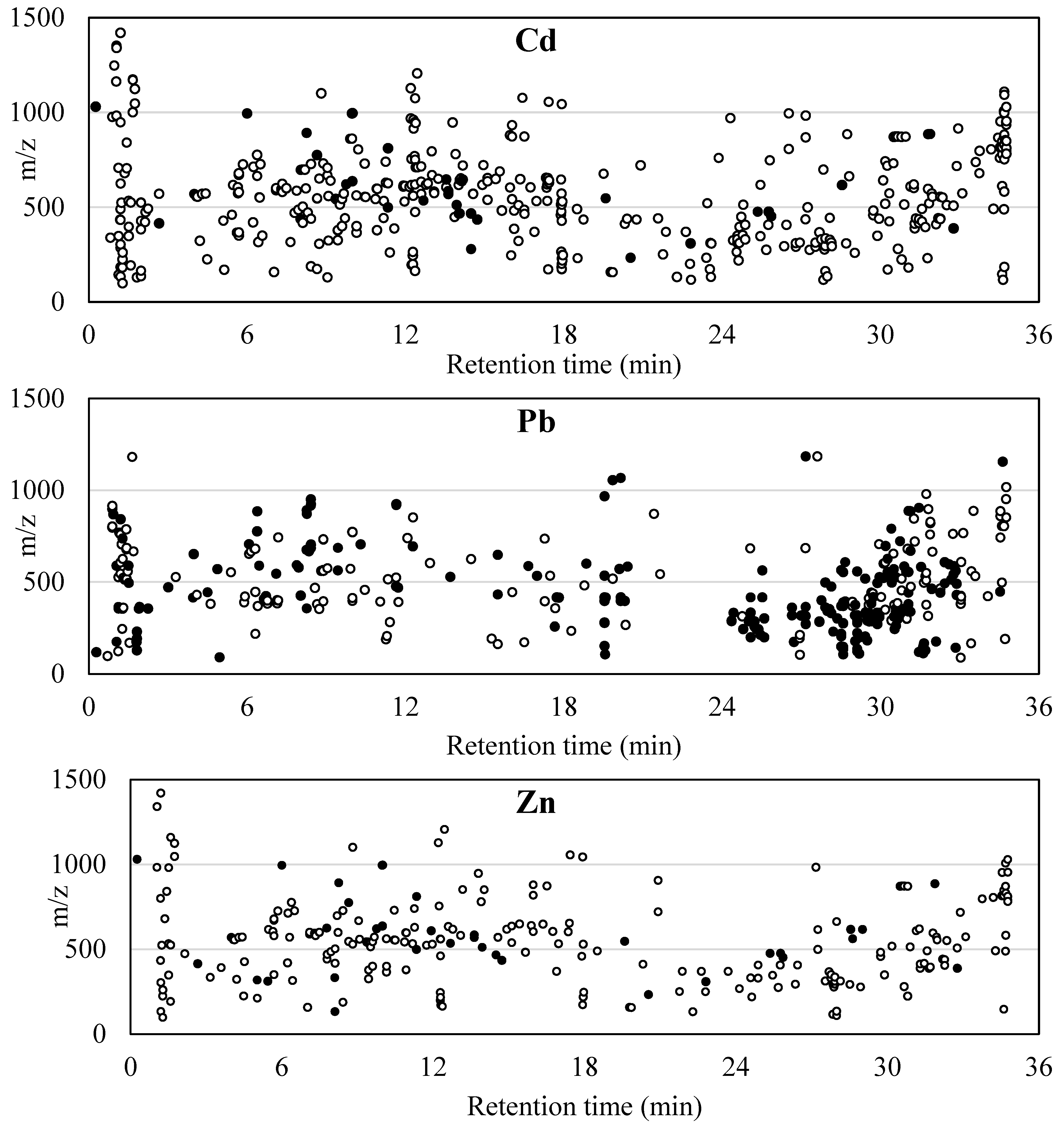
Figure 3, Figure 4, Figure 5 and Figure 6 document strong interrelationships between bioactive substances and risk element contents in plants. Plant constituents can be broadly estimated according to their retention time. Substances with short retention times include amino acids and peptides, fats, and carbohydrates; substances with medium retention times are mainly phenolic compounds; and substances with the longest retention times include esters, sterols, and other lipophilic compounds. In the case of A. millefolium (Figure 3), predominantly negative correlations were recorded for Cd, whereas a lower number of interrelationships, with a similar abundance of positive and negative correlations, was observed for Pb and Zn. A substantially lower number of relationships was recorded in H. maculatum plants (Figure 4), indicating a limited effect of PTEs on the composition of the plant metabolome. Moreover, the data even suggested the stimulation of bioactive compounds in the presence of Cd and Pb. These findings support the abovementioned assumption that H. maculatum can be considered a Cd hyperaccumulator and that elevated levels of this element do not significantly affect its metabolism. In the case of Taraxacum sp. (Figure 5 and Figure 6), negative correlations were recorded for Pb in the aboveground biomass and for Cd, Pb, and Zn in the roots. Although Zn is an essential element, high soil Zn concentrations can be phytotoxic, as demonstrated, for example, by Vysloužilová et al. [63] in willows growing on soils with Zn contents comparable to those in the present study. It is therefore not surprising that the plant metabolome responded negatively to elevated Zn levels in most cases.
In medicinal plants, the content of compounds with demonstrable medicinal effects is of particular importance. Plants may therefore exert a more positive effect on animal organisms when used as feed, or on human health when medicinal herbs are used as infusions, due to the higher contents of biologically active substances. According to the World Health Organization [64], up to 80% of the global population relies on non-conventional medicine based on medicinal herbs. In organic agriculture, the targeted administration of medicinal plants to livestock for therapeutic purposes is also being considered [65]. However, the potential risk associated with human consumption of Taraxacum sp. leaves growing on soils polluted with PTEs (Cd, Pb, and Zn) has been documented, for example, by Atikpo et al. [66], particularly for children. By contrast, Giacomino et al. [67] tested the potential use of young leaves of wild-growing Taraxacum sp. collected along streets as a vegetable. Among the analysed elements (Cd, Cr, Cu, Fe, Mn, Pb, and Zn), the maximum allowable contents in edible vegetables were not exceeded. In addition, de Almeida et al. [68] highlighted Taraxacum sp. as a good source of essential micronutrients, particularly Fe and Mn.
Zarinkamar et al. [30] cultivated H. perforatum plants in Pb-treated soils with Pb concentrations ranging from 75 to 1500 mg/kg. They observed an increase in hypericin content up to a soil Pb level of 600 mg/kg, followed by a decrease at higher Pb concentrations. The question therefore remains whether the presence of PTEs significantly affects the composition of these bioactive compounds. Therefore, the potential adverse effects of PTEs should also be elucidated for other plant bioactive compounds. Plants growing in contaminated areas may also exhibit increased levels of phenolic compounds, such as flavonoids, which is related to the antioxidant response of plant metabolism to elevated concentrations of PTEs [69]. Vanni et al. [16] emphasised the role of phenolic compounds in plant defence against oxidative stress induced by PTEs such as Zn. The interrelationship between active substance contents in medicinal plants and risk element concentrations has also been addressed by Lajayer et al. [70], who noted that the role of plant bioactive compounds in the detoxification of PTEs has not yet been studied in detail because of differences in element properties and the wide range of concentrations occurring in plants. The complexity of these interrelationships is also documented by the results of the present study. Moreover, the increasing contents of the bioactive compounds in the presence of elevated contents of PTEs in soils are not beneficial regarding human health because they can represent a potential risk for the consumers of these medicinal plants due to the enhanced contents of these elements in the biomass.

3.4. Quantification of Selected Phenolic Compounds in Taraxacum sp.

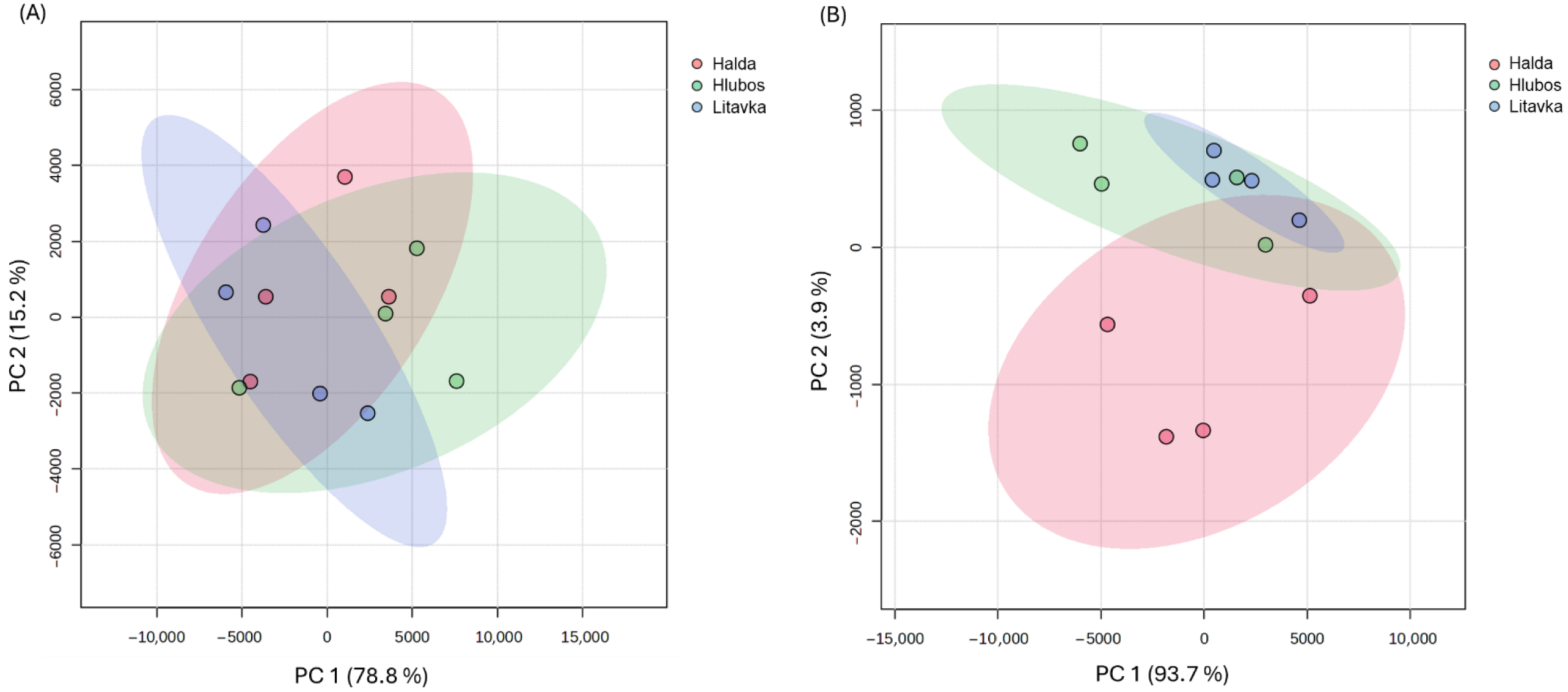
The PCA component score plots (Figure 7) show that in the case of the aboveground biomass of Taraxacum sp., individual groups of samples overlap in the resulting distribution. Although a slight tendency towards differentiation of the groups according to location is evident, the overlap of the data points indicates that the differences in phenolic compound concentrations among the three locations are not significant. These results therefore indicate that the degree of soil contamination did not significantly affect the content of phenolic compounds in the aboveground parts of Taraxacum sp. By contrast, Taraxacum sp. root samples differed more markedly according to location. The group of samples from Halda soil is clearly separated from the other groups and forms a distinct, relatively compact cluster, indicating a specific phenolic compound profile in the roots at this location. Although the groups of samples from Litavka and Hluboš soils overlap, they form a clearly separate area from the Halda group. This pattern suggests that dandelion roots respond to differing soil conditions through differential production or the accumulation of phenolic compounds.
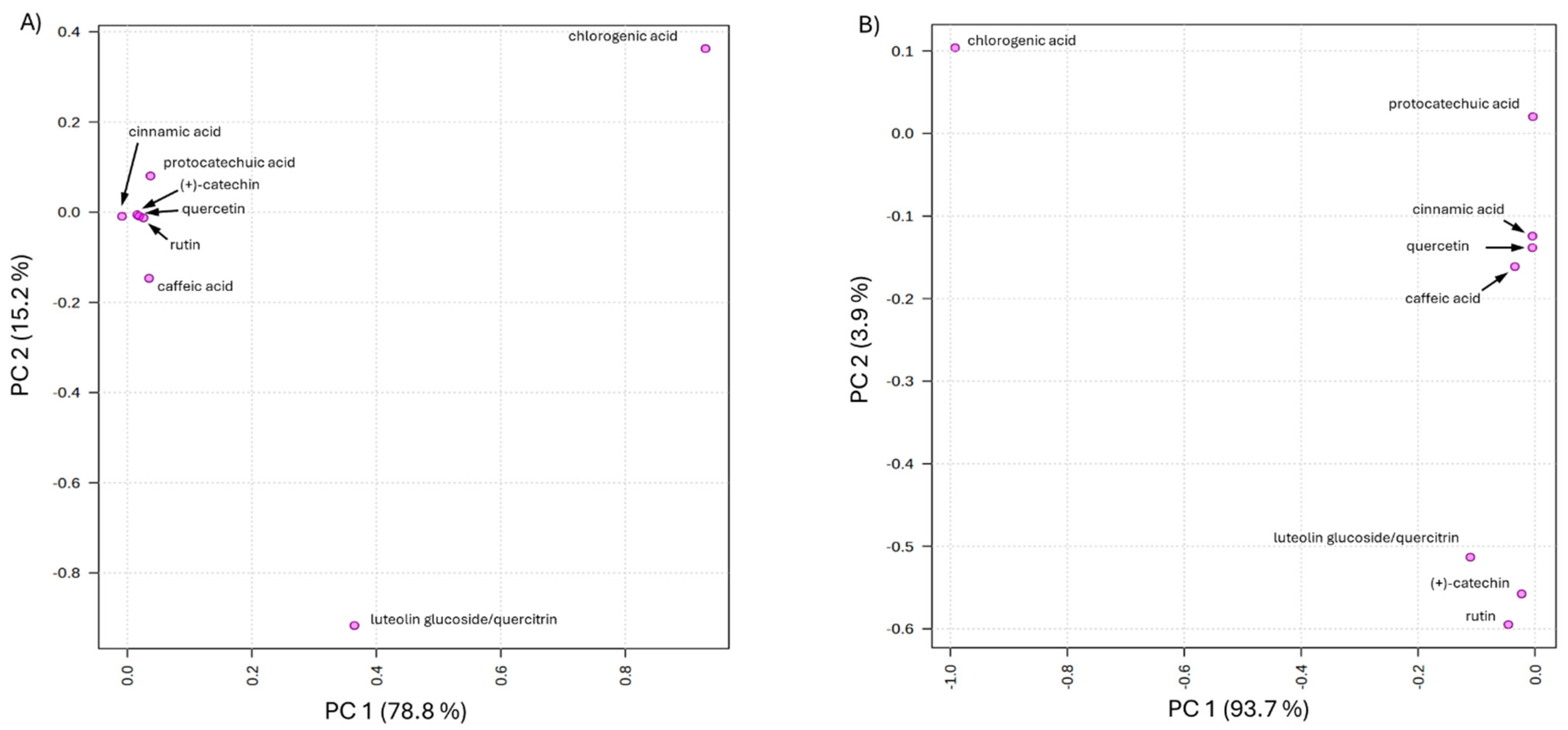
Figure 8 presents the component loadings from the PCA, showing individual phenolic compounds within the first two principal components (PC1 and PC2). In the aboveground biomass, compounds such as chlorogenic acid and protocatechuic acid show the most pronounced separation from other phenolic substances, indicating their strong influence on sample differentiation. Quercitrin/luteolin-glucoside (not resolved) is also distinctly separated from the main group of compounds, exhibiting an opposite direction of influence compared with the other analysed substances. By contrast, compounds such as cinnamic acid, catechin, quercetin, rutin, and caffeic acid are grouped relatively close together, suggesting correlation among them. The analysis of root phenolic compounds reveals a different pattern. Chlorogenic acid is positioned distinctly from other compounds, indicating a markedly different concentration profile in root samples. Conversely, rutin, luteolin glucoside, quercitrin, and catechin cluster together, suggesting positive correlations and a similar contribution to sample differentiation. The compounds located closer to the centre of the plot (protocatechuic acid, quercetin, cinnamic acid, and caffeic acid) exert a more moderate influence, likely contributing to subtler differences among the samples.
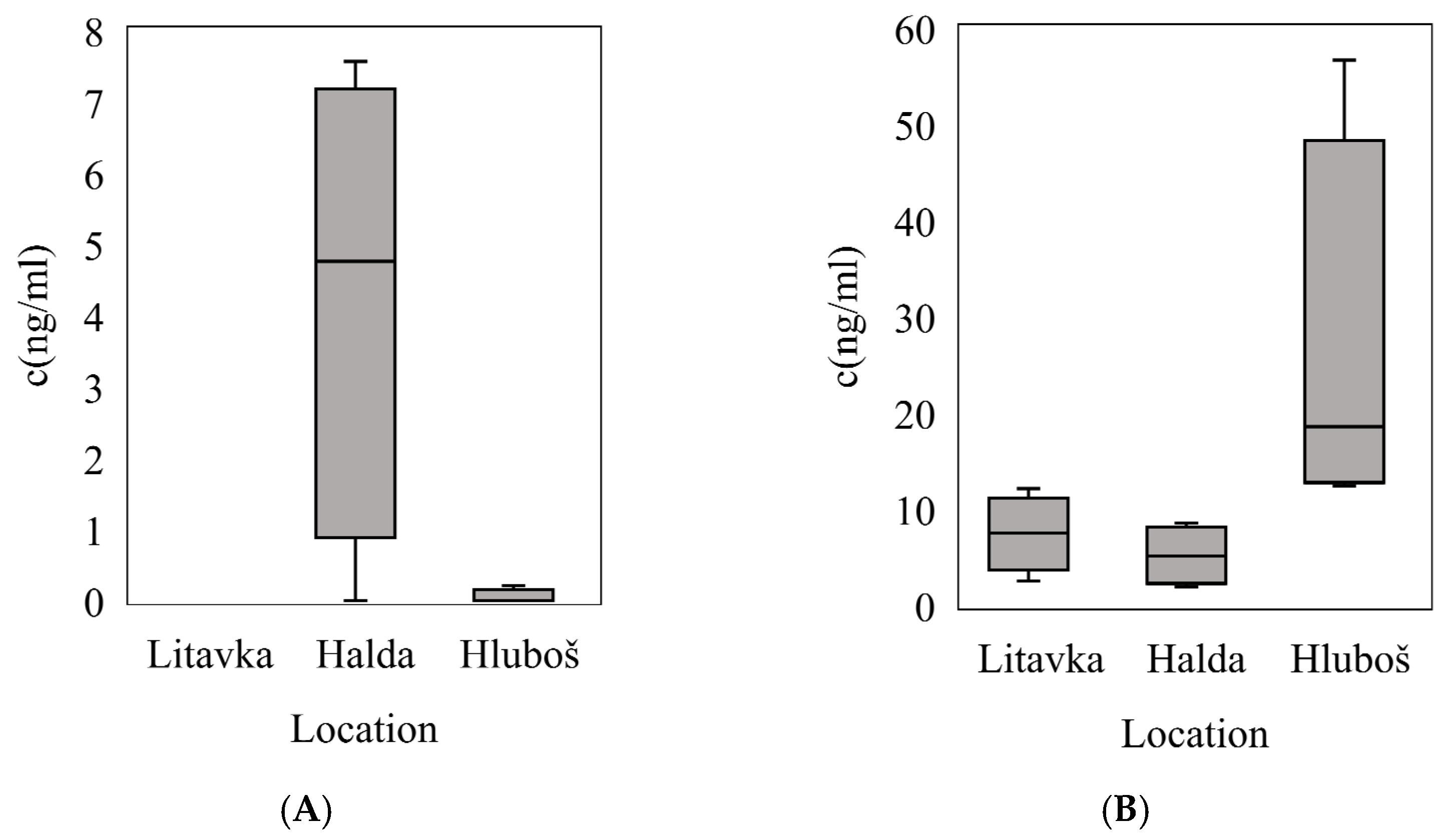
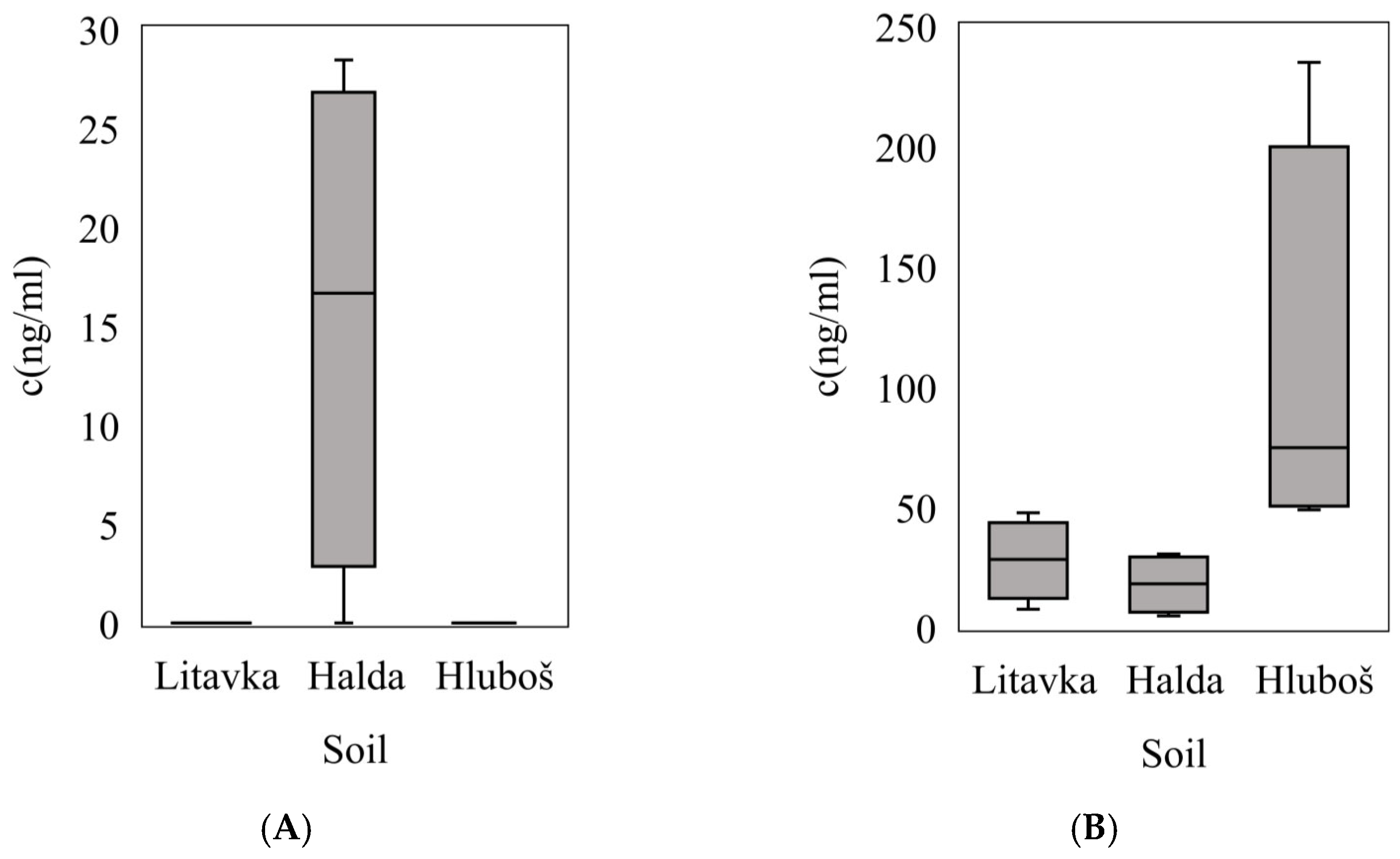
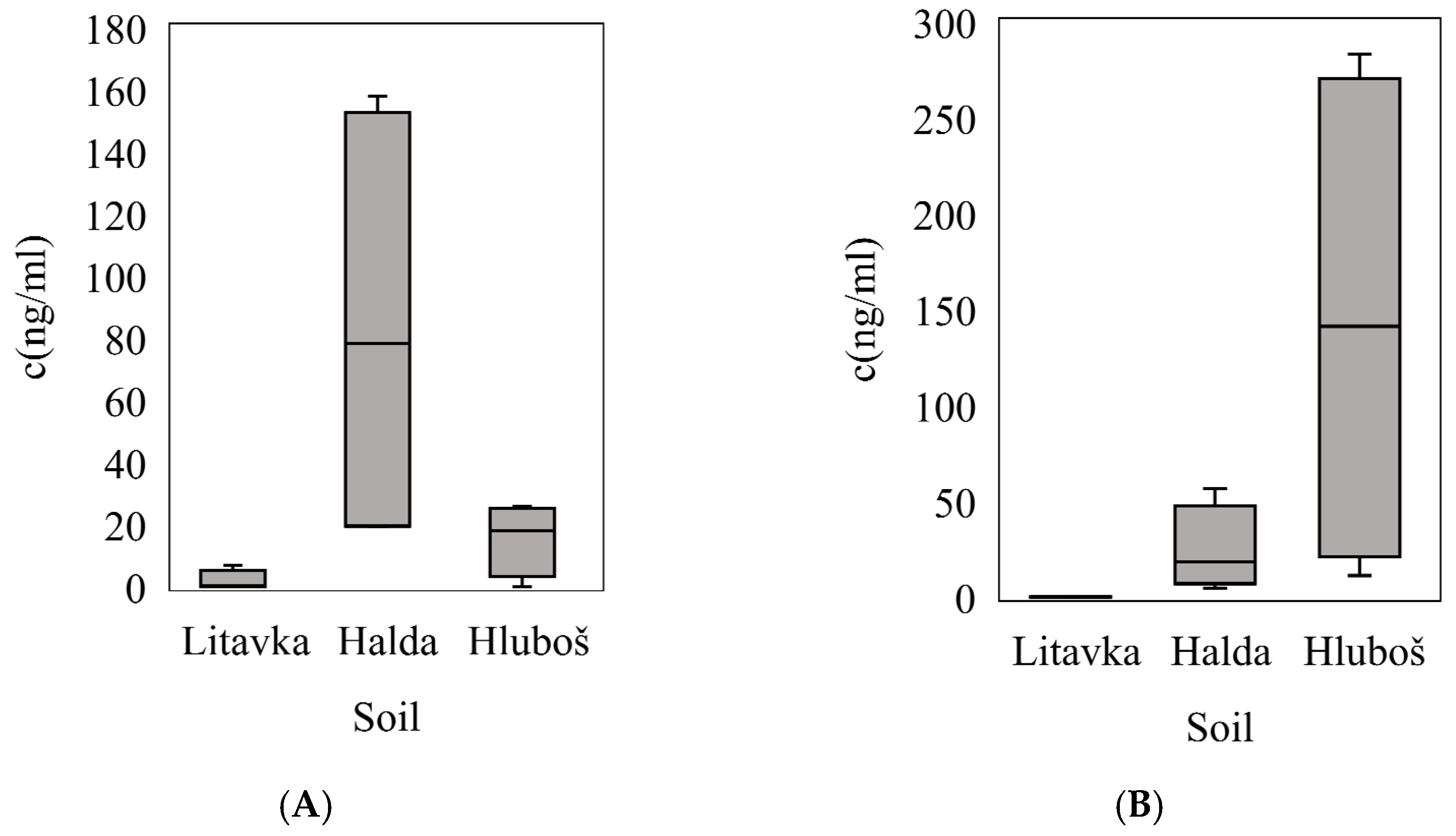
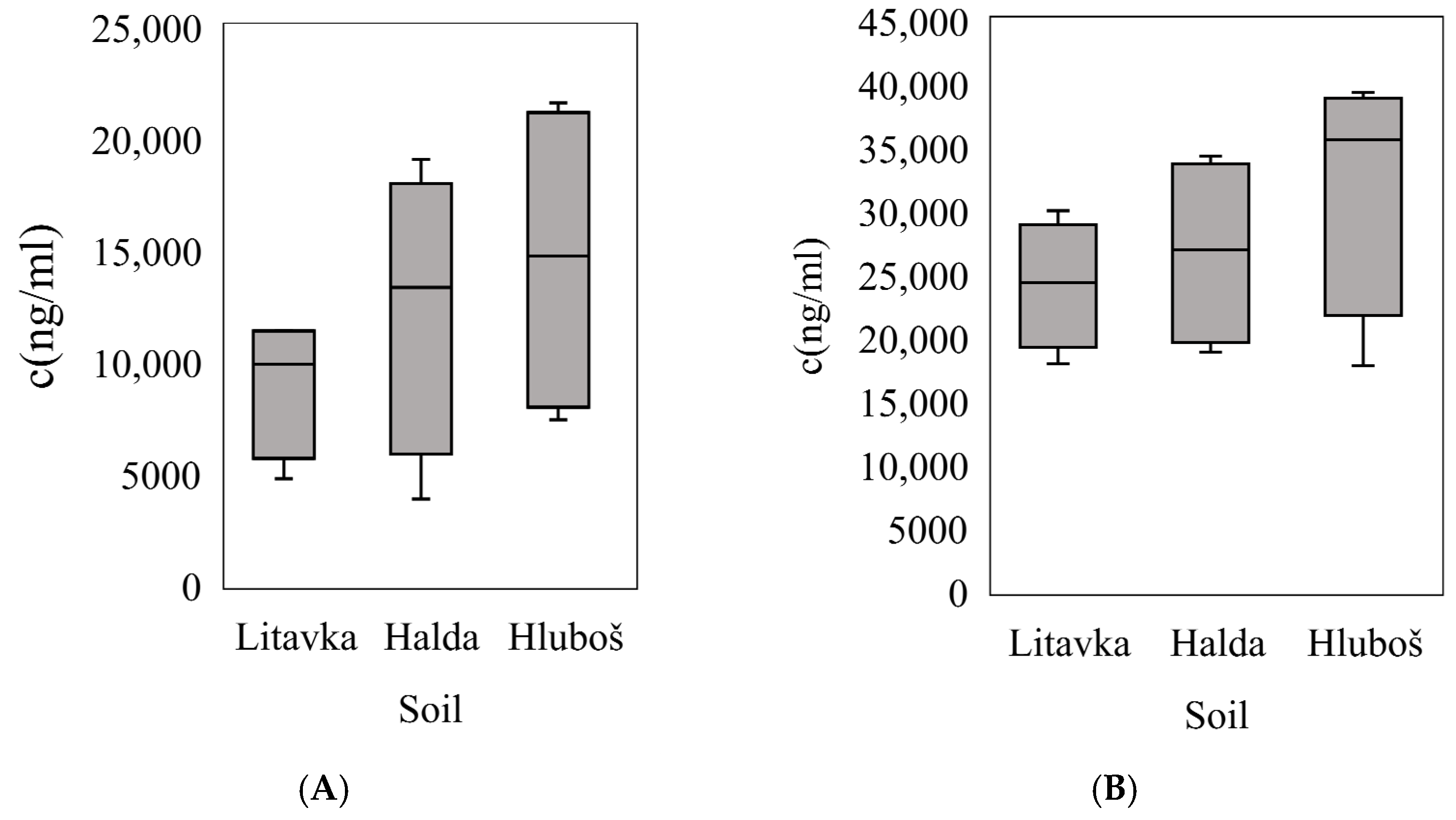
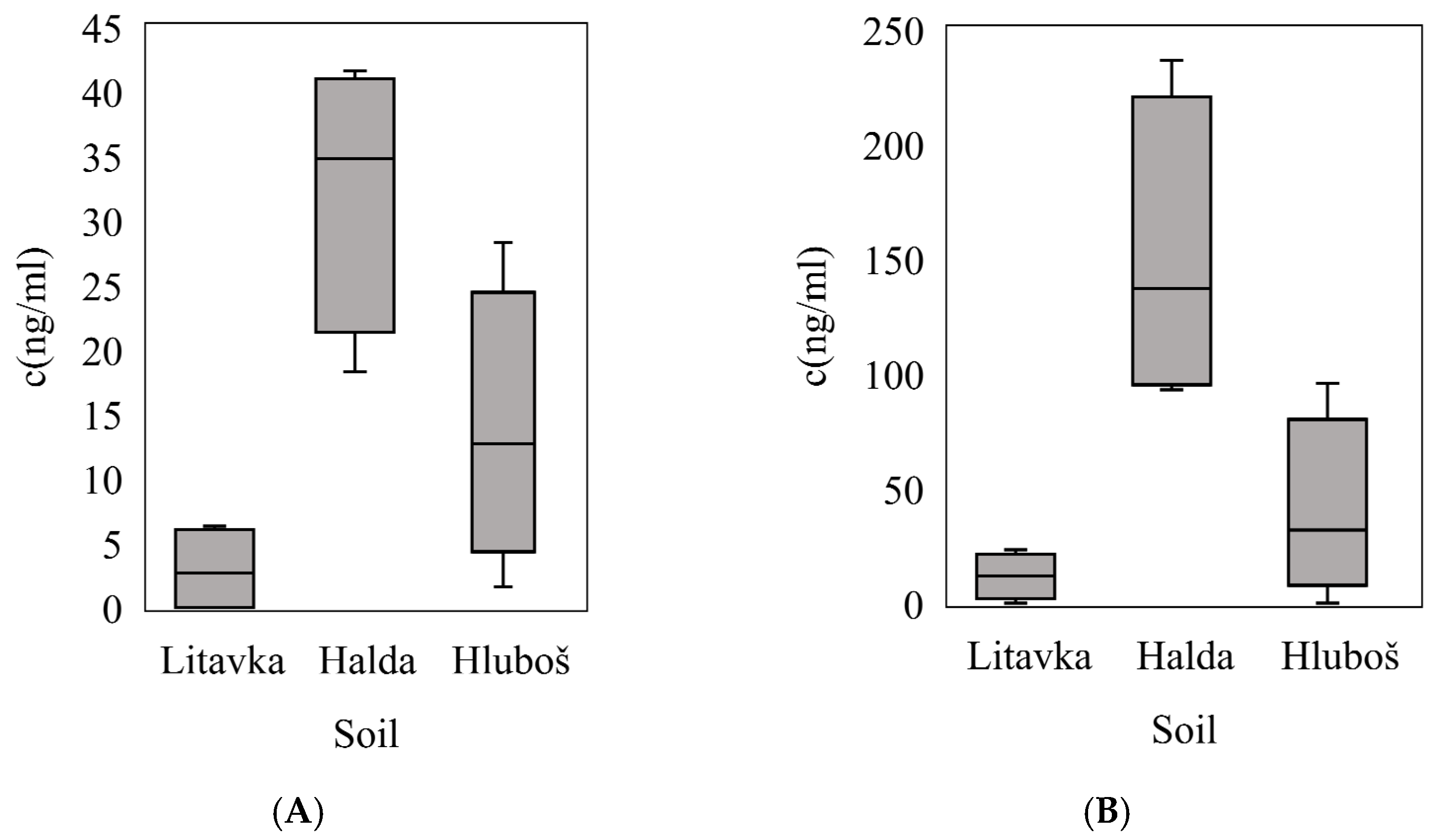
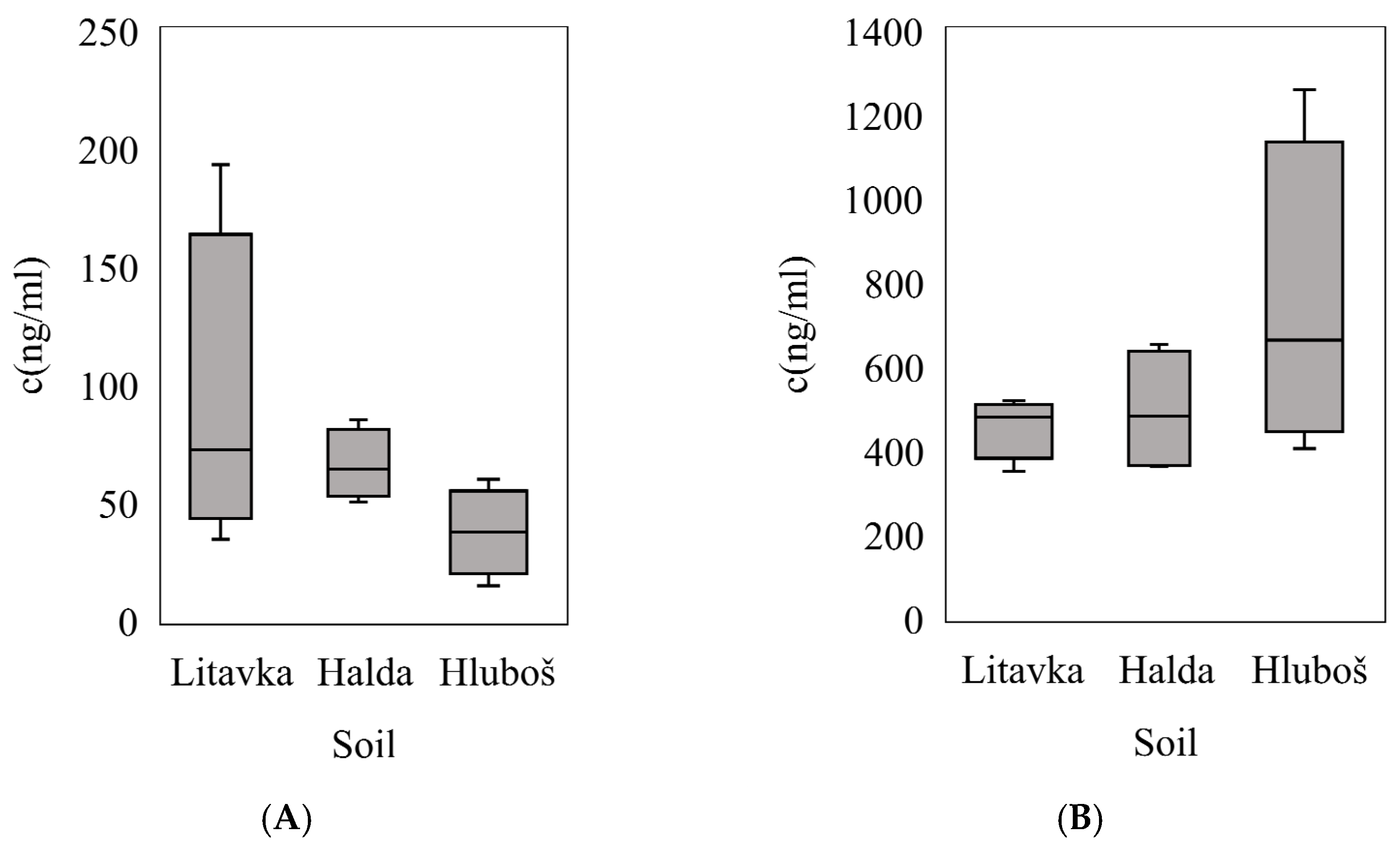
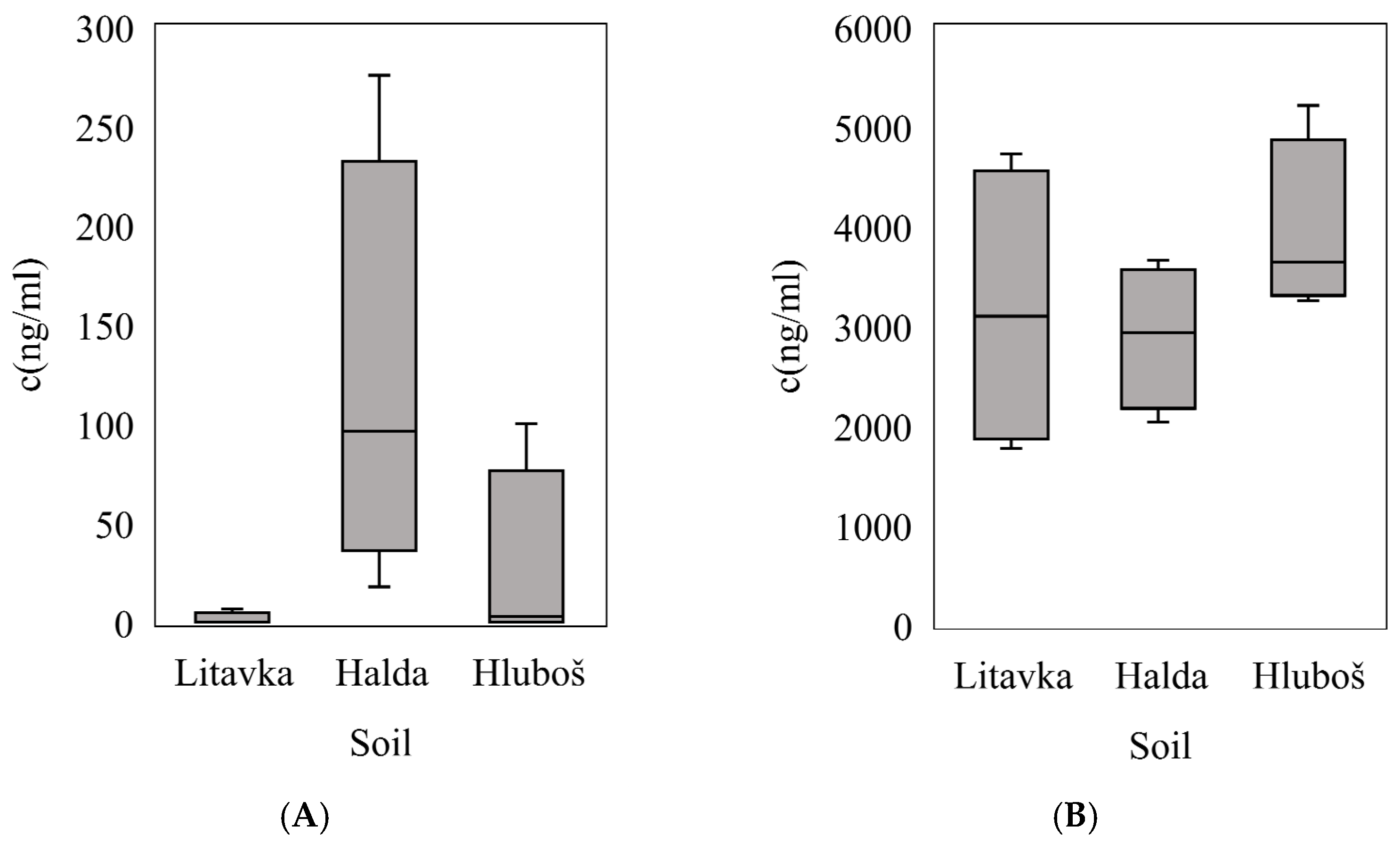
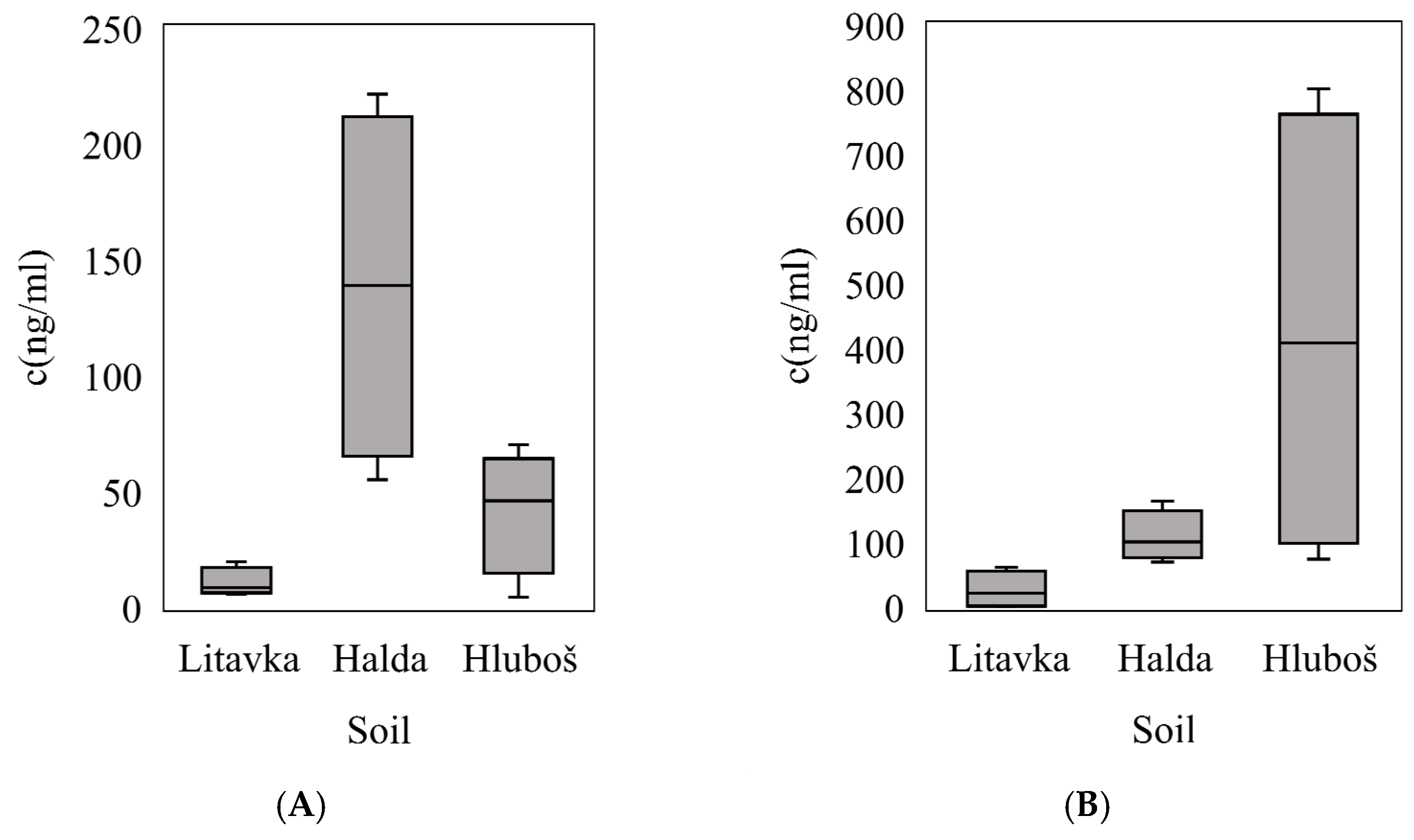
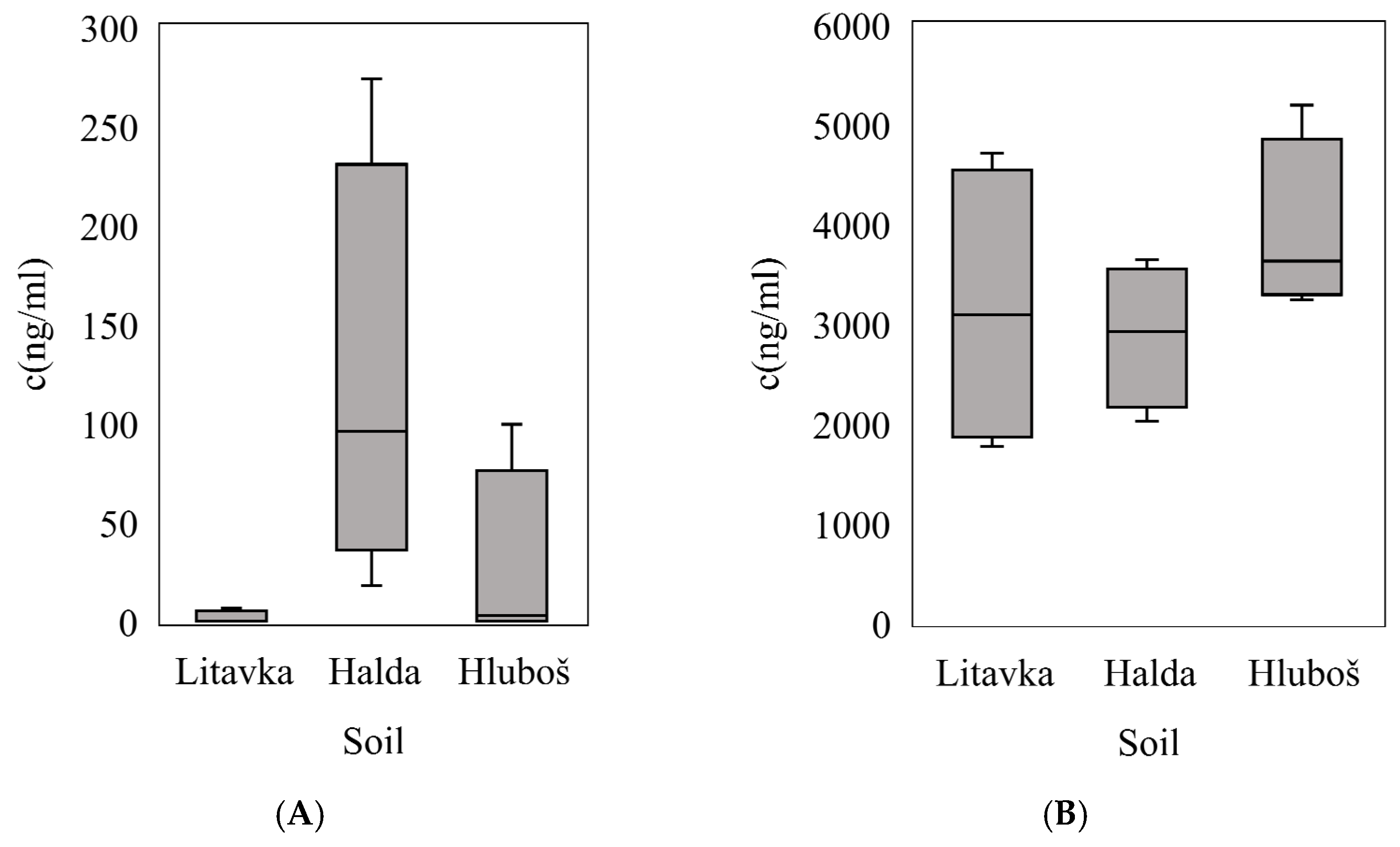
The concentrations of the individual phenolic compounds are presented in Figure 9, Figure 10, Figure 11, Figure 12, Figure 13, Figure 14, Figure 15, Figure 16 and Figure 17. In the aboveground biomass of Taraxacum sp., the concentrations varied among soils (Litavka, Halda, and Hluboš). The highest concentrations of most monitored compounds were recorded in the plants growing at the Hluboš site, which is the least contaminated. This site exhibited significantly higher levels of nearly all substances. The only exception was cinnamic acid, which reached its highest concentration in the plants from the Halda area. These differences may be related to varying contamination levels or environmental stress experienced by the plants at each site. A different pattern was observed in the roots. Most figures (except chlorogenic and protocatechuic acid) indicate that the samples grown in moderately contaminated Halda soil exhibited the highest concentrations of most monitored phenolic compounds, whereas Litavka soil generally showed the lowest concentrations.
Most monitored phenolic compounds showed higher concentrations in the aboveground biomass grown in the least contaminated soil (Hluboš), suggesting that high levels of risk element contamination can negatively affect phenolic biosynthesis. In the roots, however, the highest phenolic compound contents were detected in the samples grown in moderately contaminated Halda soil. This finding is consistent with Vinogradová et al. [71], who reported that phenolic compounds exhibit a hormetic response, whereby biosynthesis is stimulated by mild stress but inhibited at high contaminant concentrations (e.g., Pb, Cd, Cu). Similar results were reported by Bretzel et al. [61], who observed increased anthocyanin and polyphenol contents in Taraxacum sp. growing in urban environments with moderate contamination compared to control plants. These changes were attributed to the adaptive activation of antioxidant systems, in which phenolic compounds function as reactive oxygen species (ROS) scavengers and metal ion chelators. In this context, Lu et al. [72] highlighted the importance of phenolic metabolites (e.g., petunidin, chlorogenic acid, and quercetin-3-O-rhamnoside) in T. mongolicum for scavenging excess ROS induced by combined saline–alkali stress. Kovácik et al. [73] investigated the response of phenolic compounds in Taraxacum sp. exposed to elevated Cd and Ni concentrations in soilless culture (30 μM Cd or Ni for 7 or 14 days). They observed increased total soluble phenols, and major (caftaric and cichoric) and minor (chlorogenic and caffeic) phenolic acids in the presence of both metals, with further increases following prolonged exposure in shoots (14 versus 7 days).
It can therefore be assumed that Taraxacum sp. grown in environments with high contamination levels (Litavka) accumulate lower amounts of phenolic compounds in aboveground parts, potentially due to the disruption of photosynthetic and biosynthetic pathways or the depletion of metabolic reserves during long-term stress exposure [71,74]. More pronounced differences were observed in the Taraxacum sp. roots (Figure 14), where the moderately contaminated Halda site exhibited a distinct phenolic profile. In most cases, higher phenolic compound concentrations were recorded at this location compared to samples from Hluboš (low contamination) or Litavka (high contamination). This pattern suggests that moderate contamination can activate defence mechanisms and stimulate phenolic metabolism, whereas heavy contamination may suppress these processes. Similar mechanisms were described by Janczak-Pieniazek et al. [75], who reported increased activity of phenylpropanoid pathway enzymes, including phenylalanine ammonia lyase and tyrosine ammonia lyase, in wheat exposed to Pb and Cu. The highest enzyme activities and contents of total phenols and flavonoids were observed at lower metal concentrations (200 mg/kg).
Another important factor is the specific role of roots, which are in direct contact with contaminated substrates. Bretzel et al. [61] reported that Taraxacum sp. roots function as storage organs for heavy metals and sites of localised phenolic metabolite production as part of chelation and defence processes. This hypothesis is supported by Michalak [74], who noted that phenolic compounds such as flavonoids, chlorogenic acid, and protocatechuic acid participate in metal ion binding and ROS neutralisation via the phenol/peroxidase system. The stimulation of phenolic metabolism under the influence of PTEs is therefore a complex process.
In summary, soil contamination with hazardous elements exerts a complex and site-specific influence on phenolic compound concentrations in Taraxacum sp. While high contamination levels predominantly suppress phenolic metabolism in aboveground tissues, moderate contamination in roots may stimulate phenolic biosynthesis [73,74,76].

4. Conclusions

The results confirmed that soil pollution resulting from the long-term mining and processing of polymetallic ores can alter the content and composition of bioactive compounds in plants, which is of particular importance in the case of medicinal species. The degree of soil contamination is strongly reflected in the accumulation of PTEs in plant biomass, especially in roots. Although the plants were adapted for mild pollution level, higher levels of phenolic compounds were observed in Taraxacum sp. roots grown in moderately contaminated soil, suggesting that an elevated contamination level may activate defence mechanisms and stimulate phenolic metabolism. The results indicate a complex relationship between chemical and biological parameters and confirm that even slightly elevated levels of PTEs in soil can significantly affect the composition of secondary metabolites in medicinal plants. A decrease in the concentration of some phenolic compounds was observed in the aboveground parts of Taraxacum sp. growing in extremely polluted soil, supporting the hypothesis that stress induced by PTEs may affect the metabolic pathways of these compounds.
The potential use of the studied medicinal plants in human and animal nutrition therefore remains problematic. Although plants grown on contaminated soils may, under certain conditions, exhibit increased levels of some health-beneficial compounds, the presence of PTEs in plant biomass represents a major limitation. As already mentioned, Cd levels, and in some cases also Pb levels, exceeded the maximum permitted concentrations in feed. Similarly, the potential risk of these medicinal plants for human health should be taken into account. In the context of using such plants for the remediation of contaminated areas, there is also a potential risk to wild herbivores as well as livestock grazing in these environments. This study provides new insights into the interaction between environmental contamination and medicinal plant metabolism and may serve as a basis for further research in the fields of phytoremediation, organic farming, and quality control of medicinal plant products.

Author Contributions

Conceptualization, J.S. and P.K.; methodology, P.M.; investigation, M.O.A., Z.N. and K.N.; writing—original draft, Z.N. and J.S.; writing—review and editing, J.S. and P.K.; supervision, J.S. and P.T. All authors have read and agreed to the published version of the manuscript.

Funding

The authors thank the European Regional Development Fund—Project No. CZ.02.1.01/0.0/0.0/16_019/0000845 for the financial support.

Data Availability Statement

The original contributions presented in this study are included in the article.

Conflicts of Interest

The authors declare no conflicts of interest.

References

  1. Stewart-Wade, S.M.; Neumann, S.; Collins, L.L.; Boland, G.J. The biology of Canadian weeds. 117. Taraxacum officinale GH Weber ex Wiggers. Can. J. Plant Sci. 2002, 82, 825–853. [Google Scholar] [CrossRef] [Scilit]
  2. Singh, A.; Sundriyal, A.; Joshi, B.C.; Mukhija, M.; Loshali, A. Unveiling the phytopharmacological insights of Taraxacum officinale. Discov. Plants 2025, 2, 14. [Google Scholar] [CrossRef] [Scilit]
  3. Di Napoli, A.; Zucchetti, P. A comprehensive review of the benefits of Taraxacum officinale on human health. Bull. Nat. Res. Cent. 2021, 45, 110. [Google Scholar] [CrossRef] [Scilit]
  4. Rasool, S.; Sharma, B. Taraxacum officinale: A high value less known medicinal plant. Ann. Plant Sci. 2014, 3, 908–915. [Google Scholar]
  5. Wu, J.; Sun, J.; Liu, M.; Zhang, X.; Kong, L.; Ma, L.; Jiang, S.; Liu, X.; Ma, W. Botany, traditional use, phytochemistry, pharmacology and quality control of Taraxaci herba: Comprehensive review. Pharmaceuticals 2024, 17, 1113. [Google Scholar] [CrossRef] [Scilit] [PubMed]
  6. Trojanová, I.; Rada, V.; Kokoska, L.; Vlková, E. The bifidogenic effect of Taraxacum officinale root. Fitoterapia 2004, 75, 760–763. [Google Scholar] [CrossRef] [Scilit] [PubMed]
  7. Takasaki, M.; Konoshima, T.; Tokuda, H.; Masuda, K.; Arai, Y.; Shiojima, K.; Ageta, H. Anti-carcinogenic activity of Taraxacum plant I. Biol. Pharm. Bull. 1999, 22, 602–605. [Google Scholar] [CrossRef] [Scilit]
  8. Biel, W.; Jaroszewska, A.; Lyson, E.; Telesinski, A. The chemical composition and antioxidant properties of common dandelion leaves compared with sea buckthorn. Canad. J. Plant Sci. 2017, 97, 1165–1174. [Google Scholar] [CrossRef] [Scilit]
  9. Opletal, L. Nutraceuticals, Plant Secondary Metabolites. In Natural Products and Their Biological Activity; Nakladatelství Karolinum: Prague, Czech Republic, 2016; Volume 3. (In Czech) [Google Scholar]
  10. El-Chaghaby, G.A.; Mohammed, F.S.; Rashad, S.; Uysal, I.; Kocer, O.; Lekesiz, Ö.; Dogan, M.; Sabik, A.E.; Sevindik, M. Genus Hypericum: General properties, chemical contents and biological activities. Egypt. J. Bot. 2024, 64, 1–26. [Google Scholar] [CrossRef] [Scilit]
  11. Opletal, L.; Skřivanová, V. Use of Substances to Influence Physiological Processes in Farm Animals. In Natural Products and Their Biological Activity; Nakladatelství Karolinum: Prague, Czech Republic, 2010; Volume 2. (In Czech) [Google Scholar]
  12. Spilková, J.; Martin, J.; Siatka, T.; Tůmová, L.; Kašparová, M. Farmacognosia; Nakladatelství Karolinum: Prague, Czech Republic, 2016. (In Czech) [Google Scholar]
  13. Bini, C.; Wahsha, M.; Fontana, S.; Maleci, L. Effects of heavy metals on morphological characteristics of Taraxacum officinale Web growing on mine soils in NE Italy. J. Geochem. Explor. 2012, 123, 101–108. [Google Scholar] [CrossRef] [Scilit]
  14. Gjorgieva, D.; Kadifkova-Panovska, T.; Baceva, K.; Stafilov, T. Content of toxic and essential metals in medicinal herbs growing in polluted and unpolluted areas of Macedonia. Arch. Ind. Hyg. Toxicol. 2010, 61, 297–303. [Google Scholar] [CrossRef] [Scilit]
  15. Cheng, H.; Liu, Q.; Ma, M.; Liu, Y.; Wang, W.; Ning, W. Cadmium tolerance, distribution, and accumulation in Taraxacum ohwianum Kitam. as a potential Cd-hyperaccumulator. Int. J. Phytoremediat. 2019, 21, 541–549. [Google Scholar] [CrossRef] [Scilit] [PubMed]
  16. Vanni, G.; Cardelli, R.; Marchini, F.; Saviozzi, A.; Guidi, L. Are the physiological and biochemical characteristics in dandelion plants growing in an urban area (Pisa, Italy) indicative of soil pollution? Water Air Soil Pollut. 2015, 226, 124. [Google Scholar] [CrossRef] [Scilit]
  17. Adamczyk-Szabela, D.; Lisowska, K.; Wolf, W.M. Hysteresis of heavy metals uptake induced in Taraxacum officinale by thiuram. Sci. Rep. 2021, 11, 20151. [Google Scholar] [CrossRef] [Scilit] [PubMed]
  18. Adomako, M.O.; Yu, F.H. Effects of resource availability on the growth, Cd accumulation, and photosynthetic efficiency of three hyperaccumulator plant species. J. Environ. Manag. 2023, 345, 118762. [Google Scholar] [CrossRef] [Scilit]
  19. Nazir, S.; Ahmad, K.S.; Zafar, M.; Mehmood, A.; Abbasi, A.M.; Khan, M.F.; Hussain, S. Taraxacum officinale as sentinel for heavy metal bioaccumulation and phytostabilization in urban soils. Int. J. Environ. Sci. Technol. 2025, 23, 60. [Google Scholar] [CrossRef] [Scilit]
  20. Bartkowiak, A.; Lemanowicz, J.; Rydlewska, M.; Sowiński, P. The Impact of Proximity to Road Traffic on Heavy Metal Accumulation and Enzyme Activity in Urban Soils and Dandelion. Sustainability 2024, 16, 812. [Google Scholar] [CrossRef] [Scilit]
  21. Respondek, Z.; Isinkaralar, O.; Świsłowski, P.; Isinkaralar, K.; Rajfur, M. Biomonitoring with the Use of the Herbal Plant Taraxacum officinale as a Source of Information on Environmental Contamination. Plants 2024, 13, 1805. [Google Scholar] [CrossRef] [Scilit]
  22. Radanovic, D.; Antic-Mladenovic, S.; Jakovljevic, M. Influence of some soil characteristics on heavy metal content in Hypericum perforatum L. and Achillea millefolium L. Acta Hortic. 2002, 576, 295–301. [Google Scholar] [CrossRef] [Scilit]
  23. Bajra-Brahimaj, T.; Muriqi, S.; Zogaj, M.; Sahiti, H.; Hajdari, A.; Dalo, E.; Bresilla, B. Bioindicator potential and stress responses of Achillea millefolium to heavy metal contamination in Kosovo soils. J. Ecol. Eng. 2026, 27, 140–149. [Google Scholar] [CrossRef] [Scilit]
  24. Piga, G.K.; Cossu, M.; Garau, G.; Garau, M.; Melito, S. Germination and seedling development of selected Mediterranean aromatic plants in heavy metal contaminated soils: A preliminary study for the recovery of mining sites in Sardinia. Italian J. Agron. 2025, 20, 100041. [Google Scholar] [CrossRef] [Scilit]
  25. Asare, M.O.; Pellegrini, E.; Száková, J.; Blöcher, J.R.; Najmanová, J.; Tlustoš, P.; Contin, M. Organic amendments to short rotation coppice (SRC) plantation affect species richness and metal accumulation of spontaneously growing herbaceous plants. J. Soil Sci. Plant Nutr. 2024, 24, 1474–1488. [Google Scholar] [CrossRef] [Scilit]
  26. Asare, M.O.; Száková, J.; Najmanová, J.; Tlustoš, P. Leaf accumulation capacity of herbaceous plants growing on fields contaminated with anthropogenically induced potentially toxic elements under natural soil conditions. Land Degrad. Develop. 2025, 36, 630–642. [Google Scholar] [CrossRef] [Scilit]
  27. Asare, M.O.; Pellegrini, E.; Száková, J.; Najmanová, J.; Tlustoš, P.; Contin, M. Abilities of herbaceous plant species to phytoextract Cd, Pb, and Zn from arable soils after poly-metallic mining and smelting. Environ. Sci. Pollut. Res. 2025, 32, 8834–8849. [Google Scholar] [CrossRef] [Scilit]
  28. Wahsha, M.; Bini, C.; Fontana, S.; Wahsha, A.; Zilioli, D. Toxicity assessment of contaminated soils from a mining area in Northeast Italy by using lipid peroxidation assay. J. Geochem. Explor. 2012, 113, 112–117. [Google Scholar] [CrossRef] [Scilit]
  29. Maleci, L.; Buffa, G.; Wahsha, M.; Bini, C. Morphological changes induced by heavy metals in dandelion (Taraxacum officinale Web.) growing on mine soils. J. Soils Sedim. 2014, 14, 731–743. [Google Scholar] [CrossRef] [Scilit]
  30. Zarinkamar, F.; Ghelich, S.; Soleimanpour, S. Toxic effects of Pb on anatomy and hypericin content in Hypericum perforatum L. Bioremed. J. 2013, 17, 40–51. [Google Scholar] [CrossRef] [Scilit]
  31. Savinov, A.B.; Kurganova, L.N.; Shekunov, Y.I. Lipid peroxidation rates in Taraxacum officinale Wigg. and Vicia cracca L. from biotopes with different levels of soil pollution with heavy metals. Russ. J. Ecol. 2007, 38, 174–180. [Google Scholar] [CrossRef] [Scilit]
  32. Rieuwerts, J.; Farago, M.; Cikrt, M.; Bencko, V. Heavy metal concentrations in and around households near a secondary lead smelter. Environ. Monit. Assess. 1999, 58, 317–335. [Google Scholar] [CrossRef] [Scilit]
  33. Mihaljevič, M.; Zuna, M.; Ettler, V.; Šebek, O.; Strnad, L.; Goliáš, V. Lead fluxes, isotopic and concentration profiles in a peat deposit near a lead smelter (Příbram, Czech Republic). Sci. Total Environ. 2006, 372, 334–344. [Google Scholar] [CrossRef] [Scilit]
  34. Šichorová, K.; Tlustoš, P.; Száková, J.; Kořínek, K.; Balík, J. Horizontal and vertical variability of heavy metals in the soil of a polluted area. Plant Soil Environ. 2004, 50, 525–534. [Google Scholar] [CrossRef] [Scilit]
  35. Vrubel, J.; Tratinová, M.; Trojáček, P. Contamination of Agricultural Soil by Lead, Cadmium and Arsenic in the Area of Agriculture Farm Sádek Located in Lhota near Příbram; Ekotoxa: Opava, Czech Republic, 1996. (In Czech) [Google Scholar]
  36. Kubátová, P.; Száková, J.; Břendová, K.; Kroulíková-Vondráčková, S.; Mercl, F.; Tlustoš, P. Effects of summer and winter harvesting on element phytoextraction efficiency of Salix and Populus clones planted on contaminated soil. Int. J. Phytoremediat. 2018, 20, 499–506. [Google Scholar] [CrossRef] [Scilit]
  37. Kubátová, P.; Žilinčíková, N.; Száková, J.; Zemanová, V.; Tlustoš, P. Is the harvest of Salix and Populus clones in the growing season truly advantageous for the phytoextraction of metals from a long-term perspective? Sci. Total Environ. 2022, 838, 156630. [Google Scholar] [CrossRef] [Scilit]
  38. Vaněk, A.; Borůvka, L.; Drábek, O.; Mihaljevič, M.; Komárek, M. Mobility of lead, zinc and cadmium in alluvial soils heavily polluted by smelting industry. Plant Soil Environ. 2005, 51, 316–321. [Google Scholar] [CrossRef] [Scilit]
  39. Vejvodová, K.; Száková, J.; García-Sánchez, M.; Praus, L.; García-Romera, I.; Tlustoš, P. Effect of dry olive residue-based biochar and arbuscular mycorrhizal fungi inoculation on the nutrient status and trace element contents in wheat grown in the As, Cd, Pb, and Zn contaminated soils. J. Soil Sci. Plant Nutr. 2020, 20, 1067–1079. [Google Scholar] [CrossRef] [Scilit]
  40. ISO 11260 (1994); Standard of Soil Quality—Determination of Effective Cation Exchange Capacity and Base Saturation Level Using Barium Chloride Solution. International Organization for Standardization: Geneve, Switzerland, 1994.
  41. Mehlich, A. Mehlich 3 Soil test extractant: A modification of Mehlich 2 extractant. Commun. Soil Sci. Plant Anal. 1984, 15, 1409–1416. [Google Scholar] [CrossRef] [Scilit]
  42. Quevauviller, P.; Ure, A.; Muntau, H.; Griepink, B. Improvement of analytical measurements within the BCR program—Single and sequential extraction procedures applied to soil and sediment analysis. Int. J. Environ. Anal. Chem. 1993, 51, 129–134. [Google Scholar] [CrossRef] [Scilit]
  43. Rusalepp, L.; Raal, A.; Püssa, T.; Mäeorg, U. Comparison of chemical composition of Hypericum perforatum and H. maculatum in Estonia. Biochem. Syst. Ecol. 2017, 73, 41–46. [Google Scholar] [CrossRef] [Scilit]
  44. European Union Reference Laboratory (EURL). Analysis of Acidic Pesticides in Wheat Flour Samples by LC-MS(/MS) Using the QuEChERS Method; CRL for Single Residue Methods; European Union Reference Laboratory: Fellbach, Germany, 2007; pp. 1–7. [Google Scholar]
  45. Marrugo-Negrete, J.; Pinedo-Hernández, J.; Díez, S. Assessment of heavy metal pollution, spatial distribution and origin in agricultural soils along the Sinú River Basin, Colombia. Environ. Res. 2017, 154, 380–388. [Google Scholar] [CrossRef] [Scilit]
  46. Legal Code of The Czech Republic. Public Notice No.153/2016 About the Conditions for the Protection of the Agricultural Soil Quality; Legal Code of The Czech Republic: Prague, Czech Republic, 2016; pp. 2692–2699. (In Czech) [Google Scholar]
  47. Nováková, T.; Kotková, K.; Elznicová, J.; Strnad, L.; Engel, Z.; Matys Grygar, T. Pollutant dispersal and stability in a severely polluted floodplain: A case study in the Litavka River, Czech Republic. J. Geochem. Explor. 2015, 156, 131–144. [Google Scholar] [CrossRef] [Scilit]
  48. Žák, K.; Rohovec, J.; Navrátil, T. Fluxes of heavy metals from a highly polluted watershed during flood events: A case study of the Litavka river, Czech Republic. Water Air Soil Pollut. 2009, 203, 343–358. [Google Scholar] [CrossRef] [Scilit]
  49. Kabata-Pendias, A. Trace Elements in Soils and Plants, 4th ed.; CRC Press: Boca Raton, FL, USA, 2011; 548p. [Google Scholar]
  50. Alloway, B.J. Heavy Metals in Soils; Blackie and Son Ltd.: Glasgow, Scotland, 1990. [Google Scholar]
  51. Quezada-Hinojosa, R.; Föllmi, K.B.; Gillet, F.; Matera, V. Cadmium accumulation in six common plant species associated with soils containing high geogenic cadmium concentrations at Le Gurnigel, Swiss Jura Mountains. Catena 2015, 124, 85–96. [Google Scholar] [CrossRef] [Scilit]
  52. Moreno-Jiménez, E.; Peñalosa, J.M.; Manzano, R.; Carpena-Ruiz, R.O.; Gamarra, R.; Esteban, E. Heavy metals distribution in soils surrounding an abandoned mine in NW Madrid (Spain) and their transference to wild flora. J. Hazard. Mater. 2009, 162, 854–859. [Google Scholar] [CrossRef] [Scilit]
  53. Králová, K.; Masarovicová, E. Hypericum perforatum L. and Chamomilla recutita (L.) Rausch. -accumulators of some toxic metals. Pharmazie 2003, 58, 359–360. [Google Scholar]
  54. Fröhlichová, A.; Száková, J.; Najmanová, J.; Tlustoš, P. An assessment of the risk of element contamination of urban and industrial areas using Taraxacum sect. Ruderalia as a bioindicator. Environ. Monit. Assess. 2018, 190, 150. [Google Scholar] [CrossRef] [Scilit] [PubMed]
  55. Babayan, B.; Yesayan, A.; Sevoyan, G.; Yesayan, T. Genetic changes in common dandelion (Taraxacum officinale) induced by high concentrations of heavy metals in soil. Funct. Foods Health Dis. 2025, 15, 625–633. [Google Scholar] [CrossRef] [Scilit]
  56. Gómez-Arroyo, S.; Barba-García, A.; Arenas-Huertero, F.; Cortés-Eslava, J.; de la Mora, M.G.; García-Martínez, R. Indicators of environmental contamination by heavy metals in leaves of Taraxacum officinale in two zones of the metropolitan area of Mexico City. Environ. Sci. Pollut. Res. 2018, 25, 4739–4749. [Google Scholar] [CrossRef] [Scilit] [PubMed]
  57. Shtangeeva, I.; Tesfalidet, S.; Lövgren, L. Comparison of nutrient concentrations in leaves of five plants. J. Plant Nutr. 2017, 40, 239–247. [Google Scholar] [CrossRef] [Scilit]
  58. Malinowska, E.; Jankowski, K.; Zajan, B.W.K.; Sosnowski, J.; Kolczarek, R.; Jankowska, J.; Ciepiela, G.A. Content of zinc and copper in selected plants growing along a motorway. Bull. Environ. Contam. Toxicol. 2015, 95, 638–643. [Google Scholar] [CrossRef] [Scilit] [PubMed]
  59. Bech, J.; Roca, N.; Tume, P.; Ramos-Miras, J.; Gil, C.; Boluda, R. Screening for new accumulator plants in potential hazards elements polluted soil surrounding Peruvian mine tailings. Catena 2016, 136, 66–73. [Google Scholar] [CrossRef] [Scilit]
  60. Degórska, A. An assessment of urban habitat contamination with selected heavy metals within the city of Katowice using the common dandelion as a bioindicator. Environ. Socio-Econ. Stud. 2013, 1, 29–40. [Google Scholar] [CrossRef] [Scilit]
  61. Bretzel, F.; Benvenuti, S.; Pistelli, L. Metal contamination in urban street sediment in Pisa (Italy) can affect the production of antioxidant metabolites in Taraxacum officinale Weber. Environ. Sci. Pollut. Res. 2014, 21, 2325–2333. [Google Scholar] [CrossRef] [Scilit]
  62. Antonova, E.V.; Pozolotina, V.N. Specific features of the allozyme structure of dandelion populations under conditions of radionuclide and chemical contamination. Russ. J. Ecol. 2007, 38, 327–333. [Google Scholar] [CrossRef] [Scilit]
  63. Vysloužilová, M.; Tlustoš, P.; Száková, J.; Pavlíková, D. As, Cd, Pb and Zn uptake by Salix spp. clones grown in soils enriched by high loads of these elements. Plant Soil Environ. 2003, 49, 191–196. [Google Scholar] [CrossRef] [Scilit]
  64. World Health Organization (WHO). Traditional Medicine Strategy 2002–2005; WHO: Geneva, Switzerland, 2002. [Google Scholar]
  65. Mayer, M.; Vogl, C.R.; Amorena, M.; Hamburger, M.; Walkenhorst, M. Treatment of organic livestock with medicinal plants: A systematic review of European ethnoveterinary research. Res. Complem. Med. 2014, 21, 375–386. [Google Scholar] [CrossRef] [Scilit]
  66. Atikpo, E.; Okonofua, E.S.; Uwadia, N.O.; Michael, A. Health risks connected with ingestion of vegetables harvested from heavy metals contaminated farms in Western Nigeria. Heliyon 2021, 7, e07716. [Google Scholar] [CrossRef] [Scilit] [PubMed]
  67. Giacomino, A.; Malandrino, M.; Colombo, M.L.; Miaglia, S.; Maimone, P.; Blancato, S.; Conca, E.; Abollino, O. Metal content in dandelion (Taraxacum officinale) leaves: Influence of vehicular traffic and safety upon consumption as food. J. Chem. 2016, 2016, 9842987. [Google Scholar] [CrossRef] [Scilit]
  68. de Almeida, L.C.; Salvador, M.R.; Pinheiro-Sant’Ana, H.M.; Della Lucia, C.M.; Teixeira, R.D.B.L.; Cardoso, L.D. Proximate composition and characterization of the vitamins and minerals of dandelion (Taraxacum officinale) from the Middle Doce River region—Minas Gerais, Brazil. Heliyon 2022, 8, e11949. [Google Scholar] [CrossRef] [Scilit] [PubMed]
  69. Goncharuk, E.A.; Zagoskina, N.V. Heavy metals, their phytotoxicity, and the role of phenolic antioxidants in plant stress responses with focus on cadmium: Review. Molecules 2023, 28, 3921. [Google Scholar] [CrossRef] [Scilit] [PubMed]
  70. Lajayer, B.A.; Ghorbanpour, M.; Nikabadi, S. Heavy metals in contaminated environment: Destiny of secondary metabolite biosynthesis, oxidative status and phytoextraction in medicinal plants. Ecotoxicol. Environ. Saf. 2017, 145, 377–390. [Google Scholar] [CrossRef] [Scilit]
  71. Vinogradova, N.; Vinogradova, E.; Chaplygin, V.; Mandzhieva, S.; Kumar, P.; Rajput, V.D.; Minkina, T.; Seth, C.S.; Burachevskaya, M.; Lysenko, D.; et al. Phenolic Compounds of the Medicinal Plants in an Anthropogenically Transformed Environment. Molecules 2023, 28, 6322. [Google Scholar] [CrossRef] [Scilit] [PubMed]
  72. Lu, X.Y.; Jin, Y.; Guo, X.R.; Xu, M.Y.; Tang, Z.H.; Chen, Q. The role of Taraxacum mongolicum in a Puccinellia tenuiflora community under saline-alkali stress. Molecules 2022, 27, 8746. [Google Scholar] [CrossRef] [Scilit] [PubMed]
  73. Kovácik, J.; Bujdos, M.; Ketzer, P.; Babula, P.; Peterková, V.; Krenn, L. Dandelion is more tolerant to cadmium than to nickel excess. Chemosphere 2019, 224, 884–891. [Google Scholar] [CrossRef] [Scilit]
  74. Michalak, A. Phenolic compounds and their antioxidant activity in plants growing under heavy metal stress. Pol. J. Environ. Stud. 2006, 15, 523–530. [Google Scholar]
  75. Jańczak-Pieniążek, M.; Cichoński, J.; Michalik, P.; Chrzanowski, G. Effect of Heavy Metal Stress on Phenolic Compounds Accumulation in Winter Wheat Plants. Molecules 2023, 28, 241. [Google Scholar] [CrossRef] [Scilit]
  76. Świderski, G.; Jabłońska-Trypuć, A.; Kalinowska, M.; Świsłocka, R.; Karpowicz, D.; Magnuszewska, M.; Lewandowski, W. Spectroscopic, Theoretical and Antioxidant Study of 3d-Transition Metals (Co(II), Ni(II), Cu(II), Zn(II)) Complexes with Cichoric Acid. Materials 2020, 13, 3102. [Google Scholar] [CrossRef] [Scilit] [PubMed]
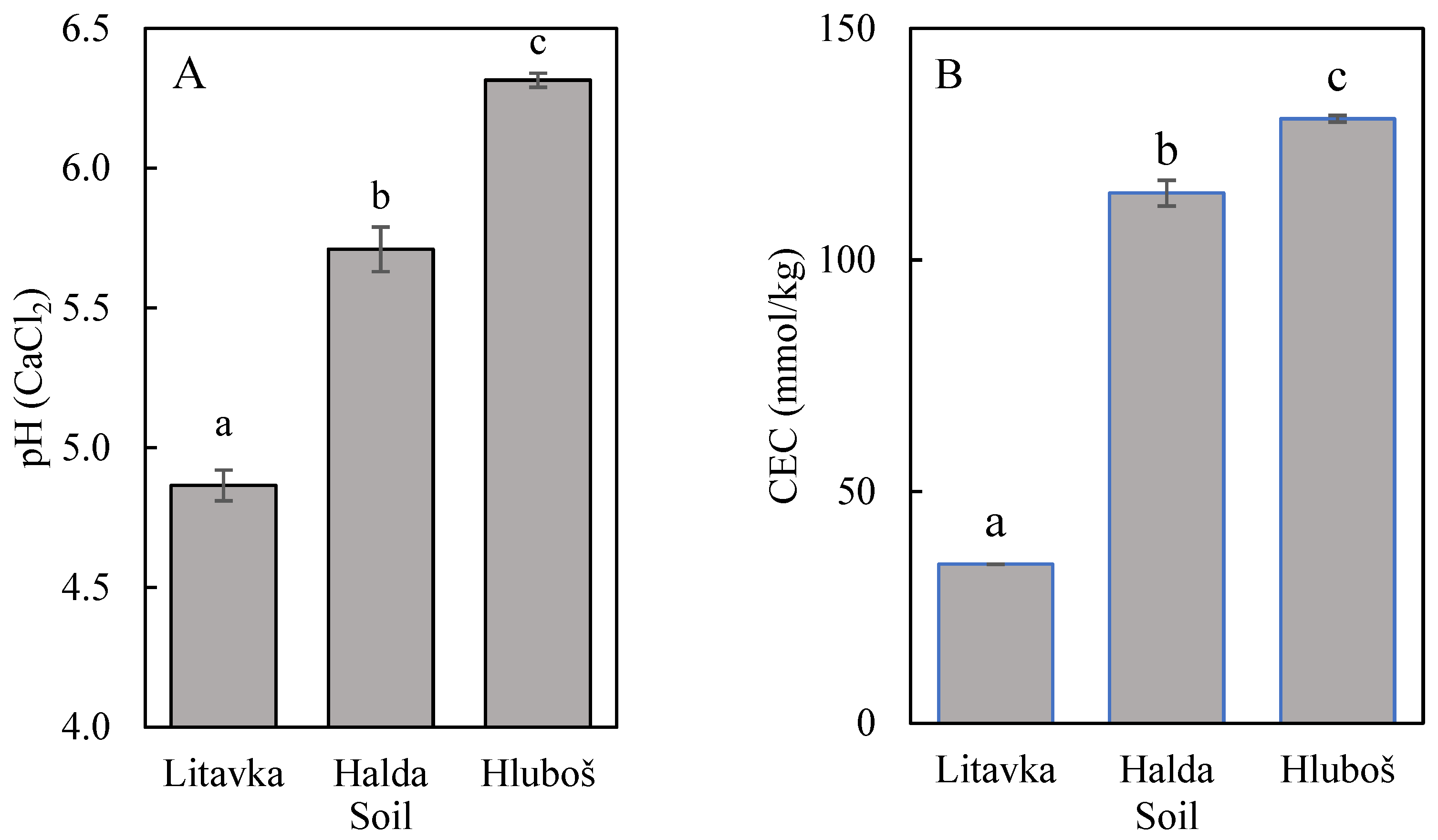
Figure 1. The levels of pH (CaCl2) (A) and CEC (B) in the soils used for the pot experiment; data expressed as mean (bar) and standard deviation (line segment); the bars marked by the same letter did not significantly differ at p < 0.05 within individual soils.
Environments 13 00227 g001
Figure 2. The risk element levels in the shoots and roots of Taraxacum sp. plants from the pot experiment; data expressed as mean (bar) and standard deviation (line segment); the bars marked by the same letter (small letters for shoots, capital letters for roots) did not significantly differ at p < 0.05 within individual soils.
Environments 13 00227 g002
Figure 3. The correlations between the selected metals and active substances in the aboveground biomass of A. millefolium given in mass-to-charge ratio (m/z). In all the samples, the correlation results were filtered according to a high correlation value, and the cut-off point was a correlation coefficient of r = 0.9/−0.9; the black dots indicate positive correlation, and the empty dots indicate negative correlation.
Environments 13 00227 g003
Figure 4. The correlations between the selected metals and active substances in the aboveground biomass of H. maculatum given in mass-to-charge ratio (m/z). In all the samples, the correlation results were filtered according to a high correlation value, and the cut-off point was a correlation coefficient of r = 0.9/−0.9; the black dots indicate positive correlation, and the empty dots indicate negative correlation.
Environments 13 00227 g004
Figure 5. The correlations between the selected metals and active substances in the aboveground biomass of Taraxacum sp. given in mass-to-charge ratio (m/z). In all the samples, the correlation results were filtered according to a high correlation value, and the cut-off point was a correlation coefficient of r = 0.9/−0.9; the black dots indicate positive correlation, and the empty dots indicate negative correlation.
Environments 13 00227 g005
Figure 6. The correlations between the selected metals and active substances in the roots of Taraxacum sp. given in mass-to-charge ratio (m/z). In all the samples, the correlation results were filtered according to a high correlation value, and the cut-off point was a correlation coefficient of r = 0.9/−0.9; the black dots indicate positive correlation, and the empty dots indicate negative correlation.
Environments 13 00227 g006
Figure 7. Principal component analysis (PCA) score plots of Taraxacum sp. samples based on identified phenolic compounds: (A) shoots; (B) roots.
Environments 13 00227 g007
Figure 8. PCA loading plots of identified phenolic compounds in Taraxacum sp. samples: (A) shoots; (B) roots.
Environments 13 00227 g008
Figure 9. The concentrations of caffeic acid in the roots (A) and shoots (B) of Taraxacum sp. plants.
Environments 13 00227 g009
Figure 10. The concentrations of (+)-catechin in the roots (A) and shoots (B) of Taraxacum sp. plants.
Environments 13 00227 g010
Figure 11. The concentrations of chlorogenic acid in the roots (A) and shoots (B) of Taraxacum sp. plants.
Environments 13 00227 g011
Figure 12. The concentrations of cinnamic acid in the roots (A) and shoots (B) of Taraxacum sp. plants.
Environments 13 00227 g012
Figure 13. The concentrations of protocatechuic acid in the roots (A) and shoots (B) of Taraxacum sp. plants.
Environments 13 00227 g013
Figure 14. The concentrations of quercetin in the roots (A) and shoots (B) of Taraxacum sp. plants.
Environments 13 00227 g014
Figure 15. The concentrations of quercitrin in the roots (A) and shoots (B) of Taraxacum sp. plants.
Environments 13 00227 g015
Figure 16. The concentrations of rutin in the roots (A) and shoots (B) of Taraxacum sp. plants.
Environments 13 00227 g016
Figure 17. The concentrations of luteolin glucoside in the roots (A) and shoots (B) of Taraxacum sp. plants.
Environments 13 00227 g017
Table 1. The element contents in soil extractable with Mehlich III (mg kg−1) and the main soil characteristics at the start of the pot experiment; data are presented as mean ± standard deviation; n = 3.
Soil
HlubošHaldaLitavka
Soil typeCambisolCambisolFluvisol
CaM (mg kg−1)1195 ± 212333 ± 01369 ± 10
KM (mg kg−1)298 ± 10288 ± 3196 ± 7
MgM (mg kg−1)86.9 ± 2.0271 ± 2188 ± 6
PM (mg kg−1)85.6 ± 4.237.4 ± 0.039.6 ± 1.1
SM (mg kg−1)6.43 ± 0.2411.3 ± 0.216.1 ± 0.4
C (%)2.66 ± 0.422.86 ± 0.142.62 ± 0.04
H (%)0.56 ± 0.010.76 ± 0.050.55 ± 0.05
N (%)0.24 ± 0.030.23 ± 0.000.16 ± 0.00
C/N ratio11.2 ± 0.112.7 ± 0.916.6 ± 0.3
C/H ratio4.80 ± 0.873.79 ± 0.434.80 ± 0.37
M: Mehlich III extractable element content [41].
Table 2. The pseudo-total element contents in soil extractable with aqua regia (mg/kg); data are presented as mean ± standard deviation; n = 4; the averages marked by the same letter did not significantly differ at p < 0.05 within individual columns.
SampleAsBeCdCoCr
mg/kgmg/kgmg/kgmg/kgmg/kg
Hluboš 24.9 ± 0.3 c0.69 ± 0.00 a1.48 ± 0.02 a11.6 ± 0.3 a35.2 ± 1.6 a
Halda 36.6 ± 0.5 b0.87 ± 0.02 b2.53 ± 0.11 a15.1 ± 2.0 a35.0 ± 0.1 a
Litavka 375 ± 0.9 a0.64 ± 0.01 a16.1 ± 0.81 b10.8 ± 0.4 a32.5 ± 0.2 a
SampleCuNiPbVZn
mg/kgmg/kgmg/kgmg/kgmg/kg
Hluboš 15.2 ± 0.4 a16.6 ± 0.8 a365 ±3 a67.8 ± 2.0 b304 ± 14 a
Halda 17.1 ± 0.2 a16.9 ± 0.5 a519 ± 2 a62.1 ± 2.0 a,b143 ± 5 a
Litavka 64.2 ± 1.4 b18.1 ± 0.5 a3180 ± 118 b54.3 ± 0.9 a2365 ± 50 b
Table 3. The element proportions in soil extractable with 0.11 mol/L solution of acetic acid; (mg/kg); data are presented as mean ± standard deviation; data in parentheses represent RAC levels (%), n = 4; the averages marked by the same letter did not significantly differ at p < 0.05 within individual columns.
SampleAsBeCdCoCr
mg/kgmg/kgmg/kgmg/kgmg/kg
Hluboš 0.75 ± 0.12 a (3.0)0.03 ± 0.01 b
(3.9)
0.42 ± 0.03 a
(28.2)
**
Halda *0.08 ± 0.01 a
(8.9)
0.89 ± 0.12 a
(35.0)
0.63 ± 0.11 b
(4.2)
*
Litavka *0.07 ± 0.01 a
(11.1)
10.6 ± 0.7 b
(65.8)
0.18 ± 0.05 a
(1.6)
*
SampleCuNiPbVZn
mg/kgmg/kgmg/kgmg/kgmg/kg
Hluboš *0.25 ± 0.05 a
(1.5)
4.1 ± 0.7 a
(1.1)
*32.6 ± 1.7 a
(10.7)
Halda 0.19 ± 0.05 a
(1.2)
0.64 ± 0.13 b
(3.8)
17.4 ± 2.1 b
(3.4)
*15.3 ± 2.3 a
(10.6)
Litavka 4.83 ± 0.46 b
(7.5)
1.10 ± 0.11 c
(6.1)
144 ± 14 c
(4.5)
*1120 ± 70 b
(47.4)
* Data below detection limit.
Disclaimer/Publisher’s Note: The statements, opinions and data contained in all publications are solely those of the individual author(s) and contributor(s) and not of MDPI and/or the editor(s). MDPI and/or the editor(s) disclaim responsibility for any injury to people or property resulting from any ideas, methods, instructions or products referred to in the content.