



Unraveling Microplastics: Sources, Environment and Health Impacts, and Detection Techniques



Abstract
1. Introduction
1.1. Objectives
- Examine the sources and transport dynamics of microplastics, beginning with a discussion of their definition and distinguishing between primary and secondary microplastics in both terrestrial (e.g., urban runoff, sewage sludge) and marine environments. This section further describes transport pathways, accumulation patterns, environmental persistence, and the possible role of microplastics as vectors for chemical and biological pollutants.
- Report on the ubiquitous occurrence of microplastics in water bodies, with particular emphasis on drinking water as a critical exposure pathway for human health. The pronounced heterogeneity in data reported across the global literature underscores current limitations in sampling strategies and analytical standardization.
- Analyze ecological and human health impacts, especially synthesizing findings on human exposure pathways and reviewing clinical evidence of tissue accumulation and associated pathophysiological effects. Both established impacts and emerging toxicological concerns are addressed.
- Critically review detection, identification, and quantification techniques, including optical microscopy, micro-Fourier transform infrared spectroscopy, Raman micro spectroscopy, and pyrolysis–gas chromatography/mass spectrometry, comparing their advantages, limitations, and applicability across different particle size ranges.
- Expose limitations and gaps in the literature. Particular attention was devoted to identifying methodological heterogeneity, inconsistencies in measurement units and detection limits, and variability in analytical protocols.
1.2. Methodology
2. Definition of Microplastics
3. Sources and Transport
3.1. Sources
3.2. Transport
3.2.1. Riverine Transport
3.2.2. Ocean Currents
3.2.3. Atmospheric Transport
3.2.4. Biological Transport
4. Occurrence in Water Bodies
4.1. Freshwater
Considerations on Standardization of Sampling and Analysis
4.2. Drinking Water
4.2.1. Raw Water
4.2.2. Treated Drinking Water
5. Environmental and Human Health Impact
5.1. Environmental Impact
From Environment to Human Body
5.2. Human Health Impact
5.2.1. Exposure to MPs
5.2.2. Presence of MPs in Human Specimens
5.2.3. Disease Related to MPS
6. Detection Methods
6.1. Microscopy
6.2. Spectroscopy
6.3. Thermal Analysis
6.4. Other Techniques
6.5. Final Remarks
7. Conclusions and Future Perspectives
- Urgent need for methodological standardization.
- Identification of gaps in detection and the most effective quantification methods.
- Growing evidence of risks to human health.
Author Contributions
Funding
Data Availability Statement
Conflicts of Interest
References
- Jambeck, J.R.; Geyer, R.; Wilcox, C.; Siegler, T.R.; Perryman, M.; Andrady, A.; Narayan, R.; Law, K.L. Plastic Waste Inputs from Land into the Ocean. Science 2015, 347, 768–771. [Google Scholar] [CrossRef]
- Marcharla, E.; Vinayagam, S.; Gnanasekaran, L.; Soto-moscoso, M.; Chen, W.; Thanigaivel, S.; Ganesan, S.; Investigaci, I.D.A. Microplastics in Marine Ecosystems: A Comprehensive Review of Biological and Ecological Implications and Its Mitigation Approach Using Nanotechnology for the Sustainable Environment. Environ. Res. 2024, 256, 119181. [Google Scholar] [CrossRef]
- Thompson, R.C.; Olsen, Y.; Mitchell, R.P.; Davis, A.; Rowland, S.J.; John, A.W.G.; McGonigle, D.; Russell, A.E. Lost at Sea: Where Is All the Plastic? Science 2004, 304, 838. [Google Scholar] [CrossRef] [PubMed]
- Arthur, C.; Baker, J.; Bamford, H. Proceedings of the International Research Workshop on the Occurrence, Effects, and Fate of Microplastic Marine Debris, Tacoma, WA, USA, 9–11 September 2008; NOAA Technical Memorandum NOS-OR&R-30; University of Washington: Tacoma, WA, USA, 2009; p. 530. [Google Scholar]
- GESAMP. Sources, Fate and Effects of Microplastics in the Marine Environment: A Global Assessment; International Maritime Organization: London, UK, 2015. [Google Scholar]
- ECHA. Background Document to Committee for Risk Assessment (RAC) and Committee for Socio-Economic Analysis (SEAC) Opinions on Intentionally Added Microplastics; ECHA: Helsinki, Finland, 2020; Volume 1. [Google Scholar]
- Frias, J.P.G.L.; Nash, R. Microplastics: Finding a Consensus on the Definition. Mar. Pollut. Bull. 2019, 138, 145–147. [Google Scholar] [CrossRef] [PubMed]
- Hartmann, N.B.; Hüffer, T.; Thompson, R.C.; Hassellöv, M.; Verschoor, A.; Daugaard, A.E.; Rist, S.; Karlsson, T.; Brennholt, N.; Cole, M.; et al. Are We Speaking the Same Language? Recommendations for a Definition and Categorization Framework for Plastic Debris. Environ. Sci. Technol. 2019, 53, 1039–1047. [Google Scholar] [CrossRef]
- Shao, L.; Li, Y.; Jones, T.; Santosh, M.; Liu, P.; Zhang, M.; Xu, L.; Li, W.; Lu, J.; Yang, C.-X.; et al. Airborne Microplastics: A Review of Current Perspectives and Environmental Implications. J. Clean. Prod. 2022, 347, 959–6526. [Google Scholar] [CrossRef]
- Zhao, X.; Zhou, Y.; Liang, C.; Song, J.; Yu, S.; Liao, G. Airborne Microplastics: Occurrence, Sources, Fate, Risks and Mitigation. Sci. Total Environ. 2023, 858, 159943. [Google Scholar] [CrossRef]
- Zhao, M.; Cao, Y.; Chen, T.; Li, H.; Tong, Y.; Fan, W.; Xie, Y.; Tao, Y.; Zhou, J. Characteristics and Source-Pathway of Microplastics in Freshwater System of China: A Review. Chemosphere 2022, 297, 134192. [Google Scholar] [CrossRef] [PubMed]
- Yang, L.; Zhang, Y.; Kang, S.; Wang, Z.; Wu, C. Microplastics in Freshwater Sediment: A Review on Methods, Occurrence, and Sources. Sci. Total Environ. 2021, 754, 141948. [Google Scholar] [CrossRef]
- Hidalgo-Ruz, V.; Gutow, L.; Thompson, R.C.; Thiel, M. Microplastics in the Marine Environment: A Review of the Methods Used for Identification and Quantification. Environ. Sci. Technol. 2012, 46, 3060–3075. [Google Scholar] [CrossRef]
- Khalid, N.; Aqeel, M.; Noman, A.; Hashem, M.; Mostafa, Y.S.; Alhaithloul, H.A.S.; Alghanem, S.M. Linking Effects of Microplastics to Ecological Impacts in Marine Environments. Chemosphere 2021, 264, 128541. [Google Scholar] [CrossRef]
- Li, Y.; Yao, J.; Nie, P.; Feng, X.; Liu, J. An Effective Method for the Rapid Detection of Microplastics in Soil. Chemosphere 2021, 276, 128696. [Google Scholar] [CrossRef]
- Grause, G.; Kuniyasu, Y.; Chien, M.F.; Inoue, C. Separation of Microplastic from Soil by Centrifugation and Its Application to Agricultural Soil. Chemosphere 2022, 288, 132654. [Google Scholar] [CrossRef]
- Kumar, A.; Mishra, S.; Pandey, R.; Guo, Z.; Kumar, M.; Shiong, K.; Kumar, T.; Loke, P. Microplastics in Terrestrial Ecosystems: Un-Ignorable Impacts on Soil Characterises, Nutrient Storage and Its Cycling. Trends Anal. Chem. 2023, 158, 116869. [Google Scholar] [CrossRef]
- Tagg, S.A.; Sapp, M.; Harrison, J.P.; Ojeda, J.J. Identification and Quantification of Microplastics in Wastewater Using Focal Plane Array-Based Reflectance Micro-FT-IR Imaging. Anal. Chem. 2015, 87, 6032–6040. [Google Scholar] [CrossRef] [PubMed]
- Bakaraki Turan, N.; Sari Erkan, H.; Onkal Engin, G. Microplastics in Wastewater Treatment Plants: Occurrence, Fate and Identification. Process Saf. Environ. Prot. 2021, 146, 77–84. [Google Scholar] [CrossRef]
- Liu, W.; Zhang, J.; Liu, H.; Guo, X.; Zhang, X.; Yao, X.; Cao, Z.; Zhang, T. A Review of the Removal of Microplastics in Global Wastewater Treatment Plants: Characteristics and Mechanisms. Environ. Int. 2021, 146, 106277. [Google Scholar] [CrossRef] [PubMed]
- Oanh, D.T.; Thuy, D.T.; Huong, N.T.N.; Quynh, H.T.; Hieu, P.D.; Vu, D.M.; Nguyet, V.T.; Quynh, L.T.P.; Van Cuong, B.; Thuong, B.H. Preliminary Investigation of Microplastics in Sediments from Industrial Manufacturing Waste Sources. VNU J. Sci. Nat. Sci. Technol. 2022, 38, 1–8. [Google Scholar] [CrossRef]
- Drummond, J.D.; Schneidewind, U.; Li, A.; Hoellein, T.J.; Krause, S.; Packman, A.I. Microplastic Accumulation in Riverbed Sediment via Hyporheic Exchange from Headwaters to Mainstems. Sci. Adv. 2022, 8, eabi9305. [Google Scholar] [CrossRef]
- Aves, A.R.; Revell, L.E.; Gaw, S.; Ruffell, H.; Schuddeboom, A.; Wotherspoon, E.; Larue, M.; Mcdonald, A.J. First Evidence of Microplastics in Antarctic Snow. Cryosphere Discuss. 2022, 16, 2127–2142. [Google Scholar] [CrossRef]
- Wang, C.; Zhao, J.; Xing, B. Environmental Source, Fate, and Toxicity of Microplastics. J. Hazard. Mater. 2021, 407, 124357. [Google Scholar] [CrossRef] [PubMed]
- Ustabasi, G.S.; Baysal, A. Occurrence and Risk Assessment of Microplastics from Various Toothpastes. Environ. Monit. Assess. 2019, 191, 438. [Google Scholar] [CrossRef]
- Madhumitha, C.T.; Karmegam, N.; Biruntha, M.; Arun, A.; Al Kheraif, A.A.; Kim, W.; Kumar, P. Extraction, Identification, and Environmental Risk Assessment of Microplastics in Commercial Toothpaste. Chemosphere 2022, 296, 133976. [Google Scholar] [CrossRef]
- Bashir, S.M.; Kimiko, S.; Mak, C.W.; Fang, J.K.H.; Gonçalves, D. Personal Care and Cosmetic Products as a Potential Source of Environmental Contamination by Microplastics in a Densely Populated Asian City. Front. Mar. Sci. 2021, 8, 683482. [Google Scholar] [CrossRef]
- Kukkola, A.; Chetwynd, A.J.; Krause, S.; Lynch, I. Beyond Microbeads: Examining the Role of Cosmetics in Microplastic Pollution and Spotlighting Unanswered Questions. J. Hazard. Mater. 2024, 476, 135053. [Google Scholar] [CrossRef]
- Guerranti, C.; Martellini, T.; Perra, G.; Scopetani, C.; Cincinelli, A. Microplastics in Cosmetics: Environmental Issues and Needs for Global Bans. Environ. Toxicol. Pharmacol. 2019, 68, 75–79. [Google Scholar] [CrossRef]
- Boucher, J.; Friot, D. Primary Microplastics in the Oceans: A Global Evaluation of Sources; IUCN: Gland, Switzerland, 2017. [Google Scholar]
- Miranda-Peña, L.; Buitrago-Duque, L.; Rangel-Buitrago, N.; Gracia, C.A.; Arana, V.A.; Trilleras, J. Geographical Heterogeneity and Dominant Polymer Types in Microplastic Contamination of Lentic Ecosystems: Implications for Methodological Standardization and Future Research. RSC Adv. 2023, 13, 27190–27202. [Google Scholar] [CrossRef] [PubMed]
- Mendez, N.F.; Sharma, V.; Valsecchi, M.; Pai, V.; Lee, J.K.; Schadler, L.S.; Müller, A.J.; Watson-sanders, S.; Dadmun, M.; Kumaraswamy, G.; et al. Mechanism of Quiescent Nanoplastic Formation from Semicrystalline Polymers. Nat. Commun. 2025, 16, 3051. [Google Scholar] [CrossRef]
- Castelvetro, V.; Corti, A.; Biale, G.; Ceccarini, A.; Degano, I.; La Nasa, J.; Lomonaco, T.; Manariti, A.; Manco, E.; Modugno, F.; et al. New Methodologies for the Detection, Identification, and Quantification of Microplastics and Their Environmental Degradation by-Products. Environ. Sci. Pollut. Res. 2021, 28, 46764–46780. [Google Scholar] [CrossRef]
- Liu, P.; Zhan, X.; Wu, X.; Li, J.; Wang, H.; Gao, S. Effect of Weathering on Environmental Behavior of Microplastics: Properties, Sorption and Potential Risks. Chemosphere 2020, 242, 125193. [Google Scholar] [CrossRef] [PubMed]
- Andrady, A.L. Microplastics in the Marine Environment. Mar. Pollut. Bull. 2011, 62, 1596–1605. [Google Scholar] [CrossRef]
- Acharya, S.; Rumi, S.S.; Hu, Y.; Abidi, N. Microfibers from Synthetic Textiles as a Major Source of Microplastics in the Environment: A Review. Text. Res. J. 2021, 91, 2136–2156. [Google Scholar] [CrossRef]
- Vassilenko, E.; Watkins, M.; Chastain, S.; Mertens, J.; Posacka, A.M.; Patankar, S.; Ross, P.S. Domestic Laundry and Microfiber Pollution: Exploring Fiber Shedding from Consumer Apparel Textiles. PLoS ONE 2021, 16, e0250346. [Google Scholar] [CrossRef]
- Akyildiz, S.H.; Fiore, S.; Bruno, M.; Sezgin, H.; Yalcin-enis, I.; Yalcin, B.; Bellopede, R. Release of Microplastic Fibers from Synthetic Textiles during Household Washing. Environ. Pollut. 2024, 357, 124455. [Google Scholar] [CrossRef] [PubMed]
- Samal, K.; Samal, S.R.; Mishra, S.; Nayak, J.K. Sources, Transport, and Accumulation of Synthetic Microfiber Wastes in Aquatic and Terrestrial Environments. Water 2024, 16, 2238. [Google Scholar] [CrossRef]
- Parton, K.J.; Godley, B.J.; Santillo, D.; Tausif, M.; Omeyer, L.C.M.; Galloway, T.S. Investigating the Presence of Microplastics in Demersal Sharks of the North-East Atlantic. Sci. Rep. 2020, 10, 12204. [Google Scholar] [CrossRef]
- Zheng, H.; Wu, Z.; Li, Q.; Yang, Y.; Wang, M.; An, L.; Wang, F. Study on the Occurrence of Microplastics in Bottled Drinking Water. J. Environ. Eng. Technol. 2024, 14, 758–763. [Google Scholar] [CrossRef]
- Sarkar, S.; Diab, H.; Thompson, J. Microplastic Pollution: Chemical Characterization and Impact on Wildlife. Int. J. Environ. Res. Public Health 2023, 20, 1745. [Google Scholar] [CrossRef]
- Santini, S.; De Beni, E.; Martellini, T.; Sarti, C.; Randazzo, D.; Ciraolo, R.; Scopetani, C.; Cincinelli, A. Occurrence of Natural and Synthetic Micro-Fibers in the Mediterranean Sea: A Review. Toxics 2022, 10, 391. [Google Scholar] [CrossRef]
- Bai, R.; Li, Z.; Liu, Q.; Liu, Q.; Cui, J.; He, W. The Reciprocity Principle in Mulch Film Deterioration and Microplastic Generation. Environ. Sci. Process. Impacts 2023, 26, 8–15. [Google Scholar] [CrossRef]
- Not, C.; Chan, K.; Wing, M.; So, K.; Lau, W.; Tsz, L.; Tang, W. State of Microbeads in Facial Scrubs: Persistence and the Need for Broader Regulation. Environ. Sci. Pollut. Res. 2025, 32, 11063–11071. [Google Scholar] [CrossRef]
- Jian, M.; Zhang, Y.; Yang, W.; Zhou, L.; Liu, S.; Xu, E.G. Occurrence and Distribution of Microplastics in China’s Largest Freshwater Lake System. Chemosphere 2020, 261, 128186. [Google Scholar] [CrossRef]
- Acarer Arat, S. An Overview of Microplastic in Marine Waters: Sources, Abundance, Characteristics and Negative Effects on Various Marine Organisms. Desalin. Water Treat. 2024, 317, 100138. [Google Scholar] [CrossRef]
- Han, N.; Ao, H.; Mai, Z.; Zhao, Q.; Wu, C. Characteristics of (Micro)Plastic Transport in the Upper Reaches of the Yangtze River. Sci. Total Environ. 2023, 855, 158887. [Google Scholar] [CrossRef] [PubMed]
- Napper, I.E.; Baroth, A.; Barrett, A.C.; Bhola, S.; Chowdhury, G.W.; Davies, B.F.R.; Duncan, E.M.; Kumar, S.; Nelms, S.E.; Hasan Niloy, M.N.; et al. The Abundance and Characteristics of Microplastics in Surface Water in the Transboundary Ganges River. Environ. Pollut. 2021, 274, 116348. [Google Scholar] [CrossRef] [PubMed]
- Lee, Y.; Cho, J.; Sohn, J.; Kim, C. Health Effects of Microplastic Exposures: Current Issues and Perspectives in South Korea. Yonsei Med. J. 2023, 64, 301–308. [Google Scholar] [CrossRef]
- Issac, M.N.; Kandasubramanian, B. Effect of Microplastics in Water and Aquatic Systems. Environ. Sci. Pollut. Res. 2021, 28, 19544–19562. [Google Scholar] [CrossRef]
- Bajon, R.; Huck, T.; Grima, N.; Maes, C.; Blanke, B.; Richon, C.; Couvelard, X. Influence of Waves on the Three-Dimensional Distribution of Plastic in the Ocean. Mar. Pollut. Bull. 2023, 187, 114533. [Google Scholar] [CrossRef]
- Pu, S.; Bushnaq, H.; Munro, C.; Gibert, Y.; Radhey, S.; Mishra, V.; Dumée, L.F. Perspectives on Transport Pathways of Microplastics across the Middle East and North Africa (MENA) Region. npj Clean Water 2024, 7, 114. [Google Scholar] [CrossRef]
- Lusher, A.L.; Tirelli, V.; O’Connor, I.; Officer, R. Microplastics in Arctic Polar Waters: The First Reported Values of Particles in Surface and Sub-Surface Samples. Sci. Rep. 2015, 5, 14947. [Google Scholar] [CrossRef]
- Rota, E.; Bergami, E.; Corsi, I.; Bargagli, R. Macro- and Microplastics in the Antarctic Environment: Ongoing Assessment and Perspectives. Environments 2022, 9, 93. [Google Scholar] [CrossRef]
- Hietbrink, S.; Materić, D.; Holzinger, R.; Groeskamp, S.; Niemann, H. Nanoplastic Concentrations across the North Atlantic. Nature 2025, 643, 412–416. [Google Scholar] [CrossRef]
- Katare, Y. Microplastics in Aquatic Environments: Sources, Ecotoxicity, Detection & Remediation. Biointerface Res. Appl. Chem. 2021, 12, 3407–3428. [Google Scholar] [CrossRef]
- Rede, D.; Delerue-Matos, C.; Fernandes, V.C. The Microplastics Iceberg: Filling Gaps in Our Understanding. Polymers 2023, 15, 3356. [Google Scholar] [CrossRef] [PubMed]
- Cincinelli, A.; Martellini, T.; Guerranti, C.; Scopetani, C.; Chelazzi, D.; Giarrizzo, T. A Potpourri of Microplastics in the Sea Surface and Water Column of the Mediterranean Sea. TrAC Trends Anal. Chem. 2019, 110, 321–326. [Google Scholar] [CrossRef]
- Borges-Ramírez, M.M.; Mendoza-Franco, E.F.; Escalona-Segura, G.; Osten, J.R. von Plastic Density as a Key Factor in the Presence of Microplastic in the Gastrointestinal Tract of Commercial Fishes from Campeche Bay, Mexico. Environ. Pollut. 2020, 267, 115659. [Google Scholar] [CrossRef] [PubMed]
- Hunter, A.; Thorpe, S.E.; McCarthy, A.H.; Manno, C. Microplastic Hotspots Mapped across the Southern Ocean Reveal Areas of Potential Ecological Impact. Sci. Rep. 2024, 14, 31599. [Google Scholar] [CrossRef]
- Gao, S.; Yan, K.; Liang, B.; Shu, R.; Wang, N.; Zhang, S. The Different Ways Microplastics from the Water Column and Sediment Accumulate in Fi Sh in Haizhou Bay. Sci. Total Environ. 2023, 854, 158575. [Google Scholar] [CrossRef]
- Parolini, M.; Ferrario, C.; De Felice, B.; Gazzotti, S.; Bonasoro, F.; Candia Carnevali, M.D.; Ortenzi, M.A.; Sugni, M. Interactive Effects between Sinking Polyethylene Terephthalate (PET) Microplastics Deriving from Water Bottles and a Benthic Grazer. J. Hazard. Mater. 2020, 398, 122848. [Google Scholar] [CrossRef]
- Zhao, S.; Kvale, K.F.; Zhu, L.; Zettler, E.R.; Egger, M.; Mincer, T.J.; Amaral-Zettler, L.A.; Lebreton, L.; Niemann, H.; Nakajima, R.; et al. The Distribution of Subsurface Microplastics in the Ocean. Nature 2025, 641, 51–61. [Google Scholar] [CrossRef]
- Gonzalez-Pineda, M.; Avila, C.; Lacerot, G.; Lozoya, J.P.; Teixeira de Mello, F.; Faccio, R.; Pignanelli, F.; Salvadó, H. Experimental Ingestion of Microplastics in Three Common Antarctic Benthic Species. Mar. Environ. Res. 2025, 204, 106879. [Google Scholar] [CrossRef] [PubMed]
- Collins, S.F.; Norton, A. Prevailing Wind Patterns Influence the Distribution of Plastics in Small Urban Lakes. Sci. Rep. 2024, 14, 17741. [Google Scholar] [CrossRef] [PubMed]
- Allen, S.; Allen, D.; Phoenix, V.R.; Le Roux, G.; Durántez Jiménez, P.; Simonneau, A.; Binet, S.; Galop, D. Atmospheric Transport and Deposition of Microplastics in a Remote Mountain Catchment. Nat. Geosci. 2019, 12, 339–344. [Google Scholar] [CrossRef]
- Bergmann, M.; Mützel, S.; Primpke, S.; Tekman, M.B.; Trachsel, J.; Gerdts, G. White and Wonderful? Microplastics Prevail in Snow from the Alps to the Arctic. Sci. Adv. 2019, 5, eaax1157. [Google Scholar] [CrossRef]
- Li, Y.; Zhang, J.; Xu, L.; Li, R.; Zhang, R.; Li, M.; Ran, C.; Rao, Z.; Wei, X.; Chen, M.; et al. Leaf Absorption Contributes to Accumulation of Microplastics in Plants. Nature 2025, 641, 666–673. [Google Scholar] [CrossRef]
- Liu, K.; Wu, T.; Wang, X.; Song, Z.; Zong, C.; Wei, N.; Li, D. Consistent Transport of Terrestrial Microplastics to the Ocean through Atmosphere. Environ. Sci. Technol. 2019, 18, 10612–10619. [Google Scholar] [CrossRef]
- Bhowmik, A.; Saha, G.; Saha, S.C. Microplastics in Animals: The Silent Invasion. Pollutants 2024, 4, 490–497. [Google Scholar] [CrossRef]
- Sobhani, Z.; Panneerselvan, L.; Fang, C.; Naidu, R.; Megharaj, M. Chronic and Transgenerational Effects of Polyethylene Microplastics at Environmentally Relevant Concentrations in Earthworms. Environ. Technol. Innov. 2022, 25, 102226. [Google Scholar] [CrossRef]
- Chang, X.; Fang, Y.; Wang, Y.; Wang, F.; Shang, L.; Zhong, R. Microplastic Pollution in Soils, Plants, and Animals: A Review of Distributions, Effects and Potential Mechanisms. Sci. Total Environ. 2022, 850, 157857. [Google Scholar] [CrossRef] [PubMed]
- Hodson, M.E.; Duffus-Hodson, C.A.; Clark, A.; Prendergast-Miller, M.T.; Thorpe, K.L. Plastic Bag Derived-Microplastics as a Vector for Metal Exposure in Terrestrial Invertebrates. Environ. Sci. Technol. 2017, 51, 4714–4721. [Google Scholar] [CrossRef]
- Upadhyay, S.; Sharma, P.K.; Dogra, K.; Bhattacharya, P.; Kumar, M.; Tripathi, V.; Karmakar, R. Microplastics in Freshwater: Unveiling Sources, Fate, and Removal Strategies. Groundw. Sustain. Dev. 2024, 26, 101185. [Google Scholar] [CrossRef]
- Li, Y.; Lu, Z.; Zheng, H.; Wang, J.; Chen, C. Microplastics in Surface Water and Sediments of Chongming Island in the Yangtze Estuary, China. Environ. Sci. Eur. 2020, 32, 15. [Google Scholar] [CrossRef]
- Ramage, S.J.F.F.; Coull, M.; Cooper, P.; Campbell, C.D.; Prabhu, R.; Yates, K.; Dawson, L.A.; Devalla, S. Microplastics in Agricultural Soils Following Sewage Sludge Applications: Evidence from a 25-Year Study. Chemosphere 2025, 376, 144277. [Google Scholar] [CrossRef]
- Guo, M.; Noori, R.; Abolfathi, S. Microplastics in Freshwater Systems: Dynamic Behaviour and Transport Processes. Resour. Conserv. Recycl. 2024, 205, 107578. [Google Scholar] [CrossRef]
- Sulaiman, R.N.R.; Bakar, A.A.; Ngadi, N.; Kahar, I.N.S.; Nordin, A.H.; Ikram, M.; Nabgan, W. Microplastics in Malaysia’s Aquatic Environment: Current Overview and Future Perspectives. Glob. Chall. 2023, 7, 2300047. [Google Scholar] [CrossRef] [PubMed]
- Hagelskjær, O.; Hagelskjær, F.; Margenat, H.; Yakovenko, N.; Sonke, J.E.; Le Roux, G. Majority of Potable Water Microplastics Are Smaller than the 20 Μm EU Methodology Limit for Consumable Water Quality. PLoS Water 2025, 4, e0000412. [Google Scholar] [CrossRef]
- Qian, N.; Gao, X.; Lang, X.; Deng, H.; Bratu, T.M.; Chen, Q.; Stapleton, P.; Yan, B.; Min, W. Rapid Single-Particle Chemical Imaging of Nanoplastics by SRS Microscopy. Proc. Natl. Acad. Sci. USA 2024, 121, 2017. [Google Scholar] [CrossRef]
- Semmouri, I.; Vercauteren, M.; Van Acker, E.; Pequeur, E.; Asselman, J.; Janssen, C. Distribution of Microplastics in Freshwater Systems in an Urbanized Region: A Case Study in Flanders (Belgium). Sci. Total Environ. 2023, 872, 162192. [Google Scholar] [CrossRef]
- Li, Y.; Peng, L.; Fu, J.; Dai, X.; Wang, G. A Microscopic Survey on Microplastics in Beverages: The Case of Beer, Mineral Water and Tea. Analyst 2022, 147, 1099–1105. [Google Scholar] [CrossRef]
- Ormaniec, P. Occurrence and Analysis of Microplastics in Municipal Wastewater, Poland. Environ. Sci. Pollut. Res. 2024, 31, 49646–49655. [Google Scholar] [CrossRef]
- Murphy, F.; Ewins, C.; Carbonnier, F.; Quinn, B. Wastewater Treatment Works (WwTW) as a Source of Microplastics in the Aquatic Environment. Environ. Sci. Technol. 2016, 50, 5800–5808. [Google Scholar] [CrossRef] [PubMed]
- Bhusare, S.; Satkar, S.G.; Sahu, A.; Savaliya, B.; Karale, T.; Gautam, R. Microplastic (MP) Pollution in Aquatic Ecosystems and Environmental Impact on Aquatic Animals. Uttar Pradesh J. Zool. 2024, 45, 59–68. [Google Scholar] [CrossRef]
- Okoffo, E.D.; Tscharke, B.J.; Thomas, K. V Release of Micro- and Nanosized Particles from Plastic Articles during Mechanical Dishwashing. ACS EST Water 2025, 5, 2870–2881. [Google Scholar] [CrossRef]
- Mani, T.; Hauk, A.; Walter, U.; Burkhardt-Holm, P. Microplastics Profile along the Rhine River. Sci. Rep. 2015, 5, 17988. [Google Scholar] [CrossRef]
- Stratmann, C.N.; Dris, R.; Gasperi, J.; Buschman, F.A.; Markus, A.A.; Guerin, S.; Vethaak, A.D.; Tassin, B. Monitoring Microplastics in the Seine River in the Greater Paris Area. Front. Earth Sci. 2024, 12, 1386547. [Google Scholar] [CrossRef]
- Scherer, C.; Weber, A.; Stock, F.; Vurusic, S.; Egerci, H.; Kochleus, C.; Arendt, N.; Foeldi, C.; Dierkes, G.; Wagner, M.; et al. Comparative Assessment of Microplastics in Water and Sediment of a Large European River. Sci. Total Environ. 2020, 738, 139866. [Google Scholar] [CrossRef]
- Rodrigues, M.O.; Abrantes, N.; Gonçalves, F.J.M.; Nogueira, H.; Marques, J.C.; Gonçalves, A.M.M. Spatial and Temporal Distribution of Microplastics in Water and Sediments of a Freshwater System (Antuã River, Portugal). Sci. Total Environ. 2018, 633, 1549–1559. [Google Scholar] [CrossRef]
- Sbarberi, R.; Magni, S.; Boggero, A.; Della Torre, C.; Nigro, L.; Binelli, A. Comparison of Plastic Pollution between Waters and Sediments in Four Po River Tributaries (Northern Italy). Sci. Total Environ. 2024, 912, 168884. [Google Scholar] [CrossRef]
- Cox, K.D.; Covernton, G.A.; Davies, H.L.; Dower, J.F.; Juanes, F.; Dudas, S.E. Human Consumption of Microplastics. Environ. Sci. Technol. 2019, 53, 7068–7074. [Google Scholar] [CrossRef]
- Brancaleone, E.; Mattei, D.; Fuscoletti, V.; Lucentini, L.; Favero, G.; Cecchini, G.; Frugis, A.; Gioia, V.; Lazzazzara, M. Microplastic in Drinking Water: A Pilot Study. Microplastics 2024, 3, 31–45. [Google Scholar] [CrossRef]
- Chowdhury, S.R.; Razzak, S.A.; Hassan, I.; Hossain, S.M.Z.; Hossain, M.M. Microplastics in Freshwater and Drinking Water: Sources, Impacts, Detection, and Removal Strategies; Springer International Publishing: Cham, Switzerland, 2023; Volume 234. [Google Scholar]
- Yang, L.; Kang, S.; Luo, X.; Wang, Z. Microplastics in Drinking Water: A Review on Methods, Occurrence, Sources, and Potential Risks Assessment. Environ. Pollut. 2024, 348, 123857. [Google Scholar] [CrossRef] [PubMed]
- Calero, E.C.; Viršek, M.K.; Mali, N. Microplastics in Groundwater: Pathways, Occurrence, and Monitoring Challenges. Water 2024, 16, 1228. [Google Scholar] [CrossRef]
- Sangkham, S.; Islam, A.; Adhikari, S.; Kumar, R.; Sharma, P.; Sakunkoo, P.; Bhattacharya, P.; Tiwari, A. Evidence of Microplastics in Groundwater: A Growing Risk for Human Health. Groundw. Sustain. Dev. 2023, 23, 100981. [Google Scholar] [CrossRef]
- Mintenig, S.M.; Löder, M.G.J.; Primpke, S.; Gerdts, G. Low Numbers of Microplastics Detected in Drinking Water from Ground Water Sources. Sci. Total Environ. 2019, 648, 631–635. [Google Scholar] [CrossRef]
- Samandra, S.; Johnston, J.M.; Jaeger, J.E.; Symons, B.; Xie, S.; Currell, M.; Ellis, A.V.; Clarke, B.O. Microplastic Contamination of an Unconfined Groundwater Aquifer in Victoria, Australia. Sci. Total Environ. 2022, 802, 149727. [Google Scholar] [CrossRef]
- Pivokonsky, M.; Cermakova, L.; Novotna, K.; Peer, P.; Cajthaml, T.; Janda, V. Occurrence of Microplastics in Raw and Treated Drinking Water. Sci. Total Environ. 2018, 643, 1644–1651. [Google Scholar] [CrossRef]
- Kirstein, I.V.; Gomiero, A.; Vollertsen, J. Microplastic Pollution in Drinking Water. Curr. Opin. Toxicol. 2021, 28, 70–75. [Google Scholar] [CrossRef]
- Altunışık, A. Microplastic Pollution and Human Risk Assessment in Turkish Bottled Natural and Mineral Waters. Environ. Sci. Pollut. Res. 2023, 30, 39815–39825. [Google Scholar] [CrossRef]
- Li, H.; Zhu, L.; Ma, M.; Wu, H.; An, L.; Yang, Z. Occurrence of Microplastics in Commercially Sold Bottled Water. Sci. Total Environ. 2023, 867, 161553. [Google Scholar] [CrossRef]
- JRC. Analytical Methods to Measure Microplastics in Drinking Water (JRC Technical Report); Publications Office of the European Union: Luxembourg, 2023. [Google Scholar]
- Sarlin, P.J.; Morris, S.; Savitha, G.; Gopan, A.; Radhakrishnan, E.K. Occurrence and Characterization of Microplastics in Bottled Drinking Water. Discov. Environ. 2024, 2, 102. [Google Scholar] [CrossRef]
- Medić, A.; Fiedler, H.; Selvam, T.; Mohaček, V.; Sandy, G.; Lara, L.; Ivanda, M. Occurrence of Microplastics in Bottled Water from Croatia: A Raman Spectroscopy Approach. Environ. Sci. Pollut. Res. 2025, 32, 13918–13931. [Google Scholar] [CrossRef] [PubMed]
- Pandit, R.; Gautam, K.; Dahal, Y. An Investigative Study on the Prevalence of Microplastics in Commercial Bottled and Jar Water: A Nepalese Perspective. Water Air Soil Pollut. 2025, 236, 222. [Google Scholar] [CrossRef]
- Taheri, S.; Shoshtari-Yeganeh, B.; Pourzamani, H.; Ebrahimpour, K. Investigating the Pollution of Bottled Water by the Microplastics (MPs): The Effects of Mechanical Stress, Sunlight Exposure, and Freezing on MPs Release. Environ. Monit. Assess. 2023, 195, 62. [Google Scholar] [CrossRef] [PubMed]
- Sajedi, S.; An, C.; Chen, Z. Unveiling the Hidden Chronic Health Risks of Nano- and Microplastics in Single-Use Plastic Water Bottles: A Review. J. Hazard. Mater. 2025, 495, 138948. [Google Scholar] [CrossRef]
- Gao, W.; Zhang, Y.; Mo, A.; Jiang, J.; Liang, Y.; Cao, X.; He, D. Removal of Microplastics in Water: Technology Progress and Green Strategies. Green Anal. Chem. 2022, 3, 100042. [Google Scholar] [CrossRef]
- Stock, V.; Fahrenson, C.; Thuenemann, A.; Dönmez, M.H.; Voss, L.; Böhmert, L.; Braeuning, A.; Lampen, A.; Sieg, H. Impact of Artificial Digestion on the Sizes and Shapes of Microplastic Particles. Food Chem. Toxicol. 2020, 135, 111010. [Google Scholar] [CrossRef]
- Baruah, A.; Sharma, A.; Sharma, S.; Nagraik, R. An Insight into Different Microplastic Detection Methods. Int. J. Environ. Sci. Technol. 2022, 19, 5721–5730. [Google Scholar] [CrossRef]
- Zhang, T.; Jiang, B.; Xing, Y.; Ya, H.; Lv, M.; Wang, X. Current Status of Microplastics Pollution in the Aquatic Environment, Interaction with Other Pollutants, and Effects on Aquatic Organisms. Environ. Sci. Pollut. Res. 2022, 1, 3. [Google Scholar] [CrossRef]
- Jinhui, S.; Sudong, X.; Yan, N.; Xia, P.; Jiahao, Q.; Yongjian, X. Effects of Microplastics and Attached Heavy Metals on Growth, Immunity, and Heavy Metal Accumulation in the Yellow Seahorse, Hippocampus Kuda Bleeker. Mar. Pollut. Bull. 2019, 149, 110510. [Google Scholar] [CrossRef]
- Li, Y.; Zhang, Y.; Su, F.; Wang, Y.; Peng, L.; Liu, D. Adsorption Behaviour of Microplastics on the Heavy Metal Cr(VI) before and after Ageing. Chemosphere 2022, 302, 134865. [Google Scholar] [CrossRef]
- Pokhrel, A.; Islam, M.S.; Mitra, S. Generation of Eroded Nanoplastics from Real World Wastes and Their Capacity for Heavy Metal Adsorption. ACS EST Water 2025, 5, 2291–2299. [Google Scholar] [CrossRef] [PubMed]
- He, L.; Wu, D.; Rong, H.; Li, M.; Tong, M.; Kim, H. Influence of Nano- and Microplastic Particles on the Transport and Deposition Behaviors of Bacteria in Quartz Sand. Environ. Sci. Technol. 2018, 52, 11555–11563. [Google Scholar] [CrossRef] [PubMed]
- Moresco, V.; Oliver, D.M.; Weidmann, M.; Matallana-Surget, S.; Quilliam, R.S. Survival of Human Enteric and Respiratory Viruses on Plastics in Soil, Freshwater, and Marine Environments. Environ. Res. 2021, 199, 111367. [Google Scholar] [CrossRef] [PubMed]
- Gross, N.; Muhvich, J.; Ching, C.; Gomez, B.; Horvath, E.; Nahum, Y.; Zaman, M.H.; Gross, N.; Muhvich, J.; Ching, C.; et al. Effects of Microplastic Concentration, Composition, and Size on Escherichia Coli Biofilm-Associated Antimicrobial Resistance. Appl. Environ. Microbiol. 2025, 91, e02282-24. [Google Scholar] [CrossRef]
- Santonicola, S.; Volgare, M.; Di Pace, E.; Cocca, M.; Mercogliano, R.; Colavita, G. Occurrence of Potential Plastic Microfibers in Mussels and Anchovies Sold for Human Consumption: Preliminary Results. Ital. J. Food Saf. 2021, 10, 9962. [Google Scholar] [CrossRef]
- Rodrigues, S.M.; Elliott, M.; Almeida, C.M.R.; Ramos, S. Microplastics and Plankton: Knowledge from Laboratory and Field Studies to Distinguish Contamination from Pollution. J. Hazard. Mater. 2021, 417, 126057. [Google Scholar] [CrossRef]
- Botterell, Z.L.R.; Beaumont, N.; Dorrington, T.; Steinke, M.; Thompson, R.C.; Lindeque, P.K. Bioavailability and Effects of Microplastics on Marine Zooplankton: A Review. Environ. Pollut. 2019, 245, 98–110. [Google Scholar] [CrossRef]
- Dong, Z.; Wang, W. Modeling the Vertical Transport of Copepod Fecal Particles under Nano/Microplastic Exposure. Environ. Sci. Technol. 2025, 13, 6610–6622. [Google Scholar] [CrossRef]
- Charlton-Howard, H.S.; Bond, A.L.; Rivers-Auty, J.; Lavers, J.L. ‘Plasticosis’: Characterising Macro- and Microplastic-Associated Fibrosis in Seabird Tissues. J. Hazard. Mater. 2023, 450, 131090. [Google Scholar] [CrossRef]
- Bryant, M.T.; Ma, X. Machine Learning Prediction of Adsorption Behavior of Xenobiotics on Microplastics under Different Environmental Conditions. ACS EST Water 2024, 4, 991–999. [Google Scholar] [CrossRef]
- Ramsperger, A.F.R.M.; Narayana, V.K.B.; Gross, W.; Mohanraj, J.; Thelakkat, M.; Greiner, A.; Schmalz, H.; Kress, H.; Laforsch, C. Environmental Exposure Enhances the Internalization of Microplastic Particles into Cells. Sci. Adv. 2020, 6, eabd1211. [Google Scholar] [CrossRef]
- Song, K.; Gao, S.H.; Pan, Y.; Gao, R.; Li, T.; Xiao, F.; Zhang, W.; Fan, L.; Guo, J.; Wang, A. Ecological and Health Risk Mediated by Micro(Nano)Plastics Aging Process: Perspectives and Challenges. Environ. Sci. Technol. 2025, 59, 5878–5896. [Google Scholar] [CrossRef]
- Sutkar, P.R.; Gadewar, R.D.; Dhulap, V.P. Recent Trends in Degradation of Microplastics in the Environment: A State-of-the-Art Review. J. Hazard. Mater. Adv. 2023, 11, 100343. [Google Scholar] [CrossRef]
- Carnevale, M.; Galafassi, S.; Zullo, R.; Torretta, V.; Rada, C. Microplastics Removal in Wastewater Treatment Plants: A Review of the Different Approaches to Limit Their Release in the Environment. Sci. Total Environ. 2024, 930, 172675. [Google Scholar] [CrossRef]
- Zhao, X.; You, F. Life Cycle Assessment of Microplastics Reveals Their Greater Environmental Hazards than Mismanaged Polymer Waste Losses. Environ. Sci. Technol. 2022, 56, 11780–11797. [Google Scholar] [CrossRef]
- Marmara, D.; Katsanevakis, S.; Brundo, M.V.; Tiralongo, F.; Ignoto, S.; Krasakopoulou, E. Microplastics Ingestion by Marine Fauna with a Particular Focus on Commercial Species: A Systematic Review. Front. Mar. Sci. 2023, 10, 1240969. [Google Scholar] [CrossRef]
- Paudel, P.; Kumar, R.; Pandey, M.K.; Paudel, P.; Subedi, M. Exploring the Impact of Micro-Plastics on Soil Health and Ecosystem Dynamics: A Comprehensive Review. J. Exp. Biol. Agric. Sci. 2024, 12, 163–174. [Google Scholar] [CrossRef]
- Zhu, L.; Kang, Y.; Ma, M.; Wu, Z.; Zhang, L.; Hu, R.; Xu, Q. Tissue Accumulation of Microplastics and Potential Health Risks in Human. Sci. Total Environ. 2024, 915, 170004. [Google Scholar] [CrossRef]
- Dzierżyński, E.; Gawlik, P.J.; Puźniak, D.; Flieger, W.; Jóźwik, K.; Teresiński, G.; Forma, A.; Wdowiak, P.; Baj, J.; Flieger, J. Microplastics in the Human Body: Exposure, Detection, and Risk of Carcinogenesis: A State-of-the-Art Review. Cancers 2024, 16, 3703. [Google Scholar] [CrossRef] [PubMed]
- Gruber, E.S.; Stadlbauer, V.; Pichler, V.; Resch-Fauster, K.; Todorovic, A.; Meisel, T.C.; Trawoeger, S.; Hollóczki, O.; Turner, S.D.; Wadsak, W.; et al. To Waste or Not to Waste: Questioning Potential Health Risks of Micro- and Nanoplastics with a Focus on Their Ingestion and Potential Carcinogenicity. Expo. Health 2023, 15, 33–51. [Google Scholar] [CrossRef]
- Pletz, M. Ingested Microplastics: Do Humans Eat One Credit Card per Week? J. Hazard. Mater. Lett. 2022, 3, 100071. [Google Scholar] [CrossRef]
- Sofield, C.E.; Anderton, R.S.; Gorecki, A.M. Mind over Microplastics: Exploring Microplastic-Induced Gut Disruption and Gut-Brain-Axis Consequences. Curr. Issues Mol. Biol. 2024, 46, 4186–4202. [Google Scholar] [CrossRef]
- Makhdoumi, P.; Pirsaheb, M.; Amin, A.A.; Kianpour, S.; Hossini, H. Microplastic Pollution in Table Salt and Sugar: Occurrence, Qualification and Quantification and Risk Assessment. J. Food Compos. Anal. 2023, 119, 105261. [Google Scholar] [CrossRef]
- Fadda, M.; Sacco, A.; Rossi, A.M.; Giovannozzi, A.M. Hidden pollutants in food: Evidence of small microplastic particles (100–5 µm) in refined sugar from the Italian market. J. Hazard. Mater. 2026, 503, 141113. [Google Scholar] [CrossRef]
- Makhdoumi, P.; Naghshbandi, M.; Ghaderzadeh, K.; Mirzabeigi, M.; Yazdanbakhsh, A.; Hossini, H. Micro-Plastic Occurrence in Bottled Vinegar: Qualification, Quantification and Human Risk Exposure. Process Saf. Environ. Prot. 2021, 152, 404–413. [Google Scholar] [CrossRef]
- Visentin, E.; Niero, G.; Benetti, F.; O’Donnell, C.; De Marchi, M. Assessing Microplastic Contamination in Milk and Dairy Products. npj Sci. Food 2025, 9, 135. [Google Scholar] [CrossRef]
- Al-mansoori, M.; Stephenson, M.; Harrad, S.; Abdallah, M.A. Synthetic Microplastics in UK Tap and Bottled Water; Implications for Human Exposure. Emerg. Contam. 2025, 11, 100417. [Google Scholar] [CrossRef]
- Traylor, S.D.; Granek, E.F.; Duncan, M.; Brander, S.M. From the Ocean to Our Kitchen Table: Anthropogenic Particles in the Edible Tissue of U.S. West Coast Seafood Species. Front. Toxicol. 2024, 6, 1469995. [Google Scholar] [CrossRef]
- Kosuth, M.; Mason, S.A.; Wattenberg, E.V. Anthropogenic Contamination of Tap Water, Beer, and Sea Salt. PLoS ONE 2018, 13, e0194970. [Google Scholar] [CrossRef] [PubMed]
- França, H.; Lins, D.C.; De Souza, L.; Cestaro, C. More than Just Sweet: Current Insights into Microplastics in Honey Products and a Case Study of Melipona Quadrifasciata Honey. Environ. Sci. Process. Impacts 2024, 26, 2132–2144. [Google Scholar] [CrossRef]
- Shruti, V.C.; Pérez-Guevara, F.; Elizalde-Martínez, I.; Kutralam-Muniasamy, G. First Study of Its Kind on the Microplastic Contamination of Soft Drinks, Cold Tea and Energy Drinks—Future Research and Environmental Considerations. Sci. Total Environ. 2020, 726, 138580. [Google Scholar] [CrossRef]
- Altunışık, A. Prevalence of Microplastics in Commercially Sold Soft Drinks and Human Risk Assessment. J. Environ. Manag. 2023, 336, 117720. [Google Scholar] [CrossRef]
- Kedzierski, M.; Lechat, B.; Sire, O.; Le Maguer, G.; Le Tilly, V.; Bruzaud, S. Microplastic Contamination of Packaged Meat: Occurrence and Associated Risks. Food Packag. Shelf Life 2020, 24, 100489. [Google Scholar] [CrossRef]
- Shruti, V.C.; Kutralam-Muniasamy, G.; Pérez-Guevara, F.; Roy, P.D.; Elizalde-Martínez, I. First Evidence of Microplastic Contamination in Ready-to-Use Packaged Food Ice Cubes. Environ. Pollut. 2023, 318, 120905. [Google Scholar] [CrossRef] [PubMed]
- Catarino, A.I.; Macchia, V.; Sanderson, W.G.; Thompson, R.C.; Henry, T.B. Low Levels of Microplastics (MP) in Wild Mussels Indicate That MP Ingestion by Humans Is Minimal Compared to Exposure via Household Fibres Fallout during a Meal. Environ. Pollut. 2018, 237, 675–684. [Google Scholar] [CrossRef] [PubMed]
- Panel, E.; Chain, F. Presence of Microplastics and Nanoplastics in Food, with Particular Focus on Seafood. EFSA J. 2016, 14, e04501. [Google Scholar] [CrossRef]
- Ng, P.L.; Kinn-Gurzo, S.S.; Chan, K.Y.K. Microplastics Impede Larval Urchin Selective Feeding. Sci. Total Environ. 2022, 838, 155770. [Google Scholar] [CrossRef]
- Yakovenko, N.; Pérez-Serrano, L.; Segur, T.; Hagelskjaer, O.; Margenat, H.; Le Roux, G.; Sonke, J.E. Human Exposure to PM10 Microplastics in Indoor Air. PLoS ONE 2025, 20, e0328011. [Google Scholar] [CrossRef] [PubMed]
- Wieland, S.; Balmes, A.; Bender, J.; Kitzinger, J.; Meyer, F.; Ramsperger, A.F.; Roeder, F.; Tengelmann, C.; Wimmer, B.H.; Laforsch, C.; et al. From Properties to Toxicity: Comparing Microplastics to Other Airborne Microparticles. J. Hazard. Mater. 2022, 428, 128151. [Google Scholar] [CrossRef]
- Maurizi, L.; Simon-Sánchez, L.; Vianello, A.; Nielsen, A.H.; Vollertsen, J. Every Breath You Take: High Concentration of Breathable Microplastics in Indoor Environments. Chemosphere 2024, 361, 142553. [Google Scholar] [CrossRef]
- Jenner, L.C.; Rotchell, J.M.; Bennett, R.T.; Cowen, M.; Tentzeris, V.; Sadofsky, L.R. Detection of Microplastics in Human Lung Tissue Using ΜFTIR Spectroscopy. Sci. Total Environ. 2022, 831, 154907. [Google Scholar] [CrossRef]
- Chartres, N.; Cooper, C.B.; Bland, G.; Pelch, K.E.; Gandhi, S.A.; BakenRa, A.; Woodruff, T.J. Effects of Microplastic Exposure on Human Digestive, Reproductive, and Respiratory Health: A Rapid Systematic Review. Environ. Sci. Technol. 2024, 58, 22843–22864. [Google Scholar] [CrossRef] [PubMed]
- Ma, J.; Chen, F.; Xu, H.; Jiang, H.; Liu, J.; Li, P.; Chen, C.C.; Pan, K. Face Masks as a Source of Nanoplastics and Microplastics in the Environment: Quantification, Characterization, and Potential for Bioaccumulation. Environ. Pollut. 2021, 288, 117748. [Google Scholar] [CrossRef]
- Menichetti, A.; Mordini, D.; Montalti, M. Penetration of Microplastics and Nanoparticles Through Skin: Effects of Size, Shape, and Surface Chemistry. J. Xenobiotics 2025, 15, 6. [Google Scholar] [CrossRef]
- Abafe, O.A.; Harrad, S.; Abdallah, M.A.E. Novel Insights into the Dermal Bioaccessibility and Human Exposure to Brominated Flame Retardant Additives in Microplastics. Environ. Sci. Technol. 2023, 57, 10554–10562. [Google Scholar] [CrossRef] [PubMed]
- Han, J.H.; Kim, H.S. Microplastics in Cosmetics: Emerging Risks for Skin Health and the Environment. Cosmetics 2025, 12, 171. [Google Scholar] [CrossRef]
- Amado Enrique, N.-F.; Marelis, P.-L.; Paula Montserrat, C.-B. Human Skin and Micro- and Nanoplastics: A Mini-Review. MOJ Ecol. Environ. Sci. 2024, 9, 122–125. [Google Scholar] [CrossRef]
- Aristizabal, M.; Jiménez-Orrego, K.V.; Caicedo-León, M.D.; Páez-Cárdenas, L.S.; Castellanos-García, I.; Villalba-Moreno, D.L.; Ramírez-Zuluaga, L.V.; Hsu, J.T.S.; Jaller, J.; Gold, M. Microplastics in Dermatology: Potential Effects on Skin Homeostasis. J. Cosmet. Dermatol. 2024, 23, 766–772. [Google Scholar] [CrossRef]
- Schneider, M.; Stracke, F.; Hansen, S.; Schaefer, U.F. Nanoparticles and Their Interactions with the Dermal Barrier. Dermato Endocrinol. 2009, 1, 197–206. [Google Scholar] [CrossRef]
- Leslie, H.A.; van Velzen, M.J.M.; Brandsma, S.H.; Vethaak, A.D.; Garcia-Vallejo, J.J.; Lamoree, M.H. Discovery and Quantification of Plastic Particle Pollution in Human Blood. Environ. Int. 2022, 163, 107199. [Google Scholar] [CrossRef]
- Leonard, S.V.L.; Liddle, C.R.; Atherall, C.A.; Chapman, E.; Watkins, M.; Calaminus, S.D.J.; Rotchell, J.M. Microplastics in Human Blood: Polymer Types, Concentrations and Characterisation Using μ FTIR. Environ. Int. 2024, 188, 108751. [Google Scholar] [CrossRef]
- Ragusa, A.; Svelato, A.; Santacroce, C.; Catalano, P.; Notarstefano, V.; Carnevali, O.; Papa, F.; Rongioletti, M.C.A.; Baiocco, F.; Draghi, S.; et al. Plasticenta: First Evidence of Microplastics in Human Placenta. Environ. Int. 2021, 146, 106274. [Google Scholar] [CrossRef] [PubMed]
- Garcia, M.A.; Liu, R.; Nihart, A.; El Hayek, E.; Castillo, E.; Barrozo, E.R.; Suter, M.A.; Bleske, B.; Scott, J.; Forsythe, K.; et al. Quantitation and Identification of Microplastics Accumulation in Human Placental Specimens Using Pyrolysis Gas Chromatography Mass Spectrometry. Toxicol. Sci. 2024, 199, 81–88. [Google Scholar] [CrossRef]
- Montano, L.; Raimondo, S.; Piscopo, M.; Ricciardi, M.; Guglielmino, A.; Chamayou, S.; Gentile, R.; Gentile, M. First Evidence of Microplastics in Human Ovarian Follicular Fluid: An Emerging Threat to Female Fertility. Ecotoxicol. Environ. Saf. 2025, 291, 117868. [Google Scholar] [CrossRef]
- Yang, Y.; Xie, E.; Du, Z.; Peng, Z.; Han, Z.; Li, L.; Zhao, R.; Qin, Y.; Xue, M.; Li, F.; et al. Detection of Various Microplastics in Patients Undergoing Cardiac Surgery. Environ. Sci. Technol. 2023, 57, 10911–10918. [Google Scholar] [CrossRef]
- Schwabl, P.; Koppel, S.; Konigshofer, P.; Bucsics, T.; Trauner, M.; Reiberger, T.; Liebmann, B. Detection of Various Microplastics in Human Stool: A Prospective Case Series. Ann. Intern. Med. 2019, 171, 453–457. [Google Scholar] [CrossRef]
- Jiang, Y.; Han, J.; Na, J.; Fang, J.; Qi, C.; Lu, J.; Liu, X.; Zhou, C.; Feng, J.; Zhu, W.; et al. Exposure to Microplastics in the Upper Respiratory Tract of Indoor and Outdoor Workers. Chemosphere 2022, 307, 136067. [Google Scholar] [CrossRef]
- Li, N.; Yang, H.; Dong, Y.; Wei, B.; Liang, L.; Yun, X.; Tian, J.; Zheng, Y.; Duan, S.; Zhang, L. Prevalence and Implications of Microplastic Contaminants in General Human Seminal Fluid: A Raman Spectroscopic Study. Sci. Total Environ. 2024, 937, 173522. [Google Scholar] [CrossRef]
- Monikh, A.F.; Materić, D.; Valsami-Jones, E.; Grossart, H.P.; Altmann, K.; Holzinger, R.; Lynch, I.; Stubenrauch, J.; Peijnenburg, W. Challenges in Studying Microplastics in Human Brain. Nat. Med. 2025, 31, 4034–4036. [Google Scholar] [CrossRef] [PubMed]
- Campen, M.J.; West, A.B.; Garcia, M.; Gullapalli, R.; El Hayek, E. Reply to: Challenges in Studying Microplastics in Human Brain. Nat. Med. 2025, 31, 4036–4038. [Google Scholar] [CrossRef] [PubMed]
- Sharma, M.D.; Elanjickal, A.I.; Mankar, J.S.; Krupadam, R.J. Assessment of Cancer Risk of Microplastics Enriched with Polycyclic Aromatic Hydrocarbons. J. Hazard. Mater. 2020, 398, 122994. [Google Scholar] [CrossRef]
- Goswami, S.; Adhikary, S.; Bhattacharya, S.; Agarwal, R. The Alarming Link between Environmental Microplastics and Health Hazards with Special Emphasis on Cancer. Life Sci. 2024, 355, 122937. [Google Scholar] [CrossRef]
- Pan, W.; Hao, J.; Zhang, M.; Liu, H.; Tian, F.; Zhang, X. Identification and Analysis of Microplastics in Peritumoral and Tumor Tissues of Colorectal Cancer. Sci. Rep. 2025, 15, 16130. [Google Scholar] [CrossRef] [PubMed]
- Vanetti, C.; Broggiato, M.; Pezzana, S.; Clerici, M.; Fenizia, C. Effects of Microplastics on the Immune System: How Much Should We Worry ? Immunol. Lett. 2025, 272, 106976. [Google Scholar] [CrossRef]
- Yan, Z.; Liu, Y.; Zhang, T.; Zhang, F.; Ren, H.; Zhang, Y. Analysis of Microplastics in Human Feces Reveals a Correlation between Fecal Microplastics and Inflammatory Bowel Disease Status. Environ. Sci. Technol. 2022, 56, 414–421. [Google Scholar] [CrossRef]
- Huynh, K. Presence of Microplastics in Carotid Plaques Linked to Cardiovascular Events. Nat. Rev. Cardiol. 2024, 21, 279. [Google Scholar] [CrossRef]
- Umesh, S.V. Microplastics. A New Risk Factor for Atherosclerotic Cardiovascular Disease. Am. J. Prev. Cardiol. 2025, 23, 101110. [Google Scholar] [CrossRef]
- Marfella, R.; Prattichizzo, F.; Sardu, C.; Fulgenzi, G.; Graciotti, L.; Spadoni, T.; D’Onofrio, N.; Scisciola, L.; La Grotta, R.; Frigé, C.; et al. Microplastics and Nanoplastics in Atheromas and Cardiovascular Events. N. Engl. J. Med. 2024, 390, 900–910. [Google Scholar] [CrossRef]
- Ullah, S.; Ahmad, S.; Guo, X.; Ullah, S.; Ullah, S.; Nabi, G.; Wanghe, K. A Review of the Endocrine Disrupting Effects of Micro and Nano Plastic and Their Associated Chemicals in Mammals. Front. Endocrinol. 2023, 13, 1084236. [Google Scholar] [CrossRef] [PubMed]
- Wang, M.; Wu, Y.; Li, G.; Xiong, Y.; Zhang, Y.; Zhang, M. The Hidden Threat: Unraveling the Impact of Microplastics on Reproductive Health. Sci. Total Environ. 2024, 935, 173177. [Google Scholar] [CrossRef]
- Wu, D.; Zhang, M.; Bao, T.T.; Lan, H. Long-Term Exposure to Polystyrene Microplastics Triggers Premature Testicular Aging. Part. Fibre Toxicol. 2023, 20, 35. [Google Scholar] [CrossRef]
- Geppner, L.; Hellner, J.; Henjakovic, M. Effects of Micro- and Nanoplastics on Blood Cells in Vitro and Cardiovascular Parameters in Vivo, Considering Their Presence in the Human Bloodstream and Potential Impact on Blood Pressure. Environ. Res. 2025, 273, 121254. [Google Scholar] [CrossRef]
- Wang, L.; Pei, W.; Li, J.; Feng, Y.; Gao, X.; Jiang, P. Ecotoxicology and Environmental Safety Microplastics Induced Apoptosis in Macrophages by Promoting ROS Generation and Altering Metabolic Profiles. Ecotoxicol. Environ. Saf. 2024, 271, 115970. [Google Scholar] [CrossRef]
- Wang, S.; Han, Q.; Wei, Z.; Wang, Y.; Xie, J.; Chen, M. Polystyrene Microplastics Affect Learning and Memory in Mice by Inducing Oxidative Stress and Decreasing the Level of Acetylcholine. Food Chem. Toxicol. 2022, 162, 278–6915. [Google Scholar] [CrossRef] [PubMed]
- Deng, Y.; Zhang, Y.; Lemos, B.; Ren, H. Tissue Accumulation of Microplastics in Mice and Biomarker Responses Suggest Widespread Health Risks of Exposure. Sci. Rep. 2017, 7, 46687. [Google Scholar] [CrossRef]
- da Silva Brito, W.A.; Singer, D.; Miebach, L.; Saadati, F.; Wende, K.; Schmidt, A.; Bekeschus, S. Comprehensive in Vitro Polymer Type, Concentration, and Size Correlation Analysis to Microplastic Toxicity and Inflammation. Sci. Total Environ. 2023, 854, 158731. [Google Scholar] [CrossRef]
- Hou, Z.; Meng, R.; Chen, G.; Lai, T.; Qing, R.; Hao, S.; Deng, J.; Wang, B. Distinct Accumulation of Nanoplastics in Human Intestinal Organoids. Sci. Total Environ. 2022, 838, 155811. [Google Scholar] [CrossRef] [PubMed]
- Mahmud, F.; Sarker, D.B.; Jocelyn, J.A.; Sang, Q.-X.A. Molecular and Cellular Effects of Microplastics and Nanoplastics: Focus on Inflammation and Senescence. Cells 2024, 13, 1788. [Google Scholar] [CrossRef]
- Cheng, Y.; Yang, Y.; Bai, L.; Cui, J. Microplastics: An Often-Overlooked Issue in the Transition from Chronic Inflammation to Cancer. J. Transl. Med. 2024, 22, 959. [Google Scholar] [CrossRef] [PubMed]
- Özgenç, E. Advanced Analytical Techniques for Assessing and Detecting Microplastic Pollution in Water and Wastewater Systems. Environ. Qual. Manag. 2024, 34, e22217. [Google Scholar] [CrossRef]
- Santos, F.A.; Andre, R.S.; Alvarenga, A.D.; Alves, A.L.M.M.; Correa, D.S. Micro- and Nanoplastics in the Environment: A Comprehensive Review on Detection Techniques. Environ. Sci. Nano 2025, 12, 3442–3467. [Google Scholar] [CrossRef]
- Singh, B.; Kumar, A. Advances in Microplastics Detection: A Comprehensive Review of Methodologies and Their Effectiveness. TrAC Trends Anal. Chem. 2024, 170, 117440. [Google Scholar] [CrossRef]
- Stefánsson, H.; Peternell, M.; Konrad-Schmolke, M.; Hannesdóttir, H.; Ásbjörnsson, E.J.; Sturkell, E. Microplastics in Glaciers: First Results from the Vatnajökull Ice Cap. Sustainability 2021, 13, 4183. [Google Scholar] [CrossRef]
- Gewert, B.; Ogonowski, M.; Barth, A.; MacLeod, M. Abundance and Composition of near Surface Microplastics and Plastic Debris in the Stockholm Archipelago, Baltic Sea. Mar. Pollut. Bull. 2017, 120, 292–302. [Google Scholar] [CrossRef]
- Sierra, I.; Chialanza, M.R.; Faccio, R.; Carrizo, D.; Fornaro, L.; Pérez-Parada, A. Identification of Microplastics in Wastewater Samples by Means of Polarized Light Optical Microscopy. Environ. Sci. Pollut. Res. 2020, 27, 7409–7419. [Google Scholar] [CrossRef] [PubMed]
- Wagner, J.; Wang, Z.M.; Ghosal, S.; Murphy, M.; Wall, S.; Cook, A.M.; Robberson, W.; Allen, H. Nonestructive Extraction an Ientification of Microplastics from Freshwater Sport Fish Stomachs. Environ. Sci. Technol. 2019, 53, 14496–14506. [Google Scholar] [CrossRef]
- Zada, L.; Leslie, H.A.; Vethaak, A.D.; Tinnevelt, G.H.; Jansen, J.J.; de Boer, J.F.; Ariese, F. Fast Microplastics Identification with Stimulated Raman Scattering Microscopy. J. Raman Spectrosc. 2018, 49, 1136–1144. [Google Scholar] [CrossRef]
- Nałęcz-Jawecki, G.; Chojnacka, J.; Wawryniuk, M.; Drobniewska, A. Influence of Nano- and Small Microplastics on Ciliated Protozoan Spirostomum Ambiguum (Müller, 1786) Ehrenberg, 1835. Water 2021, 13, 2857. [Google Scholar] [CrossRef]
- Nguyen, B.; Tufenkji, N. Single-Particle Resolution Fluorescence Microscopy of Nanoplastics. Environ. Sci. Technol. 2022, 56, 6426–6435. [Google Scholar] [CrossRef]
- Prasad, S.; Bennett, A.; Triantafyllou, M. Characterization of Nile Red-Stained Microplastics through Fluorescence Spectroscopy. J. Mar. Sci. Eng. 2024, 12, 1403. [Google Scholar] [CrossRef]
- Pan, J.; Liu, H.; Xia, F.; Zhang, J.; Wang, D. Occurrence and Fate of Microplastics from Wastewater Treatment Plants Assessed by a Fluorescence-Based Protocol. Environ. Sci. Pollut. Res. 2022, 30, 28690–28703. [Google Scholar] [CrossRef] [PubMed]
- Ribeiro, F.; Duarte, A.C.; da Costa, J.P. Staining Methodologies for Microplastics Screening. TrAC Trends Anal. Chem. 2024, 172, 117555. [Google Scholar] [CrossRef]
- Gao, Z.; Wontor, K.; Cizdziel, J. V Labeling Microplastics with Fluorescent Dyes for Detection, Recovery, and Degradation Experiments. Molecules 2022, 27, 7415. [Google Scholar] [CrossRef] [PubMed]
- Cheng, Y.; Zhang, J.; Nakano, H.; Ueyama, N.; Arakawa, H. Coumarin 6 Staining Method to Detect Microplastics. Mar. Pollut. Bull. 2023, 193, 115167. [Google Scholar] [CrossRef]
- Tong, H.; Jiang, Q.; Zhong, X.; Hu, X. Rhodamine B Dye Staining for Visualizing Microplastics in Laboratory-Based Studies. Environ. Sci. Pollut. Res. 2021, 28, 4209–4215. [Google Scholar] [CrossRef]
- Zhou, F.; Wang, X.; Wang, G.; Zuo, Y. A Rapid Method for Detecting Microplastics Based on Fluorescence Lifetime Imaging Technology (FLIM). Toxics 2022, 10, 118. [Google Scholar] [CrossRef]
- Monteleone, A.; Brandau, L.; Schary, W.; Wenzel, F. Using Autofluorescence for Microplastic Detection-Heat Treatment Increases the Autofluorescence of Microplastics. Clin. Hemorheol. Microcirc. 2020, 76, 473–493. [Google Scholar] [CrossRef]
- Jin, M.; Liu, J.; Yu, J.; Zhou, Q.; Wu, W.; Fu, L.; Yin, C.; Fernandez, C.; Karimi-Maleh, H. Current Development and Future Challenges in Microplastic Detection Techniques: A Bibliometrics-Based Analysis and Review. Sci. Prog. 2022, 105, 368504221132151. [Google Scholar] [CrossRef]
- Li, L.; Luo, Y.; Peijnenburg, W.J.G.M.; Li, R.; Yang, J.; Zhou, Q. Confocal Measurement of Microplastics Uptake by Plants. MethodsX 2020, 7, 100750. [Google Scholar] [CrossRef]
- Huang, Z.; Hu, B.; Wang, H. Analytical Methods for Microplastics in the Environment: A Review. Environ. Chem. Lett. 2023, 21, 383–401. [Google Scholar] [CrossRef] [PubMed]
- Zhang, Y.; Wang, X.; Shan, J.; Zhao, J.; Zhang, W.; Liu, L.; Wu, F. Hyperspectral Imaging Based Method for Rapid Detection of Microplastics in the Intestinal Tracts of Fish. Environ. Sci. Technol. 2019, 53, 5151–5158. [Google Scholar] [CrossRef]
- Gebejes, A.; Hrovat, B.; Semenov, D.; Kanyathare, B.; Itkonen, T.; Keinänen, M.; Koistinen, A.; Peiponen, K.E.; Roussey, M. Hyperspectral Imaging for Identification of Irregular-Shaped Microplastics in Water. Sci. Total Environ. 2024, 944, 173811. [Google Scholar] [CrossRef]
- Fakhrullin, R.; Nigamatzyanova, L.; Fakhrullina, G. Dark-Field/Hyperspectral Microscopy for Detecting Nanoscale Particles in Environmental Nanotoxicology Research. Sci. Total Environ. 2021, 772, 145478. [Google Scholar] [CrossRef] [PubMed]
- Wei, X.F.; Rindzevicius, T.; Wu, K.; Bohlen, M.; Hedenqvist, M.; Boisen, A.; Hakonen, A. Visualizing Undyed Microplastic Particles and Fibers with Plasmon-Enhanced Fluorescence. Chem. Eng. J. 2022, 442, 136117. [Google Scholar] [CrossRef]
- Kaile, N.; Lindivat, M.; Elio, J.; Thuestad, G.; Crowley, Q.G.; Hoell, I.A. Preliminary Results From Detection of Microplastics in Liquid Samples Using Flow Cytometry. Front. Mar. Sci. 2020, 7, 552688. [Google Scholar] [CrossRef]
- Watteau, F.; Dignac, M.-F.; Bouchard, A.; Revallier, A.; Houot, S. Microplastic Detection in Soil Amended With Municipal Solid Waste Composts as Revealed by Transmission Electronic Microscopy and Pyrolysis/GC/MS. Front. Sustain. Food Syst. 2018, 2, 81. [Google Scholar] [CrossRef]
- Karpenko, A.A.; Odintsov, V.S. Assessment of Microplastic Degradation in Bottom Sediments Using Raman Microspectroscopy and Atomic Force Microscopy. Russ. J. Mar. Biol. 2023, 49, 251–258. [Google Scholar] [CrossRef]
- Luo, H.; Xiang, Y.; Zhao, Y.; Li, Y.; Pan, X. Nanoscale Infrared, Thermal and Mechanical Properties of Aged Microplastics Revealed by an Atomic Force Microscopy Coupled with Infrared Spectroscopy (AFM-IR) Technique. Sci. Total Environ. 2020, 744, 140944. [Google Scholar] [CrossRef]
- Kerubo, J.O.; Onyari, J.M.; Muthumbi, A.W.N.; Andersson, D.R.; Kimani, E.N. Microplastic Polymers in Surface Waters and Sediments in the Creeks Along the Kenya Coast, Western Indian Ocean (WIO). Eur. J. Sustain. Dev. Res. 2021, 6, em0177. [Google Scholar] [CrossRef]
- Mikulec, V.; Adamović, P.; Cvetković, Ž.; Ivešić, M.; Gajdoš Kljusurić, J. Green Techniques for Detecting Microplastics in Marine with Emphasis on FTIR and NIR Spectroscopy—Short Review. Processes 2023, 11, 2360. [Google Scholar] [CrossRef]
- Xu, Z.; Sui, Q.; Li, A.; Sun, M.; Zhang, L.; Lyu, S.; Zhao, W. How to Detect Small Microplastics (20–100 Μm) in Freshwater, Municipal Wastewaters and Landfill Leachates? A Trial from Sampling to Identification. Sci. Total Environ. 2020, 733, 139218. [Google Scholar] [CrossRef]
- Willans, M.; Szczecinski, E.; Roocke, C.; Williams, S.; Timalsina, S.; Vongsvivut, J.; McIlwain, J.; Naderi, G.; Linge, K.L.; Hackett, M.J. Development of a Rapid Detection Protocol for Microplastics Using Reflectance-FTIR Spectroscopic Imaging and Multivariate Classification. Environ. Sci. Adv. 2023, 2, 663–674. [Google Scholar] [CrossRef]
- Yang, J.; Monnot, M.; Sun, Y.; Asia, L.; Wong-Wah-Chung, P.; Doumenq, P.; Moulin, P. Microplastics in Different Water Samples (Seawater, Freshwater, and Wastewater): Methodology Approach for Characterization Using Micro-FTIR Spectroscopy. Water Res. 2023, 232, 119711. [Google Scholar] [CrossRef]
- Liu, Y.; Lüttjohann, S.; Vianello, A.; Lorenz, C.; Liu, F. Detecting Small Microplastics down to 1.3 µm Using Large Area ATR-FTIR. Mar. Pollut. Bull. 2024, 198, 115795. [Google Scholar] [CrossRef] [PubMed]
- Aloia, R.; Annunziata, L.; Di Giacinto, F.; De Simone, S.; Profico, C.; Fanelli, I.; Francesco, G.D.; Mussi, V.; Profico, C.; Fanelli, I.; et al. Application of Raman Spectroscopy for the Analysis of Microplastics in Food and Beverages: A Comprehensive Review. Appl. Spectrosc. Rev. 2025, 61, 213–247. [Google Scholar] [CrossRef]
- Jung, E.S.; Choe, J.H.; Kim, J.S.; Ahn, D.W.; Yoo, J.; Choi, T.M.; Pyo, S.G. Quantitative Raman Analysis of Microplastics in Water Using Peak Area Ratios for Concentration Determination. npj Clean Water 2024, 7, 104. [Google Scholar] [CrossRef]
- Vijay, A.; Mohandas, J.L.; Dutta-Gupta, S.; John, R. Label-Free Detection and Characterization of Secondary Microplastics from Tea Bags. Opt. Eng. 2024, 63, 013101. [Google Scholar] [CrossRef]
- Kissel, A.; Nogowski, A.; Kienle, A.; Foschum, F. Flow Raman Spectroscopy for the Detection and Identification of Small Microplastics. Sensors 2025, 25, 1390. [Google Scholar] [CrossRef] [PubMed]
- Xu, G.; Cheng, H.; Jones, R.; Feng, Y.; Gong, K.; Li, K.; Fang, X.; Tahir, M.A.; Valev, V.K.; Zhang, L. Surface-Enhanced Raman Spectroscopy Facilitates the Detection of Microplastics <1 mm in the Environment. Environ. Sci. Technol. 2020, 54, 15594–15603. [Google Scholar] [CrossRef]
- Bec, K.B.; Grabska, J.; Pfeifer, F.; Siesler, H.W.; Huck, C.W. Rapid On-Site Analysis of Soil Microplastics Using Miniaturized NIR Spectrometers: Key Aspect of Instrumental Variation. J. Hazard. Mater. 2024, 480, 135967. [Google Scholar] [CrossRef]
- Rani, M.; Ducoli, S.; Federici, S.; Depero, L.E. Influx of Near-Infrared Technology in Microplastic Community: A Bibliometric Analysis. Microplastics 2023, 2, 107–121. [Google Scholar] [CrossRef]
- Pakhomova, S.; Zhdanov, I.; van Bavel, B. Polymer Type Identification of Marine Plastic Litter Using a Miniature Near-Infrared Spectrometer (Micronir). Appl. Sci. 2020, 10, 8707. [Google Scholar] [CrossRef]
- Wander, L.; Lommel, L.; Meyer, K.; Braun, U.; Paul, A. Development of a Low-Cost Method for Quantifying Microplastics in Soils and Compost Using near-Infrared Spectroscopy. Meas. Sci. Technol. 2022, 33, 075801. [Google Scholar] [CrossRef]
- Ourgaud, M.; Phuong, N.N.; Papillon, L.; Panagiotopoulos, C.; Galgani, F.; Schmidt, N.; Fauvelle, V.; Brach-Papa, C.; Sempéré, R. Identification and Quantification of Microplastics in the Marine Environment Using the Laser Direct Infrared (LDIR) Technique. Environ. Sci. Technol. 2022, 56, 9999–10009. [Google Scholar] [CrossRef]
- Ghanadi, M.; Joshi, I.; Dharmasiri, N.; Jaeger, J.E.; Burke, M.; Bebelman, C.; Symons, B.; Padhye, L.P. Quantification and Characterization of Microplastics in Coastal Environments: Insights from Laser Direct Infrared Imaging. Sci. Total Environ. 2024, 912, 168835. [Google Scholar] [CrossRef] [PubMed]
- Huang, S.; Huang, X.; Bi, R.; Guo, Q.; Yu, X.; Zeng, Q.; Huang, Z.; Liu, T.; Wu, H.; Chen, Y.; et al. Detection and Analysis of Microplastics in Human Sputum. Environ. Sci. Technol. 2022, 56, 2476–2486. [Google Scholar] [CrossRef] [PubMed]
- Günther, M.; Meier, J.; Imhof, W. Chemosphere Microplastic Quantification in Environmental Samples with Complex Organic Matrices by Diffusion NMR. Chemosphere 2025, 386, 144629. [Google Scholar] [CrossRef]
- Sultana, M.; Arshad, U.; Khalid, M.; Akgül, A.; Albalawi, W.; Zahran, H.Y. A New Iterative Predictor-Corrector Algorithm for Solving a System of Nuclear Magnetic Resonance Flow Equations of Fractional Order. Fractal Fract. 2022, 6, 91. [Google Scholar] [CrossRef]
- Dey, S.; Sen, K.; Chandra, N.; Saha, S. Green Analytical Chemistry Analytical Approaches for Quantifying and Characterizing Microplastics: Environmental Impacts and Bioaccumulation in Aquatic Systems. Green Anal. Chem. 2025, 12, 100191. [Google Scholar] [CrossRef]
- Yan, F.; Wang, X.; Sun, H.; Zhu, Z.; Sun, W.; Shi, X.; Zhang, J.; Zhang, L.; Wang, X.; Liu, M.; et al. Development of a Binary Digestion System for Extraction Microplastics in Fish and Detection Method by Optical Photothermal Infrared. Front. Mar. Sci. 2022, 9, 845062. [Google Scholar] [CrossRef]
- Lin, X.; Gowen, A.A.; Chen, S.; Xu, J.-L. Baking Releases Microplastics from Polyethylene Terephthalate Bakeware as Detected by Optical Photothermal Infrared and Quantum Cascade Laser Infrared. Sci. Total Environ. 2024, 924, 171408. [Google Scholar] [CrossRef] [PubMed]
- Xie, J.; Yang, C.; Gowen, A.; Xu, J. Machine Learning Powered Framework for Detection of Micro- and Nanoplastics Using Optical Photothermal Infrared Spectroscopy. EPJ Web Conf. 2023, 287, 13016. [Google Scholar] [CrossRef]
- Gratzl, J.; Seifried, T.M.; Koyun, A.; Grothe, H. Characterization of Microplastics Using Fluorescence Spectroscopy and Online Single Particle Fluorescence Measurements. Environ. Res. 2022, 5, 2020–2021. [Google Scholar] [CrossRef]
- Sancataldo, G.; Ferrara, V.; Bonomo, F.P.; Chillura Martino, D.F.; Licciardi, M.; Pignataro, B.G.; Vetri, V. Identification of Microplastics Using 4-Dimethylamino-4′-Nitrostilbene Solvatochromic Fluorescence. Microsc. Res. Tech. 2021, 84, 2820–2831. [Google Scholar] [CrossRef]
- Ainé, L.; Jacquin, J.; Breysse, C.; Colin, C.; Andanson, J.M.; Delor-Jestin, F. Microplastics and Nanoplastics Detection Using Flow Cytometry: Challenges and Methodological Advances with Fluorescent Dye Application. MethodsX 2025, 14, 103200. [Google Scholar] [CrossRef] [PubMed]
- Li, J.; Huang, F.; Zhang, G.; Zhang, Z.; Zhang, X. Separation and Flow Cytometry Analysis of Microplastics and Nanoplastics. Front. Chem. 2023, 11, 1201734. [Google Scholar] [CrossRef]
- Pizzoferrato, R.; Li, Y.; Nicolai, E. Quantitative Detection of Microplastics in Water through Fluorescence Signal Analysis. Photonics 2023, 10, 508. [Google Scholar] [CrossRef]
- Jin, N.; Song, Y.; Ma, R.; Li, J.; Li, G.; Zhang, D. Characterization and Identification of Microplastics Using Raman Spectroscopy Coupled with Multivariate Analysis. Anal. Chim. Acta 2022, 1197, 339519. [Google Scholar] [CrossRef]
- Elkhatib, D.; Oyanedel-Craver, V. A Critical Review of Extraction and Identification Methods of Microplastics in Wastewater and Drinking Water. Environ. Sci. Technol. 2020, 54, 7037–7049. [Google Scholar] [CrossRef]
- Ouyang, X.; Hu, Y.; Li, G. Integrated Sample-Pretreatment Strategy for Separation and Enrichment of Microplastics and Primary Aromatic Amines in the Migration of Teabag. J. Sep. Sci. 2022, 45, 929–937. [Google Scholar] [CrossRef]
- Xia, L. Research Progress on Separation and Detection Methods of Microplastics in Soil Environment. Acad. J. Sci. Technol. 2022, 3, 144–147. [Google Scholar] [CrossRef]
- Cho, M.H.; Song, Y.J.; Rhu, C.J.; Go, B.R. Pyrolysis Process of Mixed Microplastics Using TG-FTIR and TED-GC-MS. Polymers 2023, 15, 241. [Google Scholar] [CrossRef]
- Martín de la Fuente, A.; Marhuenda-Egea, F.C.; Ros, M.; Pascual, J.A.; Saez-Tovar, J.A.; Martinez-Sabater, E.; Peñalver, R. Thermogravimetry Coupled with Mass Spectrometry Successfully Used to Quantify Polyethylene and Polystyrene Microplastics in Organic Amendments. Environ. Res. 2022, 213, 113583. [Google Scholar] [CrossRef]
- Dang, T.T.; Sogut, E.; Uysal-unalan, I.; Corredig, M. Chemosphere Quantification of Polystyrene Microplastics in Water, Milk, and Coffee Using Thermogravimetry Coupled with Fourier Transform Infrared Spectroscopy. Chemosphere 2024, 368, 143777. [Google Scholar] [CrossRef] [PubMed]
- Kurzweg, L.; Schirrmeister, S.; Hauffe, M.; Adomat, Y.; Socher, M.; Harre, K. Application of Electrostatic Separation and Differential Scanning Calorimetry for Microplastic Analysis in River Sediments. Front. Environ. Sci. 2022, 10, 1032005. [Google Scholar] [CrossRef]
- Běhálek, L. Differential Scanning Calorimetry as a Tool for Quality Testing of Plastics. Key Eng. Mater. 2016, 669, 485–493. [Google Scholar] [CrossRef]
- Barnett, S.; Evans, R.; Quintana, B.; Miliou, A.; Pietroluongo, G. An Environmentally Friendly Method for the Identification of Microplastics Using Density Analysis. Environ. Toxicol. Chem. 2021, 40, 3299–3305. [Google Scholar] [CrossRef]
- Luo, P.; Bai, M.; He, Q.; Peng, Z.; Wang, L.; Dong, C.; Qi, Z.; Zhang, W.; Zhang, Y.; Cai, Z. A Novel Strategy to Directly Quantify Polyethylene Microplastics in PM2.5 Based on Pyrolysis-Gas Chromatography-Tandem Mass Spectrometry. Anal. Chem. 2023, 95, 3556–3562. [Google Scholar] [CrossRef]
- Primpke, S.; Fischer, M.; Lorenz, C.; Gerdts, G.; Scholz-Böttcher, B.M. Comparison of Pyrolysis Gas Chromatography/Mass Spectrometry and Hyperspectral FTIR Imaging Spectroscopy for the Analysis of Microplastics. Anal. Bioanal. Chem. 2020, 412, 8283–8298. [Google Scholar] [CrossRef]
- Felline, S.; Piccardo, M.; De Benedetto, G.E.; Malitesta, C.; Terlizzi, A. Microplastics’ Occurrence in Edible Fish Species (Mullus Barbatus and M. Surmuletus) from an Italian Marine Protected Area. Microplastics 2022, 1, 291–302. [Google Scholar] [CrossRef]
- Fan, W.; Salmond, J.A.; Dirks, K.N.; Cabedo Sanz, P.; Miskelly, G.M.; Rindelaub, J.D. Evidence and Mass Quantification of Atmospheric Microplastics in a Coastal New Zealand City. Environ. Sci. Technol. 2022, 56, 17556–17568. [Google Scholar] [CrossRef] [PubMed]
- Zhang, X.; Zhang, H.; Yu, K.; Li, N.; Liu, Y.; Liu, X.; Zhang, H.; Yang, B.; Wu, W.; Gao, J.; et al. Rapid Monitoring Approach for Microplastics Using Portable Pyrolysis-Mass Spectrometry. Anal. Chem. 2020, 92, 4656–4662. [Google Scholar] [CrossRef]
- Adhikari, S.; Kelkar, V.; Kumar, R.; Halden, R.U. Methods and Challenges in the Detection of Microplastics and Nanoplastics: A Mini-Review. Polym. Int. 2022, 71, 543–551. [Google Scholar] [CrossRef]
- Lv, L.; Yan, X.; Feng, L.; Jiang, S.; Lu, Z.; Xie, H.; Sun, S.; Chen, J.; Li, C. Challenge for the Detection of Microplastics in the Environment. Water Environ. Res. 2021, 93, 5–15. [Google Scholar] [CrossRef]
- Elsayed, A.A.; Erfan, M.; Sabry, Y.M.; Dris, R.; Gaspéri, J.; Barbier, J.S.; Marty, F.; Bouanis, F.; Luo, S.; Nguyen, B.T.T.; et al. A Microfluidic Chip Enables Fast Analysis of Water Microplastics by Optical Spectroscopy. Sci. Rep. 2021, 11, 10533. [Google Scholar] [CrossRef]
- Aghel, M.; Fardindoost, S.; Tasnim, N.; Hoorfar, M. A Droplet-Based Microfluidic Impedance Flow Cytometer for Detection of Micropollutants in Water. Environments 2024, 11, 96. [Google Scholar] [CrossRef]
- Motalebizadeh, A.; Fardindoost, S.; Jungwirth, J.; Tasnim, N.; Hoorfar, M. Microplastic in Situ Detection Based on a Portable Triboelectric Microfluidic Sensor. Anal. Methods 2023, 15, 4718–4727. [Google Scholar] [CrossRef]
- Mesquita, P.; Gong, L.; Lin, Y. A Low-Cost Microfluidic Method for Microplastics Identification: Towards Continuous Recognition. Micromachines 2022, 13, 499. [Google Scholar] [CrossRef]
- Nguyen, H.H.T.; Kim, E.; Imran, M.; Choi, Y.H.; Kwak, D.H.; Ameen, S. Microplastic Contaminants Detection in Aquatic Environment by Hydrophobic Cerium Oxide Nanoparticles. Chemosphere 2024, 357, 141961. [Google Scholar] [CrossRef] [PubMed]
- Du, H.; Chen, G.; Wang, J. Highly Selective Electrochemical Impedance Spectroscopy-Based Graphene Electrode for Rapid Detection of Microplastics. Sci. Total Environ. 2023, 862, 160873. [Google Scholar] [CrossRef] [PubMed]
- Genc, S.; Icoz, K.; Erdem, T. Numerical Analysis and Experimental Verification of Optical Scattering from Microplastics. R. Soc. Open Sci. 2023, 10, 230586. [Google Scholar] [CrossRef] [PubMed]
- Choobbari, M.L.; Ciaccheri, L.; Chalyan, T.; Adinolfi, B.; Thienpont, H.; Meulebroeck, W.; Ottevaere, H. Batch Analysis of Microplastics in Water Using Multi-Angle Static Light Scattering and Chemometric Methods. Anal. Methods 2022, 14, 3840–3849. [Google Scholar] [CrossRef] [PubMed]
- Valentino, M.; Sirico, D.G.; Memmolo, P.; Miccio, L.; Bianco, V.; Ferraro, P. Digital Holographic Approaches to the Detection and Characterization of Microplastics in Water Environments. Appl. Opt. 2023, 62, D104. [Google Scholar] [CrossRef]
- Bianco, V.; Valentino, M.; Běhal, J.; Pirone, D.; Itri, S.; Mossotti, R.; Dalla Fontana, G.; Stella, E.; Miccio, L.; Memmolo, P.; et al. Digital Holography in Microplastic Identification. In Proceedings of the Unconventional Optical Imaging III, Strasbourg, France, 3–7 April 2022; Georges, M.P., Popescu, G., Verrier, N., Eds.; SPIE: Bellingham, WA, USA, 2022; p. 75. [Google Scholar]
- Zhu, Y.; Lo, H.K.A.; Yeung, C.H.; Lam, E.Y. Microplastic Pollution Assessment with Digital Holography and Zero-Shot Learning. APL Photonics 2022, 7, 076102. [Google Scholar] [CrossRef]
- Huang, J.; Zhu, Y.; Li, Y.; Zhang, Y.; Lam, E.Y. Polarization-Sensitive Digital Holography for Microplastic Identification through Scattering Media. In Proceedings of the Optica Imaging Congress (3D, COSI, DH, FLatOptics, IS, pcAOP), Boston, MA, USA, 14–17 August 2023; Optica Publishing Group: Washington, DC, USA, 2023; p. HW3D.2. [Google Scholar]
- de Medeiros, B.H.; Vargas Junior, E.C.; Alarcon, O.E.; Pottmaier, D. Training and Evaluating Machine Learning Algorithms for Ocean Microplastics Classification through Vibrational Spectroscopy. Chemosphere 2022, 287, 131903. [Google Scholar] [CrossRef]
- Zhong, S.; Zhang, Y.; Zhang, H. Machine Learning-Assisted QSAR Models on Contaminant Reactivity Toward Four Oxidants: Combining Small Data Sets and Knowledge Transfer. Environ. Sci. Technol. 2022, 56, 681–692. [Google Scholar] [CrossRef]
- Yan, X.; Cao, Z.; Murphy, A.; Ye, Y.; Wang, X.; Qiao, Y. FRDA: Fingerprint Region Based Data Augmentation Using Explainable AI for FTIR Based Microplastics Classification. Sci. Total Environ. 2023, 896, 165340. [Google Scholar] [CrossRef]
- Wang, Z.; Pal, D.; Pilechi, A.; Ariya, P.A. Nanoplastics in Water: Artificial Intelligence-Assisted 4D Physicochemical Characterization and Rapid In Situ Detection. Environ. Sci. Technol. 2024, 58, 8919–8931. [Google Scholar] [CrossRef]
- Zhang, L.; Wei, W.; Huang, G. Research on Identification and Classification Methods for Soil Microplastics in Hyperspectral Detection. Sci. J. Technol. 2024, 6, 1–7. [Google Scholar] [CrossRef]
- Halfar, J.; Brožová, K.; Čabanová, K.; Heviánková, S.; Kašpárková, A.; Olšovská, E. Disparities in Methods Used to Determine Microplastics in the Aquatic Environment: A Review of Legislation, Sampling Process and Instrumental Analysis. Int. J. Environ. Res. Public Health 2021, 18, 7608. [Google Scholar] [CrossRef]
- Anuar, S.T.; Altarawnah, R.S.; Mohd Ali, A.A.; Lee, B.Q.; Khalik, W.M.A.W.M.; Yusof, K.M.K.K.; Ibrahim, Y.S. Utilizing Pyrolysis–Gas Chromatography/Mass Spectrometry for Monitoring and Analytical Characterization of Microplastics in Polychaete Worms. Polymers 2022, 14, 3054. [Google Scholar] [CrossRef] [PubMed]



| Category | Definition | Examples |
|---|---|---|
| Primary MPs | Microplastics are intentionally manufactured in small sizes for specific purposes | - Microbeads in cosmetics and personal care products (facial scrubs, exfoliants, toothpaste) - Pre-production plastic pellets (nurdles) - Abrasive media used in industrial blasting (air-blasting technology for cleaning surfaces) - Industrial plastic pellets (raw material used in plastic manufacturing) - Microcapsules in detergents, fertilizers, and pharmaceuticals |
| Secondary MPs | Microplastics are generated from the fragmentation, degradation, or weathering of larger plastic items. | - Fragments from bottles, bags, and packaging materials - Fibers from synthetic textiles (e.g., polyester, nylon) - Tire wear particles - Degraded fishing gear (nets, ropes) - Paint flakes (from road markings, ship hulls, household paints) - Degraded fishing nets and ropes (exposure to sun and saltwater breaks them into MPs) - Broken pieces from larger plastic objects (toys, containers, household items, etc.) - Cigarette filter debris (filters made of cellulose acetate degrade into MP) |
| Polymer Type | Chemical Structure | Density [g/cm3] | Products | Recycle Sign | Recyclability |
|---|---|---|---|---|---|
| Polyethylene terephthalate (PET/PETE) |  | 1.30–1.40 | Soda bottles, water bottles, polyester film, containers for food, jars, fibers for clothing, and even carpets. | ♳ | Widely recycled |
| Polyethylene (HDPE) |  | 0.94–0.97 | Milk jugs, juice containers, grocery and trash bags, motor oil containers, shampoo and conditioner bottles, soap bottles, detergent containers, bleach containers, and toys. | ♴ | Widely recycled |
| Polyvinyl chloride (PVC) |  | 1.15–1.70 | Plumbing and sewage pipes, window frames, non-food packaging, cards, electrical cable insulation, flooring, and phonograph records. | ♵ | Not easily recyclable |
| Polyethylene (LDPE) |  | 0.917–0.94 | Plastic bags, computer components, trays, six-pack rings, milk and juice cartons, packaging for computer hardware, Ziploc frozen food bags. | ♶ | Recycle at specialist points |
| Polypropylene (PP) |  | 0.90–0.91 | Flip-top bottles, plastic diapers, Tupperware containers, margarine tubs, yogurt containers, prescription bottles, bottle caps, and even chairs. | ♷ | Widely recycled |
| Polystyrene (PS) | 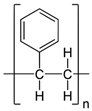 | 1.04–1.05 | CD and DVD cases, packing peanuts, single-use disposable cutlery, trays, disposable razors, and smoke detector housings. | ♸ | Not easily recyclable |
| Polycarbonate (PC) | 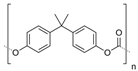 | 1.15–1.20 | Plastic lenses in eyewear, medical devices, bulletproof glass, automotive components, protective gear, greenhouses, digital disks (CDs, DVDs, and Blu-ray), and exterior lighting fixtures. | ♹ | Recycle at specialist points |
| Polylactic acid (PLA) |  | 1.23–1.25 | Takeaway storage containers, takeaway cups and utensils, medical applications like implants, rods, and screws, home 3D printing | ♹ | Recycle at specialist points |
| Acrylonitrile butadiene styrene (ABS) |  | 1.02–1.21 | Lego bricks, computer keyboards, power tool housings, housing for home electrical appliances such as shavers, vacuum cleaners or food processors, automotive bumpers, golf club heads, toys, canoes, 3D printing. | ♹ | Recycle at specialist points |
| Polyamide (PA, nylon) |  | 1.01–1.60 | Toothbrushes, wear pads, wheels, gloves, guitar strings and pics, tennis racket strings, medical implants, electrical connectors, fishing line, tents, gears. | ♹ | Recycle at specialist points |
| Polyurethane (PU/PUT) |  | 1.23–1.35 | Flexible foam, rigid foam, coatings, adhesives, sealants and elastomers. | ♹ | Recycle at specialist points |
| Method | Size Detection Limit | Chemical Characterization | Sample Preparation | Cost | Principle | Advantages | Limitation |
|---|---|---|---|---|---|---|---|
| Stereomicroscopy | 100 µm | No | Wet peroxide oxidation, filtering, drying (optionally staining) | Low | Provides a 3D view of larger particles using optical paths. | Fast sorting of large particles by shape and color. | Low resolution, cannot detect small particles or provide chemical ID. |
| Digital Microscopy | 1 µm | No | Wet peroxide oxidation, filtering, drying (optional staining) | Low | Provides a very high sharpness images at high magnification (x6000) | Fast sorting of large particles by shape and color. | Cannot detect small particles or provide chemical ID. |
| Polarized Light Microscopy (PLM) | 50 µm | Partial (crystalline) | Wet peroxide oxidation, drying, mounting on a transparent substrate | Low | Enhances contrast using polarized light to detect birefringence. | Useful for fiber identification. | Requires expertise, limited for small particles. |
| Fluorescence Microscopy | 1 µm (with fluorescence) | Partial (via fluorescent labeling) | Filtration, staining, drying, use of optical filters | Moderate | Detects fluorescence from particles or dyes. | High contrast, detects very small particles. | Requires staining, can produce false positives. |
| Fluorescence Lifetime Imaging Microscopy (FLIM) | 100 nm | Yes (based on fluorescence lifetime) | Staining or naturally fluorescent materials, mounting on quartz substrates | Medium to High | Measures the decay time of fluorescence emitted from excited molecules, providing information on molecular environment and interactions. | High spatial resolution, allows for detection of MPs and analysis of molecular interactions, can provide quantitative data on fluorophores. | Requires fluorescent dyes for non-fluorescent materials, can be complex to interpret, sensitive to environmental factors (pH, temperature). |
| Confocal Laser Scanning Microscopy (CLSM) | 500 nm | Partial (via fluorescent labeling) | Staining, centrifugation, filtering, immersion on glycerin (or similar) between quartz substrates | High | Uses laser scanning to create 3D images. | High-resolution, 3D imaging, useful in biological samples. | Expensive, requires fluorescence or labeling. |
| Hyperspectral Imaging (HIS) | 0.5 mm | Yes (spectral information for each pixel) | Wet peroxide oxidation, drying, sieving, avoid thick layer of MPs | Very High | Collects spatial and spectral data for each pixel in an image. | Simultaneous spatial and chemical identification. | Expensive, requires complex data processing, lower spatial resolution. |
| Scanning Electron Microscopy (SEM) | 1 µm | Partial (with EDX) | Wet peroxide oxidation, drying, conductive coating | High | Scans surface with electrons to create detailed images. | High-resolution surface morphology imaging. | Requires conductive coating, no chemical ID without EDX. |
| Transmission Electron Microscopy (TEM) | 1 nm | No | MPs has to have ultra-thin sections or ultramicrotomy | Very High | Transmits electrons through thin samples to visualize internal structures. | Ultra-high resolution, visualizes internal features. | Expensive, complex preparation, no polymer identification. |
| Atomic Force Microscopy (AFM) | 1 nm | No | Wet peroxide oxidation, ultra flat substrate, sample fixing | High | Scans surfaces to create 3D topographical maps based on atomic forces. | Provides 3D surface detail and nanoplastic analysis. | Slow scanning, small sample area, no chemical ID. |
| Method | Size Detection Limit | Chemical Information | Sample Preparation | Cost | Principle | Advantages | Limitation |
|---|---|---|---|---|---|---|---|
| Fourier Transform Infrared Spectroscopy (FTIR) | 10 µm | Yes (IR absorption spectra) | Wet peroxide oxidation, filtration, cleaning of substrates | Medium | Measures IR absorption to identify polymer composition via characteristic vibrations. | Non-destructive, identifies most polymers, can analyze mixtures. | Limited spatial resolution, unable to detect very small particles (<10 µm). |
| Raman Spectroscopy | 1 µm | Yes (Raman shift spectra) | Wet peroxide oxidation, filtration and deposition on cleaned substrate | Medium to High | Measures scattered light to provide molecular fingerprint based on vibrational modes. | High spatial resolution, detects small particles, identifies pigments. | Fluorescent samples may interfere, lower throughput compared to FTIR. |
| Near Infrared (NIR) Spectroscopy | 500 µm | Yes (broad molecular information) | Wet peroxide oxidation, filtration and deposition on cleaned substrate | Low to Medium | Analyzes molecular overtones and combinations of vibrations in the near-infrared region. | Fast and non-destructive, good for bulk analysis and polymer differentiation. | Limited sensitivity for small particles, broad spectral bands, not highly specific. |
| Laser Direct Infrared (LDIR) Spectrometry | 10 µm | Yes (IR absorption spectra) | Wet peroxide oxidation, filtration, drying | High | Combines laser and IR spectroscopy for high-throughput polymer identification. | High throughput, automated mapping, good for polymer identification. | Expensive, resolution limited by laser spot size (~10 µm). |
| Nuclear Magnetic Resonance (NMR) Spectroscopy | None (requires dissolved samples) | Yes (chemical structure) | Requires sample dissolution | Very High | Analyzes the magnetic properties of nuclei to provide detailed structural information. | Very detailed chemical information, differentiates complex polymers. | Requires dissolved or pure samples, not suitable for solid particles. |
| Optical Photothermal Infrared (O-PTIR) Spectroscopy | 500 nm | Yes (IR absorption spectra) | Wet peroxide oxidation, filtration, drying | High | Measures infrared absorption indirectly by detecting photothermal effects. | High spatial resolution, can analyze very small particles (<1 µm). | Expensive, complex instrumentation, lower sensitivity for certain materials. |
| Method | Size Detection Limit | Chemical Information | Sample Preparation | Cost | Principle | Advantages | Limitation |
|---|---|---|---|---|---|---|---|
| Thermogravimetric Analysis (TGA) | 1 µm | Yes (mass loss profiles) | Wet peroxide oxidation, density separation, drying | Medium to High | Measures weight changes in a sample as it is heated, providing information on thermal stability and composition. | Simple setup, can analyze small amounts of material, useful for assessing the thermal stability of plastics. | Limited to thermal decomposition, cannot provide specific chemical identities. |
| Differential Scanning Calorimetry (DSC) | 1 µm | Yes (thermal transitions) | Wet peroxide oxidation, dehydration, mass of the sample (5–10 mg) | Medium | Measures heat flow into or out of a sample as it is heated or cooled, providing insights into thermal transitions (melting, crystallization). | Provides specific thermal properties, useful for characterizing polymer behavior during heating. | Limited size range, cannot identify specific polymers directly. |
| Pyrolysis Gas Chromatography-Mass Spectrometry (Py-GC-MS) | 1 µm | Yes (chemical composition) | Wet peroxide oxidation, drying, precise weighing (10–100 µg), requires pyrolysis | High | Involves the thermal decomposition of polymers in an inert atmosphere followed by GC-MS analysis of the resulting gaseous products. | Highly sensitive and specific, provides detailed chemical identification of MPs. | Expensive, requires complex sample preparation, not suitable for quantitative analysis without calibration. |
Disclaimer/Publisher’s Note: The statements, opinions and data contained in all publications are solely those of the individual author(s) and contributor(s) and not of MDPI and/or the editor(s). MDPI and/or the editor(s) disclaim responsibility for any injury to people or property resulting from any ideas, methods, instructions or products referred to in the content. |
© 2026 by the authors. Licensee MDPI, Basel, Switzerland. This article is an open access article distributed under the terms and conditions of the Creative Commons Attribution (CC BY) license.
Share and Cite
Li, Y.; Pizzoferrato, R.; Burratti, L.; Nicolai, E. Unraveling Microplastics: Sources, Environment and Health Impacts, and Detection Techniques. Environments 2026, 13, 134. https://doi.org/10.3390/environments13030134
Li Y, Pizzoferrato R, Burratti L, Nicolai E. Unraveling Microplastics: Sources, Environment and Health Impacts, and Detection Techniques. Environments. 2026; 13(3):134. https://doi.org/10.3390/environments13030134
Chicago/Turabian StyleLi, Yuliu, Roberto Pizzoferrato, Luca Burratti, and Eleonora Nicolai. 2026. "Unraveling Microplastics: Sources, Environment and Health Impacts, and Detection Techniques" Environments 13, no. 3: 134. https://doi.org/10.3390/environments13030134
APA StyleLi, Y., Pizzoferrato, R., Burratti, L., & Nicolai, E. (2026). Unraveling Microplastics: Sources, Environment and Health Impacts, and Detection Techniques. Environments, 13(3), 134. https://doi.org/10.3390/environments13030134