

Endophyte-Assisted Phytoremediation by the Halophyte Halocnemum strobilaceum Coping with Extreme Salinity and Hydrocarbon Pollution

 ,
,  ,
,  , , , , ,
  , and
, and 
Abstract
1. Introduction
2. Materials and Methods
2.1. Isolation and Characterization of Endophytic Bacteria
2.2. Plant Materials and Experimental Design
2.3. Plant Growth and Biomass Partitioning
2.4. Chlorophyll Fluorescence Measurements
2.5. Hydrocarbons Analysis
2.6. DNA Extraction, Quantification and Identification of Root Microbiomes from H. strobilaceum
2.7. Statistical Analyses
3. Results and Discussion
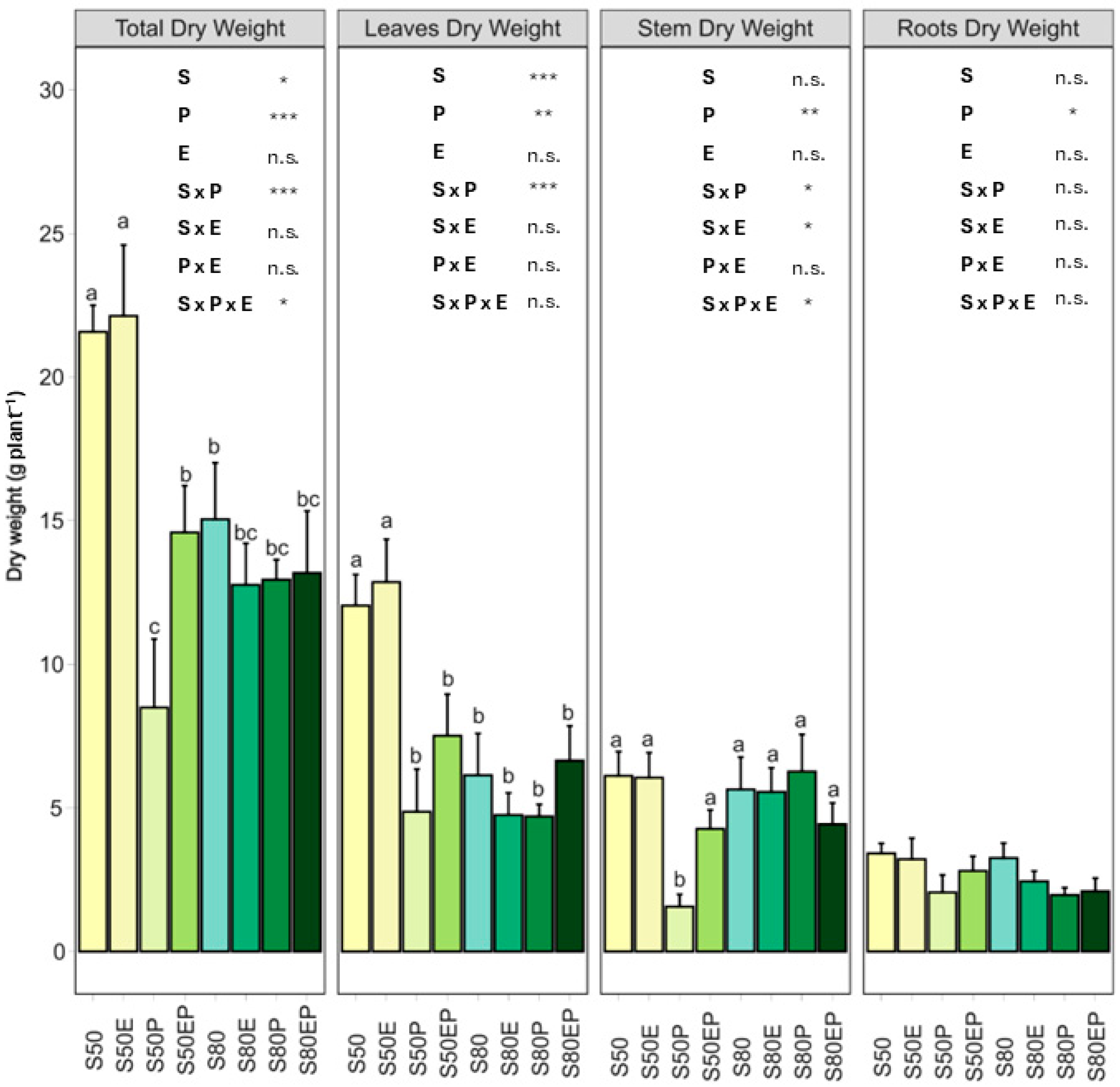
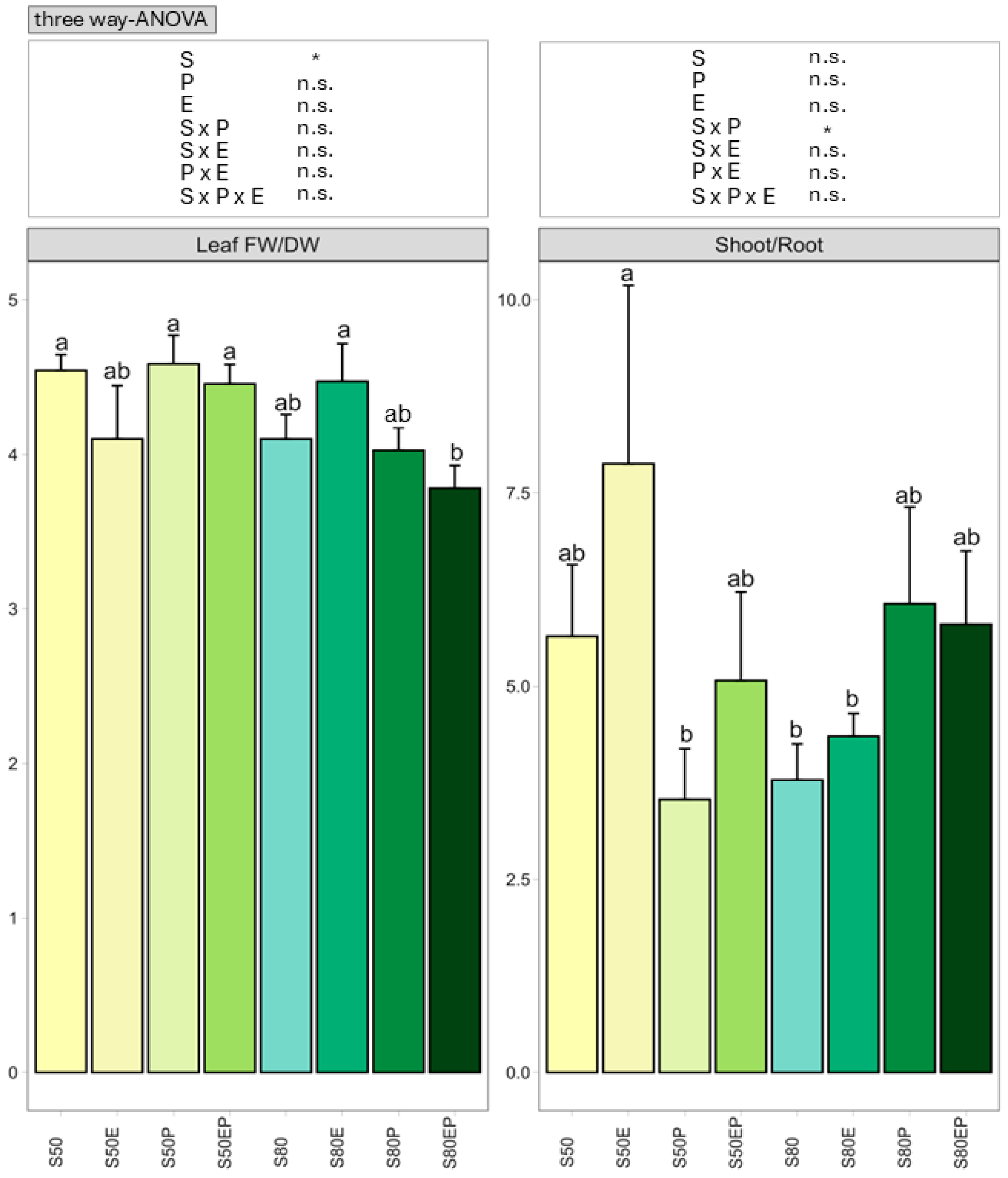
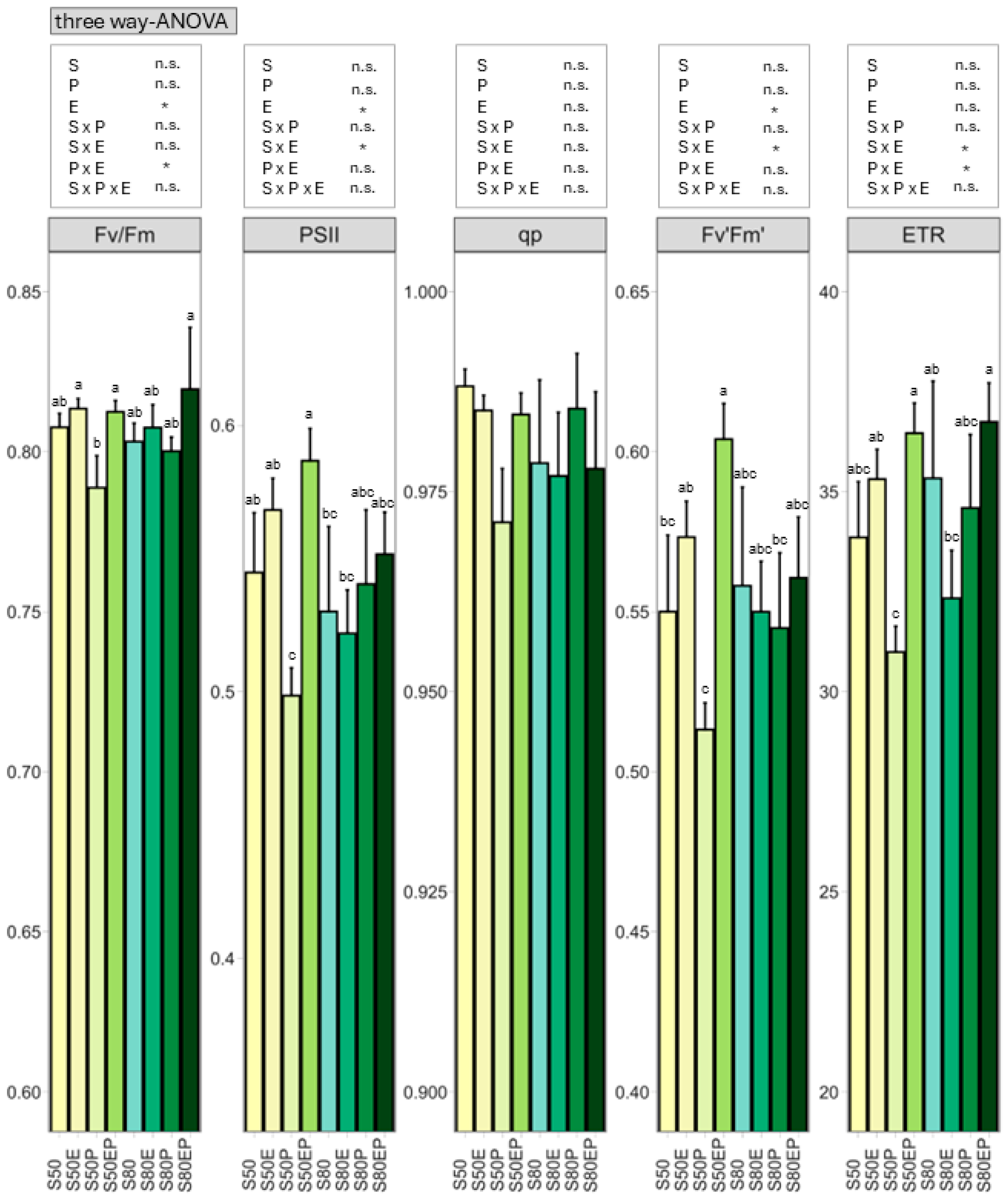
3.1. Plant Growth and Photosynthetic Performance
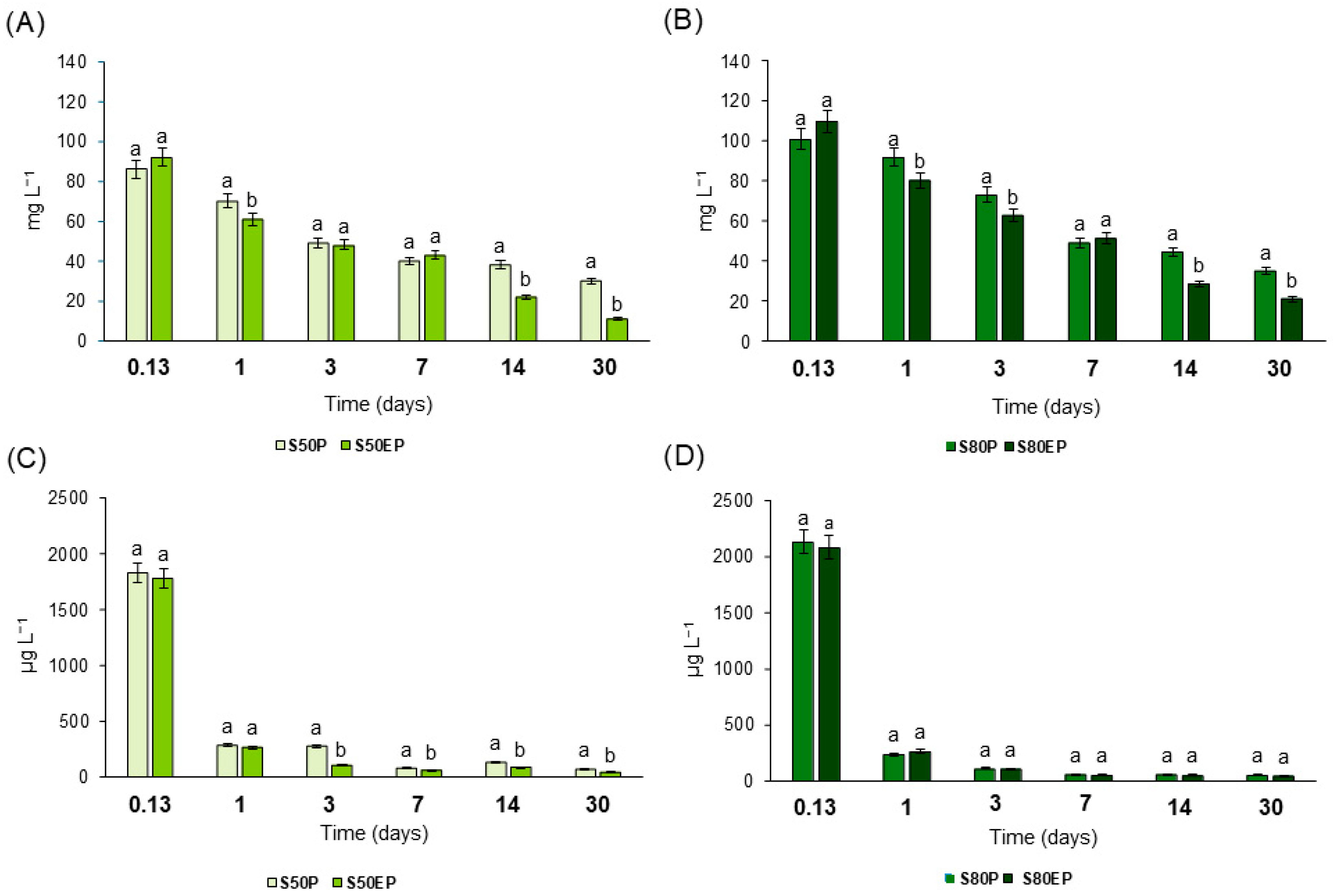
3.2. Effects on Petroleum Hydrocarbon Contents
3.3. Microbial Diversity
4. Conclusions
- -
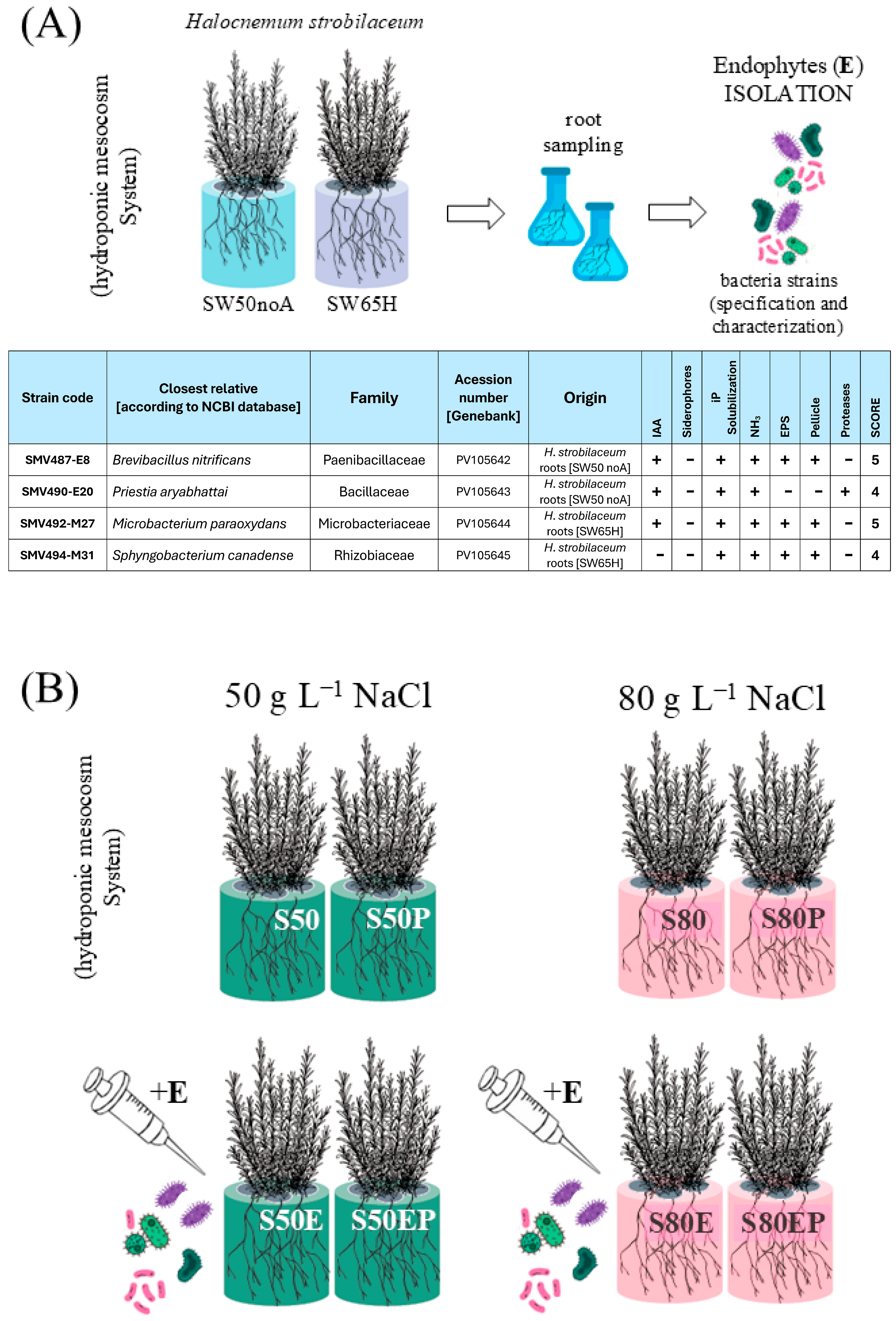
- Endophyte-assisted tolerance and function at the lower salinity level. The inoculation with selected endophytic bacteria strains ameliorated the plant performance in the presence of 50 g L−1 NaCl and crude oil (P), recovering total and stem biomass and photosynthetic efficiency (S50EP versus S50P). This shows a practical strategy to sustain productivity and function of H. strobilaceum in saline, petroleum contaminated waters.
- -
- The higher salinity tested can override endophyte benefits. Under 80 g L−1 NaCl, plants preserved biomass production and partitioning, leaf water status, and photosynthetic activity despite treatment with petroleum hydrocarbons (S80EP versus S80P), but endophyte mediated gains were not detectable. This indicated that extreme salinity may limit measurable endophyte effects in such conditions.
- -
- Accelerated hydrocarbon removal under lower salinity. Endophytes improved final hydrocarbon degradation at both salinities. Endophyte inoculation improved the final hydrocarbon degradation by approximately 7–10% at both salinity levels (50 and 80 g L−1 NaCl). Moreover, under the lower salinity (50 g L−1 NaCl), hydrocarbon removal proceeded more rapidly throughout the time course, resulting in a final residual hydrocarbon concentration about half of that observed under 80 g L−1 NaCl (11 mg L−1 vs. 21 mg L−1).
- -
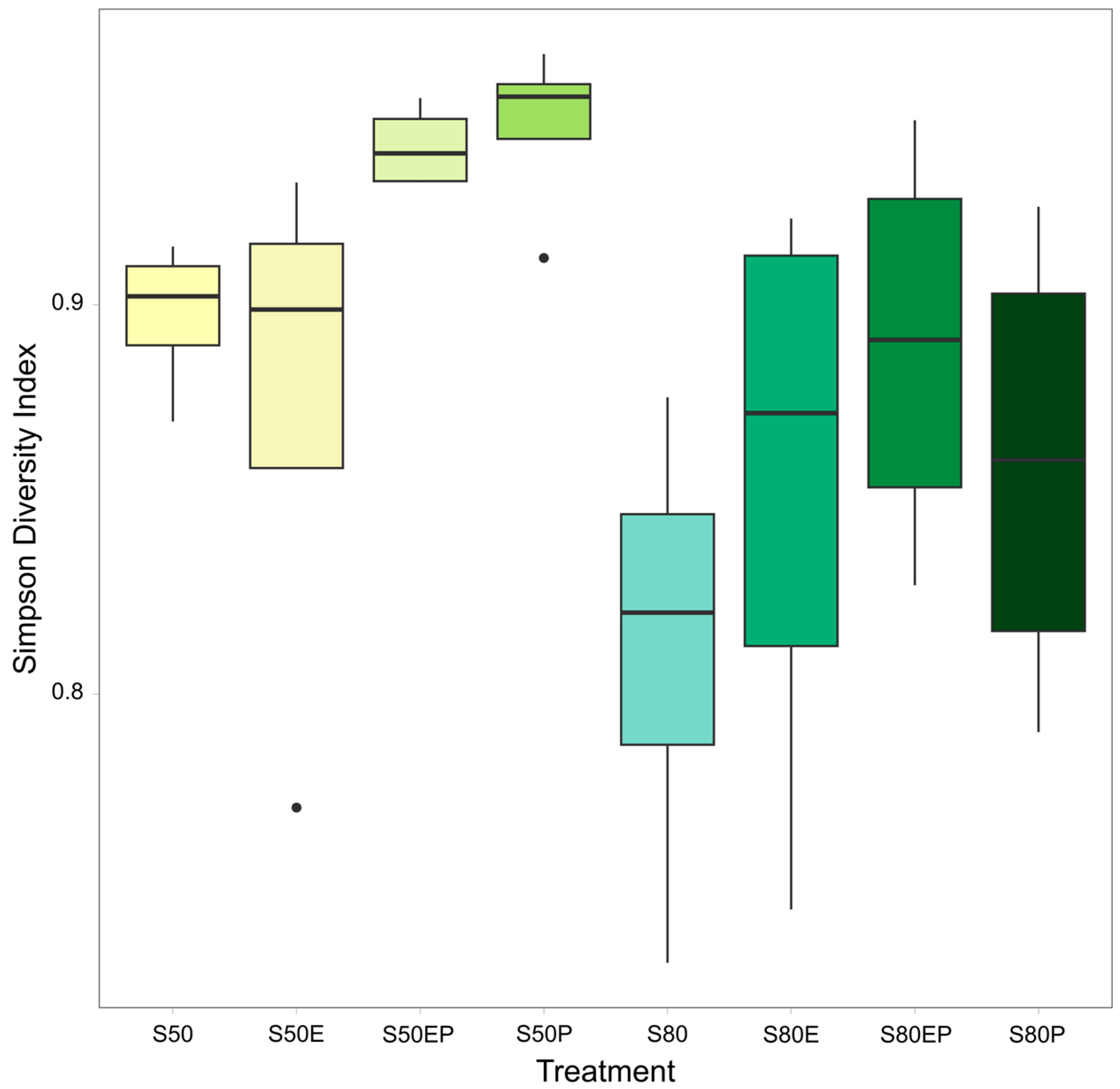
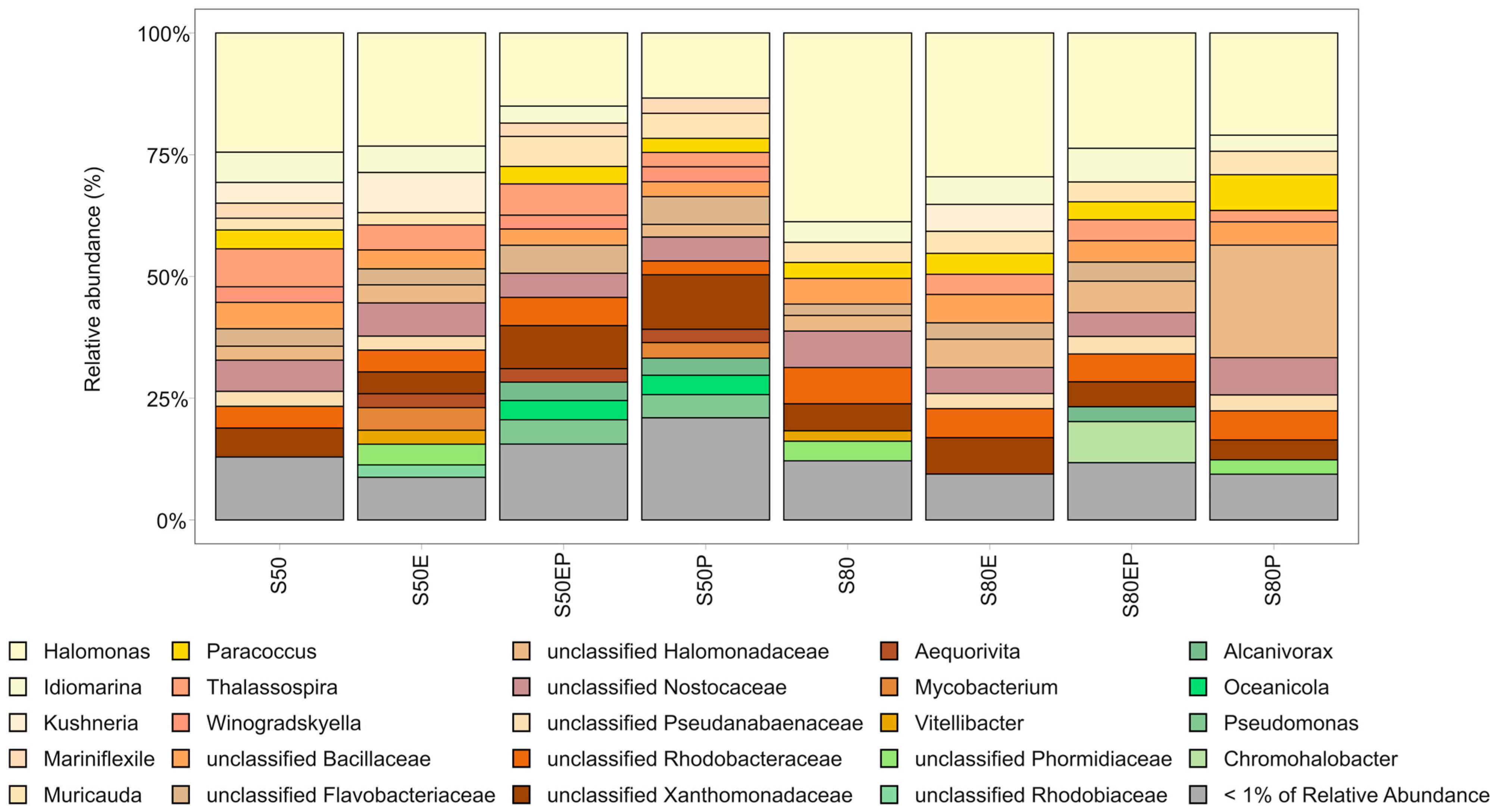
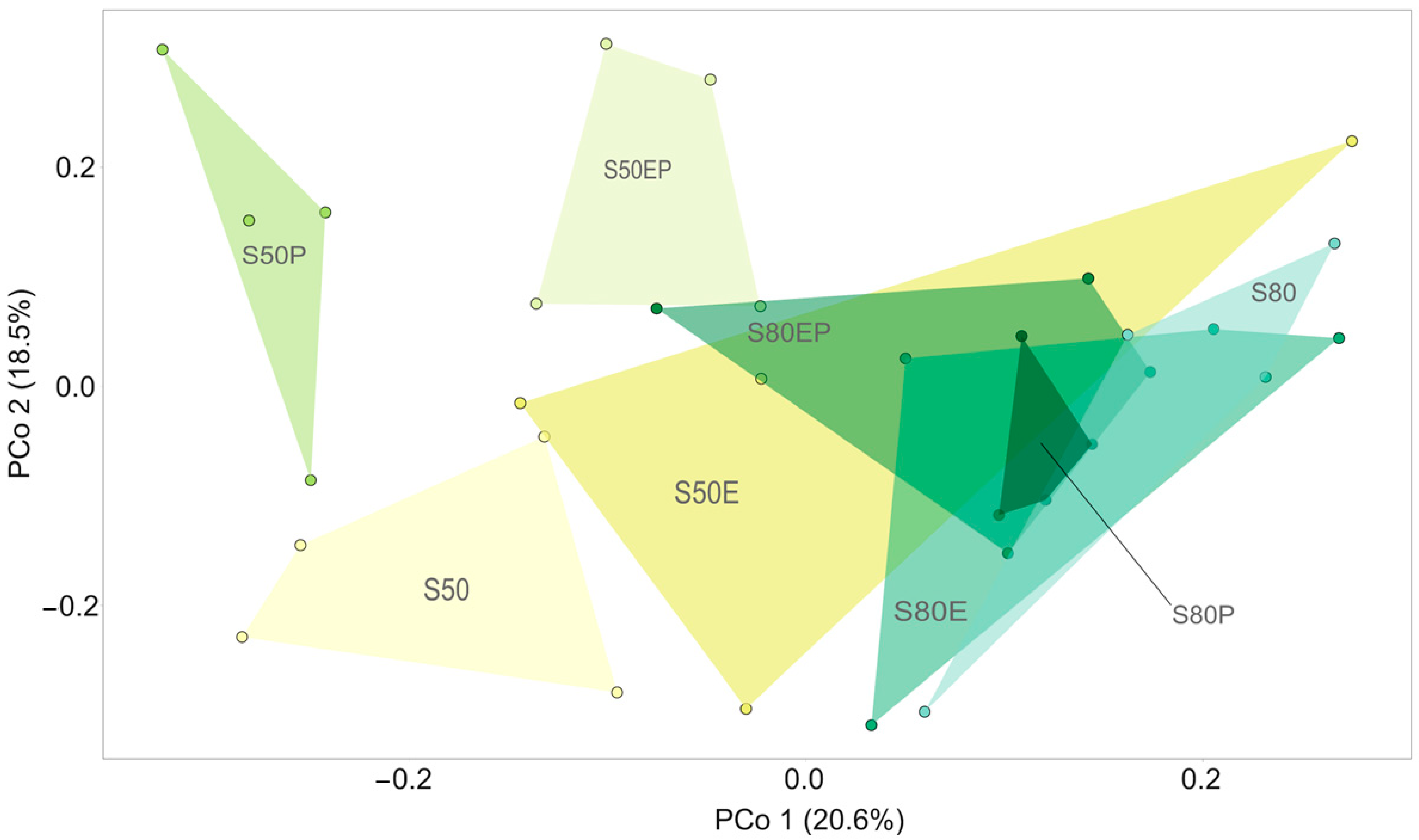
- The metagenomic analysis gave a precious insight into the community composition of the bacteria present on the roots of H. strobilaceum. The microbiome profiling evidenced that despite the presence of petroleum hydrocarbons at relatively high concentrations, salinity was the dominant factor controlling the root-associated microbial community composition and functioning. While in the presence of 50 g L−1 NaCl the distribution of the microbial community was clearly distinguished in the four treatment conditions tested; a substantial overlap occurred at 80 g L−1 NaCl among all the treatments (S80, S80E, S80P, S80EP) and the ones with the 50 g L−1 NaCl treatment with endophytes inoculation (S50E). Thus, the endophytic bacteria play a crucial role in supporting the halophytic plants of H. strobilaceum to thrive and maintain their yield under conditions of extreme salinity and hydrocarbon pollution.
- -
- Implications for remediation of saline environments and industrial effluents. The integration of traditional ecophysiological experiments with NGS tests represents a modern and innovative approach to address organic pollution in saline environments where phytoremediation using halophytes and their associated endophytes can be applied. Implementing modern techniques and essential measures is crucial for effectively reclaiming saline and contaminated lands and maximizing their benefits. Thus, this type of approach can be used to identify the best combination of plants and bacteria in optimizing phytoremediation processes that are environmentally friendly, biological methods with high effectiveness and sustainability. In this context, results highlight the potential of halophytes and associated root-endophytic bacteria as promising candidates for remediating highly saline and polluted soils and waters, especially in arid-semiarid regions and drylands. In these areas, the flora development is limited due to hypersalinity and hydrocarbon pollution related to crude oil exploitation near petroleum oil fields. These results may be translated into tangible applied technologies, supporting the clean-up of anthropogenic contaminants, facilitating ecosystem recovery, and restoring the biodiversity of areas neighbouring oil plants.
Supplementary Materials
Author Contributions
Funding
Data Availability Statement
Acknowledgments
Conflicts of Interest
References
- Alikulov, B.; Shurigin, V.; Davranov, K.; Ismailov, Z. Plant growth-promoting endophytic bacteria associated with Halocnemum strobilaceum (Pall.) M. Bieb and their plant beneficial traits. Plant Sci. Today 2022, 8, 44–50. [Google Scholar] [CrossRef]
- Ahmadi, F.; Mohammadkhani, N.; Servati, M. Halophytes play important role in phytoremediation of salt-affected soils in the bed of Urmia Lake, Iran. Sci. Rep. 2022, 12, 12223. [Google Scholar] [CrossRef]
- Barbafieri, M.; Bretzel, F.; Scartazza, A.; Di Baccio, D.; Rosellini, I.; Grifoni, M.; Pini, R.; Clementi, A.; Franchi, E. Response to Hypersalinity of Four Halophytes Growing in Hydroponic Floating Systems: Prospects in the Phytomanagement of High Saline Wastewaters and Extreme Environments. Plants 2023, 12, 1737. [Google Scholar] [CrossRef]
- Wentzell, B.M. Phytoremediation for Water Quality Improvement: Current Advances and Future Prospects. Biotechnol. Environ. 2025, 2, 7. [Google Scholar] [CrossRef]
- Park, J.-H.; Lim, H.-I.; Lee, M.-H.; Yoon, Y.-H.; Ju, J.-H. Mitigating Deicer-Induced Salinity Through Activated Carbon and Salt-Tolerant Grass Integration: A Case of Pennisetum alopecuroides. Environments 2025, 12, 250. [Google Scholar] [CrossRef]
- Hussein, Z.S.; Hamido, N.; Hegazy, A.K.; El-Dessouky, M.A.; Mohamed, N.H.; Safwat, G. Phytoremediation of Crude Petroleum Oil Pollution: A Review. Egypt. J. Bot. 2022, 62, 611–640. [Google Scholar] [CrossRef]
- Oria-Usifo, E.; Enuma, I.; Edward, I.; Okafor, D.; Segun, B.; Ukpai, U.; Ajayi, A. Removal of Hydrocarbon from Produced Water by Phytoremediation Method Using Water Hyacinth (Eichhornia crassipes). Int. J. Sci. Res. Civ. Eng. 2025, 9, 17–25. [Google Scholar] [CrossRef]
- Taulé, C.; Vaz-Jauri, P.; Battistoni, F. Insights into the early stages of plant–endophytic bacteria interaction. World J. Microbiol. Biotechnol. 2021, 37, 13. [Google Scholar] [CrossRef]
- Tufail, M.A.; Bejarano, A.; Shakoor, A.; Naeem, A.; Arif, M.S.; Dar, A.A.; Farooq, T.H.; Pertot, I.; Puopolo, G. Can Bacterial Endophytes Be Used as a Promising Bio-Inoculant for the Mitigation of Salinity Stress in Crop Plants?—A Global Meta-Analysis of the Last Decade (2011–2020). Microorganisms 2021, 9, 1861. [Google Scholar] [CrossRef]
- Afridi, M.S.; Javed, M.A.; Ali, S.; De Medeiros, F.H.V.; Ali, B.; Salam, A.; Sumaira; Marc, R.A.; Alkhalifah, D.H.M.; Selim, S.; et al. New opportunities in plant microbiome engineering for increasing agricultural sustainability under stressful conditions. Front. Plant Sci. 2022, 13, 899464. [Google Scholar] [CrossRef]
- Setiawati, M.R.; Sugiyono, L.; Kamaluddin, N.N.; Simarmata, T. The use of endophytic growth-promoting bacteria to alleviate salinity impact and enhance the chlorophyll, N uptake, and growth of rice seedling. Open Agric. 2021, 6, 349–359. [Google Scholar] [CrossRef]
- Chebotar, V.K.; Chizhevskaya, E.P.; Baganova, M.E.; Keleinikova, O.V.; Yuzikhin, O.S.; Zaplatkin, A.N.; Khonina, O.V.; Kostitsin, R.D.; Lapenko, N.G. Endophytes from Halotolerant Plants Aimed to Overcome Salinity and Drought. Plants 2022, 11, 2992. [Google Scholar] [CrossRef] [PubMed]
- Chicca, I.; Becarelli, S.; Di Gregorio, S. Microbial Involvement in the Bioremediation of Total Petroleum Hydrocarbon Polluted Soils: Challenges and Perspectives. Environments 2022, 9, 52. [Google Scholar] [CrossRef]
- Singh, R.K.; Singh, P.; Sharma, A.; Guo, D.-J.; Upadhyay, S.K.; Song, Q.-Q.; Verma, K.K.; Li, D.-P.; Malviya, M.K.; Song, X.-P.; et al. Unraveling Nitrogen Fixing Potential of Endophytic Diazotrophs of Different Saccharum Species for Sustainable Sugarcane Growth. Int. J. Mol. Sci. 2022, 23, 6242. [Google Scholar] [CrossRef]
- Varga, T.; Hixson, K.K.; Ahkami, A.H.; Sher, A.W.; Barnes, M.E.; Chu, R.K.; Battu, A.K.; Nicora, C.D.; Winkler, T.E.; Reno, L.R.; et al. Endophyte-Promoted Phosphorus Solubilization in Populus. Front. Plant Sci. 2020, 11, 567918. [Google Scholar] [CrossRef]
- Franchi, E.; Fusini, D.; Pietrini, I.; Bretzel, F.; Scartazza, A.; Barbafieri, M.; Vocciante, M. Low-impact Management of Produced Water: Assessing Phytodepuration with Halocnemun Strobilaceum and Suaeda fruticosa. J. Sustain. Dev. Energy Water Environ. Syst. 2024, 12, 1120494. [Google Scholar] [CrossRef]
- Franchi, E.; Cosmina, P.; Pedron, F.; Rosellini, I.; Barbafieri, M.; Petruzzelli, G.; Vocciante, M. Improved arsenic phytoextraction by combined use of mobilizing chemicals and autochthonous soil bacteria. Sci. Total Environ. 2019, 655, 328–336. [Google Scholar] [CrossRef]
- Pietrini, I.; Grifoni, M.; Franchi, E.; Cardaci, A.; Pedron, F.; Barbafieri, M.; Petruzzelli, G.; Vocciante, M. Enhanced Lead Phytoextraction by Endophytes from Indigenous Plants. Soil Syst. 2021, 5, 55. [Google Scholar] [CrossRef]
- Franchi, E.; Barbafieri, M.; Petruzzelli, G.; Ferro, S.; Vocciante, M. Screening of Plants and Indigenous Bacteria to Improve Arsenic Phytoextraction. Appl. Sci. 2022, 12, 7267. [Google Scholar] [CrossRef]
- Huarancca Reyes, T.; Scartazza, A.; Castagna, A.; Cosio, E.G.; Ranieri, A.; Guglielminetti, L. Physiological effects of short acute UVB treatments in Chenopodium quinoa Willd. Sci. Rep. 2018, 8, 371. [Google Scholar] [CrossRef] [PubMed]
- Maxwell, K.; Johnson, G.N. Chlorophyll fluorescence—A practical guide. J. Exp. Bot. 2000, 51, 659–668. [Google Scholar] [CrossRef] [PubMed]
- United States Environmental Protection Agency (EPA). Method 5021A: Volatile Organic Compounds in Various Sample Matrices Using Equilibrium Headspace Analysis (SW-846 Update V); EPA: Washington, DC, USA, 2014. Available online: https://www.epa.gov/sites/default/files/2015-12/documents/5021a.pdf (accessed on 4 September 2025).
- United States Environmental Protection Agency (EPA). Method 8015C: Nonhalogenated Organics by Gas Chromatography (8015C—2 Revision 3); EPA: Washington, DC, USA, 2007. Available online: https://www.epa.gov/sites/default/files/2015-12/documents/8015c.pdf (accessed on 3 September 2025).
- United States Environmental Protection Agency (EPA). Method 3510C: Separatory Funnel Liquid–Liquid Extraction (3510C—1 Revision 3); EPA: Washington, DC, USA, 1996. Available online: https://www.epa.gov/sites/default/files/2015-12/documents/3510c.pdf (accessed on 3 September 2025).
- Baldera-Moreno, Y.; Pino, V.; Farres, A.; Banerjee, A.; Gordillo, F.; Andler, R. Biotechnological Aspects and Mathematical Modeling of the Biodegradation of Plastics under Controlled Conditions. Polymers 2022, 14, 375. [Google Scholar] [CrossRef]
- Sillo, F.; Marino, G.; Franchi, E.; Haworth, M.; Zampieri, E.; Pietrini, I.; Fusini, D.; Mennone, C.; Centritto, M.; Balestrini, R. Impact of irrigation water deficit on two tomato genotypes grown under open field conditions: From the root-associated microbiota to the stress responses. Ital. J. Agron. 2022, 17, 2130. [Google Scholar] [CrossRef]
- Wickham, H. Ggplot2. WIREs Comput. Stat. 2011, 3, 180–185. [Google Scholar] [CrossRef]
- R Core Team. R: A Language and Environment for Statistical Computing, version 4.4.0; R Foundation for Statistical Computing: Vienna, Austria, 2024. Available online: https://www.R-project.org/ (accessed on 10 January 2026).
- Posit Team. RStudio: Integrated Development Environment for R, version 2024.4.1.748. Posit Software. PBC: Boston, MA, USA, 2024. Available online: https://www.posit.co/ (accessed on 10 January 2026).
- Qui, X.X.; Huang, Z.Y.; Baskin, J.M.; Baskin, C.C. Effect of temperature, light and salinity on seed germination and radicle growth of the geographically widespread halophyte shrub Halocnemum strobilaceum. Ann. Bot. 2008, 101, 293–299. [Google Scholar] [CrossRef]
- Yasseen, B.T.; Al-Thani, R.F. Endophytes and Halophytes to Remediate Industrial Wastewater and Saline Soils: Perspectives from Qatar. Plants 2022, 11, 1497. [Google Scholar] [CrossRef]
- Kuramshina, Z.M.; Sattarova, L.R.; Maksimov, I.V. Increasing the Resistance of Wheat to Oil Pollution Using Endophytic Bacteria Bacillus subtilis. Russ. J. Plant Physiol. 2023, 70, 124. [Google Scholar] [CrossRef]
- Bibi, F.; Strobel, G.A.; Naseer, M.I.; Yasir, M.; Khalaf Al-Ghamdi, A.A.; Azhar, E.I. Halophytes-associated endophytic and rhizospheric bacteria: Diversity, antagonism and metabolite production. Biocontrol Sci. Technol. 2018, 28, 192–213. [Google Scholar] [CrossRef]
- Pacwa-Płociniczak, M.; Byrski, A.; Chlebek, D.; Prach, M.; Płociniczak, T. A deeper insight into the phytoremediation of soil polluted with petroleum hydrocarbons supported by the Enterobacter ludwigii ZCR5 strain. Appl. Soil Ecol. 2022, 181, 104651. [Google Scholar] [CrossRef]
- Kidd, P.S.; Álvarez, A.; Álvarez-López, V.; Cerdeira-Pérez, A.; Rodríguez-Garrido, B.; Prieto-Fernández, Á.; Chalot, M. Beneficial traits of root endophytes and rhizobacteria associated with plants growing in phytomanaged soils with mixed trace metal–polycyclic aromatic hydrocarbon contamination. Chemosphere 2021, 277, 130272. [Google Scholar] [CrossRef] [PubMed]
- Urana, R.; Singh, N.; Sharma, P. Effects of PGPR on growth and photosynthetic pigment of Trigonella foenum-graceum and Brassica juncea in PAH-contaminated soil. SN Appl. Sci. 2019, 1, 761. [Google Scholar] [CrossRef]
- Siciliano, S.D.; Germida, J.J.; Banks, K.; Greer, C.W. Changes in Microbial Community Composition and Function during a Polyaromatic Hydrocarbon Phytoremediation Field Trial. Appl. Environ. Microbiol. 2003, 69, 483–489. [Google Scholar] [CrossRef]
- Fathepure, B.Z. Recent Studies in Microbial Degradation of Petroleum Hydrocarbons in Hypersaline Environments. Front. Microbiol. 2014, 5, 173. [Google Scholar] [CrossRef]
- Piubeli, F.; Grossman, M.J.; Fantinatti-Garboggini, F.; Durrant, L.R. Identification and Characterization of Aromatic Degrading Halomonas in Hypersaline Produced Water and COD Reduction by Bioremediation by the Indigenous Microbial Population Using Nutrient Addition. Chem. Eng. Trans. 2012, 27, 65. [Google Scholar]
- Hardoim, P.R.; van Overbeek, L.S.; Berg, G.; Pirttilä, A.M.; Compant, S.; Campisano, A.; Döring, M.; Sessitsch, A. The Hidden World within Plants: Ecological and Evolutionary Considerations for Defining Functioning of Microbial Endophytes. Microbiol. Mol. Biol. Rev. 2015, 79, 293–320. [Google Scholar] [CrossRef]
- Trivedi, P.; Leach, J.E.; Tringe, S.G.; Sa, T.; Singh, B.K. Plant–Microbiome Interactions: From Community Assembly to Plant Health. Nat. Rev. Microbiol. 2020, 18, 607–621. [Google Scholar] [CrossRef]
- Johnson, J.S.; Spakowicz, D.J.; Hong, B.-Y.; Petersen, L.M.; Demkowicz, P.; Chen, L.; Leopold, S.R.; Hanson, B.M.; Agresta, H.O.; Gerstein, M.; et al. Evaluation of 16S rRNA Gene Sequencing for Species and Strain-Level Microbiome Analysis. Nat. Commun. 2019, 10, 5029. [Google Scholar] [CrossRef] [PubMed]
- Toju, H.; Peay, K.G.; Yamamichi, M.; Narisawa, K.; Hiruma, K.; Naito, K.; Fukuda, S.; Ushio, M.; Nakaoka, S.; Onoda, Y.; et al. Core Microbiomes for Sustainable Agroecosystems. Nat. Plants 2018, 4, 247–257. [Google Scholar] [CrossRef] [PubMed]
- Sánchez-Porro, C.; De la Haba, R.R.; Soto-Ramírez, N.; Márquez, M.C.; Montalvo-Rodríguez, R.; Ventosa, A. Description of Kushneria aurantia gen. nov., sp. nov., a novel member of the family Halomonadaceae, and a proposal for reclassification of Halomonas marisflavi as Kushneria marisflavi comb. nov., of Halomonas indalinina as Kushneria indalinina comb. nov., and of Halomonas avicenniae as Kushneria avicenniae comb. nov. Int. J. Syst. Evol. Microbiol. 2009, 59, 397–405. [Google Scholar] [CrossRef] [PubMed]
- Bangash, A.; Ahmed, I.; Abbas, S.; Kudo, T.; Shahzad, A.; Fujiwara, T.; Ohkuma, M. Kushneria pakistanensis sp. nov., a novel moderately halophilic bacterium isolated from rhizosphere of a plant (Saccharum spontaneum) growing in salt mines of the Karak area in Pakistan. Antonie Leeuwenhoek 2015, 107, 991–1000. [Google Scholar] [CrossRef]
- Mora-Ruiz, M.D.R.; Alejandre-Colomo, C.; Ledger, T.; González, B.; Orfila, A.; Rosselló-Mora, R. Non-halophilic endophytes associated with the euhalophyte Arthrocnemum macrostachyum and their plant growth promoting activity potential. FEMS Microbiol. Lett. 2018, 365, fny208. [Google Scholar] [CrossRef]
- Navarro-Torre, S.; Carro, L.; Rodríguez-Llorente, I.D.; Pajuelo, E.; Caviedes, M.Á.; Igual, J.M.; Redondo-Gómez, S.; Camacho, M.; Klenk, H.-P.; Montero-Calasanz, M.d.C. Kushneria phyllosphaerae sp. nov. and Kushneria endophytica sp. Nov., plant growth promoting endophytes isolated from the halophyte plant Arthrocnemum macrostachyum. Int. J. Syst. Evol. Microbiol. 2018, 68, 2800–2806. [Google Scholar] [CrossRef]
- Lugtenberg, B.; Kamilova, F. Plant-growth-promoting rhizobacteria. Annu. Rev. Microbiol. 2009, 63, 541–556. [Google Scholar] [CrossRef]
- Segura, A.; Rodríguez-Conde, S.; Ramos, C.; Ramos, J.L. Bacterial responses and interactions with plants during rhizoremediation. Microb. Biotechnol. 2009, 2, 452–464. [Google Scholar] [CrossRef]
- Hakeem, K.R.; Dar, G.H.; Mehmood, M.A.; Bhat, R.A. (Eds.) Microbiota and Biofertilizers: A Sustainable Continuum for Plant and Soil Health; Springer Nature Switzerland AG: Cham, Switzerland, 2021. [Google Scholar] [CrossRef]
- Yakimov, M.M.; Golyshin, P.N.; Lang, S.; Moore, E.R.B.; Abraham, W.-R.; Lunsdorf, H.; Timmis, K.N. Alcanivorax borkumensis gen. Nov., sp. Nov., a new, hydrocarbon-degrading and surfactant-producing marine bacterium. Int. J. Syst. Bacteriol. 1998, 48, 339–348. [Google Scholar] [CrossRef]
- Rivas, R.; García-Fraile, P.; Peix, A.; Mateos, P.F.; Martínez-Molina, E.; Velázquez, E. Alcanivorax balearicus sp. Nov., isolated from Lake Martel. Int. J. Syst. Evol. Microbiol. 2007, 57, 1331–1335. [Google Scholar] [CrossRef] [PubMed][Green Version]
- Wu, Y.; Lai, Q.; Zhou, Z.; Qiao, N.; Liu, C.; Shao, Z. Alcanivorax hongdengensis sp. Nov., an alkane-degrading bacterium isolated from surface seawater of the straits of Malacca and Singapore, producing a lipopeptide as its biosurfactant. Int. J. Syst. Evol. Microbiol. 2009, 59, 1474–1479. [Google Scholar] [CrossRef]
- Chiodini, G.; Caliro, S.; Avino, R.; Bini, G.; Giudicepietro, F.; De Cesare, W.; Ricciolino, P.; Aiuppa, A.; Cardellini, C.; Petrillo, Z.; et al. Hydrothermal pressure-temperature control on CO2 emissions and seismicity at Campi Flegrei (Italy). J. Volcanol. Geotherm. Res. 2021, 414, 107245. [Google Scholar] [CrossRef]
- López-López, A.; Pujalte, M.J.; Benlloch, S.; Mata-Roig, M.; Rosselló-Mora, R.; Garay, E.; Rodríguez-Valera, F. Thalassospira lucentensis gen. Nov., sp. Nov., a new marine member of the alpha-Proteobacteria. Int. J. Syst. Evol. Microbiol. 2002, 52, 1277–1283. [Google Scholar] [CrossRef] [PubMed]
- Kayama, G.; Kanaly, R.A.; Mori, J.F. Comprehensive Genomic Characterisation of Marine Bacteria Thalassospira spp. Provides Insights into Their Ecological Roles in Aromatic Hydrocarbon-Exposed Environments. Microbiol. Spectr. 2022, 10, e03149-22. [Google Scholar] [CrossRef] [PubMed]
- Kodama, Y.; Stiknowati, L.I.; Ueki, A.; Ueki, K.; Watanabe, K. Thalassospira tepidiphila sp. Nov., a polycyclic aromatic hydrocarbon-degrading bacterium isolated from seawater. Int. J. Syst. Evol. Microbiol. 2008, 58, 711–715. [Google Scholar] [CrossRef] [PubMed]
- Tsubouchi, T.; Ohta, Y.; Haga, T.; Usui, K.; Shimane, Y.; Mori, K.; Tanizaki, A.; Adachi, A.; Kobayashi, K.; Yukawa, K.; et al. Thalassospira alkalitolerans sp. Nov. and Thalassospira mesophila sp. Nov., isolated from a decaying bamboo sunken in the marine environment, and emended description of the genus Thalassospira. Int. J. Syst. Evol. Microbiol. 2014, 64, 107–115. [Google Scholar] [CrossRef] [PubMed]
- Bruns, A.; Rohde, M.; Berthe-Corti, L. Muricauda ruestringensis gen. Nov., sp. Nov., a facultatively anaerobic, appendaged bacterium from German North Sea intertidal sediment. Int. J. Syst. Evol. Microbiol. 2001, 51, 1997–2006. [Google Scholar] [CrossRef] [PubMed]
- Wang, D.; Wu, Y.; Liu, Y.; Liu, B.; Gao, Y.; Yang, Y.; Zhang, Y.; Liu, C.; Huo, Y.; Tang, A.; et al. Muricauda abyssi sp. Nov., a marine bacterium isolated from deep seawater of the Mariana Trench. Int. J. Syst. Evol. Microbiol. 2022, 72, 5615. [Google Scholar] [CrossRef]
- Zhao, S.; Liu, R.; Lai, Q.; Shao, Z. Muricauda aurea sp. Nov. And Muricauda profundi sp. Nov., two marine bacteria isolated from deep sea sediment of Pacific Ocean. Int. J. Syst. Evol. Microbiol. 2022, 72, 005217. [Google Scholar] [CrossRef]
- Sun, C.; Zhang, C.; Guo, C.; Ding, H.; Jung, D.; Seo, E.-Y.; Aoi, Y.; He, S.; Ding, L.; Zhang, W. Muricauda meishanensis sp. Nov., a facultative anaerobic bacterium belonging to the family Flavobacteriaceae isolated from marine sediment in the East China Sea. Int. J. Syst. Evol. Microbiol. 2023, 73, 6059. [Google Scholar] [CrossRef]
- Cordone, A.; Selci, M.; Barosa, B.; Bastianoni, A.; Bastoni, D.; Bolinesi, F.; Capuozzo, R.; Cascone, M.; Correggia, M.; Corso, D.; et al. Surface Bacterioplankton Community Structure Crossing the Antarctic Circumpolar Current Fronts. Microorganisms 2023, 11, 702. [Google Scholar] [CrossRef]
- Vreeland, R.H.; Litchfield, C.D.; Martin, E.L.; Elliot, E. Halomonas elongata, a New Genus and Species of Extremely Salt-Tolerant Bacteria. Int. J. Syst. Bacteriol. 1980, 30, 485–495. [Google Scholar] [CrossRef]
- Cabrera, A.; Aguilera, M.; Fuentes, S.; Incerti, C.; Russell, N.J.; Ramos-Cormenzana, A.; Monteoliva-Sánchez, M. Halomonas indalinina sp. Nov., a moderately halophilic bacterium isolated from a solar saltern in Cabo de Gata, Almería, southern Spain. Int. J. Syst. Evol. Microbiol. 2007, 57, 376–380. [Google Scholar] [CrossRef]
- Amjres, H.; Béjar, V.; Quesada, E.; Abrini, J.; Llamas, I. Halomonas rifensis sp. Nov., an exopolysaccharide-producing, halophilic bacterium isolated from a solar saltern. Int. J. Syst. Evol. Microbiol. 2011, 61, 2600–2605. [Google Scholar] [CrossRef]
- Jiang, J.; Pan, Y.; Hu, S.; Zhang, X.; Hu, B.; Huang, H.; Hong, S.; Meng, J.; Li, C.; Wang, K. Halomonas songnenensis sp. Nov., a moderately halophilic bacterium isolated from saline and alkaline soils. Int. J. Syst. Evol. Microbiol. 2014, 64, 1662–1669. [Google Scholar] [CrossRef]
- Lee, J.-C.; Kim, S.-J.; Whang, K.-S. Halomonas sediminicola sp. Nov., a moderately halophilic bacterium isolated from a solar saltern sediment. Int. J. Syst. Evol. Microbiol. 2016, 66, 3865–3872. [Google Scholar] [CrossRef]
- Bowman, J.P.; Nichols, D.S. Aequorivita gen. Nov., a member of the family Flavobacteriaceae isolated from terrestrial and marine Antarctic habitats. Int. J. Syst. Evol. Microbiol. 2002, 52, 1533–1541. [Google Scholar] [CrossRef]
- Ivanova, E.P.; Romanenko, L.A.; Chun, J.; Matte, M.H.; Matte, G.R.; Mikhailov, V.V.; Svetashev, V.I.; Huq, A.; Maugel, T.; Colwell, R.R. Idiomarina gen. Nov., comprising novel indigenous deep-sea bacteria from the Pacific Ocean, including descriptions of two species, Idiomarina abyssalis sp. nov. and Idiomarina zobellii sp. Nov. Int. J. Syst. Evol. Microbiol. 2000, 50, 901–907. [Google Scholar] [CrossRef]
- Park, S.C.; Baik, K.S.; Kim, M.S.; Kim, S.S.; Kim, S.R.; Oh, M.-J.; Kim, D.; Bang, B.-H.; Seong, C.N. Aequorivita capsosiphonis sp. nov., isolated from the green alga Capsosiphon fulvescens, and emended description of the genus Aequorivita. Int. J. Syst. Evol. Microbiol. 2009, 59, 724–728. [Google Scholar] [CrossRef] [PubMed][Green Version]
- Choi, D.H.; Cho, B.C. Idiomarina seosinensis sp. nov., isolated from hypersaline water of a solar saltern in Korea. Int. J. Syst. Evol. Microbiol. 2005, 55, 379–383. [Google Scholar] [CrossRef] [PubMed]
- Yoon, J.-H.; Jung, S.-Y.; Jung, Y.-T.; Oh, T.-K. Idiomarina salinarum sp. nov., isolated from a marine solar saltern in Korea. Int. J. Syst. Evol. Microbiol. 2007, 57, 2503–2506. [Google Scholar] [CrossRef] [PubMed]
- Taborda, M.; Antunes, A.; Tiago, I.; Veríssimo, A.; Nobre, M.F.; Da Costa, M.S. Description of Idiomarina insulisalsae sp. Nov., isolated from the soil of a sea salt evaporation pond, proposal to transfer the species of the genus Pseudidiomarina to the genus Idiomarina and emended description of the genus Idiomarina. Syst. Appl. Microbiol. 2009, 32, 371–378. [Google Scholar] [CrossRef]
- Oksanen, J.; Simpson, G.; Blanchet, F.; Kindt, R.; Legendre, P.; Minchin, P.; O’Hara, R.; Solymos, P.; Stevens, M.; Szoecs, E.; et al. vegan: Community Ecology Package, version R Package 2.6-4; R Foundation for Statistical Computing: Vienna, Austria, 2022. Available online: https://CRAN.R-project.org/package=vegan (accessed on 15 January 2026).


Disclaimer/Publisher’s Note: The statements, opinions and data contained in all publications are solely those of the individual author(s) and contributor(s) and not of MDPI and/or the editor(s). MDPI and/or the editor(s) disclaim responsibility for any injury to people or property resulting from any ideas, methods, instructions or products referred to in the content. |
© 2026 by the authors. Licensee MDPI, Basel, Switzerland. This article is an open access article distributed under the terms and conditions of the Creative Commons Attribution (CC BY) license.
Share and Cite
Shiriaev, A.; Scartazza, A.; Di Baccio, D.; Franchi, E.; Pietrini, I.; Fusini, D.; Bastianoni, A.; Rosellini, I.; Petruzzelli, G.; Pedron, F.; et al. Endophyte-Assisted Phytoremediation by the Halophyte Halocnemum strobilaceum Coping with Extreme Salinity and Hydrocarbon Pollution. Environments 2026, 13, 175. https://doi.org/10.3390/environments13030175
Shiriaev A, Scartazza A, Di Baccio D, Franchi E, Pietrini I, Fusini D, Bastianoni A, Rosellini I, Petruzzelli G, Pedron F, et al. Endophyte-Assisted Phytoremediation by the Halophyte Halocnemum strobilaceum Coping with Extreme Salinity and Hydrocarbon Pollution. Environments. 2026; 13(3):175. https://doi.org/10.3390/environments13030175
Chicago/Turabian StyleShiriaev, Anton, Andrea Scartazza, Daniela Di Baccio, Elisabetta Franchi, Ilaria Pietrini, Danilo Fusini, Alessia Bastianoni, Irene Rosellini, Gianniantonio Petruzzelli, Francesca Pedron, and et al. 2026. "Endophyte-Assisted Phytoremediation by the Halophyte Halocnemum strobilaceum Coping with Extreme Salinity and Hydrocarbon Pollution" Environments 13, no. 3: 175. https://doi.org/10.3390/environments13030175
APA StyleShiriaev, A., Scartazza, A., Di Baccio, D., Franchi, E., Pietrini, I., Fusini, D., Bastianoni, A., Rosellini, I., Petruzzelli, G., Pedron, F., & Barbafieri, M. (2026). Endophyte-Assisted Phytoremediation by the Halophyte Halocnemum strobilaceum Coping with Extreme Salinity and Hydrocarbon Pollution. Environments, 13(3), 175. https://doi.org/10.3390/environments13030175