
Systematic Review

Constructed Wetlands as a Nature-Based Solution for Treating Industrial Dairy Wastewater: A Review

by
Brenda Suemy Trujillo-García
1,
Mayerlin Sandoval-Herazo
1,2,3,*,
Jacel Adame-García
3,
Oscar Marín-Peña
1,
Graciela Nani
1,4,
Joaquín Sangabriel-Lomelí
1,5,*,
Lidilia Cruz-Rivero
4 and
Luis Carlos Sandoval-Herazo
1,2
1
Wetlands and Environmental Sustainability Laboratory, Division of Graduate Studies and Research, Tecnológico Nacional de México, Instituto Tecnológico Superior de Misantla, Km 1.8 Carretera a Loma Del Cojolite, Misantla 93821, Mexico
2
Facultad de Ingeniería, Universidad de Sucre, Carrera 28 No. 5 267, Sincelejo 700001, Colombia
3
Tecnológico Nacional de México, Instituto Tecnológico de Úrsulo Galván, Carretera Cd Cardel-Chachalacas Km 4.5, Úrsulo Galván 91667, Mexico
4
Department of Graduate Studies and Research, Tecnológico Nacional de México, Instituto Tecnológico de Tantoyuca, Desv. Lindero Tametate SN col. La Morita, Tantoyuca 92100, Mexico
5
Department of Civil Engineering, Tecnológico Nacional de México, Instituto Tecnológico Superior de Misant-la, Km. 1.8 Carretera a la Loma del Cojolite, Misantla 93821, Mexico
*
Authors to whom correspondence should be addressed.
Environments 2026, 13(3), 133; https://doi.org/10.3390/environments13030133
Submission received: 5 January 2026 / Revised: 17 February 2026 / Accepted: 24 February 2026 / Published: 1 March 2026
(This article belongs to the Special Issue Editorial Board Members’ Collection Series: Wastewater Treatment)

Abstract

Constructed wetlands (CWs) have emerged as effective nature-based solutions (NbS) for the treatment of industrial dairy wastewater (DWW), which is characterized by high organic loads, elevated nutrient concentrations, and pronounced operational variability. Despite increasing implementation, quantitative engineering evidence supporting design optimization and scalability remains fragmented. Herein, we present a semi-quantitative synthesis of CW performance for DWW treatment, explicitly linking hydraulic and operational parameters with pollutant removal efficiencies. A systematic review of 38 peer-reviewed studies published between 1995 and 2025 was conducted in accordance with PRISMA 2020 guidelines. Treatment performance was normalized and evaluated as a function of hydraulic retention time (HRT), organic loading rate (OLR), system configuration, and climatic context. The results demonstrate that hybrid CWs combining vertical and horizontal subsurface flow most frequently achieved COD and BOD5 removal efficiencies exceeding 90% when operated within an observed operating envelope, typically including HRT ranges of 4–8 h (VSSF; n = 4) and 3–7 days (HSSF; n = 14), and OLR values below 30 g COD m−2 d−1 (n = 7, among studies reporting OLR). Operation outside this operating envelope was generally associated with reduced treatment stability and an increased likelihood of operational constraints (e.g., clogging). Substrate porosity, vegetation diversity, and climate further modulated long-term performance and system resilience. Based on the consolidated evidence, this review suggests transferable operational design envelopes and configuration-specific implementation pathways that translate empirical findings into practical engineering guidance, supporting the scalable adoption of CWs as low-energy NbS for decentralized and sustainable DWW management.

Graphical Abstract

1. Introduction

The dairy industry represents one of the most dynamic agro-industrial sectors worldwide, but it also exerts a significant environmental footprint due to the large volumes of DWW generated during milk and cheese processing [1]. This effluent is characterized by high concentrations of organic matter, fats, and nutrients that, when discharged untreated, cause severe ecological problems such as oxygen depletion, eutrophication, and odor emissions [2]. The situation is particularly critical for decentralized dairy processing facilities that lack access to centralized wastewater treatment infrastructure [3,4]. Global projections estimate that cheese consumption will surpass 21 million metric tons by 2032, thereby proportionally increasing effluent loads [5,6,7]. Although this by-product retains over 50% of the original nutrients [8], its industrial reuse remains limited in many countries and often results in direct discharge without treatment, especially in regions with weak environmental regulations [9,10]. This context underscores the urgent need for sustainable, low-cost, and context-adapted treatment technologies to address the complex composition and fluctuating characteristics of DWW under varying climatic and operational conditions.
In recent decades, CWs have emerged as one of the most promising NbS for agro-industrial wastewater treatment, particularly in low- and middle-income countries where conventional treatment systems are inaccessible [11,12]. CWs replicate the purification functions of natural wetlands through the combined action of aquatic plants, filtering substrates, and microbial communities [13]. These systems offer advantages such as low energy demand, passive operation, the use of local materials, and adaptability to diverse climatic conditions [14]. However, despite increasing interest and a growing number of documented cases, the application of CWs in DWW treatment remains fragmented with respect to the available engineering evidence. There is significant heterogeneity in hydraulic configurations, operational scales, plant species, filter media, and design parameters, which hinders systematic comparison and implementation [15,16,17]. Furthermore, gaps remain regarding life-cycle assessment, long-term efficiency, and integration with circular economy strategies, all of which limit broader adoption [18,19]. Moreover, few studies establish quantitative relationships between hydraulic parameters (HRT, OLR) and pollutant removal, and even fewer evaluate long-term operational stability, sea-sonal variability, or sludge management. Likewise, policy and governance dimensions (including design standardization, regulation, and technology transfer) remain underdeveloped in most countries [20,21].
This review addresses these research and policy gaps by conducting an evidence-based comparative review of CW applications for DWW treatment. The review integrates a semi-quantitative engineering synthesis with a bibliometric assessment, moving beyond descriptive summaries toward transferable guidance for implementation and scalability. Specifically, it (i) analyzes the physicochemical properties of DWW and their implications for design, (ii) compares the efficiency of HSSF, VSSF, and hybrid CWs using a semi-quantitative analytical method, (iii) identifies global re-search trends and regional disparities through bibliometric mapping, and (iv) consolidates operational design envelopes and configuration-specific implementation path-ways that connect empirical performance evidence with practical engineering decision-making and policy mainstreaming. By uniting technical, environmental, and institutional perspectives, this study provides a structured foundation for scaling CWs as decentralized, circular, and policy-supported sanitation solutions, relevant to re-searchers, engineers, and decision-makers.

2. Materials and Methods

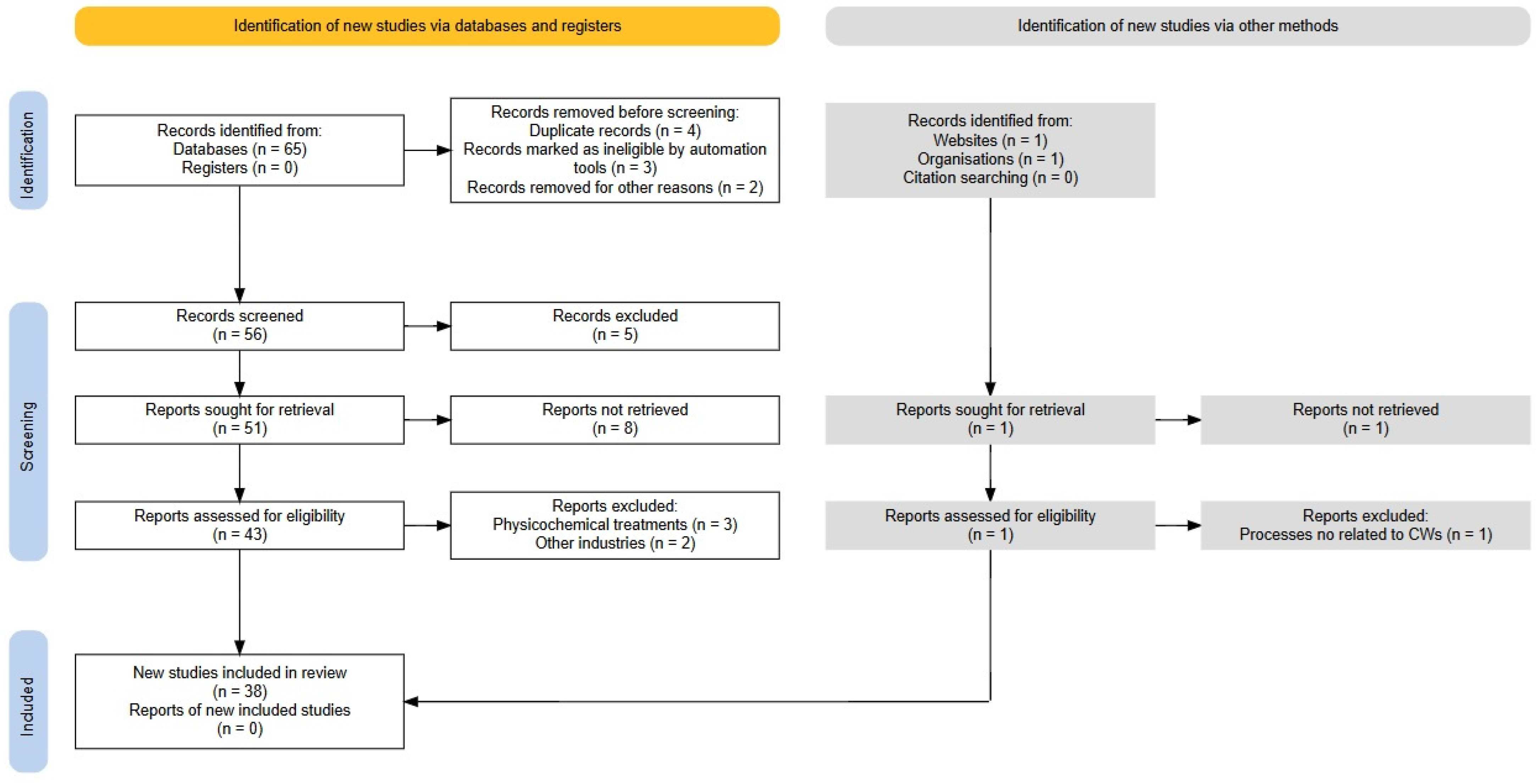
This review followed the Preferred Reporting Items for Systematic Reviews and Meta-Analyses (PRISMA 2020) guidelines to ensure transparency, reproducibility, and analytical rigor (Figure 1). A systematic literature search was conducted across three major scientific databases Scopus, Web of Science, and Google Scholar, covering publications from January 1995 to April 2025.

2.1. Search Strategy and Databases

The search strategy was defined based on a preliminary bibliographic review, combining terms related to CWs and DWW treatment. The general search structure was as follows: (constructed wetland OR artificial wetland OR wetland treatment) AND (dairy wastewater OR dairy effluent OR dairy industry wastewater OR cheese whey OR whey wastewater). The inclusion of “cheese whey” and “whey wastewater” as specific search terms ensured adequate coverage of studies addressing the most concentrated fraction of dairy wastewater, particularly those associated with cheese production.
The initial literature search identified a total of 65 records. Following the complete selection process, 38 peer-reviewed articles met all eligibility criteria and were retained for synthesis and analysis. The study selection process followed the PRISMA 2020 framework. The corresponding flow diagram (Figure 1) was generated using the PRISMA2020 Shiny web application developed by Haddaway et al. [22], providing a transparent overview of the study selection pathway.

2.2. Inclusion and Exclusion Criteria

Eligible studies were required to explicitly evaluate CWs for the treatment of industrial or DWW and to report quantitative removal efficiencies for at least one major water quality parameter (chemical oxygen demand (COD), biochemical oxygen demand (BOD5), total suspended solids (TSS), total nitrogen (TN), or total phosphorus (TP)). Studies were further required to provide sufficient technical information on system configuration, operational scale, vegetation type, and substrate characteristics to enable qualitative or semi-quantitative comparison.
HRT and OLR were extracted when explicitly reported. Given the heterogeneity of reporting in long-term and field-scale studies, the absence of explicitly stated OLR values did not constitute an exclusion criterion, provided that influent characteristics, system scale, or HRT allowed classification within comparable loading regimes. Studies lacking quantitative performance indicators were excluded.
Studies primarily based on physicochemical or electrochemical treatment processes, purely theoretical or review articles not focused on dairy wastewater, and incomplete or duplicated datasets were excluded during manual data curation. Comparable environmental conditions were defined based on similar hydraulic regimes (HRT ranges and, where available, OLR classification), Köppen–Geiger climate classification, and influent characteristics representative of DWW streams.
Exclusion criteria (explicit): records were excluded if they were (i) not peer-reviewed primary research, (ii) not focused on dairy-industry wastewater treated by CWs as the main unit process, (iii) did not report quantitative treatment performance for at least one core parameter (COD, BOD5, TSS, TN, TP), or (iv) were duplicated/overlapping datasets without separable operating conditions.
Eligible studies meeting the general inclusion criteria were retained in the final dataset even when certain operational parameters were partially reported. However, for analyses requiring direct cross-study comparability (e.g., pooled or robustness-based evaluations), studies lacking essential operational descriptors (such as explicitly reported HRT) or relying exclusively on non-standard outcome metrics were excluded from those specific analytical steps. This distinction ensured transparency between dataset inclusion and analytical comparability, while preserving the completeness of the evidence base summarized in Table 1.

2.3. Data Extraction

A structured data extraction matrix was developed to systematically collect and organize information from each selected study. Extracted variables included geographic context, with climate classified using the Köppen–Geiger system, CW configuration (horizontal subsurface flow, vertical subsurface flow, hybrid systems, or free water surface), and operational scale (laboratory, pilot, or full-scale).
Additional technical parameters recorded comprised vegetation species, substrate materials and bed depth, key hydraulic descriptors such as HRT and, when available, OLR, and pollutant removal efficiencies for COD, BOD5, TN, TP, and TSS. When studies reported multiple operational conditions, weighted averages were calculated based on flow rate or HRT to ensure consistent and comparable performance metrics. All treatment efficiencies were normalized to percentage removal to support semi-quantitative interpretation.

2.4. Semiquantitative Synthesis and Analytical Framework

To move beyond purely descriptive reporting, the review implemented a semi-quantitative synthesis combining descriptive statistics and comparative analysis. Pollutant removal efficiencies were summarized using mean values, ranges, and standard deviations across system configurations. Relationships between key hydraulic and operational parameters (particularly HRT and OLR) and treatment performance were evaluated in terms of consistent associations and comparative trends observed across studies, rather than through formal statistical correlation testing.
Comparative indices were further used to evaluate performance differences among horizontal, vertical, and hybrid CW configurations under contrasting climatic conditions. In parallel, a qualitative assessment was conducted to identify recurring operational and engineering themes, including substrate clogging, vegetation dynamics, oxygen transfer limitations, and maintenance frequency. This integrative analytical framework enabled identification of robust associations between engineering design parameters and treatment performance, facilitating cross-contextual comparison and scalability assessment.
To assess the robustness of the semi-quantitative synthesis, the main comparative trends were re-checked after excluding four studies from the robustness check only, while retaining them in the overall dataset summarized in Table 1. These studies showed limited comparability due to incomplete operational reporting or non-standard outcome metrics: Galve et al. [34], which reported percentage changes in NO2/NO3 and conductivity/TDS rather than standard removal efficiencies; Idris et al. [45] and Newman & Clausen [52], which did not report HRT; and Mohammed et al. [54], which presented modeling-based results without quantitative removal performance. The dominant patterns regarding configuration-dependent performance, HRT ranges, and OLR thresholds remained unchanged, supporting the stability of the comparative conclusions.
Given the strong heterogeneity among the included studies in terms of system scale, configuration, operational conditions, performance metrics, and reporting depth, a formal risk-of-bias assessment using standardized quantitative tools was not applied. Instead, potential sources of bias were addressed qualitatively through a critical appraisal of methodological transparency, consistency of reported removal efficiencies, completeness of operational data, and coherence between study objectives and outcomes. This qualitative assessment was integrated into the interpretation of results and the discussion of limitations.

2.5. Bibliometric Mapping and Visualization

A bibliometric analysis was conducted using VOSviewer (version 1.6.20) to examine thematic structure, temporal evolution, and geographic distribution of research on CWs for DWW treatment, based on the final set of 38 selected studies.
Keyword co-occurrence analysis was applied to identify dominant and emerging research themes, distinguishing between foundational topics related to treatment performance and organic load reduction and more recent trends involving hybrid configurations, alternative substrates, and sustainability-oriented approaches. Temporal overlay visualization was used to assess shifts in research focus from early efficiency-driven studies (1995–2010) toward integrative and nature-based solution frameworks (2018–2025).
Geographic mapping was employed to evaluate the spatial distribution of research activity, highlighting dominant contributing regions and underrepresented areas with high potential for decentralized nature-based wastewater treatment. By integrating bibliometric mapping with semi-quantitative technical synthesis, this approach supports the interpretation of thematic trends, regional research gaps, and the evolving policy relevance of CWs for DWW treatment.

2.6. Systematic Review Registration

This systematic review was registered in the Open Science Framework (OSF) to ensure transparency, reproducibility, and methodological rigor. The registration record is publicly available at: https://osf.io/4f8av (accessed on 6 January 2026).

3. Characteristics of Dairy Wastewater Effluents

DWW is generated across multiple processing stages (such as milk pasteurization, cheese production, and equipment cleaning) and is characterized by elevated concentrations of biodegradable organic matter, fats, and nutrients. Its complex composition and temporal variability pose critical challenges for conventional wastewater treatment, particularly for decentralized dairy operations dairies lacking centralized facilities [61,62].

3.1. Raw (Untreated) Dairy Wastewater

The most significant contributor to pollutant load is cheese manufacturing, where whey generation accounts for 85–95% of the original milk volume and retains over 50% of its nutrients, including lactose, soluble proteins, and minerals [63]. The improper disposal of whey has been shown to cause rapid oxygen depletion and eutrophication in receiving water bodies [64,65], underscoring the need for low-energy treatment options capable of handling elevated BOD concentrations (40–48,000 mg L−1) [66] and COD (80–95,000 mg L−1) [67,68] levels.
Beyond whey, additional effluents arise from clean-in-place (CIP) operations, typically containing surfactants, sanitizers, a variable pH range (4.5–8.0), which can inhibit microbial activity in biological systems if unmanaged [69,70]. The heterogeneity of DWW composition requires adaptive treatment technologies that tolerate shock loads and chemical fluctuations. These conditions make CWs particularly advantageous: multi-layer substrate and plant–microbe interactions allow simultaneous removal of organics, nitrogen, and phosphorus with minimal energy input.
As summarized in Table 2, DWW typically contains high concentrations of suspended solids (100–1000 mg L−1), TN (23–364 mg L−1), and TP (19–424 mg L−1) [71], all of which must be addressed to comply with discharge standards. Dairy effluents also contain substantial amounts of minerals such as calcium (40–84 mg L−1), magnesium (13–73 mg L−1), sodium (127–386 mg L−1), iron (2–9 mg L−1), and potassium (24–46 mg L−1), with concentrations that may reach up to 1300 mg L−1. These values are primarily attributed to whey and processing residues [72,73]. From an engineering standpoint, these concentrations directly influence HRT and OLR design, since higher nutrient loads require longer residence times and larger substrate surface areas for effective microbial and plant-assisted removal.

3.2. Pretreated or Diluted Dairy Wastewater as Influent to Constructed Wetlands

Due to the extremely high concentrations of suspended solids, fats, and biodegradable organic matter in raw DWW, direct application to subsurface CWs is generally not recommended, as high TSS concentrations (>1000 mg L−1) may promote rapid pore blockage and hydraulic short-circuiting (often referred to as clogging) in the upper substrate layers, potentially leading to hydraulic impairment and reduced treatment performance.
For this reason, DWW is almost invariably subjected to primary or physicochemical pretreatment prior to its application in CWs. Common pretreatment steps reported in the literature include screening, grease and fat separation, primary sedimentation or Imhoff tanks, dissolved air flotation (DAF), coagulation–flocculation processes, and, in some cases, membrane-based treatments such as nanofiltration [67,68,69].
These pretreatment stages substantially reduce particulate matter and organic loads, yielding effluents with physicochemical characteristics compatible with long-term wetland operation. As summarized in Table 2 typical concentration ranges for pretreated or diluted DWW entering CWs include BOD values of approximately 1000–2500 mg L−1, COD of 2000–5000 mg L−1, TSS of 250–600 mg L−1, and pH values close to neutrality (5.5–7.5), as reported for post-primary dairy effluents [67].
Consequently, CWs are most appropriately implemented as secondary or tertiary treatment units, designed to polish pretreated dairy effluents rather than raw whey or undiluted process wastewater. The distinction between raw and pretreated influent quality (explicitly reflected in Table 2) is therefore essential for the correct interpretation of reported concentration ranges, appropriate CW design, and the prevention of clogging phenomena.

3.3. Odor Generation and Nuisance Considerations in Dairy Wastewater Treatment

Beyond its physicochemical complexity, DWW is also characterized by the generation of intense and unpleasant odors, primarily associated with the rapid putrefaction of biodegradable organic matter, fats, and proteins [68]. The decomposition of these constituents under anaerobic or poorly aerated conditions promotes the formation of malodorous compounds such as volatile fatty acids, ammonia, and hydrogen sulfide, which represent a significant nuisance for nearby communities and facility operators.
Odor-related issues are further exacerbated during storage, primary treatment, or anaerobic processes, where hydrogen sulfide generation may also contribute to corrosion and occupational health concerns [67].
These aspects highlight the importance of adequate pretreatment, hydraulic control, and aerobic–anoxic balance in downstream treatment units. From an implementation perspective, odor management constitutes a non-negligible design and operational constraint that should be considered alongside hydraulic, organic loading, and land-use criteria when selecting treatment technologies for dairy wastewater.

4. Constructed Wetlands for Dairy Wastewater Treatment (Technical Basis, Taxonomy, Mechanisms)

CWs are engineered ecosystems designed to replicate the pollutant-removal processes of natural wetlands through the synergistic action of substrates, vegetation, and microbial consortia. As NbS, CWs offer low-cost, energy-efficient, and climate-resilient treatment solutions for complex effluents such as DWW. Their design flexibility allows adaptation to varying organic loads, land availability, and climatic conditions, making them particularly suitable for decentralized and on-site wastewater treatment applications in the dairy sector.

4.1. System Configurations and Performance Differentiation

CWs are commonly classified according to their hydraulic flow regime, which strongly influences dominant biogeochemical processes and treatment performance. Horizontal subsurface flow (HSSF) systems are primarily associated with enhanced denitrification and phosphorus retention under anaerobic to anoxic conditions, making them particularly suitable for nutrient polishing stages [74,75]. In contrast, vertical subsurface flow (VSSF) systems promote aerobic degradation and nitrification through intermittent feeding strategies and improved oxygen transfer within the substrate matrix [76]. Free water surface systems are generally applied as tertiary treatment units, where hydraulic efficiency is lower but ecological functions and landscape integration are enhanced [77].
Comparative evidence across configurations indicates that hybrid systems combining VSSF and HSSF stages consistently outperform single-stage arrangements. Mean COD and BOD5 removal efficiencies exceeding 90% have been reported, alongside improved nutrient recovery and operational robustness under fluctuating DWW loads [78,79]. This performance advantage reflects the synergistic integration of aerobic and anaerobic environments within treatment trains, which stabilizes microbial processes and enhances resilience to hydraulic and organic load variability.
From a scalability perspective, hybrid CW systems require moderate land areas, typically ranging between 5 and 15 m2 per equivalent person, while achieving steady long-term operation with minimal mechanical complexity. These characteristics align closely with NbS principles, supporting low-energy and resource-efficient wastewater treatment strategies for decentralized DWW management.

4.2. Substrates and Vegetation Implemented in CWs

Substrate composition plays a central role in governing hydraulic conductivity and microbial activity within CWs, directly influencing pollutant removal performance. Conventional gravel remains widely applied due to its availability and cost-effectiveness; however, porous media such as zeolite, light expanded clay aggregates (LECA), pumice, and recycled aggregates exhibit superior adsorptive capacity and enhanced phosphorus retention, with reported improvements of approximately 25% [80,81]. These materials also promote improved biofilm development and may contribute to a reduced clogging risk under elevated organic loads.
The use of locally sourced substrates further enhances system sustainability by reducing transportation costs and supporting circular economy principles through the reuse of industrial by-products such as recycled concrete or brick fragments. Vegetation selection is equally critical, as emergent macrophytes including Phragmites australis, Typha spp., Canna indica, and Cyperus alternifolius have consistently demonstrated high nutrient uptake and biomass production under variable hydraulic conditions [82]. Recent comparative studies indicate that polyculture systems enhance functional diversity, increasing nitrogen removal by approximately 10–15% and improving resilience during seasonal stress [83].

4.3. Functional Roles in Treatment Stage

CWs can be strategically implemented as primary, secondary, or tertiary units within integrated wastewater treatment systems, depending on influent characteristics and treatment objectives. When applied as primary units, CWs function mainly as sedimentation and prefiltration systems, reducing suspended solids and attenuating hydraulic and organic load fluctuations prior to downstream processes.
As secondary treatment units, CWs enhance organic matter and nutrient removal through combined microbial degradation, plant uptake, and substrate-mediated processes. In tertiary applications, CWs act as polishing units designed to remove residual nutrients, pathogens, and selected microcontaminants, thereby improving effluent quality and enabling reuse applications [84].
The selection and placement of CWs within a treatment train should be guided by influent strength, land availability, and target effluent standards. Dairy facilities generating high-strength wastewater generally benefit from integrated primary–secondary or hybrid configurations, whereas facilities already meeting partial compliance can employ tertiary CWs to further polish effluents and enable safe reuse for irrigation or other non-potable applications, depending on regulatory requirements and reuse objectives.

4.4. Integration, Innovation, and Scalability

Hybrid CWs represent an advanced stage in CW development, as they combine vertical and horizontal subsurface flow units to enable sequential aerobic and anoxic treatment processes. This configuration promotes effective coupling of nitrification and denitrification pathways while mitigating common operational constraints often reported in practice, such as oxygen limitation and substrate clogging, thereby enhancing overall system robustness under variable loading conditions typical of DWW [85,86].
The modular nature of hybrid CWs supports scalable and decentralized implementation, allowing incremental system expansion in response to increased production capacity or regulatory requirements. However, broader scalability remains constrained by land availability, the lack of standardized sludge and solids management strategies, and limited regulatory recognition in many regions. Addressing these barriers is essential to facilitate wider adoption and to transition hybrid CWs from site-specific solutions to standardized infrastructure within sustainable industrial wastewater management frameworks.

5. Implementation of CWs for DWW Treatment (Evidence-Based Comparative Synthesis)

5.1. Scope and Dataset (PRISMA-Based Evidence)

This section synthesizes the 38 peer-reviewed studies selected using a PRISMA-based methodology, focusing on their practical implementation and performance across climatic, hydraulic, and operational contexts. Unlike Section 4, which outlined functional mechanisms, this section quantifies how configurations perform in real-world conditions.
Studies were standardized according to HRT, organic loading information (OLR/SLR/HLR), configuration type (HSSF, VSSF, Hybrid), upstream pretreatment strategy, and study scale and functional role of the CW. Outliers or incomplete records were excluded from pooled metrics but included qualitatively when relevant.
This empirical evidence forms the foundation for the comparative synthesis developed in the following subsections.

5.2. Standardization and Comparative Performance

All removal efficiencies reported in Table 1 were normalized to percentage values to ensure cross-study comparability. The dataset was grouped according to HRT and OLR ranges representative of common operational conditions. VSSF systems were classified into short (4–8 h) and extended (>8 h) HRT regimes, while HSSF systems were grouped into HRTs of 3–5 days and >5 days. Where HRT was reported in hours, VSSF/VFCW systems were classified into short (4–8 h) and extended (>8 h) regimes, while vertical systems reporting day-scale HRTs were treated as extended regimes for grouping consistency (Table 1). OLR were categorized as low (<30 g COD m−2 d−1) or high (≥30 g COD m−2 d−1). When COD-based surface loading rates were not explicitly reported, studies were retained in the HRT-based grouping, and loading conditions were interpreted qualitatively using the reported OLR, SLR, or HLR metrics provided in Table 1.
To prevent overestimation of treatment performance, studies treating pre-processed influents, such as those reported by De Mendonça et al. [23] and Schierano et al. [35], were explicitly flagged during interpretation. Duplicate or overlapping datasets (e.g., [29,33]) were cross verified to ensure internal consistency. The comparative trends described are consistently supported by studies spanning laboratory-, pilot-, and full-scale applications, encompassing a broad range of influent characteristics, pretreatment strategies, and CW configurations summarized in Table 1 [53,54,55,56,57,58,59,60].
The comparative synthesis revealed configuration-dependent performance patterns. Hybrid systems combining VSSF followed by HSSF units consistently achieved the highest overall efficiencies, with median COD and BOD5 removals of approximately 93% and 94%, respectively, and total phosphorus removal typically ranging between 70% and 80%. Representative examples include the hybrid configurations reported by Sharma et al. [32], Mahmoudi et al. [25], and Kotsia et al. [24]. These systems benefited from the sequential coupling of aerobic and anoxic environments, enhancing organic matter degradation and nutrient transformation.
VSSF systems exhibited superior aerobic degradation and nitrification at shorter HRTs, particularly within the 4–8 h HRT range. Studies from the Philippines [26], India [31], and Iran [38] frequently reported BOD5 removal exceeding 90% under these conditions. In contrast, HSSF systems demonstrated greater hydraulic stability and effective removal of suspended solids and phosphorus, as observed in full-scale and long-term applications [23], and further supported by pilot-scale implementations in Italy [30,46], and Australia [24].
From an engineering perspective, treatment performance was most frequently observed within recurring operating ranges across the reviewed studies. COD and BOD5 removal efficiencies above 90% were most frequently achieved when HRT ranged between 3 and 7 days for HSSF units (n = 14) and between 4 and 8 h for VSSF units (n = 4), generally when OLR remained below 30 g COD m−2 d−1 (n = 7). Exceeding this threshold was often associated with performance declines of up to 25%, which may reflect (and is often attributed in the CW literature to) operational stressors such as progressive media clogging and reduced oxygen transfer, although these mechanisms were not directly quantified in all included studies. These results confirm that CW performance is generally shaped by an operating envelope defined by hydraulic and loading conditions rather than configuration alone.

5.3. Operational Factors: HRT, OLR, and Climatic Resilience

HRT emerged as one of the most frequently cited factors influencing treatment performance across the reviewed studies. Evidence from systems implemented in Italy demonstrated that HRT values between 3 and 7 days (n = 14) frequently achieved COD and BOD5 removal efficiencies exceeding 90%, while further increases in HRT resulted in diminishing returns when evaluated against additional land requirements [43,48]. These findings suggest a frequently reported hydraulic window in which treatment efficiency and spatial efficiency are balanced.
Seasonal and climatic conditions exerted a strong influence on system resilience and performance stability. Investigations conducted in colder regions, such as Germany and New Zealand, reported marked seasonal effects, with microbial activity and overall treatment efficiency decreasing by approximately 20–35% during cold periods [50,53]. In contrast, CWs operating in tropical and subtropical climates—including Brazil [36], Mexico [27], the Philippines [26], and Tunisia [25], maintained annual COD and BOD5 removal efficiencies above 90%, reflecting more favorable thermal conditions for biological processes. Systems located in temperate regions, including Italy, Poland, and Argentina, exhibited intermediate behavior characterized by more pronounced seasonal fluctuations.
OLR represented an additional commonly reported limiting factor for long-term system performance and operational stability. Across multiple configurations, OLR values exceeding 30 g COD m−2 d−1 were associated with reductions in treatment efficiency of up to 25% and with an increased risk of operational deterioration (often attributed to progressive substrate clogging under higher loads). Conversely, studies conducted under OLR values below this threshold demonstrated more reliable and stable long-term operation. This behavior was consistently reported in investigations by Sharma et al. [32] and Kotsia et al. [24], supporting the view that effective CW design generally benefits from combined consideration of HRT, OLR, and climatic context rather than reliance on system configuration alone.

5.4. Scalability, Substrates, Vegetation, and Operational Management

From a scalability perspective, hybrid CW configurations are typically designed within 5 and 15 m2 per equivalent person, supporting their applicability for decentralized treatment in small- and medium-scale dairy facilities. Several studies have demonstrated that integration with upstream pretreatment units, such as aerated lagoons or anaerobic reactors, can reduce land requirements by approximately 20–40% while improving hydraulic buffering and load equalization, as reported by De Mendonça et al. [23] and Schierano et al. [35]. This integrated approach enhances feasibility where land availability constitutes a limiting factor.
Substrate selection plays a crucial role in determining treatment efficiency and long-term system stability. Porous and recycled aggregates have shown particular advantages for phosphorus retention. For example, Kotsia et al. [24] employed construction and demolition waste and rock processing residues with enhanced adsorption capacity, while Schierano et al. [40] achieved total phosphorus removal efficiencies exceeding 85% using LECA. These findings demonstrate that alternative and recycled materials can be effectively incorporated into CW design while supporting circular economy principles.
Vegetation composition further influences treatment performance, particularly with respect to nutrient removal and system resilience. Polyculture arrangements incorporating species such as Phragmites, Typha, and Cyperus consistently outperform monoculture systems, improving nitrogen and phosphorus removal efficiency, as demonstrated by Mahmoudi et al. [25]. Long-term observations indicate that well-designed CWs have been shown to operate effectively for periods of 8–10 years without major rehabilitation [23,25]. Nevertheless, standardized sludge and solids management protocols remain insufficiently developed, making periodic monitoring of hydraulic conductivity and organic matter accumulation essential to reduce clogging likelihood and support long-term system longevity.

5.5. Integrated Practical and Policy Synthesis

The comparative evidence summarized in Table 1 enables the formulation of clear and actionable design and operational pathways for CWs treating dairy wastewater. For high-strength influents with COD concentrations exceeding 3000 mg L−1, as typically reported for raw or partially pretreated dairy effluents summarized in Table 1, hybrid configurations combining VSSF by HSSF have most frequently been reported to demonstrated superior performance. When operated at OLR below 30 g COD m−2 d−1 and with HRT of approximately 4–8 h in the VSSF stage and 3–5 days in the HSSF stage, these systems achieved stable and efficient treatment outcomes [25,32].
Climatic conditions further define optimal design strategies. In cold and temperate climates, VSSF-dominant configurations operated under intermittent feeding regimes and supported by adaptive winter vegetation management have shown improved resilience and seasonal performance stability [38,39,42]. In contexts characterized by limited land availability, compact VSSF units combined with pretreatment processes such as aerated lagoons or lagoon-based systems represent an effective solution for footprint reduction while maintaining treatment efficiency [26,29]. For tertiary treatment and effluent polishing applications aimed at reuse, HSSF units incorporating high-adsorption media, including LECA or recycled construction and demolition waste aggregates, have demonstrated enhanced nutrient retention and solids removal [24,40].
Within these operational windows, CWs were most frequently reported to achieved COD and BOD5 removal efficiencies exceeding 90% with negligible external energy input, reinforcing their classification as NbS for low-carbon and resource-efficient wastewater treatment. However, broader implementation at scale remains closely linked to enabling policy frameworks. Effective adoption requires formal recognition of CWs as certified treatment technologies within environmental regulations for small- and medium-scale industrial facilities, the development of standardized design and operation manuals tailored to DWW characteristics, and the promotion of structured knowledge transfer among research institutions, engineering practitioners, and regulatory agencies.
Collectively, the reviewed evidence supports proposing practical design envelopes for DWW treatment using CWs. Hybrid systems operating with an overall HRT of approximately 4–6 days (n ≈ 9 hybrid and HSSF-dominant systems) and OLR below 30 g COD m−2 d−1 (n = 7) represent a practical baseline suggested by the reviewed evidence for engineering design. These ranges provide practitioners with operational margins that balance treatment efficiency, land use, and long-term system stability, thereby facilitating the transition of CWs from site-specific ecological solutions to standardized infrastructure within sustainable industrial wastewater management.

6. Bibliometric Analysis

6.1. Keyword Co-Occurrence and Thematic Evolution

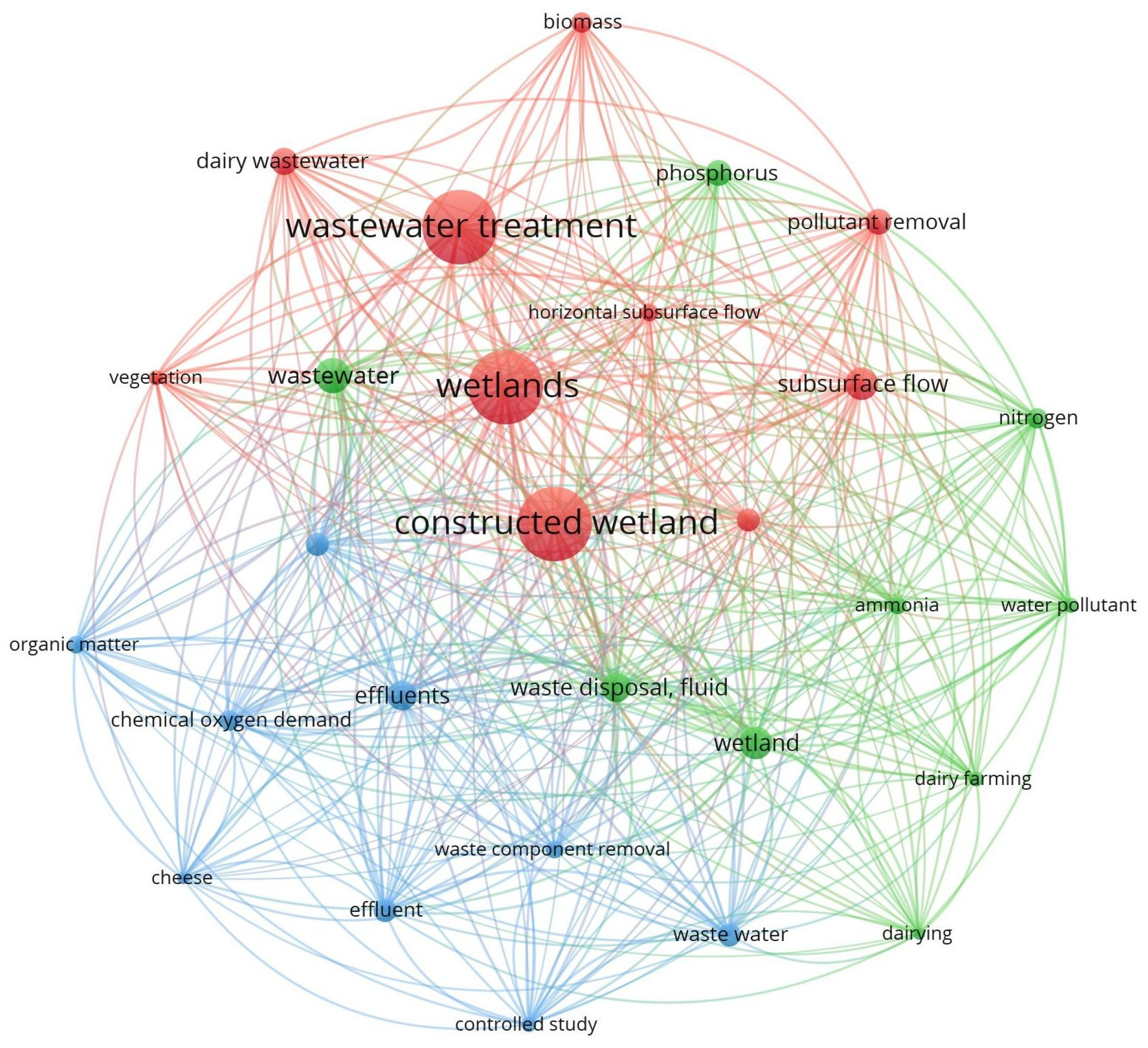
Figure 2 presents the keyword co-occurrence network derived from the 38 studies included in this review, illustrating the conceptual structure and thematic emphasis of research on CWs applied to DWW treatment. High-frequency terms such as “constructed wetland”, “wetlands”, “dairy wastewater”, and “wastewater treatment” form the central cluster of the network, reflecting the core technological focus and defining scope of the field.
Surrounding this core, secondary keywords including “pollutant removal”, “subsurface flow”, “nitrogen”, “phosphorus” and “effluent” appear as peripheral but strongly connected nodes. These terms are associated with process-level investigations addressing hydraulic configurations, pollutant removal mechanisms, and nutrient cycling pathways, indicating that much of the literature has concentrated on performance optimization at the system and process scale.
The temporal structure of the network suggests a clear evolution in research focus. Early studies from the 1990s and early 2000s primarily emphasized fundamental treatment performance and organic load reduction, whereas more recent publications (2018–2025) show a progressive shift toward integrated approaches. These include the adoption of hybrid CW configurations, the use of alternative and recycled substrates, and the valorization of plant biomass within circular economy frameworks.
Despite this thematic diversification, the network also reveals notable gaps. Keywords related to “sludge”, “climate”, “scalability”, and “management” display relatively weak interlinkages, indicating that systemic and long-term operational aspects remain underrepresented in the current body of literature. This fragmentation suggests that while technological adaptations have advanced, integration across design, operation, and lifecycle management dimensions remains limited.
Overall, the keyword co-occurrence analysis indicates a transition from empirical performance testing toward technological adaptation, while highlighting the need for more integrated research frameworks that connect design, operation, and lifecycle management. Future bibliometric expansions incorporating citation dynamics and funding analyses could further elucidate research leadership patterns and innovation bottlenecks, providing a more strategic perspective on CW implementation in the dairy sector.

6.2. Geographic Distribution and Collaboration Network

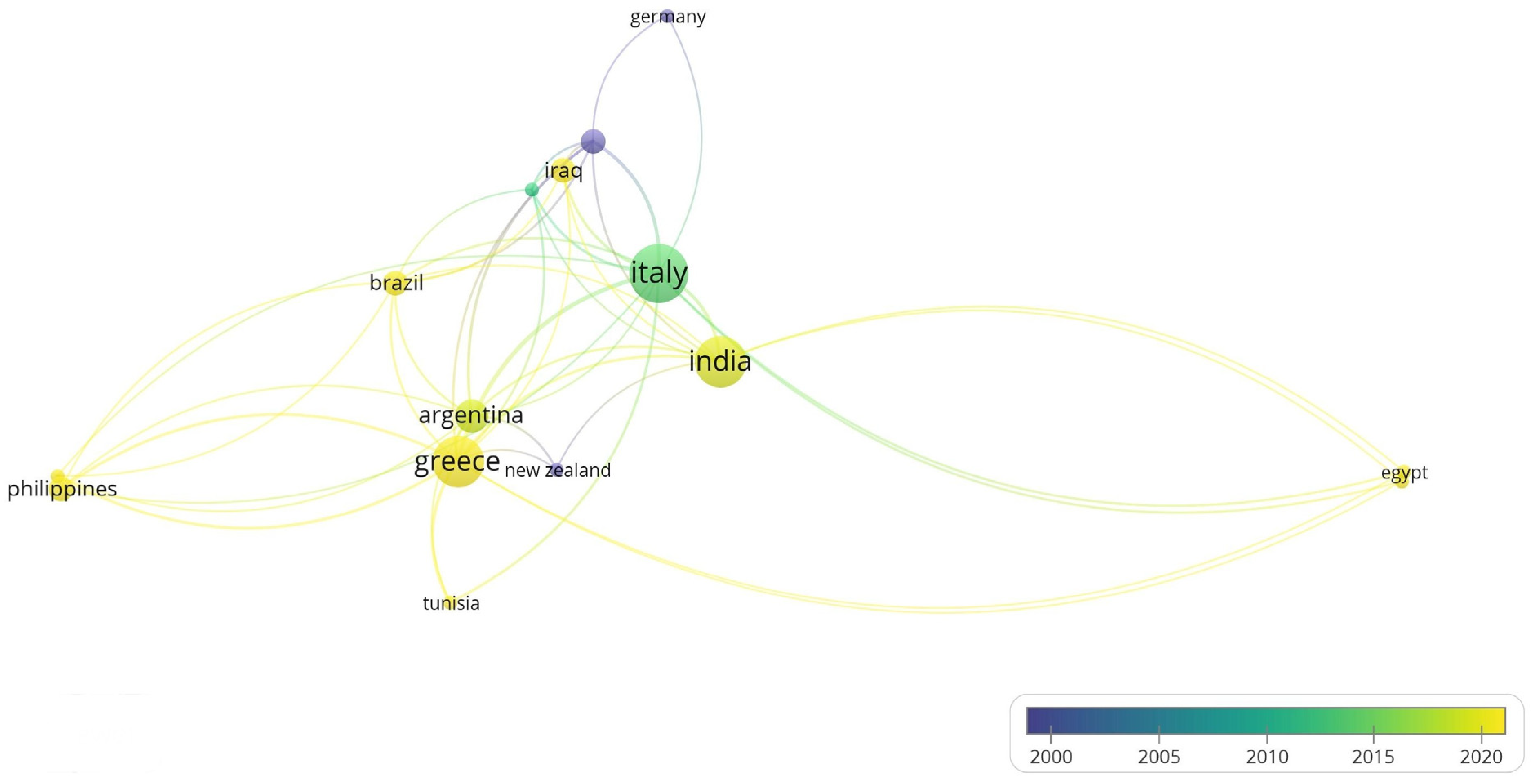
Figure 3 illustrates the global geographic distribution of research activity related to CWs for DWW treatment. The analysis indicates that Italy is the leading contributors, followed by Greece (12.82%) and India (12.82%) of the total number of studies included in this review (Table 1). These countries are followed by Argentina (7.697%) and Iraq (7.69%), while United States, the Philippines, Brazil, and Poland (5.13% each) contribute a moderate share. Mexico, Tunisia, Poland, Iran, Japan, Australia, Germany and New Zealand each account for 2.56% of the total publications.
The temporal overlay shown in Figure 3 reveals a distinct progression in research activity. Early pioneering studies emerged in the United States, Germany, and Australia during the late 1990s and early 2000s, with a primary focus on pilot-scale systems and basic pollutant removal efficiencies [45,50,52]. These foundational investigations established the technical feasibility of CWs for DWW treatment under controlled conditions.
More recent contributions from India, Italy, and Brazil reflect a shift toward hybrid system configurations, the incorporation of recycled and alternative materials, and the implementation of polyculture vegetation schemes. These trends align closely with circular economy principles and NbS frameworks, emphasizing both treatment efficiency and resource recovery. Nevertheless, the geographic distribution remains strongly biased toward temperate and tropical regions, with limited empirical evidence from cold climates where operational resilience, seasonal performance variability, and sludge accumulation dynamics are particularly critical.
Despite the strong potential for decentralized NbS adoption in resource-limited settings, the Global South remains underrepresented. This imbalance underscores the need for expanded empirical validation and technology transfer to support scaling of CW applications for small and medium dairy enterprises across diverse climatic and socio-economic conditions.

6.3. Analytical Synthesis and Implications

The combined bibliometric and spatial analyses reveal a clear concentration of scientific output, with approximately 80% of the published studies originating from fewer than nine countries. This uneven distribution highlights the need to expand research capacity, technology transfer, and empirical validation of CW systems in underrepresented regions, particularly where decentralized NbS could deliver significant environmental and socio-economic benefits.
In terms of thematic structure, the literature shows a strong emphasis on hydraulic optimization, system configuration, and plant selection, while critical aspects such as sludge accumulation, long-term operational management, and climate resilience remain insufficiently integrated into current research frameworks. This limited integration constrains the translation of experimental findings into robust, long-term engineering applications and underscores the need for more holistic system-level analysis.
From a temporal perspective, recent publications (post-2018) demonstrate a gradual convergence between CW design principles and broader nature-based solution policy narratives. This shift reflects growing interest in linking wastewater treatment performance with ecosystem services, circular economy strategies, and environmental regulation, thereby opening opportunities for cross-sectoral frameworks that integrate industrial ecology and sustainability-driven infrastructure planning.
Within this evolving research landscape, treatment efficiency in CWs treating DWW is governed by a limited number of interacting factors. Influent organic strength, HLR, HRT, substrate porosity, vegetation diversity, and climatic conditions collectively shape system performance. Among these variables, HRT and OLR generally emerge as the most frequently reported control parameters, while appropriate substrate selection and plant polyculture enhance operational resilience and nutrient removal capacity. Aligning these factors within an observed operating envelope enables the formulation of engineering recommendations that are transferable across geographic and regulatory contexts.
Overall, the bibliometric evidence supports a transition from predominantly descriptive experimentation toward integrated, policy-relevant, and climate-resilient research approaches. Such a transition is essential to support the standardization, scalability, and broader adoption of CWs as effective NbS for DWW treatment.

7. Conclusions and Perspectives

CWs have demonstrated robust technical performance and environmental sustainability for DWW treatment, particularly in contexts where conventional systems are economically or infrastructurally constrained. Across the 38 studies reviewed, hybrid vertical–horizontal subsurface flow (VSSF–HSSF) configurations consistently achieved COD and BOD5 removal efficiencies above 90%, with nutrient reductions typically ranging between 60% and 80%. Treatment performance was most frequently associated with HRT, OLR, substrate characteristics, and vegetation structure, underscoring the need for parameter-driven and context-specific design approaches.
Beyond pollutant removal, CWs represent an effective class of NbS capable of delivering multiple co-benefits, including water reuse, nutrient recovery, biomass valorization, and landscape integration. Their low energy demand, modularity, and compatibility with locally available or recycled materials make them especially suitable for small and medium dairy industries in tropical and developing regions. Evidence from studies employing low-cost substrates such as zeolite, LECA, pumice, and recycled construction materials, combined with native or polyculture macrophytes, confirms that economic feasibility can be improved without compromising treatment efficiency.
Despite these advantages, large-scale implementation of CWs for DWW remains limited by regulatory and institutional gaps. In many regions, CWs are not formally recognized as certified treatment technologies, restricting their integration into wastewater reuse standards, industrial discharge permits, and decentralized sanitation programs. Addressing these barriers, together with targeted technology transfer, pilot-scale demonstration, and practitioner training, is essential to support broader adoption and alignment with Sustainable Development Goals.
From an engineering perspective, future research should prioritize the development of standardized design frameworks that integrate empirical data with predictive modelling and decision-support tools. Key needs include harmonized reporting of HRT and OLR, improved understanding of sludge accumulation and long-term maintenance, and expanded empirical validation under cold and arid climatic conditions. By explicitly linking empirical performance data with design parameters and operational thresholds, this review bridges the gap between experimental evidence and applied engineering practice. The proposed performance envelopes and configuration-specific recommendations provide a practical foundation for engineers, planners, and regulators seeking to implement CWs as reliable nature-based infrastructure for the dairy sector.

Author Contributions

Conceptualization, writing—review and editing, B.S.T.-G., L.C.S.-H. and J.S.-L.; validation, data curation, M.S.-H.; supervision, G.N. and O.M.-P.; methodology, L.C.-R. and J.A.-G. All authors have read and agreed to the published version of the manuscript.

Funding

This research received no external funding.

Data Availability Statement

No new data were created or analyzed in this study.

Acknowledgments

Thanks to the Doctoral Program in Engineering Sciences offered by the National Technology of Mexico/Higher Technological Institute of Misantla, registered in the Sistema Nacional de Posgrados (SNP) and the Secretaría de Ciencia, Humanidades, Tecnología e Innovación (SECIHTI).

Conflicts of Interest

The authors declare no conflicts of interest.

References

  1. Knight, A.; Caballero, P.; León, F.; Rodríguez-Morgado, B.; Martin, L.; Parrado, J.; Ramos-Martín, A. Conversion of whey into value-added products through fermentation and membrane fractionation. Water 2021, 13, 1623. [Google Scholar] [CrossRef]
  2. Liu, X.; Geng, B.; Zhu, C.; Li, L.; Francis, F. An improved vermicomposting system provides more efficient wastewater use of dairy farms using Eisenia fetida. Agronomy 2021, 11, 833. [Google Scholar] [CrossRef]
  3. Buchanan, D.; Martindale, W.; Romeih, E.; Hebishy, E. Recent advances in whey processing and valorization: Technological and environmental perspectives. Int. J. Dairy Technol. 2023, 76, 291–312. [Google Scholar] [CrossRef]
  4. Giulianetti de Almeida, M.P.; Mockaitis, G.; Weissbrodt, D.G. Got whey? Sustainability endpoints for the dairy industry through resource biorecovery. Fermentation 2023, 9, 897. [Google Scholar] [CrossRef]
  5. Colozza, D.; Wang, Y.C.; Avendano, M. Does urbanization lead to unhealthy diets? Longitudinal evidence from Indonesia. Health Place 2023, 83, 103091. [Google Scholar] [CrossRef] [PubMed]
  6. USDA; FAS. Cheese Production. US Department of Agriculture, Foreign Agricultural Service. 2025. Available online: https://www.fas.usda.gov/data/production/commodity/0240000 (accessed on 29 April 2025).
  7. Data Bridge Market Research. Global Cheese Market—Industry Trends and Forecast to 2028. 2021. Available online: https://www.databridgemarketresearch.com/reports/global-cheese-market (accessed on 14 November 2025).
  8. Pires, A.F.; Marnotes, N.G.; Rubio, O.D.; Garcia, A.C.; Pereira, C.D. Dairy by-products: A review on the valorization of whey and second cheese whey. Foods 2021, 10, 1067. [Google Scholar] [CrossRef]
  9. Mazorra-Manzano, M.; Moreno-Hernández, J. Properties and options for the valorization of whey from the artisanal cheese industry. CienciaUAT 2019, 14, 133–144. [Google Scholar] [CrossRef]
  10. El-Aidie, S.A.; Khalifa, G.S. Innovative applications of whey protein for sustainable dairy industry: Environmental and technological perspectives—A comprehensive review. Compr. Rev. Food Sci. Food Saf. 2024, 23, e13319. [Google Scholar] [CrossRef] [PubMed]
  11. Wu, H.; Wang, R.; Yan, P.; Wu, S.; Chen, Z.; Zhao, Y.; Zhang, J. Constructed wetlands for pollution control. Nat. Rev. Earth Environ. 2023, 4, 218–234. [Google Scholar] [CrossRef]
  12. Chen, J.; Guo, F.; Wu, F.; Bryan, B.A. Costs and benefits of constructed wetlands for meeting new water quality standards from China’s wastewater treatment plants. Resour. Conserv. Recycl. 2023, 199, 107248. [Google Scholar] [CrossRef]
  13. Shravani, M.; Banerjee, R.; Pallavi, N. Natural and constructed wetland: A review on water purification and ecosystem services. J. Mater. Environ. Sci. 2025, 16, 1245–1269. [Google Scholar]
  14. Masoud, A.M.; Alfarra, A.; Sorlini, S. Constructed wetlands as a solution for sustainable sanitation: A comprehensive review on integrating climate change resilience and circular economy. Water 2022, 14, 3232. [Google Scholar] [CrossRef]
  15. Uy, M.J.; Robles, M.E.; Oh, Y.; Haque, M.T.; Grimace, C.C.; Kim, L.H. Biodiversity monitoring in constructed wetlands: A systematic review of assessment methods and ecosystem functions. Diversity 2025, 17, 367. [Google Scholar] [CrossRef]
  16. Munir, R.; Muneer, A.; Sadia, B.; Younas, F.; Zahid, M.; Yaseen, M.; Noreen, S. Biochar imparted constructed wetlands (CWs) for enhanced biodegradation of organic and inorganic pollutants along with its limitations. Environ. Monit. Assess. 2024, 196, 425. [Google Scholar] [CrossRef] [PubMed]
  17. Shen, S.; Li, X.; Cheng, F.; Zha, X.; Lu, X. Recent developments of substrates for nitrogen and phosphorus removal in CWs treating municipal wastewater. Environ. Sci. Pollut. Res. 2020, 27, 29837–29855. [Google Scholar] [CrossRef]
  18. Ejairu, U.; Aderamo, A.T.; Olisakwe, H.C.; Esiri, A.E.; Adanma, U.M.; Solomon, N.O. Eco-friendly wastewater treatment technologies (concept): Conceptualizing advanced, sustainable wastewater treatment designs for industrial and municipal applications. Compr. Res. Rev. Eng. Technol. 2024, 2, 83–104. [Google Scholar] [CrossRef]
  19. Bashir, Y.; Raj, R.; Ghangrekar, M.M.; Nema, A.K.; Das, S. Critical assessment of advanced oxidation processes and bio-electrochemical integrated systems for removing emerging contaminants from wastewater. CSR Sustain. 2023, 1, 1912–1931. [Google Scholar] [CrossRef]
  20. Rodriguez-Dominguez, M.A.; Konnerup, D.; Brix, H.; Arias, C.A. Constructed wetlands in Latin America and the Caribbean: A review of experiences during the last decade. Water 2020, 12, 1744. [Google Scholar] [CrossRef]
  21. Stefanakis, A.I. Constructed wetlands for sustainable wastewater treatment in hot and arid climates: Opportunities, challenges and case studies in the Middle East. Water 2020, 12, 1665. [Google Scholar] [CrossRef]
  22. Haddaway, N.R.; Page, M.J.; Pritchard, C.C.; McGuinness, L.A. PRISMA2020: An R Package and Shiny Application for Creating PRISMA 2020–Compliant Flow Diagrams, with Interactivity for Enhanced Digital Transparency and Open Synthesis. Campbell Syst. Rev. 2022, 18, e1230. [Google Scholar] [CrossRef]
  23. De Mendonça, H.V.; de Carvalho, C.D.M.; Costa, A.G.; Ribas, M.C.; Euriques, J.F. Decade-long performance of constructed wetlands in the dairy industry following an aerated facultative pond. Chemosphere 2025, 376, 144271. [Google Scholar] [CrossRef]
  24. Kotsia, D.; Lykourinas, N.; Fountoulakis, M.S. Performance of a pilot hybrid constructed wetland–sand filter system for treating dairy wastewater in a small dairy industry. J. Water Process Eng. 2025, 79, 109040. [Google Scholar] [CrossRef]
  25. Mahmoudi, A.; Hannachi, C.; Mhiri, F.; Hamrouni, B. Performances of constructed wetland system to treat whey and dairy wastewater during a macrophytes life cycle. Desalin. Water Treat. 2024, 318, 100364. [Google Scholar] [CrossRef]
  26. Velasco, P.P.; Dala, P.S.; Sundo, M.B.; De Padua, V.M.N.; Madlangbayan, M.S. Effect of varying retention times and feeding schemes on the performance of vertically constructed wetlands planted with vetiver grass in treating dairy wastewater in the Philippines. Environ. Qual. Manag. 2024, 33, 173–181. [Google Scholar] [CrossRef]
  27. Mateo-Díaz, N.F.; Sandoval-Herazo, L.C.; Zurita, F.; Sandoval-Herazo, M.; Nani, G.; Fernández-Echeverría, E.; Martínez-Reséndiz, G. Remediation of river water contaminated with whey using horizontal subsurface flow constructed wetlands with ornamental plants in a tropical environment. Water 2023, 15, 3456. [Google Scholar] [CrossRef]
  28. Mohammed, N.A.; Ismail, Z.Z. Green approach for nutrients removal from real dairy wastewater via constructed wetland. Proc. Inst. Civ. Eng. Waste Resour. Manag. 2022, 175, 106–113. [Google Scholar] [CrossRef]
  29. Minakshi, D.; Sharma, P.K.; Rani, A. Effect of filter media and hydraulic retention time on the performance of vertical constructed wetland system treating dairy farm wastewater. Environ. Eng. Res. 2022, 27, 200436. [Google Scholar] [CrossRef]
  30. Licata, M.; Farruggia, D.; Tuttolomondo, T.; Iacuzzi, N.; Leto, C.; Di Miceli, G. Seasonal response of vegetation on pollutants removal in constructed wetland system treating dairy wastewater. Ecol. Eng. 2022, 182, 106727. [Google Scholar] [CrossRef]
  31. Minakshi, D.; Sharma, P.K.; Rani, A.; Malaviya, P.; Srivastava, V.; Kumar, M. Performance evaluation of vertical constructed wetland units with hydraulic retention time as a variable operating factor. Groundw. Sustain. Dev. 2022, 19, 100834. [Google Scholar] [CrossRef]
  32. Sharma, P.K.; Rausa, K.; Rani, A.; Mukherjee, S.; Kumar, M. Biopurification of dairy farm wastewater through hybrid constructed wetland system: Groundwater quality and health implications. Environ. Res. 2021, 200, 111426. [Google Scholar] [CrossRef] [PubMed]
  33. Mohammed, N.A.; Ismail, Z.Z. Green sustainable technology for biotreatment of current dairy wastewater in constructed wetland. J. Chem. Technol. Biotechnol. 2021, 96, 1197–1204. [Google Scholar] [CrossRef]
  34. Galve, J.C.A.; Sundo, M.B.; Camus, D.R.D.; De Padua, V.M.N.; Morales, R.D.F. Series type vertical subsurface flow constructed wetlands for dairy farm wastewater treatment. Civ. Eng. J. 2021, 7, 292–303. [Google Scholar] [CrossRef]
  35. Schierano, M.C.; Panigatti, M.C.; Maine, M.A.; Griffa, C.A.; Boglione, R. Horizontal subsurface flow constructed wetland for tertiary treatment of dairy wastewater: Removal efficiencies and plant uptake. J. Environ. Manag. 2020, 272, 111094. [Google Scholar] [CrossRef]
  36. De Queiroz, R.D.C.S.; Maranduba, H.L.; Hafner, M.B.; Rodrigues, L.B.; by Almeida Neto, J.A. Life cycle thinking applied to phytoremediation of dairy wastewater using aquatic macrophytes for treatment and biomass production. J. Clean. Prod. 2020, 267, 122006. [Google Scholar] [CrossRef]
  37. Abdel-Mohsein, H.S.; Feng, M.; Fukuda, Y.; Tada, C. Remarkable removal of antibiotic-resistant bacteria during dairy wastewater treatment using hybrid full-scale constructed wetland. Water Air Soil Pollut. 2020, 231, 397. [Google Scholar] [CrossRef]
  38. Yazdani, V.; Golestani, H.A. Advanced treatment of dairy industrial wastewater using vertical flow constructed wetlands. Desalin. Water Treat. 2019, 162, 149–155. [Google Scholar] [CrossRef]
  39. Dąbrowski, W.; Karolinczak, B.; Malinowski, P.; Boruszko, D. Modeling of pollutants removal in subsurface vertical flow and horizontal flow constructed wetlands. Water 2019, 11, 180. [Google Scholar] [CrossRef]
  40. Schierano, M.C.; Panigatti, M.C.; Maine, M.A. Horizontal subsurface flow constructed wetlands for tertiary treatment of dairy wastewater. Int. J. Phytorem. 2018, 20, 895–900. [Google Scholar] [CrossRef]
  41. Verma, R.; Suthar, S. Performance assessment of horizontal and vertical surface flow constructed wetland system in wastewater treatment using multivariate principal component analysis. Ecol. Eng. 2018, 116, 121–126. [Google Scholar] [CrossRef]
  42. Dąbrowski, W.; Karolinczak, B.; Gajewska, M.; Wojciechowska, E. Application of subsurface vertical flow constructed wetlands to reject water treatment in dairy wastewater treatment plant. Environ. Technol. 2017, 38, 175–182. [Google Scholar] [CrossRef]
  43. Schierano, M.C.; Maine, M.A.; Panigatti, M.C. Dairy farm wastewater treatment using horizontal subsurface flow wetlands with Typha domingensis and different substrates. Environ. Technol. 2017, 38, 192–198. [Google Scholar] [CrossRef] [PubMed]
  44. Cap, R.; Freppaz, M.; Zanini, E.; Scalenghe, R. Mountain dairy wastewater treatment with the use of an ‘irregularly shaped’ constructed wetland (Aosta Valley, Italy). Ecol. Eng. 2014, 73, 176–183. [Google Scholar] [CrossRef]
  45. Idris, S.M.; Jones, P.L.; Salzman, S.A.; Croatto, G.; Allinson, G. Evaluation of the giant reed (Arundo donax) in horizontal subsurface flow wetlands for the treatment of recirculating aquaculture system effluent. Environ. Sci. Pollut. Res. 2012, 19, 1159–1170. [Google Scholar] [CrossRef]
  46. Mantovi, P.; Piccinini, S.; Marmiroli, M.; Marmiroli, N. Constructed wetlands are suitable to treat wastewater from Italian cheese productions. Water Pract. Technol. 2011, 6, wpt2011045. [Google Scholar] [CrossRef]
  47. Dipu, S.; Kumar, A.A.; Thanga, V.S.G. Phytoremediation of dairy effluent by constructed wetland technology. Environmentalist 2011, 31, 263–278. [Google Scholar] [CrossRef]
  48. Farnet, A.M.; Prudent, P.; Ziarelli, F.; Domeizel, M.; Gros, R. Solid-state 13C NMR to assess organic matter transformation in a subsurface wetland under cheese-dairy farm effluents. Bioresour. Technol. 2009, 100, 4899–4902. [Google Scholar] [CrossRef]
  49. Mantovi, P.; Marmiroli, M.; Maestri, E.; Tagliavini, S.; Piccinini, S.; Marmiroli, N. Application of a horizontal subsurface flow constructed wetland on treatment of dairy parlor wastewater. Bioresour. Technol. 2003, 88, 85–94. [Google Scholar] [CrossRef]
  50. Kern, J.; Idler, C.; Carlow, G. Removal of fecal coliforms and organic matter from dairy farm wastewater in a constructed wetland under changing climate conditions. J. Environ. Sci. Health A 2008, 35, 1445–1461. [Google Scholar] [CrossRef]
  51. Jennifer, A.; Schaafsma, A.H. An evaluation of a constructed wetland to treat wastewater from a dairy farm in Maryland. Ecol. Eng. 1999, 14, 199–206. [Google Scholar] [CrossRef]
  52. Newman, J.M.; Clausen, J.C. Seasonal effectiveness of a constructed wetland for processing milkhouse wastewater. Wetlands 1997, 17, 375–382. [Google Scholar] [CrossRef]
  53. Tanner, C.C.; Clayton, J.S.; Upsdell, M.P. Effect of loading rate and planting on treatment of dairy farm wastewaters in constructed wetlands—I. Removal of oxygen demand, suspended solids and faecal coliforms. Water Res. 1995, 29, 17–26. [Google Scholar] [CrossRef]
  54. Mohammed, N.A.; Ismail, Z.Z. Prediction of pollutants removal from cheese industry wastewater in constructed wetland by artificial neural network. Int. J. Environ. Sci. Technol. 2022, 19, 9775–9790. [Google Scholar] [CrossRef]
  55. Tatoulis, T.; Akratos, C.S.; Tekerlekopoulou, A.G.; Vayenas, D.V.; Stefanakis, A.I. A novel horizontal subsurface flow constructed wetland: Reducing area requirements and clogging risk. Chemosphere 2017, 186, 257–268. [Google Scholar] [CrossRef]
  56. Sultana, M.-Y.; Mourti, C.; Tatoulis, T.; Akratos, C.S.; Tekerlekopoulou, A.G.; Vayenas, D.V. Effect of hydraulic retention time, temperature, and organic load on a horizontal subsurface flow constructed wetland treating cheese whey wastewater. J. Chem. Technol. Biotechnol. 2016, 91, 726–732. [Google Scholar] [CrossRef]
  57. Kotsia, D.; Goux, X.; Roussel, J.; Stasinakis, A.S.; Fountoulakis, M.S. Using a mixture of perlite and sponge bio-carriers as substrate material in vertical flow-constructed wetlands for cheese production wastewater treatment. J. Environ. Manag. 2025, 391, 126427. [Google Scholar] [CrossRef]
  58. Kotsia, D.; Sympikou, T.; Topi, E.; Pappa, F.; Matsoukas, C.; Fountoulakis, M.S. Use of recycled construction and demolition waste as substrate in constructed wetlands for the wastewater treatment of cheese production. J. Environ. Manag. 2024, 362, 121324. [Google Scholar] [CrossRef]
  59. Comino, E.; Riggio, V.; Rosso, M. Mountain cheese factory wastewater treatment with the use of a hybrid constructed wetland. Ecol. Eng. 2011, 37, 1673–1680. [Google Scholar] [CrossRef]
  60. Licata, M.; Ruggeri, R.; Iacuzzi, N.; Virga, G.; Farruggia, D.; Rossini, F.; Tuttolomondo, T. Treatment of combined dairy and domestic wastewater with constructed wetland system in Sicily (Italy): Pollutant removal efficiency and effect of vegetation. Water 2021, 13, 1086. [Google Scholar] [CrossRef]
  61. Stasinakis, A.S.; Charalambous, P.; Vyrides, I. Dairy wastewater management in EU: Produced amounts, existing legislation, applied treatment processes and future challenges. J. Environ. Manag. 2022, 303, 114152. [Google Scholar] [CrossRef]
  62. Sar, T.; Harirchi, S.; Ramezani, M.; Bulkan, G.; Akbas, M.Y.; Pandey, A.; Taherzadeh, M.J. Potential utilization of dairy industry by-products and wastes through microbial processes: A critical review. Sci. Total Environ. 2022, 810, 152253. [Google Scholar] [CrossRef] [PubMed]
  63. Zandona, E.; Blažić, M.; Režek Jambrak, A. Whey utilization: Sustainable uses and environmental approach. Food Technol. Biotechnol. 2021, 59, 147–161. [Google Scholar] [CrossRef]
  64. Singh, N.; Poonia, T.; Siwal, S.S.; Srivastav, A.L.; Sharma, H.K.; Mittal, S.K. Challenges of water contamination in urban areas. In Current Directions in Water Scarcity Research; Elsevier: Singapore, 2022; Volume 6, pp. 173–202. [Google Scholar] [CrossRef]
  65. Akhtar, N.; Syakir Ishak, M.I.; Bhawani, S.A.; Umar, K. Various natural and anthropogenic factors responsible for water quality degradation: A review. Water 2021, 13, 2660. [Google Scholar] [CrossRef]
  66. Singh, P.; Mohanty, S.S.; Mohanty, K. Comprehensive assessment of microalgal-based treatment processes for dairy wastewater. Front. Bioeng. Biotechnol. 2024, 12, 1425933. [Google Scholar] [CrossRef] [PubMed]
  67. Ritambhara; Zainab; Vijayaraghavalu, S.; Prasad, H.K.; Kumar, M. Treatment and Recycling of Wastewater from Dairy Industry; Springer: Singapore, 2018. [Google Scholar] [CrossRef]
  68. Britz, T.J.; van Schalkwyk, C.; Hung, Y.T. Treatment of dairy processing wastewaters. In Handbook of Industrial and Hazardous Wastes Treatment; CRC Press: Boca Raton, FL, USA, 2004; pp. 673–705. [Google Scholar]
  69. Moradi, S.; Zeraatpisheh, F.; Tabatabaee-Yazdi, F. Investigation of lactic acid production in optimized dairy wastewater culture medium. Biomass Convers. Biorefin. 2023, 13, 14837–14848. [Google Scholar] [CrossRef]
  70. Ganta, A.; Bashir, Y.; Das, S. Dairy wastewater as a potential feedstock for valuable production with concurrent wastewater treatment through microbial electrochemical technologies. Energies 2022, 15, 9084. [Google Scholar] [CrossRef]
  71. Brar, A.; Kumar, M.; Pareek, N. Comparative appraisal of biomass production, remediation, and bioenergy generation potential of microalgae in dairy wastewater. Front. Microbiol. 2019, 10, 678. [Google Scholar] [CrossRef]
  72. Ekka, B.; Mieriņa, I.; Juhna, T.; Turks, M.; Kokina, K. Quantification of different fatty acids in raw dairy wastewater. Clean. Eng. Technol. 2022, 7, 100430. [Google Scholar] [CrossRef]
  73. Tikariha, A.; Sahu, O. Study of characteristics and treatments of dairy industry waste water. J. Appl. Environ. Microbiol. 2014, 2, 16–22. Available online: https://pubs.sciepub.com/jaem/2/1/4/ (accessed on 23 February 2026).
  74. Ahmed, A.M. Comparative analysis of vertical and horizontal subsurface flow constructed wetlands for eutrophication mitigation. Al-Bahir J. Eng. Pure Sci. 2025, 6, 2. [Google Scholar] [CrossRef]
  75. Dey Chowdhury, S.; Bhunia, P.; Surampalli, R.Y.; Zhang, T.C. Effects of bed depth and aerobic-anaerobic zone ratio on the performance of macrophyte-assisted high-velocity vermifilters with horizontal subsurface flow for synthetic brewery wastewater treatment. Water Environ. Res. 2024, 96, e10993. [Google Scholar] [CrossRef]
  76. Chowdhury, S.D.; Uddin, M.A.; Bhunia, P.; Surampalli, R.Y.; Zhang, T.C. High-rate horizontal subsurface flow macrophyte-assisted vermifilters for synthetic brewery wastewater remediation: Exploring the impact of total and submerged vermibed depths. Process Saf. Environ. Prot. 2025, 184, 107386. [Google Scholar] [CrossRef]
  77. Spellman, F.R. Environmental Impacts of Hydraulic Fracturing; CRC Press: Boca Raton, FL, USA, 2024. [Google Scholar]
  78. Fu, J.; Zhao, Y.; Dai, Y.; Yao, Q.; Zhang, X.; Yang, Y. Pyrite in recirculating stacking hybrid constructed wetland: Electron transfer for nitrate reduction and phosphorus immobilization. J. Environ. Manag. 2025, 373, 123906. [Google Scholar] [CrossRef]
  79. Zurita, F.; Vymazal, J. Opportunities and challenges of using constructed wetlands for the treatment of high-strength distillery effluents: A review. Ecol. Eng. 2023, 196, 107097. [Google Scholar] [CrossRef]
  80. Zhao, Y.; Weng, Q.; Hu, B. Microbial interactions promote the degradation rate of organic matter in the thermophilic period. Waste Manag. 2022, 144, 11–18. [Google Scholar] [CrossRef]
  81. Price, M. Investigating Graywater Filtration Efficacy of Pacific Northwest Pumice and Scoria. Ph.D. Thesis, University of Oregon, Eugene, OR, USA, 2022. [Google Scholar]
  82. Zhang, Y.; Sun, S.; Gu, X.; Yu, Q.; He, S. Role of hydrophytes in constructed wetlands for nitrogen removal and greenhouse gas reduction. Bioresour. Technol. 2023, 388, 129759. [Google Scholar] [CrossRef]
  83. Lomeli, J.S.; Zamora-Castro, S.A.; Zamora-Lobato, T.; Sandoval-Herazo, E.J.; Adame-García, J.; Zurita, F.; Sandoval-Herazo, M. Performance of large-scale ornamental wetlands for municipal wastewater treatment: A case study in a polluted estuary in the Gulf of Mexico. Sustainability 2025, 17, 2120. [Google Scholar] [CrossRef]
  84. de Campos, S.X.; Soto, M. The use of constructed wetlands to treat effluents for water reuse. Environments 2024, 11, 35. [Google Scholar] [CrossRef]
  85. Justino, S.; Calheiros, C.S.; Castro, P.M.; Gonçalves, D. Constructed wetlands as nature-based solutions for wastewater treatment in the hospitality industry: A review. Hydrology 2023, 10, 153. [Google Scholar] [CrossRef]
  86. Lemma, D.B.; Debebe, W.A. Wet coffee processing wastewater treatment by using an integrated constructed wetland. Desalin. Water Treat. 2023, 304, 97–111. [Google Scholar] [CrossRef]
Figure 1. PRISMA flow diagram for the systematic review of CWs applied to DWW treatment.
Environments 13 00133 g001
Figure 2. Keyword co-occurrence network of publications on constructed wetlands for dairy wastewater treatment, where node size represents keyword frequency; link thickness denotes co-occurrence strength. Different colors represent thematic clusters of closely related keywords identified through the clustering analysis.
Environments 13 00133 g002
Figure 3. Geographic co-occurrence map of publications on CWs for dairy wastewater treatment, where node color corresponds to temporal progression (blue = early studies; yellow = recent publications).
Environments 13 00133 g003
Table 1. Summarizes all reviewed cases constructed wetland applications for dairy wastewater treatment, reporting influent characteristics, upstream pretreatment, system configuration, study scale and functional role, vegetation, substrate properties, organic loading information, hydraulic retention time, and treatment performance.
Country/ReferenceType of Dairy Wastewater InfluentUpstream Pretreatment (Before CW)CW ConfigurationStudy Scale/Role of CWPlant Species UsedFilter Media/DepthOrganic Loading InformationHRT (Days (d)/Hours (h))Treatment Performance (% Removal or % Change)
Brazil/De Mendonça et al. [23]Dairy wastewater after aerated pondScreening + grit chamber + grease trap + aerated facultative pondHSSF following aerated facultative pondFull-scale (tertiary treatment/post-pond polishing)Brachiaria ruziziensisGravel/0.80 m (subsurface flow at 0.70 m)Not reported2 d (±0.2)COD: 98%, BOD5: 98%, TSS: 98% (until year 7)
Greece/Kotsia et al. [24]Cheese production wastewater (raw dairy wastewater)Screening (wastewater transferred after screening stage) + pH-balancing tankHybrid VFCW–HFCW followed by SSF (polishing)Pilot scale (secondary treatment + polishing)Atriplex halimus (VFCW); Limoniastrum monopetalum (HFCW)Coarse gravel (5–30 mm); SSF: LECA (8–16 mm, 0.20 m) + sand (0.25–0.5 mm, 0.22 m)/Not reported25 and 37.55 dCOD: 84%, TSS: 84%, Turbidity: 97%, TP: 53%, TN: 41%
Tunisia/Mahmoudi et al. [25]Whey + dairy wastewater (20% whey diluted with tap water)Primary sedimentation tank (before hybrid CWs)Hybrid system (3 HSSF + 1 FWS)Pilot-scale (secondary treatment)Phragmites australis, Typha latifolia, Cyperus papyrus (HSSF); Lemna minor (FWS)Gravel and sand/0.6 mNot reported5 dCOD: 80%, BOD5: 97%, TP: 99.6%,
TSS: 99.6%,
TKN: 90.4%
Philippines/Velasco et al. [26]Effluent from small-scale dairy farmScreening + sedimentation (settling tank, ≥12 h)VSSF with vetiver grass (tidal/batch operation)Pilot-scale (secondary treatment)Chrysopogon zizanioidesSand and gravel/0.4 mNot reported4 and 8 hCOD: 93.6%, BOD5: 93.6%, TKN: 94.6%, TSS: 88.3%, TP: 78.4%
Mexico/Mateo-Díaz et al. [27]River water contaminated with whey (and domestic wastewater)Sedimentation (48 h) + grease trap (then gradual dilution to 50:50 v/v during adaptation)HSSF with ornamental plantsLaboratory-scale (secondary treatment)Hippeastrum striatum; Heliconia lastisphataSand and gravel/0.4 mNot reported5 dCOD: 63–68%, TSS: 49–56%, TP: 36–47%, TN: 31–44%, NH4–N: 50–51%
Iraq/Mohammed & Ismail [28]Real dairy wastewater (fresh, continuous feeding)Not reportedHSSF (6 cells with variable media)Pilot-scale (secondary treatment)Canna indica (except for control cell)Gravel, sand, soil/Not reportedNot reported5 dPO43−: 99%, NO3: 96%
India/Minakshi et al. [29]Dairy farm wastewaterNot reportedVSSF (3 lab-scale units: CW-A 20 mm gravel; CW-B 10 mm gravel; CW-C sand)Laboratory-scale (secondary treatment)Canna indicaGravel (10–20 mm) and sand/0.50 mNot reported0 h, 12 h, 24 h y 48 hTSS: 64.2–74.5%, BOD: 45.3–63.1%, COD: 67.4%, NH4–N: 29.6–56.5%, PO4–P: 20.5–57.8%
Italy/Licata et al. [30]Dairy wastewater (small dairy farm; subsequent to biological treatment)Biological treatment + equalization tank + Imhoff septic tanks + static degreaserHSSF (2 parallel units; monoculture per unit)Pilot-scale (post-biological polishing)Arundo donax L., Cyperus alternifolius L.Silica quartz river gravel (≈30 mm)/0.5 mBOD5 OLR ≈ 6.10 g m−2 d−18.3 dBOD5: 77.8%, COD: 61.6%, TN: 51.5–53.1%, TP: 41.1–41.8%
India/Minakshi et al. [31]Dairy farm wastewaterNot reportedVSSF (2 units with 10 and 20 mm gravel)Pilot-scale (secondary treatment)Arundo donaxGravel (10 mm and 20 mm)/0.50 mOLR: 20 g m −2 d −16, 12 y 24 hTSS (81.2%), BOD5: 90.2%, TP: 65.1% and NH4–N: 82.5%
India/Sharma et al. [32]Dairy farm wastewaterSedimentation (primary treatment); diluted DWW (1:2–1:4) during acclimatizationHybrid CW (VSSF + HSSF + VSSF)Pilot-scale (secondary treatment)Arundo donax (VSSF), Hibiscus esculentus and Solanum melongena (HSSF)Gravel (VSSF) + sand (HSSF)/0.70 m (media height)HLR: 31.5 mm d−1; OLR: 17 ± 5.0 g m−2 d−15 h (total system HRT)BOD: 95%, TN: 83.6%, TP: 86.1%
Iraq/Mohammed & Ismail, [33]Real dairy wastewaterNot reportedHSSF (6 microcosms)Laboratory-scale (secondary treatment)Canna indica (in 5 out of 6 units)Gravel, sand, soil/Not reportedNot reported5 dCOD: 98.2%, NH4+: 98.4%, TSS: 99.2%
Philippines/Galve et al. [34]Dairy farm wastewaterScreening + sedimentation (15 h settling tank)Serial VSSFLaboratory-scale (secondary treatment)Pennisetum purpureum (Napier grass)Gravel + sand/0.6 mNot reported4 h per cell (8 h total)NO2: 216.44%, NO3: −125.64%, EC: 12.94% and TDS: 12.86%
Argentina/Schierano et al. [35]Post-biological dairy wastewaterBiological treatment (aerobic ponds)HSSF (tertiary)Pilot-scale (post-biological polishing)Typha domingensisRiver gravel/0.6 mNot reported7 dBOD: 57.9%, COD: 68.7%, TKN: 25.7%, TP: 29.9%,
TSS: 78.4%,
NO3: 47.8%,
NO2: 98.8%
Brazil/De Queiroz et al. [36]Dairy industry wastewaterNot reportedCWs in series with macrophytesLaboratory-scale (secondary treatment)Cyperus articulatus, Eichhornia crassipes, Eleocharis interstincta, Typha domingensis.Not reported/0.4 mNot reported4 d (per stage); 8 d total in seriesBOD: 70%, TP: 75%, TN: 58%
Japan/Abdel-Mohsein et al. [37]Real dairy wastewaterNot reportedLarge-scale hybrid CWPilot-scale (secondary treatment)Not reportedGravel/0.6 mHLR: 2 m3/día5 dCOD: 98.5%, TSS: 99.6%
Iran/Yazdani & Golestani [38]Industrial dairy wastewaterAnaerobic + aerobic treatment with sedimentation pondVSSF (3 beds)Pilot-scale (post-biological polishing)Phragmites australis, Juncaeae spp.Gravel, sand, soil/0.6 mNot reported8 d (intermittent feeding–rest cycles)COD: 93.6%, TSS: 86%, Turbidity: 83.5%
Poland/Dąbrowski et al. [39]Reject water from dairy WWTP (anaerobic sludge digestion)Anaerobic digestion + sludge dewatering (centrifuge) + sedimentation/retention tankVSSF and HSSFPilot-scale (post-biological polishing)Phragmites australisGravel, sand and stones/0.8 mHLR = 0.1 m3 m−2 d−1 (both VSSF and HSSF)8 d (HSSF); VSSF intermittent loadingCOD: 79.8% (VSSF), 75.3% (HSSF), TN: 50.7% (VSSF), 41.4% (HSSF); NH4–N: 73.8% (VSSF)
Argentina/Schierano et al. [40]Treated dairy wastewaterEqualization + DAF + aerated lagoonsHSSFLaboratory-scale (post-biological polishing)Typha domingensis, Phragmites australisLECA 10/20OLR ≈ 0.7 g COD m−2 d−17 dNH4+: 96%; NO2: 98%; NO3: 39%, COD: 75%, TSS: 78–81.1%, TP: 88.5%
India/Verma & Suthar [41]Dairy wastewaterNot reportedHSSF vs. VSSFLaboratory-scale (secondary treatment)Typha angustifoliaGravel/0.6 mInfluent flow: 25–30 L·d−1; HLR: 288–345 L·m−2·d−15 dVSSF vs. HSSF: BOD5 82.8 vs. 73.0%, COD 83.2 vs. 73.9%, NH4–N 66.2 vs. 53.1%, PO43− 59.7 vs. 49.4%, NO3–N 47.5 vs. 62.9%
Poland/Dąbrowski et al. [42]Dairy wastewater treatment plant reject waterAerobic sludge stabilization + filter press dewatering (reject water)VSSF (2 beds)Pilot-scale (post-treatment of reject water sidestream at dairy WWTP)Reeds (Phragmites australis)Sand (0–2 mm) + gravel (2–8 mm; 8–20 mm) + stone (20–80 mm)/0.65 m (A) and 1.0 m (B)HLR: 0.1 m d−1; OLR: 13.2 g BOD m−2 d−1; NH4+-N load: 2.6 g N-NH4+ m−2 d−1Not reportedBOD5: 88.1%, COD: 84.5%, TSS: 87.6%, TKN: 82.4%, NH4+-N: 89.2%, TP: 30.2%
Argentina/Schierano et al. [43]Wastewater from dairy farmsAnaerobic and facultative pondsHSSFLaboratory-scale (secondary treatment)Typha domingensis5 substrates (gravel, LECA, zeolite)0.7 g m−2 d−15 dNH4+–N: 92–97%, TP: 86%, TN: 48–98%, COD: 78–80%, NO3: 56–59%
Italy/Gorra et al. [44]Mountain dairy wastewater (cheese-making factory)Settling tank (sedimentation)Irregular-shaped HSSFPilot-scale (secondary treatment/on-site treatment)Phragmites australis (dominant); Typha latifolia + Scirpus lacustris (initially in sectors 3–4; later replaced)Gravel, ground ceramic wastes, magnetite extraction by-products, zeolitite, and Cambisol soil/1.0 mHLR: 44 m3 m−2 d−1; influent BOD5 ≈ 800 mg L−1Variable 5–15 d (avg ~7 d); reported HRT ~8 dBOD5: 81–96% (seasonal); NH4+–N: 48–70%; NO3–N: 33–77%; TN: 47–62%
Australia/Idris et al. [45]Dairy factory wastewaterScreening + sedimentationHSSFPilot-scale (secondary treatment)Arundo donax, Phragmites australisGravel/Not reportedHLR: 3.75 cm/dayNot reportedBOD5: 94–95%, TN: 97–98%, TP: 95–96%, TSS: 67–87%
Italy/Mantovi et al. [46]Cheese production wastewaterEqualisation tank (flow smoothing); no solid sedimentation requiredHSSF (2 CW units)Pilot-scale (secondary treatment)Typha latifoliaGravel (6–18 mm)/0.9–1.0 mNot reported5 dCOD: 95–98%; BOD5: 97–99%; TSS: ~94%; fats & oils: >98%; TKN: 60–63%; TP: 17–73%
India/Dipu et al. [47]Industrial dairy wastewaterNot reportedLaboratory CW (multiple ponds)Laboratory-scale (secondary treatment)Typha sp., Eichhornia sp., Salvinia sp., Pistia sp., Azolla sp., Lemna sp.Gravel + wetland soil/0.08 mNot reported5, 10 and 15 dBOD5: 65.4–83.07%, COD: 70.4–85.3%
Denmark/Farnet et al. [48]Cheese-dairy wastewaterEqualisation tank (flow smoothing); no solid sedimentation requiredHSSFField-scale (secondary treatment)Phragmites australisGravel/Not reportedNot reported5 dCOD: 90.75%, TKN: 75.65%; accumulation of aromatic compounds
Italy/Mantovi et al. [49]Dairy parlor wastewater (+ domestic sewage)Imhoff septic tank + gravel filtration (sedimentable solids removal)HSSF (2 beds of 75 m2)Full-scale (secondary treatment)Phragmites australisGravel (8–12 mm; 3–6 mm)/0.6 mNot reported10 dCOD, TSS & BOD5 > 90%; N: 50%, P: 60%, coliforms and E. coli: >99%
Germany/Kern et al. [50]Dairy farm wastewaterScreening + sedimentationExperimental CW (HSSF)Pilot-scale (secondary treatment)Not reportedGravel/0.6 mHLR: 0.013 (summer)–0.010 (winter) m3·m−2·d−110 wCOD: 89.2–92%, fecal coliforms: 95.8–99.3% (season-dependent), reduction influenced by temperature and substrate type
USA./Jennifer & Schaafsma [51]Dairy farm wastewaterSettling basins (sedimentation)CW with sedimentation + vegetated filtersField-scale (post-biological polishing)Typha latifolia; Schoenoplectus sp. (initial); later Lemna minor, Echinochloa crus-galliGravel/0.6 mNot reported7 dTN: 98%, NH4: 56%, TP: 96%, Ortho-P: 84%, TSS: 96%, BOD5: 97%, NO3: 82%
USA./Newman & Clausen [52]Dairy wastewaterNot reportedFWS (2.65 m3/d)Full-scale (secondary treatment)Typha angustifolia, Phragmites australis, Scirpus pungensFine sandy loam soil/0.2 mNot reportedNot reportedTSS: 45%, BOD5: 28%, fecal coliforms: 31%; better performance during growing season
New Zealand/Tanner et al. [53]Dairy parlour wastewater (after oxidation ponds)Two-stage oxidation pondHSSFPilot-scale (secondary polishing after ponds)Schoenoplectus validusGravel (10–30 mm)/0.40 m depthCBOD5: 20–300 g m−3; SS: 60–250 g m−3; hydraulic loadings 20–68 mm d−12, 3, 5.5, 7 dCBOD5: 60–92%; Total BOD: 50–80%; SS: 75–85%; FC: 90–99%
Iraq/Mohammed et al. [54]Cheese industry wastewater (cheese whey)Not reportedHSSF (microcosms, 6 cells)Laboratory-scale (secondary treatment)Canna indica (CW1–CW4, CW6); unplanted control (CW5)Gravel; sand; soil; layered media (cell-dependent)/Not reportedNot reported 9.4, 10.7, 11.9, 11.7, 12 y 13 dModeling-only/performance not reported as removal %
Greece/Tatoulis et al. [55]Second cheese whey (SCW) wastewater (pretreated)Aerated lagoon/biological filter (effluent used as CW influent)HSSF (4 pilot units; 2-compartment: 2/3 + 1/3 zeolite)Pilot-scale (secondary treatment)Phragmites australisComp.1: fine gravel or HDPE plastic media, Comp.2: natural zeolite/0.35 mHLR: 0.015–0.03 m3·m−2·d−1 (gravel), 0.04–0.08 m3·m−2·d−1 (plastic). Organic surface load (OLR/SLR): 35–150 g·m−2·d−1 (gravel), 118–618 g·m−2·d−1 (plastic)2–4 dCOD: 72–83%, NH4+–N: 74–76%, PO43−-P: 86–95%
Greece/Sultana et al. [56]Secondary cheese whey wastewaterAerated biological treatment (post-biological filter)HSSF (2 pilot units: planted & unplanted)Pilot-scale (secondary/post-biological polishing)Phragmites australisFine gravel/0.45 mSLR: 4.99–685.49 g COD m−2 d−1, HLR: 0.06 m3 m−2 d−1 (reported separately)1, 2, 4, 8 dCOD removal: 91% (planted), 77.2% (unplanted); stable >80% for HRT ≥ 2 days
Greece/Kotsia et al. [57]Cheese production wastewater (diluted; mixed with alkaline and acidic cleaning streams)Not reportedVertical flow constructed wetlands (VFCWs)Laboratory-scale (secondary treatment)Atriplex halimusGravel or perlite + sponge biocarriers/0.50 m (filter layer)HLR 15.9–31.8 mm d−114.1 d; 7.05 dTurbidity: 95%; TSS: 86%; COD: 84%; NH4–N: up to 89%; TP: 45%
Greece/Kotsia et al. [58]Cheese production wastewater (dairy parlor effluent)Not reportedVF–HF hybrid CWs in series (3 parallel systemsPilot-scale (secondary treatment)Atriplex halimus (VF) + Scirpoides holoschoens (HF)Bottom layer gravel (5–15 mm) + demolition waste (CDW) 20–60 mm, Gravel 20–35 mm + RPR 5–30 mm/Not ReportedHLR: 25–37.5 mm d−1; OLR (VF): 44–57 gCOD m−2 d−1, (HF): ~5–22 gCOD/m2·d−114 d (Phase A); 10 d (Phase B)Turbidity: 91–97%; TSS: 85–97%; COD: 75–98%; BOD5: 82–96%; TP: 59–87% (best performance with RPR).
Italy/Comino et al. [59]Mountain cheese factory wastewater (milk-house/cheese factory effluent; cold climate operation)Fat-removal unit (grease trap/degreaser) + storage/distribution tank (pumping to VF beds)Hybrid system (2 parallel V-SSF → 1 H-SSF)Full-scale experimental system at cheese factory (secondary treatment)Phragmites australisV-SSF: gravel + sand layers/1.0 m, and H-SSF: peat + topsoil + gravel + geotextile + fine + gravel/1.0 mDesigned BOD5 loading ≈ 24 g m−2 d−1; reported OLR ≈ 0.03 kg BOD5 m−2 d−1 (HLR ≈ 0.1 m3 m−2 d−1)4 dTSS: 28–88%; COD: 53–80%; BOD5: 31–80%; TOC: 25–80%; TP: 10–73%; TN: 40–51%
Italy/Licata et al. [60]Combined dairy + domestic wastewater (small dairy-cattle farm; wastewater from holding area after solid–liquid separation + milking parlor + domestic wastewater from staff)Equalization tank → 2 Imhoff septic tanks (biological pretreatment) → storage tank; static degreaser before CWHSSF-CW (2 parallel HSSF units; monoculture comparison per unit)Pilot-scale (secondary/polishing after biological pretreatment)Arundo donax (giant reed); Cyperus alternifolius (umbrella sedge)Silica quartz river gravel (≈30 mm)/0.5 mNot reported8.30 dTSS: 75–85%, BOD5: 78.02–75.61%, COD: 62.67–61.12%, TN: 50.70%, TP: 40%
Note: “Organic loading information” includes organic surface loading rates reported as OLR or SLR (g COD m−2 d−1), as well as hydraulic loading rates (HLR, m3 m−2 d−1 or mm d−1), depending on the parameters explicitly provided in the original studies. No unit conversion or back-calculation was applied when insufficient data were provided to reliably estimate OLR.
Table 2. Physicochemical characteristics of dairy wastewater: raw streams vs. pretreated/diluted effluents (typical influent to CWs).
ParameterRaw/Untreated DWW (mg L−1 or pH)Pretreated/Diluted/Post-Primary (mg L−1 or pH)
COD80–95,0002000–5000
BOD40–48,0001000–2500
TSS100–1000250–600
TS/TDS~1000–30001200–2000
pH4.5–85.5–7.5
TN23–36450–100
TP19–42410–30
Calcium40–84-
Magnesium13–73-
Sodium127–386-
Iron2–9-
Potassiumup to 1300-
References[66,67,68,69,70,71,72,73][66,67]
Note: Raw wastewater values correspond to effluents generated at different stages of dairy processing (e.g., whey, CIP wastewater, wash waters) and do not represent a single wastewater stream. Pretreated values represent typical concentration ranges reported after primary or physicochemical treatment prior to application in CWs.
Disclaimer/Publisher’s Note: The statements, opinions and data contained in all publications are solely those of the individual author(s) and contributor(s) and not of MDPI and/or the editor(s). MDPI and/or the editor(s) disclaim responsibility for any injury to people or property resulting from any ideas, methods, instructions or products referred to in the content.