

From Invasion to Valorization: Adsorbent Applications of Acacia dealbata Biomass in Portugal

 ,
,  ,
, 
 , , ,
, , ,  and
and 
Abstract
1. Introduction
2. Materials and Methods
2.1. Sample Preparation
2.2. Sample Characterization
2.3. Adsorption Tests
2.4. Kinetic Studies
3. Results
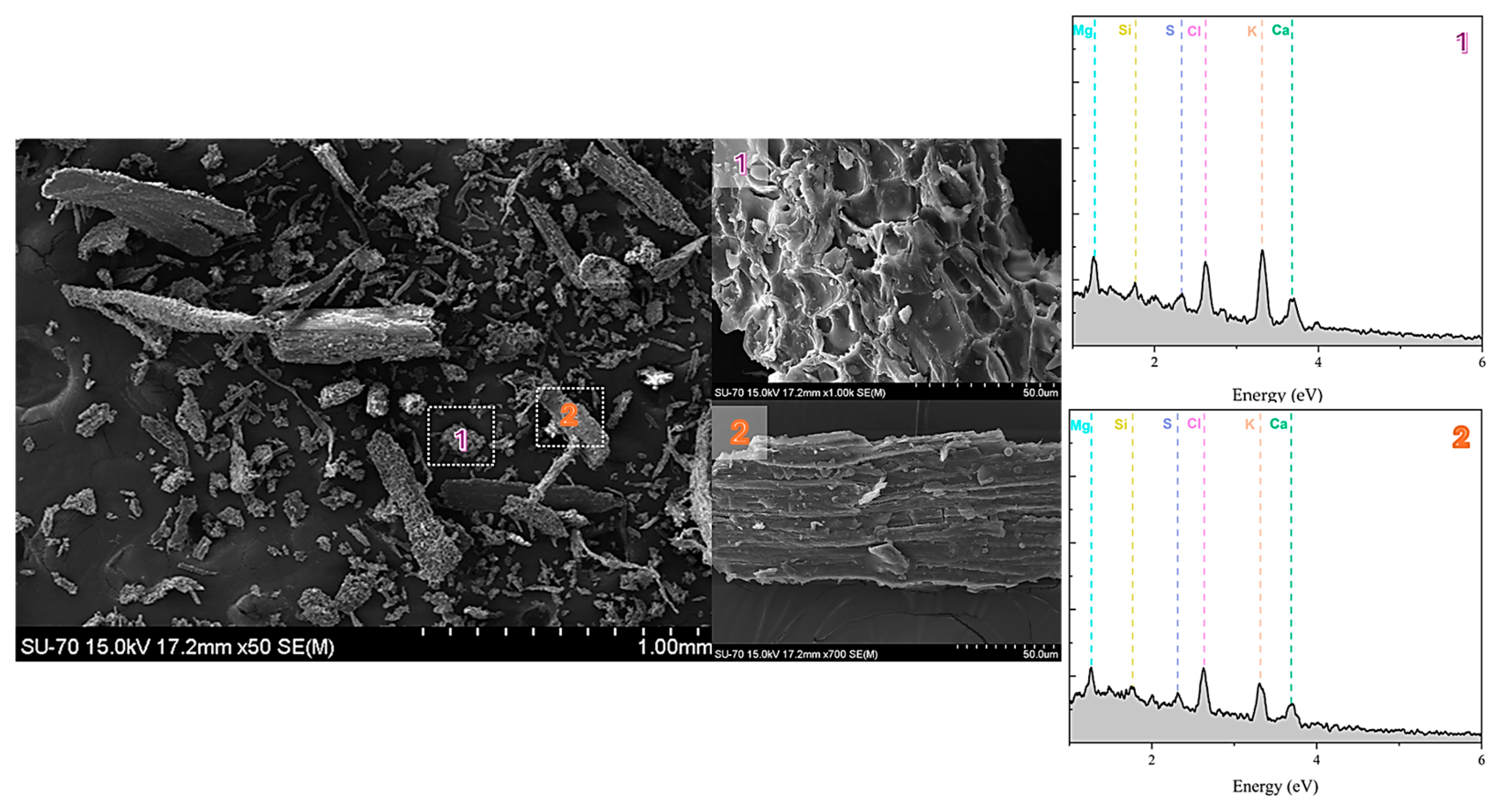
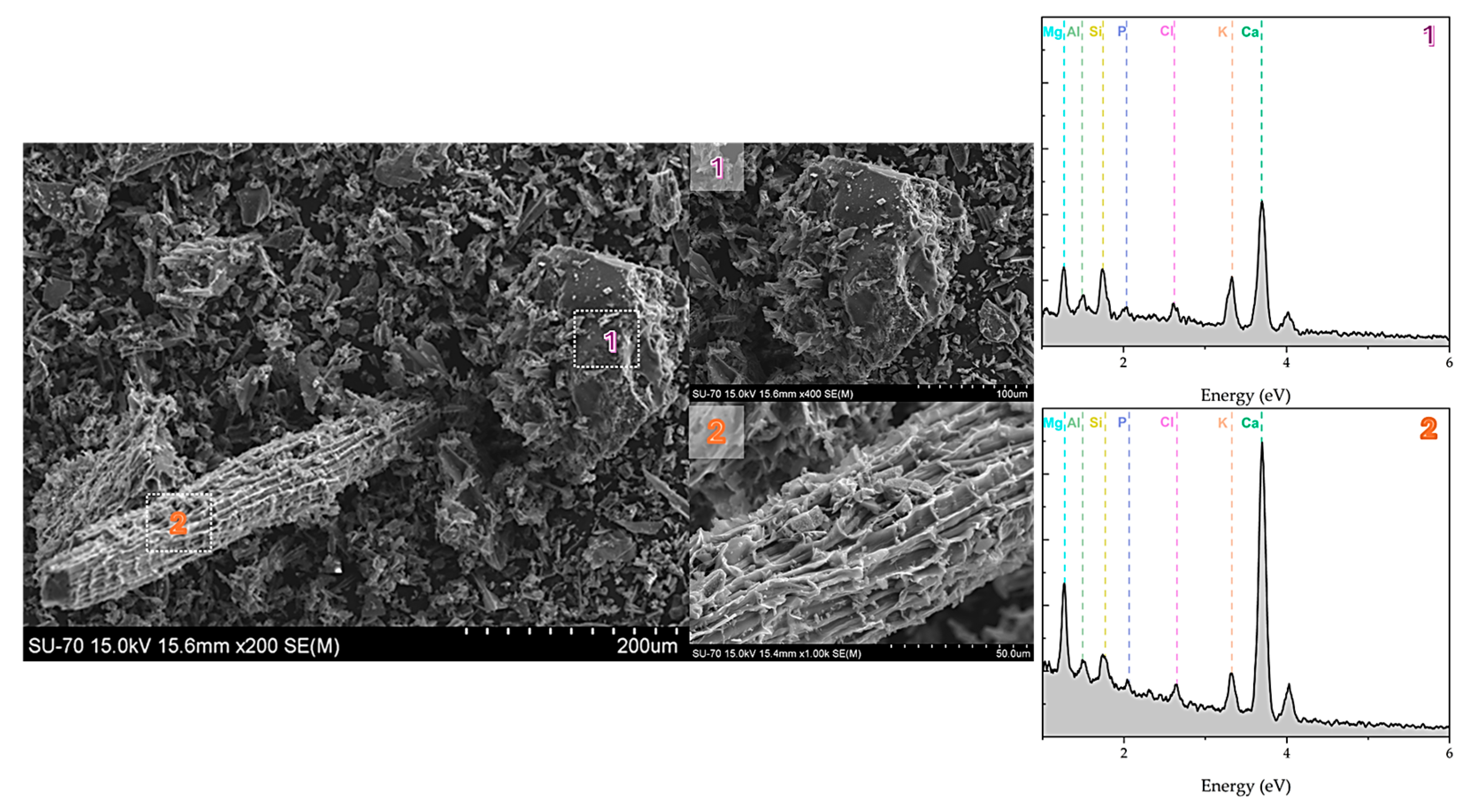
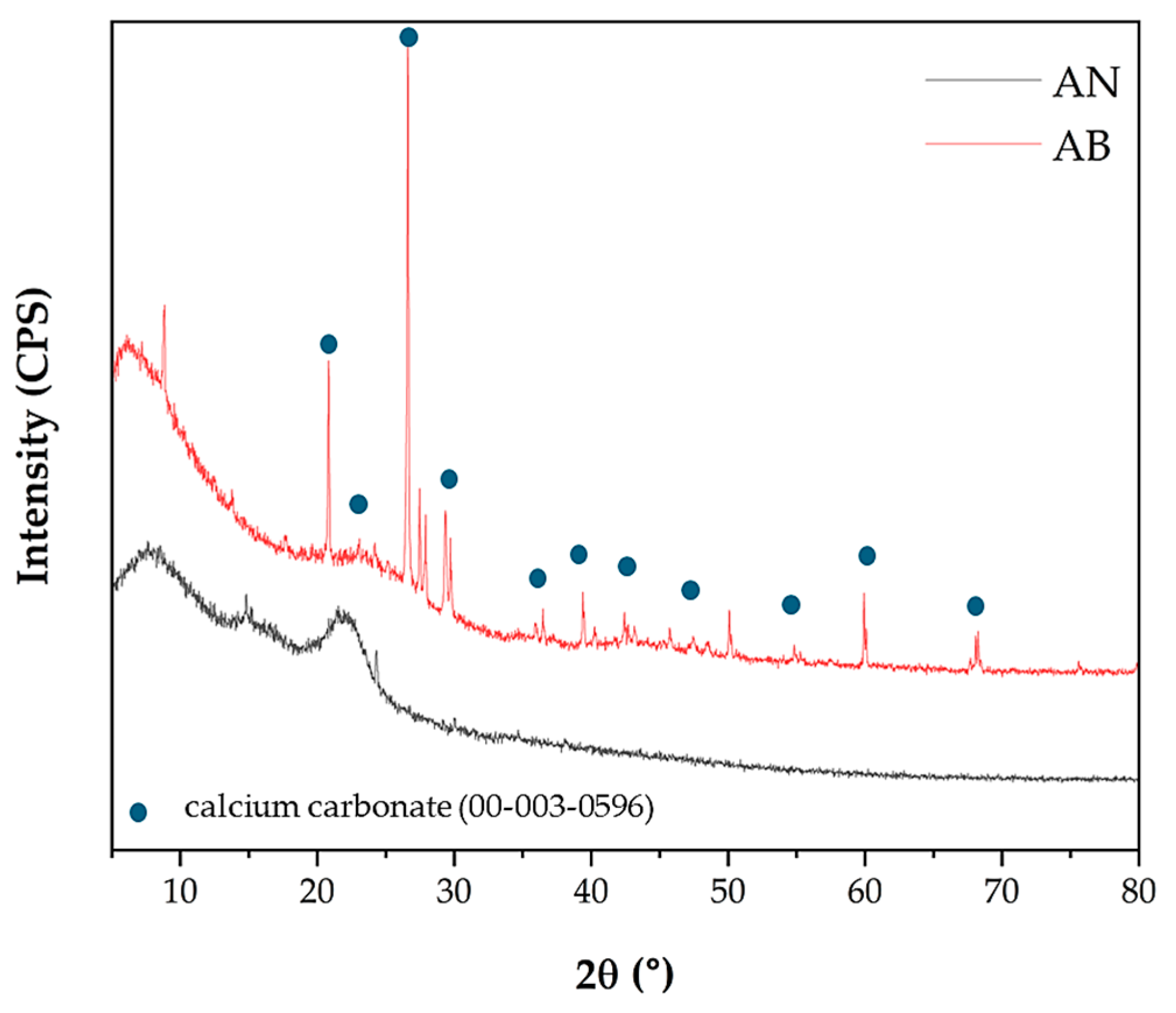
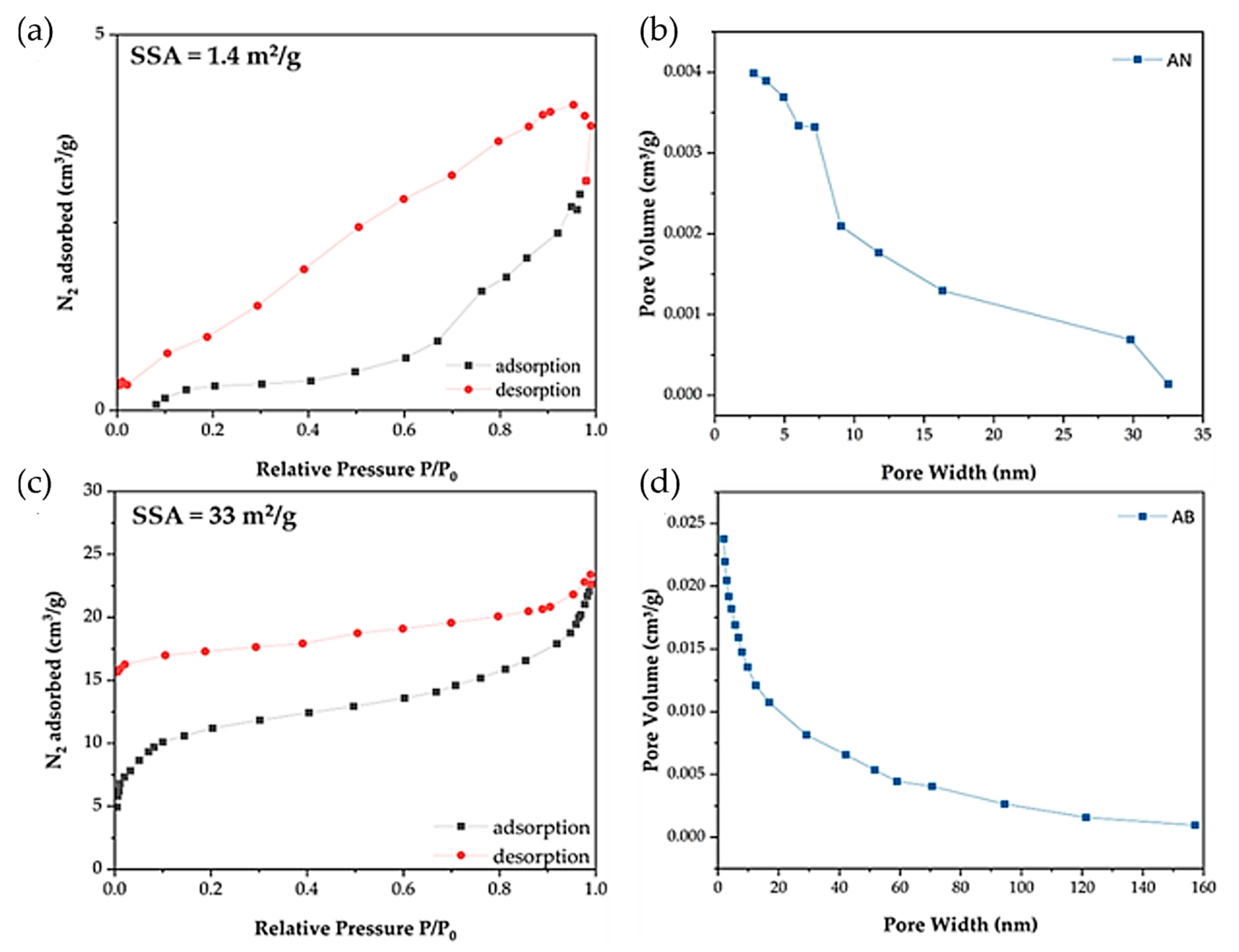
3.1. Characterization of the Natural and Modified Acacia Biomass
3.2. Experimental Adsorption Tests, Isotherm and Kinetics
4. Discussion
4.1. Samples Characterization
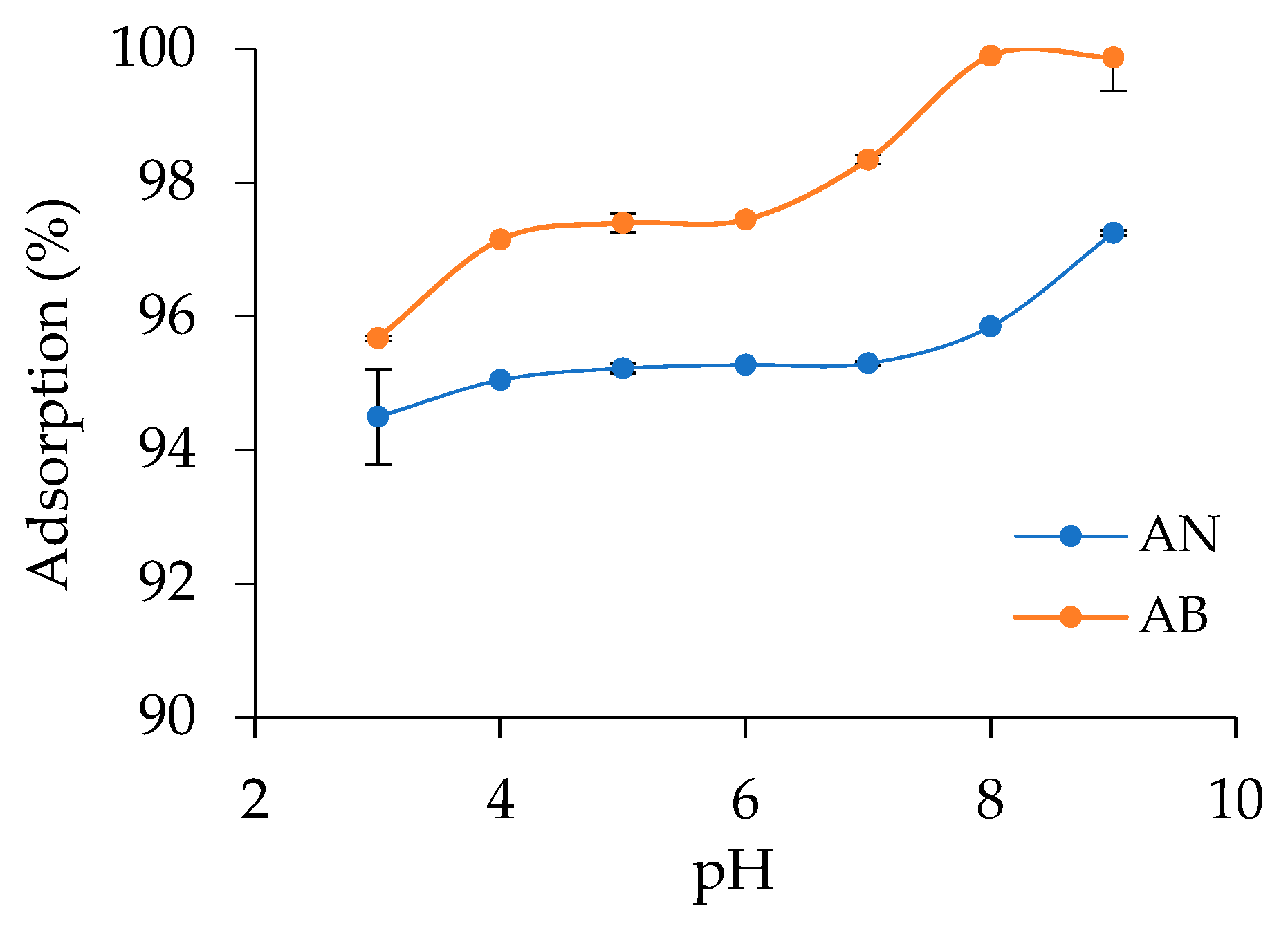
4.2. Effect of the pH, Isotherm and Kinetics
5. Conclusions
Author Contributions
Funding
Data Availability Statement
Acknowledgments
Conflicts of Interest
References
- Lorenzo, P.; González, L.; Reigosa, M.J. The Genus Acacia as Invader: The Characteristic Case of Acacia dealbata Link in Europe. Ann. For. Sci. 2010, 67, 101. [Google Scholar] [CrossRef] [Scilit]
- Lazzaro, L.; Giuliani, C.; Fabiani, A.; Agnelli, A.E.; Pastorelli, R.; Lagomarsino, A.; Benesperi, R.; Calamassi, R.; Foggi, B. Soil and Plant Changing after Invasion: The Case of Acacia dealbata in a Mediterranean Ecosystem. Sci. Total Environ. 2014, 497–498, 491–498. [Google Scholar] [CrossRef] [Scilit] [PubMed]
- Nunes, L.J.R.; Raposo, M.A.M.; Meireles, C.I.R.; Pinto Gomes, C.J.; Ribeiro, N.M.C.A. Control of Invasive Forest Species through the Creation of a Value Chain: Acacia dealbata Biomass Recovery. Environments 2020, 7, 39. [Google Scholar] [CrossRef] [Scilit]
- Raposo, M.A.M.; Pinto Gomes, C.J.; Nunes, L.J.R. Evaluation of Species Invasiveness: A Case Study with Acacia dealbata Link. on the Slopes of Cabeça (Seia-Portugal). Sustainability 2021, 13, 11233. [Google Scholar] [CrossRef] [Scilit]
- Nunes, L.J.R.; Meireles, C.I.R.; Pinto Gomes, C.J.; Almeida Ribeiro, N.M.C. Historical Development of the Portuguese Forest: The Introduction of Invasive Species. Forests 2019, 10, 974. [Google Scholar] [CrossRef] [Scilit]
- Morais, M.; Marchante, E.; Marchante, H. Big Troubles Are Already Here: Risk Assessment Protocol Shows High Risk of Many Alien Plants Present in Portugal. J. Nat. Conserv. 2017, 35, 1–12. [Google Scholar] [CrossRef] [Scilit]
- ICNF. 6o Inventário Florestal Nacional—Relatório Final; Instituto da Conservação da Natureza e das Florestas: Lisboa, Portugal, 2019. [Google Scholar]
- Bowd, E.J.; Blair, D.P.; Lindenmayer, D.B. Prior Disturbance Legacy Effects on Plant Recovery Post-High-Severity Wildfire. Ecosphere 2021, 12, e03480. [Google Scholar] [CrossRef] [Scilit]
- Jesus, J.G.d.; Tenreiro, R.; Máguas, C.; Trindade, H. Acacia longifolia: A Host of Many Guests Even after Fire. Diversity 2020, 12, 250. [Google Scholar] [CrossRef] [Scilit]
- Pereira, M.G.; Gonçalves, N.; Amraoui, M. The Influence of Wildfire Climate on Wildfire Incidence: The Case of Portugal. Fire 2024, 7, 234. [Google Scholar] [CrossRef] [Scilit]
- Gordon, C.E.; Price, O.F.; Tasker, E.M.; Denham, A.J. Acacia Shrubs Respond Positively to High Severity Wildfire: Implications for Conservation and Fuel Hazard Management. Sci. Total Environ. 2017, 575, 858–868. [Google Scholar] [CrossRef] [Scilit]
- Pieterse, P.J.; Boucher, C. Is Burning a Standing Population of Invasive Legumes a Viable Control Method? Effects of a Wildfire on an Acacia Mearnsii Population. S. Afr. For. J. 1997, 180, 15–21. [Google Scholar] [CrossRef] [Scilit]
- Riveiro, S.F.; Cruz, Ó.; Casal, M.; Reyes, O. Fire and Seed Maturity Drive the Viability, Dormancy, and Germination of Two Invasive Species: Acacia longifolia (Andrews) Willd. and Acacia Mearnsii De Wild. Ann. For. Sci. 2020, 77, 60. [Google Scholar] [CrossRef] [Scilit]
- Marchante, H.; Freitas, H.; Hoffmann, J.H. Seed Ecology of an Invasive Alien Species, Acacia longifolia (Fabaceae), in Portuguese Dune Ecosystems. Am. J. Bot. 2010, 97, 1780–1790. [Google Scholar] [CrossRef] [Scilit] [PubMed]
- Presidência do Conselho de Ministros. Decreto-Lei n.o 92/2019: Regime Jurídico Aplicável Ao Controlo, à Detenção, à Introdução Na Natureza e Ao Repovoamento de Espécies Exóticas Da Flora e Da Fauna; Imprensa Nacional Casa da Moeda: Lisboa, Portugal, 2019; pp. 3428–3442. [Google Scholar]
- Le Maitre, D.C.; Gaertner, M.; Marchante, E.; Ens, E.-J.; Holmes, P.M.; Pauchard, A.; O’Farrell, P.J.; Rogers, A.M.; Blanchard, R.; Blignaut, J.; et al. Impacts of Invasive Australian Acacias: Implications for Management and Restoration. Divers. Distrib. 2011, 17, 1015–1029. [Google Scholar] [CrossRef] [Scilit]
- Correia, R.; Quintela, J.C.; Duarte, M.P.; Gonçalves, M. Insights for the Valorization of Biomass from Portuguese Invasive Acacia spp. in a Biorefinery Perspective. Forests 2020, 11, 1342. [Google Scholar] [CrossRef] [Scilit]
- Correia, R.; Duarte, M.P.; Maurício, E.M.; Brinco, J.; Quintela, J.C.; da Silva, M.G.; Gonçalves, M. Chemical and Functional Characterization of Extracts from Leaves and Twigs of Acacia dealbata. Processes 2022, 10, 2429. [Google Scholar] [CrossRef] [Scilit]
- Oliveira, C.S.D.; Moreira, P.; Resende, J.; Cruz, M.T.; Pereira, C.M.F.; Silva, A.M.S.; Santos, S.A.O.; Silvestre, A.J.D. Characterization and Cytotoxicity Assessment of the Lipophilic Fractions of Different Morphological Parts of Acacia dealbata. Int. J. Mol. Sci. 2020, 21, 1814. [Google Scholar] [CrossRef] [Scilit]
- Resende, M.D.V.; Rezende, G.D.S.P.; Demuner, B. Utilização de Espécies Do Gênero Acacia Na Produção de Celulose de Fibra Curta No Sudeste Asiático e Na África; Embrapa Florestas: Curitiba, Brazil, 2001; pp. 15–39. [Google Scholar]
- Yáñez, R.; Romaní, A.; Garrote, G.; Alonso, J.L.; Parajó, J.C. Experimental Evaluation of Alkaline Treatment as a Method for Enhancing the Enzymatic Digestibility of Autohydrolysed Acacia dealbata. J. Chem. Technol. Biotechnol. 2009, 84, 1070–1077. [Google Scholar] [CrossRef] [Scilit]
- Lourenço, A.; Baptista, I.; Gominho, J.; Pereira, H. The Influence of Heartwood on the Pulping Properties of Acacia Melanoxylon Wood. J. Wood Sci. 2008, 54, 464–469. [Google Scholar] [CrossRef] [Scilit]
- Adam, A.B.; Hyelalibia, A.; Akinterinwa, A. Modification and Characterazation of Acacia Nilotica Leaves and Its Application in Water Treatment. Chem. Res. Technol. 2024, 1, 192–203. [Google Scholar] [CrossRef]
- Terkhi, M.C.; Belhaine, A.; Abdelmalek, F.; Ghezzar, M.R.; Addou, A. Acacia saligna Leaves: A Potential New Low-Cost Adsorbent for Removal of Methylene Blue from Aqueous Solutions. Desalination Water Treat. 2023, 300, 178–191. [Google Scholar] [CrossRef] [Scilit]
- Murtaza, G.; Ditta, A.; Ahmed, Z.; Usman, M.; Faheem, M.; Tariq, A. Co-Biosorption Potential of Acacia Nilotica Bark in Removing Ni and Aminoazobenzene from Contaminated Wastewater. Desalination Water Treat. 2021, 233, 261–270. [Google Scholar] [CrossRef] [Scilit]
- López-Hortas, L.; Rodríguez-González, I.; Díaz-Reinoso, B.; Torres, M.D.; Moure, A.; Domínguez, H. Tools for a Multiproduct Biorefinery of Acacia dealbata Biomass. Ind. Crops Prod. 2021, 169, 113655. [Google Scholar] [CrossRef] [Scilit]
- Ferreira, S.; Gil, N.; Queiroz, J.A.; Duarte, A.P.; Domingues, F.C. An Evaluation of the Potential of Acacia dealbata as Raw Material for Bioethanol Production. Bioresour. Technol. 2011, 102, 4766–4773. [Google Scholar] [CrossRef] [Scilit]
- Plum, L.M.; Rink, L.; Haase, H. The Essential Toxin: Impact of Zinc on Human Health. Int. J. Environ. Res. Public Health 2010, 7, 1342–1365. [Google Scholar] [CrossRef] [Scilit]
- Pérez-Marín, A.B.; Ortuño, J.F.; Aguilar, M.I.; Lloréns, M.; Meseguer, V.F. Competitive Effect of Zinc and Cadmium on the Biosorption of Chromium by Orange Waste. Processes 2024, 12, 148. [Google Scholar] [CrossRef] [Scilit]
- Poonam; Bharti, S.K.; Kumar, N. Kinetic Study of Lead (Pb2+) Removal from Battery Manufacturing Wastewater Using Bagasse Biochar as Biosorbent. Appl. Water Sci. 2018, 8, 119. [Google Scholar] [CrossRef] [Scilit]
- Park, J.-H.; Ok, Y.S.; Kim, S.-H.; Cho, J.-S.; Heo, J.-S.; Delaune, R.D.; Seo, D.-C. Competitive Adsorption of Heavy Metals onto Sesame Straw Biochar in Aqueous Solutions. Chemosphere 2016, 142, 77–83. [Google Scholar] [CrossRef] [Scilit]
- Weber, W.J.; Morris, J.C. Kinetics of Adsorption on Carbon from Solution. J. Sanit. Engrg. Div. 1963, 89, 31–59. [Google Scholar] [CrossRef] [Scilit]
- Thommes, M.; Kaneko, K.; Neimark, A.V.; Olivier, J.P.; Rodriguez-Reinoso, F.; Rouquerol, J.; Sing, K.S.W. Physisorption of Gases, with Special Reference to the Evaluation of Surface Area and Pore Size Distribution (IUPAC Technical Report). Pure Appl. Chem. 2015, 87, 1051–1069. [Google Scholar] [CrossRef] [Scilit]
- Danish, M.; Hashim, R.; Ibrahim, M.N.M.; Rafatullah, M.; Ahmad, T.; Sulaiman, O. Characterization of Acacia Mangium Wood Based Activated Carbons Prepared in the Presence of Basic Activating Agents. BioRessourses 2011, 6, 3019–3033. [Google Scholar] [CrossRef] [Scilit]
- Whinder, F.; Clarke, K.L.; Warwick, N.W.M.; Gasson, P.E. Structural Diversity of the Wood of Temperate Species of Acacia s.s. (Leguminosae: Mimosoideae). Aust. J. Bot. 2013, 61, 291–301. [Google Scholar] [CrossRef] [Scilit]
- Tavares, F.; Quilhó, T.; Pereira, H. Wood and Bark Fiber Characteristics of Acacia Melanoxylon and Comparison to Eucalyptus Globules. CERNE 2011, 17, 61–68. [Google Scholar] [CrossRef] [Scilit]
- Macena, M.; Cruz-Lopes, L.; Grosche, L.; Santos-Vieira, I.; Esteves, B.; Pereira, H. Characterization of Lignocellulosic Byproducts from the Portuguese Forest: Valorization and Sustainable Use. Materials 2025, 18, 4716. [Google Scholar] [CrossRef] [Scilit] [PubMed]
- Essekri, A.; Laabd, M.; Fatni, A.; Ait Addi, A.; Lakhmiri, R.; Albourine, A. The Use of Raw and Modified Acacia Leaves for Adsorptive Removal of Crystal Violet from Water. Chem. Eng. Res. Des. 2023, 190, 143–156. [Google Scholar] [CrossRef] [Scilit]
- de Farias, D.T.; Labidi, J.; Pedrazzi, C.; Gatto, D.A.; de Cademartori, P.H.G.; Welter, C.A.; da Silva, G.T.; de Almeida, T.M. Acid-Hydrolysis-Assisted Cellulose Nanocrystal Isolation from Acacia Mearnsii de Wild. Wood Kraft Pulp. Polymers 2024, 16, 3371. [Google Scholar] [CrossRef] [Scilit]
- Dias, J.; Conceição, A.; Delatorre, F.M.; Siqueira, P. Production, Characterization Physical, Chemical, and Structural Analysis of Biochar Fines for Bio-Reinforcement in Composite Materials. Processes 2025, 13, 504. [Google Scholar] [CrossRef] [Scilit]
- Danish, M.; Hashim, R.; Ibrahim, M.N.M.; Rafatullah, M.; Sulaiman, O. Surface Characterization and Comparative Adsorption Properties of Cr(VI) on Pyrolysed Adsorbents of Acacia Mangium Wood and Phoenix Dactylifera L. Stone Carbon. J. Anal. Appl. Pyrolysis 2012, 97, 19–28. [Google Scholar] [CrossRef] [Scilit]
- Shahnaz, T.; Patra, C.; Sharma, V.; Selvaraju, N. A Comparative Study of Raw, Acid-Modified and EDTA-Complexed Acacia Auriculiformis Biomass for the Removal of Hexavalent Chromium. Chem. Ecol. 2020, 36, 360–381. [Google Scholar] [CrossRef] [Scilit]
- Manawi, Y.; Al-Gaashani, R.; Simson, S.; Tong, Y.; Lawler, J.; Kochkodan, V. Adsorptive Removal of Phosphate from Water with Biochar from Acacia Tree Modified with Iron and Magnesium Oxides. Sci. Rep. 2024, 14, 17414. [Google Scholar] [CrossRef] [Scilit]
- Singh, S.; Prajapati, A.K.; Chakraborty, J.P.; Mondal, M.K. Adsorption Potential of Biochar Obtained from Pyrolysis of Raw and Torrefied Acacia Nilotica towards Removal of Methylene Blue Dye from Synthetic Wastewater. Biomass Conv. Bioref. 2023, 13, 6083–6104. [Google Scholar] [CrossRef] [Scilit]
- Wang, Q.; Lai, Z.; Mu, J.; Chu, D.; Zang, X. Converting Industrial Waste Cork to Biochar as Cu (II) Adsorbent via Slow Pyrolysis. Waste Manag. 2020, 105, 102–109. [Google Scholar] [CrossRef] [Scilit] [PubMed]
- Burwell, R. Manual of Symbolsand Terminology for Physicochemical Quantities and Units-Appendix II. Pure Appl. Chem. 1976, 46, 71–90. [Google Scholar] [CrossRef]
- Puglla, E.P.; Guaya, D.; Tituana, C.; Osorio, F.; García-Ruiz, M.J. Biochar from Agricultural By-Products for the Removal of Lead and Cadmium from Drinking Water. Water 2020, 12, 2933. [Google Scholar] [CrossRef] [Scilit]
- Fischer, A.; Sgolik, L.; Kreller, A.; Dornack, C. Zinc(II) Adsorption by Low-Carbon Shungite: The Effect of pH. Water 2018, 10, 422. [Google Scholar] [CrossRef] [Scilit]
- Meena, A.K.; Kadirvelu, K.; Mishra, G.K.; Rajagopal, C.; Nagar, P.N. Adsorptive Removal of Heavy Metals from Aqueous Solution by Treated Sawdust (Acacia arabica). J. Hazard. Mater. 2008, 150, 604–611. [Google Scholar] [CrossRef] [Scilit]
- Munagapati, V.S.; Yarramuthi, V.; Nadavala, S.K.; Alla, S.R.; Abburi, K. Biosorption of Cu(II), Cd(II) and Pb(II) by Acacia leucocephala Bark Powder: Kinetics, Equilibrium and Thermodynamics. Chem. Eng. J. 2010, 157, 357–365. [Google Scholar] [CrossRef] [Scilit]
- Amin, M.T.; Alazba, A.A. Comparative Study of the Absorptive Potential of Raw and Activated Carbon Acacia Nilotica for Reactive Black 5 Dye. Environ. Earth Sci. 2017, 76, 581. [Google Scholar] [CrossRef] [Scilit]
- Wang, Y.-Y.; Liu, Y.-X.; Lu, H.-H.; Yang, R.-Q.; Yang, S.-M. Competitive Adsorption of Pb(II), Cu(II), and Zn(II) Ions onto Hydroxyapatite-Biochar Nanocomposite in Aqueous Solutions. J. Solid State Chem. 2018, 261, 53–61. [Google Scholar] [CrossRef] [Scilit]
- Van Hien, N.; Valsami-Jones, E.; Vinh, N.C.; Phu, T.T.; Tam, N.T.T.; Lynch, I. Effectiveness of Different Biochar in Aqueous Zinc Removal: Correlation with Physicochemical Characteristics. Bioresour. Technol. Rep. 2020, 11, 100466. [Google Scholar] [CrossRef] [Scilit]
- Bhattacharya, A.K.; Mandal, S.N.; Das, S.K. Adsorption of Zn(II) from Aqueous Solution by Using Different Adsorbents. Chem. Eng. J. 2006, 123, 43–51. [Google Scholar] [CrossRef] [Scilit]
- Macena, M.; Cruz-Lopes, L.; Grosche, L.; Esteves, B.; Santos-Vieira, I.; Pereira, H. Valorization of Pinecones as Biosorbents for Environmental Remediation of Zn-Contaminated Wastewaters. Environments 2025, 12, 284. [Google Scholar] [CrossRef] [Scilit]
- Morales-Barrera, L.; Cristiani-Urbina, E. Equilibrium Biosorption of Zn2+ and Ni2+ Ions from Monometallic and Bimetallic Solutions by Crab Shell Biomass. Processes 2022, 10, 886. [Google Scholar] [CrossRef] [Scilit]
- Morales-Barrera, L.; Flores-Ortiz, C.M.; Cristiani-Urbina, E. Single and Binary Equilibrium Studies for Ni2+ and Zn2+ Biosorption onto Lemna Gibba from Aqueous Solutions. Processes 2020, 8, 1089. [Google Scholar] [CrossRef] [Scilit]
- Santos, Y.T.d.C.; Costa, G.P.d.; Marcell Coelho Menezes, J.; Victor Serra Nunes, J.; Hosseini-Bandegharaei, A.; Douglas Melo Coutinho, H.; Sena Júnior, D.; José de Paula Filho, F.; Nonato Pereira Teixeira, R. Adsorption of Zn(II) IONS by Ziziphus Joazeiro Barks in Aqueous Solutions. Results Chem. 2024, 7, 101339. [Google Scholar] [CrossRef] [Scilit]
- Tabaraki, R.; Nateghi, A. Multimetal Biosorption Modeling of Zn2+, Cu2+ and Ni2+ by Sargassum Ilicifolium. Ecol. Eng. 2014, 71, 197–205. [Google Scholar] [CrossRef] [Scilit]
- Aguila-Rosas, J.; Cano, F.J.; Nagaya, A.; Quirino-Barreda, C.T.; Ortiz, M.d.J.M.; Vargas, A.G.; Ibarra, I.A.; Lima, E. MOF-Composites for Adsorption and Degradation of Contaminants in Wastewater. Chem. Commun. 2025, 61, 11706–11731. [Google Scholar] [CrossRef] [Scilit] [PubMed]
- Lee, M.-E.; Park, J.H.; Chung, J.W. Comparison of the Lead and Copper Adsorption Capacities of Plant Source Materials and Their Biochars. J. Environ. Manag. 2019, 236, 118–124. [Google Scholar] [CrossRef] [Scilit] [PubMed]
- Babel, S.; Kurniawan, T.A. Low-Cost Adsorbents for Heavy Metals Uptake from Contaminated Water: A Review. J. Hazard. Mater. 2003, 97, 219–243. [Google Scholar] [CrossRef] [Scilit] [PubMed]
- Simón, D.; Quaranta, N.; Medici, S.; Costas, A.; Cristóbal, A. Immobilization of Zn (II) Ions from Contaminated Biomass Using Ceramic Matrices. J. Hazard. Mater. 2019, 373, 687–697. [Google Scholar] [CrossRef] [Scilit]
- Bridgwater, A.V. Review of Fast Pyrolysis of Biomass and Product Upgrading. Biomass Bioenergy 2012, 38, 68–94. [Google Scholar] [CrossRef] [Scilit]





| Model Parameter | Biosorbent Type | |
|---|---|---|
| AN | AB | |
| Langmuir | ||
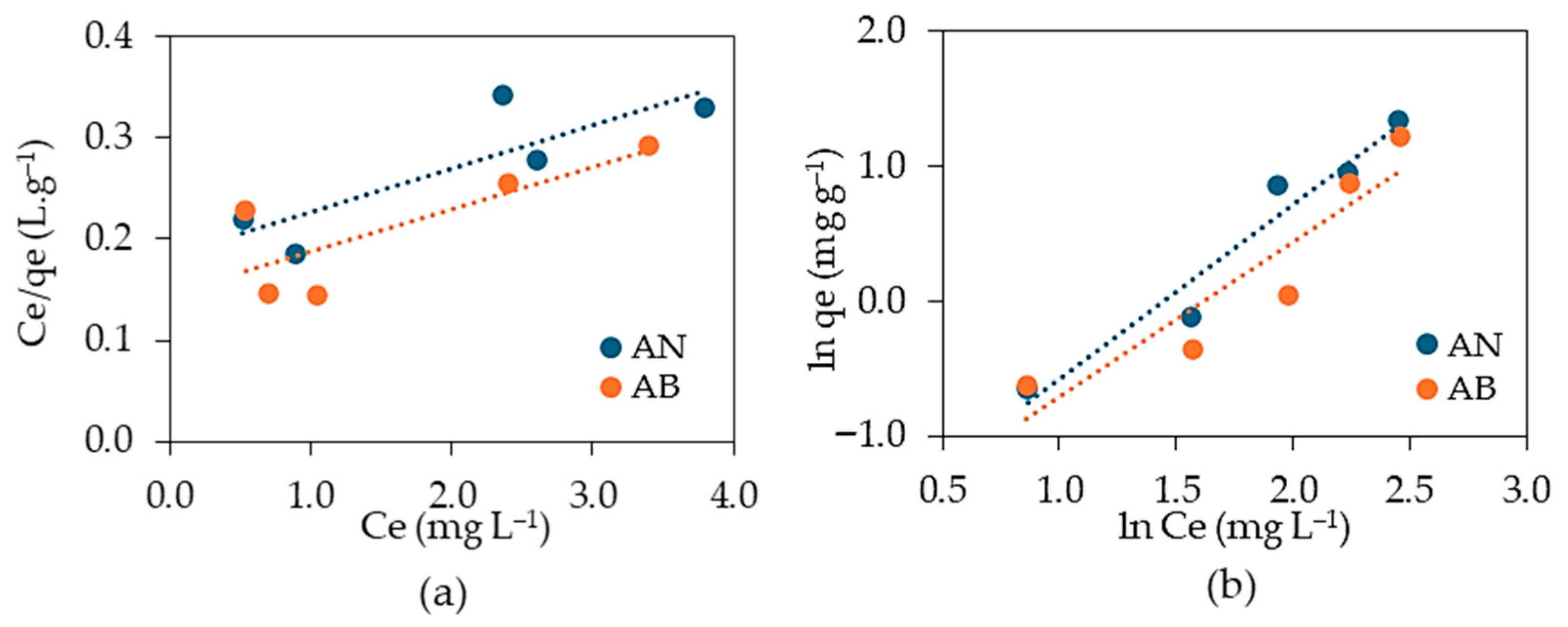
| qmax (mg g−1) | 23.36 | 23.79 |
| KL (L mg−1) | 0.23 | 0.29 |
| R2 | 0.71 | 0.62 |
| RL | 0.30 | 0.26 |
| Freundlich | ||
| n | 1.29 | 1.15 |
| 1/n | 0.77 | 0.87 |
| KF (mg g−1).(L mg−1)1/n | 0.16 | 0.16 |
| R2 | 0.95 | 0.85 |
| Model Parameter | Biosorbent Type | |
|---|---|---|
| AN | AB | |
| PFO | ||
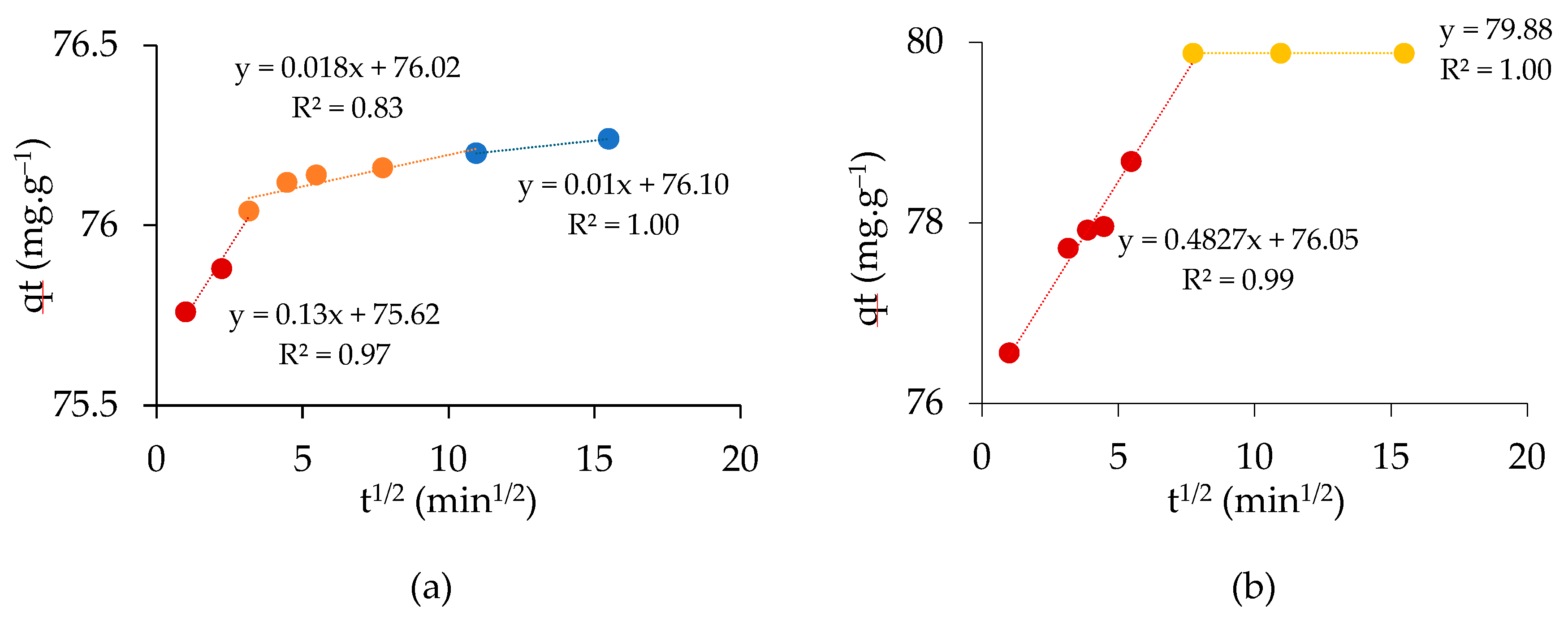
| k1 (L min−1) | 10−3 | 10−2 |
| qe calc (mg g−1) | 0.57 | 1.00 |
| qe exp (mg g−1) | 76.14 | 79.88 |
| R2 | 0.78 | 0.95 |
| PSO | ||
| k2 (g mg−1.min) | 10−1 | 10−2 |
| h (mg g−1.min) | 2240.65 | 266.54 |
| qe calc (mg g−1) | 76.24 | 80.00 |
| qe exp (mg g−1) | 76.14 | 79.88 |
| R2 | 1.00 | 1.00 |
| Adsorbent | Concentrations of Zn Tested | Best Adsorbent Dosage (g L−1) | Optimized pH | Equilibrium Time (h) | Maximum Capacity (qmax Langmuir) | Reference |
|---|---|---|---|---|---|---|
| Clarified sludge (steel industry) | 10–100 mg L−1 | 10 | 5.0 | 1 | 15.53 mg g−1 | [54] |
| Rice husk ash | 10–100 mg L−1 | 10 | 5.0 | 3 | 14.30 mg g−1 | [54] |
| Activated alumina | 10–100 mg L−1 | 10 | 5.0 | 4 | 13.69 mg g−1 | [54] |
| Azadirachta indica (Neem) bark | 10–100 mg L−1 | 10 | 5.0 | 4 | 13.29 mg g−1 | [54] |
| Pinus pinea pinecones | 10–50 mg L−1 | 4 | 7.0 | 0.5 | 7.92 mg g−1 | [55] |
| Crab shell | 0.2–40 mM | 1 | 6.0 | - | 2.83 mmol g−1 | [56] |
| Lemna gibba | 0.2–30 mM | 1 | 6.0 | - | 0.85 mmol g−1 | [57] |
| Ziziphus joazeiro bark | 20.2–443.1 mg L−1 | 0.4 | 5.5 | 1 | 13.12 mg g−1 | [58] |
| Sargassum ilicifolium | 60–300 mg L−1 | 0.2 | 6.0 | 1 | 2.78 mmol g−1 | [59] |
| Acacia dealbata biomass (AN) | 10–50 mg L−1 | 4 | 7.0 | 0.17 | 23.36 mg g−1 | Present study |
| A. dealbata charcoal fines (AB) | 10–50 mg L−1 | 4 | 7.0 | 2 | 23.79 mg g−1 | Present study |
Disclaimer/Publisher’s Note: The statements, opinions and data contained in all publications are solely those of the individual author(s) and contributor(s) and not of MDPI and/or the editor(s). MDPI and/or the editor(s) disclaim responsibility for any injury to people or property resulting from any ideas, methods, instructions or products referred to in the content. |
© 2026 by the authors. Licensee MDPI, Basel, Switzerland. This article is an open access article distributed under the terms and conditions of the Creative Commons Attribution (CC BY) license.
Share and Cite
Macena, M.; Esteves, B.; Pinto, J.S.; Novais, R.; Caetano, A.P.F.; Grosche, L.; Pereira, H.; Cruz-Lopes, L. From Invasion to Valorization: Adsorbent Applications of Acacia dealbata Biomass in Portugal. Environments 2026, 13, 77. https://doi.org/10.3390/environments13020077
Macena M, Esteves B, Pinto JS, Novais R, Caetano APF, Grosche L, Pereira H, Cruz-Lopes L. From Invasion to Valorization: Adsorbent Applications of Acacia dealbata Biomass in Portugal. Environments. 2026; 13(2):77. https://doi.org/10.3390/environments13020077
Chicago/Turabian StyleMacena, Morgana, Bruno Esteves, Jackelline S. Pinto, Rui Novais, Ana P. F. Caetano, Lucas Grosche, Helena Pereira, and Luísa Cruz-Lopes. 2026. "From Invasion to Valorization: Adsorbent Applications of Acacia dealbata Biomass in Portugal" Environments 13, no. 2: 77. https://doi.org/10.3390/environments13020077
APA StyleMacena, M., Esteves, B., Pinto, J. S., Novais, R., Caetano, A. P. F., Grosche, L., Pereira, H., & Cruz-Lopes, L. (2026). From Invasion to Valorization: Adsorbent Applications of Acacia dealbata Biomass in Portugal. Environments, 13(2), 77. https://doi.org/10.3390/environments13020077