
Article

Life Cycle Assessment of an Innovative Biogas Plant: Addressing Methodological Challenges and Circular Economy Implications

Centre of Competence for Sustainable Engineering and Environmental Systems (ZEuUS), THM University of Applied Sciences, 35390 Giessen, Germany
*
Author to whom correspondence should be addressed.
Environments 2026, 13(2), 78; https://doi.org/10.3390/environments13020078 (registering DOI)
Submission received: 7 August 2025 / Revised: 28 September 2025 / Accepted: 15 October 2025 / Published: 1 February 2026

Abstract

Considering the challenges of decarbonization, the energy transition, and the necessity to increase resource efficiency in the context of the circular economy, there is a need to develop sustainable solutions for the material and energy use of biogenic waste. Biogenic waste, which remains underutilized and can be regarded as an untapped resource, offers significant potential for sustainable energy production. In this context, biogas plants are a key technology, as they convert biogenic waste into renewable energy, reduce greenhouse gas emissions, and contribute to closing material cycles. The standardized life cycle assessment (LCA) methodology is a tool for the systematic analysis and evaluation of environmental impacts of products, systems, or services. The objective of this study is to develop a methodological and conceptual framework for the LCA of the innovative biogas plant based on a rotating drum fermenter. The environmental aspects of biowaste utilization and the role of the biogas plant in waste reduction and energy production are discussed in the broader context of the circular economy. Due to its complexity, this paper considers LCA with focus on the definition of the goal and scope of the study in accordance with international standards.

1. Introduction

Anthropogenic climate change is one of the greatest global challenges and efforts to reduce and limit greenhouse gas emissions are urgently needed [1,2,3]. In this context, the European Union and national governments have established ambitious climate targets and passed climate laws with the objective of achieving climate neutrality by 2050 or 2045. The importance of this topic is emphasized by strategies and measures for a more climate- and resource-friendly economy worldwide [4,5].
From a climate and resource protection perspective, the significance of renewable energies such as solar, wind, hydropower, and biomass is increasing, as they represent an alternative to fossil fuels (coal, oil, natural gas), thereby reducing greenhouse gas emissions and the use of primary raw materials [3]. By the year 2030, it is anticipated that at least 40 percent of the European Union’s electricity demand should come from renewable energy sources [6,7]. The German sustainability strategy calls for an expansion of renewable energy sources at the national level, thereby aligning with the overarching objective of the European Green Deal [7,8].
International and national frameworks—such as the European Green Deal, the Federal Climate Protection Law, the Renewable Energy Sources Act, the Circular Economy Act, the National Biomass Strategy, and the National Circular Economy Strategy—aim at harnessing this potential to promote sustainable solutions [4,5,9,10,11,12].
At the same time, the increasing scarcity of resources requires a more efficient use and conservation of resources to preserve our natural resources and operate within planetary boundaries [3]. The concept of the circular economy aims to use resources as efficiently as possible, minimize waste, and reuse and recycle materials in closed loops [13]. The National Circular Economy Strategy summarizes the German Federal Government’s objectives and measures for implementing a comprehensive circular economy [12]. Furthermore, the National Biomass Strategy advocates for the implementation of consistent cascading and multiple utilization [11].
The growing volume of waste is not only an environmental challenge but—in view of biogenic waste streams—also a potential source of sustainable energy production. In this study, the term biogenic waste is used as a generic term for all organic materials of plant or animal origin. According to the European Waste Framework Directive, biowaste is defined as “biodegradable garden and park waste, food and kitchen waste from households, offices, restaurants, wholesale, canteens, caterers and retail premises and comparable waste from food processing plants” [14].
Nonetheless, approximately fifty percent of biowaste from households is currently still only composted without a previous energetic valorization [15].
At present, biogas production in Germany relies mainly on agricultural feedstock, while biowaste fermentation plays a comparatively minor role. This discrepancy leads to sustainability conflicts, as the cultivation of energy crops, such as maize, competes with food production and can affect biodiversity [16,17]. In this context, the European Bioeconomy Strategy and the Integrated National Energy and Climate Plan emphasize the need to increase the share of biobased renewable energy. Due to land restrictions, more biogenic waste streams are to be used for this purpose [18,19]. Accordingly, the utilization of waste biomass for energy will be of particular importance in the future energy supply.
Numerous studies have assessed the positive impact of biogas production on reducing greenhouse gas emissions. These analyses are primarily based on life cycle assessments (LCAs) [20].
The LCA methodology is an established tool for the quantitative evaluation of the environmental impact of products, systems, or services. It enables a comprehensive analysis of the entire life cycle—from raw material extraction to production, use, and disposal—and identifies potential for optimization. Thus, LCA supports decision-making for sustainable technology developments and promotes their social acceptance. This also holds for innovative biogas plants [21,22].
The first LCA studies comparing fossil and biogenic energy sources were published at the beginning of the 1990s [23]. Since then, a significant number of LCAs from various European and Asian countries have addressed the topic of biogas plants and production [24,25,26,27]. LCA studies on bioenergy evaluate a system’s efficiency by examining factors such as energy utilization, energy production, environmental impacts, and greenhouse gas emissions [26]. Published LCAs focused on a variety of aspects, including the comparison of feedstock, the determination of the optimal mixture, the updating of emission data in databases, and the comparison of different scenarios [28].
In recent years, several studies have extended these analyses, focusing on the environmental performance of biogas and composting systems based on organic waste. Recent reviews highlight both methodological advances and persistent challenges, including the need for methodological standardization of functional units and system boundaries as well as the importance of accurate emission factors to enable objective comparisons [29,30,31,32]. Case studies provide additional practical insights. Lewerenz et al. showed that decentralized plant structures and short transport distances can reduce emissions more effectively than the choice of treatment technology itself [33]. Lyng et al. demonstrated how LCA can inform decision-making in new plant development [34]. Finally, Garkoti et al. highlighted the potential of circular economy-based biogas systems, particularly in emerging economies, integrating technological, economic, and environmental dimensions [35].
In analyzing the status quo of existing LCA studies, it was also noted that it is difficult to compare them because they often have different goals, scopes, functional units, system boundaries, and feedstocks [26]. Furthermore, there is a lack of LCA studies that integrate different levels of biogas production and the value network, taking into account the requirements of the circular economy.
However, the nexus of bioenergy, circular economy, and climate impact has not been sufficiently considered. A more integrated approach is needed to leverage synergies, enhance resource efficiency, and contribute to climate mitigation. The overarching objective of the ongoing RegBioFerm research project (2023–2026) is therefore to integrate these aspects into a scalable material-energy value network based on biogenic waste in the South Hesse eco-model region. RegBioFerm is intended to serve as a model for other regions in Hesse, Germany, and Europe. For this purpose, an innovative anaerobic digestion process, that has already been developed up to technology readiness level 6 (TRL 6: technology demonstrated in relevant environment), is scaled up to a large-scale, multi-input demonstration plant (TRL 8: system complete and qualified), and a highly efficient cascaded energetic and material utilization of biogenic waste is implemented [36]. This research project is based on the findings of two consecutive projects, “Gärtrommel” (September 2013–December 2014) and “BioTrom” (January 2015–December 2015) [37,38].
The core of the biogas plant under consideration is an innovative rotating drum fermenter for municipal biowaste. The fermenter is equipped with static mixing tools mounted on the inner mantle which during the reactor’s turning motion provide gentle axial mixing of the substrate. Substrate feed and digestate extraction happen pneumatically through the central hollow axis of the fermenter. The fermenter design allows a length of up to 30 m and a diameter of up to 6 m, thereby attaining dimensions comparable to those of large-scale industrial plants, with a volume of 850 cubic meters. However, the fermenter can also be designed in a compact container format with low specific manufacturing costs, making it suitable for decentralized material flows.
Such a compact fermenter is currently under construction and will be tested as part of the RegBioFerm research project. This core component is the starting point for the cascading use of biogenic waste based on the described innovative fermentation process. The biomass is initially utilized as a material and subsequently as an energy source within the value network in the South Hesse eco-model region at the Biebesheim am Rhein site, yielding the outputs biomethane, electricity, heat, and compost.
In comparison with conventional fermentation technologies, such as batch fermentation (garage system) or plug flow fermentation, the rotating drum fermenter offers several potential advantages from an environmental perspective. A key aspect is the exclusive utilization of biogenic waste as feedstock. This eliminates conflicts of interest related to land use and potential competition with food or feed production, a common concern in the context of energy crop utilization. With regard to emission reduction, the permanently closed system design of the fermenter offers the possibility of significantly reducing diffuse emissions, especially methane losses. Conventional systems, by contrast, are frequently linked to increased emission risks, for example, due to open feeding processes, leaks, or emissions during digestate removal. In addition, the compact design of the rotating drum fermenter technology enables improved integration into cascading utilization paths. This includes, for example, the combination of fermentation and downstream composting, as well as the targeted recycling of nutrients into agricultural material cycles. The process thus contributes to closing material cycles and implementing circular economy principles in a regional context.
The project is accompanied by the LCA methodology to comprehensively evaluate the environmental impact of this innovative biogas plant and to identify and implement process, product, and system improvements. Furthermore, the LCA serves as a link between the technical–experimental aspects of the project and the feasibility study.
The novelty of the intended LCA lies in three aspects: (i) the use of an innovative rotating drum fermenter for anaerobic digestion, (ii) the integration of cascading valorization, where the digestate serves as input for an existing composting facility, and (iii) the embedding of the waste valorization chain within a regional context.
This study aims to address a significant research gap by proposing a systematic approach and providing clear target definitions for the LCA of the innovative biogas plant with rotating drum fermenter technology. This gap arises from the fact that existing LCA studies on biogas systems predominantly focus on conventional technologies and often apply inconsistent definitions of functional units, system boundaries, and allocation procedures, limiting comparability and transparency. Building on the limitations of previous reviews, which rarely address methodological challenges in the early phases of LCA for innovative and multifunctional systems, we develop a methodological framework and conceptual foundations for the flexible and comprehensive assessment of environmental impacts. The focus is on the definition of the functional unit, the system boundaries, and allocation procedures, as well as on the methodological challenges that arise in the context of a regional circular economy project with a cascading use perspective.
The methodological approach is based on the ISO standards 14040 and 14044, which provide a framework for LCA [21,22]. This article considers LCA with focus on the first phase, the definition of the goal and the scope of the study, to provide a sound and flexible basis for analyses at different levels. This is because conducting an LCA within the RegBioFerm project requires a precise methodological foundation due to the project’s scale and complexity. The comparability of LCA studies represents a fundamental challenge. Therefore, a transparent and consistent delimitation is necessary to ensure methodological coherence within the project. Moreover, a complete LCA in the first project phase is associated with methodological uncertainties. The main methodological challenges lie in the definition of the functional unit and the system boundaries, as these parameters significantly affect the interpretation of results. Detailed consideration of these key aspects forms the basis for a scientifically resilient, robust, and comprehensible LCA. These definitions influence subsequent phases: the data collection of the inventory analysis, the impact analysis, and the interpretation.
In summary, the objective of this study is to develop a methodological and conceptual framework for the LCA of the innovative biogas plant based on a rotating drum fermenter. To assess whether this objective has been achieved, several preliminary key performance indicators (KPIs) are introduced. These include the completeness, transparency, traceability, and flexibility of the framework. Furthermore, the comparability of results, applicability within the research project, and the added value it offers to stakeholders. These KPIs will be revisited in the discussion to evaluate the methodological robustness and practical relevance of the proposed framework.

2. Materials and Methods

The LCA methodology is a proven tool for systematically analyzing environmental impacts at various levels, comprehensively mapping benefits, and identifying optimization potential. However, several methodological challenges complicate its application. There is no consensus in the literature regarding key aspects of LCA modeling, including the selection of an appropriate functional unit, the definition of system boundaries, the allocation of environmental impacts to co-products, and the modeling of the carbon cycle of biomass [25].
To ensure standard-compliant implementation, the project accompanying LCA is carried out in accordance with ISO standards 14040 and 14044 [21,22]. The LCA is conducted in four iterative phases: goal and scope definition, inventory analysis, impact assessment, and interpretation (Figure 1) [21].
The first phase of the LCA involves the definition of the goal and scope of the study, which forms the foundation for conducting a standardized LCA. This phase is outlined in the following subsections.

2.1. Goal of the Study

The goal definition should address the following aspects: the area of application, the research interest, the target groups, and publication [21,22,39].
The area of application of the project accompanying LCA lies in the comprehensive assessment of the environmental impacts of the innovative biogas plant and the value network over its entire life cycle.
The application LCA pursues several objectives. Firstly, the objective is to ensure a comprehensive quantitative assessment of the environmental impacts over the entire life cycle of the innovative biogas plant. In this context, process, product, and system improvements are to be identified and implemented. Three levels of analysis will be classified as follows: the biogas plant, the biogas production, and the entire value network. Secondly, differences in results within the relevant impact categories are to be determined depending on the influencing factors. Finally, it is imperative to derive recommendations for action from the LCA of the entire value network with regard to the application scenarios considered. Moreover, the modeling approaches should be transferable to similar substitution problems with strong spatial reference.
The target groups include both internal and external stakeholders. The former encompasses funders and project partners. The latter includes the scientific community, interested parties from the biogas sector, and the public.

2.2. Scope of the Study

Within the scope of the study, the product system to be examined is first described. Furthermore, the functional unit, system boundaries, allocation procedure, impact categories, and data sources and quality are defined in this context.

2.2.1. Product System: Biogas Plant

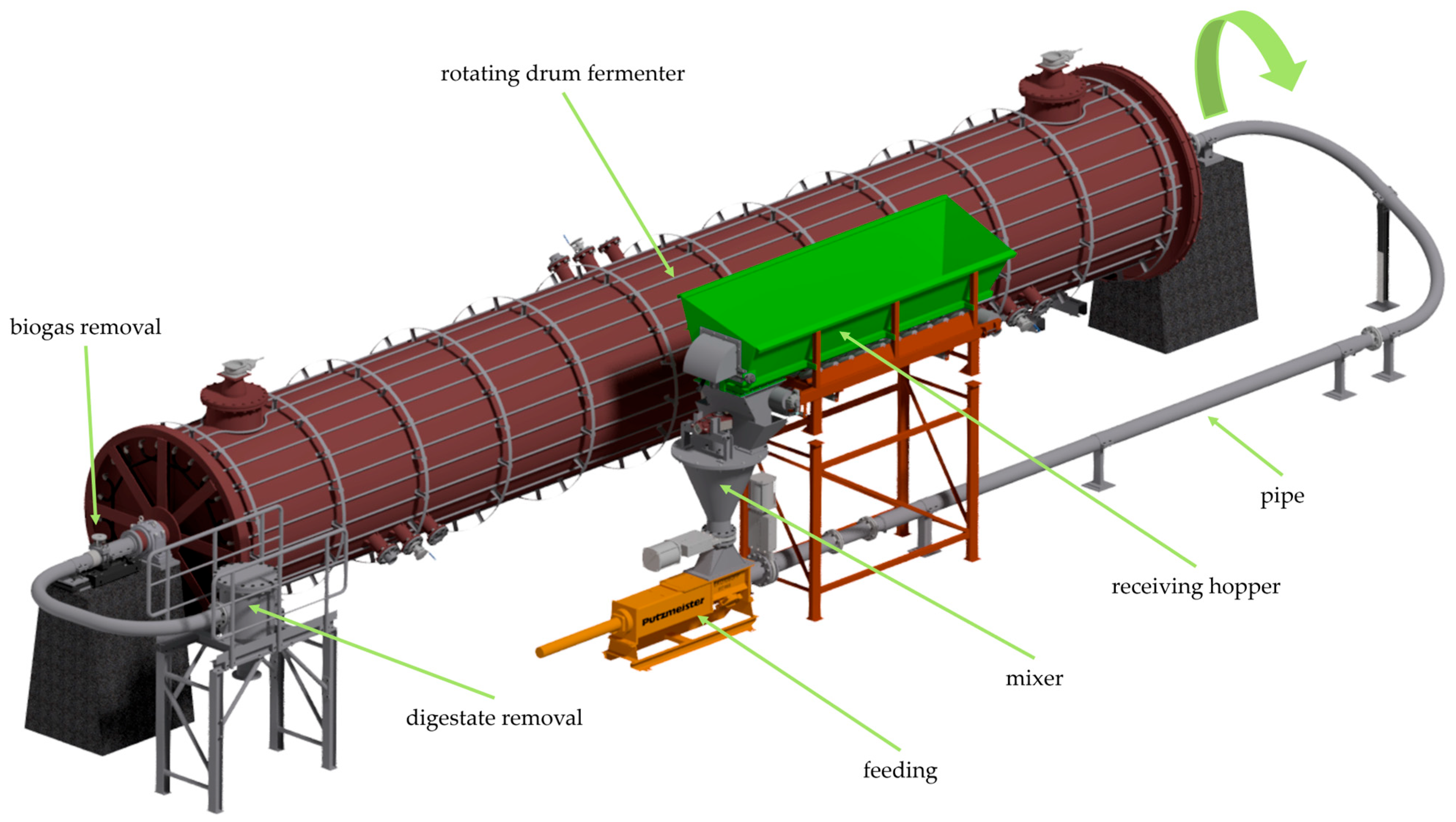
The product system under scrutiny is the innovative biogas plant itself (Figure 2). The pilot plant measures 15 m in length, has a diameter of 2 m, and a volume of approximately 45 cubic meters.
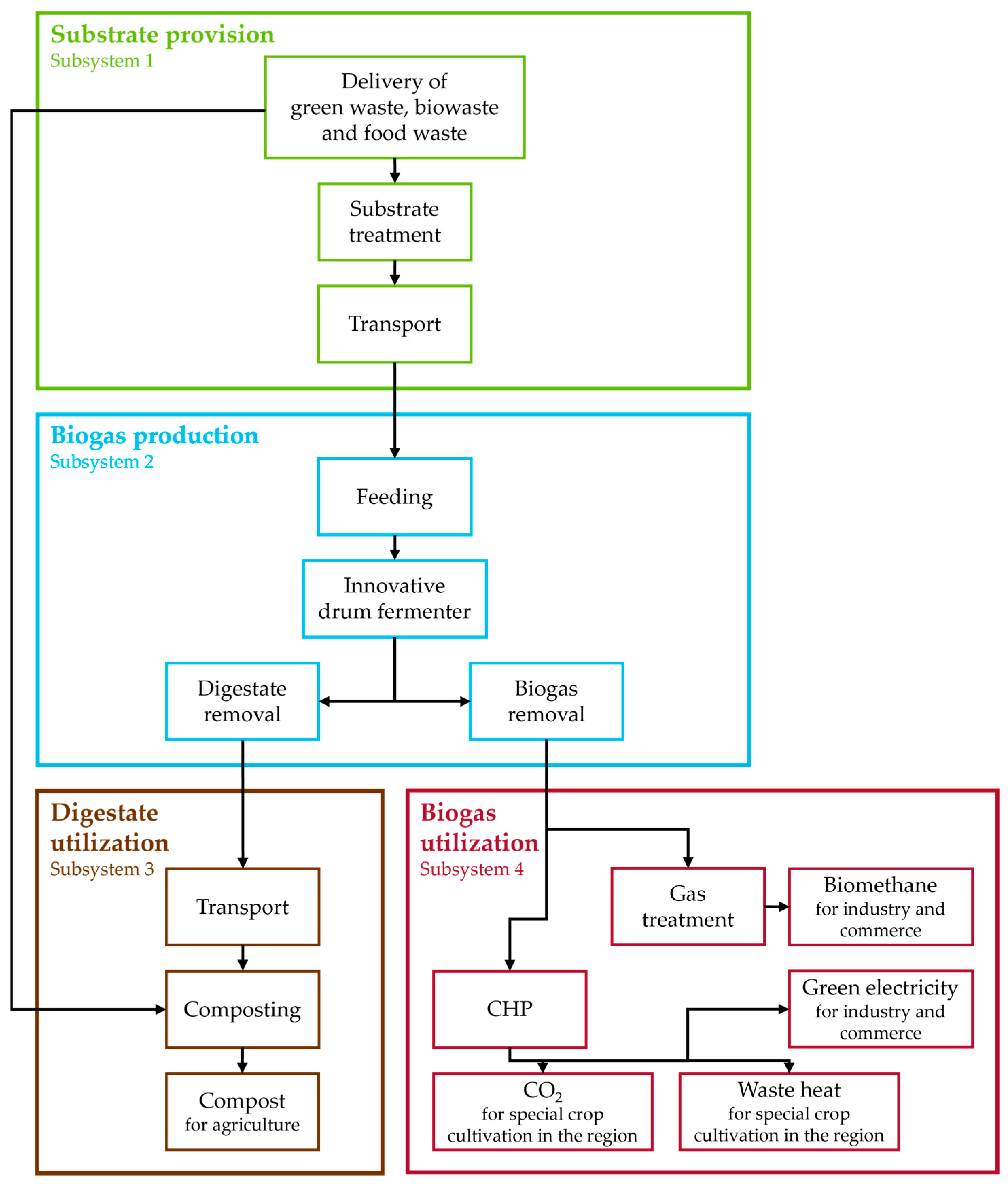
Only biogenic waste such as green waste, biowaste, food waste and agricultural by-products is used as input material (feedstock). These have a lower environmental impact on the system, as they are waste streams rather than energy crops. The substrate is almost completely fed into the innovative fermenter and undergoes anaerobic fermentation. Green waste is an exception. Part of this material flow goes into the fermentation process, while the majority is processed directly in the basic composting process. Anaerobic digestion produces two main outputs, namely biogas and digestate. The biogas can be fed to a combined heat and power plant to generate green electricity and heat for industry and commerce. Potentially, the biogas could also be upgraded to biomethane for industry and commerce. The digestate will be integrated into the downstream composting process, where it is further processed into high-quality compost for agricultural use. Carbon dioxide and waste heat are also produced. These by-products can be utilized in regional specialty crop cultivation, thereby contributing to sustainable value creation.
In RegBioFerm, regeneratively converted electricity and heat are provided for regional industry (herb drying) and agriculture (special crops). The underlying concept is transferable to other regions, provided that region-specific factors such as substrate availability and infrastructure are taken into account. In such contexts, the converted bioenergy could also be utilized by industrial customers. This underscores the flexibility and scalability of the process, which contributes both to a sustainable energy supply and to the promotion of resource-conserving agriculture.
Figure 3 shows a flow chart of the biogas plant and illustrates that the product system can be divided into the following four subsystems: substrate provision, biogas production, digestate utilization, and biogas utilization.
In summary, the product system has several functions, with the overarching cascading use of biogenic waste at the center. This facilitates a decentralized and sustainable supply of regeneratively produced biomethane, electricity, and heat from biogas to the South Hesse eco-model region. In addition to energy production, the digestate is further processed into high-quality compost.

2.2.2. Functional Unit

The LCA standard specifies that the functional unit must be formulated in accordance with the goal previously defined. The definition of the functional unit is fundamental to the results of an LCA, as it enables comparison and quantifies the benefits and drawbacks of the product system under investigation. The functional unit also forms a reference to which the input and output flows are related [21,22].
The definition of the functional unit is a key aspect of the analysis and assessment of the environmental impacts of innovative plant technology. The scientific literature contains a variety of approaches to defining the functional unit in the context of the environmental impacts of biogas production [25].
Gopal et al. compared 75 LCA articles and identified that “values expressed through per unit mass of feedstock and per unit energy of electricity produced are the most frequently chosen functional units, as they are free from the further conversion process” [26] (p. 686). Depending on their primary function, Bacenetti et al. categorize the analyzed biogas plants into two types: those that generate energy and those that are used for waste treatment. The functional unit is contingent on this classification. To ensure comparability, they recommend using electricity or methane produced as the functional unit for plants fed with energy crops. In the case of plants fed with waste, the mass of the fermented feedstock is recommended as the functional unit [25]. In their study, Timonen et al. employed two functional units to assess the environmental impact of both end products [40].
A fundamental distinction is made between an input-related or output-related perspective. An input-related functional unit is based on the substrates used, such as manure, waste, or biomass (mass flow). While an output-related functional unit is defined as the products that are generated during the process of biogas production (energy flow). The value creation stages of the production process, such as the intermediate product biogas or the product biomethane, can also serve as a functional unit. It should be noted that there is a difference between the products, as their utilization can have different environmental impacts [25]. Moreover, the consideration of energy output is a subject of interest in the existing literature because “the main function of the anaerobic digestion plants is to produce energy” [25] (p. 678).
In the case study under investigation, two options were identified based on the main functions of the biogas plant that could serve as a functional unit. These are compared in Table 1, which highlights their respective focus, objective, system boundary, advantages, and limitations. It must be taken into account that the considered product system, the biogas plant, is a multiproduct system. Depending on the definition of the functional unit, an allocation problem of the input and output flows may arise. The associated allocation problem and potential allocation procedures that can be considered in this context are presented in more detail in Section 2.2.4.
For this study, the functional unit of 1 ton of biogenic waste (option 2) is preferred. This decision aligns with the primary functions of the biogas plant, which are the treatment of organic waste and the reduction in environmental impacts by closing material cycles. The decision to prioritize a waste-based functional unit is justified given the multi-output nature of the plant and its role within a cascading resource use system. Importantly, the anaerobic digestion process is implemented upstream of an existing composting facility, thereby creating an integrated treatment cascade. Only a waste-related functional unit allows for a transparent assessment of the additional environmental benefits arising from this cascade structure. Moreover, this functional unit contributes to clarifying the synergy between waste treatment and energy production, enabling a more holistic evaluation of the system’s ecological performance.

2.2.3. System Boundaries

System boundaries are categorized as technical, geographical, and temporal system boundary.
The technical system boundary describes the scope of the process modules that are included in the analysis of a system [21,22,39].
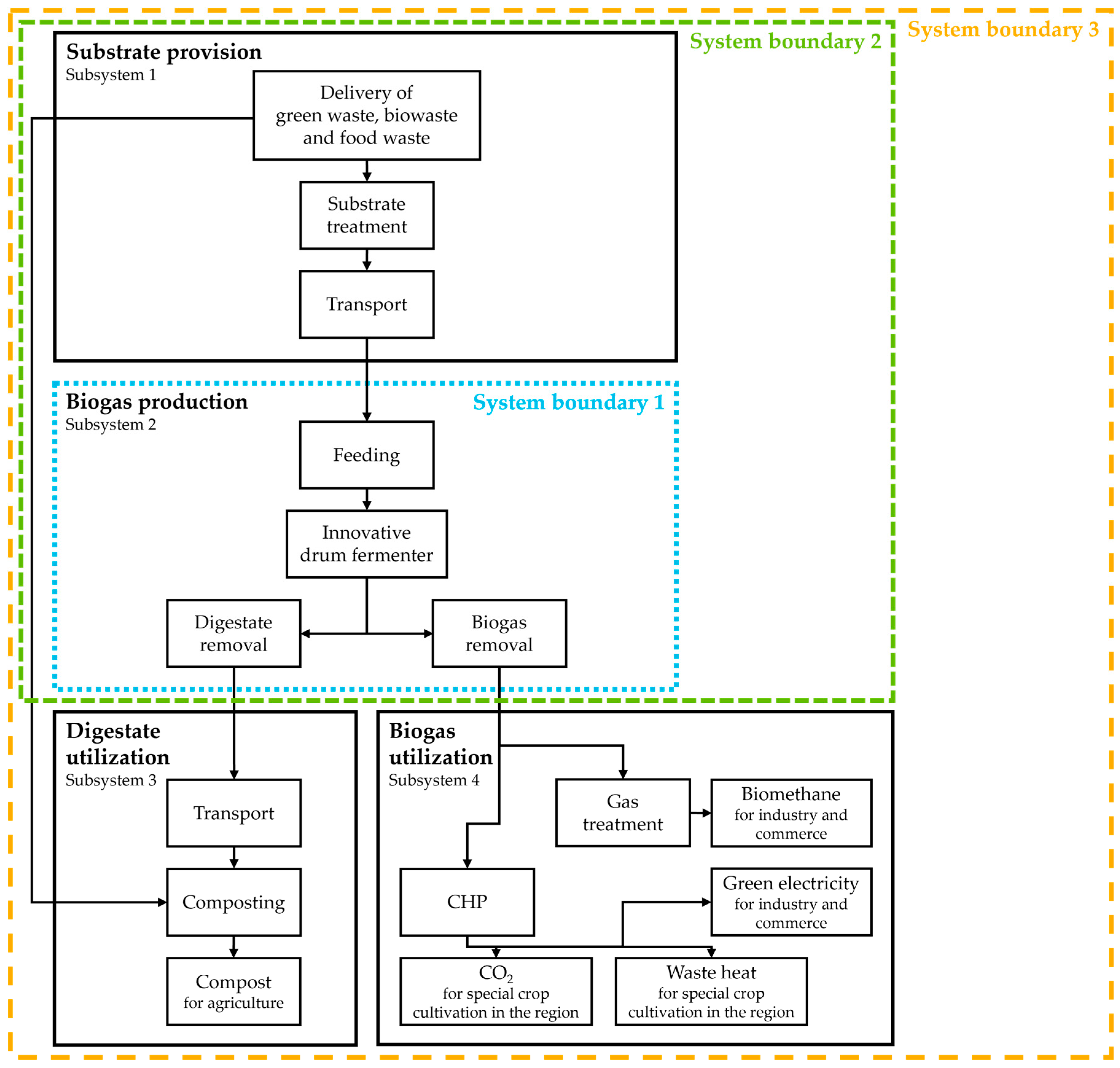
In this case, the approach taken is to consider the entire life cycle (cradle-to-grave) of the biogas plant. The life cycle encompasses all stages, from the delivery of waste, waste acceptance and substrate preparation, through biogas production and energy generation, to the utilization of biogas and digestate. The transportation in between is also considered. This includes both the internal logistics at the biogas plant site and the external delivery logistics for waste collection and delivery. The technical system boundary is gradually extended using three levels of analysis. Consequently, processes lying outside this boundary are not taken into account. The technical system boundary of the biogas plant is illustrated in Figure 4.
In the first step, an LCA of the biogas plant is prepared, which refers to system boundary 1 (blue = gate-to-gate) and the subsystem 2 (biogas production) contained therein. In the subsequent step, an LCA of biogas production is prepared, considering various technical process variants. This assessment encompasses the subsystems 1 and 2 (substrate provision, biogas production) within system boundary 2 (green = cradle-to-gate). Based on this, the LCA is extended to the entire value network, considering further processing and alternative utilization options. This is illustrated by system boundary 3 (yellow = cradle-to-grave) and the subsystems 1 to 4 (substrate provision, biogas production, digestate utilization and biogas utilization).
It should be noted that the types of feedstocks and their transport distances have an essential influence on the environmental impacts of biogas plants [27,41]. In addition, it is important to consider influencing factors such as the specific conditions of biogas utilization and digestate utilization [27,42,43,44,45]. A holistic view of these factors within the defined system boundary is therefore essential in order to ensure a sound assessment of the environmental impacts of biogas plants.
The geographical system boundary defines the spatial scope of a system within which all relevant processes, including inputs and outputs, are considered [39].
The biogas plant under consideration is located in central Germany, in the South Hesse eco-model region in the district of Groß-Gerau, more precisely in the town of Biebesheim am Rhein. Accordingly, the geographical system boundary of the system is the site of the composting plant and the biogas plant in Biebesheim am Rhein. The system boundary is extended by the delivery of biowaste and the utilization of composted digestate.
Within the geographical system boundary, the feeding of the biogas plant with waste streams is also important, as this is determined by the seasonality of the substrates. The waste streams utilized in this process consist of green waste, biowaste, and food waste. The availability and composition of these waste streams fluctuate with the seasons. For example, larger quantities of green waste are produced during the spring and summer months, while biowaste and food waste can vary due to seasonal consumption habits. This variability affects the substrate quality and quantity, thereby impacting the results of the LCA [15,46]. This aspect is also linked to the value network, as the availability of waste varies between urban and rural areas. Regional circumstances influence the logistics, collection structures, and consequently the LCA of the value network. A detailed analysis of the influencing factors will be provided in a future article.
The temporal system boundary describes a reference year or an observation period for data collection [39].
In this case, the temporal system boundary is expected to cover a representative period in the years 2025 and 2026, which begins after the hot commissioning and represents the annual operation of the system, taking into account the seasonality of biowaste composition.
Cut-off criteria are a set of rules that determine which inputs and outputs can be excluded from the calculations. These include the cut-off criteria mass, energy, and environmental relevance [22,39].
In the case study under review, all mass and energy flows are excluded if they account for less than 1 percent of the total mass or total energy consumption. This also includes the construction of the biogas plant, as its relevance decreases with long-term continuous operation.

2.2.4. Allocation Procedure

The allocation problem arises in multiproduct systems and involves proportionally assigning input or output flows to the investigated product system and other systems. The approach to solving this problem depends on the type of products and systems analyzed. In principle, the standard recommends avoiding allocation by process subdivision or system expansion. If this is not feasible, a suitable allocation procedure must be used. Allocation procedures are not characterized by a strictly scientific solution, as they are always based on assumptions and methodological decisions that can vary depending on the context [22].
The investigated product system, the biogas plant, is a multiproduct system that generates the two co-products biogas and digestate. The resulting allocation problem represents a central challenge, as the products generated are used for different purposes. The use of biogas in a combined heat and power plant causes a further allocation problem in the downstream utilization process, as both electricity and heat are generated. The focus of this study is primarily on the allocation problem of biogas and digestate, as the allocation of CHP plants has already been extensively addressed in the literature [47,48].
The allocation problem occurs with option 1 of the functional unit, while it is avoided with option 2. In order to correctly allocate the environmental impacts of the system in option 1, it is necessary to distribute the inputs and outputs between the two products, biogas and digestate. It is recommended to apply a system expansion that includes credits for the use of digestate as fertilizer. In this case, the co-product digestate, which is further used as fertilizer in agriculture, is included in the analysis to avoid the allocation problem by means of substitution.

2.2.5. Impact Assessment

The impact assessment is generally carried out based on impact categories [21,22].
In the first step, the impact assessment focuses on the impact category global warming potential (GWP), which refers to the midpoint indicator climate change and is expressed in kg CO2 equivalents (kg CO2-eq). In this context, the observation periods of 100 years (GWP100) and 20 years (GWP20) are to be examined. This is performed to consider a potential methane slip during biogas production and its comparably shorter residence time (only 10–15 years) in the atmosphere [49]. In addition to the GWP, other impact categories, such as cumulative energy demand, acidification potential, eutrophication potential, land use, or resource use, should be considered and will be calculated.
The selected impact categories represent a preliminary choice based on the existing literature and should not be considered final. The detailed selection of impact categories will be made as part of the impact assessment and the evaluation of the finalized LCA.

2.2.6. Data Sources and Data Quality

The quality of an LCA is determined by the data sources utilized, which are classified into primary and secondary data. In principle, primary data are preferable to secondary data from models or estimates [50].
The project is based on a combination of primary and secondary data. A structured measurement concept is employed to systematically record and collect primary data on material flows, energy consumption, and operational parameters of the biogas plant. This approach ensures the creation of a database that is as precise as possible, thereby increasing the reliability and traceability of the results. In cases where direct measurements are not available, assumptions are made and secondary data from the literature or existing studies are used. Secondary data from recognized databases, the literature, or existing studies are used, especially for life cycle impact assessment (LCIA) datasets.
The modeling and calculations of the LCA are carried out using the Umberto software (version 11) from iPoint-systems (Reutlingen, Germany). In this context, the existing ecoinvent database (version 3.11) is utilized [51].
When selecting LCIA datasets, preference is given to datasets with a geographical reference to Germany or Europe, if these are available. Moreover, it should also be noted that the LCIA datasets are subject to a defined time horizon. Ideally, this should correspond to the period of data collection, whereby a maximum deviation of 5 to 10 years is considered acceptable. Nevertheless, the accuracy of older LCIA datasets is not inherently compromised. Their validity is contingent on factors such as technological progress and changes in the state of the art. In stable processes with constant framework conditions, older LCIA datasets can be considered valid. Furthermore, they can be supplemented or adjusted by updated data, for example, in the course of a changed energy mix.
Consequently, criteria are defined for the selection of LCIA datasets. These encompass, for example, updates to the state of the art and methodological consistency so that they can be used to classify the available LCIA datasets.

3. Results

This paper has comprehensively addressed the goal and scope definition phase. This phase is crucial within an LCA because it defines the methodological framework for the entire analysis.
The methodological and conceptual preliminary work in this article is an important part of the LCA in the RegBioFerm research project and serves as a basis for further project progress. The objective was to establish transparent and comprehensible methodological definitions that enable a consistent analysis of the environmental impacts. The goal and the scope of the study were determined in consideration of project-specific requirements.
In principle, the methodological decisions made at the beginning of an LCA have a significant influence on future results and their interpretability. The focus at this stage is on the definition of the functional unit and the system boundary. The determination of the functional unit “has a significant impact on the final results” [26] (p. 686). Consequently, it must be selected carefully.
It should be noted that the standard provides for an iterative approach. This is illustrated by the double arrows in Figure 1. Accordingly, the goal and scope of the study can be adapted, updated, and specified during the study if necessary. It is essential to justify these changes and document them in writing to ensure clarity and transparency [22].
The functional unit of 1 ton of biogenic waste was defined deliberately and in deviation from the largely common practice of using 1 kWh of electrical energy as a reference [25]. Both approaches have advantages and limitations that can affect the system boundaries, allocation, and comparability with other studies. The decision to proceed with option 2 is based on the specific characteristics of the pilot plant under investigation, in order to avoid allocation on one hand and to enable a before-and-after comparison of the site on the other.
The literature shows that only some LCA studies consider the entire life cycle of a biogas plant [20]. Nevertheless, the LCA of the pilot plant follows the holistic cradle-to-grave approach. By analyzing the entire life cycle, environmental impacts can be recorded more comprehensively and potential burden shifts identified. This is crucial to ensure a realistic assessment of environmental impacts and to provide a reliable basis for decision-making. To address the complexity, increased data requirements, and methodological uncertainties of a complete LCA, the system boundary is gradually extended. From a gate-to-gate approach to a cradle-to-gate approach to a cradle-to-grave approach.
The quality of the LCIA datasets and the associated uncertainties play a central role in the validity and reliability of the LCA results. During the evaluation phase, it is recommended to carry out sensitivity analyses. The purpose of this is to validate the reliability of the results and conclusions and to quantify the influence of individual parameters on the overall results [22]. In this context, the assumptions made and the uncertainties of the LCIA datasets must be taken into account. Monte Carlo simulations can also be conducted to quantify the uncertainties [52,53]. Completeness and consistency checks are optional. A comparison with reference studies or benchmark data is recommended to understand deviations.
Finally, the methodological and conceptual principles developed in this study are in accordance with the requirements of the ISO standards. They provide a reproducible methodology for the assessment of biogas plants.

4. Discussion

This discussion evaluates the methodological framework presented in this study, its contribution to LCA research, and its potential applicability in circular economy contexts.
Considering the defined objective, the proposed framework is assessed against the preliminary KPIs introduced in the introduction. The framework is considered complete, as it encompasses all relevant life cycle phases and environmental aspects in accordance with ISO standards. Transparency and reproducibility are ensured by explicitly documenting system boundaries, assumptions, and data sources. The flexibility of the approach is demonstrated by its ability to accommodate different waste streams and operational scenarios. Furthermore, the structure of the framework allows for comparability with other biogas technologies, thereby enabling benchmarking and future technology assessments. Its successful application within the research project will demonstrate its practical feasibility, while the identification of key indicators will provide direct added value for stakeholders, including project partners. Together, these aspects indicate that the objective of this study has been achieved.
A key methodological challenge in LCAs lies in harmonizing the method, as different assessment methods and modeling approaches can be chosen, which makes comparability difficult. In consideration of the comparability of the LCA, it is important to note that the numerical results are not directly comparable. It is essential to consider the individual scopes, their implementation (functional unit, system boundary, allocation procedure, database, etc.) and the “differences in social, economic and environmental pressures between regions and countries” [27] (p. 1296).
However, it should be noted that the site-specific approach of option 2 may limit the comparability of the study with other LCA studies. To reconcile site-specificity with generalizability, it will be important to complement this functional unit with an additional, more widely used. At a more advanced stage of the project’s LCA, the addition of a second functional unit could be useful to enable comparison with other forms of energy production. This would be particularly beneficial in terms of the scalability of the results in the context of the value network under consideration. The variation in the functional unit enables a more differentiated analysis and evaluation of the environmental impacts as well as a final interpretation of the results. Furthermore, the consideration of a second functional unit represents a methodological extension that enhances the robustness and validity of the LCA results. Overall, this dual-functional-unit strategy would allow both a detailed assessment of the pilot plant and a broader comparison with other energy production systems, thereby enhancing the robustness and relevance of the results.
The methodological framework presented in this study can be positioned within recent LCA research on innovative fermenters and cascading use systems. Unlike most current studies, which focus on conventional technologies or general methodological issues, this approach emphasizes the early-stage definition of the functional unit and system boundaries for a rotating drum fermenter. In comparison with conventional studies, this framework enables a more systematic assessment of site-specific options and potential integration with circular economy strategies. Overall, it provides a transparent, ISO-compliant foundation to guide future analyses and allow comparison with other innovative systems once operational data are collected.
The methodological decisions made in this study explicitly support the integration of circular economy principles into the LCA framework. Overarching goals of the circular economy, such as reuse and resource efficiency, can be translated into quantifiable environmental indicators. These include net energy yield or substitution effects achieved by replacing primary resources such as fossil fuels and (mineral) fertilizers. One key aspect is the digestate utilization for the purpose of compost production, which conserves resources and recycles nutrients while also linking energy and material flows. Adopting a cradle-to-grave system boundary facilitates the mapping of closed material cycles and systematically captures cascading use effects. Finally, the developed framework enables the comparison of different scenarios (e.g., use of varying substrates). This reveals additional cascading use effects and the synergies between waste treatment, energy production, and nutrient utilization.
In the context of the assessment of biogas plants, a key aspect is the identification and evaluation of potential emission reduction strategies throughout the process. Several approaches are possible here. Using biogenic waste as substrates reduces emissions compared to using energy crops. Another important factor is the transport distance of the substrates. To minimize additional emissions from logistics processes, it is advisable to choose a decentralized location for the plant in combination with a regional substrate supply. There is also significant potential to reduce emissions by preventing methane leaks. These can be significantly reduced through a closed plant design combined with sealing systems and continuous leak monitoring. Furthermore, the plant’s own energy requirements being met through locally generated energy contribute to an improvement in the net environmental balance, as external energy purchases and associated emissions are reduced.
The results of this work underline the added value of a methodological framework that goes beyond previous LCA reviews of biogas systems. By explicitly addressing the functional unit, system boundaries, and methodological challenges, the study provides a methodological advance for assessing innovative technologies such as the rotating drum fermenter. This approach not only enables a site-specific evaluation within the context of a regional circular economy project but also creates the foundation for broader comparability with alternative energy systems.
In summary, this paper contains a basis for reliable results, which are determined by means of a valid and comprehensible LCA. This is intended to avoid methodological inconsistencies and to account for the variability in biogas production due to the substrate composition over the course of the year. Moreover, meaningful categorization in the context of other studies becomes possible. The systematic definition of this phase supports the identification and implementation of process, product, and system improvements as the project progresses, thereby minimizing the negative environmental impact. Overall, this approach optimizes the sustainability performance of the biogas plant.

5. Conclusions and Outlook

This paper provides a methodological and conceptual foundation for conducting LCA in the context of biogas plants and production. The primary focus was on defining the goal and scope of the study.
The objective of this study was to develop a methodological framework and conceptual foundations that enable a flexible and comprehensive assessment of the environmental impact of the biogas plant in the RegBioFerm research project during the project employing the LCA methodology. By systematically addressing key methodological decisions, the approach ensures transparency, traceability, and compliance with established standards. Relevant project parameters—such as product system, functional unit, system boundaries, allocation procedure, impact assessment, as well as data sources and data quality—were defined, considering project-specific requirements.
A key aspect of the industrial bioeconomy is the scaling up of the process at a national level, in conjunction with an evaluation of its feasibility as part of a feasibility study. The comprehensive examination of phase 1 establishes the foundation for a standardized system within the project. This examination ensures comparability of the results, thereby facilitating a successful transfer to the entire value network.
The specific methodological results presented in this study go beyond a descriptive goal and scope definition and contribute to improving LCA practice for innovative biogas systems. They include (i) a systematic comparison of different functional unit options, (ii) a justified selection of the most appropriate functional unit considering advantages and limitations, (iii) an analysis of the complexity and implications of different system boundaries, and (iv) the provision of a transferable methodological framework that can be applied to other plants and regions.
As a result, this study delivers a transferable and ISO-compliant conceptual and methodological framework that strengthens the goal and scope definition phase of LCA. The strength of this paper lies in the development of a conceptual and methodological framework, which is essential for ensuring robustness, transferability, and relevance of future results. The focus is therefore on the methodological contribution, which has indirect but substantial practical value, enabling reliable comparisons and supporting decision-making for stakeholders. Furthermore, the framework provides a solid foundation for subsequent quantitative analyses and comparative assessments.
Future research will address the implementation of phases two (inventory analysis), three (impact analysis), and four (interpretation) of the LCA, the methodological development, and the evaluation of the practical applicability of the approach in the context of the value network. Moreover, future work will focus on a comparative environmental assessment of the rotating drum fermenter system against conventional biogas technologies, standalone composting systems, and fossil energy systems. These analyses will be based on real operational data collected during the pilot plant’s operation, enabling robust evaluation of potential environmental benefits and trade-offs. This will enable the methodological framework developed in this study to be applied in practice, providing a sound basis for benchmarking the new technology within the broader context of energy and waste management.

Author Contributions

Conceptualization, H.-S.T. and H.R.; methodology, H.-S.T.; writing—original draft preparation, H.-S.T.; writing—review and editing, H.-S.T., H.W. and H.R.; visualization, H.-S.T.; supervision, H.R.; project administration, H.W. and H.R.; funding acquisition, H.W. and H.R. All authors have read and agreed to the published version of the manuscript.

Funding

This research is part of the project “RegBioFerm: Integrale stoffliche und energetische Verwertungskaskade für biogene Abfälle auf Basis eines innovativen Fermenters in der hessischen Ökomodell-Region Süd”, funded by the German Federal Ministry for Economic Affairs and Climate Action under grant number 13BDC40010.

Data Availability Statement

The original contributions presented in this study are included in the article. Further inquiries can be directed to the corresponding author.

Acknowledgments

The authors would like to thank all project partners (Kompostierungsanlage Brunnenhof GmbH, Ingenieurbüro Dr. Geipert, Finsterwalder Umwelttechnik GmbH & Co. KG, FH Münster University of Applied Sciences) for their collaboration and support. During the preparation of this manuscript, the authors used AI-based tools, including DeepL Write, LanguageTool (version 6.6), and ChatGPT (version GPT-4o) for the purposes of proofreading and improving the wording of the manuscript. The authors have reviewed and edited the output and take full responsibility for the content of this publication.

Conflicts of Interest

The authors declare that they have no known competing financial interests or personal relationships that could have appeared to influence the work reported in this paper.

References and Notes

  1. Umweltbundesamt. Grundlagen des Klimawandels. Available online: https://www.umweltbundesamt.de/themen/klima-energie/grundlagen-des-klimawandels (accessed on 6 August 2025).
  2. Umweltbundesamt. Klima und Treibhauseffekt. Available online: https://www.umweltbundesamt.de/themen/klima-energie/klimawandel/klima-treibhauseffekt (accessed on 6 August 2025).
  3. Umweltbundesamt. Klima- und Ressourcenschutz: Beides ist möglich. Available online: https://www.umweltbundesamt.de/themen/klima-ressourcenschutz-beides-ist-moeglich (accessed on 6 August 2025).
  4. Europäisches Parlament. Reduktion von CO2-Emissionen: Ziele und Maßnahmen der EU. Available online: https://www.europarl.europa.eu/topics/de/article/20180305STO99003/reduktion-von-co2-emissionen-ziele-und-massnahmen-der-eu#klimaziele-der-eu-und-der-europische-grne-deal-4 (accessed on 6 August 2025).
  5. Bundesregierung. Klimaschutzgesetz und Klimaschutzprogramm: Ein Plan fürs Klima. Available online: https://www.bundesregierung.de/breg-de/aktuelles/klimaschutzgesetz-2197410 (accessed on 6 August 2025).
  6. Destatis. Europäischer Green Deal: Ziele, Daten und Fakten 2023. Available online: https://www.destatis.de/Europa/DE/Thema/GreenDeal/_inhalt.html (accessed on 6 August 2025).
  7. European Commission. The European Green Deal: A Growth Strategy That Protects the Climate. Available online: https://ec.europa.eu/stories/european-green-deal/ (accessed on 6 August 2025).
  8. Bundesregierung. Transformation Gemeinsam Gerecht Gestalten: Deutsche Nachhaltigkeitsstrategie: Weiterentwicklung 2025. 2025. Available online: https://www.bundesregierung.de/resource/blob/975274/2335292/c4471db32df421a65f13f9db3b5432ba/2025-02-17-dns-2025-data.pdf (accessed on 6 August 2025).
  9. Gesetz für den Ausbau Erneuerbarer Energien (Erneuerbare-Energien-Gesetz): EEG 2023. 2014. Available online: https://www.gesetze-im-internet.de/eeg_2014/EEG_2023.pdf (accessed on 6 August 2025).
  10. Gesetz zur Förderung der Kreislaufwirtschaft und Sicherung der Umweltverträglichen Bewirtschaftung von Abfällen (Kreislaufwirtschaftsgesetz): KrWG. 2012. Available online: https://www.gesetze-im-internet.de/krwg/KrWG.pdf (accessed on 6 August 2025).
  11. BMWK; BMEL; BMUV. Eckpunkte für eine Nationale Biomassestrategie (NABIS). 2022. Available online: https://www.bmleh.de/SharedDocs/Downloads/DE/_Landwirtschaft/Nachwachsende-Rohstoffe/eckpunkte-nationale-biomassestrategie-nabis.pdf (accessed on 6 August 2025).
  12. BMUV. Bundeskabinett Verabschiedet Nationale Kreislaufwirtschaftsstrategie. [Press Release]. Available online: https://www.bmuv.de/pressemitteilung/bundeskabinett-verabschiedet-nationale-kreislaufwirtschaftsstrategie (accessed on 6 August 2025).
  13. Europäisches Parlament. Kreislaufwirtschaft: Definition und Vorteile. Available online: https://www.europarl.europa.eu/topics/de/article/20151201STO05603/kreislaufwirtschaft-definition-und-vorteile (accessed on 6 August 2025).
  14. Directive (EU) 2018/851 of the European Parliament and of the Council of 30 May 2018 Amending Directive 2008/98/EC on Waste: Waste Framework Directive. 2008. Available online: https://eur-lex.europa.eu/legal-content/EN/TXT/HTML/?uri=CELEX:32018L0851 (accessed on 28 September 2025).
  15. Umweltbundesamt. Bioabfälle. Available online: https://www.umweltbundesamt.de/daten/ressourcen-abfall/verwertung-entsorgung-ausgewaehlter-abfallarten/bioabfaelle (accessed on 6 August 2025).
  16. Britz, W.; Delzeit, R. The impact of German biogas production on European and global agricultural markets, land use and the environment. Energy Policy 2013, 62, 1268–1275. [Google Scholar] [CrossRef]
  17. Theuerl, S.; Herrmann, C.; Heiermann, M.; Grundmann, P.; Landwehr, N.; Kreidenweis, U.; Prochnow, A. The Future Agricultural Biogas Plant in Germany: A Vision. Energies 2019, 12, 396. [Google Scholar] [CrossRef]
  18. BMWK. Aktualisierung des Integrierten Nationalen Energie- und Klimaplans. 2024. Available online: https://www.bmwk.de/Redaktion/DE/Publikationen/Energie/20240820-aktualisierung-necp.pdf (accessed on 6 August 2025).
  19. European Commission. A Sustainable Bioeconomy for Europe: Strengthening the Connection Between Economy, Society and the Environment: Updated Bioeconomy Strategy. 2018. Available online: https://data.europa.eu/doi/10.2777/792130 (accessed on 6 August 2025).
  20. Malet, N.; Pellerin, S.; Girault, R.; Nesme, T. Does anaerobic digestion really help to reduce greenhouse gas emissions? A nuanced case study based on 30 cogeneration plants in France. J. Clean. Prod. 2022, 384, 135578. [Google Scholar] [CrossRef]
  21. DIN EN ISO 14040; Deutsches Institut für Normung. Umweltmanagement—Ökobilanz—Grundsätze und Rahmenbedingungen. Beuth: Berlin, Germany, 2021.
  22. DIN EN ISO 14044; Deutsches Institut für Normung. Umweltmanagement—Ökobilanz—Anforderungen und Anleitungen. Beuth: Berlin, Germany, 2021.
  23. Geldermann, J.; Schmehl, M.; Rottmann-Meyer, M.L. Ökobilanzielle Bewertung von Biogasanlagen Unter Berücksichtigung der Niedersächsischen Verhältnisse. 2012. Available online: https://www.ml.niedersachsen.de/download/67480/Oekobilanzielle_Bewertung_von_Biogasanlagen_in_Nds._Georg-August-Universitaet_2012.pdf (accessed on 6 August 2025).
  24. Aziz, N.I.H.A.; Gheewala, S.H.; Hanafiah, M.M. A review on life cycle assessment of biogas production: Challenges and future perspectives in Malaysia. Biomass Bioenergy 2019, 122, 361–374. [Google Scholar] [CrossRef]
  25. Bacenetti, J.; Sala, C.; Fusi, A.; Fiala, M. Agricultural anaerobic digestion plants: What LCA studies pointed out and what can be done to make them more environmentally sustainable. Appl. Energy 2016, 179, 669–686. [Google Scholar] [CrossRef]
  26. Gopal, G.; Dhanorkar, M.; Kale, S.; Patil, Y.B. Life cycle assessment of anaerobic digestion systems: Current knowledge, improvement methods and future research directions. Manag. Environ. Qual. Int. J. 2020, 31, 683–711. [Google Scholar] [CrossRef]
  27. Hijazi, O.; Munro, S.; Zerhusen, B.; Effenberger, M. Review of life cycle assessment for biogas production in Europe. Renew. Sustain. Energy Rev. 2016, 54, 1291–1300. [Google Scholar] [CrossRef]
  28. Morero, B.; Vicentin, R.; Campanella, E.A. Assessment of biogas production in Argentina from co-digestion of sludge and municipal solid waste. Waste Manag. 2017, 61, 195–205. [Google Scholar] [CrossRef]
  29. Ankathi, S.K.; Chaudhari, U.S.; Handler, R.M.; Shonnard, D.R. Sustainability of Biogas Production from Anaerobic Digestion of Food Waste and Animal Manure. Appl. Microbiol. 2024, 4, 418–438. [Google Scholar] [CrossRef]
  30. Jayawickrama, K.; Ruparathna, R.; Seth, R.; Biswas, N.; Hafez, H.; Tam, E. Challenges and Issues of Life Cycle Assessment of Anaerobic Digestion of Organic Waste. Environments 2024, 11, 217. [Google Scholar] [CrossRef]
  31. Oviedo-Ocaña, E.R.; Abendroth, C.; Domínguez, I.C.; Sánchez, A.; Dornack, C. Life cycle assessment of biowaste and green waste composting systems: A review of applications and implementation challenges. Waste Manag. 2023, 171, 350–364. [Google Scholar] [CrossRef] [PubMed]
  32. Serafini, L.F.; Praça, P.J.G.M.; González-Andrés, F.; Gonçalves, A. Life cycle approach as a tool for assessing municipal biowaste treatment units: A systematic review. Waste Manag. Res. 2025, 43, 1509–1524. [Google Scholar] [CrossRef] [PubMed]
  33. Lewerenz, S.; Sailer, G.; Pelz, S.; Lambrecht, H. Life cycle assessment of biowaste treatment—Considering uncertainties in emission factors. Clean. Eng. Technol. 2023, 15, 100651. [Google Scholar] [CrossRef]
  34. Lyng, K.-A.; Modahl, I.S.; Møller, H.; Saxegård, S. Comparison of Results from Life Cycle Assessment when Using Predicted and Real-life Data for an Anaerobic Digestion Plant. J. Sustain. Dev. Energy Water Environ. Syst. 2021, 9, 1080373. [Google Scholar] [CrossRef]
  35. Garkoti, P.; Thengane, S.K. Techno-economic and life cycle assessment of circular economy-based biogas plants for managing organic waste. J. Clean. Prod. 2025, 504, 145412. [Google Scholar] [CrossRef]
  36. European Commission. Technology Readiness Levels (TRL): Extract from Part 19—Commission Decision C(2014)4995. 2014. Available online: https://ec.europa.eu/research/participants/data/ref/h2020/wp/2014_2015/annexes/h2020-wp1415-annex-g-trl_en.pdf (accessed on 6 August 2025).
  37. Brück, F.; Theilen, U.; Weigand, H.; Geipert, S.; Geipert, H. Abschlussbericht Gärtrommel: Hessen ModellProjekte—LOEWE 3: KMU-Verbundvorhaben. [HA project no. 388/13-27, Unpublished]. 2015. [Google Scholar]
  38. Brück, F.; Theilen, U.; Weigand, H.; Geipert, S.; Geipert, H. Abschlussbericht BioTrom: Hessen ModellProjekte—LOEWE 3: KMU-Verbundvorhaben. [HA project no. 451/14-41, Unpublished]. 2016. [Google Scholar]
  39. Klöpffer, W.; Grahl, B. Ökobilanz (LCA): Ein Leitfaden für Ausbildung und Beruf; Wiley-VCH: Weinheim, Germany, 2009. [Google Scholar]
  40. Timonen, K.; Sinkko, T.; Luostarinen, S.; Tampio, E.; Joensuu, K. LCA of anaerobic digestion: Emission allocation for energy and digestate. J. Clean. Prod. 2019, 235, 1567–1579. [Google Scholar] [CrossRef]
  41. Ramesohl, S. Analyse und Bewertung der Nutzungsmöglichkeiten von Biomasse: Untersuchung im Auftrag von BGW und DVGW; Band 1: Gesamtergebnisse und Schlussfolgerungen; Wuppertal Institut: Wuppertal, Germany, 2006; Available online: https://epub.wupperinst.org/frontdoor/deliver/index/docId/2274/file/2274_Nutzung_Biomasse.pdf (accessed on 6 August 2025).
  42. Poeschl, M.; Ward, S.; Owende, P. Environmental impacts of biogas deployment—Part II: Life cycle assessment of multiple production and utilization pathways. J. Clean. Prod. 2012, 24, 184–201. [Google Scholar] [CrossRef]
  43. Rehl, T.; Müller, J. Life cycle assessment of biogas digestate processing technologies. Resour. Conserv. Recycl. 2011, 56, 92–104. [Google Scholar] [CrossRef]
  44. Tufvesson, L.M.; Lantz, M.; Börjesson, P. Environmental performance of biogas produced from industrial residues including competition with animal feed—Life-cycle calculations according to different methodologies and standards. J. Clean. Prod. 2013, 53, 214–223. [Google Scholar] [CrossRef]
  45. Vu, T.K.V.; Vu, D.Q.; Jensen, L.S.; Sommer, S.G.; Bruun, S. Life Cycle Assessment of Biogas Production in Small-scale Household Digesters in Vietnam. Asian-Australas. J. Anim. Sci. 2015, 28, 716–729. [Google Scholar] [CrossRef]
  46. Statistisches Bundesamt. 14,4 Millionen Tonnen Bioabfälle im Jahr 2020. [Press Release]. Available online: https://www.destatis.de/DE/Presse/Pressemitteilungen/2022/09/PD22_371_321.html (accessed on 6 August 2025).
  47. Buxmann, K.; Chudacoff, M.; Frischknecht, R.; Hellweg, S.; Müller-Fürstenberger, G.; Schmidt, M. Ökobilanz-Allokationsmethoden: Modelle aus der Kosten- und Produktionstheorie Sowie Praktische Probleme in der Abfallwirtschaft. Unterlagen zum 7. Diskussionsforum Ökobilanzen vom 24. Juni 1998 an der ETH Zürich, 1998. Available online: http://www.lcaforum.ch/Portals/0/DF_Archive/DF%201%20bis%2012/df7.pdf (accessed on 6 August 2025).
  48. Rosenberger, S.; Wawer, T.; Heiker, M.; Mertins, A.; Fedler, M.; Witte, A.; Große-Kracht, I. Regionalanalyse und Entwicklung von Geschäftsmodellen für Einen Post-EEG-Betrieb von Biogasanlagen auf Basis von Rest- und Abfallstoffen. Abschlussbericht, 2023. Available online: https://opac.dbu.de/ab/DBU-Abschlussbericht-AZ-34663_01-Hauptbericht.pdf (accessed on 6 August 2025).
  49. Research Institute for Sustainability. Methane: A Short-Lived Gas with Far-Reaching Effects. Available online: https://www.rifs-potsdam.de/en/blog/2024/04/methane-short-lived-gas-far-reaching-effects (accessed on 6 August 2025).
  50. Götz, M.; Drechsler, F.; Krebs, J.-M.; von Gagern, S. Einführung Klimamanagement: Schritt für Schritt zu Einem Effektiven Klimamanagement in Unternehmen. 2017. Available online: https://www.ihk-muenchen.de/ihk/Klimapolitik/Klimamanagement-Schritt-f%C3%BCr-Schritt-einf%C3%BChren_GCN.pdf (accessed on 6 August 2025).
  51. iPoint-systems gmbh. Umberto: Experten LCA-Software für Professionelle Ökobilanzen. Available online: https://www.ipoint-systems.com/de/software/umberto/ (accessed on 6 August 2025).
  52. Igos, E.; Benetto, E.; Meyer, R.; Baustert, P.; Othoniel, B. How to treat uncertainties in life cycle assessment studies? Int. J. Life Cycle Assess. 2019, 24, 794–807. [Google Scholar] [CrossRef]
  53. Lo, S.-C.; Ma, H.; Lo, S.-L. Quantifying and reducing uncertainty in life cycle assessment using the Bayesian Monte Carlo method. Sci. Total Environ. 2005, 340, 23–33. [Google Scholar] [CrossRef] [PubMed]
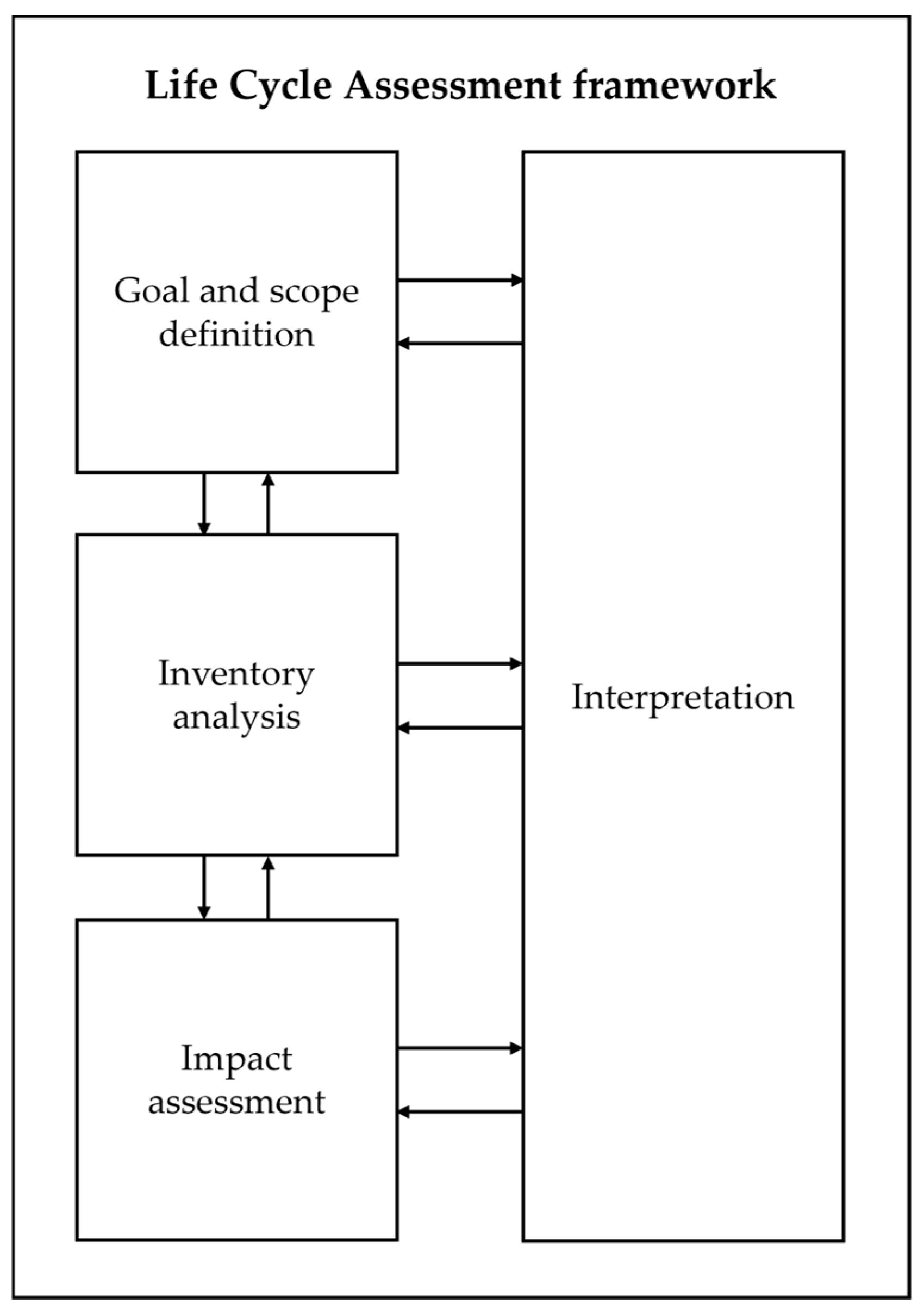
Figure 1. The four iterative phases of an LCA [21].
Environments 13 00078 g001
Figure 2. Pilot plant with the innovative rotating drum fermenter, including main components (Finsterwalder Umwelttechnik GmbH & Co. KG, Bernau am Chiemsee, Germany).
Environments 13 00078 g002
Figure 3. Flow chart of the biogas plant with subsystems.
Environments 13 00078 g003
Figure 4. System boundary of the biogas plant with three levels of analysis.
Environments 13 00078 g004
Table 1. Comparison of options for the functional unit.
Option 1:
1 kWh of Energy Generated
Option 2:
1 Ton of Biogenic Waste
FocusBiogas as an energy source, electricity and/or heat productionEntire material flow, fermentation of biogenic waste into biogas and digestate
ObjectiveInvestigation of the energy efficiency of the system, comparability with other energy sourcesAssessment of the environmental impact of the entire system
System boundaryProcesses contributing to energy generation, system expansion for digestate utilizationHolistic approach that considers all processes
Advantages
  • Simple definition and calculation
  • Comparison with other energy sources, systems and technologies
  • Suitable for energy-related analyses
  • Avoids allocation
  • Enables before-and-after comparison of the original composting process
  • Relevant for other composting plants considering anaerobic digestion upstream
Limitations
  • Requires allocation due to co-product
  • Narrow focus on energy output
  • Environmental impacts are not completely considered
  • More complex modeling
  • Less suitable for comparison with other energy sources
Disclaimer/Publisher’s Note: The statements, opinions and data contained in all publications are solely those of the individual author(s) and contributor(s) and not of MDPI and/or the editor(s). MDPI and/or the editor(s) disclaim responsibility for any injury to people or property resulting from any ideas, methods, instructions or products referred to in the content.