

Monitoring Industrial VOC Emissions and Geospatial Analysis


Abstract
1. Introduction
2. Experiments
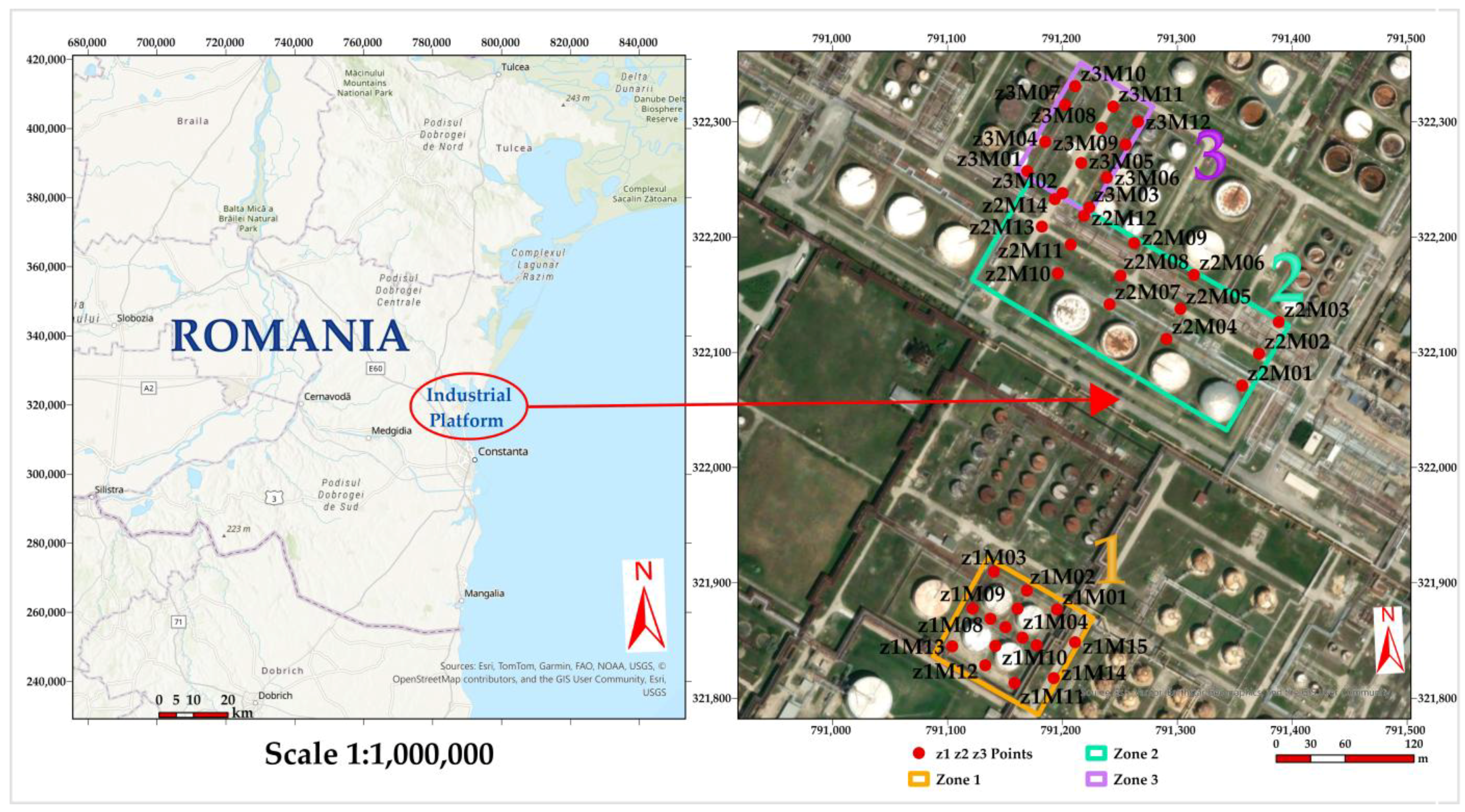
2.1. Study Area
2.2. VOC Emission Sources
- —the relative horizontal and vertical displacement to the reference point (Oxy).
2.3. VOCs Monitoring
2.4. Measurement Devices
- Thermo Scientific TVA-1000B (Waltham, MA, USA)—a dual FID/PID device with measurement ranges of 0.5–2000 ppm (PID) and 0.5–5000 ppm (FID), 3.5 s response time, ±2.5 ppm accuracy, repeatability of ±1% (PID) and ±2% (FID), flow rate of 1000 mL/min, and eight hours operating time. Standard calibration was performed using methane (FID) and isobutylene (PID).
- Dräger Multi-PID 2 (Ion-Science, Fowlmere, UK)—featuring 1 ppb resolution, 0–20,000 ppm measurement range, <2 s response time, standard 100 ppm calibration with customizable isobutylene calibration, 220 mL/min flow rate, and a 10.6 eV PID lamp (additional 11.7 eV lamps available).
2.5. Data Collection
- General Procedures (applied at each monitoring session) include:
- (1)
- Preparation and Instrument Setup
- •
- Accessing the designated monitoring areas via safe routes and in compliance with ATEX/IECEx safety procedures;
- •
- Visual inspection and calibration of the portable analyzers (TVA-1000B and Dräger Multi-PID 2) before each measurement session (FID/PID measurements provide TVOC values, reflecting the total carbon content of volatile compounds, without distinguishing individual chemical species, and methane or isobutylene emissions are negligible in gasoline storage and loading operations).
- (2)
- Validate the Measurement Procedure
- •
- Activating the analyzers and confirming stable responses, allowing 10–15 s for the system to reach steady-state before measurements.
- •
- Performing a brief test run to ensure proper instrument function and procedural readiness.
- (3)
- Field Campaign Stages
- (a)
- Preliminary Testing (September - November 2023) for VOC concentrations around storage tanks (four points) and on the tank roofs (e.g., five points, of which four were located around the central ventilation fittings, and one at the peripheral vent);
- (b)
- Main Testing (December 2023 – August 2024) for VOC concentrations at 41 sampling points (10–15 values per point).
- The experimental data were grouped into four classes of atmospheric conditions:
- Low humidity conditions (relative humidity = 48.72%; wind speed = 2.94 m/s; wind direction = NW; air temperature = 21.29 °C) on 2 November 2023, 13:45–14:20.
- Calm atmosphere (wind speed = 0.5 m/s; wind direction = WSW; air temperature = 10.34 °C; relative humidity = 97%) on 14 December 2023, 10:00–11:00 a.m.
- High humidity conditions (relative humidity = 99%; wind direction = WSW; wind speed = 0.9 m/s; air temperature = 5.27 °C) on 18 January 2024, 08:00–09:00 a.m.
- Variable conditions in short intervals of 5–10 min (wind speed = 2.5 m/s; wind direction = SSE; air temperature = 6.4 °C; relative humidity = 80%), between 14:55 and 15:45 on 20 March 2024.
2.6. Data Analysis
- (1)
- Conversion of the recorded values from ppmV to g/m3, to allow comparison with the thresholds established by EU Decision 2427/2022 concerning the implementation of Best Available Techniques (BAT) for industrial emission control [35]. This decision specifies the reference range for non-methane VOC (NMVOC) concentrations resulting from loading and unloading operations involving volatile petroleum fractions, namely between 0.15 and 10 g/Nm3 (hourly average).
- (2)
- Comparison of VOC concentrations (expressed in mg/m3) recorded as atmospheric emissions with reference values applied in industrial practice. In the absence of an explicit legislative framework regulating maximum admissible VOC emissions at either the national or international level, the classification proposed by Tecamgroup Industrial was used as a reference [38]. This classification distinguishes the following emission levels: low (<0.3 mg/m3), acceptable (0.3–0.5 mg/m3), borderline (0.5–1 mg/m3), and high (1–3 mg/m3).
- (3)
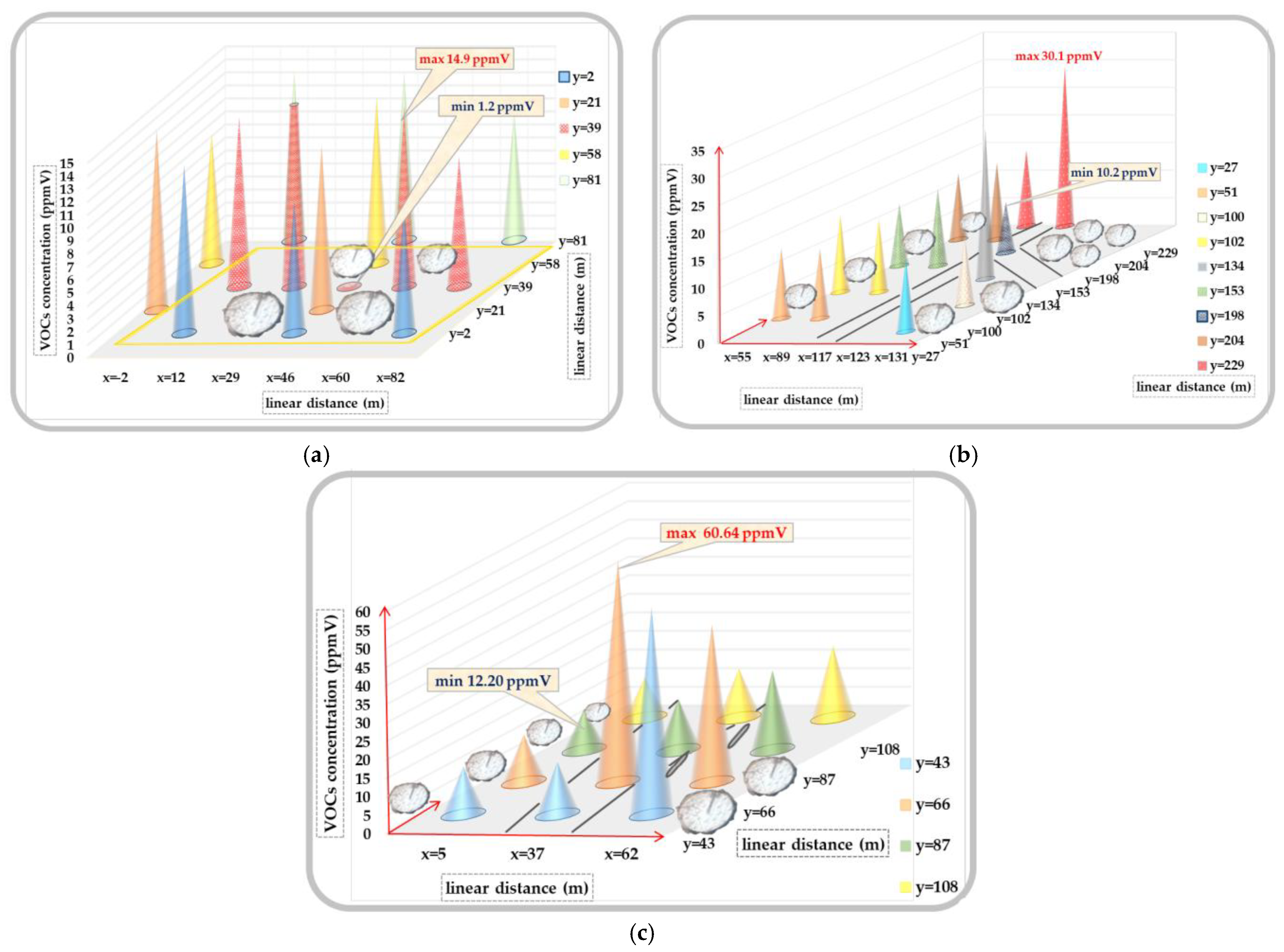
- Descriptive statistical analysis of the data series, including the determination of minimum, maximum, and hourly mean VOC concentrations, aimed at providing an overall characterization of their distribution across the three monitored zones.
- (4)
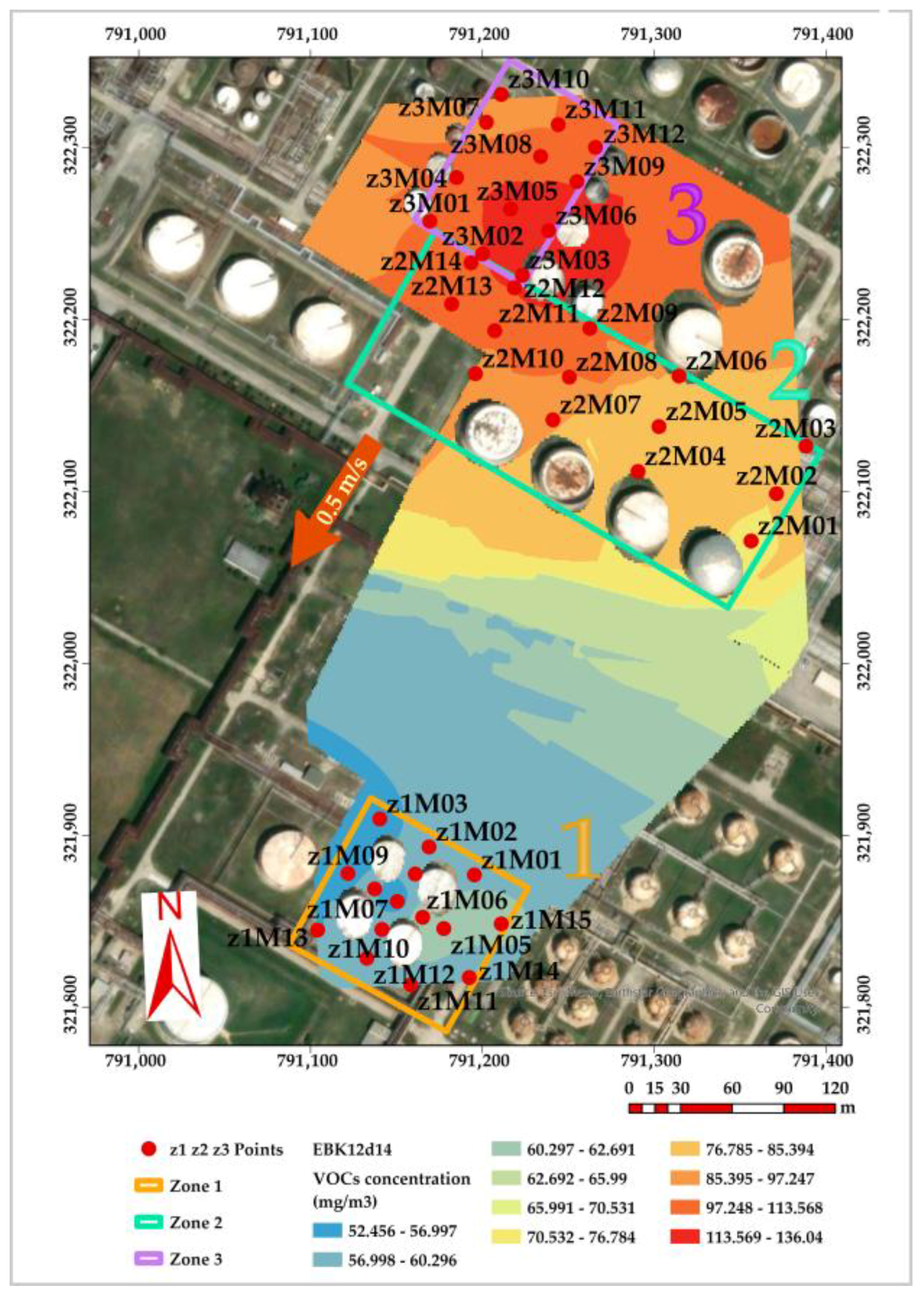
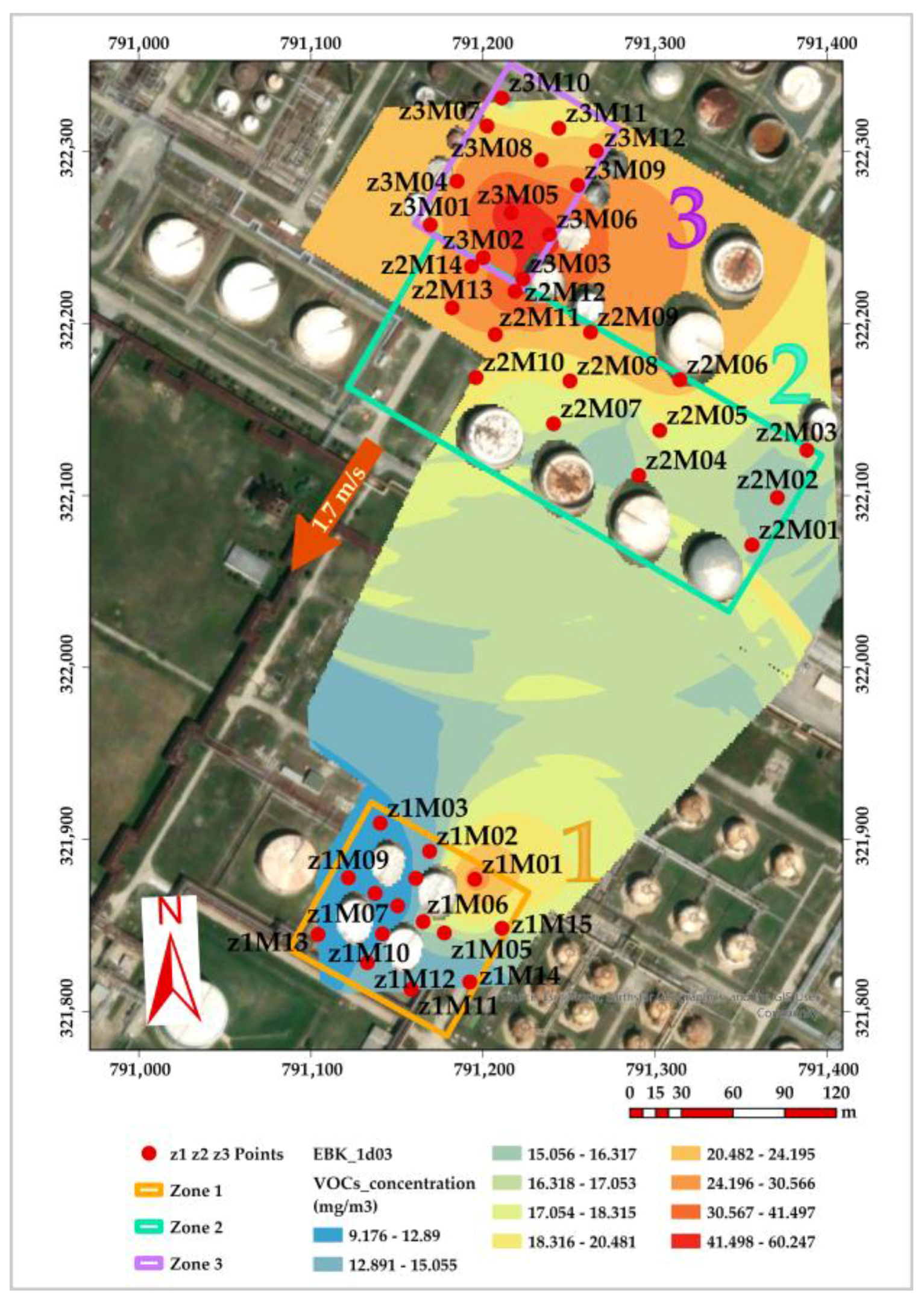
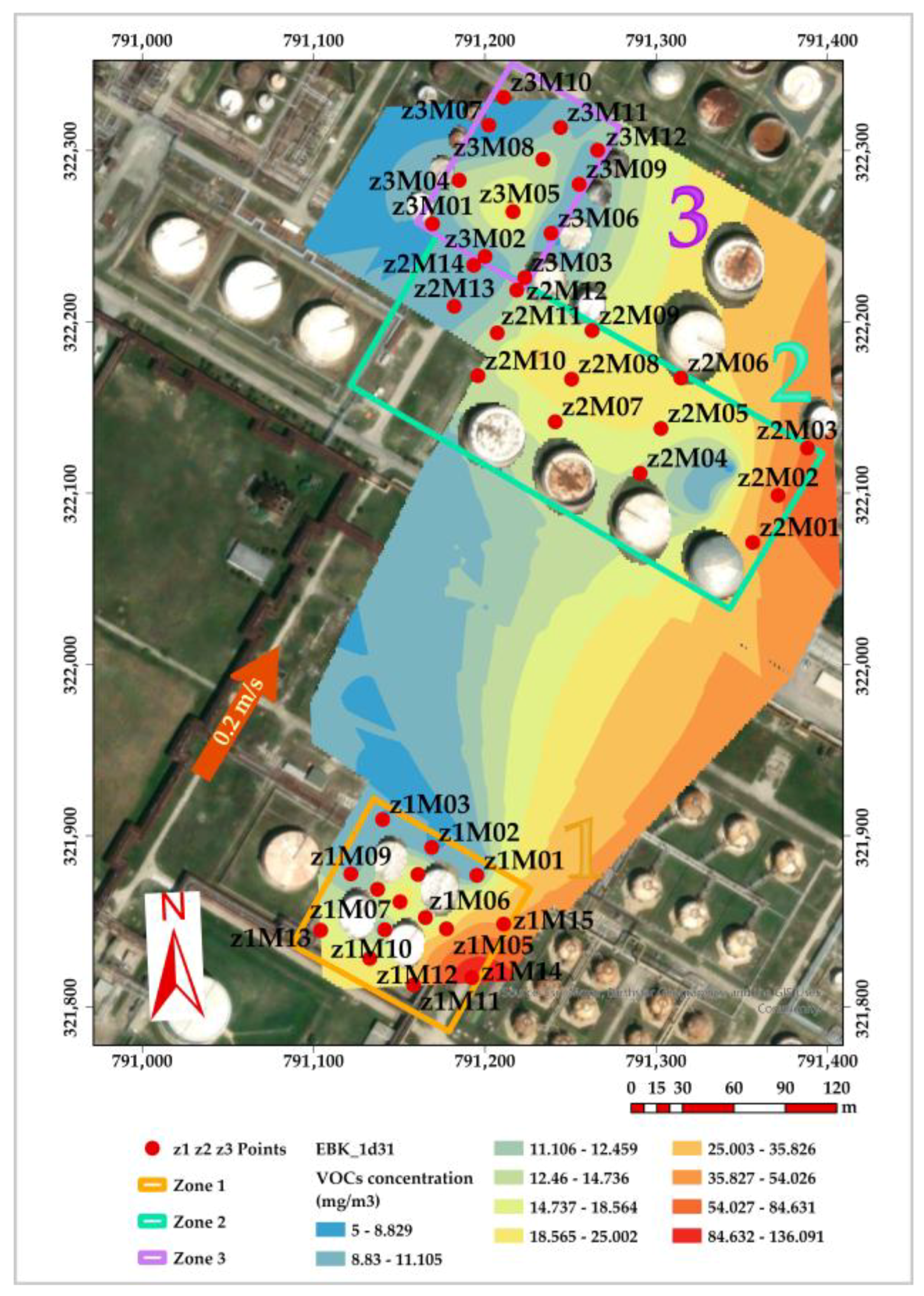
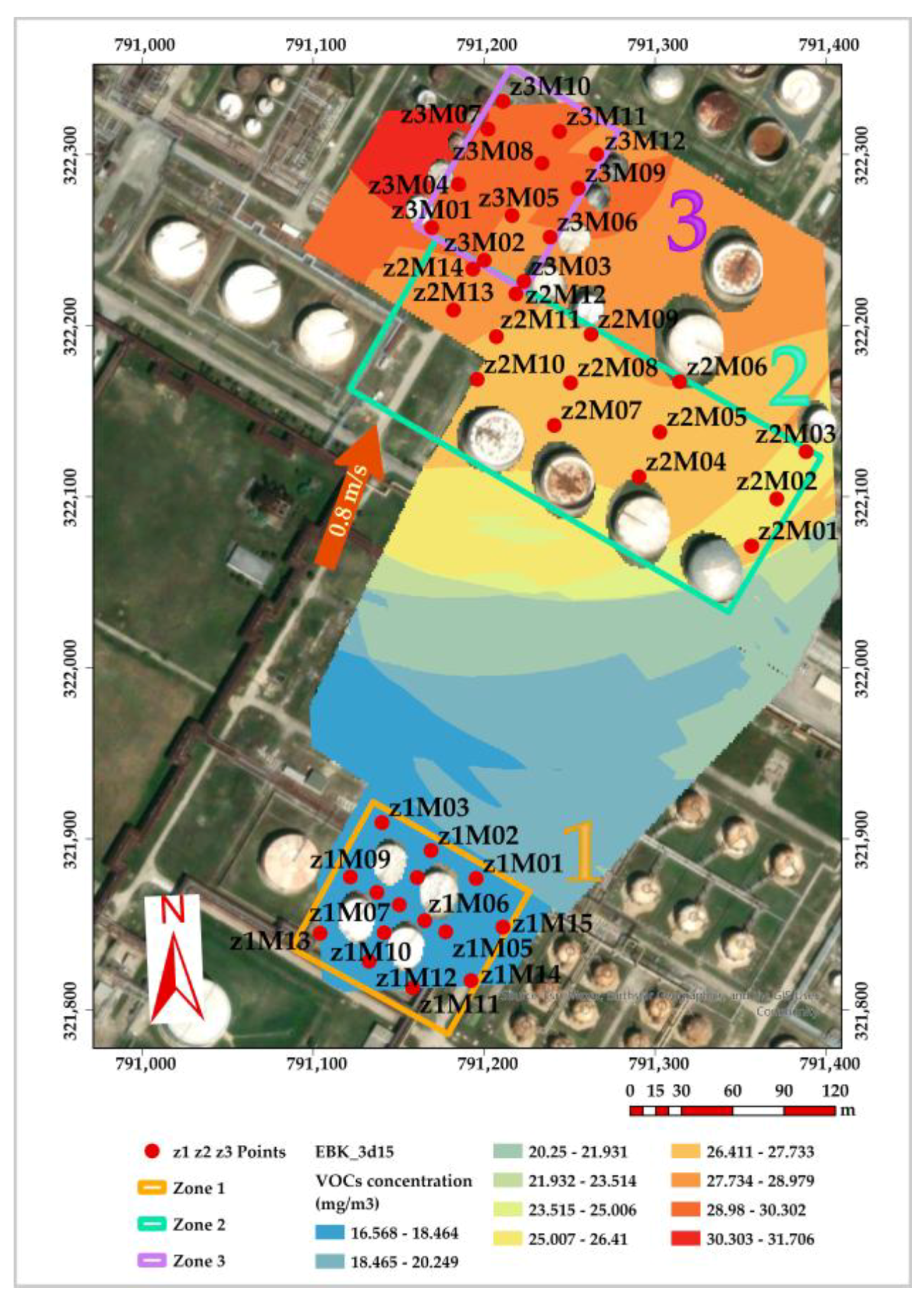
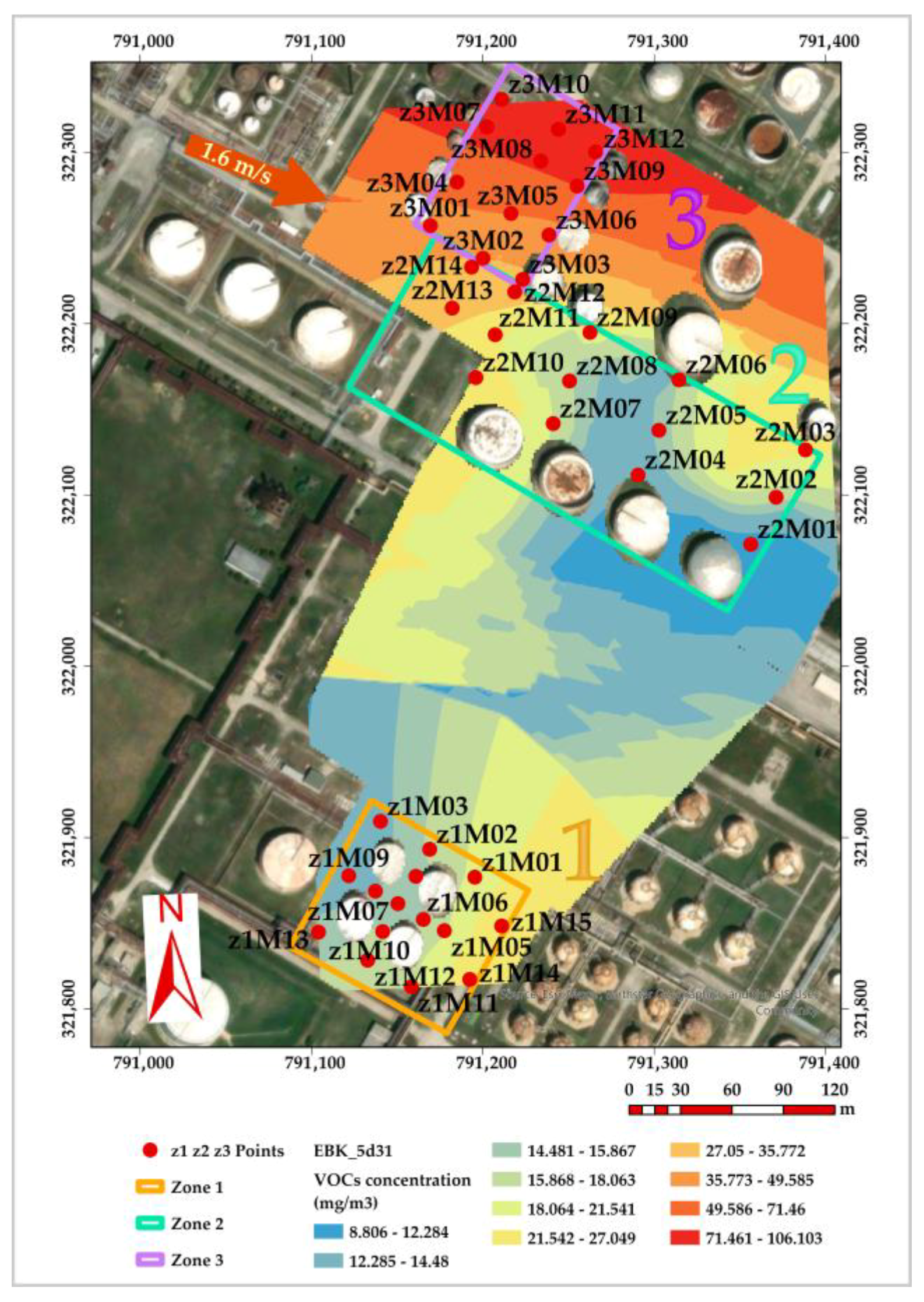
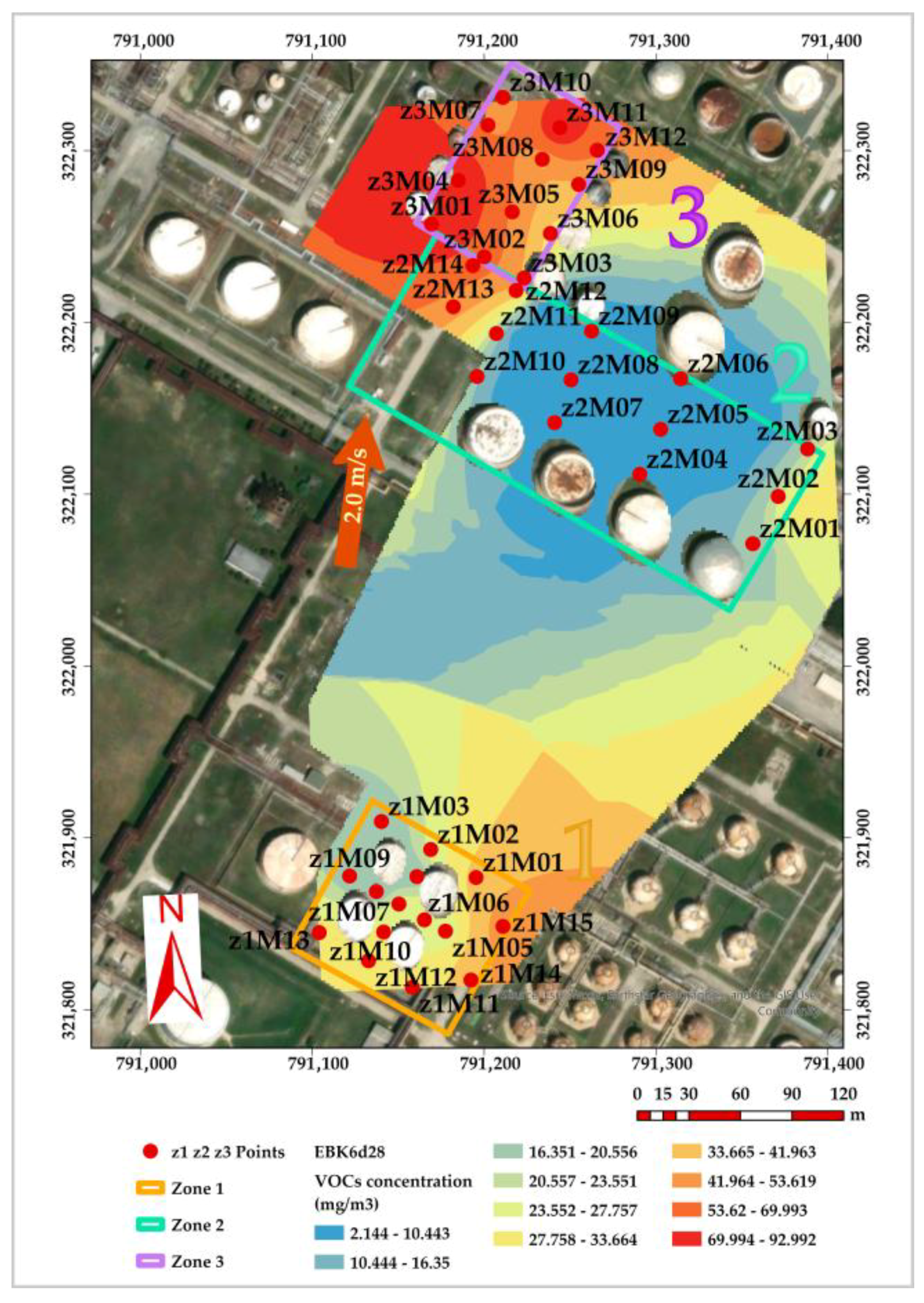
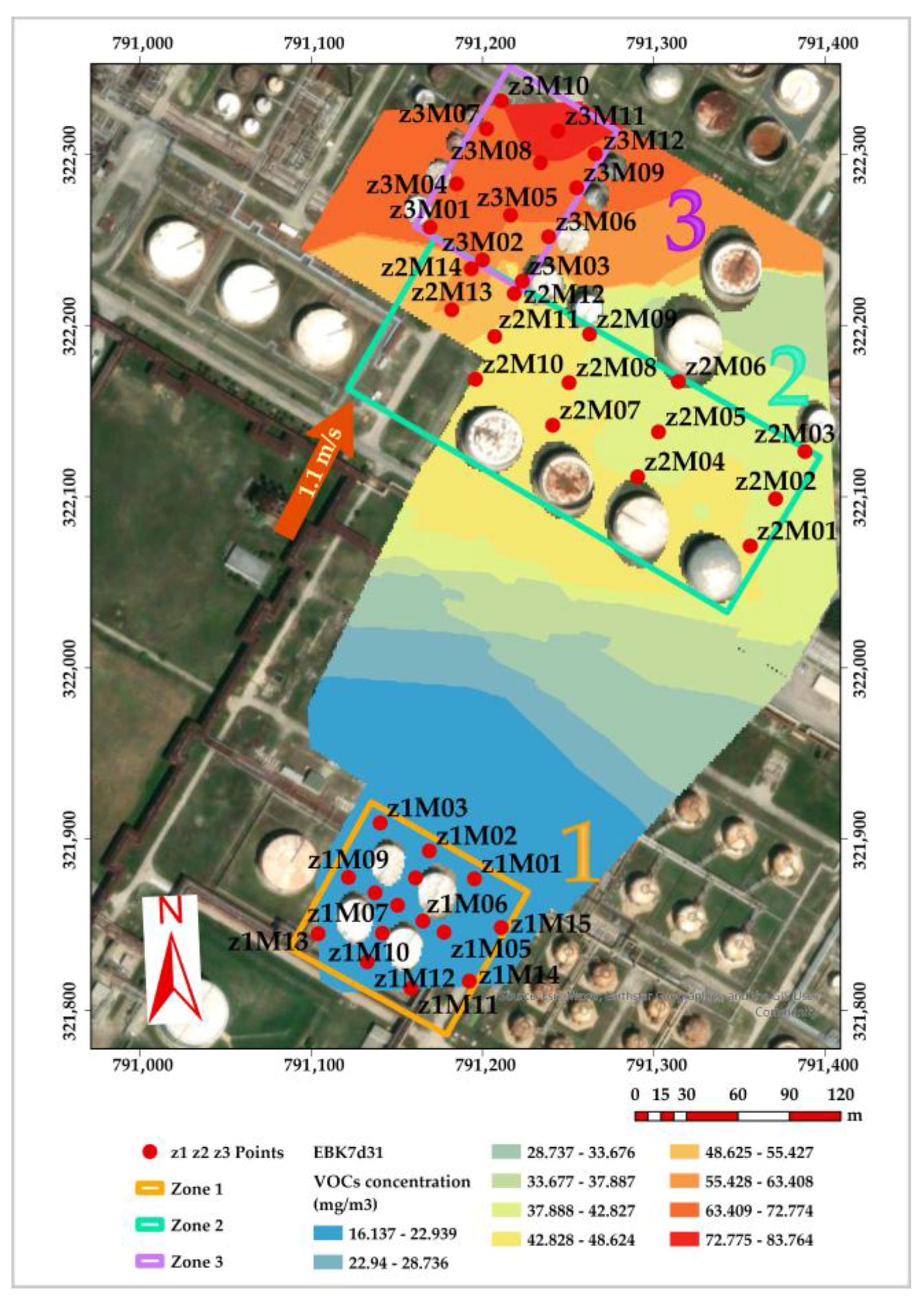
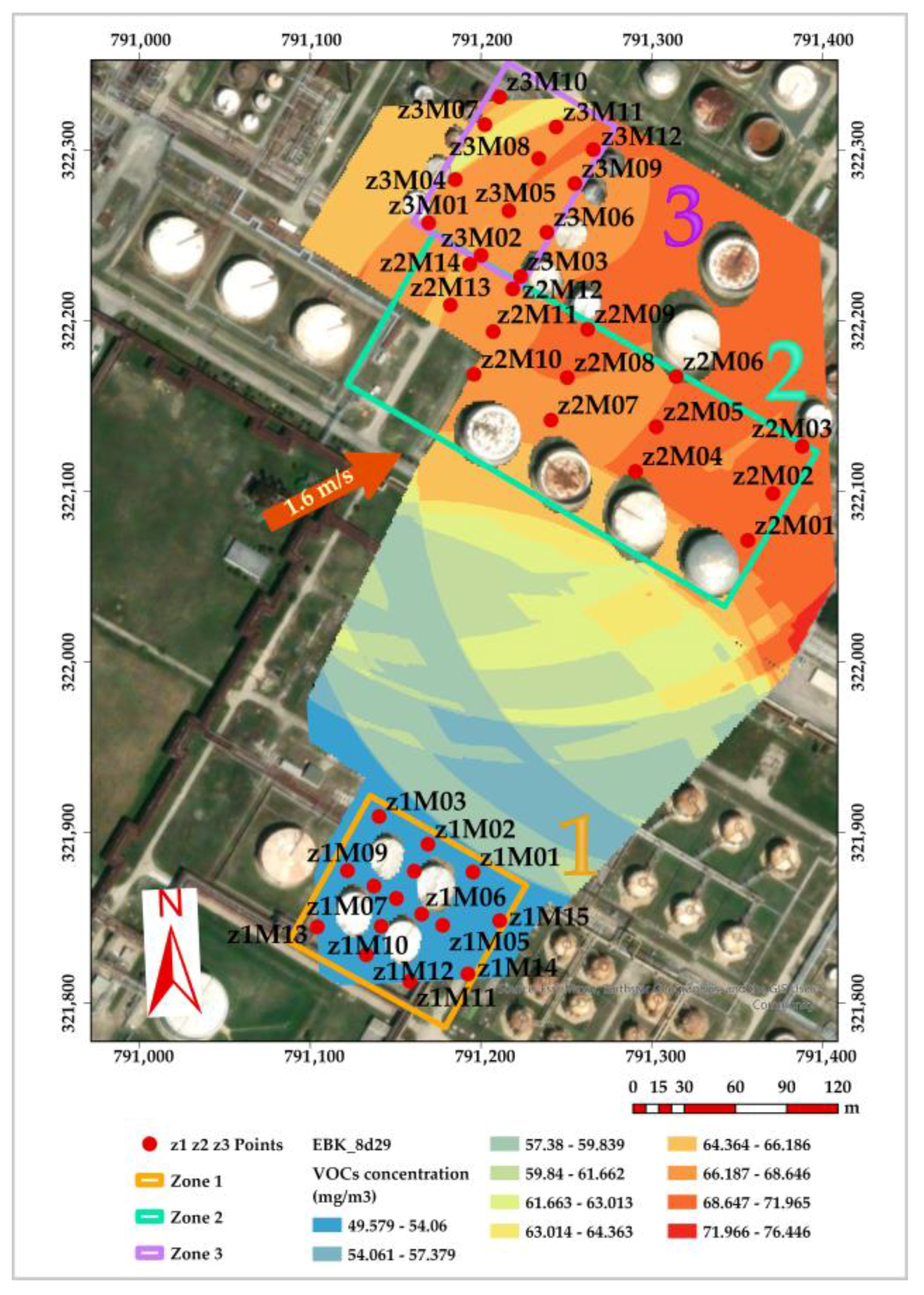
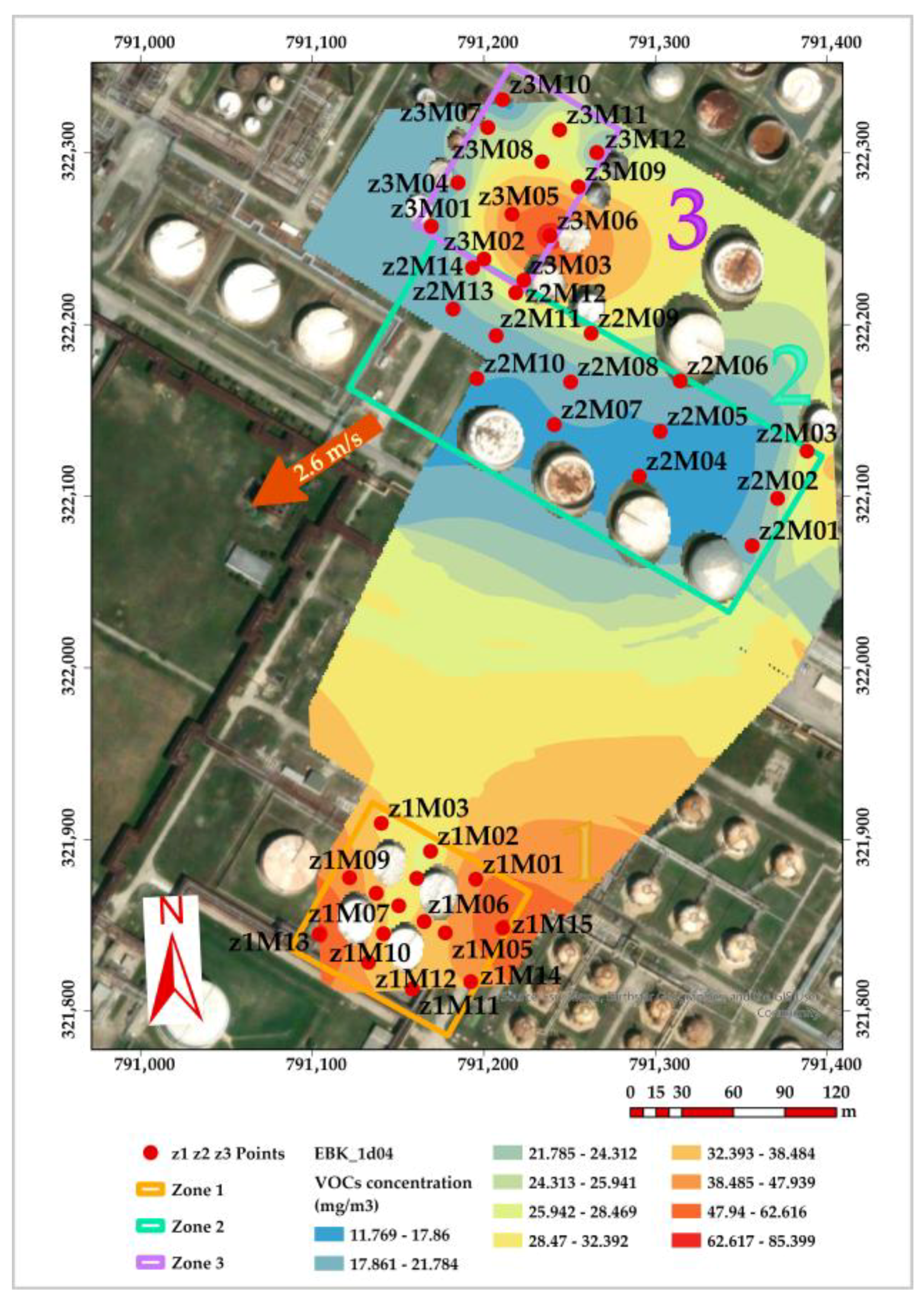
- Selection of days with the highest VOC concentrations for EBK spatial analysis. Of the 125 monitoring days, nine were selected. These comprised four winter days (December and January), two spring days (March and May), and three summer days (June, July, and August) to analyze the spatial distribution of pollution under conditions that significantly affect industrial air quality. Criteria-based selection of nine days used for EBK analysis is presented in Table 3. The selection of days used for EBK spatial analysis was based on a combination of meteorological representativeness, operational conditions, and data completeness. This approach aims to ensure the data reflects typical atmospheric conditions, which should instill confidence in the analysis for the audience.
- (5)
- Spatial interpolation of the data was performed using the EBK method in ArcGIS Pro (version 3.1.0, 2023 Esri Inc., Redlands, CA, USA), taking into consideration the methodological aspects and justifications presented in Section 3.
3. Spatial Analysis Method
Methodology
- = the estimated value at the prediction point, mg/m3;
- = the measured value at point , mg/m3;
- (x,y) = the coordinates of the prediction location;
- = the Kriging weight assigned to each measured point;
- n = the number of measured points in the neighborhood of the interpolation point.
- = semivariogram function;
- h = lag distance (spatial separation between coordinate pairs of points), m;
- = number of pairs of points separated by distance h;
- i, j = the indices of the measured points forming pairs separated by the distance h;
- = the Euclidean distance between the two points, corresponding to the h, m;
- , = the measured values at those locations, mg/m3.
- =
- m = the number of simulations.
- = the EBK variance for all simulations, (mg/m3)2.
4. Results
4.1. VOC Concentration Levels
4.2. Spatial Interpolation with EBK
5. Discussion
5.1. Hourly Variation in VOC Concentrations
5.2. Variation in VOC Concentrations by Measurement Session
5.3. Compliance Evaluation
6. Conclusions
Supplementary Materials
Author Contributions
Funding
Data Availability Statement
Acknowledgments
Conflicts of Interest
References
- Bílek, J.; Maršolek, P.; Bílek, O.; Buček, P. Field Test of Mini Photoionization Detector-Based Sensors—Monitoring of Volatile Organic Pollutants in Ambient Air. Environments 2022, 9, 49. [Google Scholar] [CrossRef] [Scilit]
- Spinelle, L.; Gerboles, M.; Kok, G.; Persijn, S.; Sauerwald, T. Review of Portable and Low-Cost Sensors for the Ambient Air Monitoring of Benzene and Other Volatile Organic Compounds. Sensors 2017, 17, 1520. [Google Scholar] [CrossRef] [Scilit]
- Barbulescu, A.; Barbes, S.B.; Barbes, L.; Dumitriu, C.S. Investigation of VOC Series Collected in a Refinery and Their Classification Based on Statistical Features. Appl. Sci. 2024, 14, 11921. [Google Scholar] [CrossRef] [Scilit]
- Sanda, M.; Dunea, D.; Iordache, S.; Pohoata, A.; Glod-Lendvai, A.-M.; Onutu, I. A Three-Year Analysis of Toxic Benzene Levels and Associated Impact in Ploieşti City, Romania. Toxics 2023, 11, 748. [Google Scholar] [CrossRef] [Scilit]
- Bodor, K.; Szép, R.; Bodor, Z. Time series analysis of the air pollution around Ploiesti oil refining complex, one of the most polluted regions in Romania. Sci. Rep. 2022, 12, 11817. [Google Scholar] [CrossRef] [Scilit]
- Popitanu, C.; Cioca, G.; Copolovici, L.; Iosif, D.; Munteanu, F.-D.; Copolovici, D. The Seasonality Impact of the BTEX Pollution on the Atmosphere of Arad City, Romania. Int. J. Environ. Res. Public Health 2021, 18, 4858. [Google Scholar] [CrossRef] [Scilit] [PubMed]
- Barbulescu, A.; Barbes, L. Statistical assessment and modeling of benzene level in atmosphere in Timiș County, Romania. Int. J. Environ. Sci. Technol. 2022, 19, 817–828. [Google Scholar]
- Ragothaman, A.; Anderson, W.A. Air Quality Impacts of Petroleum Refining and Petrochemical Industries. Environments 2017, 4, 66. [Google Scholar] [CrossRef] [Scilit]
- Borrelli, R.; Cecconi, A.; Oldani, A.; Fuin, F.; Emiliani, R.; Cacciari, F.; Vecchio, A.; Lanari, C.; Villani, F.; Bonfedi, G.; et al. Field Comparison of Active and Passive Soil Gas Sampling Techniques for VOC Monitoring at Contaminated Sites. Environments 2025, 12, 141. [Google Scholar] [CrossRef] [Scilit]
- Schütze, A.; Baur, T.; Leidinger, M.; Reimringer, W.; Jung, R.; Conrad, T.; Sauerwald, T. Highly Sensitive and Selective VOC Sensor Systems Based on Semiconductor Gas Sensors: How to? Environments 2017, 4, 20. [Google Scholar] [CrossRef] [Scilit]
- Spinelle, L.; Gerboles, M.; Kok, G.; Sauerwald, T. Review of Low-Cost Sensors for the Ambient Air Monitoring of Benzene and Other Volatile Organic Compounds; EUR 27713; JRC98368; Publications Office of the European Union: Luxembourg, 2015. [Google Scholar]
- Langford, V.S.; Cha, M.; Milligan, D.B.; Lee, J. Adoption of SIFT-MS for VOC Pollution Monitoring in South Korea. Environments 2023, 10, 201. [Google Scholar] [CrossRef] [Scilit]
- Sidharthan, K.; Gandhimathi, A.; Akshayaa, M. Spatial Variation of Air Pollutants by Using GIS Modelling. Glob. NEST J. 2024, 26, 1–6. [Google Scholar]
- Lee, H.E.; Yoon, S.J.; Kim, J.H. Analysis of VOC Emission Characteristics in the Petrochemical Industry and Study on Fenceline Monitoring Techniques. Atmosphere 2025, 16, 543. [Google Scholar] [CrossRef] [Scilit]
- Rashidi, R.; Faridan, M.; Kamarehie, B.; Azimi, F. Evaluation of the volatile organic compounds (VOCs) concentration in the city of Khorramabad gas stations using AERMOD and ArcGIS. J. Air Pollut. Health 2021, 6, 265–274. [Google Scholar] [CrossRef] [Scilit]
- Choi, K.; Chong, K. Modified Inverse Distance Weighting Interpolation for Particulate Matter Estimation and Mapping. Atmosphere 2022, 13, 846. [Google Scholar] [CrossRef] [Scilit]
- Kianisadr, M.; Ghaderpoori, M.; Jafari, A.; Kamarehie, B.; Karami, M. Zoning of air quality index (PM10 and PM2.5) by Arc-GIS for Khorramabad city, Iran. Data Brief 2018, 19, 1131–1141. [Google Scholar] [CrossRef] [Scilit] [PubMed]
- Kim, M.; Kim, D.; Seo, J.-Y.; Park, D. GIS-Based Analysis of Volatile Organic Compounds in Bucheon, Korea, Using Mobile Laboratory and Proton-Transfer-Reaction Time-of-Flight Mass Spectrometry Methods. Toxics 2024, 12, 511. [Google Scholar] [CrossRef] [Scilit]
- Kim, M.K.; Kim, D.H.; Jang, Y.L.; Lee, J.Y.; Ko, S.W.; Kim, K.H.; Park, C.S.; Park, D.S. Determination of the spatial distribution of air pollutants in Bucheon, Republic of Korea, in winter using a GIS-based mobile laboratory. Toxics 2023, 11, 932. [Google Scholar] [CrossRef] [Scilit]
- Choi, S.W.; Park, S.W.; Cha Yw Lee, S.I.; Yoo, E.C. The charateristics of air pollutants distribution around industrial complexes using real-time mobile atmospheric measuremnt system. J. Korean Soc. Environ. Eng. 2021, 43, 476–489. [Google Scholar] [CrossRef] [Scilit]
- Barbes, S.-B.; Badea, A.C.; Iordache, V. Volatile Organic Compounds Losses Simulation During Storage of Gasoline. IOP Conf. Ser. Earth Environ. Sci. 2023, 1185, 012009. [Google Scholar]
- Maji, S.; Yadav, R.; Beig, G.; Gunthe, S.S.; Ojha, N. On the Processes Governing the Variability of PTR-MS Based VOCs and OVOCs in Different Seasons of a Year over Hillocky Mega City of India. Atmos. Res. 2021, 261, 105736. [Google Scholar] [CrossRef] [Scilit]
- Enciso-Díaz, W.C.; Zafra-Mejía, C.A.; Hernández-Peña, Y.T. Global Trends in Air Pollution Modeling over Cities Under the Influence of Climate Variability: A Review. Environments 2025, 12, 177. [Google Scholar] [CrossRef] [Scilit]
- Zimmerman, J.H.; Schumacher, B.; Lutes, C.C.; Cosky, B.; Hayes, H. Long-Term Performance of Passive Volatile Organic Compounds (VOCs) Samplers for Indoor Air. Environments 2025, 12, 267. [Google Scholar] [CrossRef] [Scilit] [PubMed]
- Marzocca, A.; Di Gilio, A.; Farella, G.; Giua, R.; De Gennaro, G. Indoor Air Quality Assessment and Study of Different VOC Contributions within a School in Taranto City, South of Italy. Environments 2017, 4, 23. [Google Scholar] [CrossRef] [Scilit]
- Dinu, I. Considerations concerning the possibility of contamination in the area of the Poarta Albă–Midia–Năvodari Canal. GeoEcoMarina 2009, 15, 63–70. [Google Scholar]
- American Petroleum Institute (API). API Standard 650: Welded Tanks for Oil Storage, 13th ed.; API Publishing Services: Washington, DC, USA, 2020. [Google Scholar]
- National Agency for Cadastre and Land Registration (ANCPI). Romanian National Geodetic Reference System—Stereo 70 Projection (Dealul Piscului 1970, EPSG:31700); ANCPI: Bucharest, Romania, 2019; Available online: https://epsg.io/31700 (accessed on 15 January 2025).
- Whitaker, D.; Oliver, K.; Turner, D.; MacGregor, I.; Shelow, D. Method TO-15A: Determination of Volatile Organic Compounds (VOCs) in Air Collected in Specially-Prepared Canisters; U.S. EPA Office of Research and Development: Washington, DC, USA, 2019. Available online: https://nepis.epa.gov/Exe/ZyPURL.cgi?Dockey=P100YDPO.TXT (accessed on 26 September 2025).
- BS EN 14662-1:2024; Ambient Air Quality—Standard Method for Measurement of Benzene Concentrations—Part 1: Pumped Sampling Followed by Thermal Desorption and Gas Chromatography. British Standards Institution: London, UK, 2024.
- Council Decision (EU) 2017/1757 of 17 July 2017 on the Acceptance, on Behalf of the European Union, of an Amendment to the 1999 Protocol to the 1979 Convention on Long-Range Transboundary Air Pollution to Abate Acidification, Eutrophication and Ground-Level Ozone. Off. J. Eur. Union 2017, L248, 3–5. Available online: https://eur-lex.europa.eu/legal-content/EN/TXT/PDF/?uri=CELEX:32017D1757 (accessed on 20 September 2025).
- Law No. 264 of 20 December 2017 on Establishing Technical Requirements for Limiting Emissions of Volatile Organic Compounds (VOCs) Resulting from the Storage of Petrol and Its Distribution from Terminals to Service Stations, as well as During Vehicle Refuelling at Service Stations Official Monitor of Romania 2017, Part I, No. 1052. Available online: https://legislatie.just.ro/Public/DetaliiDocumentAfis/196201 (accessed on 20 September 2025).
- European Parliament and Council of the European Union. Directive 2014/34/EU of 26 February 2014 on the Harmonisation of the Laws of the Member States Relating to Equipment and Protective Systems Intended for Use in Potentially Explosive Atmospheres (Recast). Off. J. Eur. Union 2014, L96, 309–356. Available online: https://eur-lex.europa.eu/eli/dir/2014/34/oj/eng (accessed on 8 November 2025).
- International Electrotechnical Commission (IEC). IECEx System—IEC System for Certification to Standards Relating to Equipment for Use in Explosive Atmospheres. In IECEx 02: Rules of Procedure; IEC: Geneva, Switzerland, 2023; Available online: https://www.iecex.com (accessed on 8 November 2025).
- EU. Commission Implementing Decision (EU) 2022/2427 of 6 December 2022 Establishing the Best Available Techniques (BAT) Conclusions, Under Directive 2010/75/EU of the European Parliament and of the Council on Industrial Emissions, for Common Waste Gas Management and Treatment Systems in the Chemical Sector. 2022. Available online: https://eur-lex.europa.eu/legal-content/RO/TXT/?uri=CELEX%3A32022D2427 (accessed on 24 January 2025).
- Aguiar, E.F.K.; Roig, H.L.; Mancini, L.H.; Botelho de Carvalho, E.N.C. Low-Cost Sensors Calibration for Monitoring Air Quality in the Federal District—Brazil. J. Environ. Prot. 2015, 6, 173–189. [Google Scholar] [CrossRef]
- Kezic, S.; Nunez, R.; Babić, Ž.; Hallmann, S.; Havmose, M.S.; Johansen, J.D.; John, S.M.; Macan, M.; Symanzik, C.; Uter, W.; et al. Occupational Exposure of Hairdressers to Airborne Hazardous Chemicals: A Scoping Review. Int. J. Environ. Res. Public Health 2022, 19, 4176. [Google Scholar] [CrossRef] [Scilit]
- Tecam. VOCs-TECAM. 2024. Available online: https://tecamgroup.com/category/vocs/ (accessed on 10 March 2025).
- ArcGIS Pro. EBK Regression Prediction (Geostatistical Analyst). Available online: https://pro.arcgis.com/en/pro-app/3.4/tool-reference/geostatistical-analyst/ebk-regression-prediction.htm (accessed on 15 January 2025).
- Esri. Empirical Bayesian Kriging (Geostatistical Analyst). ArcGIS Pro Documentation. Available online: https://pro.arcgis.com/en/pro-app/3.4/tool-reference/geostatistical-analyst/empirical-bayesian-kriging.htm (accessed on 1 October 2025).
- Esri. What Is Empirical Bayesian Kriging?—ArcGIS Pro. ArcGIS Pro Documentation. Available online: https://pro.arcgis.com/en/pro-app/latest/help/analysis/geostatistical-analyst/what-is-empirical-bayesian-kriging-.htm (accessed on 1 October 2025).
- Krivoruchko, K. Evaluation of Empirical Bayesian Kriging. Spat. Stat. 2019, 29, 81–100. [Google Scholar] [CrossRef] [Scilit]
- Cetin, E.; Odabasi, M.; Seyfioglu, R. Ambient volatile organic compound (VOC) concentrations around a petrochemical complex and a petroleum refinery. Sci. Total Environ. 2003, 312, 103–112. [Google Scholar] [CrossRef] [Scilit] [PubMed]
- Liu, Y.; Shao, M.; Lu, S.; Chang, C.; Wang, J.-L.; Chen, G. Volatile Organic Compound (VOC) measurements in the Pearl River Delta (PRD) region, China. Atmos. Chem. Phys. 2008, 8, 1531–1545. [Google Scholar] [CrossRef] [Scilit]
- Sadeghi, B.; Pouyaei, A.; Choi, Y.; Rappenglueck, B. Influence of seasonal variability on source characteristics of VOCs at Houston industrial area. Atmos. Environ. 2022, 277, 119077. [Google Scholar] [CrossRef] [Scilit]
- Baltrenas, P.; Baltrenaite, E.; Sereviciene, V.; Pereira, P. Atmospheric BTEX concentrations in the vicinity of the crude oil refinery of the Baltic region. Environ. Monit. Assess. 2011, 182, 115–127. [Google Scholar] [CrossRef] [Scilit]
- Lee, D.K.; Park, J.-M.; Jang, J.-H.; Jung, J.-S.; Kim, M.-K.; Heo, J.; Park, D. Spatiotemporal Assessment of Benzene Exposure Characteristics in a Petrochemical Industrial Area Using Mobile-Extraction Differential Optical Absorption Spectroscopy (Me-DOAS). Toxics 2025, 13, 655. [Google Scholar] [CrossRef] [Scilit]
- Barbeş, S.-B.; Bărbulescu, A.; Barbeș, L. Assessing Benzene and TVOC Pollution and the Carcinogenic and Noncarcinogenic Risks to Workers in an Industrial Plant in Southeastern Romania. Toxics 2024, 12, 187. [Google Scholar] [CrossRef] [Scilit]
- Horiba. Technical Documentation for FID and PID Detectors. 2024. Available online: https://www.horiba.com/int/process-and-environmental/measuring-principles/fid/ (accessed on 25 May 2025).
- RO Government. Law 104/2011 on Ambient Air Quality. Law 264/2017 on Air Quality Standards. Romania. Available online: https://www.calitateaer.ro/public/home-page/?__locale=en (accessed on 15 January 2025).
- European Parliament and Council. Directive 2010/75/EU on Industrial Emissions (Integrated Pollution Prevention and Control), Official Journal of the European Union. 2010. Available online: https://eur-lex.europa.eu/legal-content/EN/TXT/?uri=CELEX%3A02010L0075-20240804 (accessed on 25 September 2025).
- Oil Refinery Emissions, A Cross-Border Impact Issue. Available online: https://kunakair.com/oil-refinery-emissions/ (accessed on 15 December 2025).
- Refinery Air Emissions Management. Guidance Document for the Oil and Gas Industry. Available online: https://www.ipieca.org/resources/refinery-air-emissions-management (accessed on 15 December 2025).
- Bărbulescu, A.; Barbeş, L. Characterization of the Concentrations of Volatile Organic Compounds in the Romanian Littoral using General Regression Neural Networks: A Case Study. Anal. Lett. 2016, 49, 387–399. [Google Scholar] [CrossRef] [Scilit]
- Jovanovic Andersen, Z.; Badyda, A.; Tzivian, L.; Dzhambov, A.M.; Paunovic, K.; Savic, S.; Jacquemin, B.; Dragic, N. Air Pollution Inequalities in Europe: A Deeper Understanding of Challenges in Eastern Europe and Pathways Forward Towards Closing the Gap between East and West. Environ. Epidemiol. 2025, 9, e383. [Google Scholar] [CrossRef] [Scilit]





| Site No. | Site Area (m2) | No. of Sampling Points | No. Tanks | Tank Capacity (m3) | Petroleum Product |
|---|---|---|---|---|---|
| 1 | 8100 | 15 | 4 | 5000 | gasoline |
| 2 | 30,000 | 14 | 4 | 10,000 | |
| 3 | 6700 | 12 | 2 | 3500 |
| Date/Period | Time | Measurement Objectives |
|---|---|---|
| 8 September 2023 | 01–02 p.m. | 9 points at a single tank: 5 points on the tank’s roof; 4 points around the tank |
| 2 November 2023 | 02–03 p.m. | 16 points around four tanks |
| 14 December 2023 | 10–11 a.m. | 41 points around tanks at 1.4 m above ground level: zone 1–15 points (z1M01 to z1M15); zone 2–14 points (z2M01 to z2M14); zone 3–12 points (z3M01 to z3M12). |
| January 2024 (20 days) | 08–12 a.m. | |
| March 2024 (21 days) | ||
| May 2024 (20 days) | 08–11 a.m. | |
| June 2024 (19 days) | ||
| July 2024 (23 days) | ||
| August 2024 (21 days) |
| No. | Season | Day | Time (a.m.) | Windward Direction | Wind Speed (m/s) | Wind Variability | AT/AH * (°C/%) | Atmospheric Stability | Tank Operational State |
|---|---|---|---|---|---|---|---|---|---|
| D1. | winter | 14 December 2023 | 10–11 | WSW | 0.5 | low | 10.4/97 | very stable | idle mode |
| D2. | winter | 3 January 2024 | 08–09 | WSW | 1.7 | moderate | 3.7/94 | neutral | idle mode |
| D3. | winter | 4 January 2024 | 08–09 | W | 2.6 | moderate | 6.4/95 | slightly unstable | draining |
| D4. | winter | 31 January 2024 | 09–10 | NNE | 0.2 | low | −0.3/99 | very stably | loading |
| D5. | spring | 15 March 2024 | 08–09 | NNE | 0.8 | low | 5.6/93 | weakly stable | revision |
| D6. | spring | 31 May 2024 | 09–10 | SSE | 1.6 | moderate | 20.6/89 | neutral | idle mode |
| D7. | summer | 28 June 2024 | 10–11 | NNE | 2.0 | moderate | 26.6/61 | slightly unstable | loading |
| D8. | summer | 31 July 2024 | 09–10 | NNE | 1.1 | moderate | 24.9/56 | neutral | draining |
| D9. | early autumn | 29 August 2024 | 10–11 | ENE | 1.6 | moderate | 20.0/99 | neutral | revision |
| Zone | Season | Day | Concentration (mg/m3) | Meteorological Condition | Dominant VOC Spatial Pattern | Key Factors |
|---|---|---|---|---|---|---|
| z1 | winter | 31 January 2024 | >160 | stable (thermal inversion) | accumulation near emission sources | wind speed—0.2 m/s air temperature < 0 °C |
| z1 | summer | 31 July 2024 | <30 | neutral | low and spatially uniform concentrations | reduced influence of sources |
| z2 | winter | 14 December 2023 | 70–97 | stable | moderate accumulation around tanks | low wind speed and proximity to tanks |
| z2 | late summer | 29 August 2024 | >70 | neutral, high humidity | accumulation in East sector | reduced vertical dispersion |
| z3 | winter | 14 December 2023 | 113–136 | stable | hotspot in the NW sector | loading activities |
| z3 | early spring | 15 March 2024 | 125 | weakly stable | localized intensity core near tanks | local source dominance |
| z3 | summer | 28 June 2024 | >50 | dynamic | high-concentration areas in the NW sector | operational emissions outweigh dispersion |
Disclaimer/Publisher’s Note: The statements, opinions and data contained in all publications are solely those of the individual author(s) and contributor(s) and not of MDPI and/or the editor(s). MDPI and/or the editor(s) disclaim responsibility for any injury to people or property resulting from any ideas, methods, instructions or products referred to in the content. |
© 2026 by the authors. Licensee MDPI, Basel, Switzerland. This article is an open access article distributed under the terms and conditions of the Creative Commons Attribution (CC BY) license.
Share and Cite
Barbes, S.B.; Badea, A.C.; Iordache, V. Monitoring Industrial VOC Emissions and Geospatial Analysis. Environments 2026, 13, 41. https://doi.org/10.3390/environments13010041
Barbes SB, Badea AC, Iordache V. Monitoring Industrial VOC Emissions and Geospatial Analysis. Environments. 2026; 13(1):41. https://doi.org/10.3390/environments13010041
Chicago/Turabian StyleBarbes, Sebastian Barbu, Ana Cornelia Badea, and Vlad Iordache. 2026. "Monitoring Industrial VOC Emissions and Geospatial Analysis" Environments 13, no. 1: 41. https://doi.org/10.3390/environments13010041
APA StyleBarbes, S. B., Badea, A. C., & Iordache, V. (2026). Monitoring Industrial VOC Emissions and Geospatial Analysis. Environments, 13(1), 41. https://doi.org/10.3390/environments13010041