
Article

Balancing Durability and Sustainability: Field Performance of Plastic and Biodegradable Materials in Eastern Oyster Breakwater Reef Restoration

1
Honors College, University of Houston, Houston, TX 77204, USA
2
Galveston Bay Foundation, Kemah, TX 77565, USA
*
Author to whom correspondence should be addressed.
Environments 2026, 13(1), 42; https://doi.org/10.3390/environments13010042

Submission received: 29 September 2025 / Revised: 26 December 2025 / Accepted: 7 January 2026 / Published: 9 January 2026
(This article belongs to the Special Issue Ecological Restoration in Marine Environments)

Abstract

With the historical and consistent population declines of the eastern oyster (Crassostrea virginica), restoration projects commonly deploy plastic bags (polyethylene) filled with recycled oyster cultch. Oyster cultch bags are utilized as material to stabilize sediment and provide a substrate for oyster larval recruitment, which provides a habitat for associated organisms and decreases marsh erosion. In addition to the plastic mesh bags utilized to contain oyster cultch, this study also utilized three different biodegradable oyster bag material types (biopolymer, basalt, and cellulose) to determine (1) the influence of bag type on oyster population dynamics, (2) bag durability over time (<1 year), and (3) the cost–benefits for each bag type, calculated via a Weighted Product Model (WPM), within a subsection of the West Galveston Bay Estuary, Texas. For bag type, the results suggested that plastic bags were the most resilient, followed by biopolymer, basalt, and cellulose bags. Plastic bags supported the highest oyster abundance and growth, demonstrating their effectiveness for establishing breakwater reefs. The WPM analysis indicated that plastic bags are inexpensive to deploy and, due to their longevity, are easily monitored over time. However, degradation of plastic bags may introduce microplastics into the environment, posing ingestion risks for bivalves. Whereas the nature-based solutions degraded quickly, inhibiting continuous monitoring, yet the loose cultch may facilitate the natural formation of reefs over time. The results highlight tradeoffs between maximizing oyster recruitment and growth, minimizing environmental contamination, and balancing ecological performance with material sustainability in oyster reef restoration practices.

1. Introduction

Once abundant in estuarine and coastal ecosystems along North America’s Atlantic Coast and the Gulf of Mexico, populations of the eastern oyster (Crassostrea virginica) have experienced significant declines due to various environmental pressures, such as habitat destruction/loss, pollution, disease, parasitism, storm events, and climate change [1,2,3,4,5,6,7]. Further, eastern oysters have long been harvested as a food source [8,9], and their shells have been utilized as a construction material [10,11]. Thus, the mortality of mature oysters coupled with the removal of shells from the system, through harvesting or other environmental factors (e.g., sediment deposition) [9,12,13,14], perpetuates population declines. In the United States, the size at which oysters are harvested for human consumption varies by state, but oysters are generally harvested at 2.5–3 in (63.5–76 mm). This minimum size also coincides with an oyster’s protandric transition from male to female; therefore, the harvest size can potentially reduce a population’s egg production and subsequently reduce spat availability [15,16]. Mature oysters also experience mortality due to other environmental factors, such as extreme rainfall events and sedimentation, which further limits gametic production and substrate availability [3,12,17,18,19]. Regardless of the mechanism, the diminished gametic contribution and/or the removal of a natural substrate provided by other oysters has led to a decline in populations of the eastern oyster [6].
With declining oyster populations, reef restoration has become a common practice to increase oyster populations and maintain or increase ecological benefits, such as increasing water quality, sediment stabilization, energy sequestration or mitigation, habitat provision, and for a variety of economic benefits [6,12,20,21,22,23,24,25,26,27]. Throughout the native range of the eastern oyster along the U.S. Atlantic and Gulf Coasts, reef restoration projects have utilized a variety of material [28] and practices [12,14,20,23] to promote larval settlement, reef development, and coastal protection [29,30,31,32]. Recycled oyster cultch (shells), which is generally left in the sun for ~ 6 months and cured to prevent the transmission of pathogens [33], is the preferred substrate deployed by restoration practitioners due to its structural complexity and chemical composition which supports greater spat settlement and post-settlement survivorship [30,32,34,35]. However, logistical constraints and limited availability of sun-cured shells have increased the use of alternative materials, including limestone, concrete, and engineered substrates [12,20,21,28,32,36], which can also be deployed in different environments. Within the subtidal environment, the reef materials are often directly placed, without containment, onto the open-bottom habitat to create reef mounds [31,37,38]. In contrast, restoration within an intertidal environment comprises loose shells deployed directly onto the open-bottom habitat or contained in bags to construct breakwater reefs [17,39,40,41].
Oyster breakwater reefs, which are considered a type of living shoreline, are often constructed by filling mesh bags with cured oyster cultch and placed parallel to eroding shorelines to prevent marsh and coastal erosion [17,39,40,41,42,43,44]. These reefs are placed in front of marshes to maximize shoreline protection by mitigating wave energy [29] and to increase oyster abundance, size, and associated macrofauna communities [45,46,47]. The overarching goal for this restoration method is to have the bag material, which is often plastic material, break down over time, only leaving structured oyster shell as a nucleus for continued reef development [48,49,50]. Given that bivalves, such as oysters, are size-selective particle feeders [51], the growing body of literature has highlighted the negative impacts of microplastic accumulation within the tissue of bivalves [52,53,54]. Within bivalves, sequestered microplastics negatively impact the organism’s physiology, ecological function, and potentially contribute to microplastic accumulation in higher trophic levels [53,55,56]. To balance the positive benefits of restoring oyster populations with the potential negative impacts of introducing microplastics into the local system, recent research has been focused on utilizing non-plastic and biodegradable bags as an alternative [44,57,58]. Therefore, the objective of this study was to utilize four different types of breakwater bag material placed on a previously constructed breakwater reef to determine (1) the sustainability of the bag over time (<1 year), (2) how the bag type influenced oyster population dynamics, and (3) the cost versus benefit of the different bag materials.

2. Materials and Methods

2.1. Study Site and Bag Deployment

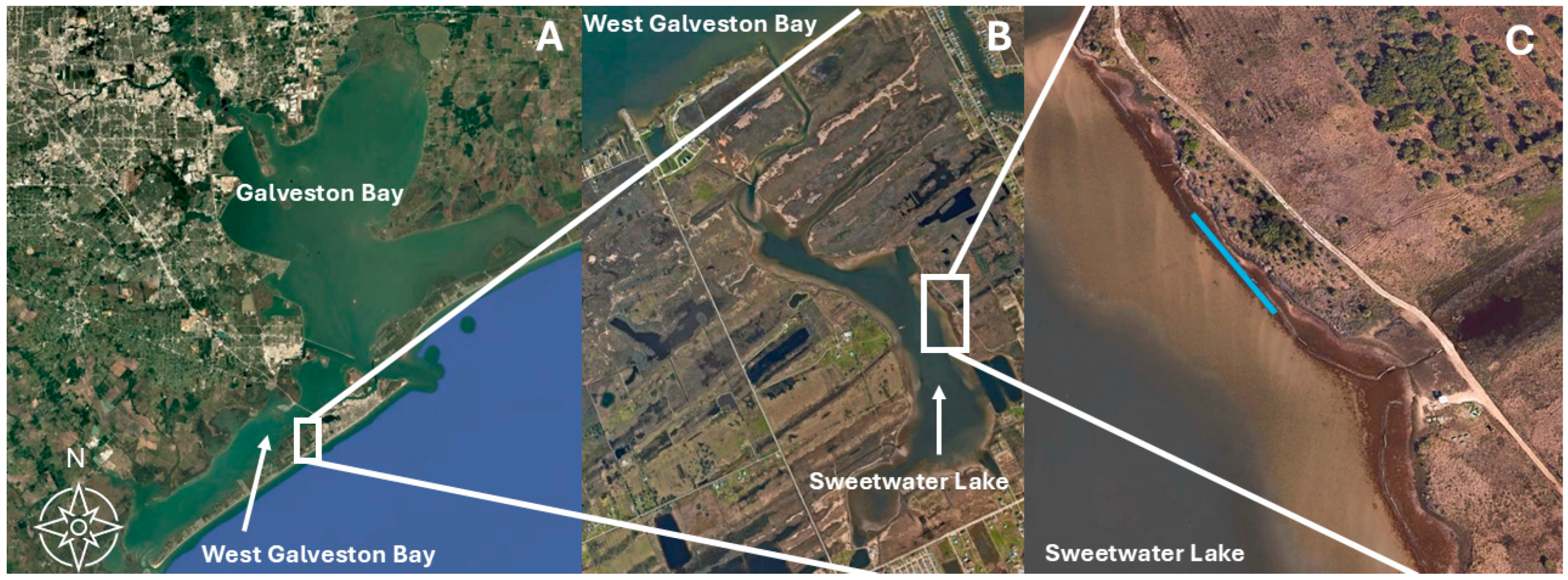
Utilizing Sweetwater Lake, Galveston, Texas, as a study site (Figure 1), four different bag material types (plastic, biopolymer, basalt, and cellulose—Table 1) filled with sun-cured oyster shells (n = 25 of each bag type) were haphazardly distributed on top of an existing breakwater reef, and all bags were at the same tidal height. The Galveston Bay estuary (Figure 1A) is a relatively shallow estuary (~3 m), characterized by a mixed and mainly diurnal tidal regime, and is a meso/polyhaline system, with salinity typically ranging from 15 to 32 PSU [59,60]. A part of the Galveston Bay estuary (Figure 1A), Sweetwater Lake (Figure 1B), is an anthropogenically constructed embayment connected to West Galveston Bay (Figure 1) and has historically experienced marsh erosion [12,17,61]. Since 2014, oyster breakwater reefs, consisting of sun-cured oyster cultch contained within plastic mesh bags, have been constructed within Sweetwater Lake to mitigate shoreline erosion and to provide structured habitat for oysters and other associated fauna [12,17,61]. The breakwater reefs constructed in Sweetwater Lake were constructed in a 4-2-1 pyramid style configuration: four bags serve as a base on the substrate, two bags on top of the base bags, and one bag on top [12,17,61]. This area of breakwater reefs (Figure 1) has historically had consistent, but not a large variance of, oyster recruitment over time [17]. A full study site description and historical oyster recruitment and population dynamics over time can be found in Hanke et al. [17].
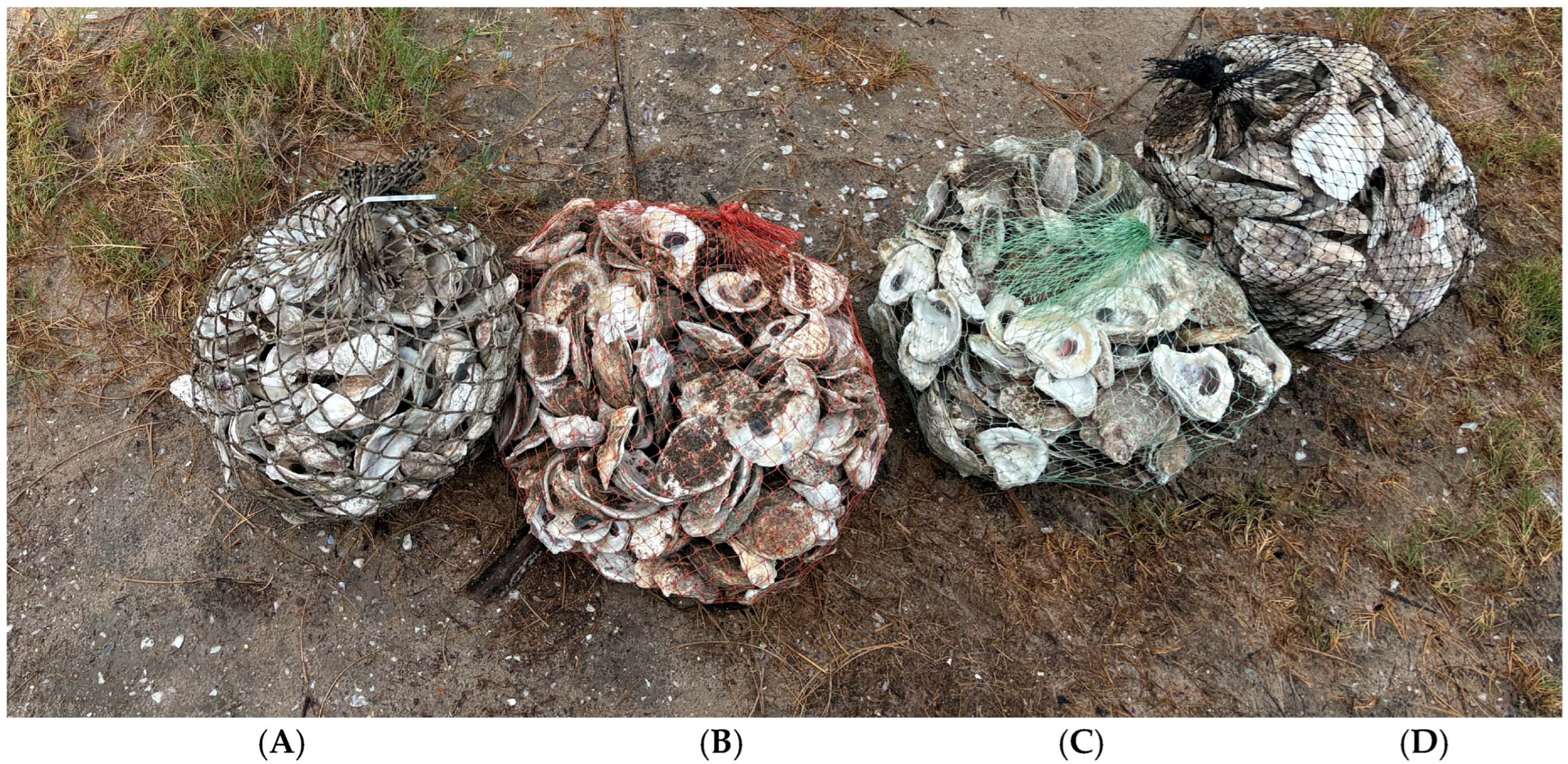
Prior to deployment of the bags in September 2024, the four different bag material types—plastic, biopolymer, basalt, and cellulose bags (Figure 2 and Table 1)—were standardized to hold the same volume of shell. The basalt bags were purchased with a prefabricated size, and the other material types came in large rolls. Therefore, the quantity of shells in the basalt bags was measured, and the other material types were cut to a uniform length (42 in, 106.6 cm) to contain the volume of a full 5-gallon (18 L) bucket of shells.

2.2. Assessment of Bag Types

Throughout the study, bags were haphazardly sampled once to visualize the structural integrity of the bag, verify retention of the original oyster cultch, quantify the total abundance of live oysters, and measure oyster shell height (SH in mm) from umbo to edge along the long axis [62]. The bags were sampled at ~4 months (126 days), ~7 months (211 days), and 10–11 months (311, 332, 333, and 345 days) after deployment, and the sampling schedule was highly variable due to logistical constraints. Due to the local tidal regime and hydrodynamics within Sweetwater Lake (Figure 1), the ability to retrieve and process a standardized number of bags per sampling event was not feasible. This unequal sample size of bags retrieved in each sampling event was confounded by the unexpected degradation of the biopolymer during the timeframe of the study. Thus, coupled with the bag material decomposition, the number of bag types retrieved per sampling event was not equitable (Appendix A). Each bag was sampled only once, and cultch, live oysters, and associated benthic macrofauna were returned to a different reef.
All analyses were conducted in RStudio version 4.3.0 (2023-04-21 ucrt). First, a Chi-Squared test was used to determine if there was a significant difference for the retrieval count of the different bag types. Another Chi-Squared test was used to determine if there was a significant difference between the types of bags retrieved for those that still contained oyster cultch from the original deployment. Second, prior to an analysis of variance test (ANOVA), a Levene Test for Homogeneity was utilized to determine whether the abundance and size of oysters met the assumptions of normality. As both data sets met the assumptions of normality (p > 0.05), no transformations on the data sets were necessary. A one-way ANOVA was utilized to determine if the bag type influenced total oyster abundance or size, and significant (p < 0.05) results were analyzed with a Student–Newman–Keuls (SNK) post hoc test.
A Weighted Product Model (WPM) was utilized [63] to determine which bag type provided the greatest fiscal benefits based on the ecological results. In a WPM (Equation (1)), each factor is assigned a weight that reflects its importance and is then multiplied by the other factors in order to result in a score [64].
P r e f e r e n c e   S c o r e = i = 1 n x i ω i
In this formula, x i is the normalized value of the factor, ω i is the corresponding weight of the factor, and n is the number of factors. The best choice could either be the one with the lowest or highest preference score, depending on the factors that were considered.
In our analysis, we considered each factor of the same importance, and therefore, all were assigned a weight of one. The costs (“negatives”) included in the analysis consisted of the price of the bags and both the overall deployment and retrieval costs (Appendix A). The WPM considered each cost as a separate factor in order to highlight their individual impact in the study [63,64,65,66]. The hourly volunteer rate utilized was USD 34.79 per person (https://independentsector.org/research/value-of-volunteer-time/ (accessed on 5 August 2025)) [44]. The deployment cost included the labor cost to cut the material, fill the bags, and deploy the bags. The plastic, biopolymer, and cellulose bags all came on a roll and had to be cut to the standardized size, whereas the basalt bags did not incur this cost and only incurred half the deployment cost. All bags took the same amount of time to fill and were equally weighted in the equation. Since the retrieval field hours per person varied, the total field retrieval hours were standardized to the mean time (n = 48 h) that one person spent in the field. The retrieval cost per bag was calculated as follows:
R e t r i e v a l   C o s t   P e r   B a g = T o t a l   f i e l d   h o u r s   ×   V o l u n t e e r   R a t e #   o f   b a g s   f o r   e a c h   b a g   t y p e
The benefits in the analysis included the mean oyster abundance observed in each bag type, the mean oyster size (SH mm) per bag type, and the quantity of each bag type retrieved. The final WPM value, with a lower value indicating greater benefits, was calculated for each bag type with the following equation:
B a g   P r e f e r e n c e   S c o r e = ( B a g   c o s t   ×   D e p l o y m e n t   C o s t   ×   R e t r i e v a l   C o s t   ×   1 M e a n   O y s t e r   A b u n d a n c e   ×   1 M e a n   S h e l l   S i z e   ×   1 Q u a n t i t y   o f   B a g s   R e t r i e v e d )    
Since the cost factors were considered “negative”, the “positive” factors were inverted so that even though they are of the same weight, they will have a different effect on the final WPM value [63,65,67]. The total cost (Table 2) is the summed cost of the “negative” factors (Appendix A) that are included in the WPM analysis (Equation (3)).

3. Results

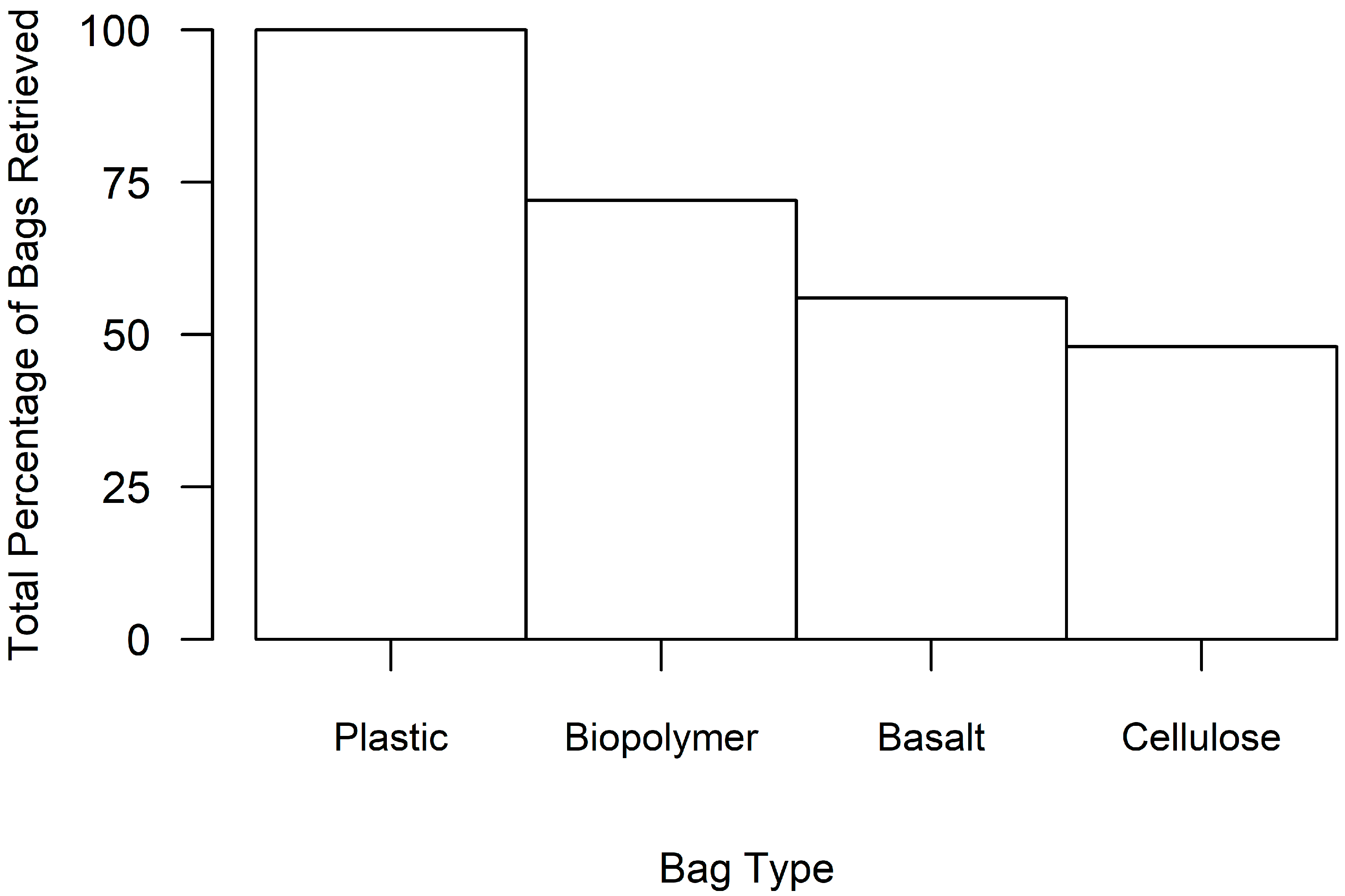
Throughout the entire study, from the 25 bags of each type deployed, there was no significant difference (X2 = 5.72, df = 3, p = 0.12) in the quantity of each bag type retrieved (Figure 3).
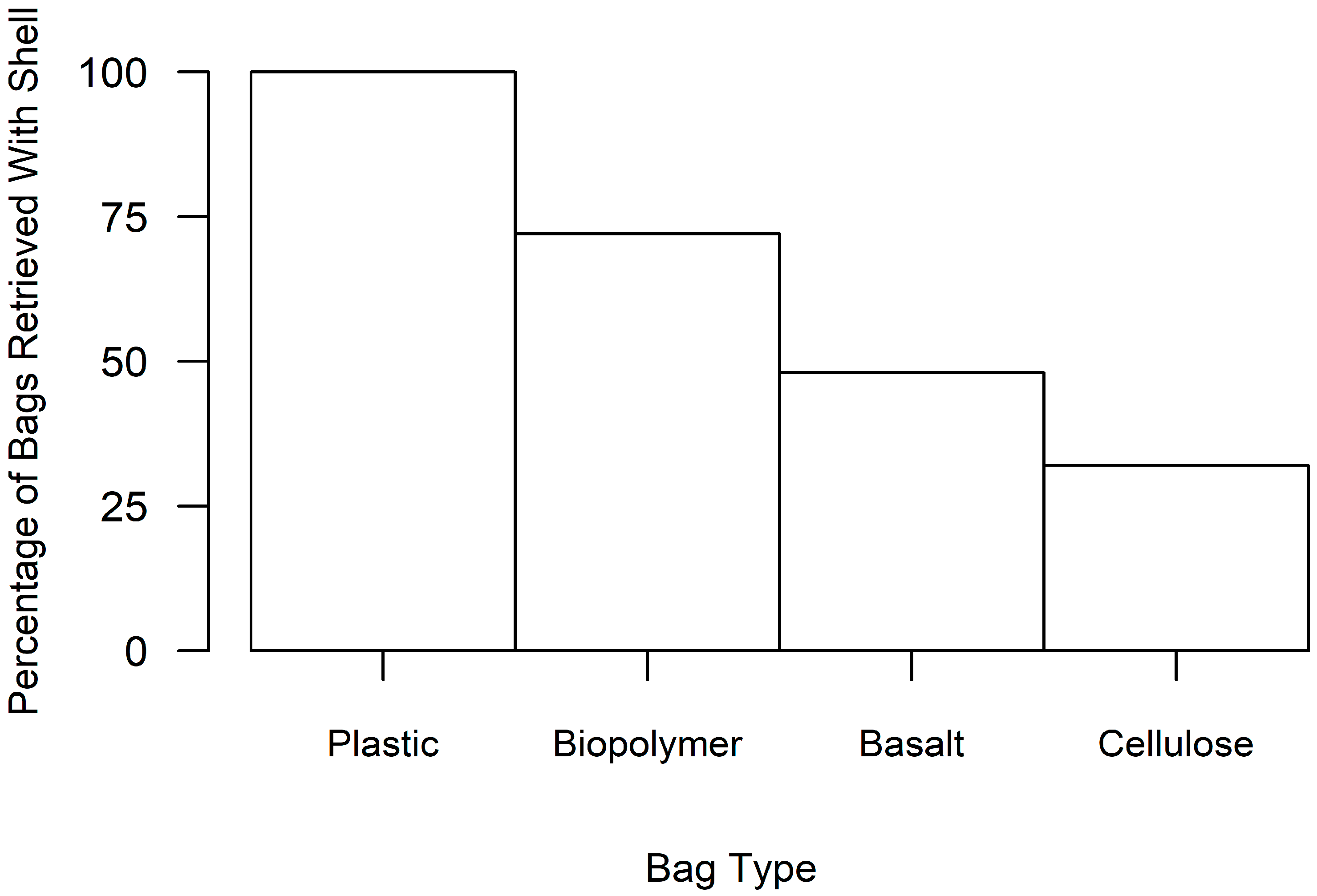
However, upon retrieval, there was a significant difference (X2 = 10.46, df = 3, p = 0.015) in the number of bags that contained the original oyster cultch (Figure 4). All retrieved plastic bags retained their original oyster cultch, whereas the percentage of original cultch recovered decreased across all biodegradable bag materials.
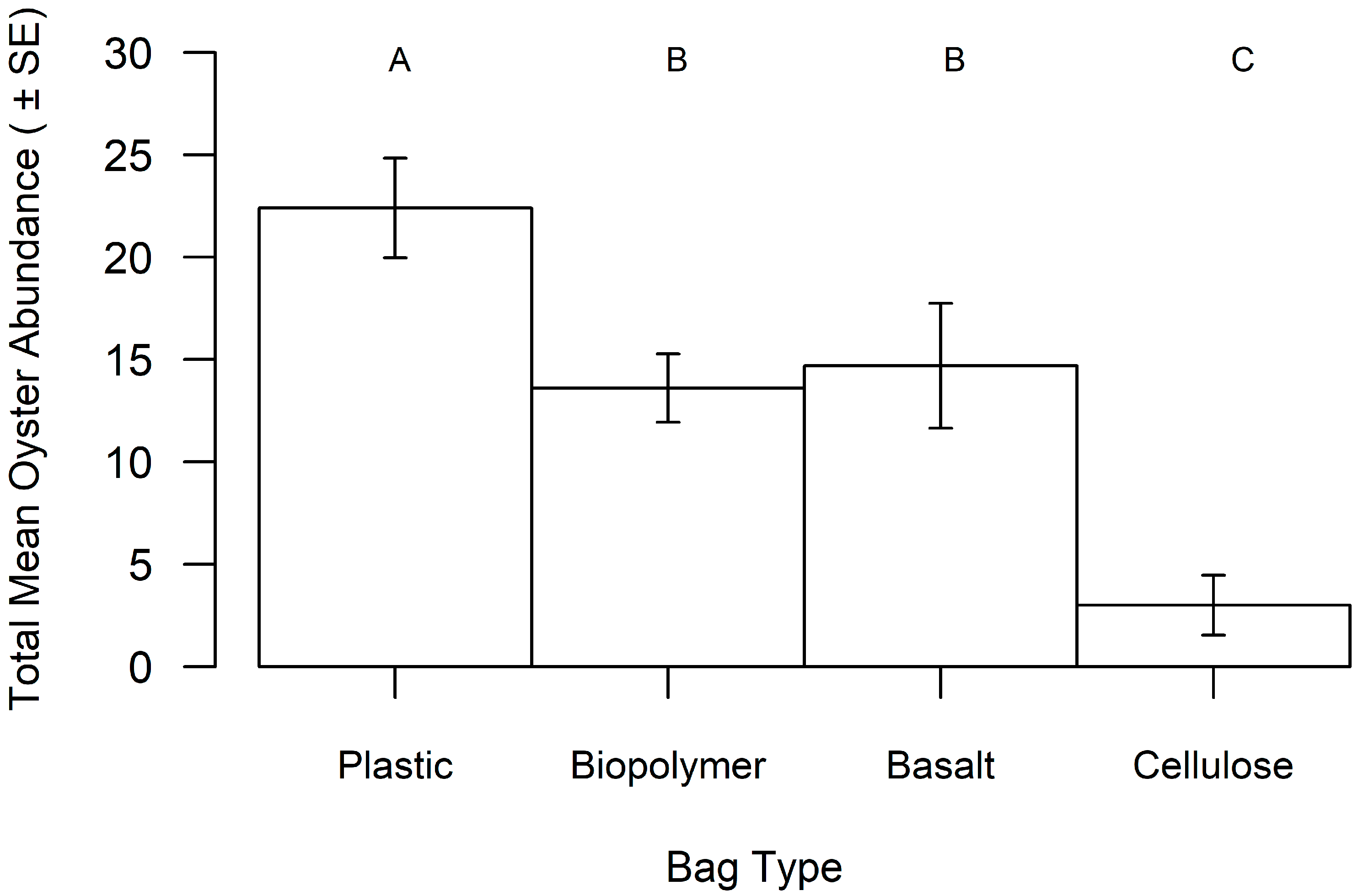
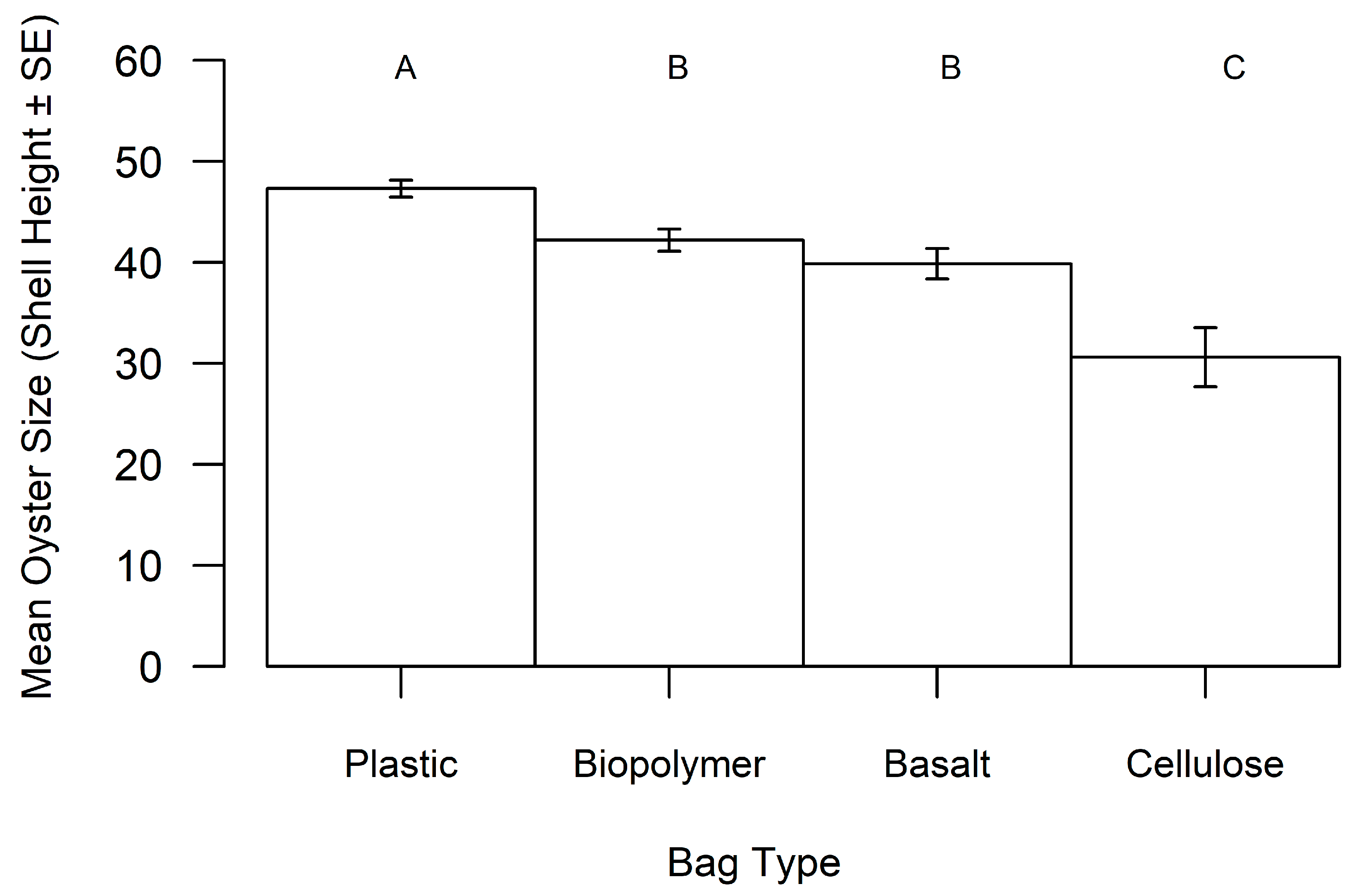
There was a significant difference (F3,63 = 8.06, p < 0.001) between the mean number of oysters per bag type quantified across the entire period of the study (Figure 5), with plastic bags having the greatest abundance of oysters. The plastic bags also had the largest (F3,1039 = 13.88, p < 0.001) size of oysters quantified across the study (Figure 6) compared to the other three types of biodegradable material. However, this may be attributed to the successful retention of the original oyster cultch in the plastic bags compared to the biodegradable bags, as plastic bags had a greater number of oysters measured (n = 558) than the biopolymer (n = 254), basalt (n = 199), and cellulose (n = 32) bags.
The results from the WPM analysis indicated that plastic bags contain the highest benefits relative to the total costs, which is reflected in the low bag preference score (Table 2). The percentage of bags retrieved, mean oyster size (mm), and average number of oysters collected were higher for the plastic bags compared to the biodegradable material, resulting in the lowest score. Alternatively, the cellulose bags had the highest score, indicating they provided the least benefits, primarily due to rapid decomposition, relative to the material cost.

4. Discussion

The use of mesh bags in oyster reef restoration highlights a fundamental trade-off between maximizing short-term biological outcomes and minimizing long-term ecological risks [44,48,49,58]. Plastic bags are widely utilized as one of the most effective materials for oyster reef restoration due to their structural stability and capacity to enhance oyster recruitment, reef development, and habitat functionality over time [17,48,61,68,69]. With greater strength and longevity, plastic bags often support higher oyster recruitment rates and survivorship. However, the results from this study highlight the methodological challenges of sampling oyster populations over time when using plastic bags compared to biodegradable bags.
The retrieval rates of the bags varied among material types, with plastic bags having the highest recovery rate. This further suggests that plastic bags have superior durability and resistance to degradation in the field [44,57]. In contrast, biodegradable alternatives had lower recovery rates, with the biopolymer, basalt, and cellulose bags exhibiting progressively lower recovery. These coupled results indicate that plastic bags will be viable for long-term restoration efforts and repeated sampling to quantify the development of oyster and community dynamics [40]. However, utilizing plastic materials to build oyster reefs may contribute to sequestered microplastics in oysters and contribute to plastic loading within an estuary. For example, within the Galveston Bay estuary, Ciesielski et al. [70] demonstrated that oysters had ~2 microplastic particles per gram of wet weight tissue, and microplastic pollution in the surface waters was dominated by plastic fibers. Building on the retrieval results, the percentage of bags recovered with shell material also differed significantly across bag types. Consistent with overall retrieval, plastic bags were all retrieved containing shells, highlighting their effectiveness at containing oyster settlement substrates. A previous study [17] demonstrated that plastic bags also provide consistent structural integrity across a wide range of environmental conditions, often leading to higher oyster recruitment and survival rates. As reefs are constructed with plastic material, the inter-annual sustainability of the reefs remains and the substrate persists long enough for reefs to develop into self-sustaining structures [12,17,69,71]. In comparing coir (coconut fiber) and plastic bags, Hatchell et al. [69] found similar results, with the plastic bags remaining long after the coir had eroded within 9 months of deployment. These results comparing biodegradable material to plastic material were similar with the decomposition of the biodegradable bags utilized in the current study. These results further suggest that, as a long-term source, plastic bags provide the ability to contain shells and can be easily resampled to monitor oyster population dynamics over time.
From the WPM, plastic bags had the highest benefit of any bag type based on the number of bags retrieved, oyster abundance, and mean oyster shell size. In a similar study [44], where plastic bags were compared to three alternative material types (cellulose, cotton, and jute), the plastic (polyethylene) bags also remained intact longer than their counterparts. Although plastic bags were ranked the highest in the current study, the WPM did not have data to integrate the decomposition rates of the biodegradable materials or quantify the release of microplastics in the system. The biopolymer bags offered a close alternative in terms of cost but yielded fewer and smaller oysters. This may be attributed to the degradation of the biopolymer bags within our study system, as Nitsch et al. [58] reported similar densities of oysters between a BESE biopolymer and control treatments. Further, the inability to retrieve all the deployed bags led to an unequal percentage of bags collected between the treatments. This suggests that the utilization of different oyster restoration bag material should be based on the overarching restoration goals [12,20,69,71]. Plastic mesh bags would be ideal for projects that require long-term monitoring of oyster populations and community dynamics [12,21,26,61,68,71,72]. Alternatively, biodegradable materials may facilitate the more natural establishment of cultch on an open-bottom habitat that leads to a three-dimensional structured habitat [73,74]. Similarly, Walters et al. [57] highlighted that there is no “best practice” for a restoration material, and the utilizations of different materials should be driven by sustainability, restoration goals, and research priorities. Our results further highlight this, and the utilization of restoration bag material should be selected based on restoration goals.
Emerging alternatives to plastic material for oyster reef restoration utilized in this study included biopolymer, basalt, and cellulose bags [45,57]. Each one of these biodegradable materials offers different ecological and structural advantages and disadvantages. With the different bag materials placed directly on a previously constructed oyster breakwater reef [12,17,61], the combination of retention, oyster population dynamics, and cost/benefit (determined from the WPM) suggested that biopolymer bags were the most advantageous biodegradable bags. Although basalt bags supported similar oyster abundance and sizes, they were substantially more expensive despite comparable retrieval rates and oyster abundances. The cellulose bags performed the poorest overall, with low retrieval rates and oyster abundance. As a caveat, the material was donated to the project and could have been structurally compromised, leading to an overall small sample size of bag retrieval oyster abundance and oyster size. These results suggest that while plastic remains the most effective option for maximizing oyster restoration outcomes per cost, biodegradable alternatives require further refinement to improve both structural durability and biological performance before they can serve as sustainable replacements for long-term monitoring.
Comparative studies of oyster recruitment and growth on plastic and biodegradable bags further support the trade-offs between ecological impact and restoration efficiency. The results of this study indicate that plastic bags supported the highest retrieval rate, oyster abundance, and lowest cost. However, there is evidence that chemical compounds contained in polyethylene plastic bags have negative impacts on the growth and survivorship of oysters [54]. Plastic mesh bags have been the main material utilized to construct oyster breakwater reefs based on affordability and effectiveness [17,41,48], which was further supported by the results of this study. The original intent behind using plastic bags in the construction of oyster breakwater reefs was that the bags would gradually degrade, leaving the established oyster reef as a nucleus for continued development. However, as these bags break down, they contribute to microplastic accumulation in coastal ecosystems, highlighting the ongoing need to develop durable biodegradable materials.

5. Conclusions

Overall, the comparison between plastic and biodegradable bags for oyster reef restoration highlights a trade-off between ecological sustainability and restoration success. Plastic bags are comparatively inexpensive, more durable, and support higher initial oyster settlement due to their stability and longevity but can contribute to long-term environmental impacts by releasing microplastics into the local environment. In contrast, biodegradable options such as the biopolymer, basalt, or cellulose bags utilized in this study reduce the risk of plastic pollution and align with broader conservation goals, but they may be more expensive, degrade faster, and may require repeated replacement to achieve equivalent reef stability. The plastic bags provided the most cost-effective solution for establishing breakwater reefs, structural resilience, and long-term monitoring efforts; however, biodegradable alternatives could provide greater long-term ecological benefits by minimizing secondary pollution and promoting environmentally responsible restoration practices. Future restoration efforts should focus on the pollutant contributions from different material types, experimentally test how spatial dynamics influence material degradation, and quantify the in situ bivalve ingestion rates of different material types.

Author Contributions

Conceptualization, S.B. and M.H.H.; methodology, M.H.H. and S.B.; software, M.H.H.; validation, M.H.H. and R.C.G.; formal analysis, M.H.H.; investigation, M.H.H.; resources, M.H.H., R.C.G. and S.B.; data curation, M.H.H.; writing—original draft preparation, M.H.H. and R.C.G.; writing—review and editing, M.H.H., R.C.G. and S.B.; visualization, M.H.H. and R.C.G.; supervision, S.B. and M.H.H.; project administration, S.B. and M.H.H.; funding acquisition, S.B. and M.H.H. All authors have read and agreed to the published version of the manuscript.

Funding

This publication was funded by a Texas Coastal Management Program grant approved by the Texas Land Commissioner, providing financial assistance under the Coastal Zone Management Act of 1972, as amended, awarded by the National Oceanic and Atmospheric Administration (NOAA), Office for Coastal Management, pursuant to NOAA Award No. NA23NOS4190249.

Data Availability Statement

All data and photos/videos of the bags retrieved are available from the authors upon request.

Acknowledgments

We thank Sophia L., River S., Mohammad R., Rasheed R., Nate M., and Andrew N. and the other UH volunteers for their assistance in the field. Chris H. and Rida N. provided administrative support at UH. We also thank Haille L., Alyssa Q., and Sally C. and the anonymous reviewers for comments that greatly improved the manuscript.

Conflicts of Interest

The authors declare no conflicts of interest.

Appendix A

Table A1. Total number of bags for each material type collected across each sampling event.
Deployment DurationPlasticBiopolymerBasaltCellulose
~4 months2111
~7 months7342
10–11 months161474
Total2518127
Table A2. The breakdown for the total cost column in Table 2.
Bag
Material
Cost of
25 Bags
(in USD)
Deployment
Costs (in USD)
Retrieval Costs (in USD)
Plastic66.00556.6467.14
Biopolymer38.75556.6488.35
Basalt612.75278.32119.90
Cellulose50.00556.64186.51

References

  1. Levinton, J.; Doall, M.; Allam, B. Growth and Mortality Patterns of the Eastern Oyster Crassostrea virginica in Impacted Waters in Coastal Waters in New York, USA. J. Shellfish Res. 2013, 32, 417–427. [Google Scholar] [CrossRef]
  2. Walters, L.J.; Sacks, P.E.; Bobo, M.Y.; Richardson, D.L.; Coen, L.D. Impact of Hurricanes and Boat Wakes on Intertidal Oyster Reefs in the Indian River Lagoon: Reef Profiles and Disease Prevalence. Fla. Sci. 2007, 700, 506–521. [Google Scholar]
  3. Du, J.; Park, K.; Jensen, C.; Dellapenna, T.M.; Zhang, W.G.; Shi, Y. Massive Oyster Kill in Galveston Bay Caused by Prolonged Low-Salinity Exposure after Hurricane Harvey. Sci. Total Environ. 2021, 774, 145132. [Google Scholar] [CrossRef]
  4. Lenihan, H.S.; Micheli, F.; Shelton, S.W.; Peterson, C.H. The Influence of Multiple Environmental Stressors on Susceptibility to Parasites: An Experimental Determination with Oysters. Limnol. Oceanogr. 1999, 44, 910–924. [Google Scholar] [CrossRef]
  5. Lenihan, H.; Peterson, C. How Habitat Degradation through Fishery Disturbance Enhances Impacts of Hypoxia on Oyster Reefs. Ecol. Appl. 1998, 8, 128–140. [Google Scholar] [CrossRef]
  6. Beck, M.W.; Brumbaugh, R.D.; Airoldi, L.; Carranza, A.; Coen, L.D.; Crawford, C.; Defeo, O.; Edgar, G.J.; Hancock, B.; Kay, M.C.; et al. Oyster Reefs at Risk and Recommendations for Conservation, Restoration, and Management. Bioscience 2011, 61, 107–116. [Google Scholar] [CrossRef]
  7. Okon, E.M.; Birikorang, H.N.; Munir, M.B.; Kari, Z.A.; Téllez-Isaías, G.; Khalifa, N.E.; Abdelnour, S.A.; Eissa, M.E.H.; Al-Farga, A.; Dighiesh, H.S.; et al. A Global Analysis of Climate Change and the Impacts on Oyster Diseases. Sustainability 2023, 15, 12775. [Google Scholar] [CrossRef]
  8. Schulte, D.M. History of the Virginia Oyster Fishery, Chesapeake Bay, USA. Front. Mar. Sci. 2017, 4, 127. [Google Scholar] [CrossRef]
  9. Mackenzie, C. Causes Underlying the Historical Decline in Eastern Oyster (Crassostrea virginica Gmelin, 1791) Landings. J. Shellfish Res. 2007, 26, 927–938. [Google Scholar] [CrossRef]
  10. Bellei, P.; Torres, I.; Solstad, R.; Flores-Colen, I. Potential Use of Oyster Shell Waste in the Composition of Construction Composites: A Review. Buildings 2023, 13, 1546. [Google Scholar] [CrossRef]
  11. Yoon, H.; Park, S.; Lee, K.; Park, J. Oyster Shell as Substitute for Aggregate in Mortar. Waste Manag. Res. 2004, 22, 158–170. [Google Scholar] [CrossRef] [PubMed]
  12. Hanke, M.H.; Bobby, N.; Sanchez, R. Can Relic Shells Be an Effective Settlement Substrate for Oyster Reef Restoration? Restor. Ecol. 2021, 29, e13371. [Google Scholar] [CrossRef]
  13. Thompson, V.D.; Rick, T.; Garland, C.J.; Thomas, D.H.; Smith, K.Y.; Bergh, S.; Sanger, M.; Tucker, B.; Lulewicz, I.; Semon, A.M.; et al. Ecosystem Stability and Native American Oyster Harvesting along the Atlantic Coast of the United States. Sci. Adv. 2020, 6, eaba9652. [Google Scholar] [CrossRef] [PubMed]
  14. Breitburg, D.L.; Coen, L.D.; Luckenbach, M.W.; Mann, R.; Posey, M.; Wesson, J.A. Oyster Reef Restoration: Convergence of Harvest and Conservation Strategies. J. Shellfish Res. 2000, 19, 371–377. [Google Scholar]
  15. Powell, E.N.; Morson, J.M.; Ashton-Alcox, K.A.; Kim, Y. Accommodation of the Sex-Ratio in Eastern Oysters Crassostrea Virginica to Variation in Growth and Mortality across the Estuarine Salinity Gradient. J. Mar. Biol. Assoc. U. K. 2013, 93, 533–555. [Google Scholar] [CrossRef]
  16. Powell, E.N.; Klinck, J.M.; Ashton-Alcox, K.A.; Kraeuter, J.N. Multiple Stable Reference Points in Oyster Populations: Implications for Reference Point-Based Management. Fish. Bull. 2009, 107, 133–147. [Google Scholar]
  17. Hanke, M.H.; Leija, H.; Laroche, R.A.S.; Modi, S.; Culver-Miller, E.; Sanchez, R.; Bobby, N. Localized Placement of Breakwater Reefs Influences Oyster Populations and Their Resilience after Hurricane Harvey. Ecologies 2022, 3, 422–434. [Google Scholar] [CrossRef]
  18. van Oldenborgh, G.J.; van der Wiel, K.; Sebastian, A.; Singh, R.; Arrighi, J.; Otto, F.; Haustein, K.; Li, S.; Vecchi, G.; Cullen, H. Attribution of Extreme Rainfall from Hurricane Harvey, August 2017. Environ. Res. Lett. 2017, 12, 124009. [Google Scholar] [CrossRef]
  19. Thyng, K.M.; Hetland, R.D.; Socolofsky, S.A.; Fernando, N.; Turner, E.L.; Schoenbaechler, C. Hurricane Harvey Caused Unprecedented Freshwater Inflow to Galveston Bay. Estuaries Coasts 2020, 43, 1836–1852. [Google Scholar] [CrossRef]
  20. Graham, P.M.; Palmer, T.A.; Beseres Pollack, J. Oyster Reef Restoration: Substrate Suitability May Depend on Specific Restoration Goals. Restor. Ecol. 2017, 25, 459–470. [Google Scholar] [CrossRef]
  21. Goelz, T.; Vogt, B.; Hartley, T. Alternative Substrates Used for Oyster Reef Restoration: A Review. J. Shellfish Res. 2020, 39, 1–12. [Google Scholar] [CrossRef]
  22. Coen, L.D.; Luckenbach, M.W. Developing Success Criteria and Goals for Evaluating Oyster Reef Restoration: Ecological Function or Resource Exploitation? Ecol. Eng. 2000, 15, 323–343. [Google Scholar] [CrossRef]
  23. Luckenbach, M.W.M.; Coen, L.D.L.; Ross, P.G., Jr.; Stephen, J.A.J. Oyster Reef Habitat Restoration: Relationships between Oyster Abundance and Community Development Based on Two Studies in Virginia and South Carolina. J. Coast. Res. 2005, 40, 64–78. [Google Scholar]
  24. Lipcius, R.N.; Burke, R.P.; McCulloch, D.N.; Schreiber, S.J.; Schulte, D.M.; Seitz, R.D.; Shen, J. Overcoming Restoration Paradigms: Value of the Historical Record and Metapopulation Dynamics in Native Oyster Restoration. Front. Mar. Sci. 2015, 2, 65. [Google Scholar] [CrossRef]
  25. Baggett, L.P.; Powers, S.P.; Brumbaugh, R.D.; Coen, L.D.; Deangelis, B.M.; Greene, J.K.; Hancock, B.T.; Morlock, S.M.; Allen, B.L.; Breitburg, D.L.; et al. Guidelines for Evaluating Performance of Oyster Habitat Restoration. Restor. Ecol. 2015, 23, 737–745. [Google Scholar] [CrossRef]
  26. Coen, L.; Brumbaugh, R.; Bushek, D.; Grizzle, R.; Luckenbach, M.; Posey, M.; Powers, S.; Tolley, S. Ecosystem Services Related to Oyster Restoration. Mar. Ecol. Prog. Ser. 2007, 341, 303–307. [Google Scholar] [CrossRef]
  27. Lima, A.R.; Pollack, J.; Fox, J.M.; Ferreira, J.G.; Cubillo, A.M.; Reisinger, A.; Bricker, S. Developing Nitrogen Bioextraction Economic Value via Off-Bottom Oyster Aquaculture in the Northwestern Gulf of Mexico. Mar. Pollut. Bull. 2024, 211, 117396. [Google Scholar] [CrossRef] [PubMed]
  28. George, L.M.; De Santiago, K.; Palmer, T.A.; Beseres Pollack, J. Oyster Reef Restoration: Effect of Alternative Substrates on Oyster Recruitment and Nekton Habitat Use. J. Coast. Conserv. 2015, 19, 13–22. [Google Scholar] [CrossRef]
  29. Meyer, D.L.; Townsend, E.C.; Thayer, G.W. Stabilization and Erosion Control Value of Oyster Cultch for Intertidal Marsh. Restor. Ecol. 1997, 5, 93–99. [Google Scholar] [CrossRef]
  30. Hanke, M.H.; Posey, M.H.; Alphin, T.D. The Influence of Habitat Characteristics on Intertidal Oyster Crassostrea virginica Populations. Mar. Ecol. Prog. Ser. 2017, 571, 121–138. [Google Scholar] [CrossRef]
  31. Caretti, O.N.; Bohnenstiehl, D.W.R.; Eggleston, D.B. Spatiotemporal Variability in Sedimentation Drives Habitat Loss on Restored Subtidal Oyster Reefs. Estuaries Coasts 2021, 44, 2100–2117. [Google Scholar] [CrossRef]
  32. Poirier, L.A.; Clements, J.C.; Davidson, J.D.P.; Miron, G.; Davidson, J.; Comeau, L.A. Sink before You Settle: Settlement Behaviour of Eastern Oyster (Crassostrea virginica) Larvae on Artificial Spat Collectors and Natural Substrate. Aquac. Rep. 2019, 13, 100181. [Google Scholar] [CrossRef]
  33. Bushek, D.; Richardson, D.; Bobo, M.Y.; Coen, L.D. Quarantine of Oyster Shell Cultch Reduces the Abundance of Perkinsus Marinus. J. Shellfish Res. 2004, 23, 369–373. [Google Scholar]
  34. Kimmel, S.D.; Prevost, H.J.; Knoell, A.; Marcum, P.; Dix, N. Spatial and Temporal Variability in Oyster Settlement on Intertidal Reefs Support Site-Specific Assessments for Restoration Practices. J. Mar. Sci. Eng. 2024, 12, 766. [Google Scholar] [CrossRef]
  35. Powell, E.N.; White, M.E.; Wilson, E.A.; Ray, S.M. Small-Scale Spatial Distribution of Oysters (Crassostrea virginica) on Oyster Reefs. Bull. Mar. Sci. 1987, 41, 835–855. [Google Scholar]
  36. Dunn, R.P.; Eggleston, D.B.; Lindquist, N. Effects of Substrate Type on Demographic Rates of Eastern Oyster (Crassostrea virginica). J. Shellfish Res. 2014, 33, 177–185. [Google Scholar] [CrossRef]
  37. Uddin, M.J.; Smith, K.J.; Hargis, C.W. Development of Pervious Oyster Shell Habitat (POSH) Concrete for Reef Restoration and Living Shorelines. Constr. Build. Mater. 2021, 295, 123685. [Google Scholar] [CrossRef]
  38. Grizzle, R.E.; Brodeur, M.A.; Abeels, H.A.; Greene, J.K. Bottom Habitat Mapping Using Towed Underwater Videography: Subtidal Oyster Reefs as an Example Application. J. Coast. Res. 2008, 24, 103–109. [Google Scholar] [CrossRef]
  39. Scyphers, S.B.; Powers, S.P.; Heck, K.L. Ecological Value of Submerged Breakwaters for Habitat Enhancement on a Residential Scale. Environ. Manag. 2015, 55, 383–391. [Google Scholar] [CrossRef]
  40. Chowdhury, M.S.N.; Hossain, M.S.; Ysebaert, T.; Smaal, A.C. Do Oyster Breakwater Reefs Facilitate Benthic and Fish Fauna in a Dynamic Subtropical Environment? Ecol. Eng. 2020, 142, 105635. [Google Scholar] [CrossRef]
  41. Chowdhury, M.S.N.; Walles, B.; Sharifuzzaman, S.; Shahadat Hossain, M.; Ysebaert, T.; Smaal, A.C. Oyster Breakwater Reefs Promote Adjacent Mudflat Stability and Salt Marsh Growth in a Monsoon Dominated Subtropical Coast. Sci. Rep. 2019, 9, 8549. [Google Scholar] [CrossRef]
  42. Morris, R.L.; La Peyre, M.K.; Webb, B.M.; Marshall, D.A.; Bilkovic, D.M.; Cebrian, J.; McClenachan, G.; Kibler, K.M.; Walters, L.J.; Bushek, D.; et al. Large-scale Variation in Wave Attenuation of Oyster Reef Living Shorelines and the Influence of Inundation Duration. Ecol. Appl. 2021, 31, e2382. [Google Scholar] [CrossRef]
  43. Manis, J.E.; Garvis, S.K.; Jachec, S.M.; Walters, L.J. Wave Attenuation Experiments over Living Shorelines over Time: A Wave Tank Study to Assess Recreational Boating Pressures. J. Coast. Conserv. 2015, 19, 1–11. [Google Scholar] [CrossRef]
  44. Comba, D.; Palmer, T.A.; Breaux, N.J.; Pollack, J.B. Evaluating Biodegradable Alternatives to Plastic Mesh for Small-Scale Oyster Reef Restoration. Restor. Ecol. 2023, 31, e13762. [Google Scholar] [CrossRef]
  45. Morris, R.L.; Bilkovic, D.M.; Boswell, M.K.; Bushek, D.; Cebrian, J.; Goff, J.; Kibler, K.M.; La Peyre, M.K.; McClenachan, G.; Moody, J.; et al. The Application of Oyster Reefs in Shoreline Protection: Are We over-Engineering for an Ecosystem Engineer? J. Appl. Ecol. 2019, 56, 1703–1711. [Google Scholar] [CrossRef]
  46. Piazza, B.P.; Banks, P.D.; La Peyre, M.K. The Potential for Created Oyster Shell Reefs as a Sustainable Shoreline Protection Strategy in Louisiana. Restor. Ecol. 2005, 13, 499–506. [Google Scholar] [CrossRef]
  47. La Peyre, M.; Furlong, J.; Brown, L.A.; Piazza, B.P.; Brown, K. Oyster Reef Restoration in the Northern Gulf of Mexico: Extent, Methods and Outcomes. Ocean Coast. Manag. 2014, 89, 20–28. [Google Scholar] [CrossRef]
  48. Scyphers, S.B.; Powers, S.P.; Heck, K.L.; Byron, D. Oyster Reefs as Natural Breakwaters Mitigate Shoreline Loss and Facilitate Fisheries. PLoS ONE 2011, 6, e22396. [Google Scholar] [CrossRef] [PubMed]
  49. Shinn, J.P.; Bredes, A.; Bushek, D.; Kerr, L.; Kreeger, D.; McCulloch, D.; Miller, J.; Moody, J.; Rothermel, E.; Zito-Livingston, A. Seven Years of Monitoring the Development of an Oyster Reef Living Shoreline. Estuaries Coasts 2025, 48, 11. [Google Scholar] [CrossRef]
  50. Salatin, R.; Wang, H.; Chen, Q.; Zhu, L. Assessing Wave Attenuation With Rising Sea Levels for Sustainable Oyster Reef-Based Living Shorelines. Front. Built Environ. 2022, 8, 884849. [Google Scholar] [CrossRef]
  51. Shumway, S.E.; Cucci, T.L.; Newell, R.C.; Yentsch, C.M. Particle Selection, Ingestion, and Absorption in Filter-Feeding Bivalves. J. Exp. Mar. Biol. Ecol. 1985, 91, 77–92. [Google Scholar] [CrossRef]
  52. Bom, F.C.; Sá, F. Concentration of Microplastics in Bivalves of the Environment: A Systematic Review. Environ. Monit. Assess. 2021, 193, 846. [Google Scholar] [CrossRef]
  53. Sussarellu, R.; Suquet, M.; Thomas, Y.; Lambert, C.; Fabioux, C.; Pernet, M.E.J.; Le Goïc, N.; Quillien, V.; Mingant, C.; Epelboin, Y.; et al. Oyster Reproduction Is Affected by Exposure to Polystyrene Microplastics. Proc. Natl. Acad. Sci. USA 2016, 113, 2430–2435. [Google Scholar] [CrossRef]
  54. Bhatt, S.; Fan, C.; Liu, M.; Wolfe-Bryant, B. Effect of High-Density Polyethylene Microplastics on the Survival and Development of Eastern Oyster (Crassostrea virginica) Larvae. Int. J. Environ. Res. Public Health 2023, 20, 6142. [Google Scholar] [CrossRef]
  55. Ding, J.; Sun, C.; He, C.; Li, J.; Ju, P.; Li, F. Microplastics in Four Bivalve Species and Basis for Using Bivalves as Bioindicators of Microplastic Pollution. Sci. Total Environ. 2021, 782, 146830. [Google Scholar] [CrossRef] [PubMed]
  56. Baechler, B.R.; Granek, E.F.; Hunter, M.V.; Conn, K.E. Microplastic Concentrations in Two Oregon Bivalve Species: Spatial, Temporal, and Species Variability. Limnol. Oceanogr. Lett. 2020, 5, 54–65. [Google Scholar] [CrossRef]
  57. Walters, L.J.; Roddenberry, A.; Crandall, C.; Wayles, J.; Donnelly, M.; Barry, S.C.; Clark, M.W.; Escandell, O.; Hansen, J.C.; Laakkonen, K.; et al. The Use of Non-Plastic Materials for Oyster Reef and Shoreline Restoration: Understanding What Is Needed and Where the Field Is Headed. Sustainability 2022, 14, 8055. [Google Scholar] [CrossRef]
  58. Nitsch, C.K.; Walters, L.J.; Sacks, J.S.; Sacks, P.E.; Chambers, L.G. Biodegradable Material for Oyster Reef Restoration: First-Year Performance and Biogeochemical Considerations in a Coastal Lagoon. Sustainability 2021, 13, 7415. [Google Scholar] [CrossRef]
  59. Salas-Monreal, D.; Anis, A.; Salas-de-Leon, D.A. Galveston Bay Dynamics under Different Wind Conditions. Oceanologia 2018, 60, 232–243. [Google Scholar] [CrossRef]
  60. Pulich, W.M.; White, W.A. Decline of Submerged Vegetation in the Galveston Bay System: Chronology and Relationships to Physical Processes. J. Coast. Res. 1991, 7, 1125–1138. [Google Scholar]
  61. LaRoche, R.A.; Doan, T.M.; Hanke, M.H. Habitat Characteristics of Artificial Oyster Reefs Influence Female Oystershell Mud Crab Panopeus simpsoni Rathbun, 1930 (Decapoda: Brachyura: Panopeidae). J. Crustac. Biol. 2022, 42, ruac033. [Google Scholar] [CrossRef]
  62. Hanke, M.H.; Hargrove, J.M.; Alphin, T.D.; Posey, M.H. Oyster Utilization and Host Variation of the Oyster Pea Crab (Zaops ostreum). J. Shellfish Res. 2015, 34, 281–287. [Google Scholar] [CrossRef]
  63. Jahan, A.; Edwards, K.L. A State-of-the-Art Survey on the Influence of Normalization Techniques in Ranking: Improving the Materials Selection Process in Engineering Design. Mater. Des. 2015, 65, 335–342. [Google Scholar] [CrossRef]
  64. Triantaphyllou, E.; Mann, S.H. An Examination of the Effectiveness of Multi-Dimensional Decision-Making Methods: A Decision-Making Paradox. Decis. Support Syst. 1989, 5, 303–312. [Google Scholar] [CrossRef]
  65. Silva, C.; Ferreira, J.G.; Bricker, S.B.; DelValls, T.A.; Martín-Díaz, M.L.; Yáñez, E. Site Selection for Shellfish Aquaculture by Means of GIS and Farm-Scale Models, with an Emphasis on Data-Poor Environments. Aquaculture 2011, 318, 444–457. [Google Scholar] [CrossRef]
  66. Hanke, M.H.; Lambert, J.D.; Smith, K.J. Utilization of a Multicriteria Least Cost Path Model in an Aquatic Environment. Int. J. Geogr. Inf. Sci. 2014, 28, 1642–1657. [Google Scholar] [CrossRef]
  67. Mamat, N.; Rasam, A.R.A.; Adnan, N.A.; Abdullah, I.C. GIS-Based Multi-Criteria Decision Making System for Determining Potential Site of Oyster Aquaculture in Terengganu. In Proceedings of the 2014 IEEE 10th International Colloquium on Signal Processing and Its Applications, CSPA, Kuala Lumpur, Malaysia, 7–9 March 2014; pp. 71–76. [Google Scholar] [CrossRef]
  68. Hanke, M.H.; Posey, M.H.; Alphin, T.D. The Effects of Intertidal Oyster Reef Habitat Characteristics on Faunal Utilization. Mar. Ecol. Prog. Ser. 2017, 581, 57–70. [Google Scholar] [CrossRef]
  69. Hatchell, B.; Konchar, K.; Merrill, M.; Shea, C.; Smith, K. Use of Biodegradable Coir for Subtidal Oyster Habitat Restoration: Testing Two Reef Designs in Northwest Florida. Estuaries Coasts 2022, 45, 2675–2689. [Google Scholar] [CrossRef]
  70. Ciesielski, M.; Hanke, M.; Jurgens, L.J.; Kamalanathan, M.; Mortuza, A.; Gahn, M.B.; Hala, D.; Kaiser, K.; Quigg, A. A Comparison of Methods to Quantify Nano- and/or Microplastic (NMPs) Deposition in Wild-Caught Eastern Oysters (Crassostrea virginica) Growing in a Heavily Urbanized, Subtropical Estuary (Galveston Bay, USA). J. Mar. Sci. Eng. 2025, 13, 2065. [Google Scholar] [CrossRef]
  71. Theuerkauf, S.J.; Puckett, B.J.; Eggleston, D.B. Metapopulation Dynamics of Oysters: Sources, Sinks, and Implications for Conservation and Restoration. Ecosphere 2021, 12, e03573. [Google Scholar] [CrossRef]
  72. Southwell, M.W.; Veenstra, J.J.; Adams, C.D.; Scarlett, E.V.; Payne, K.B. Changes in Sediment Characteristics upon Oyster Reef Restoration, NE Florida, USA. J. Coast. Zone Manag. 2017, 20, 1000442. [Google Scholar] [CrossRef]
  73. McCormick-Ray, J. Historical Oyster Reef Connections to Chesapeake Bay—A Framework for Consideration. Estuar. Coast. Shelf Sci. 2005, 64, 119–134. [Google Scholar] [CrossRef]
  74. van de Koppel, J.; van der Heide, T.; Altieri, A.H.; Eriksson, B.K.; Bouma, T.J.; Olff, H.; Silliman, B.R. Long-Distance Interactions Regulate the Structure and Resilience of Coastal Ecosystems. Annu. Rev. Mar. Sci. 2015, 7, 139–158. [Google Scholar] [CrossRef] [PubMed]
Figure 1. Off Galveston Bay proper and West Galveston Bay (A), Sweetwater Lake (B) anthropogenically constructed, and site of oyster reef restoration (C). The four different types of oyster bags were deployed on one section of breakwater reefs (29°15′18.45″ N, 94°52′49.67″ W) (represented by the blue line), which was approximately 40 m in length.
Environments 13 00042 g001
Figure 2. The four different types of bags ((A) basalt, (B) biopolymer, (C) cellulose, (D) plastic) prior to deployment.
Environments 13 00042 g002
Figure 3. Across the experiment, there was no significant difference (X2 = 5.72, df = 3, p = 0.12) in the different types of the quantity of bags retrieved. There were 25 bags initially deployed for each individual (plastic, biopolymer, basalt, and cellulose) restoration material type.
Environments 13 00042 g003
Figure 4. Percentage of total bag types retrieved that were functionally intact and contained oyster cultch varied significantly (X2 = 10.46, df = 3, p = 0.015) between bag types. There were 25 bags initially deployed for each individual (plastic, biopolymer, basalt, and cellulose) restoration material type.
Environments 13 00042 g004
Figure 5. The total mean number of oysters (±SE) for each bag type differed significantly (p < 0.001). Different letters indicate a significant difference (through SNK post hoc test) between the bag types.
Environments 13 00042 g005
Figure 6. The final mean oyster shell height (±SE) for each bag type differed significantly (p < 0.001). Different letters indicate a significant difference (through SNK post hoc test) between the bag types.
Environments 13 00042 g006
Table 1. Material type, source, and calculated cost for each of the bag types utilized [44]. The cost per bag for plastic, biopolymer, and cellulose was standardized to hold the same amount of shell as the prefabricated basalt bag size.
Bag MaterialSourceCost per Bag (in USD)
Plasticmasternetltd.com2.64
Biopolymerbese-products.com1.55
Basaltnatrx.io24.51
Celluloseintermas.com2.00 *
* The cellulose bag from Intermas was left over from a previous project, and the value represents an estimated cost that is intermediate of the other two rolls of material because no cost was available to the authors.
Table 2. Weighted Product Model (WPM) bag preference score for each of the bag types utilized [44]. The cost per bag for plastic, biopolymer, and cellulose were standardized to hold the same amount of shell as the refabricated basalt bag size.
Bag MaterialTotal Cost (in USD) 1Percent of Bags RetrievedMean Oyster Size (in mm)Mean Oyster AbundanceBag
Preference Score 2
Plastic689.78100%47.3222.443.7
Biopolymer683.7476%42.2013.379.4
Basalt1010.9756%39.8714.71177.8
Cellulose793.1536%30.664.22495.1
1 This cost is the summed price of the bag, deployment, and retrieval costs (Appendix A). 2 A lower score indicates higher benefits relative to the total costs.
Disclaimer/Publisher’s Note: The statements, opinions and data contained in all publications are solely those of the individual author(s) and contributor(s) and not of MDPI and/or the editor(s). MDPI and/or the editor(s) disclaim responsibility for any injury to people or property resulting from any ideas, methods, instructions or products referred to in the content.