
Article

Eutrophication Risk Assessment vs. Trophic Status: Concordances and Discrepancies in the Trophic Characterization of Ebro Basin Reservoirs


by
Juan Víctor Molner
1,†,
Elena Arnau-López
1,†,
Noelia Campillo-Tamarit
1,†,
Rebeca Pérez-González
1,
Manuel Muñoz-Colmenares
1,
María José Rodríguez
2 and
Juan M. Soria
1,*
1
Cavanilles Institute of Biodiversity and Evolutionary Biology (ICBiBE), University of Valencia, Catedràtic José Beltrán Martínez, 2, 46980 Valencia, Spain
2
Ebro Basin Authority, Ministry for Ecological Transition and Demographic Challenge, Spanish Government, Paseo Sagasta, 24-26, 50006 Zaragoza, Spain
*
Author to whom correspondence should be addressed.
These authors contributed equally to this work.
Environments 2026, 13(1), 39; https://doi.org/10.3390/environments13010039
Submission received: 11 December 2025 / Revised: 2 January 2026 / Accepted: 6 January 2026 / Published: 8 January 2026
(This article belongs to the Special Issue Monitoring of Contaminated Water and Soil, 2nd Edition)

Abstract

The vulnerability of reservoirs in Mediterranean regions to eutrophication is attributable to two key factors: strong seasonal hydrological variability and intensive agricultural activity. The present study evaluated the trophic state of 47 reservoirs in the Ebro Basin in Spain using two complementary approaches: the Organisation for Economic Co-operation and Development (OECD) classification system and the criteria set out in Royal Decree (RD) 47/2022. Chlorophyll-a, total phosphorus and transparency data were monitored from 2023 to 2024. While most of reservoirs were classified as oligotrophic to mesotrophic under the OECD thresholds, the RD 47/2022 identified 87% as being at risk of eutrophication. A significant variation in transparency was observed among the different reservoir types (p < 0.05), with high-altitude systems showing higher levels of water transparency. However, chlorophyll-a and total phosphorus had a significant spatial variability, exhibiting only modest correlations. Chlorophyll-a was weakly but significantly correlated to transparency (r = −0.21), while total phosphorus was not significantly associated with either variable, suggesting a decoupling between nutrient availability and phytoplankton biomass. The observed discrepancy between the two classification frameworks is indicative of divergent conceptual approaches (ecological condition versus management risk). It underscores the requirement for integrated monitoring that incorporates chemical, biological and catchment-scale indicators. These findings offer new insight into the trophic dynamics of Mediterranean reservoirs and highlights the importance of adapting regulatory assessment methods to region-specific climatic and hydrological contexts.

1. Introduction

Water is an essential resource for life and human development owing to its unique physicochemical properties, such as high surface tension and the ability to dissolve essential salts [1]. Throughout history, human societies have evolved around freshwater sources that sustain agriculture, health and urban life [2]. Despite covering approximately 70% of the Earth’s surface, only about 3% of all water is freshwater, and less than 1% is directly accessible to humans [3]. This scarcity underscores the requirement for sustainable management and continuous evaluation of freshwater quality.
Water quality is a complex and multidimensional concept. Water quality can be defined in functional terms as the capacity to satisfy diverse uses, including human consumption, irrigation, industry, and ecosystem services and regulation. The specific uses of water are determined by its physical, chemical, and biological characteristics [4]. The Water Framework Directive [5] establishes that the quality of water is indicative of the ecological conditions necessary to preserve the balance of aquatic ecosystems [6]. The preservation of this equilibrium is imperative to prevent the loss of biodiversity and degradation of ecosystem services.
Among the various processes affecting freshwater systems, eutrophication is recognised as one of the most significant threats to water quality worldwide. This is attributable to nutrient enrichment, primarily in the form of nitrogen and phosphorus, resulting in uncontrolled algal proliferation, increased turbidity, oxygen depletion, and habitat degradation [7,8]. Eutrophication has been shown to alter food webs and to promote the occurrence of harmful algal blooms, with potential impacts on ecosystems and human health [9].
The trophic state of a water body is a key indicator of its biological productivity and nutrient status. The assessment of trophic state is achieved through the analysis of variables associated with primary production, including chlorophyll-a, total phosphorus, and transparency. These variables are then interpreted within the context of ecosystem maturity and catchment interactions [10]. This methodology has been demonstrated to reflect both the natural characteristics of the system and the degree of anthropogenic influence [11,12,13]. In freshwater systems, phosphorus is typically the nutrient that limits growth, and therefore it is a critical variable for determining the trophic state of the system [14,15].
In the context of Spain, the regulatory framework governing water quality is multifaceted, encompassing a series of legal instruments meticulously designed to ensure ecological integrity and adherence to European standards. Royal Decree 817/2015 [16] stipulates the criteria for monitoring and assessing the ecological status of surface waters. This legislation was subsequently refined by Royal Decree 47/2022 [17], which introduced an updated criteria for characterising the trophic state of inland water bodies and assessing the risk of eutrophication caused by external pressures, such as diffuse pollution from agricultural sources. According to this decree, trophic characterisation applies exclusively to lentic or lake-type systems, including reservoirs and provides thresholds employed in the absence of defined national limits derived from the Organisation for Economic Cooperation and Development [18].
Despite these advances, discrepancies may exist between the traditional OECD trophic classification [18], which focuses on in-lake parameters, and the risk-based approach of RD 47/2022 [17]. A comparison of these two frameworks is therefore essential to understand their implications for water management and ecological assessment.
In this context, the present study aims to characterise the trophic state and risk of eutrophication in the reservoirs of the Ebro Basin (Spain) based on the criteria established by the OECD [18] and Royal Decree 47/2022 [17]. The objectives are as follows: first, to compare the classifications obtained by both methodologies in order to identify concordances and discrepancies, and second, to evaluate the implications of these results for the management and monitoring of Spanish reservoirs.

2. Materials and Methods

2.1. Study Site

The Ebro basin, the largest in Spain with a total surface area of 85,534 km2 and is in the northeast of the Iberian Peninsula, extending into French and Andorran territory. The region is delimited by the Cantabrian Mountains and the Pyrenees in the north, the Iberian System in the southeast and by the Coastal-Catalan chain in the east [19]. From a biogeographical perspective, the region under consideration is situated between the Eurosiberian and Mediterranean regions, and is characterised by a predominantly Mediterranean climate, with oceanic influences in the northeast and continental influences in the central portion of the peninsula [20]. This climatic context, in conjunction with human activities such as irrigated agriculture, hydroelectric generation and urban supply, exerts a substantial influence on the quality and availability of water resources [19].
In the present study, 47 reservoirs were monitored and analysed throughout the basin. Reservoir types (E-T01, E-T07, E-T09, E-T10, E-T11, E-T12 and E-T13) are defined based on a combination of mixing regime (monomictic or dimictic), regional climatic conditions, lithology (calcareous or siliceous), and basin area. Basin area was considered as a morphometric descriptor and was classified into non-overlapping size categories (<1000 km2, 1000–25,000 km2, and >25,000 km2). These classifications are in accordance with the RD 817/2015 [16] standard (see Table A1).
In order to classify reservoirs, it is first necessary to ascertain the climatic region in which they are located, given that climate is the primary variable under consideration. According to Köppen’s climatic classification of 1918, the reservoirs analysed are distributed throughout the territory in five different climatic regions (see Figure 1). These regions are abbreviated as follows: temperate climate without dry season with warm summer (Cfb), temperate climate without dry season with hot summer (Cfa), temperate climate with dry and hot summer (Csa), cold semi—arid steppe climate (Bsk), and continental climates (Dfb and Dfc) in mountain areas. These climatic and morphometric gradients, together with altitude and catchment land use, provide a broad spatial and environmental context for interpreting differences in trophic conditions among reservoirs.

2.2. Sampling Methodology

In accordance with the provisions of RD 47/2022 [17], the Ebro basin reservoirs were sampled in different campaigns between late spring and summer seasons during 2023 and 2024, corresponding to the period of maximum phytoplankton growth and highest risk of eutrophication in Mediterranean reservoirs. During this seasonal window, primary production typically reaches its annual peak, and trophic differences among systems are most pronounced [10,15]. Consequently, focusing on this period provides a conservative assessment of trophic status and eutrophication risk, rather than an annual average condition. While seasonal variability is acknowledged, reservoirs exhibiting low chlorophyll-a concentrations and high transparency during the peak growth period are unlikely to experience severe eutrophication during the rest of the year. Nevertheless, the lack of autumn and winter data represents a limitation for assessing full annual dynamics.
Sampling was conducted at a single central pelagic station in each reservoir, selected to represent the deepest and most limnologically stable zone. This approach is commonly applied in reservoir monitoring programs, as pelagic stations integrate water column processes and are less affected by localized littoral or inflow-related variability. The sampling point was selected close to the dam rather than at a fixed distance, with the objective of ensuring comparability among reservoirs with different sizes and morphologies. Vertical profiles were used to characterize the water column structure during each sampling event. Spatial heterogeneity within reservoirs may not be fully captured by a single-station design, and thus the results primarily reflect conditions in the central pelagic zone rather than the entire reservoir. The sample at each reservoir was obtained from a sampling point located above the deepest point, approximately 300 to 500 m from the dam, this to detect changes in the water column and possible situations of anoxia in the bottom layer.
In each sampling point, water transparency was measured in situ with the Secchi Disk (ZSD), then the photic zone was defined as 2.5 times the depth of vision of the disk. An integrated water sample was obtained from the photic zone using a vertical tube with an internal diameter of 2.5 cm. The water sample was collected in an 8 L integrator bottle, where it was subjected to homogenisation. Following this, the water was distributed into Polyethylene and Pyrex bottles for subsequent storage at 4 °C and filtration in the laboratory for nutrient and chlorophyll-a analyses. The water samples were transported in darkness and refrigerated for subsequent processing and analysis in the laboratory.

2.3. Laboratory Methodology

For the extraction of chlorophyll-a, water samples obtained from each reservoir were filtered using 0.7 µm pore glass-fiber discs. Subsequently, samples were extracted with a 1:1 solution of dimethyl sulfoxide and 90% acetone, following the method of Shoaf and Lium [21]. After pigment extraction, chlorophyll-a concentration was calculated from absorbance readings using the equations of Jeffrey and Humphrey [22].
The concentration of total phosphorus was determined by means of the method of Murphy and Riley [23], which involved acid digestion and molybdenum blue, with the resultant absorption measured at 882 nm [24].

2.4. Statistical Analysis

Initially, a descriptive statistical analysis was conducted for each variable. Subsequently, the normality of the data was studied with the Shapiro–Wilk test, and the variables which follow non-normal distributions were log-transformed where appropriate. After transformation, normality was reassessed according to the Shapiro–Wilk test and Anderson–Darling test. As most variables were normal according at least one of this test, we assumed normal distribution.
For the original data (not log-transformed), in order to analyse the differences between the various types of reservoirs, the Kruskal–Wallis test for non-parametric values was performed, followed by a pairwise test (Dunn’s post hoc test).
To explore associations among trophic variables, Pearson correlation analysis was applied to the log-transformed data with normal distribution. Finally, Principal component analysis (PCA) was used as an exploratory tool to identify multivariate patterns among reservoirs. The analysis was performed on standardized variables to ensure equal weighting, and included chlorophyll-a, transparency, and total phosphorus. All statistical analyses were performed in the software PAST (version 4.03) [25].

2.5. Trophic State Assessment

The evaluation of the trophic state of the reservoirs was conducted following the criteria established by RD 47/2022 [17], in conjunction with the criteria proposed by the OECD [18]. The European Water Framework Directive [5] stipulates that the annual mean and maximum value of the indicators must be calculated from a minimum of six annual samples. Furthermore, at least one sample must be taken every three months. However, in this instance, the calculation was conducted in some sites without adhering to this requirement. Consequently, the resulting trophic classifications should not be interpreted as official ecological status determinations, but rather as indicative and comparative assessments of trophic conditions during the period of maximum phytoplankton development.
According to the classification system developed by the OECD [18], five categories of trophic state are recognised in lake environments (see Table 1). This classification is based on variables such as total phosphorus concentration, chlorophyll-a and water transparency. The calculation of the trophic category is achieved by the data means.
The trophic state obtained for each variable is associated with a numerical value that assigns each category on a scale of 1 to 5 (see Table 1). For each reservoir, the values were averaged, and the trophic state was assigned according to the scale shown in Table 1.
Royal Decree 47/2022 [17] establishes the criteria for characterising the eutrophication risk of surface water bodies, classifying them as non-eutrophic and eutrophic (see Table 2).
The Impact and Pressures (IMPRESS) database is utilized in this study to fulfil a critical requirement of the Royal Decree (RD) 47/2022 [17] classification framework. Unlike the OECD system, which focuses only on in-lake parameters, RD 47/2022 mandates a risk-based approach that requires the consideration of substantial external pressures that may result in an augmentation of nutrients within the water body. These pressures are predominantly of anthropogenic origin, deriving from point and diffuse sources associated with urban, industrial, and agricultural activities. The determination of the existence and nature of these pressures, which are essential for assessing the risk of eutrophication, was based on the reports of the Impact and Pressures (IMPRESS) database of the Ebro Basin Authority [26]. By incorporating this catchment-scale data, the RD 47/2022 framework is able to adopt a more precautionary approach, integrating factors like diffuse agricultural pollution and hydromorphological alteration into its evaluation.

3. Results

3.1. Trophic State Assessment According OECD Criteria

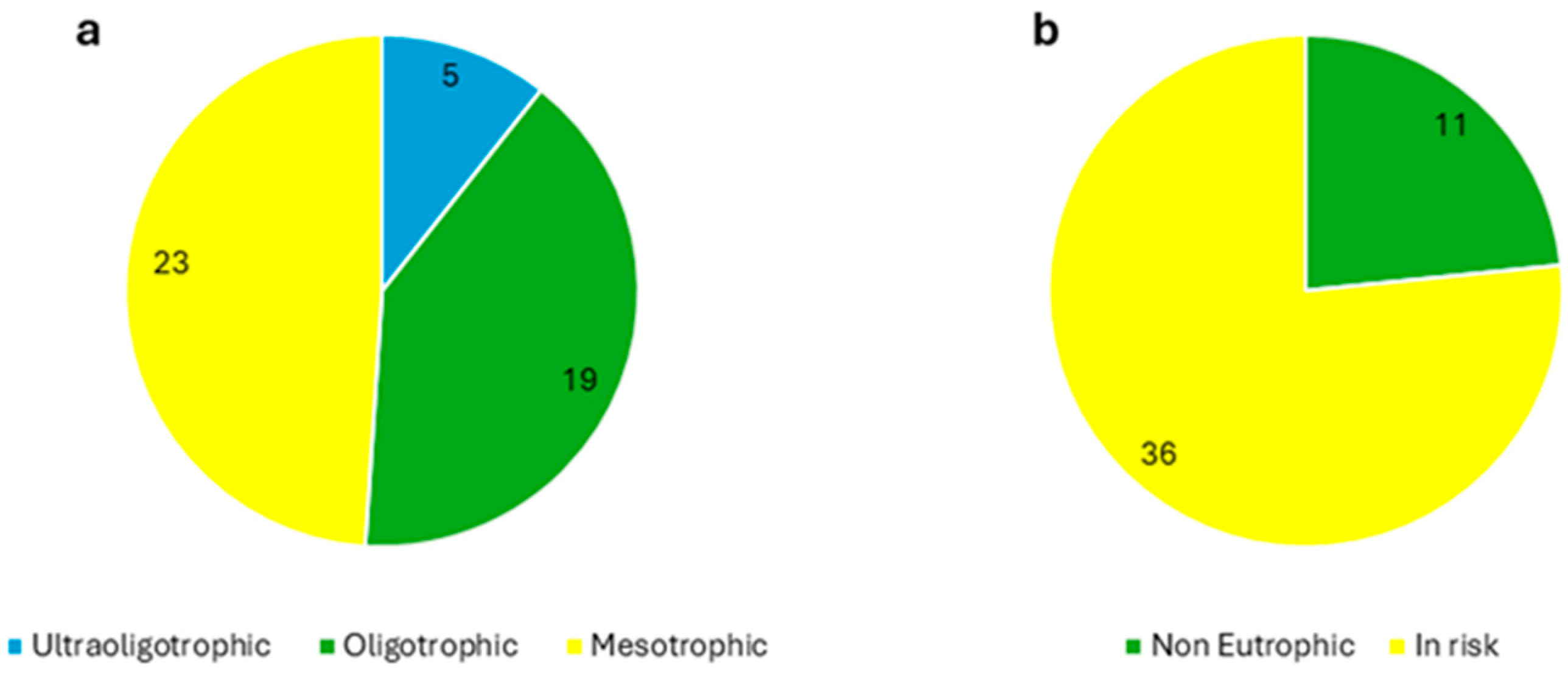
According to the OECD classification [18], five reservoirs (10.6%) were classified as ultra-oligotrophic, 19 (40.4%) as oligotrophic, and 23 (48.9%) as mesotrophic. The mean values for chlorophyll-a (Table 3), transparency, and total phosphorus were 4.15 µg L−1, 3.33 m, and 12 µg L−1, respectively. The highest recorded chlorophyll-a concentration was found in El Val (33.9 µg L−1), and the lowest in El Grado (0.4 µg L−1). Transparency levels ranged from 0.3 m (Yesa) to 15.1 m (Llauset), while total phosphorus levels varied from below detection to 99 µg L−1 (Utchesa).
The findings indicate that the majority of reservoirs within the Ebro Basin are classified as mesotrophic, suggesting that they exhibit moderate levels of nutrient enrichment and productivity, characteristics that are commonly observed in Mediterranean reservoirs.

3.2. Variables’ Differences Among Reservoir Types

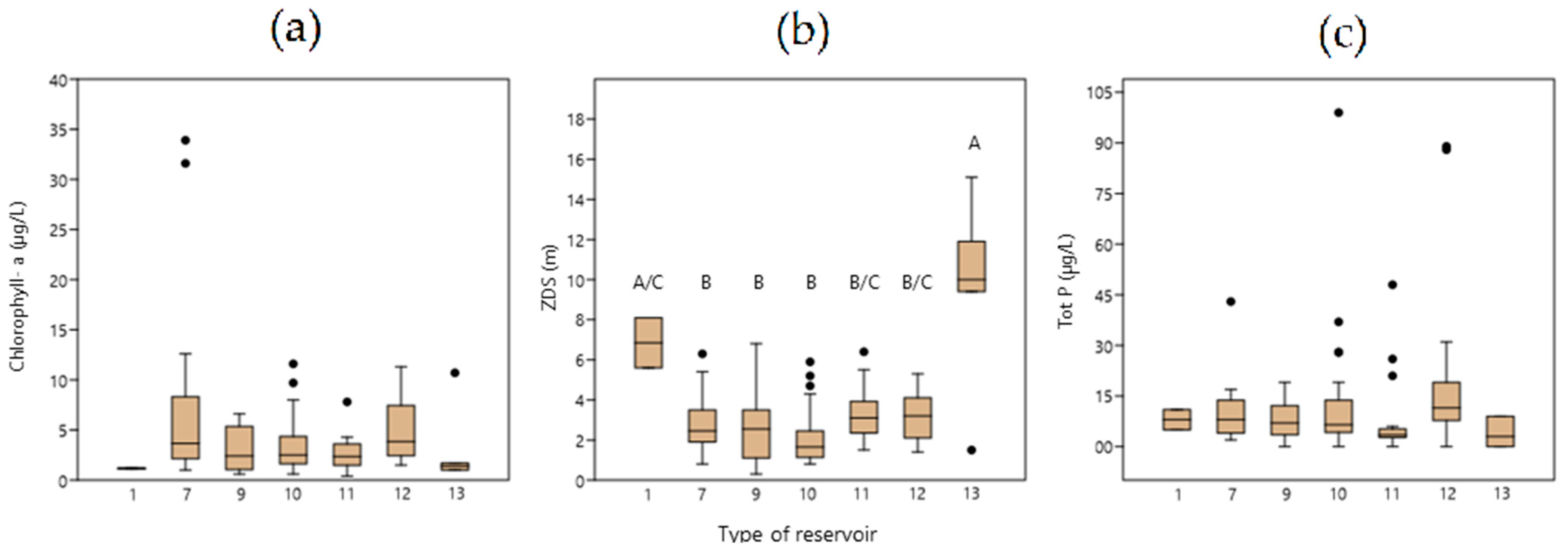
A significant variation among reservoir types (E-T01, E-T07, E-T09, E-T10, E-T11, E-T12, E-T13) shown in Figure 2b and Table A3 was identified for transparency (p < 0.05) with Kruskal–Wallis test.
Pairwise comparisons (Dunn’s test) indicated that Type 13 reservoirs, which are generally located in colder, high-altitude regions, exhibited the greatest transparency (mean 9.81 m), whereas Type 10 reservoirs showed the lowest values (≈2.1 m).
No significant differences were found for chlorophyll-a (Figure 2a and Table A4) and total phosphorus (Figure 2c and Table A5) among reservoir types (p > 0.05), indicating similar productivity levels across most groups. However, the relatively high variability in chlorophyll-a within Type 7 and 12 reservoirs (coefficients of variation above 120%) suggests heterogeneous conditions influenced by climatic and anthropogenic factors.

3.3. Eutrophication Risk Assessment and Comparison with Trophic Status

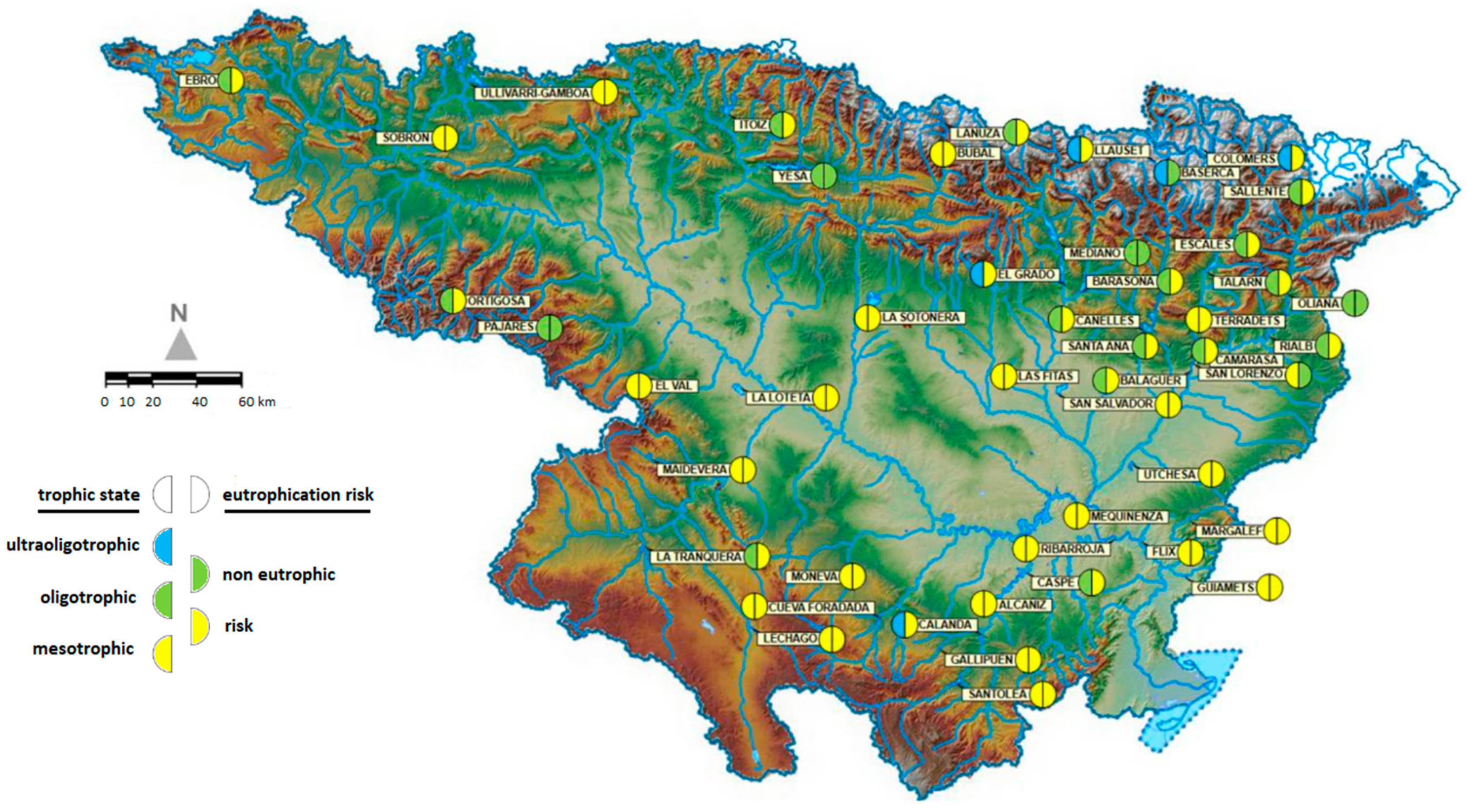
In accordance with the criteria delineated in Royal Decree 47/2022 [17], a total of 41 reservoirs (representing 87.2% of the total) were classified as at risk of eutrophication, while the remaining 6 reservoirs (12.8%) were classified as non-eutrophic (see Figure 3b, Figure 4 and Figure 5b). Of the 24 reservoirs classified as oligotrophic or ultra-oligotrophic under OECD criteria [18], only five remained non-eutrophic according to RD 47/2022 [17]. The classification of all mesotrophic reservoirs as being at risk was a key finding of the study.
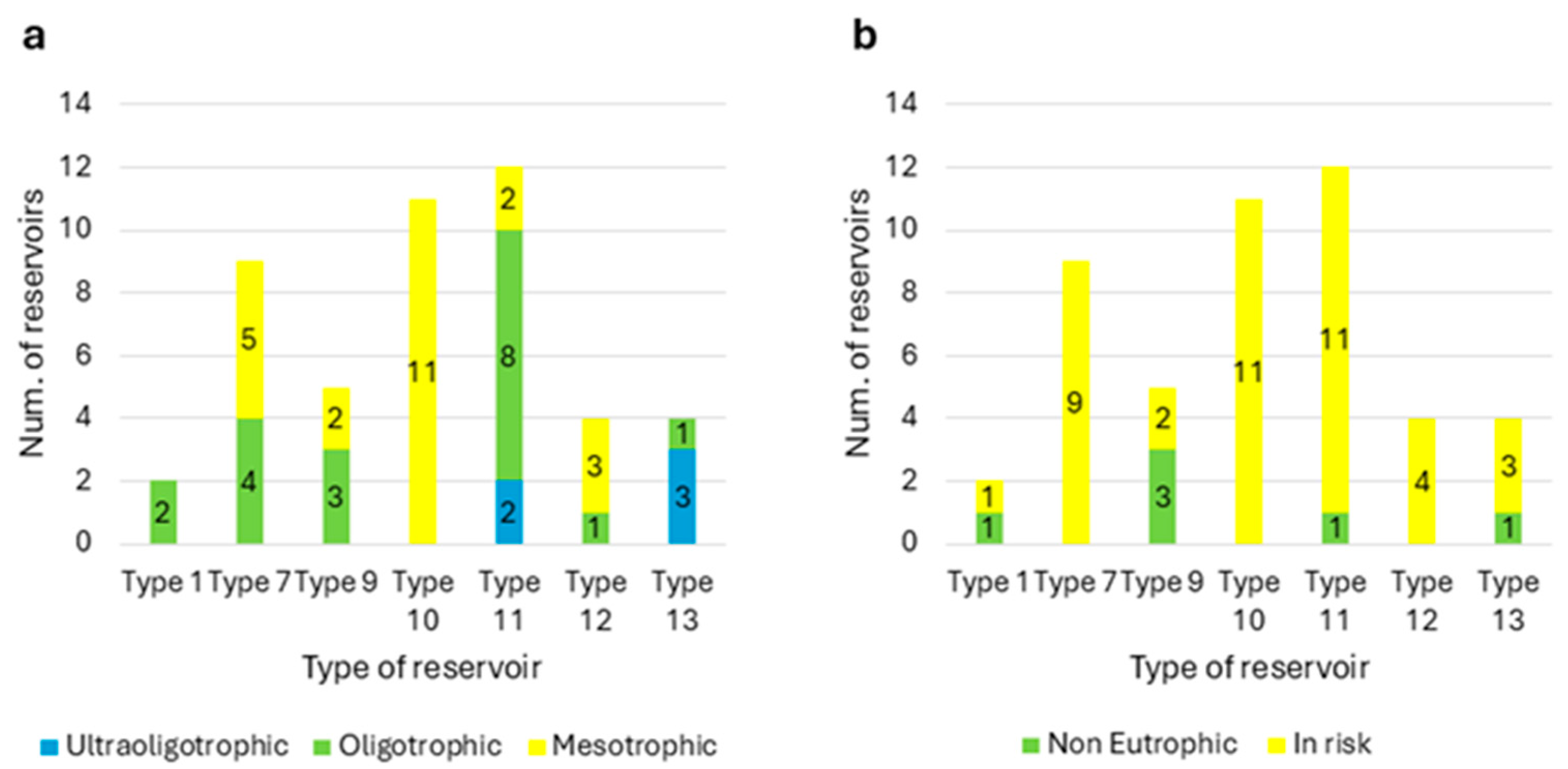
The observed discrepancy between the two frameworks underscores the more precautionary nature of RD 47/2022 [17], which incorporates external pressures such as diffuse agricultural pollution and hydromorphological alteration in its evaluation. The distribution of trophic states by reservoir type is summarised in Figure 3 and Figure 5.

3.4. Multivariate Analysis

Following an evaluation of normality employing the Shapiro–Wilk test, it was determined that neither of the variables under consideration exhibited a normal distribution (p < 0.05). After the log-transformation of the three variables, the Shapiro–Wilk test indicated that log-transformed chlorophyll-a (p = 0.2731) and transparency (p = 0.6531) did not deviate significantly from a normal distribution. In contrast, total phosphorus did not meet the Shapiro–Wilk normality criterion after transformation; however, the Anderson–Darling test yielded a p-value of 0.0555, indicating behaviour consistent with normality. These results supported the subsequent application of parametric correlation analyses to the transformed data.
The results of the Pearson correlation analysis among the variables showed a modest but statistically significant negative correlation between chlorophyll-a and transparency (r = −0.21, p = 0.038). No statistically significant correlations were observed between total phosphorus and either chlorophyll-a or transparency (p > 0.05).
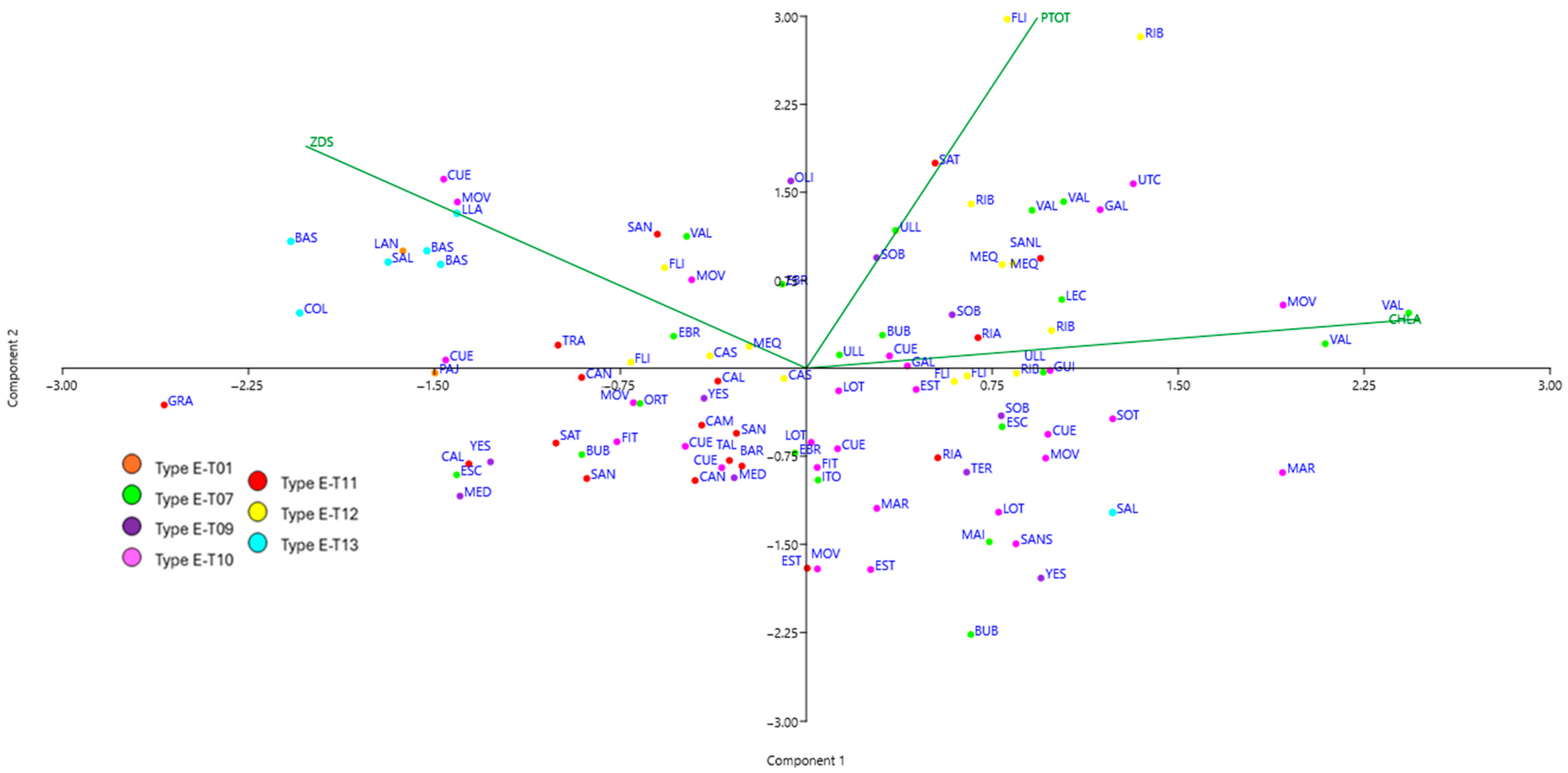
Principal Component Analysis (PCA) performed on normalized variables explained 76.0% of the total variance in the first two components (PC1 = 40.6%; PC2 = 35.4%). PC1 was characterized by high positive loadings of chlorophyll-a (0.744) and moderate positive loadings of total phosphorus (0.280), together with a strong negative loading of water transparency (−0.607). This component can therefore be interpreted as a trophic gradient contrasting phytoplankton biomass and nutrient enrichment against water clarity.
PC2 was dominated by a strong positive loading of total phosphorus (0.839) and a moderate positive loading of transparency (0.532), while chlorophyll-a showed only a weak contribution (0.118). This pattern suggests that PC2 represents a phosphorus-related gradient that is partially decoupled from phytoplankton biomass, highlighting situations in which elevated phosphorus concentrations do not translate into increased chlorophyll-a levels.
Reservoirs classified as oligotrophic or ultra-oligotrophic were grouped in negative part of the first component and the positive part of the second component, a region characterised by high transparency and low nutrient and chlorophyll concentrations (e.g., Baserca, Llauset, Colomers). In counterpart, mesotrophic and eutrophic reservoirs such as Mequinenza and El Val were located in the positive part of the first component and in the negative part of the second component, an area related with higher productivity and lower transparency (see Figure 6). It suggests a spatial arrangement of reservoirs that broadly reflects differences in trophic indicators; however, this pattern should be interpreted as exploratory, given the descriptive nature of PCA and the non-normal distribution of the data.

4. Discussion

The trophic assessment of 47 reservoirs in the Ebro Basin revealed majority exhibited oligotrophic to mesotrophic conditions according to OECD criteria [18]. However, nearly all of these systems were categorised as being at risk of eutrophication under Royal Decree (RD) 47/2022 [17]. This discrepancy is attributable to fundamental conceptual and methodological differences between the two frameworks and has significant implications for water quality assessment in Mediterranean basins. A modest negative association between chlorophyll-a and Secchi disk depth was observed, which is consistent with the expected inverse relationship between phytoplankton biomass and water clarity. However, given the weak strength of the correlation and the non-normal distribution of the data, this relationship should be interpreted as indicative rather than demonstrative. However, the lack of correlation of Total P with Chl-a and ZSD suggests that short-term variations in phosphorus concentrations may not directly explain chlorophyll fluctuations, likely due to internal biogeochemical processes and temporal variability in nutrient uptake.

4.1. Differences Between OECD and RD 47/2022 Approaches

The finding that 87% of reservoirs were considered “at risk” under RD 47/2022 [17], even when oligotrophic or mesotrophic by OECD standards [18], reflects a possible bias in the Spanish regulatory framework. This finding is aligned with the Water Framework Directive’s preventive approach [5], but it is also possible the risk of eutrophication may be overestimated in reservoirs with low internal nutrient loads. The overclassification of data can result in the diversion of management resources from systems which genuinely require intervention. Nevertheless, given the intensification of agricultural pressures and climate-driven reductions in flow [26], such caution may be ecologically justified in the long term.
Furthermore, this regulation reduces the number of variables to only chlorophyll-a and total phosphorus, thus giving greater weight to the latter, and using transparency in a complementary way through expert judgement, as it can be affected by factors not related to the trophic state, such as inorganic solids [11,27]. Nevertheless, this simplification results in the loss of valuable information regarding the actual ecological state and uses of water.

4.2. Spatial and Environmental Drivers of Trophic Variability

Differences among reservoir types were observed across climatic and geomorphological gradients. In the context of type 13 reservoirs, situated in mountainous regions characterised by colder climates, high transparency and low chlorophyll-a levels were observed. These characteristics are indicative of oligotrophic systems [28,29]. Conversely, Types 10 and 12, located in warmer, agriculturally dominated catchments, exhibited elevated nutrient concentrations and mesotrophic conditions, indicative of diffuse nutrient inflow and prolonged residence times.
Types 10 and 12 have a similar trend as other water bodies reported in Mediterranean and subtropical regions, where temperature, evaporation, and nutrient (mainly phosphorus) retention have been shown to enhance productivity [30]. Similar trophic dynamics have been observed in other subtropical reservoirs, where nutrient enrichment and hydrological variability modulate productivity and transparency levels [31]. These studies reinforce the role of local climatic and morphometric factors in shaping trophic behavior, even under comparable phosphorus concentrations.
The weak yet significant negative correlation between chlorophyll-a and transparency confirms the classical inverse relationship between phytoplankton biomass and water clarity. However, no statistically significant association was detected between total phosphorus and chlorophyll-a. This result indicates high variability in nutrient–biomass relationships among reservoirs, rather than providing evidence for the absence of phosphorus control [11].
PCA results are interpreted as exploratory and descriptive, providing an overview of multivariate patterns among reservoirs rather than demonstrating discrete trophic gradients or causal relationships. These results provide further evidence in support of the hypothesis that trophic state indices must be adapted to regional conditions [10,12]. Recent hydrological assessments by the Ebro River Basin Authority [19] also highlight increasing variability in flow regimes and retention times, which may exacerbate nutrient accumulation in downstream reservoirs.

4.3. Implications for Eutrophication Management

The comparison between OECD [18] and RD 47/2022 [17] outcomes highlights the requirement for integrated monitoring strategies to differentiate between ecological condition and management risk. The conservative classification of RD 47/2022 [17] ensures early detection; however, it may misrepresent the ecological reality of high-mountain or low-pressure reservoirs. For instance, Yesa and Mediano reservoirs exhibited low chlorophyll-a and high transparency, consistent with oligotrophic conditions; however, they were classified as “at risk”. In contrast, some reservoirs have been observed to maintain a stable trophic state, such as, Sobrón and Mequinenza reservoirs. This stability may be attributed to the constancy of their morphometric and hydrological characteristics, which include a large surface area, high storage capacity, and relatively long residence times. These characteristics act as a buffer against short-term fluctuations in nutrient levels and algal blooms. In these reservoirs, moderate anthropogenic pressure and efficient dilution capacity contribute to the maintenance of low chlorophyll-a concentrations and stable transparency values despite seasonal variability.
In addition to these stable systems, some reservoirs have shown clear trophic improvements over recent years if we compare it with the previous reports conducted by the Ebro Basin Authority [9,32,33]. Conversely, nine reservoirs have exhibited an enhancement in their trophic state, including Ebro and Barasona reservoirs, which have transitioned from a mesotrophic to an oligotrophic condition [9,32,33]. Other cases, such as El Val and Utchesa Seca, have shifted from eutrophic to mesotrophic states. Notably, only one case (Calanda) has exhibited a transition from oligotrophic to ultra-oligotrophic conditions. In the case of El Val, this improvement is attributable to better management of the reservoir [34], although livestock contributions persist. These findings highlights that management measures may effectively reverse eutrophication trends when sustained monitoring and adaptive regulation are implemented.
In order to enhance the precision of the results, field-based trophic indicators should be supplemented with catchment-scale pressure data and biological metrics (e.g., phytoplankton composition, zooplankton communities) [20,35,36]. Furthermore, the increasing availability of remote sensing tools [37,38] provides cost-effective methods to monitor spatial and temporal dynamics of chlorophyll-a and transparency across large basins. The integration of physicochemical, hydromorphologic, biological, and remote-sensing approaches has the potential to significantly reduce uncertainty and enhance adaptive management under RD 47/2022 [17] at regional scale.
Integrated surveillance programs have been developed in other Spanish basins to assess the ecological status of continental waters including the previous approaches [39]. These parallel efforts emphasise the need for harmonising methodologies across basins to ensure consistent evaluation of eutrophication risks along the different basins in the Iberian Peninsula.
Additionally, recent advancements in satellite-based monitoring techniques have enabled the estimation of trophic indicators such as chlorophyll-a and turbidity from multispectral imagery. Hybrid models integrating optical and environmental parameters have demonstrated strong potential for large-scale assessment [40], offering a valuable complement to in situ monitoring programs. Analogous approaches employing Sentinel-2 data have been successfully implemented to assess trophic states in urban reservoirs, achieving high accuracy in detecting spatial heterogeneity and seasonal variation [41]. These findings highlight the growing relevance of satellite-based observation, suggesting this could be a useful management tool under RD 47/2022 [17].
The predominance of mesotrophic states in comparison with earlier surveys [32,33] indicates a gradual trend toward higher productivity, likely associated with diffuse nutrient enrichment and reduced dilution during prolonged dry periods. This is consistent with European patterns of moderate trophic degradation observed in regulated systems [42]. Therefore, it is essential to implement preventive management strategies that focus on controlling nutrient sources, restoring of riparian buffers, and maintaining hydrological regimes to prevent further deterioration.

4.4. Broader Limnological Context

The patterns observed in the Ebro Basin are similar to those reported for other Mediterranean and semi-arid regions facing the dual challenge of water scarcity and anthropogenic pressure [43]. Eutrophication has been extensively documented as a problem in tropical and temperate systems. In addition, Mediterranean reservoirs exhibit an increased degree of vulnerability due to their episodic inflows and high evaporation rates. These factors result in the concentration of nutrients and the acceleration of trophic transitions.
Thus, this highlights the need for regional calibration of trophic indices and legal thresholds for adequate reservoirs management. This point of view is in accordance with the developing idea that trophic status should be evaluated within a climate-sensitive and catchment-integrated framework, as opposed to using universal static thresholds.

4.5. Limitations and Future Research

A limitation of the current study is the reliance on monitoring data collected over a relatively short period, specifically two sampling campaigns spanning 2023–2024. This limited temporal scope, especially when compared to earlier long-term assessments [32,33] that suggest a gradual trend toward higher productivity, could hide long-term trophic dynamics. Furthermore, the sampling frequency applied, while yielding 99 total observations across 47 reservoirs, did not adhere to the European Water Framework Directive (WFD) stipulation requiring a minimum of six annual samples to calculate annual mean and maximum values. This low sampling frequency may mask seasonal and short-term variability, which is crucial in regulated Mediterranean reservoirs. As a result, trophic state assignments are intended to provide a conservative and exploratory comparison among reservoirs mainly during summer, rather than a fully compliant regulatory assessment. Comparisons among systems should therefore be interpreted with caution, particularly regarding their equivalence to official Water Framework Directive classifications.
Therefore, future research must be focused on establishing robust links between hydrological variability, internal nutrient cycling, and integrating longer-term datasets to confirm the stability and validity of the relationships identified here, such as the weak nutrient–biomass coupling, in order to develop more reliable predictive models for eutrophication risk under changing environmental conditions.

5. Conclusions

The trophic assessment conducted in the present study indicates a divergence between current ecological condition assessment and regulatory management risk law. While OECD criteria categorize nearly half of the systems as oligotrophic or ultra-oligotrophic, the precautionary approach of Royal Decree 47/2022 classifies 87% of reservoirs at risk of eutrophication. This discrepancy is directly attributable to the RD 47/2022 framework’s integration of external pressures, such as diffuse agricultural pollution and hydromorphological alteration, reflecting the long-term susceptibility of these systems rather than their immediate in-lake status.
No strong or consistent relationship was observed between total phosphorus and chlorophyll-a. These results indicate complex and variable nutrient–biomass relationships across Mediterranean reservoirs rather than a uniform or phosphorus-driven response. Future research based on longer-term and seasonally resolved datasets will be essential to robustly assess trophic dynamics. Multivariate patterns identified through exploratory analyses were broadly consistent with the trophic classifications but should be interpreted with caution due to methodological limitations, including data non-normality and limited temporal coverage. Consequently, the observed gradients should be considered indicative rather than demonstrative of underlying causal mechanisms.
An integrated monitoring strategy is essential to improve management strategies under RD 47/2022 and to achieve the objectives of the Water Framework Directive. This strategy should differentiate between ecological condition and regulatory risk and incorporate complementary techniques such as biological metrics (e.g., zooplankton) and remote sensing tools. Remote sensing provides a cost-effective method to monitor the spatial and temporal dynamics of chlorophyll-a and transparency across the large Ebro Basin. This method could improve basin’s management plans. Finally, future research must focus on establishing robust links between hydrological variability, internal nutrient cycling, and long-term datasets to develop predictive models to monitor precisely trophic state and eutrophication risk, especially against increasing anthropogenic pressures and climate change effects.

Author Contributions

Conceptualization, J.V.M. and J.M.S.; methodology, J.V.M., E.A.-L., N.C.-T. and R.P.-G.; investigation, J.V.M., E.A.-L. and M.M.-C.; data curation, E.A.-L. and J.M.S.; writing—original draft preparation, J.V.M., E.A.-L. and N.C.-T.; writing—review and editing, R.P.-G., J.M.S., M.J.R. and M.M.-C.; supervision, J.M.S., M.J.R. and M.M.-C.; project administration, J.M.S.; funding acquisition, M.J.R. and J.M.S. All authors have read and agreed to the published version of the manuscript.

Funding

This research was funded by the Ebro Basin Authority throughout the “Agreement between the Ebro Basin Authority and the University of Valencia for monitoring water quality in reservoirs of the basin using remote sensing”.

Data Availability Statement

The datasets generated during and/or analysed during the current study are not publicly available now due to ongoing research and subsequent publications based on these data but are available from the corresponding author on request and freely published after 2027.

Acknowledgments

Authors would like to express their gratitude to the water quality section of the Ebro Basin Authority for their support.

Conflicts of Interest

The authors declare no conflicts of interest.

Abbreviations

The following abbreviations are used in this manuscript:
PT/PTOTTotal Phosphorus
CHLA/Chl-aChlorophyll-a
ZSDSecchi disk depth/transparency
RDRoyal Decree

Appendix A

Table A1. Resevoirs typology codes. Modified from RD 817/2015 [16] standard.
Reservoir TypeMixing RegimeLitologyRegional Climatic ConditionsBasin Area
E-T01Monomictic SiliceousHumid zone (average annual temperature < 15 °C)Headwaters and upper reaches
E-T07Monomictic CalcareousHumid zone (average annual temperature < 15 °C)Headwaters and upper reaches
E-T09Monomictic CalcareousHumid zoneMain river network
E-T10Monomictic CalcareousNot humid zoneHeadwaters and upper reaches
E-T11Monomictic CalcareousNot humid zoneMain river network
E-T12Monomictic CalcareousNot humid zoneLower reaches of main rivers
E-T13Dimictic
Table A2. Three-letter code for the reservoir along with average trophic status, type of reservoir and location. Modified from Muñoz-Colmenares et al. [35].
CodeReservoirAverage Trophic StatusType of ReservoirLocation
BARBarasonaOligotrophic11Aragon
BASBasercaOligotrophic13Aragon
BUBBúbalOligotrophic7Aragon
CALCalandaOligotrophic10Aragon
CAMCamarasaOligotrophic11Catalonia
CANCanellesOligotrophic11Aragon
CASCaspeMesotrophic12Aragon
COLColomersOligotrophic13Catalonia
CUECueva ForadadaMesotrophic10Aragon
EBREbroOligo–Mesotrophic7Cantabria
ESCEscalesOligotrophic7Aragon
ESTAlcañizMesotrophic10Aragon
FLIFlixMesotrophic12Catalonia
GALGallipuénMesotrophic10Aragon
GRAEl GradoOligotrophic11Aragon
GUIGuiametsMesotrophic10Catalonia
ITOItoizOligotrophic7Navarre
LANLanuzaOligotrophic1Aragon
LECLechagoOligo–Mesotrophic7Aragon
LLALlausetOligotrophic13Aragon
LOTLa LotetaMeso–Eutrophic10Aragon
MAEMaideveraMesotrophic7Aragon
MARMargalefMesotrophic10Catalonia
MEDMedianoOligotrophic9Aragon
MEQMequinenzaOligo–Mesotrophic12Aragon
MOVMonevaMeso–Eutrophic10Aragon
OLIOlianaMesotrophic9Catalonia
ORTOrtigosaOligotrophic7La Rioja
PAJPajaresOligotrophic1La Rioja
RIARialbMesotrophic11Catalonia
RIBRibarrojaEutrophic12Catalonia
SALSallenteOligotrophic13Catalonia
SANSanta AnaOligotrophic11Catalonia
SLOSan LorenzoMesotrophic10Catalonia
SSASan SalvadorOligotrophic10Catalonia
SOBSobrónMeso–Eutrophic9Castile and León
SOTLa SotoneraMesotrophic10Aragon
STOSantoleaOligotrophic11Aragon
TALTalarnOligo–Mesotrophic11Catalonia
TERTerradetsMesotrophic9Catalonia
TRALa TranqueraMesotrophic11Aragon
ULLUllivarri-GamboaOligo–Mesotrophic7Pais Vasco
UTCUtchesa SecaEutrophic10Catalonia
VALEl ValEutrophic7Aragon
YESYesaOligotrophic9Navarre

Appendix B

Table A3. Statistical summary of the values obtained for transparency (m) measured with the Secchi disk (ZSD) according to the type of reservoir.
17910111213
N220102818147
Min5.600.800.300.801.501.401.50
Max8.106.306.805.906.405.3015.10
Mean6.852.912.682.113.273.189.81
Std. Error1.250.310.600.260.310.321.57
Variance3.131.903.601.881.721.3917.17
Std. Dev.1.771.381.901.371.311.184.14
Median6.852.452.551.653.103.2010.00
25 Percentile5.601.901.101.132.352.109.40
75 Percentile8.103.503.502.453.934.1011.90
Coeff. Var.25.8147.5070.8465.0440.1637.1542.22
Table A4. Statistical summary of the values obtained for chlorophyll-a (µg L−1) according to the type of reservoir.
17910111213
N220102818147
Min1.101.000.600.600.401.501.00
Max1.2033.906.6011.607.8011.3010.70
Mean1.157.283.033.402.705.052.66
Std. Error0.052.060.720.500.400.851.34
Variance0.0185.155.236.962.8710.0712.65
Std. Dev.0.079.232.292.641.693.173.56
Median1.153.652.402.502.353.851.40
25 Percentile1.102.131.051.631.482.431.00
75 Percentile1.208.335.354.353.607.451.70
Coeff. Var.6.15126.7575.4577.5862.7062.84133.87
Table A5. Statistical summary of the values obtained for total phosphorus (µg L−1) according to the type of reservoir.
17910111213
N220102818147
Min52<1<1<1<1<1
Max1143199948899
Mean8108138224
Std. Error3224382
Variance0000010
Std. Dev.4961912294
Median88774123
25 Percentile5444380
75 Percentile111412145199
Coeff. Var.538876148156132109

References

  1. Westall, F.; Brack, A. The Importance of Water for Life. Space Sci. Rev. 2018, 214, 50. [Google Scholar] [CrossRef]
  2. Hosseiny, S.H.; Bozorg-Haddad, O.; Bocchiola, D. Water, Culture, Civilization, and History. In Economical, Political, and Social Issues in Water Resources; Bozorg-Haddad, O., Ed.; Elsevier: Amsterdam, The Netherlands, 2021; pp. 189–216. [Google Scholar] [CrossRef]
  3. Smith, B. Water: A critical resource. In The Mediterranean, Environment and Society; King, R., Proudfoot, L., Smith, B., Eds.; Routledge: London, UK, 2014; pp. 227–251. [Google Scholar] [CrossRef]
  4. Boyd, C.E. Water Quality; Springer International Publishing AG: Cham, Switzerland, 2015. [Google Scholar]
  5. Directive 2000/60/EC of the European Parliament and of the Council of 23 October 2000, establishing a framework for Community action in the field of water policy. Off. J. Eur. Union 2000. 2000/60/EC. Available online: https://eur-lex.europa.eu/eli/dir/2000/60/oj/eng (accessed on 28 April 2025).
  6. Ministerio de Medio Ambiente. Libro Blanco del Agua en España; Centro de Publicaciones, Secretaría General Técnica, Ministerio de Medio Ambiente: Madrid, Spain, 2000; Available online: https://hispagua.cedex.es/sites/default/files/PRELIM.PDF (accessed on 3 September 2025).
  7. Akinnawo, S.O. Eutrophication: Causes, consequences, physical, chemical and biological techniques for mitigation strategies. Environ. Chall. 2023, 12, 100733. [Google Scholar] [CrossRef]
  8. Devlin, M.; Brodie, J. Nutrients and Eutrophication. In Marine Pollution–Monitoring, Management and Mitigation; Reichelt-Brushett, A., Ed.; Springer Nature: Cham, Switzerland, 2023; pp. 75–100. [Google Scholar] [CrossRef]
  9. Rodríguez-Pérez, M.J.; Soria, J.M.; Durán-Lalaguna, C. El seguimiento de los embalses en la demarcación hidrográfica del Ebro. El estado de los embalses aragoneses. Nat. Aragonesa 2014, 31, 44–52. Available online: http://hdl.handle.net/10550/43944 (accessed on 28 April 2025).
  10. Mineeva, N.M. Production Characteristics of Phytoplankton as Indicators of the Trophic State of Artificial Reservoirs. Inland Water Biol. 2023, 16, S333–S346. [Google Scholar] [CrossRef]
  11. Dodds, W.K.; Cole, J.J. Expanding the concept of trophic state in aquatic ecosystems: It’s not just the autotrophs. Aquat. Sci. 2007, 69, 427–439. [Google Scholar] [CrossRef]
  12. Cunha, D.G.F.; Calijuri, M.C.; Lamparelli, M.C. A trophic state index for tropical/subtropical reservoirs (TSItsr). Ecol. Eng. 2013, 60, 126–134. [Google Scholar] [CrossRef]
  13. Kuczyńska-Kippen, N.; Zhang, C.; Mleczek, M.; Špoljar, M. Rotifers as indicators of trophic state in small water bodies with different catchments (field vs. forest). Hydrobiologia 2025, 852, 2669–2685. [Google Scholar] [CrossRef]
  14. Pérez-Martín, M.Á. Understanding Nutrient Loads from Catchment and Eutrophication in a Salt Lagoon: The Mar Menor Case. Water 2023, 15, 3569. [Google Scholar] [CrossRef]
  15. Schlenker, C.; Pinckney, J.L. Evaluating Potential Changes from Nitrogen to Phosphorus Nutrient Limitation of Phytoplankton Growth in North Inlet Estuary, SC. Estuaries Coasts 2025, 48, 137. [Google Scholar] [CrossRef]
  16. Royal Decree 817/2015 of 11 September 2015, establishing criteria for monitoring and evaluating the status of surface waters and environmental quality standards. Bol. Off. Estado 2015, BOE-A-2015-9806. Available online: https://www.boe.es/eli/es/rd/2015/09/11/817 (accessed on 28 April 2025).
  17. Royal Decree 47/2022 of 18 January 2022, on the protection of waters against diffuse pollution caused by nitrates from agricultural sources. Bol. Off. Estado 2022, BOE-A-2022-860. Available online: https://www.boe.es/eli/es/rd/2022/01/18/47 (accessed on 28 April 2025).
  18. OECD. Eutrophication of Waters: Monitoring, Assessment and Control; OECD: Paris, France, 1982; Available online: http://lakes.chebucto.org/TPMODELS/OECD/OECD1982.pdf (accessed on 15 June 2025).
  19. CHE. Confederación Hidrográfica del Ebro. La Cuenca del Ebro. Portal CHEbro. Available online: https://www.chebro.es (accessed on 13 June 2025).
  20. Pérez-González, R.; Sòria-Perpinyà, X.; Soria, J.M.; Sendra, M.D.; Vicente, E. Relationship Between Cyanobacterial Abundance and Physicochemical Variables in the Ebro Basin Reservoirs (Spain). Water 2023, 15, 14. [Google Scholar] [CrossRef]
  21. Shoaf, W.T.; Lium, B.W. Improved extraction of chlorophyll a and b from algae using dimethyl sulfoxide. Limnol. Oceanogr. 1976, 21, 926–928. [Google Scholar] [CrossRef]
  22. Jeffrey, S.W.; Humphrey, G.F. New spectrophotometric equations for determining chlorophylls a, b, c1 and c2 in higher plants, algae and natural phytoplankton. Biochem. Physiol. Pflanz. 1975, 167, 191–194. [Google Scholar] [CrossRef]
  23. Murphy, J.; Riley, J.P. A modified single solution method for the determination of phosphate in natural waters. Anal. Chim. Acta 1962, 27, 31–36. [Google Scholar] [CrossRef]
  24. Talling, J.F.; Golterman, H.L.; Clymo, R.S.; Ohnstad, M.A.M. Methods for Physical and Chemical Analysis of Fresh Waters. J Ecol 1980, 68, 337. [Google Scholar] [CrossRef]
  25. Hammer, Ø.; Harper, D.A.T.; Ryan, P.D. Past: Paleontological Statistics Software Package for Education and Data Analysis. Palaeontol. Electron. 2001, 4, 9. Available online: http://palaeo-electronica.org/2001_1/past/issue1_01.htm (accessed on 15 June 2025).
  26. CHE. Análisis de presiones e impactos. Fichas de resultados IMPRESS. Portal CHEbro. Available online: https://www.chebro.es/fichas (accessed on 18 June 2025).
  27. Carlson, R.E.; Havens, K.E. Simple Graphical Methods for the Interpretation of Relationships Between Trophic State Variables. Lake Reserv. Manag. 2005, 21, 107–118. [Google Scholar] [CrossRef]
  28. Camargo, J.A.; Alonso, Á.; de la Puente, M. Eutrophication downstream from small reservoirs in mountain rivers of Central Spain. Water Res. 2005, 39, 3376–3384. [Google Scholar] [CrossRef]
  29. Toro, M.; Granados, I.; Robles, S.; Olmo, C. High mountain lakes of the Central Range (Iberian Peninsula): Regional limnology and environmental changes. Limnetica 2006, 25, 217–252. [Google Scholar] [CrossRef]
  30. Dodds, W.K.; Whiles, M.R. Freshwater Ecology: Concepts and Environmental Applications of Limnology, 3rd ed.; Elsevier Academic Press: Amsterdam, The Netherlands, 2020. [Google Scholar]
  31. Ojaveer, E. Ecosystems and Living Resources of the Baltic Sea; Springer: Cham, Switzerland, 2017; ISBN 9783319530093. Available online: https://link.springer.com/content/pdf/10.1007/978-3-319-53010-9.pdf (accessed on 15 June 2025).
  32. CHE. Informe Final de Embalses Año 2010; Universitat de València: València, Spain. 2010. Available online: https://www.chebro.es/documents/20121/54000/Memoria_Informe_embalses_2010.pdf (accessed on 15 June 2025).
  33. CHE. Informe Final de Embalses Año 2011; Universitat de València: València, Spain. 2011. Available online: https://www.chebro.es/documents/20121/54000/Memoria_Informe_embalses_2011.pdf (accessed on 15 June 2025).
  34. CHE. Estudio del Estado Trófico del Embalse de El Val (Zaragoza) y Programa de Medidas; Ministerio para la Transición Ecológica: Madrid, Spain, 2017. Available online: https://www.chebro.es/documents/20121/55149/EC16013_SENSIBLES_VAL_IF_vD.pdf (accessed on 15 June 2025).
  35. Muñoz-Colmenares, M.E.; Soria, J.M.; Vicente, E. Can zooplankton species be used as indicators of trophic status and ecological potential of reservoirs? Aquat. Ecol. 2021, 55, 1143–1156. [Google Scholar] [CrossRef]
  36. Muñoz-Colmenares, M.; Sendra, M.; Sòria-Perpinyà, X.; Soria, J.; Vicente, E. The use of zooplankton metrics to determine the trophic status and ecological potential: An approach in a large mediterranean watershed. Water 2021, 13, 2382. [Google Scholar] [CrossRef]
  37. Hu, M.; Ma, R.; Xue, K.; Cao, Z.; Xiong, J.; Loiselle, S.A.; Shen, M.; Hou, X. Eutrophication evolution of lakes in China: Four decades of observations from space. J. Hazard. Mater. 2024, 470, 134225. [Google Scholar] [CrossRef] [PubMed]
  38. Meyer, M.F.; Topp, S.N.; King, T.V.; Ladwig, R.; Pilla, R.M.; Dugan, H.A.; Eggleston, J.R.; Hampton, S.E.; Leech, D.M.; Oleksy, I.A.; et al. National-scale remotely sensed lake trophic state from 1984 through 2020. Sci. Data 2024, 11, 77. [Google Scholar] [CrossRef]
  39. Grindlay, A.L.; Zamorano, M.; Rodríguez, M.I.; Molero, E.; Urrea, M.A. Implementation of the European Water Framework Directive: Integration of hydrological and regional planning at the Segura River Basin, southeast Spain. Land Use Policy 2011, 28, 242–256. [Google Scholar] [CrossRef]
  40. Liu, Y.; Ke, Y.; Wu, H.; Zhang, C.; Chen, X. A satellite-based hybrid model for trophic state evaluation in inland waters across China. Environ. Res. 2023, 225, 115509. [Google Scholar] [CrossRef] [PubMed]
  41. Zhou, Y.; He, B.; Fu, C.; Giardino, C.; Bresciani, M.; Liu, H.; Feng, Q.; Xiao, F.; Zhou, X.; Liang, S. Assessments of trophic state in lakes and reservoirs of Wuhan using Sentinel-2 satellite data. Eur. J. Remote Sens. 2021, 54, 461–475. [Google Scholar] [CrossRef]
  42. European Environment Agency. European Waters—Assessment of Status and Pressures 2018; EEA Report No. 7; EEA: Copenhagen, Denmark, 2018. Available online: https://www.eea.europa.eu/en/analysis/publications/state-of-water (accessed on 20 June 2025).
  43. Oliver, S.; Corburn, J.; Ribeiro, H. Challenges Regarding Water Quality of Eutrophic Reservoirs in Urban Landscapes: A Mapping Literature Review. Int. J. Environ. Res. Public Health 2019, 16, 40. [Google Scholar] [CrossRef]
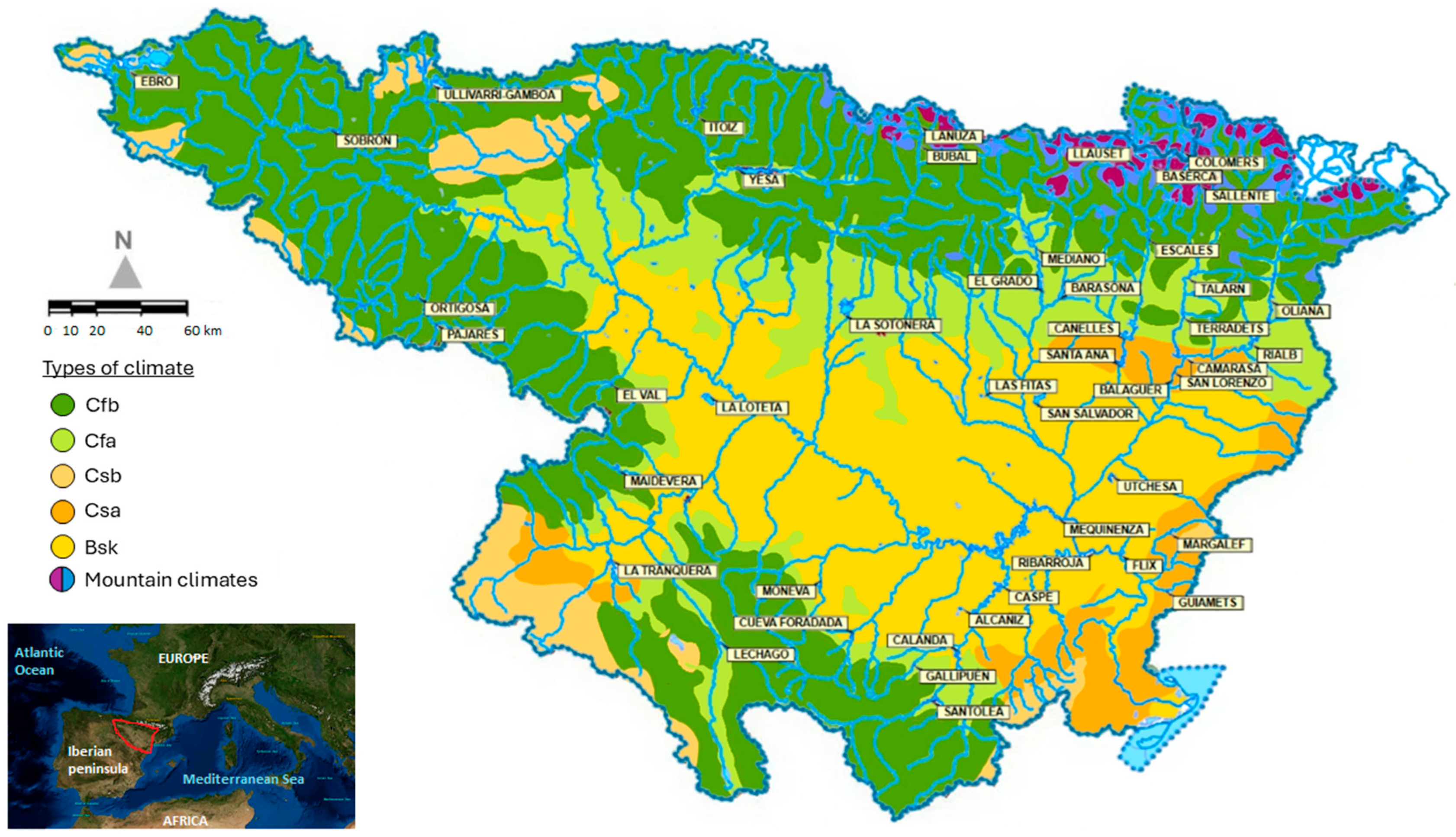
Figure 1. Approximate representation of the climatic regions according to Köppen present in the Ebro basin and the presence in each of them of the reservoirs studied. Temperate climate without dry season with mild summer (Cfb), temperate climate without dry season with hot summer (Cfa), temperate climate with dry and hot summer (Csa), cold steppe climate (Bsk), mountain climates (Dfb and Dfc). In the Mediterranean oceanic climate (Csb) there are no reservoirs sampled during these studies. The red line indicates the border of the Ebro Basin Authority.
Environments 13 00039 g001
Figure 2. Box plots for each variable studied: (a) chlorophyll-a, (b) Secchi disk depth, (c) total phosphorus. Each box delimits the interquartile range (25th–75th percentile), the horizontal line marks the median and the whiskers indicate the range of the data, excluding outliers marked with dots. Letters A, B and C are derived from statistical analysis. These metrics are indicative of disparities among the groups under consideration. The presence of identical letters indicates that no differences are present between them.
Environments 13 00039 g002
Figure 3. Summary of trophic state results according to OECD (a) and Royal Decree 47/2022 (b). ER (At risk of eutrophication). NE (Non-eutrophic).
Environments 13 00039 g003
Figure 4. Comparison between trophic state (left semicircle) according to OECD and eutrophication risk (right semicircle) according to RD 47/2022.
Environments 13 00039 g004
Figure 5. Summary of results obtained by trophic state groups according to OECD (a) and Royal Decree 47/2022 (b). ER (At risk of eutrophication). NE (Non eutrophic).
Environments 13 00039 g005
Figure 6. Principal Component Analysis of the reservoirs sampled during the years 2023 and 2024. PTOT is total P (TP), CHLA is chlorophyll-a and ZDS is Secchi disk depth. Types of reservoirs in Table A1 and three letter code of reservoir according to Table A2. Loading vectors were rescaled by a factor of 3 to improve visualization.
Environments 13 00039 g006
Table 1. Trophic state classification according to OECD [18].
Trophic CategoryNumerical ValueMean Numerical
Number
Total Phosphorus
(µg L−1)
Chlorophyll-a
(µg L−1)
Secchi Disc
(m)
Ultraoligotrophic1<1.8<4<1>6
Oligotrophic21.8–2.64–101–2.56–3
Mesotrophic32.6–3.410–352.5–83–1.5
Eutrophic43.4–4.235–1008–251.5–0.7
Hypertrophic5≥4.2>100>25<0.7
Table 2. Indicator variables of eutrophication risk according to RD 47/2022.
Variables–Trophic StateNon-EutrophicEutrophic
Total phosphorus (μg/L) annual mean≤35>35
Chlorophyll-a (μg/L) annual mean≤8>8
Annual maximum chlorophyll-a (μg/L)≤25>25
Secchi disk (m) annual mean≥2<2
Table 3. Statistical summary of the variables analysed. Chlorophyll-a (CHL-A) in µg L−1, transparency measured with the Secchi disc (ZSD) in m and total phosphorus (PTOT) in µg L−1.
CHL-A
µg L−1
ZSD
m
PTOT
µg L−1
N999999
Min0.40.30
Max33.915.199
Mean4.23.312
Std. Error0.50.22
Variance24.76.50
Std. Dev.5.02.517
Median2.82.57
25 Percentile1.51.73
75 Percentile4.54.113
Coeff. Var.119.576.8146
Disclaimer/Publisher’s Note: The statements, opinions and data contained in all publications are solely those of the individual author(s) and contributor(s) and not of MDPI and/or the editor(s). MDPI and/or the editor(s) disclaim responsibility for any injury to people or property resulting from any ideas, methods, instructions or products referred to in the content.