
Article

Plasma-Assisted Valorization of Liquid Digestate from the Ravda Wastewater Treatment Plant: Microbiological and Chemical Aspects

1
Faculty of Biology, Sofia University “St. Kliment Ohridski”, 8 Dragan Tzankov Blvd., 1164 Sofia, Bulgaria
2
Center of Competence “Clean Technologies for Sustainable Environment—Water, Waste, Energy for Circular Economy”, 1a James Bourchier Blvd., 1164 Sofia, Bulgaria
3
Department of Medical Physics and Biophysics, Medical University of Sofia, 1431 Sofia, Bulgaria
*
Author to whom correspondence should be addressed.
Environments 2026, 13(1), 15; https://doi.org/10.3390/environments13010015
Submission received: 19 November 2025 / Revised: 23 December 2025 / Accepted: 25 December 2025 / Published: 29 December 2025

Abstract

Anaerobic digestion of sewage sludge generates large volumes of liquid digestate, which is often returned to wastewater treatment plants (WWTPs) due to the presence of pathogens and pollutants, limiting its safe reuse in agriculture. This study evaluated plasma-based post-treatment as a method to improve the sanitary quality of digestate. The liquid phase from mesophilic digesters at WWTP “Ravda” was treated for 5 min using two plasma sources, the β-device and the Surfaguide WR340 (SAIREM, Décines-Charpieu, France). Disinfection effectiveness was assessed for aerobic and anaerobic heterotrophs, fecal and total coliforms, Escherichia coli, Salmonella sp., and Clostridium sp. Physicochemical parameters measured included pH, COD, NH4+, NO2, NO3, and PO43−. The β-device achieved partial disinfection, with reductions ranging from 16.3% to 89.8% for different microbial groups, whereas coliforms persisted and Clostridium sp. reappeared. The Surfaguide produced near-complete disinfection, eliminating coliforms, E. coli, Salmonella sp., and Clostridium sp., and markedly reduced microbial diversity. Both treatments caused slight pH increases, COD decreases, release of NH4+ and PO43−, and rises in NO2 and NO3. Plasma-based disinfection, particularly with the Surfaguide, effectively improves the sanitary quality of the digestate and modifies its chemical properties, supporting the potential for sustainable digestate valorization and its safe reuse in agriculture.

1. Introduction

In recent years, the sustainable management of biodegradable waste, particularly in the context of the food industry and wastewater treatment plants (WWTPs), has become a key ecological and energy priority [1,2]. Anaerobic digestion (AD) processes in environmental biotechnologies have been established as effective for transforming organic waste into energy in the form of biogas. Despite this progress, the process produces significant quantities of digestate, up to 90–95% of the input mass. Utilizing the liquid phase of digestate remains a challenge. This water is rich in ammonium nitrogen and potassium, and has agronomic potential, but it may also contain undesirable pollutants, such as pharmaceutical residues, pesticides, microplastics, and other toxic pollutants, as well as pathogenic microorganisms. This limits its application in agriculture and requires additional treatment to enhance its sanitary safety. Due to the limitations of conventional disinfection methods, there is increasing interest in using plasma to treat the liquid phase of digestate [1,2]. Plasma is an ionized gas containing free electrons, charged ions, and neutral particles [3,4]. It exhibits unique properties, including collective motion of charged particles, electromagnetic connectivity, and macroscopic quasi-neutrality [4]. Discovered by William Crookes in 1879 and named by Irving Langmuir in 1928, plasma has found increasingly wide application in environmental and biotechnological processes [3,5]. Plasmas are mainly divided into two types—thermal and non-thermal (non-equilibrium) [6,7]. In thermal plasma, typical of high pressure, electrons and heavy particles (neutral atoms and ions) are in thermal equilibrium, and their temperatures are equal. In non-thermal plasma, generated at low pressure or via radiofrequency, microwaves, alternating or direct current, and other non-heating methods, the electron temperatures are much higher than the temperatures of heavy particles, and in some conditions, the heavy particles temperature remains near room temperature (cold atmospheric plasmas, CAPs) [6,7,8]. Non-thermal plasma offers a promising solution for disinfection at lower energy costs, without causing significant undesirable thermal degradation of the substrate.
Plasma technologies are suitable for treating the liquid phase of digestate resulting from anaerobic sludge stabilization. This water contains valuable nutrients, but it may also contain pathogenic microorganisms, including Escherichia coli, Salmonella sp., and Clostridium sp., as well as more resistant agents such as bacterial spores and mycobacteria [9]. The hierarchy of microbial resistance to disinfection places prions, spores, and some protozoa among the most resistant forms, while vegetative bacteria and helminths are more sensitive [9]. Environmental conditions also influence resistance. Organic substances such as blood or serum may protect pathogens by stabilizing cellular structures or through the formation of protective biofilms. Nevertheless, plasma treatment demonstrates high disinfection effectiveness even against such protected forms, as a result of the emitted reactive oxygen and nitrogen species, to which microorganisms have difficulty developing resistance [9].
The existing physicochemical and biological methods for treatment of the liquid phase of digestate are often associated with high costs and incomplete pathogen removal. In this context, plasma emerges as a reliable tool for disinfecting multidrug-resistant pathogens, which is an increasingly important issue in an era of widespread antibiotic resistance. Plasma treatment not only ensures disinfection but also potentially increases bacterial sensitivity to subsequent antibiotic treatment [9,10,11,12].
In a review of the literature, Zocker et al. (2025) summarize that reactive oxygen species (ROS) play an important role during water disinfection, with hydroxyl and superoxide radicals, leading to acidification of plasma-treated water [13]. This helps to increase the permeability of the cell membrane and leads to reduced ATP synthesis. Gram-negative bacteria with thinner cell walls are more vulnerable to surface damage caused by hydroxyl radicals, while in Gram-positive bacteria, intracellular attacks by penetrated peroxynitrite are more effective. It has been established that in the latter, hydroxyl radicals alone would not be able to cause sufficient damage to the cell surface.
A big variety of plasma sources and operation conditions are used for bio-medical applications and demonstrates high bactericidal, virucidal, and fungicidal effects. The different plasma sources and their operational conditions are characterized by the plasma source construction, working gas used, and the gas flow parameters of operations like applied electric voltage (U), electric power (P), treatment time (T), etc.
Table 1 summarizes the results of scientific experiments conducted to evaluate the disinfection of microorganisms in various model systems. The data show that different plasma sources and experimental conditions achieve high disinfection effectiveness against a wide range of microorganisms. The percentage of microbial disinfection depends on the type of pathogen, the type of working gas, the exposure time, and the operating conditions. More resistant bacterial forms require longer treatment time. This highlights the potential of plasma as a reliable disinfection tool, while at the same time demonstrating the need for its application under real conditions with complex matrices.
Anaerobic sludge stabilization produces digestate at wastewater treatment plants. The solid phase of the digestate is typically used in agriculture, while the liquid phase is usually returned to the inlet of WWTP for further treatment. Therefore, it is essential to explore ways to utilize this waste product. In this context, the present study aims to evaluate the disinfection effectiveness of liquid digestate at the WWTP “Ravda” treated with two plasma sources: ß-device and Surfaguide. In addition, changes in nitrogen and phosphorus concentrations before and after plasma treatment were compared.

2. Materials and Methods

2.1. Experimental Design

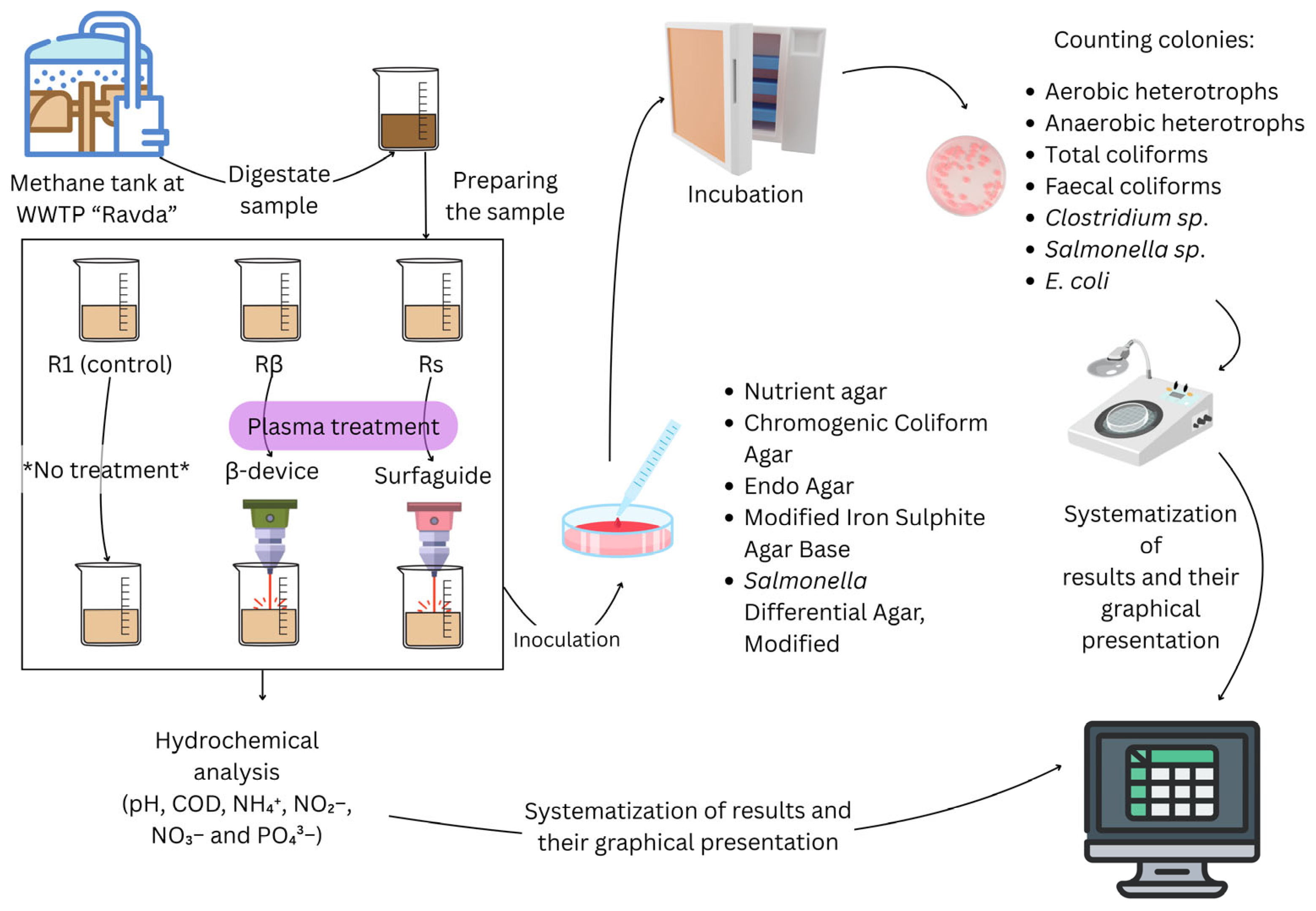
The object of this study was the digestate obtained from the anaerobic stabilization of excess sludge at the WWTP “Ravda”. The plant treats wastewater from Nessebar, Ravda, Aheloy, Sunny Beach, and other nearby settlements along the Bulgarian Black Sea coast. The samples were collected after the mesophilic digester. The liquid phase of the digestate, after centrifugation and filtration through a blue-ribbon filter, was used in the experiments. The liquid phase of the digestate was treated using two plasma sources (β-device and Surfaguide) for 5 min. The team selected the plasma sources and treatment duration based on previous studies, aiming to achieve an optimal balance between treatment time and energy input to maximize efficiency [16]. Both plasma sources are electrodeless (which prevents additional contamination from destruction of the electrodes during the treatment) and operate at 2.45 GHz frequency. At higher frequency, the treatment time can be significantly reduced, which decreases the gas and electrical power consumption. The ß-device can operate at very low microwave power (10–20 W), which eliminates the thermal damage and allows direct treatment of living organisms. The Surfaguide can operate at much higher microwave power (from 100 W to several kW) and can heat the samples to high temperatures (from 50 °C to above 1000 °C). The control sample (before plasma treatment) and the two samples after treatment with the plasma sources were analyzed for microbiological and chemical indicators (Figure 1), which are described in more detail in Section 2.1, Section 2.2, Section 2.3, Section 2.4 and Section 2.5.

2.2. Plasma Sources and Treatment

2.2.1. β-Device

The liquid sample was surface-treated using a low-temperature argon microwave plasma torch generated by a ß-device, connected to a solid-state microwave generator (2.45 GHz, SAIREM, Décines-Charpieu, France) via a coaxial cable. The β-device is an atmospheric pressure plasma source fabricated from PLA material, using 3D printing technology. Centrally and axially positioned inside this structure is a metallic antenna, which is directly connected to the microwave generator. The antenna terminates in an open end with an outer diameter of 5.2 mm and an inner diameter of 4 mm, forming the outlet where the plasma discharge is initiated. The plasma torch is ignited outside the open end of the applicator, producing a stable plume with a length ranging from approximately 5 to 10 mm. The liquid sample was treated by carefully exposing its surface to the very tip of this plasma plume, ensuring localized and gentle processing. A forward microwave power of 16 W was applied, while the reflected power was maintained below 1 W, guaranteeing efficient energy transfer and stable cold plasma generation.
High-purity argon (99.999%) was used as the working gas. The argon flow rate was precisely set and continuously monitored at 5 L/min, using a VÖGTLIN Red-Y Compact Thermal Mass Flow Meter (Vögtlin Instruments GmbH, Muttenz, Switzerland), ensuring reproducible operating conditions. This configuration provided a controlled and energy-efficient plasma environment suitable for delicate surface treatment of liquid samples.

2.2.2. Surfaguide

The liquid sample was surface-treated using an argon microwave plasma torch generated by a Surfaguide coupled to a 2450 MHz Microwave Generator GMP G4 30K (both supplied by SAIREM, Décines-Charpieu, France). The Surfaguide assembly was equipped with a water-cooling system to ensure stable operation and thermal protection during plasma generation. Through the center of the Surfaguide passes a straight quartz tube with an outer diameter of 8 mm and an inner diameter of 4 mm, serving as the discharge channel for the working gas. The plasma torch was ignited outside the volume of the quartz tube and formed a stable, luminous plume with a length ranging from approximately 10 to 15 mm. The treatment of the liquid sample was performed by directing only the tip of this plasma plume onto the sample surface, ensuring controlled and localized interaction. A forward microwave power of 700 W was applied to maintain the discharge, while the reflected power was carefully kept below 10 W to guarantee efficient energy transfer and stable plasma conditions.
Argon of high purity (99.999%) was used as the working gas. The gas flow rate was set and continuously monitored at 5 L/min, using a VÖGTLIN Red-Y Compact Thermal Mass Flow Meter, which ensured precise and real-time flow control. This configuration enabled the generation of a robust and reproducible plasma treatment environment at a higher temperature suitable for consistent surface processing of the liquid sample.
At the operational conditions applied in this investigation, the energy efficiency of the β-device is estimated to 24 kJ/L, while for the Surfaguide it is about 1000 kJ/L.

2.3. Investigated Microbiological Indicators and Assessment of Disinfection Effectiveness

Tenfold serial dilutions were performed for the microbiological analysis of the three samples. Cultivation techniques were used to examine the physiological and taxonomic groups of microorganisms. Aerobic heterotrophs (AHs) and anaerobic heterotrophs (AnHs) were cultivated on Nutrient Agar (Fluka Analytical, Buchs, Switzerland) at 28 ± 2 °C. AHs were counted after 48 h of incubation, and AnHs after 168 h. Total and fecal coliforms were analyzed on Endo Agar (Fluka Analytical, Buchs, Switzerland). Total coliforms were incubated at 37 °C, and fecal coliforms at 44 °C, with counting performed after 24 h for both types. After the development of colonies on Endo Agar, a cytochrome oxidase test was performed using the N, N-dimethyl-p-phenylenediamine-2-HCl reagent to accurately identify only cytochrome oxidase negative microorganisms belonging to the family Enterobacteriaceae [23]. Total coliforms and E. coli were examined on Chromogenic Coliform Agar (CCA, HIMEDIA) with incubation at 37 °C for 24 h. Kovac’s reagent was applied to the dark blue to violet colonies grown on CCA to confirm the presence of E. coli. The formation of a cherry-red ring indicated a positive result [24]. Salmonella Differential Agar, modified (HIMEDIA) was used for the detection of bacteria from the genus Salmonella, with incubation at 37 °C and counting after 48 h. Modified Iron Sulphite Agar Base (HIMEDIA) was employed to determine the quantity of bacteria from the genus Clostridium, with incubation at 37 °C under anaerobic conditions and counting after 168 h.
The disinfection effectiveness (Eff) was calculated as a percentage using the following formula:
E f f = C t 1 C t 2 C t 1 · 100
where Ct1 is the number of microorganisms before plasma treatment, and Ct2 is the number of microorganisms after plasma treatment.

2.4. Investigation of Changes in Microbial Community Structure Using the r- and K-Strategist Concept and Determination of the Ecophysiological Index

The structure of the microbial communities was also investigated based on the r- and K-distribution of microorganisms according to their growth rates. The cultivation method described by De Leij et al. (1993) [25] was applied. Microorganisms forming visible colonies on Nutrient Agar at 28 ± 2 °C within 24 h for aerobic heterotrophs and within 48 h incubation for anaerobic heterotrophs were defined as fast-growing (r-strategists). In contrast, slow-growing K-strategists formed the majority of visible colonies on Nutrient Agar at 28 ± 2 °C after 24 h for aerobic and after 48 h of incubation for anaerobic microorganisms. The number of colonies appearing on a given day was expressed as a percentage of the total number of colonies. This enabled differentiation into seven groups—colonies visible after 24, 48, 72, 96, 120, 144, and 168 h of incubation. Petri dishes containing between 30 and 300 colonies were used for enumeration. The different distributions provided information on the ratio of r- to K-strategists in each sample. r-strategists are characterized by rapid growth under conditions of high substrate availability, whereas K-strategists exhibit slower growth under conditions of limited nutrients and organic matter.
The ecophysiological index was calculated to numerically express the distribution of microorganisms from the groups of aerobic and anaerobic heterotrophs when investigating microbial community structure using the ecological r/K-strategist concept. The index achieves higher values when an equal number of colonies from the examined microbial groups appear on different incubation days. Its calculation was performed using the formula of De Leij et al. (1993) [25]:
H = p i · log p i
where pi is the number of colonies from each i-th group (incubation day) divided by the total number of colonies (total abundance).

2.5. Physicochemical Indicators and Used Methods

The pH values were analyzed as an indicator of the acid–base status and buffering capacity of the samples. The chemical oxygen demand (COD) was also analyzed as an indicator of the concentration of organic pollutants. The COD was determined using the bichromate method and spectrophotometric measurement [26]. Additionally, different forms of nitrogen–ammonium ions (NH4+), nitrites (NO2) and nitrates (NO3), were examined, providing information on nitrogen cycle dynamics and the degree of inorganic nitrogen transformation after treatment. The ammonium ions concentration was determined spectrophotometrically following sample treatment with potassium–sodium tartrate and Nessler’s reagent [27]. The nitrite concentration was determined spectrophotometrically after sample treatment with Cleve’s acid and sulfanilic acid, and the nitrate concentration by spectrophotometric measurement after treatment with sodium salicylate, sulfuric acid, and sodium hydroxide [28,29]. The phosphate concentration (PO43−), indicating the release or transformation of phosphorus compounds, was also measured using a spectrophotometric method after treatment with ammonium molybdate and tin(II) chloride [30]. All parameters were measured in an untreated control sample, as well as in samples treated with the two plasma sources—the β-device and the Surfaguide.

2.6. Statistical Data Analysis

The results are presented as mean values ± standard deviation, based on three independent replicates [n = 3]. The difference between the two plasma sources was analyzed using a t-test. In the absence of normal distribution (p < 0.050), the Mann–Whitney Rank Sum Test was used. The analyses were performed using the software product SigmaPlot 11 (Systat Software Inc., San Jose, CA, USA).

3. Results

3.1. Effectiveness of Plasma Disinfection

The initial sample used in this study was the liquid phase separated from digestate obtained through the anaerobic stabilization of excess sludge at the WWTP “Ravda”. The primary objective was to treat this by-product using innovative methods to ensure microbiological safety and to create conditions for its environmentally sustainable utilization, primarily as a liquid fertilizer in agriculture.
Microbiological analysis of the treated liquid phase revealed distinct differences in disinfection effectiveness between the two plasma sources, the Surfaguide and the β-device, which have different physical characteristics and sample heating temperatures. It was experimentally observed that the β-device operates at approximately 20 °C, while treatment with the Surfaguide heated the sample to around 60 °C.
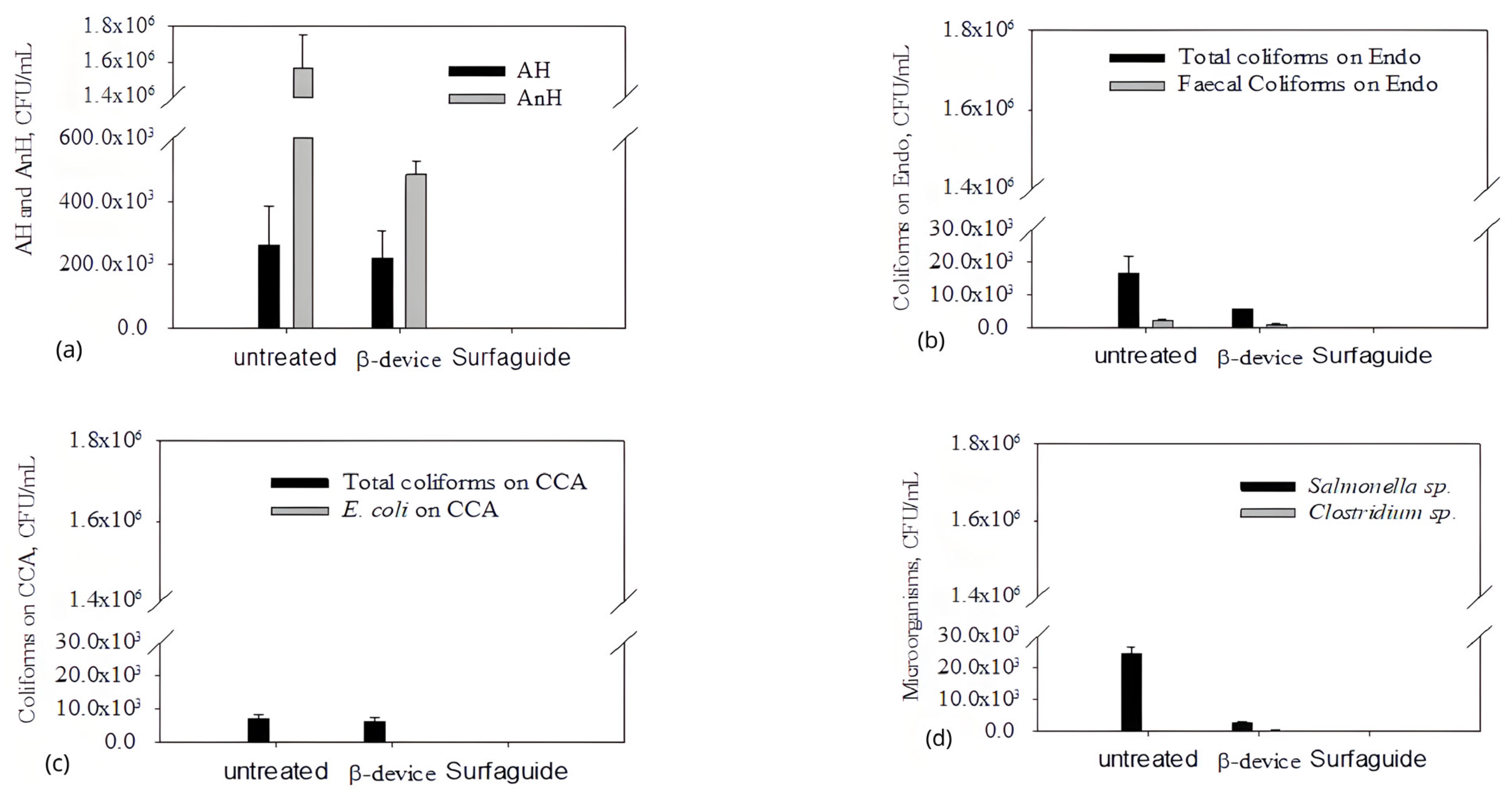
Figure 2 shows the quantities of the investigated physiological and taxonomic groups of microorganisms before and after plasma treatment. High counts of aerobic heterotrophs (AH: 3.2 × 10⁵ CFU/mL) and anaerobic heterotrophs (AnH: 1.6 × 10⁶ CFU/mL) were observed in the untreated sample (control). Treatment with the β-device resulted in a partial reduction of 16.3% for AH (down to 2.7 × 10⁵ CFU/mL) and 69.0% for AnH (down to 4.9 × 10⁵ CFU/mL). In comparison, Surfaguide achieved near-complete inactivation, with a 99.2% reduction for AH (down to 2.6 × 10³ CFU/mL) and 99.8% reduction for AnH (down to 2.5 × 10³ CFU/mL).
Additional emphasis was placed on the elimination of sanitary-relevant indicators and pathogenic bacteria, including fecal and total coliforms, Salmonella sp., and spore-forming Clostridium sp. Surfaguide demonstrated exceptional effectiveness, completely eliminating all fecal coliforms (initial value: 2.1 × 10³ CFU/mL), total coliforms (on CCA and Endo agar), as well as Salmonella sp. (initial value: 2.5 × 10⁴ CFU/mL).
In contrast, the β-device achieved an 89.8% reduction of Salmonella sp., but the total coliforms reduction on CCA was only 12.2%. Interestingly, treatment with the β-device resulted in the appearance of Clostridium sp. (3.6 × 10² CFU/mL), which were absent in the untreated sample. No growth of Clostridium species was detected after treatment with the Surfaguide.
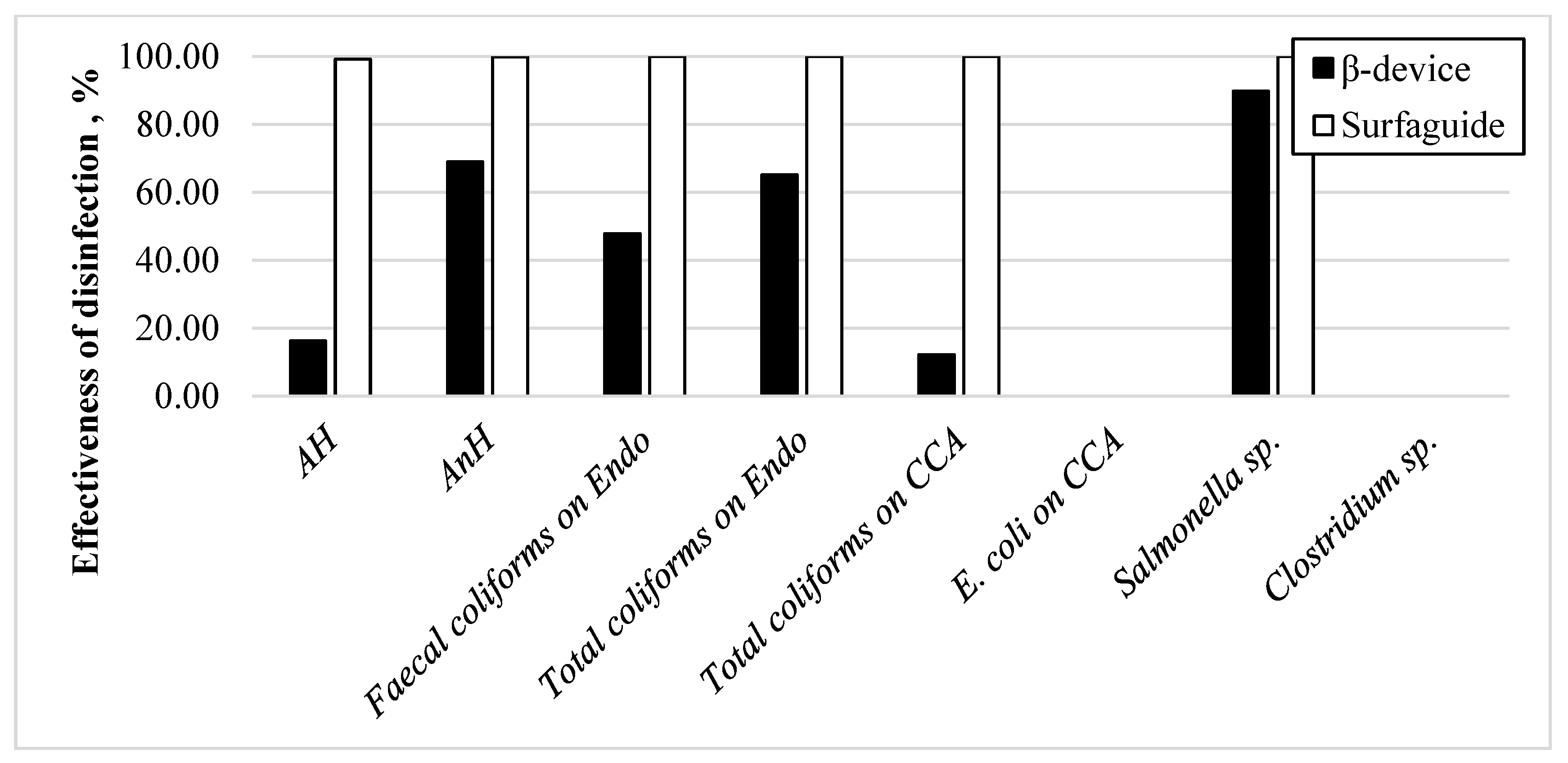
Figure 3 shows the data on the effectiveness of disinfection achieved by the two plasma devices. The results indicate a significant difference in the effectiveness of the two plasma sources. With Surfaguide, nearly complete disinfection (≈100%) of all investigated microbial groups were achieved, including total and fecal coliform bacteria, as well as E. coli and Salmonella sp. Importantly, complete disinfection was also achieved for indicators of sanitary contamination, highlighting the high potential of Surfaguide for disinfecting the liquid phase of digestate.

3.2. Changes in Microbial Community Structure Investigated Using the r- and K-Strategist Concept and the Ecophysiological Index

r- and K-strategists in the current experiment were monitored only for AH and AnH. For AH, r-strategists were defined as microorganisms that developed colonies within 24 h, while for AnH, r-strategists were defined as those that developed colonies within 48 h. K-strategists were defined as the remaining colonies that appeared up to the 168th hour.
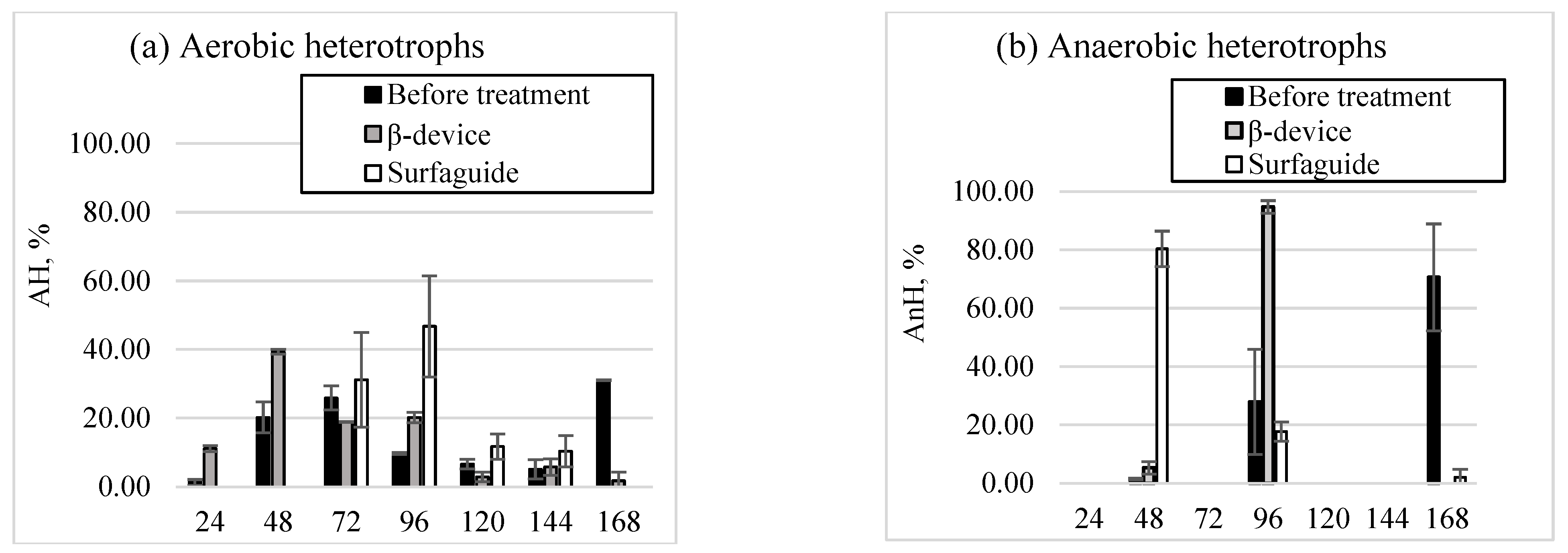
It was noted that the microbial community in terms of aerobic heterotrophs (Figure 4a) maintained the trends established in the control after treatment with the plasma sources, with the community remaining dominated by slow-growing microorganisms. In the control, slow-growing aerobic heterotrophs accounted for 98.70%, while after treatment with the β-device, AH comprised 88.88%, and after treatment with the Surfaguide, it increased to 100%.
For anaerobic heterotrophs (Figure 4b), the community in both the control sample and the sample treated with the β-device was dominated by slow-growing microorganisms, accounting for 98.49% and 94.70%, respectively. Interestingly, the microbial community was restructured after treatment with the Surfaguide plasma source, and slow-growing anaerobic heterotrophs in the untreated sample were replaced by fast-growing ones, which accounted for 80.31% of the total anaerobic heterotrophs.
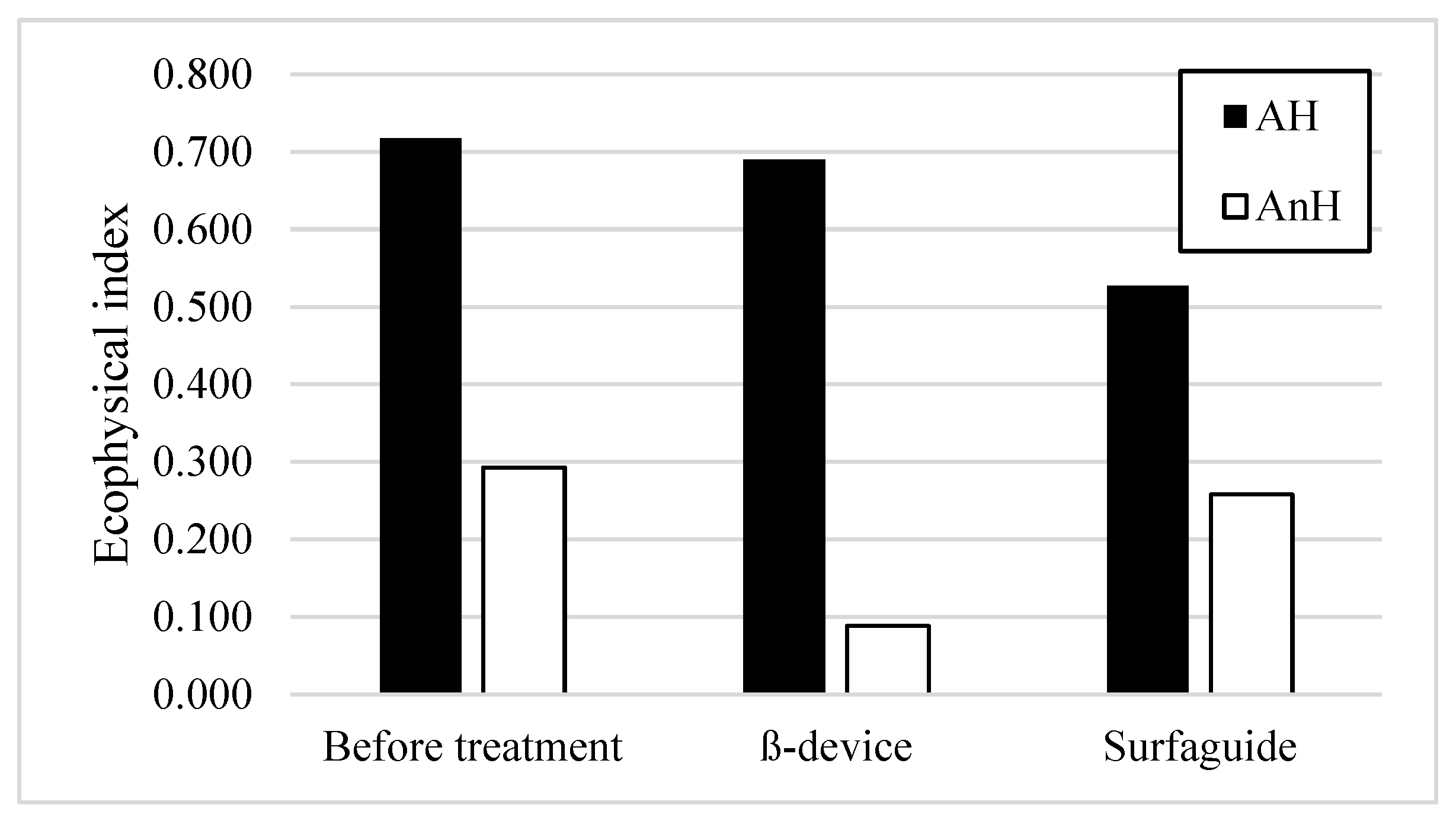
The study of microbial diversity using the ecophysiological index [25,31] revealed additional details about the structure of the microbial community. The index was analyzed for the groups of aerobic and anaerobic heterotrophs, with values ranging from 0 to 1. The index was highest for both aerobic and anaerobic heterotrophs in the untreated sample (Figure 5). The β-device had a low effect on the diversity of aerobic heterotrophs but strongly suppressed anaerobic heterotrophs. Surfaguide showed the strongest reduction in the index for aerobic heterotrophs, while the index value for anaerobes remained close to that of the control (untreated sample). On average, for aerobic and anaerobic heterotrophs, the ecophysiological index changed as follows: 0.505 for the control, 0.389 for the β-device, and 0.393 for Surfaguide.

3.3. Physicochemical Changes

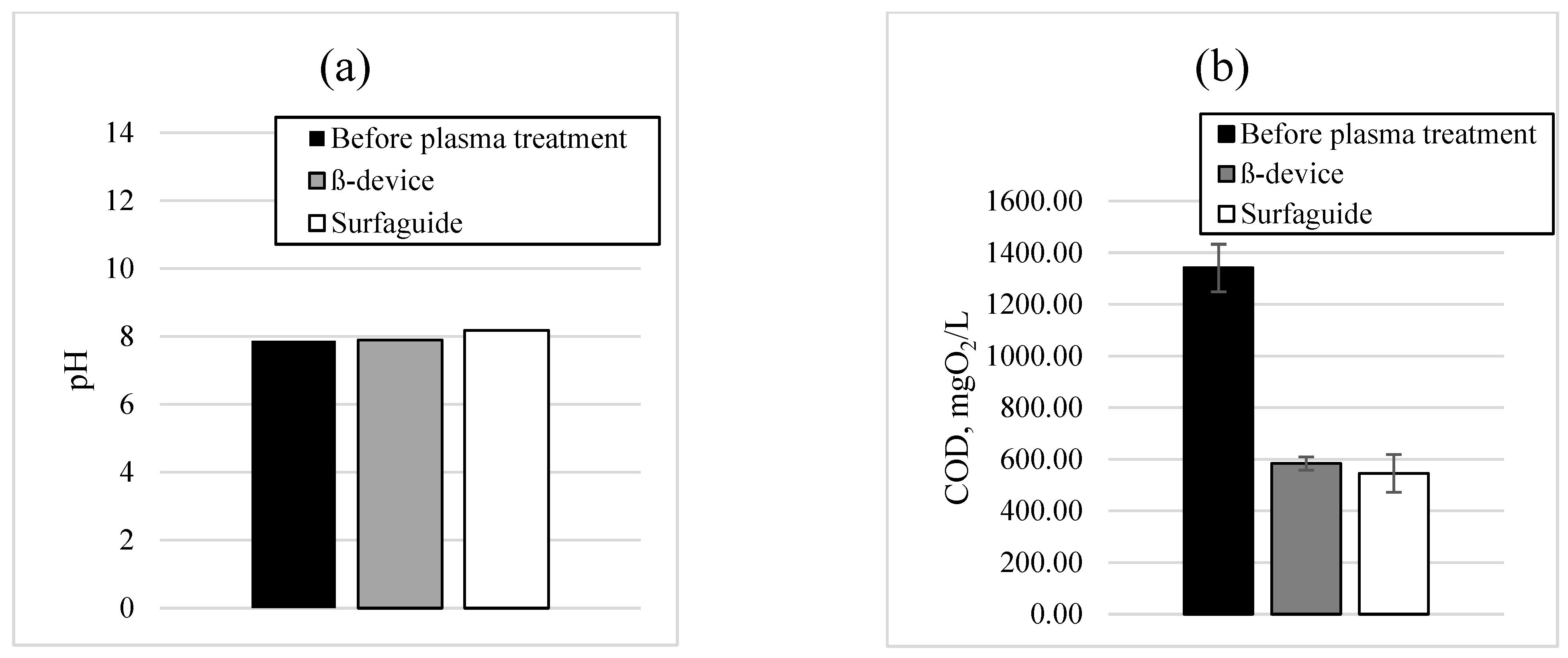
Among the physicochemical parameters, pH, COD, nitrogen, and phosphorus ions were analyzed. Monitoring pH allowed the assessment of the influence of the two plasma devices (β-device and Surfaguide) on the acid–base status of the liquid phase of digestate. In the control (untreated) sample, the pH remained relatively stable at around 7.8 (Figure 6a). After treatment with the β-device, values remained close to neutral (around 7.9). Surfaguide resulted in a higher pH of approximately 8.2 (Figure 6a).
Chemical oxygen demand (COD) was also measured (Figure 6b). COD was 1341.17 mgO2/L in the untreated sample, decreasing to 583.40 mgO2/L after β-device treatment and to 545.16 mgO2/L after Surfaguide treatment.
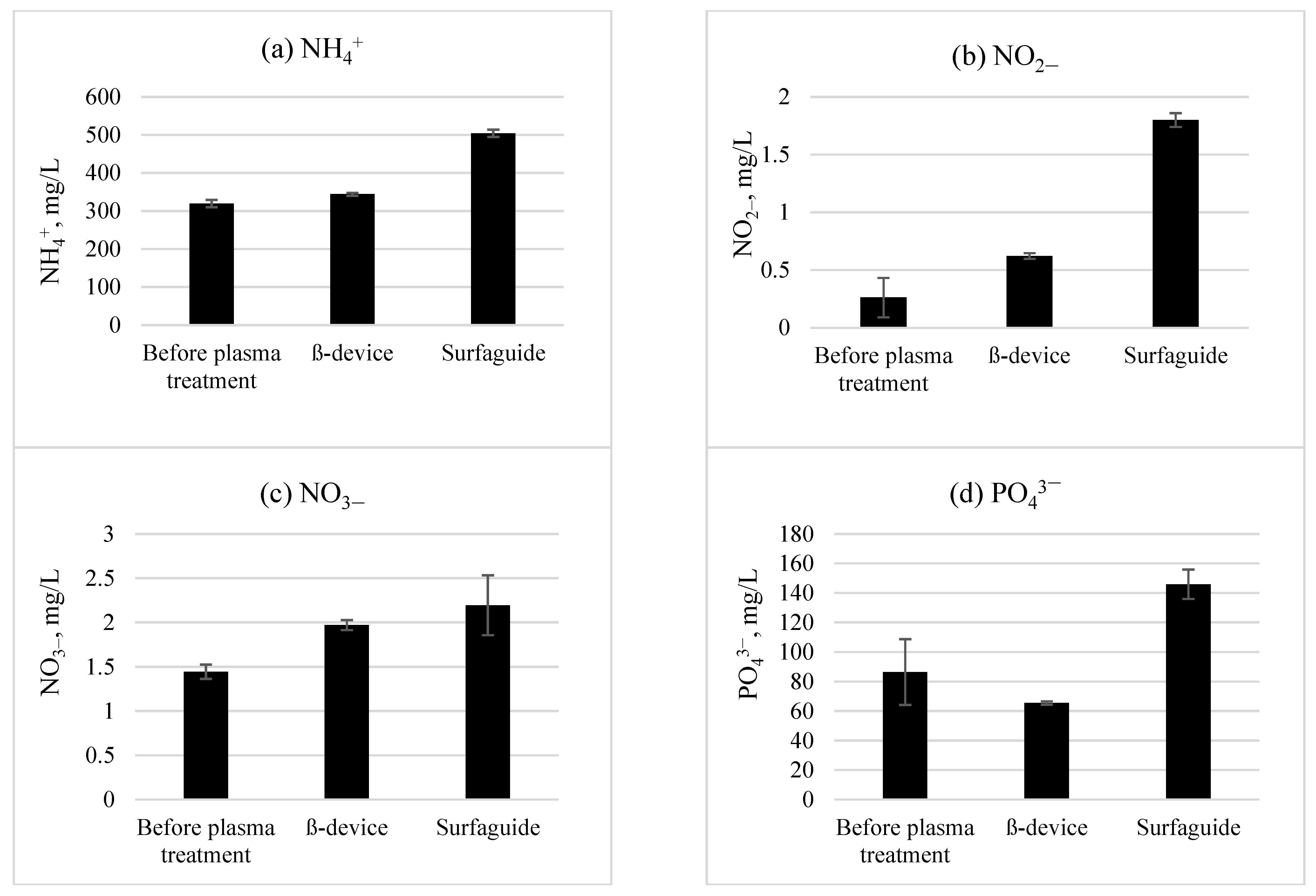
Figure 7a shows the changes in ammonium ion concentrations. In the untreated sample, the ammonium concentration was 319.58 mg/L. Treatment with the β-device led to an increase to 344.13 mg/L, while Surfaguide caused a rise to 504.29 mg/L. Figure 7b shows nitrite concentrations. The untreated sample contained 0.26 mg/L NO2. Treatment with the β-device led to an increase to 0.62 mg/L, while treatment with Surfaguide resulted in an increase to 1.80 mg/L. Figure 7c shows nitrate data. The nitrate concentration in the untreated sample was 1.45 mg/L. Treatment with the β-device increased it to 1.97 mg/L, and Surfaguide to 2.19 mg/L. Figure 7d presents phosphate concentrations. The untreated sample had 86.45 mg/L. Treatment with the β-device decreased to 65.50 mg/L, whereas Surfaguide increased it to 145.86 mg/L.

4. Discussion

4.1. Disinfection Effectiveness of Studied Plasma Sources

The data on the studied groups of microorganisms before and after treatment with plasma show a significant decrease in their quantities (Figure 2). This reduction is probably due to the highly reactive species generated by the plasma (hydroxyl radicals, ozone, hydrogen peroxide, high-energy electrons, UV radiation, etc.). The only exception was treatment with the β-device, which resulted in the appearance of Clostridium sp. (Figure 2d). This suggests the possible induction of spore germination under sublethal stress [32]. No growth of Clostridium species was detected after treatment with the Surfaguide, indicating its high disinfection capability not only against vegetative cells but also against resistant spores.
The results indicate a significant difference in the disinfection effectiveness of the two plasma sources (Figure 3). These differences can be explained by the characteristics of the generated reactive species and the energy intensity of the two plasma sources. It is assumed that Surfaguide generates a higher concentration of ROS and reactive nitrogen species (RNS) in the medium, providing effective destruction of microbial cell walls and DNA. As can be seen in Table 1, the results for Surfaguide were fully consistent with those of previous studies. Numerous investigations have confirmed that cold atmospheric plasma (CAP), especially that generated by dielectric barrier discharge (DBD) and surface-wave plasma systems, can achieve over 99–100% microbial inactivation within seconds to minutes in both bacterial suspensions and model water systems.
The results of the present study indicate that Surfaguide remains highly effective, even in complex matrices such as the liquid phase of digestate, which contains organic matter and other chemical compounds. This makes this plasma source suitable for the treatment of various model and real samples.
The effectiveness of the β-device did not reach the disinfection levels typical of most non-thermal plasma sources described in the literature. The low effectiveness observed at the WWTP “Ravda” highlights its limitations in the surface treatment of digestate, particularly for more resistant groups such as E. coli, Clostridium sp., and others.
In summary, the comparison shows that although plasma methods are generally proven to be effective for microbial disinfection, their success largely depends on the type of plasma source and operational parameters. Statistical analysis shows that the difference between the two plasma sources with regard to microbiological indicators is greater than would be expected by chance, and there is a statistically significant difference (p = 0.026 for the microbial quantities and p = 0.002 for disinfection effectiveness and for distribution of r/K-strategists). The data show that when selecting a plasma source for disinfecting liquid digestate, the appropriate one must be chosen. Under real wastewater conditions, the Surfaguide stands out as a more reliable and promising tool for ensuring the sanitary safety of the liquid phase of digestate and its potential use in agriculture. However, plasma is still being studied, and further research is needed before it can be applied in practice.

4.2. Changes in Microbial Community Structure

In microbial ecology, microorganisms are often divided into two main types—r- and K-strategists. r-strategists are characterized by rapid growth and a high reproduction rate, dominating in nutrient-rich environments. However, they are more sensitive to external stress factors, including oxidative stress. In contrast, K-strategists grow more slowly, utilize resources more effectively, and possess more resilient physiological mechanisms that allow them to survive under adverse conditions.
In terms of aerobic heterotrophs, the microbial community remained dominated by slow-growing K-strategists before and after treatment with both plasma sources (Figure 4a). These data suggest that, despite the high disinfection effectiveness, stress-resistant aerobic heterotrophic microorganisms persisted after plasma treatment.
In terms of anaerobic heterotrophs, the microbial community was restructured after treatment with the Surfaguide plasma source: slow-growing K-strategists in the untreated sample were replaced by fast-growing r-strategists (Figure 4b). These results suggest that Surfaguide has a higher disinfection potential not only in terms of effectiveness but also in its ability to destabilize the microbial community, whereby more resilient forms were displaced by fast-growing microorganisms. The dominance of r-strategists after treatment with the Surfagide indicates that plasma directly affects the microbial community and indirectly through changes in environmental conditions, as shown in Figure 6 and Figure 7. The increased share of r-strategists may be due to the availability of substrates that are more accessible for utilization by anaerobic heterotrophs than aerobic heterotrophs. Figure 6b shows that organic matter measured as COD decreased almost twofold. This decrease in organic matter concentration is probably also related to the hydrolysis of some of the polymer molecules of proteins and the release of ammonium ions (Figure 7a). Similarly, other polymers (carbohydrates, fats) were likely hydrolyzed, and simpler substrates were released. These could be amino acids, glucose, fatty acids, glycerol, etc., which are utilized by fermenting microorganisms under anaerobic conditions. The presence of more nitrogen and phosphorus (Figure 7) may also explain the increase in fast-growing microorganisms. These r-strategists develop in an environment that is less populated and suitable for colonization and community development. If we assume that the Surfaguide significantly disinfects the liquid digestate and, at the same time, it remains rich in organic matter and nutrients, it is a suitable environment for fast-growing r-strategists. These results for anaerobic heterotrophs are important because some opportunistic and pathogenic microorganisms belong to this physiological group, such as the studied E. coli, Salmonella sp., and Clostridium sp. The data suggest that the Surfaguide influences the overall restructuring of the community, resulting in a reduction in microbial abundance and the displacement of more resilient anaerobic K-strategists by fast-growing r-strategists.
Microbial diversity was studied by ecophysiological index. A higher ecophysiological index value indicates a similar number of colonies appearing on each day of incubation for the investigated microbial groups. The high index in control (Figure 5) reflects high diversity typical of rich and balanced ecosystems. The strong suppression of anaerobic heterotrophs by the β-device likely eliminated most species, leaving only the most resistant ones, reflecting the selection of K-strategists observed in Figure 4b. Surfaguide showed the strongest reduction in the index for aerobic heterotrophs, while the index value for anaerobic heterotrophs remained close to that of the control. It is important to note that individual microbial groups partially overlap, as members of a physiological group can simultaneously possess metabolic capabilities characteristic of other groups, such as facultative microorganisms. Data indicates a clear difference between the control and the treated samples (Figure 5), in which the temporal distribution of microorganisms was relatively stable, whereas after treatment with both plasma sources, diversity decreased, influenced by the deterioration of environmental conditions.

4.3. Valorization Potential of the Liquid Digestate After Plasma Treatment

The pH values (Figure 6a) indicate that the β-device had a moderate effect on alkalinity, while Surfaguide caused a stronger effect on the acid–base balance, likely due to intensive cell disruption and release of ammonium ions (Figure 7a). The approximate twofold reduction in COD values after plasma treatment (Figure 6b) was expected, in line with previous studies on plasma-mediated transformation and removal of organic pollutants [2,7,33,34,35,36,37]. The separated reactive species after treatment with the two types of plasma lead to oxidation of organic matter. Cold plasma treatment enriches water with a variety of reactive oxygen and nitrogen species (RONS). In plasma-activated water, RONS include both short-lived species and long-lived species, such as nitrate (NO3), nitrite (NO2), and hydrogen peroxide (H2O2), which have typical half-lives ranging from years (NO3), to days (NO2), and hours (H2O2) [13]. The short-lived hydroxyl and superoxide radicals induce accelerated oxidative processes of the organic compounds present. As a result, nitrite and nitrate concentrations increase for two reasons: on the one hand, their levels rise due to the formation of plasma-generated nitrites and nitrates, and on the other hand, due to the terminal oxidation of nitrogen containing organic compounds in the digestate, most commonly proteins. The presence of terminal oxidized forms of compounds under aerobic conditions is evidence of mineralization. In our case, the concentrations of nitrites, nitrates, and phosphates are increasing, which indicates that mineralization is occurring. Zocker et al. (2025) summarized that total carbon mineralization was indicated by released phosphates and an increase in liquid conductivity following plasma treatment [13]. Phosphate concentrations increase as a result of the final mineralization of proteinaceous organic matter, phospholipids, nucleotides, etc. At the same time, the entire organic content, measured as COD, also shows enhanced biodegradation after plasma treatment; however, this biodegradation is not complete. When treated with the ß-device, the concentration of organic matter is reduced by 2.3 times, and when treated with the Surfaguide, it is reduced by 2.5 times. The COD values decrease to 583.40 mgO2/L and to 545.16 mgO2/L, respectively. The obtained values are relatively high and show that although intensive transformation processes are taking place, the organic matter is not completely mineralized. Partial degradation is probably related to hydrolysis processes, chemical oxidation (including under the action of oxygen, ozone, superoxide, and peroxide radicals, etc.), and others. The occurrence of transformation under the action of plasma is also evidenced by an increase in the concentration of ammonium ions and phosphates (Figure 7a,d). The increase in ammonium ions after treatment (Figure 7a), especially with Surfaguide, is most likely due to cell lysis and release of intracellular nitrogen compounds. This behavior is consistent with observations by Nyang’au et al. (2024), who reported similar dynamics of nitrogen forms after plasma treatment of digestate [38].
Nitrites are intermediate metabolites in the biological processes of nitrification and denitrification, but during plasma treatment, they are also produced by oxidative processes involving reactive plasma components such as ozone, hydrogen peroxide, hydroxyl radicals, and others. The nitrite accumulation observed with Surfaguide treatment (+689%) suggests intense oxidative activity and rapid plasma-induced chemical transformations (Figure 7b). Similar patterns have been reported by Nyang’au et al. (2024) [38]. The increase in nitrate concentrations indicates temporarily active nitrification and/or rapid chemical oxidation of nitrites to nitrates (Figure 7c). The increase in nitrate after treatment is also a result of ammonium nitrogen oxidation by reactive nitrogen species (RNS).
Finally, phosphate variations suggest that the β-device reduced phosphate concentration, whereas Surfaguide caused a significant release of intracellular phosphorus compounds due to cell structure disruption (Figure 7d).
Statistical analysis shows that the difference between the two plasma sources regarding the chemical indicators is not great enough to exclude the possibility that the difference is due to random sampling variability (p = 0.818). The lack of a statistically significant difference may be related to the similar effects of the two CAPs on the generation of RONS and their effect on the chemical composition of liquid digestate.
Under these plasma treatment sources and parameters, partial mineralization and transformation of the organic matter in the liquid digestate occur. However, the increase in the concentrations of nitrogen and phosphorus forms that are more readily available to plants represents a promising treatment approach for future optimization of its parameters and for the use of this water as a liquid fertilizer with a dual function—simultaneous irrigation and enrichment with nitrogen and phosphorus.

5. Conclusions

Plasma is increasingly recognized as an effective method for disinfecting the liquid phase of digestate in wastewater treatment plants. Non-thermal plasma provides reliable elimination of pathogenic microorganisms, including more resilient bacteria. Compared to traditional methods, plasma treatment achieves higher effectiveness in reducing bacterial populations. Laboratory experiments with various plasma devices have demonstrated significant reductions or complete removal of important microorganisms such as E. coli, Salmonella sp., and Clostridium sp.
In the specific case of the WWTP “Ravda”, two plasma sources (β-device and Surfaguide) were used. The study showed distinct differences: Surfaguide achieved near-complete disinfection of the tested microorganisms and demonstrated a higher potential for practical application, whereas the β-device exhibited lower effectiveness but a more moderate impact on certain physicochemical parameters. This distinction highlights the possibility of selecting an approach based on priorities—maximum disinfection or gentler treatment of the matrix.
Nevertheless, it should be noted that these studies were carried out under laboratory conditions. The challenge remains in addressing the engineering aspects of reactors and plasma treatment facilities, their integration into specific technological systems, and their scaling up.
From an economic and environmental perspective, plasma treatment is considered as a developing method that could be integrated into future sustainable technologies for the purification and reuse of the digestate liquid. It combines environmental advantages, minimizing the risk of environmental contamination while also preserving valuable nutrients and promoting circular decisions in biotechnologies.

Author Contributions

Conceptualization, I.S., Y.T. (Yovana Todorova) and Y.T. (Yana Topalova); methodology, I.S., N.D., I.Y., E.B. and T.B.; formal analysis, Y.S. and I.S.; investigation—all of the authors; writing—original draft preparation, Y.S. and I.S.; writing—review and editing, I.S., Y.T. (Yovana Todorova), T.B., M.B., E.B. and Y.T. (Yana Topalova); visualization, Y.S.; supervision, I.S., Y.T. (Yovana Todorova) and Y.T. (Yana Topalova); project administration, I.S., N.D., I.Y. and Y.T. (Yana Topalova); funding acquisition, I.S. and Y.T. (Yana Topalova). All authors have read and agreed to the published version of the manuscript.

Funding

This study was funded from the project: Innovative solutions for energy and chemicals production from the utilization of biodegradable waste (contract KP-06-IP-China/4 from 16 December 2024), financed by the National Science Fund, Bulgarian Ministry of Education and Science. The research used the scientific equipment provided by the project No BG16RFPR002-1.014-0015: “Clean Technologies for Sustainable Environment—Water, Waste, Energy for Circular Economy”, financed by the European Regional Development Fund through Bulgarian Programme “Research, Innovation and Digitalisation for Smart Transformation”.

Data Availability Statement

The data presented in this study is available on request from the corresponding author.

Acknowledgments

The authors are grateful to “Water Supply and Sewerage” EAD to Burgas City, WWTP “Ravda”, and Diana Chorbadzhiyska for their assistance. The authors would like to thank Valentina Lyubomirova, Iva Belovezhdova, and Elmira Daskalova, all of whom are from Sofia University “St. Kliment Ohridski” and investigated the physicochemical indicators.

Conflicts of Interest

The authors declare no conflicts of interest. The funders had no role in the design of the study; in the collection, analyses, or interpretation of data; in the writing of the manuscript; or in the decision to publish the results.

Abbreviations

The following abbreviations are used in this manuscript:
ADAnaerobic Digestion
AHAerobic Heterotroph
AnHAnaerobic Heterotroph
CAPCold Atmospheric Plasma
CCAChromogenic Coliform Agar
CDCorona Discharge
CFUColony Forming Unit
CODChemical Oxygen Demand
DBDDielectric Barrier Discharge
RNSReactive Nitrogen Species
RONSReactive Oxygen and Nitrogen Species
ROSReactive Oxygen Species
WWTPWastewater Treatment Plant

References

  1. Chuda, A.; Ziemiński, K. Challenges in Treatment of Digestate Liquid Fraction from Biogas Plant. Performance of Nitrogen Removal and Microbial Activity in Activated Sludge Process. Energies 2021, 14, 7321. [Google Scholar] [CrossRef]
  2. Błaszczyk, W.; Siatecka, A.; Tlustoš, P.; Oleszczuk, P. Occurrence and Dissipation Mechanisms of Organic Contaminants during Sewage Sludge Anaerobic Digestion: A Critical Review. Sci. Total Environ. 2024, 945, 173517. [Google Scholar] [CrossRef]
  3. Kyere-Yeboah, K.; Bique, I.K.; Qiao, X. Advances of Non-Thermal Plasma Discharge Technology in Degrading Recalcitrant Wastewater Pollutants: A Comprehensive Review. Chemosphere 2023, 320, 138061. [Google Scholar] [CrossRef]
  4. Han, Y.; Wang, H.; Wei, M.; Yao, H.; Liu, T.; Ma, X. Advanced Low-Temperature Plasma-Driven Oxidation for Mitigating Pharmaceutical and Personal Care Products in Wastewater: Mechanisms, Influencing Factors, and Reactor Configurations. Chem. Eng. J. 2025, 520, 165788. [Google Scholar] [CrossRef]
  5. Okyere, A.Y.; Rajendran, S.; Annor, G.A. Cold Plasma Technologies: Their Effect on Starch Properties and Industrial Scale-Up for Starch Modification. Curr. Res. Food Sci. 2022, 5, 451–463. [Google Scholar] [CrossRef]
  6. Lata, S.; Chakravorty, S.; Mitra, T.; Pradhan, P.K.; Mohanty, S.; Patel, P.; Jha, E.; Panda, P.K.; Verma, S.K.; Suar, M. Aurora Borealis in Dentistry: The Applications of Cold Plasma in Biomedicine. Mater. Today Bio 2022, 13, 100200. [Google Scholar] [CrossRef] [PubMed]
  7. Palma, D.; Richard, C.; Minella, M. State of the Art and Perspectives about Non-Thermal Plasma Applications for the Removal of PFAS in Water. Chem. Eng. J. Adv. 2022, 10, 100253. [Google Scholar] [CrossRef]
  8. Yusuf, A.; Amusa, H.K.; Eniola, J.O.; Giwa, A.; Pikuda, O.; Dindi, A.; Bilad, M.R. Hazardous and Emerging Contaminants Removal from Water by Plasma-Based Treatment: A Review of Recent Advances. Chem. Eng. J. Adv. 2023, 14, 100443. [Google Scholar] [CrossRef]
  9. Sakudo, A.; Yagyu, Y.; Onodera, T. Disinfection and Sterilization Using Plasma Technology: Fundamentals and Future Perspectives for Biological Applications. Int. J. Mol. Sci. 2019, 20, 5216. [Google Scholar] [CrossRef]
  10. Guo, L.; Xu, R.; Zhao, Y.; Liu, D.; Liu, Z.; Wang, X.; Chen, H.; Kong, M.G. Gas Plasma Pre-Treatment Increases Antibiotic Sensitivity and Persister Eradication in Methicillin-Resistant Staphylococcus aureus. Front. Microbiol. 2018, 9, 537. [Google Scholar] [CrossRef]
  11. Li, H.; Kang, Z.; Jiang, E.; Song, R.; Zhang, Y.; Qu, G.; Wang, T.; Jia, H.; Zhu, L. Plasma Induced Efficient Removal of Antibiotic-Resistant Escherichia coli and Antibiotic Resistance Genes, and Inhibition of Gene Transfer by Conjugation. J. Hazard. Mater. 2021, 419, 126465. [Google Scholar] [CrossRef]
  12. Yang, L.; Niyazi, G.; Qi, Y.; Yao, Z.; Huang, L.; Wang, Z.; Guo, L.; Liu, D. Plasma-Activated Saline Promotes Antibiotic Treatment of Systemic Methicillin-Resistant Staphylococcus aureus Infection. Antibiotics 2021, 10, 1018. [Google Scholar] [CrossRef] [PubMed]
  13. Zocker, K.; Timmerman, E.; Sommer, M.-C.; Brueser, V. Mini Review: Implementation of Plasma Technologies for Circular Bioeconomic Approaches. J. Phys. D Appl. Phys. 2025, 58, 315401. [Google Scholar] [CrossRef]
  14. Todorova, Y.; Yotinov, I.; Topalova, Y.; Marinova, P.; Benova, E.; Atanasova, M.; Bogdanov, T. Innovative Sterilization Technology—Bacterial Inactivation by Cold Argon Plasma. Biodiscovery 2017, 20, e21977. [Google Scholar] [CrossRef]
  15. Marinova, P.; Benova, E.; Todorova, Y.; Topalova, Y.; Yotinov, I.; Atanasova, M.; Krcma, F. Surface-Wave-Sustained Plasma Torch for Water Treatment. J. Phys. Conf. Ser. 2018, 982, 012009. [Google Scholar] [CrossRef]
  16. Todorova, Y.; Benova, E.; Marinova, P.; Yotinov, I.; Bogdanov, T.; Topalova, Y. Non-Thermal Atmospheric Plasma for Microbial Decontamination and Removal of Hazardous Chemicals: An Overview in the Circular Economy Context with Data for Test Applications of Microwave Plasma Torch. Processes 2022, 10, 554. [Google Scholar] [CrossRef]
  17. Shaw, P.; Kumar, N.; Kwak, H.; Park, J.; Uhm, S.; Bogaerts, A.; Choi, E.; Attri, P. Bacterial Inactivation by Plasma Treated Water Enhanced by Reactive Nitrogen Species. Sci. Rep. 2018, 8, 1–7. [Google Scholar] [CrossRef] [PubMed]
  18. Chandana, L.; Sangeetha, C.J.; Shashidhar, T.; Subrahmanyam, C. Non-Thermal Atmospheric Pressure Plasma Jet for the Bacterial Inactivation in an Aqueous Medium. Sci. Total Environ. 2018, 640–641, 493–500. [Google Scholar] [CrossRef]
  19. Kawakami, R.; Aihara, M.; Izumi, T.; Shirai, A.; Mukai, T. Bactericidal Effects of Low-Temperature Atmospheric-Pressure Air Plasma Jets with No Damage to Plant Nutrient Solutions. Biochem. Eng. J. 2022, 187, 108661. [Google Scholar] [CrossRef]
  20. Hummert, M.; Leenders, P.; Mellmann, A.; Becker, K.; Kuczius, T. Generation of Plasma-Activated Fluids for Successful Disinfection of Pseudomonas aeruginosa in Liquid Environments and Determination of Microbial Damage. Plasma 2023, 6, 748–762. [Google Scholar] [CrossRef]
  21. Fallon, M.; Kennedy, S.; Daniels, S.; Humphreys, H. Plasma-Activated Liquid as a Potential Decontaminant in Healthcare: Assessment of Antibacterial Activity and Use with Cleaning Cloths. J. Hosp. Infect. 2024, 145, 218–223. [Google Scholar] [CrossRef] [PubMed]
  22. Dhakal, O.; Lamichhane, P.; Choi, E.; Kaushik, N.; Dahal, R.; Gautam, S.; Acharya, T. Effects of Spark Dielectric Barrier Discharge Plasma on Water Sterilization. Curr. Appl. Phys. 2023, 54, 60–67. [Google Scholar] [CrossRef]
  23. Jeong, S.; Kim, I.; Kim, B.E.; Jeong, M.I.; Oh, K.K.; Cho, G.S.; Franz, C.M.A.P. Identification and Characterization of Antibiotic-Resistant, Gram-Negative Bacteria Isolated from Korean Fresh Produce and Agricultural Environment. Microorganisms 2023, 11, 1241. [Google Scholar] [CrossRef]
  24. Darkoh, C.; Chappell, C.; Gonzales, C.; Okhuysen, P. A Rapid and Specific Method for the Detection of Indole in Complex Biological Samples. Appl. Environ. Microbiol. 2015, 81, 8093–8097. [Google Scholar] [CrossRef]
  25. De Leij, F.A.A.M.; Whipps, J.M.; Lynch, J.M. The Use of Colony Development for the Characterization of Bacterial Communities in Soil and on Roots. Microb. Ecol. 1993, 27, 81–97. [Google Scholar] [CrossRef] [PubMed]
  26. Eaton, A.D.; Clesceri, L.S.; Rice, E.W.; Greenberg, A.E. Standard Methods for the Examination of Water and Wastewater, 21st ed.; American Public Health Association: Washington, DC, USA, 2005. [Google Scholar]
  27. BNS ISO 7150-1; Water Quality—Determination of Ammonium—Part 1: Manual Spectrometric Method. Bulgarian Institute for Standardization: Sofia, Bulgaria, 2002.
  28. BNS EN 26777; Water Quality—Determination of Nitrite—Molecular Absorption Spectrometric Method. Bulgarian Institute for Standardization: Sofia, Bulgaria, 1997.
  29. BNS ISO 7890-3; Water Quality—Determination of Nitrate—Part 3: Spectrometric Method Using Sulfosalicylic Acid. Bulgarian Institute for Standardization: Sofia, Bulgaria, 1998.
  30. BNS ISO 6878; Water Quality—Determination of Phosphorus—Ammonium Molybdate Spectrometric Method. Bulgarian Institute for Standardization: Sofia, Bulgaria, 2004.
  31. Ortiz-Burgos, S. Shannon-Weaver Diversity Index. In Encyclopedia of Estuaries; Kennish, M.J., Ed.; Encyclopedia of Earth Sciences Series; Springer: Dordrecht, The Netherlands, 2016; pp. 572–573. [Google Scholar] [CrossRef]
  32. Veerana, M.; Lim, J.S.; Choi, E.H.; Park, G. Aspergillus oryzae Spore Germination is Enhanced by Non-Thermal Atmospheric Pressure Plasma. Sci. Rep. 2019, 9, 11184. [Google Scholar] [CrossRef]
  33. Massima Mouele, E.S.; Tijani, J.O.; Badmus, K.O.; Pereao, O.; Babajide, O.; Zhang, C.; Shao, T.; Sosnin, E.; Tarasenko, V.; Fatoba, O.O.; et al. Removal of Pharmaceutical Residues from Water and Wastewater Using Dielectric Barrier Discharge Methods—A Review. Int. J. Environ. Res. Public Health 2021, 18, 1683. [Google Scholar] [CrossRef]
  34. Seid-Mohammadi, A.; Asgari, G.; Rafiei, M.; Samadi, M.T.; Nouri, F.; Pirsaheb, M.; Asadi, F. Kinetic Study of Real Landfill Leachate Treated by Non-Thermal Plasma (NTP) and Granular Sequential Batch Reactors (GSBR). J. Water Process Eng. 2021, 43, 102245. [Google Scholar] [CrossRef]
  35. Tang, Y.; Locke, B.R.; Abichou, T.; Chen, H.; Goukeh, M.N.; Gallan, R.; Eeso, K. Non-Thermal Plasma Degradation of Per- and Polyfluoroalkyl Substances (PFASs) from Landfill Leachate. Available online: https://web1.eng.famu.fsu.edu/~ytang/Final_report_PFAS_in_leachate.pdf (accessed on 6 October 2025).
  36. Eeso, K.; Gallan, R.; Goukeh, M.N.; Tate, K.; Raja, R.K.B.; Popovic, Z.; Abichou, T.; Chen, H.; Locke, B.R.; Tang, Y. Degradation of Per- and Polyfluoroalkyl Substances in Landfill Leachate by a Thin-Water-Film Nonthermal Plasma Reactor. Waste Manag. 2023, 161, 104–115. [Google Scholar] [CrossRef]
  37. Lee, H.; Shin, Y.; Kim, K.; Kim, H.; Kang, J.; Yoo, J.; Kang, S.U.; Yoo, Y.; Hong, Y.C. Degradation of Trace Pollutants in Industrial Wastewater Using Underwater Nonthermal Plasma: Toward Evaluation of Bioecotoxicity. Chem. Eng. J. 2024, 492, 152057. [Google Scholar] [CrossRef]
  38. Nyang’au, J.; Sørensen, P.; Møller, H. Effects of Plasma Treatment of Digestates on pH, Nitrification and Nitrogen Turnover during Storage and after Soil Application. Environ. Technol. Innov. 2024, 34, 103578. [Google Scholar] [CrossRef]
Figure 1. Schematic representation of the experimental design.
Environments 13 00015 g001
Figure 2. Quantity of the investigated physiological and taxonomic groups of microorganisms before and after plasma treatment for (a) Aerobic heterotrophs (AHs) and anaerobic heterotrophs (AnHs); (b) Total coliforms and fecal coliforms; (c) Total coliforms and E. coli; (d) Salmonella sp. and Clostridium sp.
Environments 13 00015 g002
Figure 3. Disinfection effectiveness of the β-device and Surfaguide on the investigated microorganisms.
Environments 13 00015 g003
Figure 4. Growth of r- and K-strategists, expressed as a percentage of the total number of developed colonies before and after plasma treatment for (a) AH and (b) AnH.
Environments 13 00015 g004
Figure 5. Ecophysiological index before and after treatment with plasma sources.
Environments 13 00015 g005
Figure 6. Change in pH (a) and COD (b) before and after treatment with the two plasma sources.
Environments 13 00015 g006
Figure 7. Changes in the concentrations of (a) ammonium ions, (b) nitrites, (c) nitrates, and (d) phosphates in untreated and plasma-treated samples.
Environments 13 00015 g007
Table 1. Data from previous studies in the field of plasma technologies and microbial disinfection.
Object of
Treatment
Test
Microorganism
Type of PlasmaWorking GasWorking
Conditions
Microbial
Disinfection, %
Reference
-Escherichia coliCD *Argon, 4.9 L/minU = 5 kV; T = 15 min100%[3]
Enterococcus faecalisCDAirU = 4 kV; T = 10 min100%[3]
Bacillus subtilisDBD **AirU = 50 kV; T = 1 min100%[3]
Water systems with bacterial suspensionsPseudomonas sp. AP-9, Brevibacillus laterosporus BT-271Surface-wave, 2.45 GHzArgon, 1.2 L/minP = 20 W; T = 10–60+ s99% in >60 s[14]
Water systems with bacterial suspensionsPseudomonas aeurofaciens, B. laterosporusSurface-wave, 2.45 GHzArgon, 0.1–1 L/minP = 20 W; T = 10–60 sFor 60 s: P. aeurofaciens and B. laterosporus decreased with 14% and 19%[15]
Bacterial suspensions in nutrient brothP. aeurofaciens, B. laterosporusCAP single-jet system, 2.45 GHzArgonP = 20 W; T = 10–60 sP. aureofaciens: 99% reduction in 10 s.; B. laterosporus: reduction (99%) in 30 s[16]
Bacterial suspensionE. coli IFO 3301Low-frequency plasmaHelium, 2 L/minT = 60–180 s99.99% in 180 s[17]
Water with a bacterial suspensionE. coli DH5αNon-thermal atmospheric pressure plasma jetArgon + airU = 12–16 kV; T = 30–150 s>99.99% in 150 s[18]
Plant nutrient solutionE. coli, B. subtilis, Staphylococcus aureusTwisted wire-cylindrical electrode configurationAirT = 20 s–7 minE. coli: 100% in 30 s
B. subtilis: 100% in 20 s
S. aureus: 100% in 7 min
[19]
Plasma activated waterP. aeruginosa ATCC 27853Non-thermal atmospheric plasma-P = 60–120 W; T = 10–30 min>100% in 30 min with 120 W[20]
Phosphate-buffered salineE. coli O6, S. aureus (MRSA)CAP—single-jet systemAirT = 90–300 s99.99% in 300 s[21]
Physiological salineE. coli, S. aureusSpark DBDAirT = 2–8 minE. coli: 99.99% in 8 min
S. aureus: 99.99% in 8 min
[22]
* CD—corona discharge; ** DBD—dielectric barrier discharge.
Disclaimer/Publisher’s Note: The statements, opinions and data contained in all publications are solely those of the individual author(s) and contributor(s) and not of MDPI and/or the editor(s). MDPI and/or the editor(s) disclaim responsibility for any injury to people or property resulting from any ideas, methods, instructions or products referred to in the content.