Article

Impact of Soil Improvers on Soil Health: A Data Mining Approach to Support Sustainable Agriculture Across the EU


1
Department for Sustainability, ENEA, Italian National Agency for New Technologies, Energy and Sustainable Economic Development, Casaccia Research Center, 00123 Rome, Italy
2
Department of Agriculture and Forest Sciences, University of Tuscia, 01100 Viterbo, Italy
3
Department of Agricultural, Forest and Food Sciences (DISAFA), University of Turin, 10124 Turin, Italy
4
Department of Chemistry, Life Science and Environmental Sustainability, University of Parma, Parco Area delle Scienze, 43124 Parma, Italy
5
Natural Resources Institute Finland, FI-20520 Turku, Finland
6
Department of Biobased Products and Energy Crops, Institute of Crop Science, University of Hohenheim, D-70599 Stuttgart, Germany
7
Department of Plant and Environmental Sciences, University of Copenhagen, 1871 Frederiksberg C, Denmark
8
Department of Life Sciences and Systems Biology, Mycotheca Universitatis Taurinensis, University of Turin, Viale Mattioli 25, 10125 Turin, Italy
9
Faculty of Agrobiology Food and Natural Resources, Czech University of Life Sciences Prague (CZU), 165 00 Praha, Czech Republic
10
National Interuniversity Consortium for Environmental Sciences (CINSA), Parco Area delle Scienze, 43124 Parma, Italy
*
Author to whom correspondence should be addressed.
These authors contributed equally to this work.
Environments 2025, 12(12), 472; https://doi.org/10.3390/environments12120472
Submission received: 15 October 2025 / Revised: 19 November 2025 / Accepted: 2 December 2025 / Published: 4 December 2025
(This article belongs to the Special Issue New Insights in Soil Quality and Management, 2nd Edition)

Abstract

Soil health is crucial for the sustainability of agricultural practices and ecosystem resilience. Using a data mining approach, this study aims to explore emerging themes related to the impact of soil improvers on soil health by analyzing results from various EU-funded agricultural projects, with the final goal of identifying the key factors driving the effectiveness of soil amendments. By integrating data mining and text analysis, the study extracts, aggregates, and visualizes insights, providing a comprehensive overview of innovative strategies to enhance soil fertility and promote ecological balance. This integrated analytical framework offers a nuanced understanding of the conceptual landscape surrounding soil health in EU projects, highlighting the multifaceted roles of organic amendments and microbial solutions. Our findings underscore the critical link between organic amendments and soil health, highlighting their potential as strategic tools for achieving more sustainable agricultural systems. These findings provide a basis for refining soil management strategies in agriculture and support the development of evidence-based policies aimed at improving soil health and fostering ecological balance across Europe.

Graphical Abstract

1. Introduction

Soil health is fundamental to achieve sustainable agriculture, as the foundation for efficient land resource management and long-term productivity. It refers to the soil’s ongoing capacity to function as a living ecosystem compared to its potential (called soil quality) [1], supporting plant growth, maintaining water quality, and providing habitat for soil organisms [2]. Therefore, soil health extends beyond physical and chemical properties to include the biological vitality of the soil [3,4] sustaining plant, animal, and human health. A healthy soil ecosystem enhances biodiversity, and plays a critical role in nutrient cycling, as well as in the regulation of carbon and water cycles. In recent years, the importance of soil health has grown significantly, with soil biodiversity emerging as a cornerstone of sustainable crop production [5,6]. To assess soil health, over past two decades a range of biological, chemical and physical indicators have been proposed to measure soil properties and functions, indicating the degree to which soils can fulfill expected ecosystem services [7]. More recently, a minimum set of suitable biological indicators to monitor soil health has been identified, capturing both the composition and diversity of soil communities, as well as their functional attributes, according to their dominant contribution to soil processes and ecosystem services [8,9].
Recent research has highlighted various aspects of soil health and agricultural sustainability. In this context, soil improvers play a key role in enhancing soil health and promoting sustainable agricultural practices [10,11]. The term refers to organic and inorganic materials solely added to soil in situ to enhance its physical, chemical, and biological properties, thereby improving fertility, structure, moisture retention, and nutrient availability for plant growth [12]. These materials play a crucial role in maintaining long-term soil fertility, nutrient content, and biological activity, which are essential for sustainable agricultural productivity. In the European Union, the production and use of soil improvers are regulated under the Fertilising Products Regulation (EU) 2019/1009, which establishes quality standards, safety requirements, and labeling criteria to ensure environmental and agricultural safety [13,14].
Among these materials, biochar has emerged as a promising amendment for sustainable soil management [15,16]. In fact, it has demonstrated potential in improving soil physicochemical properties, such as pH and cation exchange capacity, increasing nutrient-use efficiency, and contributing to long-term carbon sequestration, thereby supporting resilient and sustainable agroecosystems [17]. A recent study has also highlighted biochar’s role in modulating microbial communities and enhancing soil enzymatic activity, which further contributes to nutrient cycling and plant health [18]. Biochar improves soil structure, enhances nutrient retention, supports microbial life, and contributes to carbon sequestration, thus mitigating climate change [19,20].
Despite the growing interest in biochar as a soil amendment for improving soil health, carbon sequestration, and crop productivity, several uncertainties and limitations remain. One major concern is the low solubility and bioavailability of essential nutrients, particularly phosphorus (P) [21]. This can limit its immediate nutritional benefits for plants. In this context, integrating biochar with plant growth-promoting microorganisms (PGPMs) represents a synergistic strategy, as both approaches enhance soil health, nutrient availability, and crop productivity while contributing to sustainable and resilient agroecosystems [22,23]. PGPMs can enhance nutrient solubilization, such as mobilizing phosphorus from biochar and soil reserves, and may also colonize the biochar’s porous structure, improving microbial activity and resilience [24]. By leveraging the complementary properties of biochar and PGPMs, it may be possible to overcome some of biochar’s limitations and unlock its full potential as a sustainable soil amendment. Furthermore, conservation agriculture practices, such as minimum tillage, cover cropping, and crop rotation, have also been shown to increase soil organic matter, improve soil structure, enhance biodiversity, and improve the sustainability of agricultural systems [25,26]. In this context, soil improvers derived from organic waste streams play a pivotal role in promoting a circular bioeconomy. By valorizing agricultural and food industry residues, these inputs contribute to resource efficiency while enhancing soil fertility, water retention, and biological activity. Unlike synthetic inputs, soil improvers foster a regenerative soil system, aligning agricultural production with environmental sustainability and climate goals. Integrating these solutions within a circular bioeconomy framework not only reduces dependency on external inputs but also closes nutrient cycles and supports long-term soil health. This approach is strongly supported by one of the objectives of the EU-funded DELISOIL project, which focuses on the evaluation and upscaling of sustainable soil improvers within circular value chains.
Integrating microbiome-based solutions and soil improvers into sustainable agricultural practices is a key strategy for enhancing soil fertility, boosting crop productivity, and ensuring the long-term sustainability of farming systems [27]. To maximize the potential of these tools in achieving sustainable agricultural goals, sustained collaboration among policymakers, farmers, and researchers is essential [28]. Within this collaborative framework, data mining plays a critical role by enabling the integration and harmonization of heterogeneous datasets, thereby facilitating the extraction of meaningful patterns and actionable insights that support evidence-based soil health management strategies. Through the application of techniques such as predictive modeling, machine learning, and data integration, researchers can analyze complex data from multiple sources to identify the most effective soil improvers and agricultural practices tailored to specific soil types [29,30]. This data-driven approach supports the development of targeted interventions that promote resilient and sustainable farming systems.
The European Union has increasingly recognized soil health as a critical pillar for achieving climate neutrality, biodiversity protection, and food system resilience. On 23 October 2025, the European Parliament approved the Soil Monitoring Directive, establishing a common monitoring framework to achieve the goal of ensuring that all EU soils are healthy by 2050 [31,32]. Building on strategic initiatives such as the EU Soil Strategy for 2030 and the Mission “A Soil Deal for Europe”, the EU is actively promoting research, innovation, and policy integration to reverse soil degradation and promote sustainable land management practices. Under Horizon Europe, the EU funds a wide range of projects, such as DELISOIL, bioSOILUTIONS, and PREPSOIL, dedicated to developing sustainable soil management practices, mapping soil threats, and co-designing solutions with stakeholders across sectors. These initiatives not only support scientific advancement but also strengthen capacity building and public awareness, fostering a broader transition toward soil stewardship at both local and European levels.
Within the frame of the DELISOIL project (Delivering safe, sustainable, tailored and societally accepted soil improvers from circular food production processes for boosting soil health), we aimed to evaluate how different soil improvers contribute to enhancing soil health and to identify the key factors driving their effectiveness with the goal of supporting the sustainable valorization of food system by-products into high-performance soil improvers. The central research hypothesis of this study is that organic soil amendments—specifically compost, digestate and biochar—and biofertilizers can significantly improve soil health through complementary effects on soil physicochemical properties, nutrient dynamics, and microbial activity, thereby enhancing the sustainability and resilience of European agroecosystems. By thoroughly analyzing five EU projects using data mining and text analysis, we adopted an innovative approach to analyze large volumes of text-based data from various EU agricultural projects, including research papers and public deliverables [33]. This in-depth analysis of the scientific literature related to European projects focused on soil health enabled us to synthesize complex information from diverse sources. The overarching goal was to evaluate the effect of soil improvers on soil health, supporting the transition towards sustainable agricultural practices, and advance resilient and healthy farming systems across Europe. The results of this analysis enabled the formulation of practical recommendations for farmers to optimize soil management and enhance soil health.

2. Materials and Methods

2.1. Research Corpus: Selected EU Projects

The included EU projects are: EJPSOIL, which aims to build a sustainable European integrated research system and develop and deploy a reference framework on climate-smart, sustainable agricultural soil management [34]; LEX4BIO, which explored the use of fertilizers derived from biological resources (BBF) to transform the agricultural industry by minimizing the environmental impact of existing fertilizers and improving sustainability through recycling of nutrient-rich side-streams (NRSS) [35]; SIMBA, which provided innovative microbiome-based solutions to increase food and nutrition security [36]; BIOFECTOR, which developed specifically adapted bio-effectors (BEs) to reduce the input of mineral fertilizers in EU agriculture and improve the efficiency of alternative fertilization strategies [37]; and SOLACE, which developed innovative strategies (novel crop genotypes and agroecosystem management innovations) to improve water and nutrient use efficiency [38]. The corpus included open-access and publicly available documents related to five Horizon 2020 projects (BIOFECTOR, EJPSOIL, LEX4BIO, SIMBA, and SOLACE), focusing on the topics of soil amendments (compost, digestate, biochar), microbiome-based solutions and sustainable soil management. Mineral and “geo-” amendments (zeolites, basalt meal, etc.) are outside the present research. Records were collected from official project repositories, Zenodo communities, and bibliographic databases within the projects’ active years (2013–2024). Mission-oriented or monitoring initiatives outside these projects were not included to ensure thematic coherence.

2.2. Computational Environment and Configuration

The analysis was carried out using Python (version 3.12.7) and a suite of open-source libraries for data mining and analysis. NumPy (version 1.26.4) was employed to efficiently process multidimensional arrays, as highlighted in recent studies [39], while Pandas (version 2.2.2) facilitated the management and manipulation of tabular data. Data visualization was performed using Matplotlib (version 3.9.2), and scikit-learn (version 1.5.1) supported the machine learning techniques applied in the analysis. Additional libraries, including Seaborn (version 0.13.2), adjustText (version 1.3.0), and NetworkX (version 3.3), enabled dimensionality reduction and the visual interpretation of complex data, thereby completing the computational infrastructure [40,41,42,43,44].

2.3. Document Download Procedure

A total of 228 documents (scientific articles and deliverables) were collated to construct the dataset, including 20 documents from SIMBA, 97 from EJPSOIL, 37 from SOLACE, 36 from LEX4BIO, and 38 from BIOFECTOR EU projects. Documents were directly downloaded from the websites of the European projects (https://simbaproject.eu/, https://ejpsoil.eu/, https://www.solace-eu.net/, https://lex4bio.eu/, https://www.madora.eu/Biofector/ accessed 12 March 2025) using automated Python scripts that leveraged the Unpaywall and CrossRef APIs. For each document, the corresponding DOI was identified from BibTeX files or texts containing DOIs [45]. Parallel PDF downloads were implemented using ThreadPoolExecutor to ensure efficiency, guaranteeing access to open-access versions following documented approaches in the literature [46]. The results of each download, including title, source, and status, were recorded in a CSV file for subsequent analysis. The documents were subjected to a robust processing pipeline that entailed text extraction and extensive preprocessing, forming the foundation for the investigation into the utilization of soil improvers and their impact on soil health [47].

2.4. Text Extraction and Preprocessing

Documents in PDF format underwent a cascaded text extraction process. Initially, text was extracted using pdfplumber, followed by pdfminer and finally PyPDF2, ensuring optimal retrieval even from complex formats [48]. The extracted text was subsequently pre-processed with spaCy, which performed lemmatization and stopword removal to standardize the content for semantic analysis. Bibliographic sections, such as the “references” segment, were eliminated to prevent contamination in the text mining process. Overall, integrating these methods produced high-quality text suitable for subsequent quantitative analyses [49,50].

2.5. DataFrame Construction and Keyword Analysis

The pre-processed text was structured into a DataFrame that associated each document with its file path, raw text, and processed text. Additionally, a separate DataFrame was created to count the occurrences of specific keywords (Table S1), normalized to lowercase, that represent themes related to soil improvers, soil health, and agricultural sustainability. For each project, regular expressions were employed to map the number of occurrences of each relevant term, thereby facilitating quantitative analysis [51,52]. This methodology provided a robust foundation for exploring correlations between the usage of soil improvers and key indicators of soil health [42,53].

2.6. Co-Occurrence DataFrame Creation

To quantify the use of specific keywords related to soil improvers and soil health, a Dataframe aggregates, for each project, the number of occurrences of each term identified in the pre-processed text [54].

2.7. Normalized Heatmap Visualization

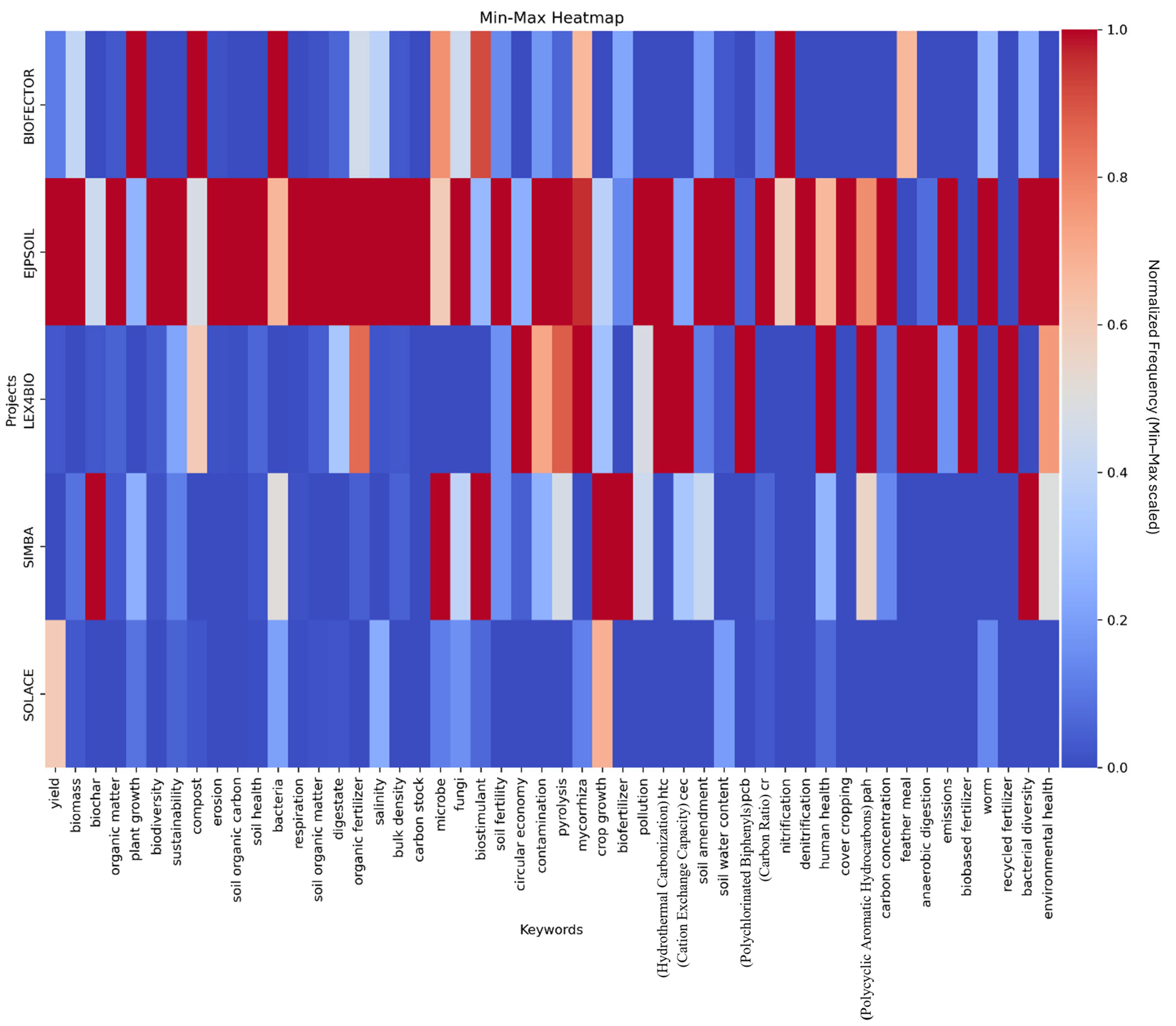
A heatmap was generated to represent the normalized distribution of the counts of the most frequently cited keywords per project. Initially, the data were aggregated for the 50 most frequent keywords and then normalized row-wise using the Min-Max scaling method provided by scikit-learn [55,56]:
x = ( x m i n ( x ) ) / ( m a x ( x ) m i n ( x ) )
The visualization was created with Matplotlib and Seaborn. This approach standardizes data and facilitates comparisons between different projects. In this way, each value is transformed onto a comparable scale while preserving the relative differences [46].

2.8. WordCloud Visualization

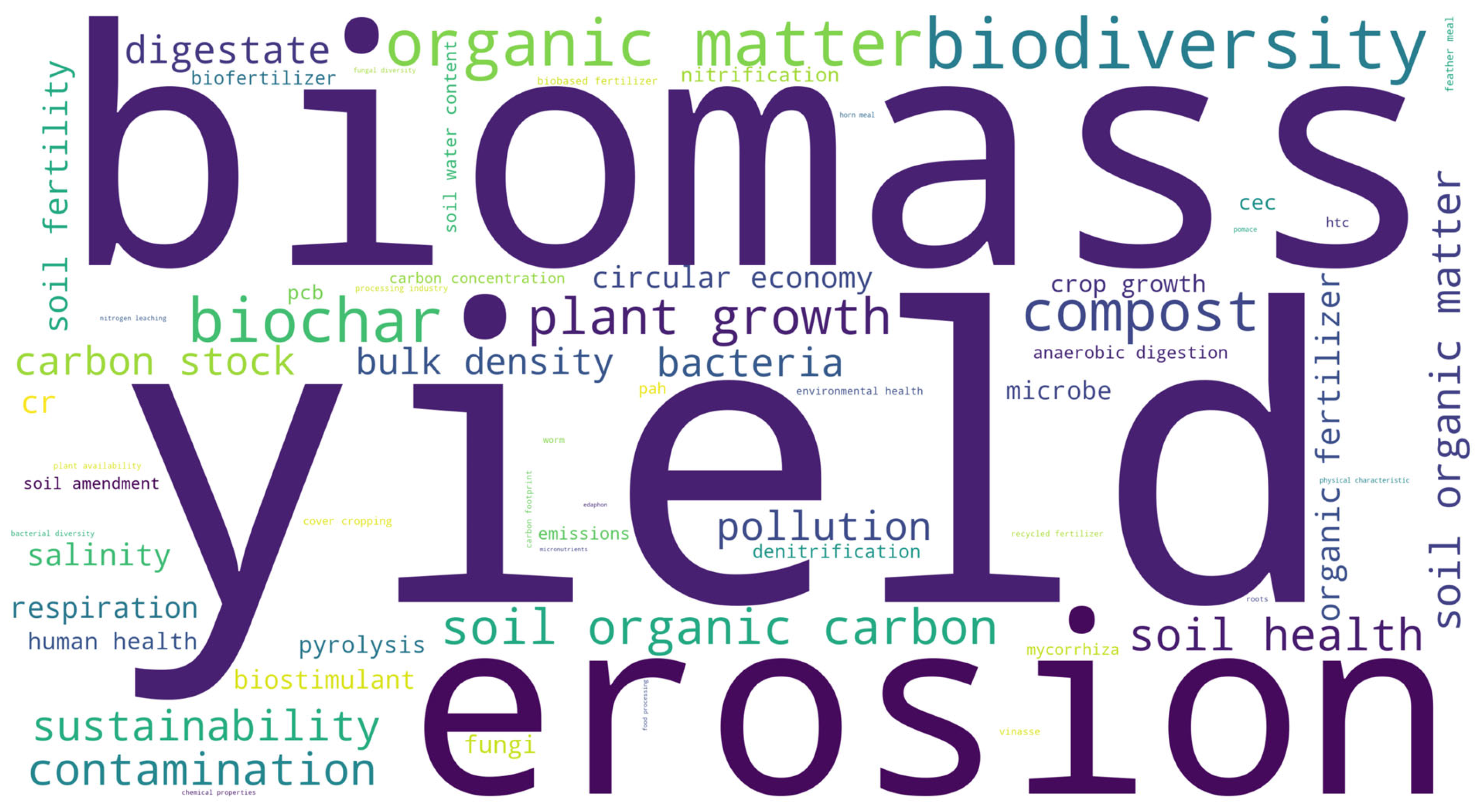
The WordCloud was created using a dedicated Python library and subsequently rendered with Matplotlib, highlighting the predominant terms and offering an immediate overview of the dominant lexicon [57,58].

2.9. Correlation Heatmap Visualization

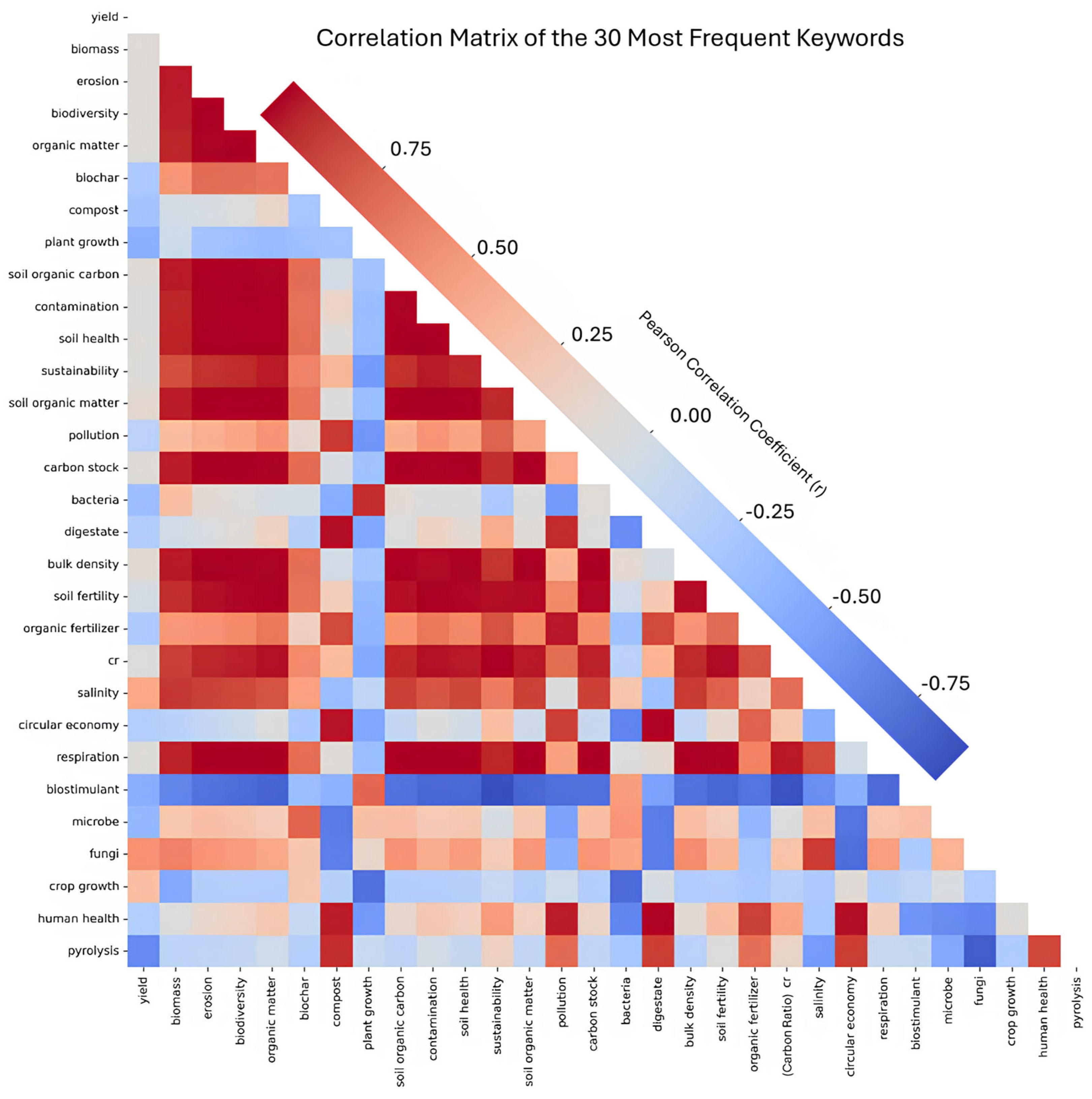
A correlation heatmap was generated to illustrate the relationships among the 30 most frequently cited keywords, allowing the identification of potential thematic associations and lexical synergies [57]. Using Pandas to compute the correlation matrix and Seaborn for visualization, a mask was applied to display only the upper triangle, thereby enhancing the readability of the graph [42,43,59].

2.10. t-SNE Clustering and Visualization

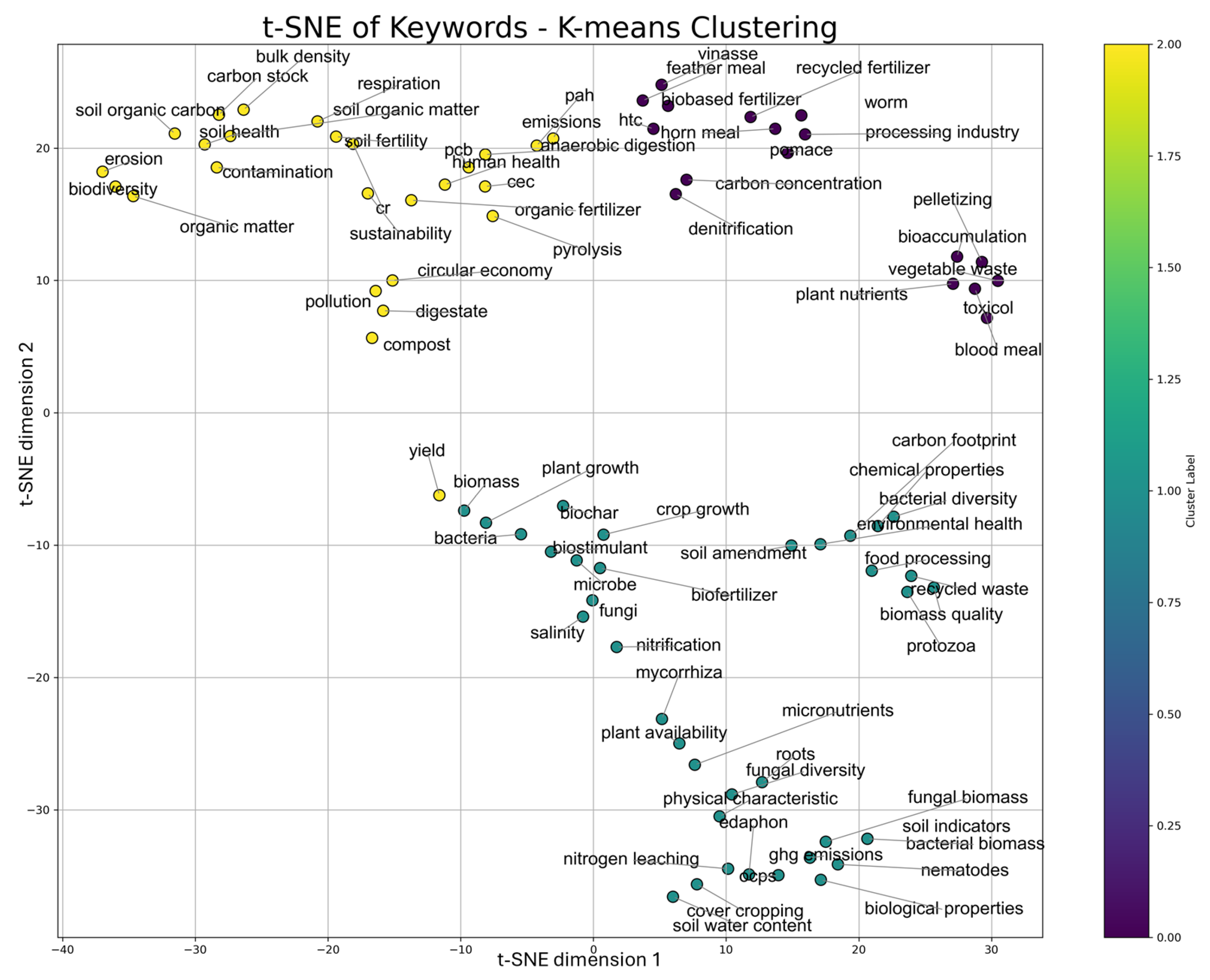
The code implements a visualization based on a color scale by combining t-SNE (t-distributed stochastic neighbor embedding) with K-means clustering to graphically represent the relationships among the most frequent keywords. After filtering the top 80 keywords from the transposed DataFrame, the data were standardized and reduced to two principal components using t-SNE. Subsequently, the K-means algorithm, configured to form three clusters, assigns each point a cluster label, which is visualized using a color map (cmap = ‘viridis’) in a scatter plot [60,61].

2.11. Network Analysis (Cosine Similarity)

After selecting the 60 most frequent keywords from the DataFrame, cosine similarity was computed between their frequency vectors:
c o s i n e   s i m i l a r i t y : ( A , B ) = ( A · B ) / ( | | A | |   | | B | | )
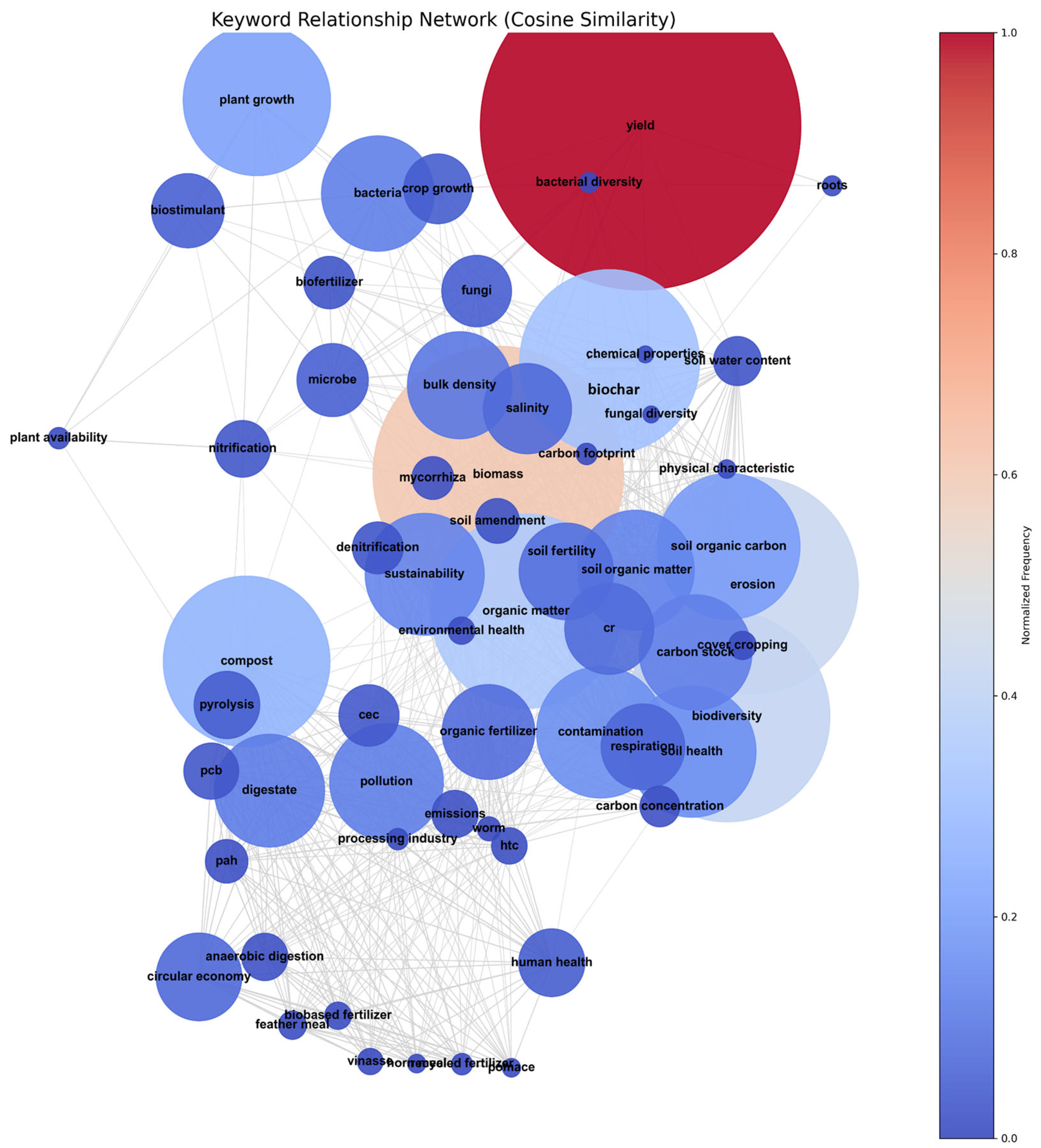
Subsequently, using the NetworkX library, a graph was constructed where each node represents a keyword, and two nodes were connected if their similarity exceeds a predefined threshold (≥0.65), ensuring that only significant relationships are included. The node sizes are scaled based on the keyword frequencies, normalized via Min-Max scaling, while the graph layout is determined by the Kamada-Kawai method, which optimizes the spatial distribution by minimizing the tensions among nodes [44,62].

2.12. The Overall Workflow

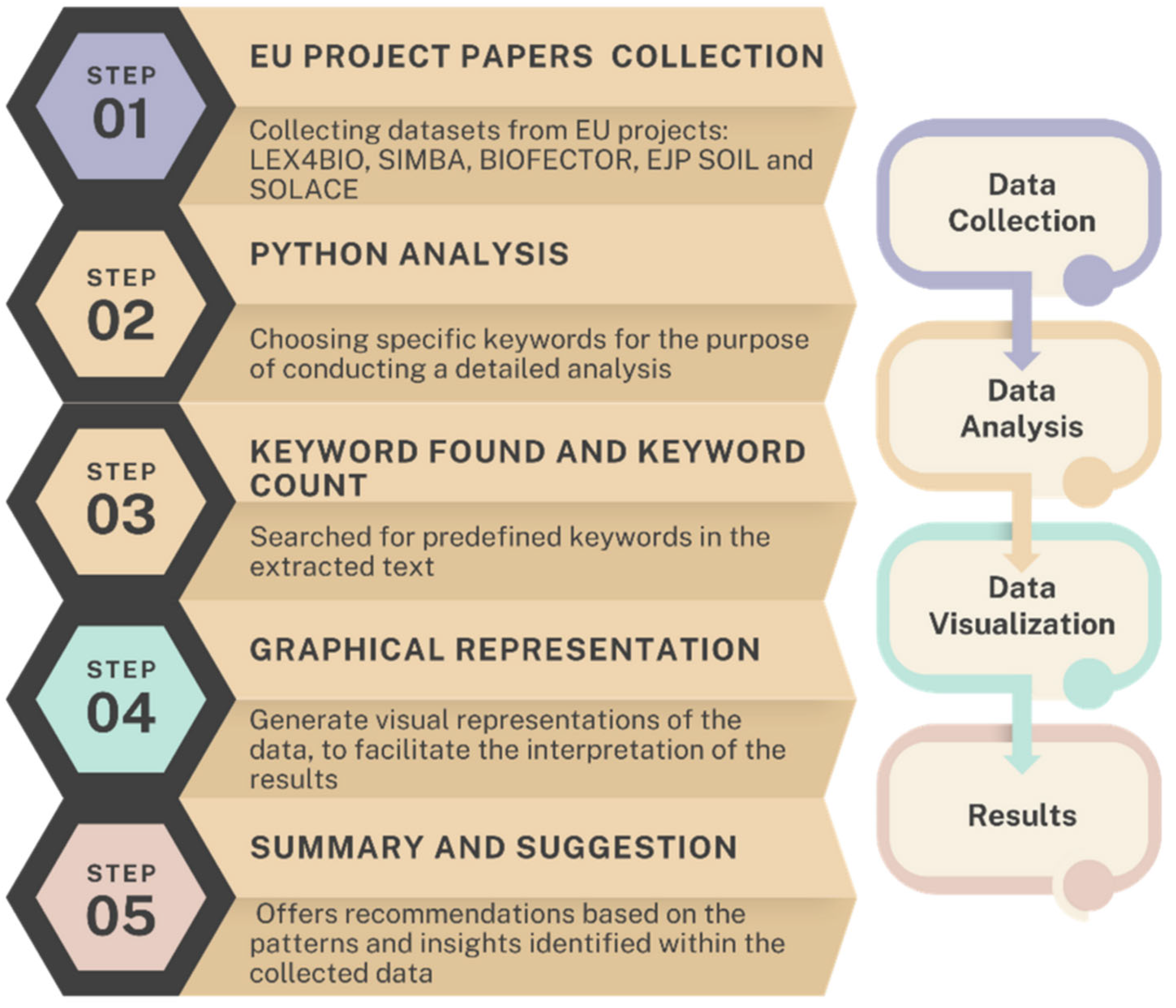
Figure 1 summarizes the overall workflow. Peer-reviewed papers and public deliverables from five EU projects (LEX4BIO, SIMBA, BIOFECTOR, EJPSOIL and SOLACE) were collected and harmonized. Text extraction and lemmatization were performed in Python, followed by the construction of a document × keyword matrix. A predefined keyword list was counted (Table S1), and co-occurrence and similarity metrics were computed. The corpus was analyzed using a suite of quantitative visualizations, including normalized heatmaps (See Section 2.7), word cloud (See Section 2.8), correlation matrix (See Section 2.9), t-SNE clustering (See Section 2.10), and cosine similarity networks (See Section 2.11). Findings were ultimately synthesized into policy-oriented recommendations.

2.13. Use of Generative AI Tools

During the preparation of this manuscript, the authors used the generative AI tool ChatGPT (OpenAI, https://chat.openai.com) to assist with language translation, text editing, and brainstorming. All AI-generated content was thoroughly reviewed, revised, and verified by the authors to ensure scientific accuracy and compliance with the journal’s ethical standards. The final responsibility for the content remains entirely with the authors.

3. Results

3.1. Min–Max Heatmap Analysis

A Min–Max normalization of keyword frequencies across projects was performed to enable comparative pattern recognition. This scaling transformed the data into a uniform [0, 1] range, allowing clearer interpretation of thematic emphasis and priorities across EU-funded initiatives (Figure 2). The normalization facilitated direct comparison of keyword prominence among projects [54,57,63]. The visualization highlighted distinct thematic emphases across the projects, underscoring the diversity of research priorities within soil-related studies. The raw keyword frequencies ranged from 0 (absence of term) to 748 (highest occurrence in EJPSOIL), with project-specific maxima of 349, 748, 136, 627, and 458 for BIOFECTOR, EJPSOIL, LEX4BIO, SIMBA, and SOLACE, respectively. These minimum and maximum values define the empirical limits of the Min–Max normalization quantifying the relative stability and sensitivity of the system across projects. For example, in the BIOFECTOR project, high normalized values for keywords such as biostimulant and biodiversity indicated a strong focus on microbial soil enhancement and ecological parameters. EJPSOIL exhibited the highest intensities for digestate and soil organic matter, reflecting a strong focus on nutrient recovery and soil regeneration. LEX4BIO showed consistent elevation values for compost, biofertilizer, and circular economy, pointing to the frequent inclusion of topics related to waste-derived soil inputs and resource efficiency. In SIMBA, keywords such as bacteria and microbe reached high relative frequencies, suggesting an emphasis on soil microbial communities and their biological functions. Finally, SOLACE reported elevated values for crop growth and yield, corresponding to terminology related to agronomic performance. The heatmap distribution highlights distinct thematic profiles across the projects analyzed.

3.2. Wordcloud Analysis

Wordcloud visualization provided a qualitative overview of the keyword frequency distribution across the corpus, highlighting dominant concepts based on aggregated textual occurrences (Figure 3). The most visually prominent keywords were yield and biomass, indicating that agricultural productivity terms were frequently cited throughout the dataset. Their prominence reflects the central role of productivity-oriented concepts in both agronomic and environmental research. Keywords such as compost and biochar also appeared prominently, reflecting recurrent mentions of organic soil amendments and circularity principles. Additionally, biodiversity, organic matter, and soil organic carbon consistently appeared large, pointing to widespread references to ecological and soil quality parameters. Furthermore, words such as erosion, contamination, and salinity were present with moderate prominence, reflecting the inclusion of soil degradation and pollution topics. The frequent appearance of microbe and bacteria further emphasized the focus on microbiological aspects within the discourse on soil health.

3.3. Correlation Heatmap Analysis

A correlation matrix was conducted to examine the strength of co-occurrence relationships among keywords, identifying positive or negative associations to uncover thematic linkages shaping the conceptual structure of the literature on soil improvers and soil health. The correlation matrix (Figure 4) displays pairwise relationships among 30 frequently cited keywords, using a color gradient; i.e., redder cells indicated a stronger positive correlation (such as the co-occurrences compost–soil fertility, biochar–carbon stock, biodiversity–microbe, and soil organic matter–soil fertility), whereas cooler tones reflected weaker or negative associations, highlighting less frequent or inverse associations between terms. This approach provides quantitative insights into the semantic interconnections between terms, linking soil improvers to agronomic practices [64]. Overall, compost and biochar exhibit strong positive correlations with soil fertility, organic matter, and yield, indicating these soil improvers frequently co-occur with enhanced productivity and improved soil quality. Compost also shows a moderate positive association with circular economy, suggesting a recognized emphasis on resource recovery within the analyzed documents. Negative correlations appear between degradation-related terms (e.g., contamination) and yield-focused keywords. Moderate positive correlations also emerge between biodiversity, microbe and soil health, highlighting their interconnected roles in the discourse.

3.4. t-SNE Clustering Analysis

t-SNE was applied to reduce the dimensionality of the data and identify clusters of related keywords. This visual mapping (Figure 5) reveals how certain terms group together conceptually, supporting a deeper interpretation of thematic proximities across soil-related topics (Table S2). The first cluster, located primarily on the left side of the plot, features terms such as soil organic matter, carbon stock, and respiration, reflecting an emphasis on the biological and biochemical processes fundamental to soil health. Within this group, keywords like compost and biochar also appear in proximity, suggesting their frequent co-occurrence in discussions about carbon sequestration and nutrient retention, key functions of organic soil amendments.
A second cluster, located near the center, contains terms such as yield, biomass, and crop growth, underscoring an agronomic dimension that often aligns with microbial inoculants and organic amendments to enhance productivity. This cluster also includes references to circular economy and organic fertilizer, suggesting an integrated approach where resource recovery and waste valorization play a role in sustainable intensification. On the right side, a third cluster is characterized by keywords such as pollution, contamination, and pesticide, reflecting environmental concerns, particularly the mitigation of negative impacts within agroecosystems. Unlike the first two clusters, this one emphasizes potential risks associated with certain soil improvers, such as heavy metal accumulation in biochar or compost [65,66], nutrient imbalance or losses via leaching or volatilization [67], and risks from pathogens or high salinity in poorly processed organic amendments. It also includes terms like denitrification and microplastics, pointing to ongoing research into biogeochemical cycles and emerging soil contaminants.
Altogether, these clusters underscore the dual role of soil improvers, ranging from compost and biochar to microbial solutions, as both contributors to soil health and productivity, and as potential sources of environmental trade-offs. This highlights the importance of quality control, risk assessment, and context-specific application to ensure that soil amendments contribute positively to sustainable agriculture without unintended harm.

3.5. Keyword Network Analysis (Cosine Similarity)

To explore the semantic associations among keywords, a cosine similarity network was constructed. This network provided insights into thematic clusters and the structural positioning of core terms within the broader discourse on soil health. Figure 6 presents the network of frequently cited keywords, where node size reflects keyword frequency, and edge thickness indicates the strength of association between terms.
Several clusters emerge, illustrating how soil improvers and related concepts align with soil health and sustainable agricultural practices. Indeed, the yield cluster dominates the network, surrounded by well-connected nodes such as biomass, erosion and biodiversity. These linkages suggest an integrated discourse connecting agricultural productivity and ecological themes. Keywords such as crop growth, bacteria, and microbe cluster around these nodes, reflecting a strong interest in microbiome-based solutions that support both plant performance and environmental resilience.
Another distinct cluster centers on organic matter, soil organic carbon, and compost, indicating a frequent co-occurrence of themes related to soil fertility and organic amendments. Within this cluster, biochar is tightly linked to organic matter (under the biomass node) and soil organic carbon. Nearby, terms like circular economy and nutrient recycling connect with the resource-recovery cluster (including compost, anaerobic digestion, and digestate), emphasizing the role of soil improvers in resource recovery and carbon sequestration. This cluster is also linked to soil health, underscoring the significance of soil amendments in enhancing the biological, chemical, and physical properties vital for long-term agricultural sustainability. In the lower region of the network, terms such as pollution, pesticide, and contamination form a more peripheral cluster, indicating a focus on mitigating environmental impacts. While less densely connected to yield-oriented nodes, these terms link to erosion and salinity, reflecting ongoing concerns about soil degradation.

4. Discussion

This study demonstrates the effectiveness of a cross-project text-mining and data visualization framework for uncovering thematic patterns in EU-funded research on soil amendments, microbial ecology, and sustainable agriculture. This study highlights a growing research convergence within soil research, centered on the dual imperatives of agricultural productivity and ecological resilience, with soil improvers—particularly biochar, compost, and microbial inputs—emerging as central to this paradigm shift. The analysis presented in this study offers compelling evidence for the pivotal role of soil improvers in enhancing soil health and advancing sustainable agriculture. By applying advanced data mining and text analysis techniques across multiple European research projects, this study was able to uncover distinct yet complementary thematic orientations within the soil amendment landscape. Rather than indicating fragmentation, these thematic divergences illustrate the inherently multi-dimensional nature of soil health, which encompasses physical, chemical, and biological components interacting across scales.

4.1. Main Products Used as Soil Amendments, Their Properties, and Functions

The analysis presented in this study offers compelling evidence for the pivotal role of soil improvers in enhancing soil health and advancing sustainable agriculture. Notably, the BIOFECTOR project highlighted keywords such as biostimulant and biodiversity, reflecting a clear focus on microbiome-based solutions aimed at enhancing soil fertility and ecological stability [68]. Conversely, EJPSOIL centered on terms such as soil organic matter and digestate, reflecting a primary interest in nutrient recycling and the restoration of soil organic carbon stocks. Similarly, LEX4BIO underscored keywords including compost, biofertilizer, and circular economy, highlighting a commitment to sustainable waste valorization and the transition toward bio-based fertilizers that demonstrate agronomic efficiency, health and environmental safety, and support optimal fertilization strategies. This thematic emphasis is supported by Mora-Salguero et al. (2024) [69] and Cucina et al. (2025) [70], who underline the strategic importance of biofertilizers and circular economy principles in modern soil management. The SIMBA project stood out for its emphasis on microbial terms such as bacteria and microbes, signaling an intensive investigation into the impact of microbiome-based solutions on soil microbiome and their pivotal role within soil ecosystems [71]. Conversely, SOLACE adopted a productivity-driven perspective, with frequent references to crop growth and yield, aligning with the findings of Ali et al. (2024) [72], who reviewed how sustainable practices can enhance agronomic outcomes. These divergent research orientations, though focused on different aspects of soil management, collectively demonstrate that the effective use of soil amendments requires a multifaceted understanding of both their specific properties and their context-dependent applications.
A coherent framework emerges from these diverse research priorities: soil amendments operate across complementary functional domains, carbon sequestration and structure (biochar, compost), nutrient availability (digestate), and ecological resilience (biostimulants, microbes), requiring integrated strategies adapted to regional conditions. The divergence across projects reflects soil health as multidimensional, requiring simultaneous attention to physical, chemical, and biological properties.

4.2. Main Indicators to Evaluate the Effect of Amendments on Soil Health

Quantitative analyses clarified both thematic divergence and convergence across the projects. The Min-Max normalized heatmap revealed distinct keyword intensity distributions, evidencing each project’s unique research focus. Correlation heatmap analysis uncovered strong associations among compost, biochar, soil fertility, and soil organic matter, underscoring the essential role of organic amendments in promoting soil health. These findings are consistent with findings by Allam M. et al. (2022) [73], who found similar correlations between organic amendments and fertility-related indicators in their soil management research.
Complementing these insights, t-SNE clustering identified coherent subclusters centered around biological processes, agronomic productivity, and environmental stressors. Furthermore, cosine similarity-based network analysis uncovered intricate semantic relationships among key terms such as yield, biodiversity, and microbial amendments. These patterns highlighted the central role of organic and microbiome-based soil amendments in improving soil quality while simultaneously supporting agricultural productivity objectives [74].
Correlation and clustering results showed that terms like biochar, compost, and soil organic carbon display strong positive correlations, highlighting the fundamental role of these organic amendments in enhancing soil carbon content. Frequent co-occurrences of these terms underscore that biochar and compost serve as effective means for augmenting the carbon content in soil, thereby enhancing soil structure, moisture regulation, and nutrient availability [75]. The close proximity and strong connections within the microbiome cluster, such as microbe, bacteria, and fungi/mycorrhiza, further confirm the vital role of microbiome-based solutions in nutrient cycling, organic matter turnover, and long-term soil stability. These findings are also supported by Raimi et al. (2023) [76], who found that microbial diversity plays a significant role in sustaining core soil functions, acting as a key driver of essential soil processes like nutrient transformation, carbon sequestration, and biological disease control, all of which underpin both ecosystem resilience and crop yield stability. The observed positive correlation between compost, biochar, and yield reflects a strong thematic association in the literature, indicating substantial research interest in the potential of organic amendments to enhance ecological resilience and agronomic productivity. However, these benefits are highly context-dependent and may vary significantly across different soil types, climatic conditions, and management practices. For instance, a global-scale meta-analysis by Jeffery et al. (2017) [77] found that biochar had, on average, no effect on crop yield in temperate regions, while yielding a 25% average increase in tropical regions. This highlights the importance of climate and soil context when evaluating the agronomic benefits of biochar. Importantly, the observed correlation should not be interpreted as empirical proof of causality or guaranteed effectiveness. Conversely, negative correlations observed between contamination-related terms (contamination, salinity, heavy metals) and yield-related terms indicate that soil degradation adversely impacts agricultural productivity. This pattern reflects the conclusions of Idbella et al. (2024) [78] and Bass et al. (2016) [79], both of whom documented the adverse effects of soil degradation on crop yields. Nevertheless, the prominent clustering of keywords such as compost, biochar, and circular economy underscores their combined effectiveness in mitigating these stressors through nutrient recycling and waste valorization.
Our text-mining framework reveals a clear evolution in EU-funded soil research, shifting from a primary focus on yield maximization toward a more holistic paradigm that integrates ecological sustainability. Across projects, keywords such as fertilizer and biochar consistently ranked highly, attesting to the centrality of organic amendments in delivering both agronomic and environmental benefits. Biochar co-occurred strongly with soil structure, nutrient retention, and carbon sequestration, confirming its dual function in enhancing productivity and contributing to climate change mitigation [80,81]. Results from projects like BIOFECTOR and LEX4BIO provide empirical validation of these benefits, showing improved soil fertility and reduced N2O emissions when biochar is combined with compost. This broadened research orientation is further reflected in correlation matrices and WordClouds, where productivity indicators like yield and biomass appear alongside ecological terms such as biodiversity, microbe, and soil organic carbon. Notably, the main research clusters identified in this study—SOM/SOC, yield, pollution/risks, microbial diversity, nutrient cycling, soil structure and compaction, and erosion—are directly aligned with the EU soil health indicators, supporting policy-relevant evaluation and targeted intervention design. This alignment highlights the policy relevance of our findings, supporting the development of science-based evaluation frameworks and targeted management interventions in line with the EU Soil Agenda.
The combined t-SNE + K-means and cosine similarity network analyses illustrate that microbial diversity occupies a pivotal position at the intersection of productivity and sustainability goals. This aligns with recent evidence demonstrating that diverse microbial communities support nutrient turnover, pathogen suppression, and resistance to abiotic stress. This is echoed in the work of Cornell et al. (2023) [74] and Fenster et al. (2021) [82], who highlighted the foundational role of microbial diversity in sustaining critical ecosystem services within agricultural systems.
Three essential indicator categories emerge: biological (microbial communities, enzyme activity), chemical (organic carbon, nutrients, pH), and functional (yield, nutrient cycling, carbon sequestration). Strong positive correlations link organic amendments to all three categories. However, amendment efficacy remains highly context-dependent, contingent on soil type, climate, and management intensity.

4.3. Practical Recommendations for Sustainable Soil Management

Focusing on both agricultural output and ecosystem resilience resonates with the objectives of the new EU Soil Monitoring and Resilience Directive [31] and the Soil Strategy for 2030 (COM/2021/699) [83], which emphasizes the need for long-term fertility through structured monitoring. Practices validated in BIOFECTOR, SIMBA and LEX4BIO such as judicious use of biochar and organic fertilizers, support the directive’s goals of enhancing soil carbon stocks and reducing synthetic inputs. However, while the regulation mandates standardized laboratory assays (e.g., pH, cation exchange capacity, nutrient content), it currently lacks provisions for biological indicators such as microbial biodiversity and gene-level markers, elements that our network-based analysis identifies as critical for comprehensive soil health assessment.
While this study demonstrates the feasibility of near real-time monitoring via text-mining, there is currently no infrastructure to integrate these insights into farmer practices, particularly for smallholders with limited access to digital tools [84]. To address this gap, a more flexible regulatory framework should incorporate bioindicators from large-scale text analysis, such as normalized frequencies of terms like microbe or biodiversity, and pair them with regionally adapted machine learning tools [85,86,87]. This would facilitate the timely integration of scientific evidence into policy, supporting both innovation and adoption. Empirical convergence across the studied projects affirms this recommendation: BIOFECTOR demonstrated that the use of bio-effectors, such as beneficial microbes and organic amendments like biochar, significantly improves soil structure, microbial activity, and organic matter content, supporting long-term soil resilience. EJPSOIL reported that the application of compost and digestate improves microbial activity and soil fertility, contributing to improved soil health and nutrient cycling, while SOLACE found that microbiome-based inputs, like mycorrhizae and beneficial microbes, raise yields even under suboptimal conditions and significantly enhance soil microbial diversity, which is crucial for ecosystem stability [88,89]. In LEX4BIO, the combination of biochar with recycled fertilizers effectively reduced nutrient losses, while SIMBA observed that the application of biofertilizers and biochar can enhance the function of the soil/plant ecosystem without altering the biodiversity of the resident microbiome [22,23,90,91,92,93]. These consistently validated practices highlight that tailored combinations of organic and microbial amendments constitute a cornerstone of resilient, future-oriented agriculture.
Organic and microbial soil amendments are most effective when used alongside mineral fertilizers rather than as complete replacements. While organic amendments improve soil health and nutrient availability, relying solely on them can present several challenges, including imbalanced nitrogen and phosphorus supply, slower nutrient release, and higher costs and labor requirements. Gulli et al. (2025) [93] found that biofertilizers (such as SynComs) and novel amendments (such as biochar) can partially replace the intense use of chemical fertilizers, pesticides, and insecticides, favoring the transition to more sustainable agriculture. Therefore, the adoption of integrated nutrient management (INM) practices—combining organic amendments, biofertilizers, and mineral fertilizers—is vital to revive sustainable soil health without compromising yield potential [94].
Potential risks of using organic soil amendments like compost or biochar include the presence of heavy metals or organic contaminants in the feedstocks, high salinity, pathogens if the material is poorly treated, nitrogen losses, and microplastic contamination [95]. These risks can be mitigated through rigorous feedstock selection and traceability, hygienization or stabilization processes ensuring pathogen removal, controlled composting, anaerobic digestion or pyrolysis conditions to minimize contaminants, and blending or co-composting with other organic materials to balance nutrient ratios and dilute contaminants. Appropriate application rates based on soil tests, combined with simple field monitoring of pH, electrical conductivity, and specific contaminants, further ensure safe and effective use. With these safeguards, the benefits of compost and biochar can be realized while minimizing potential environmental or health risks.
Overall, five strategic imperatives emerge: (I) Integrated Nutrient Management balancing organic and mineral inputs; (II) regulatory frameworks incorporating biological indicators alongside physicochemical assays; (III) region-specific monitoring protocols adapted to local conditions; (IV) rigorous risk mitigation through feedstock traceability and controlled processing; and (V) long-term field trials validating findings across diverse pedoclimatic zones. These actions translate research into operational capacity for achieving soil health objectives while maintaining productivity and sustainability.

5. Limitations

While this study provides useful insights into thematic patterns in EU-funded research on soil amendments, several limitations are recognized. First, the analysis is based solely on open-access, English-language documents. Second, keyword frequency and co-occurrence patterns do not reflect the quality, rigor, or impact of individual studies. Documents were not weighted by peer-review status, impact factor, or methodological strength, although a weighted sensitivity analysis is outlined as a future extension. Importantly, the correlation heatmaps and clustering analyses reveal textual co-occurrence rather than causal relationships. For example, a positive correlation between “compost” and “yield” does not imply that compost use increases crop yield compared to other fertilization strategies—it simply indicates that these terms frequently appear together in project outputs. As such, results should be interpreted as evidence of thematic association, not as empirical proof of agronomic effectiveness. Third, the projects span different timeframes (2013–2025), and while normalization was applied, temporal heterogeneity may still influence keyword prominence and trends. Fourth, the analysis sometimes treats soil improvers as a single category (e.g., biochar, compost, digestate), despite their distinct chemical properties, nutrient profiles, and environmental risks. This aggregation may obscure meaningful differences between amendments. Additionally, the corpus research treated the EU data as a whole, without regional stratification nor time-trend analysis by publication year was performed. Since amendment effects depend on climate, soil type, and management system, a simple stratification (by regions/years) could permit us to investigate the effect of soil improvers at local level.
Finally, future research should adopt more differentiated approaches that integrate text-mining with experimental or field data to better capture the specific benefits and challenges of individual soil amendments.

6. Conclusions

This research offers a twofold contribution to the advancement of sustainable agriculture. First, it pioneers a cross-project text-mining methodology to systematically extract and analyze thematic patterns from EU-funded research initiatives. By moving beyond isolated case studies, this methodology allows for a broader synthesis of trends, knowledge gaps, and emergent priorities across diverse projects, thereby equipping policymakers with actionable insights for the promotion of conservation agriculture, precision farming, and the strategic use of organic soil amendments.
Our findings underscore the need for an integrated, multi-dimensional approach to soil management, one that simultaneously considers productivity, environmental impact, and long-term soil health. Such an approach is essential to balance yield optimization with the protection of ecosystem services and the reduction of agriculture’s carbon footprint. Second, this study highlights the novel utility of advanced text analytics and visualization tools—such as correlation mapping, hierarchical clustering, and network analysis—in agricultural research. These techniques reveal co-occurrence patterns, thematic clusters, and conceptual interlinkages, helping researchers identify emerging areas of interest and refine future investigations. For example, the consistent link between microbial biodiversity and organic amendments points to an urgent research need in microbiome-soil interactions, a promising avenue for developing ecologically sound interventions. Crucially, the study confirms that soil health is a multidimensional construct, closely tied to agronomic performance, ecological sustainability, and climate resilience. By applying an integrated text-mining framework, this work deepens understanding of these intersections and supports the design of evidence-based strategies to meet the global challenge of increasing food production while conserving natural resources.
These links matter for both practice and policy as they demonstrate how thematic research outputs can be directly mapped onto operational indicators used by EU soil agendas, enabling targeted interventions and monitoring. Translating data-mined clusters into the EU indicator framework supports prioritization of investments (for example, in biochar–compost co-applications where SOC and microbial activity align with policy targets), guides quality control and certification schemes for amendments and helps design monitoring programs that explicitly include biological indicators alongside physicochemical metrics. Ultimately, aligning research clusters with EU soil indicators provides a clear pathway from evidence to actionable policy and on-farm practice.
In conclusion, the study demonstrates that organic soil improvers and microbiome-based solutions are strongly associated with indicators that EU policy prioritizes (notably SOM/SOC and biological activity). Their practical effectiveness is maximized when integrated into holistic nutrient management systems and supported by quality-assured supply chains. Furthermore, monitoring frameworks should explicitly incorporate biological indicators (such as microbial biomass, enzymatic activity and biodiversity metrics) alongside physicochemical measures to capture the multidimensional nature of soil health and ensure stronger alignment between research outcomes and EU soil policy objectives.

Supplementary Materials

The following supporting information can be downloaded at: https://www.mdpi.com/article/10.3390/environments12120472/s1. Table S1: List of used keywords; Table S2: Statistical metric; Figure S1: Quantitative analysis.

Author Contributions

Conceptualization, A.B. (Annamaria Bevivino); Methodology, L.N. and A.B. (Arianna Bindo); Formal analysis, L.N. and A.B. (Arianna Bindo); Investigation, L.N. and A.B. (Arianna Bindo); Data curation, L.N., A.B. (Arianna Bindo), L.D.G. and M.C.; Software, L.N.; Writing—original draft preparation, L.N. and A.B. (Arianna Bindo); Writing—review and editing, L.N., A.B. (Arianna Bindo), L.D.G., M.C. (Manuela Costanzo), M.C. (Marina Caldara), S.T., A.V., T.S., A.B. (Andrea Bauerle), V.H., R.B., G.C.V., N.M., A.P., I.M. and A.B. (Annamaria Bevivino); Supervision, A.B. (Annamaria Bevivino) and L.D.G.; Validation, A.B. (Annamaria Bevivino); Resources, A.B. (Annamaria Bevivino); Funding acquisition, A.B. (Annamaria Bevivino); Project administration, A.B. (Annamaria Bevivino). All authors have read and agreed to the published version of the manuscript.

Funding

This work was funded by European Union’s Horizon Europe programme (DELISOIL Project, GA No. 101112855; MULTISOIL, GA No. 101218951), the European Union’s HORIZON-CL6-2022 research and Innovation programme (ECOREADY Project, GA No. 101084201), the European Union Next-GenerationEU (Agritech National Research Center, PNRR—Missione 4 Componente 2, Investimento 1.4—D.D. 1032 17/06/2022, CN00000022), and the Italian Ministry of Agriculture, Food Sovereignty and Forestry (SOIL-HUB2 project, Creazione di una rete italiana di competenze per la gestione sostenibile del suolo, D.M. MASAF n 672924 of 20-12-24). This manuscript reflects only the authors’ views and opinions; neither the European Union nor the European Commission can be considered responsible for them.

Data Availability Statement

The datasets generated and analyzed during the current study (document–keyword matrix, co-occurrence counts, correlation matrices, and network files), as well as the Python scripts used for text mining and visualization, are not publicly posted because the underlying corpus contains third-party documents subject to copyright/licensing restrictions. De-identified derived data and the analysis code are available from the corresponding author upon reasonable request for non-commercial research purposes.

Acknowledgments

The authors thank the consortia of EJP SOIL, LEX4BIO, SIMBA, BIOFECTOR, and SOLACE for making project deliverables publicly available, and colleagues for administrative and technical assistance. We acknowledge the developers of open-source software used in this research (e.g., NumPy, pandas, scikit-learn, Matplotlib, Seaborn, NetworkX, spaCy). The funders had no role in the design of the study; in the collection, analyses, or interpretation of data; in the writing of the manuscript; or in the decision to publish the results. During the preparation of this manuscript, the authors used ChatGPT (OpenAI) for language polishing and translation. The authors reviewed and edited all outputs and take full responsibility for the content of this publication.

Conflicts of Interest

The authors declare no conflicts of interest. All authors have read and agreed to the published version of the manuscript.

Abbreviations

The following abbreviations are used in this manuscript:
AMFArbuscular Mycorrhizal Fungi
AMRAntimicrobial Resistance
BBFsBio-Based Fertilizers
CECCation Exchange Capacity
CRCarbon Ratio
HTCHydrothermal Carbonization
OCPsOrganochlorine Pesticides
PAHsPolycyclic Aromatic Hydrocarbons
PCBsPolychlorinated Biphenyls
PGPMsPlant Growth-Promoting Microorganisms
SOCSoil Organic Carbon
SOMSoil Organic Matter
t-SNEt-distributed Stochastic Neighbor Embedding

References

  1. Bünemann, E.K.; Bongiorno, G.; Bai, Z.; Creamer, R.E.; De Deyn, G.; de Goede, R.; Fleskens, L.; Geissen, V.; Kuyper, T.W.; Mäder, P.; et al. Soil quality—A critical review. Soil Biol. Biochem. 2018, 120, 105–125. [Google Scholar] [CrossRef]
  2. Faber, J.H.; Hanegraaf, M.C.; Gillikin, A.; Hendriks, C.M.J.; Kuikman, P.J.; Cousin, I.; Bispo, A.; Obiang-Ndong, G.; Montagne, D.; Taylor, A.; et al. Stocktaking for Agricultural Soil Quality and Ecosystem Services Indicators and Their Reference Values (SIREN). EJP SOIL Internal Project SIREN Deliverable 2 2022, Report, 153p. Available online: https://edepot.wur.nl/582329 (accessed on 12 March 2025).
  3. Sher, A.; Li, H.; Ullah, A.; Hamid, Y.; Nasir, B.; Zhang, J. Importance of regenerative agriculture: Climate, soil health, biodiversity and its socioecological impact. Discov. Sustain. 2024, 5, 662. [Google Scholar] [CrossRef]
  4. Tahat, M.M.; Alananbeh, K.M.; Othman, Y.A.; Leskovar, D.I. Soil health and sustainable agriculture. Sustainability 2020, 12, 4859. [Google Scholar] [CrossRef]
  5. Scalenghe, R.; Ajmone-Marsan, F. The anthropogenic sealing of soils in urban areas. Landsc. Urban Plan. 2009, 90, 1–10. [Google Scholar] [CrossRef]
  6. Telo da Gama, J. The role of soils in sustainability, climate change, and ecosystem services: Challenges and opportunities. Ecologies 2023, 4, 552–567. [Google Scholar] [CrossRef]
  7. Bhaduri, D.; Sihi, D.; Bhowmik, A.; Verma, B.C.; Munda, S.; Dari, B. A review on effective soil health bio-indicators for ecosystem restoration and sustainability. Front. Microbiol. 2022, 13, 938481. [Google Scholar] [CrossRef]
  8. Lehmann, J.; Bossio, D.A.; Kögel-Knabner, I.; Rillig, M.C. The concept and future prospects of soil health. Nat. Rev. Earth Environ. 2020, 1, 544–553. [Google Scholar] [CrossRef]
  9. Mocali, S.; Bispo, A.; Pérès, G.; Aponte, C.; Murugan, R.; Hedde, M.; Bevivino, A.; Brennan, F.; D’Avino, L.; Edlinger, A.; et al. Soil biological indicators for monitoring soil health. Zenodo 2025. [Google Scholar] [CrossRef]
  10. Rodríguez-Espinosa, T.; Papamichael, I.; Voukkali, I.; Gimeno, A.P.; Candel, M.B.A.; Navarro-Pedreño, J.; Zorpas, A.A.; Lucas, I.G. Nitrogen management in farming systems under the use of agricultural wastes and circular economy. Sci. Total Environ. 2023, 876, 162666. [Google Scholar] [CrossRef]
  11. Elkhalifa, S.; Al-Ansari, T.; Mackey, H.R.; McKay, G. Food waste to biochars through pyrolysis: A review. Resour. Conserv. Recycl. 2019, 144, 310–320. [Google Scholar] [CrossRef]
  12. Sonneveld, C.; Voogt, W. Fertilizers and soil improvers. In Plant Nutrition of Greenhouse Crops; Springer: Dordrecht, The Netherlands, 2009. [Google Scholar] [CrossRef]
  13. Intergovernmental Panel on Climate Change (IPCC). Summary for Policymakers. In Climate Change 2013: The Physical Science Basis; Stocker, T.F., Qin, D., Plattner, G.-K., Tignor, M., Allen, S.K., Boschung, J., Nauels, A., Xia, Y., Bex, V., Midgley, P.M., Eds.; Working Group I Contribution to the IPCC Fifth Assessment Report; Cambridge University Press: Cambridge, UK, 2014; pp. 1–30. Available online: https://www.cambridge.org/core/books/abs/climate-change-2013-the-physical-science-basis/summary-for-policymakers/356E277FD1FBC887845FB9E8CBC90CCD (accessed on 18 June 2025).
  14. European Commission. Regulation (EU) 2019/1009 of the European Parliament and of the Council of 5 June 2019 laying down rules on the making available on the market of EU fertilising products. Off. J. Eur. Union 2019, L 170, 1–114. Available online: https://eur-lex.europa.eu/legal-content/EN/TXT/?uri=CELEX:32019R1009 (accessed on 15 March 2025).
  15. Ahmad Bhat, S.; Rizvi, A.; Wani, I.A.; Wani, H.A.; Wani, S.H.; Nanda, A. Application of biochar for improving physical, chemical and biological properties of soils. Sustainability 2022, 14, 11104. [Google Scholar] [CrossRef]
  16. Adekiya, A.O.; Ogunbode, T.O.; Esan, V.I.; Ejue, W.S.; Aremu, C.; Oyinlola, O.E.; Owolabi, I.O.; Adesola, T.; Ibirinde, D.B.; Aboyeji, C.M.; et al. Short-term effects of biochar on soil chemical properties, growth, yield, quality, and shelf life of tomato (Solanum lycopersicum L.). Sci. Rep. 2025, 15, 24965. [Google Scholar] [CrossRef] [PubMed]
  17. Marmiroli, M.; Caldara, M.; Pantalone, S.; Malcevschi, A.; Maestri, E.; Keller, A.A.; Marmiroli, N. Building a risk matrix for the safety assessment of wood derived biochars. Sci. Total Environ. 2022, 839, 156265. [Google Scholar] [CrossRef]
  18. Ighalo, J.O.; Ohoro, C.R.; Ojukwu, V.E.; Oniye, M.; Shaikh, W.A.; Biswas, J.K.; Seth, C.S.; Mohan, G.B.M.; Chandran, S.A.; Rangabhashiyam, S. Biochar for ameliorating soil fertility and microbial diversity: From production to action of the black gold. iScience 2025, 28, 111524. [Google Scholar] [CrossRef]
  19. Wen, Z.; Chen, Y.; Liu, Z.; Meng, J. Biochar and arbuscular mycorrhizal fungi stimulate rice root growth strategy and soil nutrient availability. Eur. J. Soil Biol. 2022, 113, 103448. [Google Scholar] [CrossRef]
  20. Gujre, N.; Soni, A.; Rangan, L.; Tsang, D.C.W.; Mitra, S. Sustainable improvement of soil health utilizing biochar and arbuscular mycorrhizal fungi: A review. Environ. Pollut. 2021, 268, 115549. [Google Scholar] [CrossRef]
  21. Wang, Y.; Munir, T.; Wu, X.; Huang, Y.; Li, B. Phosphorus recovery and reuse: Innovating with biochar in the circular economy. Sci. Total Environ. 2025, 973, 179143. [Google Scholar] [CrossRef]
  22. Caldara, M.; Gullì, M.; Graziano, S.; Riboni, N.; Maestri, E.; Mattarozzi, M.; Bianchi, F.; Careri, M.; Marmiroli, N. Microbial consortia and biochar as sustainable biofertilizers: Analysis of their impact on wheat growth and production. Sci. Total Environ. 2024, 917, 170168. [Google Scholar] [CrossRef]
  23. Graziano, S.; Caldara, M.; Gullì, M.; Bevivino, A.; Maestri, E.; Marmiroli, N. A metagenomic and gene expression analysis in wheat (T. durum) and maize (Z. mays) biofertilized with PGPM and biochar. Int. J. Mol. Sci. 2022, 23, 10376. [Google Scholar] [CrossRef]
  24. Xiang, L.; Harindintwali, J.D.; Wang, F.; Redmile-Gordon, M.; Chang, S.X.; Fu, Y.; He, C.; Muhoza, B.; Brahushi, F.; Bolan, N.; et al. Integrating biochar, bacteria, and plants for sustainable remediation of soils: Mechanisms and applications. Environ. Sci. Technol. 2022, 56, 16546–16566. [Google Scholar] [CrossRef] [PubMed]
  25. Khan, M.T.; Aleinikovienė, J.; Butkevičienė, L.M. Innovative organic fertilizers and cover crops: Perspectives for sustainable agriculture in the era of climate change and organic agriculture. Agronomy 2024, 14, 2871. [Google Scholar] [CrossRef]
  26. Cárceles Rodríguez, B.; Durán-Zuazo, V.H.; Soriano Rodríguez, M.; García-Tejero, I.F.; Gálvez Ruiz, B.; Cuadros Tavira, S. Conservation agriculture as a sustainable system for soil health: A review. Soil Syst. 2022, 6, 87. [Google Scholar] [CrossRef]
  27. Singh, N.K.; Sachan, K.; Ranjitha, G.; Chandana, S.; Manoj, B.P.; Panotra, N.; Katiyar, D. Building soil health and fertility through organic amendments and practices: A review. Asian J. Soil Sci. Plant Nutr. 2024, 10, 175–197. [Google Scholar] [CrossRef]
  28. Di Gregorio, L.; Nolfi, L.; Latini, A.; Nikoloudakis, N.; Bunnefeld, N.; Notarfonso, M.; Bernini, R.; Manikas, I.; Bevivino, A. Getting (ECO)Ready: Does EU legislation integrate up-to-date scientific data for food security and biodiversity preservation under climate change? Sustainability 2024, 16, 10749. [Google Scholar] [CrossRef]
  29. Assimakopoulos, F.; Vassilakis, C.; Margaris, D.; Kotis, K.; Spiliotopoulos, D. Artificial intelligence tools for the agriculture value chain: Status and prospects. Electronics 2024, 13, 4362. [Google Scholar] [CrossRef]
  30. Jain, V.; Mitra, A. Leveraging machine learning and data mining: Enhancing agricultural productivity and sustainability (SDG 2 Zero Hunger). In Machine and Deep Learning Solutions for Achieving the Sustainable Development Goals; IGI Global: Hershey, PA, USA, 2025; pp. 209–228. [Google Scholar] [CrossRef]
  31. European Parliament. Soil Monitoring: Parliament Adopts New EU Law with Better Support for Farmers. 2025. Available online: https://www.europarl.europa.eu/news/en/press-room/20251017IPR31009/soil-monitoring-parliament-adopts-new-eu-law-with-better-support-for-farmers (accessed on 15 March 2025).
  32. European Commission. Soil Health. Environment Directorate-General. 2023. Available online: https://environment.ec.europa.eu/topics/soil-health/soil-health_en (accessed on 18 June 2025).
  33. Kuppan, N.; Padman, M.; Mahadeva, M.; Srinivasan, S.; Devarajan, R. A comprehensive review of sustainable bioremediation techniques: Eco-friendly solutions for waste and pollution management. Waste Manag. Bull. 2024, 2, 154–171. [Google Scholar] [CrossRef]
  34. The European Joint Programme Soil, EJPSOIL Project (Grant Agreement No 862695). Available online: https://ejpsoil.eu/ (accessed on 12 March 2025).
  35. Optimizing Bio-based Fertilisers in Agriculture – Knowledgebase for New Policies, LEX4BIO Project (Grant Agreement No 818309). Available online: https://lex4bio.eu/ (accessed on 12 March 2025).
  36. Sustainable Innovation of Microbiome Applications in Food System, SIMBA Project (Grant Agreement No 818431). Available online: https://simbaproject.eu/ (accessed on 12 March 2025).
  37. Resource Preservation by Application of BIOefFECTORs in European Crop Production, BIOFECTOR Project (Grant Agreement No 312117). Available online: https://www.madora.eu/Biofector/ (accessed on 12 March 2025).
  38. Solutions for Improving Agroecosystem and Crop Efficiency for Water and Nutrient Use, SOLACE Project (Grant Agreement No 727247). Available online: https://www.solace-eu.net/index.html (accessed on 12 March 2025).
  39. Harris, C.R.; Millman, K.J.; van der Walt, S.J.; Gommers, R.; Virtanen, P.; Cournapeau, D.; Wieser, E.; Taylor, J.; Berg, S.; Smith, N.J.; et al. Array programming with NumPy. Nature 2020, 585, 357–362. [Google Scholar] [CrossRef]
  40. Hunter, J.D. Matplotlib: A 2D graphics environment. Comput. Sci. Eng. 2007, 9, 90–95. [Google Scholar] [CrossRef]
  41. Pedregosa, F.; Varoquaux, G.; Gramfort, A.; Michel, V.; Thirion, B.; Grisel, O.; Blondel, M.; Prettenhofer, P.; Weiss, R.; Dubourg, V.; et al. Scikit-learn: Machine learning in Python. J. Mach. Learn. Res. 2011, 12, 2825–2830. Available online: https://jmlr.org/papers/v12/pedregosa11a.html (accessed on 22 October 2024).
  42. McKinney, W. Data structures for statistical computing in Python. In Proceedings of the 9th Python in Science Conference, Austin, TX, USA, 28 June–3 July 2010; pp. 56–61. [Google Scholar] [CrossRef]
  43. Waskom, M. seaborn: Statistical data visualization. J. Open Source Softw. 2021, 6, 3021. [Google Scholar] [CrossRef]
  44. Hagberg, A.A.; Schult, D.A.; Swart, P.J. Exploring network structure, dynamics, and function using NetworkX. In Proceedings of the 7th Python in Science Conference (SciPy 2008), Pasadena, CA, USA, 19–24 August 2008; pp. 11–15. Available online: https://conference.scipy.org/proceedings/scipy2008/paper_2/ (accessed on 22 October 2024).
  45. Ginsparg, P. ArXiv at 20. Nature 2011, 476, 145–147. [Google Scholar] [CrossRef] [PubMed]
  46. Aleqabie, H.J.; Sfoq, M.S.; Albeer, R.A.; Abd, E.H. A review of text mining techniques: Trends and applications in various domains. Iraqi J. Comput. Sci. Math. 2024, 5, 125–141. [Google Scholar] [CrossRef]
  47. Piwowar, H.; Priem, J.; Larivière, V.; Alperin, J.P.; Matthias, L.; Norlander, B.; Farley, A.; West, J.; Haustein, S. The state of OA: A large-scale analysis of the prevalence and impact of open-access articles. PeerJ 2018, 6, e4375. [Google Scholar] [CrossRef]
  48. Camacho-Collados, J.; Pilehvar, M.T. On the role of text preprocessing in neural network architectures: An evaluation study on text categorization and sentiment analysis. arXiv 2017, arXiv:1707.01780. [Google Scholar] [CrossRef]
  49. Meuschke, N.; Jagdale, A.; Spinde, T.; Mitrović, J.; Gipp, B. Information for a Better World: Normality, Virtuality, Physicality, Inclusivity; Springer Nature: Cham, Switzerland, 2023. [Google Scholar] [CrossRef]
  50. Honnibal, M.; Montani, I.; Van Landeghem, S.; Boyd, A. spaCy: Industrial-strength natural language processing in Python (v2). Zenodo 2020. [Google Scholar] [CrossRef]
  51. Kumar, Y.; Marchena, J.; Awlla, A.H.; Li, J.J.; Abdalla, H.B. The AI-powered evolution of big data. Appl. Sci. 2024, 14, 10176. [Google Scholar] [CrossRef]
  52. Matisic, M.; Dugan, I.; Bogunovic, I. Challenges in sustainable agriculture—The role of organic amendments. Agriculture 2024, 14, 643. [Google Scholar] [CrossRef]
  53. Paudel, P.; Khadka, S.; Ranju, G.C.; Shah, R. Optimizing Nepali PDF extraction: A comparative study of parser and OCR technologies. arXiv 2024, arXiv:2407.04577. [Google Scholar] [CrossRef]
  54. Ahmed, H.A.; Muhammad Ali, P.J.; Faeq, A.K.; Abdullah, S.M. An investigation on disparity responds of machine-learning algorithms to data normalization method. ARO Sci. J. Koya Univ. 2022, 10, 29–37. [Google Scholar] [CrossRef]
  55. Yeung, A.W.K.; Goto, T.K.; Leung, W.K. At the leading front of neuroscience: A bibliometric study of the 100 most-cited articles. Front. Hum. Neurosci. 2017, 11, 363. [Google Scholar] [CrossRef]
  56. Corona Ramírez, A.; Symanczik, S.; Gallusser, T.; Bodenhausen, N. Quantification of arbuscular mycorrhizal fungi root colonization in wheat, tomato, and leek using absolute qPCR. Mycorrhiza 2023, 33, 387–397. [Google Scholar] [CrossRef] [PubMed]
  57. Ozek, B.; Lu, Z.; Pouromran, F.; Radhakrishnan, S.; Kamarthi, S. Analysis of pain research literature through keyword co-occurrence networks. PLoS Digit. Health 2023, 2, e0000331. [Google Scholar] [CrossRef] [PubMed]
  58. Adhikari, N.S.; Agarwal, S. A comparative study of PDF parsing tools across diverse document categories. arXiv 2025, arXiv:2410.09871. [Google Scholar] [CrossRef]
  59. Foreman-Mackey, D. corner.py: Scatterplot matrices in Python. J. Open Source Softw. 2016, 1, 24. [Google Scholar] [CrossRef]
  60. van der Maaten, L.; Hinton, G. Visualizing data using t-SNE. J. Mach. Learn. Res. 2008, 9, 2579–2605. Available online: https://www.jmlr.org/papers/v9/vandermaaten08a.html (accessed on 22 October 2024).
  61. Lloyd, S.P. Least squares quantization in PCM. IEEE Trans. Inf. Theory 1982, 28, 129–137. [Google Scholar] [CrossRef]
  62. Kamada, T.; Kawai, S. An algorithm for drawing general undirected graphs. Inf. Process. Lett. 1989, 31, 7–15. [Google Scholar] [CrossRef]
  63. Günther, P.; Ekardt, F. Balancing climate goals and biodiversity protection: Legal implications of the 30×30 target for land-based carbon removal. Front. Clim. 2023, 5, 1276606. [Google Scholar] [CrossRef]
  64. Li, Y.; Miao, J.; Huang, W.; Pan, R.; Zhou, K. Research progress and hotspot analysis of soil microplastics: A bibliometrics-based review. Front. Environ. Sci. 2023, 11, 1297646. [Google Scholar] [CrossRef]
  65. Kujawska, J.; Bilicz, E.; Mendyk, E. Content of heavy metals in various biochar and environmental risk assessment. J. Ecol. Eng. 2023, 24, 287–295. [Google Scholar] [CrossRef]
  66. Medyńska-Juraszek, A.; Bednik, M.; Chohura, P. Assessing the influence of compost and biochar amendments on the mobility and uptake of heavy metals by green leafy vegetables. Int. J. Environ. Res. Public Health 2020, 17, 7861. [Google Scholar] [CrossRef] [PubMed]
  67. Kitir Sen, N.; Kocaman, A.; Aydemir, Ö.E. The role of chemical fertilizer reduction and different microbial inoculants on yield increase in lettuce cultivation. BMC Plant Biol. 2025, 25, 981. [Google Scholar] [CrossRef] [PubMed]
  68. Nkebiwe, P.M.; Stevens Lekfeldt, J.S.; Symanczik, S.; Thonar, C.; Mäder, P.; Halpern, M.; Biró, B.; Bradáčová, K.; Caniullan, P.C.; Choudhary, K.K.; et al. Effectiveness of bio-effectors on maize, wheat and tomato performance and phosphorus acquisition: A meta-analysis. Sci. Rep. 2024, 14, 12345. [Google Scholar] [CrossRef]
  69. Mora-Salguero, D.; Montenach, D.; Gilles, M.; Jean-Baptiste, V.; Sadet-Bourgeteau, S. Long-term effects of combining anaerobic digestate with other organic waste products on soil microbial communities. Front. Microbiol. 2024, 15, 1490034. [Google Scholar] [CrossRef]
  70. Cucina, M.; Massaccesi, L.; Garfí, M.; Saponaro, V.; Muñoz Muñoz, A.; Escalante, H.; Castro, L. Application of digestate from low-tech digesters for degraded soil restoration: Effects on soil fertility and carbon sequestration. Sci. Total Environ. 2025, 967, 178854. [Google Scholar] [CrossRef]
  71. Cangioli, L.; Tabacchioni, S.; Visca, A.; Fiore, A.; Aprea, G.; Ambrosino, P.; Ercole, E.; Sørensen, S.; Mengoni, A.; Bevivino, A. Genome insights into beneficial microbial strains composing SIMBA microbial consortia applied as biofertilizers for maize, wheat and tomato. Microorganisms 2024, 12, 2562. [Google Scholar] [CrossRef]
  72. Ali, S.A.; Vivaldi, G.A.; Tallou, A.; Lopriore, G.; Stellacci, A.M.; Montesano, F.F.; Mazzeo, A.; Ferrara, G.; Gadaleta, A.; Camposeo, S. Sustainability potential of marginal areas for food, feed, and non-food production in southern Italy. Agronomy 2024, 14, 472. [Google Scholar] [CrossRef]
  73. Allam, M.; Radicetti, E.; Quintarelli, V.; Petroselli, V.; Marinari, S.; Mancinelli, R. Influence of organic and mineral fertilizers on soil organic carbon and crop productivity under different tillage systems: A meta-analysis. Agriculture 2022, 12, 464. [Google Scholar] [CrossRef]
  74. Cornell, C.R.; Zhang, Y.; Ning, D.; Xiao, N.; Wagle, P.; Xiao, X.; Zhou, J. Land-use conversion increases network complexity and stability of soil microbial communities. ISME J. 2023, 17, 2210–2220. [Google Scholar] [CrossRef]
  75. Zhu, Z.; Zhang, Y.; Tao, W.; Zhang, X.; Xu, Z.; Xu, C. The biological effects of biochar on soil’s physical and chemical characteristics: A review. Sustainability 2025, 17, 2214. [Google Scholar] [CrossRef]
  76. Raimi, A.R.; Ezeokoli, O.T.; Adeleke, R.A. Soil nutrient management influences diversity, community association and functional structure of rhizosphere bacteriome. Front. Microbiol. 2023, 14, 1229873. [Google Scholar] [CrossRef] [PubMed]
  77. Jeffery, S.; Abalos, D.; Prodana, M.; Bastos, A.C.; van Groenigen, J.W.; Hungate, B.A.; Verheijen, F. Biochar boosts tropical but not temperate crop yields. Environ. Res. Lett. 2017, 12, 053001. [Google Scholar] [CrossRef]
  78. Idbella, M.; Baronti, S.; Giagnoni, L.; Renella, G.; Becagli, M.; Cardelli, R.; Maienza, A.; Vaccari, F.P.; Bonanomi, G. Long-term effects of biochar on soil chemistry, biochemistry, and microbiota: Results from a 10-year field vineyard experiment. Appl. Soil Ecol. 2024, 195, 105217. [Google Scholar] [CrossRef]
  79. Bass, A.M.; Bird, M.I.; Kay, G.; Muirhead, B. Soil properties, greenhouse gas emissions and crop yield under compost, biochar and co-composted biochar in two tropical agronomic systems. Sci. Total Environ. 2016, 550, 459–470. [Google Scholar] [CrossRef]
  80. Lehmann, J.; Joseph, S. Biochar for Environmental Management: Science, Technology and Implementation, 2nd ed.; Routledge: London, UK, 2015. [Google Scholar] [CrossRef]
  81. Sohi, S.P.; Krull, E.; Lopez-Capel, E.; Bol, R. A review of biochar and its use and function in soil. Adv. Agron. 2010, 105, 47–82. [Google Scholar] [CrossRef]
  82. Fenster, T.; LaCanne, C.E.; Pecenka, J.R.; Schmid, R.B.; Bredeson, M.M.; Busenitz, K.M.; Michels, A.M.; Welch, K.D.; Lundgren, J.G. Biodiversity and agricultural sustainability: A rapid evidence review. F1000Research 2021, 10, 352. [Google Scholar] [CrossRef]
  83. European Commission. Communication from the Commission to the European Parliament, the Council, the European Economic and Social Committee and the Committee of the Regions on EU Soil Strategy for 2030—Reaping the Benefits of Healthy Soils for People, Food, Nature and Climate (COM no. 699, 2021 Final). Off. J. Eur. Union. 2021. Available online: https://eur-lex.europa.eu/legal-content/EN/TXT/?uri=CELEX%3A52021DC0699 (accessed on 15 March 2025).
  84. Rust, N.A.; Jarvis, R.M.; Reed, M.S.; Cooper, J. Framing of sustainable agricultural practices by the farming press and its effect on adoption. Agric. Hum. Values 2021, 38, 753–765. [Google Scholar] [CrossRef]
  85. Blanchy, G.; Albrecht, L.; Koestel, J.; Garré, S. Potential of natural language processing for metadata extraction from environmental scientific publications. Soil 2023, 9, 155–168. [Google Scholar] [CrossRef]
  86. Zayani, H.; Fouad, Y.; Michot, D.; Kassouk, Z.; Baghdadi, N.; Vaudour, E.; Lili-Chabaane, Z.; Walter, C. Using machine-learning algorithms to predict soil organic carbon content from combined remote sensing imagery and laboratory Vis-NIR spectral datasets. Remote Sens. 2023, 15, 4264. [Google Scholar] [CrossRef]
  87. Yuzugullu, O.; Fajraoui, N.; Liebisch, F. Soil texture and pH mapping using remote sensing and support sampling. IEEE J. Sel. Top. Appl. Earth Obs. Remote Sens. 2024, 17, 12685–12705. [Google Scholar] [CrossRef]
  88. Pastorelli, R.; Casagli, A.; Rocchi, F.; Tampio, E.; Laaksonen, I.; Becagli, C.; Lagomarsino, A. Effects of anaerobic digestates and biochar amendments on soil health, greenhouse gas emissions, and microbial communities: A mesocosm study. Appl. Sci. 2024, 14, 1917. [Google Scholar] [CrossRef]
  89. Symanczik, S.; Gisler, M.; Thonar, C.; Schlaeppi, K.; van der Heijden, M.; Kahmen, A.; Boller, T.; Mäder, P. Application of mycorrhiza and soil from a permaculture system improved phosphorus acquisition in naranjilla. Front. Plant Sci. 2017, 8, 1263. [Google Scholar] [CrossRef] [PubMed]
  90. Agostini, L.; Bünemann, E.K.; Jakobsen, C.; Salo, T.; Wester-Larsen, L.; Symanczik, S. Prediction of nitrogen mineralization from novel bio-based fertilizers using chemical extractions. Environ. Technol. Innov. 2024, 36, 103781. [Google Scholar] [CrossRef]
  91. Ylivainio, K.; Lehti, A.; Jermakka, J.; Wikberg, H.; Turtola, E. Predicting relative agronomic efficiency of phosphorus-rich organic residues. Sci. Total Environ. 2021, 773, 145618. [Google Scholar] [CrossRef]
  92. Müller, B.; Wester-Larsen, L.; Jensen, L.S.; Salo, T.; Garrido, R.R.; Arkoun, M.; D’Oria, A.; Lewandowski, I.; Müller, T.; Bauerle, A. Agronomic performance of novel nitrogen-rich biobased fertilizers across European field trial sites. Field Crops Res. 2024, 316, 109486. [Google Scholar] [CrossRef]
  93. Gullì, M.; Cangioli, L.; Frusciante, S.; Graziano, S.; Caldara, M.; Fiore, A.; Klonowski, A.M.; Maestri, E.; Brunori, A.; Mengoni, A.; et al. The relevance of biochar and co-applied SynComs on maize quality and sustainability: Evidence from field experiments. Sci. Total Environ. 2025, 968, 178872. [Google Scholar] [CrossRef]
  94. Paramesh, V.; Kumar, R.M.; Rajanna, G.A.; Gowda, S.; Nath, A.J.; Madival, Y.; Jinger, D.; Bhat, S.; Toraskar, S. Integrated nutrient management for improving crop yields, soil properties, and reducing greenhouse gas emissions. Front. Sustain. Food Syst. 2023, 7, 1173258. [Google Scholar] [CrossRef]
  95. Urra, J.; Alkorta, I.; Garbisu, C. Potential benefits and risks for soil health derived from the use of organic amendments in agriculture. Agronomy 2019, 9, 542. [Google Scholar] [CrossRef]
Figure 1. Scheme of the work process. Peer-reviewed papers and public deliverables from five EU projects LEX4BIO, SIMBA, BIOFECTOR, EJPSOIL and SOLACE were harvested and harmonized.
Environments 12 00472 g001
Figure 2. Heatmap showing the relative frequency of the 50 most cited keywords, normalized using Min-Max scaling, across the projects BIOFECTOR, EJPSOIL, LEX4BIO, SIMBA, and SOLACE. Warmer colors (approaching red) denote higher normalized keywords counts, while cooler tones (blue) reflect lower frequencies, with color gradients scaled from 0 (blue) to 1 (red).
Environments 12 00472 g002
Figure 3. WordCloud based on cumulative keyword frequencies across all projects. Font size is proportionally scaled to keyword occurrence, with larger fonts indicating higher occurrence, as quantified in Figure S1.
Environments 12 00472 g003
Figure 4. Correlation matrix of the 30 most frequently cited keywords. Color scale represents Pearson correlation coefficients (r) among keyword pairs. Red tones indicate strong positive correlations (frequent co-occurrence), while blue tones indicate weak or negative correlations (rare or inverse co-occurrence). Neutral tones represent low or no correlation.
Environments 12 00472 g004
Figure 5. t-distributed Stochastic Neighbor Embedding (t-SNE) plot of the most frequent keywords. Positions are determined through t-SNE dimensionality reduction, capturing semantic relationships in two-dimensional space. K-means clustering groups the keywords into distinct thematic clusters, revealing one focused on biological and biochemical processes, another on agronomic productivity, and a third addressing environmental stressors.
Environments 12 00472 g005
Figure 6. Cosine-similarity network with normalized keyword frequency. Nodes correspond to frequently cited keywords, with edges representing cosine similarity above a specified threshold. Larger node sizes reflect higher overall frequency, and color intensity indicates node degree or centrality. The network highlights interlinked concepts such as “yield” and “biodiversity” at the core, along with clusters of related terms that underscore the multifaceted nature of soil health and sustainability.
Environments 12 00472 g006
Disclaimer/Publisher’s Note: The statements, opinions and data contained in all publications are solely those of the individual author(s) and contributor(s) and not of MDPI and/or the editor(s). MDPI and/or the editor(s) disclaim responsibility for any injury to people or property resulting from any ideas, methods, instructions or products referred to in the content.