

Baccilus amyloliquefacins Strains Isolated in a Wastewater Treatment Plant: Molecular Identification and Amylase/Protease Production Capacity

 ,
,  ,
,  , ,
, ,  , and
, and
Abstract
1. Introduction
2. Materials and Methods
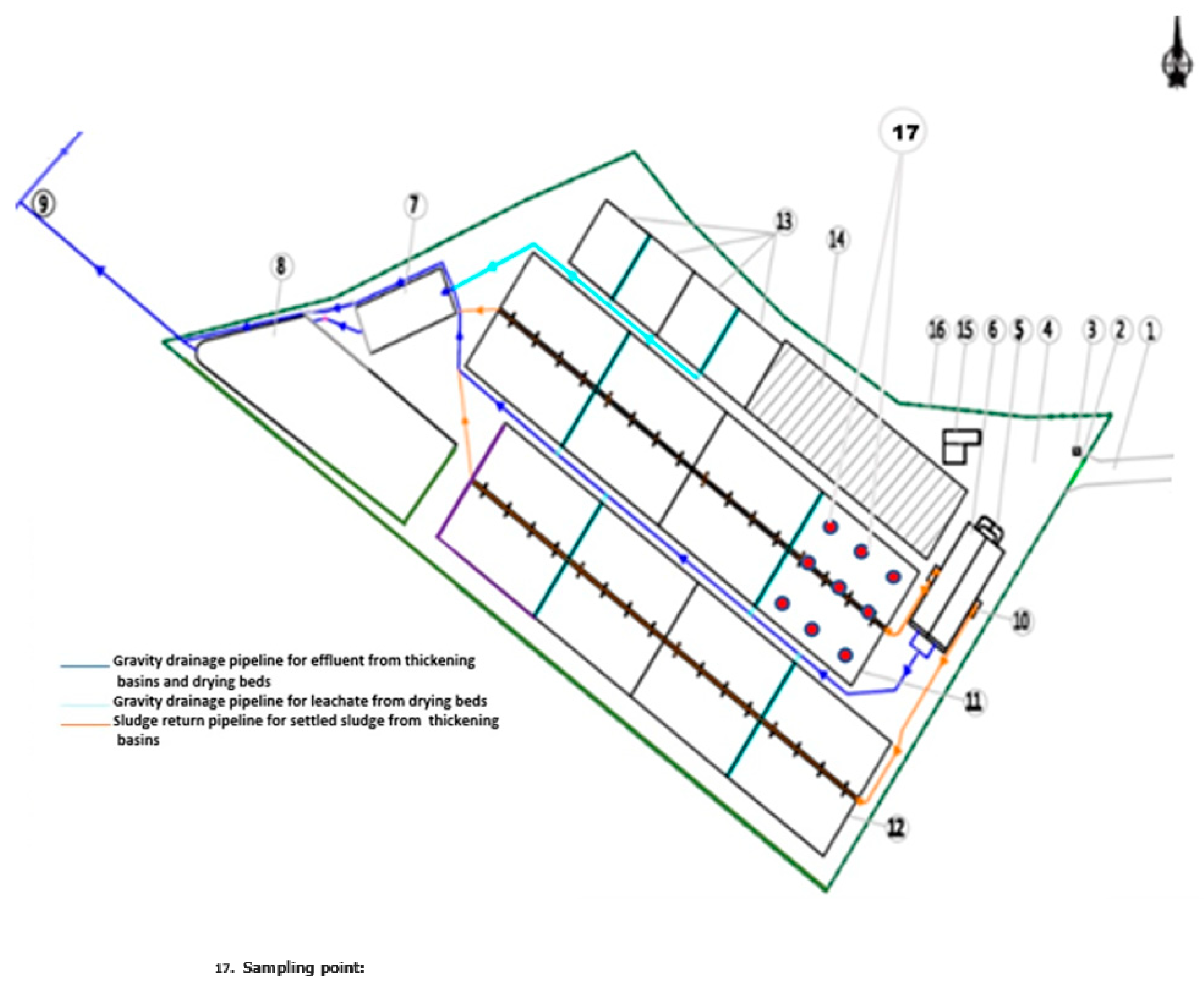
2.1. Sample Collection
2.2. Microbial Isolation and Characterization of Bacillus amyloliquefaciens Strains
2.3. Morphological Characterization of Isolate
2.4. Enzymatic Production Capacity of Isolates
2.4.1. Catalase Activity
2.4.2. Amylase Activity
2.4.3. Protease Activity
2.4.4. Arginine and Ornithine Decarboxylase Activities
2.4.5. Gelatinase Activity
2.5. Molecular Analysis of Bacterial Strains
2.5.1. Extraction of Bacterial Genomic DNA
2.5.2. Bacterial Strain Identification by Sequencing
3. Results
3.1. Morphological and Microscopic Characteristics of Isolates
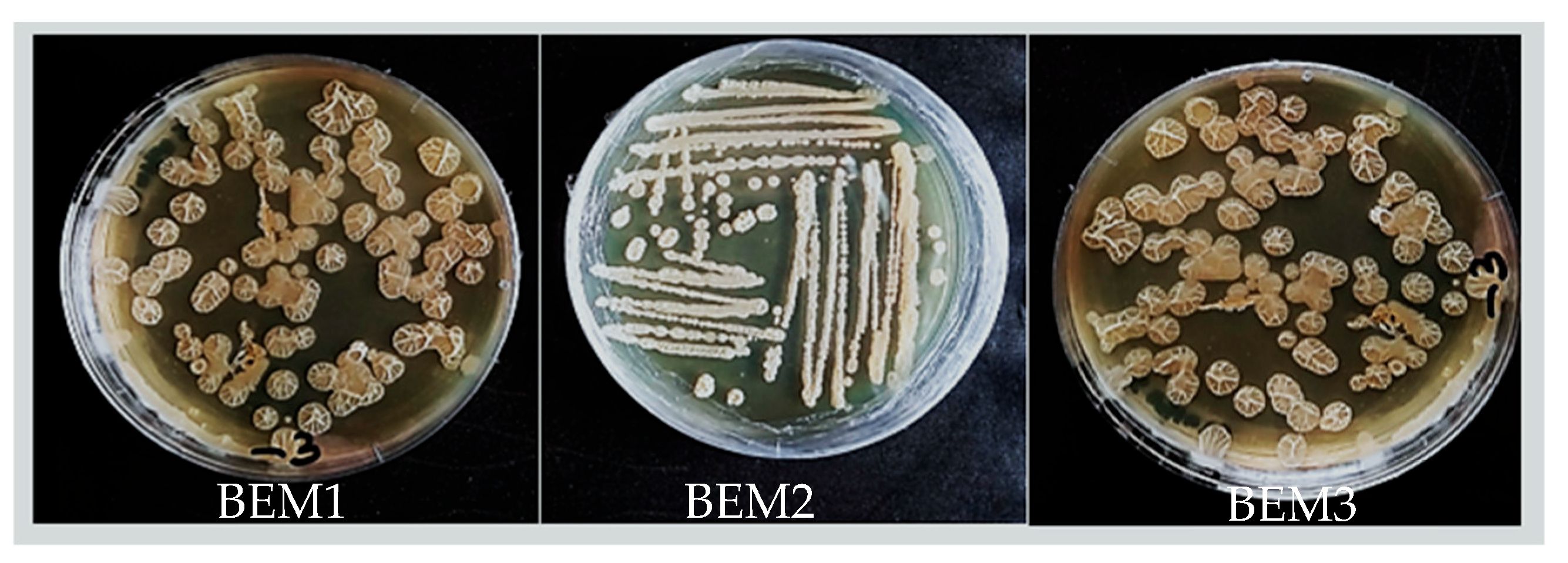
3.1.1. Morphological Characteristics of Isolates
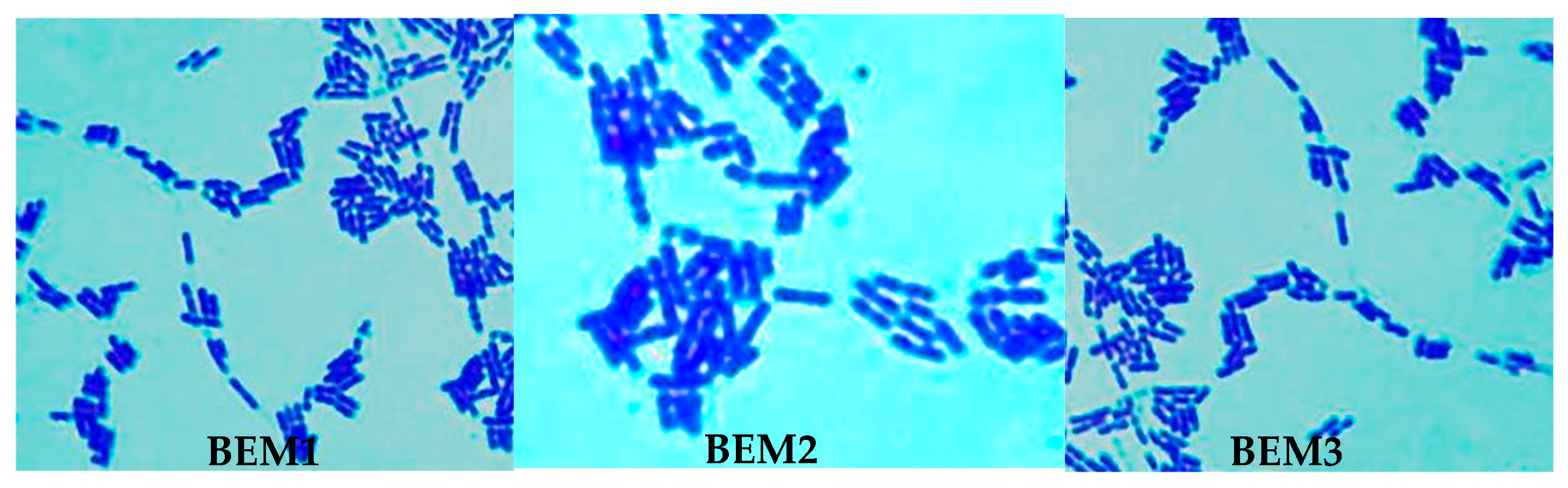
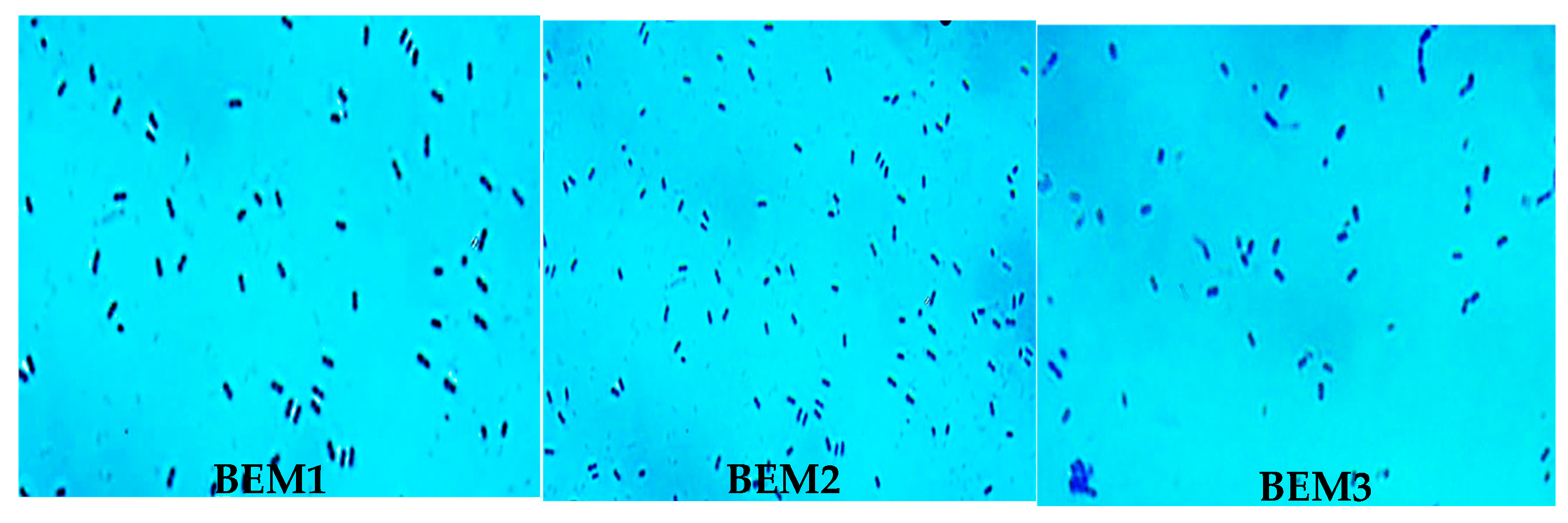
3.1.2. Gram and Endospore Staining
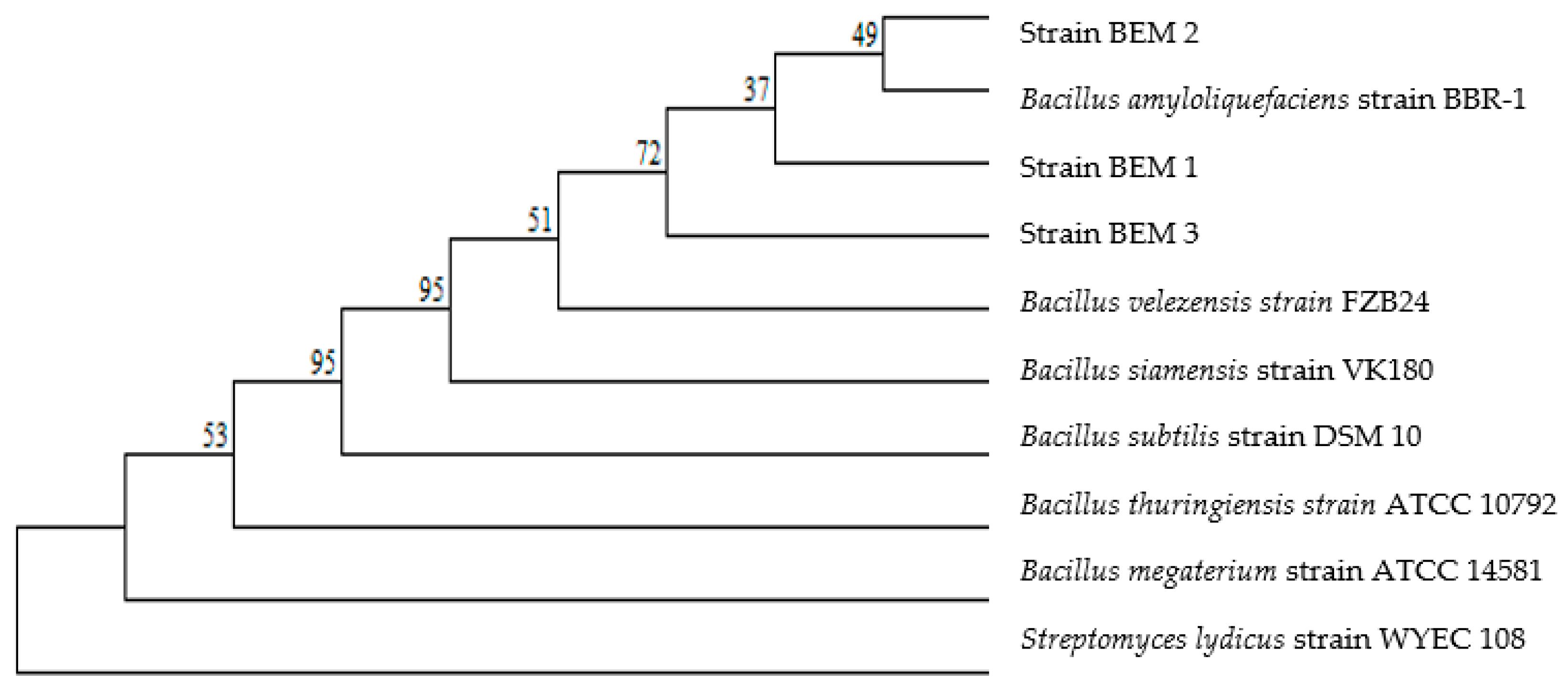
3.2. Molecular Identification of Isolates
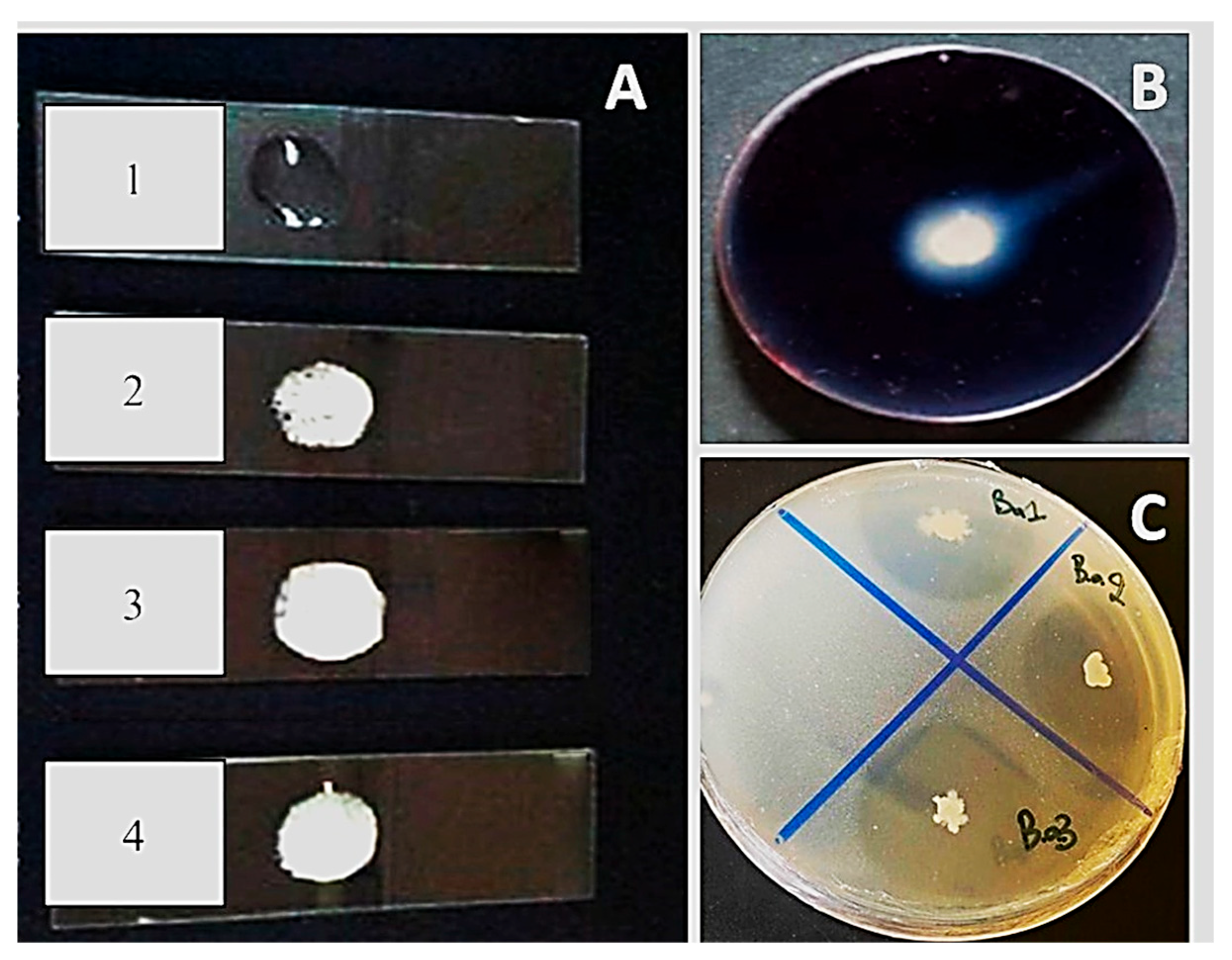
3.3. Enzymatic Production Capacity of the Strains
4. Discussion
5. Conclusions
Author Contributions
Funding
Data Availability Statement
Acknowledgments
Conflicts of Interest
References
- Tchobanoglous, G.; Burton, F.L.; Stensel, H.D. Wastewater Engineering: Treatment and Reuse; McGraw-Hill: New York, NY, USA, 2014. [Google Scholar]
- Rashid, M.T.; West, J. Dairy wastewater treatment with effective microorganisms and duckweed for pollutants and pathogen control. In Wastewater Reuse—Risk Assessment, Decision-Making and Environmental Security; Springer: New York, NY, USA, 2007; pp. 93–102. [Google Scholar]
- Zhou, G.; Sun, J. Study on effective microorganism’s bacteria for acrylonitrile wastewater treatment. In Proceedings of the 4th International Conference on Bioinformatics and Biomedical Engineering (iCBBE), Chengdu, China, 18–20 June 2010; pp. 1–4. [Google Scholar] [CrossRef]
- Boruszko, D.; Butarewicz, A. Impact of effective microorganisms on the vermicomposting of sewage sludge. Environ. Prot. Eng. 2015, 41, 96. [Google Scholar] [CrossRef]
- Wardhani, D.K.; Titah, H.S.; Mardyanto, M.A.; Soedjono, E.S. Biodegradation of septage using Priestia aryabhattai: Laboratory investigations and process insights. Environ. Technol. Innov. 2021, 23, 101733. [Google Scholar] [CrossRef]
- Strande, L.; Ronteltap, M.; Brdjanovic, D. Faecal Sludge Management Systems Approach for Implantation and Operation; IWA Publishing: London, UK, 2014; p. 427. [Google Scholar]
- Kengne, I.M. Potentials of Sludge Drying Beds Vegetated with Cyperus papyrus L. and Echinochloa pyramidalis (Lam.) Hitchc. & Chase for Faecal Sludge Treatment in Tropical Regions. Ph.D. Thesis, University of Yaoundé I, Yaoundé, Cameroon, 2008; p. 114. [Google Scholar]
- Schoebitz, L.; Bassan, M.; Ferré, A.; Vu, T.H.A.; Nguyen, V.A.; Strande, L. Faecal sludge quantification and characterisation-field trial methodology in Hanoi. In Proceedings of the 37th WEDC International Conference, Hanoi, Vietnam, 15–19 September 2014; pp. 1–6. [Google Scholar]
- Nzouebet, W.A.L.; Kengne, E.S.; Rechenburg, A.; Ndangang, J.J.N.; Noumsi, I.M.K. Fecal sludge treatment in a pilot-scale vertical-flow constructed wetland for the removal of helminth eggs. J. Water Sanit. Hyg. Dev. 2022, 12, 634–646. [Google Scholar] [CrossRef]
- Wedderhoff, H.L.; Luiz, A.J.; Rafaela de Oliveira, P.; Soccol, V.T.; Rodrigues, C.; Soccol, C.R. Bacillus genus industrial applications and innovation: First steps towards a circular bioeconomy. Biotechnol. Adv. 2024, 70, 108300. [Google Scholar] [CrossRef]
- Maglione, G.; Zinno, P.; Tropea, A.; Mussagy, C.U.; Dufossé, L. Microbes’ role in environmental pollution and remediation: A bioeconomy focus approach. AIMS Microbiol. 2024, 10, 723–755. [Google Scholar] [CrossRef]
- Ali, S.; Munawar, M. Biotechnological approaches to bioremediation and wastewater treatment: Utilizing microbial and enzymatic strategies to degrade pollutants and toxic substances: A review. Insights-J. Health Rehabil. 2025, 3, 34–41. [Google Scholar] [CrossRef]
- Luo, L.; Zhao, C.; Wang, E.; Raza, A.; Yin, C. Bacillus amyloliquefaciens as an excellent agent for biofertilizer and biocontrol in agriculture: An overview for its mechanisms. Microbiol. Res. 2022, 259, 127016. [Google Scholar] [CrossRef]
- Eras-Muñoz, E.; Farré, A.; Sánchez, A.; Font, X.; Gea, T. Microbial biosurfactants: A review of recent environmental applications. Bioengineered 2022, 13, 12365–12391. [Google Scholar] [CrossRef]
- Wang, J.; Qiu, J.; Yang, X.; Yang, J.; Zhao, S.; Zhou, Q.; Chen, L. Identification of Lipopeptide Iturin a produced by Bacillus amyloliquefaciens NCPSJ7 and its antifungal activities against Fusarium oxysporum f. sp. niveum. Foods 2022, 11, 2996. [Google Scholar] [CrossRef] [PubMed]
- El Hamss, H.; Kajad, N.; Belabess, Z.; Lahlali, R. Enhancing bioefficacy of Bacillus amyloliquefaciens SF14 with salicylic acid for the control of the postharvest citrus green mould. Plant Stress 2023, 7, 100144. [Google Scholar] [CrossRef]
- Raveena, J.J.; Sharmila, K.J. Bioremediation potential of Bacillus amyloliquefaciens BAB-807 and Bacillus rugosus SPB7 isolated from deliming effluent. Int. J. Environ. Prot. 2025, 45, 3–15. [Google Scholar]
- Zalila-Kolsi, I.; Ben-Mahmoud, A.; Al-Barazie, R. Bacillus amyloliquefaciens: Harnessing Its Potential for Industrial, Medical, and Agricultural Applications—A Comprehensive Review. Microorganisms 2023, 11, 2215. [Google Scholar] [CrossRef]
- Nguyen, V.; Ndao, A.; Blais, J.-F.; Adjallé, K. Evaluation of Industrial Wastewaters as Low-Cost Resources for Sustainable Enzyme Production by Bacillus Species. Clean Technol. 2025, 7, 45. [Google Scholar] [CrossRef]
- Kone, M.; Service, E.; Ouattara, Y.; Ouattara, P.; Bonou, L. Caractérisation des boues de vidange dépotées sur les lits de séchage de zagtouli (Ouagadougou). Int. J. Biol. Chem. Sci. 2016, 10, 2781–2795. [Google Scholar] [CrossRef]
- Travers, R.S.; Martin, P.A.; Reichelderfer, C.F. Selective process for efficient isolation of soil Bacillus spp. Appl. Environ. Microbiol. 1987, 53, 1263–1266. [Google Scholar] [CrossRef] [PubMed]
- Daniel, L.; Ester, R.; Nelly, L. The characterization of Bacillus thuringiensis from soil habitat of Auky Island, Padaido District in Biak Numfor Regency and its toxicity against mosquito larva of Anopheles sp. Am. J. Infect. Dis. 2018, 14, 77–81. [Google Scholar] [CrossRef]
- Vos, P.; Garrity, P.; Jones, D.; Krieg, N.R.; Ludwig, W.; Rainey, F.A. Bergey’s Manual of Systematic Bacteriology: Volume 3: The Firmicutes; Springer: New York, NY, USA, 2009. [Google Scholar] [CrossRef]
- Oktari, A.; Supriatin, Y.; Kamal, M.S.H. The Bacterial Endospore Stain on Schaeffer Fulton using Variation of Methylene Blue Solution. J. Phys. Conf. Ser. 2017, 812, 012066. [Google Scholar] [CrossRef]
- MacFaddin, J.F. Biochemical Tests for Identification of Medical Bacteria, 3rd ed.; Lippincott Williams & Wilkins: Philadelphia, PA, USA, 2000. [Google Scholar]
- Hankin, L.; Anagnostakis, S.L. The use of solid media for detection of enzyme production by fungi. Mycology 1975, 67, 597–607. [Google Scholar] [CrossRef]
- Chaiharn, M.; Chunhaleuchanon, S.; Kozo, A.; Lumyong, S. Screening of rhizobacteria for their plant growth promoting activities. KMITL Sci. Technol. J. 2008, 8, 18–23. [Google Scholar]
- Ullah, A.; Hafsa, M.; Usman, A.; Hakim Ehsan, A.; Samavia, M. Screening, isolation, biochemical and plant growth promoting characterization of endophytic bacteria. Microbiol. Curr. Res. 2018, 2, 62–68. [Google Scholar] [CrossRef]
- Boiu-Sicuia, O.A.; Toma, R.C.; Diguță, C.F.; Matei, F.; Cornea, C.P. In vitro evaluation of some endophytic bacillus to potentially inhibit grape and grapevine fungal pathogens. Plants 2023, 12, 2553. [Google Scholar] [CrossRef]
- Vauterin, L.; Vauterin, P. Computer-aided objective comparison of electrophoresis patterns for grouping and identification of microorganisms. Eur. Microbiol. 1992, 1, 37–42. [Google Scholar]
- Kumar, S.; Stecher, G.; Li, M.; Knyaz, C.; Tamura, K. MEGA X: Molecular evolutionary genetics analysis across computing platforms. Mol. Biol. Evol. 2018, 35, 1547–1549. [Google Scholar] [CrossRef]
- Lee, A.; Cheng, K.C.; Liu, J.R. Isolation and characterization of a Bacillus amyloliquefaciens strain with zearalenone removal ability and its probiotic potential. PLoS ONE 2017, 12, e0182220. [Google Scholar] [CrossRef]
- Li, H.; Li, C.; Song, X.; Li, J.; Zhang, P.; Sun, F.; Geng, Z.; Liu, X. Isolation and identification of antagonistic Bacillus amyloliquefaciens HSE-12 and its effects on peanut growth and rhizosphere microbial community. Front. Microbiol. 2023, 14, 1274346. [Google Scholar] [CrossRef] [PubMed]
- Gautam, S.; Tahir, A.; Mishra, D. Environmental Bioremediation: Utilizing Acidic Protease Enzymes for Waste Management. Int. J. Food Nutr. Sci. 2022, 11, 3870–3877. [Google Scholar]
- Hou, J.; Liu, W.; Hu, W.; Chen, J.; Wang, J.; Li, P.; Li, Y. Isolation, production and optimization of endogenous alkaline protease from in-situ sludge and its evaluation as sludge hydrolysis enhancer. Water Sci. Technol. 2021, 83, 2700–2713. [Google Scholar] [CrossRef] [PubMed]
- Ngalimat, M.S.; Yahaya, R.S.R.; Baharudin, M.M.A.A.; Yaminudin, S.M.; Karim, M.; Ahmad, S.A.; Sabri, S. A review on the biotechnological applications of the operational group Bacillus amyloliquefaciens. Microorganisms 2021, 9, 614. [Google Scholar] [CrossRef]
- Zalila-Kolsi, I.; Kessentini, S.; Tounsi, S.; Jamoussi, K. Optimization of Bacillus amyloliquefaciens BLB369 culture medium by response surface methodology for low cost production of antifungal activity. Microorganisms 2022, 10, 830. [Google Scholar] [CrossRef]
- Feng, S.; Guo, W.; Ding, A.; Parsa, S.M.; Pan, J.; Cheng, D.; Tung, T.; Van Ngo, H.H. Enzyme sources in wastewater treatment: Their influence on enzymatic bioremediation and large-scale applications. Chem. Eng. J. 2025, 510, 161891. [Google Scholar] [CrossRef]
- Colombo, M.; Nero, L.A.; Todorov, S.D. Safety profile of beneficial lactic acid bacteria isolated from dairy systems. Brazalian J. Microbiol. 2020, 51, 787–795. [Google Scholar] [CrossRef] [PubMed]
- Fugaban, J.I.I.; Bucheli, J.E.V.; Holzapfel, W.H.; Todorov, S.D. Bacteriocinogenic bacillus spp. Isolated from Korean fermented cabbage (kimchi) beneficial or hazardous? Fermentation 2021, 7, 56. [Google Scholar] [CrossRef]
- Bao, X.; Wang, F.; Yang, R.; Zhang, Y.; Fu, L.; Wang, Y. Ornithine decarboxylation system of shewanella baltica regulates putrescine production and acid resistance. J. Food Prot. 2021, 84, 303–309. [Google Scholar] [CrossRef]
- Heo, S.J.; Kim, A.J.; Park, M.J.; Kang, K.; Soung, D.Y. Nutritional and functional properties of fermented mixed grains by solid-state fermentation with Bacillus amyloliquefaciens. Foods 2020, 9, 1693. [Google Scholar] [CrossRef]
- Zhang, J.; Zhu, B.; Li, X.; Xu, X.; Dengke, L.; Fang, Z.; Zhou, C.; Liu, Y.; Li, Y.; Lu, F. Multiple Modular Engineering of Bacillus amyloliquefaciens Cell Factories for Enhanced Production of Alkaline Proteases From B. clausii. Front. Bioeng. Biotechnol. 2022, 10, 866066. [Google Scholar] [CrossRef]
- Mishra, B.; Kallem, P.; Yadavalli, R. Industrial wastewater treatment using extracellular polymer substances/bioflocculants: A review. Appl. Water Sci. 2025, 15, 58. [Google Scholar] [CrossRef]





| Criteria | BEM 1 | BEM 2 | BEM 3 |
|---|---|---|---|
| Shape | Round | Round | Round |
| Relief | Slightly high | Moderate | Slightly high |
| Contour | Smooth | Smooth | Smooth |
| Size | 1 to 3 mm | 1 to 2 mm | 1 to 3 mm |
| Surface | Rough | Rough | Rough |
| Opacity | Opaque | Opaque | Opaque |
| Colour | Yellowish | Yellowish | Yellowish |
| Isolates | NCBI Accession Number | Sequence Analysis | ||
|---|---|---|---|---|
| Closest NCBI Database Match with Accession Number | Query Cover | Percentage of Identity | ||
| BEM 1 | PV355678 | Bacillus amyloliquefaciens CP054415.1 | 99.86% | 100 |
| BEM 2 | PV355830 | Bacillus amyloliquefaciens CP054415.1 | 99.86% | 100 |
| BEM 3 | PV355845 | Bacillus amyloliquefaciens CP054415.1 | 100% | 100 |
| Isolates | Catalase | Amylase | Protease | Arginine Decarboxylase | Ornithine Decarboxylase (mm) | Gelatinase (mm) |
|---|---|---|---|---|---|---|
| BEM 1 | ++ | ++ | ++ | − | 15 | 26 |
| BEM 2 | ++ | + | ++ | + | 15 | 0 |
| BEM 3 | ++ | + | + | − | 16 | 31 |
Disclaimer/Publisher’s Note: The statements, opinions and data contained in all publications are solely those of the individual author(s) and contributor(s) and not of MDPI and/or the editor(s). MDPI and/or the editor(s) disclaim responsibility for any injury to people or property resulting from any ideas, methods, instructions or products referred to in the content. |
© 2025 by the authors. Licensee MDPI, Basel, Switzerland. This article is an open access article distributed under the terms and conditions of the Creative Commons Attribution (CC BY) license (https://creativecommons.org/licenses/by/4.0/).
Share and Cite
Ndangang, J.J.N.; Sontsa-Donhoung, A.-M.; Biye, E.H.; Raducanu, D.; Barsan, N.; Ayo, A.; Wafo, G.V.D.; Mosnegutu, E.; Nedeff, V.; Kebassa Nkwefuth, C.; et al. Baccilus amyloliquefacins Strains Isolated in a Wastewater Treatment Plant: Molecular Identification and Amylase/Protease Production Capacity. Environments 2025, 12, 412. https://doi.org/10.3390/environments12110412
Ndangang JJN, Sontsa-Donhoung A-M, Biye EH, Raducanu D, Barsan N, Ayo A, Wafo GVD, Mosnegutu E, Nedeff V, Kebassa Nkwefuth C, et al. Baccilus amyloliquefacins Strains Isolated in a Wastewater Treatment Plant: Molecular Identification and Amylase/Protease Production Capacity. Environments. 2025; 12(11):412. https://doi.org/10.3390/environments12110412
Chicago/Turabian StyleNdangang, Jean Jules Nana, Alain-Martial Sontsa-Donhoung, Elvire Hortense Biye, Dumitra Raducanu, Narcis Barsan, Anne Ayo, Guy Valerie Djumyom Wafo, Emilian Mosnegutu, Valentin Nedeff, Christelle Kebassa Nkwefuth, and et al. 2025. "Baccilus amyloliquefacins Strains Isolated in a Wastewater Treatment Plant: Molecular Identification and Amylase/Protease Production Capacity" Environments 12, no. 11: 412. https://doi.org/10.3390/environments12110412
APA StyleNdangang, J. J. N., Sontsa-Donhoung, A.-M., Biye, E. H., Raducanu, D., Barsan, N., Ayo, A., Wafo, G. V. D., Mosnegutu, E., Nedeff, V., Kebassa Nkwefuth, C., Nedeff, F.-M., Panainte-Lehadus, M., Chițimus, D., & Magloire Kengne Noumsi, I. (2025). Baccilus amyloliquefacins Strains Isolated in a Wastewater Treatment Plant: Molecular Identification and Amylase/Protease Production Capacity. Environments, 12(11), 412. https://doi.org/10.3390/environments12110412