Article

The Moderating Role of Virtual Arm Embodiment for Upper Limb Rehabilitation in Stroke Patients with Proprioceptive Deficit: A Pilot Study


1
Instituto Polibienestar, University of Valencia, Avenida Blasco Ibañez 21, 46010 Valencia, Spain
2
Department of Psychology, University of Bologna, Viale Berti Pichat 5, 40126 Bologna, Italy
3
UOC di Medicina Riabilitativa e Neuro-Riabilitazione, IRCCS Istituto delle Scienze Neurologiche di Bologna, Azienda USL Bologna, Via Altura, 3, 40139 Bologna, Italy
4
LAHTI Laboratory for Advanced Human-Technology Interaction, Pegaso University, 20126 Milan, Italy
5
Department of Psychology and Health Sciences, Pegaso University, 80143 Naples, Italy
*
Author to whom correspondence should be addressed.
Behav. Sci. 2026, 16(7), 1180; https://doi.org/10.3390/bs16071180
Submission received: 12 May 2026 / Revised: 7 July 2026 / Accepted: 9 July 2026 / Published: 13 July 2026

Abstract

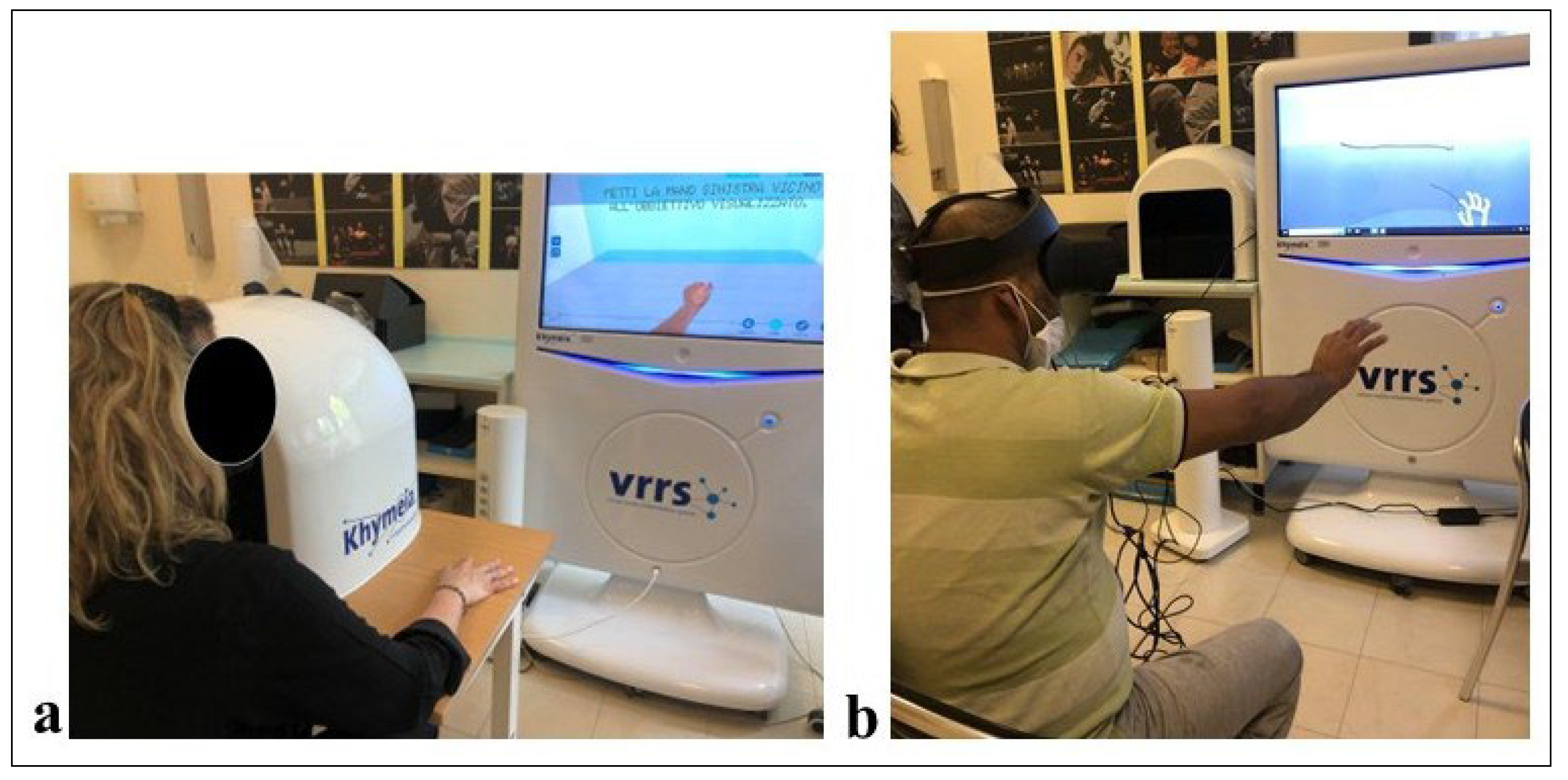
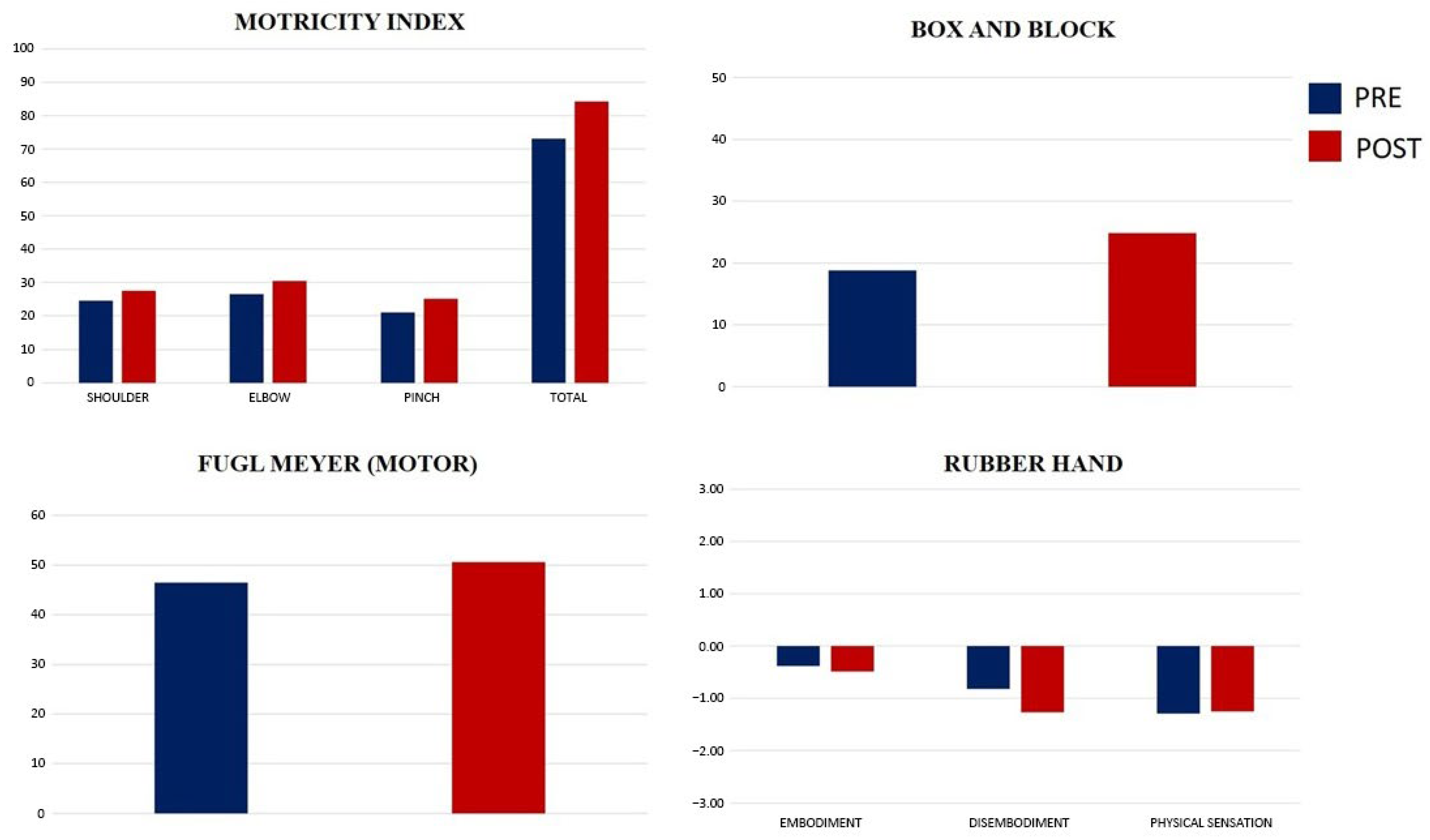
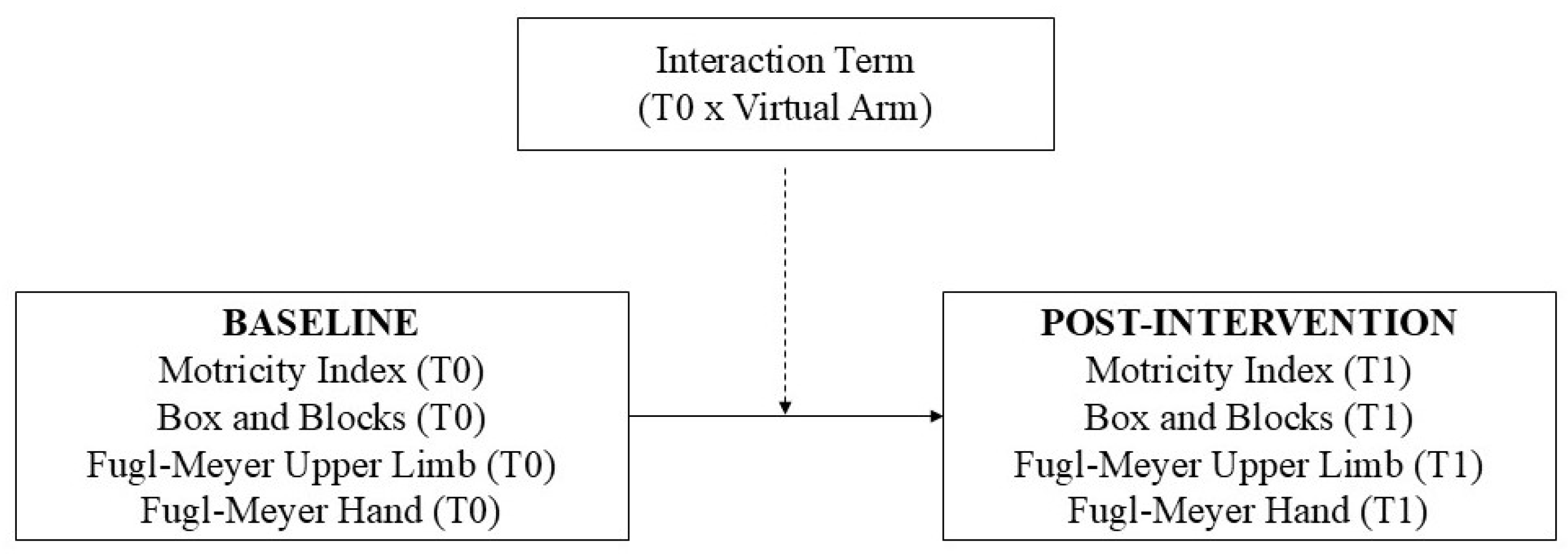
Stroke is the second leading cause of death worldwide and a major cause of long-term disability. These deficits may alter the body representation of the affected limb. Recent evidence suggests that Virtual Reality (VR), particularly when integrating body illusion paradigms, may enhance neuroplasticity and improve motor and proprioceptive abilities after stroke. This study investigated the effectiveness of a VR-based rehabilitation program for upper-limb motor and proprioceptive deficits. Participants were adults (both sexes) aged 18–85 years with ischemic or haemorrhagic stroke occurring from 2 to 18 months before recruitment, moderate to severe upper limb motor impairment (Motricity Index ≤ 80), altered proprioceptive function of the affected limb (failure on 3 of 4 Thumb Location Test trials), and the ability to understand and provide written informed consent. Eligible participants were undergoing a 4-week VR rehabilitation program and assessed at baseline and post-intervention. Twelve patients (four female) participated in this pilot study (Mage = 52.08, SDage = 16.03), with a mean time since stroke of 12 months. Non-parametric analyses showed significant improvements in motor abilities, including the Motricity Index (shoulder p = 0.039, elbow p = 0.024, pinch p = 0.011), Fugl–Meyer Assessment (p = 0.050), and Box and Block Test (p = 0.008). No significant improvement was observed in the Rubber Hand Illusion for the affected arm in terms of embodiment (p = 0.859). Regression analyses demonstrated that embodiment exerted a significant positive effect on post-intervention motor abilities (p = 0.004). In conclusion, VR-based rehabilitation may improve upper-limb motor performance after stroke modulates by proprioceptive ability, and that individual differences in embodiment may play an important role in modulating treatment-related motor outcomes.
Keywords: proprioceptive deficit; stroke; motor rehabilitation; embodiment; virtual reality proprioceptive deficit; stroke; motor rehabilitation; embodiment; virtual reality