Article

AI-Generated Content Disclosure and Prolonged Short-Video Engagement: A Heuristic-Systematic Risk-Trust Model Among Late-Adolescent and Emerging-Adult TikTok Users


1
School of Journalism and Information Communication, Huazhong University of Science and Technology, Wuhan 430074, China
2
School of Marxism, Huazhong University of Science and Technology, Wuhan 430074, China
3
College of Literature, Nanjing University, Nanjing 210019, China
4
School of Physical Education, Huazhong University of Science and Technology, Wuhan 430074, China
5
College of Philosophy and Law, Shanghai Normal University, Shanghai 201418, China
*
Authors to whom correspondence should be addressed.
These authors contributed equally to this work.
Behav. Sci. 2026, 16(7), 1179; https://doi.org/10.3390/bs16071179
Submission received: 28 May 2026 / Revised: 1 July 2026 / Accepted: 10 July 2026 / Published: 13 July 2026

Abstract

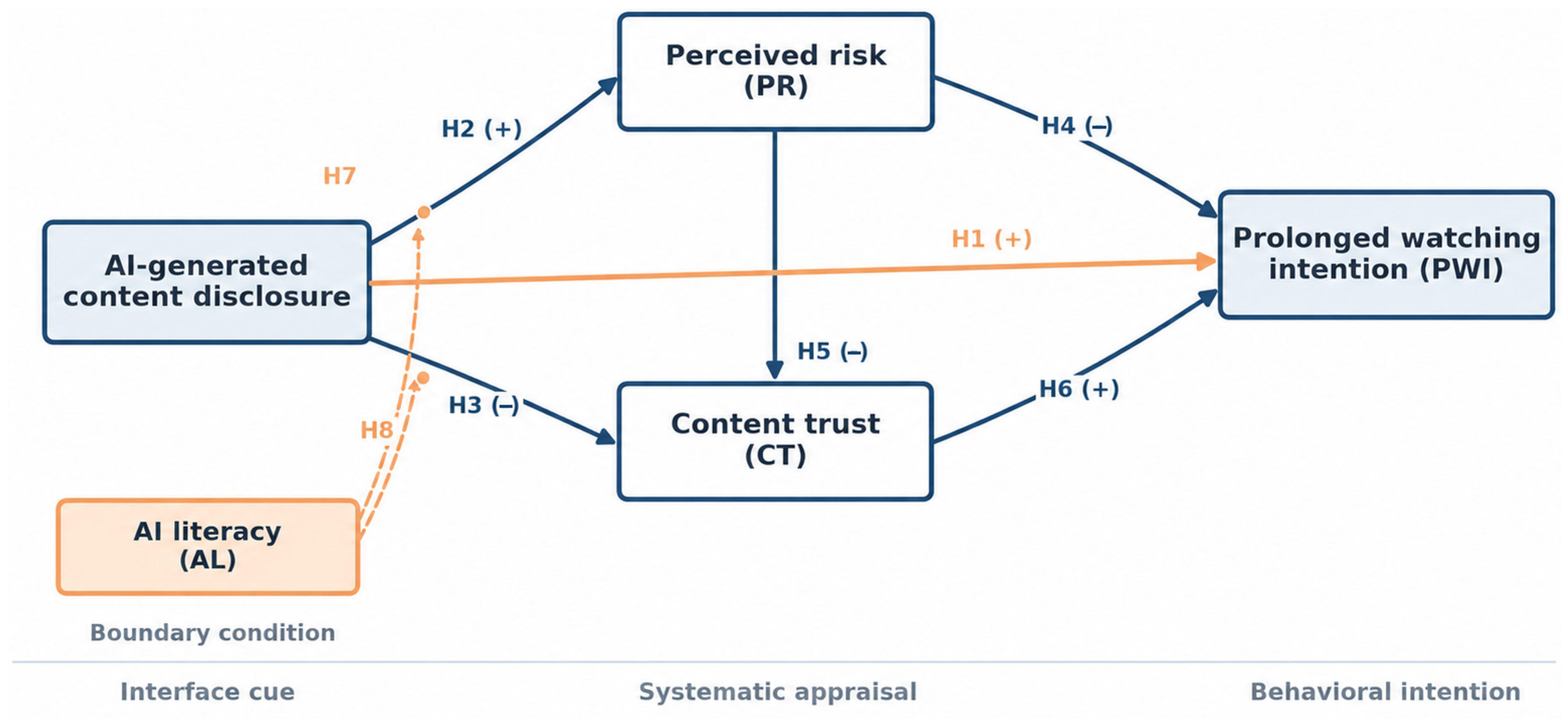
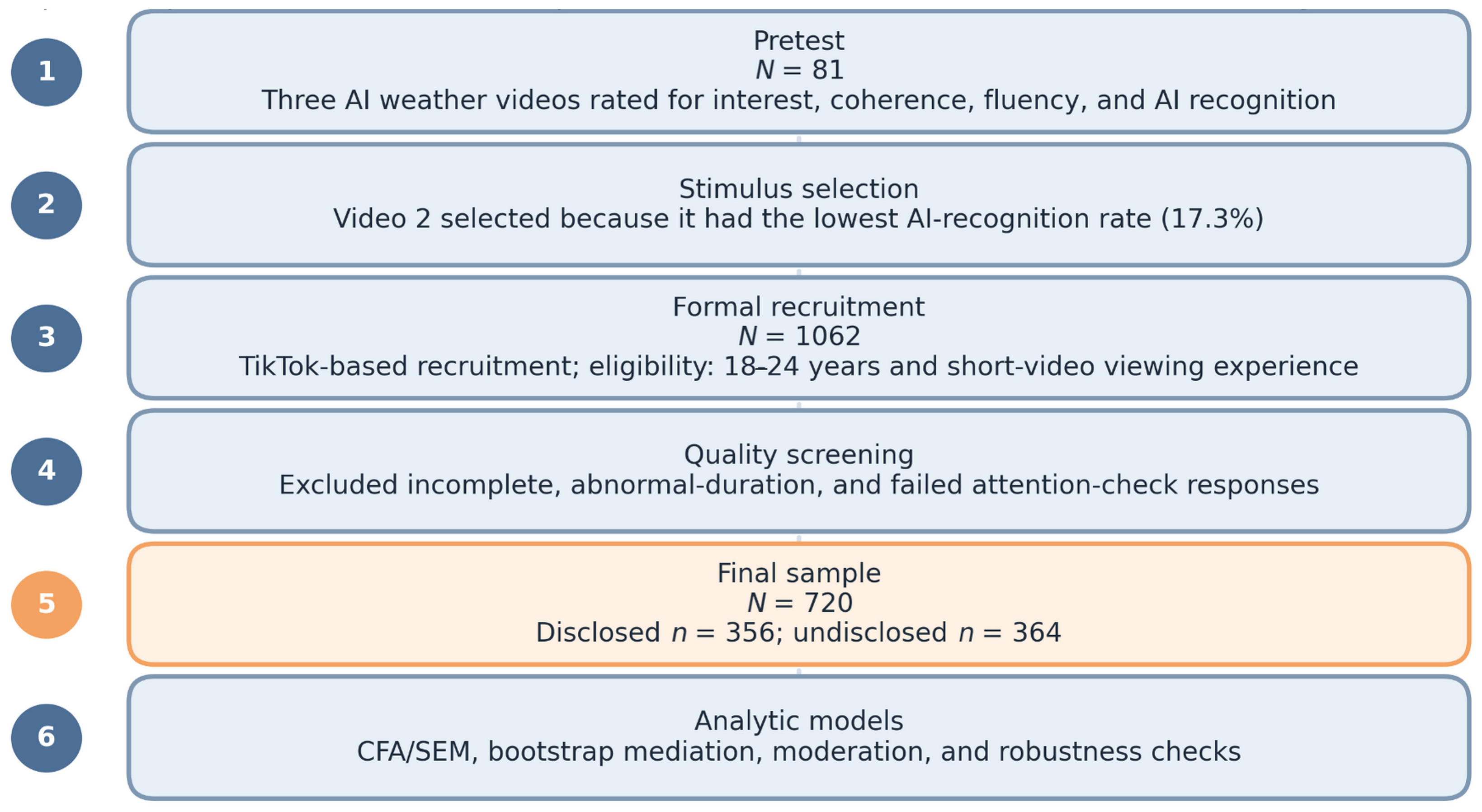
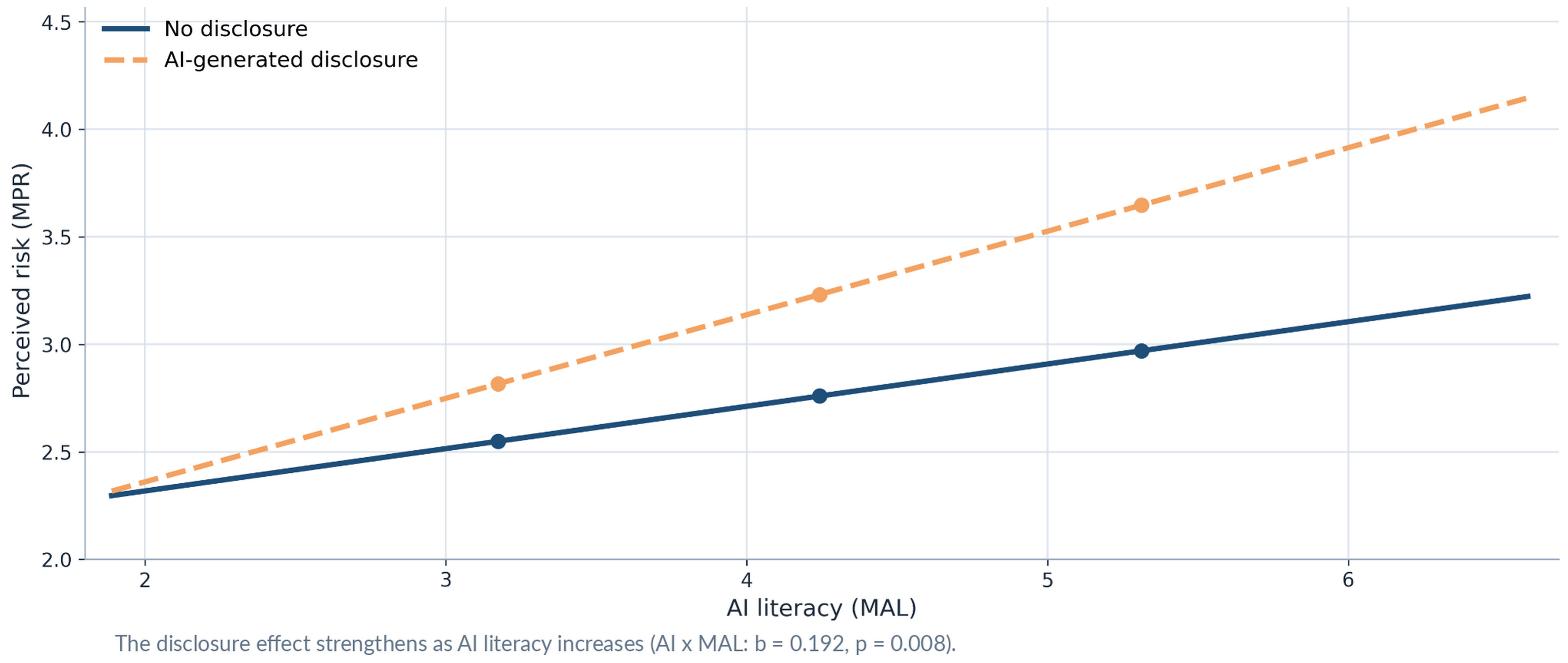
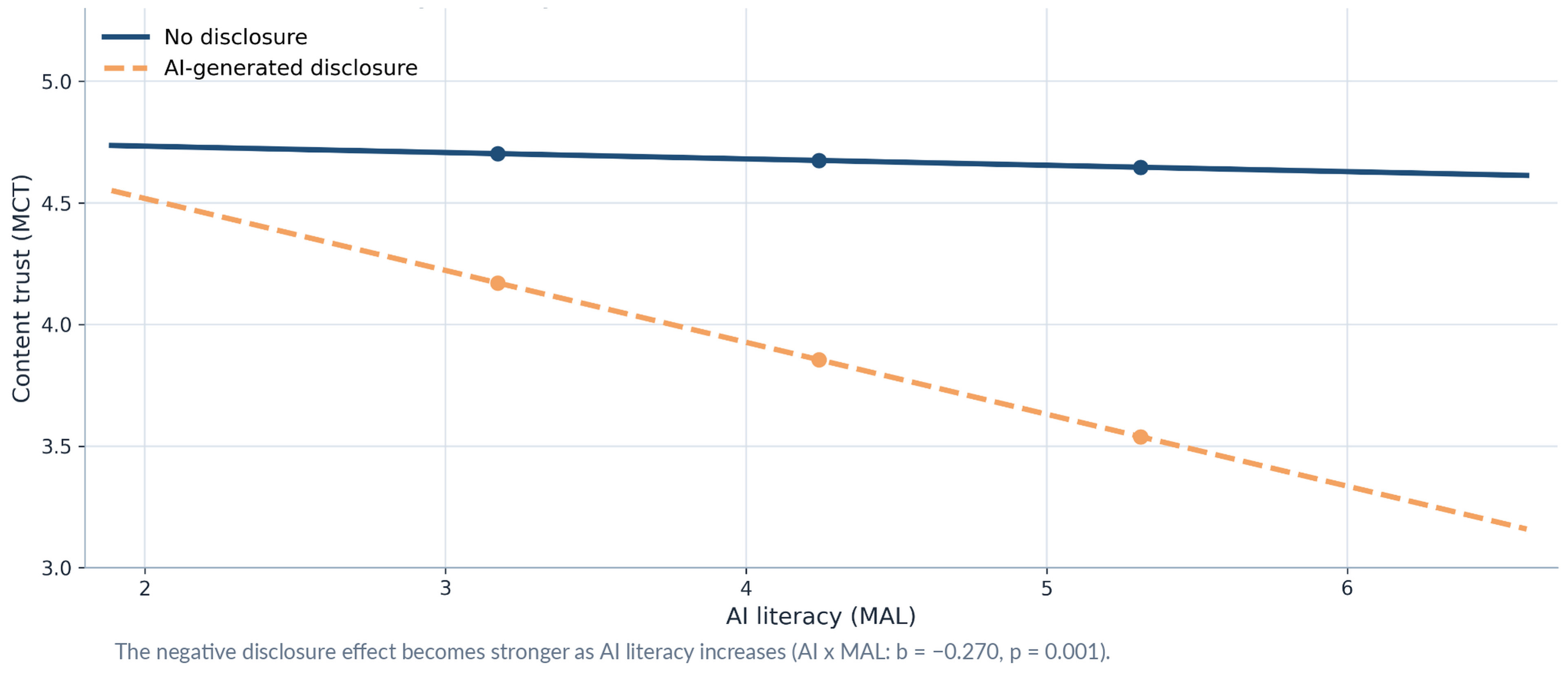
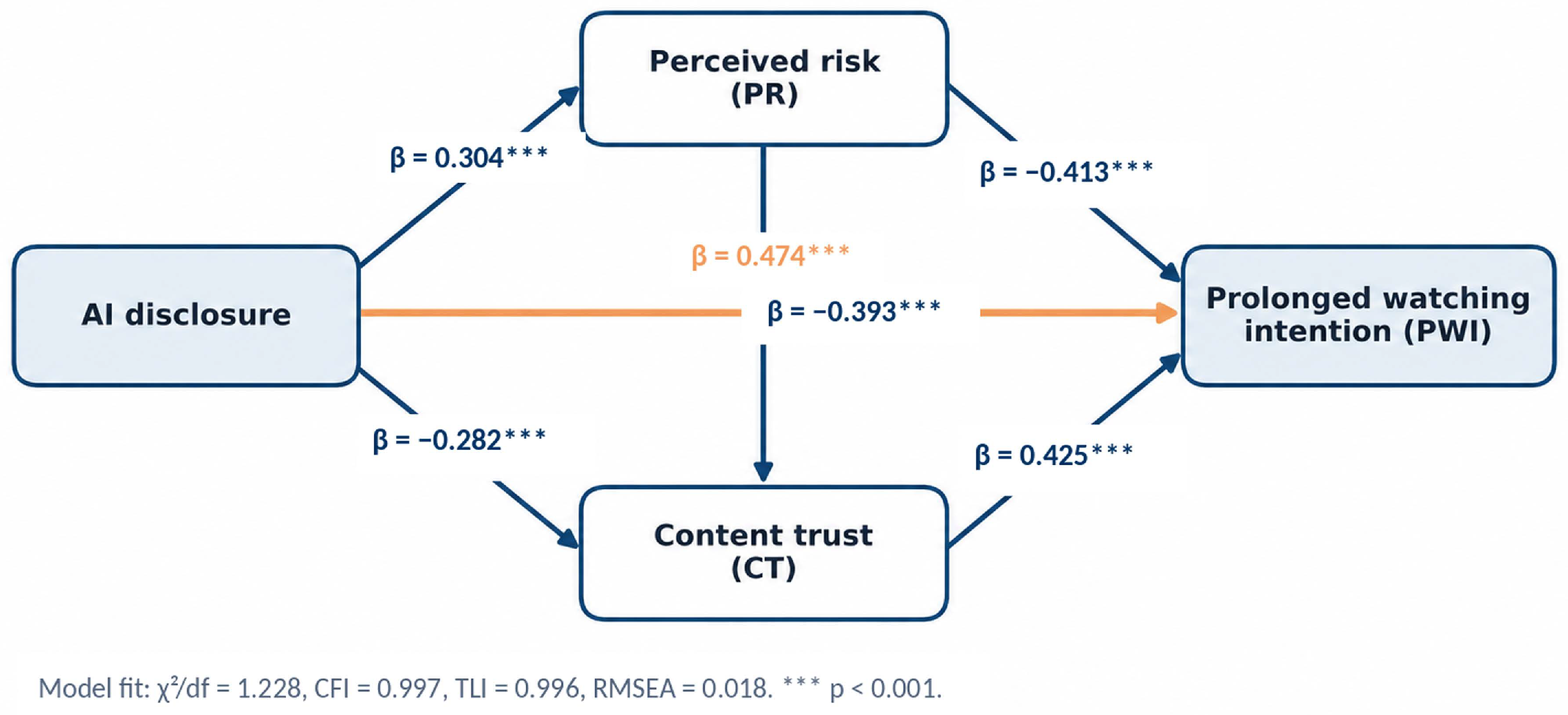
Prolonged short-video engagement in the generative-AI era may be shaped by interface cues that encourage or interrupt repeated continuation decisions in algorithmic feeds. This study examines whether AI-generated content disclosure functions as interface-level digital friction for prolonged short-video engagement among late-adolescent and emerging-adult TikTok users. Prolonged watching intention is treated as a cognitive-behavioral proximal tendency relevant to problematic social media use (PSMU), rather than as a clinical diagnosis or an emotional-disturbance outcome. Drawing on the heuristic-systematic model, we tested a dual-pathway risk-trust model in which disclosure directly affects prolonged watching intention, while perceived risk and content trust operate as mediators and AI literacy operates as a person-level boundary condition. An online between-subjects experiment was conducted with 720 valid participants aged 18–24. Disclosure had a positive direct effect on prolonged watching intention, suggesting that AI labels can initially work as salient curiosity and novelty cues. At the same time, disclosure increased perceived risk and reduced content trust, generating negative indirect pathways that constrained prolonged watching intention. AI literacy strengthened both appraisal pathways. The findings reposition AI disclosure from a mere transparency notice to a behavioral cue that can simultaneously attract attention and activate protective appraisal. They contribute to developmental and media-psychological research on prolonged engagement and PSMU-relevant mechanisms without overstating clinical implications.
Keywords: problematic social media use; generative AI; AI-generated content disclosure; prolonged short-video engagement; digital friction; late adolescence; emerging adulthood; perceived risk; content trust; AI literacy problematic social media use; generative AI; AI-generated content disclosure; prolonged short-video engagement; digital friction; late adolescence; emerging adulthood; perceived risk; content trust; AI literacy