Article

Psychiatric Assistance Dogs for Adults with Mental Health Conditions: Use, Perceived Effectiveness and Challenges

by
Yuxuan Zhang
,
Amanda J. Salmon
and
Nancy A. Pachana
*
School of Psychology, The University of Queensland, Brisbane, QLD 4072, Australia
*
Author to whom correspondence should be addressed.
Behav. Sci. 2026, 16(7), 1178; https://doi.org/10.3390/bs16071178
Submission received: 22 May 2026 / Revised: 6 July 2026 / Accepted: 7 July 2026 / Published: 13 July 2026

Abstract

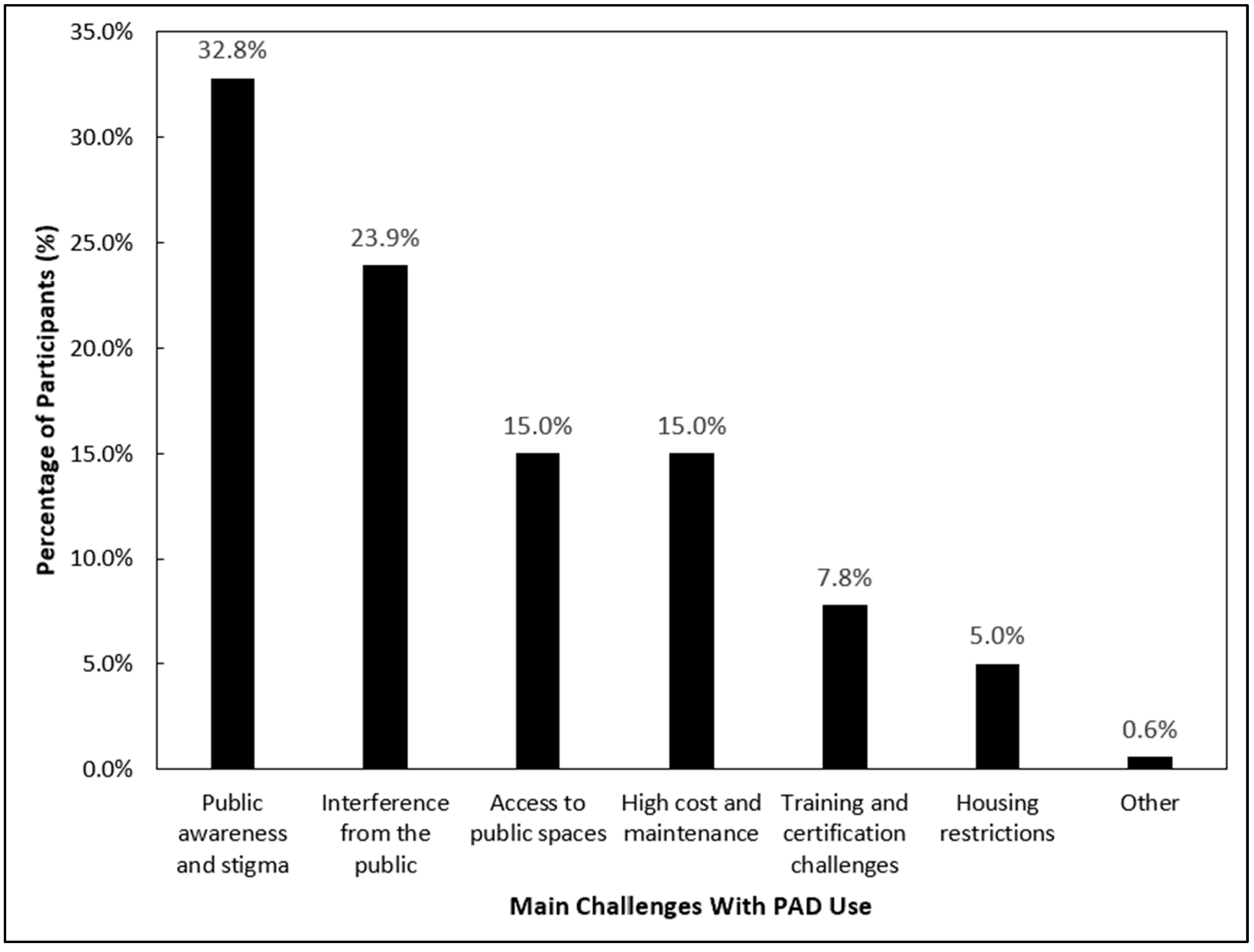
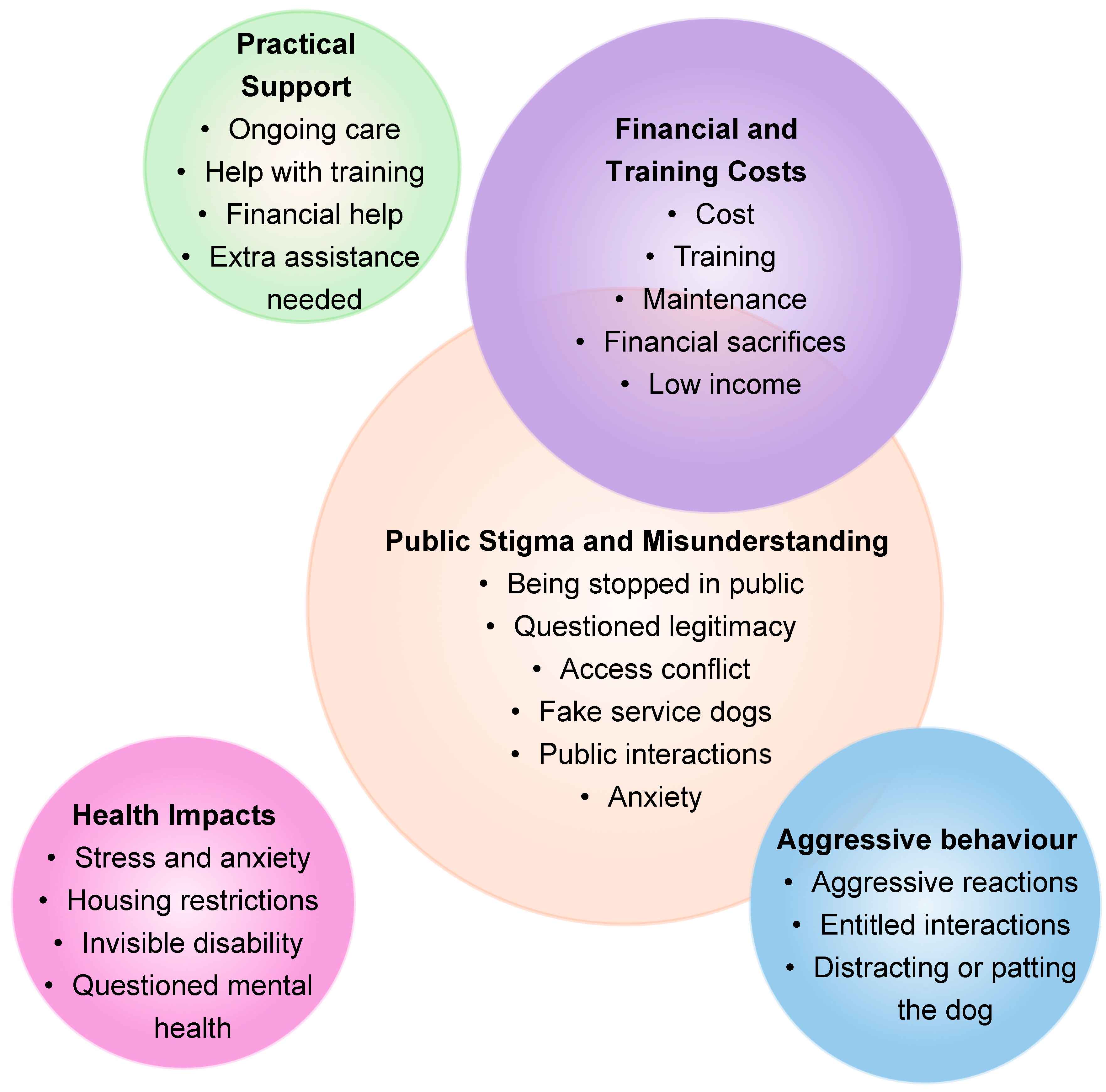
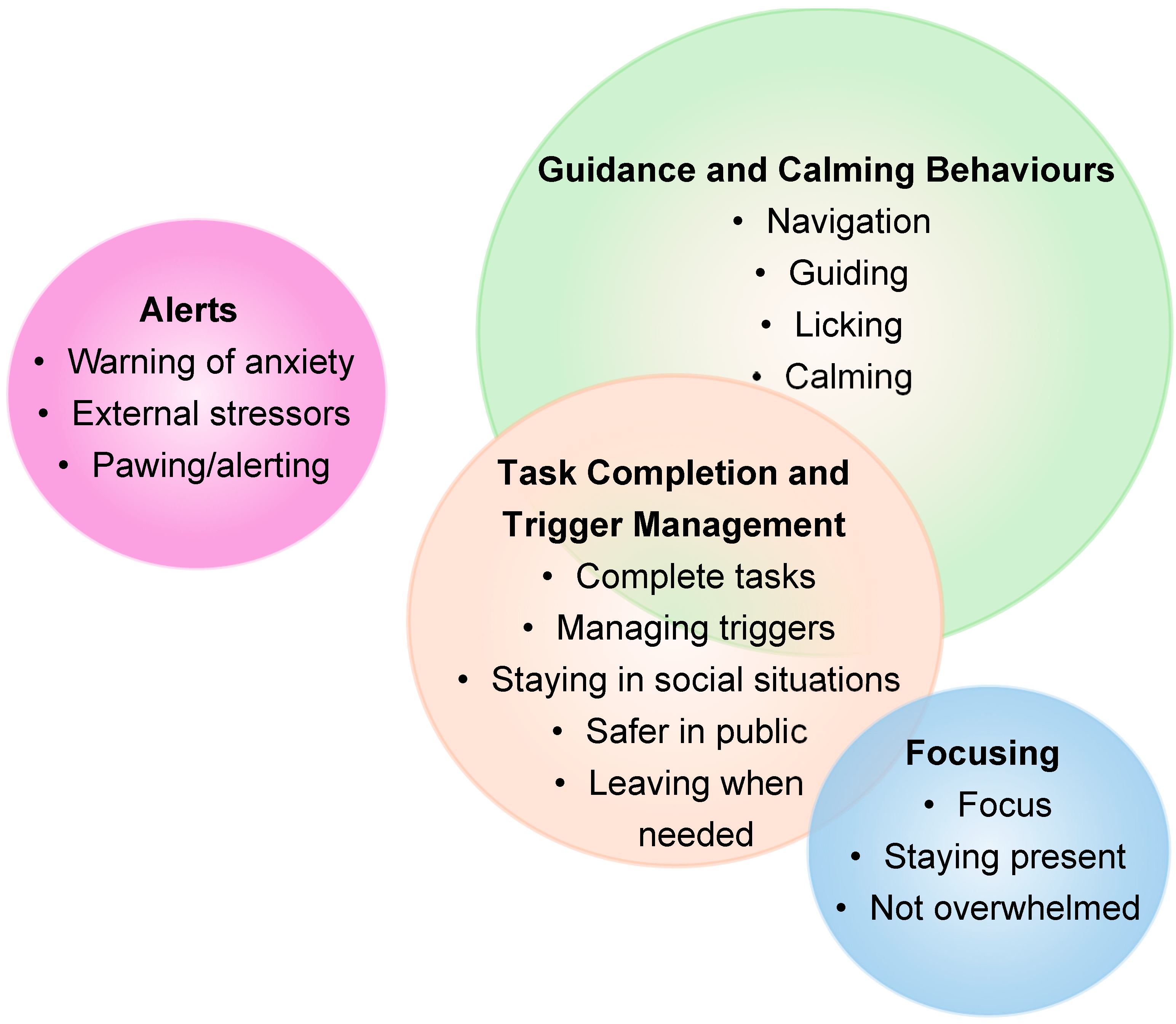
Psychiatric assistance dogs (PADs) are increasingly recognised as complementary supports for individuals with mental health conditions, yet their role in everyday functioning as well as handler and animal welfare remains underexplored. This study explored how PADs are used by individuals with a range of mental health conditions, the benefits they provide, and any challenges experienced in terms of both handler and animal well-being. An online mixed-methods survey was conducted, yielding 85 valid responses. Quantitative data were analysed descriptively; qualitative responses were examined using Leximancer. Findings suggest that PADs provide benefits beyond specific trained tasks, offering ongoing support that helps handlers feel safer and more able to engage in activities of daily living and mental health treatment. At the same time, participants reported challenges such as stigma, public misunderstanding of public access rights, and financial costs, which can limit the effectiveness of PAD support. Many participants also reported relying heavily on their PAD, which may have detrimental consequences for the well-being of both handler and animal. These findings highlight the importance of improving public awareness, access, and support systems to maximise the benefits of PADs and help ensure the well-being and safety of both PADs and their handlers. Future research should consider both human and animal perspectives in greater depth to better understand these partnerships.
Keywords: psychiatric assistance dogs; animal-assisted interventions; mental health; safety regulation; emotional regulation psychiatric assistance dogs; animal-assisted interventions; mental health; safety regulation; emotional regulation