Bridging the Gap: A Case Study of Tailored Support for Students with Social, Emotional, and Behavioral Needs During the Transition to High School
 , , , , and
Abstract
1. Introduction
1.1. Students Facing the Greatest Transition Challenges
1.2. Promising Evidence-Based Practices
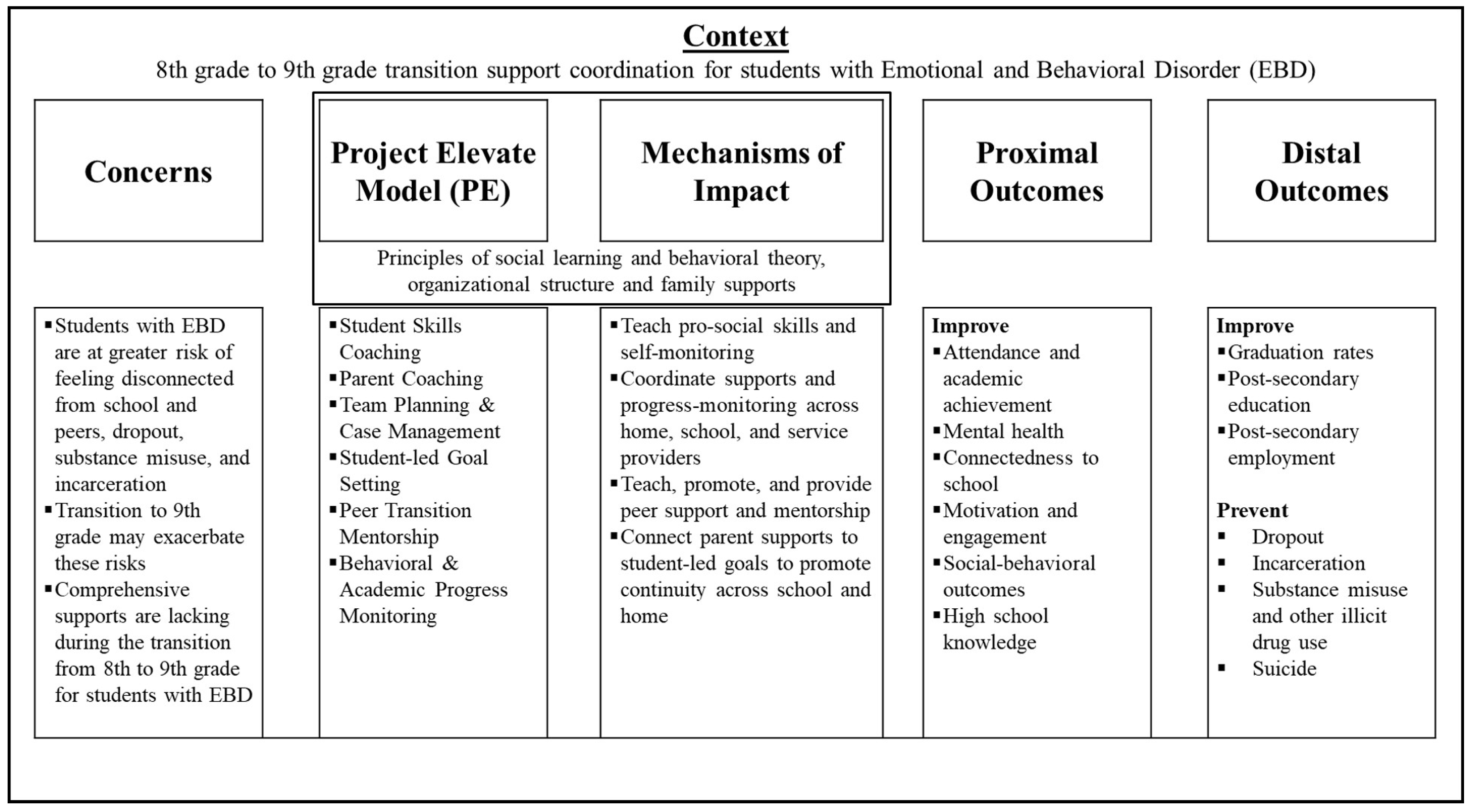
1.3. Designing Project Elevate: A Systematic Approach for High School Transition
1.4. Purpose of the Study
- What descriptive changes are observed in student attendance, engagement, social skills, and behavior during the implementation of PE?
- How do students with disabilities and their parents perceive the relevance, practicality, and utility of the PE model?
2. Materials and Methods
2.1. Participants and Settings
2.1.1. Andy and Helen
2.1.2. Barry and Nora
2.1.3. Daniel and Diane
2.2. Research Design
2.3. Measures
2.3.1. Session Case Notes
2.3.2. SEB Outcomes
2.3.3. Student-Led Goal Setting
2.3.4. Social Validity
2.4. Procedure
2.4.1. Recruitment, Consent, and Activities Timeline
2.4.2. Coaching Participation and Data Collection Overview
2.4.3. Structure of Skill Coaching and Parent Coaching Sessions
2.4.4. Supervision and Coordination Structures Supporting Services Provided
2.5. Data Analysis
2.5.1. SEB Outcomes
2.5.2. Social Validity
2.6. Positionality Statement
3. Results
3.1. What Descriptive Changes Are Observed in Student Engagement, Social Skills, and Behavior During PE Implementation?
3.1.1. Student Participation Context and Self-Selected Goal
Andy
Barry
Daniel
3.1.2. Attendance and Student Engagement Trends
Andy
Barry
Daniel
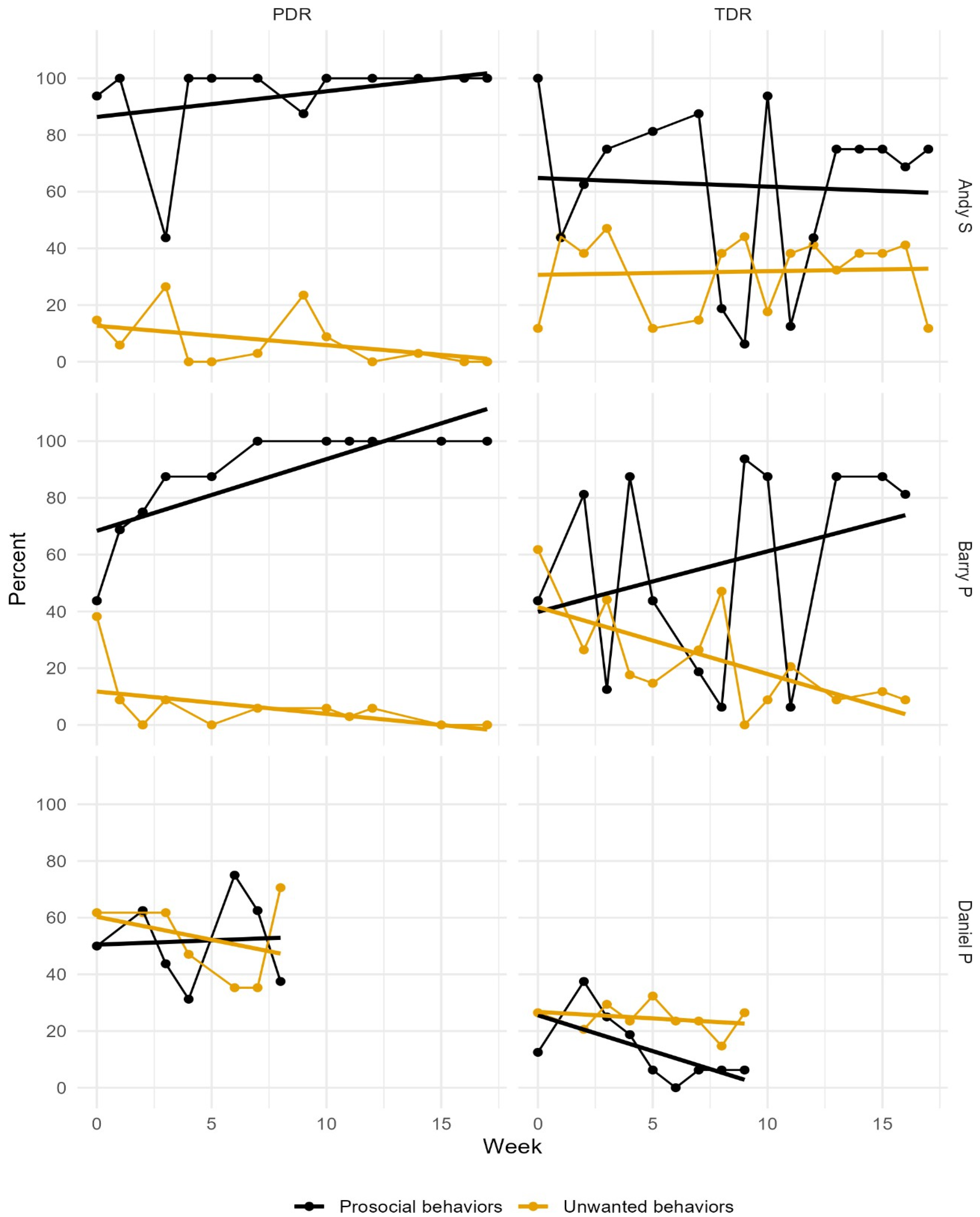
3.1.3. Social and Behavioral Outcomes at Home and School
Andy
Barry
Daniel
3.2. What Descriptive Changes Are Observed in Student Engagement, Social Skills, and Behavior During PE Implementation?
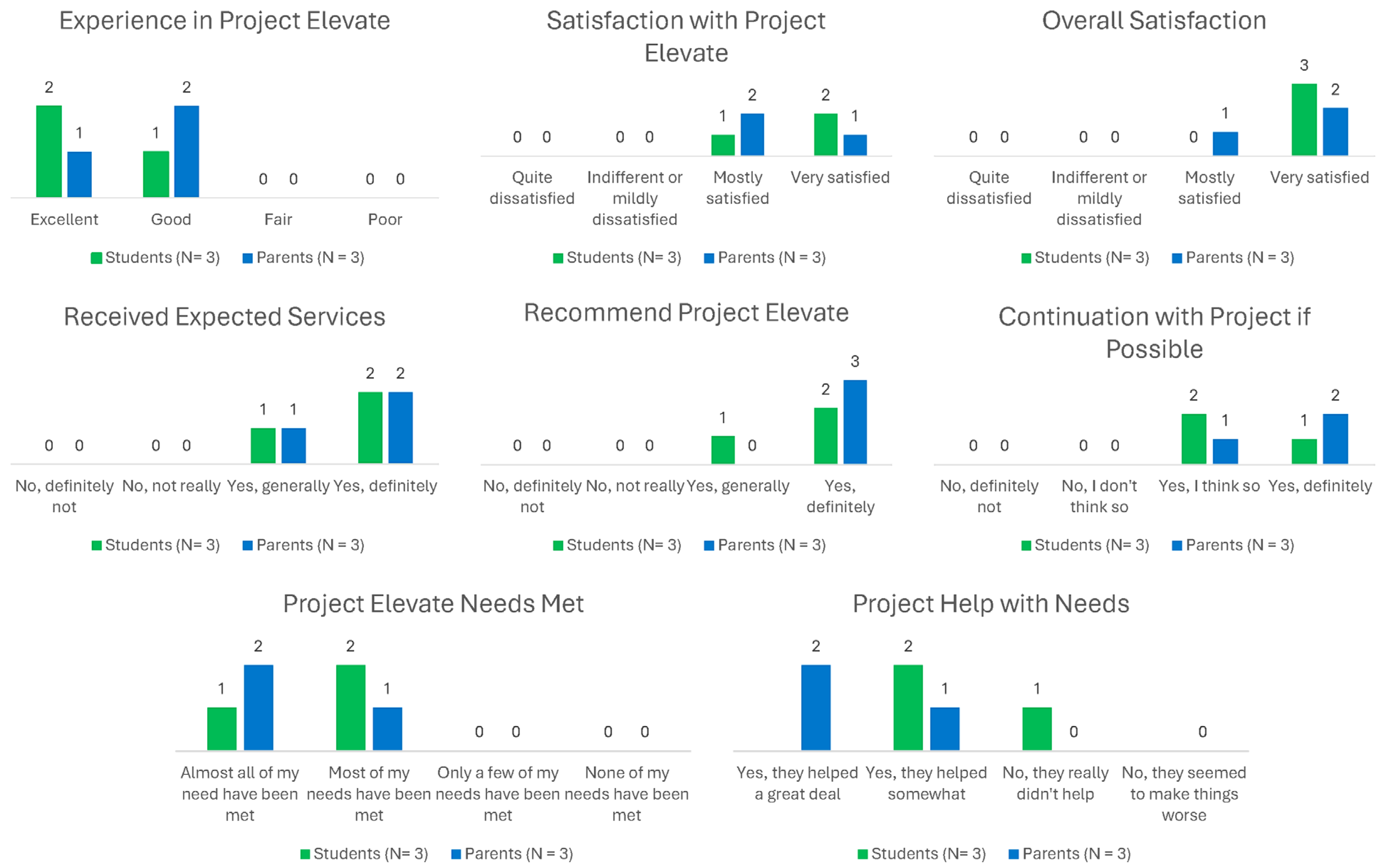
3.2.1. Students’ Perceptions of Relevance, Practicality, and Usability
3.2.2. Parents’ Perceptions of Relevance, Practicality, and Benefits
3.2.3. Perceptions of High School Preparedness
4. Discussion
4.1. Research Question 1: Observed Changes in Student Attendance, Engagement, and SEB Outcomes
4.2. Research Question 2: Acceptability, Feasibility, and Utility of PE
4.3. Limitations and Future Research
4.4. Implications for Practice
4.5. Conclusions
Supplementary Materials
Author Contributions
Funding
Institutional Review Board Statement
Informed Consent Statement
Data Availability Statement
Conflicts of Interest
Abbreviations
| SEB | Social, Emotional, Behavioral |
| PE | Project Elevate |
| MTSS | Multi-tiered Systems of Supports |
| PBIS | Positive Behavioral Interventions and Support |
| PDR | Parent Daily Report |
| TDR | Teacher Daily Report |
| IEP | Individualized Education Program |
| HCSBS | Home and Community Social Behavior Scales |
| WMS | Walker McConell Scale |
| SEI | Student Engagement Instrument |
| CSQ-8 | Client Satisfaction Questionnaire |
References
- Anaby, D. R., Campbell, W. N., Missiuna, C., Shaw, S. R., Bennett, S., Khan, S., Tremblay, S., Kalubi-Lukusa, J.-C., Camden, C., & GOLDs. (2019). Recommended practices to organize and deliver school-based services for children with disabilities: A scoping review. Child: Care, Health and Development, 45(1), 15–27. [Google Scholar] [CrossRef]
- Appleton, J. J., Christenson, S. L., Kim, D., & Reschly, A. L. (2006). Measuring cognitive and psychological engagement: Validation of the Student Engagement Instrument. Journal of School Psychology, 44(5), 427–445. [Google Scholar] [CrossRef]
- Arnold, J. (2024). ggthemes: Extra themes, scales and geoms for ‘ggplot2’ (Version R package version 5.1.0). Available online: https://CRAN.R-project.org/package=ggthemes (accessed on 10 October 2024).
- August, G. J., Piehler, T. F., & Miller, F. G. (2018). Getting “SMART” about implementing multi-tiered systems of support to promote school mental health. Journal of School Psychology, 66, 85–96. [Google Scholar] [CrossRef]
- Baharav, H., & Sipes, L. (2020). Early warning indicator systems in action: Considerations from identification to supports. Teachers College Record, 122(14), 1–24. [Google Scholar] [CrossRef]
- Bambara, L. M., & Kunsch, C. (2015). Effective teaming for positive behavior support. In J. L. A. F. Brown, & R. L. De Pry (Eds.), Individual positive behavior supports: A standards-based guide to practices in school and community-based settings (pp. 47–70). Brookes. [Google Scholar]
- Benner, A. D., Boyle, A. E., & Bakhtiari, F. (2017). Understanding students’ transition to high school: Demographic variation and the role of supportive relationships. Journal of Youth and Adolescence, 46, 2129–2142. [Google Scholar] [CrossRef]
- Bowen, G. L., Hopson, L. M., Rose, R. A., & Glennie, E. J. (2012). Students’ perceived parental school behavior expectations and their academic performance: A longitudinal analysis. Family Relations, 61(2), 175–191. [Google Scholar] [CrossRef]
- Buchanan, R., & Clark, M. (2017). Understanding parent-school communication for students with emotional and behavioral disorders. The Open Family Studies Journal, 9(1), 122–131. [Google Scholar] [CrossRef] [PubMed]
- Buchanan, R., Nese, R. N. T., & Clark, M. (2016a). Stakeholders’ voices: Defining needs of students with emotional and behavioral disorders transitioning between school settings. Behavioral Disorders, 41(3), 135–147. [Google Scholar] [CrossRef] [PubMed]
- Buchanan, R., Ruppert, T., & Cariveau, T. (2016b). Transition supports for at-risk students: A case example. J Risk Issues, 19(2), 9–15. [Google Scholar]
- Cameto, R., Levine, P. H., & Wagner, M. (2004). Transition planning for students with disabilities: A special topic report of findings from the national longitudinal transition study-2 (Report No. NLTS2). Available online: https://nlts2.sri.com/reports/2004_11/nlts2_report_2004_11_execsum.pdf (accessed on 15 December 2024).
- Cavendish, W., & Connor, D. (2018). Toward authentic IEPs and transition plans: Student, parent, and teacher perspectives. Learning Disability Quarterly, 41(1), 32–43. [Google Scholar] [CrossRef]
- Clark, V. L. P., Foote, L. A., & Walton, J. B. (2018). Intersecting mixed methods and case study research: Design possibilities and challenges. International Journal of Multiple Research Approaches, 10(1), 14–29. [Google Scholar] [CrossRef]
- Cook, C. R., Lyon, A. R., Locke, J., Waltz, T., & Powell, B. J. (2019). Adapting a compilation of implementation strategies to advance school-based implementation research and practice. Prevention Science, 20(6), 914–935. [Google Scholar] [CrossRef]
- Dillon, S., Armstrong, E., Goudy, L., Reynolds, H., & Scurry, S. (2021). Improving special education service delivery through interdisciplinary collaboration. Teaching Exceptional Children, 54(1), 36–43. [Google Scholar] [CrossRef]
- Dishion, T. J., Patterson, G. R., Stoolmiller, M., & Skinner, M. L. (1991). Family, school, and behavioral antecedents to early adolescent involvement with antisocial peers. Developmental Psychology, 27(1), 172–180. [Google Scholar] [CrossRef]
- Fallon, L. M., Ali, R., Daniels, B., Stobbe, R. A., Wang, A., Bagepalli, R., Anderson, M., La Salle-Finley, T. P., Green, J. G., & Ervin, A. (2026). Promoting equity-centred tier 1 supports in an MTSS framework. Exceptional Children. [Google Scholar] [CrossRef]
- Fan, X., Miller, B. C., Park, K.-E., Winward, B. W., Christensen, M., Grotevant, H. D., & Tai, R. H. (2006). An exploratory study about inaccuracy and invalidity in adolescent self-report surveys. Field Methods, 18(3), 223–244. [Google Scholar] [CrossRef]
- Firke, S. (2023). janitor: Simple tools for examining and cleaning dirty data (Version R package version 2.2.0). Available online: https://CRAN.R-project.org/package=janitor (accessed on 10 October 2024).
- Flannery, K. B., Kato, M. M., Kittelman, A., McIntosh, K., & Triplett, D. (2020). A tier 1 intervention to increase ninth grade engagement and success: Results from a randomized controlled trial. School Psychology, 35(1), 88–98. [Google Scholar] [CrossRef]
- Fosco, G. M., Frank, J. L., Stormshak, E. A., & Dishion, T. J. (2013). Opening the “Black Box”: Family check-up intervention effects on self-regulation that prevents growth in problem behavior and substance use. Journal of School Psychology, 51(4), 455–468. [Google Scholar] [CrossRef]
- Gage, N. A., Kramer, D. A., & Ellis, K. (2021). High school students with emotional and behavioral disorders perceptions of school climate. Journal of Disability Policy Studies, 32(2), 83–94. [Google Scholar] [CrossRef]
- Gale, N. K., Heath, G., Cameron, E., Rashid, S., & Redwood, S. (2013). Using the framework method for the analysis of qualitative data in multi-disciplinary health research. BMC Medical Research Methodology, 13(1), 117. [Google Scholar] [CrossRef]
- Garbacz, S. A., Kaul, M., Zahn, M., Godfrey, E., & Flack, C. (2022). Examining conjoint behavioral consultation to support students in middle school with social, emotional, and behavior concerns. New Directions for Child and Adolescent Development, 2022(183–184), 71–90. [Google Scholar] [CrossRef]
- Goh, A. E., & Bambara, L. M. (2012). Individualized positive behavior support in school settings: A meta-analysis. Remedial and Special Education, 33(5), 271–286. [Google Scholar] [CrossRef]
- He, J., Liu, Y., Ran, T., & Zhang, D. (2023). How students’ perception of feedback influences self-regulated learning: The mediating role of self-efficacy and goal orientation. European Journal of Psychology of Education, 38(4), 1551–1569. [Google Scholar] [CrossRef]
- Horner, R. H., Newton, J. S., Todd, A. W., Algozzine, B., Algozzine, K., Cusumano, D., & Preston, A. (2018). A randomized waitlist controlled analysis of team-initiated problem solving professional development and use. Behavioral Disorders, 43(4), 444–456. [Google Scholar] [CrossRef]
- Hosokawa, R., Tomozawa, R., & Katsura, T. (2023). Associations between family routines, family relationships, and children’s behavior. Journal of Child and Family Studies, 32(12), 3988–3998. [Google Scholar] [CrossRef]
- Hurlburt, M. S., Chamberlain, P., DeGarmo, D., Zhang, J., & Price, J. M. (2010). Advancing prediction of foster placement disruption using brief behavioral screening. Child Abuse & Neglect, 34(12), 917–926. [Google Scholar] [CrossRef] [PubMed]
- Irwin, V., Wang, K., Jung, J., Kessler, E., Tezil, T., Alhassani, S., Filbey, A., Dilig, R., & Bullock Mann, F. (2024). Report on the condition of education 2024. Available online: https://nces.ed.gov/pubs2024/2024144.pdf (accessed on 15 December 2024).
- Jennings, J. L., & DiPrete, T. A. (2010). Teacher effects on social and behavioral skills in early elementary school. Sociology of Education, 83(2), 135–159. [Google Scholar] [CrossRef]
- Jørgensen Olsen, T. M., & Mehus, I. (2022). Students’ performance in physical education: The role of differential achievement goals and self-regulated learning. Education Sciences, 12(2), 142. [Google Scholar] [CrossRef]
- Karvonen, M., Test, D. W., Wood, W. M., Browder, D., & Algozzine, B. (2004). Putting self-determination into practice. Exceptional Children, 71(1), 23–41. [Google Scholar] [CrossRef]
- Kearney, C. A., Dupont, R., Fensken, M., & Gonzálvez, C. (2023). School attendance problems and absenteeism as early warning signals: Review and implications for health-based protocols and school-based practices. Frontiers in Education, 8, 1253595. [Google Scholar] [CrossRef]
- Koh, G. A., Askell-Williams, H., & Barr, S. (2023). Sustaining school improvement initiatives: Advice from educational leaders. School Effectiveness and School Improvement, 34(3), 298–330. [Google Scholar] [CrossRef]
- Lambert, M. C., Duppong Hurley, K., January, S.-A., & Huscroft D’Angelo, J. (2022). The role of parental involvement in narrowing the academic achievement gap for high school students with elevated emotional and behavioral risks. Journal of Emotional and Behavioral Disorders, 30(1), 54–66. [Google Scholar] [CrossRef]
- Larsen, D. L., Attkisson, C. C., Hargreaves, W. A., & Nguyen, T. D. (1979). Assessment of client/patient satisfaction: Development of a general scale. Evaluation and Program Planning, 2, 197–207. [Google Scholar] [CrossRef]
- La Salle, T., George, H. P., McCoach, D. B., Polk, T., & Evanovich, L. L. (2018). An examination of school climate, victimization, and mental health problems among middle school students self-identifying with emotional and behavioral disorders. Behavioral Disorders, 43(3), 383–392. [Google Scholar] [CrossRef]
- Lessard, L. M., & Juvonen, J. (2022). The academic benefits of maintaining friendships across the transition to high school. Journal of School Psychology, 92, 136–147. [Google Scholar] [CrossRef] [PubMed]
- Lindstrom, L., & Beno, C. (2020). Promoting successful transitions for students with disabilities (Policy brief). Available online: https://edpolicyinca.org/publications/promoting-successful-transitions-students-disabilities (accessed on 1 July 2021).
- Liu, A. Y., Lacoe, J., Lipscomb, S., Haimson, J., Johnson, D. R., & Thurlow, M. L. (2018). Preparing for life after high school: The characteristics and experiences of youth in special education. Findings from the national longitudinal transition study 2012 (National Center for Education Evaluation and Regional Assistance, Issue). Available online: https://eric.ed.gov/?id=ED580934 (accessed on 1 July 2021).
- Liu, J., Penner, E. K., & Gao, W. (2023). Troublemakers? The role of frequent teacher referrers in expanding racial disciplinary disproportionalities. Educational Researcher, 52(8), 469–481. [Google Scholar] [CrossRef]
- Locke, E. A., & Latham, G. P. (1990). A theory of goal setting & task performance. Prentice-Hall, Inc. [Google Scholar]
- Longobardi, C., Prino, L. E., Marengo, D., & Settanni, M. (2016). Student-teacher relationships as a protective factor for school adjustment during the transition from middle to high school. Frontiers in Psychology, 7, 1988. [Google Scholar] [CrossRef] [PubMed]
- Longobardi, C., Settanni, M., Prino, L. E., Fabris, M. A., & Marengo, D. (2019). Students’ psychological adjustment in normative school transitions from kindergarten to high school: Investigating the role of teacher-student relationship quality. Frontiers in Psychology, 10, 1238. [Google Scholar] [CrossRef] [PubMed]
- Lopez, N. J., Uphold, N. M., Douglas, K. H., & Freeman-Green, S. (2020). Teaching high school students with disabilities to advocate for academic accommodations. The Journal of Special Education, 54(3), 146–156. [Google Scholar] [CrossRef]
- Mac Iver, M. A., Epstein, J. L., Sheldon, S. B., & Fonseca, E. (2015). Engaging families to support students’ transition to high school: Evidence from the field. The High School Journal, 99(1), 27–45. [Google Scholar] [CrossRef]
- Maxwell, S., Reynolds, K. J., Lee, E., Subasic, E., & Bromhead, D. (2017). The impact of school climate and school identification on academic achievement: Multilevel modeling with student and teacher data. Frontiers in Psychology, 8, 2069. [Google Scholar] [CrossRef]
- McClain, M. B., Shahidullah, J. D., & Harris, B. (2024). Improving student outcomes through interprofessional and interagency collaboration. School Psychology, 39(4), 349–352. [Google Scholar] [CrossRef]
- McCormick, M. P., Cappella, E., O’Connor, E. E., & McClowry, S. G. (2015). Social-emotional learning and academic achievement: Using causal methods to explore classroom-level mechanisms. AERA Open, 1(3), 2332858415603959. [Google Scholar] [CrossRef]
- McCormick, S. T., Kurth, N. K., Chambless, C. E., Ipsen, C., & Hall, J. P. (2021). Case management strategies to promote employment for transition-age youth with disabilities. Career Development and Transition for Exceptional Individuals, 44(2), 120–131. [Google Scholar] [CrossRef]
- McFarland, J., Cui, J., Holmes, J., & Wang, X. (2020). Trends in high school dropout and completion rates in the United States: 2019. National Center for Education Statistics. Available online: https://nces.ed.gov/pubsearch (accessed on 1 July 2021).
- McGrath Kato, M., Flannery, K. B., Triplett, D., & Saeteurn, S. (2018). Investing in freshmen: Providing preventive support to 9th graders. In K. B. Flannery, P. Hershfeldt, & J. Freeman (Eds.), Lessons learned on implementation of PBIS in high schools: Current trends and future directions. Center for Positive Behavioral Interventions and Supports (funded by the Office of Special Education Programs, U.S. Department of Education); University of Oregon Press. [Google Scholar]
- McIntosh, K., Predy, L. K., Upreti, G., Hume, A. E., Turri, M. G., & Mathews, S. (2014). Perceptions of contextual features related to implementation and sustainability of school-wide positive behavior support. Journal of Positive Behavior Interventions, 16(1), 31–43. [Google Scholar] [CrossRef]
- McMahon, B. M., & Sembiante, S. F. (2020). Re-envisioning the purpose of early warning systems: Shifting the mindset from student identification to meaningful prediction and intervention. Review of Education, 8(1), 266–301. [Google Scholar] [CrossRef]
- Miller, W. R., Baca, C., Matthews, D. B., & Wilbourne, P. L. (2001). Personal values card sort. University of New Mexico. [Google Scholar]
- Müller, K. (2020). Here: A simpler way to find your files (Version R package version 1.0.1). Available online: https://CRAN.R-project.org/package=here (accessed on 15 October 2024).
- Nese, R. N. T., Nese, J. F. T., McCroskey, C., Meng, P., Triplett, D., & Bastable, E. (2021a). Moving away from disproportionate exclusionary discipline: Developing and utilizing a continuum of preventative and instructional supports. Preventing School Failure: Alternative Education for Children and Youth, 65(4), 301–311. [Google Scholar] [CrossRef]
- Nese, R. N. T., Triplett, D., Santiago-Rosario, M. R., & Austin, S. C. (2021b). Promising practices for improving the middle to high school transition for students with emotional and behavioral disorders. In Center on positive behavioral intervention and supports (pp. 1–10). Center on PBIS. Available online: https://www.pbis.org/resource/promising-practices-for-improving-the-middle-to-high-school-transition-for-students-with-emotional-and-behavioral-disorders (accessed on 8 September 2024).
- Newton, J. S., Horner, R. H., Algozzine, B., Todd, A. W., & Algozzine, K. (2012). A randomized wait-list controlled analysis of the implementation integrity of team-initiated problem solving processes. Journal of School Psychology, 50, 421–441. [Google Scholar] [CrossRef] [PubMed]
- Nuske, H. J., McGhee Hassrick, E., Bronstein, B., Hauptman, L., Aponte, C., Levato, L., Stahmer, A., Mandell, D. S., Mundy, P., Kasari, C., & Smith, T. (2019). Broken bridges-new school transitions for students with autism spectrum disorder: A systematic review on difficulties and strategies for success. Autism, 23(2), 306–325. [Google Scholar] [CrossRef] [PubMed]
- Okano, L., Jeon, L., Crandall, A., Powell, T., & Riley, A. (2020). The cascading effects of externalizing behaviors and academic achievement across developmental transitions: Implications for prevention and intervention. Prevention Science, 21(2), 211–221. [Google Scholar] [CrossRef]
- Park, J. H., Alber-Morgan, S. R., & Fleming, C. (2011). Collaborating with parents to implement behavioral interventions for children with challenging behaviors. Teaching Exceptional Children, 43(3), 22–30. [Google Scholar] [CrossRef]
- Patterson, G. R. (2005). The next generation of PMTO models. The Behavior Therapist, 28(2), 27–33. [Google Scholar]
- Price, J. M., Roesch, S., & Walsh, N. E. (2012). Effectiveness of the KEEP foster parent intervention during an implementation trial. Children and Youth Services Review, 34(12), 2487–2494. [Google Scholar] [CrossRef]
- R Core Team. (2024). R: A language and environment for statistical computing [Computer software]. R Foundation for Statistical Computing. Available online: https://www.R-project.org/ (accessed on 10 October 2024).
- Rowe, D. A., Alverson, C. Y., Unruh, D. K., Fowler, C. H., Kellems, R., & Test, D. W. (2015). A Delphi study to operationalize evidence-based predictors in secondary transition. Career Development and Transition for Exceptional Individuals, 38(2), 113–126. [Google Scholar] [CrossRef]
- Rowe, D. A., Mazzotti, V. L., Ingram, A., & Lee, S. (2017). Effects of goal-setting instruction on academic engagement for students at risk. Career Development and Transition for Exceptional Individuals, 40(1), 25–35. [Google Scholar] [CrossRef]
- Roybal, V. M., Thornton, B. W., & Usinger, J. (2014). Effective ninth-grade transition programs can promote student success. Education, 134(4), 475–487. Available online: https://eric.ed.gov/?q=Moving+to+different+High+Schools&ff1=dtyIn_2014&ff2=subHigh+School+Students&id=EJ1034976 (accessed on 1 July 2021).
- Ryan, T. A. (1970). Intentional behavior: An approach to human motivation. Ronald Press. [Google Scholar]
- Savas, V. (2023). Strategies for supporting student goal-setting. Edutopia. Available online: https://www.edutopia.org/article/supporting-student-goal-setting/ (accessed on 8 August 2024).
- Seijts, G. H., & Latham, G. P. (2001). The effect of distal learning, outcome, and proximal goals on a moderately complex task. Journal of Organizational Behavior, 22(3), 291–307. [Google Scholar] [CrossRef]
- Shogren, K. A., Mazzotti, V. L., Hicks, T. A., Raley, S. K., Gerasimova, D., Pace, J. R., Kwiatek, S. M., Fredrick, D., Stewart-Ginsburg, J. H., Chapman, R., & Wysenski, D. (2024). The goal setting challenge app: Impact on transition goal attainment outcomes of students with disabilities. Career Development and Transition for Exceptional Individuals, 47(1), 4–18. [Google Scholar] [CrossRef]
- Sinclair, M. F., Christenson, S. L., & Thurlow, M. L. (2005). Promoting school completion of urban secondary youth with emotional or behavioral disabilities. Exceptional Children, 71(4), 465–482. [Google Scholar] [CrossRef]
- Somers, M.-A., & Garcia, I. (2016). Helping students make the transition into high school: The effect of ninth grade academies on students’ academic and behavioral outcomes. MDRC. [Google Scholar]
- Soto, C. J., Napolitano, C. M., Sewell, M. N., Yoon, H. J., & Roberts, B. W. (2022). An integrative framework for conceptualizing and assessing social, emotional, and behavioral skills: The BESSI. Journal of Personality and Social Psychology, 123(1), 192–222. [Google Scholar] [CrossRef]
- Strnadová, I., Dowse, L., Lowe, K., Danker, J., Angelina Willow, S., Tso, M., & Xavier, A. (2023). Primary to high school transition planning for students with disability: A systematic review. International Journal of Educational Research, 120, 102188. [Google Scholar] [CrossRef]
- Sugai, G., & Horner, R. H. (2009). Responsiveness-to-intervention and school-wide positive behavior supports: Integration of multi-tiered system approaches. Exceptionality, 17(4), 223–237. [Google Scholar] [CrossRef]
- Šiška, J., Beadle-Brown, J., Tichá, R., Stancliffe, R., Abery, B., & Káňová, Š. (2024). Advances and gaps in policy, practice, and research in transition for students with intellectual and developmental disabilities across four countries. Journal of Policy and Practice in Intellectual Disabilities, 21(3), e12524. [Google Scholar] [CrossRef]
- Taylor, R. D., Oberle, E., Durlak, J. A., & Weissberg, R. P. (2017). Promoting positive youth development through school-based social and emotional learning interventions: A meta-analysis of follow-up effects. Child Development, 88(4), 1156–1171. [Google Scholar] [CrossRef]
- U.S. Department of Education. (2024). 45th annual report to congress on the implementation of the individuals with disabilities education act, 2023. Available online: https://sites.ed.gov/idea/files/45th-arc-for-idea.pdf (accessed on 1 December 2024).
- Walker, H. M., Mcconnell, S. R., & Lewis, T. (1991). The Walker-Mcconnell scale of social competence and school adjustment: A social skills rating scale for teachers. Behavioral Disorders, 16(2), 159–160. [Google Scholar] [CrossRef]
- Wickham, H., Averick, M., Bryan, J., Chang, W., D’Agostino McGowan, L., Hester, J., Kuhn, M., Pedersen, T. L., Miller, E., Bache, S. M., Muller, K., Ooms, J., Robinson, D., Seidel, S. M., Spinu, V., Takahashi, K., Vaughan, D., Wilke, C., Woo, K., & Yutani, H. (2019). Welcome to the Tidyverse. Journal of Open Source Software, 4(43), 1686. [Google Scholar] [CrossRef]
- Wickham, H., & Bryan, J. (2023). readxl: Read excel files (Version R package version 1.4.3). Available online: https://CRAN.R-project.org/package=readxl (accessed on 10 October 2024).
- Zimmerman, B. J., & Martinez-Pons, M. (1990). Student differences in self-regulated learning: Relating grade, sex, and giftedness to self-efficacy and strategy use. Journal of Educational Psychology, 82(1), 51–59. [Google Scholar] [CrossRef]



| Scale | Andy S. | Barry P. | Daniel P. | |||
|---|---|---|---|---|---|---|
| Pre | Post | Pre | Post | Pre | Post | |
| Student Engagement: Total Mean Score | 3.1 | 2.5 | 2.4 | 2.5 | 2.8 | 3.2 |
| HCSBS Social Competence: T-Score | 33.0 | 35.0 | 43.0 | 54.0 | 29.0 | 31.0 |
| HCSBS Antisocial Behavior: T-Score | 74.0 | 46.0 | 69.0 | 49.0 | 67.0 | 66.0 |
| Walker–McConnel: Total Scale Score | 82.0 | 98.0 | 71.0 | 95.0 | 75.0 | 85.0 |
Disclaimer/Publisher’s Note: The statements, opinions and data contained in all publications are solely those of the individual author(s) and contributor(s) and not of MDPI and/or the editor(s). MDPI and/or the editor(s) disclaim responsibility for any injury to people or property resulting from any ideas, methods, instructions or products referred to in the content. |
© 2026 by the authors. Licensee MDPI, Basel, Switzerland. This article is an open access article distributed under the terms and conditions of the Creative Commons Attribution (CC BY) license.
Share and Cite
Santiago-Rosario, M.R.; Falcon, S.F.; Austin, S.C.; Nese, J.F.T.; Sullivan, M.M.; Daza, T.; Calhoun, T.E.; Cerdan, H.; Nese, R.N.T. Bridging the Gap: A Case Study of Tailored Support for Students with Social, Emotional, and Behavioral Needs During the Transition to High School. Behav. Sci. 2026, 16, 984. https://doi.org/10.3390/bs16060984
Santiago-Rosario MR, Falcon SF, Austin SC, Nese JFT, Sullivan MM, Daza T, Calhoun TE, Cerdan H, Nese RNT. Bridging the Gap: A Case Study of Tailored Support for Students with Social, Emotional, and Behavioral Needs During the Transition to High School. Behavioral Sciences. 2026; 16(6):984. https://doi.org/10.3390/bs16060984
Chicago/Turabian StyleSantiago-Rosario, María Reina, Sarah Fairbanks Falcon, Sean C. Austin, Joseph F. T. Nese, Maeghan M. Sullivan, Tony Daza, T. Elyse Calhoun, Haley Cerdan, and Rhonda N. T. Nese. 2026. "Bridging the Gap: A Case Study of Tailored Support for Students with Social, Emotional, and Behavioral Needs During the Transition to High School" Behavioral Sciences 16, no. 6: 984. https://doi.org/10.3390/bs16060984
APA StyleSantiago-Rosario, M. R., Falcon, S. F., Austin, S. C., Nese, J. F. T., Sullivan, M. M., Daza, T., Calhoun, T. E., Cerdan, H., & Nese, R. N. T. (2026). Bridging the Gap: A Case Study of Tailored Support for Students with Social, Emotional, and Behavioral Needs During the Transition to High School. Behavioral Sciences, 16(6), 984. https://doi.org/10.3390/bs16060984