Article

Differential Effects of Proactive and Reactive Work Connectivity Behavior After-Hours on Well-Being at Work: A Boundary Theory Perspective

School of Economics and Management, Shihezi University, Shihezi 832000, China
*
Author to whom correspondence should be addressed.
Behav. Sci. 2025, 15(3), 320; https://doi.org/10.3390/bs15030320
Submission received: 30 June 2024 / Revised: 9 February 2025 / Accepted: 3 March 2025 / Published: 6 March 2025
(This article belongs to the Special Issue Managing Organizational Behaviors for Sustainable Wellbeing at Work)

Abstract

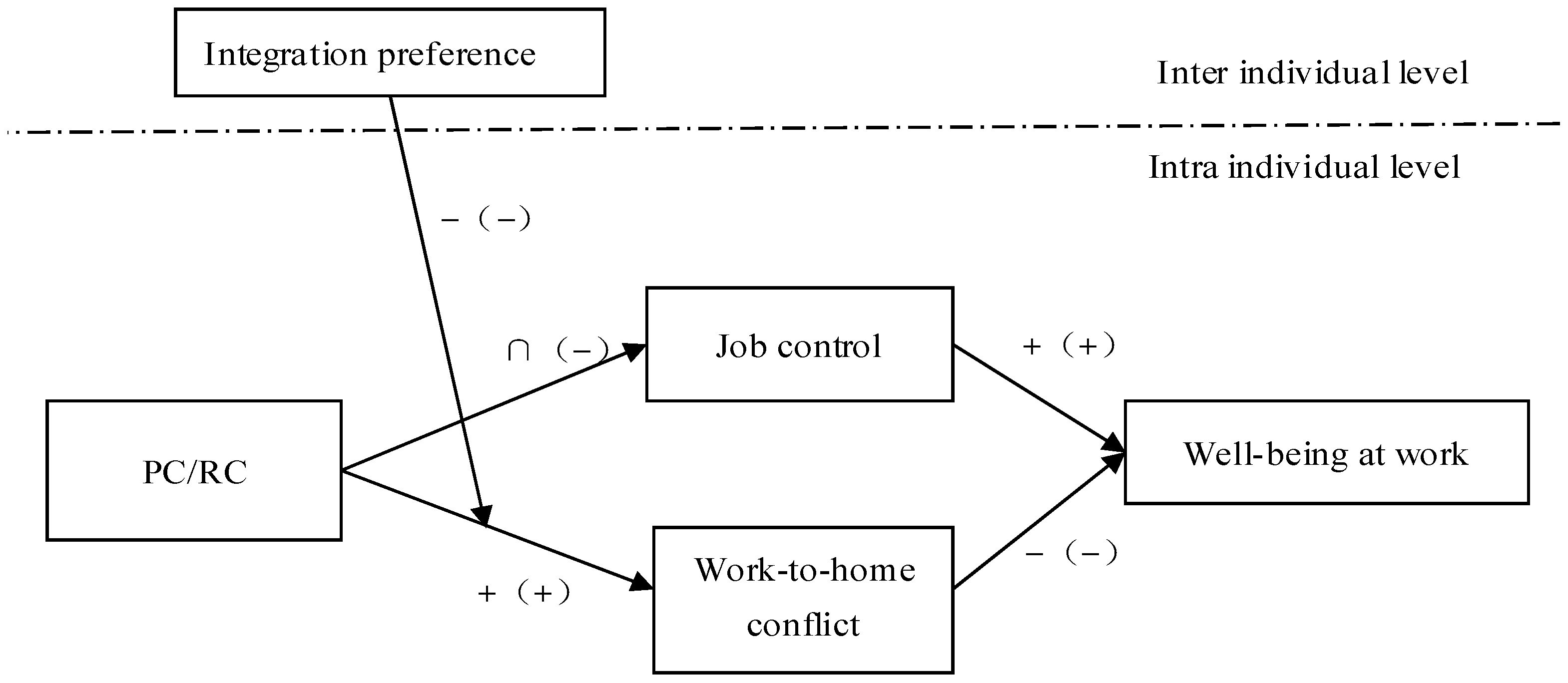
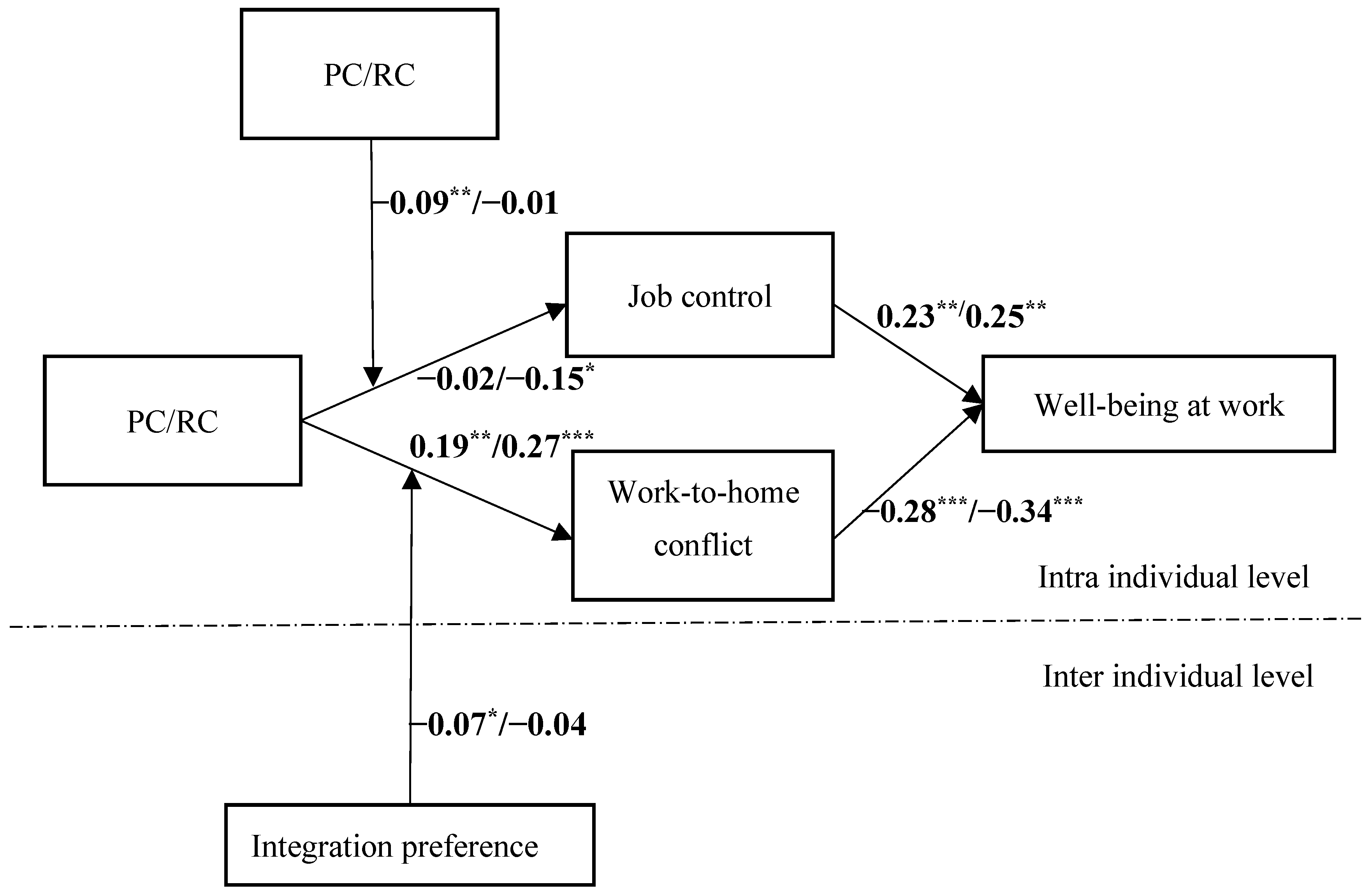
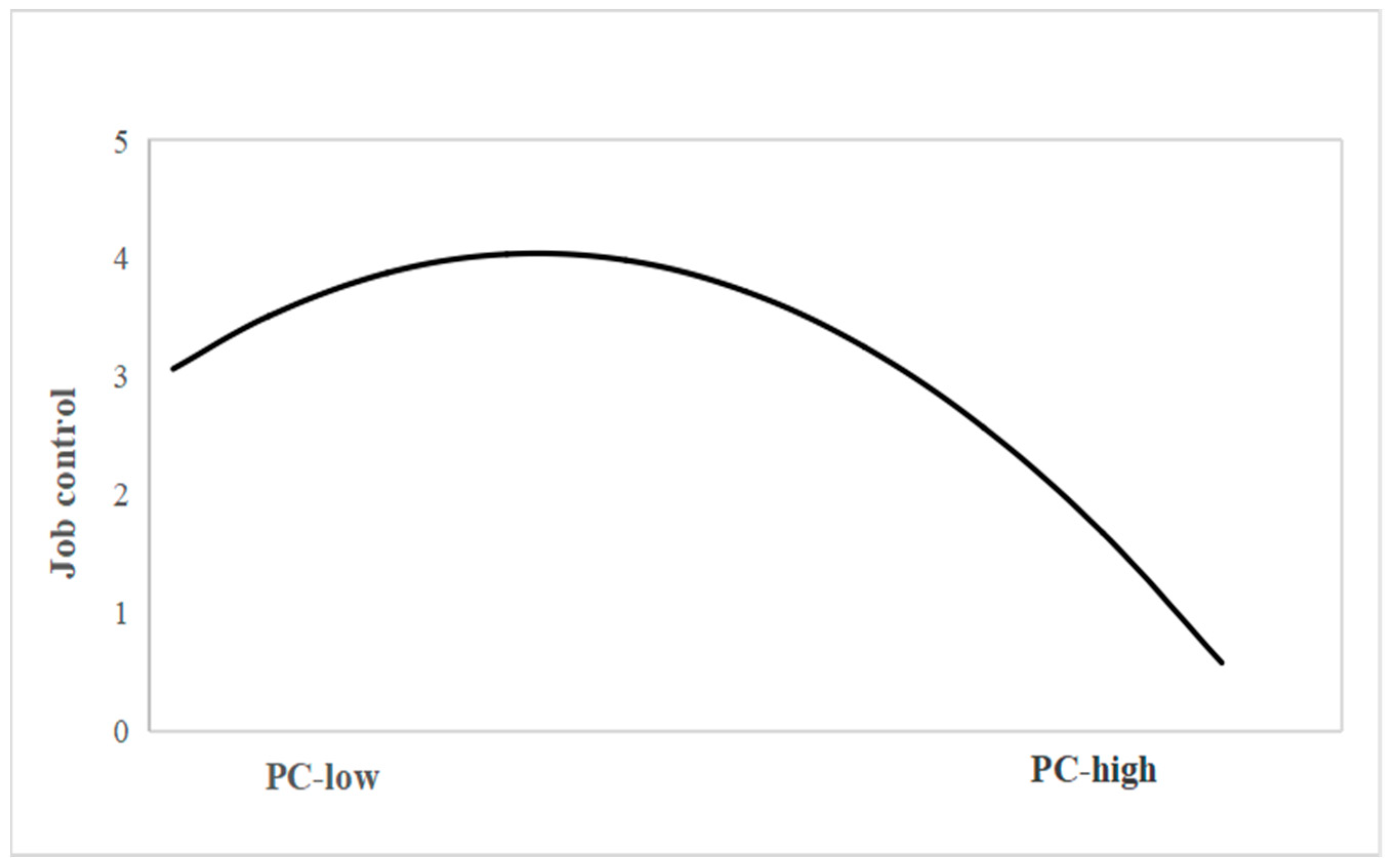
This study examines the differential impact of proactive and reactive work connectivity behaviors on job well-being, drawing from the perspective of boundary theory. The increasing popularity of work connectivity behavior after-hours (WCBA) has attracted widespread attention from scholars on the relationship between WCBA and employee well-being. One view suggests that the impact of WCBA is negative, while another view suggests it is positive. Obviously, the impact of (WCBA) on well-being at work is still contradictory. To clarify the complexity of the impact of WCBA on well-being at work, based on boundary theory, we divided WCBA into proactive WCBA (PC) and reactive WCBA (RC), and examined the double-edged sword effect of WCBA on well-being at work, as well as the mediating mechanisms of job control and work-to-home conflict, and the moderated effects of boundary segmentation preferences. This study uses an empirical sampling method to collect data from 125 employees for a period of five days for quantitative research. The results show that, first, PC has an inverted U-shaped effect on job control, and job control is negatively related to well-being at work. Thus, the mediating effect of job control is significant. Second, RC has a negative impact on job control, and there is also a negative relationship between job control and well-being at work. Therefore, the mediating effect of job control is significant. Third, PC and RC are positively correlated with work-to-home conflict, and work-to-home conflict has a significant positive impact on well-being at work. Therefore, the mediating effect of work-family conflict is significant. Fourth, the study also found that integration preference moderates the relationship between work-to-home conflict and PC on well-being at work; that is, the mediating effect of work-to-home conflict is stronger for employees with a low integration preference. This study enriches our understanding of WCBA, PC, and RC from the perspective of proactive and passive employee behaviors. The study also provides a new interpretation of the impact of WCBA on well-being at work and offers valuable insights into sustainable development in digital social transformation and the application of boundary theory and the theory of empowerment–subjugation in achieving the United Nations’ Sustainable Development Goals. In addition, the study deepens our understanding of the heterogeneous regulatory role played by work–family integration preferences in influencing well-being at work under different types of WCBA.
Keywords: proactive work connectivity behavior after-hours; reactive work connectivity behavior after-hours; job control; work-to-home conflict; integration preference; well-being at work proactive work connectivity behavior after-hours; reactive work connectivity behavior after-hours; job control; work-to-home conflict; integration preference; well-being at work