
Article

Overlapping Damage Zones in a Bedrock Aquifer

1
Department of Geological Sciences, Brigham Young University, Provo, UT 84602, USA
2
Department of Civil and Construction Engineering, Brigham Young University, Provo, UT 84602, USA
3
Department of Geology and Geophysics, University of Utah, Salt Lake City, UT 84112, USA
*
Author to whom correspondence should be addressed.
Geosciences 2026, 16(9), 380; https://doi.org/10.3390/geosciences16090380 (registering DOI)

Submission received: 21 July 2026 / Revised: 11 September 2026 / Accepted: 15 September 2026 / Published: 19 September 2026

Abstract

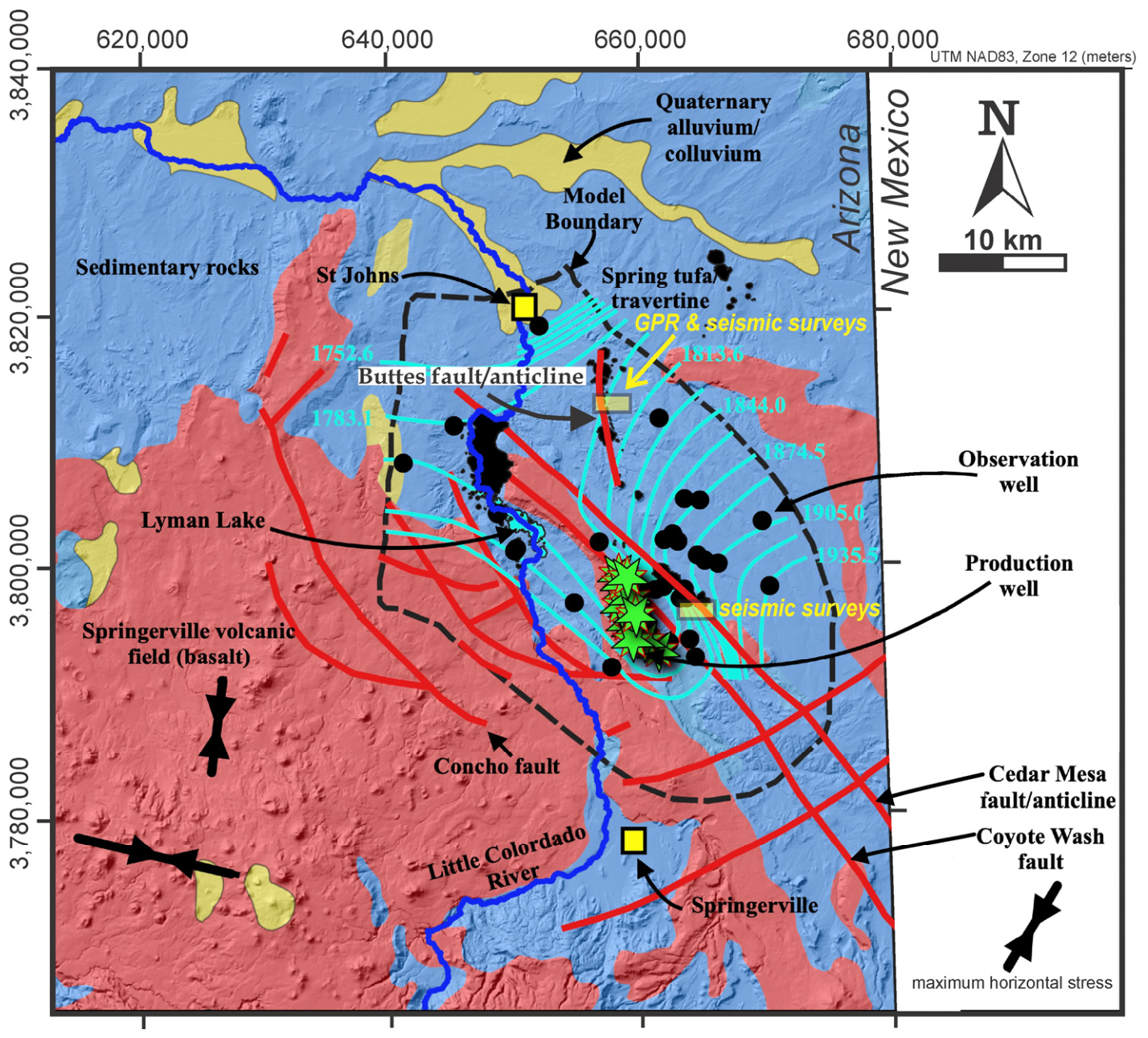
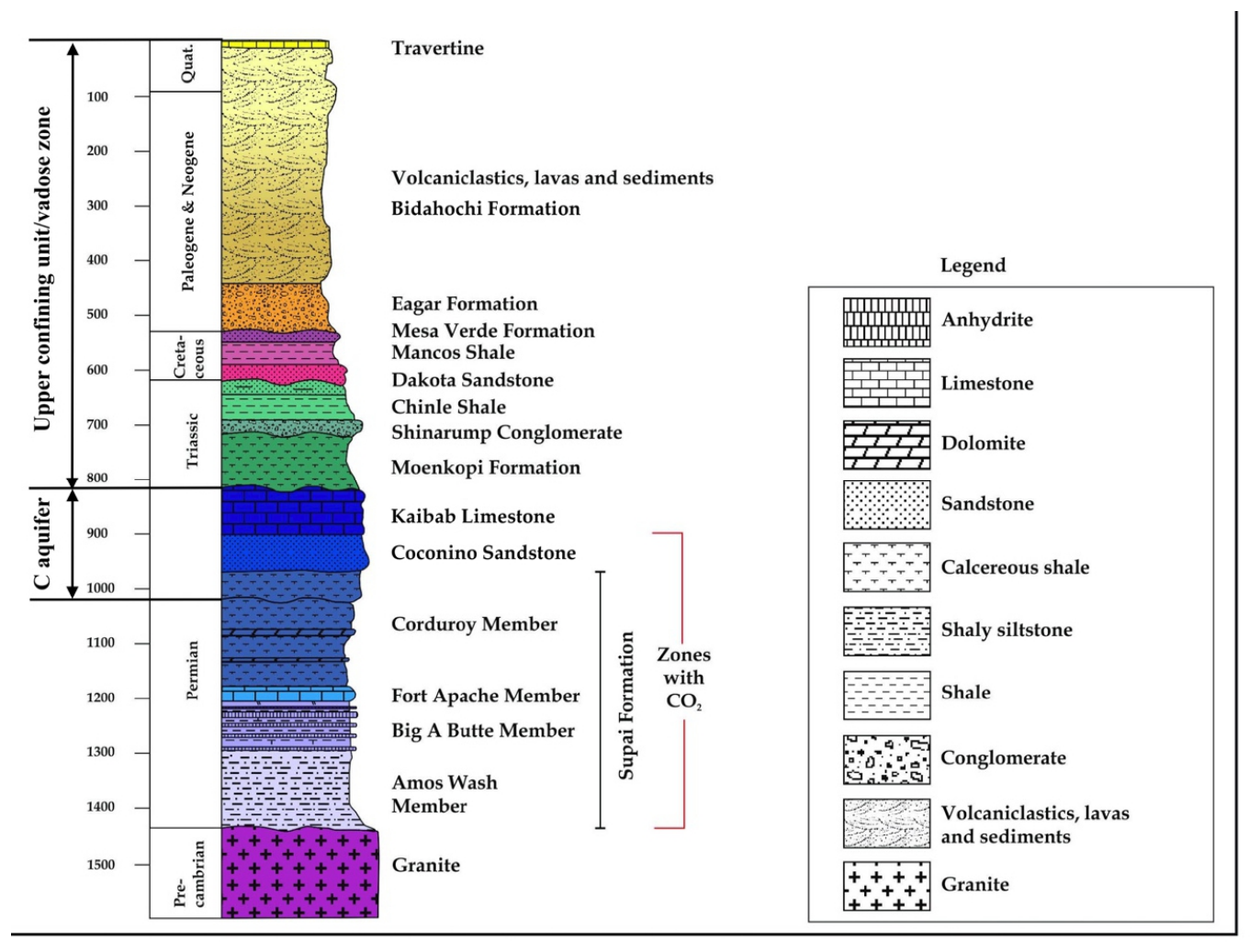
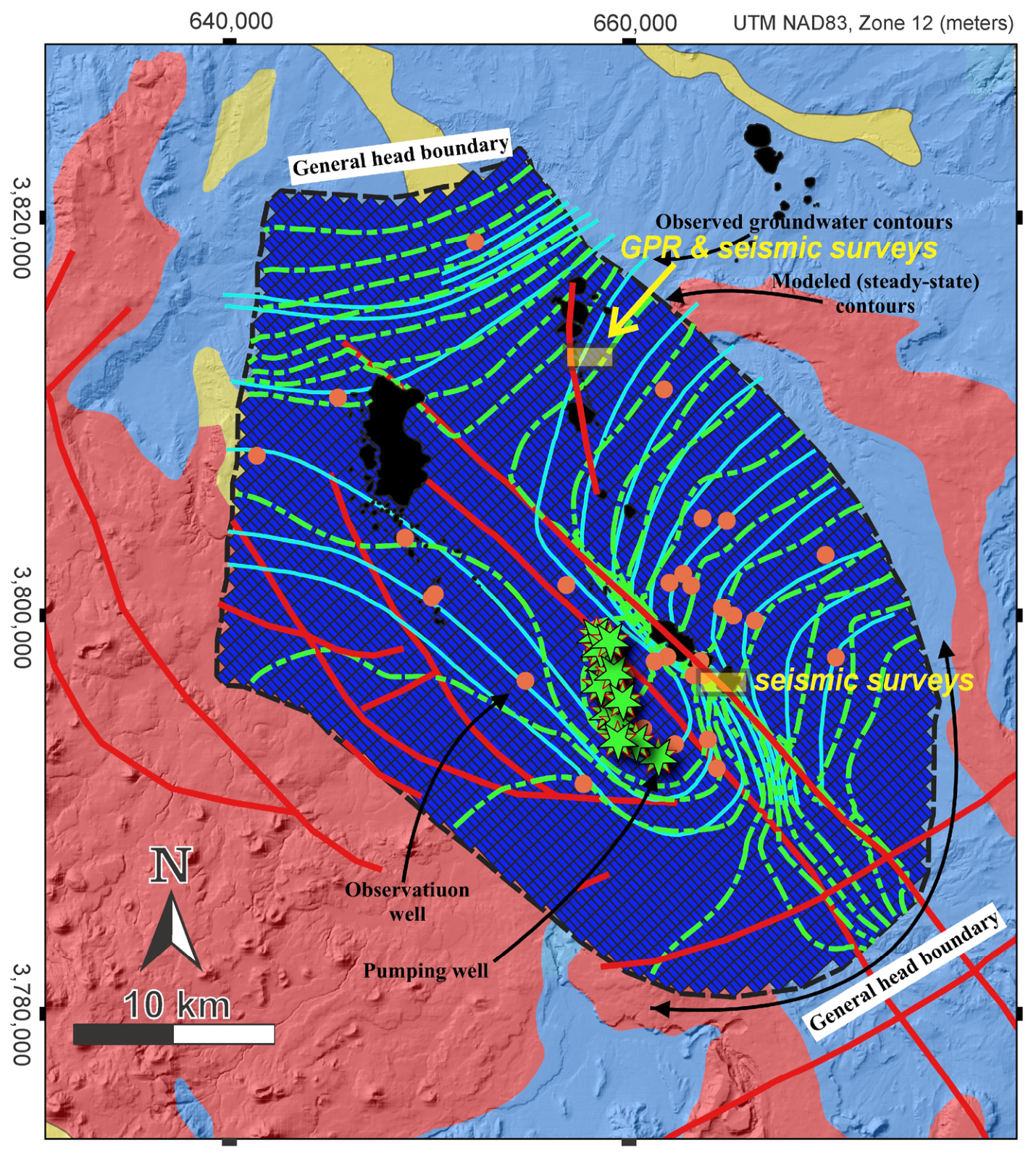
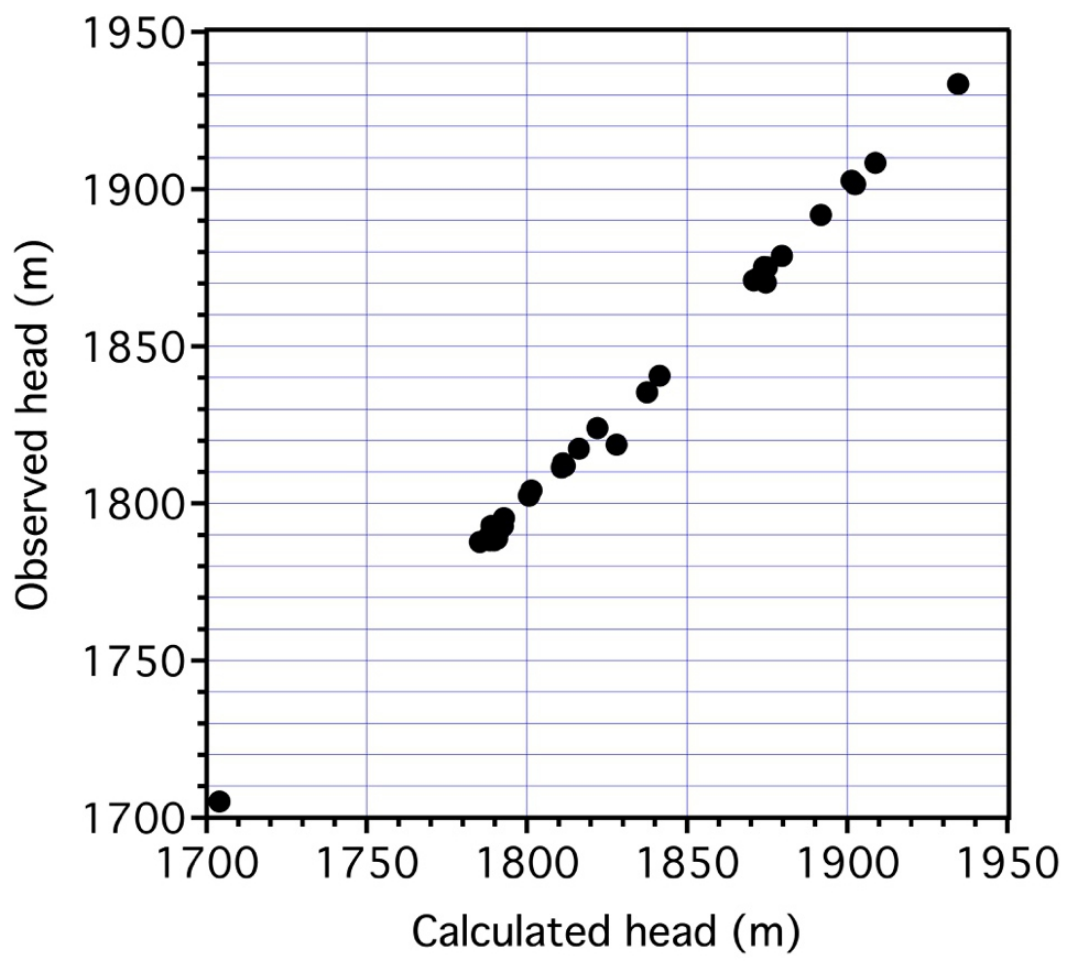
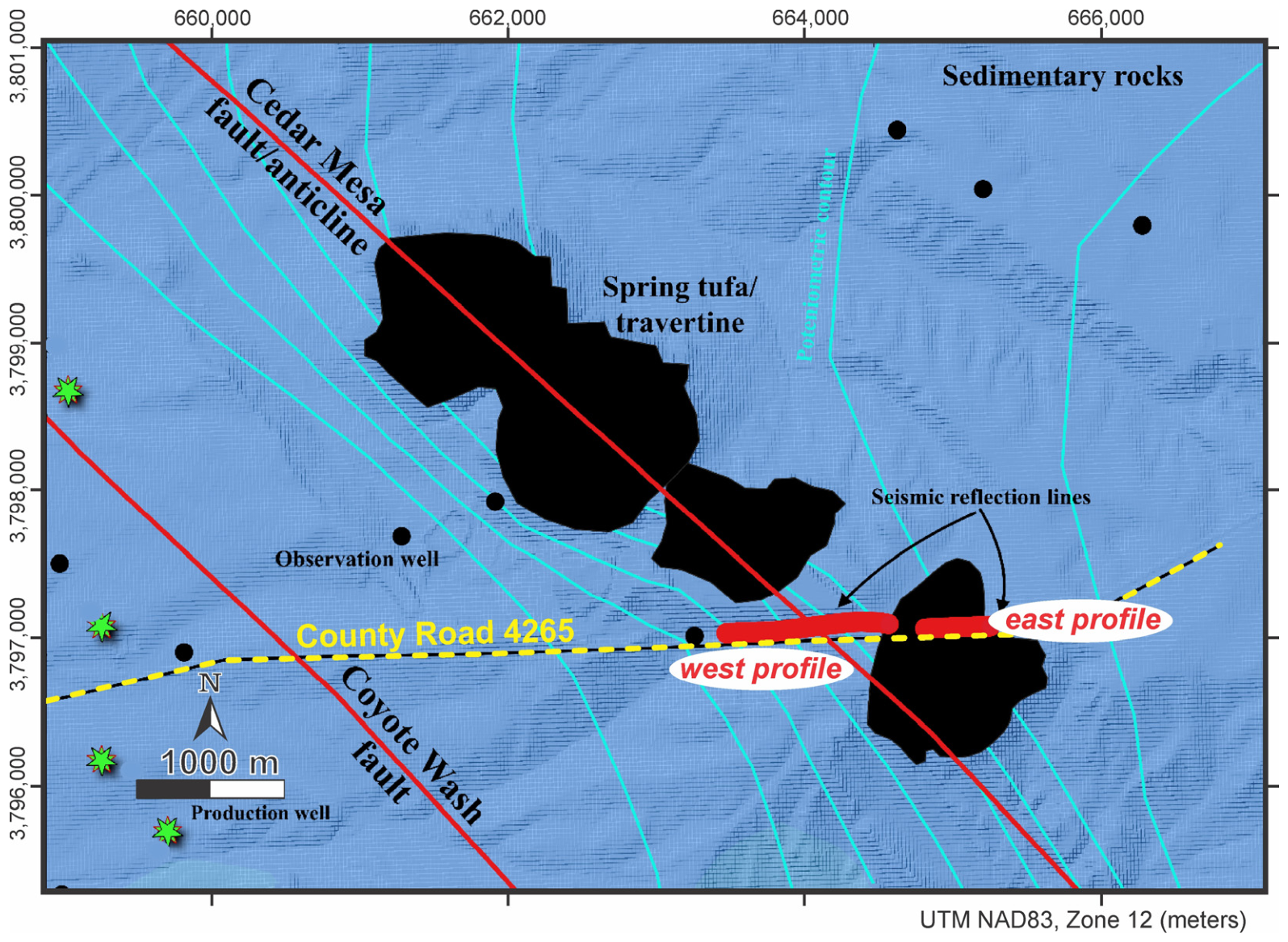
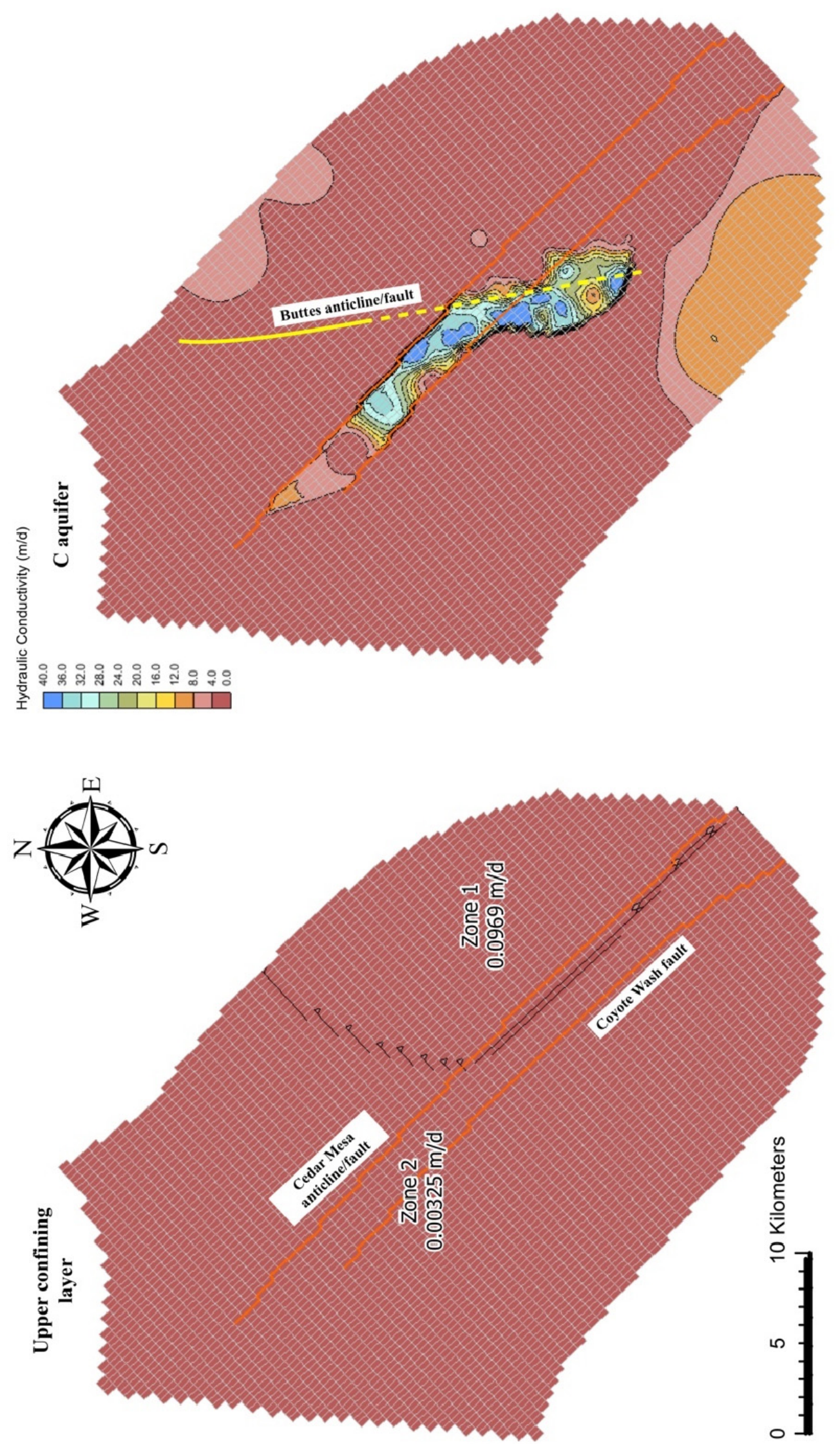
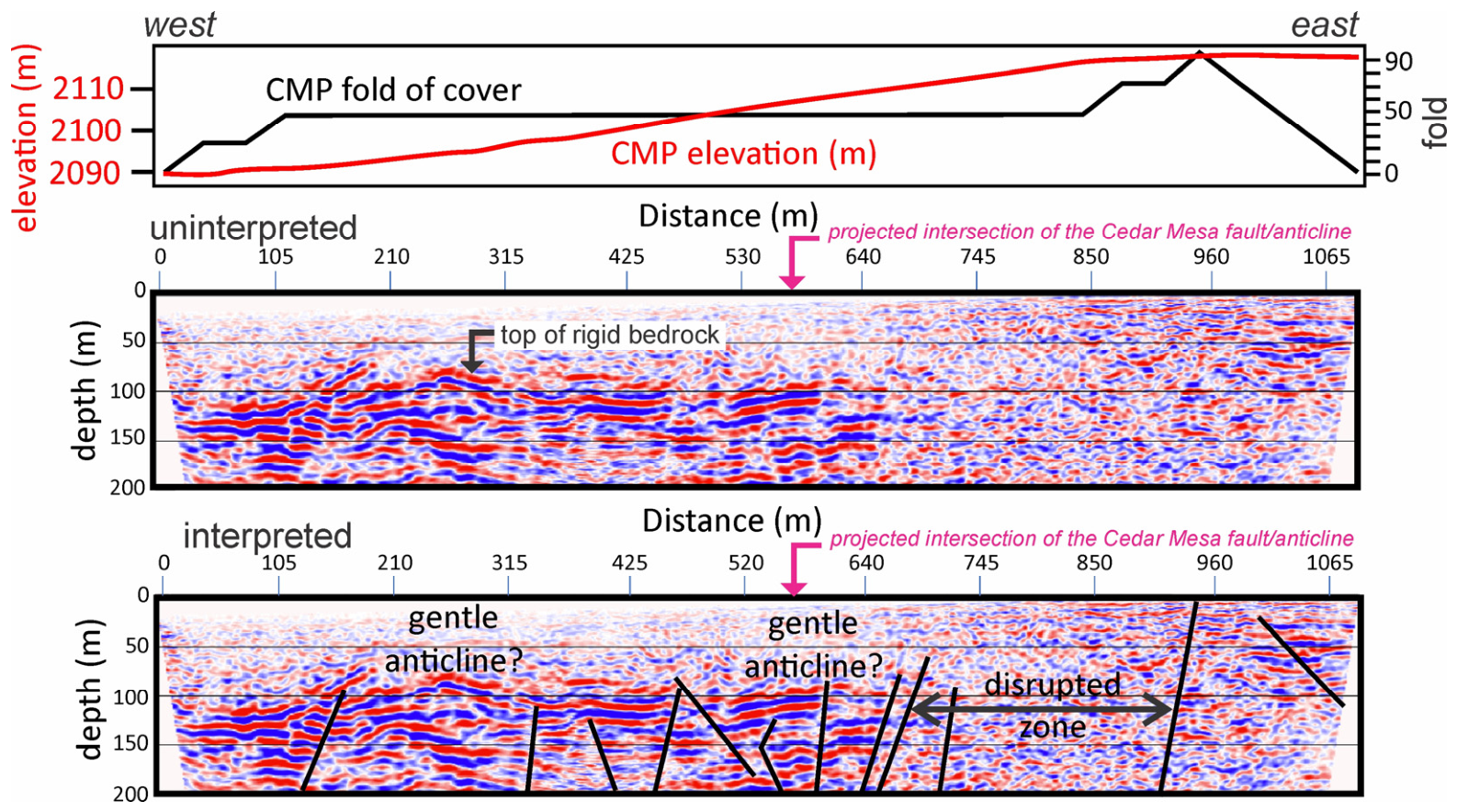
Understanding the role of faults in directing groundwater flow within bedrock aquifers is crucial, especially in the arid Southwestern United States, where water demand is exceptionally high. This study investigates the confined Coconino aquifer (Permian, 282–270 Ma), located between Springerville and Saint Johns, Arizona, and supplying the Springerville Generating Station. Using abundant well-pumping and water-level data, we analyzed how distinct regional geological structures, specifically the Coyote Wash fault (a steeply dipping normal fault; initially 70–30 Ma old with subsequent middle-to-late Quaternary and younger activity (<750 ka), the Cedar Mesa anticline, and the Buttes anticline, control local groundwater movement. Although the parallel Coyote Wash and Cedar Mesa structures experience similar regional stresses, model calibration yields hydraulic characteristics (hydraulic conductivity divided by barrier thickness) of 1.0 1/day for the Coyote Wash fault and 0.0001 1/day for the Cedar Mesa anticline, four orders of magnitude lower. Seismic reflection profiling reveals a disrupted zone, roughly 200 m wide, associated with the Cedar Mesa structures. Because these faults are perpendicular to the maximum horizontal stress direction, prevailing compressive forces theoretically close fracture apertures and severely restrict water flow. However, this study reveals that highly permeable regions exist where the structural damage zones of these prominent faults overlap. Ultimately, even in restrictive geological environments where ambient stresses predict sealed fractures, the overlapping damage zones of multiple intersecting faults can unexpectedly generate critical, highly permeable pathways for sustained deep groundwater flow today.
Keywords: groundwater; MODFLOW; GMS; fault; anticline; Coconino aquifer; Little Colorado River; Lyman Lake; St. Johns; Arizona groundwater; MODFLOW; GMS; fault; anticline; Coconino aquifer; Little Colorado River; Lyman Lake; St. Johns; Arizona