Article

Disruption of Trib1 Results in Granulosa Cells Steroid Hormone Synthesis Dysfunction and Infertility in Female Mice via Downregulations of FOSL2 Expression

1
College of Animal and Veterinary Sciences, Southwest Minzu University, Chengdu 610041, China
2
Key Laboratory of Qinghai-Tibetan Plateau Animal Genetic Resource Reservation and Utilization of Ministry of Education, Southwest Minzu University, Chengdu 610041, China
3
Key Laboratory of Qinghai-Tibetan Plateau Animal Genetic Resource Reservation and Utilization of Sichuan Province, Southwest Minzu University, Chengdu 610041, China
4
Key Laboratory for Animal Science of National Ethnic Affairs Commission, Southwest Minzu University, Chengdu 610041, China
*
Author to whom correspondence should be addressed.
These authors contributed equally to this work.
Animals 2026, 16(8), 1172; https://doi.org/10.3390/ani16081172
Submission received: 7 March 2026 / Revised: 31 March 2026 / Accepted: 9 April 2026 / Published: 11 April 2026
(This article belongs to the Special Issue Health of the Ovaries, Uterus, and Mammary Glands in Animals)

Simple Summary

Current research on Trib1 biology has largely focused on human metabolic diseases, with Trib1 notably linked to cell proliferation. However, the role of Trib1 in ovarian granulosa cell (GC) function and folliculogenesis remains unclear. To investigate this, we generated Trib1 knockout mice and found that Trib1 deficiency leads to female infertility, characterized by impaired folliculogenesis and defective steroid hormone secretion. Our findings reveal a novel role for Trib1 in governing steroidogenesis in granulosa cells and demonstrate that Trib1 is essential for fertility in female mice, providing important insights into female reproductive endocrinology and highlighting potential therapeutic targets.

Abstract

Proper steroid hormone synthesis is essential for maintaining fertility in female animals. Tribbles pseudokinase 1 (Trib1), a member of the Tribbles pseudokinase family, exerts its functions mainly through interacting with other molecules. Numerous studies have shown that Trib1 plays a central role in regulating cell proliferation. In mammals, the proliferation of granulosa cells (GCs) is a hallmark event in follicular development, which is essential for follicular maturation and successful ovulation. However, whether Trib1 regulates ovarian steroid hormone synthesis remains largely unexplored. In this study, we found that Trib1 is predominantly expressed in ovarian GCs. Knockdown of Trib1 in GCs significantly reduced their capacity for steroid hormone synthesis. Furthermore, Trib1 KO female mice were completely infertile, exhibiting impaired transition from primary to antral follicles, increased follicle atresia, and defective steroid hormone secretion. Ovarian RNA-Seq analysis revealed that differential expressed genes (DEGs) were significantly enriched in cholesterol metabolism and steroid biosynthesis pathways following Trib1 deletion. Notably, FOSL2, a transcription factor that potentially bound to the promoters of the pivotal steroidogenic genes Star and Cyp11a1, was significantly down-regulated in Trib1 KO mice. Crucially, overexpression of FOSL2 in Trib1-deficient GCs restored Star and Cyp11a1 expression and significantly rescued the ability of steroid hormone synthesis in GCs. Our findings unveil a novel Trib1 gene governing steroidogenesis in GCs and is essential for fertility in female mice, providing profound insights into the female reproductive endocrinology and potential therapeutic targets.

1. Introduction

The ovaries function as the reproductive gonads in female mammals and are integral to multiple aspects of female development and physiology [1]. The follicle is recognized as both a structural and functional unit of the mammalian ovary, comprising oocytes and granulosa cells (GCs) [2]. GCs encase the oocyte and play a crucial role in providing essential nutrients and hormones, which are vital for oocyte growth, development, and maturation [3]. In recent years, significant progress has been made in understanding the regulatory mechanisms underlying oogenesis, follicular genesis, ovarian atresia, and steroidogenesis, particularly through the studies of ovarian physiological function. GCs have been shown to play a central role in follicular growth, development, and follicular atresia by regulating processes such as proliferation, differentiation, the cell cycle, and apoptosis [4].
The Tribbles family is classified as a pseudoprotein kinase family, which belongs to the human Ca2+/calmodulin-dependent protein kinase (CAMK) subfamily [5]. This family comprises three homologous members: Tribbles homolog 1 (Trib1), Tribbles homolog 2 (Trib2), and Tribbles homolog 3 (Trib3). All members of the Tribbles family possess a distinctive kinase-like domain, which is flanked by a variable N-terminus and a predominantly conserved C-terminal COP1 binding site [6]. Numerous studies have indicated that Trib1 functions as a scaffold protein, facilitates protein–protein interactions and thereby promotes post-translational modification such as phosphorylation or ubiquitination of target proteins [7,8]. Furthermore, Trib1 has been shown to inhibit cell growth, proliferation, and differentiation during normal developmental processes [9]. Recent research on the Tribbles family has increasingly focused on its roles in tumorigenesis, inflammation [10] and lipid metabolism [11]. Notably, emerging evidence indicates that TRIB family members play critical roles in female reproduction [12]. For instance, Trib1 participates in progesterone synthesis in yak ovarian GCs, although its precise molecular mechanism remains unclear [13]. Additionally, Trib2 is differentially expressed in GCs of follicles at various developmental stages and may regulate follicular development and ovarian function [14].
Previous studies by our team demonstrated that the TRIB1 protein is significantly more highly expressed in ovarian GCs than in other cell types in the yak ovary, suggesting its potential crucial role in GCs [13]. However, the precise function and underlying molecular mechanisms by which Trib1 regulates steroidogenesis in ovary GCs remain unclear. To further investigate the role of the Trib1 gene in regulating steroid hormone secretion in ovarian GCs and its effects on reproductive performance, this study generated a global Trib1 knockout (Trib1 KO) mouse model (C57BL/6J background) using CRISPR/Cas9 technology. Follicle counts at different developmental stages, breeding performance, ovarian RNA sequencing (RNA-Seq), and rescued experiments were conducted to comprehensively elucidate the role and potential mechanisms of Trib1 in regulating mammalian steroidogenesis, follicular development, and litter size. This study provides a theoretical foundation for targeting the Trib1 gene to improve fertility in female mammals.

2. Materials and Methods

2.1. Construction, Genotyping, Husbandry, and Breeding Data Analysis of Trib1 Knockout Mice

Trib1 KO mice were generated by Sai Ye Biotechnology Co., LTD (Suzhou, China). The Trib1 KO mice were crossed with wild-type C57BL/6 mice to produce heterozygous offspring. Genotyping of Trib1 KO mice was performed by PCR on tail genomic DNA, with primer sequences listed in Table 1. Subsequently, the mice were intercrossed to generate Trib1 KO homozygous mice (Trib1−/−, KO), heterozygous mice (Trib1+/−, HE), and wild-type mice (Trib1+/+, WT). All experimental mice were maintained in the SPF animal facility of Southwest Minzu University at about 22–26 °C under a 12 h light/dark cycle, with ad libitum access to standard chow and water.
For fertility assessment, Trib1−/−, Trib1+/−, female and Trib1+/+ male mice aged 8 to 10 W were mated with each other and were kept for 6 months (6M) each. The number of offspring, genotype, and weight of each pregnant female were recorded after birth.

2.2. Collection of Mouse Ovaries, Tissue, and Serum Samples

Genotype, age, and sex of the mice were verified, and body weight was recorded. Blood samples were collected via retro-orbital bleeding, allowed to clot for 40 min, centrifuged to obtain serum, aliquoted, and stored at −80 °C. Following dissection, tissues including the heart, liver, spleen, lungs, kidneys, and fat were collected. Ovarian samples were also collected, and their weight was recorded. Samples designated for total RNA extraction were stored at −80 °C, whereas ovarian tissues for histological analysis were fixed in 4% paraformaldehyde (PFA) and stored at 4 °C.

2.3. Hematoxylin and Eosin (H&E) Staining of Ovarian Sections

To assess the impact of Trib1 KO on follicular development in mouse ovaries, we conducted estrous cycle identification on 9-week-old (9 W) female Trib1−/− mice and their Trib1+/+ counterparts. During the follicular phase (proestrus–estrus with rising estrogen) of the estrous cycle, we dissected the mice and collected their ovarian tissues, which were immediately fixed in 4% paraformaldehyde (PFA) for 24 h. The ovarian tissue was embedded and stained with H&E staining. The images were taken with an inverted microscope.

2.4. Total RNA Extraction and Reverse Transcription Quantitative Polymerase Chain Reaction (RT-qPCR)

Total RNA was extraction from tissues and cells using Trizol (Vazyme, Nanjing, China) according to the manufacturer’s instructions and subsequently reverse transcribed with HiScript II Q RT SuperMix for qPCR (+gDNA wiper) (Vazyme, Nanjing, China). The CFX96™ system (Bio-Rad, Hercules, California, USA) was used with 2 X SYBR Green qPCR Mixture (HLINGENE, Shanghai, China) with the following program steps: 94 °C for 2 min; 45 cycles of 94 °C for 15 s, 60 °C for 15 s, and 72 °C for 30 s; followed by dissociation curve and cool down. Each sample analysis was repeated independently in triplicate. Using GAPDH as the internal reference gene, relative gene mRNA expression was calculated with the 2−ΔΔCt method. The primer information for the genes is provided in Table 2 as follows:

2.5. Quantification of Ovarian Follicle Counts at Different Developmental Stages in Mice

Ovaries fixed in 4% paraformaldehyde for 24 h were washed, dehydrated through a graded ethanol series (70%, 85%, 95%, 100%), cleared in xylene, and embedded in paraffin in metal molds. After embedding and cooling, serial sections of 5–8 μm were cut from the ovarian apex. The first section containing a clearly identifiable secondary follicle was designated Section 1; thereafter, every 10th section was labeled as the next section, continuing until the entire ovary was sectioned. Sections were deparaffinized with xylene and stained with H&E staining, and images were captured for morphological observation. Follicles at different developmental stages were counted by comparing successive numbered sections to avoid double counting. Only follicles with visible oocytes were counted to avoid duplication. Follicle classification was performed based on previously described criteria [15]. Each group included 6 biological replicates.

2.6. Immunohistochemistry

To study TRIB1 protein expression in ovarian tissue, wild-type mouse ovary sections were subjected to immunohistochemistry. Antigen retrieval was performed by heating sections in 0.01 M citrate buffer to boil for 15 min. After retrieval, sections were washed in PBS (pH 7.4) for 5 min, three times. Endogenous peroxidase activity was blocked with 3% BSA for 30 min at room temperature. The TRIB1 primary antibody (TRB-1 (E-7): sc-393536, Santa Cruz, California, USA) was diluted 1:100 and applied to the sections to cover the tissue, followed by incubation in a humidified chamber at 4 °C for 12 h. Sections were washed with PBS three times, then incubated with secondary antibody (goat anti-mouse, GB23301, Servicebio, Wuhan, China) diluted 1:3000 for 1 h at room temperature, and color developed with freshly prepared DAB. The slides were rinsed with water to stop the reaction, counterstained with hematoxylin, and washed until clear. Dehydration was performed through graded ethanol (70%, 80%, 90%, 100%), and sections were mounted with neutral resin. Images were captured using a Zeiss LSM800 confocal microscope, and immunohistochemistry density was analyzed with Image-Pro Plus 6.0.

2.7. Isolation and Culture of GCs from Mouse Ovaries

Female mice (3–4 weeks old) were intraperitoneally injected with 10 IU PMSG (Ningbo Second Hormone Factory, Ningbo, Zhejiang, China). Forty-eight hours after the injection, ovaries were collected and placed in 50 μL of cell complete medium (DEME/Ham’s F12 supplemented with 1% penicillin and streptomycin and 10% fetal bovine serum). Under the field of view of the anatomical microscope, the sinus follicles were punctured with a fine needle to release follicular GCs. After collecting the follicular fluid containing granulosa cells into centrifuge tubes, we centrifuged it at 800× g for 5 min to obtain the granulosa cell pellet. The cells were then resuspended using the commercially available Mouse Ovarian Granulosa Cell Complete Medium (catalog number CM-M050, Wuhan Pricella Biotechnology Co., Ltd., Wuhan, China) and seeded into culture dishes. The dishes were gently shaken back and forth several times on the workbench using the “cross method” (moving slowly from left to right and top to bottom, following the steps of drawing a cross). Immediately afterward, the dishes were placed into an incubator set at 37 °C with 5% CO2. The cell status was observed at 24 h and 48 h intervals.

2.8. Cell Immunofluorescence Staining

Cells at 80% confluence were fixed with 4% PFA for 20 min and permeabilized with 100 mM glycine solution for 10 min. Blocking was performed for 45–60 min. Primary antibodies were incubated overnight at 4 °C. DAPI and species-specific fluorescent secondary antibodies were added and incubated at 37 °C for 45 min. Images were captured under a fluorescence microscope. For mouse immunofluorescence staining, primary antibodies were diluted as follows: TRIB1 (1:100), and FSHR (1:200). Fluorescent secondary antibodies were diluted 1:2000.

2.9. Cell Transfection Experiment

siRNA targeting the mouse Trib1 CDS (coding sequence) and a negative control (NC) sequence were designed, with detailed sequences provided in Table 3. An overexpression plasmid for mouse FOSL2 was constructed using the pcDNA3.1 vector. Both siRNA and the overexpression plasmid were synthesized by Gene Pharma (Shanghai, China). GCs were seeded in 24- or 6-well plates and transfected at 70–80% confluence following the manufacturer’s protocol for the Lipofectamine™ 3000 kit (Invitrogen, L3000-015, Carlsbad, CA, USA). Culture media and cells were collected 48 h after transfection for subsequent experiments.

2.10. Enzyme-Linked Immunosorbent Assay (ELISA)

The concentrations of estradiol (E2) and progesterone (P4) in both mouse serum and the supernatant of the mouse ovarian GCs culture medium were detected with the ELISA kit (Jiangsu Meimian Industrial Co., Ltd, Yancheng, Jiangsu, China) according to the instructions. The standard curve was fitted with R2 of 0.99, and then the content of E2 and P4 was calculated according to the OD value obtained by detection according to the standard curve. The sensitivity for P4 and E2 determinations was 0.1 nmol/mL and 0.1 pmol/L, respectively. The intra-assay coefficient of variation was <10%, and the inter-assay coefficient of variation was <10%.

2.11. RNA-Seq Differential Gene Expression (DEGs) Analysis and Pathway Analysis

Trib1−/− and Trib1+/+ mice were generated by breeding. Estrous-cycle staging identified those in the follicular phase. Ovarian samples were collected from Trib1−/− and Trib1+/+ mice (n = 3; 2 M old; littermates were paired for comparison) and total RNA was extracted from all samples using TRIzol. The integrity of the RNA was verified using the Agilent 2100 Bioanalyzer system (2100, Agilent, CA, USA). Each sample (1.5 μg) was sequenced using the Illumina platform. After quality control of the raw data, HISAT2 (Version 2.1.0) was used for alignment with the reference genome. The number of reads mapped to protein-coding genes in each sample was obtained using HTSeq-count software (Version 0.11.2), and FPKM (Fragments Per Kilobase of transcript per Million mapped reads) values were calculated to determine gene expression levels based on the FPKM formula. Differential gene expression analysis was performed using DESeq2 (Version 1.22.2) with default conditions (p Value < 0.05 and fold change > 2 or fold change < 0.5) for gene selection. Gene Ontology (GO) enrichment analysis of differentially expressed genes (DEGs) was conducted using ClusterProfiler (Version 3.8.1), and statistical enrichment in Kyoto Encyclopedia of Genes and Genomes (KEGG) pathways was assessed. Twelve randomly selected differential genes from the differential gene set were validated using RT-qPCR, with primer sequences provided in Table 4.

2.12. Statistical Analysis

The results were graphed using GraphPad Prism 8 software, and SPSS 25.0 was used for the single-factor analysis of variance for multiple comparisons and significance analysis. All data were expressed as mean ± standard error of mean (Mean ± SEM).

3. Results

3.1. Expression Pattern and Localization of Trib1 in the Ovary

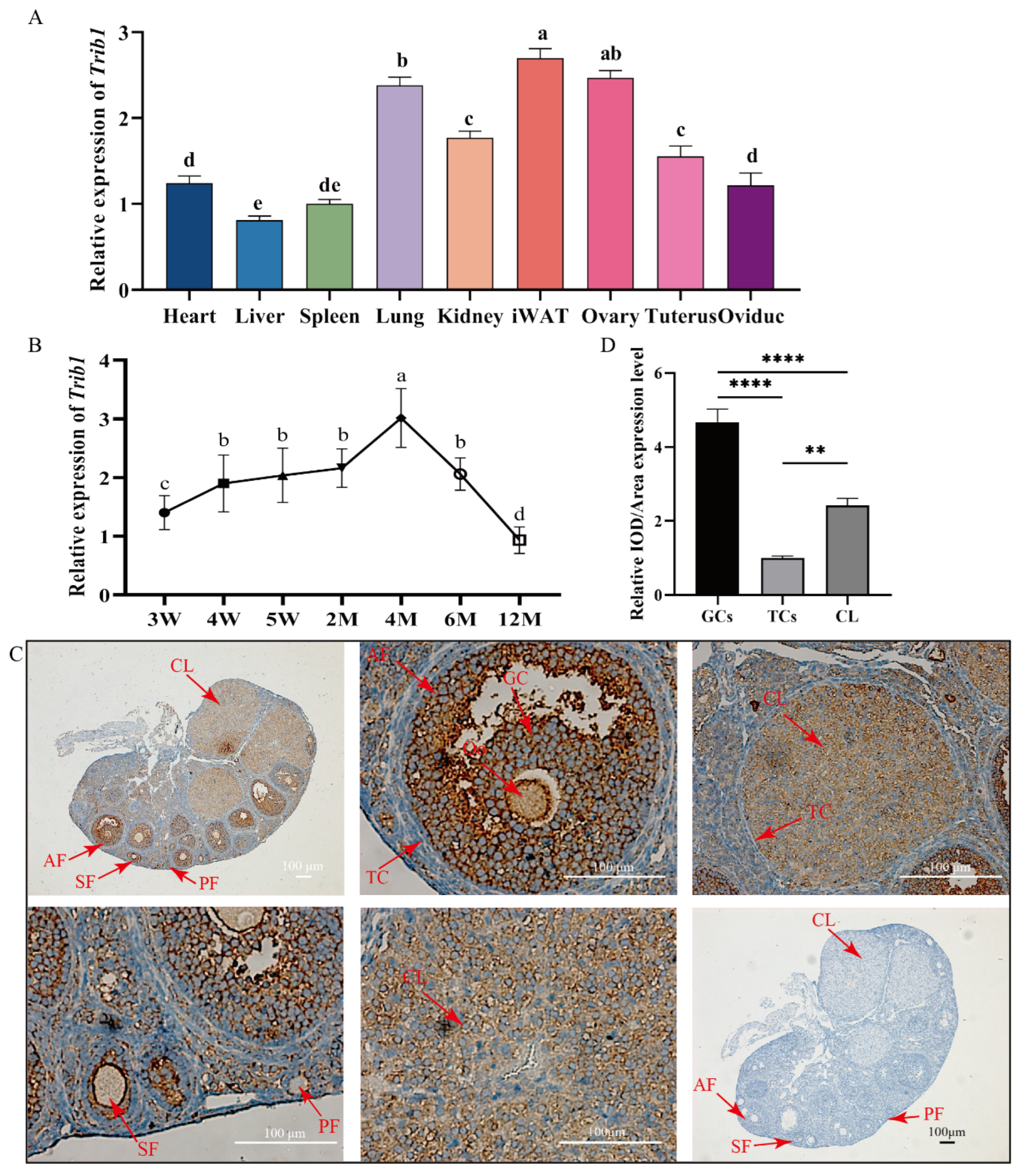
To investigate the expression pattern of Trib1 across various mouse tissues, its relative expression levels were compared. The results show that Trib1 was highly expressed in inguinal white adipose tissue (iWAT) and the ovary (Figure 1A). Among the reproductive organs of female mice, Trib1 expression in the ovary was significantly higher than in other tissues (p < 0.05) (Figure 1A). To further investigate the age-related expression of Trib1 in the ovaries of female mice, ovarian tissues were collected from 3-week-old (3W), 4W, 5W, 2M, 4M, 6M, and 12M female mice during the follicular phase. Compared to the 3W group, Trib1 expression was significantly elevated in the ovaries at 4W, 5W, and 2M (p < 0.05), reaching the highest level at 4M, which was significantly higher than that of other stages (p < 0.05). With increasing age, Trib1 expression significantly declined at 6M and reached the lowest level at 12M (p < 0.05) (Figure 1B). To study the localization and expression of TRIB1 protein in adult mouse ovarian tissue, we selected ovarian sections from 2M mice in metestrus and performed immunohistochemical staining. The results show that TRIB1 protein was predominantly expressed in follicles at different developmental stages, with limited expression in ovarian stromal cells, compared to the negative control group (Figure 1C). Further quantitative analysis revealed that, in follicles at different developmental stages, TRIB1 protein expression in GCs was significantly higher than in theca cells (TCs) and corpus luteum (CL) (p < 0.0001) (Figure 1D). Additionally, TRIB1 expression in CL was significantly higher than in TCs (p < 0.01) (Figure 1D). These findings indicate that the Trib1 gene might play a key role in GCs, contributing to follicular development and the maintenance of normal ovarian function.

3.2. Knockdown of Trib1 in GCs Inhibits Steroid Hormone Biosynthesis

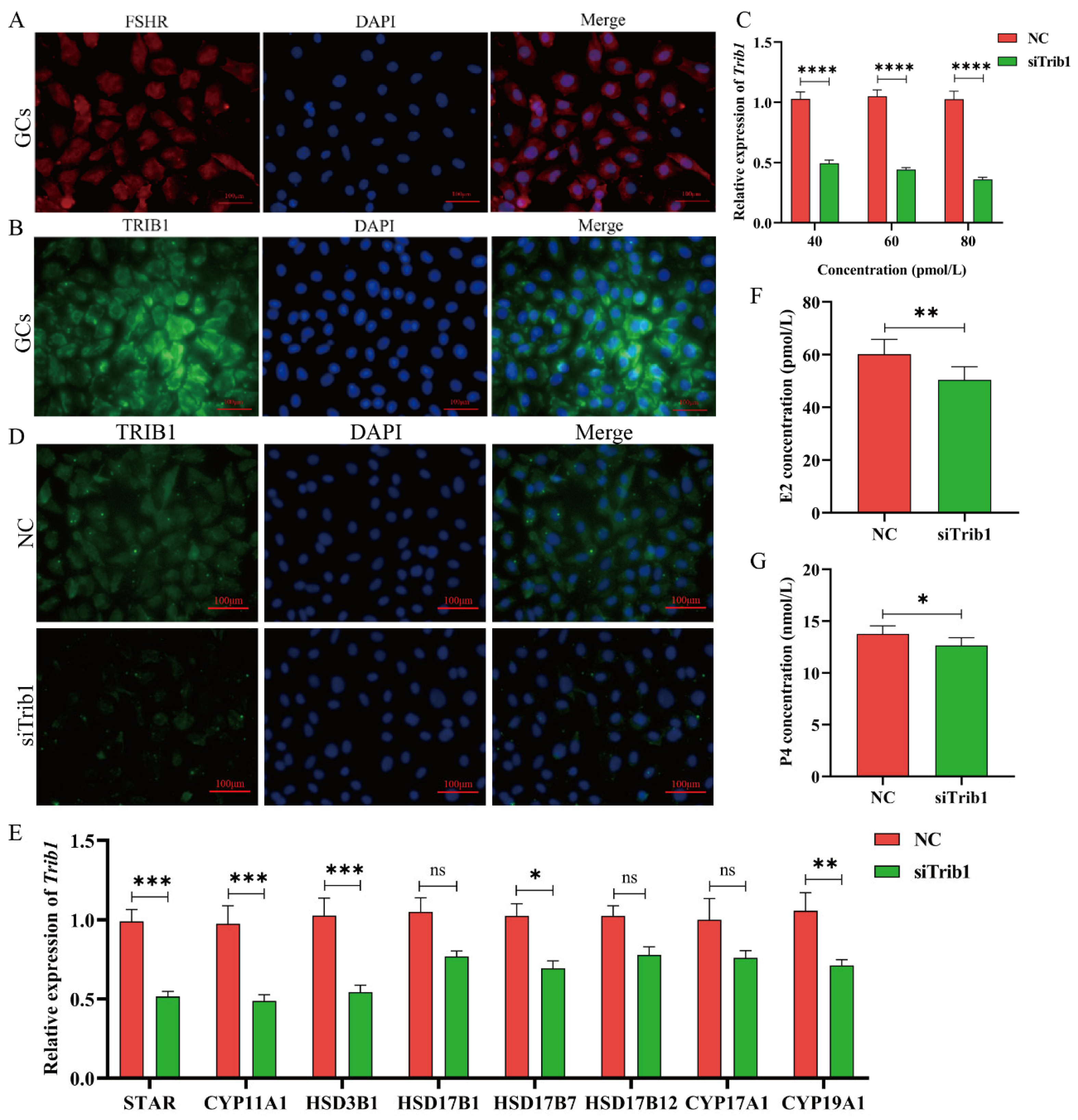
The primary function of ovarian GCs is the secretion of steroid hormones, which are critical for follicular development. To further investigate the function of Trib1 in GCs, mouse GCs were isolated and cultured in vitro and identified using an FSH receptor (FSHR) antibody. Immunofluorescence analysis showed that over 96% of the cultured cells were FSHR-positive, indicating suitability for subsequent experiments (Figure 2A). TRIB1 protein immunofluorescence staining demonstrated that the protein was localized in both the nucleus and cytoplasm of GCs, with predominant cytoplasmic localization (Figure 2B). To knock down Trib1 expression in GCs, siRNA (siTrib1) was transfected into GCs and 80 pM of siTrib1 reduced Trib1 expression by over 60% (Figure 2C). Consistently, siTrib1 treatment significantly inhibited Trib1 protein expression as seen with immunofluorescence staining analysis (Figure 2D). Trib1 knockdown significant downregulation key steroidogenesis-related genes, including Star, Cyp11a1, Hsd3b1, Hsd17b7, and Cyp19a1 (Figure 2E). Next, we assessed the impact of Trib1 knockdown on steroid hormone secretion. The results show that Trib1 knockdown significantly reduced estradiol (E2) secretion (p < 0.01) (Figure 2F) and also decreased progesterone (P4) secretion (p < 0.05) (Figure 2G). These findings suggest that Trib1 knockdown inhibits steroidogenic genes expression, impairing steroid hormones synthesis and reducing E2 and P4 secretion.

3.3. Deletion of Trib1 Results in Impaired Reproductive Performance in Female Mice

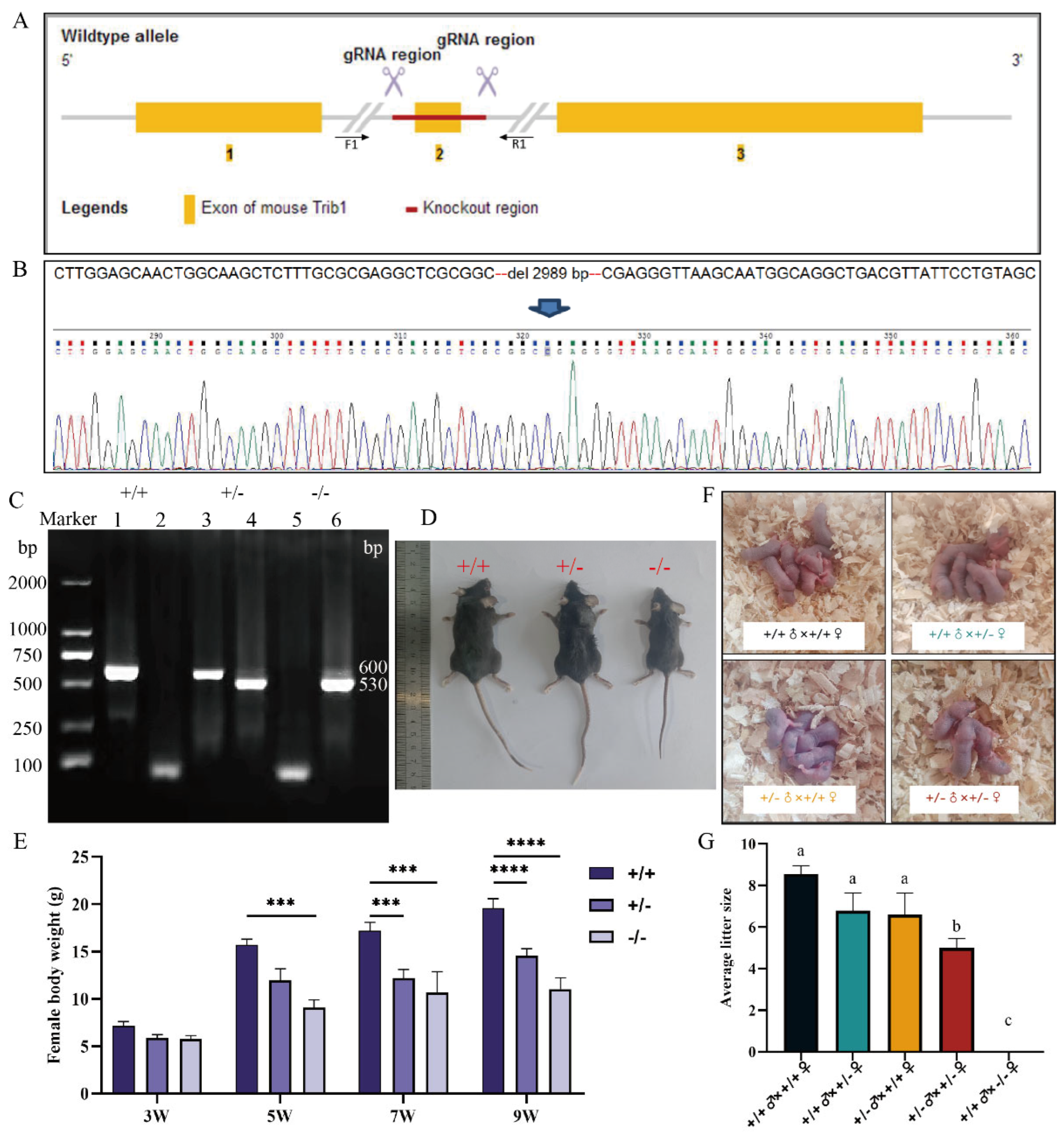
To investigate the biological function of Trib1 in the mouse ovary, we employed CRISPR/Cas9 gene-editing technology to delete the second exon of the Trib1 gene (Figure 3A). Following the generation Trib1 heterozygous knockout (Trib1+/−) mice, offspring were produced through breeding and subsequently genotyped (Figure 3C). Based on genotyping results, mice were classified as wild-type (Trib1+/+), heterozygous (Trib1+/−), or homozygous knockout (Trib1−/−) (Figure 3C). DNA sequencing of Trib1−/− mice confirmed the deletion of a 2989 bp fragment (Figure 3B), confirming the successful generation of the Trib1 KO model for subsequent analyses. Body weight analysis revealed no significant differences among genotypes at 3W (Figure 3E). However, Trib1+/− and Trib1−/− mice exhibited significantly lower body weights compared to Trib1+/+ mice by 7W and 9W (Figure 3D,E). Female and male mice of different genotypes (9W) were paired for continuous breeding over 6 M. The results show that Trib1+/− females bred with Trib1+/− males produced significantly fewer offspring compared to wild-type pairings (p < 0.05), whereas Trib1−/− females were completely infertile (Figure 3F,G). Analysis of the genotypes of offspring from Trib1+/− breeding pairs revealed a significant deviation from expected Mendelian ratios (p < 0.05), with the number of Trib1−/− offspring significantly lower than expected (Table 5). In summary, Trib1 KO resulted in reduced growth, lower body weight, and complete infertility in female mice. These findings indicate that Trib1 plays a critical role in regulating growth, development, and reproductive performance in mice.

3.4. Trib1 Gene Knockout Disrupts the Follicular Development Process and Reduces Steroid Hormone Secretion Capacity in Female Mice

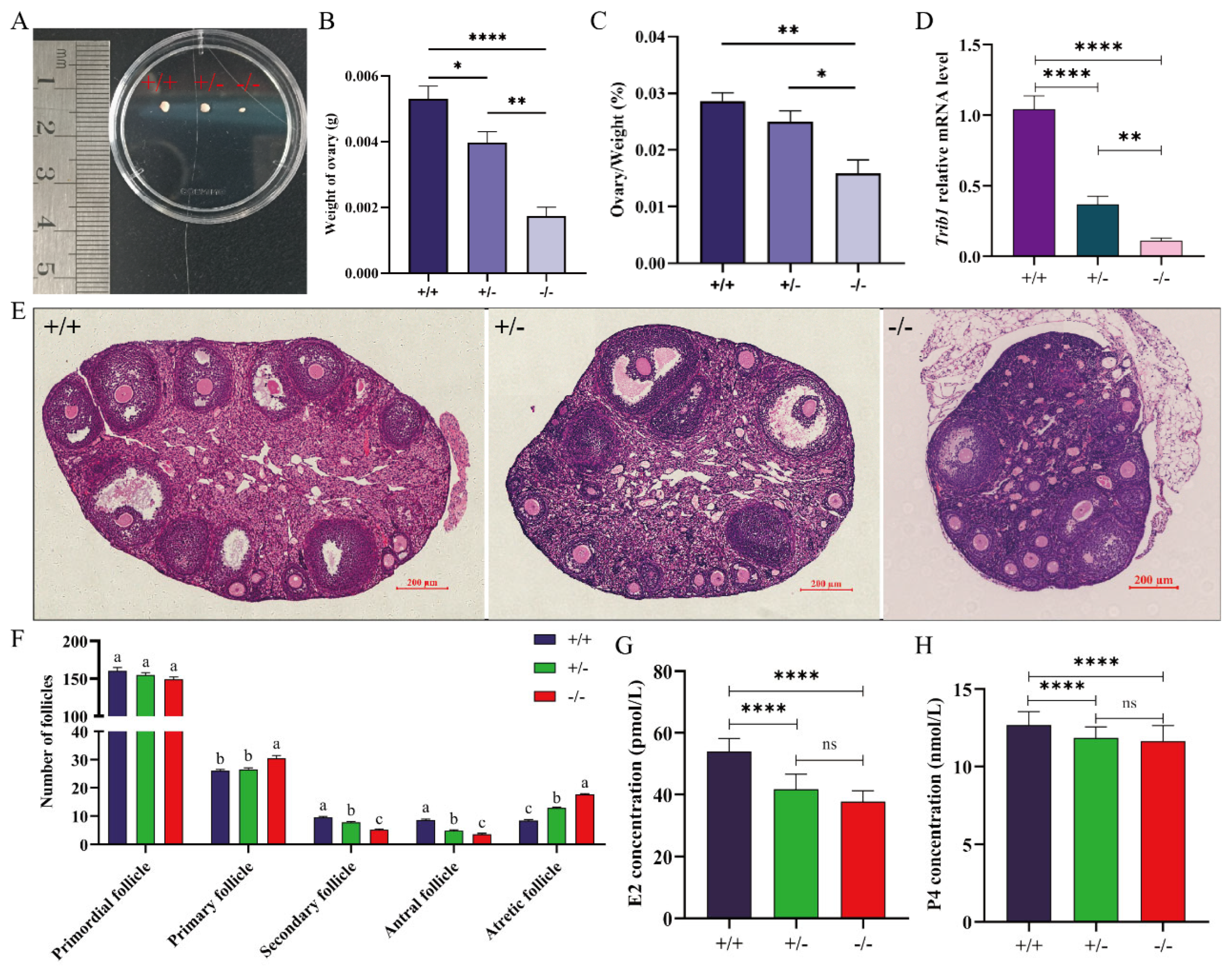
The ovary is a critical organ in the mouse reproductive system, playing an essential role in reproduction and fertility. Dissection of 9 W female mice of different genotypes revealed that the ovaries of Trib1−/− mice were significantly smaller than those of other genotypes (Figure 4A). Further analysis showed that ovarian weight in Trib1−/− mice was markedly lower than in Trib1+/+ and Trib1+/− mice (p < 0.01) (Figure 4B), and the ovarian index (ovarian weight-to-body ratio) was also significantly reduced (p < 0.05) (Figure 4C). In vitro culture of ovarian GCs from mice of different genotypes showed that the relative expression of Trib1 was significantly reduced in Trib1+/− and Trib1−/− mice compared to Trib1+/+ (Figure 4D), confirming the successful establishment of the Trib1 KO model. H&E staining of ovaries revealed differences in maximum cross-sectional area, follicle number, and morphology among genotypes (Figure 4E). Although the number of primordial follicles showed no significant difference across genotypes, Trib1−/− ovaries exhibited a significantly higher number of primary follicles compared to Trib1+/+ and Trib1+/− ovaries (p < 0.05). In contrast, Trib1−/− ovaries exhibited significantly fewer secondary and mature follicles (p < 0.05), accompanied by a marked increase in atretic follicles (p < 0.05) (Figure 4F). These results indicate that disruption of Trib1 blocks the transition from primary follicles to antral follicles and substantially increases follicular atresia, ultimately leading to ovarian dysfunction. Serum steroid hormone measurements further showed that E2 and P4 levels were significantly reduced in Trib1−/− and Trib1+/− mice compared to Trib1+/+ mice (p < 0.001) (Figure 4G,H). Together, these findings indicate that Trib1 KO severely impairs ovarian function and disrupts follicular development, accompanied by a reduction in steroid hormone secretion.

3.5. Trib1 Deletion in Mouse Ovaries Affects the Gene Profiles Involved in Ovarian Steroid Hormone Biosynthesis Pathways

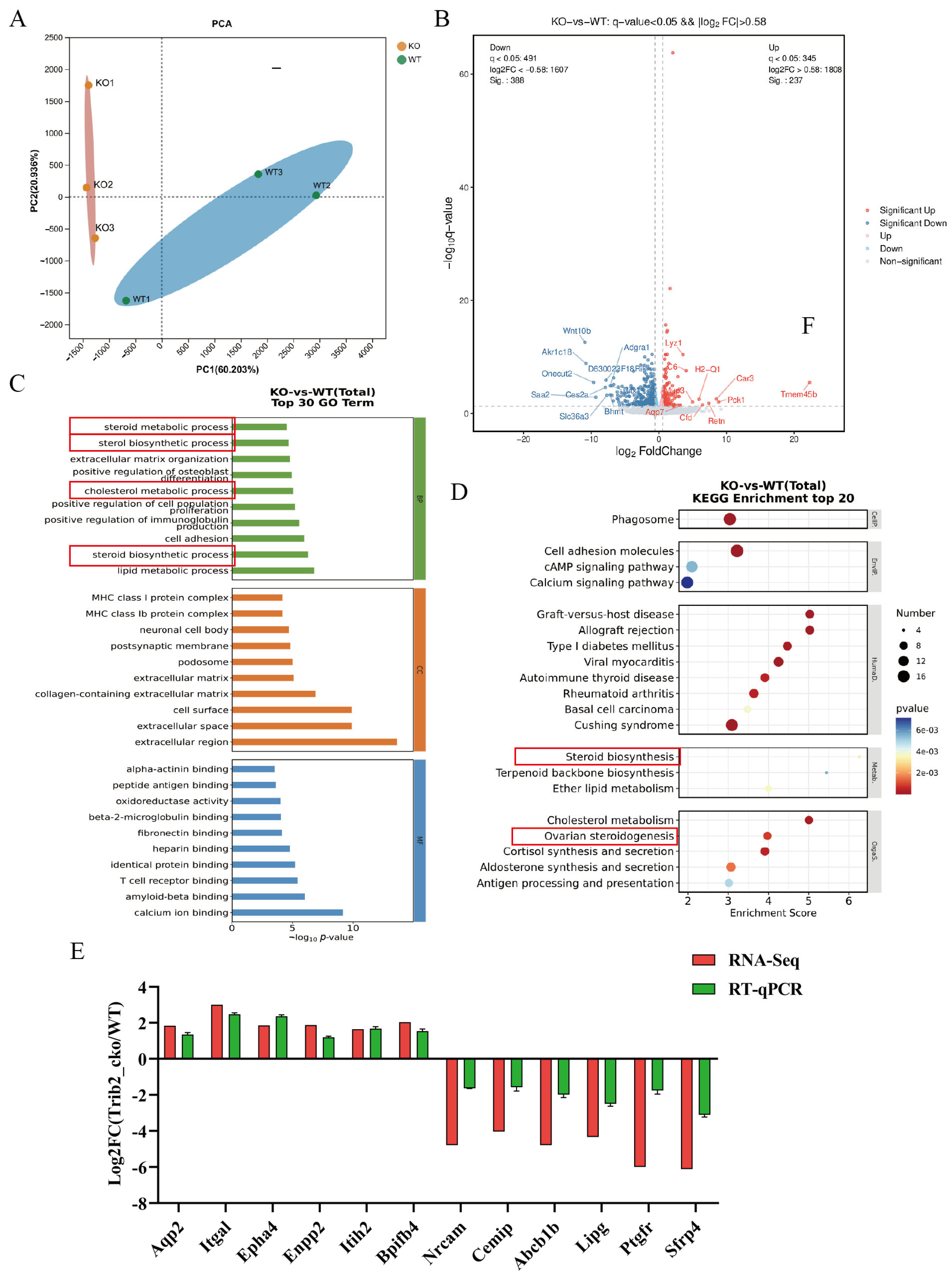
To investigate the potential molecular mechanisms of the Trib1 gene in ovarian steroid hormone biosynthesis and ovarian function, ovarian tissues were collected from 9 W Trib1+/+ (WT) and Trib1−/− (KO) mice for RNA-Seq analysis. PCA results showed good reproducibility among samples within each group, with inter-group variance exceeding intra-group variance (Figure 5A). Using a threshold of q-value < 0.05 and |log2FC| > 0.58, 625 DEGs were identified, including 237 upregulated and 388 downregulated genes in the KO group compared to the WT group (Figure 5B). GO enrichment analysis of the DEGs revealed significant enrichment in pathways such as steroid metabolic process (GO:0008202, 14 genes), sterol biosynthetic process (GO:0016126, 7 genes), cholesterol metabolic process (GO:0008203, 14 genes), and steroid biosynthetic process (GO:0006694, 12 genes) (Figure 5C). KEGG pathway enrichment analysis further demonstrated that DEGs were mainly enriched in pathways such as steroid biosynthesis (mmu00100, 4 genes), ovarian steroidogenesis (mmu04913, 8 genes), and cholesterol metabolism (mmu04979, 8 genes) (Figure 5D). To validate the RNA-Seq results, 12 DEGs were randomly selected for RT-qPCR verification, which showed consistent expression patterns consistent with the RNA-Seq data, confirming their high reliability (Figure 5E). These findings indicate that Trib1 knockout significantly affects mRNA transcriptional regulation in the ovary and disrupts the steroid hormone biosynthesis process, resulting in a marked reduction in ovarian E2 and P4 levels.

3.6. Trib1 Regulates Steroid Hormone Biosynthesis Through Modulating the Expression of FOSL2

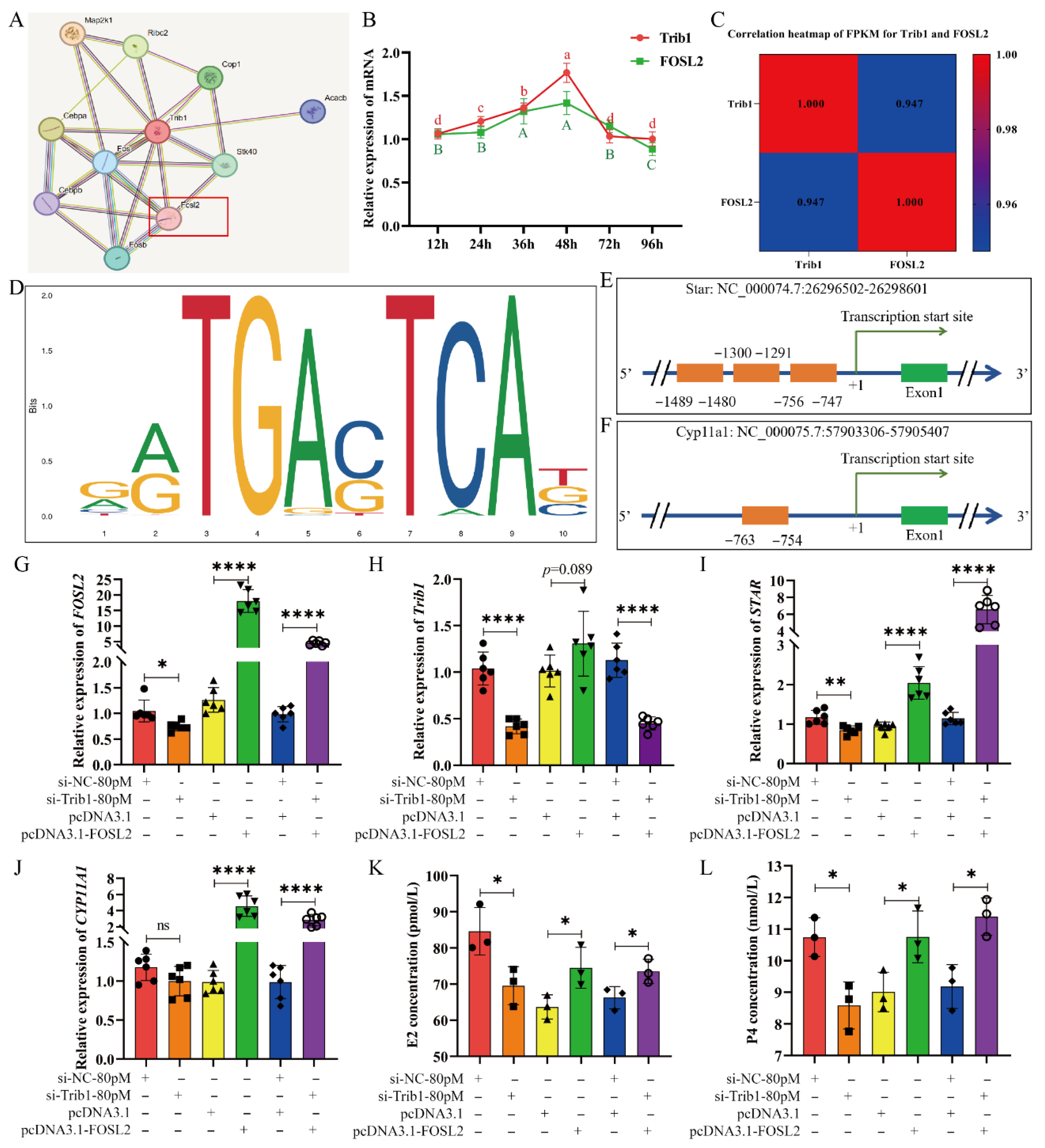
Trib1 is a member of the pseudokinase family and functions primarily through interacting with other molecules. To investigate proteins interacting with Trib1 in ovarian GCs, we performed an interaction analysis using the STRING database, which identified the transcription factor FOSL2 as an interacting partner of Trib1 (Figure 6A). In cultured mouse ovarian GCs, Trib1 and FOSL2 expression patterns were highly consistent, both exhibiting increased expression with prolonged culture, peaking at 48 h and subsequently declining to the lowest level at 96 h (Figure 6B). Moreover, RNA-Seq data from mouse ovaries showed that FOSL2 expression was significantly downregulated in the absence of Trib1 (p < 0.05), with a high correlation coefficient of 0.947 between Trib1 and FOSL2 (Figure 6C), suggesting a close regulatory relationship in GCs.
To investigate whether Trib1 affecting steroid hormone secretion in ovarian GCs through the FOSL2 gene, we predicted the FOSL2 motif sequence (Figure 6D) at the promoter regions (defined as −1899 bp to +100 bp relative to the transcription start site) of steroid hormone synthesis-related genes, including Star, Cyp11a1, Hsd3b1, Hsd3b1, Hsd17b1, Hsd17b7, Hsd17b12, Cyp17a1, and Cyp19a1. Binding sites with a Relative Score > 0.90 were identified at the promoter regions of Star (Figure 6E) and Cyp11a1 (Figure 6F). Consistently, knockdown of Trib1 significantly downregulated the mRNA levels of Star and Cyp11a1 (Figure 2E). To validate the interaction between Trib1 and FOSL2 in the steroid hormone biosynthesis process of GCs, the rescued experiments were performed by co-transfecting siTrib1 and FOSL2 overexpression plasmid into mouse ovarian GCs. Knockdown of Trib1 in GCs significantly reduced Trib1 expression (p < 0.0001), downregulated FOSL2 (p < 0.05), and decreased Star expression (p < 0.01), along with significant reductions in E2 and P4 levels (p < 0.05). However, overexpression of FOSL2 significantly increased FOSL2 expression (p < 0.0001) and Trib1 expression remained unchanged (p > 0.05). In addition, Star and Cyp11a1 expression levels were significantly elevated (p < 0.0001), accompanied by increased E2 and P4 secretion (p < 0.05). Compared with the siTrib1 group, co-transfecting FOSL2 and siTrib1 group restored the expression levels of Star and Cyp11a1 (p < 0.0001) and rescued the reductions in E2 and P4 secretion caused by Trib1 knockdown (p < 0.05) (Figure 6G–L). These results demonstrate that overexpression of FOSL2 compensates for the downregulation of Star and Cyp11a1 expression caused by Trib1 knockdown and restores the reduced E2 and P4 levels.

4. Discussion

Trib1, a member of the Tribbles family, was initially identified as a regulator of gastrulation cell proliferation in Drosophila embryos [16]. The protein sequence and structure of Trib1 are highly conserved across species, suggesting functional conservation [13,17]. Based on the expression patterns of Trib1 in the ovaries during the follicular phase across different ages, we found that, to some extent, the trend in Trib1 expression levels in the ovary is positively correlated with reproductive capacity, and the TRIB1 protein was predominantly expressed in ovarian GCs. This suggests that Trib1 plays a crucial role in GCs and is involved in regulating ovarian reproductive performance.
GCs are the principal somatic cell type within the follicle, and their steroid hormone synthesis capacity is particularly important for normal mammalian reproduction. GCs are mainly responsible for the conversion of androgens to estrogen and the synthesis of P4 [18]. Steroid hormone biosynthesis begins with the transport of intracellular cholesterol across the mitochondrial membrane by the Steroidogenic acute regulatory protein (Star). Cyp11a1 is responsible for cutting off the cholesterol side chain and converting it to pregnenolone, and Cyp11a1 is the only enzyme in this process, which determines the steroidogenic ability of GCs [19,20]. Then, Hsd3b in the endoplasmic reticulum converts pregnenolone to P4 [21]. Cyp17a1 can catalyze pregnenolone and progesterone to form androstenedione [22], which is then converted by Cyp19a1 to estrogen [23]. Cyp19a1 is primarily expressed in the GCs of mature follicles [24]. Inhibition of Cyp19a1 expression in GCs reduces estrogen secretion, which can lead to premature follicular atresia [1]. Trib1 functions as a molecular scaffold that modulates MAPK and AKT signaling to promote tumor cell proliferation [25]. In adipocytes, Trib1 directly regulates lipid metabolism. Emerging evidence shows that Trib1 alters mitochondrial respiratory chain complex enzyme activities, disturbing mitochondrial fusion/fission balance and leading to mitochondrial damage and lipid metabolic dysfunction [26]. In this study, Trib1 knockdown in ovarian GCs significantly reduced the expression of steroidogenesis-related genes, including Star, Cyp11a1, Hsd3b1, Hsd17b7, and Cyp19a1, accompanied by markedly decreased E2 and P4 levels, indicating that Trib1 is critical for steroid hormone synthesis and secretion in ovarian GCs.
To investigate the biological function of the Trib1 gene in vivo and its effects on female fertility, this study generated a Trib1 KO mouse model. Comprehensive evaluation of reproductive capacity, ovarian endocrine function, and reproductive potential provided critical insights into the role of Trib1 in ovarian function. Litter size during specific reproductive cycles serves as a key indicator of female fertility [27], while the number of mature follicles reflects ovarian reserve and reproductive performance [28]. During follicular development, most follicles undergo atresia at the antral stage, with only a small fraction advancing to ovulation [29]. E2, synthesized primarily by GCs, is closely associated with follicular development and number [30] and regulates the development and selection of dominant follicles prior to ovulation, with insufficient E2 levels potentially leading to premature follicular atresia [31,32]. This study found that Trib1−/− female mice exhibited slow growth, reduced body weight, and complete infertility. Furthermore, interbreeding of Trib1+/− mice resulted in offspring genotype distributions that significantly deviated from Mendelian inheritance, with Trib1−/− offspring far below the expected ratio. Ovarian dissection revealed that Trib1−/− mice had reduced ovarian volume and ovarian index, fewer mature follicles, and an increased number of atretic follicles. Serum levels of E2 and P4 were significantly reduced, consistent with observations from Trib1 knockdown in GCs. These results indicate that Trib1 deletion severely impairs female fertility by suppressing GC steroid hormone synthesis, disrupts follicular development and maturation, and reduces ovarian reserve. This highlights the critical role of Trib1 in follicular development and steroidogenesis in female mice. Because this study used a whole-body Trib1 knockout mouse model, we cannot exclude the possibility that Trib1 deletion in other tissues affects female reproductive performance. Nevertheless, the results indicate that Trib1 plays a crucial role in female fertility and is important for steroid hormone synthesis in ovarian granulosa cells. To further delineate the unbiased contribution of Trib1 impact on female reproduction in vivo, generating a conditional Trib1 knockout model would be the most appropriate approach and we will pursue this in our future work.
Trib1 is a member of a family of serine/threonine pseudokinase proteins, and all members share a unique central kinase-like domain with a variable N-terminal and a (largely) conserved C-terminal on either side [33]. The “PEST” region in the N-terminus of the TRIB proteins family has been identified as a key feature contributing to proteins’ instability [34]. Trib1 is a highly unstable protein, a property crucial for its regulatory functions, allowing for rapid changes during cellular responses [35,36]. This instability posed significant challenges for detecting and quantifying TRIB1 protein levels in our experiments. Despite multiple attempts, Trib1 was difficult to detect and quantify; therefore, in vitro detection results are not included in this study. According to the literature, Trib1 can form complexes with various transcription factors, modulating transcriptional regulation [37], and also modulates signaling pathways by activating or inhibiting specific kinases, thereby influencing phosphorylation, nuclear translocation, and expression of downstream transcription factors [38]. Notably, STRING database predictions indicate an interaction between Trib1 and the transcription factor FOSL2. Trib1 and FOSL2 exhibit highly consistent expression patterns in ovarian GCs, and knockdown of Trib1 in GCs significantly reduces FOSL2 expression. Furthermore, their FPKM values from ovarian RNA-Seq data show a significant positive correlation, and FOSL2 expression is markedly reduced in the ovaries of Trib1 KO mice. These findings strongly suggest a close functional relationship between Trib1 and FOSL2.
FOSL2 is a member of the Fos family and a part of the activating protein 1 (AP-1) transcription complex. The AP-1 family is one of the most widely studied transcription factors families. AP-1 regulates gene expression by binding to specific DNA sequences, thereby modulating transcription [39]. Studies have shown that FOSL2 KO mice exhibit no differences at birth compared to wild-type mice, but FOSL2 KO mouse pups display severe growth defects and die within the first week [40]. To further investigate the role of FOSL2 in ovarian GCs, Zhang et al. generated a GC-specific FOSL2 deletion mice model (Cyp19a1-Cre; FOSL2 Flox/Flox, FOSL2 CKO mice), and FOSL2 CKO mice exhibited significantly reduced reproductive capacity, with a notable decrease in both the quantity and quality of ovulation. Additionally, these mice showed a marked reduction in sensitivity to gonadotropins, highlighting the critical role of FOSL2 in follicular development and ovulation processes in mice [41]. Our results predicted strong FOSL2 motif binding sites within the promoter regions of Star and Cyp11a1. In Trib1 knockdown GCs, FOSL2 overexpression significantly increased Star and Cyp11a1 expression, restoring steroid hormone synthesis. Co-transfection of the pcDNA3.1-FOSL2 plasmid in Trib1-knockdown ovarian granulosa cells partially restored their steroidogenic capacity, with changes in CYP11A1, E2, and P4 aligning with expectations, though STAR expression showed some deviations. It is widely recognized that the synthesis of steroid hormones in these cells involves a complex and finely tuned regulatory mechanism, influenced by numerous factors. Therefore, when both siTrib1 and pcDNA3.1-FOSL2 are co-transfected into ovarian GCs, the effects of FOSL2 overexpression may overshadow the impact of Trib1 knockdown, indicating a quantitative relationship in their regulatory interaction. This insight offers new directions for our future research, enabling us to further explore the molecular mechanisms of Trib1 and FOSL2 in ovarian GCs.

5. Conclusions

In this study, TRIB1 protein is predominantly expressed in GCs. Knockdown of Trib1 in GCs significantly downregulates genes involved in steroidogenesis and markedly reduces E2 and P4 secretion. Female Trib1 KO mice exhibit developmental delay and ovarian dysfunction, along with a decrease in the number of antral follicles and a marked increase in atretic follicles, ultimately resulting in complete infertility. DEGs of Trib1 KO ovaries were enriched in steroid biosynthesis pathways, associated with significant downregulation of FOSL2. In vitro, overexpression of FOSL2 rescues their steroidogenic capacity mediated by knockdown of Trib1. Collectively, these data indicate that the Trib1 gene regulates steroidogenesis in GCs and is essential for fertility in female mice, which provides profound insights into female reproductive endocrinology and potential therapeutic targets.

Author Contributions

Conceptualization, W.L., D.Z., and Y.X.; methodology, X.L.; software, G.S.; validation, W.L., D.Z., and H.H.; formal analysis, W.L. and H.H.; writing—original draft preparation, W.L., D.Z., and Y.F.; writing—review and editing, X.X., S.Y., and Y.X.; project administration, X.X. and Y.X.; funding acquisition, J.L. and Y.X. All authors have read and agreed to the published version of the manuscript.

Funding

This research was funded by the Si-chuan Province Industrial Transformation and Upgrading Project (2024ZHXC0003), the Sichuan Provincial Natural Science Foundation—General Program (2026 NSFSC0085), the Fundamental Research Funds for the Central Universities of Southwest Minzu University (ZYN2025261&ZYN2026035).

Institutional Review Board Statement

The animal study protocol was approved by the Ethics Committee of the Southwest Minzu University (protocol code SMU-CAVS-220204001).

Informed Consent Statement

Not applicable.

Data Availability Statement

The raw sequence data reported in this paper have been deposited in the Genome Se-quence Archive (Genomics, Proteomics & Bioinformatics 2021) in National Genomics Data Center (Nucleic Acids Res 2022), China National Center for Bioinformation/Beijing Institute of Genomics, Chinese Academy of Sciences (GSA: PRJCA042504) that are publicly accessible at https://ngdc.cncb.ac.cn/gsa. URL (accessed on 2 July 2025).

Conflicts of Interest

The authors declare no conflicts of interest.

Abbreviations

The following abbreviations are used in this manuscript:
GCsGranulosa cells
TCsTheca cells
CLCorpus luteum
E2Estradiol
P4Progesterone
RNA-SeqRNA sequencing
DEGsDifferentially expressed genes

References

  1. Edson, M.A.; Nagaraja, A.K.; Matzuk, M.M. The mammalian ovary from genesis to revelation. Endocr. Rev. 2009, 30, 624–712. [Google Scholar] [CrossRef]
  2. Li, L.; Shi, X.; Shi, Y.; Wang, Z. The Signaling Pathways Involved in Ovarian Follicle Development. Front. Physiol. 2021, 12, 730196. [Google Scholar] [CrossRef] [PubMed]
  3. Dompe, C.; Kulus, M.; Stefańska, K.; Kranc, W.; Chermuła, B.; Bryl, R.; Pieńkowski, W.; Nawrocki, M.J.; Petitte, J.N.; Stelmach, B.; et al. Human Granulosa Cells-Stemness Properties, Molecular Cross-Talk and Follicular Angiogenesis. Cells 2021, 10, 1396. [Google Scholar] [CrossRef] [PubMed]
  4. Orisaka, M.; Tajima, K.; Tsang, B.K.; Kotsuji, F. Oocyte-granulosa-theca cell interactions during preantral follicular development. J. Ovarian Res. 2009, 2, 9. [Google Scholar] [CrossRef] [PubMed]
  5. Boudeau, J.; Miranda-Saavedra, D.; Barton, G.J.; Alessi, D.R. Emerging roles of pseudokinases. Trends Cell Biol. 2006, 16, 443–452. [Google Scholar] [CrossRef]
  6. Dobens, L.L., Jr.; Bouyain, S. Developmental roles of tribbles protein family members. Dev. Dyn. 2012, 241, 1239–1248. [Google Scholar] [CrossRef]
  7. Kung, J.E.; Jura, N. The pseudokinase TRIB1 toggles an intramolecular switch to regulate COP1 nuclear export. EMBO J. 2019, 38, e99708. [Google Scholar] [CrossRef]
  8. Yoshida, A.; Kato, J.Y.; Nakamae, I.; Yoneda-Kato, N. COP1 targets C/EBPalpha for degradation and induces acute myeloid leukemia via Trib1. Blood 2013, 122, 1750–1760. [Google Scholar] [CrossRef]
  9. Dobens, L.L.; Nauman, C.; Fischer, Z.; Yao, X. Control of Cell Growth and Proliferation by the Tribbles Pseudokinase: Lessons from Drosophila. Cancers 2021, 13, 883. [Google Scholar] [CrossRef]
  10. Zhang, X.; Zhang, B.; Zhang, C.; Sun, G.; Sun, X. Current Progress in Delineating the Roles of Pseudokinase TRIB1 in Controlling Human Diseases. J. Cancer 2021, 12, 6012–6020. [Google Scholar] [CrossRef]
  11. Ha, E.E.; Quartuccia, G.I.; Ling, R.; Xue, C.; Karikari, R.A.; Hernandez-Ono, A.; Hu, K.Y.; Matias, C.V.; Imam, R.; Cui, J.; et al. Adipocyte-specific tribbles pseudokinase 1 regulates plasma adiponectin and plasma lipids in mice. Mol. Metab. 2022, 56, 101412. [Google Scholar] [CrossRef]
  12. Basatvat, S.; Carter, D.A.; Kiss-Toth, E.; Fazeli, A. Tribbles role in reproduction. Biochem. Soc. Trans. 2015, 43, 1116–1121. [Google Scholar] [CrossRef]
  13. Zhao, D.; Fan, Y.; Xiong, X.; Yin, S.; Fu, W.; Ma, Y.; Yue, Y.; Zhao, Z.; Li, J.; Xiong, Y. Molecular characterization of TRIB1 gene and its role in regulation of steroidogenesis in bos grunniens granulosa cells. Theriogenology 2022, 191, 1–9. [Google Scholar] [CrossRef]
  14. Warma, A.; Ndiaye, K. Functional effects of Tribbles homolog 2 in bovine ovarian granulosa cellsdagger. Biol. Reprod. 2020, 102, 1177–1190. [Google Scholar] [CrossRef]
  15. Wang, H.; Zhong, C.; Yang, R.; Yin, Y.; Tan, R.; Gao, L.; Gao, C.; Cui, Y.; Pu, D.; Wu, J. Hfm1 participates in Golgi-associated spindle assembly and division in mouse oocyte meiosis. Cell Death Dis. 2020, 11, 490. [Google Scholar] [CrossRef] [PubMed]
  16. Seher, T.; Leptin, M. Tribbles, a cell-cycle brake that coordinates proliferation and morphogenesis during Drosophila gastrulation. Curr. Biol. 2000, 10, 623–629. [Google Scholar] [CrossRef]
  17. Warma, A.; Lussier, J.G.; Ndiaye, K. Tribbles Pseudokinase 2 (TRIB2) Regulates Expression of Binding Partners in Bovine Granulosa Cells. Int. J. Mol. Sci. 2021, 22, 1533. [Google Scholar] [CrossRef] [PubMed]
  18. Havelock, J.C.; Rainey, W.E.; Carr, B.R. Ovarian granulosa cell lines. Mol. Cell Endocrinol. 2004, 228, 67–78. [Google Scholar] [CrossRef] [PubMed]
  19. Clark, B.J.; Wells, J.; King, S.R.; Stocco, D.M. The purification, cloning, and expression of a novel luteinizing hormone-induced mitochondrial protein in MA-10 mouse Leydig tumor cells. Characterization of the steroidogenic acute regulatory protein (StAR). J. Biol. Chem. 1994, 269, 28314–28322. [Google Scholar] [CrossRef]
  20. Ghosh, D.; Griswold, J.; Erman, M.; Pangborn, W. Structural basis for androgen specificity and oestrogen synthesis in human aromatase. Nature 2009, 457, 219–223. [Google Scholar] [CrossRef]
  21. Mishra, S.; Chaube, R. Distribution and localization of 3beta-hydroxysteroid dehydrogenase (3beta-HSD) in the brain and its regions of the catfish Heteropneustes fossilis. Gen. Comp. Endocrinol. 2017, 241, 80–88. [Google Scholar] [CrossRef]
  22. Duggal, R.; Denisov, I.G.; Sligar, S.G. Cytochrome b(5) enhances androgen synthesis by rapidly reducing the CYP17A1 oxy-complex in the lyase step. FEBS Lett. 2018, 592, 2282–2288. [Google Scholar] [CrossRef]
  23. Krawczyk, K.; Marynowicz, W.; Gogola-Mruk, J.; Jakubowska, K.; Tworzydło, W.; Opydo-Chanek, M.; Ptak, A. A mixture of persistent organic pollutants detected in human follicular fluid increases progesterone secretion and mitochondrial activity in human granulosa HGrC1 cells. Reprod. Toxicol. 2021, 104, 114–124. [Google Scholar] [CrossRef] [PubMed]
  24. Fan, H.Y.; Shimada, M.; Liu, Z.; Cahill, N.; Noma, N.; Wu, Y.; Gossen, J.; Richards, J.S. Selective expression of KrasG12D in granulosa cells of the mouse ovary causes defects in follicle development and ovulation. Development 2008, 135, 2127–2137. [Google Scholar] [CrossRef]
  25. Kiss-Toth, E.; Bagstaff, S.M.; Sung, H.Y.; Jozsa, V.; Dempsey, C.; Caunt, J.C.; Oxley, K.M.; Wyllie, D.H.; Polgar, T.; Harte, M.; et al. Human tribbles, a protein family controlling mitogen-activated protein kinase cascades. J. Biol. Chem. 2004, 279, 42703–42708. [Google Scholar] [CrossRef] [PubMed]
  26. Zhang, X.; Zhang, B.; Zhang, C.; Sun, G.; Sun, X. Trib1 deficiency causes brown adipose respiratory chain depletion and mitochondrial disorder. Cell Death Dis. 2021, 12, 1098. [Google Scholar] [CrossRef] [PubMed]
  27. Adamcakova-Dodd, A.; Monick, M.M.; Powers, L.S.; Gibson-Corley, K.N.; Thorne, P.S. Effects of prenatal inhalation exposure to copper nanoparticles on murine dams and offspring. Part. Fibre Toxicol. 2015, 12, 30. [Google Scholar] [CrossRef]
  28. Broer, S.L.; Dólleman, M.; Opmeer, B.C.; Fauser, B.C.; Mol, B.W.; Broekmans, F.J. AMH and AFC as predictors of excessive response in controlled ovarian hyperstimulation: A meta-analysis. Hum. Reprod. Update. 2011, 17, 46–54. [Google Scholar] [CrossRef] [PubMed]
  29. Hirshfield, A.N. Development of follicles in the mammalian ovary. Int. Rev. Cytol. 1991, 124, 43–101. [Google Scholar] [CrossRef]
  30. Basavarajappa, M.S.; Craig, Z.R.; Hernández-Ochoa, I.; Paulose, T.; Leslie, T.C.; Flaws, J.A. Methoxychlor reduces estradiol levels by altering steroidogenesis and metabolism in mouse antral follicles in vitro. Toxicol. Appl. Pharmacol. 2011, 253, 161–169. [Google Scholar] [CrossRef]
  31. Chiu, T.T.; Rogers, M.S.; Law, E.L.; Briton-Jones, C.M.; Cheung, L.P.; Haines, C.J. Follicular fluid and serum concentrations of myo-inositol in patients undergoing IVF: Relationship with oocyte quality. Hum. Reprod. 2002, 17, 1591–1596. [Google Scholar] [CrossRef]
  32. Ratts, V.S.; Flaws, J.A.; Kolp, R.; Sorenson, C.M.; Tilly, J.L. Ablation of bcl-2 gene expression decreases the numbers of oocytes and primordial follicles established in the post-natal female mouse gonad. Endocrinology 1995, 136, 3665–3668. [Google Scholar] [CrossRef] [PubMed]
  33. Manning, G.; Whyte, D.B.; Martinez, R.; Hunter, T.; Sudarsanam, S. The protein kinase complement of the human genome. Science 2002, 298, 1912–1934. [Google Scholar] [CrossRef] [PubMed]
  34. Bailey, F.P.; Byrne, D.P.; Oruganty, K.; Eyers, C.E.; Novotny, C.J.; Shokat, K.M.; Kannan, N.; Eyers, P.A. The Tribbles 2 (TRB2) pseudokinase binds to ATP and autophosphorylates in a metal-independent manner. Biochem. J. 2015, 467, 47–62. [Google Scholar] [CrossRef]
  35. Yokoyama, T.; Kanno, Y.; Yamazaki, Y.; Takahara, T.; Miyata, S.; Nakamura, T. Trib1 links the MEK1/ERK pathway in myeloid leukemogenesis. Blood 2010, 116, 2768–2775. [Google Scholar] [CrossRef]
  36. Rome, K.S.; Stein, S.J.; Kurachi, M.; Petrovic, J.; Schwartz, G.W.; Mack, E.A.; Uljon, S.; Wu, W.W.; DeHart, A.G.; McClory, S.E.; et al. Trib1 regulates T cell differentiation during chronic infection by restraining the effector program. J. Exp. Med. 2020, 217, e20190888. [Google Scholar] [CrossRef] [PubMed]
  37. Marie, C.S.; Verkerke, H.P.; Paul, S.N.; Mackey, A.J.; Petri, W.A., Jr. Leptin protects host cells from Entamoeba histolytica cytotoxicity by a STAT3-dependent mechanism. Infect. Immun. 2012, 80, 1934–1943. [Google Scholar] [CrossRef]
  38. Gou, Y.; Wang, H.; Wang, T.; Wang, H.; Wang, B.; Jiao, N.; Yu, Y.; Cao, Y.; Wang, H.; Zhang, Z. Ectopic endometriotic stromal cells-derived lactate induces M2 macrophage polarization via Mettl3/Trib1/ERK/STAT3 signalling pathway in endometriosis. Immunology 2023, 168, 389–402. [Google Scholar] [CrossRef]
  39. Renoux, F.; Stellato, M.; Haftmann, C.; Vogetseder, A.; Huang, R.; Subramaniam, A.; Becker, M.O.; Blyszczuk, P.; Becher, B.; Distler, J.H.; et al. The AP1 Transcription Factor Fosl2 Promotes Systemic Autoimmunity and Inflammation by Repressing Treg Development. Cell Rep. 2020, 31, 107826. [Google Scholar] [CrossRef]
  40. Eferl, R.; Zenz, R.; Theussl, H.C.; Wagner, E.F. Simultaneous generation of fra-2 conditional and fra-2 knock-out mice. Genesis 2007, 45, 447–451. [Google Scholar] [CrossRef]
  41. Zhang, H.; Li, Z.; Zhu, Y.; Lyu, W.; Wei, W.; Wang, H.; Tian, S.; Yue, W.; Zhong, J.; Sun, Q.Y.; et al. Fosl2 facilitates chromatin accessibility to determine developmental events during follicular maturation. Nat. Commun. 2025, 16, 8955. [Google Scholar] [CrossRef] [PubMed]
Figure 1. Expression Pattern of Trib1 in the Ovary and Localization of TRIB1 Protein in Ovarian Tissue. (A) Expression levels of Trib1 across various tissues in follicular phase mice (C57BL/6J background) (n = 6). (B) Expression of Trib1 in the ovaries of female mice at different developmental stages during the follicular phase (n = 6). W: Weeks; M: Months. (C) Localization and expression of TRIB1 protein in metestrus mouse ovaries and its negative control in immunohistochemical staining. The primary antibody for TRIB1 was diluted at 1:100. Oo: Oocyte; GC: Granulosa cells; TC: Theca cells; CL: Corpus luteum. PF: primary follicles; SF: secondary follicles; AF: antral follicles. Scale bar: 100 μm. (D) Relative mean optical density (IOD/area) of TRIB1 protein in GCs, theca cells, and corpus luteum (n = 6). Different lowercase letters indicate significant differences (p < 0.05), while the same letters indicate no significant difference (p > 0.05). ** p  <  0.01, **** p < 0.0001.
Animals 16 01172 g001
Figure 2. Reduced Trib1 Expression in GCs Inhibits Steroid Hormone Biosynthesis. (A) Identification of mouse ovarian GCs using FSHR antibody. The primary antibody for FSHR was diluted at 1:200. Scale bar: 100 μm. (B) Localization of TRIB1 protein in ovarian GCs. The primary antibody for TRIB1 was diluted at 1:100. Scale bar: 100 μm. (C) The knockdown efficiency of the Trib1 gene was measured in GCs at 48 h after transfection with different siRNA concentrations (n = 6). (D) Immunofluorescence staining of TRIB1 in GCs 48 h after siRNA transfection. The primary antibody for TRIB1 was diluted at 1:100. Scale bar: 100 μm. (E) Expression levels of steroidogenesis-related genes in GCs 48 h after siRNA transfection. (F,G) Estradiol (F) and Progesterone (G) concentrations in the cell culture medium from the NC and siTrib1 groups (n = 6). * p < 0.05, ** p < 0.01, *** p < 0.001, **** p < 0.0001, ns: p > 0.05.
Animals 16 01172 g002
Figure 3. Trib1 gene knockout results in delayed development and severely impaired reproductive performance in female mice. (A) Schematic diagram of the construction of Trib1 KO mice. (B) DNA sequencing results of Trib1 KO mice. (C) Genotyping of mice. Lanes 1, 3, and 5 show PCR products amplified with the F1/R1 primers, and lanes 2, 4, and 6 show products amplified with the F1/R2 primers. (D) Photographs of 9 W female mice of different genotypes. (E) Body weight statistics of mice from 3 W to 9 W (n = 12). (F) Photographs of offspring obtained from breeding mice of different genotypes. (G) Average litter size from breeding mice of different genotypes (n = 12, recorded over 6 M). *** p < 0.001, **** p < 0.0001. Different lowercase letters indicate significant differences (p < 0.05), while the same letters indicate no significant difference (p > 0.05).
Animals 16 01172 g003
Figure 4. Trib1 gene knockout disrupts the follicular development process in female mice, with GCs showing markedly reduces steroid hormone secretion capacity and significant decreases in ovarian weight and volume. (A) Representative images of ovaries from 9 W female mice in the follicular phase across different genotypes. (B) Statistical analysis of ovarian weight in 9 W female mice in the follicular phase across different genotypes (n = 6). (C) Statistical analysis of the ovarian weight-to-body weight ratio in 9 W female mice in the follicular phase across different genotypes (n = 6). (D) Relative Trib1 mRNA expression levels in GCs of Trib1 KO mice during the follicular phase detected by RT-qPCR (n = 6). (E) H&E staining of the largest cross-sections of ovaries from 9 W female mice in the follicular phase across different genotypes. Scale bar: 200 μm. (F) Statistical analysis of follicle numbers at different developmental stages in ovaries from 9 W female mice in the follicular phase across different genotypes (n = 6). Different lowercase letters indicate significant differences (p < 0.05), while the same letters indicate no significant difference (p > 0.05). (G) Serum E2 levels in 9 W female mice in the follicular phase across different genotypes (n = 6). (H) Serum P4 levels in 9 W female mice in the follicular phase across different genotypes (n = 6). * p < 0.05, ** p < 0.01, **** p < 0.0001, ns: p > 0.05.
Animals 16 01172 g004
Figure 5. Trib1 knockout impairs estrogen secretion and steroidogenesis gene expression. (A) PCA plot of ovarian RNA-Seq data. (B) Volcano plot of DEGs. (C) KEGG analysis of the top 20 enriched pathways of DEGs in mouse ovaries between WT and KO after RNA-Seq. (D) GO enrichment analysis (Top 30) of DEGs. (E) KEGG enrichment analysis (Top 20) of DEGs. (F) Validation of DEGs identified by RNA-Seq using RT-qPCR. All ovarian tissue samples used for RNA-Seq were collected during the follicular phase of the estrous cycle.
Animals 16 01172 g005
Figure 6. Trib1 modulates FOSL2 expression to regulate steroid hormone biosynthesis. (A) Prediction of Trib1-interacting molecules using the STRING database. (B) Expression patterns of Trib1 and FOSL2 in cultured mouse ovarian GCs. Different lowercase letters indicate significant differences (p < 0.05), while the same letters indicate no significant difference (p > 0.05). (C) Correlation analysis of Trib1 and FOSL2 expression levels in mouse ovary RNA-Seq data. (D) Motif sequence of the FOSL2 transcription factor. (E,F) Predicted binding site of the FOSL2 motif in the promoter region of the Star (E) and Cyp11a1 (F) gene. (GJ) Relative expression of FOSL2 (G), Trib1 (H), Star (I), and Cyp11a1 (J) in mouse ovarian GCs after co-treatment with siTrib1 and FOSL2 overexpression plasmid. (K,L) E2 (K) and P4 (L) concentration in mouse ovarian GCs after co-treatment with siTrib1 and FOSL2 overexpression plasmid. * p < 0.05, ** p < 0.01, **** p < 0.0001, ns: p > 0.05.
Animals 16 01172 g006
Table 1. Primer sequences for genotyping of Trib1 KO mice.
NameSequence (5′ → 3′)Product Length (bp)
Primers 1F1: GCTTGGGTTTGGCAGAGCAGATAAGTargeted allele: 530 bp; Wildtype allele: 3519 bp
R1: GTGCTAACTTCGGTATGTCCTCAGC
Primers 2F1: GCTTGGGTTTGGCAGAGCAGATAAGHomozygotes: 530 bp; Heterozygotes: 530 bp/600 bp; Wildtype allele: 600 bp
R2: AGACCGGCCATCCTGTATCTAGTTG
Table 2. RT-qPCR Primer Information for Steroid Hormone-Related Marker Genes.
Gene NamePrimer SequencesNCBI Reference SequenceProduct Length/bp
Trib1F: TCCCATAGCAACATCACTGGCNM_144549.4110
R: TTTCGGCTCCGCACATAGGA
StarF: CTTGGCTGCTCAGTATTGACNM_011485.5153
R: TGGTGGACAGTCCTTAACAC
Cyp11aF: CGATACTCTTCTCATGCGAGNM_001346787.1126
R: CTTTCTTCCAGGCATCTGAAC
Hsd3b1F: AGCTCTGGACAAAGTATTCCGANM_001304800.1234
R: GCCTCCAATAGGTTCTGGGT
Hsd17b1F: ACTTGGCTGTTCGCCTAGCNM_010475.2117
R: GAGGGCATCCTTGAGTCCTG
Hsd17b7F: CCTCTCGCAATGCAAAGAAGGNM_001420236.198
R: GAGGTCGGTAGCATATTTGGAAG
Hsd17b12F: GGCTTCCTGTACTGGGTGGNM_019657.4196
R: CACGTTTTGCTAACTCTTCTGC
Cyp17a1F: GGCCATGGCAGGAAACTACTNM_007809.3159
R: GCCCAAGTCAAAGACACCTAAT
R: GTACCCAGGCGAAGAGAATAGA
Cyp19a1F: GACACATCATGCTGGACACCNM_001348171.1179
R: CAAGTCCTTGACGGATCGTT
GapdhF: GAGAGTGTTTCCTCGTCCCGTANM_001289726.2143
R: TGAGGTCAATGAAGGGGTCG
Table 3. siRNA sequences targeting the mouse Trib1.
NameSequence (5′ → 3′)
siRNAF: GAACUUCAGACCAGAUUGUTT
R: ACAAUCUGGUCUGAAGUUCTT
Negative control (NC)F: UUCUCCGAACGUGUCACGUTT
R: ACGUGACACGUUCGGAGAATT
Table 4. RT-qPCR Primer Information for DEGs from RNA-Seq.
Gene NamePrimer SequencesNCBI Reference SequenceProduct Length/bp
Aqp2F: AACTCCGGTCCATAGCGTTCNM_009699.3263
R: CACGTAGAAGGCAGCTCGAA
ItgalF: AGCTACAACCTGGACACACGXM_006507393.5187
R: AACCATGTAGGCTGACTGGC
Epha4F: GGAGAGCTTGGGTGGATAGCNM_007936.3150
R: GGTGATCCAGTCAGTTCGCA
Enpp2F: TCTAGCATCCCAGAGCACCTNM_001411655.1265
R: CCCCATTCCTTTCTGACGCA
Itih2F: TGCCTCAGAGTGTCGTGTTCNM_010582.4120
R: CTCGGCCCACAGTTTTCTCT
Bpifb4F: GGTGTCCCGTACAACGACTTNM_001034875.4196
R: GACGGTAGTCTTCATGCCGT
NrcamF: GGTGCAGGCAAAGGCAAAGANM_176930.4169
R: TTGCTGGTCCTGTCTCAAACAC
CemipF: GGCCATGGCAGGAAACTACTNM_030728.4175
R: CAAAAGGGCAAAGGGCACTC
Abcb1bF: CCTGCTGTTGGCGTATTTGGNM_011075.2122
R: AACACCAGCATCAAGAGGGG
LipgF: GGCGGGAAGTATCACAACCTNM_010720.3125
R: CTGGGTCCTTAGAAGTGCGG
PtgfrF: ATAATGTGCGTCTCCTGCGTNM_008966.3132
R: CTGATTCCACGTTGCCATGC
Sfrp4F: GTACGCACCCATCTGTACCCNM_016687.4155
R: CATAGACCGGCAGCTCATCG
GapdhF: GAGAGTGTTTCCTCGTCCCGTANM_001289726.2143
R: TGAGGTCAATGAAGGGGTCG
Table 5. Genotype distribution among live offspring of Trib1 intercross.
Parental Trib1 GenotypeTotal OffspringsGenotype p = 0.000017
+/+
N (%)
+/−
N (%)
−/−
N (%)
Expected/(25)(50)(25)
Observed17662 (35)97 (55)17 (10)
Disclaimer/Publisher’s Note: The statements, opinions and data contained in all publications are solely those of the individual author(s) and contributor(s) and not of MDPI and/or the editor(s). MDPI and/or the editor(s) disclaim responsibility for any injury to people or property resulting from any ideas, methods, instructions or products referred to in the content.