The Visual Ecology of Anolis Lizards

Department of Biology, Union College, Schenectady, NY 12308, USA
Animals 2026, 16(18), 2848; https://doi.org/10.3390/ani16182848
Submission received: 21 July 2026
/
Revised: 21 August 2026
/
Accepted: 28 August 2026
/
Published: 10 September 2026
(This article belongs to the Special Issue Brain and Sensory Systems in Non-Avian Reptiles)
Simple Summary
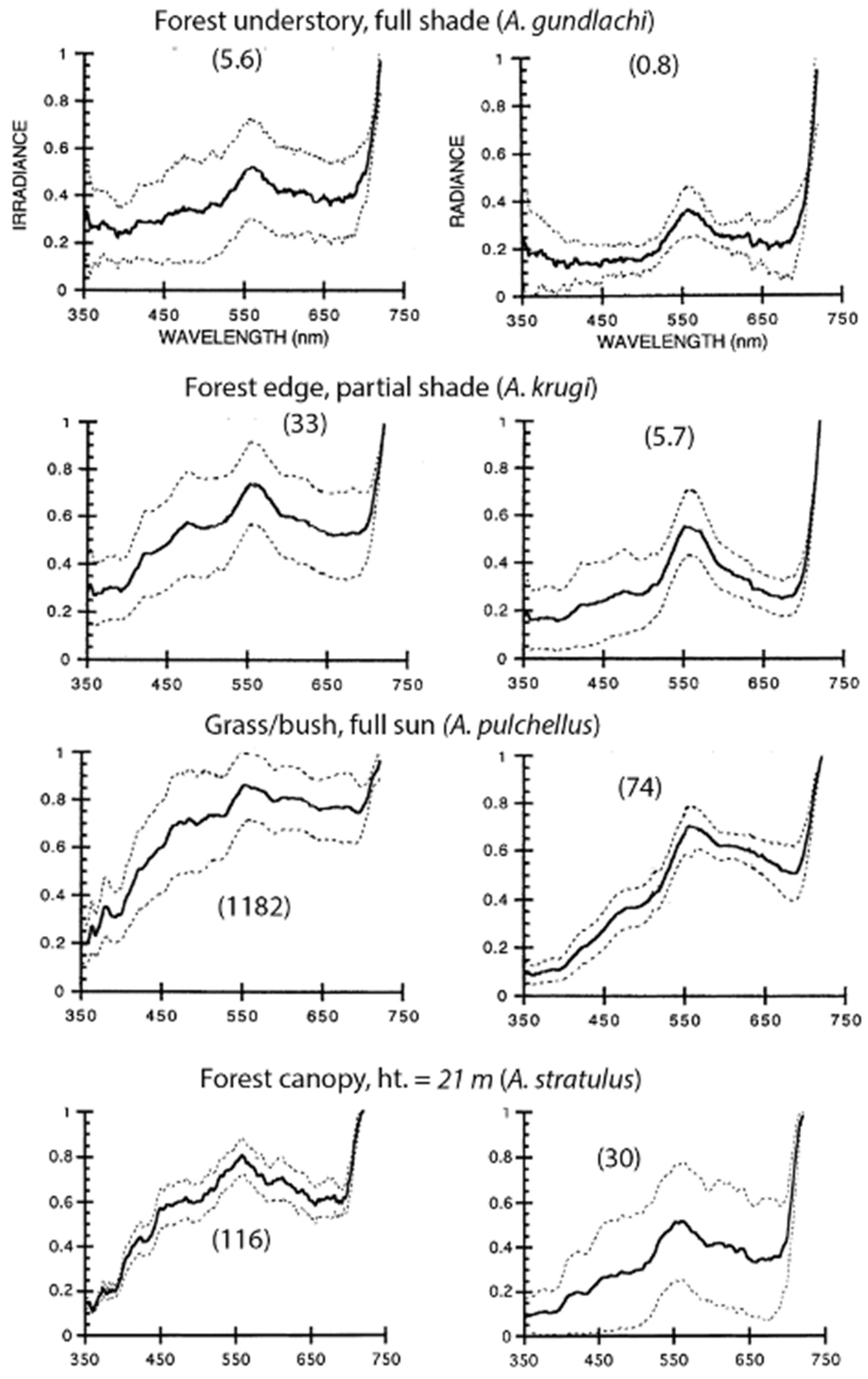
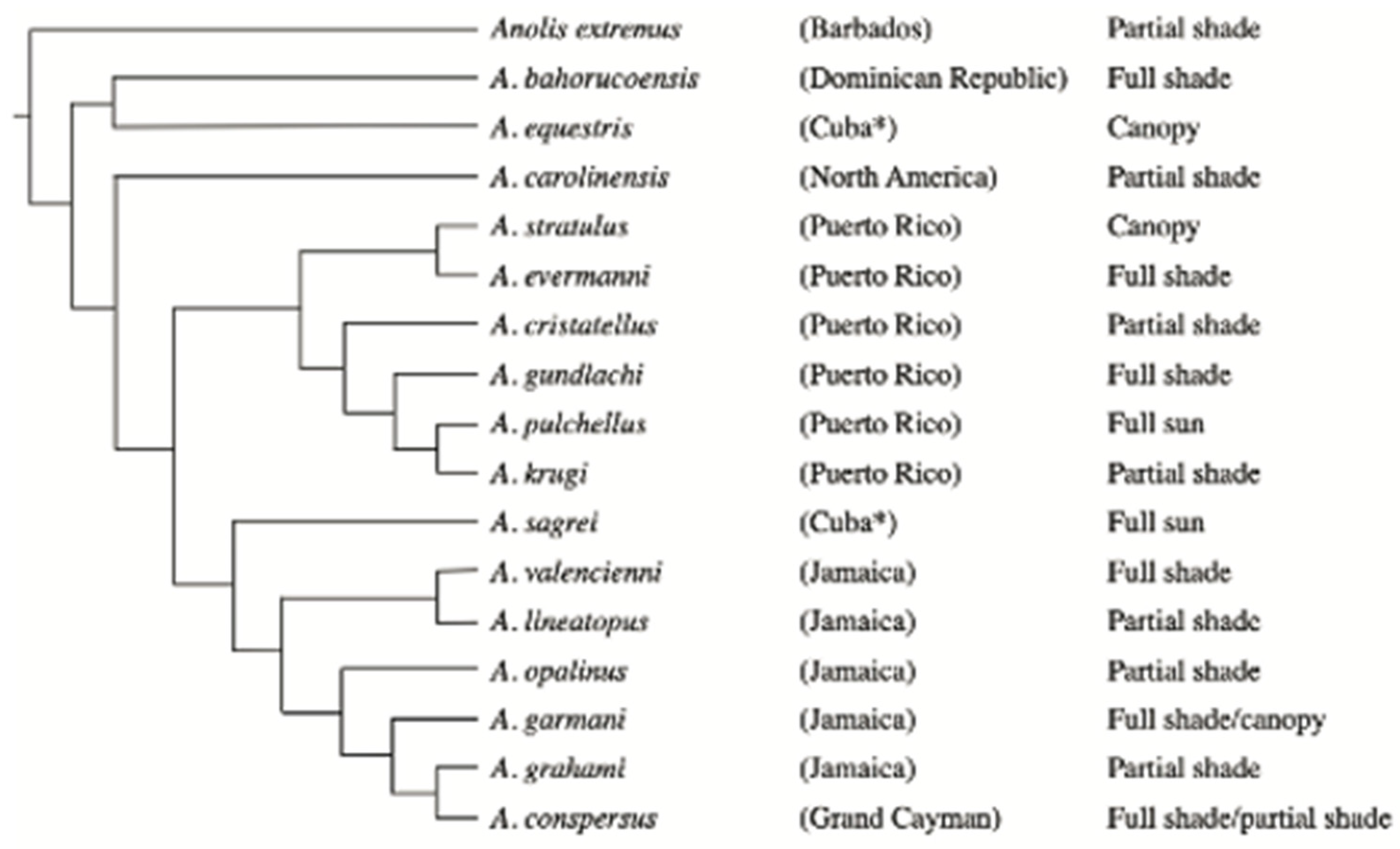
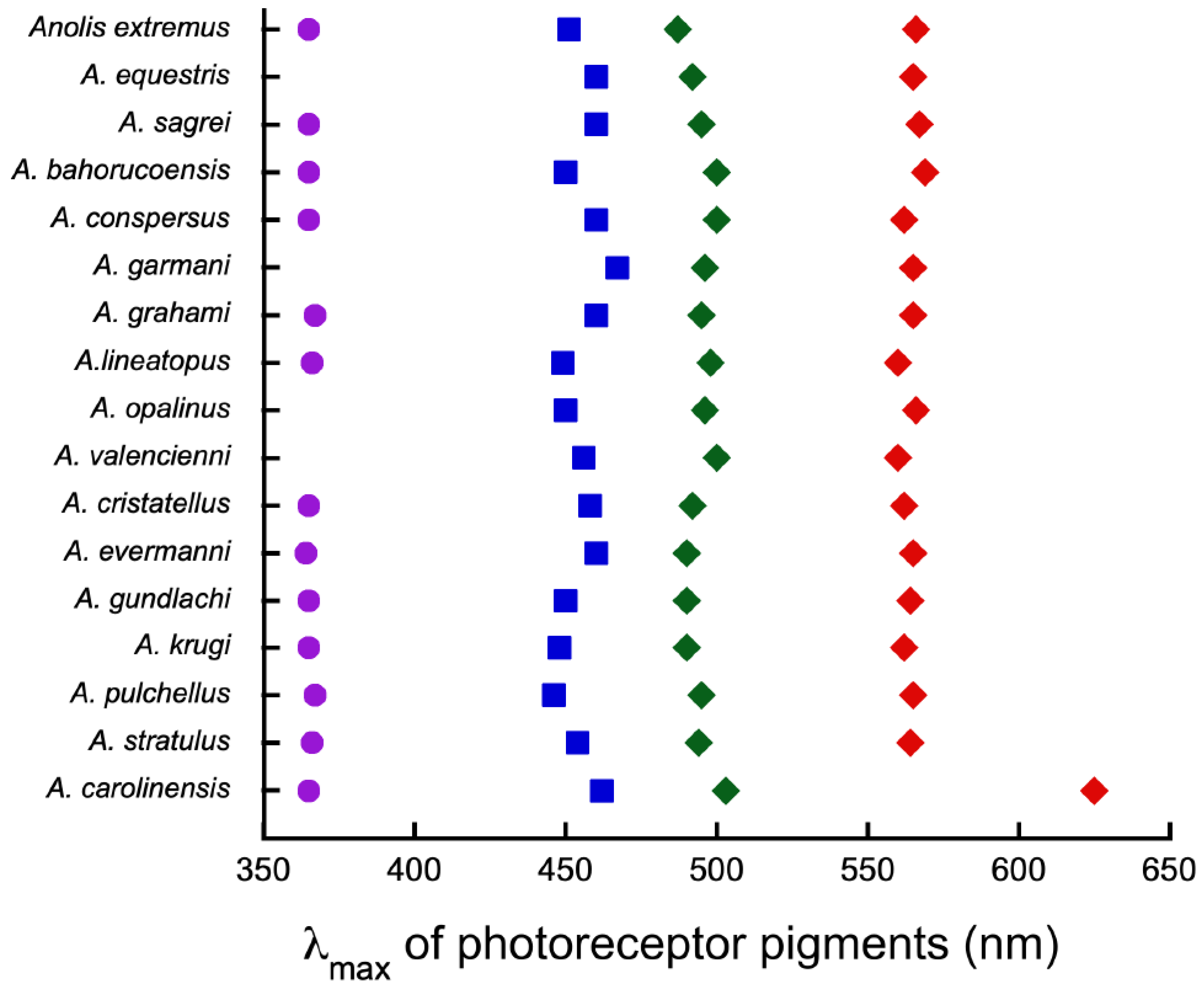
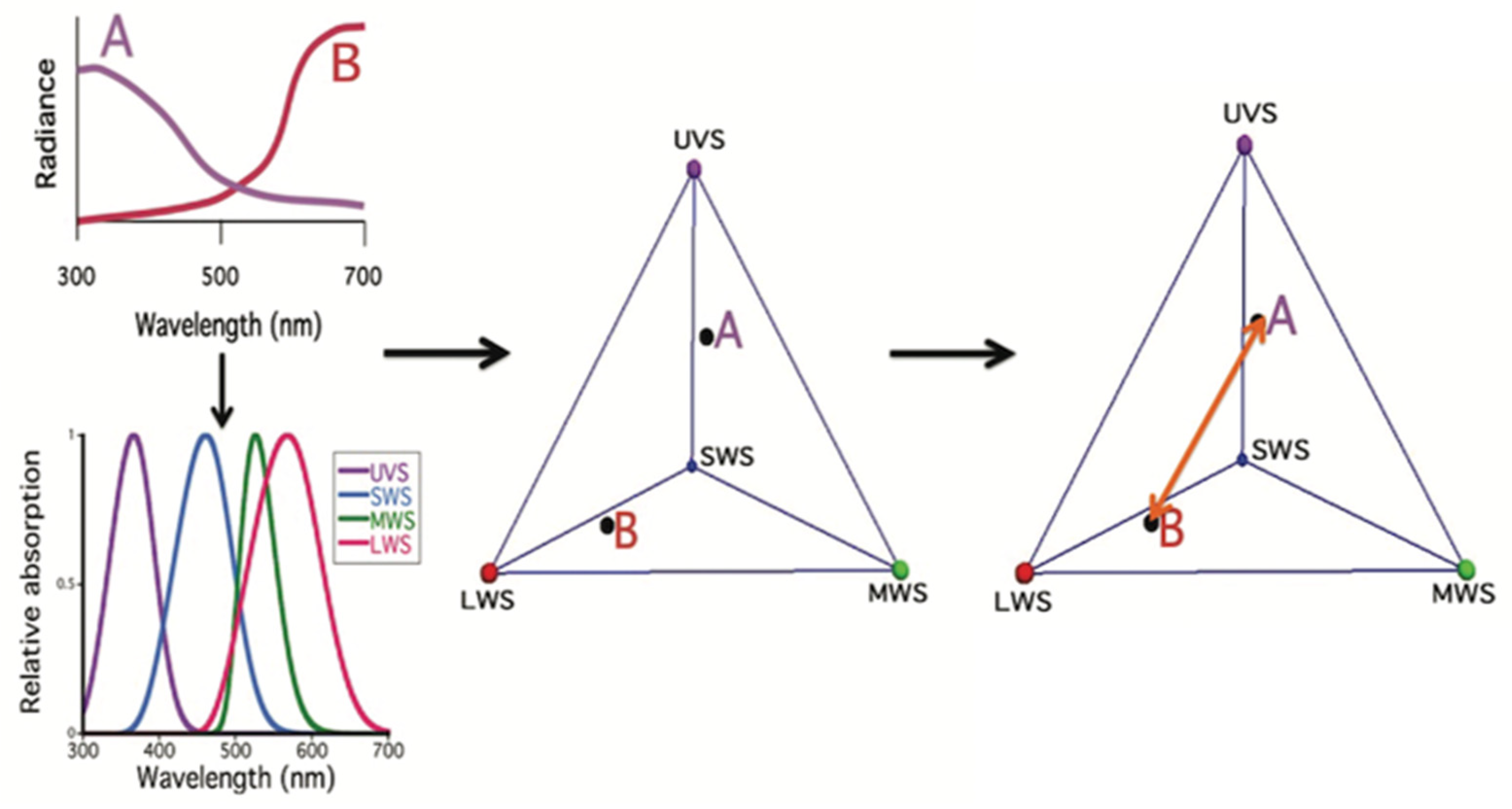
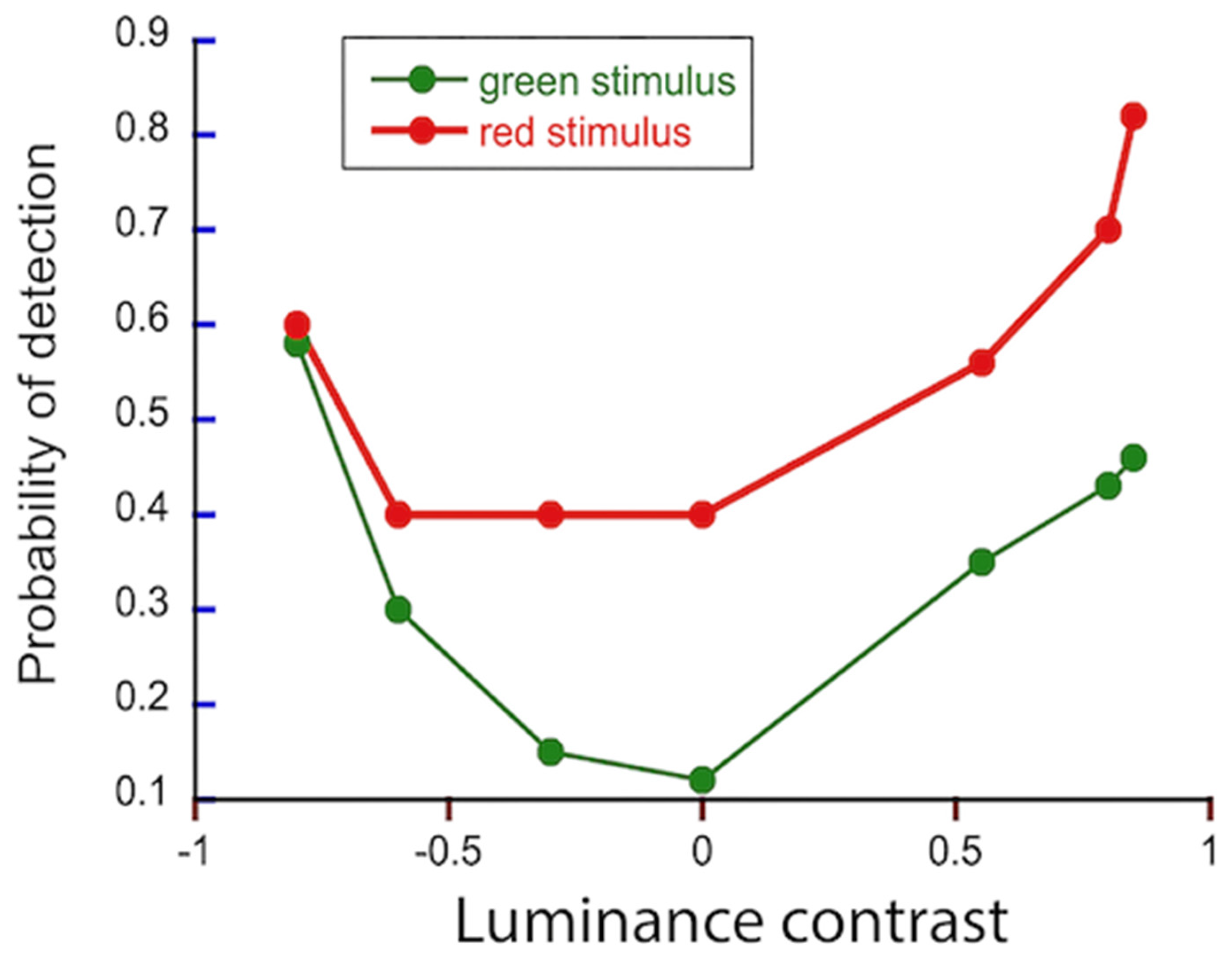
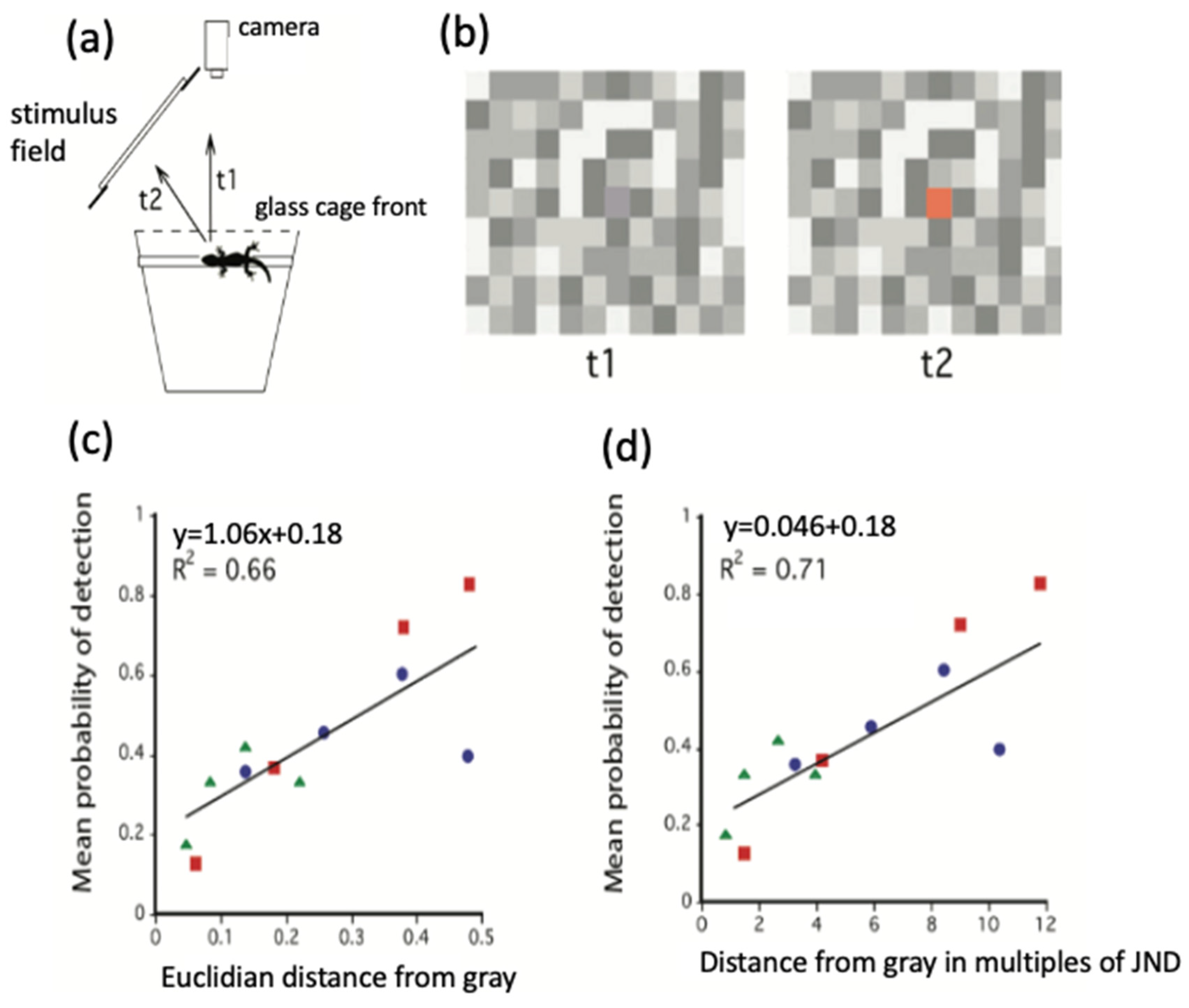
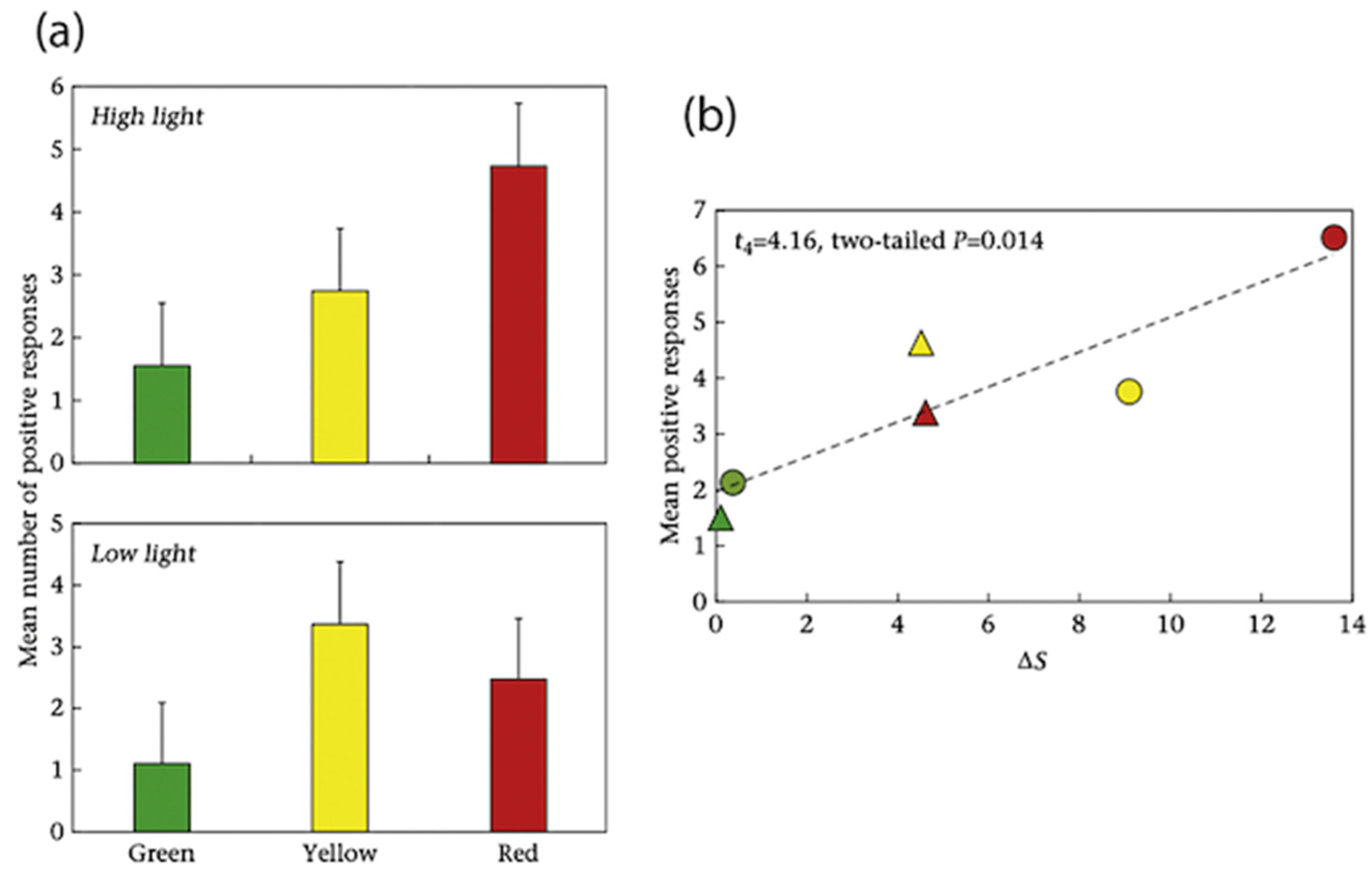
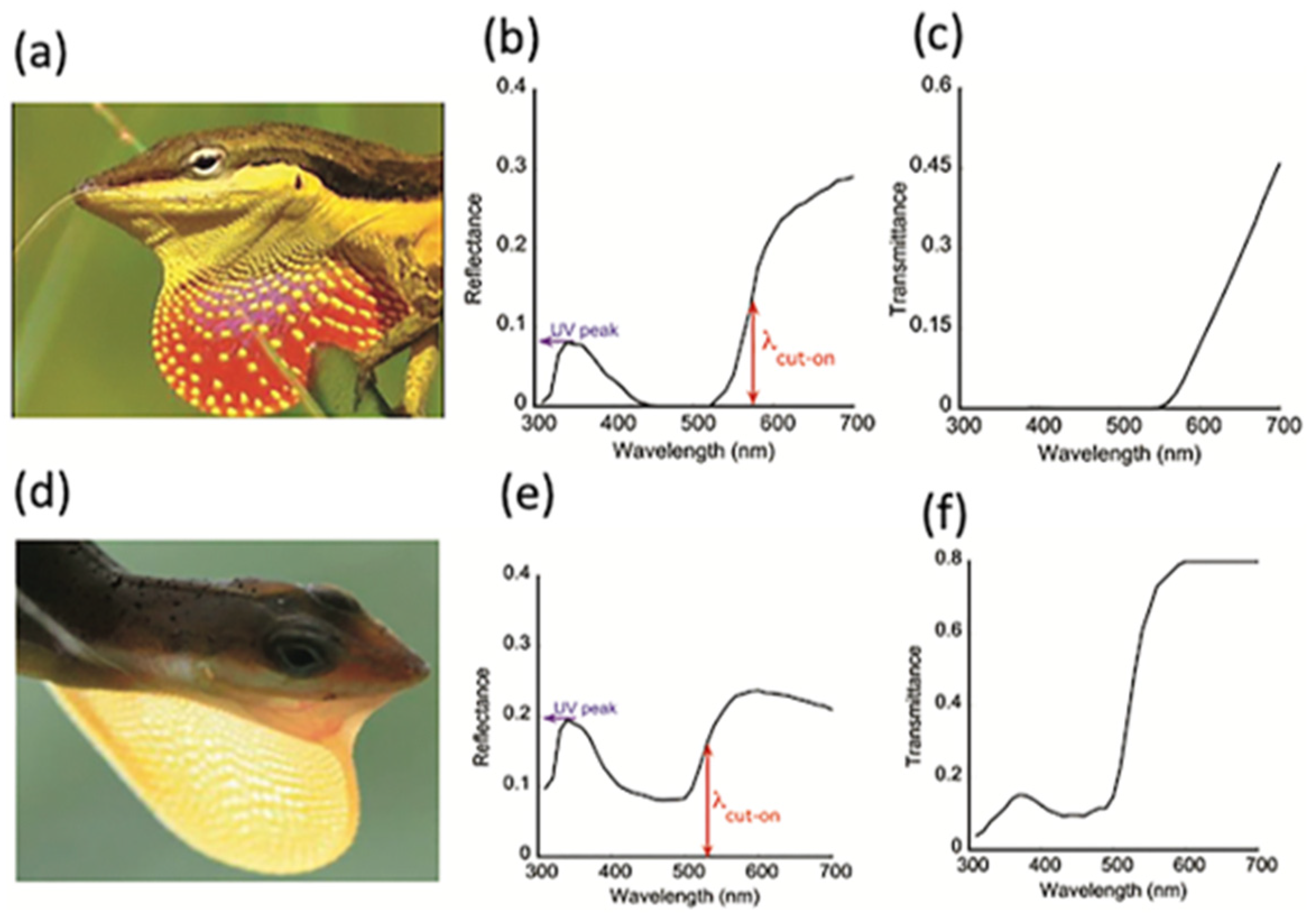
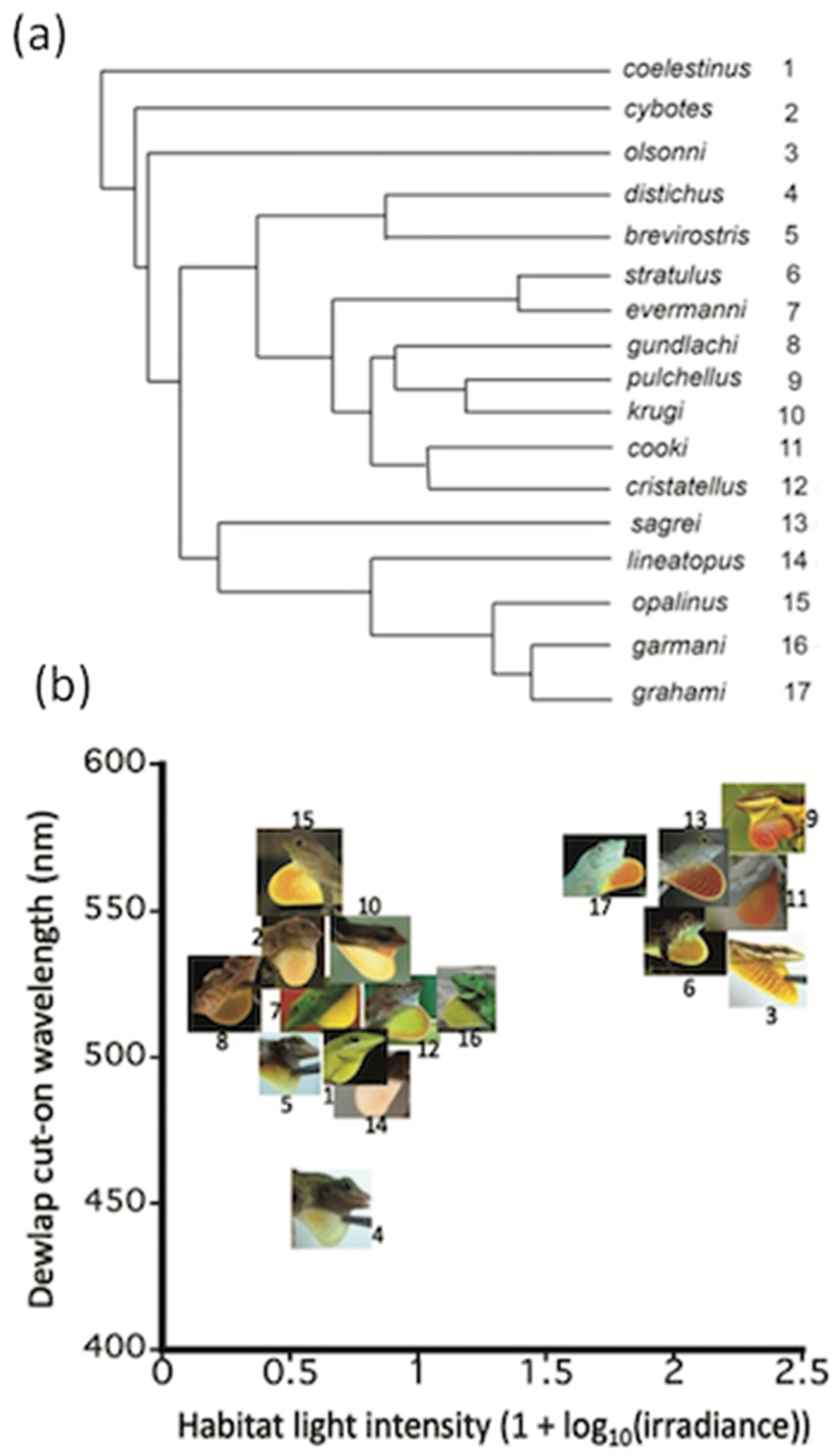
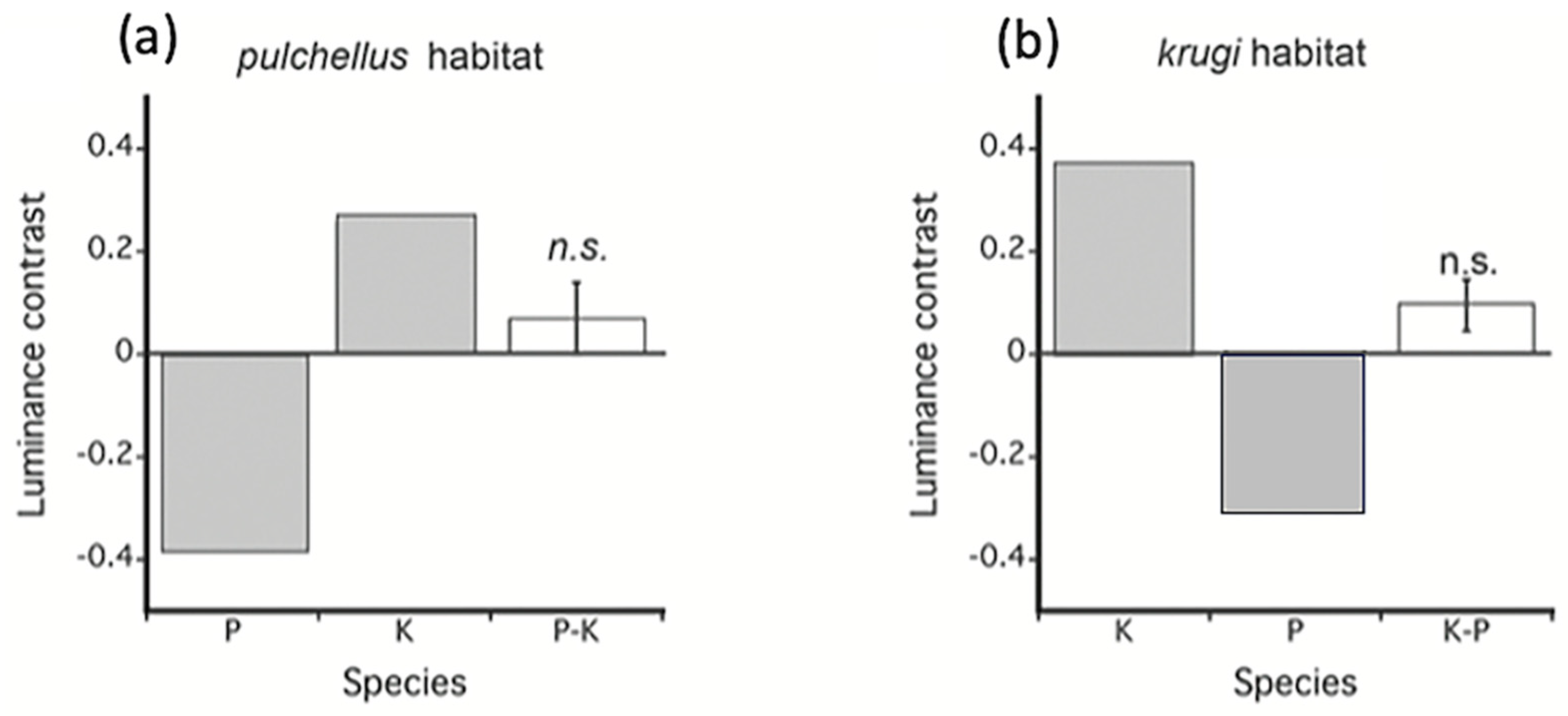
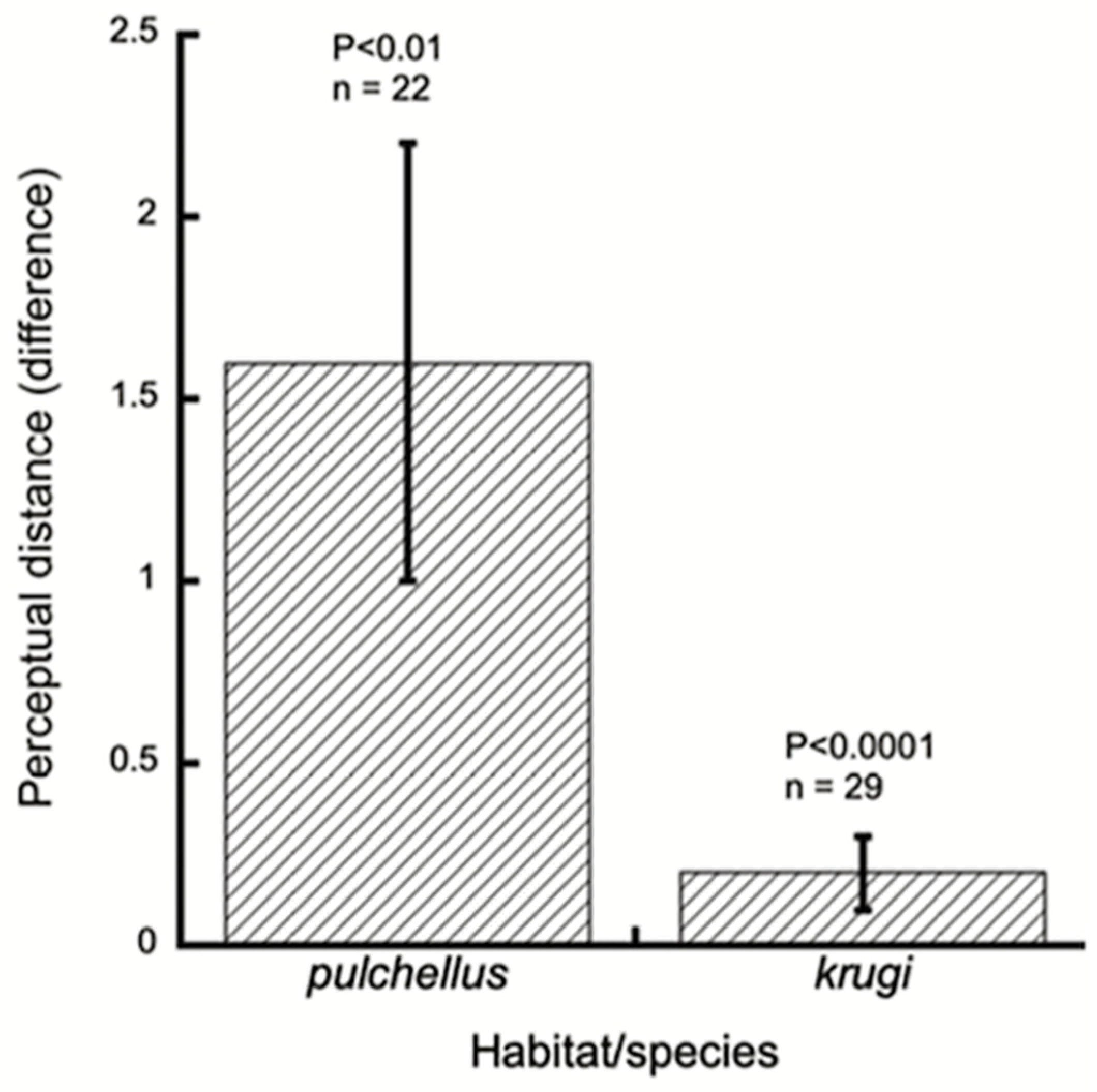
Visual ecology is the study of how animal visual systems are related to the light, color, and motion of the world around them. Anolis is a species-rich genus of small lizards that rely extensively on vision. Different species occupy habitats that differ greatly in vegetation structure. These habitats differ little in color properties, but vary greatly in shade levels and in total light intensity. Anolis possess relatively large eyes that can perceive fine spatial detail. Most species share the same color-vision capabilities. They have excellent color vision that includes the ability to perceive ultraviolet light. They communicate using a colorful, expandable throat fan called the dewlap. Dewlap colors of different species vary with habitat. In brightly lit habitats, red stands out most strongly against the background of green vegetation, and most species have red dewlaps. In darker, more shaded habitats, yellow dewlaps are more visible against the green background and are most common. Anolis also respond strongly to certain visual motion patterns. They have evolved visual displays that utilize highly visible movements to attract the attention of other lizards. With their rich species diversity and high-quality visual systems, they have become an important model system for studies of vertebrate vision.
Abstract
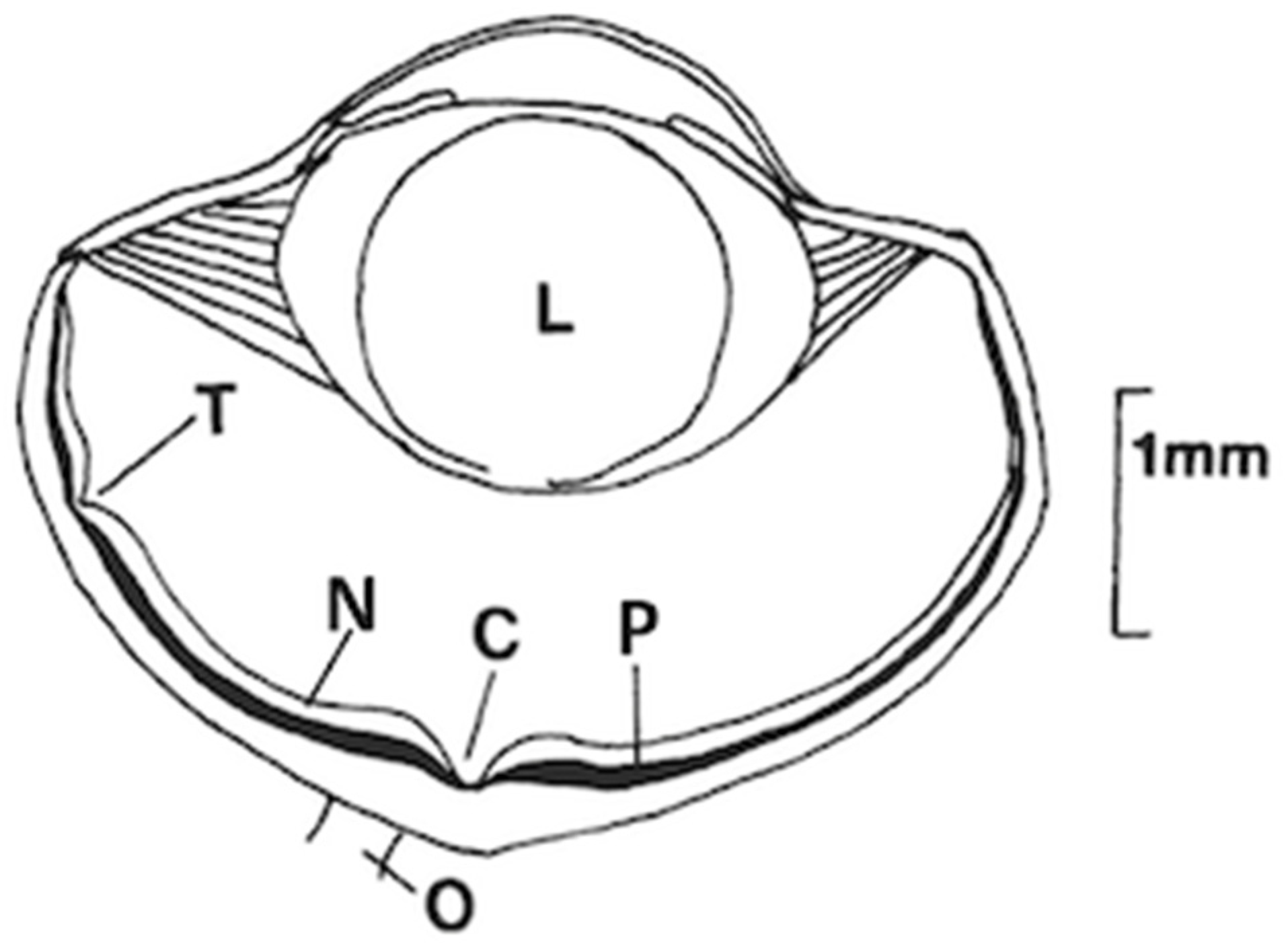
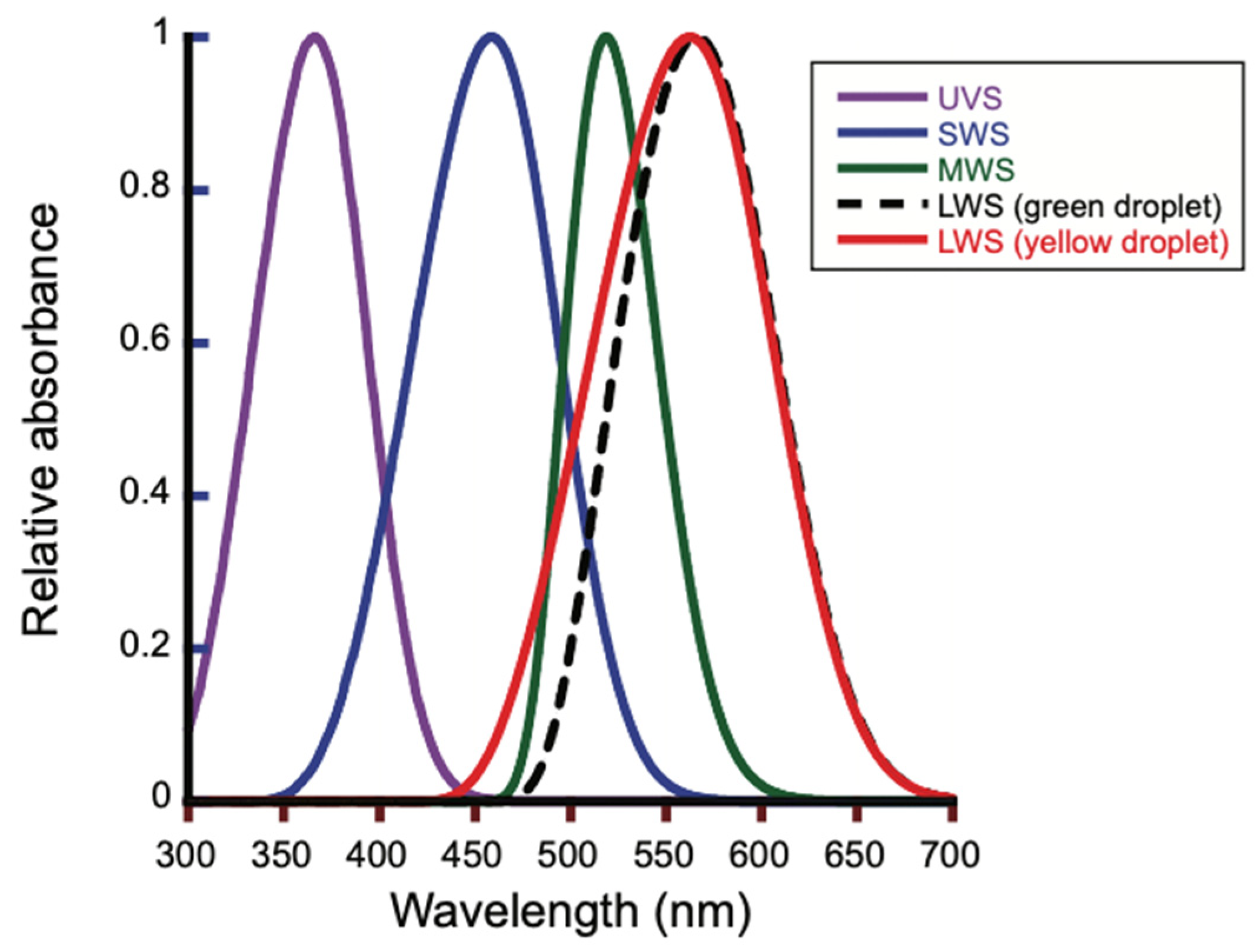
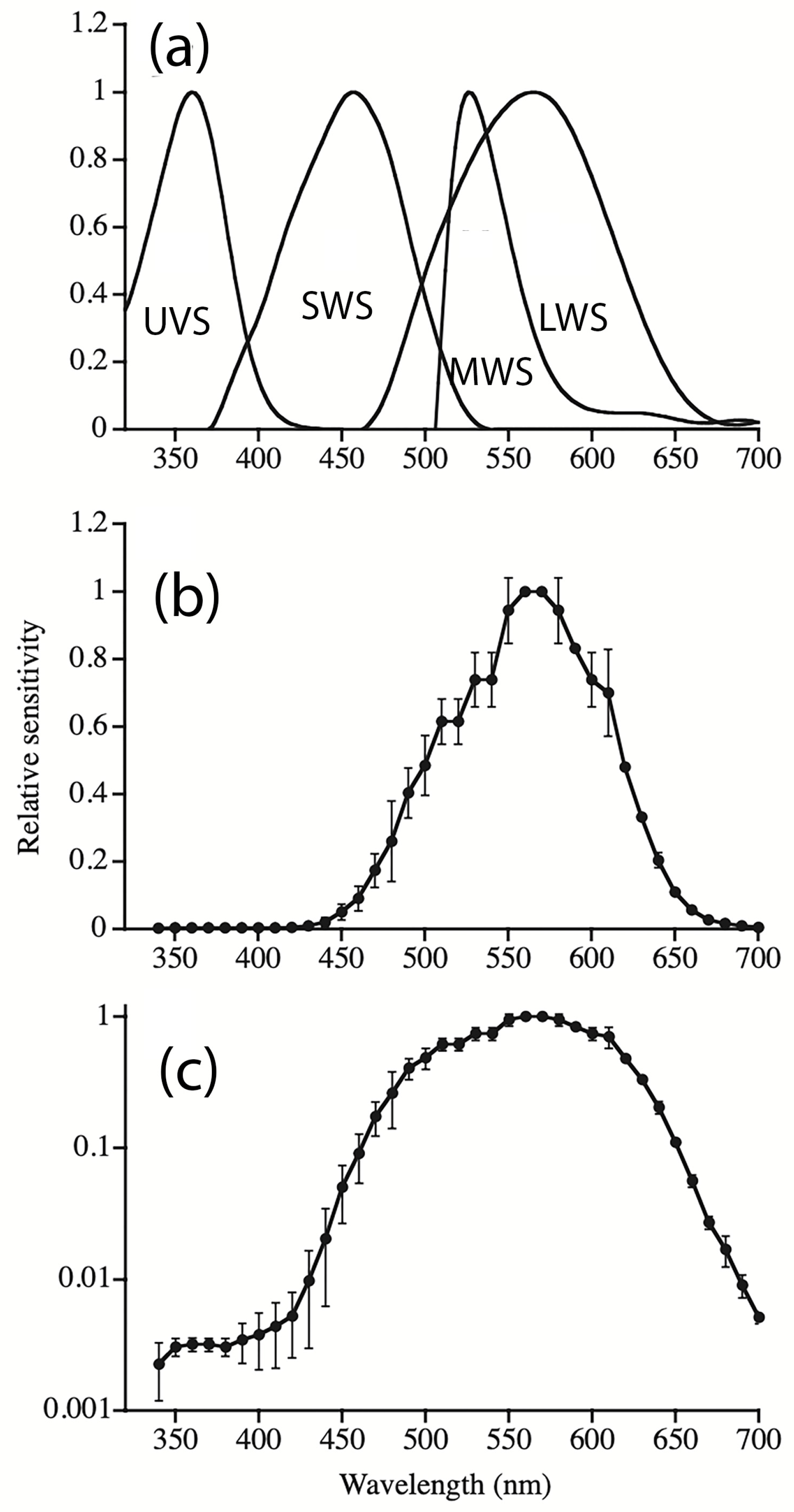
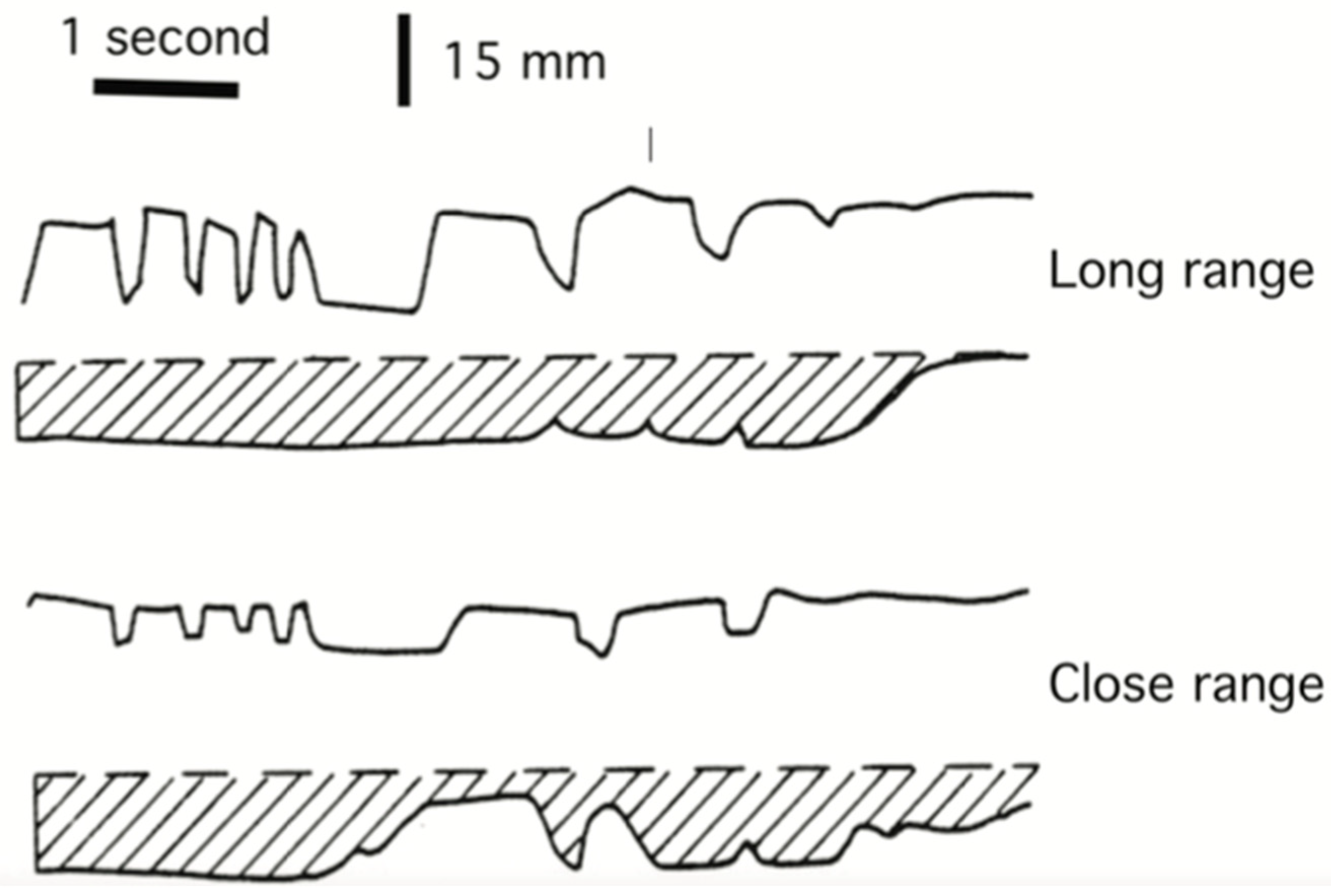
Visual ecology explores how animal visual systems are related to light environments and important visual tasks. Anolis is a species-rich genus of small lizards that rely extensively on vision. Different species occupy habitats with different vegetation structure. The spectral properties of the habitats are similar, but total light intensities vary widely. They possess laterally positioned eyes with broad monocular visual fields, and a small region of binocular overlap toward the front. They possess a high-resolution central fovea associated with analysis of important images. There is a second, smaller, temporal fovea located where the visual fields of the two eyes overlap, which is associated with distance perception during prey capture. Color and brightness vision depends on four classes of single cones with different spectral absorbance curves, including one sensitive to the ultraviolet and a set of double cones. Most species studied possess similar sets of cones. Cone responses are modified by oil droplet filters, which are more variable among species and may play some role in adaptations to habitat light. Anoles communicate with a colorful expandable throat fan called the dewlap. Dewlap visibility depends on contrast with the natural background. Red dewlaps are most visible in bright, unshaded habitats. Yellow dewlaps are most visible in darker, shaded habitats. Visual displays include motion patterns of the head, body, and dewlap. The most highly visible movements are rapid up-and-down, start-and-stop patterns. These often occur at the beginning of visual displays and draw the attention of conspecifics to the displaying animal. Most Anolis species share similar visual-system properties. Differences in light environments interact with visual-system responses to influence the physical properties of communication displays and other visually-based behaviors.
Keywords:
Anolis; dewlap; vision; retina; color; fovea; evolution; visual ecology; communication