Integrating Conservation and Community Engagement in Free-Roaming Cat Management: A Case Study from a Natura 2000 Protected Area
by
 , and
, and
Octavio P. Luzardo
1,2,*, 
Andrea Hansen
3, 
Beatriz Martín-Cruz
1,
Ana Macías-Montes
1 and
María del Mar Travieso-Aja
1 1
Research Institute of Biomedical and Health Sciences (IUIBS), University of Las Palmas de Gran Canaria, Paseo Blas Cabrera “Físico” s/n, 35016 Las Palmas de Gran Canaria, Spain
2
Spanish Biomedical Research Center in Physiopathology of Obesity and Nutrition (CIBERObn), 28029 Madrid, Spain
3
Association for Respect and Commitment to Animals and Nature (ARYCAN), 35217 Valsequillo de Gran Canaria, Spain
*
Author to whom correspondence should be addressed.
Animals 2025, 15(3), 429; https://doi.org/10.3390/ani15030429
Submission received: 12 January 2025
/
Revised: 1 February 2025
/
Accepted: 2 February 2025
/
Published: 4 February 2025
/
Corrected: 6 June 2025
(This article belongs to the Section Animal Welfare)
Simple Summary
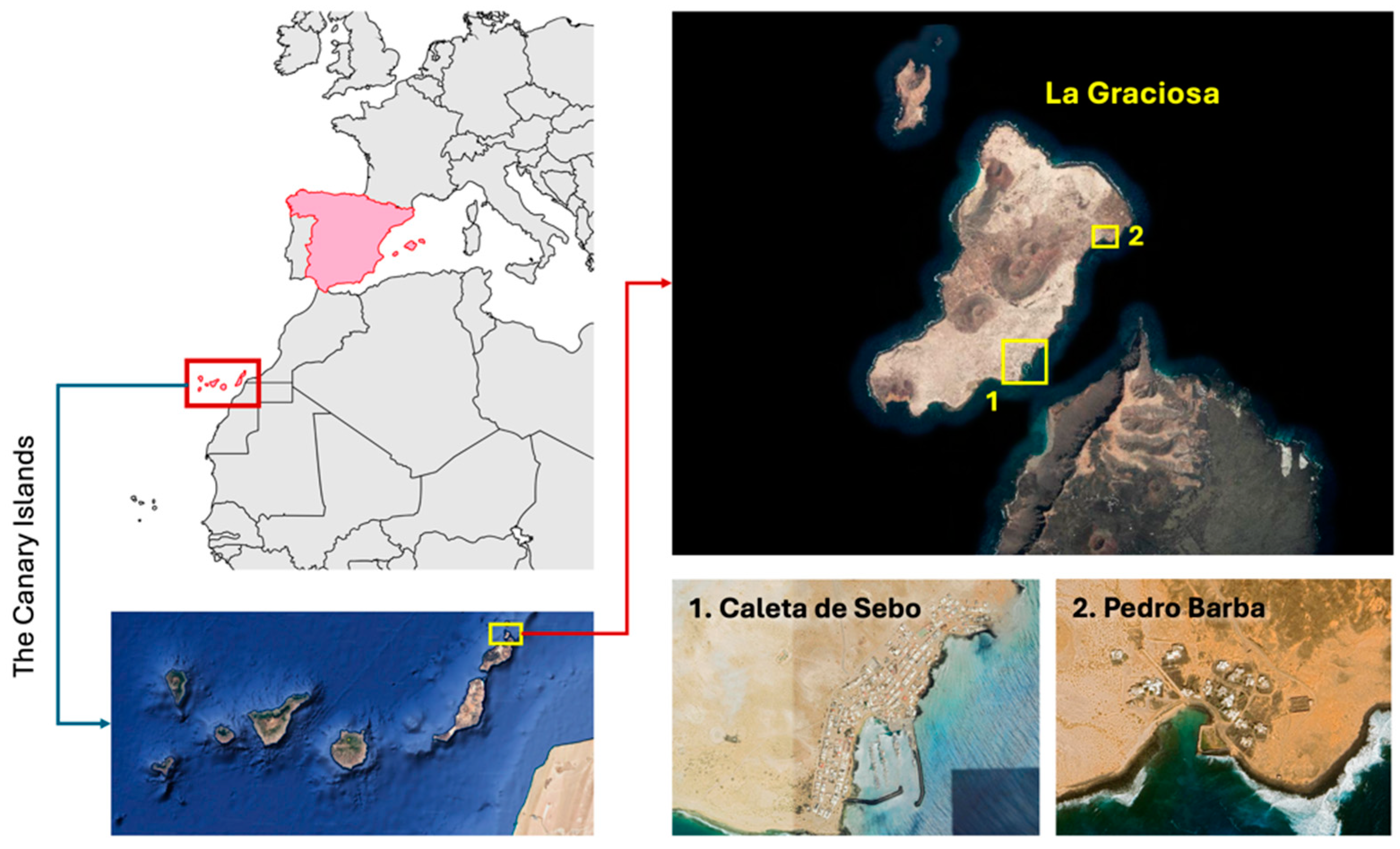
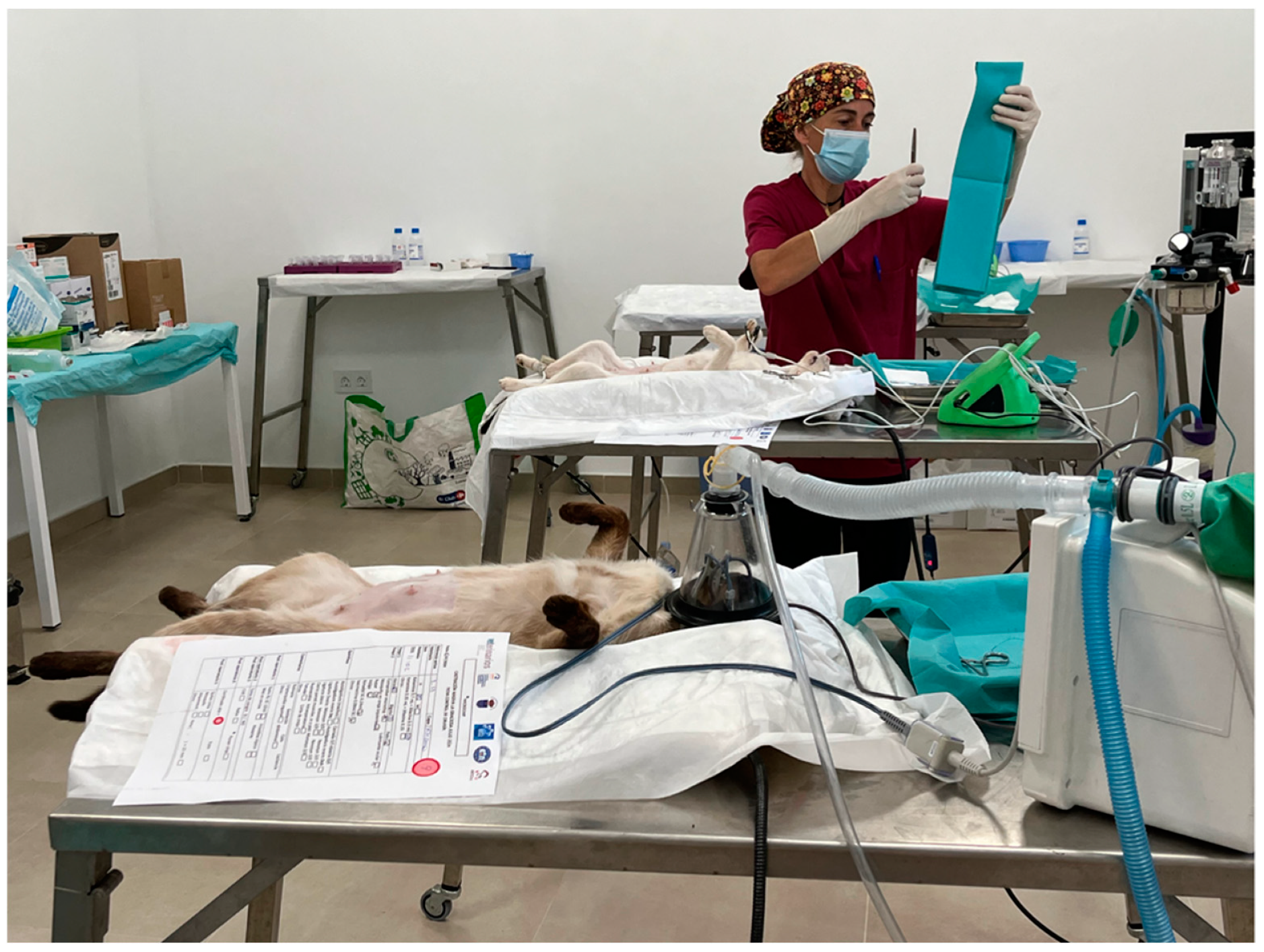
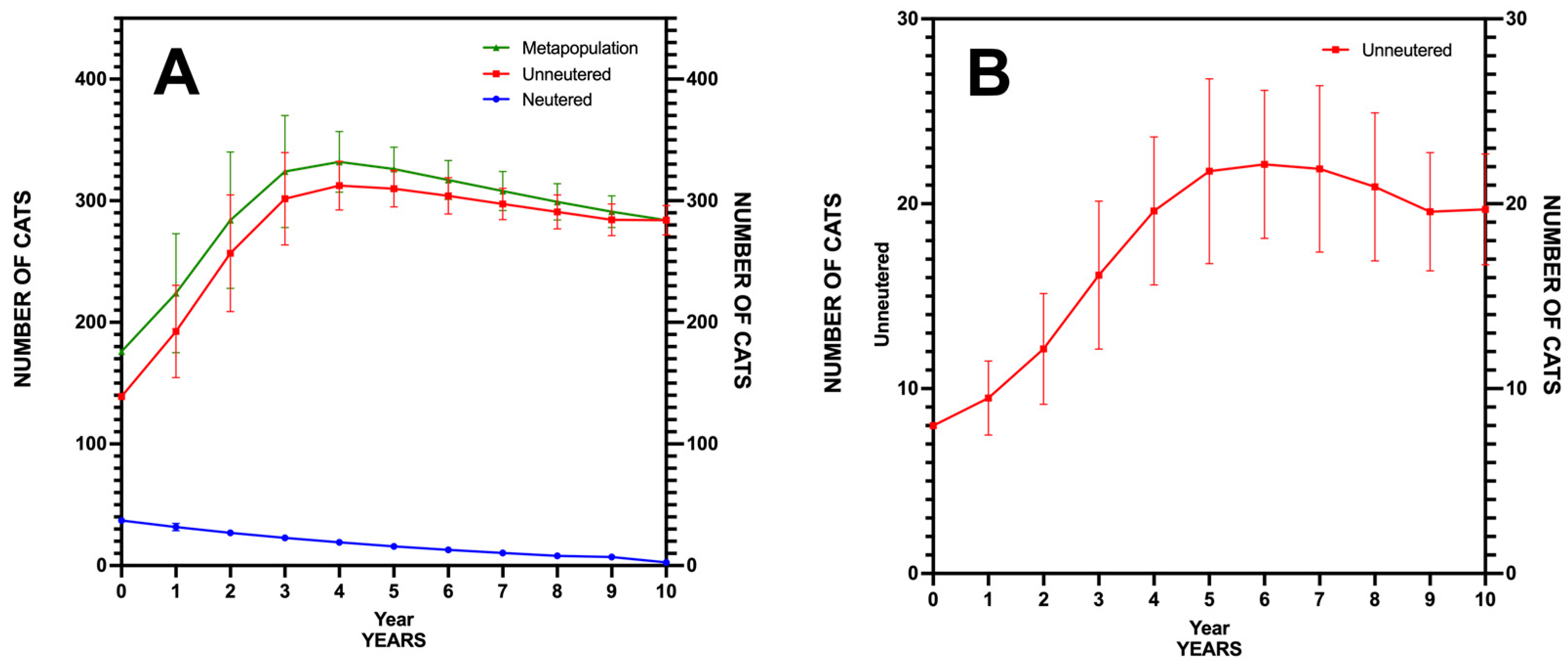
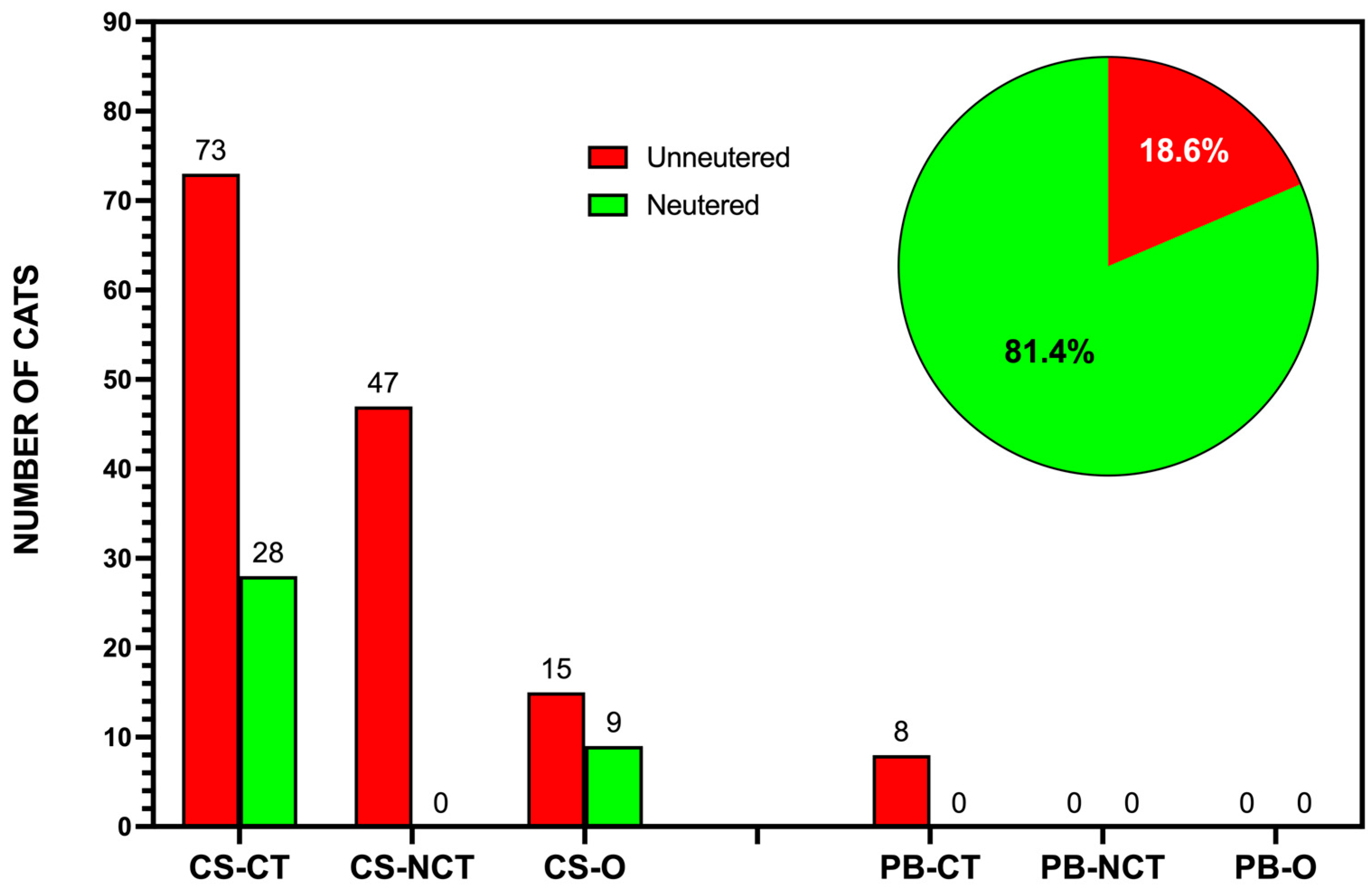
This study evaluates the effectiveness of a Trap–Neuter–Return (TNR) program implemented in La Graciosa, a Natura 2000 protected area in the Canary Islands, to manage its free-roaming cat population. The campaign achieved an 81.4% sterilization rate in urban areas within three days, significantly reducing the cats’ reproductive potential and contributing to an alleviation of predation pressures on vulnerable species. Active community involvement played a critical role in the campaign’s success, yet administrative restrictions and opposition from conservation groups limited its scope. A Population Viability Analysis (PVA) revealed that while high sterilization rates can reduce populations, achieving the necessary 93–95% threshold is essential for long-term success. The study underscores the need for adaptive, context-specific management strategies that integrate TNR with complementary measures like adoption or relocation and highlights the challenges posed by regulatory and societal factors in balancing biodiversity conservation with humane management practices.
Abstract
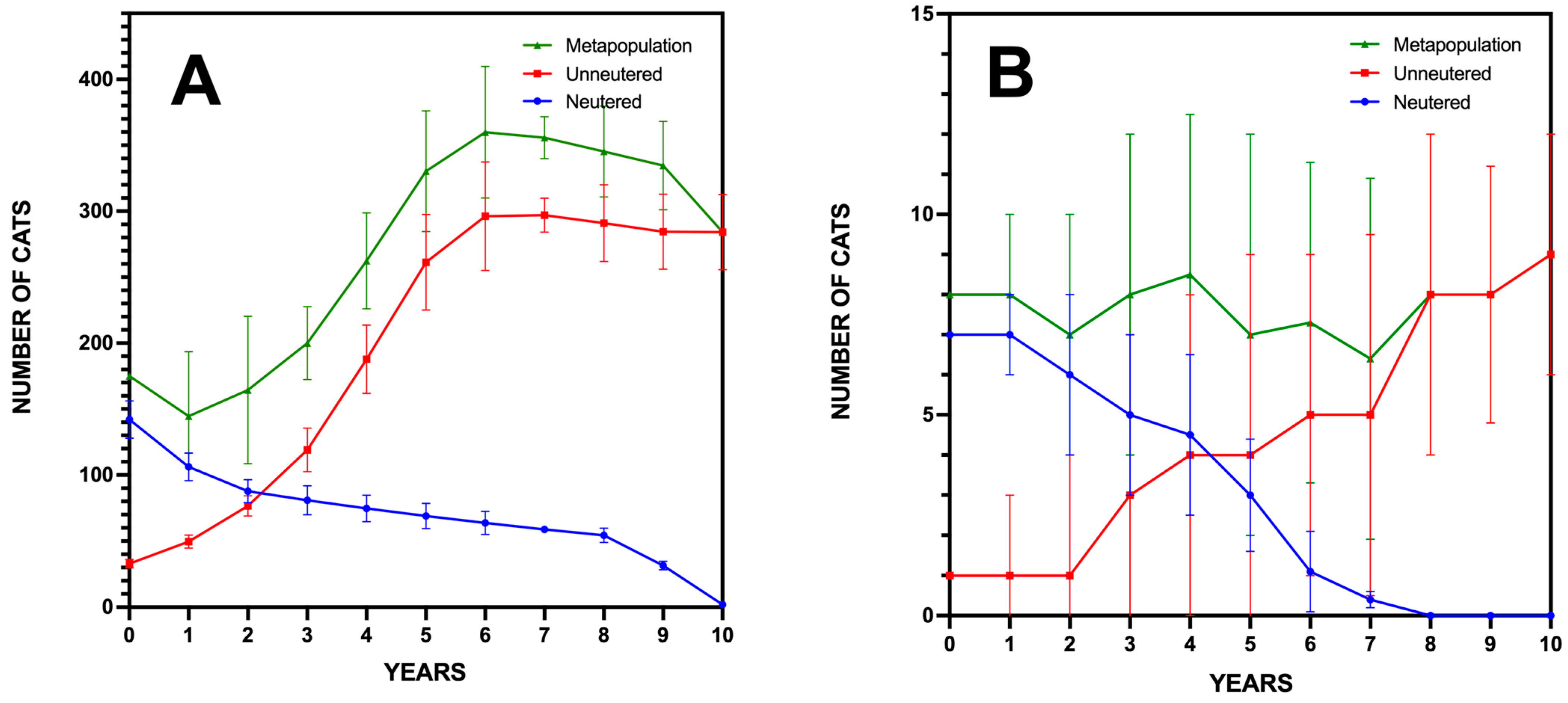
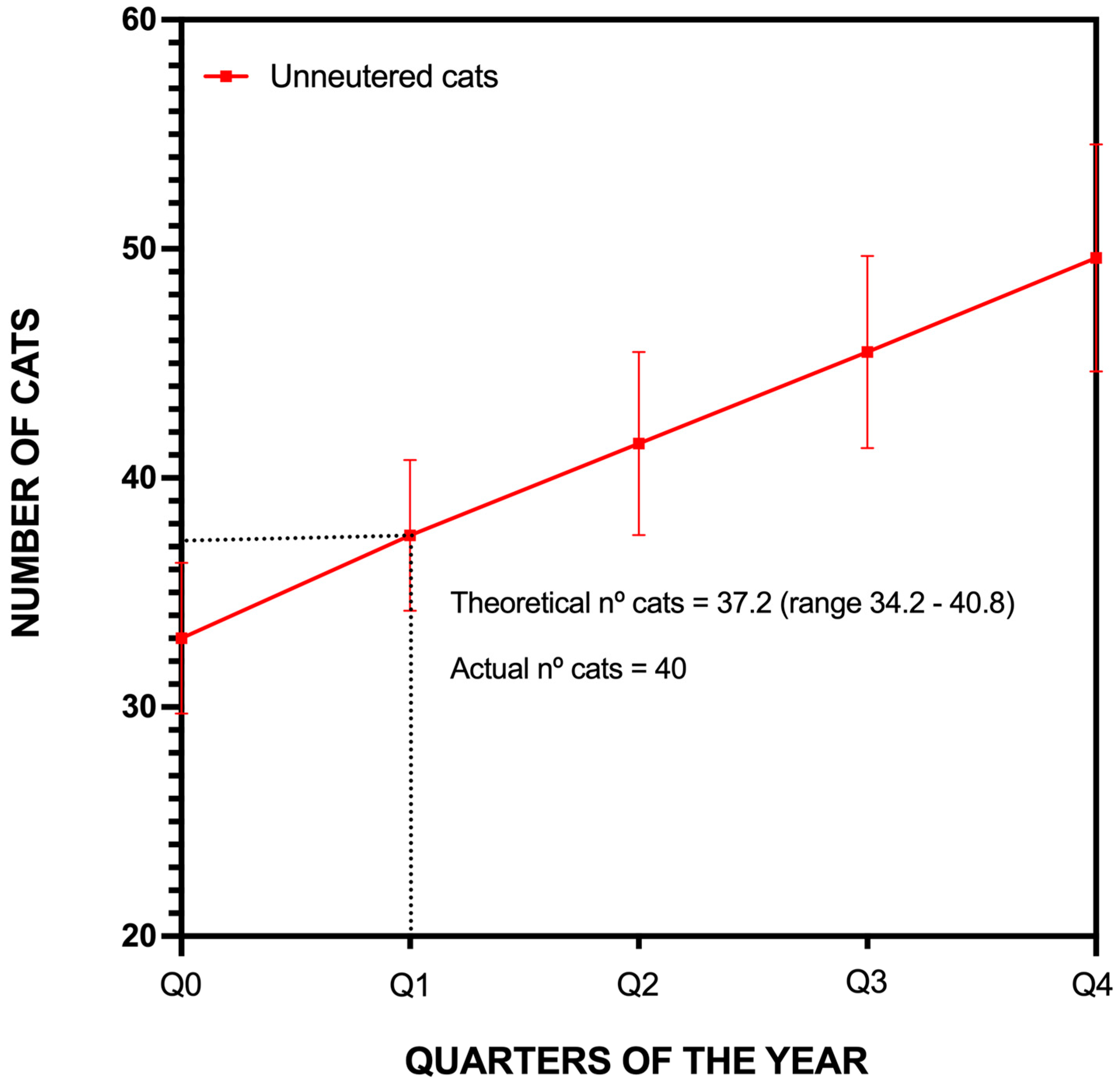
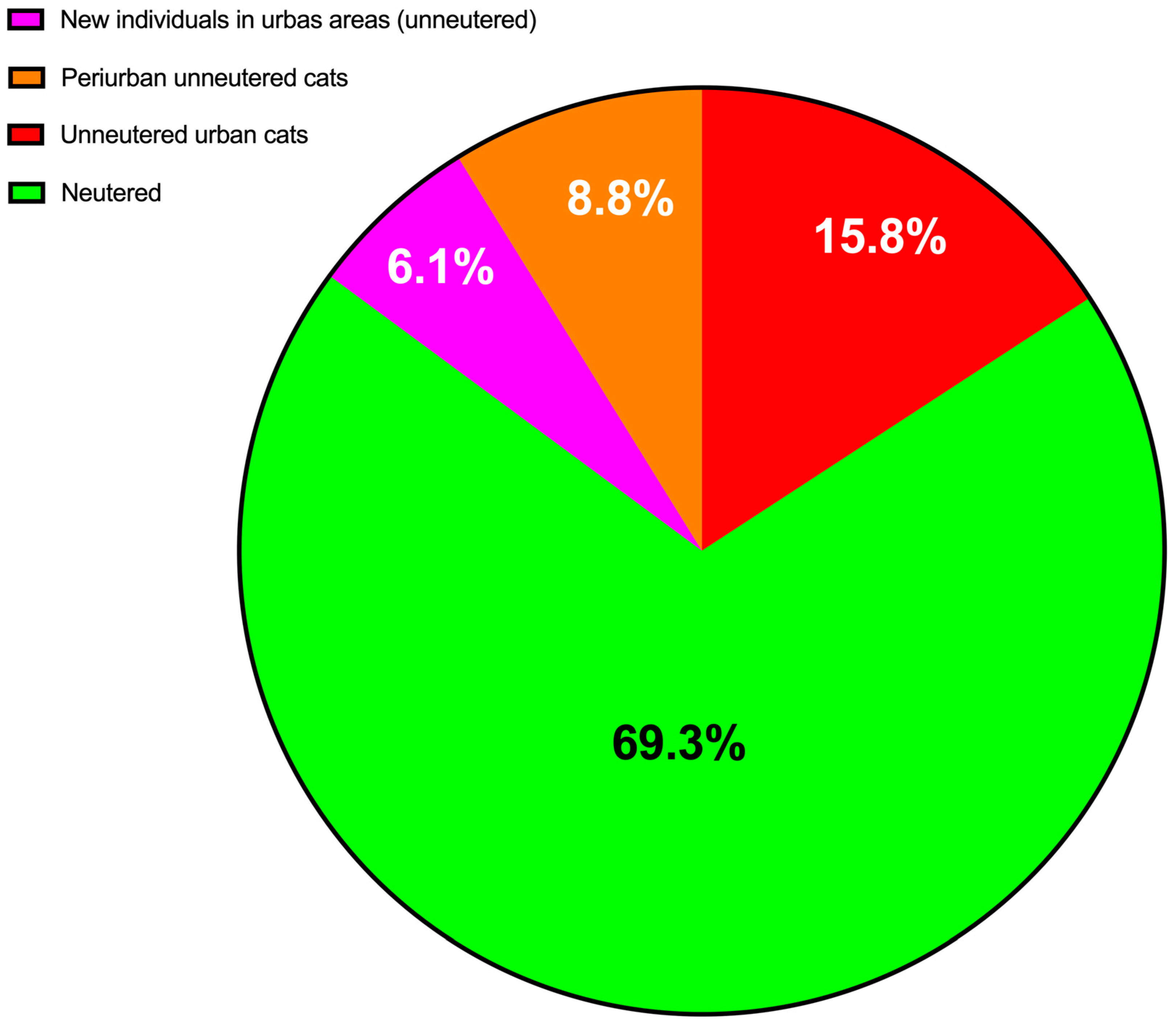
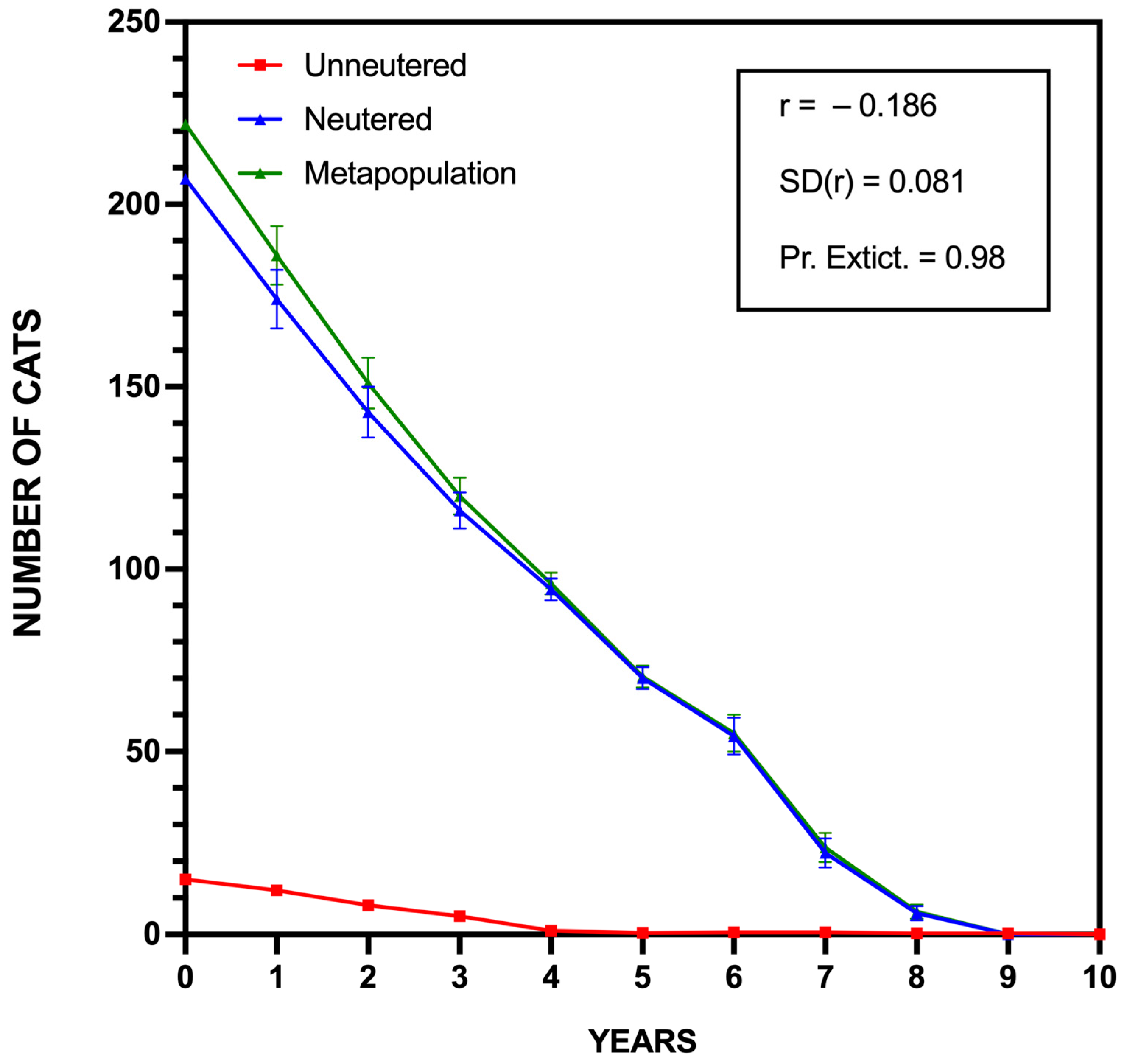
La Graciosa, a Natura 2000 site in the Canary Islands, faces substantial conservation challenges, including a large free-roaming cat population that threatens the island’s native biodiversity. In July 2024, a Trap–Neuter–Return (TNR) campaign achieved an 81.4% sterilization rate within urban areas, highlighting TNR’s short-term effectiveness in reducing reproductive potential and, consequently, mitigating predation pressures primarily through the prevention of new litters and reduced reproductive activity in cats. The campaign’s success relied heavily on the active involvement of the local community, who assisted with identifying, trapping, and monitoring free-roaming cats, thereby facilitating a high sterilization rate. However, administrative restrictions hindered access to peri-urban zones, leaving essential population clusters unsterilized and limiting the campaign’s overall scope. Additionally, strong opposition from conservation groups, amplified by extensive media coverage, halted the project prematurely, reducing the effective sterilization rate to 69.3% within three months. Population Viability Analysis (PVA) suggests that achieving high sterilization rates could lead to population reduction over time; however, the inability to access all population segments and to reach the ideal 93–95% sterilization threshold limits TNR’s potential as a long-term standalone solution. Our findings underscore the need for adaptive, context-specific management frameworks in ecologically sensitive areas that integrate TNR with complementary measures, consider regulatory barriers, and value community involvement. This case study provides crucial insights for policymakers and conservationists seeking to balance biodiversity conservation with humane management practices in protected areas.