First Detection and Genetic Characterization of Felis catus Papillomavirus Type 11, the First Treisetapapillomavirus Type to Infect Domestic Cats
by
 , , , and
John S. Munday
1,* ,
,
Adrienne F. French
2,
Louisa Broughton
3,
Xiaoxiao Lin
4,
Sarah D. Bond
1,
Simona Kraberger
5 and
Matthew A. Knox
6 1
Pathobiology, School of Veterinary Science, Massey University, Palmerston North 4410, New Zealand
2
SVS Laboratories, Hamilton 3200, New Zealand
3
Horse and Cat Vet, Carterton 5713, New Zealand
4
Massey Genome Service, Massey University, Palmerston North 4410, New Zealand
5
The Biodesign Center for Fundamental and Applied Microbiomics, Arizona State University, Tempe, AZ 85287, USA
6
Molecular Epidemiology Laboratory, School of Veterinary Science, Massey University, Palmerston North 4410, New Zealand
*
Author to whom correspondence should be addressed.
Animals 2025, 15(10), 1416; https://doi.org/10.3390/ani15101416
Submission received: 11 April 2025
/
Revised: 30 April 2025
/
Accepted: 13 May 2025
/
Published: 14 May 2025
(This article belongs to the Section Companion Animals)
Simple Summary
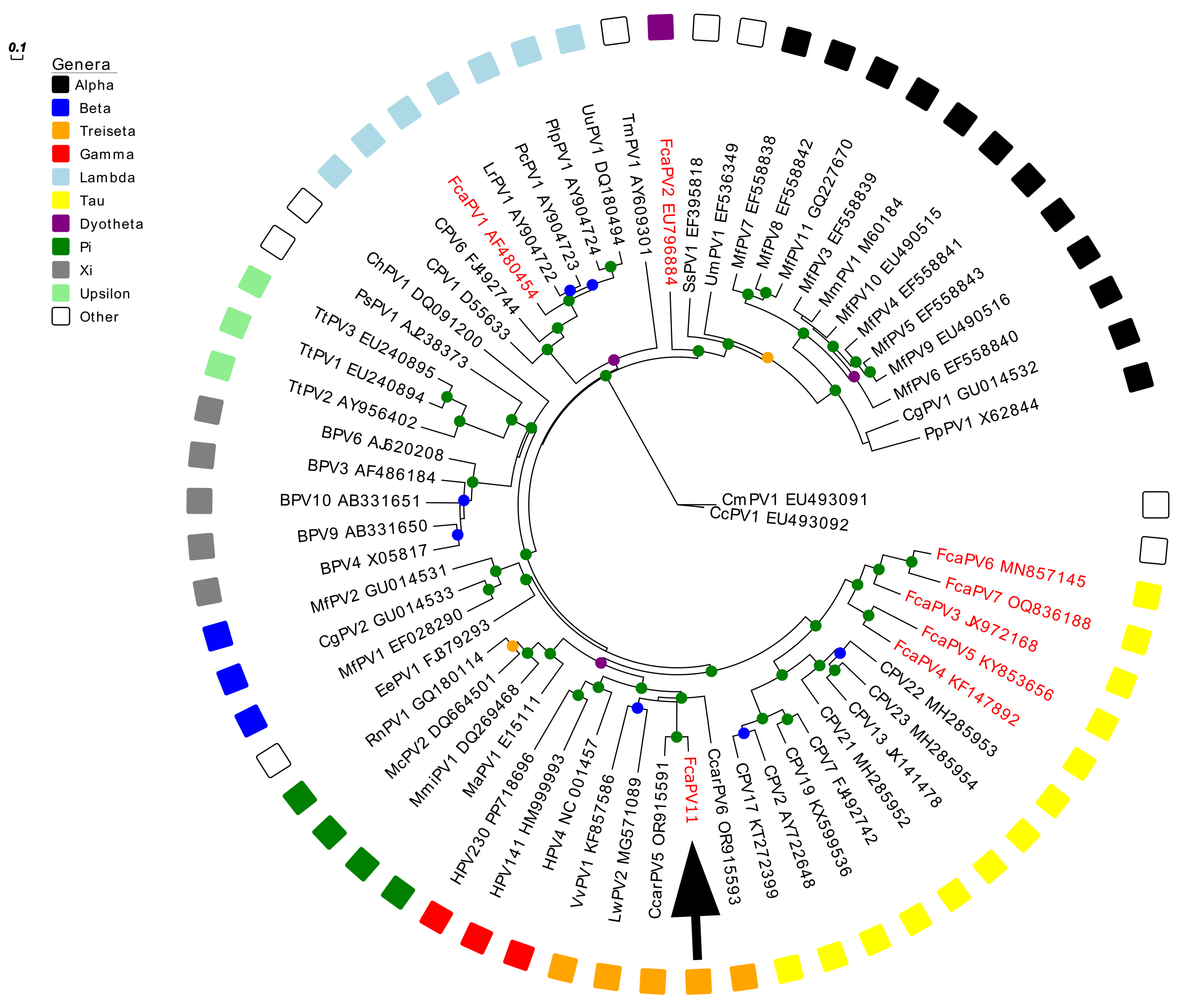
A novel papillomavirus type was amplified and fully sequenced from a domestic cat. This is the 11th papillomavirus type amplified from domestic cats, and the papillomavirus was designated Felis catus papillomavirus type 11 (FcaPV11). By comparing the genetic sequence of FcaPV11 to that of other papillomaviruses, it was determined that FcaPV11 is most likely to be classified within the Treisetapapillomavirus genus. Papillomaviruses in the genus have previously been identified in a red fox, a Weddell seal, and a caracal, but this is the first time that a Treisetapapillomavirus has been detected in a domestic species. The novel papillomavirus was detected after unusual papillomavirus-induced cell changes were observed in a sample of skin. While there was no evidence that FcaPV11 caused skin disease in the infected cat, the presence of cell changes indicates the papillomavirus can alter normal cell regulation and is therefore a potential cause of skin disease in cats. FcaPV11 was not detected in additional samples of skin from domestic cats.
Abstract
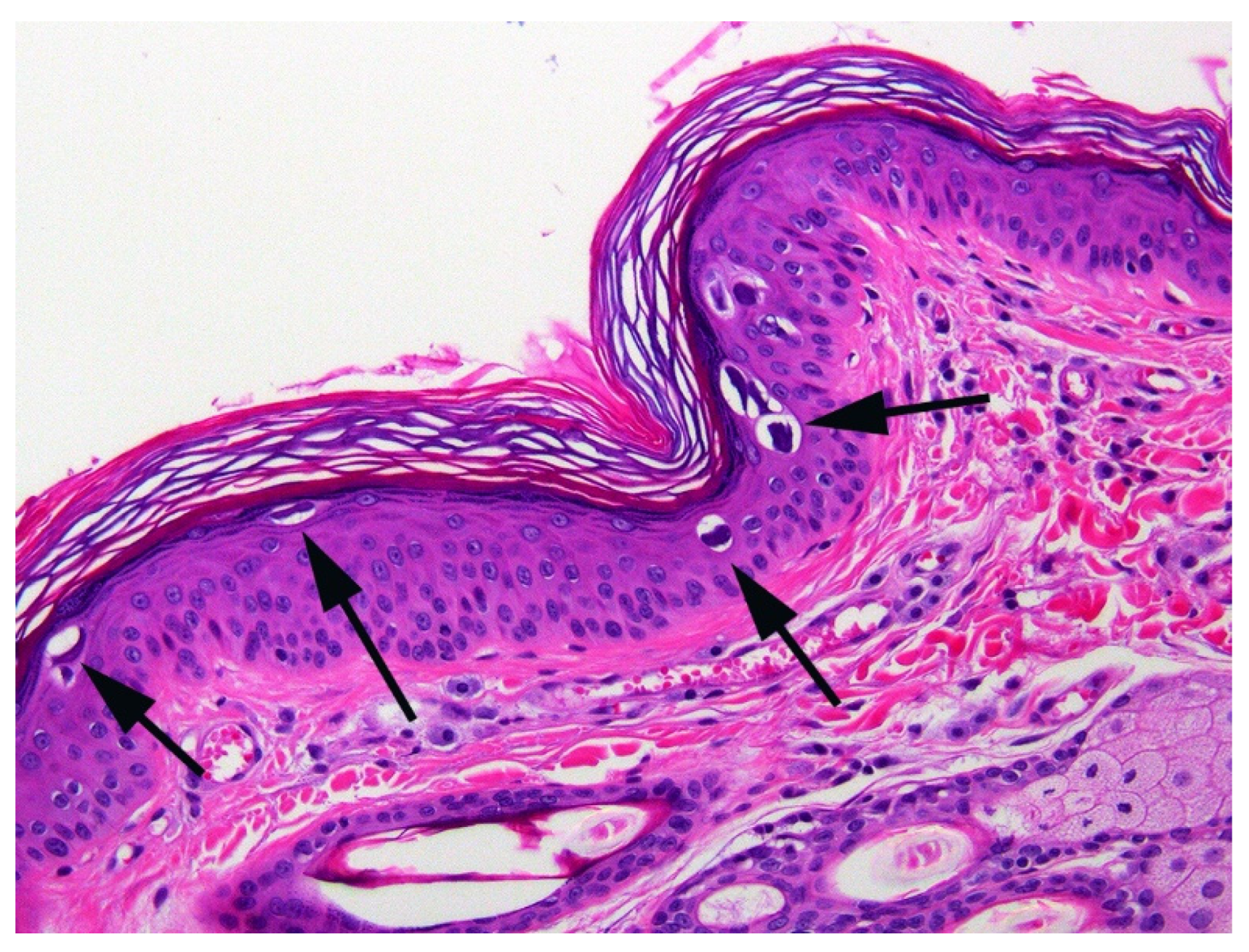
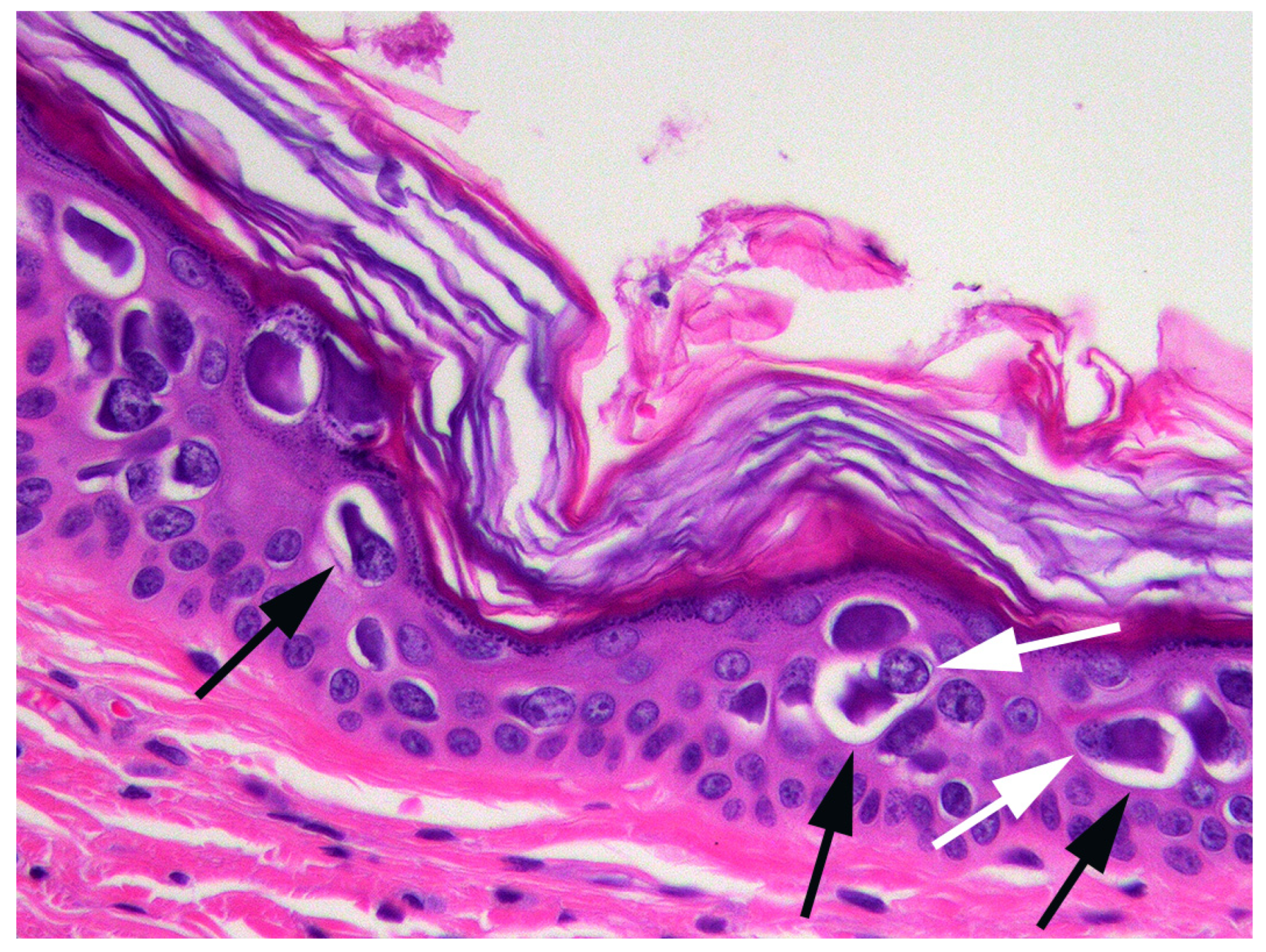
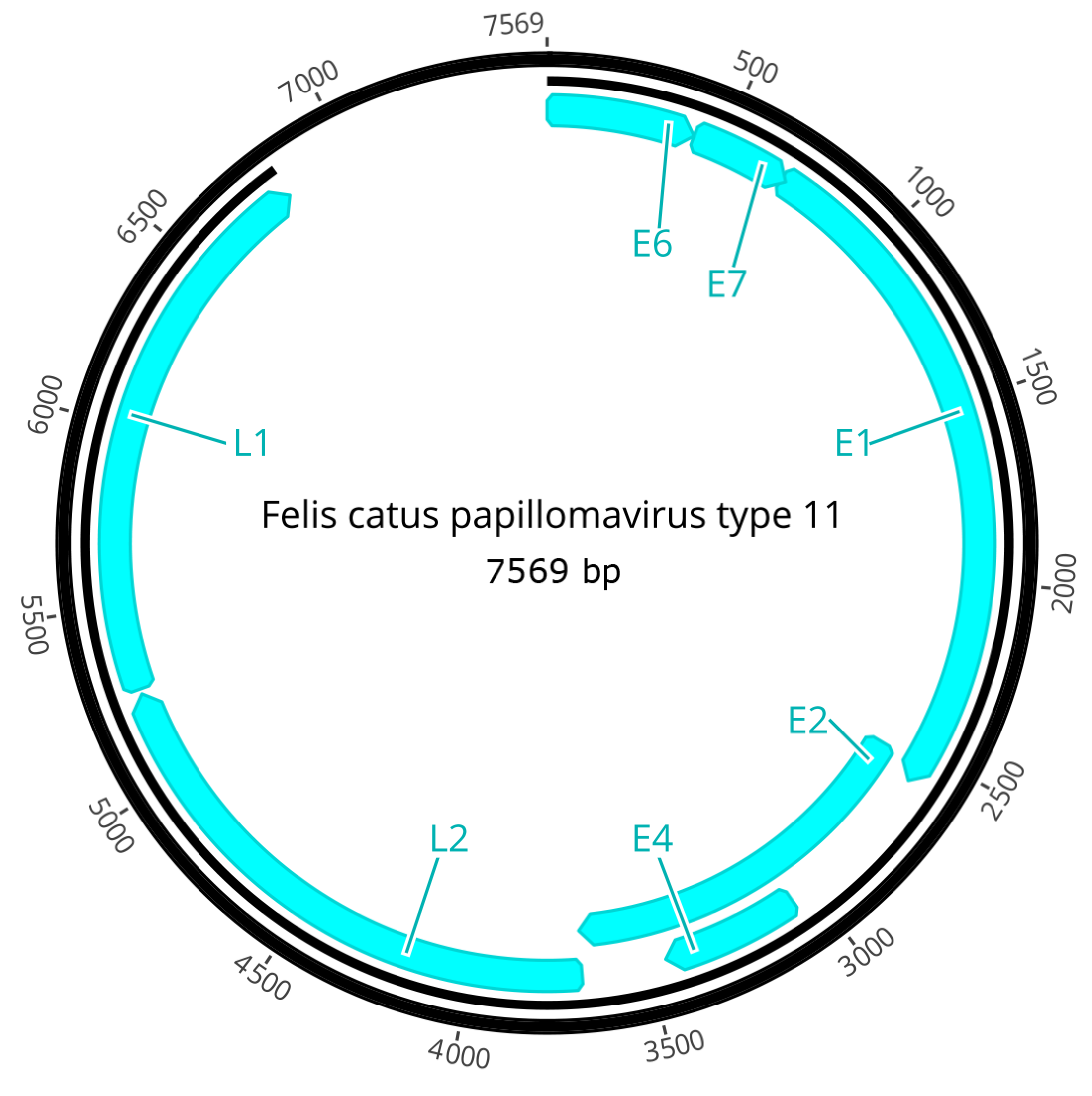
Domestic cats are currently recognized to be infected by 10 different Felis catus papillomavirus (FcaPV) types that are classified into three genera. Examination of a skin sample from a cat with presumptive allergic dermatitis revealed clusters of large amphophilic intracytoplasmic bodies within epidermal cells. A 312 bp section of DNA from a novel PV type was amplified from the sample, while the entire 7569 bp genome was amplified and sequenced from a skin swab. The novel PV, which was designated FcaPV11, was predicted to contain coding regions for five early proteins and two late ones. Phylogenetic analysis of the L1 gene sequence showed FcaPV11 clusters with members of the Treisetapapillomavirus genus and shares less than 64% similarity with any of the previously fully sequenced FcaPV types. FcaPV11 DNA was not detected in a series of neoplastic and non-neoplastic skin samples from an additional 30 cats. These results show, for the first time, that cats can be infected by members of the Treisetapapillomavirus genus and suggest PVs in this genus may have co-evolved with a common Carnivora ancestor. While FcaPV11 was considered unlikely to have caused skin lesions in this cat, the prominent PV-induced cell changes indicate the PV can influence cell regulation. This suggests FcaPV11 may have the potential to cause skin disease in cats.
Keywords:
cat; classification; evolution; FcaPV; novel virus; papillomavirus; skin