Cryopreservation Cooling Rate Impacts Post-Thaw Sperm Motility and Survival in Litoria booroolongensis
by
 , , ,
, , ,
Rebecca J. Hobbs
1,* ,
,
Rose Upton
2,
Natalie E. Calatayud
3,
Aimee J. Silla
4,
Jonathan Daly
1,5,
Michael S. McFadden
1 and
Justine K. O’Brien
1,5 1
Taronga Institute of Science and Learning, Taronga Conservation Society Australia, Mosman, NSW 2088, Australia
2
Conservation Biology Research Group, School of Environmental and Life Sciences, The University of Newcastle, Newcastle, NSW 2308, Australia
3
Beckman Center for Conservation Research, San Diego Zoo Wildlife Alliance, 15600 San Pasqual Valley Road, Escondido, CA 92025, USA
4
School of Earth, Atmospheric and Life Sciences, University of Wollongong, Wollongong, NSW 2522, Australia
5
School of Biological, Earth and Environmental Sciences, University of New South Wales, Sydney, NSW 2052, Australia
*
Author to whom correspondence should be addressed.
Animals 2023, 13(19), 3014; https://doi.org/10.3390/ani13193014
Submission received: 31 July 2023
/
Revised: 19 September 2023
/
Accepted: 20 September 2023
/
Published: 25 September 2023
(This article belongs to the Special Issue Reproductive Biology and Assisted Reproductive Technologies in Amphibians)
Simple Summary
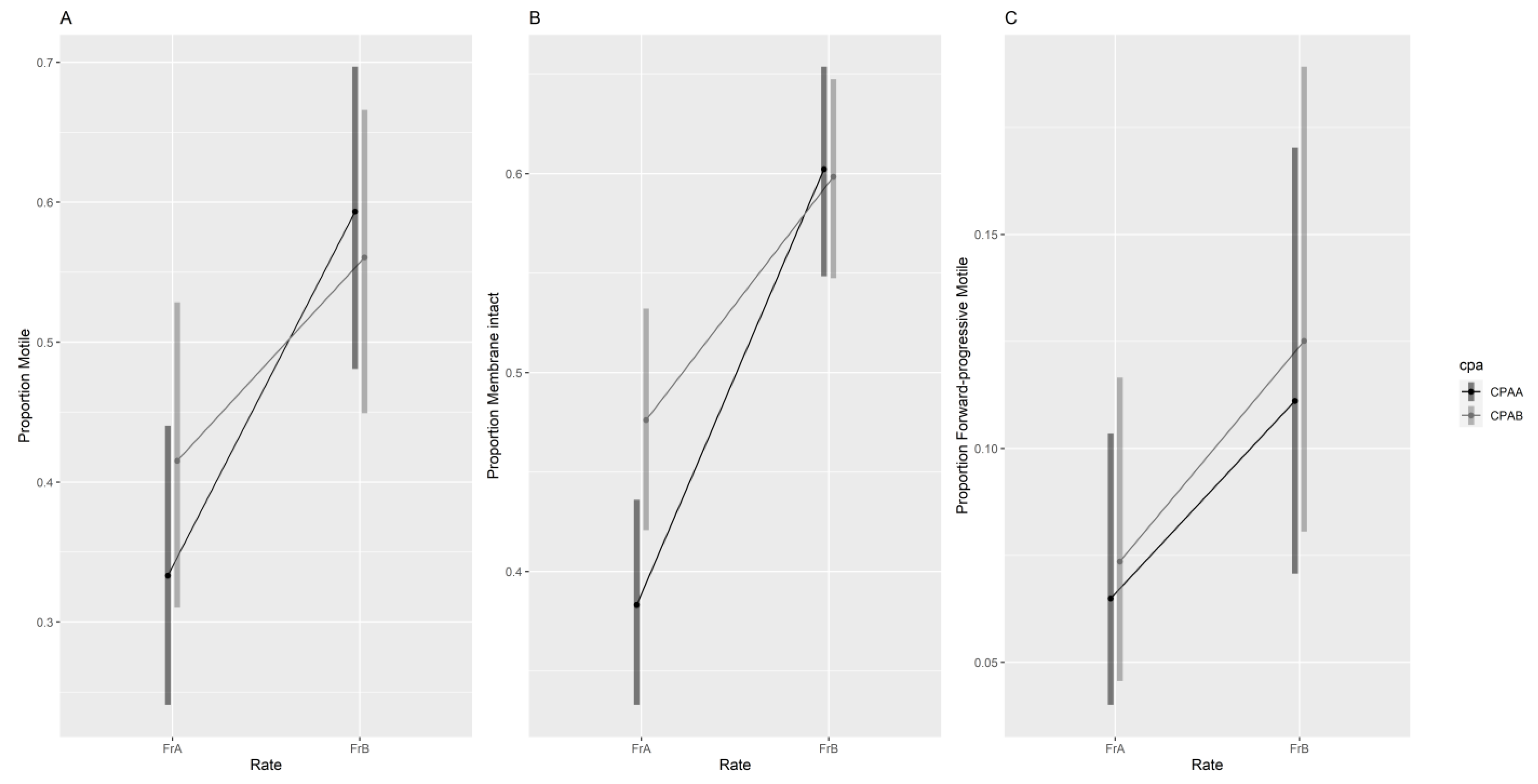
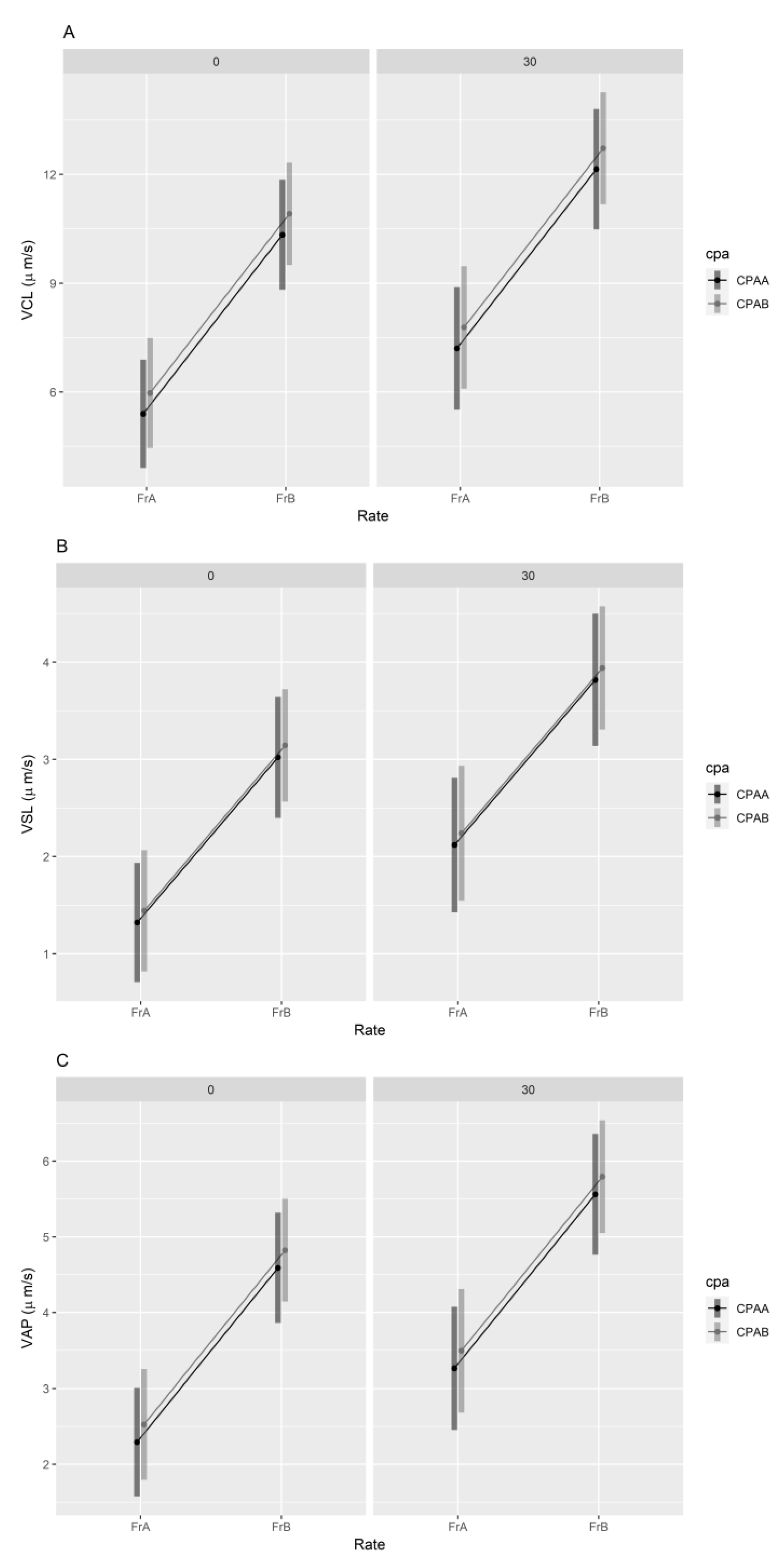
The development of reproductive technologies for amphibian species has accelerated over the last decade to the point that the industry implementation of these methodologies to assist breeding and genetic management is underway globally. A conservation breeding program was established at Taronga Conservation Society (Australia) in 2019 for the critically endangered Booroolong frog (Litoria booroolongensis) following an emergency extraction from the wild. Shortly thereafter, a trial was undertaken to compare the efficacy of two sperm cryopreservation protocols with a view to creating a “sperm bank” from these genetically important founder individuals. Spermic urine samples from L. booroolongensis were successfully cryopreserved using both methods tested; however, higher numbers of sperm retained motility post-thaw when using a faster cooling method for cryopreservation. Moreover, the two cryoprotectants tested were equally effective at supporting sperm survival and function post-thaw, regardless of cooling speed. We utilized the method outlined in this paper to collect and cryopreserve spermic urine samples across three breeding seasons from all (n = 28) L. booroolongensis founder males at Taronga and are now investigating the use of these samples to create offspring via assisted fertilization.
Abstract
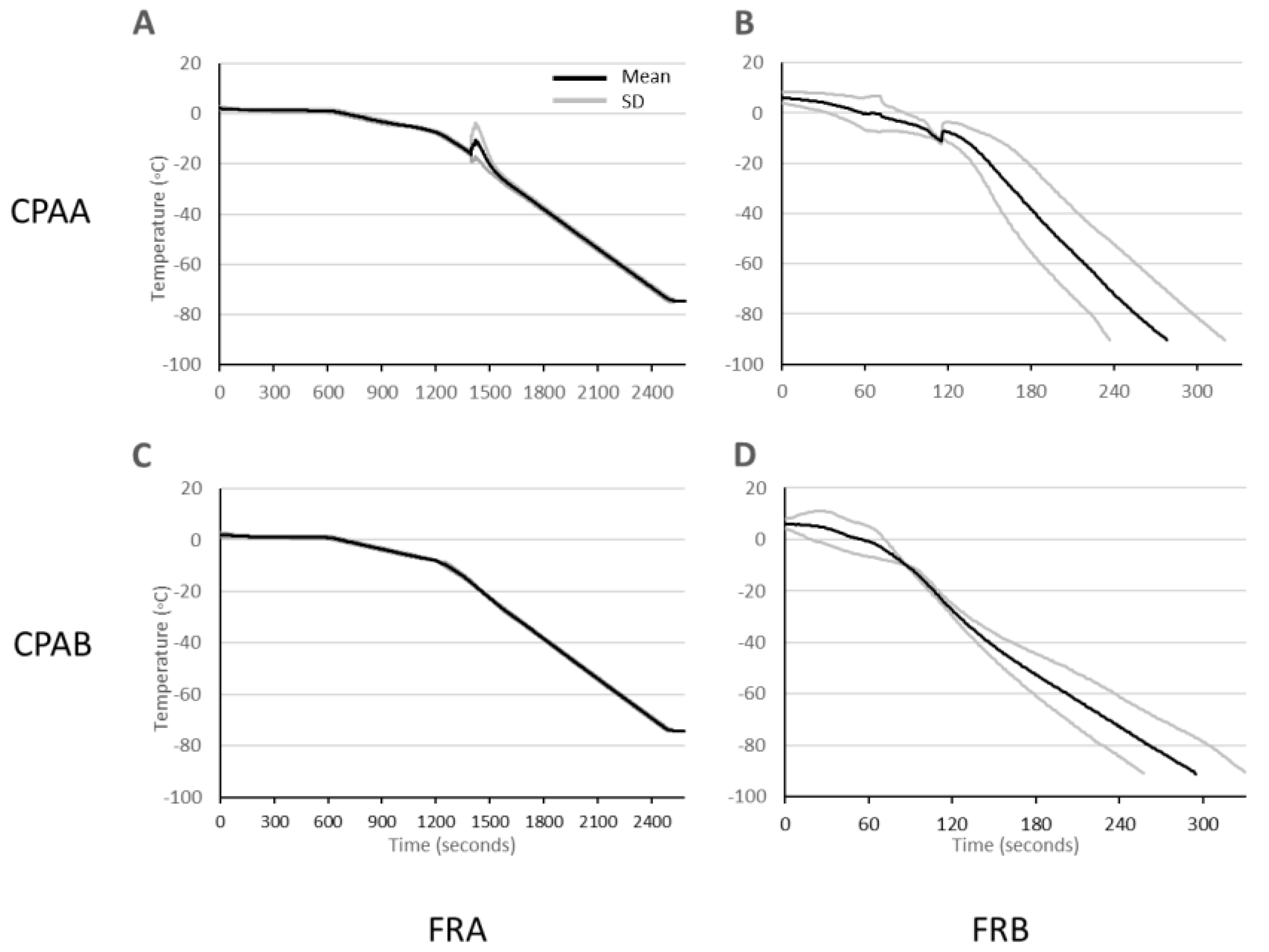
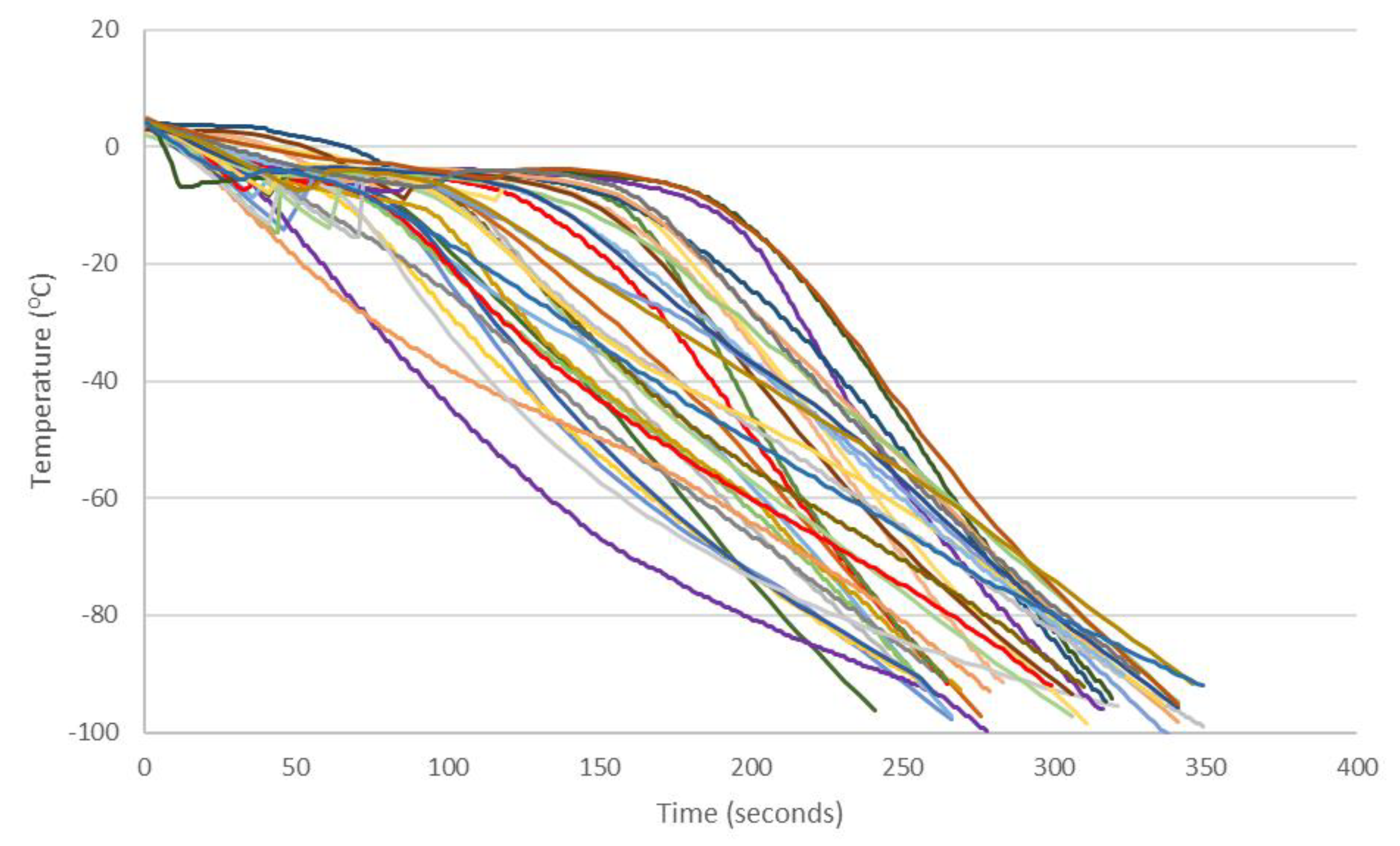
The cryopreservation and storage of gametes (biobanking) can provide a long-term, low-cost option for the preservation of population genetic diversity and is particularly impactful when applied to manage selective breeding within conservation breeding programs (CBPs). This study aimed to develop a sperm cryopreservation protocol for the critically endangered Booroolong frog (Litoria booroolongensis) to capture founder genetics within the recently established (est. 2019) CBP for this species. Hormone-induced sperm release was achieved using established protocols, and spermic urine samples were collected over a 6-h period. Pooled spermic urine samples (n = 3 males) were divided equally between two cryoprotectant (CPA) treatments and diluted by 1:5 (sperm:CPA) with either 15% (v/v) dimethyl sulfoxide + 1% (w/v) sucrose in simplified amphibian Ringer’s (SAR; CPAA) or 10% (v/v) dimethylformamide + 10% (w/v) trehalose dihydrate in SAR (CPAB). The samples were cryopreserved in 0.25 mL straws using either a programmable freezer (FrA) or an adapted dry shipper method (FrB). The thawed samples were activated via dilution in water and assessed for viability and motility using both manual assessment and computer-assisted sperm analysis (CASA; 0 h, 0.5 h post-thaw). Upon activation, the survival and recovery of motility (total motility, forward progression and velocity) of cryopreserved sperm suspensions were higher for sperm preserved using FrB than FrA, regardless of CPA composition. This work supports our long-term goal to pioneer the integration of biobanked cryopreserved sperm with population genetic management to maximize restoration program outcomes for Australian amphibian species.
Keywords:
amphibian; conservation; CASA; reproductive technologies; ART; spermiation; biobanking; GRB; breeding program