Malagasy Amphibian Wildlife Trade Revisited: Improving Management Knowledge of the Trade


1
Institute of Science and Environment, University of Cumbria, Ambleside Campus, Rydal Road, Ambleside, Cumbria LA22 9BB, UK
2
Museo Regionale di Scienze Naturali, Via G. Giolitti, 36, I-10123 Torino, Italy
*
Author to whom correspondence should be addressed.
Animals 2023, 13(14), 2324; https://doi.org/10.3390/ani13142324
Submission received: 17 June 2023
/
Revised: 5 July 2023
/
Accepted: 13 July 2023
/
Published: 17 July 2023
(This article belongs to the Special Issue Advances in Diversity, Conservation, and Taxonomy of Madagascar’s Amphibians and Reptiles - Feature Issue of the Section Herpetology)
Simple Summary
There is much debate about the wildlife trade, with arguments made both for and against the trade. If wildlife trade is to continue, both knowledge of species and their population statuses and confidence within the global mechanism that monitors and manages the wildlife trade are required. Using Madagascar’s amphibian trade, this study investigates this issue. The findings of the study highlight the need to maintain awareness of changes to species descriptions and the need to cross-referencing with population status data, such as that available from the IUCN Redlist, but significantly against CITES quotas and the quality of the NDFs that support them. In this study, it was observed that Madagascar seems to have improved its management of the amphibian trade over time but that new species are constantly being described over time, which could add complications to the management of the trade.
Abstract
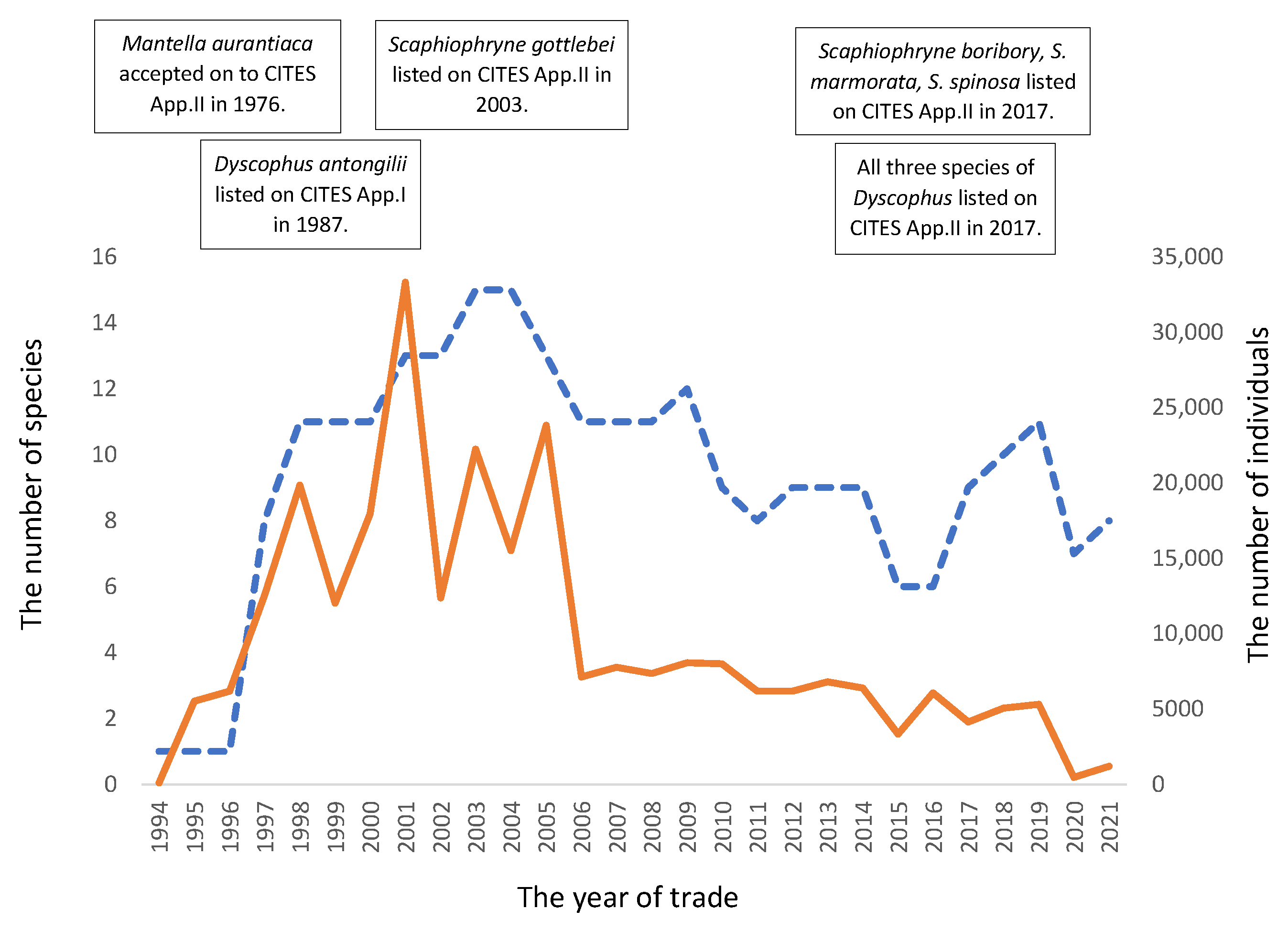
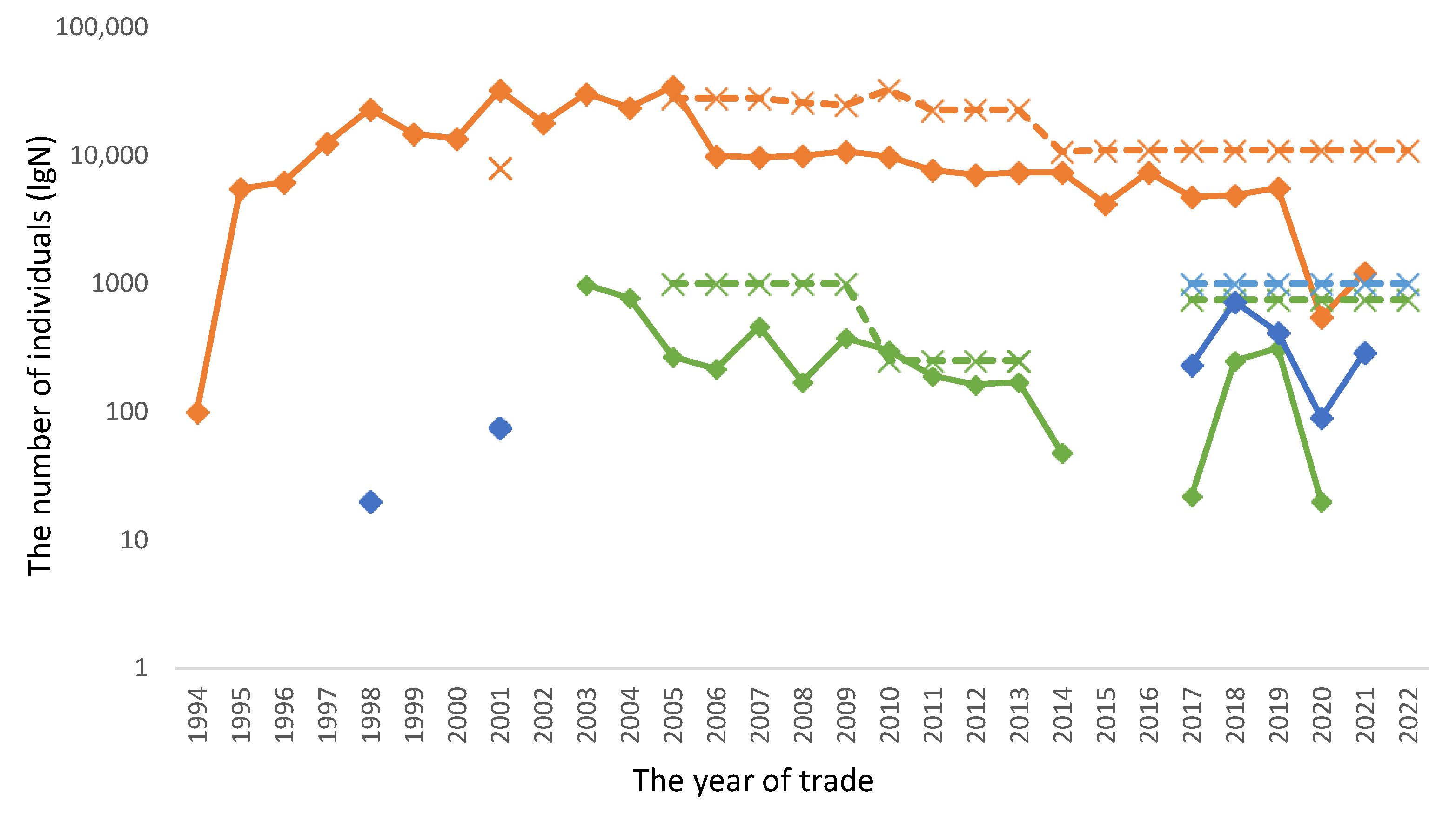
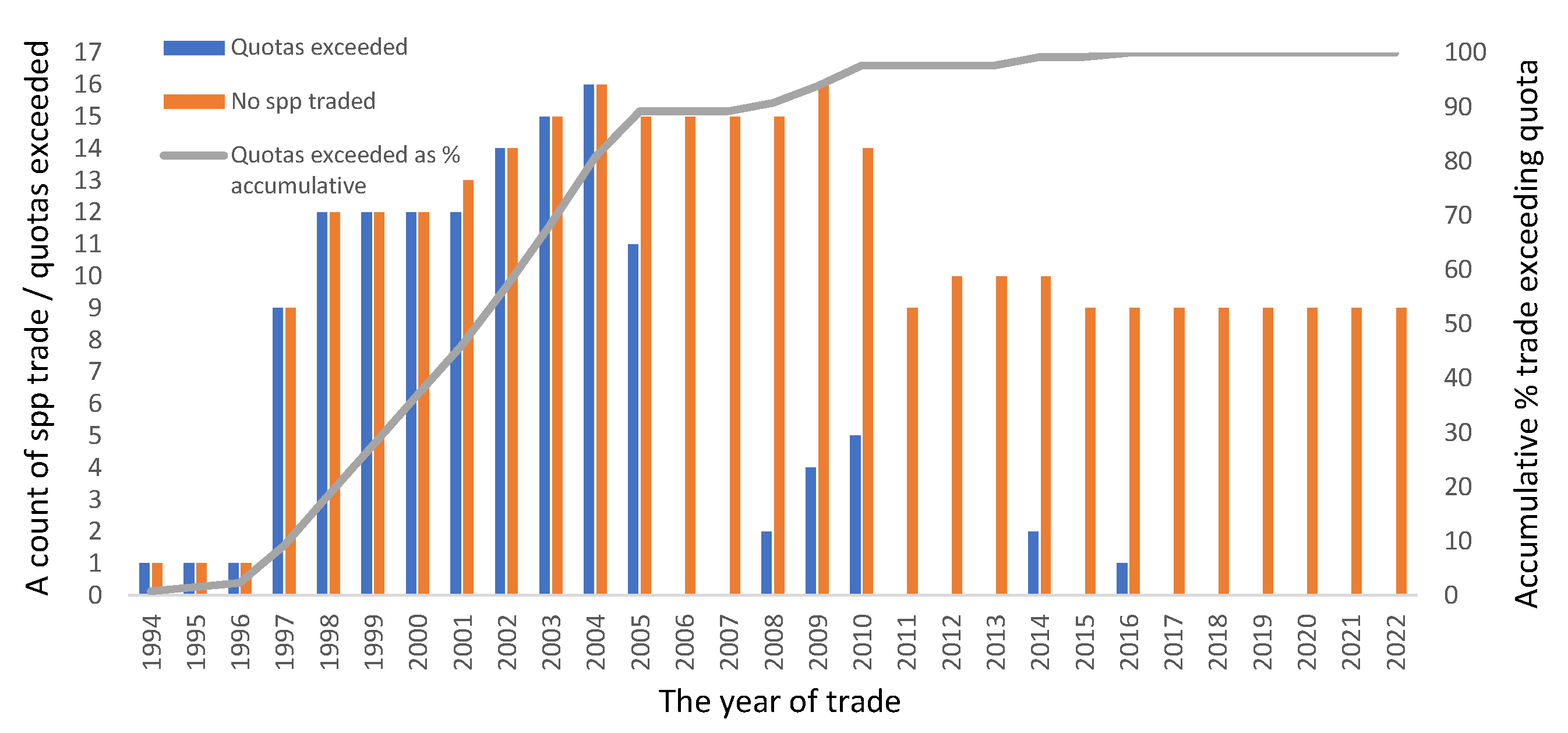
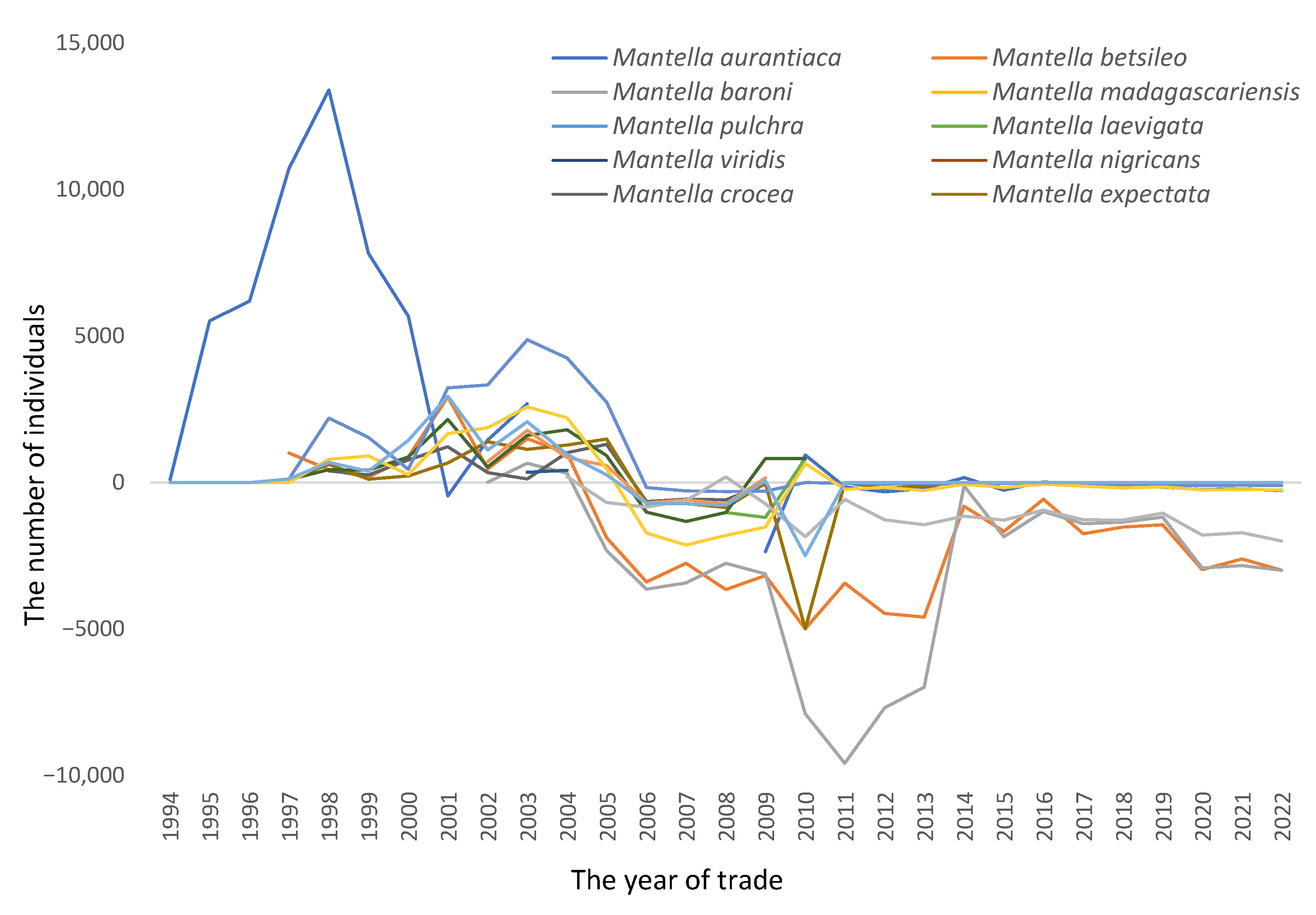
Madagascar is a biodiversity hotspot with a long history of trading in its wildlife, especially its hyper-diverse amphibian taxa. Due to globally raised concerns over the conservation of harvested species, CITES was introduced as a global mechanism with which to monitor and regulate the trade. Utilising data collated from the CITES Trade database, this study sought to investigate the trade and CITES’ effectiveness in managing the trade with respect to Madagascar. Over a 28-year period, 20 known amphibian species were exported from Madagascar, constituting a total of nearly 271,000 individuals. Formal descriptions of Malagasy amphibian species have increased and continue to increase greatly over time. However, there was no longitudinal relationship regarding the numbers of individuals traded as new species were described. Overall, the number of individuals traded has declined over time, but where assessments were provided by the IUCN Redlist, population declines were reported in all but one species of Malagasy amphibian. Mantella (97.5%) continues to be the predominantly traded genus, with certain, high-conservation-concern, species continuing to be traded. Despite initial concerns over the effectiveness of CITES’s actions, after concerted efforts, it appears that CITES’ actions were having positive impacts on regulating the trade. However, going forward, concerns remain over the appropriateness of the quotas set and the robustness of their underpinning NDFs. Furthermore, with the increase in the number of recognised species, the potential for incorrect species labelling on the CITES permits increases and requires greater attention.
Keywords:
wildlife trade; Madagascar; amphibians; CITES; IUCN Redlist; conservation