Impact of Procedures and Human-Animal Interactions during Transport and Slaughter on Animal Welfare of Pigs: A Systematic Literature Review

1
Institute of Food Safety and Food Hygiene, Working Group Meat Hygiene, Department of Veterinary Medicine, Freie Universität Berlin, 14163 Berlin, Germany
2
Institute of Animal Welfare, Animal Behavior and Laboratory Animal Science, Department of Veterinary Medicine, Freie Universität Berlin, 14163 Berlin, Germany
*
Author to whom correspondence should be addressed.
Animals 2022, 12(23), 3391; https://doi.org/10.3390/ani12233391
Submission received: 29 October 2022
/
Revised: 21 November 2022
/
Accepted: 26 November 2022
/
Published: 2 December 2022
(This article belongs to the Section Animal Welfare)
Simple Summary
Animal welfare during the transport and slaughter of pigs is in the interests of consumers and producers. All procedures and human-animal interactions on the day of slaughter are potentially stressful for the pigs. Good handling practices—calm handling and a handling set to the individual needs of the pigs—and management of the animals provide the maximum animal welfare at slaughter, but only by avoiding or minimizing any further external stressors in addition to the transport and the slaughter itself. By conducting a systematic literature review, we wanted to find out which procedures and human-animal interactions were found by researchers to have an impact on welfare during pig transport and slaughter. Direct human-animal contact and the management of transport and slaughter procedures were identified as major influencing factors. As the animal welfare-sensitive areas of stunning, control of stunning, and bleeding are highly important, personnel should be trained regularly to ensure good practices and animal welfare. Deficient handling and procedures in the transport/slaughter processes can be critically scrutinized and corrected only when personnel are sufficiently educated. Knowledge of best handling practices is necessary to reflect on our own and other personnel’s behaviour and to maintain awareness of animal welfare. Animal suffering caused by humans is not acceptable.
Abstract
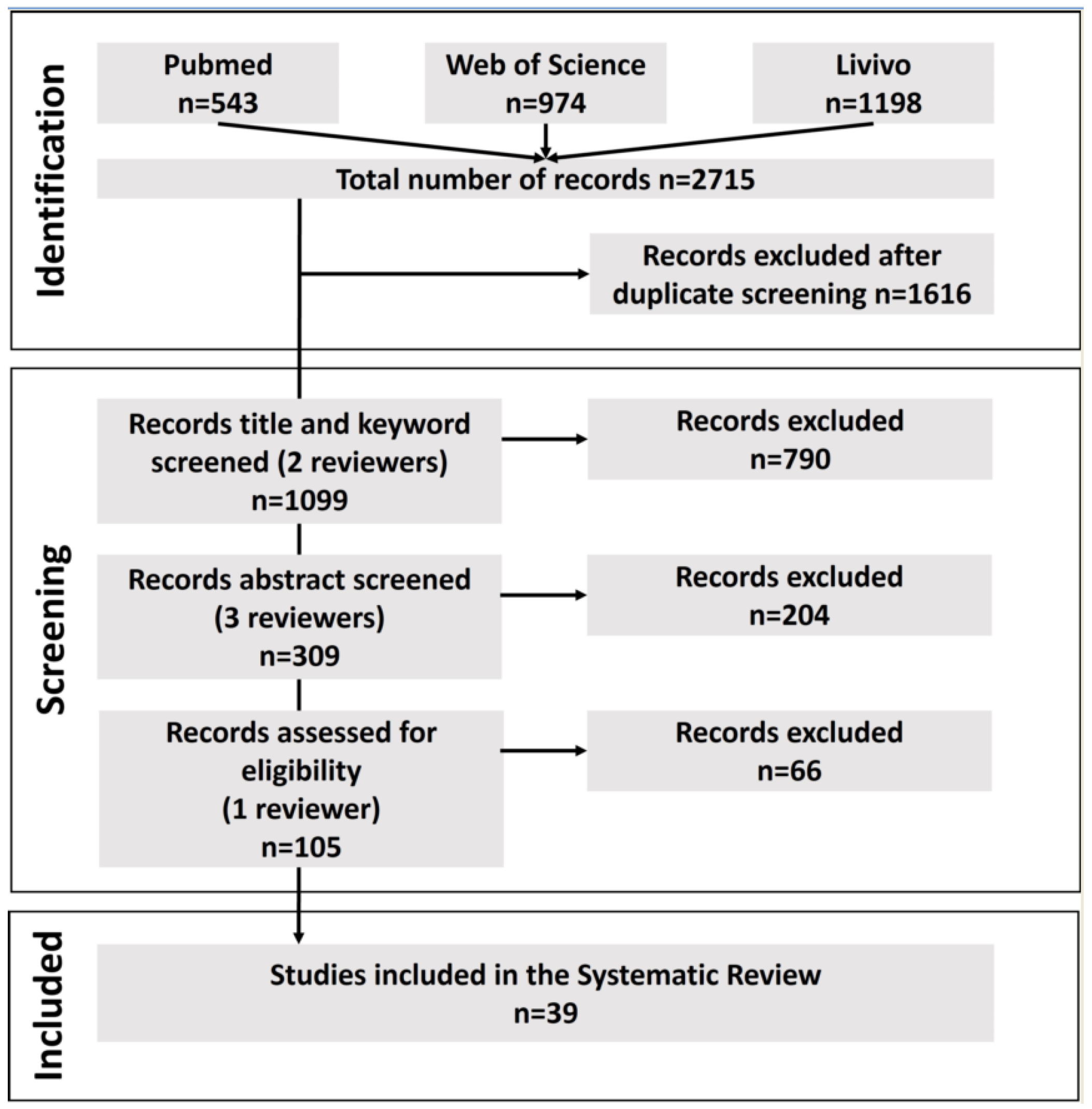
Animal welfare is a high social and political priority and is enshrined in European and national legislation. This systematic literature review (funded by the German Ministry of Food and Agriculture; grant no. 2817806A18) was conducted to find animal and management-based indicators that could be influenced by changes in pig handling and management procedures on the day of slaughter and, therefore, will directly result in improved animal welfare. For this systematic literature review, following the PRISMA guidelines, we conducted a structured literature search using the databases PubMed®, Web of ScienceTM, and LIVIVO with set search terms and their combinations in German and English. Only peer-reviewed original articles from European countries from 2009 until 2022 that dealt with welfare during transport and/or slaughter of fattening pigs and offered potential measurable indicators on the basis of the animal or management, and either directly or indirectly recommended handling practices were included. We used the literature management system EndNoteTM, and after duplicate removal, a total of 1099 records were found for further analysis. After analysis and discussion in the review team, which consisted of three experts in total, 105 articles underwent full-text screening. Finally, 39 articles were included in the results for this systematic literature review. According to this systematic literature review, the following procedures have a positive impact on the animal welfare of pigs on the day of slaughter. Calm—rather than rough—handling of pigs was the most influential factor. This can be achieved by using animal-friendly driving aids. Loud noise should be avoided in general or reduced as far as possible. Transport time is not always influenceable, but shorter transport duration with stocking density as stated by the European regulations as a maximum will reduce stress in pigs. Our review showed that there are differing scientific results about lairage duration, although this should be set in relation to prior stress and transport time. Knowledge of good stunning parameters, such as gas concentration, exposure time to the gas, recommended amperage, and current flow duration is essential. If electrical stunning is performed, the correct attachment of electrodes is crucial. The control of stunning effectiveness is extremely important to avoid suffering and pain, with the proviso that it is assessed on the basis of multiple parameters. The corneal reflex, regular gasping, and the up-righting reflex could be assessed together. Certificates of competence and continuing educational programmes for the personnel form the basis of animal-friendly handling and a stressless slaughter routine. It can be assumed that the results of this systematic literature review reflect the state of current research of pig welfare during transport and slaughter in the European Union, even though it must be assumed that not all relevant points were covered by the review, which can be seen as a limitation at the same time because important non-European or older publications could not be included.
Keywords:
fattening pig; handling; indicator; management