Anabolic Implants Varying in Hormone Type and Concentration Influence Performance, Feeding Behavior, Carcass Characteristics, Plasma Trace Mineral Concentrations, and Liver Trace Mineral Concentrations of Angus Sired Steers
by
 , , ,
, , ,
Caleb C. Reichhardt
1,† ,
,
Elizabeth M. Messersmith
2,†,
Tevan J. Brady
1,
Laura A. Motsinger
1,
Reganne K. Briggs
1,
Brett R. Bowman
1,
Stephanie L. Hansen
2,* and
Kara J. Thornton
1,* 1
Department of Animal, Dairy and Veterinary Science, Utah State University, Logan, UT 84322, USA
2
Department of Animal Science, Iowa State University, Ames, IA 50011, USA
*
Authors to whom correspondence should be addressed.
†
Contributed equally to this research.
Animals 2021, 11(7), 1964; https://doi.org/10.3390/ani11071964
Submission received: 26 May 2021
/
Revised: 17 June 2021
/
Accepted: 28 June 2021
/
Published: 30 June 2021
(This article belongs to the Special Issue Trace Minerals in Livestock Production)
Simple Summary
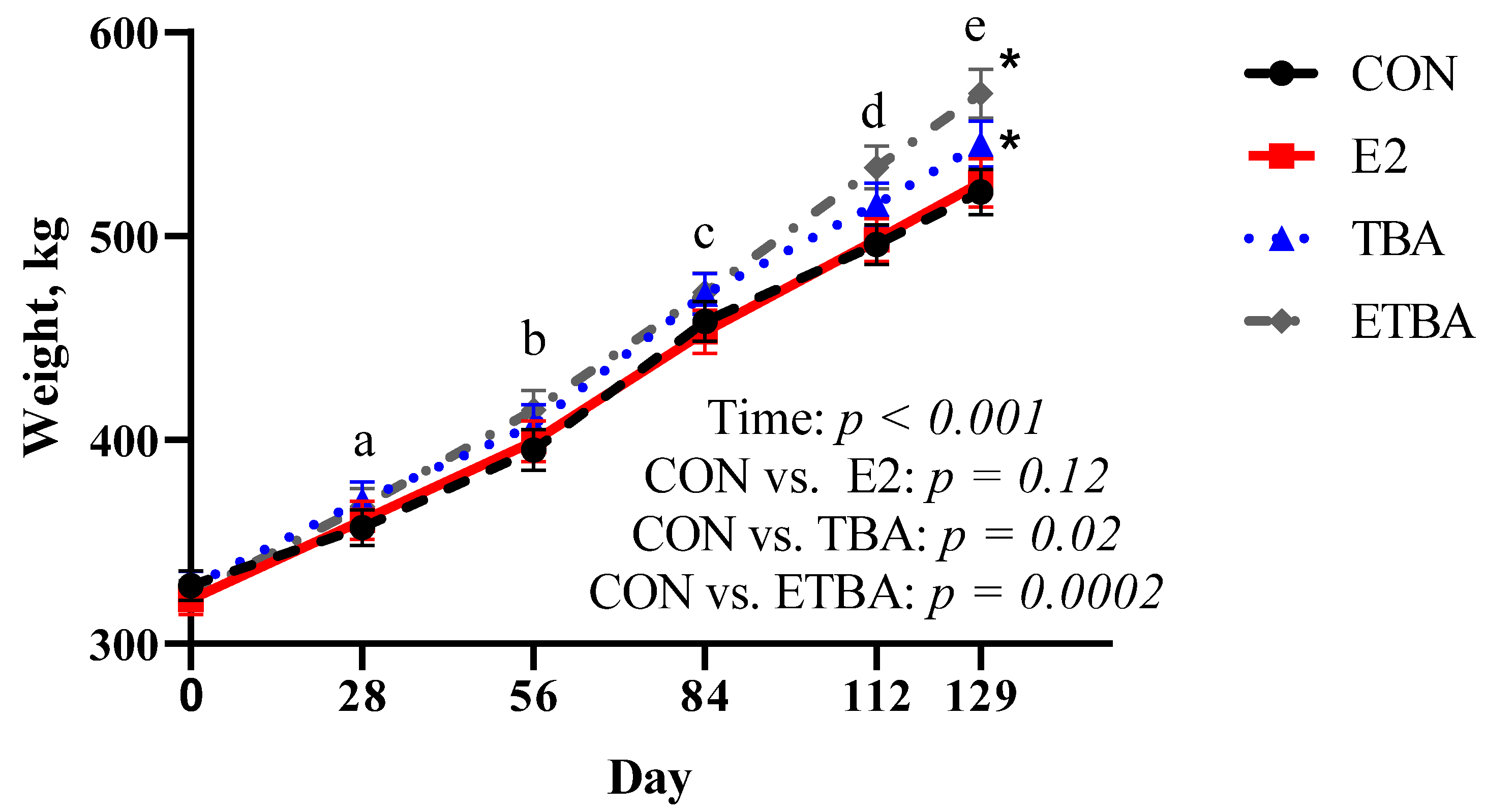
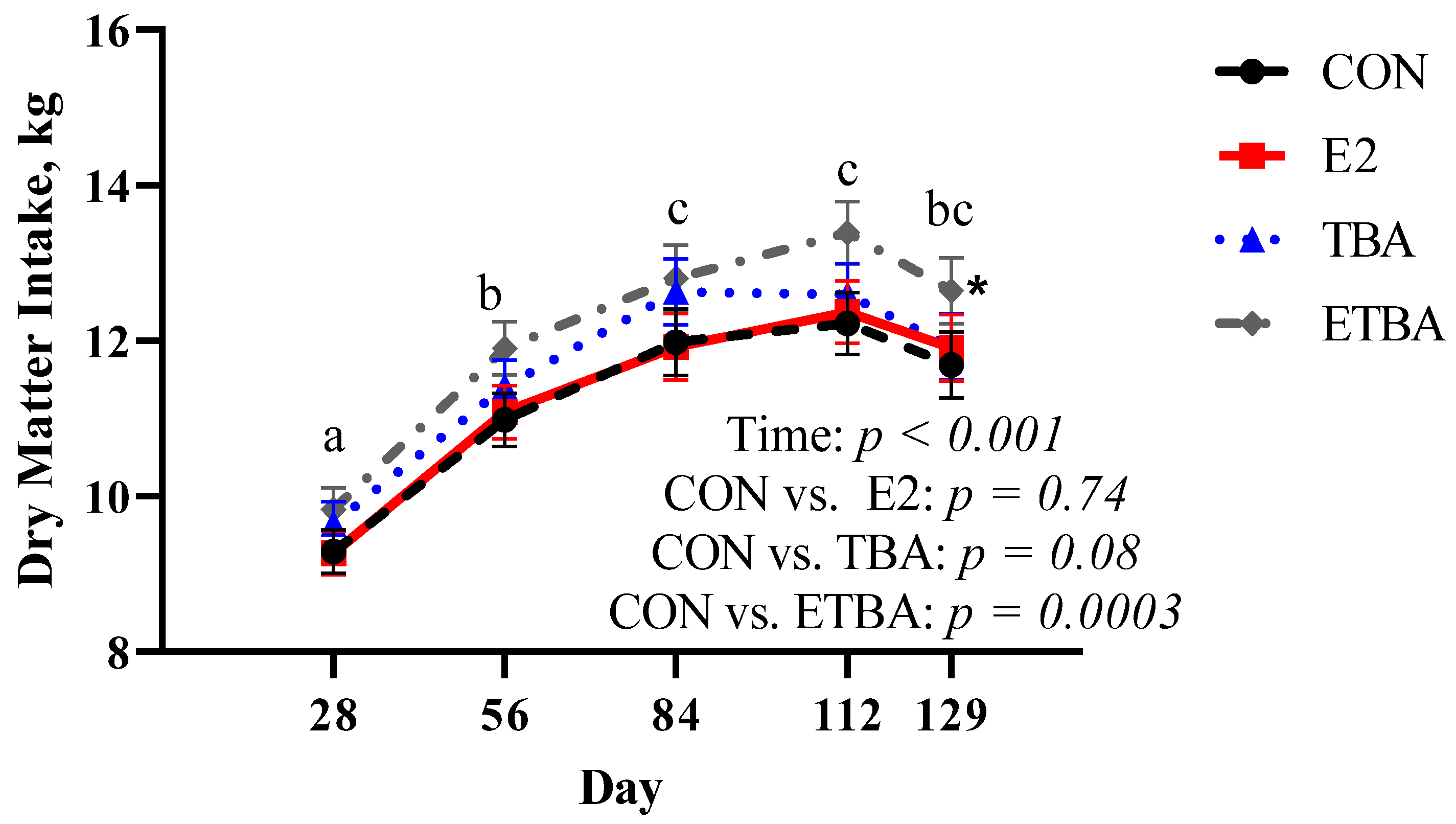
Though anabolic implants are commonly utilized in U.S. cattle production, comparisons between hormone type and content of different implants and the effects on growth and trace mineral stores is limited. The objective of this study was to evaluate the effects of anabolic implants varying in hormone type and concentration on growth, carcass characteristics, and trace mineral concentrations in Angus steers. Cattle administered an estradiol only implant did not experience differences in growth compared to non-implanted controls. However, cattle implanted with a trenbolone acetate only implant or a combined (estradiol and trenbolone acetate) implant experienced improvements in growth and changes in plasma and liver trace mineral concentrations. Greatest differences in growth and trace mineral concentrations were observed in steers administered the combination implant compared to non-implanted controls. These data suggest hormone type and concentration influence implant-induced growth and changes in plasma and liver trace mineral concentrations.
Abstract
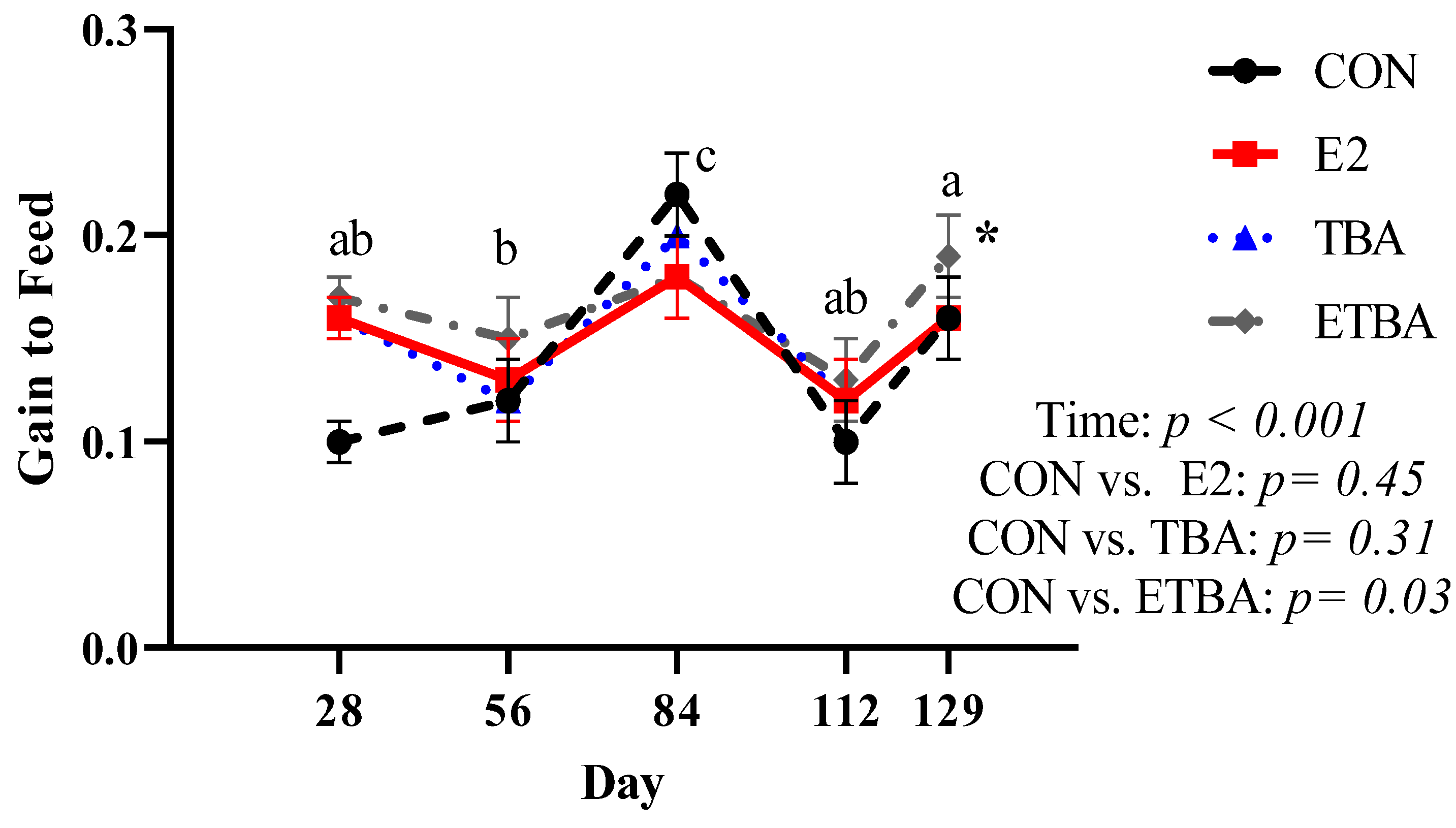
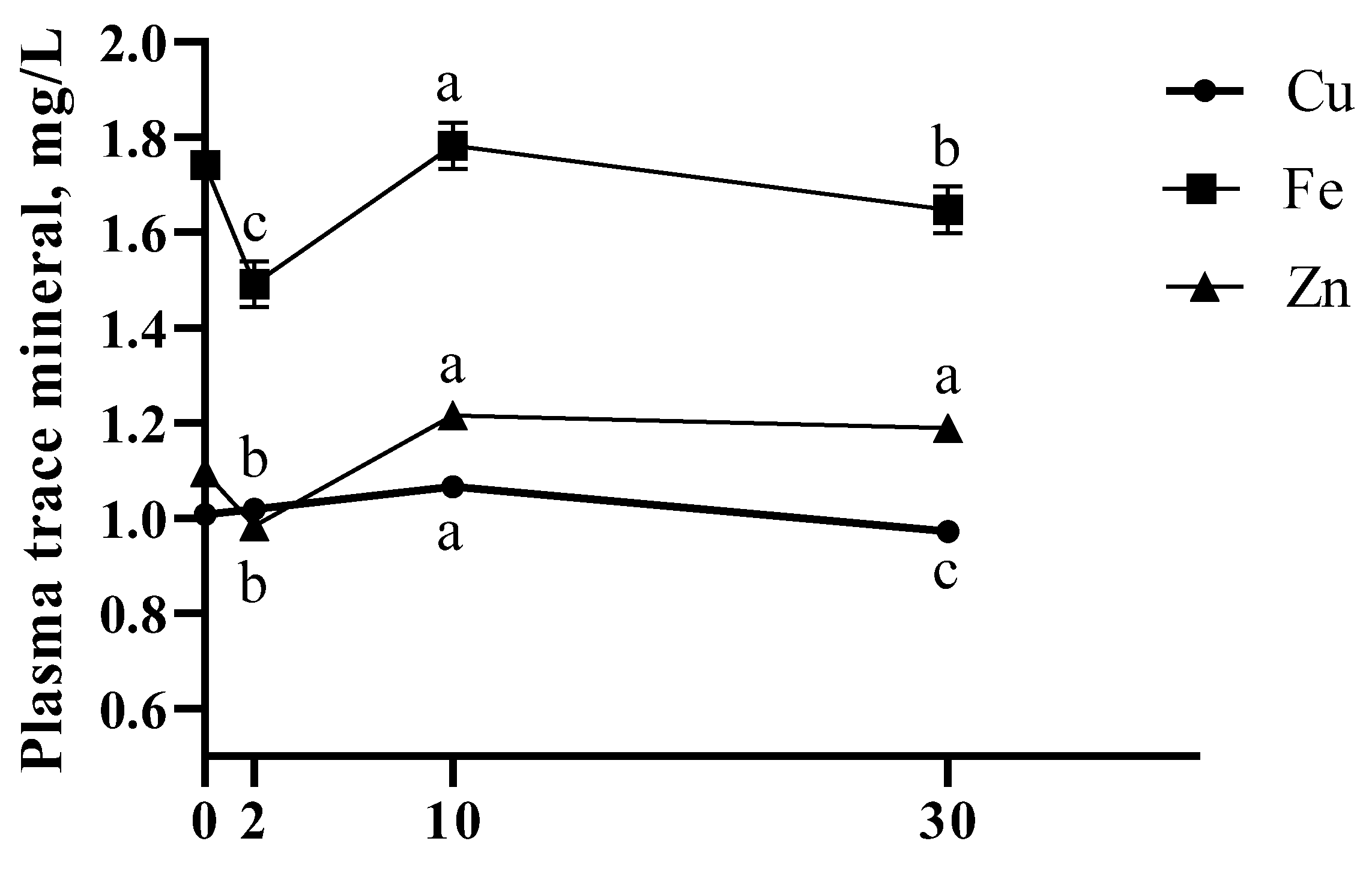
Fifty Angus-sired steers were utilized to evaluate the effects of anabolic implants varying in hormone type and concentration on performance, carcass traits, and plasma and liver trace mineral concentrations over 129 d. Steers were stratified by weight into one of four (n = 12 or 13/treatment) implant treatments: (1) estradiol (E2; 25.7 mg E2; Compudose, Elanco Animal Health, Greenfield, IN, USA), (2) trenbolone acetate (TBA; 200 mg TBA; Finaplix-H, Merck Animal Health, Madison, NJ, USA), (3) combination implant (ETBA; 120 mg TBA + 24 mg E2; Revalor-S, Merck Animal Health), or (4) no implant (CON). Steers were randomly assigned to pens equipped with GrowSafe bunks and fed a corn and barley-based finishing ration. Overall average daily gain and body weight were greater for ETBA and TBA than CON (p ≤ 0.04), but not E2 (p ≥ 0.12). Feed efficiency and hot carcass weight were only greater than CON for ETBA (p ≤ 0.03). Plasma and d 2 liver Zn concentrations were lesser for ETBA than CON (p ≤ 0.01) and d 10 liver Mn was lesser (p = 0.0003) for TBA than CON. These data indicate that implants containing TBA influence growth and trace mineral parameters, though more work investigating this relationship is necessary.