Evaluation of the Respiratory Microbiome and the Use of Tracheal Lavage as a Diagnostic Tool in Kemp’s Ridley Sea Turtles (Lepidochelys kempii)
by
 ,
,
Kerry L. McNally
1,* ,
,
Jennifer L. Bowen
2,
Jennifer O. Brisson
3,
Adam Kennedy
4 and
Charles J. Innis
1 1
Animal Health Department, New England Aquarium, Boston, MA 02110, USA
2
Marine Science Center, Department of Marine and Environmental Sciences, Northeastern University, Nahant, MA 01908, USA
3
Massachusetts Veterinary Referral Hospital, Ethos Veterinary Health, Woburn, MA 01801, USA
4
Rescue & Rehabilitation Department, New England Aquarium, Boston, MA 02110, USA
*
Author to whom correspondence should be addressed.
Animals 2021, 11(10), 2927; https://doi.org/10.3390/ani11102927
Submission received: 10 September 2021
/
Revised: 5 October 2021
/
Accepted: 6 October 2021
/
Published: 10 October 2021
(This article belongs to the Special Issue Veterinary Sciences and Sea Turtles)
Simple Summary
A tracheal lavage is commonly used to characterize the microbes that may be causing pneumonia in sea turtles, typically by culture-dependent methods. In this study, we characterized the tracheal lavage microbiome through culture-independent methods and compared the resulting sequence data to conventional cultures, the degree of radiographic lung abnormalities, and pathogens of sea turtles as previously reported in the literature. This study also evaluates the microbial communities at different sections of the respiratory tract from deceased sea turtles. We found that radiographic lung abnormalities do not correlate with the tracheal lavage microbiome, tracheal lavage cultures under-represent the microbial community as determined by culture-independent methods, many previously reported sea turtle pathogens are present in low abundance of the tracheal lavage microbiome, and tracheal lavages are not representative of other sections of the respiratory tract.
Abstract
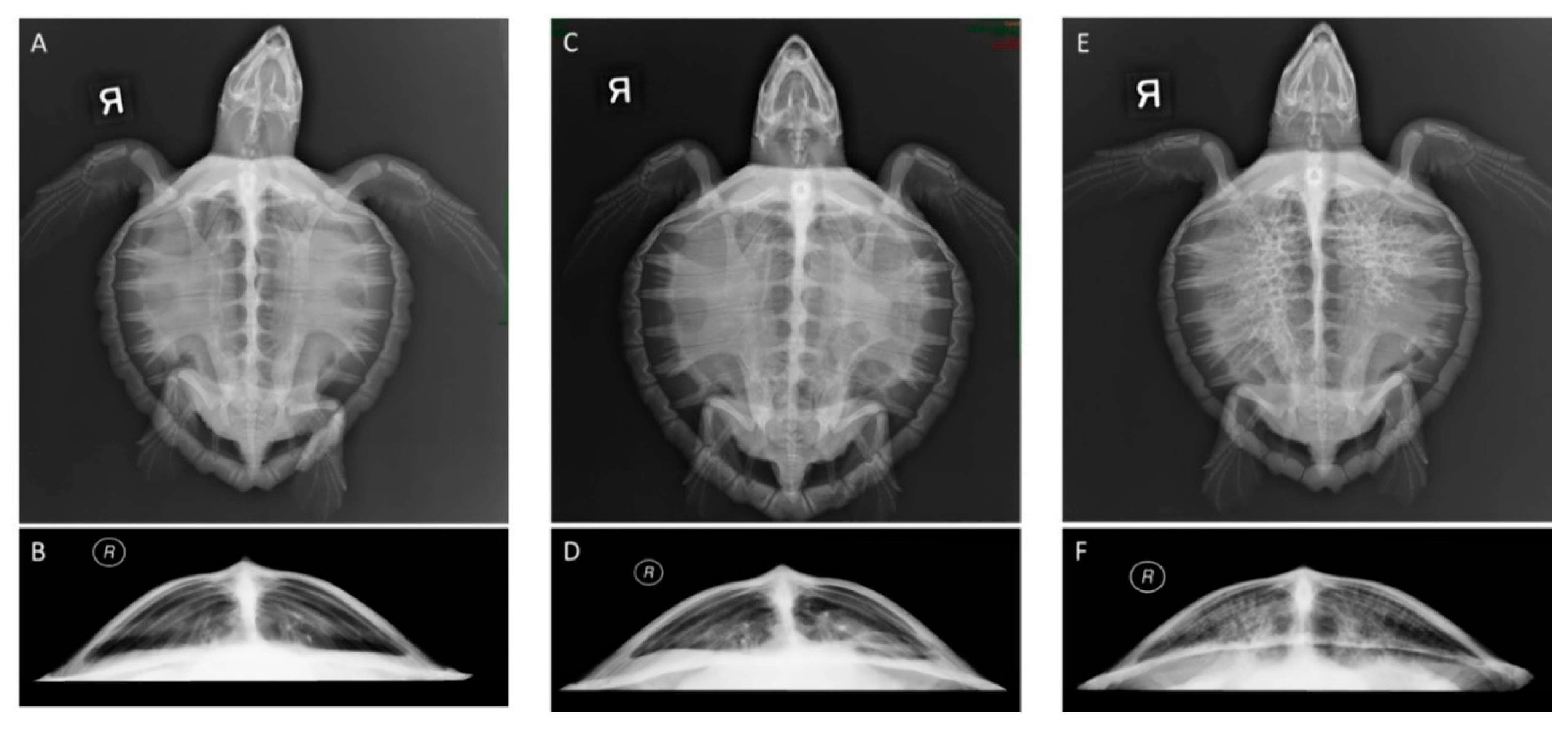
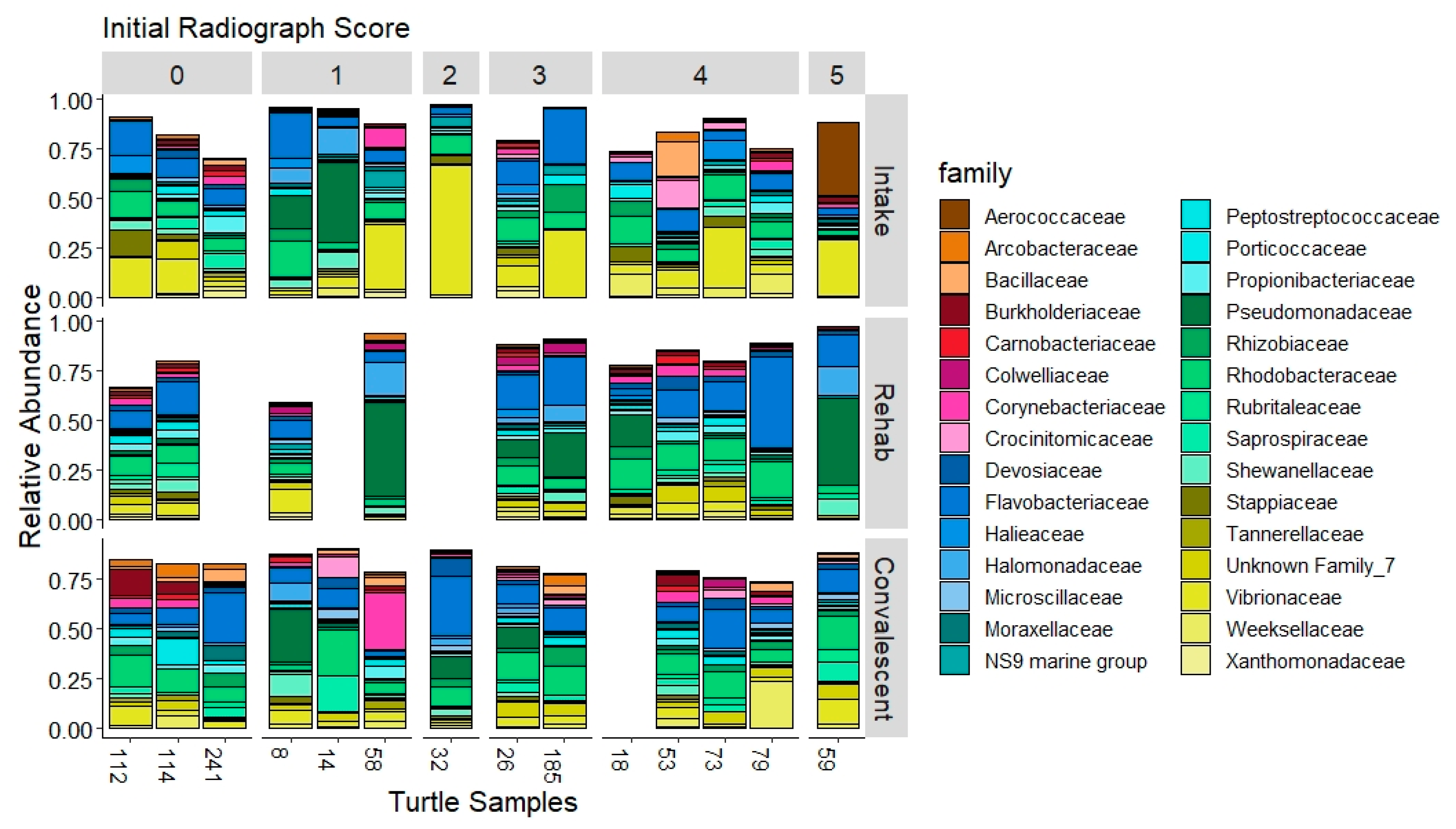
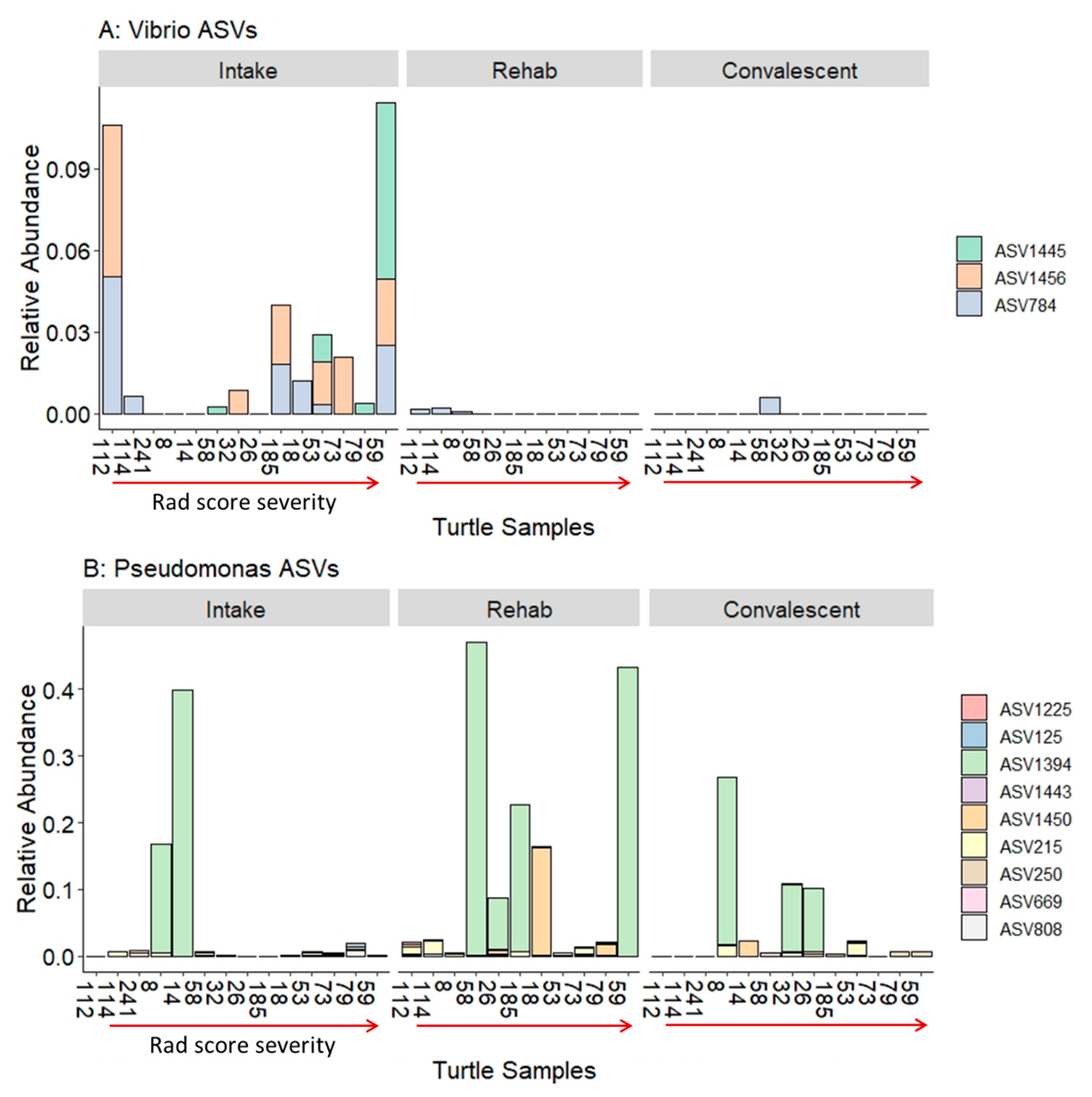
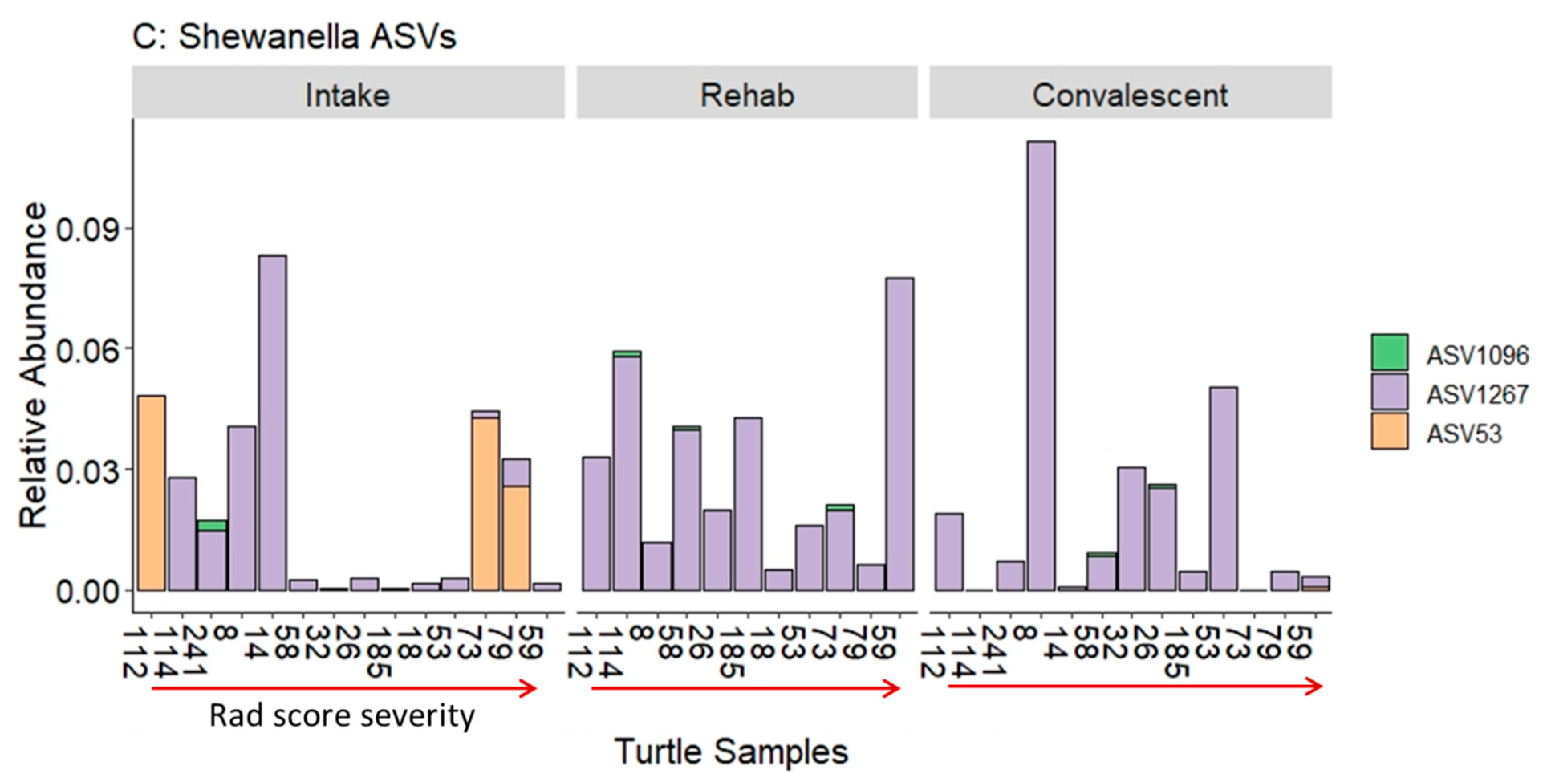
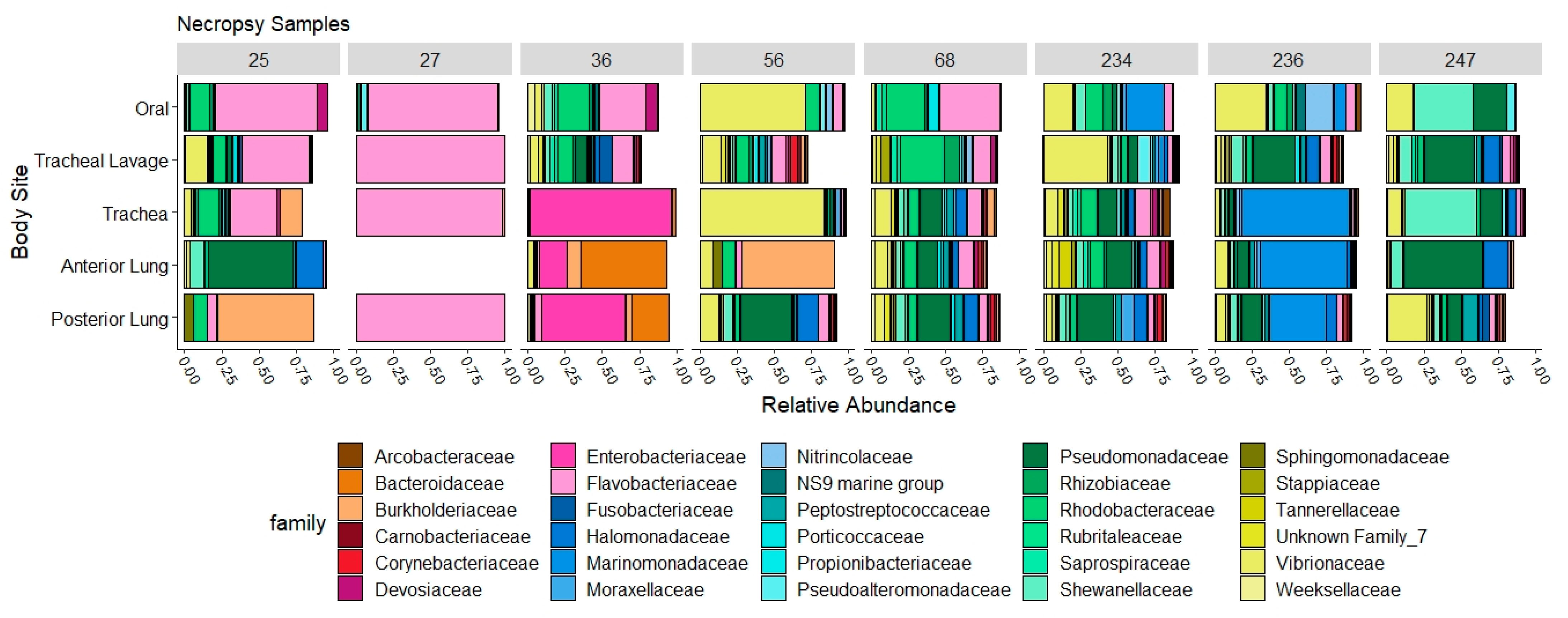
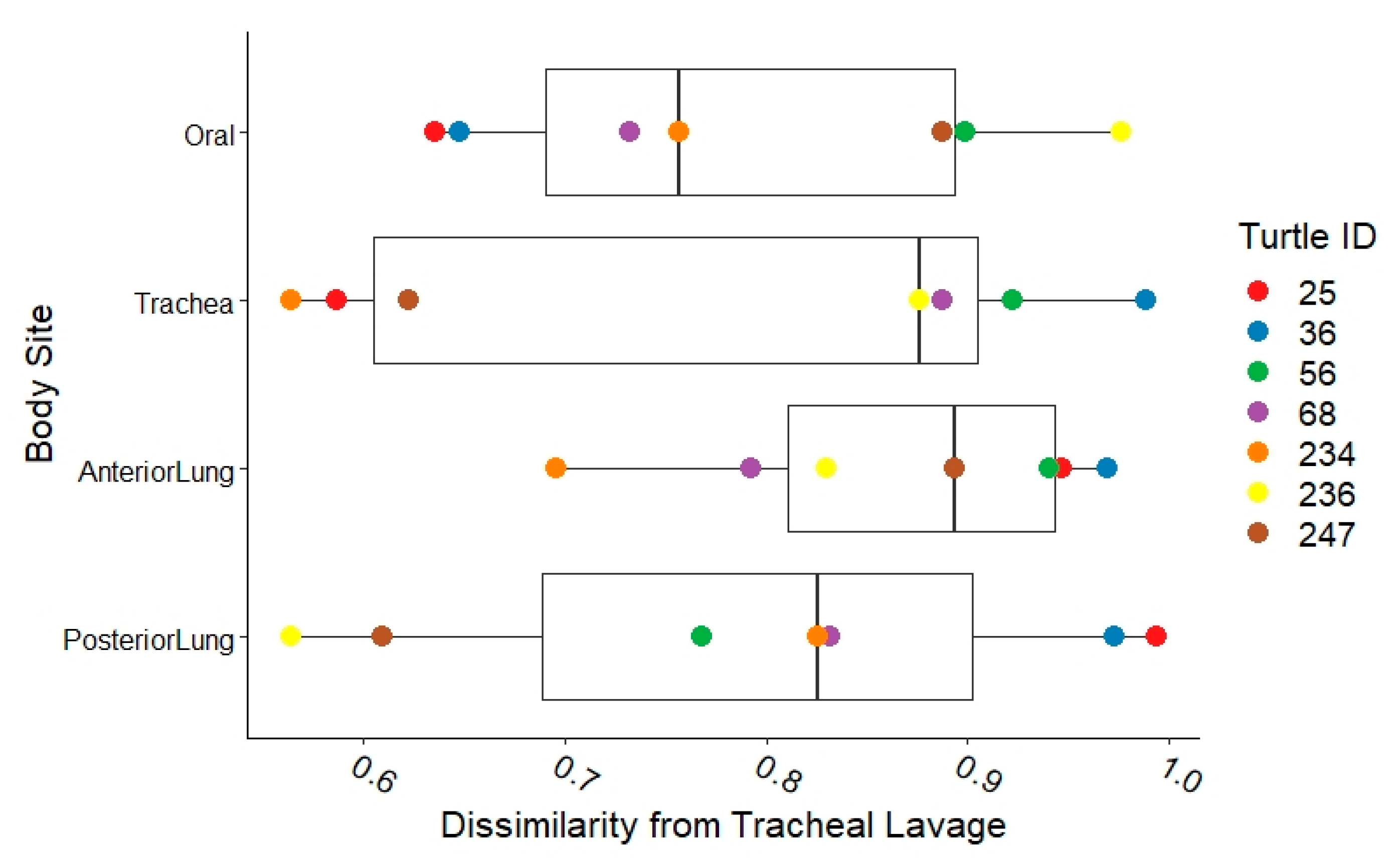
Respiratory disease is a common cause of morbidity and mortality in sea turtles, including the Kemp’s ridley sea turtle (Lepidochelys kempii). Although culture-dependent methods are typically used to characterize microbes associated with pneumonia and to determine treatment, culture-independent methods can provide a deeper understanding of the respiratory microbial communities and lead to a more accurate diagnosis. In this study, we characterized the tracheal lavage microbiome from cold-stunned Kemp’s ridley sea turtles at three time points during rehabilitation (intake, rehabilitation, and convalescence) by analyzing the 16S rRNA gene collected from tracheal lavage samples. We retrospectively developed a radiographic scoring system to grade the severity of lung abnormalities in these turtles and found no differences in diversity or composition of microbial communities based on radiographic score. We also found that the culture isolates from tracheal lavage samples, as well as other previously reported sea turtle pathogens, were present in variable abundance across sequenced samples. In addition to the tracheal microbial community of live turtles, we characterized microbial communities from other segments of the respiratory tract (glottis, trachea, anterior lung, posterior lung) from deceased turtles. We found a high degree of variability within turtles and a high degree of dissimilarity between different segments of the respiratory tract and the tracheal lavage collected from the same turtle. In summary, we found that the pulmonary microbial community associated with pneumonia in sea turtles is complex and does not correlate well with the microbial community as identified by tracheal lavage. These results underscore the limitations of using tracheal lavage for identification of the causative agents of pneumonia in sea turtles.
Keywords:
Lepidochelys kempii; pneumonia; microbiome; tracheal lavage