Effects of Drinking Water Temperature and Flow Rate during Cold Season on Growth Performance, Nutrient Digestibility and Cecum Microflora of Weaned Piglets
by
Zhenyu Zhang
1,2,†, 
Zeqiang Li
1,†,
Hua Zhao
1,
Xiaoling Chen
1,
Gang Tian
1,
Guangmang Liu
1,
Jingyi Cai
1 and
Gang Jia
1,* 1
Animal Nutrition Institute, Sichuan Agricultural University, Chengdu 611130, Sichuan, China
2
Institute of Animal Husbandry and Veterinary Medicine, Meishan Vocational Technical College, Meishan 620010, Sichuan, China
*
Author to whom correspondence should be addressed.
†
These authors contributed equally to this work.
Animals 2020, 10(6), 1048; https://doi.org/10.3390/ani10061048
Submission received: 9 May 2020
/
Revised: 8 June 2020
/
Accepted: 15 June 2020
/
Published: 18 June 2020
(This article belongs to the Section Animal Nutrition)
Simple Summary
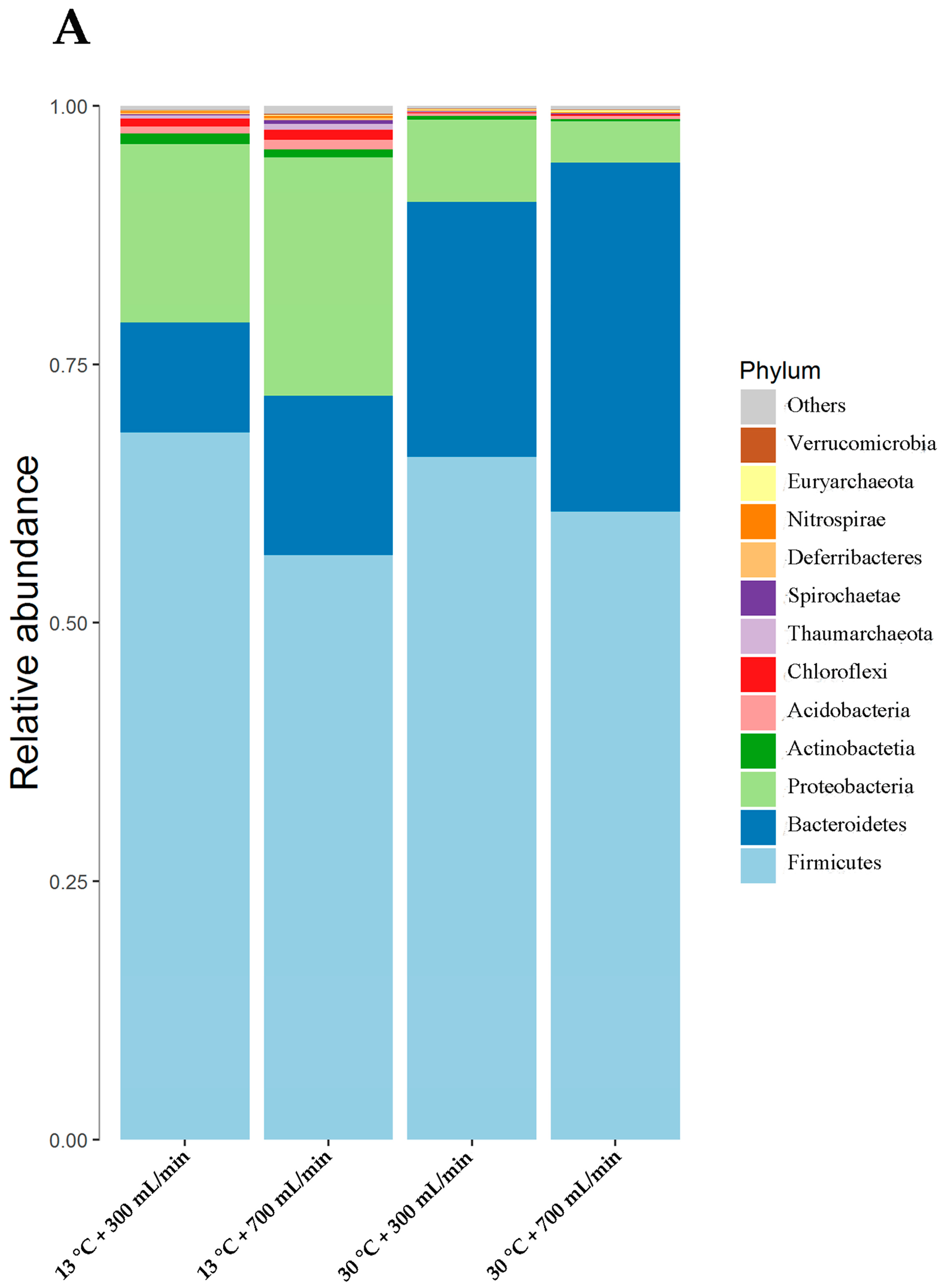
Water is an essential nutrient pigs need to sustain life and ensure growth. Determining the appropriate drinking water supply parameters during cold weather are critical for the welfare and growth of pigs, especially vulnerable weaned piglets. This study explored different combinations of drinking water temperature (DWT) and flow rate (DWF) for weaned piglets during winter. It measured their growth performance, nutrient digestibility and cecum microbial diversity, aiming to figure out the optimal water supplying conditions for weaned piglets. The results indicated that a combination of DWT of 30 °C and DWF of 300 mL/min decreased diarrhea occurrence. Furthermore, this increased growth performance and nutrient digestibility, accompanied by improvement of the dominant cecum microflora, mainly manifested in a reduced abundance of Proteobacteria and increased abundance of Bacteroidetes. This study enriches our understanding of the connection between water supply, growth performance and cecum microbiota on weaned piglets during the cold season.
Abstract
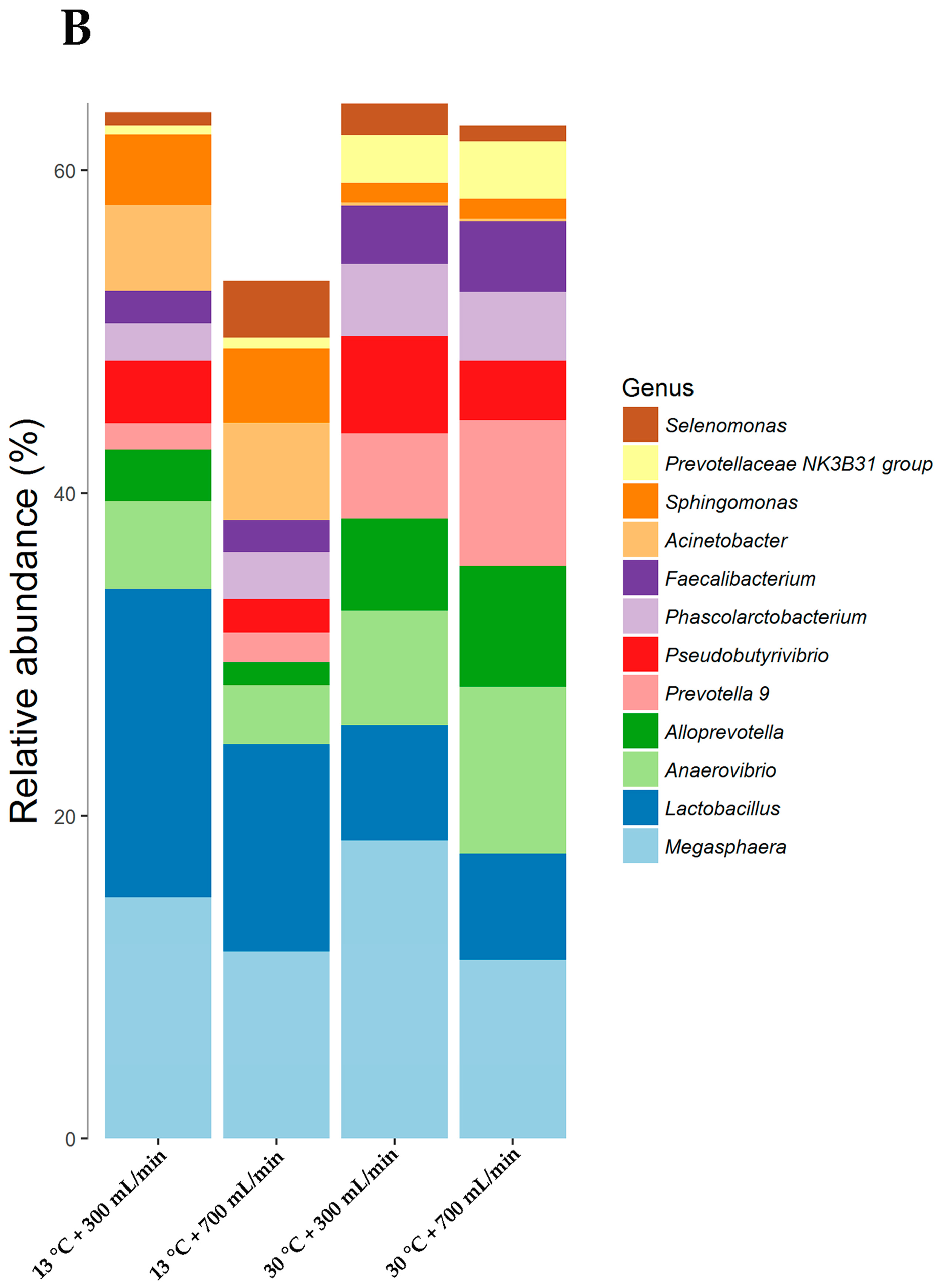
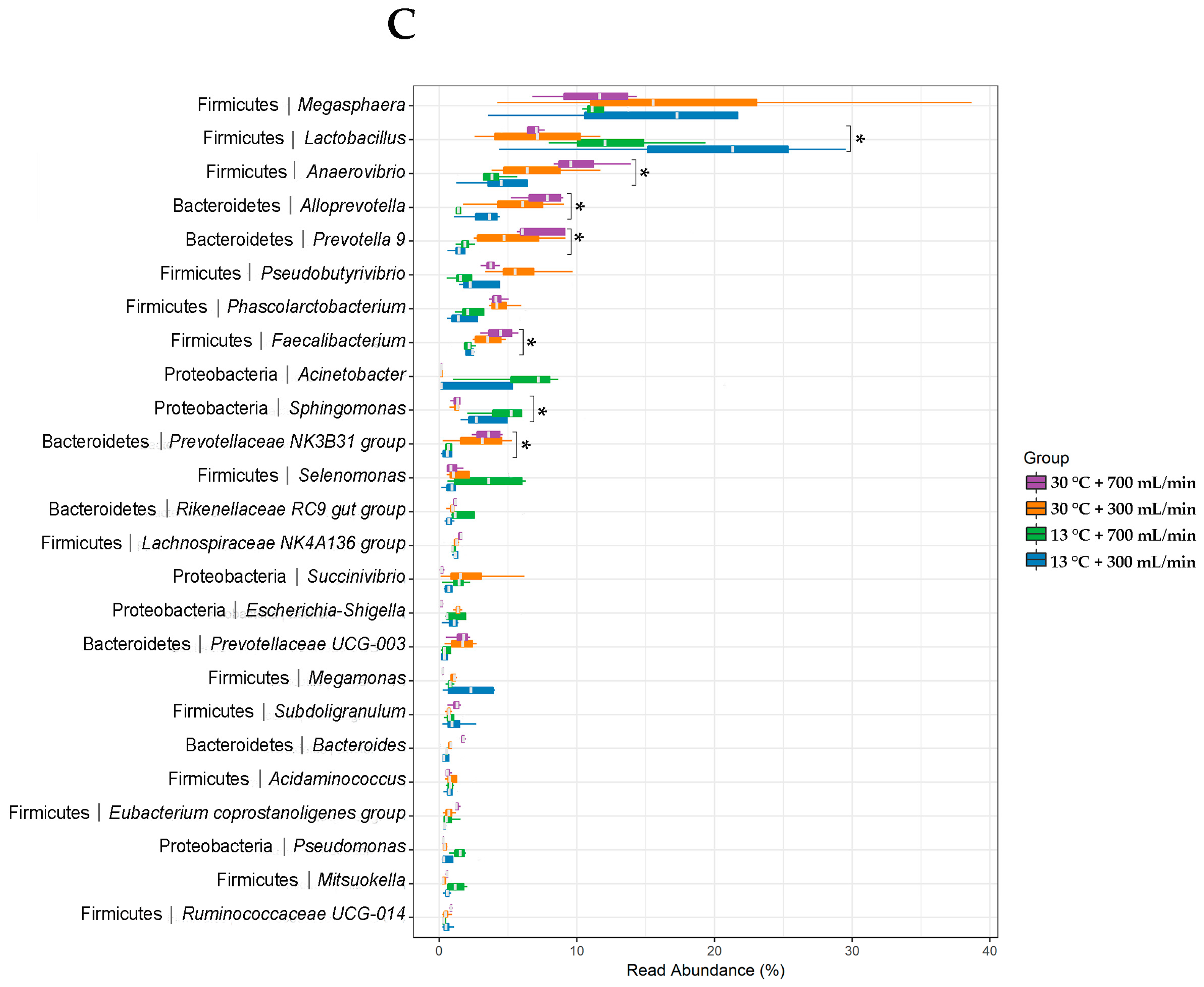
Although water is one of the most important nutrients and is essential for various physiological processes within the body, it does not receive adequate consideration when ensuring optimal nutrition and growth performance in piglets. This study was conducted to investigate the effects of drinking water temperature (DWT) and flow rate (DWF) on growth performance, nutrient digestibility and cecum microflora in weaned piglets during cold weather. Sixty-four piglets with an average body weight of 8.60 ± 0.5 kg were allotted into four groups with four replicates in each group and four pigs in each replicate. The DWT and DWF were set for each group as follows: (1) 13 °C + 300 mL/min, (2) 13 °C + 700 mL/min, (3) 30 °C + 300 mL/min and (4) 30 °C + 700 mL/min, respectively. All groups were fed the same diet during the 28 d trial. The body weight at day 0 and day 29, as well as daily feed intake, were recorded. Diarrhea severity was assessed every day. Fresh fecal samples were collected for four consecutive days at the end of the experiment for the digestibility test. Cecum content was collected after sacrifice for microbial composition analysis. The results indicated that: (1) DWT at 30 °C promoted the average daily gain (ADG) of weaned piglets considerably (p = 0.043) and decreased feed to weight ratio when compared with DWT at 13 °C (p = 0.045). DWF had no substantial effect on the growth performance of piglets (p > 0.05). (2) The 30 °C DWT groups had higher apparent digestibility of crude protein, crude fat and energy than the 13 °C DWT groups (p < 0.05), while DWF had no significant effect on the apparent digestibility of nutrients (p > 0.05). (3) DWT at 30 °C increased the Bacteroidetes abundance and decreased the Proteobacteria abundance in cecum digesta. The change in these two factors may be related to a decrease in diarrhea and the improvement of growth performance. Different DWF had no substantial effect on the cecum microbial structure. To sum up, providing a DWT of 30 °C to weaned piglets in cold weather reduced the abundance of harmful bacteria in the cecum and improved the apparent nutrient digestibility, which is beneficial for maintaining a healthy intestinal microenvironment and promoting growth performance. A lower DWF of 300 mL/min had no adverse effect on growth performance. Therefore, a combination of 30 °C + 300 mL/min is recommended for weaned piglets during cold weather for the consideration of animal welfare and production efficiency.
Keywords:
water parameters; winter; pigs; growth performance; nutrient utilization; microflora